



Abstract
Visuals remain understudied in health-related framing research. On Instagram, users who have been patients of long-term health conditions, such as type 1 diabetes (T1D), and who regularly share their experiences with a wider audience, that is, patient influencers, have become an increasingly important source of health information. Both their verbal and visual portrayal of health issues and how they frame causal and treatment responsibility for them matters for the public perception of health and illness. We aimed at determining how patient influencers verbally and visually portray T1D on Instagram, thus incorporating verbal and visual frame analysis by conducting a multimethod study. Combining insights from a qualitative image sorting study (N = 168 images) and a quantitative content analysis of N = 280 posts by German patient influencers on Instagram, we show that these influencers frequently share how they feel about their illness and verbally emphasize individual treatment responsibilities. Visually, they mostly share images of their diabetes devices, such as insulin pumps. Overall, the visuals used on Instagram tend to enhance the verbal responsibility frames in the captions, with one specific visual frame attributing individual treatment responsibility.
Despite their growing significance in the media landscape and their impact on people’s knowledge, attitudes, and perceptions regarding health-related issues (Fung et al., 2020; Niu et al., 2020), visuals still remain understudied compared with text in terms of their ability to frame media messages (Coleman, 2010)—especially in health communication (Dan, 2018; Guenther et al., 2021). Social media in particular have fundamentally contributed to a shift from primarily verbal to more visual information (Smith et al., 2021) and changed how people receive and engage with health information (Chen & Wang, 2021; Goodyear et al., 2019). Health information shared on social media is more easily accessible and covers very specific health topics. Specifically, social media allow users to share their personal experiences of health and illness, and to receive social support (Chen & Wang, 2021; Smailhodzic et al., 2016; Zhao & Zhang, 2017). Social media personalities with a larger audience who have been patients of long-term health conditions, such as type 1 diabetes (T1D), and who regularly post about it, have been coined as patient influencers (Heiss & Rudolph, 2022, p. 2). These influencers “provide firsthand information and experience concerning severe, complex health conditions” (Heiss & Rudolph, 2022). Moreover, as “they suffer from a disease themselves, patient influencers may often provide valuable insights and forms of social support” (Heiss & Rudolph, 2022).
There’s a growing number of studies on the framing of health issues on social media (e.g., Carlyle et al., 2021; Zhang et al., 2021). However, existing work either analyzes only verbal frames or explores verbal and visual frames separately, instead of assessing the relation between text and visuals (Dan, 2018). This is an important omission, since visuals can both alter the perception of messages and foster a reinterpretation of information presented as text (Batova, 2021). We addressed this issue by examining both the verbal and visual framing of responsibility for T1D by German patient influencers on Instagram, thereby making several contributions to the existing literature: (1) We answer Coleman’s (2010) demand for more research about the question whether the—in text—frequently analyzed generic frames (e.g., responsibility frames) are suitable for visual analysis as well. Thus, we incorporate verbal and visual frame analysis. (2) Although health communication scholars have repeatedly examined the verbal framing of causal and treatment responsibility for health issues (Major & Jankowski, 2020; Temmann et al., 2022), little is known about the role visuals have in portraying health responsibilities. Our study addresses this issue. (3) Finally, we aim at better understanding how both text and visuals shared by patient influencers on Instagram shape the framing of health responsibilities on this platform.
We focus on T1D, a severe, chronic illness and et al., 2010) the most common autoimmune disease among children and adolescents (Kellerer & Matthaei, 2011)—a significant age group on Instagram (Beisch & Koch, 2021). First, we conducted a qualitative study in which we summarized reoccurring motifs shared by T1D patient influencers into specific images categories (Grittmann & Ammann, 2018). Those were then applied in a quantitative content analysis of N = 280 Instagram posts. In this second study, posts were coded manually, following a deductive approach.
(Visual) Framing of Responsibility in Health Communication
Framing is the process of selecting aspects of a perceived reality and making them more salient in communication, in such a way as to promote a specific interpretation of the information presented (Brüggemann, 2014; Entman, 1993 p. 52). Frames, therefore, have been described as “patterns of interpretation” (Brüggemann, 2014, p. 61). There is a growing body of literature on framing and frames (Borah, 2011), particularly in health communication (Guenther et al., 2021). In recent years, framing as a concept has also proven increasingly useful for visual communication scholars (Bock, 2020). Visual framing refers to the idea that “visuals, like text, can operate as framing devices insofar as they make use of various rhetorical tools—metaphors, depictions, symbols—that purport to capture the essence of an issue or event graphically” (Rodriguez & Dimitrova, 2011, p. 51). Visuals accompanying a written text, for example, a news article or the caption of an Instagram post, can thus influence recipient’s understanding of it (Varava, 2016) or even override its message (Rodriguez & Dimitrova, 2011). Despite having its disciplinary roots in art criticism, photographic practice, rhetoric, semiotics, visual perception, and cognitive science (Bock, 2020; Mitchell, 1986), visual communication scholarship increasingly refers to visual framing as its theoretical fundament (Coleman, 2010). However, compared with verbal frames, visual frames remain largely understudied (Dan, 2018; Guenther et al., 2021). This is an important omission, since visuals associated with verbal health information can send powerful messages to recipients (Varava, 2016) and thus impact people’s (perceived) knowledge, attitudes, intentions, and perceptions regarding health-related issues (Fung et al., 2020; Niu et al., 2020). Visual framing has been investigated for its audience effects, such as emotions (e.g., Sontag, 2018) and behavioral intentions (e.g., Lee et al., 2022). Furthermore, content analyses have addressed the visual framing of various health issues, including obesity (e.g., Varava, 2016), or COVID-19 (e.g., Brennen et al., 2021). However, only a minority of studies takes the relation between verbal and visual frames into account (e.g., Brennen et al., 2021). Moreover, these studies did not analyze visual generic frames—including responsibility frames. Thus, the role of visuals for attributing health responsibilities remains largely unclear.
Responsibility frames assign causal respectively treatment responsibility to either an individual, a group or the society at large by means of stressing specific causes and treatment options (or barriers thereof) for certain issues (Iyengar, 1990; Semetko & Valkenburg, 2000). Although these frames are considered generic, that is, they can be identified in relation to different topics (De Vreese, 2011), they have largely been examined in the context of health issues (Major & Jankowski, 2020), such as diabetes (Foley et al., 2020; Gounder & Ameer, 2018) or obesity (Nimegeer et al., 2019; S. Sun et al., 2021).
Content analyses show that news media predominantly attribute health responsibility to the individual. For instance, they stress certain health behaviors, such as smoking and diet, as cause of illness—and the change of these behaviors as treatment option (e.g., Gounder & Ameer, 2018; S. Sun et al., 2021). This is especially true for diabetes (Foley et al., 2020; Gounder & Ameer, 2018). Individualized attributions of causal and treatment responsibility for health issues can be problematic for the public perceptions of these diseases (Corrigan, 2000; Heley et al., 2020). A focus on individual responsibilities also reduces the individual willingness to provide social support to those affected (Y. Sun et al., 2016). However, it remains largely unknown how visuals can exacerbate or diminish verbal information in their power to shape responsibility attributions for health issues—an important gap to fill, considering the shift from textual to visual information, especially on social media (Smith et al., 2021). Given that frames should be analyzed not only in specific contexts, but also with regards to specific issues (Brüggemann, 2014), we chose to focus on the verbal and visual framing of T1D.
Patient Influencers on Social Media
Social media have become a relevant source of health information (Heiss & Rudolph, 2022; Pagoto et al., 2019; Zou et al., 2021) by offering easily accessible contents. This comes with important associated risks (e.g., Brennen et al., 2021; Huang et al., 2021; Pilgrim & Bohnet-Joschko, 2019), such as the spread of health-related misinformation (e.g., Brennen et al., 2021) or the reinforcement of body image concerns due to specific appearance ideals and health behaviors depicted on social media (Holland & Tiggemann, 2016; Pilgrim & Bohnet-Joschko, 2019). However, there are potential benefits, too, as social media enable users to share their personal health-related experiences, thoughts, and feelings with others and receive social support from them (Chen & Wang, 2021; Smailhodzic et al., 2016; Zhao & Zhang, 2017). Moreover, health information on social media can impact public beliefs, perceptions and attitudes toward health issues (Fuentes & Peterson, 2021; Ugarte et al., 2021) as well as mobilize social resources (Chen & Wang, 2021).
This is especially true for content shared by so-called patient influencers (Heiss & Rudolph, 2022). Importantly, there is a growing amount of literature on social media influencers and their interactions with and impact on audiences (e.g., Abidin, 2015; Cotter, 2019; Truman, 2022). For instance, Cotter (2019) points out the way, in which influencers interact with algorithms to gain visibility—and thus influence. Abidin (2015) shed light on how influencers communicate with their audiences. As for their impact on audiences, a literature review by Truman (2022) found that influencer communication often has positive effects on followers’ food and health outcomes. While influencers in general have been described as ordinary social media users who have accumulated a relatively large audience through the verbal and visual narration of their personal lives and lifestyles (Abidin, 2015), patient influencers in particular can be defined as social media users who have been patients of long-term health conditions—physical or mental—and who share their health-related experiences regularly with a wider audience (Heiss & Rudolph, 2022, p. 2). Currently, little is known about these patient influencers and the type of content they share online (Heiss & Rudolph, 2022; Zou et al., 2021), despite their growing significance as source of health information, social validation, and social support (Fergie et al., 2016; Heiss & Rudolph, 2022). Moreover, by making illness and living with an illness visible (Feuston & Piper, 2019; McCosker & Gerrard, 2020), these patient influencers can shape the public perception of health (Holtz & Kanthawala, 2020).
The Portrayal of T1D on Instagram
Instagram is an immensely popular picture-sharing platform (Beisch & Koch, 2021; Laestadius, 2017). Usually, an Instagram post consists of a caption, hashtags, and a visual (e.g., a photograph). The platform is especially favored among digital natives (Laestadius, 2017). A growing amount of users on this platform share their experiences and everyday life of living with T1D (Elnaggar et al., 2020; Holtz & Kanthawala, 2020; Ranjanala et al., 2022). T1D is an autoimmune disease with serious short-term and long-term implications, a significant impact on health care systems (Lancaster et al., 2010) and mostly diagnosed during childhood or adolescence (Atkinson et al., 2014).
Sharing health information and experiences of living with a (chronic) disease on social media “is a response to the experience of living with pain, a way of coping with its debilitating effects, while at the same time it can be a potentially transformative act in bringing together issues and publics” (Gonzalez-Polledo, 2016, p. 8). People with T1D in particular use social media, such as Instagram, to seek emotional as well as informational support, to reach out to other patients and offer help (Malik et al., 2019). Despite a growing amount of research regarding the portrayal of chronic illness on social media (e.g., Apperson et al., 2019; Gonzalez-Polledo, 2016), relatively little is known about the way, in which T1D is depicted on Instagram. An exploratory study by Holtz and Kanthawala (2020) offers first insights, as the authors have shown that type 1 diabetics on Instagram often share images of their T1D management devices (e.g., insulin pumps) or images showing their face.
However, the verbal and visual framing of responsibility for T1D on Instagram has not been investigated yet. Given the potential effects of responsibility frames on the public perception of health issues (Heley et al., 2020; McGlynn & McGlone, 2019), on recipient’s attributions of responsibility, emotions (Corrigan, 2000; Gollust et al., 2013; Starr & Oxlad, 2021) and their intentions for individual health behavior, interpersonal behavior, and societal participation (Y. Sun et al., 2016), our study seeks to analyze patient influencers’ portrayal of responsibility for T1D on Instagram. Minding yet another research gap (Coleman, 2010), we further examine the way, in which text and visuals interact in their ability to frame responsibilities in T1D by incorporating verbal and visual frame analysis.
Responsibilities in T1D: Causes and Treatment
T1D is an autoimmune disease, onset by the destruction of insulin-producing pancreatic beta cells which cannot (at least currently) be prevented (Primavera et al., 2020). In consequence, patients have to continually manage their blood sugar levels by taking insulin (Atkinson et al., 2014). Besides, excise and a balanced diet are considered important individual measures for managing T1D (Adu et al., 2019; Galassetti & Riddell, 2013). While responsibilities are mostly individual, one’s social network, i.e., “the web of social relationships that surround individuals” (Heaney & Israel, 2008, p. 190) and the social support it can offer also decisively impact health outcomes for patients with T1D (Miller & DiMatteo, 2013). This includes formal or professional relationships—particularly the one between diabetologist and patient (Renders et al., 2001)—as well as informal social relationships, for example, between family members. For instance, medical adherence in adolescents with T1D has been shown to benefit from social support within the family (Lewandowski & Drotar, 2007). In contrast, family conflict, a lack of perceived social support and job-related stress are associated with poor adherence in T1D patients (Adu et al., 2019; Lancaster et al., 2010; Miller & DiMatteo, 2013). On a societal level, ongoing research on T1D and continuous improvements of technologies (e.g., insulin pumps, glucose monitors) are significant for the treatment of the disease (Atkinson et al., 2014). The necessity of lifelong treatment of patients with insulin also requires a high quality of medical care as well as a low-threshold access to the health care system (Adu et al., 2019).
Research Questions and Hypothesis
The relation between text and visuals in health communication is not understood well, especially for more specific questions such as the responsibility framing of health issues (Dan, 2018; Guenther et al., 2021). In our study, we address these major research gaps by analyzing the verbal and visual framing of responsibility for T1D by German patient influencers on Instagram. Our first research question, however, addresses the overall content shared by them:
RQ1: Overall, what do posts shared by T1D patient influencers look like? (a) What are the most common topics addressed in captions, (b) what are the most commonly shared hashtags and (c) what are the most common visuals?
News media coverage especially emphasizes individual causal and treatment responsibilities for diabetes (Foley et al., 2020; Gounder & Ameer, 2018), whereas we know much less about how responsibilities in T1D are framed by patient influencers on social media (Heiss & Rudolph, 2022; Temmann et al., 2022). Therefore, we put the following research question and hypothesis forward:
RQ2: To what extent do patient influencers attribute causal and treatment responsibility for T1D in the captions of their posts?
H1: T1D patient influencers mainly attribute individual causal and treatment responsibility for T1D in the captions of their posts.
However, our study not only addresses the verbal, but also the visual framing of responsibility for T1D. To explore the visual framing of responsibility for T1D, we ask, in a first step, the following research question:
RQ3: Are the responsibility attributions in the captions of the Instagram posts rather (1) enhanced by, (2) neutral toward or even (3) weakened by their corresponding visuals?
In a second step, we further examine only the visuals that are regarded as enhancing the verbal responsibility frames to identify possible visual responsibility frames for T1D, asking:
RQ4: Which visual responsibility frames for T1D are emerging from the interplay between responsibility attributions in the captions and the corresponding visuals?
Methods
We used a multimethod approach and combined a qualitative image sorting study (study 1) with a quantitative content analysis (study 2). Image categories (see Grittmann & Ammann, 2018) were drawn from study 1 and then tested on a larger empirical basis as categories in study 2. Thus, we were able to quantitatively examine visual information. Figure 1 illustrates how the two studies are interrelated:

Focus of the two empirical studies.
Sample
In our study, we analyzed posts shared by German T1D patient influencers on Instagram. To identify them, we at first conducted a Google search (search string: “followers” site: instagram.com *diabetes*), with the search results limited to German. We then conducted a search for accounts on Instagram, using the search term *diabetes*. To prevent the influence of algorithms as far as possible, we used the so-called “incognito-modus” of the browser during the search and created a new Instagram profile for research purposes. Our Google and Instagram search on T1D let to N = 66 profiles. After excluding duplicates, there were n = 62 profiles left.
Included in our sample were all accounts that met the following criteria: (1) The account had to be publicly accessible with at least 1,000 followers. (2) The definition of patient influencers by Heiss and Rudolph (2022, p. 2) applied, that is, the account belonged to a person with T1D regularly sharing their health-related experiences with a wider audience. (3) The account was mostly in German. (4) There were regular and continuous postings (at least one every 2 weeks) and the last post was, at the time of the data selection, not older than 2 weeks (Altendorfer, 2019). This selection process led to a total of N = 14 German T1D patient influencers. For each influencer, we analyzed n = 20 of their most recent posts which led to an overall sample of N = 280 Instagram posts.
Study 1: Qualitative Image Sorting Study
To examine not only the verbal, but also the visual framing of T1D on Instagram, we conducted a qualitative image sorting study as a first step, that is, we condensed reoccurring motifs in the posted visuals into image categories (Grittmann & Ammann, 2018, p. 164). For this purpose, we printed and cut a randomly chosen selection of images shared by the 14 T1D patient influencers in our sample (N = 168 images in total), which were then sorted by three researchers according to their genre (photograph or illustration) and theme (e.g., does the image depict a diabetes device). To guarantee the reliability and validity of the image categories, they were thoroughly discussed within our research group (Flick, 2019).
This approach led to a total of 16 different image categories: (1) diabetes devices, (2) selfies/ portraits, (3) landscapes with and without people, (4) hobbies/ leisure time, (5) pregnancy/ motherhood, (6) food/ drinks, (7) body parts (e.g., showing tattoos), (8) pets/ animals, (9) couples/ friendship, (10) work/ professional context, (11) blood sugar levels, (12) quotes (photograph), (13) other photographs, (14) quotes (illustration), (15) icons, and (16) other illustrations. These image categories were then integrated in the coding scheme of the quantitative content analysis. This way, we were able to easily code the content of each image (Grittmann & Ammann, 2018).
Study 2: Quantitative Content Analysis
We then conducted a quantitative content analysis. In the following, we describe in detail how (1) we assessed the overall portrayal (verbal and visual) of T1D by patient influencers on Instagram, (2) we measured the verbal framing of responsibility for T1D and the relation to the corresponding visuals, (3) we made sure that our codings were sufficiently reliable, and finally, (4) how we identified visual responsibility frames.
Portrayal of T1D
Instagram posts usually consist of three different elements: caption, hashtags, and visual, with only the latter being mandatory (Laestadius, 2017). To answer RQ1, we noted for each Instagram post whether it contained a
Verbal Responsibility Frames and Their Relation to Corresponding Visuals
To examine the verbal framing of responsibility for T1D, we differentiated between two coding levels (Figure 2). At the first level, we coded each
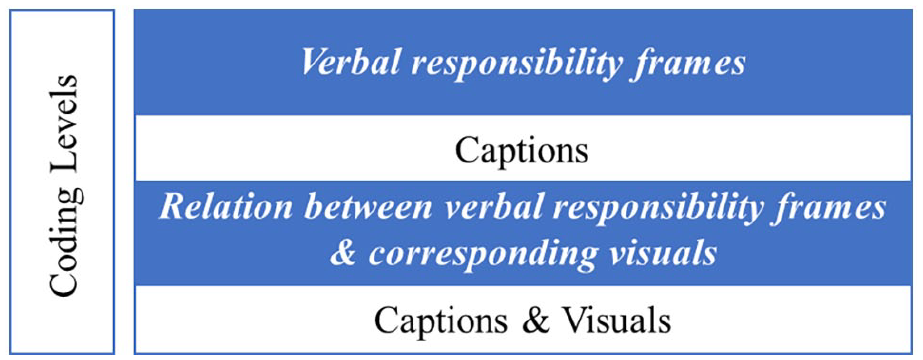
Coding of verbal responsibility frames and relation to corresponding visuals.
To examine the relation between verbal responsibility frames and corresponding visuals, we referred to
Intercoder-Reliabilities
Following in-depth training, in which researchers and coders discussed further development and specification of the different variables, as well as a round of pretesting, three trained master students manually coded the posts in the sample. Coding was completed in November 2020. To assess the reliability of the coding scheme across the three coders, we compared their codings for n = 28 randomly selected Instagram posts by computing Krippendorff’s Alpha via ReCal3 (Freelon, 2017). Intercoder-reliabilities lay between .660 and .929 (see Table 1 for a detailed list). While most of the variables—including the different topics as well as the image categories—have been shown to be sufficiently reliable, the relation variables have to be assessed critically, as the intercoder-reliability for some of them is below .667 (Krippendorff, 2011). Still, we would like to present our results regarding the relation between verbal responsibility frames and visuals, while keeping in mind that these are of limited explanatory value.
Intercoder-Reliabilities for Main Variables.
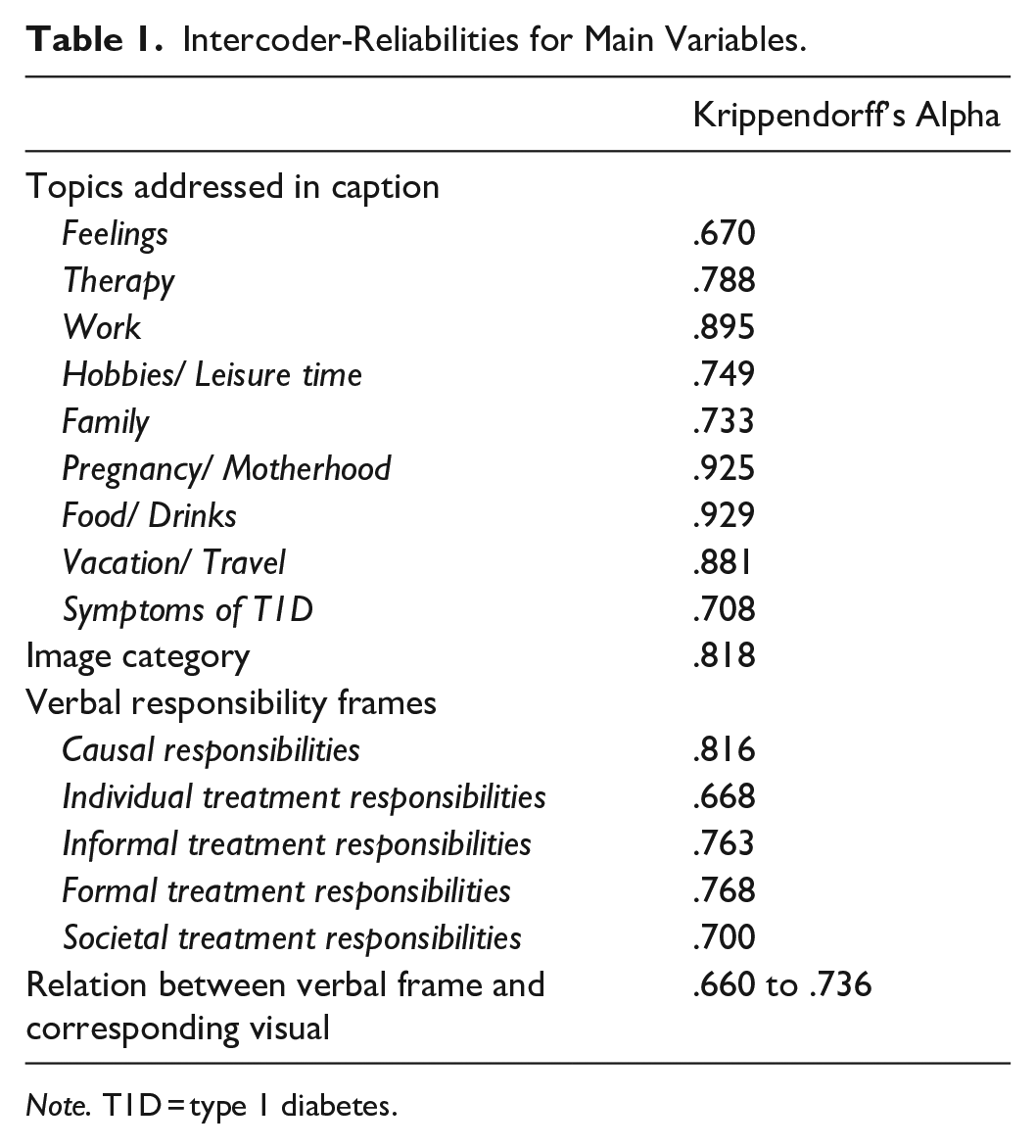
Note. T1D = type 1 diabetes.
Visual Responsibility Frames: Explorative Analysis
To answer RQ4, we conducted a chi-square test to examine which visuals were coded particularly often as enhancing in relation to the verbal responsibility frames. We then took a closer look at these particular visuals and their corresponding responsibility attributions in the captions to identify possible visual responsibility frames for T1D.
Results
Sample Characteristics
Our final sample included N = 280 posts by N = 14 T1D patient influencers, one of them male, the others female. Their numbers of followers ranged from 1,083 to 6,087, with an average number of 2,503 (SD = 1,479.2) followers. The analyzed posts were shared between March 2019 and August 2020 and had scored an average of 142 likes (SD = 118.0) and 11 comments (SD = 16.9). Only a minority of the posts in the sample were sponsored content (n = 70, 14.6%).
Verbal and Visual Portrayal of T1D Shared by Patient Influencers on Instagram (RQ1)
A majority of 92.5% (n = 259) of all N = 280 posts in our sample contained a written caption. The most frequently addressed topics in the captions were feelings (discussed in n = 116 captions), therapy (n = 81), hobbies/ leisure time (n = 55), food/ drinks (n = 51) and symptoms of the illness (n = 44). Moreover, 87.1% (n = 244) of the posts in our sample contained hashtags. Figure 3 illustrates the ones commonly used by T1D patient influencers, with #diabetes (n = 137), #t1d (n = 95), #diabetestyp1 (n = 87), #diabetestype1 (n = 78), and #diabetic (n = 58) being shared the most frequently. Thus, the majority of hashtags is directly linked to the disease.
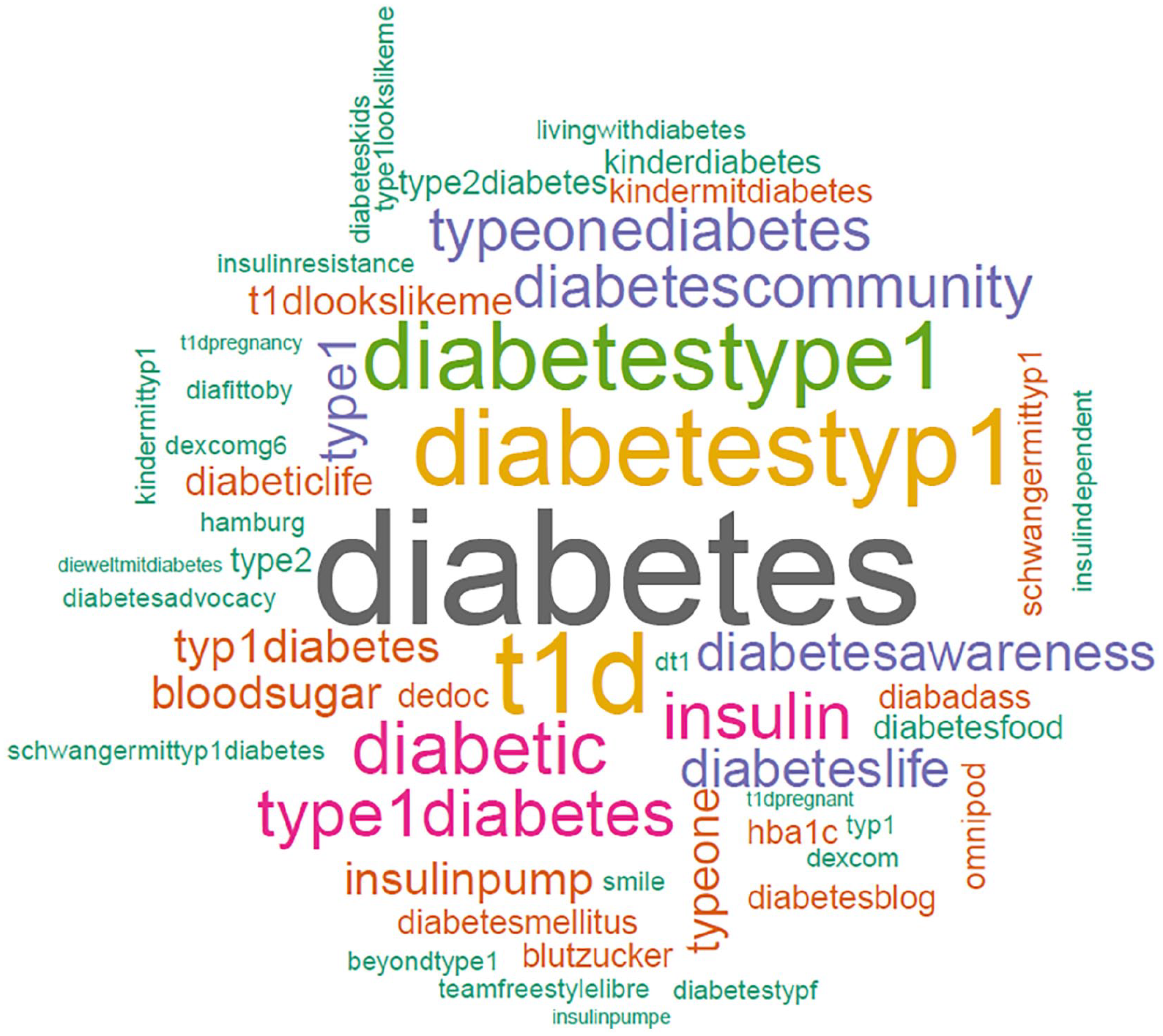
Hashtags frequently shared by T1D patient influencers.
Regarding the visual portrayal of T1D (Table 2), most visuals shared by T1D patient influencers were images (n = 272, 97.1% of all posts in the sample). Videos, on the other hand, were shared less frequently (n = 8, 2.9%). The most commonly depicted image categories were diabetes devices (n = 61), selfies/ portraits (n = 59), landscapes with and without people (n = 25), hobbies/ leisure time (n = 22) and pregnancy/ motherhood (n = 13).
Visual Portrayal of T1D on Instagram.
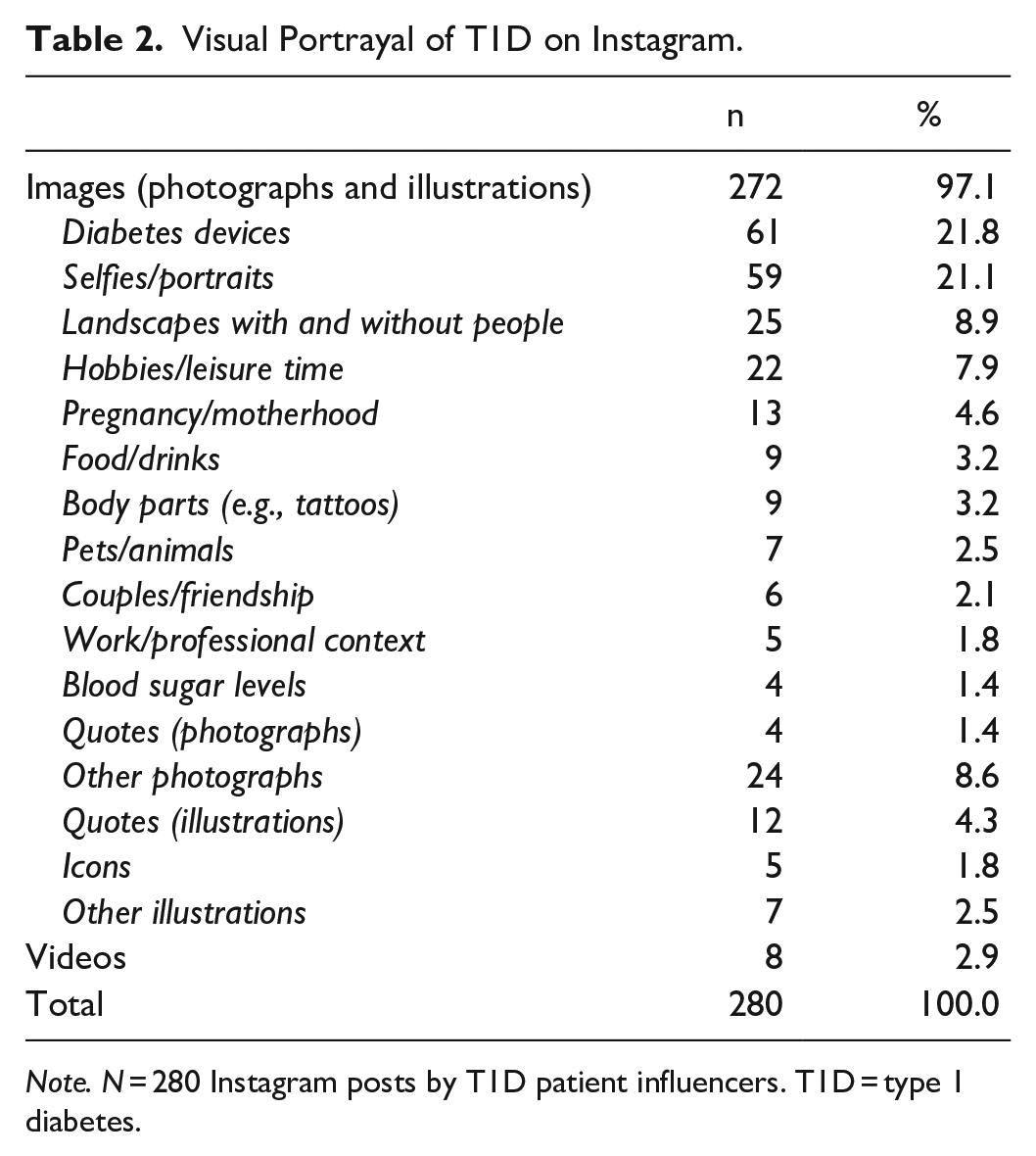
Note. N = 280 Instagram posts by T1D patient influencers. T1D = type 1 diabetes.
Patient Influencers’ Verbal Framing of Responsibility and Relation between Verbal Frame and Corresponding Visual (RQ2, H1, and RQ3)
While only a single caption assigned causal responsibility for T1D, treatment responsibility was attributed in 56.0% (n = 145) of the captions. Thus, patient influencers mainly addressed individual treatment responsibilities; with n = 114 attributions of individual treatment options and n = 31 attributions of treatment barriers. Therefore, H1 was supported. Treatment responsibilities rooted in the social network or on a societal level, however, were depicted less frequently, with n = 19 attributions of informal treatment responsibility (such as support within the family), n = 28 attributions of formal treatment responsibility (e.g., support from health care professionals), and finally, n = 36 attributions of societal responsibility (e.g., development of new diabetes technologies).
Finally, for the majority of attributions of treatment 1 responsibility, the visual was mostly perceived as either enhancing (41.9% of all attributions of treatment responsibility, n = 96) the frame or neutral (46.7%, n = 107) toward it. Thus, regarding the framing of responsibilities for T1D on Instagram, text and visuals are usually coherent. For instance, images of diabetes devices enhance the attribution of individual treatment responsibility in written text (Table 3).
Relation Between Verbal Responsibility Frames and Corresponding Visuals.
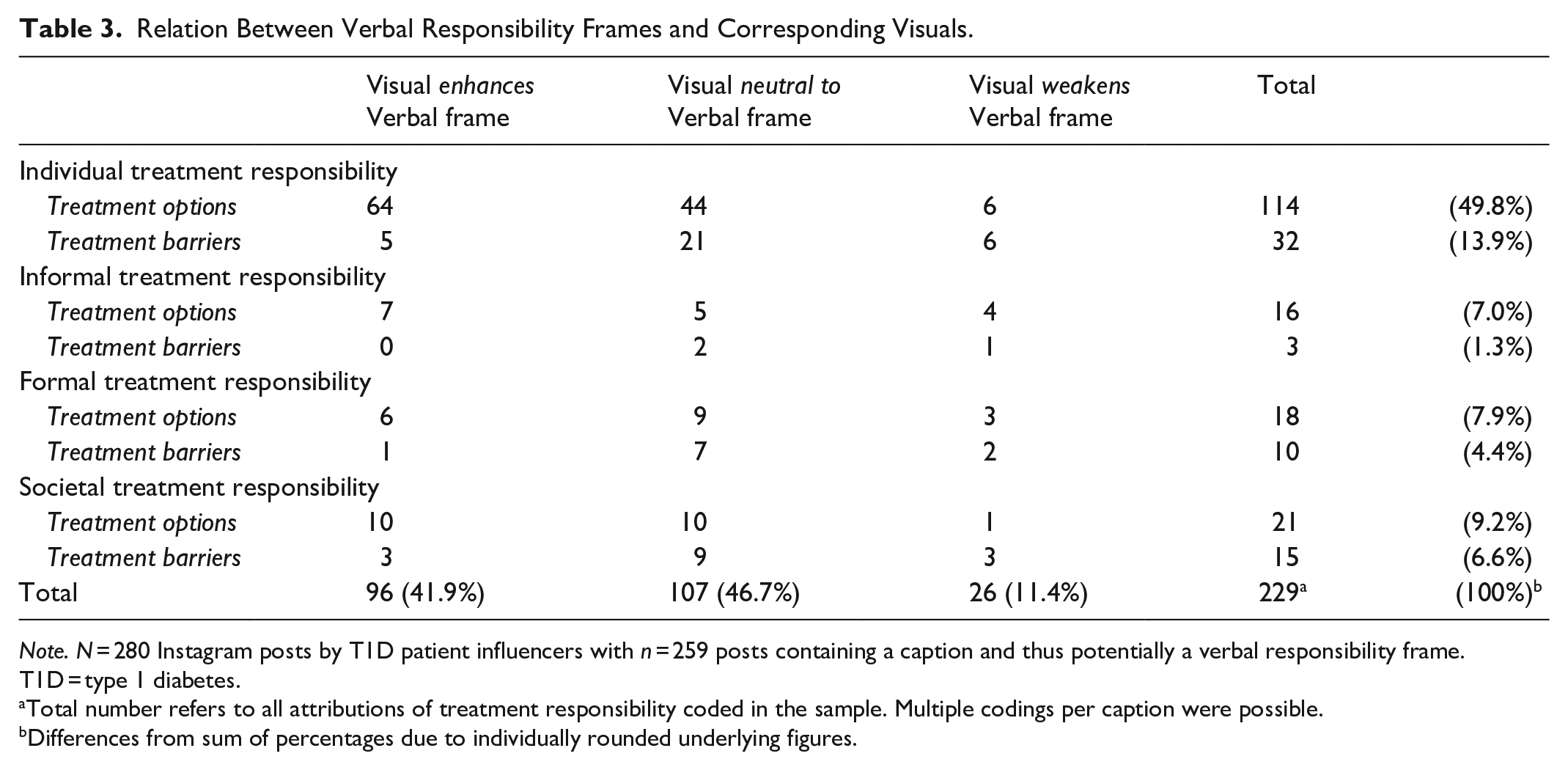
Note. N = 280 Instagram posts by T1D patient influencers with n = 259 posts containing a caption and thus potentially a verbal responsibility frame. T1D = type 1 diabetes.
Total number refers to all attributions of treatment responsibility coded in the sample. Multiple codings per caption were possible.
Differences from sum of percentages due to individually rounded underlying figures.
Visual Responsibility Frames (RQ4)
Visuals showing diabetes devices were coded significantly more often as enhancing in relation to the verbal responsibility frame than other visuals, χ²(12) = 52.90, V = .462, p < .001. 2 Furthermore, they were coded especially often as enhancing the attribution of individual treatment options. Thus, one specific visual responsibility frame for T1D could be identified. Namely, the depiction of diabetes devices to frame individual treatment responsibility.
Discussion
Regardless of their growing significance in the media landscape, visuals still remain understudied compared with text in terms of their ability to frame media messages (Coleman, 2010). This is especially true for health communication (Dan, 2018; Guenther et al., 2021); despite the fact that visuals associated with verbal health information can impact people’s (perceived) knowledge, attitudes, intentions and perceptions regarding health-related issues to a great extent (Fung et al., 2020; Niu et al., 2020).
In our study, we explored the verbal and visual portrayal of T1D shared by patient influencers on Instagram as well as their verbal and visual framing of responsibility for T1D. Thereby, we addressed two major research gaps at once. First, by incorporating verbal and visual frame analysis, we assessed the relation between verbal health information and visuals that accompany them. Second, we applied a generic frame—the responsibility frame—in visual analysis (Coleman, 2010). Social media platforms such as Instagram have altered the way, in which people receive and engage with health information (Chen & Wang, 2021; Goodyear et al., 2019). Moreover, health information shared social media can impact public beliefs, perceptions and attitudes toward health issues (Fuentes & Peterson, 2021; Ugarte et al., 2021; Zou et al., 2021), with patient influencers additionally providing valuable insights on specific health issues (Heiss & Rudolph, 2022). Thus, we were specifically interested in the way, in which patient influencers frame health responsibilities—verbally and visually. We further chose to focus on content shared on T1D, because of the illness’ severity (Lancaster et al., 2010) as well as the growing amount of Instagram users sharing their experiences and everyday life of living with this chronic condition (Holtz & Kanthawala, 2020; Ranjanala et al., 2022).
With regard to the verbal portrayal of T1D, our findings show that patient influencers often discuss their feelings concerning their illness with their followers, which is in line with current research on the presentation of health issues by patients on social media (Chen & Wang, 2021; Smailhodzic et al., 2016; Zhao & Zhang, 2017). It also confirms the research by Gonzalez-Polledo (2016, p. 8), who referred to the process of sharing health information on social media as “a response to the experience of living with pain, a way of coping with its debilitating effects.” Other topics addressed frequently in the captions are therapy, hobbies/ leisure time, food/ drinks as well as symptoms of T1D. Thus, T1D patient influencers make their life and daily struggles with the illness visible (Holtz & Kanthawala, 2020), while still presenting content “typical” for Instagram (Machado de Oliveira & Goussevskaia, 2020). The majority of hashtags, however, is directly linked to the disease, leading to the conclusion that T1D patient influencers actively contextualize the information they share to contribute to the discourse on T1D on Instagram (Geboers & van de Wiele, 2020). Visually, Instagram posts on T1D reflect both the daily life with the chronic illness and themes generally popular on the platform. In line with Holtz and Kanthawalas (2020) findings, T1D patient influencers frequently share images of their diabetes devices as well as selfies or portraits.
Furthermore, our results show T1D patient influencers on Instagram assign responsibility with regards to their illness in about half of their posts. Still, there are huge differences between causal and treatment responsibility, as causes of T1D were mentioned only once in our sample, whereas treatment responsibility was attributed in the majority of the captions. This slightly differentiates the portrayal of health responsibilities on social media from the one in media coverage. While news media discuss treatment responsibilities more frequently than causes of diabetes, too, they still regularly depict (primarily individual) causes of the disease (e.g., Gounder & Ameer, 2018; Stefanik-Sidener, 2013). Moreover, the verbal framing of responsibility T1D on Instagram is highly solution-orientated, as about three quarters of all attributions of treatment responsibilities address treatment options. All in all, patient influencers do not extensively depict why they’re ill or what factors contributed to their illness, but rather illustrate how they manage to deal with a chronic health condition on a daily basis. Thus, treatment responsibilities T1D are frequently addressed to the individual, followed by treatment options and barriers rooted in the informal and social network and, finally, societal ones. These results indicate that the verbal framing of responsibility for T1D on social media at least partly resembles the framing of health responsibilities in news coverage, as individual responsibility frames are especially present (Foley et al., 2020; Gounder & Ameer, 2018).
Nevertheless, about one fifth of attributions of treatment responsibilities on the level of the social network emphasizes the significance of social networks as sources of social support for the daily management of a severe chronic health condition like T1D. Our findings therefore reflect the medical evidence of the importance of social support in managing the disease (Adu et al., 2019; Lancaster et al., 2010; Miller & DiMatteo, 2013). While societal treatment responsibilities only play a minor role in patient influencers’ verbal framing of T1D on Instagram, they are still acknowledged from time to time.
In our study, we did not only analyze responsibility attributions in written text, but also examined whether these verbal responsibility frames were emphasized by visuals, such as photographs or videos. Our results show that patients influencers’ verbal and visual framing of responsibility for T1D on Instagram is rather cohesive, with visuals often enhancing the verbal frames in the captions (or at least being neutral), rather than contradicting them. This is an important finding, considering that visuals associated with verbal health information can send powerful messages to recipients (Varava, 2016) and thus further impact people’s (perceived) knowledge, attitudes, intensions and perceptions regarding health-related issues (Fung et al., 2020; Niu et al., 2020). In consequence, the responsibility framing of T1D on Instagram potentially has a strong impact on recipients regarding their (1) responsibility attributions for T1D, (2) perception of the illness, (3) emotions toward patients, and (4) willingness to provide social support (Heley et al., 2020; Y. Sun et al., 2016). Finally, based on the results of our quantitative content analysis, we were able to identify a specific visual responsibility frame for T1D that was salient throughout the sample—diabetes devices portraying individual treatment responsibility.
Limitations
Our study has several limitations. We already mentioned that the reliability measures for examining the relation between verbal responsibility frames and visuals were partially insufficient. Future research needs to refine coding schemes that consider responsibility attributions in written text and corresponding visuals. This is quite important—not only in the context of a picture-sharing platform like Instagram, but media in general, as visual communication and visual framing in particular are impactful (Guenther et al., 2021). Furthermore, we only analyzed the content shared by patient influencers. To gain more insights about the portrayal of health responsibilities on social media, future studies should include other health influencers as well (e.g., research institutions, health advocates or public health authorities), as they may attribute responsibilities differently. However, according to Zhang et al. (2021), in their social media posts, Chinese media organizations and mental health institutions also assign causes and treatment options for depression mainly to the individual. Nevertheless, more research is needed to determine whether this is true for other contexts and other health issues as well.
There are further limitations arising from the sample of our study. First, given its small size (N = 280 Instagram posts), it is not surprising that we were only able to identify one salient visual frame. Future research should refer to bigger samples to identify further visual (responsibility) frames. Moreover, our analysis focused on “classic” Instagram posts and did not include “stories” (i.e., a feature to share photos or videos for 24 hr, which do not appear on the feed, Instagram, 2016) or “reels” (i.e., short video clips, Instagram, 2020). Future research might want to take a closer look at these different types of content shared on the platform. In addition, our study was restricted to German patient influencers. However, former research in this area has shown that the portrayal of responsibilities for health issues can differ, depending on the cultural context (Zhang et al., 2014). Thus, future studies could include cross-cultural comparisons regarding the attribution of responsibility for T1D on social media especially between countries with fundamentally different health care systems. Finally, our sample mainly consists of female patient influencers. This is consistent with findings from Pilgrim and Bohnet-Joschko (2019), who have shown that, in general, more women than men address health topics on social media. However, other authors have shown that male and female patients with T1D equally profit from social media as a place of support (Fergie et al., 2016). Thus, future research should explicitly address male patient influencers. Finally, we focused on one specific health issue, namely T1D, because of its severity (Kellerer & Matthaei, 2011; Lancaster et al., 2010) as well as the growing number of users sharing their experiences and everyday life of living with T1D on Instagram (Holtz & Kanthawala, 2020). However, previous research has shown that responsibility attributions for health issues differ, depending on the topic discussed (Temmann et al., 2022). Therefore, future studies should address (patient) influencers’ verbal and visual framing of responsibility for other health issues as well.
Practical Implications
Our study confirms previously made observations that T1D patients openly and regularly discuss their condition on Instagram (Fergie et al., 2016; Holtz & Kanthawala, 2020). By sharing their experiences with a wider audience, they offer valuable insights into living with a chronic health condition. Moreover, they create spaces and encourage others to share their experiences, too, to give and receive social support. Posting regularly might also have beneficial effects on medical adherence and could be a useful reminder for patients to check their blood sugar levels. However, practical implications also include that health influencers can be a cautionary tale when they use their influence to spread false information about how to treat and cope with T1D. Regular social media monitoring with regards to chronic diseases is necessary to prevent the spread of false information, ideally using automated, self-learning recognition systems for both verbal and visual information. This is of high practical relevance for public health authorities, since the exchange of information on T1D (and other health issues) on social media can shape the way, in which users deal with health and illness.
Conclusion
Although there is a growing amount of research on the responsibility framing of health issues in media coverage (e.g., Gounder & Ameer, 2018; S. Sun et al., 2021), the relation between responsibility attributions in written text and accompanying visuals have often been neglected by health communication scholars. Our study provides a first impression of the way, in which verbal responsibility frames interact with visuals regarding their potential to frame responsibility for health issues. For this purpose, we followed a rather explorative methodological approach to apply a generic frame—such as the responsibility frame—in visual analysis (Coleman, 2010). Overall, our results show that the verbal and visual framing of T1D shared by patient influencers on Instagram is highly coherent, with treatment responsibilities—especially individual treatment options—addressed frequently. Causal responsibility, however, is barely discussed at all on this platform, which distinguishes the portrayal of responsibility for health and illness on Instagram from legacy news media. Regarding the relation between verbal frames and visuals, our findings illustrate that images shared on Instagram often enhance responsibility attributions made in captions. Moreover, one specific visual responsibility frame was salient throughout the sample: the depiction of diabetes devices to frame individual treatment responsibility. Thus, generic frames, such as the responsibility frame, can successfully be applied in visual analysis. Future research should also address other generic frames, such as the morality or the conflict frame to examine the visual framing of health and illness. Finally, given the impact visuals as well as responsibility attributions in the media can have on recipients, future studies should explore the way, in which the relation between responsibility attributions in written text and visuals such as images may further influence responsibility attributions, attitudes and emotions toward health issues.
Footnotes
Author Note
The DFG was not involved in any of the steps within the research process. There has been no financial support that could have influenced the outcome.
Declaration of Conflicting Interests
The author(s) declared no potential conflicts of interest with respect to the research, authorship, and/or publication of this article.
Funding
The author(s) disclosed receipt of the following financial support for the research, authorship, and/or publication of this article: This work was supported by the German Research Foundation (DFG) under Grant 4048819799.
