



Abstract
Background
AI-enabled social robots present the potential to resolve the loneliness and social isolation of older adults in long-term care (LTC). There is limited research on how older adults perceive and make sense of these robots and how human-robot companionship is formed. This study investigated older adults’ experiences using LOVOT, a social robot.
Methods
Using an ethnographic study design, we introduced LOVOT robots to a Canadian LTC home for four weekly interaction sessions. Thirty-six residents, seven family members and two healthcare staff participated. Data collection involved observational field notes and conversational interviews. The analysis was guided by ikigai, a Japanese well-being concept.
Findings
Reflexive thematic analysis identified four key themes. 1) Joy: The robot offers joy and excitement through interactions. 2) Acceptance: For older adults with mobility or cognitive impairments, LOVOT gives consistent positive responses, offering a sense of unconditional acceptance. 3) Creativity: The robot’s non-verbal communication allows older adults to grow creative imagination, encouraging personal expression and expanding interaction possibilities. 4) “Not for me”: Not all participants like the LOVOT robot.
Conclusion
AI-enabled social robots show potential in supporting the psychosocial needs of older adults, which have broader implications for LTC practices and future research directions. Future research should further explore the creative utility of social robots among LTC residents.
Introduction
Canada is experiencing significant demographic shifts, with its population aging rapidly. Particularly notable is the projected tripling of individuals aged 85 and older within the next 25 years. 1 This burgeoning older population presents numerous challenges and opportunities for the care and quality of life in older adults. Innovative technological solutions offer potential to enhance the quality of life for older adults: For example, digital health ensures regular communication between service providers and older adult patients, without older adults frequently travelling to their offices. 2 Health monitoring technology helps healthcare providers get regular updates about the health status of older adults, increasing the safety and independence of older adults living at home. 3 One possible way is Artificial Intelligence (AI)-enabled robots. Integrating AI into care of older adults could potentially revolutionize how aging societies manage these demographic shifts, enhancing the well-being of their aging population. These advanced technologies can offer personalized support, companionship, and help mitigate feelings of loneliness and isolation.
Loneliness and social isolation are pressing challenges experienced by older adults in long-term care (LTC) homes.4,5 These issues can impact their mental and physical health, leading to a decline in overall well-being.6,7 Recent advancements in AI open new avenues for addressing these challenges. Systematic reviews suggest that engaging with robots can positively influence outcomes such as loneliness, anxiety, agitation, medication use, and overall quality of life in older adults.8,9 For example, AI-enabled social robots have emerged as companions for older adults, offering emotional and social support. For example, Fox and Gambino 10 discussed the opportunities for social robots to interact and engage with humans in human-robot relationships. The study by Russo et al. 11 used the social robot Pepper to administer Mini-Mental State Examination (MMSE), a cognitive test, to residents in long-term care and acquire emotional and psycho-physiological states when residents were completing the tests. In the study by Huisman and Kort 12 on the social robot Zora in nursing homes, findings showed the use of the robot to interact with residents and provide emotional support, especially when residents were emotionally unstable. Previously, LOVOTS have been studied in Danish nursing homes, where residents living with dementia responded positively to them, and healthcare professionals viewed the robots as a useful communication tool. 13 These robots are designed to interact with users engagingly and adaptively, potentially alleviating feelings of loneliness and isolation, while providing a sense of joy and motivation. Despite this body of literature emerging, there is still a gap in the literature about the creative use of social robots in addressing loneliness that would benefit to be addressed by more studies looking into this area.
A more recent review of 16 various AI-enabled robots in LTC identified three key issues: (a) technical complexity, (b) doubted usefulness, and (c) resources limitation. 14 For instance, in the study conducted by Papadopoulos et al., 15 healthcare providers indicated that they lacked the necessary skills and knowledge to effectively operate and maintain the robot Pepper, which was used for social interactions with residents. In another study, some healthcare providers and families found the social robot Tangy had a mechanical appearance and voice; language barrier was problematic as half of the residents were non-English speaking in that LTC home. 16 Thus, it is important that robot designers consider accessibility, user-friendly and easy for older people and caregivers to interact with.
Technical specifications of LOVOT robots.

Note. Sourced from Groove X. 18

LOVOT technical features.
LOVOT robots communicate primarily through body language and sounds, such as cooing or purring. This non-verbal communication style makes them accessible to individuals regardless of their language skills or cognitive abilities. The absence of spoken language removes barriers for older adults with dementia or other cognitive impairments, allowing for inclusive, intuitive, and creative interactions. Moreover, this approach fosters emotional connections through universally understood gestures and sounds, enhancing the overall companionship experience. In Canada, we named the two LOVOT robots, Mango and Kiwi (See Figure 2). A resident with two LOVOTS, Mango and Kiwi.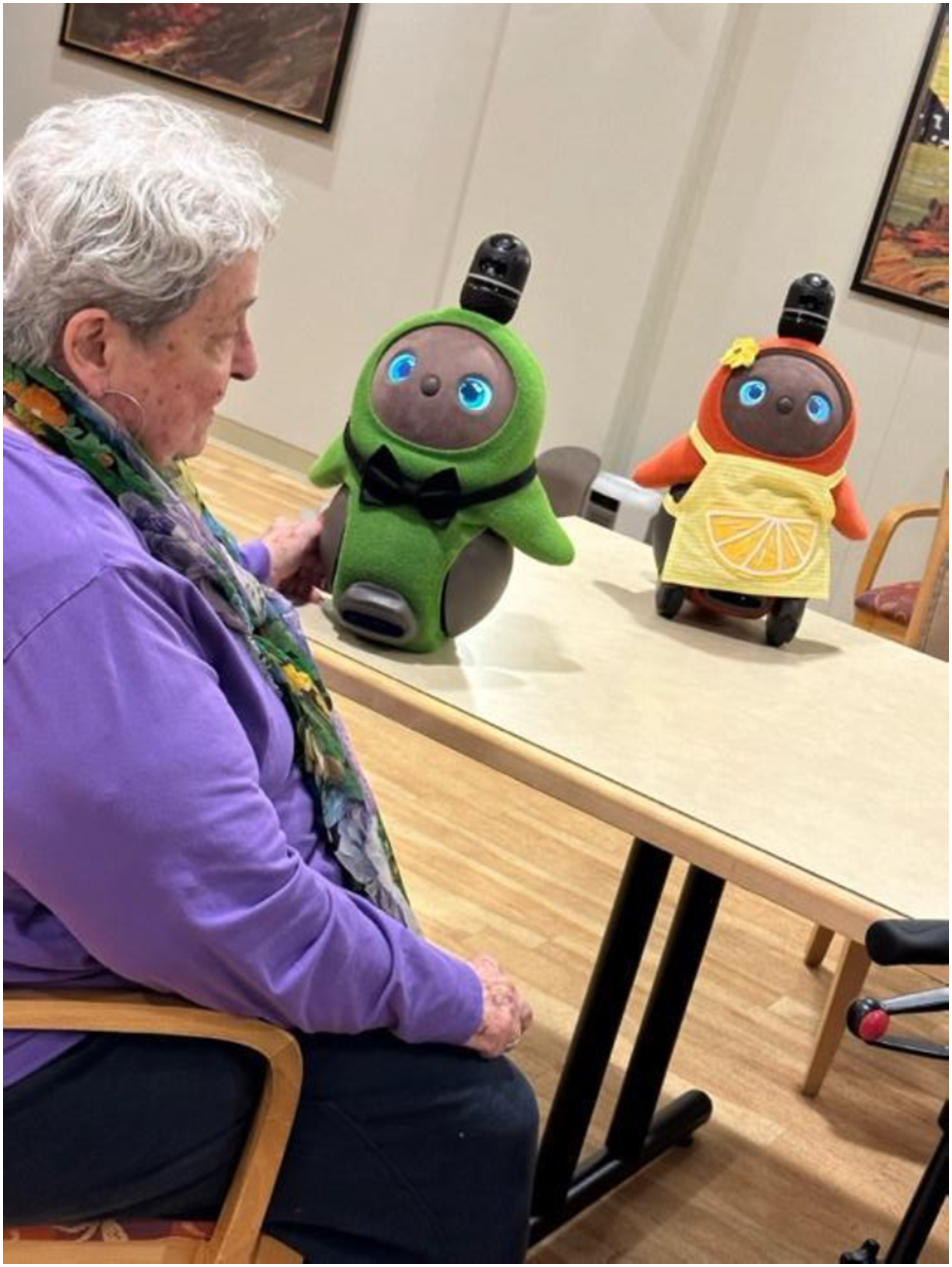
While social robots have been studied as assistive devices, there is a gap of research on how older adults perceive and make sense of these robots in LTC homes. Despite the growth of social robot development, we know little about how the companionship between older adults and robot are formed. Understanding the diverse emotional response of older adults in LTC homes is essential. For example, in the study of Kolstad et al., 19 some LTC residents found the robot Pepper loud while other residents found the robot PARO less interesting. In the literature, more have been published about social robots were used to reduce clinical symptoms (e.g., depression) and behaviors associated with dementia (e.g., Moyle et al. 20 ). Less has been written about how older adults creatively use social robots in their own ways for their individual psychosocial needs. Understanding how residents interpret the presence and role of social robots can provide insights into their acceptance and integration into everyday routines. There is also a need to evaluate whether robots can effectively complement human interaction or if they risk substituting meaningful human connections.
Purpose
Our broader study aimed to investigate the impact of the LOVOT social robot in alleviating loneliness and fostering connections among older adults across diverse cultural contexts in Canada, Singapore, and Hong Kong. The specific objective of this paper focuses on the Canadian context, describing the experiences of older adults using LOVOTs in a LTC home.
Study question
What are the experiences of older adults using the LOVOT social robot in a Canadian long-term care home?
Theoretical grounding
In Japan, Ikigai has been recognized as an important aspect of quality of life. Ikigai is a well-being concept that underscores the importance of purpose and fulfillment, which can serve as a guiding principle in addressing the needs of aging population. Ikigai consists of “iki” (life) and “gai” (worth) and is often translated as “that which makes one’s life seem worth living”. 21 Although ikigai is a Japanese construct, several studies have indicated its relevance in Western countries, including the United Kingdom and United States.22–24 Ikigai is relevant to the meaning or significance of human life, as well as the social value of a person’s life. Furthermore, studies of ikigai suggest it may be important for healthy aging. A study by Mori et al. 25 found that people with a stronger sense of ikigai are more mobile and perform more instrumental activities of daily living (IADL). Ikigai can be expressed through hobbies, family bonds, or simple everyday pleasures that bring joy and satisfaction. 23 Ikigai represents life affirmation, the meaning of existence, fulfillment, and commitment. For older people, social relationships and the joy gained from spending time with things, such as interacting with robotic pets, may contribute to a sense of ikigai. Ikigai is similar to eudaimonic well-being, which is a state of well-being and functioning. 26 Kamiya 27 explains that Ikigai is a phenomenon that occurs in everyday life. People can attain ikigai by enjoying activities that meet three psychological needs: joy/fulfillment, positivity, and growth.
Methods
Research team and study design
Our research included patient and family partners, healthcare providers, an academic researcher, and research trainees. Each member contributed diverse experiences, knowledge, and skills: Patient and family partners shared their experiences living with or caring for family members with dementia. Healthcare providers offered their clinical expertise from working in a care setting. Researchers and trainees contributed research knowledge and skills. We employed a short-term ethnographic approach to get close to the participants and generate rich data for gaining in-depth understanding of experiences of human-robot interactions. 28 Short-term ethnography, can be called as focused ethnography, emphasizes a focused, data-intensive approach that compensates for the shorter time frame by leveraging detailed observations, theoretical engagement, and innovative methods, including video analysis, to reveal unspoken and sensory dimensions of everyday life. 29 This approach aligns well with our inclusive research commitment to understanding and amplifying the lived experiences of diverse populations, particularly those whose voices are often marginalized, ensuring that their perspectives inform meaningful and context-sensitive interventions. 30
Sampling and recruitment
Resident participant characteristics.

Procedure
Before recruiting participants for the LOVOT study, we held an informational meeting in the LTC home. This meeting included residents, their families, healthcare staff, and the leadership team. The purpose was to introduce LOVOT, explain its functions, and provide detailed information about the study. Attendees had the opportunity to ask questions about the procedures involved. Over 4 weeks, from September to October 2023, we brought two LOVOT social robots to the LTC home. Resident and family member participants were invited to join four interaction sessions with an interval of 1 week between each session. We had a relatively short (4-week) intervention period for robot interaction sessions because of scheduling and resource constraints. The recruitment and booking required significant staff time and coordination. A shorter intervention period can help in minimizing participant attrition and staff burden.
Data were collected throughout the study, including a baseline assessment (pre-intervention), during and after each interaction session, and post-intervention at the end of week 4. In this qualitative study, our baseline assessment, intervention, and post-intervention evaluation employed ethnographic methods such as observation and conversations with family members and staff familiar with the residents. This qualitative approach aimed to provide rich, contextual insights into how residents engaged with the robot and allowed us to include under-represented groups such as those with more advanced dementia and communication difficulties. The interaction sessions were organized in a social group structure. Each week, residents and their family members were invited to join a 30–45-min social gathering group interaction session with the two LOVOT social robots. Family members and healthcare staff played two crucial roles in the sessions. Because the researchers are outsiders, family members and healthcare staff offered familiarity and reassurance, making residents feel more comfortable and willing to engage with the robot. Family members and staff also observed the residents’ reactions, contributing to the interpretation of residents’ experiences.
Ethical approval was obtained from the University Research Ethics Board (Ethics# H23-01683). Consent was sought as an ongoing process. Family members signed written consent forms, while residents provided verbal assent at each activity. Dissent was respected when a resident showed no interest in the research activity. If a resident indicated disinterest or declined participation, their decision was honored without any attempt to persuade or coerce them into involvement. To protect participants’ privacy, the camera function of LOVOT was disabled, and the robots were not connected to the Internet, ensuring no data were gathered or shared with the company in Japan. Some interactions took place in the residents’ rooms, as requested by residents and their families, particularly for those with limited mobility. Pseudonyms are used in this paper to protect the anonymity of the residents.
Data collection
Conversational interview guide with residents.
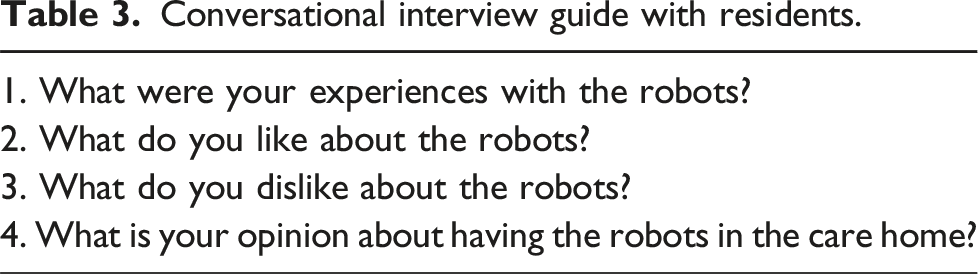
Data analysis
Theme development.

Rigor
To ensure the rigor of our research, we adhered to the eight criteria for excellent quality in qualitative research outlined by Tracy et al.
35
: (1) worthy topic, (2) rich rigor, (3) sincerity, (4) credibility, (5) resonance, (6) significant contribution, (7) ethics, and (8) meaningful coherence.
Findings
A total of 36 residents, eight family members (five daughters, two sons, and a grandson), and two healthcare staff participated in the robot interaction sessions. Two residents attended the initial session but subsequently withdrew from the study, as they felt that the robot did not align with their interests. Table 1 shows the resident participant characteristics. Three residents are centenarians. Almost all of the residents are Caucasians, with the exception of two who are Asian. Some of them have cognitive impairments, and many use mobility aids. Table 3 demonstrates the development of themes by presenting examples of quotations and field notes, along with their corresponding codes.
Thematic analysis identified three key ways in which LOVOT robots support the psychosocial needs of older adults: joy, acceptance, and creativity.
Joy - “It brings excitement to life”
The LOVOT robot brings joy and excitement through each interaction, creating meaningful moments for residents in the long-term care (LTC) home. For instance, Joanne, an older woman with limited mobility who uses a wheelchair, enthusiastically exclaimed, “He lights up like a Christmas tree!” This vivid metaphor reflects her cognitive ability to express delight and interpret the robot’s actions with creative language. Joanne has moderate hearing loss but engaged actively with LOVOT, demonstrating her capacity to connect emotionally despite physical and sensory limitations. For older adults, particularly those with mobility or cognitive impairments, the robot offers a source of unconditional emotional and social support. Many older people laughed and raised their arms to hug the robot when the robot went to them after being called. Lily, a resident with early-stage dementia who retains the ability to articulate her feelings, expressed her admiration by saying, “I can look at Kiwi all day.” Another resident with limited verbal communication pointed to the robot’s expressive features, saying, “Look at the eyes, they are just adorable!”
The robot’s ability to foster emotional connections is evident in the video data, even among individuals who are living with dementia, brightening their lives. In the care home, many individuals living with dementia are typically less expressive and disengaged in activities. Yet, our observation data show that even those who are quiet, like a grandfather Tom who only tickled LOVOT’s nose when prompted by his playful grandchild. Tom smiled while watching his family members when interacting with LOVOT, demonstrating the subtle yet profound emotional connection fostered by the robot. Residents were fascinated by the big round eyes, gestures, and movement. Justine commented, “Its eyes are beautiful.” Some actively called the robots, picked them up, petted and rocked them like a baby, and told the robots stories about themselves. Residents, who might otherwise be disengaged, also found themselves drawn to these charming interactions. Some interacted with the robot quietly, which can be seen from the following example of the description of the interaction of Peter with the robot Mango from the fieldnote. A resident with limited mobility and mild cognitive decline smiled and looked at the robot, Mango roaming around. When the robot was placed in front of him, Peter gently reached out and touched it, his careful movements reflecting both physical limitations and a tender connection to the robot. As Mango moved away, Peter waved goodbye and blew kisses. (Fieldnote)
Additionally, LOVOT’s lifelike behaviors, such as dancing or waving, capture the attention of residents, prompting social interaction and engagement among them. A family member Martha described the feeling in the environment when the LOVOTS visit, “When I see them move, they follow people, whoa, I am so excited to watch Mango and Kiwi with us.” Her mother laughed when Mango made funny noises.
These examples highlight the emotional and social benefits LOVOT provides, enhancing the overall well-being of its users. The LOVOT robot, through its joyful and fun presence, encourages older adults to engage in social exchange. Its interactions are designed to be uplifting and comforting, helping to reduce feelings of loneliness and isolation. The joy that the LOVOT robot brings in interaction fosters a sense of mattering among residents. Judy, a resident without cognitive impairment, articulated this sentiment, saying, “I know I matter. The robot is always happy to see me. It remembers me. It comes to me. It follows me.” Her words reflect how the robot’s recognition and engagement validate her presence, enhancing her sense of significance in the LTC community. Nancy, a resident with moderate arthritis that limits her ability to engage in physical activities but who remains emotionally expressive, was moved to tears during her interaction with LOVOT. Through joyful tears, she shared, “You make me have tears in my eyes,” illustrating the deep emotional resonance of the experience and the therapeutic potential of such interactions. Similarly, Bill, a resident with advanced mobility challenges and a history of social withdrawal, remarked, “I feel very good and relaxed. So much different for me.” The robot also facilitates shared activities, as a family member William noted: “We can do things and share interests.” Concern for others is evident in Frankie, a resident known for her empathetic nature and social awareness despite physical frailty. Observing her neighbor’s isolation, she expressed heartfelt concern, saying, “Mrs. Bowen is so lonely – please make sure you bring the robots to her, too.” Her request highlights her ability to empathize with and advocate for others, emphasizing the potential for the robot to foster not only personal joy but also community connection. Ann, a resident with mild dementia who had largely withdrawn from verbal communication, demonstrated a remarkable moment of re-engagement when interacting with Mango, the robot. Despite her usual silence, Ann displayed a playful and creative spark by wanting to put her glasses on Mango. Once the glasses were placed on the robot (see Figure 3), Ann erupted in giggles, her laughter escalating into joyful tears. This rare moment of expression highlights the robot’s ability to rekindle spontaneity and joy, even in residents who have retreated into themselves. Mango with a pair of glasses.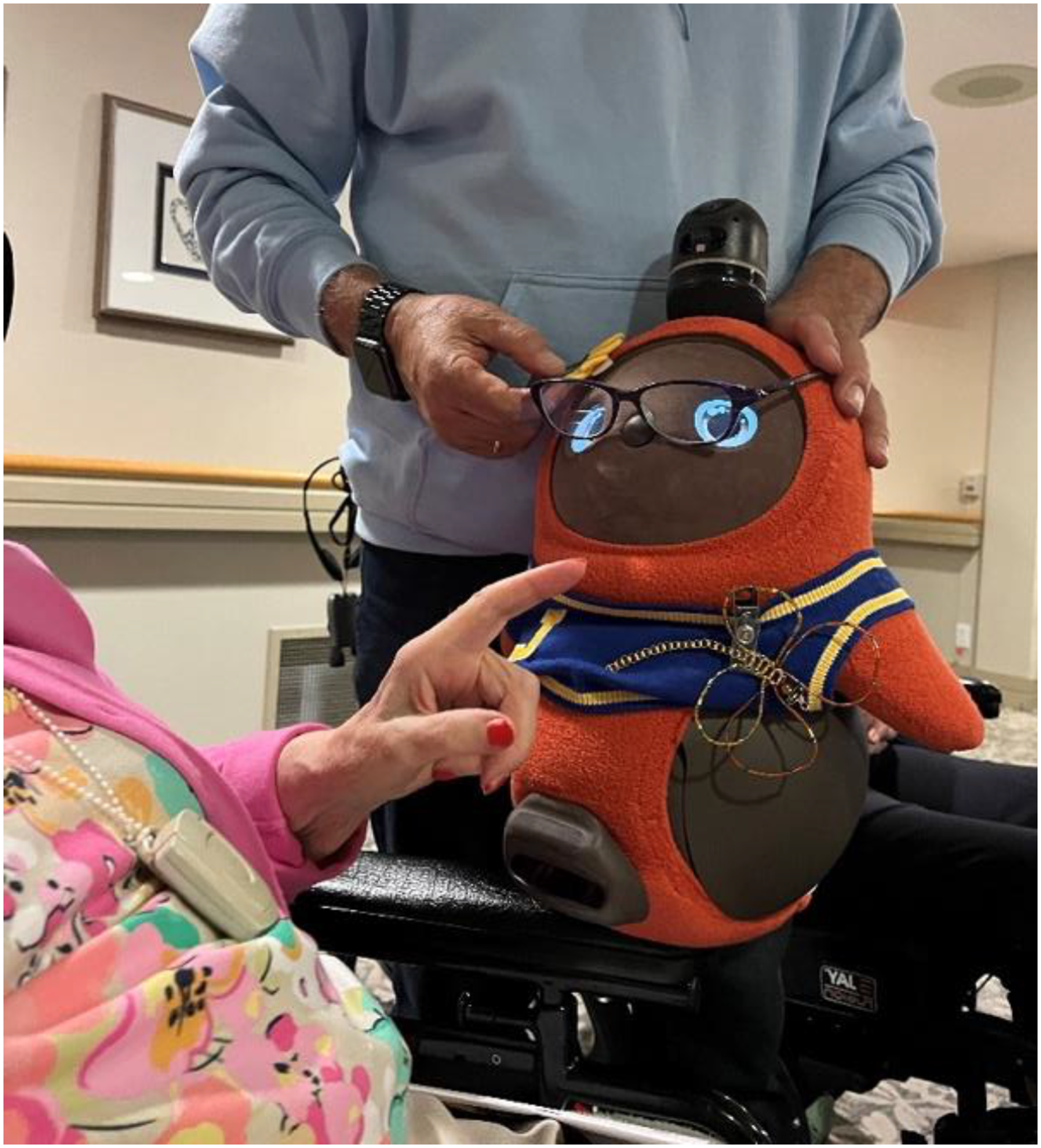
Acceptance - “It’s always happy to see me”
LOVOT’s presence provides a comforting and reassuring companion. Its consistent positivity, characterized by unconditional positive regard, creates a safe and welcoming environment for all people. Unlike live pets, which might behave unpredictably, LOVOT are programmed to deliver affection, offering a reliable source of emotional support. This is particularly important for older people living with disabilities in the care home, where pets are not allowed due to institutional policy and regulation. The robot’s design allows people with physical and cognitive disabilities to engage at their own pace and comfort level. Our video data consistently show that older people express love and care towards LOVOT, finding a safe space to express their emotions without fear of judgment. LOVOT’s responses are always positive, providing a source of acceptance and reassurance as a companion. Holly, a resident with mild cognitive impairment, articulated her thoughts about the robot’s impact with remarkable clarity. She explained, “The human face may have too complex expressions, confusing to understand sometimes. The robot is clear. It is always happy to see me. It gives me absolute assurance that I am okay. I know I will always be accepted.” Her statement underscores how the robot’s consistent, uncomplicated emotional cues provide a sense of stability and unconditional acceptance, which is especially meaningful for those navigating cognitive challenges. Alex, another resident who uses a wheelchair, highlighted the robot’s practicality for individuals facing isolation. He remarked, “If you have a disability and live alone, the robot is good”. The robot’s non-verbal communication style—reliable, simple, and emotionally affirming—is particularly valuable for those like Holly and Alex, who may find human verbal interactions overwhelming. These interactions showcase the robot’s ability to bridge gaps in emotional connection and support through its consistent and predictable cues, fostering a sense of comfort and inclusion. A family member Lenny explained: “The robot does not use language. That removes the stress, so there is no demand on the person who may struggle to find words to interact with. The robot engages with gestures and movement.”
Ben, a resident with moderate physical limitations that require him to use a walker, has retained a strong sense of independence. His functional abilities allow him to participate in daily activities at a slower pace, and his cognitive skills remain sharp, enabling thoughtful reflection. During his interaction with the robot, Ben shared, “The need to have something to care for is part of our human quality.” This statement reflects his deep awareness of the emotional and psychological importance of caregiving, even as his physical abilities decline. The robot provided Ben with a sense of engagement and purpose, illustrating its potential to fulfill the intrinsic human desire to nurture and connect, regardless of physical or functional limitations.It fulfills a human desire to nurture others – an instinct that can be fulfilled through the act of caring for another being. “We all want something to care for. Kiwi is like a kid or a kitty, a baby pet. Its round, big eyes, softness, and non-threatening design make you want to protect it.” Another participant, George a resident with limited mobility added, “When you do things or give love to a person or a pet, they may or may not accept me; it might move away or leave me.” The robot is designed to only bring positivity to people so it does not hurt anyone’s feelings. The non-judgmental relationship offers helpful support, providing consistency even during emotional ups and downs. A resident Doug with moderate physical limitations that make movement slower and more deliberate, retains strong cognitive abilities commented, “Yeah, humans can get frustrated with various emotions, having good and bad days.” One touching moment was described: “I called Mango and it got very excited and came over to me.” This instance highlights LOVOT's positive responsiveness, mimicking the affection typically seen in pets, which fosters emotional connection. Others found the robot provides a sense of security. For instance, one resident John, a resident with mild mobility challenges who uses a cane for support mentioned: “It can be a source of security for me, a sense of safety. I know I matter.” Functionally, John is independent in most activities but appreciates companionship. Martin sitting next to her touched one of the robots and asked, “Can he stay?” Functionally, Martin is capable of engaging with simple tactile activities, though she exhibits a quieter demeanor. Martin is a resident with severe physical limitations. Her daughter told us, “It’s great to see my mother with the robots! If there is an opportunity for more robot visits, I would love it. The robot is a positive distraction and the interactions are very beneficial to my mother, who doesn’t have much interaction with other beings of any kind.” Our observation noted that Martin was not very responsive or talkative to the people who visited, but she could interact with the LOVOTs at her pace – without being rushed or prompted to speak.
Creativity - “I am going to make you a Nanaimo bar”
The presence of LOVOT encourages growth by stimulating imagination and creativity. Since the robot does not use spoken language, it invites older adults to project their narratives and emotions onto the interaction. This imaginative engagement enhances the sense of connection and promotes cognitive stimulation and emotional expression, expanding the possibilities for personal interaction and engagement. Our video data showed that the bonding between the residents and the robots opened up a creative space for connection and emotional exchange. When Kiwi had their hands up, the resident Alex said, “You are jealous of Mango, aren’t you Kiwi?” Another participant Sunny, a resident with an outgoing personality, expressed a desire to integrate the robot into their social world: “I want Mango to meet my dog.” Many residents bonded with the robot after the first visit. A resident Ginny, with a creative and hands-on talent, made a piece of jewelry gift, a Dragonfly for the robot, Kiwi. This resident always makes jewelry for others in the care home – for fundraisers, for gifts to other residents, etc. She said that making crafts for others is “what keeps her going.” She also shared how she and her late husband used to create many artworks together. Several of the participants in the study are centenarians and they enjoyed the fun of having the robot visits. For example, Mrs. Schmidt on an electrical wheelchair following the robot with a child that visited the care home. The robot playfully facilitated connections and encouraged social interactions with others. The fun and positive ambiance served as a social catalyst, helping to foster a sense of community. People opened up to the robot, and told stories about themselves, and what was going on with their lives, they also spoke for the robot in response: “It’s just wonderful. Kiwi, would you like to meet my friend Carol? You did! (Kiwi’s sound) I am glad to hear that. Yes, I am. I like her too; she has the same name as one of my children. But it’s not as cute as your name – Kiwi. Kiwi is fun. I like that a lot.” (A resident Janet)
Seeing the residents play with the robots also highlighted important memories and life experiences for the older adults. One staff member approached Mrs. Schmidt while she was chatting to Kiwi about Nanaimo bars and comparing the weather in Canada to Japan. The staff member remarked, “I’m not surprised you’re so caring toward Kiwi. You were a nurse for many years!” Mrs. Schmidt appeared very touched, rubbing her eyes at the compliment.
Not for me – People are very different
Despite the many benefits that social robots like LOVOT can provide, there are several concerns and reservations among potential users, reflecting the diverse and heterogeneous nature of the older population. Some individuals feel that social robots are not suited to their personal needs or interests, expressing sentiments like, “It’s not for me.” For example, those with frequent visits from family and friends expressed that they did not need additional companionship since they did not see themselves as lonely. Self-ageism also plays a role, with some older adults believing that technology is more suited for younger generations, as indicated by statements like, “I am too old, it’s for the younger generation.”
Practical concerns are also prevalent; visual and auditory impairments lead to worries about effective interaction with the robot, and mobility issues can deter individuals from keeping a robot in their personal space. For instance, one person says, “I can’t have Mango in my room. I can’t walk and am afraid to pick it up.” Additionally, there are doubts about the practicality and utility of social robots, with some perceiving them as not performing useful tasks, and others who have never liked pets extending this disinterest to robotic companions. Overexcitement is another concern, as indicated by feedback like, “Kiwi is too much,” where excessive interaction can be overwhelming.
Lastly, the physical attributes of the robot, such as its weight, can make it difficult for older adults to handle, adding to the reluctance to adopt such technology. These multifaceted concerns highlight the importance of addressing the specific needs and reservations of the older population to enhance the acceptance and effectiveness of social robots. Some residents were also wary about the technology. One person said “It might tell stories about me” to other residents.
Discussion
The purpose of this paper is to report the experiences of older adults using LOVOTs in a long-term care (LTC) home. The study uniquely contributes to the existing body of knowledge by drawing on the Japanese concept Ikigai to understand how LOVOTs may support the well-being of older adults through joy, acceptance, and creativity. Here we will further explore and discuss the interplay of Ikigai and the experiences of older Canadians using LOVOTS. The rich and detailed data grounding our work highlights the importance of understanding how older adults themselves use and make sense of LOVOTS.
The results suggest that the introduction of these robots can bring excitement, facilitate social connections, provide companionship, which are critical for the well-being of aging individuals, including those with reduced verbal capacity. Ikigai enriches our understanding of well-being and underscores the importance of addressing the emotional and psychological aspects of care in the older population.
Ikigai is often translated in Western literature as “purpose/ meaning in life”.36,37 This interpretation has drawn criticism, as it tends to narrowly associate Ikigai with success and achievement. Ikigai can be seen as a broader concept, embedded in everyday mundane activities. 27 As previously mentioned in the introduction, feelings of ikigai can be fostered through hobbies, leisure, social bonds, or simple pleasure of being with others that give the older person joy. Ikigai is personal, subjective and dynamic in nature, much more than achieving meaning or a purpose of life. 38 Enjoying the presence and celebrate joy in the moment are important in the care for older adults.
In our study, we observed that LOVOTS offer moments of joy, freedom to play, drawing people together, and motivating imaginations for fun interactions. As Mogi 38 argues, Ikigai is quality-focused rather than success-focused. The excitement and joy among the older people in our LOVOT visits were clear. We argue that these interactions can foster a sense of Ikigai, which is more associated with intrinsic joy in the moment and curiosity-based motivation, where the activity is a rewarding experience in and of itself. Such absorption in the pleasant and present, with social inclusion and acceptance, is helpful for mental health and well-being, particularly among older people with living dementia and chronic conditions.
In the study, LOVOTS demonstrated the opportunity to grow playfulness and creativity in the lives of older adults, especially for those with dementia and physical disabilities. LOVOT brings unconditional acceptance to its interactions, providing a reliable source of companionship that does not judge or discriminate. This can be particularly reassuring for older adults, offering emotional support and reducing feelings of loneliness and isolation. LOVOT’s design and behavior are programmed to foster positivity. Its playful actions and engaging responses can brighten the mood and create moments of joy. These positive interactions hold great potential to help reduce loneliness, anxiety and depression and many other common mental health challenges in this population. Previous research has noted that loneliness is a significant problem in LTC home; residents wanted social support and recreational opportunities for promoting positivity. 4
A social robot can serve as a facilitator of social connections. By becoming an interesting topic for conversation, it can spark discussions about everyday life among caregivers, family members, and peers. This role as a conversational catalyst can help older adults engage more meaningfully with those around them, thereby enhancing social bonds in the community of a care home. In addition to being a topic of conversation, LOVOT can actively engage in interactions. Its ability to promptly respond makes it an interactive companion, encouraging verbal communication and cognitive stimulation. This is important because abilities and skills decline if not used. For older adults with disabilities, LOVOT can provide meaningful stimulation opportunities that might otherwise be limited.
One interesting new finding is the relevance of LOVOT’s invoked playfulness in one of the concepts in Ikigai. The older people used creative resources, verbal and non-verbal, to speak for the robot in their playful encounters. The residents told the robots stories about themselves, teaching the robots and others about making Nanaimo bars, a classic Canadian dessert. Such moments of storytelling and verbal and non-verbal plays highlighted the older person’s ability to enjoy social life and their identity (e.g., worked as proud nurse in the past) in creative ways. LOVOTs are inclusive. Because the robot does not speak, people who speak different languages or no longer speak can interact with the robot. The robot also enables a possibility to play a role in “care for.” We saw residents made accessories, like a dragonfly jewelry for the robots. Many participants talked with the robot, like speaking to a child despite the robot not talking back. Others picked up the robot, petted it and rocked it to sleep. Future research should further explore creative utility of social robots among LTC residents.
In our study, it is clear that our participants in the care home felt the robots can be a good support for those who live alone and lonely. Randall et al. 23 explored how to use a social robot to foster Ikigai among older Americans. Interestingly, they found those who lived alone reported being less willing to adopt a social robot into their homes. Further research is needed to explore the practical applications of AI in care for older adults and to understand the long-term impacts of these technologies on the well-being of older adults. Additionally, cross-cultural studies on ikigai and its applicability in different cultural contexts could provide deeper insights into better care strategies. More attention should be paid to understand the relationship between healthcare staff and robots. How social robots may be served as complementary rather than competitive in the aged care industry as we face a crisis of worker shortage? As suggested by Wong et al., 14 humans excel in certain tasks that robots cannot perform as effectively. A collaborative approach, which harnesses the strengths of both robots and humans, can lead to higher quality care. For example, Cavenett et al. 39 highlighted that robots only supplemented the communication role because they were not as adept at recognizing residents’ nonverbal cues as humans.
Similar to the study of Dinesen et al. 5 in Denmark, the LOVOTs can be seen as a burden on older people. In the Danish LTC homes, LOVOTS was perceived as overstimulating although staff found the robots have entertainment values and calming effects for some residents. In our study, the residents were excited to tell others about the LOVOTS before and after the robot visits. Some residents did tell us they worried about the AI functions of the robot, which may invade their privacy by sharing their information. Although all participants interacted with the robots through language and gestures in various ways, three residents communicated primarily through single words or a few words with clear facial expressions and body gestures. Two residents expressed concerns about the robot’s artificial intelligence functions, particularly regarding privacy and the potential sharing of personal information.
Limitation
A limitation of this study is the possibility that the reported findings may not be solely attributable to the impact of the robot. The presence of family members, healthcare staff and researcher visitors could have contributed to the enjoyment residents experienced. The participants in this study were living in a private urban LTC home in a high-income area of a developed country. Future research should include public LTC homes in diverse regions, including rural areas, to provide a more comprehensive understanding of the experiences with LOVOTs. Additionally, this study did not explore sex and gender differences. It was notable that both men and women showed interest in petting the robot. Future research should investigate how gendered roles and preferences may impact the experiences of using social robots. We initially planned to employ survey questions to measure the impact of the robot in the study. However, most residents were either not interested or unable to answer survey questions. Consequently, we allowed the residents to lead the way, sharing their experiences through their actions, demonstrations, and storytelling. While this study does not include a statistical evaluation of residents’ responses, this study was designed to prioritize the voices and perspectives of an underrepresented group - LTC residents. By focusing on qualitative data, we aimed to capture the nuanced, lived experiences of residents in their interactions with the robot. Future research could build on these findings by integrating quantitative methods to further explore broader trends and outcomes.
Conclusion
This study contributes to the literature by highlighting how older people in long-term care (LTC) homes can interact playfully and creatively with the LOVOT robot, demonstrating the potential benefits for their mental health and well-being. Our results indicate that LOVOTs are inclusive, enabling people with diverse language and cognitive abilities to enjoy fun and social engagement. Our analysis shows that LOVOT robots do not increase social isolation by replacing human contact. Instead, they brought together people (grandchildren, children, friends, staff, and co-residents) to promote social connection. Rather than diminishing the dignity of older people, the robot empowers individuals with disabilities to play and exercise their remaining abilities. By applying a broader interpretation of Ikigai, our findings suggest that LOVOTs can foster joy, acceptance, and creativity. Overall, the use of LOVOT robots in Canadian long-term care homes for older adults demonstrated potential in enhancing well-being. Future research should further explore creative utility of social robots among LTC residents.
Footnotes
Acknowledgments
We would like to acknowledge Hiro Ito, the project manager, for all her support of this research, especially data collection and knowledge translation.
Author contributions
LH was involved in study design, data collection, data analysis, and manuscript writing. JW was involved in project coordination, data collection, data analysis, and manuscript writing. KW was involved in data collection, data analysis, and manuscript writing. KT was involved in the study design and manuscript review. VL was involved in study design and manuscript review.
Declaration of conflicting interests
The author(s) declared no potential conflicts of interest with respect to the research, authorship, and/or publication of this article.
Funding
The author(s) disclosed receipt of the following financial support for the research, authorship, and/or publication of this article: This work is supported by funding from the Canada Research Chair in Senior Care (grant number: GR021222) of the Canada Institutes of Health Research.
