




Abstract
Background
The aging global population is leading to an increasing prevalence of chronic diseases, especially among older adults. Home-based self-health monitoring has become a crucial tool in chronic disease management, offering significant benefits through enhanced autonomy in health monitoring. However, challenges like fragmented information, incomplete records, and the need for continuous follow-up remain. Telemedicine can address these limitations, enhancing the effectiveness of home-based monitoring. Despite its potential, research on telemedicine's role in supporting self-health monitoring for chronic disease patients is still limited.
Objective
This study aims to explore the current status, emerging trends, and key topics of telemedicine in home-based self-health monitoring for chronic disease management, providing a bibliometric foundation for the development of this field.
Methods
A systematic search was conducted in the Web of Science Core Collection database for articles and reviews on telemedicine in home-based self-health monitoring for chronic disease management, with a cutoff date of 16 August 2025. Bibliometric analysis software was employed to examine factors such as publication count, country, institution, author, references, journals, and keywords.
Results
Since 1997, 1148 publications have been included, reflecting a rapid increase in research on telemedicine in home-based self-health monitoring for chronic disease management over the past decade. These studies originated from 76 countries/regions and 2131 institutions. The United States, the United Kingdom, and Italy were the primary contributors in terms of publication volume. The University of Toronto, the University of Queensland, and the University of Washington have the largest volume of published papers in this domain. Among the 6267 authors examined, Scalvini, Simonetta, and Vitacca, M. had the greatest number of publications, whereas Polisena, J. received the highest number of co-citations among the 28,702 co-cited authors analyzed. The journal “Journal of Medical Internet Research” not only publishes the greatest number of articles but also receives the highest citation count. The “Journal of Telemedicine and Telecare” is the most commonly co-cited journal in this field. In 2010, Polisena, J. published an article titled “Home telehealth for chronic obstructive pulmonary disease” in the Journal of Telemedicine and Telecare, which has been extensively cited in subsequent reviews. The most frequently used keywords included “Care,” “Management,” “Telemedicine,” “Telehealth,” and “Outcomes,” highlighting key research areas. Emerging research frontiers such as “Digital health,” “Mobile phone,” “Association,” “Older adults,” and “Systematic review,” indicate rapidly advancing topics in this field.
Conclusions
The findings indicate significant growth in research on telemedicine for home-based self-health monitoring, with key contributions from leading countries, institutions, and authors. Emerging trends underscore the evolving nature of chronic disease management. This study highlights the growing interdisciplinary interest and the need for further research to address the remaining challenges and unlock the full potential of telemedicine in improving patient outcomes.
Introduction
The rapid advancement of the global economy, coupled with ongoing demographic transitions characterized by an aging population, has significantly contributed to the rising prevalence of chronic diseases. Chronic diseases, which are long-lasting and often incurable, represent a primary concern for public health systems worldwide. Recent studies indicate that the incidence of chronic conditions, including cardiovascular diseases, diabetes, and cancer, is notably high among older adults. 1 Approximately 95% of individuals aged 60 and older are affected by at least one chronic disease, with many managing multiple conditions simultaneously. 2 Alarmingly, chronic diseases now account for over 80% of total mortality, highlighting the urgent need for effective disease management strategies. 3
The impact of chronic diseases extends beyond individuals, affecting families, communities, and healthcare systems. Patients often experience diminished quality of life due to ongoing physical discomfort, mental stress, and the financial burden associated with prolonged treatments. Traditional methods for managing chronic diseases involve frequent visits to healthcare providers, which can be burdensome and costly, especially for older adults with mobility issues or those residing in remote areas. 4 As the number of individuals requiring chronic disease management continues to rise, the need for innovative solutions that improve access to care, reduce healthcare costs, and enhance patients’ quality of life is becoming increasingly crucial.
In recent years, home-based self-health monitoring (HSM) has emerged as a vital component in managing chronic diseases. 5 HSM refers to the practice whereby individuals use simple medical devices or digital platforms, such as blood pressure monitors, glucose meters, or wearable devices, to regularly measure and record physiological parameters at home. This data can be utilized for self-management or shared with healthcare providers for further analysis. HSM is distinctly aligned with the philosophy of preventive care, emphasizing early intervention in health management.
Despite the growing popularity of HSM, the integration of telemedicine, which supports the transmission of data to healthcare professionals and enables remote monitoring, is critical for effective chronic disease management. Telemedicine addresses several challenges of home-based self-monitoring, such as lack of professionalism, data fragmentation, and delayed interventions. For instance, studies have shown that a significant percentage of patients misinterpret their home monitoring data, resulting in inappropriate medication adjustments. 6 Moreover, traditional follow-up methods often lack completeness, obstructing healthcare providers from effectively assessing patient progress. 7 Additionally, research has indicated that standard remote monitoring does not significantly improve outcomes in specific patient groups. 8
Telemedicine platforms that incorporate mobile applications and cloud-based decision support systems can effectively mitigate these issues by enabling real-time data uploads, providing smart alerts, and facilitating seamless communication between patients and healthcare providers. This approach enhances the efficiency of home-based monitoring and ensures that chronic disease management is comprehensive and responsive, creating a closed-loop system for continuous care.
Despite a growing body of literature on chronic disease management and telemedicine, 9 a considerable gap remains in bibliometric analyses that systematically investigate the role of telemedicine in home-based self-monitoring. This gap limits our understanding of the current state of research and impedes the identification of future directions in this crucial area. Given the rapid development of digital health technologies and their increased integration into healthcare systems, a comprehensive bibliometric review is essential to assess research trends and prospects of telemedicine in home-based self-monitoring for chronic disease management.
The aim of this study is to address this gap by conducting an in-depth bibliometric analysis of the literature related to telemedicine and home-based self-monitoring in the context of chronic disease management. By identifying key trends, influential contributors, and future research directions, this study seeks to provide valuable insights into the current state and future prospects of this emerging field. The findings will not only contribute to advancing chronic disease management but also inform future research and policy decisions within the broader context of digital health.
Methods
Data screening
A bibliometric analysis was conducted using the Web of Science Core Collection (WoSCC) database, with the literature search performed on 16 August 2025. The search strategy utilized a combination of terms related to chronic diseases, telemedicine, and home-based health management. Specifically, the following query was employed: TS = (“Chronic Disease” OR “Chronic Diseases” OR “Chronic Illness” OR “Chronic Conditions” OR “Chronic Condition”) AND (“Telemedicine” OR “Telehealth” OR “Mobile Health” OR “eHealth” OR “Telecare” OR “Tele-ICU”) AND (“home-based” OR “home care” OR “aging in place” OR “independent living” OR “community-dwelling”).
The search strategies were devised in collaboration with a health sciences librarian. A combination of three categories of search terms—Chronic Disease, telemedicine, and home-based—was utilized alongside their corresponding Medical Subject Headings (MeSH), keywords, and synonyms.
The inclusion criteria for selecting studies were as follows: (1) Research focused on telemedicine for home-based self-monitoring in the management of chronic diseases. (2) Included studies must involve the defined home self-health monitoring devices or methods (e.g. blood pressure monitoring, blood glucose monitoring, etc.). (3) Acceptable publication types included articles and reviews. (4) Only full-text publications were considered. (5) All included studies had to be published in English.
Conversely, the exclusion criteria were: (1) Documents unrelated to the study theme. (2) Publications lacking full-text access. (3) Non-English literature. (4) Various types of publications such as conference proceedings, editorials, meeting abstracts, letters, book chapters, meeting notes, corrections, and retracted papers. (5) Studies that do not involve specific home self-health monitoring devices or methods.
Initially, 1396 articles were identified, of which 1370 were in English and 26 were in other languages (12 in German, 6 in French, 6 in Spanish, 2 in Italian, and 2 in Portuguese), and these non-English articles were excluded. The focus was then refined to include only “Article” and “Review” types, resulting in the exclusion of 94 additional publications (including 55 conference proceedings, 14 editorials, 9 meeting abstracts, 7 letters, 3 retractions, 2 book chapters, 2 meetings, 1 correction, and 1 retracted publication). Following this process, 1276 publications remained, comprising 984 articles and 292 review articles. A further assessment of titles, abstracts, and full texts resulted in the exclusion of 128 publications that did not align with the research objectives, which ultimately yielded 1148 articles for the final analysis (including 881 articles and 267 review articles). The detailed screening protocol is illustrated in Figure 1.

A flowchart outlining the systematic process of literature search and screening conducted in this study.
Two researchers (XXZ and DXH) performed the initial title and abstract screening independently, aligning with the established inclusion and exclusion criteria. The full texts of potentially eligible studies were subsequently reviewed. Any discrepancies in the screening process were resolved through discussions with a third researcher (HX), leading to the final selection of papers based on the predefined criteria.
Bibliometrics analysis
This study employed several visualization tools, including the online bibliometric analysis platform (https://bibliometric.com/), ArcMap (version 10.8), VOSviewer (version 1.6.19), and CiteSpace (version 6.3.R3), to conduct a comprehensive analysis. The online platform facilitated the examination of collaborative relationships among countries. ArcMap was utilized to visually represent the geographical distribution of published papers across different nations. VOSviewer was used to construct and visualize bibliometric networks, generating maps based on countries, institutions, authors, and co-cited authors, which provided insights into the relationships and structures within the academic community as well as the identification of research clusters. CiteSpace was applied for visualizing and analyzing trends and patterns in the literature, assisting in identifying research areas, significant developments, and the evolution of the field through co-citation and cluster analysis. By identifying key milestones and illustrating the progression of research, CiteSpace contributed to understanding the development of the field. The selection of these tools was based on their capabilities, with each providing specific contributions to the overall research methodology.
To keep bibliometric maps and bar charts readable while preserving global representativeness, we included only countries with ≥5 publications in the visualizations. This cut-off was chosen because:
graphic software automatically compresses or omits bars when the category number exceeds ∼35, and the 5-document threshold reduced the country list from 76 to 34 (≈45%), which fits standard figure dimensions; in the dataset the 5-paper segment captures 95% of total output, so no major contributors are lost; a sensitivity test using 3-, 5- and 7-paper limits showed that the top-20 countries’ rank order (by output) remained identical (Spearman ρ = 1), confirming that the choice does not distort comparative results. Countries below the threshold are still reported in the Supplemental table for full transparency.
Results
Overall situation
From 1997 to 2025, annual publications in HSM for chronic disease management reveal a three-phase pattern indicative of the field's development: Initial Growth Phase (1997–2005): Characterized by a CAGR of 20.5%, this phase saw significant advancements driven by emerging telemedicine technologies and growing awareness of chronic disease management. Foundational research established during this period paved the way for future innovations.
Accelerated Increase Phase (2006–2021): During this phase, the CAGR rose to 16.7%, reflecting increased investments in telehealth and enhanced infrastructure for chronic disease management. The integration of digital health solutions into healthcare practices contributed to a substantial increase in scholarly output.
Subsequent Decline Phase (2022–2025): This projected decline, with a CAGR of −13.1%, signifies a transition toward maturity in the field. Market saturation appears to be influencing publication rates as focus shifts from producing new studies to optimizing established knowledge and methodologies.
Citation trends align with these publication phases, showing greater volatility:
Early Ignition Phase (1997–2005): Featuring a CAGR of 74.8%, this phase reflects heightened interest in pioneering studies related to HSM.
Exponential Growth Phase (2006–2021): With a CAGR of 31.4%, this period captures growing significance in research applications, with citation trends typically lagging behind publication due to dissemination and integration delays.
Decline Phase (2022–2025): The expected decline in citations (CAGR = −17.6%) parallels the downturn in publications, indicating a collective transition toward a more mature understanding of the field.
The observed one-year lag between peak publications in 2021 and peak citations in 2022 illustrates the inherent delays in academic publishing and citation practices. The concurrent downturn in both metrics further indicates a shift from rapid expansion to stabilization within the field (Figure 2).
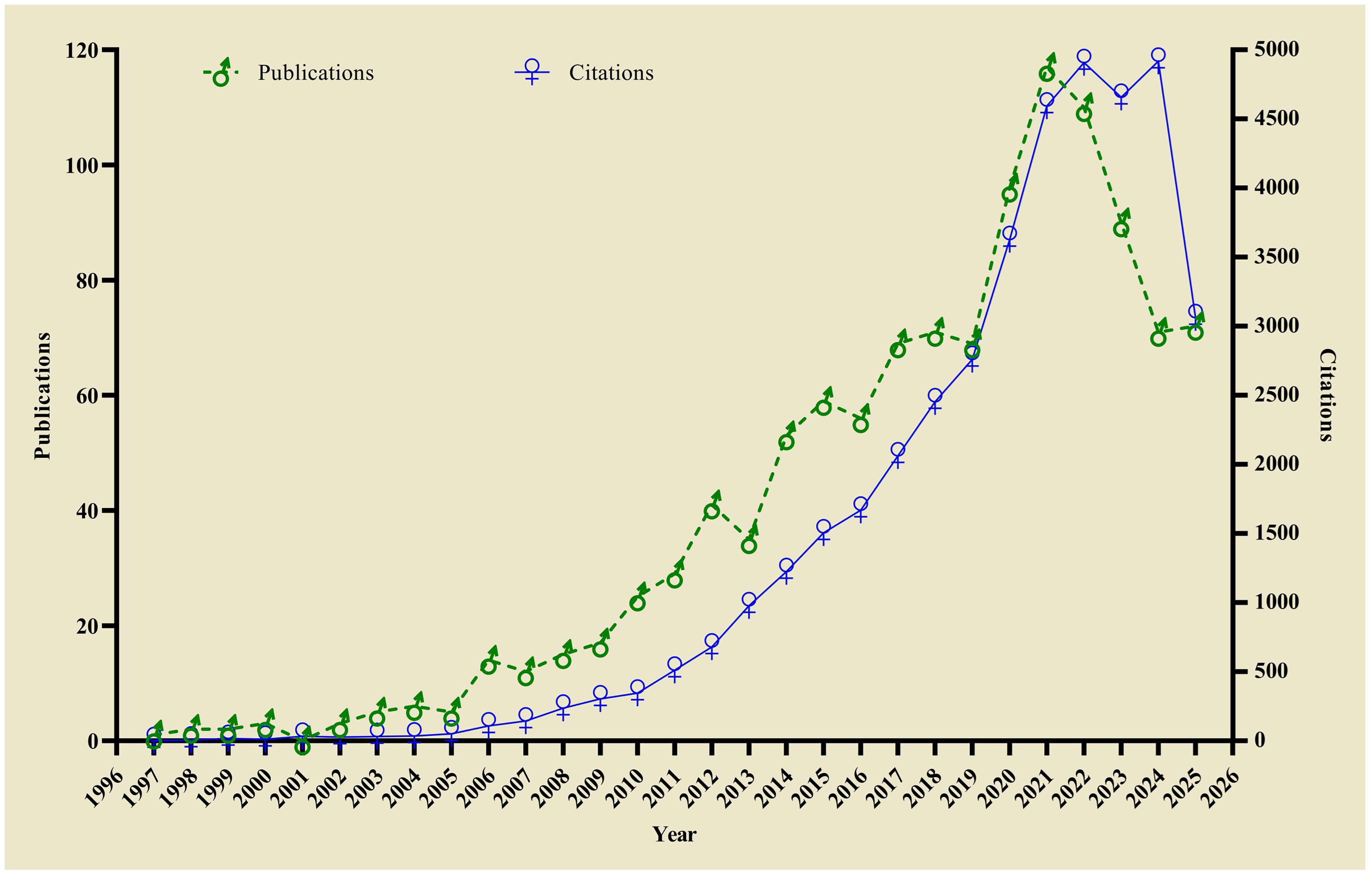
The annual distribution of publication and citation frequencies for 1148 documents.
National contribution
The publications analyzed in this study span 76 countries and regions, as illustrated in Figure 3(A). To assess national contributions to the field of HSM in chronic disease management, we utilized several key indicators, including total article count, international collaboration frequency, and publication trends over time.
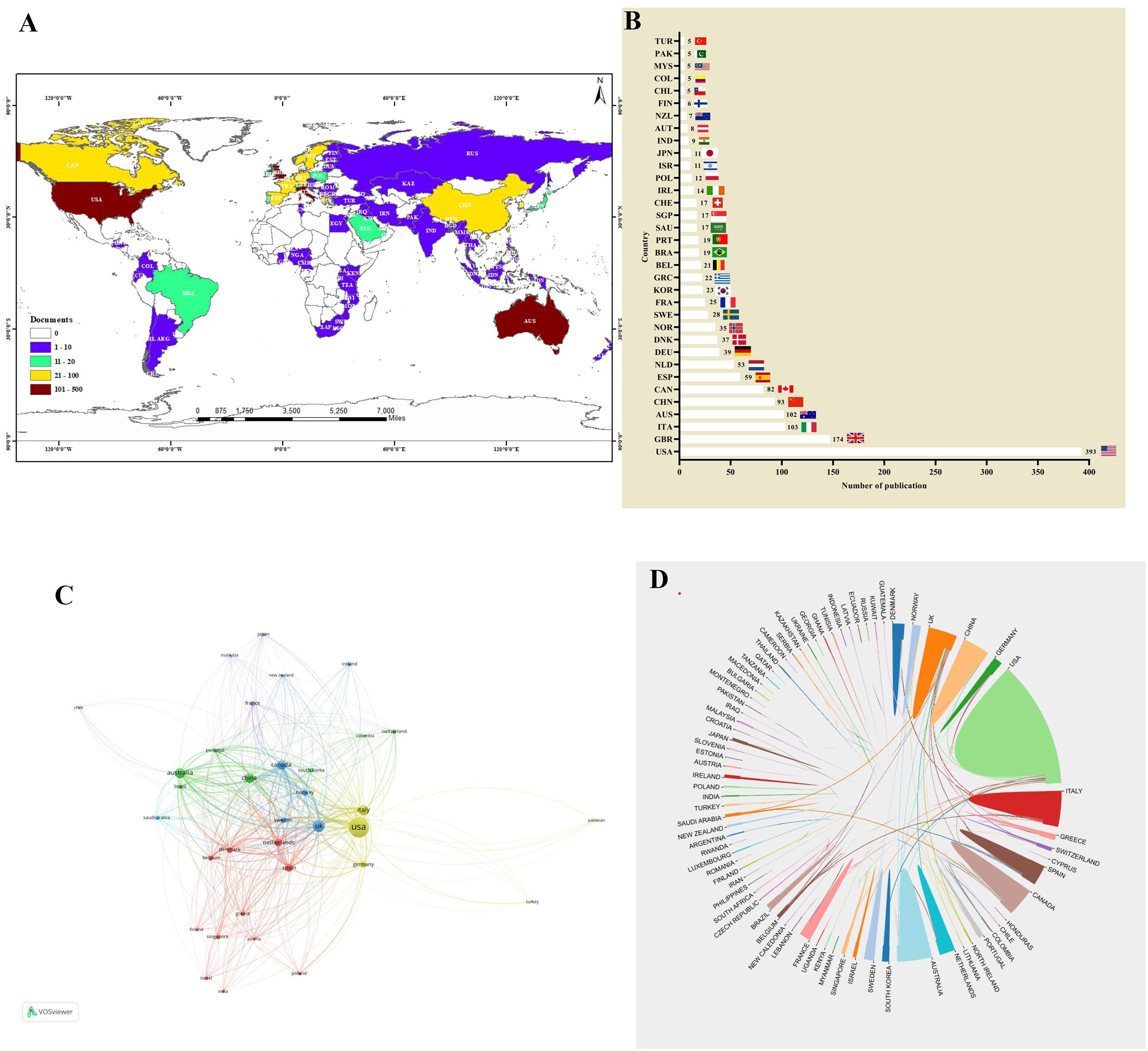
Contributions of different countries to the research. (A) Overall situation of number of publications worldwide. (B) The number of publication count in countries with more than five articles published. (C) Country/region collaboration network. (D) International relationships in circular graph.
As shown in Table 1, the top four countries leading this research domain, namely the United States (393 articles), the United Kingdom (147 articles), Italy (103 articles), and Australia (102 articles), have each published over 100 articles, underscoring their significant contributions and leadership in this field. We define “leading countries” based on their total publication output, which serves as a quantitative measure of their research activity and influence in health telemedicine.
Top 10 countries/regions in terms of number of documents.

The geographic distribution shown in Figure 3(B) highlights that most nations with a substantial number of publications are high-income countries, primarily from Europe and North America. This trend reflects the resource availability and infrastructural support for telemedicine research and its implementation in these regions.
Furthermore, Figure 3(C) and (D) illustrates the co-occurrence patterns of collaboration among countries engaged in telemedicine for home-based self-monitoring of chronic diseases. The United States emerges as a central node in this network, indicating a high frequency of collaborative work with other nations. This central position emphasizes the U.S.'s critical role in fostering international research partnerships. Notably, there are significant co-occurrence links among the United States, Canada, the United Kingdom, and Italy, further confirming their impactful contributions to the global research landscape in this domain.
Leading institutions
This study includes 1148 articles from 2131 institutions. Among them, the University of Toronto, the University of Queensland, and the University of Washington are the top three institutions with the largest number of published papers (see Table 2). The University of Oxford is the most frequently cited institution, while the University of Manchester exhibits the highest total link strength. Figure 4 illustrates the co-occurrence relationships between institutions involved in telemedicine for home-based self-monitoring in chronic disease management. It reveals that the University of Melbourne and Monash University demonstrate the strongest collaborative ties, with the University of Oxford also showing a significant connection to the University of Manchester.

Institutional collaboration network.
Top 10 institutions in terms of number of documents.

Leading authors
Since the initial publication concerning telemedicine for HSM in chronic disease management, a total of 6267 authors have contributed to research in this field. Co-authorship analysis reveals a network of influential scholars who have played pivotal roles in advancing the discipline (see Figure 5(A)). Notably, authors Scalvini, Simonetta (documents: 11; citations: 383; total link strength: 17) and Vitacca, M (documents: 11; citations: 471; total link strength: 18) occupy central positions within this network, underscoring their prominent roles in collaborative research efforts. Polisena, J (citations: 160; total link strength: 2247) emerges as the author with the highest number of co-citations among the 28,702 co-cited authors analyzed, which can be interpreted as an indication of his substantial intellectual influence in the field. Figure 5(B) illustrates the co-citation network of authors, analyzed utilizing VOSviewer. Co-cited authors, who are referenced together in at least one publication, exhibit shared research interests, demonstrating the interconnected nature of their work. The frequency of co-citations for Polisena, J emphasizes his consistent impact on the academic discourse pertaining to home-based self-monitoring in chronic disease management.

(A) The overlay map of co-authors in home-based self-health monitoring in chronic disease management. (B) The overlay map of co-cited authors in home-based self-health monitoring in chronic disease management.
Among the collaborations, Scalvini, Simonetta, Bernocchi, and Palmira demonstrate the strongest ties, showcasing a robust collaborative network that significantly contributes to ongoing research. Table 3 presents the top 10 authors and co-cited scholars within the context of telemedicine for home-based self-monitoring in chronic disease management. An observable strong co-occurrence relationship exists among these scholars; those who publish frequently are cited together more often. These co-authorship and co-citation patterns underscore their substantial influence not only on current research but also on prospective directions within the field. However, it is important to recognize that while co-citation reflects past influence, the actual predictive capacity regarding future impact should be contextualized with emerging trends and evolving research focuses in telemedicine.
The top 10 co-authors and co-cited authors of home-based self-health monitoring in chronic disease management.

Publication source
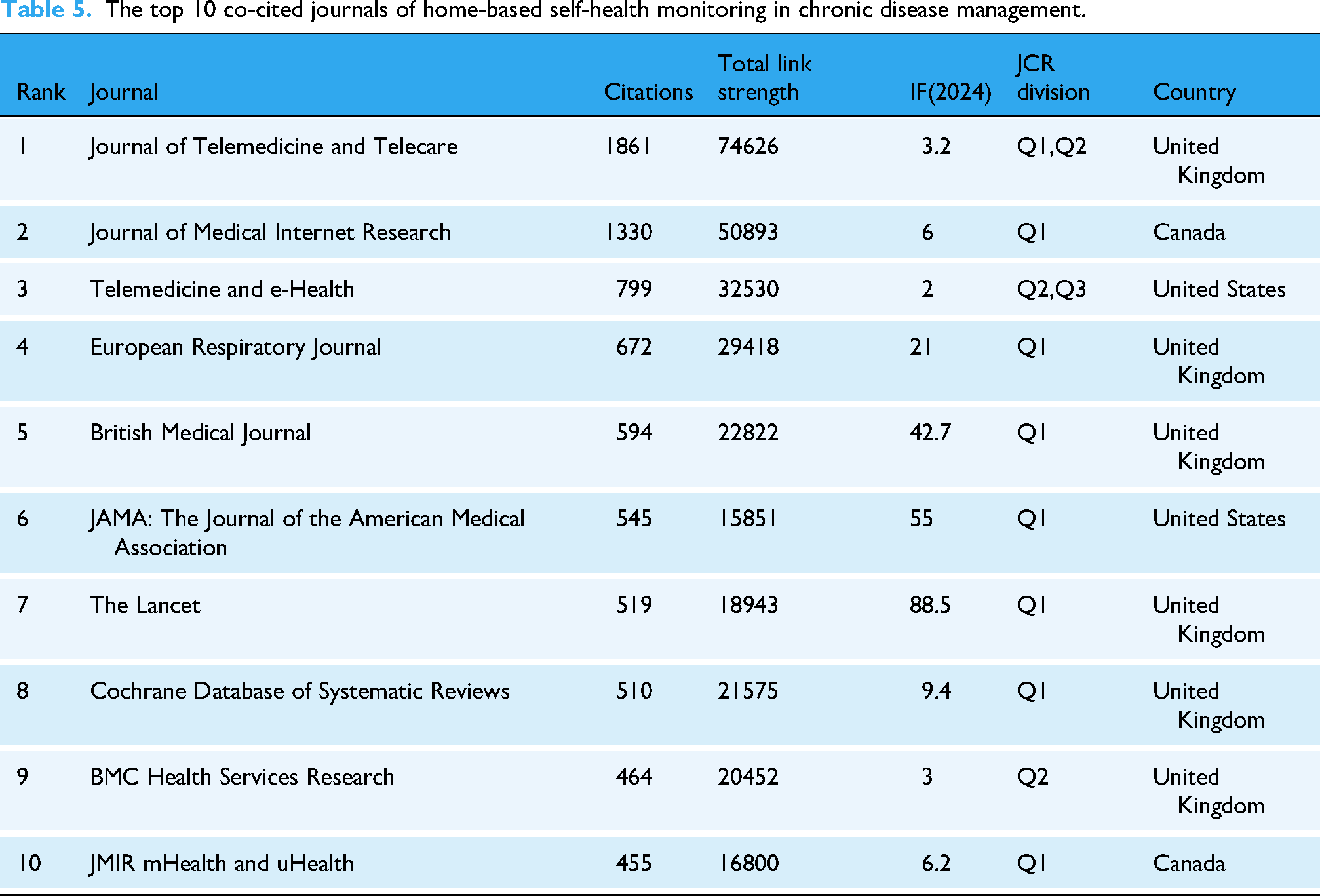
A total of 1148 papers were published across 426 academic journals. The top three journals with the highest number of published articles are the Journal of Medical Internet Research (83 articles), Telemedicine and e-Health (71 articles), and the Journal of Telemedicine and Telecare (64 articles), all of which have published more than 60 articles (Table 4). Among all co-cited journals, the Journal of Telemedicine and Telecare and the Journal of Medical Internet Research are the most frequently cited, with both surpassing 1000 co-citations (Table 5).
The top 10 journals of home-based self-health monitoring in chronic disease management.
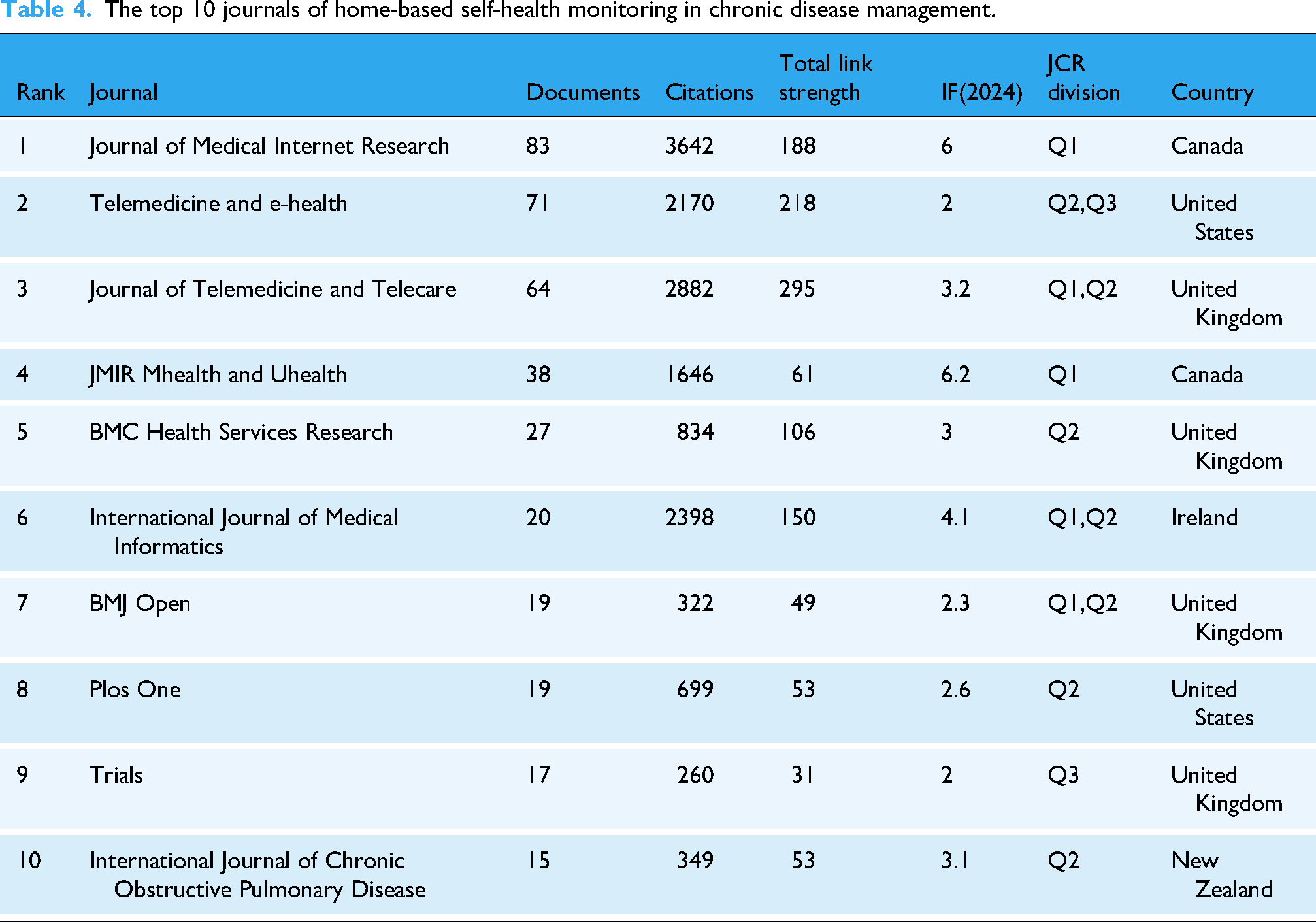
The top 10 co-cited journals of home-based self-health monitoring in chronic disease management.
One primary green citation path was identified, showing that studies in medicine, medical, and clinical journals were primarily cited by research in health, nursing, and medicine. Additionally, one secondary blue citation path highlighted that studies published in psychology, education, and health journals were predominantly referenced by research in health, nursing, and medicine. These citation paths illustrate knowledge flows between different domains: the green path reflects the influence of medical and clinical research on subsequent health-related studies, while the blue path indicates the integration of psychosocial and educational perspectives into health research (Figure 6).

The dual-map overlay of journals related to home-based self-health monitoring in chronic disease management.
Together, these citation trajectories underscore the interdisciplinary nature of telemedicine and chronic disease management, indicating how various sources of evidence contribute to the understanding and development of HSM.
High-cited reference
CiteSpace was utilized to analyze highly cited references in the field of telemedicine, specifically focusing on home-based self-monitoring for chronic disease management. As presented in Figure 7 and Table 6, the analysis identified the top 10 co-cited references with the highest frequency and betweenness centrality. The resulting co-citation network encompassed a substantial volume of literature, comprising 40,070 references, 1074 nodes, and 4101 links.

The network of co-cited references in home-based self-health monitoring in chronic disease management.
The top 10 co-cited references of home-based self-health monitoring in chronic disease management.

Leading the list of frequently co-cited articles is “Home telehealth for chronic obstructive pulmonary disease: a systematic review and meta-analysis” by Polisena J. et al.. 10 Published in the Journal of Telemedicine and Telecare in 2010, this article represents a significant assessment of home telehealth interventions in managing chronic diseases, especially for patients with chronic obstructive pulmonary disease (COPD). The authors synthesized a broad spectrum of existing research, creating a robust scientific basis for telemedicine applications in long-term care contexts. Although this article is frequently cited, it is essential to understand that high co-citation frequency primarily reflects its visibility and recognition in academic discourse, rather than denoting a definitive impact on practice. The findings from this study highlighted the potential benefits of enhancing patient self-management and improving quality of life for patients, although further empirical studies are necessary to fully validate its impact on healthcare utilization outcomes.
Figure 8 presents the top 25 references characterized by substantial citation bursts, which alert researchers to emerging trends or increasing interest within the domain. Notably, the second most frequently co-cited article is “Systematic review of home telemonitoring for chronic diseases: The evidence base” by Paré G. et al., 11 published in the Journal of the American Medical Informatics Association in 2007. Despite its secondary ranking in co-citation frequency, this article is distinguished by possessing the highest burst strength among the identified top 25 references. Burst strength is a crucial indicator of a marked surge in citations over a defined timeframe, reflecting contemporary interest in the study. The article provides a systematic analysis of home telemonitoring's implications for chronic diseases, with a firm focus on patient outcomes, clinical effectiveness, and economic considerations. It emphasizes the need for further research to enhance telehealth solutions tailored for chronic disease management. However, it is pertinent to interpret the implications of burst metrics with caution; while elevated burst strength signals current relevance and interest, it does not inherently establish lasting significance in the field, as citation patterns can fluctuate over time.

Keywords and burst
A keyword co-occurrence network is essential for identifying key research areas and emerging trends within a particular domain. Figure 9(A) presents the network structure for research related to telemedicine in home-based self-monitoring for chronic disease management, highlighting terms that frequently co-occur. Key terms such as “Care,” “Management,” “Telemedicine,” “Telehealth,” “Outcome,” “Quality of Life,” “Chronic Disease,” “Health,” “Obstructive Pulmonary Disease,” and “Heart Failure” represent central research themes. This network demonstrates the focus on patient-centered care and digital health technologies.

Keyword analysis in home-based self-health monitoring in chronic disease management. (A) The network of keywords co-occurrence. (B) Keyword cluster network map. (C) Keyword landscape. (D) Keywords timeline view.
Figure 9(B) outlines ten key keyword clusters, each corresponding to a distinct research topic. The clusters “#0 heart failure,” “#2 chronic obstructive pulmonary disease,” “#6 chronic illness,” and “#9 chronic disease management” highlight significant areas of research in chronic disease management. The clusters “#1 management,” “#3 care,” and “#5 mobile phone” indicate the relevance of healthcare delivery systems and mobile health (mHealth) technologies in managing chronic conditions. Additionally, the clusters “#4 systematic review,” “#7 inflammatory bowel disease,” and “#8 amyotrophic lateral sclerosis” reflect ongoing research efforts and innovations in the field.
Figure 9(C) provides a visual depiction of keywords, showcasing the focus within this research area. A chronological view of the clusters indicates that clusters “#3 care,” “#6 chronic illness,” “#8 amyotrophic lateral sclerosis,” and “#9 chronic disease management” appeared earlier, reflecting foundational themes in chronic disease management. Clusters “#0 heart failure,” “#1 management,” “#2 chronic obstructive pulmonary disease,” “#4 systematic review,” “#5 mobile phone,” and “#7 inflammatory bowel disease” emerged later, representing more recent trends in telemedicine.
Table 7 offers a summary of the top 20 keywords related to telemedicine for home-based self-monitoring in chronic disease management.
Top 20 keywords of home-based self-health monitoring in chronic disease management in terms of frequency and centrality.

The timeline view of the keyword cluster network reveals the chronological evolution of research topics in telemedicine for HSM in chronic disease management (Figure 9(D)). Three clusters, namely “#6 chronic illness,” “#8 amyotrophic lateral sclerosis,” and “#9 chronic disease management,” emerged early, highlighting initial research focuses in chronic disease management strategies.
As time progressed, clusters “#1 management,” “#2 chronic obstructive pulmonary disease,” “#3 care,” and “#4 systematic review” emerged, reflecting a gradual shift in focus toward enhancing management strategies and reviewing systematic approaches in chronic disease management.
More recently, clusters “#0 heart failure,” “#5 mobile phone,” and “#7 inflammatory bowel disease” have been identified, indicating the latest trends in the research landscape without delving into their implications or significance.
Figure 10 illustrates the top 25 keywords that have experienced significant citation bursts in telemedicine for home-based self-monitoring in chronic disease management. These keywords are categorized based on their beginning (Figure 10(A)), durations (Figure 10(B)), and strengths (Figure 10(C)).

The top 25 keywords with the strongest citation bursts. (A) Ranking by beginning. (B) Ranking by durations. (C) Ranking by strengths.
Discussion
Summary
This study presents the first comprehensive bibliometric analysis of telemedicine in HSM for chronic disease management, addressing a gap in previous research. While earlier studies have examined telemedicine broadly, our focus specifically on chronic disease self-monitoring with quantitative bibliometric methods reveals important insights about this niche area.
Analyzing a total of 1148 publications from 1997 to 2025, we identified key players in this domain including leading countries, institutions, and authors, as well as pinpointing primary research hotspots and emerging trends. For instance, the United States and China dominate publication activity, reflecting broader investments in health technology and chronic disease management strategies, which contrasts with findings from bibliometric analyses in related fields that indicate a more even distribution of research outputs globally (author citations).
Furthermore, unlike prior reviews that concentrated solely on medical, nursing, or engineering perspectives, this study underscores the interdisciplinary nature of the field. Integrating insights from clinical medicine, information technology, psychology, and social sciences, we note that the increasing emphasis on mHealth technologies particularly enhances patient engagement and compliance in chronic disease management. This aligns with findings from similar studies, which highlight the importance of interdisciplinary approaches in improving patient outcomes.
By documenting the temporal evolution of research, this work illustrates how smart devices, data analytics, and personalized strategies are reshaping chronic care. Our analysis identifies significant trends in the literature, such as the rising interest in artificial intelligence and machine learning applications. This trend is crucial but remains under-explored in relation to their actual efficacy and impact on patient outcomes, signaling a substantial gap for future research.
In summary, this study provides a structured framework for understanding the current landscape of home-based telemedicine. It outlines critical future directions for research, emphasizing the need to evaluate the effectiveness of these technologies in real-world settings and encouraging further cross-disciplinary collaboration to investigate the role of social determinants in health outcomes.
General information
The results of this bibliometric analysis provide a quantitative insight into the rapid expansion of research in the area of HSM for chronic disease management since 1997. Notably, our bibliometric data indicate a significant surge in publications starting in 2020, peaking in 2021 and 2022, with over 110 articles published each year. This upward trend aligns with the global COVID-19 pandemic's impact, which necessitated a shift toward remote healthcare solutions due to physical distancing measures. However, the bibliometric evidence suggests that as we entered 2023, publication counts returned to pre-pandemic levels, akin to those seen in 2019. This decline suggests a possible normalization of research output following the initial pandemic surge, although the data indicates an overall positive trajectory for telemedicine's role in chronic disease management beyond immediate pandemic-related contexts.
The geographical distribution of research highlights a concentration of studies from high-income countries, particularly the United States, the United Kingdom, and Italy. These findings underscore the importance of economic factors in facilitating research output on telemedicine technologies. Institutions such as the University of Toronto and the University of Queensland are prominent contributors, suggesting a correlation between institutional resources and research productivity in this field.
Our analysis also identified key authors, including Scalvini, Simonetta, and Vitacca, M., with Polisena, J. achieving the highest co-citation index. This suggests that Polisena's seminal works, such as the 2010 article on “Home telehealth for chronic obstructive pulmonary disease,” serve as cornerstones in the literature. 10 The identification of the Journal of Medical Internet Research as the leading publication outlet, along with the Journal of Telemedicine and Telecare as the most co-cited, further illustrates where the bulk of influential research lies, aligning with established bibliometric trends regarding high-impact journals in telemedicine.
Despite the dominance of high-income countries, there exists a clear gap in research output from low- and middle-income countries. As these regions increasingly adopt telemedicine for underserved populations, future research may shift, contributing to a more global understanding of HSM.
In summary, while the growth in research on HSM has been influenced heavily by the COVID-19 pandemic, evidence indicates that this sector will retain its relevance in chronic disease management. Our bibliometric study highlights notable patterns, including the leading contributions from high-income countries and gaps that suggest opportunities for future research expansion, especially in less represented regions (Figure 11(A)).
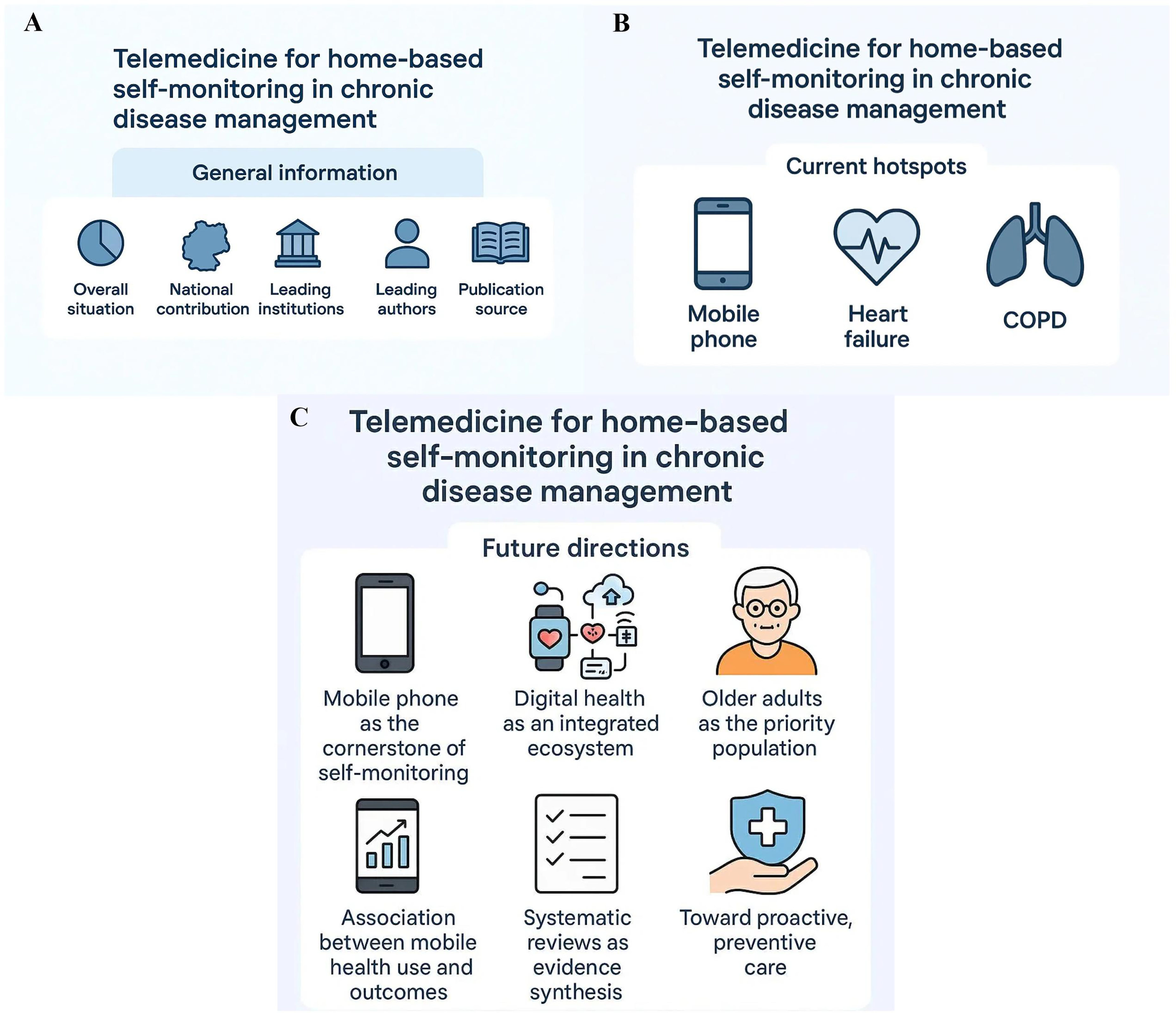
Telemedicine for home-based self-monitoring in chronic disease management. (A) General information. (B) Current hotspots. (C) Future directions.
Current hotspots
The increasing interest in HSM for chronic disease management reflects the marked evolution in mobile technology, as evidenced by our bibliometric analysis. Our findings identified several research hotspots, including the integration of mobile phones in managing chronic conditions like heart failure (HF) and COPD. Notably, these diseases exhibit high morbidity and mortality rates, which have prompted significant academic and clinical investigations into enhancing patient self-management through technology.
Through keyword co-occurrence and citation analysis, we noted that recent studies emphasize specific aspects of mHealth solutions tailored for HF and COPD, such as user engagement and data integration across various health monitoring applications. 33 This aligns with the trends observed in previous bibliometric analyses, which underline the increasing relevance of mobile technologies in chronic disease management. 34 For instance, Sun Y have reported similar findings regarding mHealth's impact in other chronic conditions, highlighting the necessity for continuous monitoring and timely interventions. 35
Furthermore, our research highlighted a gap in the literature concerning the comparative effectiveness of different mHealth interventions tailored to HF and COPD. While our analysis indicates a robust interest in mobile solutions, few studies have systematically evaluated their clinical efficacy and patient outcomes—a critical component in verifying the usefulness of these technologies in real-world settings. Prior studies have called attention to the need for randomized controlled trials and longitudinal studies to substantiate claims regarding effectiveness.36,37
The advancements in AI and machine learning within mHealth applications also present an area ripe for further exploration, as our analysis indicated limited research specifically discussing predictive analytics related to patient outcomes in HF and COPD. This undercurrent is echoed in existing literature where authors highlight the potential of such technologies, yet empirical evidence remains scarce.
As we look forward, it is essential that future research not only focuses on innovation and the potential applications of emerging technologies like 5G and IoT but also rigorously assesses their effectiveness through evidence-based approaches. 38 Our study underscores the critical role of continuous research in integrating mobile solutions into healthcare systems to enhance patient outcomes and decrease healthcare costs effectively.
In summary, while mobile phones have the capacity to transform chronic disease management, especially for HF and COPD, a more focused approach is required. By narrowing down the discussions to align with bibliometric insights and addressing specific gaps in the literature, we can facilitate a clearer understanding of the future direction for mHealth in chronic disease management (Figure 11(B)).
Overview of emerging research directions
The bibliometric analysis reveals several significant research directions in HSM. Key themes emerging from our analysis include the prominence of mobile technology, digital health integration, the focus on older adults, the relationship between mHealth use and patient outcomes, and the role of systematic reviews in evidence synthesis. These themes reframe our understanding of current trends and future directions in chronic disease management, particularly as societies adapt to an aging population and a shift towards more digitalized healthcare systems (Figure 11(C)).
Mobile phones: the central tool for self-monitoring
Mobile phones have proven to be the cornerstone of self-health monitoring in chronic disease management, reflecting their widespread use in the literature we reviewed. Their capabilities for real-time data collection and transmission enable continuous health monitoring. 39 Future studies should specifically explore the integration of smartphone applications with wearable devices and cloud-based systems, which can enhance data accuracy and user engagement. As reflected in recent studies, the rollout of 5G technology enhances real-time communication between healthcare providers and patients, potentially improving response times to critical health events.
The integrated ecosystem of digital health
Our analysis indicates that digital health encompasses a comprehensive ecosystem that goes beyond individual applications. The role of AI, machine learning, and IoT, as noted in other bibliometric studies, underlines the importance of developing interoperable systems to ensure efficient data sharing among various healthcare technologies. 40 Future research should focus on evaluating the effectiveness of these integrated models in disease prevention, while also addressing data privacy and ethical considerations as highlighted by recent literature.
Older adults: a priority population
As noted in several studies, older adults represent a key demographic for health monitoring solutions due to their heightened vulnerability to chronic health conditions. 41 Our findings indicate a clear need for research targeting usability issues specific to this population. This includes simplified interfaces, accessibility adaptations, and tailored support resources. Further investigation into the psychological and social factors that influence technology acceptance in older adults is crucial to maximize the effectiveness of self-monitoring tools.
Association between mobile health use and patient outcomes
Future research should rigorously examine the correlation between mHealth interventions and various patient outcomes. Our analysis emphasizes the necessity of larger and more comprehensive studies to establish robust evidence of the impact on hospital readmission rates, medication adherence, and patients’ quality of life.42,43 Understanding the cost-effectiveness of these technologies is also imperative for advocating their integration into standard healthcare practices.
Systematic reviews: synthesis of evidence
Given the expanding body of literature in this area, systematic reviews will continue to play a vital role in consolidating evidence and directing future lines of inquiry. 44 These reviews are essential not only for identifying best practices but also for pinpointing gaps where further study is needed, particularly in relation to older adults and emerging technologies.
Toward proactive preventive care
The trajectory of HSM is shifting towards proactive strategies for chronic disease management. Empowered by mobile technology and digital health resources, there is potential for early intervention and lifestyle enhancement. For older adults, this focus translates into improved independence and a reduction in hospital dependency. These advancements hold promise for alleviating the burden on healthcare systems while optimizing resource use.
In summary, our bibliometric analysis underscores the importance of mobile technologies, integrated digital health systems, and the needs of older populations as transformative elements in chronic disease management. Establishing strong empirical associations through methodologically rigorous research and consolidating findings through systematic reviews are critical steps in evolving this field and enhancing telemedicine strategies.
Limitations
This study has several limitations that should be acknowledged. First, the analysis was based solely on publications retrieved from the WoSCC. While this database is widely recognized for its comprehensive coverage, relying exclusively on it may have led to the omission of relevant studies indexed in other databases such as Scopus, PubMed, or IEEE Xplore, thereby narrowing the scope of the findings. Second, only English-language publications were included. Although this approach ensured consistency in analysis, it may have inadvertently excluded important contributions published in other languages, particularly those from non-English-speaking regions where telemedicine and home-based health monitoring are also actively studied. Third, the search was conducted on 16 August 2025, meaning that subsequent publications were not captured. Given the rapid development of telemedicine and digital health technologies, newer studies may provide updated insights that were not reflected in this analysis. Finally, only original articles and reviews were considered, while other document types such as conference proceedings, book chapters, or editorials were excluded. Although this strategy aimed to ensure data reliability, it may have overlooked valuable perspectives or emerging findings presented in alternative formats.
Conclusions
This bibliometric analysis highlights the exponential growth and increasing global interest in telemedicine, particularly in HSM for chronic disease management, evident from the rising number of publications since 1997. The data demonstrates significant research output originating from leading countries, primarily the United States, the United Kingdom, and Italy. Notably, the University of Toronto, the University of Queensland, and the University of Washington have emerged as top contributors, indicating a concentration of expertise in key institutions.
The author network analysis reveals strong collaborations among top researchers in the field, which underscores the importance of interdisciplinary work. Prominent journals, characterized by high impact factors and visibility, have played a crucial role in disseminating significant findings, thus shaping the discourse around telemedicine and its applications.
Key themes identified through keyword clustering, such as mHealth technologies, digital platforms for patient engagement, and an emphasis on elderly care, illustrate evolving trends in research focus. These emerging topics signal potential pathways for future research that could enhance patient outcomes and address systemic challenges within chronic disease management.
While this analysis underscores the benefits of telemedicine, such as reduced hospitalization rates and increased cost-effectiveness in healthcare delivery, it also points to persistent challenges, including fragmented data, incomplete health records, and the necessity for continuous patient follow-up. To realize the full potential of telemedicine in chronic disease management, it is crucial to foster international collaboration, strengthen evidence-based practices, and integrate innovative technologies into sustainable healthcare models.
This study provides a comprehensive overview of the current research landscape while identifying pivotal frontiers that will guide future explorations in telemedicine and chronic disease management.
Supplemental Material
sj-docx-1-dhj-10.1177_20552076261433666 - Supplemental material for Bibliometric analysis of home-based self-health monitoring in chronic disease management: Current trends and research activity in telemedicine
Supplemental material, sj-docx-1-dhj-10.1177_20552076261433666 for Bibliometric analysis of home-based self-health monitoring in chronic disease management: Current trends and research activity in telemedicine by Xianxian Zhou, Dexi Hu, Hua Xiong, Hong Zhou, Haiyan Xu and Haili Tang in DIGITAL HEALTH
Footnotes
Acknowledgements
The author sincerely appreciates the contributions of all the students and colleagues who have assisted in this research. Their insights and support have been invaluable throughout the process. Additionally, the author extends heartfelt gratitude to Yiyang Central Hospital for their substantial support of this project, which has played a crucial role in its development. Special thanks are also to Professor Xuping Li from Xiangya Second Hospital of Central South University for his invaluable guidance on the search strategies employed in this work.

Author contributions
Xianxian Zhou was responsible for the study design, data collection, and the initial drafting of the manuscript. Dexi Hu and Hua Xiong conducted data analysis and interpretation, as well as contributed to revising the manuscript. Hong Zhou and Haiyan Xu supervised the study, provided critical feedback, and ensured the accuracy of the data analysis. Haili Tang and Xianxian Zhou participated in the conceptualization of the study, coordinated the research activities, and made significant revisions to the final manuscript. All authors reviewed and approved the final version of the manuscript.
Funding
The authors received no financial support for the research, authorship, and/or publication of this article.
Declaration of conflicting interests
The authors declared no potential conflicts of interest with respect to the research, authorship, and/or publication of this article.
Data availability
The datasets utilized and analyzed in this study can be obtained from the corresponding author upon reasonable request.
Supplemental material
Supplemental material for this article is available online.
References
Supplementary Material
Please find the following supplemental material available below.
For Open Access articles published under a Creative Commons License, all supplemental material carries the same license as the article it is associated with.
For non-Open Access articles published, all supplemental material carries a non-exclusive license, and permission requests for re-use of supplemental material or any part of supplemental material shall be sent directly to the copyright owner as specified in the copyright notice associated with the article.
