



Abstract
Background
The internet of medical things (IoMT) is revolutionizing digital health through continuous monitoring, real-time diagnostics, and remote care capabilities. Nonetheless, research in this domain remains disjointed, with a restricted comprehension of its growth trajectories, principal contributors, and thematic emphasis. A comprehensive evaluation is thus required to inform forthcoming research, policy, and advancements in resilient healthcare technologies.
Methods
This study performed a bibliometric and literature-based analysis of IoMT research indexed in the Scopus database from 2016 to 2023. The dataset was optimized by keyword screening, resulting in 762 pertinent papers. Bibliometric indices, including as publication and citation trends, authorship and institutional output, and funding patterns, were analyzed. Thematic evolution was examined by keyword co-occurrence and cluster mapping utilizing VOSviewer, complemented by a synthesis of literature.
Results
A total of 762 publications on IOMT were identified, comprising 63.12% journal articles, 30.97% conference papers, and 5.91% review papers. The total publications rose from 1 in 2016 to 301 in 2023, indicating a 30,000% increase. Total citations reached 19,014, with an h-index of 171. The most prolific contributors were Mohsen M. Guizani, King Saud University, and India. Collaborations and funding, particularly from international agencies, were found to significantly drive research productivity. Keyword and cluster analyses revealed two dominant thematic areas: Smart Medical Diagnostics and Privacy-Driven Health Technologies. The literature further confirmed strong integration of machine learning, blockchain, sensor technologies, and cloud computing in IOMT applications.
Conclusion
This analysis consolidates fragmented IoMT research, providing a structured overview of its development, contributors, and thematic trajectories. The findings highlight the rapid growth, global collaborations, and integration of advanced technologies driving the field. By mapping benchmarks and research hotspots, the study offers valuable evidence to guide future investigations, interdisciplinary collaborations, and policy efforts aimed at strengthening secure and patient-centered digital health systems.
Keywords
Introduction
The internet has ushered in a new era of computerized applications across various sectors.1,2 One of the most notable beneficiaries has been the application of the Internet of Things (IoT) in the healthcare sector, otherwise termed, the Internet of Medical Things (IoMT). 3 IOMT is typically described as any network of interconnected medical devices and computer applications that interchange patients’ data through the Internet to improve the delivery of healthcare services.4,5 According to Schneider and Xhafa, 6 IOMT could also be described as the integrated application of medical sensors, mobile computing, and other communication technologies to monitor the vital indicators of patients and relay the data to a cloud computing framework in real time. 6 Consequently, doctors and clinicians could access and utilize the data, typically stored in healthcare storage systems, to effectively diagnose, monitor, and treat patients. 7
Over the years, the IOMT has been helping to transform health and Medicare through the use of innovative technologies. 8 In particular, IOMT has helped health and medical care institutions transform healthcare delivery from manual management systems to computerized systems of professional storage. 7 The objective has been to improve clinical practices and modernize medical procedures that enhance patient outcomes by ensuring that patients and medical professionals exchange information necessary to enhance health/medical delivery.7,8 The study by Bhatia et al. 9 highlights the aim of IOMT is also to facilitate secure, constant, and remote monitoring of the health/medical conditions of patients, to enable physicians to present high-quality, cost-effective, and time/life-saving healthcare.
Despite its potential, IOMT is currently hampered by some challenges. For example, the security and privacy of patients and healthcare/medical data, interoperability between devices, and the necessity of monitoring structures are significant issues that need to be addressed to ensure the proper development of IoMT and its applications in the future.10–12 Furthermore, the growing number of cyberattacks on healthcare institutions makes the creation of strong solutions to protect patients’ private data imperative.
Given its numerous prospects and challenges, it is critical to examine the current landscape and trajectory of IOMT research through bibliometric analysis (BA). Therefore, the primary objective of this paper titled, ‘Emerging Trends and Bibliometric Analysis of Internet of Medical Things for Innovative Healthcare (2016–2023)’ is to provide a comprehensive overview and understanding of the current state of IoMT research by highlighting the key trends, opportunities, and challenges in this research field. The study also seeks to chart the development of the IOMT research field, detect dominant contributors, and inform future directions. Moreover, the collaborative networks and scholarly contributions in IOMT are outlined to provide an understanding of the research ecosystem and highlight international opportunities for future researchers looking for potential collaborations. Lastly, it aims to investigate the patterns of citations and the global impact of benchmark publications on IOMT, which highlights the foundational research and guides future research. This knowledge is crucial for addressing complex challenges and fostering interdisciplinary expertise.
Despite the growing significance of the IOMT in healthcare innovation, research in this field remains disjointed and lacks a unified comprehension of its thematic development, principal contributors, and international collaboration trends. 13 This study fills the gap by doing a thorough BA of Scopus-indexed articles from 2016 to 2023, providing a data-driven overview of publication trends, key contributors, and emerging themes. The study employs tools like VOSviewer to delineate the intellectual framework of IoMT research, emphasizing two principal topic clusters: ‘Smart Medical Diagnostics’ and ‘Privacy-Driven Health Technologies’. The scope includes performance analysis, social network mapping, and topic inquiry, aiming to connect academic findings with practical applications. This contribution enhances the academic comprehension of IOMT's development and serves as a strategic reference for policymakers, researchers, and practitioners aiming to promote digital health innovation.
Although the IoMT has garnered significant interest in recent years, the current literature is disjointed, lacking a unified and empirical assessment of its scientific advancement, research themes, and stakeholder engagement. 14 Many existing studies concentrate on particular applications or technological advancements of IoMT, yet few provide a thorough examination of the field's structural evolution and academic influence over time. 15 The lack of comprehensive evaluation hinders academics, practitioners, and policymakers from recognizing knowledge deficiencies, prioritizing emerging themes, or assessing academic achievements. The swift advancement of IoMT, propelled by technologies like machine learning (ML), cloud computing, and blockchain, necessitates prompt, evidence-based analysis of research trends to guarantee effective information transmission and practical application. 16 This study aims to address a significant gap by performing a bibliometric and literature-based analysis to delineate the evolution, impact, and thematic focus of IoMT research, thus providing a systematic overview that aids future research, policy development, and technological integration in digital healthcare.
Review of literature
The rate of innovation in IoMT has reached previously unheard-of levels. The integration of intelligent sensors, cloud computing, and big data analytics as well as advanced digital technologies such as artificial intelligence (AI), ML, and blockchain technology into healthcare delivery has revolutionized real-time data collection and analysis, enhancing decision-making and personalized treatment plans.12,17,18 Furthermore, analysts posit that such innovations in IOMT could help humanity curb or mitigate the impact of future pandemics such as COVID-19 and ensure public health protection across the globe.19,20
The IOMT is a new area within the larger IoT ecosystem that connects medical equipment, sensors, and healthcare systems through networks that are connected to the internet. 21 It is the result of the confluence of healthcare and digital technology. IOMT makes it possible to gather, send, and analyze health-related data in real time, which changes the way patients are monitored, diagnosed, and treated.22,23 Wearable gadgets, implantable sensors, and remote monitoring tools are being used more and more, which has allowed healthcare professionals to move away from traditional clinical settings and into more personalized, continuous, and data-driven models of care. 24 As more research is done in this area, two main themes have become very important: Smart Medical Diagnostics (SMD), which uses IOMT-enabled technologies to make diagnoses more accurate and efficient, and Privacy-Driven Health Technologies (PHTs), which deal with the important issues of data protection, privacy, and safe health data governance.
The concept of SMD involves the integration of advanced computing technologies (ACT) such as ML, artificial learning, deep learning, and other learning systems along with tools/technological advancements such as such internet, medical imaging, IoT, and IOMT to boost patient diagnosis and treatment in the healthcare sector. Over the years, numerous researchers across the globe have adopted ACT for SMD with the view to effectively diagnose patient's illnesses and improve healthcare delivery. In particular, the use of medical imaging, IoT, and IoMT for analysis of data, and real-time monitoring of patients reportedly enhances the accuracy and efficiency of disease detection and patient management. Overall, the objective is to improve diagnostic methods and tailor-made care of patients.
The research landscape on IoMT and healthcare diagnostics has been shaped by significant developments in various applications in chronic and infectious diseases. One of such innovations has been the integration of IoMT-based biosensors in point-of-care testing. 25 According to Jain et al., 25 this innovative approach boosts the precision and pace of identifying infectious illnesses. Khan and Algarni 26 developed an innovative healthcare system for monitoring and diagnosing heart diseases. The system accomplished the task by merging multiple sensor data to improve diagnostic abilities with the help of Modified Salp Swarm Optimization and Adaptive Neuro-Fuzzy Inference System (MSSO-ANFIS) in a cloud environment. In a separate study, Su et al. 27 investigated the application of deep learning systems in the screening system for valvular heart disease using IoMT. The authors demonstrated the capacity to utilize AI to enhance the efficiency of screening heart disease. The study showed that AI provides a trustworthy prediction model and diagnostic support for heart disease treatment.
Studies have also demonstrated the effectiveness of IoMT and other computational approaches in cancer research. Khan, Sikandar et al. 28 investigated the potential of utilizing IoMT-based computational approaches for brain tumour detection. The study also demonstrated the effectiveness of IoMT technologies and the utilization of innovative algorithms in imaging analysis for brain tumour detection. Khan, Islam et al. 29 developed an IoMT application for detecting and classifying breast cancer in breast cytology images using an e-healthcare services framework. Similarly, Siddiqui et al. 30 explored the application of IoMT cloud-based intelligent system for accurately predicting various stages of breast cancer based on deep learning. The study highlighted the efficacy of cloud solutions in diagnosing breast cancers.
Another critical application of IoMT technologies has been in the area of remote patient diagnosis, disease prediction and monitoring. Guo, Shen et al. 31 proposed an IOMT-based hybrid intelligence-driven medical image recognition system for remote patient diagnosis. The system integrates various AI methods to boost the reliability of patient diagnosis. Similarly, Al Shorman et al. 32 examined the use of IoMT-based remote health monitoring through wearable sensors, specifically focusing on diabetic patients. Yu et al. 33 examined the use of enhanced Deep Factorization Machine (DeepFM) and IoMT for disease prediction. The findings showed that the model effectively analyzed complex patient data in IoMT applications which can enhance disease prediction. Overall, the reviewed studies show that IoMT technologies significantly enhance diagnostic accuracy, efficiency, and patient care in various health issues. 34
The concept of PHT refers to the design, development, and deployment of ACTs such as blockchain, authentication, cryptography, and network security to ensure smooth patient healthcare delivery across the globe. In addition, PHT also integrates features that ensure the privacy, and security of patient data in healthcare by employing strong instruments. For example, PHT adopts technologies such as blockchain to safeguard the distribution, validation and coding of data for controlling access. It also ranks the privacy of data to conform to laid down policies. Furthermore, the approach incorporates privacy into linked medical machines to guarantee the effective security of the network and safeguard sensitive information about the health of patients. Given the importance of data privacy in the healthcare sector, numerous studies have designed and developed numerous devices, tools, and algorithms to secure IoMT patient healthcare data.
Although IoMT provides complex healthcare services, it is hampered by privacy and security problems. Over the years, researchers have examined the nature, and extent of the security and privacy within IoMT, with the view to highlight the crucial necessity for strong structures to safeguard sensitive data on the patient's health. One potential approach to address such challenges has been the use of blockchain-based structures. Egala, Pradhan 35 proposed a blockchain-based framework termed ‘fortified-chain’ to safeguard privacy and security as well as effective access management of IoMT. According to the study, the proposed fortified chain presents a distributed architecture that comprising smart contracts, and hybrid computing that safeguard the privacy of IoMT systems. In another study, Egala, Pradhan 36 proposed an improved version called Fortified-Chain 2.0 that integrates dispersed mutual authentication and ML for improved security and performance. Malamas, Dasaklis 37 utilized blockchain to develop trust domains and manage access to devices and medical files in the IoMT structure using the consensus mechanism of proof-of-medical stakes. Overall, these studies demonstrate that the computational and storage capabilities of IoMT could be enhanced by access control methods in blockchain, while addressing trustworthiness concerns of third-parties.
Other studies have sought to integrate blockchain and other ACT to strengthen the security and privacy of IoMT systems and structure for effective healthcare delivery. The study by Kumar and Tripathi 38 developed and implemented a security and privacy framework for the IOMT using blockchain and InterPlanetary File System (IPFS) technology. The objective was to leverage IPFS and blockchain technologies to enhance the protection of data for IoMT applications, which is a promising approach for decentralized systems. In another study, Jin et al. 39 examined the effect of combining blockchain and cross-cluster federated learning (CFL) for IoMT. The integration of CFL seeks to maintain privacy whilst facilitating the detection of fraud. The CFL links many Blockchain-based Federated Learning or BFL clusters for lower communication overhead and secure model update exchange using a cross-chain consensus protocol. This demonstrates practicality and effectiveness when compared to the standard BFL method. Overall, the study demonstrated that ML techniques could be successfully integrated into IoMT security. Table 1 shows the summary of reviews, findings and empirical study designs in the field of IoMT.
Summary of reviews, findings and empirical study design in IOMT.

IOMT: internet of medical things; AI: artificial intelligence; ML: machine learning.
Furthermore, the IoMT is revolutionizing healthcare by linking sensors, smart medical devices, and clinical information systems to facilitate real-time monitoring, diagnosis, and decision-making. Health care delivery, public policy, and the financial framework of healthcare systems are all profoundly impacted by advancements in IoMT, in addition to technological innovation.
In terms of healthcare delivery, the IoMT enables smart healthcare ecosystems, which in turn allow for preventive, participatory, and personalized medical care. The use of implanted devices, wearable sensors, and remote monitoring systems allows for keeping tabs on long-term health issues (like diabetes or heart disease) in real time, also in older or post-operative patients, it helps to identify early warning signals of worsening condition, Continuous data collecting and analysis driven by ML which can improve the accuracy of diagnoses. Lastly, allow for home care and early intervention which can reduce the chances of hospital readmission. As an example, clinicians can be alerted of arrhythmias or aberrant rhythms via remote cardiac monitoring equipment, which greatly reduces the need for emergency procedures and mortality risks. Additionally, underserved and rural communities have better access to healthcare thanks to IoMT-supported telemedicine services.
As pertaining to public policy, regulatory policies, and strong data governance frameworks are essential for incorporating IoMT into clinical procedures. Compliance with privacy rules like Health Insurance Portability and Accountability Act or HIPAA (USA), General Data Protection Regulation or GDPR (EU), and Personal Data Protection Act PDPA (Malaysia) is an essential concern when it comes to the acquisition and transfer of sensitive health data through IoMT devices. Data utility and individual rights must be balanced by policymakers. Furthermore, the Food and Drug Administration (FDA) in the United States and the European Medicines Agency (EMA) in Europe are working on regulations and standards for software as a medical device, cybersecurity, and risk management.
The health economy also benefits greatly from IoMT because of the efficiency it drives, the costs it reduces, and the new markets it creates. For example, by allowing for remote monitoring and early discovery of problems, IoMT has decreased hospital admissions and lengths of stay, which means less money spent. By 2030, connected health electronic devices might save the healthcare industry more than $200 billion yearly, according to a Deloitte report. There are also improvements in efficiency, by automating mundane processes and analysing data in real-time, which enables physicians to concentrate on making more complicated decisions that bring value to patient care. In addition, data scientists, clinical informaticians, cybersecurity experts, and digital health strategists are in high demand due to the expansion of IoMT, which is good news for job creation and workforce transformation.
However, there are financial concerns like technological disparities, which could make it harder for less developed nations or low-income groups to get IoMT-enabled treatment, thereby exacerbating healthcare inequity.
Technology acceptance model in IOMT acceptance
By incorporating the Technology Acceptance Model (TAM) with the help of empirical literature that applies TAM directly to IoMT or healthcare wearable technologies, this study was able to strengthen its theoretical foundation.
Using TAM components like perceived utility (PU), perceived ease of use (PEOU), and community immersion, 47 examined the adoption of wearable healthcare devices based on the IoT. The researchers discovered that user innovativeness controlled the effects of personalization and interaction on intentions to continue using the service, via PU and community immersion. Furthermore, a study by Malarvizhi et al. 48 looked at PU and PEOU in digital health systems that use the IoT. It revealed that people were more likely to use an app if it was beneficial, and that simplicity of use helped both PU and user intention in real-world health apps.
A mixed-methods study in medical education 49 looked at how students and teachers were using the IoT. The SEM findings showed that the TAM fit was quite good: PU and PEOU were strong predictors of people's willingness to use IoT-based teaching tools. IoT in smart mobility services used an enhanced version of TAM that took into account intrusiveness, social norms, and service quality. It showed that PU and PEOU are important factors in the adoption of IoT-based services. 50
Integrating TAM framework in IOMT
Perceived usefulness (PU): Users are more likely to embrace IoMT devices when the users believe that the devices will benefit their own health in some way, whether that be through better diagnosis, monitoring, or personal health outcomes.
PEOU: Changes PU and behavioural intention. More people are likely to use IoMT interfaces or wearables if the people find them easy to use and don't require much training.
Behavioural Intention and Community Immersion: Community immersion moderated the impacts of personalization and interactivity, especially in the work of Kang and Hwang, 47 indicating that social influence and network affiliation influenced technology adoption.
External variables: Design features and personalization boost the adoption of IoMT systems, according to contextual factors such as user innovativeness and service convenience, which greatly influenced both PU and PEOU.
Comparative analysis of IOMT and other digital health technologies
To understand the IoMT in perspective, it's important to compare it to other popular digital health technologies. IoMT is a powerful tool for real-time, data-driven healthcare, but its full potential is best seen when compared to other technologies like telemedicine, mobile health (mHealth), electronic health records (EHRs), and AI-based clinical decision support systems (CDSS).
IoMT and telemedicine
Telemedicine makes it possible to have clinical consultations and diagnostic services from a distance via video, audio, or asynchronous systems. It makes things easier to get to, especially in rural and underserved places, but it is often episodic and depends a lot on how well the patient and clinician communicate. IoMT, on the other hand, uses sensors and smart devices to collect physiological data even outside of clinical settings. For example, a telemedicine session might find symptoms during a video call, but an IoMT-based cardiac patch could find an arrhythmia in real time and let doctors know right away, maybe even before symptoms show up. 51
IoMT and mHealth
mHealth is the use of smartphones and applications to provide health services. These services might include reminders to take medication, tracking mental health, and teaching people about health. mHealth solutions, on the other hand, usually need patients to actively provide information, while IoMT passively collects data via wearables and implantables. For instance, a mHealth app might ask a user to write down their blood sugar levels by hand, but a continuous glucose monitor (a type of IoMT) does this automatically and transmits the information to both the patient and the doctor. 52
IoMT and EHRs
EHRs are digital, centralized systems that keep track of patient medical histories and clinical records. EHRs are important for making records easier to get to and coordinating care, but are also retrospective and require physicians to enter data by hand. IoMT improves EHRs by adding real-time data streams, making predictions more accurate, and allowing for early interventions. Also, when IoMT is added to EHR systems, it becomes dynamic health platforms that can alert problems or keep track of treatment outcomes in almost real time. 53
IoMT with CDSS
AI-based CDSS helps doctors make judgments about diagnosis and treatment by using ML algorithms and clinical guidelines and historical data. CDSS is very useful, but it only works as well as the data that is put into it. IoMT makes CDSS better by giving it high-frequency, context-aware data, which makes decisions more accurate and useful. For instance, a CDSS that helps people with high blood pressure works much better when it gets data from IoMT-enabled blood pressure cuffs that people use at home. 54
Study methodology
In this study, the research landscape on the IoMT was examined through publication trends, BA, and literature review. Consequently, the publications in the research area were identified using related keywords developed into a search query that was executed in the Elsevier Scopus database. In order to get the required data, search strings are used to find relevant articles. Many other formats, including CSV, RIS, BibTex, and Plain Text, are available for users to retrieve search results from Scopus. 55 The search results was saved to a CSV file after downloading them. Only the title, abstract, and keywords of the papers were considered in this database's search. It is possible to choose publications for BA by employing one of several data mining strategies that account for particular attributes or criteria. One common method for choosing papers for BA is keyword-based filtering, which was employed in this work. 56 The goal of keyword-based filtering is to find relevant articles by searching various parts of article metadata, such as titles, abstracts, and keywords. Researchers typically compile a list of pertinent keywords to help them answer their research queries. Using bibliographic databases such as PubMed, Scopus, or Web of Science, papers are retrieved, and this fulfil the specified criteria. The publications that were most relevant to their research topic were selected by using keyword-based filtering. The Scopus database is among the largest abstract and citation databases, utilized for selecting and analyzing publications on specified topics within any designated timeframe.57,58 The selected keywords ‘Internet of medical things’ OR ‘IoMT’ were executed in Scopus on 13 October 2024 to identify all related publications on the research area in the database based on the identification search criteria TITLE-ABS-KEY (i.e., title or abstract or keywords). The search returned publications numbering n = 3671 and timespan t = 1960–2024 comprising numerous document types and source types published in various languages.
Next, the results were screened to eliminate unrelated and unconventional results. The screening was performed using the frontpage filtering method which ensures that only publications that contain the related keywords ‘Internet of medical things’ OR ‘IoMT’ in the title, and abstract, and keywords (i.e., TITLE AND ABS AND KEY) were selected for further analysis. The screening search query also employed the LIMIT-TO and EXCLUDE features of Scopus to eliminate unrelated documents. The resulting n = 762 document results from t = 2016–2023. The resulting documents comprised only articles, conference proceedings, and reviews published in the English language. Figure 1 presents a diagrammatic depiction of the research methodology employed in this study.

Flowchart methodology for identification & analysis of internet of medical things (IoMT) research publications.
For replicability, the study population was defined as all Scopus-indexed IoMT papers from 2016 to 2023 that met the inclusion criteria. The modified dataset contained 762 publications, including 63.12% journal articles, 30.97% conference papers, and 5.91% reviews, all of which were published in English. Controls were implemented by preserving only publications that had IoMT terms in the title, abstract, and keywords, while non-English and irrelevant subject areas were eliminated using Scopus's LIMIT-TO and EXCLUDE filters. The sampling method used was a thorough census approach, which included all qualified publications without using subset sampling. 59 The study's endpoints included bibliometric outcomes such as publication and citation trends, document type and subject area distribution, productivity of authors, institutions, countries, and funding agencies, and keyword co-occurrence (KCO) clusters to identify dominating thematic areas. Data collection procedures included running a Scopus search on 13 October 2024, with the query TITLE-ABS-KEY(‘Internet of medical things’ OR ‘IoMT’). The data was exported in CSV format, which included metadata such as titles, abstracts, keywords, authors, affiliations, citations, and funding. VOSviewer was used for network mapping and KCO analysis, while Excel was utilized to visualize publication patterns. Data cleaning methods included removing duplicates and standardizing author and affiliation names.
The third stage involved the analysis of the recovered published documents on IoMT research through publication trends, BA, and literature review. The publication trends examined the temporal variation in the publications on the topic to examine the yearly output and citations on the topic. This analysis also examines the source types, titles, and most highly cited publications on the topic. The objective is to critically examine the impact of the publications, citations, and source titles on the overall productivity, impact, and relevance of the research topic. BA was performed to evaluate the impact of IoMT research as well as highlight the major stakeholders and future topics in the fields. The objective was to provide critical comprehension of the research landscape on IoMT which could help to guide current and future research(-ers) directions. The BA approach has been successfully applied to examine and highlight the current status, and future directions in various fields of research ranging from bioenergy generation, 60 climate change, 61 carbon utilization, 62 energy storage, 63 and waste valorization 64 as well as to fields such as finance, 65 medical/healthcare, 66 food safety, 67 public health, 68 and nutrition. 69 Lastly, the literature review was performed to examine the current emerging trends in IoMT research, identify research gaps, and suggest future directions on the topic.
Statistical analysis in this study was primarily descriptive and bibliometric in nature. The annual growth of publications and citations was assessed using frequency counts, percentage distributions, and measures of central tendency such as mean citations per publication to identify temporal trends. Author productivity was examined through bibliometric indicators including total publications (TPs), citations, and h-index, while journal and source analysis applied Bradford's Law to determine the distribution of publications across core and peripheral journals. Trend analysis further incorporated bibliometric laws such as Lotka's, Bradford's, and Zipf's distributions where relevant.70,71 Co-authorship, institutional, and country collaboration networks were evaluated using network analysis, with centrality measures and clustering employed to identify key contributors and core themes. KCO analysis was performed to detect thematic clusters and emerging research fronts. All bibliometric indicators and network statistics were computed using VOSviewer and Microsoft Excel, which also provided visualization outputs such as co-occurrence maps and thematic clusters, ensuring reproducibility of the statistical procedures.
Results
Publication and citation trends
Figure 2 presents the plot of TP, and total citations (TC) against publication year on IOMT research. The analysis of the temporal changes in TP and TC on IOMT research provides insights into the yearly productivity, impact, and relevance of the topic.
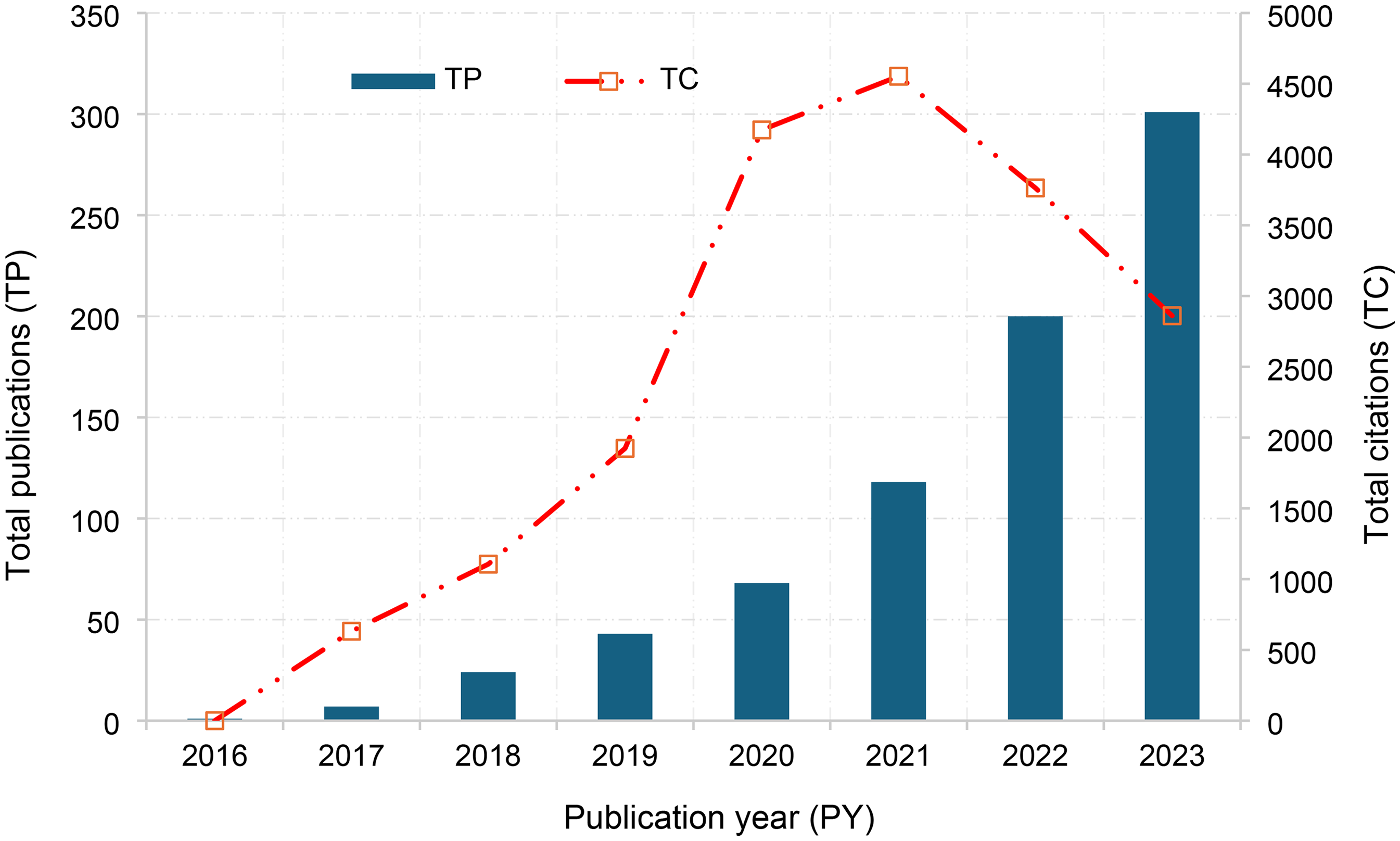
Temporal changes in TP and TC on IOMT research. TP: total publications; TC: total citation; IOMT: internet of medical things.
Document types and subject area
In this study, the Scopus data on the document types distribution was examined as shown in Figures 3 and 4 the distribution of subject areas in IOMT research.

Distribution of document types on internet of medical things (IOMT) research.

Distribution of subject areas in internet of medical things (IOMT) research.
Source titles analysis
The analysis presents insights into the most impactful and sought-after source titles for publications on the topic. Table 2 presents the top 10 source titles for research publications on IOMT in the Scopus database.
Top source titles for IOMT research publications.

IOMT: internet of medical things; TP: total publications; %TP: percentage total publications.
Top cited publications
The analysis of the top cited studies on any given field of research could help readers detect the major impacts and trends. In the long term, this could also help to shape the direction and or guide nascent scientists towards developing new methodologies and establishing future collaborations. Furthermore, such an analysis could serve as the standard for assessing the influence of research, top journal sources, and review of literature.72,73 Table 3 presents the top 10 most cited publications on IOMT research over the period examined in this study.
Top 10 most cited publications on IOMT research.

MSSO-ANFIS: modified salp swarm optimization and adaptive neuro-fuzzy inference system.
Productivity of major stakeholders
The analysis of the major stakeholders (i.e., authors, affiliations, countries, and funders) and their productivity, impact and relevance on any given field of research is an important dynamic in research landscape analysis. Firstly, the process can help researchers detect the top contributors, productivity and collaborative patterns.81,82 Furthermore, the analysis has helped inform researchers about the nature, type, and extent of allocation of resources for funding.83,84 Lastly, it can help to inform decisions on policy and stress rising developments, which increase the whole research environment.
Authors
Figure 5 shows the top authors on IOMT research from 2016 to 2023 based on TPs on the topic deduced from the Scopus database.

Top authors on internet of medical things IOMT) research (2016–2023).
The impact of the latter could be examined through co-authorship analysis, as depicted in Figure 6, which shows the network visualization map (NVM) for co-authorships on IOMT research.

Network visualization map for co-authorships on internet of medical things (IOMT) research.
Affiliations
Figure 7 shows the top affiliations on IOMT research from 2016 to 2023 based on TPs deduced from Scopus.

Top affiliations on internet of medical things (IOMT) research (2016–2023).
Countries
Figure 8 shows the top countries on IOMT research from 2016 to 2023 based on TP deduced from the Scopus database. Based on the data, these countries are the most prolific in the field over the period examined in the study.

Top countries on internet of medical things (IOMT) research (2016–2023).
The widespread interest, investments, and policy directives targeted at IOMT advancement have also stimulated research and development in the field. As such, stakeholders across the globe have established numerous collaborations and knowledge-sharing networks to advance the field, as depicted in Figure 9.
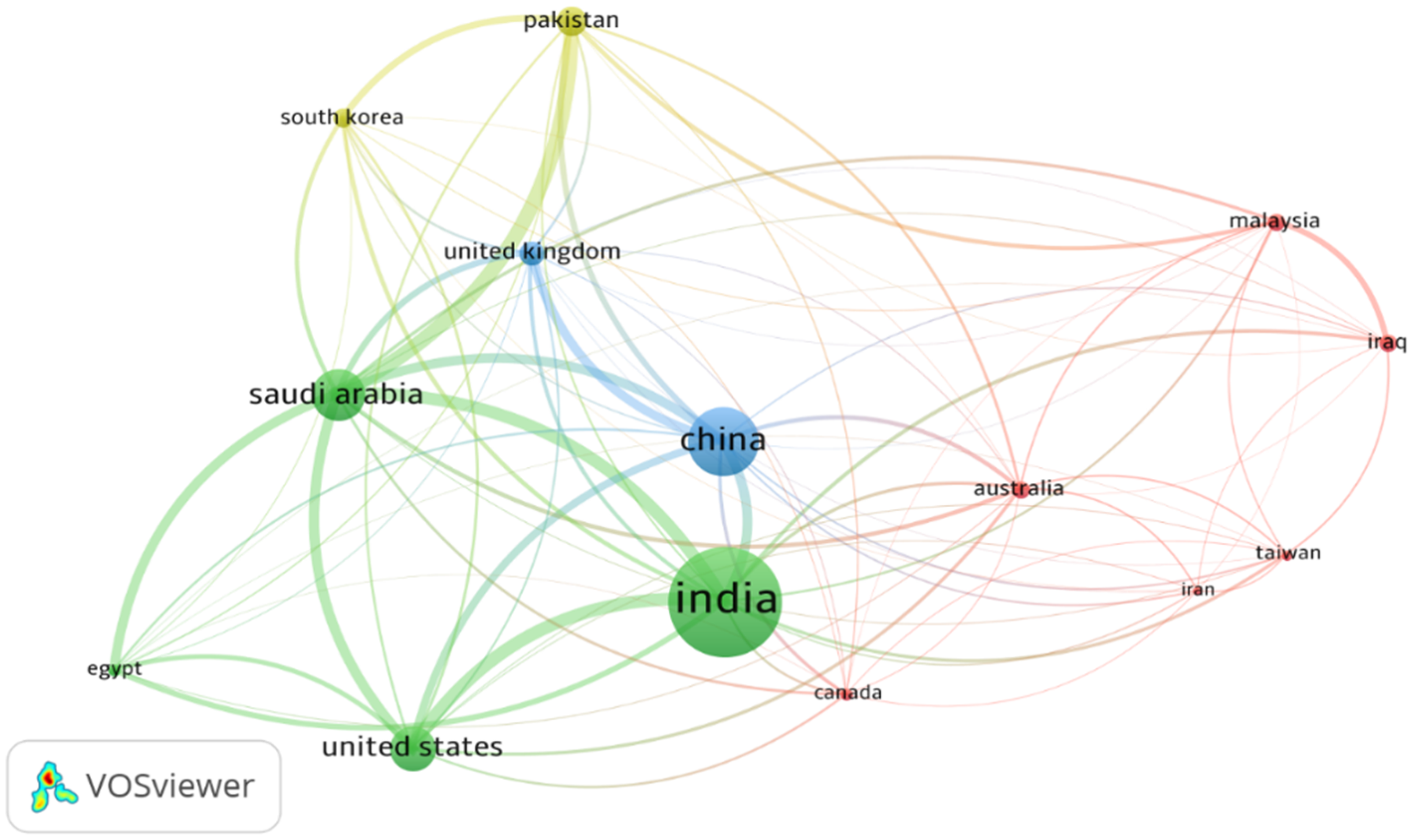
Network visualization map for collaborations between countries on internet of medical things (IOMT) research.
Funding agencies
Funding is considered an integral part of the scientific growth and technological development process. 85 Funding helps to bridge the knowledge gap between theoretical and practical applications by making available resources for innovation, research, and collaboration. 86 In addition, it promotes enduring sustainability and adaptability on issues of global interest. 87 Figure 10 presents the top funders on IOMT research from 2016 to 2023 as deduced from Scopus.
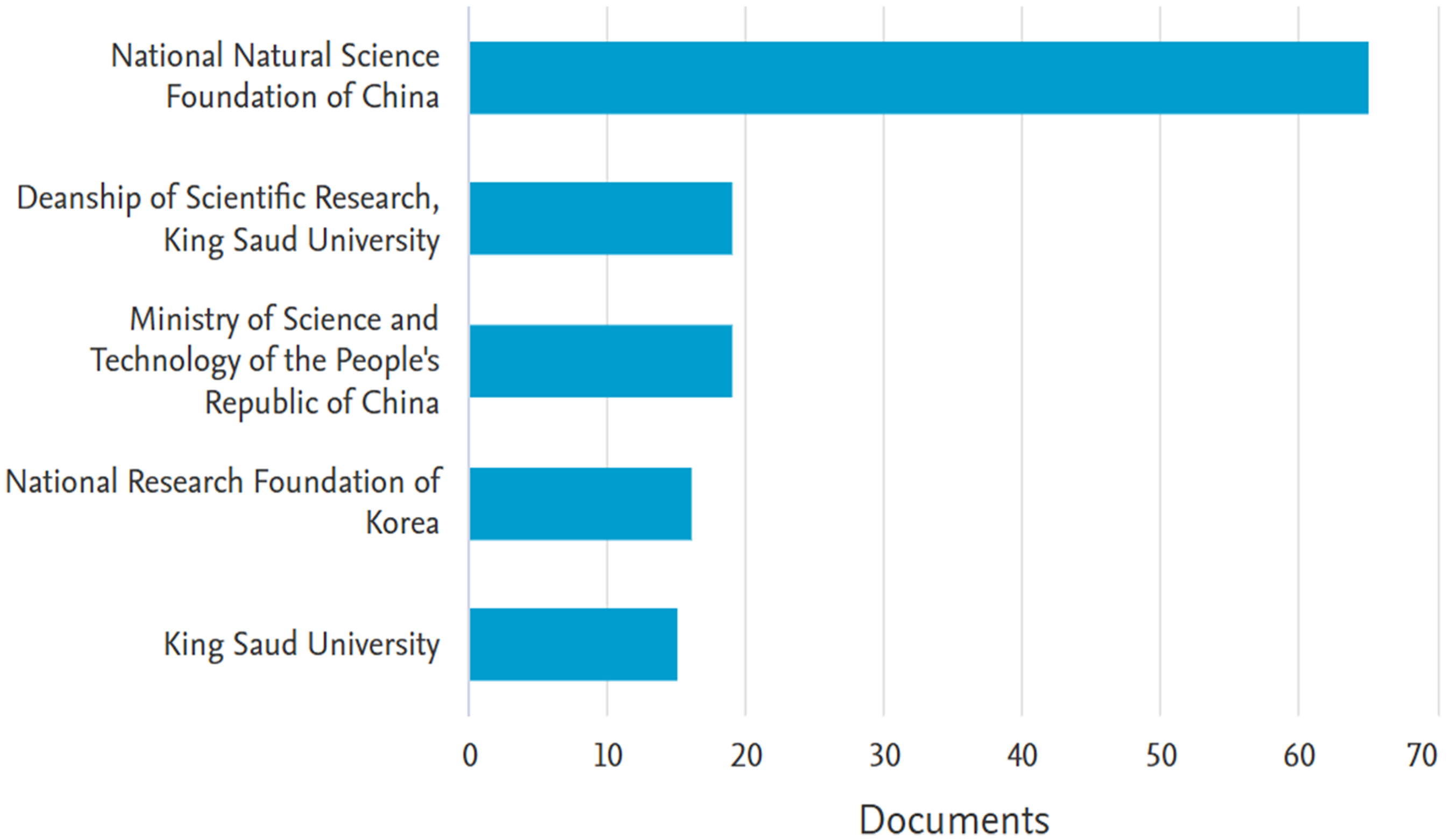
Top funders on internet of medical things (IOMT) research (2016–2023).
KCO analysis
In this study, the KCO analysis was performed using VOSviewer software to generate the overlay and NVMs for IOMT research keywords from 2016 to 2023 as presented in Figure 11(a) and (b).
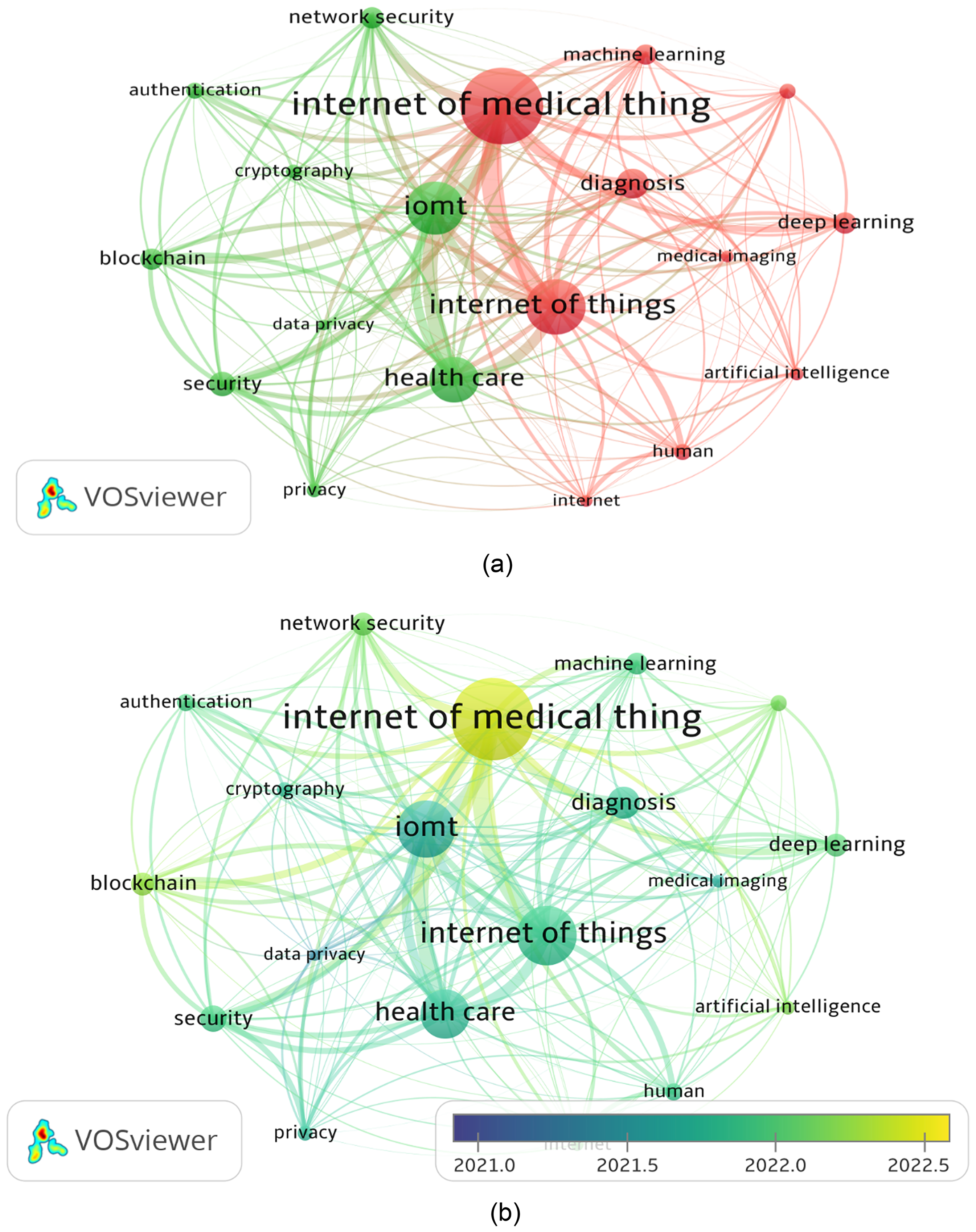
Overlay and network visualization maps for KCO analysis of IOMT research keywords (2016–2023). IoMT: internet of medical things; KCO: keyword co-occurrence.
Discussion
In Figure 2, the data recovered from Scopus indicates that the TP, TC, and h-index on IOMT research are 762, 19,014, and 171, respectively. As observed, the TP increased from 1 to 301 (or 95.25 per year on average) between 2016 and 2023, which shows an increment of 30,000% over the period examined. Likewise, analysis of the TC on IOMT research showed that the citations on the topic have increased geometrically over the years from 0 to 4553 (or 2376.75 yearly on average) during the same period.
The high TP, TC, and h-index metrics indicate that IOMT research is a vital field of research, which indicates it has substantial interest and influence. The findings also submit that the IOMT has high rates of promising research activities, partnerships and developments, which may have attracted financing and recognition. High metrics could also be ascribed to the various document types and source titles where research in IOMT may have been published over the year. To further examine this, the various document types, source titles, and subject areas were examined critically.
In the result shown in Figure 3, the distribution of document types and subject area of the publications on any given area or field of research is an integral part of research landscape analysis. 88 It is typically analysed to identify, examine, and highlight the specific core areas, collaboration patterns, and innovation trends in any given area of research. 89 The IoMT research data from Scopus shows that out of the 762 documents recovered from the database, the distribution of document types comprises 481 articles, 236 conference papers, and 45 reviews. The findings indicate that the stakeholders in IoMT research have a high presence of articles compared to conference papers and lastly reviews. The preference for article publication stems from various reasons notably the detailed peer review of such documents, which ensures quality and reliability of the production process.90,91 Furthermore, articles have impact factors (IFs), which boost citation potential and visibility necessary for researchers to advance their careers and secure research funds.92,93 Futhermore, in Figure 4 which displays the subject area, the Scopus data on the subject area distribution indicates that publications on the topic are indexed in 25 different categories ranging from Agricultural and Biological Sciences, Decision Sciences, and Health Professions to areas such as Neuroscience, Psychology, and Social Sciences. Broadly, the subject areas could be categorized into three major groups namely; science, technology, engineering, and mathematics, health care, life and medicine, and Social Sciences and Business Management. The findings indicate that the IOMT research landscape is characterized by various multidisciplinary links, collaboration networks, and combined research methods. As such, it can be reasonably surmised that IOMT has significant scientific, social, technological, and economic impact.
As observed in Table 2 in section 4.3, the top source titles are IEEE Internet of Things Journal, IEEE Access, and Sensors. The IEEE Internet of Things is a peer-reviewed journal that publishes works on the rapidly evolving areas of IoT, along with its interrelated protocols, applications, architectures, and technologies, to provide researchers and experts with vital resources in the field. It has an IF of 8.2, and a 5-Year IF of 9. On the other hand, IEEE Access is an open-access and multidisciplinary journal that provides rapid distribution of advanced research that spans various areas such as computer and electrical engineering. It has an IF of 3.4. Lastly, the Sensors journal publishes original articles and reviews based on research on the design, applications, and integration of sensors across various sectors. It also has an IF of 3.4. The high output or productivity of the journals in Table 2 is largely due to their IF metrics, and prestige of the journals. Likewise, it could be due to the open-access nature of the journals which is the case for the Sensors journal. The IF metrics, prestige, and open access nature of the journals also have an impact on the citations and impact of the publications. To further examine this, the most highly cited publications on IOMT research were examined.
As observed in Table 3, the top 10 most cited publications on IOMT have been cited between 192 and 393 times (or 260.3 times on average). With a total of 2603 (or 13.69% of TC), the top 10 most cited publications on IOMT research may be considered impactful but not the only core or benchmark publications.
The deduction suggests that additional significant contributions to IoMT should be considered by researchers to gain a comprehensive understanding of the various innovations and insights available. Further analysis shows that amongst the top 10, most cited publications 7 are articles, whereas reviews and conference papers account for 2, and 1, respectively. These findings confirm that authors in the IOMT research landscape prefer articles compared to other document types. Further analysis indicates that leading source titles like IEEE Access and the IEEE Internet of Things Journal are among the most cited publications. This supports the initial submission's claim that the journal's reputation and impact influence the choice of where to publish, ultimately affecting citation rates.
The data in Figure 5, shows that these authors are the most prolific researchers in the field over the period examined in the study. As observed, these authors have published 7 or more publications on the topic over the years. The most prolific research on the topic is Mohsen M. Guizani who has published 9 documents, which have garnered 231 citations, resulting in an h-index of 8. In second place is Mohamed Abouhawwash who has 8 publications, which have been cited 68 times gaining an h-index of 7. The duo of Georgios Mantas and Joel J.P.C. Rodrigues also have 8 publications on the topic. The data shows that Mohsen M. Guizani is also the most influential due to his high TC/TP ratio (25.66) and h-index. The high productivity and publication metrics of these researchers could be ascribed to numerous factors notably their research interests, funding availability, and collaboration networks.
Furthermore, the NVM in Figure 6 shows that out of the 2530 authors with publications on IOMT, a total of 15 have published 7 or more over the years. Co-authorship analysis showed that 11 out of the 15 have co-authored publications resulting in 5 clusters comprising 2–3 authors 12 links, and a TLS of 18. The findings indicate that collaborations account for 73.33% of the publications and productivity among the top authors in the field. As such, the findings confirm the earlier submission that collaboration has played a major role in the productivity of IOMT research.
The data displayed in Figure 7 shows that the depicted affiliations are the most prolific researchers in the field over the period examined in the study. As observed, the most prolific affiliation on the topic is King Saud University which has 32 publications, which have been cited 1326 times, and an h-index of 19. In second place is Instituto de Telecomunicações with 15 publications that have gained 587 citations, and an h-index of 9. In third, fourth, and fifth places are Taif University with 15 publications, Sejong University with 14 publications, and Vellore Institute of Technology with 13 publications.
As observed in Figure 8, the top country is India with 247 publications, followed by China 154, and Saudi Arabia 119. In 4th and 5th place are the United States 102, and Pakistan 66. The prospects of IOMT to enhance the access to and efficiency of healthcare, predominantly in deprived zones, have stimulated the interest of the above-mentioned countries in the area. 94 Furthermore, the pursuit towards IOMT over the years has stimulated national policy support for digital projects and technological developments in the healthcare sectors across these nations. 95 The management of prolonged diseases and lowering of healthcare expenses for the elderly in populations (e.g., through tailored medication) can be addressed by IoMT. 96 For example, IOMT was effective in remote monitoring systems during the COVID-19 pandemic.97,98 Lastly, the combination of data analytics and IoMT could result in better understanding, effective implementation, and monitoring of public health. 99 The NVM in Figure 9, shows the various collaborative networks between countries actively involved in IOMT research over the years. As observed, a total of 14 countries out of the 89 involved in IOMT research have co-authored 20 or more publications on the topic. As a result, there are 4 major clusters (comprising 2–6 nations), 81 links, and a TLS of 519 for the nations actively collaborating on IOMT challenges around the globe. The strongest links exist between Saudi Arabia, India, and China as evident in their high TLS of 166, 141, and 123, respectively. As such, these nations are the most prolific and influential in IOMT research. Hence future breakthroughs and advancements in this area will be more likely than not to emanate from the trio of nations. Overall, the results show that collaboration has played a significant role in the scientific growth and technological development of the sector over the years.
As shown in Figure 10, based on the data in Scopus, a total of 298 publications (39.11% of TP) on IOMT reported receiving some form of funding whereas 464 did not. The most active funder of IOMT research across the globe is China's National Natural Science Foundation (NNSF) which is credited with funding 65 publications that have been cited 2049 times gaining an h-index of 26. The NNSF has been critical to the research success of researchers such as Kim K. R. Choo, Chaoyang Li, and Mohsen M. Guizani (most prolific researcher on IOMT), along with their peers across institutions such as the Ministry of Education, University of Electronic Science and Technology, and Xidian University. Furthermore, analysis shows that the NNSF funding has also provided needed support for collaboration between China-based researchers and others in India, the United States, and the United Kingdom. Other notable funders of IOMT research include the Deanship of Scientific Research at King Saud University (19 funded publications), the Ministry of Science and Technology of the People's Republic of China (19), and the National Research Foundation of Korea (16). Further analysis shows that despite India's position as the most prolific on IOMT research, none of the nation's funding institutions is in the top 10 funders list. The quality and effect of research may be hampered by this gap, which implies reliance on smaller funding sources. Consequently, the state of research needs to be improved to help nurture remarkable innovations, through additional funding and governmental adjustments.
The KCO analysis was performed to identify and examine the various research clusters on IOMT as shown in Figure 11(a) and (b). Typically, the analysis is also conducted to highlight the promising topical areas and research trends on any given topic. 100 More so, it seeks to elucidate semantic links between concepts and improve comprehension of various topics. 101 Last but not least, it facilitates innovation and interdisciplinary connections by identifying research gaps and possible collaborators. 102 As observed in Figure 11(a) and (b), the KCO analysis revealed two major clusters represented by two different coloured notes and lines (red and green). The largest cluster comprises the keywords: AI, deep learning, diagnosis, human, internet, learning systems, ML, medical imaging, IoMT, and IoT. On the other hand, the smallest consists of blockchain, authentication, cryptography, data privacy, healthcare, IOMT, network security, privacy, and security.
Furthermore, the KCO analysis revealed that out of the 5505 keywords on IOMT from Scopus, 24 have at least 50 occurrences, which indicates core or benchmark keywords on the topic. The top 3 highest occurring keywords (Occurrences; TLS) are ‘internet of medical things’ (359; 1507), IoT (260; 1146), and health care (216; 937). Based on the keywords, cluster analysis was performed to elucidate the current focus or thematic areas of IOMT research. The cluster analysis reveals that IOMT research is broadly categorized into two, namely; ‘Smart Medical Diagnostics’ and ‘Privacy-Driven Health Technologies’.
Summary of main findings
This study shows that research on the IoMT has risen quickly from 2016 to 2023, with a big increase in both the number of publications and citations. Most of the studies looked at journal articles and conference papers, and scholars all over the world are paying more and more attention to them. India, the United States, and China were some of the most active countries in this subject. King Saud University was the most productive institution, while Mohsen M. Guizani was the most prolific author. The study also found two main areas of interest in IoMT research: one was creating smart systems for medical diagnostics, and the other was making sure that health-related technologies are safe and private. These themes show that IoMT is not just making it easier to collect and use health data, but it is also bringing up crucial issues regarding how to keep data safe and how reliable the system is. The study results also reveal that technologies like ML, blockchain, cloud computing, and wearable sensors are becoming more important in defining the future of healthcare. The study shows how important it is for organizations and countries to keep working together and how important it is to fund new ideas in this fast-changing industry.
Limitation of study
While this study provides comprehensive insights into the research landscape of the IOMT, certain limitations have been identified that can be addressed in future studies. Firstly, the data source was limited to the Scopus database. This database is very complete, but it may not include all of the relevant publications that are indexed in other academic repositories like PubMed or Google Scholar. Some major works may not have been included enough, especially those that were published in journals that are not indexed by Scopus and are not in English or are only limited to a specific region. Secondly, the BA is affected by the search terms and filtering criteria that were used. There is a chance that some relevant papers were missed because of differences in terminology or metadata discrepancies, even though a lot of care was taken in choosing and filtering keywords. Thirdly, the KCO and cluster analyses gave us useful information on subject areas but are limited since the keywords depend on terms chosen by the author and may not fully capture the intricacies of new or interdisciplinary studies.
Conclusion
This study offers a comprehensive BA of IoMT research from 2016 to 2023, fulfilling its objective of mapping key trends, opportunities, and challenges in the field. By examining publication output, citation patterns, leading contributors, and international collaborations, the analysis identifies the most influential stakeholders and provides insights into the structure of the research ecosystem. The study also highlights two dominant thematic areas: SMD and PHTs reflecting the dual emphasis on enhancing healthcare efficiency and ensuring data security. The strong growth in publications and citations underscores the increasing global relevance of IoMT, while the identification of benchmark publications and collaborative networks offers guidance for future research and partnerships. Overall, this analysis consolidates fragmented evidence, clarifies the developmental trajectory of IoMT, and provides a foundation for researchers and policymakers to address existing gaps and strengthen interdisciplinary expertise in digital health.
Footnotes
Acknowledgement
This research was supported by the project titled “Blockchain-Enabled AI Architecture for Trustworthy Digital Health” (Project Code: AI4PEP-2025), funded under the AI4PEP Scaling Grant, being part of a global IDRC and UK International Development-funded initiative on AI for Global Health.

Author contributions
Huihui Xin: Conceptualization, methodology, formal analysis, and writing – original draft. Samuel-Soma M. Ajibade: Conceptualization, data curation, visualization, software development, investigation, supervision, project administration, funding. Gloria Nnadwa Alhassan: Review and editing, resources, validation, supervision. Yusuf Yilmaz: Methodology, supervision, writing – review and editing, project administration
Funding
The authors disclosed receipt of the following financial support for the research, authorship, and/or publication of this article: This work was supported by the AI4PEP-IDRC Scaling Grant (grant number AI4PEP-2025).
Declaration of conflicting interests
The authors declared no potential conflicts of interest with respect to the research, authorship, and/or publication of this article.
Data availability statement
No data have been used to support the findings of the study.