




Abstract
Objectives
This study aims to review the research status of Internet hospitals and electronic prescriptions, identify associated research hotspots and frontiers, understand global application progress, and inform future research and development directions in China.
Methods
The literature was obtained via the online Science Citation Index-Expanded section of the Web of Science Core Collection (WoSCC). The search terms included variations of “Internet hospital” and “electronic prescription.” After screening titles and abstracts, 248 publications were selected. CiteSpace was used for bibliometric and visual analysis, identifying annual publication trends, collaboration networks, and keywords with strong citation bursts.
Results
The analysis revealed fluctuating growth in annual publications, with a significant increase in the 2020s due to COVID-19. In the domain under analysis, the US and Harvard Medical School emerged as the most prominent contributors, high-frequency keywords identified were patient safety, digital health, healthcare management, and prevalence. Key findings indicated active cooperation among institutions within the USA or Europe but limited collaboration between USA, Europe, and Asia. Internet hospitals and electronic prescriptions were found to significantly enhance patient safety and healthcare quality during public health emergencies.
Conclusions
The research identified a lack of effective collaboration among nations, organizations, and contributors, with primary trends focusing on patient safety, digital health, healthcare management, and prevalence. Researchers in China are encouraged to focus on how Internet hospital electronic prescribing can improve patient safety, assist in the health management of special populations, and leverage their strengths during large epidemics.
Introduction
An Internet hospital represents a healthcare model that integrates online platforms to deliver medical consultations, diagnoses, and treatments through telemedicine technologies. Unlike traditional hospitals, Internet hospitals enable patients to access healthcare remotely, thereby offering greater flexibility and accessibility. This model is distinct from telemedicine, which broadly refers to the remote delivery of healthcare services but does not necessarily encompass a comprehensive hospital-like structure that includes online services for diagnosis, treatment, and follow-up care. 1 This evolution of healthcare delivery is not just a technological advancement, but also a response to increasing demands for greater accessibility and convenience, particularly in rural or underserved areas.
In the United States, the definitions of telehealth or telemedicine vary across states. Many states consider online services insufficient for establishing doctor–patient relationships and prescribing treatments, leading some to permit online diagnoses and medication prescriptions while others impose restrictions. Within the European Union, only two countries are currently in the management phase of policy supervision regarding telemedicine, whereas 16 countries are classified as being in the initial and temporary stages. Most EU nations currently lack a formal definition of telemedicine services or have only implemented small, short-term, independent pilot projects. In Japan, telehealth services were initially restricted to health consultations. It was not until the COVID-19 pandemic that the government allowed patients to receive medical care and prescriptions online, circumventing the need for physical hospital visits. In contrast, China has proactively encouraged medical institutions to leverage information technology, including the internet, to broaden the scope of medical services. This initiative aims to establish a comprehensive online–offline medical service model that encompasses prognosis, diagnosis, and post-diagnosis care. Furthermore, medical institutions are authorized to develop internet hospitals to deliver safe and effective medical services through online platforms. 2 China's approach has been further bolstered by significant investments in 5G and AI technologies, which are seen as key enablers of future healthcare innovation. These advancements have the potential to overcome challenges in rural areas, where healthcare access remains a critical issue.
Electronic prescriptions represent a digital version of traditional paper prescriptions, enabling healthcare providers to send prescriptions directly to pharmacies electronically. 3 The application of electronic prescriptions is a crucial aspect of medical informatization, it improves efficiency, reduces medication errors, and enhances the security of prescription data.4–6 With the advancement of “Internet +” technology, the electronic prescription system has garnered significant global attention and has been progressively implemented. 7 Particularly, under the influence of COVID-19, various countries are actively exploring and studying the benefits of Internet hospital electronic prescriptions during major public health events,8–11 with China being no exception. 12
However, in China, the development of electronic prescription systems faces unique challenges. While Internet hospitals have flourished, the absence of a nationwide, integrated platform for electronic prescriptions has led to fragmentation. Typically, these services are operated by individual medical institutions, which means there is no standardized system for prescription management across the country. 13 The lack of a unified national framework for electronic prescriptions limits their effectiveness and scalability, posing a significant barrier to the full realization of China's digital healthcare potential. Additionally, concerns regarding data privacy and security have slowed the implementation of more extensive e-prescription systems.
Given the rapid development of Internet hospitals and electronic prescriptions, it is crucial to examine how these two elements can be integrated to create a more cohesive and comprehensive digital healthcare ecosystem. Analyzing global trends, as well as the specific experiences of countries like the United States, the United Kingdom, and Australia, can provide valuable insights for China as it seeks to build a more robust and nationally integrated healthcare platform. The lessons learned from these countries’ regulatory models, technological infrastructure, and patient acceptance can inform China's approach to overcoming the current challenges it faces. For example, Australia's national eRx platform offers a successful model of cross-state integration that could be adapted to China's vast and diverse healthcare system.
To systematically analyze these trends and identify key research hotspots, bibliometrics serves as an effective research method. By quantitatively assessing academic publications, citation networks, and emerging themes, bibliometric analysis enables researchers to map the intellectual structure of the field and track its evolution over time. 14 Applying this method allows for a more objective and data-driven evaluation of global experiences with Internet hospitals and electronic prescriptions, helping to highlight influential studies, key policymakers, and dominant technological frameworks. By learning from the challenges and successes in other regions, China can develop a more comprehensive, standardized electronic prescription system to complement its rapidly growing Internet hospitals.
Methods
Data sources and search strategies
The literature was obtained via the online Science Citation Index-Expanded section of the Web of Science Core Collection (WoSCC). All data were collected on 22 July 2024, to avoid bias from database updates, yielding 281 results.15–17 The search covered the period from its initiation up to 30 June 2024. The subsequent terms were searched for in the Topic: (“Internet hospital” OR “online hospital” OR “virtual hospital” OR “web hospital” OR “digital hospital”) AND (“E-prescription” OR “electronic prescription” OR “digital prescription” OR “electronic script” OR “eRx” OR “electronic medication order”), only original articles and reviews were included. Two independent investigators reviewed the titles and abstracts, excluding studies that were unrelated to Internet hospitals and electronic prescriptions (e.g. studies focused on other telemedicine technologies or healthcare topics). Studies not published in English, as well as duplicates or studies included in other publications, were also excluded. After this review, 248 publications remained (Figure 1).

Flowchart of data filtration processing and excluding publications.
Visualization analysis tool
CiteSpace was utilized to analyze annual publication trends, collaboration networks among authors, institutions, and countries, as well as co-cited references and keywords with significant citation bursts over time. This analysis aimed to identify emerging trends and research frontiers in the realm of Internet hospitals and electronic prescriptions. Various CiteSpace visualization knowledge graphs were employed to identify nodes with significant centrality, highlighting key areas or pivotal moments within this field. Data obtained from the WoSCC were downloaded, converted into plain text format, and loaded into CiteSpace 6.3.R1 for bibliometric and visual analysis. A cluster analysis of keyword co-occurrences was conducted using CiteSpace to uncover the primary subjects. The analysis parameters were set as follows: Timespan: 1994–2024 (with a Slice Length of 1 year), Selection Criteria: g-index (k = 25), Nodes Labeled: top 1% of nodes, and Pruning: none.
Statistical analysis
In this study, we employed bibliometric techniques to examine the research hotspots and development trends in the field of Internet Hospitals and Electronic Prescriptions. Specifically, we used CiteSpace software to conduct a visual mapping of the scientific knowledge structure, enabling us to identify key themes, influential authors, and emerging areas of research. The software facilitated the creation of various visualization graphs, such as co-citation and co-occurrence networks, to uncover the primary subjects and significant relationships within the field. 18 The analysis focused on identifying research frontiers and tracking the evolution of key topics over time. This process involved examining annual publication trends, collaboration networks among authors, institutions, and countries, as well as detecting co-cited references and keywords with significant citation bursts.
Results
Bibliometric analysis of publication years
The data presented in Figure 2 illustrates that the number of annual publications concerning Internet hospitals and electronic prescriptions has experienced variable growth, starting with a single publication in 1994 and rising to 29 by 2023, along with 21 publications from 1 January 2024, to 30 June 2024. Notably, there was a significant uptick in the 2020s, reflecting heightened interest in this area following the COVID-19 pandemic.

Annual trend chart of publications. The time span was from inception to 31 June 2024.
Bibliometric analysis of countries institutions and co-authors
The leading 11 nations produced a total of 193 articles, representing 77.82% of the total output, while the top 9 institutions were responsible for 34 articles, constituting 13.71% (Table 1). The five nations with the highest contributions were the USA, England, Germany, China, and Australia. The foremost institutions included Harvard Medical School, the American Society of Health-System Pharmacists, the University of Oxford, Boston Children's Hospital, and The Ohio State University. Findings revealed significant collaboration among institutions within the United States and Europe; however, there was a notable absence of cooperation involving the United States, Europe, and Asia, as illustrated in Figures 3 and 4. Illustrated in Figure 5 is the co-author network created by CiteSpace. Generally, productive authors maintained consistent partnerships with other writers, yet there was minimal collaboration among various author groups.

The network of countries and regions.
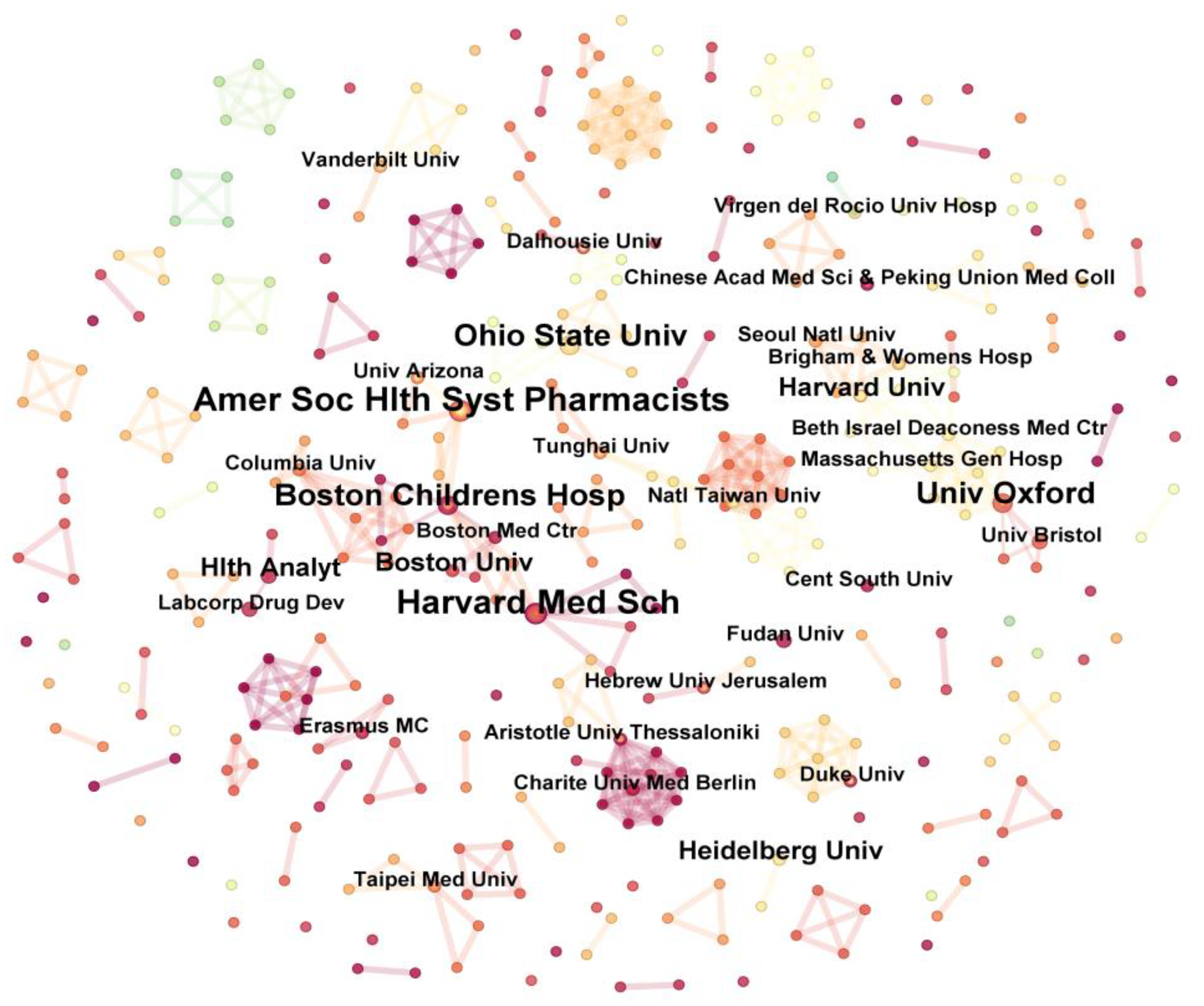
The network of institutions.

The network of co-authors.
The top 11 countries and top 9 institutions of internet hospitals and electronic prescriptions.

Bibliometric analysis of co-occurrence keywords and cluster
Keywords with high centrality indicate the significance and impact of related research, whereas keywords with high frequency signify trending topics within the research area. As illustrated in Table 2, the top 11 high-frequency keywords are as follows: care (frequency: 30, centrality: 0.51), impact (frequency: 16, centrality: 0.13), electronic health records (frequency: 13, centrality: 0.12), medication errors (frequency: 12, centrality: 0.08), management (frequency: 10, centrality: 0.15), digital health (frequency: 10, centrality: 0.08), systems (frequency: 10, centrality: 0.06), health care (frequency: 10, centrality: 0.11), errors (frequency: 10, centrality: 0.07), patient safety (frequency: 8, centrality: 0.04), information technology (frequency: 8, centrality: 0.08).
The top 11 keywords of Internet Hospitals and Electronic Prescriptions.

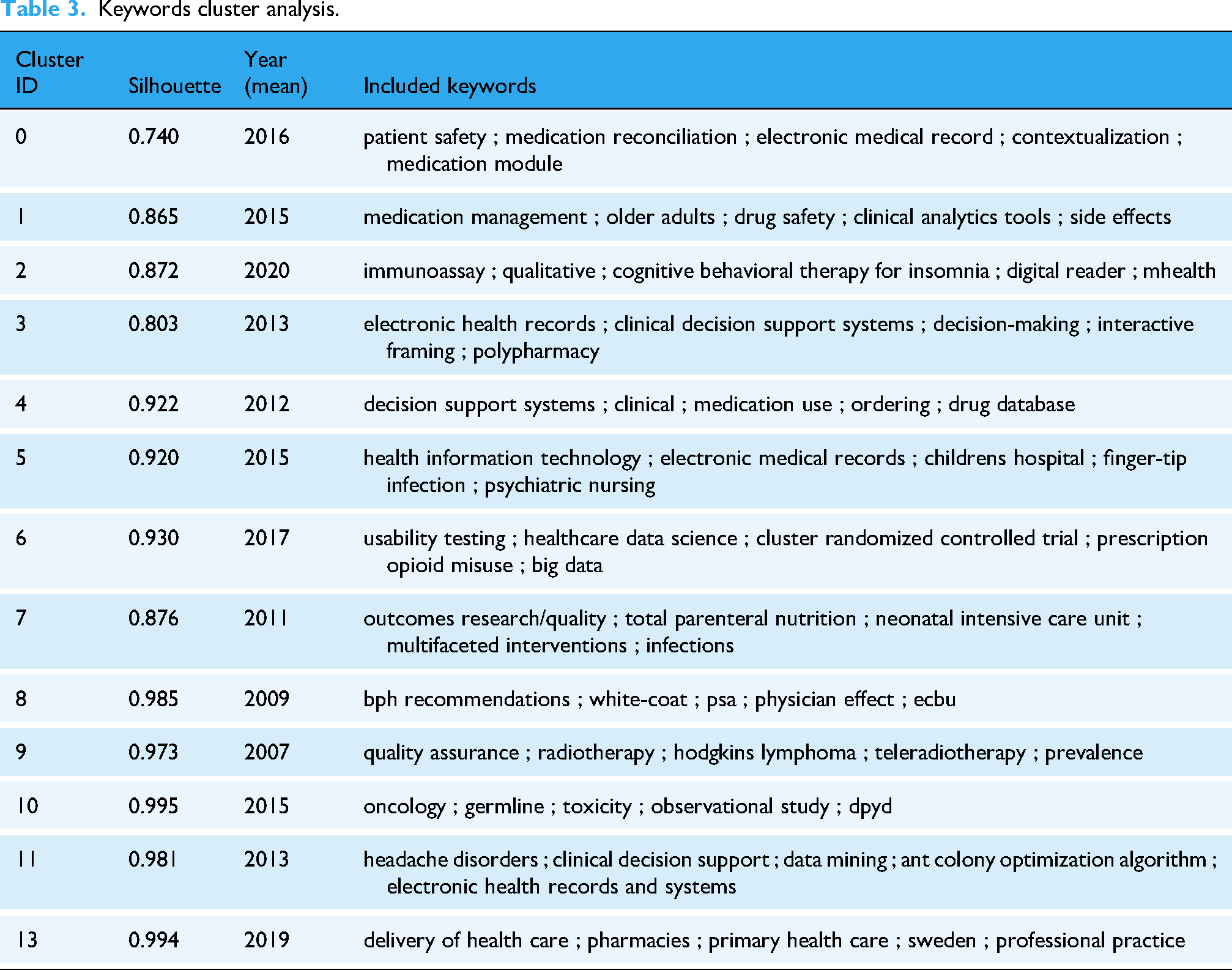
Furthermore, the network of keywords is depicted in Figure 6. A total of 11 clusters were recognized, each exhibiting a silhouette value exceeding 0.7, indicating robust and significant outcomes (Figure 7 and Table 3). Figure 8 portrays the forefront of research, highlighting the 15 keywords that experienced the most substantial citation bursts. The red line denotes the duration of the keyword burst, whereas the blue line represents the time span. The 15 keywords that underwent citation bursts were first noted in 2004. Notably, three of these keywords have continued through 2024, signifying that patient safety, digital health, and prevalence remain pivotal areas of research.
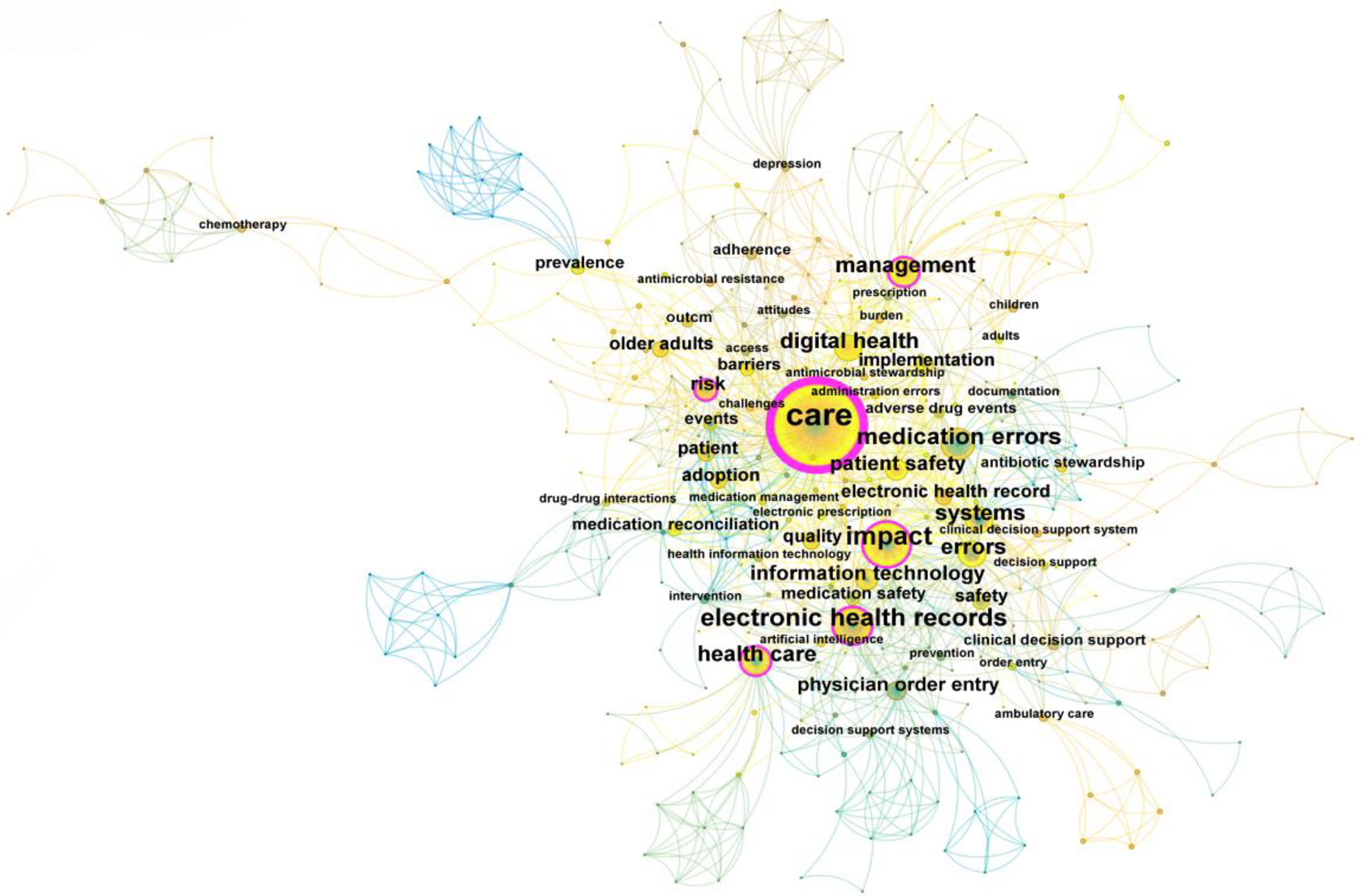
The network of keywords.
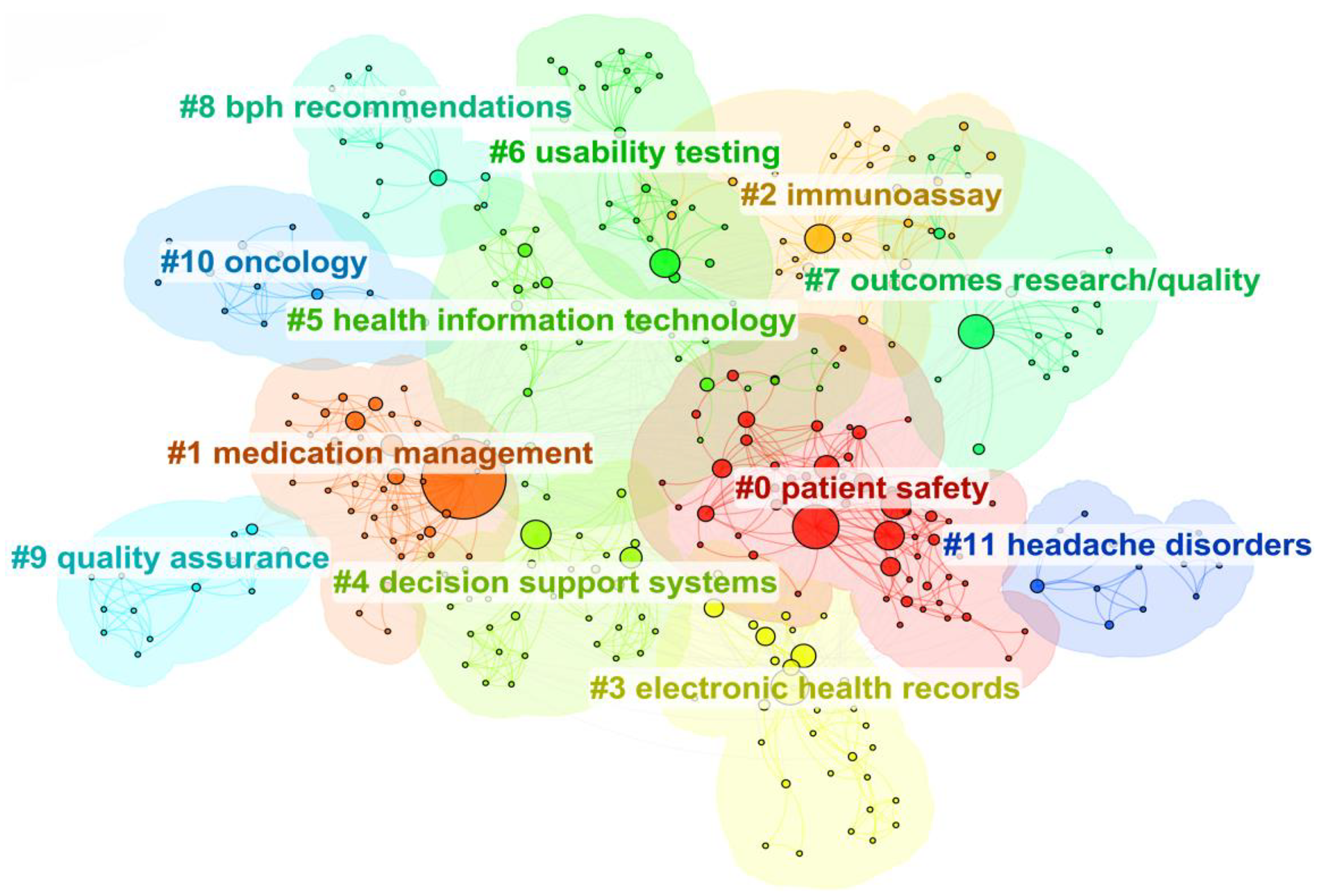
Keywords cluster analysis co-occurrence map.

Top 15 keywords with the strongest citation bursts.
Keywords cluster analysis.
Discussion
General information
This study represents the first exploration of the current landscape of Internet hospitals and electronic prescriptions using CiteSpace, identifying key research trends and emerging themes. A total of 248 publications were retrieved from the WoSCC, covering the period from the inception of the database until 30 June 2024. The growth pattern of research in this field shows variability over time, reflecting shifts in global health priorities and technological advances. The leading 11 countries and regions contributed 193 publications, representing 77.82% of the total output. The United States, with 60 articles, represents nearly one-quarter of the research, highlighting its significant role in shaping this field. China, a rapidly developing country, has seen a substantial increase in publications since 2020, with much of its research focusing on Internet hospitals and electronic prescriptions in the context of disease control, particularly during the COVID-19 pandemic.12,13,19–21
While developed nations such as the US and the UK dominate the field in terms of institutional contributions, China's increasing output post-pandemic signals a shift. In fact, studies from China focus significantly on chronic disease management through Internet hospitals, suggesting a growing interest in leveraging digital health for large-scale public health challenges. This is consistent with global research trends, where digital health technologies are increasingly used to manage healthcare delivery amidst crises. By contrast, other developing nations have contributed comparatively less, highlighting the need for more collaboration and knowledge-sharing across regions.
Institutional contributions are also heavily skewed towards the US, with seven of the top nine contributing institutions based there. These institutions, including universities and health organizations like the American Society of Health-System Pharmacists, dominate the research landscape. This concentration of expertise in developed regions emphasizes the need for more international collaborations, particularly with countries like China, to foster global innovation in Internet hospitals and electronic prescriptions. Establishing cross-border research platforms can facilitate the exchange of policy insights, technological advancements, and best practices, thus promoting mutual learning and improving global healthcare systems. 22
Hot issues in research
Recent keyword co-occurrence analysis has revealed several dominant research trends, including patient safety, digital health, healthcare management, and disease prevalence. This section will delve into these areas in greater detail, drawing on a range of studies to provide a comprehensive analysis.
Patient safety and digital health
Digital health, and specifically the implementation of electronic prescriptions, has been a central focus of research since the 1960s. Early efforts aimed to improve the reliability of medical information systems, but over time, the emphasis has shifted towards enhancing accessibility and ensuring patient safety. Recent research has shown that the integration of Internet hospitals and electronic prescriptions can significantly reduce medication errors, improve data management, and increase patient satisfaction.23–25
For example, Elizabeth M. Camacho's mathematical model, which estimates the impact of digital prescriptions on patient safety in the UK, suggests that an interoperable system could reduce medication errors by up to 50%, preventing thousands of injuries and saving lives annually. 26 This finding is consistent with studies by Adam McCulloch and others, who have demonstrated that electronic health records and prescriptions play a key role in reducing medical errors and improving patient outcomes.27–29 These findings are particularly relevant in the context of Internet hospitals, which rely on digital tools to enhance care coordination and minimize risks.
However, as digital health systems become more integrated into healthcare systems, issues surrounding digital security and data protection have become increasingly important. In countries like China, where digital health is expanding rapidly, there is a pressing need to address concerns regarding the safety and confidentiality of patient data. Ensuring robust digital security systems will be critical to maintaining patient safety and confidence in these technologies. 30
Healthcare management
Managing chronic diseases remains a significant challenge for healthcare systems, particularly in large, populous countries like China. Internet hospitals and electronic prescriptions offer promising solutions by improving medication adherence and managing chronic conditions more effectively. 31 Josephine G. Laurie has demonstrated that the implementation of new management strategies, such as educational videos in Internet hospitals and the home delivery of electronic prescriptions, positively influences the control and treatment of gestational diabetes. 32 Aruna Singh has used Internet hospitals and electronic prescriptions to manage patients with chronic gynecological diseases, reducing the patient load at tertiary centers. 33
In China, policy restrictions prevent first consultations from being conducted remotely. Consequently, the healthcare management of internet hospitals primarily focuses on patients with chronic diseases. Currently, China has a substantial number of individuals suffering from various chronic conditions, with estimates in the tens of millions, or even hundreds of millions. This large population of service users presents significant potential value for China's internet hospitals. Influenced by COVID-19, policies have not only facilitated the online sale of prescription drugs but have also supported internet hospitals in receiving payments through the Urban and Rural Resident Basic Medical Insurance. This represents a significant advancement in establishing a comprehensive internet hospital ecosystem that includes online consultations, electronic prescriptions, settlements, and drug delivery. However, internet hospitals in China continue to face numerous challenges, such as disparities in the implementation of insurance policies across different provinces and cities, underdeveloped profit models, unequal distribution of medical resources, and the absence of a unified, executable system. Addressing these issues necessitates enhanced efforts from Chinese researchers and government officials to promote the development of healthcare management within internet hospitals.34–38
With the widespread adoption of Internet hospitals and electronic prescriptions, healthcare professionals must adapt to new workflows and acquire the necessary technical skills. As a result, training healthcare providers in digital health competencies has become increasingly crucial. Policymakers should prioritize enhancing vocational training and educational programs in this domain. The rise of Internet hospitals also fosters greater collaboration between healthcare professionals and experts in fields such as information technology and data analytics. This interdisciplinary collaboration can offer new perspectives and innovative solutions, driving further advancements in healthcare services.
Prevalence
The role of Internet hospitals and electronic prescriptions in addressing patient needs, particularly during the COVID-19 pandemic, has been a focal point of several recent studies. Ye Zhang's study, which analyzed 16,173 online medical inquiries during the pandemic, found that drug dispensing, medication guidance, and disease diagnosis were the most common services accessed via online platforms. 39 This reflects the growing reliance on telemedicine for medication management, which is consistent with findings from other regions. For example, Inaam Shehabe Eddine's research on virtual clinics in Saudi Arabia during the same period showed that nearly 95% of respondents used electronic prescriptions, with high patient satisfaction despite the challenges of remote consultations, such as the lack of physical examinations. 40 These findings are echoed by studies from other countries, where Internet hospitals provided a critical bridge for healthcare access, reducing the burden on physical healthcare facilities and preventing the spread of infectious diseases.
The prevalence of digital health tools, particularly in disease management, has significantly increased since the pandemic. These tools were not only essential for maintaining healthcare continuity during lockdowns but also demonstrated their potential for addressing broader public health concerns, such as reducing hospital overcrowding and facilitating medication adherence. By summarizing the experiences and lessons learned from the operation of internet hospitals and electronic prescriptions during the COVID-19 period, and by researching and refining these operational models, valuable insights can be offered to Chinese researchers in preparing for future epidemic outbreaks or public health emergencies. 41
Implications and future directions
The findings of this study offer important insights into the growing role of Internet hospitals and electronic prescriptions in global healthcare systems. While these technologies have the potential to improve patient care, reduce healthcare costs, and expand access to services, they also present significant challenges that need to be addressed. First, ensuring equitable access to digital health services is essential, especially in developing countries where digital infrastructure may be lacking. Additionally, addressing data security concerns and ensuring robust training for healthcare providers in digital health competencies will be critical to the success of these technologies.
Future research should focus on refining the operational models of Internet hospitals and electronic prescriptions, particularly in China, where rapid expansion is occurring. Comparative studies that examine the effectiveness of these models in different cultural and healthcare contexts will be invaluable in developing best practices that can be implemented globally. Moreover, as digital health technologies continue to evolve, it will be essential to foster international collaborations that can drive innovation, share knowledge, and develop policies that support the responsible integration of digital health tools into healthcare systems worldwide.
Strengths and limitations
To the best of our knowledge, this research represents the inaugural application of CiteSpace for conducting bibliometric analyses and visualizing key trends in studies related to Internet hospitals and electronic prescribing. This includes examining collaborations across countries, institutions, and authors. The data obtained from the WoSCC database encompasses the majority of relevant articles in the domain of Internet hospital and electronic prescribing research, allowing for a more objective and thorough evaluation of both historical and current trends while forecasting upcoming research areas. Nonetheless, the study does have specific limitations. Initially, only the WoSCC database was employed, which, despite its high authority, does not capture the entirety of the existing literature. Furthermore, although we selected representative retrieval keywords, this choice may have led to a reduction in the volume of data. Lastly, the existence of numerous synonyms could result in overlap among content categories within the keyword clustering analysis.
Conclusion
The results of this investigation, conducted using CiteSpace, reveal a significant lack of effective collaboration among nations, institutions, and authors. Currently, the primary research trajectories include patient safety, digital health, healthcare management, and prevalence. Consequently, researchers in China should further explore how Internet hospital electronic prescribing can enhance patient safety, support health management for special populations, and capitalize on their strengths during large epidemics.
Footnotes
Acknowledgements
The authors wish to thank all participants in this study.

Author contributions/CRediT
Conceptualization: Xue Yang and Kang Luo; methodology: Xiaoxia He; software: Yi Feng; validation: Kang Luo and Chengyu Sun; formal analysis: Kang Luo, Xue Yang and Furong Yu: investigation, Wensheng Zhu; data curation: Furong Yu and Yi Feng; writing—original draft preparation: Kang Luo, Chengyu Sun, Furong Yu, Xiaoxia He, Yi Feng, Wensheng Zhu and Xue Yang; writing—review and editing: Xue Yang and Kang Luo; project administration: Wensheng Zhu; funding acquisition: Kang Luo and Xue Yang. All authors have read and agreed to the published version of the manuscript.
Funding
The authors disclosed receipt of the following financial support for the research, authorship, and/or publication of this article: This work was supported by the Chongqing Clinical Pharmacy Key Specialties Construction Project, the 2022 Chongqing Municipal Health and Health Committee & Chongqing Science and Technology Bureau Joint Medical Research Project (No.2022QNXM051).
Conflicting interests
The authors declared no potential conflicts of interest with respect to the research, authorship, and/or publication of this article.
Data availability
The original contributions presented in the study are included in the article material, further inquiries can be directed to the corresponding author.