



Abstract
Objective
To conduct a bibliometric analysis using VOSviewer and Citespace to explore the current applications, trends, and future directions of artificial intelligence (AI) in obstructive sleep apnea (OSA).
Methods
On 13 September 2024, a computer search was conducted on the Web of Science Core Collection dataset published between 1 January 2011, and 30 August 2024, to identify literature related to the application of AI in OSA. Visualization analysis was performed on countries, institutions, journal sources, authors, co-cited authors, citations, and keywords using Vosviewer and Citespace, and descriptive analysis tables were created by using Microsoft Excel 2021 software.
Results
A total of 867 articles were included in this study. The number of publications was low and stable from 2011 to 2016, with a significant increase after 2017. China had the highest number of publications. Alvarez, Daniel, and Hornero, Roberto were the two most prolific authors. Universidad de Valladolid and the IEEE Journal of Biomedical and Health Informatics were the most productive institution and journal, respectively. The top three authors in terms of co-citation frequency are Hassan, Ar, Young, T, and Vicini, C. “Estimation of the global prevalence and burden of obstructive sleep apnoea: a literature-based analysis” was cited the most frequently. Keywords such as “OSA,” “machine learning,” “Electrocardiography,” and “deep learning” were dominant.
Conclusion
AI's application in OSA research is expanding. This study indicates that AI, particularly deep learning, will continue to be a key research area, focusing on diagnosis, identification, personalized treatment, prognosis assessment, telemedicine, and management. Future efforts should enhance international cooperation and interdisciplinary communication to maximize the potential of AI in advancing OSA research, comprehensively empowering sleep health, bringing more precise, convenient, and personalized medical services to patients and ushering in a new era of sleep health.
Keywords
Introduction
Obstructive sleep apnea (OSA) is a prevalent sleep-disordered breathing condition characterized by recurrent nocturnal upper airway obstruction, intermittent hypoxemia, and daytime somnolence. It significantly contributes to the development of hypertension, coronary heart disease, stroke, and neurocognitive dysfunction. 1 The clinical significance of OSA extends beyond these comorbidities, as it also impacts patients’ quality of life, productivity, and safety due to excessive daytime sleepiness. Despite its prevalence, affecting nearly one billion people worldwide, 2 OSA remains largely undiagnosed and untreated in even the most developed nations. 3 Furthermore, the rising obesity rates have led to an increase in OSA incidence. 4 Polysomnography (PSG), the gold standard for diagnosing OSA, is costly and resource-intensive, limiting its accessibility and thus restricting the diagnostic efficiency of OSA.5,6 Additionally, its operation is complex, demanding a highly controlled sleep environment for patients, and is prone to false positives and negatives. 7 Treatment-wise, continuous positive airway pressure (CPAP), a common therapeutic approach, suffers from low patient tolerance and adherence, stemming not only from comfort issues but also from inadequate patient education and psychological factors. 8 Poorly diagnosed and untreated OSA, along with its significant complications, leads to a substantial economic and social burden. 9 Research shows that in 2015, the USA alone spent approximately $1.24 billion on the diagnosis and treatment of OSA. 10 Furthermore, the heterogeneity of OSA further complicates its management, making accurate diagnosis and typing essential in the era of precision medicine.11,12
Artificial intelligence (AI), as a novel field of computer technology, is dedicated to developing a set of theories, methods, and application systems to simulate, extend, and amplify human intelligence. With powerful technologies such as image recognition, data mining, and deep learning, AI holds promise in providing solutions to some of the medical field's most challenging problems.13,14
In the context of OSA, diverse Al techniques have been brought into play. For instance, machine learning (ML) algorithms, such as decision trees, support vector machines (SVM), and neural networks, have been deployed to dissect sleep monitoring data, discerning patterns indicative of OSA and thereby enhancing diagnostic accuracy and efficiency, while mitigating misdiagnosis and missed diagnosis rates. Deep learning models, moreover, have been harnessed to prognosticate treatment outcomes by assimilating patients’ clinical data, spanning medical histories, symptoms, and treatment responses, thus facilitating personalized treatment regimens and bolstering patient compliance and therapeutic efficacy. Notably, natural language processing techniques, similar to those utilized in the study 15 where ChatGPT-4 was interrogated for differential diagnoses, management, and treatments in otolaryngology cases, could potentially be adapted to analyze OSA-related medical records and literature. Just as ChatGPT-4 was able to handle complex medical information in that study, it might assist in automatically extracting crucial information from OSA data and deciphering research hotspots and trends, providing a new perspective in the OSA research domain. Computer vision technology, too, has been enlisted in sleep monitoring, scrutinizing patients’ breathing patterns and positional changes during sleep via video imagery.
To bridge the gap between OSA's clinical conundrums and AI's potential solutions, the concept of “SmartData-ML-meaning” emerges. This innovative paradigm amalgamates intelligent data handling with ML algorithms to unearth latent value and information within OSA data, furnishing more meaningful support for clinical decision-making and underpinning bibliometric analysis. By way of illustration, a simple schematic or flowchart could elucidate its implementation process and logical nexus.
Bibliometrics, a methodology that employs mathematical and statistical means to quantitatively analyze literature information and explore the current status, hotspots, and trends through map visualization, 16 is harnessed in this study. Leveraging tools like VOSviewer and Citespace, a bibliometric analysis of literature concerning the application of AI in OSA from 2011 to 2024 was conducted. This endeavor aims to deepen researchers’ comprehension of the present state and hotspots of AI applications in OSA and to propel scientific research progress.
Methods
Data source and search strategy
The Web of Science (WOS) core collection database was computer-searched on September 13, 2024. To comprehensively and precisely capture relevant literature, a carefully designed search query was employed. The search terms were meticulously selected to cover all possible synonyms and related expressions of the key concepts. For the OSA aspect, we used TS = (“Sleep Apnea, Obstructive” OR “Apneas, Obstructive Sleep” OR “Obstructive Sleep Apneas” OR “Sleep Apneas, Obstructive” OR “Apnea, Obstructive Sleep” OR “Sleep Apnea Hypopnea Syndrome” OR “Obstructive Sleep Apnea Syndrome” OR “Obstructive Sleep Apnea” OR “Syndrome, Obstructive Sleep Apnea” OR “Syndrome, Sleep Apnea, Obstructive” OR “Sleep Apnea Syndrome, Obstructive” OR “OSAHS” OR “Upper Airway Resistance Sleep Apnea Syndrome” OR “Syndrome, Upper Airway Resistance, Sleep Apnea”). Regarding AI, we incorporated TS = (“artificial intelligence” OR “machine intelligence” OR “robot*” OR “robot technology” OR “assistant robot” OR “robot-assisted” OR “computational intelligence” OR “computer reasoning” OR “deep learning” OR “computer vision system” OR “sentiment analysis” OR “machine learning“ OR “neural network*” OR “data learning“ OR “expert* system*” OR “natural language processing“ OR “support vector machine*” OR “decision tree*” OR “data mining“ OR “deep learning” OR “neural network*” OR “bayesian network*” OR “intelligent learning” OR “feature* learning” OR “feature* extraction” OR “feature* mining” OR “feature* selection” OR “unsupervised clustering” OR “image* segmentation“ OR “supervised learning” OR “semantic segmentation” OR “deep network*” OR “neural learning” OR “neural nets model“ OR “graph mining“ OR “data clustering“ OR “big data“ OR “knowledge graph”). 17 A comprehensive search method of subject search, subject word search and free word search was used. Initially, a total of 930 literature were identified from 2011 to 2024. To ensure the quality and relevance of the included studies, we applied strict exclusion criteria. Firstly, we restricted the document types to articles and reviews, which led to a final inclusion of 867 publications. This was because articles and reviews typically provide more in-depth and comprehensive research content compared to other document types, such as conference abstracts that often lack detailed methodology and results. Secondly, we excluded non-English literature to maintain consistency in data analysis and interpretation, as language differences could introduce potential biases. Figure 1 depicts the flowchart of the article retrieval process.

The flowchart of the article retrieval process.
Bibliometric analysis
In this study, Vosviewer (version 1.6.20) and Citespace (version 6.4.R1) were used to conduct bibliometric and visual analysis of all extracted and downloaded data. VOSviewer, renowned for its powerful visualization capabilities, was used to transform the complex literature data into intuitive graphical representations. It focused on mapping the relationships among various elements, such as the connections between different countries, institutions, journals, authors, and key words in this study. By clustering and visualizing these relationships, it enabled us to quickly identify the hotspots and trends in the field. Citespace, on the other hand, was centered around analyzing the citation relationships within the literature. It delved into the knowledge evolution process, uncovering the paths and key nodes of research development. By tracing the citations, it could reveal how ideas and methods evolved over time and which studies served as the foundation for subsequent research. The two tools worked in tandem. Citespace provided the temporal and evolutionary context that complemented VOSviewer's static yet detailed visualizations. Excel 2021 was used to organize and analyze the descriptive data. The latest impact factor (IF), from the 2023 Journal Citation Reports was used as an important measure of academic impact.
Ethical considerations
Ethics committee permission was not required, as this study was a retrospective bibliometric analysis of the existing published studies.
Explanation of bibliometric indicators
To assist readers in understanding the results based on bibliometric analysis, we provide brief explanations of some key indicators. Total link strength (TLS) is a metric that measures the degree of connection of a node (such as a country, author, or institution) within the entire network. A higher TLS indicates that the node has more extensive connections with other nodes, suggesting a potentially greater influence in the field. Intermediary centrality reflects the control ability of a node in the process of information transfer or knowledge flow. Nodes with high intermediary centrality play a crucial role as intermediaries in connecting other nodes and facilitating knowledge dissemination. They are often located on the critical path of the knowledge network and have a significant guiding role in the development of the field.
Identification and mitigation of confounding variables and biases
During the data collection and analysis, we were cautious about potential biases that could be introduced. One potential bias was related to the database selection. Although we primarily relied on the WOS core collection database, we were aware that different databases have different coverage and selection criteria. To mitigate this, we considered conducting a supplementary search in other relevant databases, such as Scopus and PubMed. However, after careful consideration, we decided that the comprehensive search strategy employed in WOS was sufficient to capture the majority of relevant literature. To further validate the data, we crosschecked the literature from different sources during the analysis process. Additionally, we manually reviewed the quality of the data, checking for reasonable citation counts and rigorous research methods. For instance, we excluded studies with abnormally high or low citation counts that might indicate potential data manipulation or poor research quality.
Results
Growth trends of publications
As shown in Figure 2, among the 867 literature sources, 777 (89.62%) were articles and 90 (10.38%) were reviews. The number of publications worldwide is on the rise overall, with an annual growth rate of 16.15. The relatively low number of papers published before 2016, along with a slow growth rate during that period, indicates that the application of Al in OSA was still in its nascent stage. However, since 2017, the remarkable increase in the number of published papers, reaching 160 in 2023 (approximately 5.5 times that of 2016), reflects the growing recognition of the potential of Al in addressing the challenges associated with OSA. The polynomial fitting analysis yielded R2 = .8963, suggesting a strong likelihood that the literature output in this field will continue to grow rapidly in the future. This growth is of great importance as it implies that more research efforts are being directed towards leveraging Al to improve OSA diagnosis, treatment, and management. It also indicates a growing awareness among the scientific community of the need to explore innovative solutions to combat the high prevalence and underdiagnosis or/and undertreatment issues related to OSA.
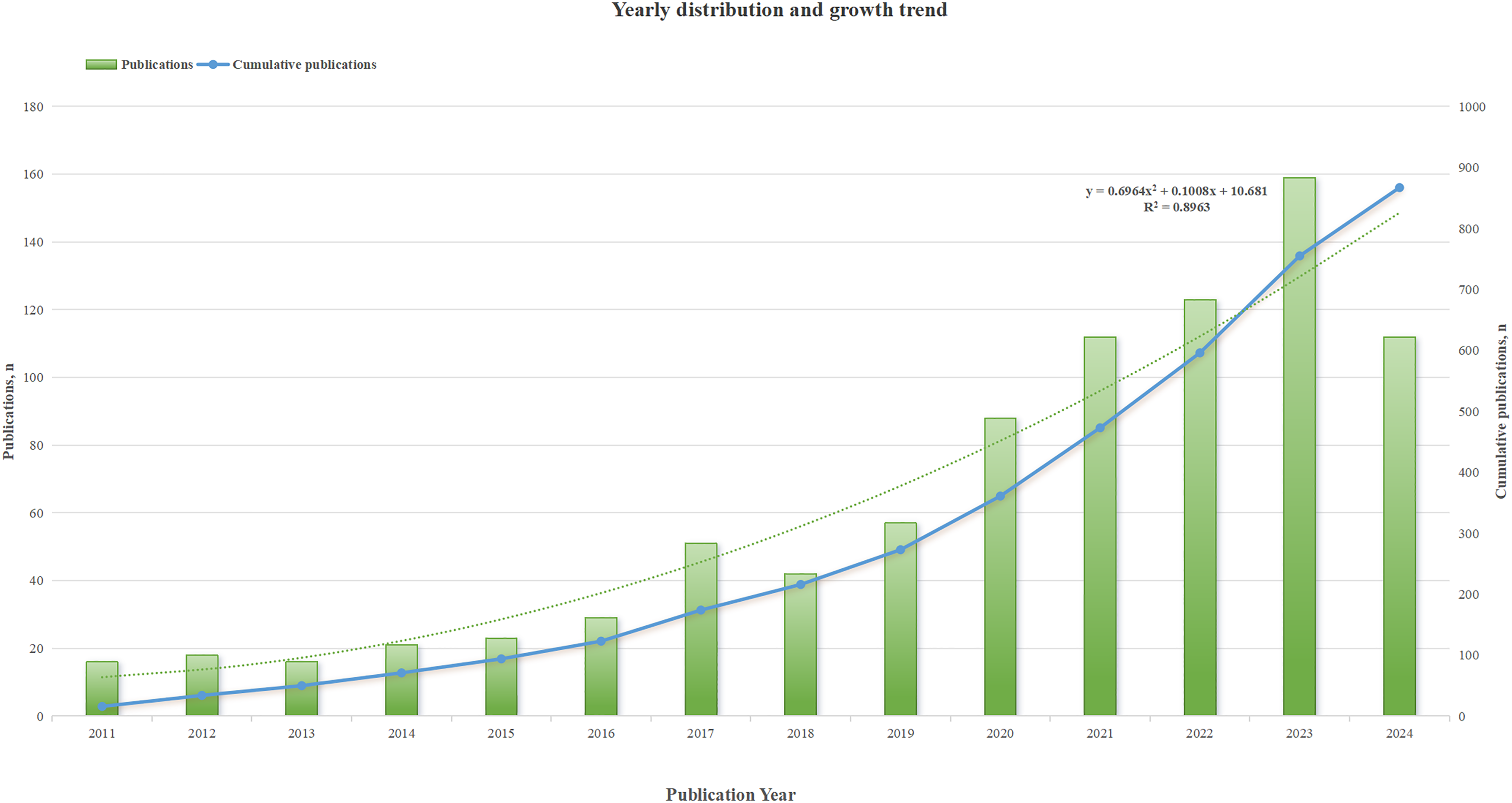
The annual and cumulative numbers of research articles on artificial intelligence in OSA in WOS from 2011 to 2024.
Country analysis
A total of 66 countries/regions have contributed to publications in this field, demonstrating the global interest in AI applications for OSA. The fact that 37 countries/regions have published more than five papers each and 20 countries/regions have published more than 10 papers highlights the wide dissemination of research efforts. It is noteworthy that only the USA and China have surpassed the threshold of 200 publications individually, signifying their dominant positions in this research area. Table 1 delineates an overview of the top ten countries/regions in terms of publication volume from 2011 to 2024. China leading the list with 247 articles and the USA closely following with 230 articles indicates the significant investment and research capacity in these two countries. The differences in the total citations among countries, such as the USA having 5025 citations compared to China's 2571 citations, reflect variations in the impact and visibility of research outputs. This could be due to factors like the availability of resources, the scale of research collaborations, and the focus on different aspects of AI in OSA research.
The top 10 countries in terms of publications from 2011 to 2024.

To investigate patterns of international collaboration, a co-authorship network was constructed using VOS software, as depicted in Figure 3. The principal contributors to this research collaboration network, namely the USA, China, Australia, and Germany, play crucial roles in facilitating knowledge exchange and driving the field forward.
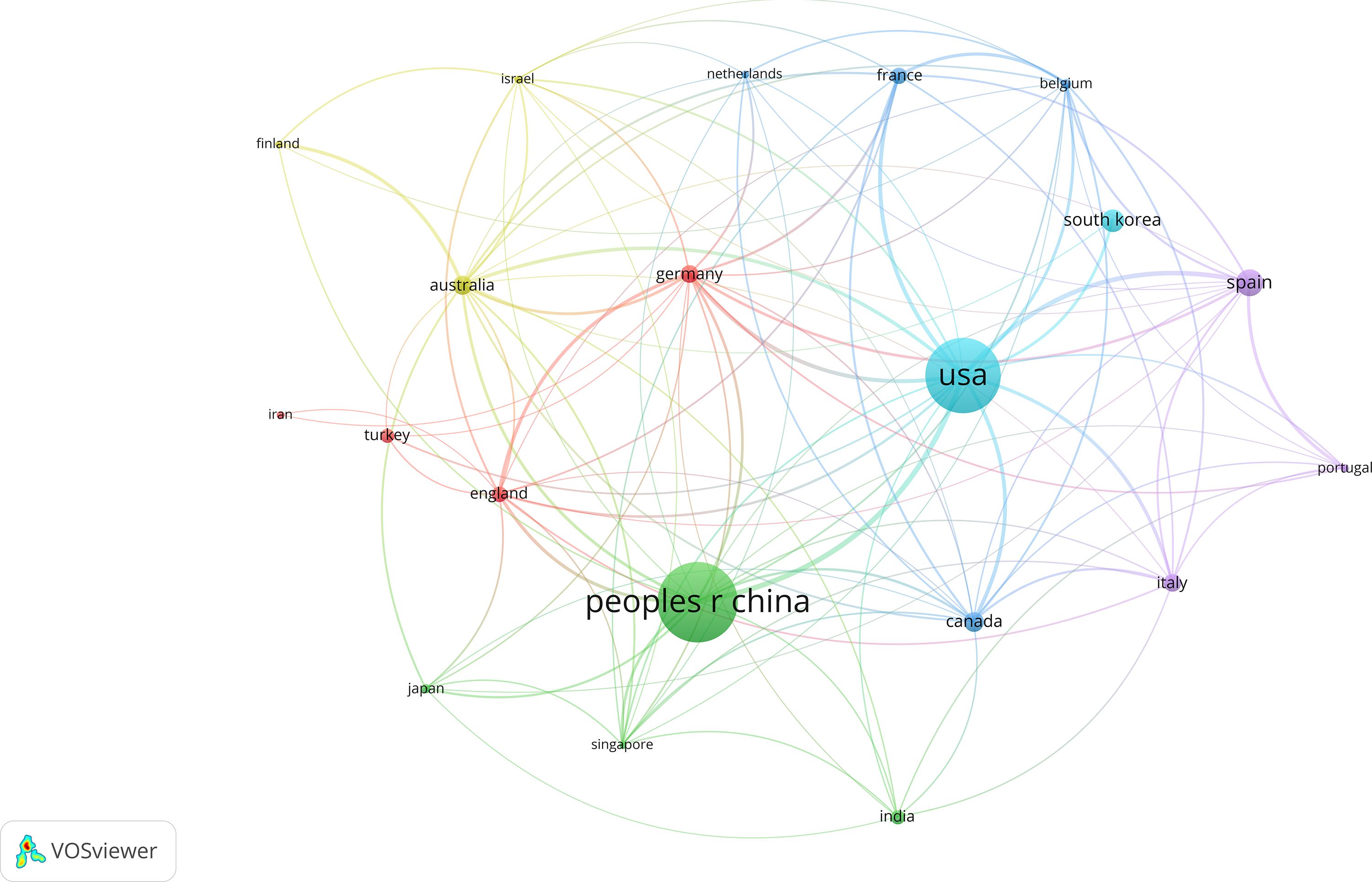
Collaboration network mapping among the top 20 countries/regions in terms of publication volume. where the proximity of two countries represents the strength of their correlation. The size of the circles represents the number of publications. The thickness of the line represents the degree of connection between two countries/regions.
The thickness of the lines connecting nodes indicating the strength of collaboration and the higher the TLS metric reveal the depth and extent of these international partnerships. The color-coding based on the average publication date of their literature (Figure 4) shows that China is emerging as the most recent influential nation in the field. This implies that China has been rapidly building its research capabilities and making significant contributions in recent years, which could potentially reshape the global research landscape in this area.

Collaboration network mapping among the top 20 countries/regions in terms of publication volume with overlay visualization mode. Blue color represents early years, and yellow color represents more recently.
Institution analysis
A total of 1463 institutions were involved in the research on the application of AI to OSA, with 28 institutions publishing at least 10 articles. This showcases the broad involvement of various academic and research entities in this area. The top 10 institutions in terms of publications, as listed in Table 2, are key players in driving the research forward. For instance, Universidad de Valladolid (TLS: 40) and University of Queensland (TLS: 36) emerged as the leading institutions (Figure 5), indicating their strong influence in facilitating collaborations and generating impactful research outputs. Intermediary centrality servers as an indicator to assess the importance of nodes within the network. 18 Figure 6 shows the intermediary centrality among institutions in this field. Institutions with high intermediary centrality, such as Harvard University (0.26), Chang Gung Memorial Hospital (0.13), and Stanford University (0.12), play a pivotal role in connecting different research groups and facilitating the flow of knowledge and ideas. Their positions within the network suggest that they act as hubs, enabling the integration of diverse research perspectives and resources, which is essential for advancing the field.
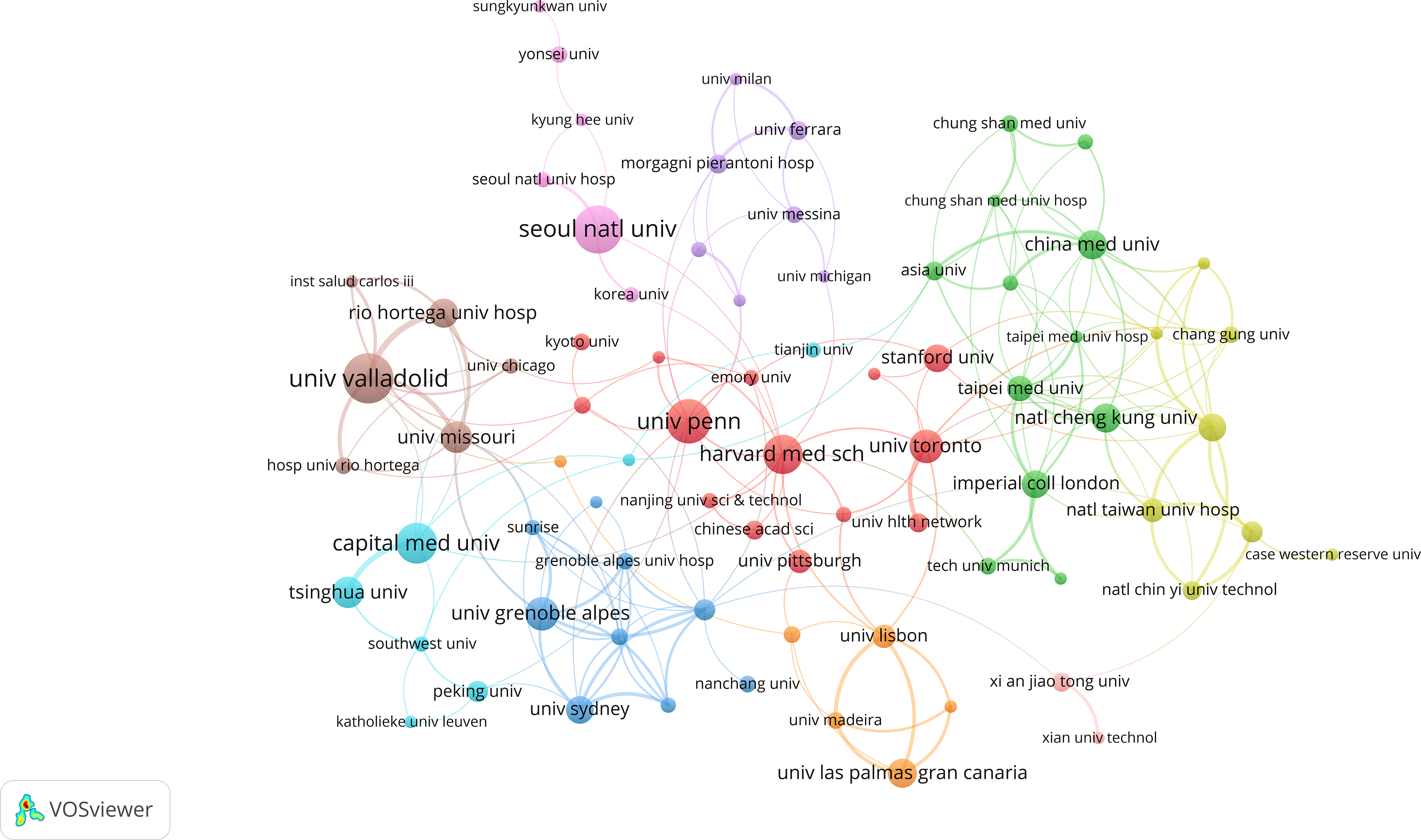
Collaboration network mapping among institutions with five or more publications. The size of the circles represents the number of publications. The thickness of the line represents the degree of connection between two institutions.

Mapping of intermediary centrality among institutions.
The Top 10 institutions in terms of publications from 2011 to 2024.

Bibliometric analysis of journal
A total of 867 articles were published in 306 journals, and 35 journals published at least five articles (Figure 7). The concentration of a significant portion of the research (243 papers related to AI and OSA were published in the top 10 journals, accounting for 28.03% of the total) in a relatively small number of leading journals highlights the importance of these platforms in disseminating key findings and shaping the research agenda in this field (as shown in Table 3).

Mapping of citation network of 35 journals with at least 5 publications in AI and OSA. The size of the circles represents the number of publications. The lines between circles represent the cooperation weight.
The Top 10 journals with the highest number of publications from 2011 to 2024.

IEEE Journal of Biomedical and Health Informatics published the most articles(31 articles) and was cited the most times (778 citations), indicating its high influence and the recognition of the research published within it. Followed by Biomedical Signal Processing and Control (29 articles, 717 citations), Sensors (29 articles, 444 citations), and Laryngoscope ranked the fourth in the number of articles, but its citation was high (592 citations). IEEE Transactions on Biomedical Engineering has published only 13 papers, but its citation has reached 510 times.
In Figure 7, the formation of three journal clusters can be identified, with the red cluster being the most influential due to its large number of publications and cooperation weight, reveals the existence of different research communities and their relative importance within the field. Meanwhile, journals like Journal of sleep research (average publish year [APY]: 2023.20) and nature and science of sleep (APY: 2022.67), colored bright yellow (Figure 8), represent the latest journals focusing on this field and making an impact. This shows the continuous evolution of the research area, with new journals emerging to address emerging topics and attract more attention from researchers.
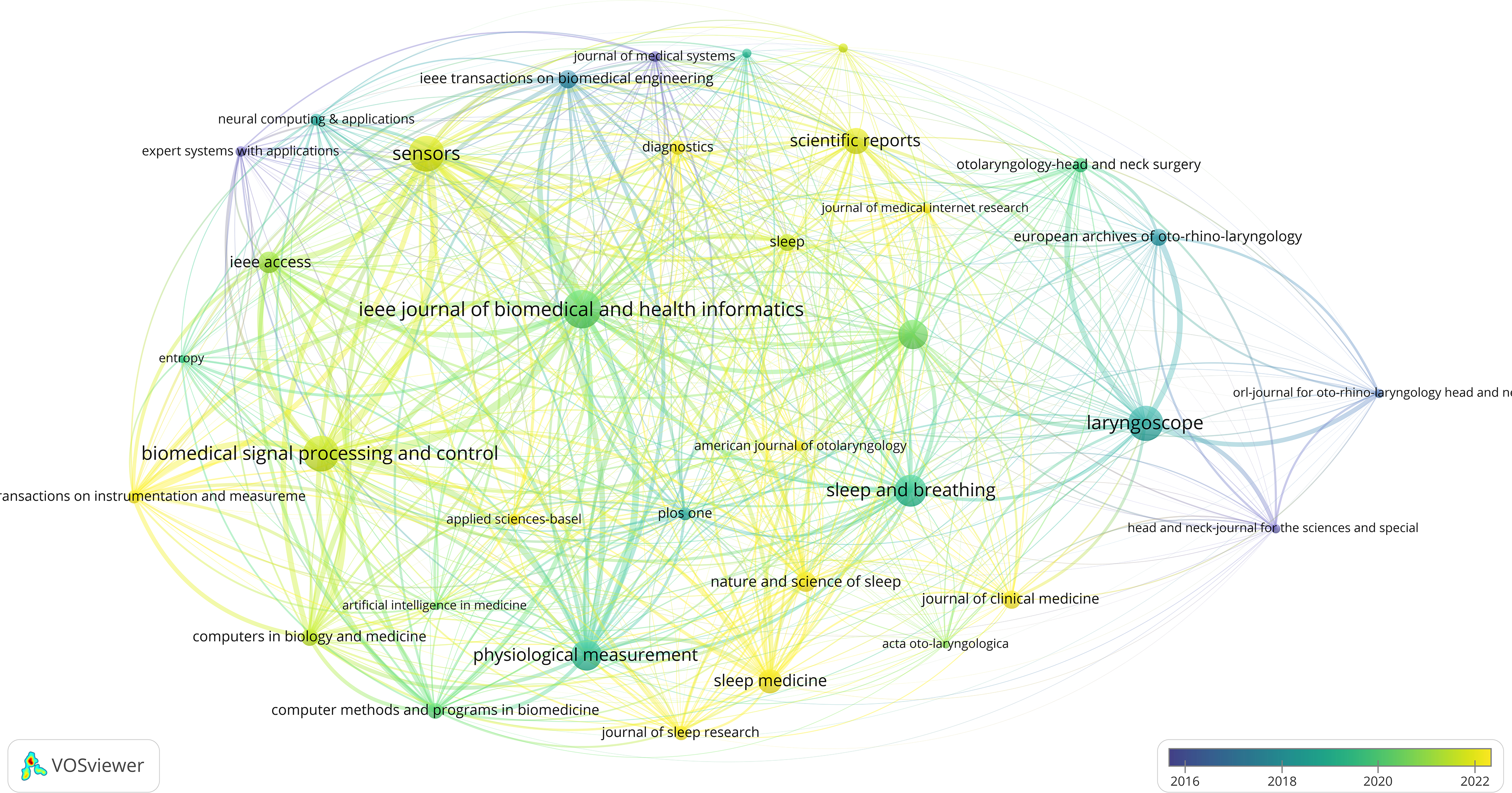
Mapping of citation network of 35 journals with at least five publications using overlay visualization mode. Blue color represents early years, and yellow color represents more recently.
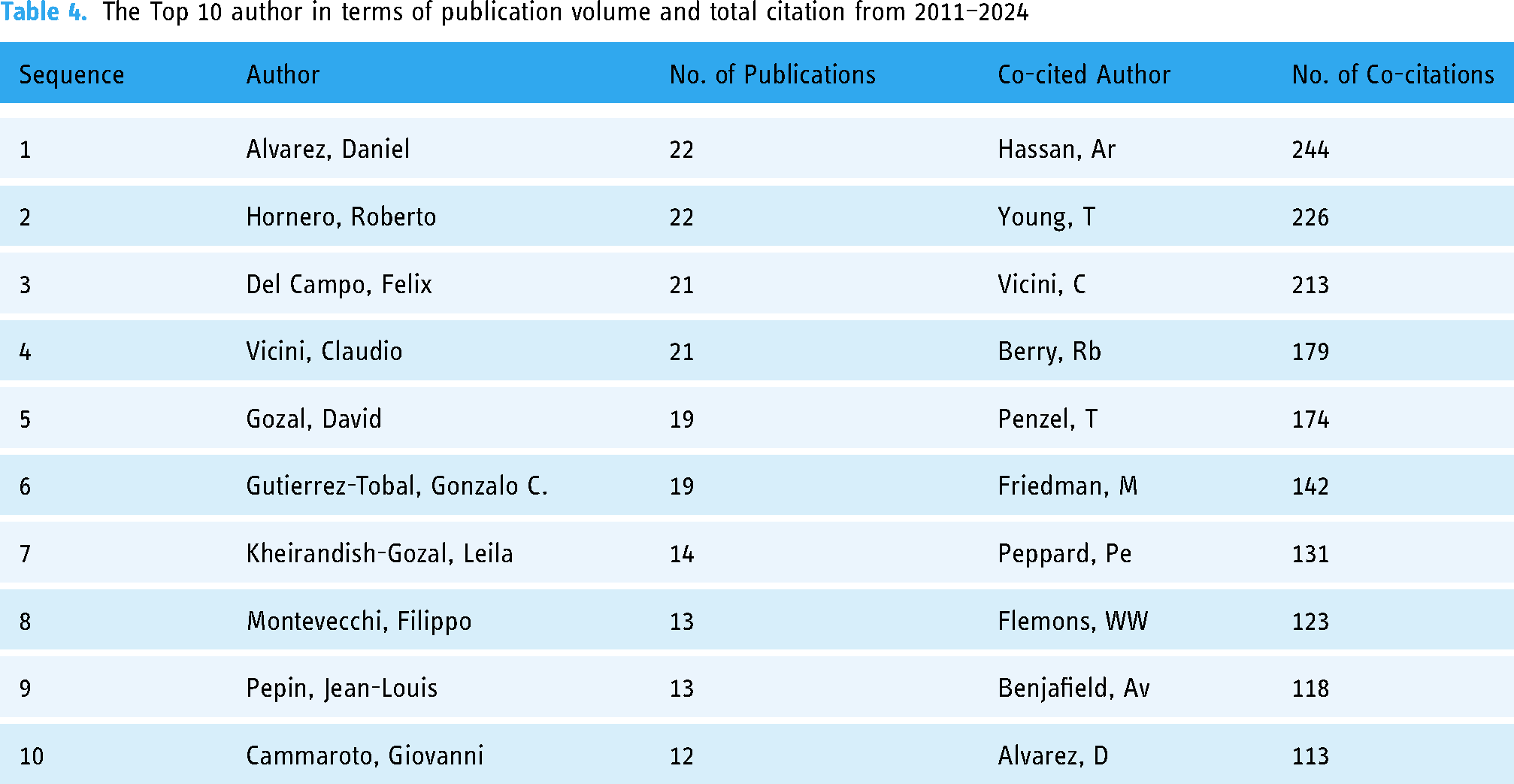
Author and co-cited author analysis
A total of 3850 authors and 19268 co-cited authors participated in research in this area. Table 4 illustrates the number of publications and co-citations of the top 10 authors. The presence of authors like Alvarez, Daniel, and Hornero, Roberto who share the highest number of publications (each with 21 articles), and those with high co-citation frequencies such as Hassan, Ar, Young, T, and Vicini, C, indicates the key individuals who have made significant contributions and have a high impact on the research direction. The collaboration network of authors who have published at least five articles (Figure 9) reveals that research teams in this field are predominantly composed of small groups of authors, with no apparent multi-centered collaborative research evident. This could suggest that there is room for further strengthening of collaborative efforts to foster more comprehensive and large-scale research initiatives. On the other hand, the collaborative relationships among the 202 authors whose works have been co-cited more than 20 times (Figure 10) show the core intellectual interactions within the field, highlighting the key connections that have influenced the development of ideas and research directions.

Collaboration network mapping between authors with at least five publications. The size of the circles represents the number of publications. The thickness of the line represents the degree of connection between two authors.
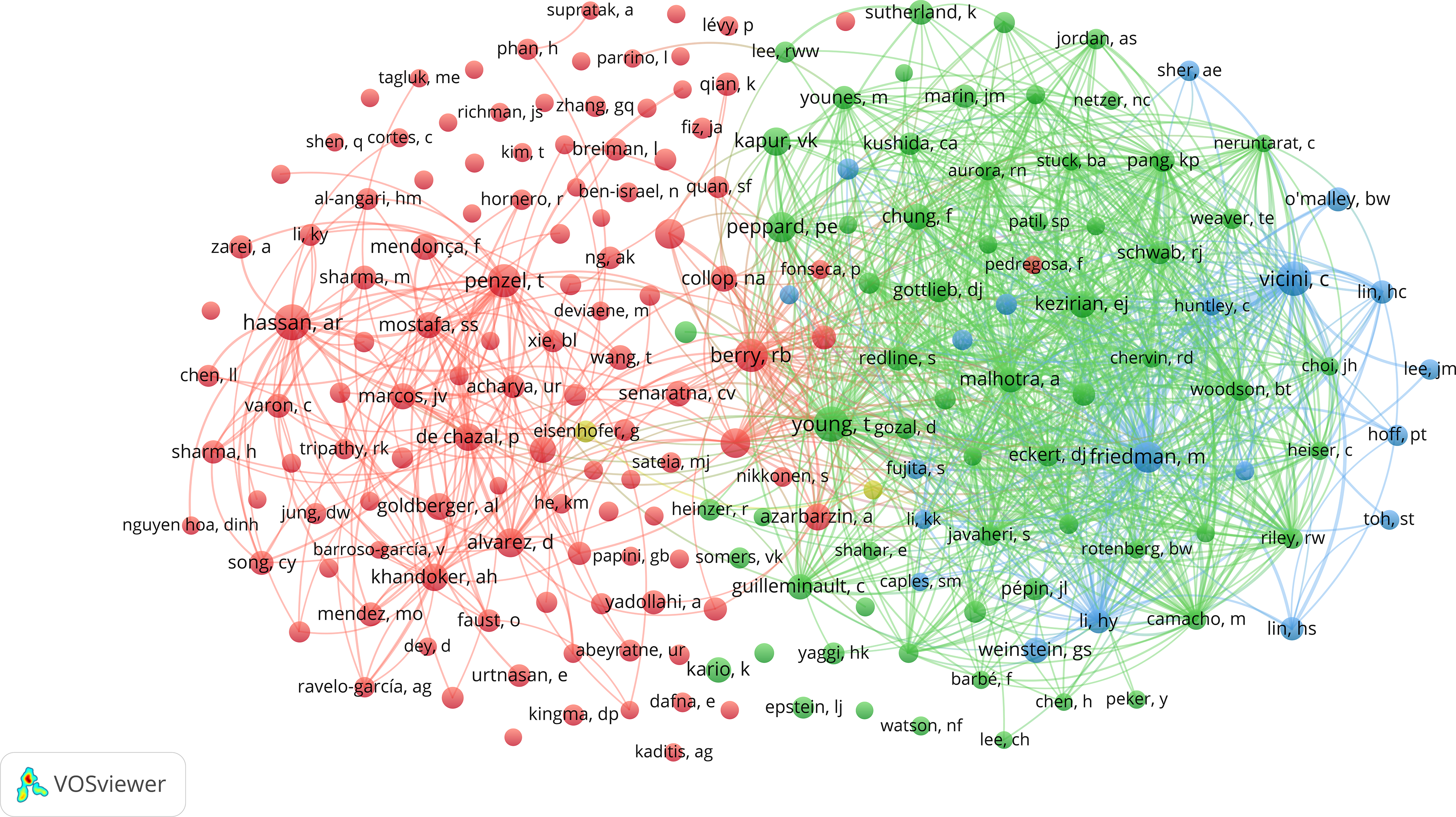
Collaboration network mapping between co-cited authors with at least 20 co-citations. The size of the circles represents the number of publications. The thickness of the line represents the degree of connection between two authors.
The Top 10 author in terms of publication volume and total citation from 2011–2024
Reference analysis
There were a total of 26,988 references, of which only 18 were co-cited more than 20 times, highlighting the selectivity and importance of these highly cited works. The top10 co-cited literature are listed in the Table 5. Among them, “Estimation of the global prevalence and burden of obstructive sleep apnoea: a literature-based analysis” was cited the most frequently (116 times), are foundational references that have shaped the understanding of OSA and its associated issues.
The top10 co-cited literature.

Applying Citespace software to perform a clustering analysis on the top 15 co-cited literature identified 14 distinct clusters, encompassing various aspects related to the identification, monitoring, and treatment of OSA, as well as technological approaches of AI, such as snore sound, retropalatal, tracheal recording, Real time detection, transoral robotic surgery, ML, back propagation neural network, coherence function, etc. Figure 11 provides an overview of these clusters. Figure 12 illustrates a timeline highlighting current research hotspots, primarily focused on Deep Learning and ML. It is noteworthy that Deep Learning has been a prominent research focus since as early as 2015. Figure 13 displays a summary of 20 prominent references within this field, showing a rapid increase in citations since 2017, indicating that AI remains a hot research topic in the diagnosis and treatment of OSA in the next few years. This not only validates the growing interest in using AI but also points to the potential for continued innovation and development in this area in the coming years.
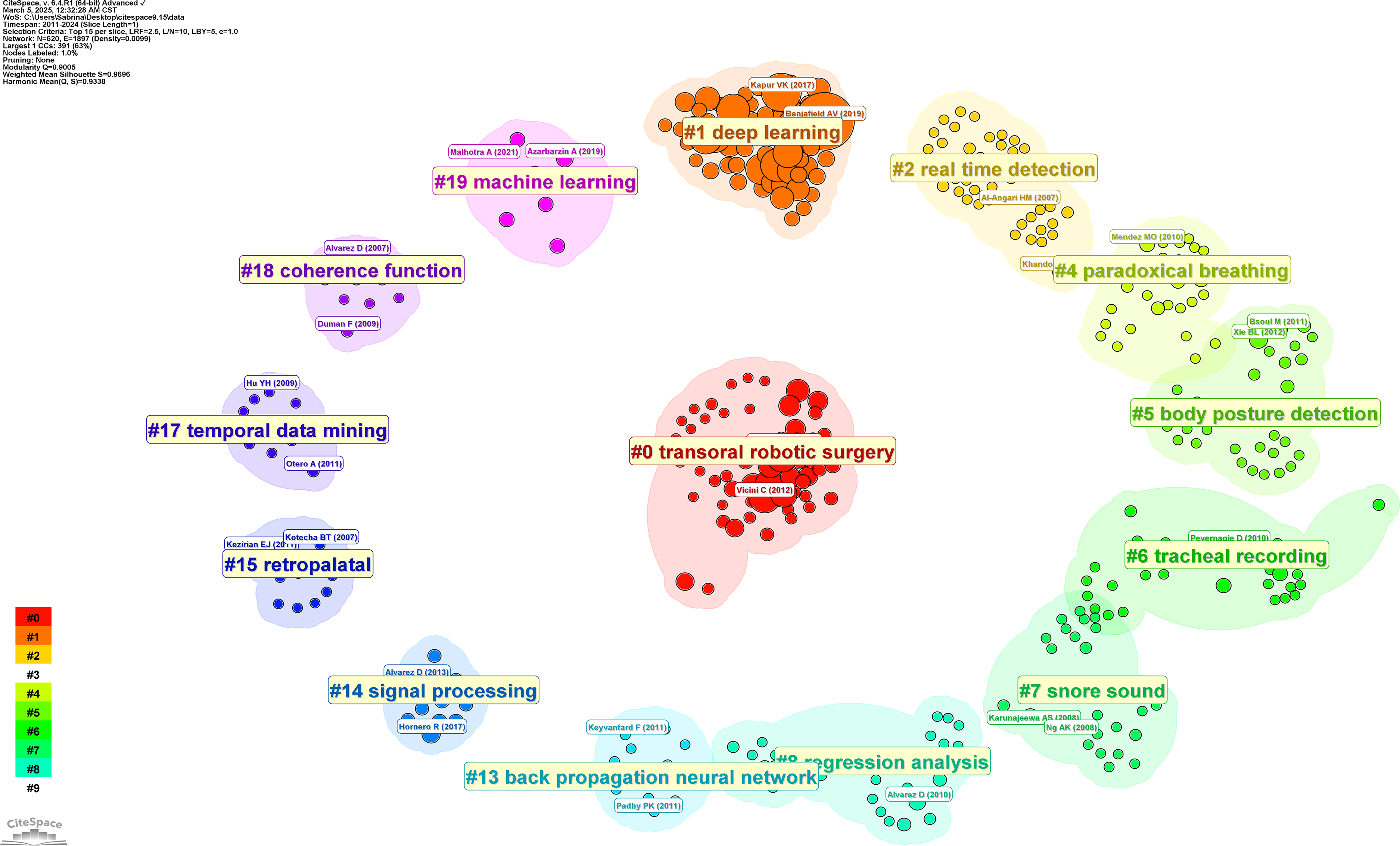
Clustering analysis of the top 15 co-cited literature.

The top 15 co-cited literature clustering timeline.
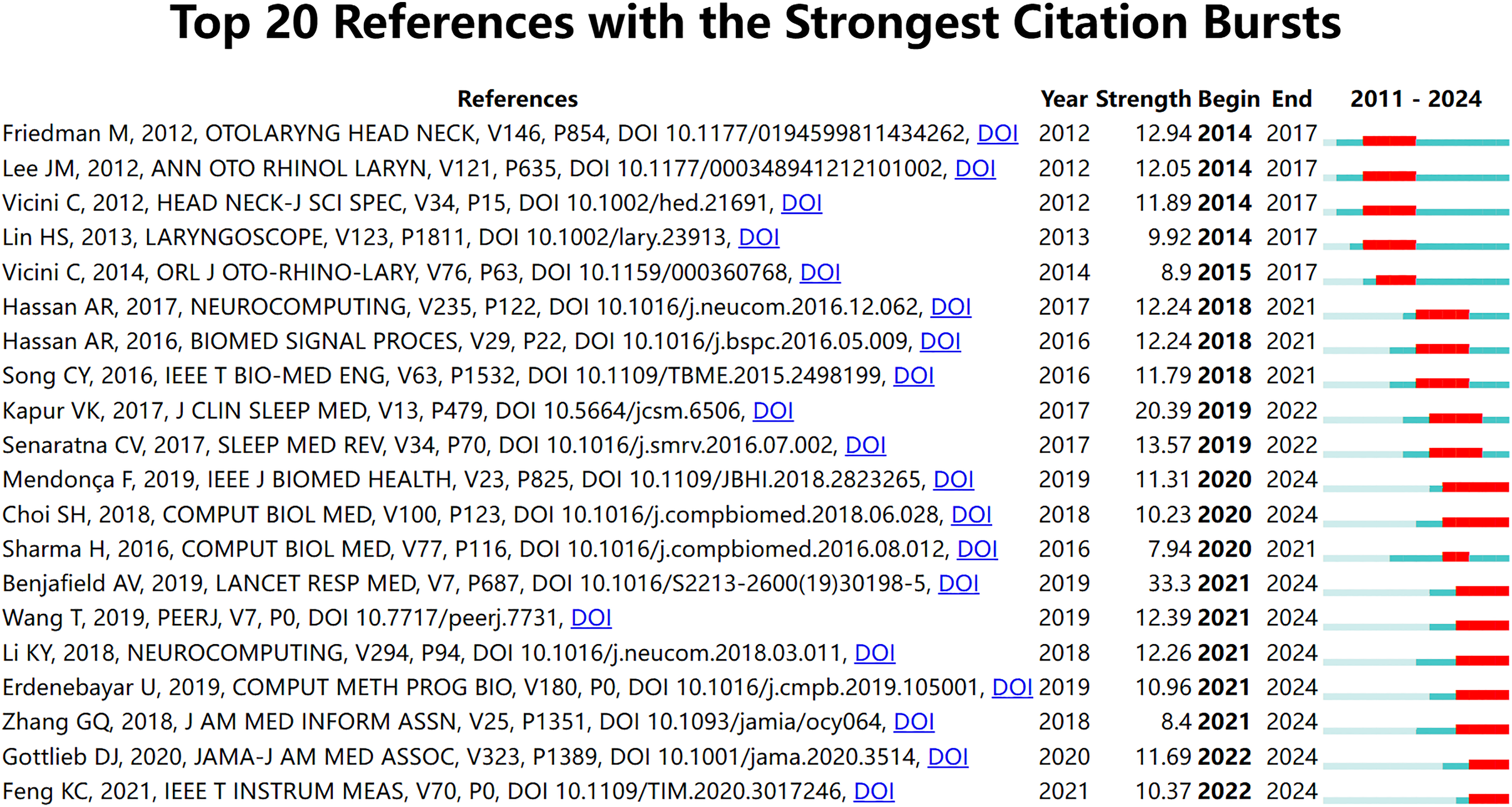
The top 20 references with the strongest citation bursts from 2011-2024.
Author keywords analysis
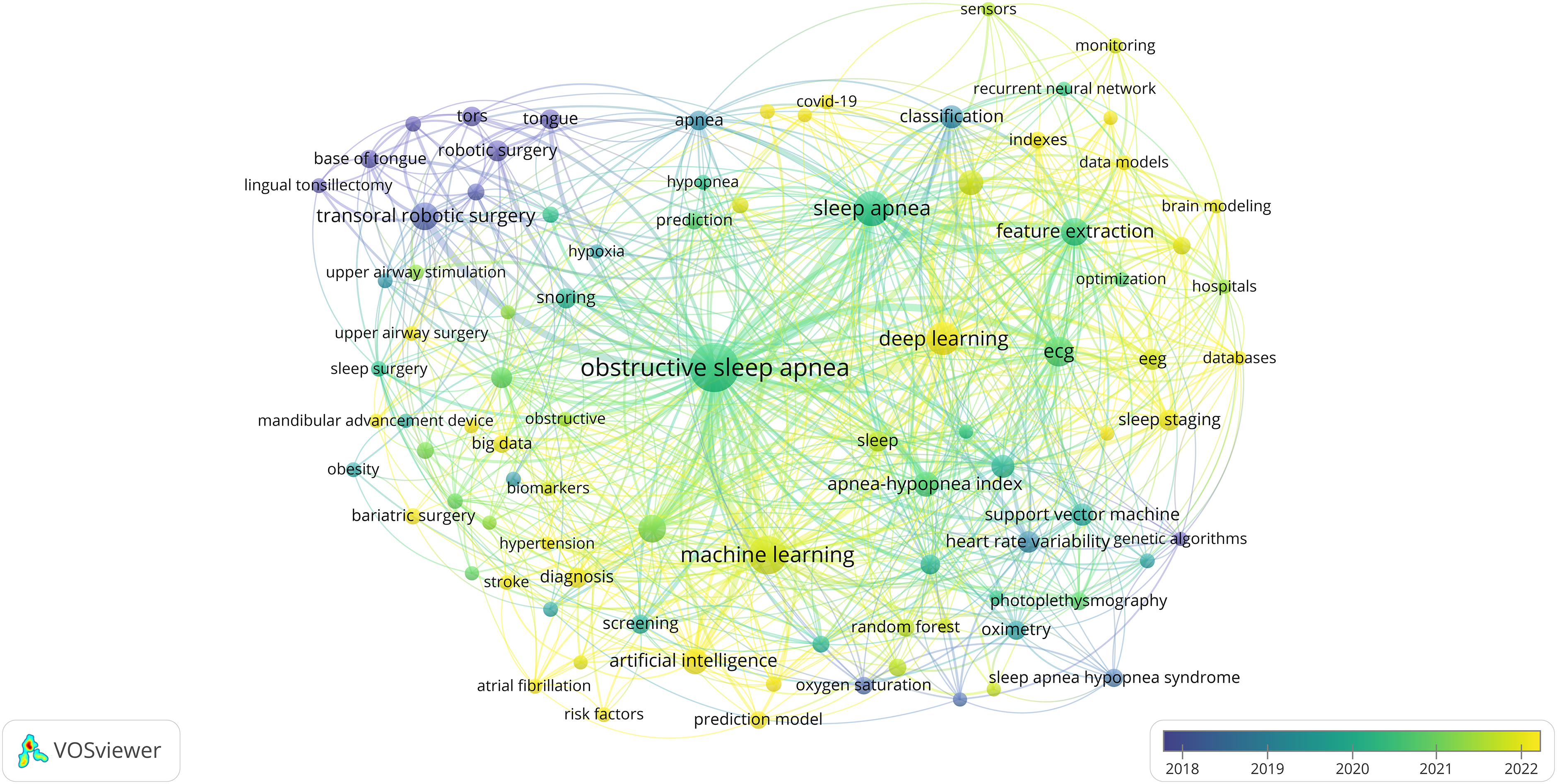
Out of a total of 2088 author keywords, 91 keywords appeared with a frequency of at least five times. The keywords were categorized into seven clusters represented by different colors (Figure 14).Through cluster analysis, we have found that AI plays a significant role in real-time monitoring, diagnosis, and classification of OSA, predicting disease risk, analyzing and processing biomedical signals, forecasting more appropriate treatment methods, assisting in robotic surgery, and aiding in the screening and diagnosis of comorbidities. Figure 15 enumerates the top 30 most frequently used keywords in the field, excluding disease names, with ML (166 occurrences,809 links) and Deep Learning (97 occurrences, 255 links) being the most prevalent. As depicted in Figure 16, which displays an overlay keyword map, the yellow nodes indicate emerging keywords that represent current focal points of research interest. While, Figure 17 illustrates the prominence of the top 22 keywords which have experienced rapid growth since 2017, many continue to appear frequently in recent years signifying that AI remains a prominent research hotspot for OSA diagnosis and treatment in the coming years.

Co-occurrence network map of author keywords. The size of the circles represents the number of occurrence.
The top 30 most frequently used keywords in articles on artificial intelligence in OSA.

Co-occurrence network map of author keywords with overlay visualization mode. Blue color represents early years, and yellow color represents more recently.

The top 22 keywords with the strongest citation bursts from 2011–2024.
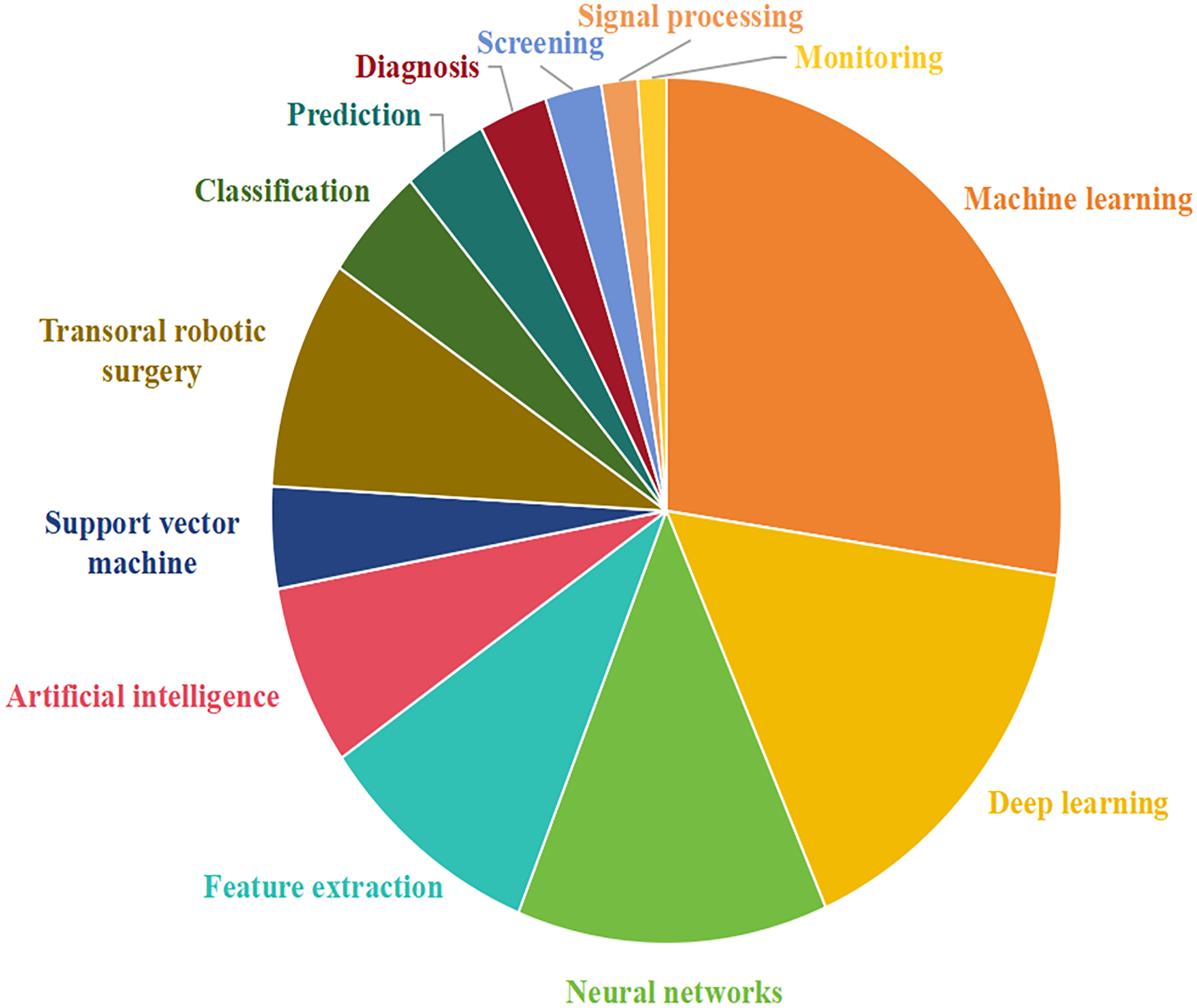
As shown in Figure 18 and Table 6, the top five AI technologies were ML, deep learning, neural networks, AI, and feature extraction. The top five functions were transoral robotic surgery, (disease phenotype) classification, prediction, diagnosis, and screening.
Author keywords in articles on artificial intelligence in OSA.
Categories of author keywords in articles on Artificial Intelligence in OSA.

Discussion
In recent decades, Al has experienced swift development and has extended its reach into the realm of clinical medicine. Sleep medicine research has evidently reaped the benefits of Al technology's progress. In contrast to conventional literature review methods, bibliometrics emphasizes the systematic examination of a research field's literature by integrating quantitative approaches with visualization tools. This methodology enables the intuitive presentation of intricate data, the delineation of the research field's progress patterns, and the anticipation of future research directions.
This study represents the inaugural attempt to conduct a bibliometric analysis and visual evaluation of 867 publications spanning from 2011 to 2024 using VOSviewer and Citespace, providing an overview of the current state, hotspots, and trends of AI in OSA. The statistical results of publication volume indicate an upward trend in literature on this topic, with a particularly noticeable acceleration in growth post-2017. The polynomial fitting result was R2 = .8963, suggesting that the publication volume related to this field will continue to rise. In terms of evaluating leading countries and assessing international collaboration, China, the USA, Spain, and South Korea all rank in the top 10 worldwide for publication volume and total citations, indicating the outstanding contributions of scientists from these four countries in this domain. Additionally, although the number of publications from Germany is only 45, it has the highest average number of citations, which reflects the excellent quality of German publications. Despite China's highest publication volume, the average citation count of Chinese literature is significantly lower than that of many other countries, which may be related to China's later start in AI research, with the average publication year of its research results being later, leading to a lower academic impact. Based on TLS, the USA frequently collaborates with other countries, and Chinese scholars should strengthen exchanges and cooperation with other countries to promote their own development and mutual progress.
In terms of identifying leading institutions, according to the results of VOSviewer, Universidad de Valladolid in Spain ranks first in publication volume, total citation count and TLS, making it a leading institution with significant contributions in this field and extensive collaborations with other institutions. Moreover, two authors from the Biomedical Engineering Group of this institution, Daniel Alvarez and Roberto Hornero, are the most prolific and influential. Their main research focus is on using AI technology to analyze and process biomedical signals to assist in the diagnosis, classification, and severity assessment of OSA, which is expected to become a hotspot for future research. Additionally, Ahnaf Rashik Hassan, Terry Young, and Claudio Vicini rank in the top three in terms of citation frequency due to their numerous high-level articles published in influential journals. Ahnaf Rashik Hassan from the University of Toronto is an active researcher in the fields of biomedical engineering and signal processing, specializing in using ML algorithms to process biomedical signals such as ECG and EEG to assist in the diagnosis of OSA. Terry Young, an epidemiology expert from the University of Wisconsin, focuses primarily on the natural history of sleep apnea and other sleep disorders. Claudio Vicini is an associate professor at the University of Ferrara in Italy, with a main research focus on using improved surgical techniques to treat OSA.
The examination of journals and citations is beneficial for researchers to grasp the importance of a specific field and offers valuable support in retrieving cutting—edge academic literature and publishing research outcomes. Based on this study, the remarkable research findings regarding the application of AI in OSA are predominantly published in journals associated with sleep medicine, respiratory systems, head and neck diseases, sensor science and technology, biomedicine, and health informatics. This also mirrors the extensive and profound nature of interdisciplinary research at the intersection of OSA and AI, suggesting that this research area continues to attract significant attention from both the academic and medical sectors. Among the top 10 most frequently published journals, the leading three are the IEEE Journal of Biomedical and Health Informatics, Biomedical Signal Processing and Control, and Sensors, all of which possess high total citations and TLS. Authors intending to publish research on the application of AI in OSA might initially take into account the listed highly productive journals.
Co-citation analysis of literature helps researchers understand the current development dynamics of AI applications in OSA, and the co-citation network aids researchers in discovering emerging research trends and topics. Among the top ten cited documents, the most co-cited article is “Estimation of the global prevalence and burden of obstructive sleep apnoea: a literature-based analysis” published in The LANCET RESP MED. Through literature analysis, it presents the initial study on the global prevalence of OSA, indicating that nearly one billion people globally are affected and the prevalence rate in certain countries exceeds 50%, 2 revealing the current state of OSA research: more effective diagnosis and treatment strategies are needed to reduce the negative health impacts and maximize cost-effectiveness. The following two articles, “Clinical Practice Guideline for Diagnostic Testing for Adult Obstructive Sleep Apnea: An American Academy of Sleep Medicine Clinical Practice Guideline” and “A Review of Obstructive Sleep Apnea Detection Approaches,” mainly provide clinical practice recommendations for the diagnosis of OSA.5,19 However, PSG is an expensive and limited diagnostic tool, and several highly co-cited articles published since 2018 have jointly revealed the research hotspot of using different sensors to detect and automatically analyze physiological signals according to various algorithms to assist in disease diagnosis.20–23 In addition, through keyword clustering and timeline analysis of the top 15 co-cited references, deep learning, and ML are currently the most widely utilized technologies,24,25 with deep learning having emerged as a hot topic in this research field since 2015.
As shown in the references with the strongest citation bursts, initially, in the quest for alternatives to PSG, electrocardiogram (ECG) signal combined with ML methods were frequently employed to establish novel OSA detection methods. 26 For instance, Song proposed a new OSA detection method by constructing a Hidden Markov Model (HMM), a classic ML model, to analyze ECG signals. 27
Hassan integrated the tunable-Q factor wavelet transform with random undersampling boosting (RUSBoost) for the automatic identification of OSA. 26 Subsequently, AI technologies were combined with advanced devices and sensors to provide more precise monitoring and diagnosis. 5 However, researchers gradually realized that feature extraction and labeling heavily relied on the prior knowledge and subjective judgment of the researchers, and ML typically required a substantial amount of annotated data for training, which were quite laborious steps.
To address this issue, researchers have been gradually shifting their focus from ML to deep learning, and even integrating these two technologies.20,21,28 For example, convolutional neural networks, a deep learning technique, were utilized to enhance the performance of real-time detection of OSA hypopnea events. 23 Li employed a sparse autoencoder, a deep learning method, to extract features from single-lead ECG, followed by the use of SVM and artificial neural network (ANN), both ML classifiers, to categorize the features. Considering the temporal correlations, the classified results were then fed into the HMM for final decision fusion. The model achieved an accuracy of 85% and a sensitivity of 88.9% in identifying ECG segments containing OSA. Based on the recognition of OSA segments, the model could achieve a 100% accuracy rate in identifying records containing OSA. 29
Keyword analysis provides a unique perspective to gain insights into the development trajectory and trends of AI in OSA. Initially, we utilized the VOSviewer software to perform a visual analysis of high-frequency keywords, identifying terms such as “OSA,” “machine learning,” “deep learning,” “feature extraction,” “ECG,” “PSG,” and “classification,” which represent current hot topics in research. Subsequently, we conducted an overlay network analysis of high-frequency keywords and found that terms like “deep learning,” “convolutional neural networks,” “ECG,” “big data,” “sleep staging,” “diagnosis,” and “monitoring” appeared in bright yellow, indicating that the construction of deep learning models for sleep staging, OSA diagnosis, and monitoring represents the latest research hotspots.
Through cluster and burst analysis of keywords, there was a slow increase in the number of publications before 2017, with a relatively gradual evolution of keywords. “Adult,” “surgery,” “ postive airway pressure,” “prediction,” and “efficacy” were the focal points of research during this period, indicating that AI technology was primarily utilized for predicting the efficacy of treatment modalities and planning therapeutic strategies. After 2017, the field of research entered a rapid development phase, with the number of publications growing exponentially. Keywords that emerged during this stage included “neural networks,” “signal,” “feature extraction,” “deep learning,” “heart rate variability,” and “algorithms.” This reflects a recent research focus on leveraging AI to develop predictive models, enhance diagnostic accuracy, and optimize treatment plans.
In summary, the current application of AI in OSA can be broadly categorized into five main research directions. Firstly, the application of AI in early screening and diagnosis of OSA. Patients with OSA exhibit recognizable facial characteristics, and by leveraging AI to learn these facial features, facial recognition technology can be employed to screen populations with high-risk OSA facial structures.30–32 The identification of sleep stages is crucial for the diagnosis of OSA, and manual scoring is time-consuming, subjective, and costly. To overcome these drawbacks, numerous studies advocate for the development of an automated sleep stage classification method based on deep learning.33,34 Concurrently, some research has proposed an integrated AI framework that further informs the risk of OSA based on features automatically scored from sleep stages. 35 Additionally, studies have confirmed that utilizing ML, ANNs, and other methods to identify clinical features and physiological parameters such as snoring characteristics, oxygen saturation, heart rate, ECG, electroencephalogram, and X-ray images can construct diagnostic models for OSA with good efficacy.36–41
Secondly, the application of AI in the identification of OSA subtypes. OSA is a highly heterogeneous disease. Accurate identification of subtypes is a prerequisite for personalized and precise treatment of OSA. Several studies have utilized PSG to identify OSA subtypes, and AI technology can enhance the efficiency and accuracy of subtype identification.42,43 Dutta used multivariate principal component analysis and decision tree learning to study the age, BMI and eight PSG parameters such as AHI and lowest oxygen saturation of 52 participants, quantified each subtype with standard physiological methods and found that the model helped assess loop gain and arousal threshold, and the accuracy of predicting OSA severity could be doubled by incorporating subtypes. 43
Thirdly, the application of AI in optimizing and decision-making for OSA treatment options. CPAP is the first-line treatment for OSA, but studies have found that CPAP compliance is seriously inadequate, even below 50%. 44 ML technology can not only build models to predict CPAP treatment compliance but also improve patient's compliance to a certain extent by establishing monitoring systems and CPAP ventilators equipped with AI processors for real-time monitoring and remote medical reminders.45,46 In addition, AI technology can predict the accuracy of oral appliances and surgical treatment effects,47–49 providing valuable decision support tools for clinicians and facilitating the implementation of precision medicine.
Fourthly, the application of AI in the assessment of OSA comorbidities and prognosis. Liu used ML to analyze brain resting-state functional MRI (rs-fMRI) scans for the identification of OSA patients with and without cognitive impairment. 50 Agarwa utilized convolutional neural network analysis of brain MRI scans to forecast whether OSA patients treated with CPAP would experience negative neurological conditions after treatment. 51 Ao Li and her colleagues constructed a big data-driven random forest model which can quickly predict the 10-year cardiovascular disease-related mortality in OSA. 52 These studies all illustrate the important role of AI in assessing OSA comorbidities and prognosis.
Lastly, the application of AI in remote medical care and chronic disease management for OSA. OSA is a chronic disease which requires long-term home treatment. With the widespread use of smartphones and the continuous updating of wearable electronic device technology, the application of AI in remote medical care and chronic disease management for OSA is also expanding, 53 including real-time monitoring of home sleep (sleep stages and sleep quality), 54 disease risk early warning, 55 remote monitoring systems for CPAP treatment, 56 and patient self-health management. 57
In recent years, the rapid development of AI has led to significant advancements and immense potential in the field of OSA. Its capabilities in early screening and diagnosis, subtype identification, personalized treatment, prognosis evaluation, telemedicine, and chronic disease management have been proven to be of immense value. Looking ahead, the integration of AI with multi-omics data is akin to lighting a beacon of hope, allowing for a deeper understanding of the molecular basis of OSA and its impact on the risk of related comorbidities. Furthermore, this convergence will aid in the discovery of new biomarkers and advance personalized medical strategies. Additionally, future research will develop comprehensive AI systems by integrating multimodal data, empowering sleep health from prevention to treatment, and from monitoring to management, bringing more precise, convenient, and humanized medical services to patients and ushering in a new era of sleep health.
Nevertheless, the application of AI in OSA is still confronted with several challenges and limitations. Patient confidence in AI technology is crucial for its effective use in screening for OSA. The complexity and lack of transparency of AI systems, along with the extensive use of sensitive medical data for training, can raise concerns and discomfort among patients. 58 To foster acceptance, it is vital to engage in clear communication and education, explaining to patients how AI functions and its potential to enhance the precision and efficiency of screening processes. At the same time, it is imperative to ensure that data collection, storage, and analysis adhere to legal and regulatory standards, and that patients provide explicit consent. 59 Protecting patient privacy and ensuring data security are equally important for establishing trust.60,61 This is because AI could be used to analyze patient data to forecast health outcomes, which might result in discrimination in insurance or employment. Furthermore, when AI is integrated into healthcare decision-making, it is necessary to define the responsibilities of medical professionals, AI developers, and data scientists. The accuracy of AI models hinges on the quality and representativeness of the training data; models developed from a single data source may not be universally applicable. Future advancements will require a broader range of data and collaborative research across multiple centers to improve the reliability and robustness of these models.
Limitation
Our study also has certain limitations. Only included English literature from the WOS Core Collection database was included in this study, which may lead to bias in our results. At the same time, due to concerns about incomplete clinical data in publications, only articles and reviews that were published were included in this study, which may lead us to miss some research results published in other forms, such as conference papers. Finally, although we tried to include as many AI-related keywords as possible when retrieving literature, they are very general, which may lead our research to not cover all research results related to the application of AI in OSA. In future research, we may use more specific AI terms to analyze more databases and articles types to explore more research directions.
Conclusion
This bibliometric analysis has provided valuable insights into the current state and trends of AI applications in OSA research. By systematically examining the literature from 2011 to 2024, we have identified key patterns and directions that have significant implications for the development of actionable AI systems in this field.
The growing body of research indicates that AI has the potential to revolutionize OSA management, diagnosis, and treatment. Similar to how AI models are being evaluated for their accuracy and utility in other medical applications, as demonstrated in the study which evaluated ChatGPT's recommendations for thromboembolic prophylaxis in spine surgery, 62 AI in OSA research is also advancing. The increasing focus on deep learning techniques for accurate diagnosis and personalized treatment strategies, as seen in the analysis of keywords and co-citation trends in our study, suggests that future AI systems could be designed to integrate these advanced algorithms. This would enable more precise identification of OSA subtypes and better prediction of treatment outcomes, ultimately enhancing patient care.
In terms of aggregating actionable AI systems, our findings suggest the need for a comprehensive approach that combines data from multiple sources. As seen in the research on early screening using facial recognition and the integration of various physiological parameters for diagnosis, future systems could be developed to aggregate data from wearable devices, clinical records, and imaging studies. This would provide a more holistic view of the patient's condition and enable more personalized treatment plans.
The results of this bibliometric analysis also point to several opportunities for future research. One potential area is the development of novel AI-enabled tools for remote patient monitoring. With the increasing prevalence of OSA and the need for long-term management, there is a clear opportunity to develop tools that can continuously monitor patients’ sleep patterns and provide real-time feedback. This could involve the integration of smartphone sensors and AI algorithms to detect early signs of OSA exacerbation and prompt timely intervention.
Another area with significant potential is interdisciplinary research. The analysis has shown that OSA research involves multiple disciplines, including computer science, engineering, and medicine. Future studies could focus on strengthening collaborations between these disciplines to address complex challenges such as improving the accuracy of AI models and ensuring their clinical relevance. For example, bioinformatics experts could work with clinicians to develop more accurate algorithms for predicting OSA comorbidities based on genomic and clinical data.
In conclusion, AI holds great promise in transforming OSA management and patient care. By leveraging the insights from this bibliometric analysis and addressing the identified limitations, future research can contribute to the development of more effective AI systems and improve the lives of OSA patients.
Footnotes
Acknowledgments
The authors would like to sincerely appreciate the strong support from the Chengdu University of Traditional Chinese Medicine.
Contributorship
XA: Conceptualization, data retrieval, visualization analysis and drafting the article. JZ: Visualization analysis, writing—review and editing. QX: Writing—review and editing. Zhihui Zhao: Writing—review and editing. WL: Writing—review & editing and final approval of the version to be submitted.
Declaration of conflicting interests
The authors declared no potential conflicts of interest with respect to the research, authorship, and/or publication of this article.
Declaration of generative Ai and Ai-assisted technologies in the writing process
No generative AI or AI-assisted technologies were used in the writing process.
Funding
The authors disclosed receipt of the following financial support for the research, authorship, and/or publication of this article: This work was supported by the National Natural Science Foundation of China (No. 82305091), Research and Development Program of Sichuan Science and Technology Department (No. 2023ZYD0081, No. 2022YFS0037, No. 2022YFS0194, and No. 2024YFFK0036) and Chengdu Science and Technology Bureau key research and development project (2024-YF05-01959-SN).
