




Abstract
Background
Preparing for aging with personalized technology is crucial due to the growing elderly population. Artificial Intelligence (AI), notably AI chatbots in healthcare, has transformed technology by simulating human-like conversations. Research on middle-aged adults’ acceptance of AI chatbots is limited. Assessing middle-aged individuals’ intentions to use AI is vital for enhancing AI competency among the elderly and guiding future interventions.
Objective
This study aims to explore the acceptance of middle-aged individuals toward AI chatbots and influencing factors and verify the usability of Technology Acceptance Model 2 (TAM2) in the use of AI technology in middle-aged people, also to inspire the design of future intelligent systems and online interventions for improving the health and well-being of the aging population.
Methods
A cross-sectional design and snowball sampling method were utilized to conduct an online questionnaire survey among middle-aged adults. The questionnaire was compiled based on TAM2 and was created using the online survey platform. SPSS 26.0 software was used for statistical analysis.
Results
A total of 259 valid questionnaires were included in the final data analysis. The study reported the Cronbach's α of 0.94 for the questionnaire. We found that perceived ease of use, subjective norm, and user image significantly influence users’ intention to use AI chatbots. Notably, perceived usefulness emerged as a complete mediator in the relationship between subjective norm and intention to use, highlighting its central role in shaping user perceptions. The study also revealed a moderate acceptance level among middle-aged adults, emphasizing the need for targeted interventions.
Conclusions
This study emphasized the importance of customizing AI technology to improve its adoption among middle-aged adults, providing valuable guidance for developers and policymakers. The findings indicated the need for effective aging preparation that includes technological competency, suggesting that future planning should encompass comprehensive preparations for aging to enhance AI competency among the middle-aged population.
Introduction
The evolution of Artificial Intelligence (AI) has been a transformative force, shaping the way individuals interact with technology. The roots of AI can be traced back to the development of computers during the mid-twentieth century and the subsequent emergence of machine learning and neural networks.1,2 With the advent of the Information Age, there has been a widespread integration of intelligent technologies into daily life. The Fourth Industrial Revolution, characterized by the fusion of digital, physical, and biological realms, has accelerated this integration. 3 As society continues to witness rapid technological advancements, individuals are increasingly embracing smart technologies that offer convenience and efficiency in various aspects of their lives. 4
One notable manifestation of AI in healthcare is the development of conversational AI agents, such as chat GPT, built upon large language models, 5 text-based chatbots, which are the focus of this study. These text-based AI chatbots possess the capability to comprehend and respond to natural language inputs, effectively simulating human-like conversations. They hold the potential to facilitate health-related interactions, provide educational support, and even catalyze behavioral changes.6–8 However, user acceptance of technology is the fundamental to the successful uptake of devices.9,10 Low acceptance may decrease user uptake of AI, resulting in the disuse of resources, an excess of AI devices, and a potential decline in technological innovation to the detriment of consumers. 11
Middle age serves as a bridge between youth and old age, representing a critical phase in life during which lifestyle choices significantly impact the quality of life in old age. 12 Middle-aged individuals are acutely aware that they will soon face health issues that commonly affect the elderly. 13 Therefore, it is essential to prepare middle-aged individuals for transitioning into old age and to encourage proactive planning. Notably, those who grew up during significant technological advancements often exhibit higher levels of acceptance and adaptability to new technologies compared to older generation, 14 as they have experienced the changes of the information age and are more frequent users of smart technologies. 13 Investing resources in preparing middle-aged individuals for aging can enhance overall happiness and quality of life among the elderly. Consequently, there is an immediate need to focus on promoting the use of smart technologies among middle-aged individuals, as they are more concerned about their health status than younger individuals and more willing to embrace new technologies than the elderly.
While studies have underscored the importance of understanding the factors driving the adoption of new technologies, there remains a paucity of research focusing on the acceptability of AI chatbots, especially within the middle-aged adults.15,16 This study focuses on the Technology Acceptance Model (TAM) as its theoretical foundation, 17 to explore the willingness and acceptance of middle-aged individuals toward AI chatbots, with a particular focus on influencing factors, and verify the usability of TAM2 in the use of AI technology in middle-aged people. In this study, we chose the TAM2 model due to its emphasis on perceived usefulness (PU) and ease of use, which are critical for middle-aged adults. While models like UTAUT offer broader frameworks, TAM2's focus aligns well with our objectives. Although TAM has been used in various contexts, its application specifically to AI chatbots for this demographic is still emerging, highlighting the importance of our research in filling this gap.
By gaining in-depth insights into this demographic's attitudes toward new technologies, it seeks to provide inspiration for the design of future intelligent systems. Additionally, the research aims to offer insights for implementing online interventions to enhance the health and well-being of the aging population.
Methods
Study design and data collection
This study employed a cross-sectional design and utilized the snowball sampling method to conduct an online questionnaire survey among middle-aged adults. Middle-aged people are defined as adults aged between 45 and 65 in this study. The questionnaire was created using the online survey platform and was disseminated through a URL link. Participants completed the questionnaire anonymously.
A total of 316 subjects were recruited for the study. However, 57 questionnaires were excluded from the analysis due to insufficient completion time or nonlogical responses to the questionnaire items. Consequently, a total of 259 valid questionnaires were included in the final data analysis.
Measurements
We designed and compiled the questionnaire used in this study based on TAM2, 17 the theoretical model is shown in Figure 1. A Delphi expert consultation method was employed, involving six experts specialized in informatics and nursing research from the medical college. The questionnaire was revised and improved under the guidance of experts. For the questionnaire content, please see “Appendix 1 – Questionnaire.”

Theoretical model: TAM2.
Ultimately, the questionnaire consisted of three parts. The content of the questionnaire included: (1) General information (six items), (2) The cognition and usage of AI chatbots (three items), (3) Evaluation of middle-aged adults’ willingness to use AI chatbots: including intention to use (IU, three items), perceived ease of use (PEU, four items), PU (four items), subjective norm (SN, five items), voluntariness (V, three items), image (IM, four items), job relevance (JR, three items), output quality (OQ, four items), and result demonstrability (RD, four items), totally nine dimensions.
The eight dimensions of PEU, PU, SN, voluntariness, image, JR, OQ, and RD were used to investigate the influencing factors, and the IU dimension was used to evaluate the acceptability. The Likert 7-level scoring method was adopted, from “Strongly Disagree” to “Strongly Agree”, assigning values from “1 to 7.” The lower the score in the influencing factor survey part, the more negative experience the research object had in use. The acceptance section is scored between 3 and 21 points, with lower scores indicating worse acceptance. Cronbach's a coefficient of the whole questionnaire and each dimension ranged from 0.80 to 0.94.
Data analysis
SPSS 26.0 software was used for statistical analysis. The general demographic data and other basic information of the research object were statistically analyzed, and unqualified questionnaires were screened and eliminated. The measurement data followed normal distribution, expressed as mean ± standard deviation (`c ± s). If they did not follow normal distribution, they were expressed as median and interquartile intervals. Counting data is expressed as frequency (percentage) [n (%)]. The independent sample t test is used to compare the measurement data between the two groups that follow the normal distribution. If they do not conform, the rank sum test is used. Chi-square test was used to compare counting data between groups. Multiple stepwise linear regression analysis was used to explore the influencing factors.
Ethics approval and consent to participate
This study was approved by the Ethics Committee of the School of Nursing at Peking Union Medical College (PUMCSON-2024-02). All the participants have signed an informed consent. Participation in the study was entirely voluntary, and participants had the freedom to decline participation or withdraw from the survey at any point.
Results
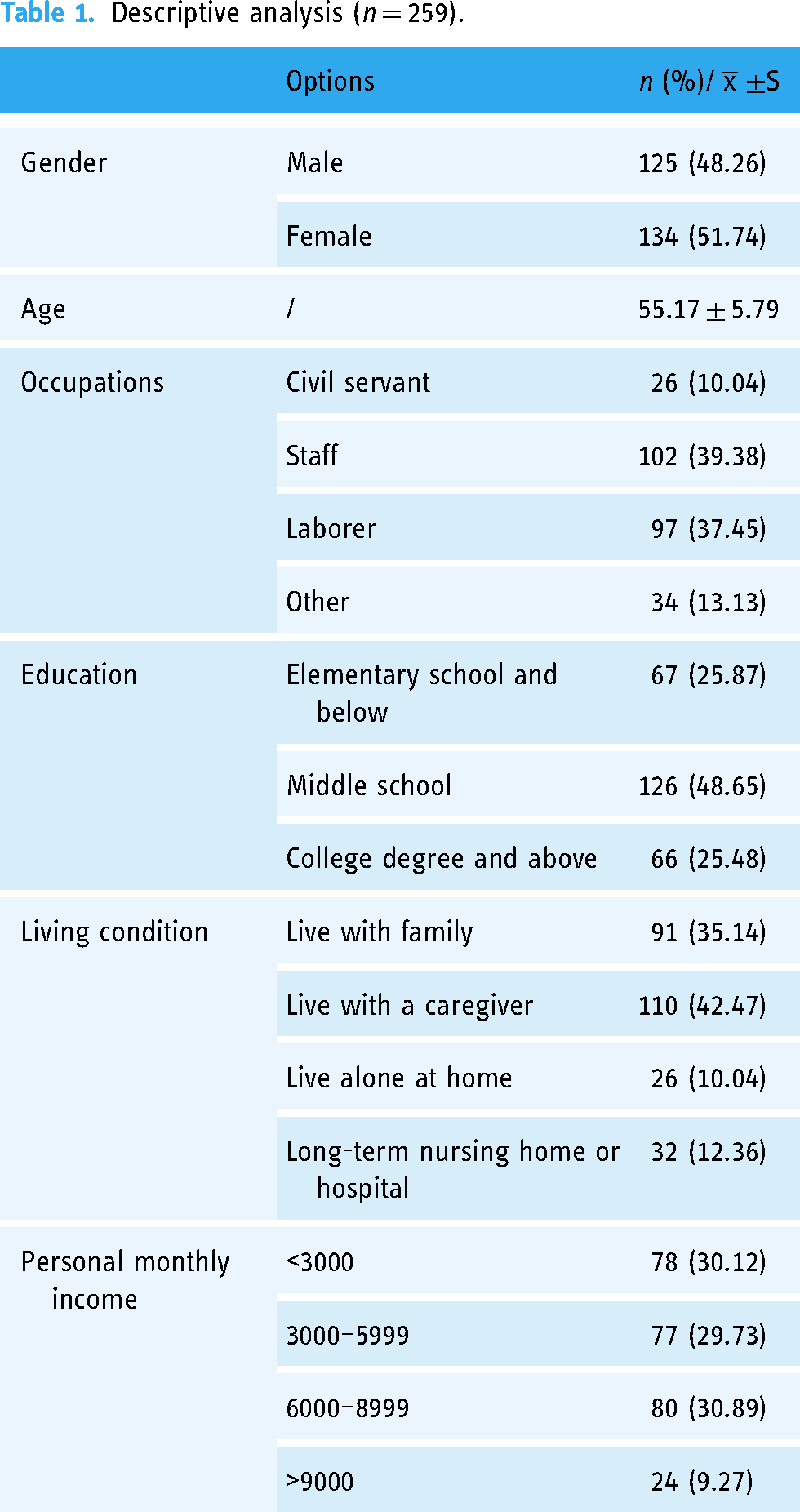
A total of 259 valid questionnaires were collected in this study. The age of all participants is concentrated between 45 and 65 years old, with an average age of 55.17. Most of the participants were female (51.74%), had more than a middle school diploma (74.13%). The general statistical results of the subjects are shown in Table 1.
Descriptive analysis (n = 259).
The cognition and utilization of AI chatbots among middle-aged individuals indicate that AI chatbots are widely recognized, with a usage rate exceeding 50%. Moreover, there is a strong inclination toward employing AI chatbots for inquiries related to health care (Table 2).
The cognition and usage of AI chatbots among middle-aged adults (n = 259).

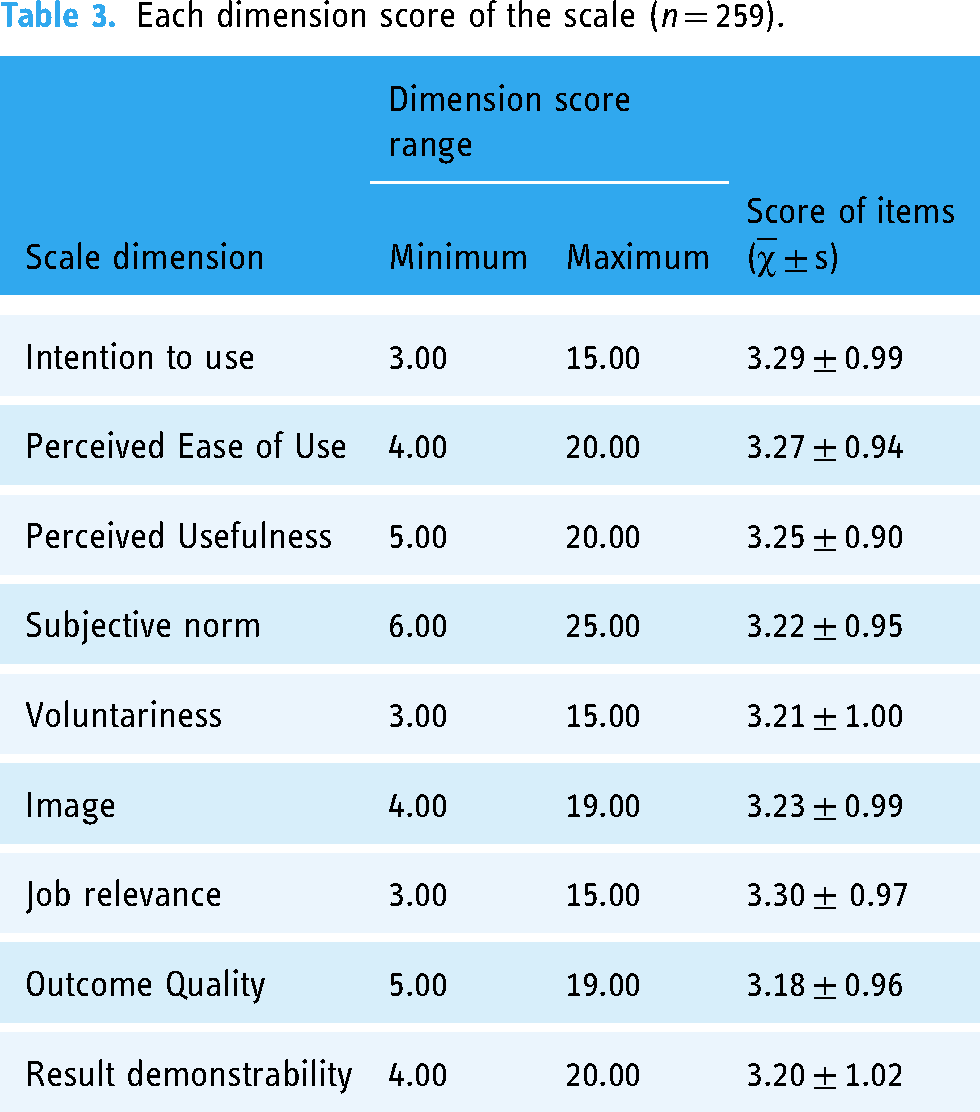
The overall scores of TAM scales across all dimensions are presented in Table 3. The findings indicate that participants’ perceptions in the nine dimensions of PEU, PU, SN, voluntariness, image, JR, OQ, RD, and IU range from neutral to positive, (score 3–4). This suggests that the acceptance level of middle-aged adults toward AI chatbots remains relatively low.
Each dimension score of the scale (n = 259).
Correlation analysis reveals that PU, PEU, SN, image, voluntariness, OQ, JR, and RD are significantly positively correlated with users’ IU. Specific results are presented in Table 4.
Pearson correlation analysis of the scale dimensions.

Note: *p < 0.05, **p < 0.01.
A multiple stepwise linear regression analysis was conducted with the following independent variables: PU, PEU, SN, image, voluntariness, OQ, JR, and RD, and with IU as the dependent variable. The analysis found an R2 value of 0.233, indicating that these factors explain 23.3% of the variance in users’ IU. The results identified PEU (t = 3.544, p < 0.001), RD (t = 4.279, p < 0.001), and image (t = 2.244, p = 0.026) as significant predictors, positively influencing users’ IU. For more detailed findings, refer to Table 5.
Multiple stepwise linear regression analysis of different scale dimensions on the dimension of intention to use.

Dependent variable: Intention to use.
The mediation analysis results revealed a significant total effect (path c) of SN on the IU (B = 0.250, p < 0.001), indicating a direct positive relationship. Furthermore, the analysis identified positive associations along path a, from SN to PU (B = 0.466, p < 0.001), and along path b, from PU to IU (B = 0.259, p < 0.001), suggesting that SNs positively influence PU, which in turn positively affects the IU. Moreover, the indirect effect of SN on IU through PU (path a*b) was assessed to be statistically significant, with a point estimate of 0.121 (SE = 0.035) and a 95% bias-corrected bootstrap confidence interval ranging from 0.057 to 0.194. This finding underscores the significant mediating role of PU between SNs and IU. Notably, the direct effect of SN on IU, after accounting for the mediating effect of PU (path c’ = 0.129, p = 0.053), was not statistically significant. This result suggests that PU fully mediates the relationship between SNs and IU. Specific results are shown in Table 6.
Analysis of the mediating variable model of perceived usefulness as subjective norm and intention to use (n = 259).

Note: Controlling for gender, age, occupations, education, living condition, personal monthly income; B: standardized coefficients
*p < 0.05, **p < 0.01, ***p < 0.001.
In order to verify whether voluntariness moderates the effect of SN on the IU, we conducted a moderation analysis. In this analysis, SN was treated as the independent variable (X), IU as the dependent variable (Y), and voluntariness as the moderating variable (W). The results of the analysis were statistically significant (p < 0.01, R2 = 0.0925), indicating a notable moderating effect of voluntariness on the relationship between SN and IU.
The analysis revealed that voluntariness positively moderates the influence of SN on users’ IU, as evidenced by the regression equation: Y = 5.3397−0.8935X−0.9030 W+0.3469*XW. This equation demonstrates that the interaction between SN and voluntariness (XW) significantly affects the IU.
Further examination of Figure 2 illustrates that the slope of the relationship between SN and IU changes significantly across different levels of voluntariness adjustment. Specifically, the slope becomes flatter at higher levels of adjustment, suggesting that as voluntariness increases, its moderating effect becomes more pronounced, thereby diminishing the impact of SN on the IU. This observation underscores the importance of considering user voluntariness in understanding how SNs influence technology adoption decisions.
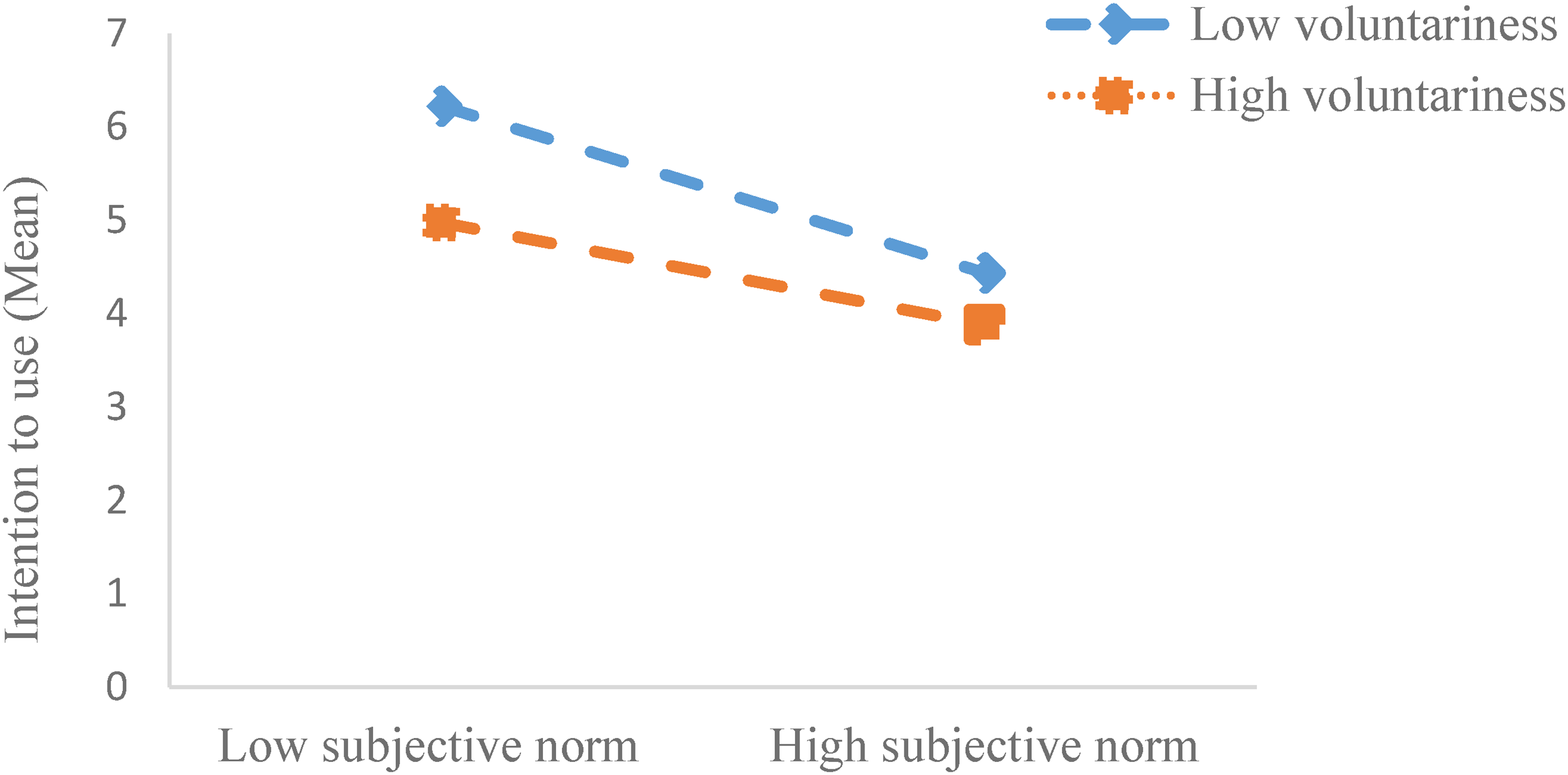
The moderating role of voluntariness in the relationship between subjective norm and intention to use.
Discussion
Artificial intelligence technologies, particularly AI chatbots, represent a pivotal advancement in healthcare, offering potential benefits for aging populations.18,19 However, amid the rapid integration of AI technologies, there exists a notable absence of discourse on the crucial factors facilitating the adoption and implementation of AI for middle-aged adults. This study delves into the analysis of factors influencing the application and utilization of AI chatbots by middle-aged adults, offering a foundational reference for enhancing AI competency in this demographic.
Past research indicates a lower interest or barriers to the use of information technology among the aging population. 20 Addressing the changes brought about by aging and assisting middle-aged individuals in enhancing their AI competency become particularly crucial.21,22 However, middle-aged individuals currently exhibit a varying degree of skepticism and reluctance toward AI adoption.23,24 Our study applied the TAM2 to investigate middle-aged individuals’ attitudes and IU toward AI chatbots. Our findings reveal moderate acceptance levels among middle-aged adults toward AI chatbots. Key determinants influencing IU included PEU, SN, and user image. Notably, PU emerged as a significant mediator between SN and IU, underscoring its critical role in shaping user perceptions. These results align with previous studies emphasizing the importance of PEU and usefulness in technology acceptance.25,26
This study employed multiple stepwise linear regression for analyzing influencing factors. The results indicate that PEU, SN, and user image are factors influencing users’ IU AI chatbots, similar to findings in other studies.27–29 Subjective norm, as a social influence, significantly impacts middle-aged individuals’ willingness to adopt new technologies. It suggests that users are more likely to adopt the technology when family and friends around them believe they should. 17 However, noticeable cultural differences and varying cognitive levels may hinder users from recognizing the importance of new technology. Therefore, recognizing cultural differences is imperative, and future societal efforts should focus on promoting new technologies, enhancing their social impact, ensuring alignment with user values and societal expectations, ultimately increasing the utilization of new technology. Additionally, exploring educational initiatives that enhance digital literacy among the middle-aged demographic could further optimize their acceptance of AI in the context of healthcare and aging.
As indicated by social influence, SN has always been considered a crucial factor in user intention. However, the degree of voluntariness in users’ decisions to adopt technology has been rarely explored. Research by Hoque and Sorwar suggests that the aging adults often rely on the support of their children, overlooking the importance of technology and voluntary needs. 30 This study's results indicate that in cases where technology adoption is considered voluntary, the influence of SN may intensify. Users who voluntarily choose to adopt a technology may be more susceptible to the influence of SN. Conversely, in nonvoluntary situations, the impact of SN may be mitigated. The TAM2 model, focusing on SN, provides a framework for in-depth exploration of the complexity of user decision-making.17,31,32 The results of this study are consistent with those of other studies, the moderating role of voluntariness, interacting with SN, influences users’ intention.33–35
The outcomes of the present investigation affirm the significance of PEU as a factor influencing users’ intention to embrace technology. 36 In alignment with Mitzner's scholarly inquiries, 37 this study underscores that older adults exhibit a heightened inclination to utilize information technology when it is perceived as both useful and user-friendly. Streamlining interaction modalities, implementing user-friendly interfaces, and augmenting training and educational initiatives in information technology for the older demographic, particularly those with limited technological proficiency, can empower them to seamlessly integrate intelligent technology into their daily healthcare routines.
The identified complete mediating role of PU in the relationship between SN and IU AI chatbots underscores the importance of users’ perceptions of utility. Some studies support the notion that individuals, particularly in the context of healthcare technologies, are more inclined to adopt innovations when they perceive them as beneficial to their needs.38,39 This underscores the critical role of PU as a decisive factor influencing middle-aged individuals’ acceptance of AI chatbots. 40 Recognizing the pivotal role of PU opens avenues for developing more effective and user-centric interventions that cater to the evolving needs of aging individuals adopting AI technologies.
Image is often underestimated as a factor. Research has found that older adults tend to overlook the influence of social pressure, image, and social status when pursuing emotionally meaningful goals, believing that social influence has no significant impact on their willingness to use technology. 41 However, this study observes that social influence (image) significantly affects users’ willingness to use technology. As pointed out by Graf-Vlachy, Buhtz, and König, 42 when users learn how to use information technology, they experience an enhancement of their self-worth and self-image, which is part of social influence. This contributes to increasing users’ happiness and quality of life, maintaining a high image of using intelligent technology in front of others, thereby generating higher social impact.43,44
Limitations
The study's sample primarily consisted of middle-aged adults who were actively engaged in online activities. As a result, the findings may not be fully representative of individuals with limited access to technology or those who are less comfortable with online interactions. Generalizing the results to a broader population requires caution, and future research should include a more diverse and representative sample. And the study design limits the establishment of causal relationships between variables. Longitudinal studies could provide more robust insights into the dynamics of middle-aged user acceptance of AI chatbots over time. The study also did not extensively explore cultural influences on middle-aged individuals’ acceptance of AI chatbots. Cultural variations can significantly impact technology acceptance. Future research should incorporate a more nuanced analysis of cultural factors to enhance the understanding of AI adoption within diverse populations. Perceived usefulness as a crucial factor, but external factors beyond the scope of the research, such as economic conditions or societal changes, might influence individuals’ perceptions. Future studies could delve deeper into external contextual factors that may shape PU and, consequently, the acceptance of AI chatbots among middle-aged users. Addressing these limitations can contribute to a more comprehensive understanding of middle-aged user acceptance of AI technology and facilitate the development of targeted interventions for this demographic group.
Conclusion
The study concludes that middle-aged adults exhibit a moderate level of acceptance toward AI chatbots, influenced by PEU, SNs, and user image. Perceived usefulness is identified as a key mediator, emphasizing the need to enhance the benefits and usability of AI chatbots to increase acceptance among this demographic. The application of TAM2 offers valuable insights for designing AI interventions tailored to the middle-aged population, highlighting the necessity of early and comprehensive aging preparation that includes technological competency.
Our study underscores the importance of enhancing AI chatbots’ PEU, PU, and positive social image among middle-aged adults to foster greater acceptance and utilization of these technologies in healthcare contexts. These findings provide essential guidance for developing customized AI solutions and underscore the importance of targeted strategies by developers and policymakers to meet the specific needs of middle-aged adults, facilitating improved technology adoption and aging well.
Supplemental Material
sj-docx-6-dhj-10.1177_20552076241284903 - Supplemental material for Preparing for aging: Understanding middle-aged user acceptance of AI chatbots through the technology acceptance model
Supplemental material, sj-docx-6-dhj-10.1177_20552076241284903 for Preparing for aging: Understanding middle-aged user acceptance of AI chatbots through the technology acceptance model by Aoqi Wang, You Zhou, Haoming Ma, Xingyi Tang, Sijia Li, Runyuan Pei and Meihua Piao in DIGITAL HEALTH
Supplemental Material
sj-docx-7-dhj-10.1177_20552076241284903 - Supplemental material for Preparing for aging: Understanding middle-aged user acceptance of AI chatbots through the technology acceptance model
Supplemental material, sj-docx-7-dhj-10.1177_20552076241284903 for Preparing for aging: Understanding middle-aged user acceptance of AI chatbots through the technology acceptance model by Aoqi Wang, You Zhou, Haoming Ma, Xingyi Tang, Sijia Li, Runyuan Pei and Meihua Piao in DIGITAL HEALTH
Supplemental Material
sj-docx-8-dhj-10.1177_20552076241284903 - Supplemental material for Preparing for aging: Understanding middle-aged user acceptance of AI chatbots through the technology acceptance model
Supplemental material, sj-docx-8-dhj-10.1177_20552076241284903 for Preparing for aging: Understanding middle-aged user acceptance of AI chatbots through the technology acceptance model by Aoqi Wang, You Zhou, Haoming Ma, Xingyi Tang, Sijia Li, Runyuan Pei and Meihua Piao in DIGITAL HEALTH
Footnotes
Contributorship
Aoqi Wang: Investigation, Data curation, Writing-Original draft preparation; You Zhou: Methodology; Haoming Ma: Conceptualization; Xingyi Tang: Investigation; Sijia Li: Investigation; Runyuan Pei: Validation; Meihua Piao: Writing-Review & Editing, Supervision.
Data availability statement
The survey respondents were assured raw data would remain confidential and would not be shared. But data will be made available on reasonable request.
Declaration of conflicting interests
The authors declared no potential conflicts of interest with respect to the research, authorship, and/or publication of this article.
Ethics approval and consent to participate
This study was approved by the Ethics Committee of the School of Nursing at Peking Union Medical College (PUMCSON-2024-02). All the participants have signed an informed consent. Participation in the study was entirely voluntary, and participants had the freedom to decline participation or withdraw from the survey at any point.
Funding
This study was funded by the Non-Profit Central Research Institute Fund of Chinese Academy of Medical Sciences (Grant NO. 2023-RC320-01).

Supplemental Material
Supplemental material for this article is available online.
References
Supplementary Material
Please find the following supplemental material available below.
For Open Access articles published under a Creative Commons License, all supplemental material carries the same license as the article it is associated with.
For non-Open Access articles published, all supplemental material carries a non-exclusive license, and permission requests for re-use of supplemental material or any part of supplemental material shall be sent directly to the copyright owner as specified in the copyright notice associated with the article.
