



Abstract
Background
Given the rapid advancement in technology, the Internet has grown to play a significant role in the field of healthcare. Individuals can now access a profusion of easily available materials for self-management of their health. The purpose of this review is to describe Web/App-based interventions that are primarily or secondarily designed to improve mental health literacy (MHL) and to investigate the effectiveness of online interventions for improving mental health.
Materials and Method
A scoping review was conducted by searching five databases: PsycINFO, EMBASE, PubMed, CINAHL, and Web of Science. The search was limited to peer-reviewed journals published in English between 2000 and 2022. Studies focusing on enhancements of MHL or its constituent components were included.
Results
Twenty-four studies met the inclusion criteria. The interventions primarily targeted patients or individuals exhibiting symptoms of mental disorders, with a higher representation of female participants. All the interventions yielded positive outcomes. The included studies were categorized according to three themes: knowledge, attitude, and self-care skills. Although numerous studies have focused on knowledge improvement, research on interventions targeting self-care skills is scarce. Furthermore, existing literature on knowledge enhancement is limited in terms of the coverage of risk factors.
Conclusion
This review indicates gaps in web/app interventions including limited evidence on risk factors, inconsistent help-seeking awareness, and inadequate self-care skills training. Further research is critically needed to address these deficiencies and promote comprehensive MHL.
Introduction
Mental health problems are highly prevalent worldwide and represent a leading burden of disease. According to the World Health Organization, approximately one in every eight individuals worldwide suffers from a mental disorder, with anxiety and depressive disorders being the most frequent. 1 Mental health problems can significantly affect both short- and long-term social, economic, and interpersonal outcomes, as well as increase the risk of all causes of early age mortality, including suicide. 2 However, the harm resulting from mental illness is underestimated by the public compared to physical health problems. 3 Most individuals with mental disorders do not know where to seek high-quality mental health services,4,5 and many would be even reluctant to disclose mental health difficulties or seek help.6–8 The low level of mental health literacy (MHL) has been identified as a significant factor contributing to disparities in access to treatment and utilization of services. Research has shown that limited MHL can impede a person's ability to seek and use health information and preventive services, manage chronic conditions, and adopt healthy behaviors. 9 This is particularly relevant in the context of racial disparities in access to mental health treatment, where limited MHL is more common among populations disproportionately affected by social, economic, and historical forces, thus undermining overall health status and generating health disparities. 9 Although MHL deficits constitute a major barrier, substantial evidence has also revealed significant attitudinal obstacles from the patients themselves, including the desire to handle problems independently without external help, low perceived need for care, self-stigma, and concerns over the act of help-seeking and service providers.10,11 These intrinsic psychological barriers interact with literacy-related factors to exacerbate difficulties in patient health-seeking and the ultimate treatment gap.
The concept of MHL was first introduced in 1997 and defined as “knowledge and beliefs about mental disorders which aid their recognition, management and prevention.” 12 It is having the knowledge of the preventive measures, symptoms, treatment modality and treatment locations of mental disorders. 13 Our understanding of MHL has changed over the last number of years14–16 and is defined as: (1) understanding how to obtain and maintain positive mental health; (2) understanding mental disorders and their treatments; (3) decreasing stigma related to mental disorders; and (4) enhancing help-seeking efficacy (knowing when and where to seek help and developing competencies designed to improve one's mental health care and self-management capabilities. Mental health literacy evolved from the concept of health literacy. Mental health literacy includes the ability to recognize specific disorders, knowing how to seek mental health information, knowledge of risk factors and causes, self-treatment, professional help available, and attitudes that promote recognition and appropriate help-seeking. 12 It has been found that improvements in MHL improve community recognition of mental illness as well as knowledge, attitude, and expected behaviors toward people with mental illnesses.17–19 However, these results come mainly from the evaluation of large-scale community mental health awareness campaigns conducted through traditional media such as television, radio, and print media, interpersonal contact with people with mental illness, and public seminars and community lectures. The potential of new media, such as the Internet, to enhance MHL has also been explored; however, its effectiveness in increasing MHL has yet to be systematically evaluated. Given the high penetration of the Internet among the general population (more than 80% in developed countries), it is an ideal medium through which to reach a large number of people at relatively low cost. 20 Therefore, it is important to determine the effectiveness of Web/App-based MHL interventions. If rigorous, evidence-based, and cost-effective MHL interventions are successfully implemented via the Web or smartphones, the potential of the Internet can be harnessed, resulting in increased population-level MHL and the potential to significantly improve mental health outcomes for people with mental illness. Several studies have demonstrated the effectiveness of publicly available web/app-based interventions in promoting health app use, digital health literacy, and media literacy. For example, a systematic review found that internet-based educational interventions significantly increased MHL in adolescents. 21 Additionally, a study on the development of a mental well-being app for Chinese international students showed promising results in supporting help-seeking behavior. 22 Furthermore, web/app-based interventions have shown effectiveness in promoting physical activity, 23 reducing job stress, 24 and improving breast cancer screening. 25 These findings support the potential of web/app-based interventions in addressing MHL, especially when designed to be accessible, personalized, and scalable, taking into account the high rates of smartphone ownership among people.
Method
A scoping review was conducted to systematically map the breadth of literature on web/app-based interventions for MHL improvement. The review process included four stages: (1) identifying the research questions; (2) systematically searching for relevant studies; (3) selecting studies according to eligibility criteria; and (4) extracting data for analysis and presentation. We used the Preferred Reporting Items for Systematic reviews and Meta-Analyses extension for Scoping Review (PRISMA-ScR), 26 to provide a comprehensive description of the process as well as the number, characteristics, and sources of articles identified, included, and excluded in this synthesis. The PRISMA-ScR checklist is presented in the supplementary file (Table s1).
Identifying the research question
The aims of this scoping review were twofold: (1) what are the key characteristics and findings of the existing literature on Web/App-based MHL interventions? (2) what are the major components of MHL addressed across existing Web/App-based interventions, and how do these specific components assess the improved effectiveness of these interventions in enhancing MHL?
Identifying the relevant published report
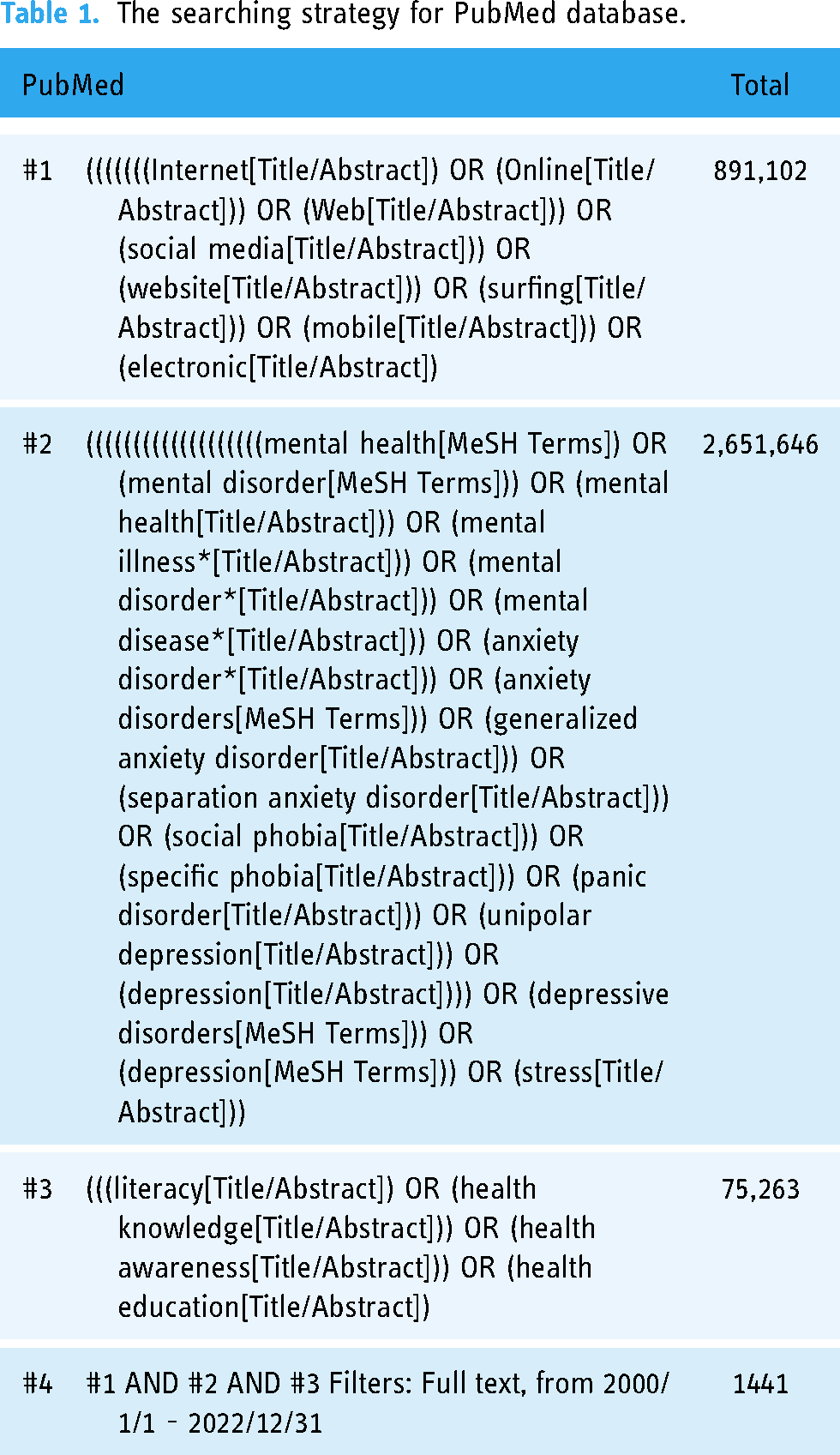
A systematic search was conducted using five electronic databases: PsycINFO, EMBASE, PubMed, CINAHL, and Web of Science. The search included three groups of search terms related to (1) Internet (e.g., “online,” “social media”), (2) mental health (e.g., “mental health,” “depression,” “anxiety”), and (3) literacy (e.g., “literacy,” “knowledge,” “awareness”). The full search syntax for each database contained Boolean operators that controlled the vocabulary specific to each database. The search method for the PubMed database is described in Table 1, and the search strategies for the other databases are included in the supplementary file (Table s2). Studies were limited to English-language peer-reviewed articles published from 01 January 2000 to 31 December 2022, spanning a 22-year period. We did not search for articles published before 2000 because global Internet penetration was only 6.5% at that time and we did not envision any Web/App-based interventions targeting MHL before 2000.
The searching strategy for PubMed database.
Publication selection
Articles describing any online intervention designed to improve MHL or its components were included and organized for reporting based on target population and disorder types: (1) general population; (2) patients who are further categorized by disorder (depression, anxiety, etc.); and (3) family members. Eligible studies were required to report original research findings using quantitative, qualitative, or mixed-method designs.
Studies were excluded if the research population was under 18 years of age, the topic was not health-related, the publication was not published in English, or the study solely presented a psychometric assessment. Conference abstracts, research protocols, dissertations, editorials, and review articles were also excluded to ensure that only primary research articles were considered.
Charting and collation
A standardized data extraction form was developed to systematically collect relevant information from the included studies. Due to the considerable heterogeneity of interventions, study designs, and outcome measurements among the included studies, conducting a statistical pooling of results was unfeasible, as quantitatively assessing and modeling these heterogeneities through meta-analytical approaches posed significant methodological challenges.
27
Hence, we conveyed the results in a narrative format. The data extracted from the documented key parameters were as follows:
Article information: first author, publication year, country, study objectives, study design, recruitment process, and participant characteristics. Intervention information: platform, intervention format, intervention structure (how to proceed), duration, guidance, and key findings.
Ethics approval
The study protocol was approved by the Human Research Ethics Committee of Hong Kong Polytechnic University (Ref No.: HSEARS20211130001). As this study synthesized and analyzed data from previously published studies, individual consent from participants was not required. All included studies had obtained ethical approval from their respective institutional review boards.
Results
The initial search yielded 12,343 articles. After eliminating duplicated records, 3377 articles were removed. The screening of titles and abstracts excluded 4793 and 3880 articles, respectively. Two hundred and ninety-three full-text articles were retrieved for further review, and 24 studies were ultimately included in this scoping review (Figure 1).

Flowchart for the selection of included studies.
Characteristics of included studies and types of interventions
The most common study design was randomized controlled trials (n = 15), followed by cohort studies (n = 4), qualitative studies (n = 3), and quasi-experimental trials (n = 2). The included studies represented diverse geographic locations, with the majority coming from Australia (n = 10) or the United States (n = 4). The remaining studies were conducted in Germany, Canada, Finland, Japan, Kenya, Korea, Norway, Peru, Sweden, or Taiwan (n = 1 for each). Table 2 listed the included papers. Trends in the number of publications revealed that the earliest article in this search was published in 2004, 28 and there has been a steady increase since then. In particular, App-based intervention studies, which began to emerge in 2019, 29 had already surpassed Web-based intervention studies by 2022 (Figure 2). This reflects the rapid technological advancements that have enabled the transition from Web to mobile App platforms.
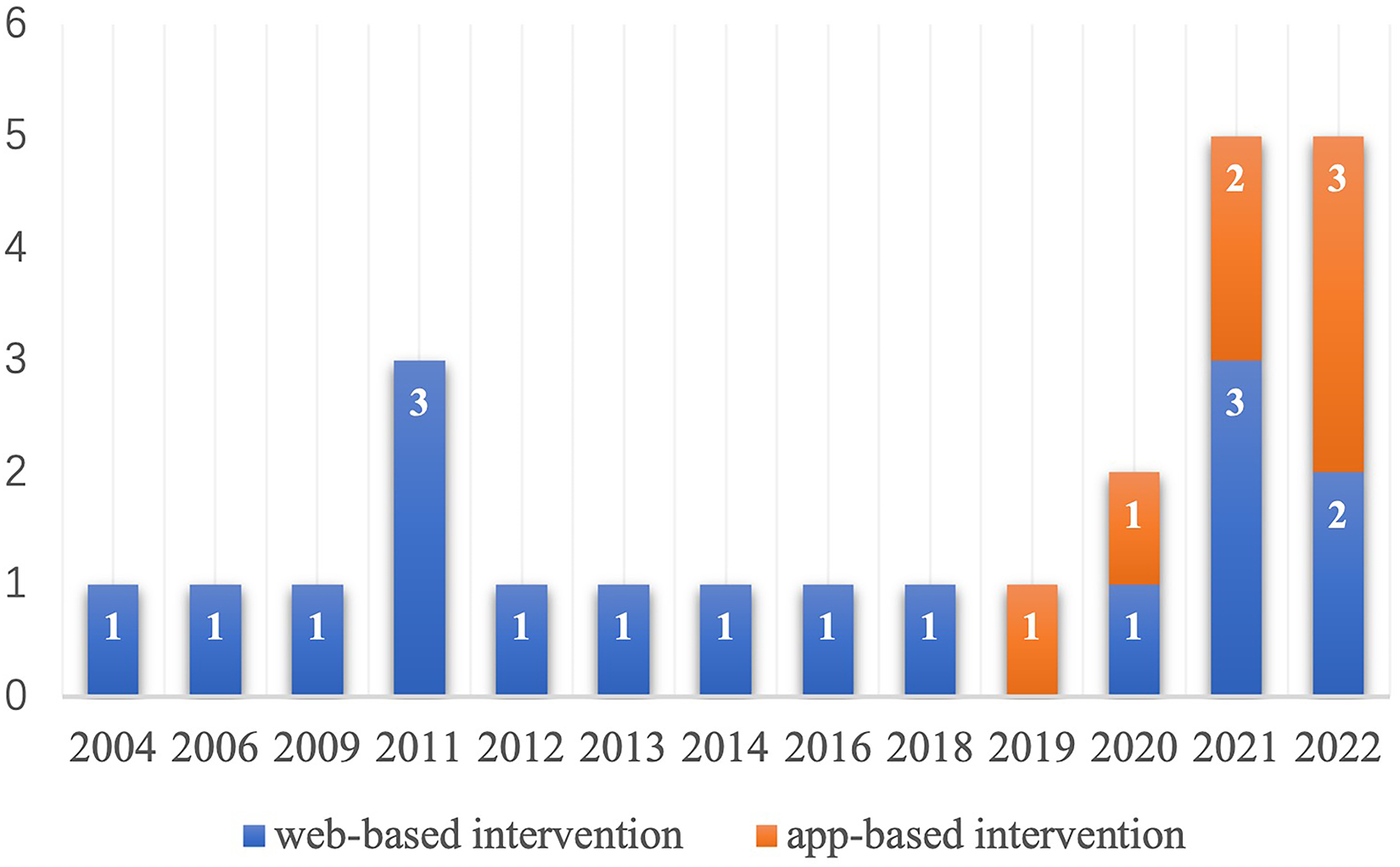
Trends in Web/App based-intervention studies in mental health literacy (MHL).
Characteristics of included papers.

PST: problem-solving therapy; CBT: cognitive behavioral therapy; RCT: randomized controlled trial; iMBSR: internet-based mindfulness-based stress reduction; iCBT: internet-based cognitive behavioral therapy.
Characteristics and effectiveness of web/app-based interventions.

CBT: cognitive behavioral therapy.
Table 3 displays the features and outcomes of the interventions in each of the included papers. There are many different types of interventions, including video sessions, training exercises, psychoeducational lessons, and information sites. The method of delivery of the interventions also varied, with the majority being primarily self-guided, which implies that the researcher was not involved in the interventions and simply provided a preintervention functional introduction or postintervention feedback. 30 Guided research interventions are delivered by trained professionals or nonspecialist workers. The length of the intervention period also varied significantly, ranging from 3 to 14 weeks. Notably, 16 of the included studies conducted follow-up assessments spanning weeks or months after the intervention to evaluate the sustainability of the effects. The results of these long-term follow-ups were largely positive. For example, Seo et al.'s 31 study followed up at eight weeks and five months, finding sustained improvements in health behaviors. Farrer et al.'s 32 study followed up at seven weeks, showing maintained enhancements in symptoms.
Characteristics of participants
Most studies recruited adult participants diagnosed with or exhibiting symptoms of mental illness, including depression,5,28,31,33–35 psychological distress,30,32,36–38 anxiety,34,35 bipolar disorder, 39 and other common psychiatric disorders.29,40 Seven studies used general population samples without indicating whether the participants had or exhibited symptoms of mental illness.41–47 There was substantial variability in the sample sizes, ranging from 15 to 1236 participants. The majority (n = 21) of the studies recruited more female than male participants, with ratios ranging from 71.4% to 100%.
Key thematic components of web/app-based MHL
Upon review, the primary objective of six included studies was to improve overall MHL, while the remaining studies targeted components of MHL as secondary outcomes. To analyze the contribution of digital interventions to enhancing MHL, we identified three key thematic components based on Kutcher et al.'s definition of MHL as encompassing knowledge, attitudes, and behaviors that promote recognition, management, and prevention of mental health issues 15 : (1) knowledge, (2) attitude, and (3) self-care skills. Organizing interventions into these themes provides a framework for understanding their impact in specific MHL components and overall mental health outcomes (Figure 3). This targeted classification system enables researchers and practitioners to gain insights, design interventions, and implement digital tools effectively to improve knowledge, attitudes, and behaviors for mental health. Details of each study's contribution to these MHL components are presented in the supplementary file (Table s3).
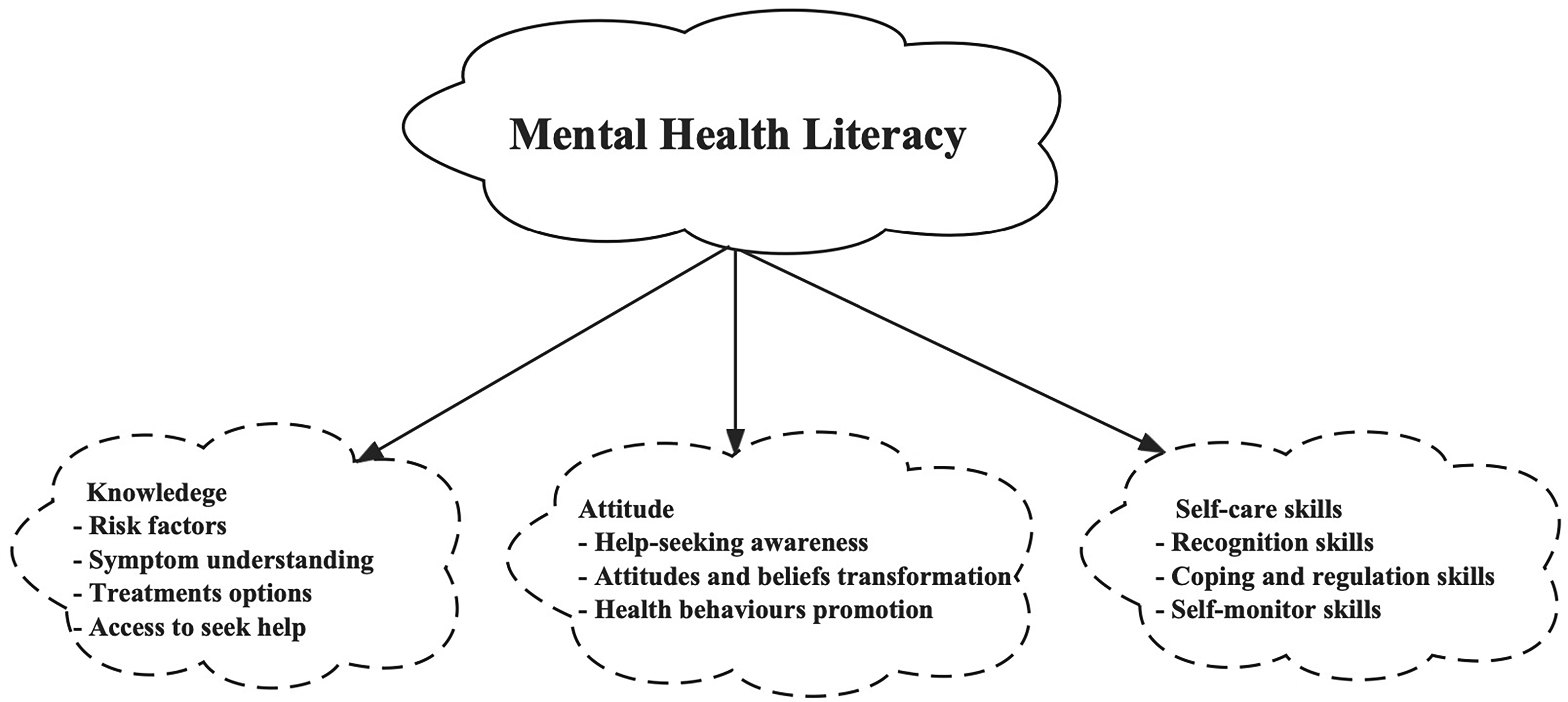
Key thematic components of Web/App-based mental health literacy (MHL)—conceptual framework.
Effects of web/app-based interventions on knowledge
Knowledge was the most frequently mentioned theme in this framework with 20 studies revealing changes in mental health knowledge. It includes understanding the symptoms of common mental health problems,5,28,30–32,35,37,41,43,45 risk factors,30,44,47 treatment options,5,32,39,48 and how to access help-seeking resources.32–35,37,38,40,49,50
Effects of web/app-based interventions on attitudes
There were 19 studies on attitudes. The following were the main areas of focus on mental health attitude: (1) help-seeking awareness,30,33,35,38,40,41,45,47,49 which focuses on recognition of benefits and barriers related to seeking mental health support; (2) Attitudes and beliefs transformation,5,28,31–33,35–37,42,45,46,48 which includes modifying negative thought patterns and cognitions related to mental disorders along with transforming attitudes toward mental illness and treatment to be more positive and less stigmatizing; and (3) health behavior promotion,30,31,44,48 which includes awareness about engaging in positive lifestyle habits and behaviors, including offline social interactions and regular physical exercise.
Effects of web/app-based interventions on self-care skills
Fifteen articles reported self-care skills. These included (1) recognition ability29,30,35 of symptoms, mood changes, and mental illness manifestations; (2) coping strategies and emotion regulation skills30–36,40,42,45,46,48 for managing emotional experiences in healthy ways; and (3) self-monitoring5,29–32,35,42 of thoughts, feelings, and behaviors to track process and symptom changes.
Discussion
This review identified three key conceptual themes—knowledge, attitude, and self-care skills—targeted by web/app-based interventions to enhance MHL. We found that current web/app-based programs majorly targeted enhancement of mental health knowledge, while self-care skills training was relatively less addressed. This indicates that the programs may not fully meet the needs for improving MHL. For developers of e-mental health tools, our findings suggest potential areas for improvement, that is, designing and evaluating interventions that facilitate self-care skills such as emotion awareness, self-monitoring, and emotion regulation. For policy makers, the discrepancies between the coverage of interventions and the multidimensional constructs of MHL should be noted. It is advisable that resource allocation priorities should be given to promoting research and practice on self-care skill training. The knowledge translation of our review findings calls for concerted efforts from various stakeholders to develop web/app-based solutions that systematically cultivate MHL capacities beyond mere improvement of MHL.
The vast majority of female participants, ranging from 71% to 100% across the included studies, indicates a difference in gender ratio. Such a difference may stem from the higher prevalence of common mental illnesses and greater willingness to seek help among women. However, the near exclusion of men may compromise generalizability of current evidence on web/app-based interventions for improving MHL. It fails to capture potential gender differences in the acceptance, usage, and effectiveness of such solutions. Additionally, the voluntary recruitment used in most included studies may have led to sampling bias toward more internet-savvy participants who were already predisposed to engage with web/app-based interventions, while excluding people less familiar with internet use. This could further threaten the representativeness of current findings.
Enhanced understanding of mental health
Web/App-based interventions have addressed the knowledge of mental health symptoms, treatment options, and help-seeking access. However, few studies have addressed knowledge related to risk factors and causes. Soderlund et al. 35 used a novel transmedia storytelling intervention intended to increase MHL and promote help-seeking behaviors. The results were encouraging, with notable gains in understanding the symptoms and knowledge of resources for help seeking. Imamura 41 discovered a similar result, finding that the impact of web-based interventions (UTSMed) on depression literacy was significant in a sample of individuals who had sought professional help for a mental health issue and remained significant at the one-month follow-up test, but the effect vanished after the four-month follow-up. Four studies used the intervention BluePage, a website that offers information about depression; although the length of the intervention varied, the results were all significantly successful in raising knowledge about depressive symptoms.28,32,37,50 However, other studies showed that the experimental group did not have significantly increased knowledge of depression compared with the control group. 31 The authors stated that this was caused by the high pretest scores on knowledge of depression (T = 12.11/14, C = 12.17/14) and that there was little room for knowledge to increase.
A substantial body of research has also demonstrated the value of interventions to increase people's knowledge of where and how to seek help. For students experiencing psychological distress, Lintvedt et al. 37 used an unguided online self-help intervention and discovered that students increased their formal help-seeking behaviors toward GPs or mental health professionals. Participants in Toyama's web-based intervention 33 indicated that they were beginning to accept suggestions for seeking help from psychologists or psychiatrists. Similar results were found by Lattie et al., 34 demonstrating that postintervention students knew where to go for professional assistance. In addition to formal help-seeking behaviors, there were also improvements in informal help-seeking behaviors. Lipman et al. 49 discovered that a web-based intervention in the form of video group conferencing was helpful in raising patients’ knowledge of local options for seeking help, as well as in enabling them to engage in more active help-seeking behaviors with peers who were going through similar situations. Some also mentioned sharing their psychological concerns with friends and family. 31
In terms of knowledge of treatment options, Christensen et al.28 utilized BluePage and MoodGYM to intervene with people suffering from depression, effectively increasing their knowledge of medical, psychological, and lifestyle treatments for depression. Similarly, Fisher et al. 39 found that a web-based intervention increased knowledge of treatment options and maintained this knowledge at the three-month follow-up visit. Specific therapeutic expertise is also presented. Chang's intervention 48 improved participants’ knowledge of medicine use.
Based on the reviewed studies, improving the knowledge of risk factors appears to be addressed less. This was mentioned in one article. Nixon et al. 30 stated that work stress is a major risk factor for the onset of depression and discussed the mechanisms of change in the onset of depression. Risk factors are an integral part of the knowledge component of MHL 12 and have significant implications for long-term psychological well-being. A deeper understanding of the risk factors can help avoid prospective mental diseases and prompt the implementation of appropriate mitigating measures. However, our review found that most articles primarily focused on enhancing overall knowledge levels without demarcating specific knowledge content. As a result, we recommend that future research incorporate interventions targeting risk factors to further our understanding in this field.
Changes in help-seeking attitudes and intentions
While attitudes and beliefs transformation about mental health have been thoroughly addressed, research findings regarding the impact of help-seeking awareness on mental health are inconsistent. Taylor-Rodgers and Batterham 47 used a three-week psychoeducational intervention for young adults based on vignettes of mental health problems designed to increase young adults’ MHL and improve their stigma, attitudes, and intentions to seek help. The results showed that the intervention was effective in improving the young adults’ positive attitudes toward help-seeking. Jonathan et al. 29 utilized an App-based intervention with people suffering from serious mental illnesses and found that the participants began to develop self-awareness and increased self-reflection. Similar results were observed in Kurki's study, 45 which found that following the intervention, participants thought deeply about their inner experiences and how different factors affected their physical and mental health.
In terms of awareness of help-seeking, Kurki et al. discovered that a combination of in-person counseling and online self-study courses improved attitudes toward seeking treatment for mental health issues. 45 Similarly, Farrer et al. 32 used MoodGYM, an intervention with an online training mechanism and discovered that participants’ attitudes toward effective treatment were encouraged. However, Gulliver et al. employed a narrative informational intervention (information pages, quizzes, and a list of resources for seeking help) and did not observe an improvement in mental health help-seeking awareness with the web-based intervention. 51 We speculated that there may be several explanations for this intervention format. People tend to favor interventions that are more interactive or have health professionals to guide them. In a transmedia storytelling intervention study, participants reported that after watching a video and talking to a therapist, they realized that they did not have to wait until it was too much to bear to seek help, but rather that they should seize the right moment to ask for help. 35 In another intervention study using purely informative messages (90 pages with approximately 800 Japanese characters per page), there was only a slight increase in help-seeking awareness, and the dropout rate during this research was high, up to 74%, with the majority of participants responding that they would prefer to see video or audio narration. 41 Thus, we suggest that the intervention format influences the effectiveness of help-seeking awareness programs. Some studies have indicated that web/App-based interventions use mindfulness training to increase self-awareness44,48 and awareness of health behaviors, such as awareness of the need for some physical activity and social interaction. 31
Self-care skills of improving MHL
Despite a scarcity of intervention studies on developing self-care skills, web- and app-based interventions have addressed a portion of self-care skills with consistent resolution results in improving emotion awareness, self-monitoring, and emotion regulation skills. Using web-based interventions, individuals can utilize software to record, monitor, and track their symptoms more readily because it can provide relevant reminders and strategies as needed. 29 Seo et al. 31 reported improved self-monitoring abilities following a CBT exercise intervention. The Apps offered reminders and included the capability to keep an electronic journal to record daily emotions. The general reason that motivated participants to track their emotions was that they found a connection between what they were logging and what was going on in their lives. Similarly, Emily Lattie et al. 34 found that many participants were interested in tracking their symptoms and linking them to potential stressors or triggers. They used mood journals for self-discovery and recording differences in how they felt at different places and times and were able to use these distinctions to create changes in their lives. Wallin et al.5,34 employed a CBT exercise intervention that improved the patient's capacity for self-awareness and self-monitoring. Owing to the ease of access to the web/app-based intervention, participants were able to use it consistently, regardless of time or place, which improved their capacity for self-care.
Additionally, some studies have reported improvements in coping and emotional regulation skills. Self-management of stress is one coping mechanism.34,45 Nixon et al. discovered that electronic intervention was effective in reducing participants’ reported stress 30 and suggested that one possible explanation is that the intervention used had two primary trainings, emotion control, and problem solving, which are theoretically based on Lazarus’ stress transaction model. 52 Stress self-management effectively improved through repeated training in these skills. Similarly, Lattie's postintervention return interviews found that some participants indicated that the process of emotion checking through journaling on the application was particularly useful, and that this type of training in expressing emotions was considered beneficial for stress management and self-care. 34 Emotional dysregulation is recognized as the basis for a wide range of psychological disorders, 53 and transdiagnostic interventions such as DBT have identified emotional dysregulation as a primary therapeutic target. 54 Despite its empirical and theoretical relevance to mental health and well-being, emotion regulation is rarely included as an outcome variable in mobile mental health programs. 55 This review retrieved only two studies that used emotion regulation as the primary outcome variable. Of these, the Difficulties in Emotion Regulation Scale-Short Form 56 was used in McCallum's study to measure emotion regulation, which resulted in a 14% increase in emotion regulation and a significant increase in optimism after a four-week intervention. 42
Limitations
This review had some limitations. First, a major limitation of this scoping review is the lack of critical appraisal on the methodological quality of included studies. We did not assess risk of bias or evaluate strengths and weaknesses of study designs, which scoping reviews generally do not undertake. Without quality assessment, the interpretation of results should be cautious as findings might be impacted by studies with suboptimal quality. However, assessing study quality was beyond the main purpose of this scoping review that aimed to provide a descriptive overview and identify research gaps instead of determining the effect of interventions. Second, only English-language articles were included; studies published in other languages were excluded. Thirdly, the literature search was limited to papers published between 2000 and 2022. Therefore, some recent findings, like a large RCT on the improvement of MHL published in 2023, 57 may not be included. Additionally, the screening sample in this study only included adults over the age of 18, ignoring online interventions for the adolescent population, which also has a high prevalence of psychiatric disorders. Furthermore, as some of these studies involved complex interventions with multiple components, it was difficult to distinguish which components specifically influenced the target outcomes. Finally, our search strategy utilized general terms, such as mental disorders, mental health, which may have resulted in some studies on specific or rare mental health issues being outside the scope of our search. Although general terms such as “mental disorder” and “mental illness” retrieved some literature on certain diseases such as schizophrenia, incorporating more tailored search strategies with precise psychiatric disease keywords would likely capture an even wider range of relevant studies for a comprehensive review of MHL.
Suggestions for future research
Given that most research on web/app-based MHL interventions has been conducted in Western countries, particularly Australia, future research should focus on Asian countries. Also, more attention is needed to address the apparent gender bias in existing literature. The vast majority of female participants may compromise the generalizability and accuracy. Targeted recruitment of male participants and examination of potential gender differences are recommended for future research. Furthermore, after reviewing all articles, we found that the tools used to assess intervention effectiveness varied widely with no valid instrument to directly measure e-MHL. E-MHL represents an emerging concept which extends knowledge of MHL into the digital age. 58 The considerable variability in assessment tools utilization poses difficulties for effectively quantifying and comparing the impacts of diverse e-MHL initiatives. Developing a validated evaluation measure is therefore vital for this field to gain rigorous insights.
Overall, there is a limited body of literature on digital MHL interventions, although emerging evidence shows promise. Given the cost-effectiveness, broad reach, and public health importance of MHL, continued research on the web-based delivery of mental health services is warranted.
Conclusion
In conclusion, this scoping review provided an overview of existing literature on web/app-based interventions for improving MHL. The findings indicate several research gaps in the field of web/app-based MHL promotion. While most studies have assessed knowledge of symptoms, treatment options and help-seeking resources, few have investigated risk factors for mental illnesses. Additionally, evidence on improving help-seeking awareness was inconsistent. The formats and durations of interventions varied substantially with no unified assessment tools utilized. However, all included studies showed effectiveness on at least one component of MHL, suggesting web/app-based solutions can potentially enhance MHL. Key recommendations for future research are developing standardized evaluation frameworks, addressing understudied areas such as risk factors and self-care skills training, delineating active ingredients in multifaceted programs, and investigating generalizability across diverse populations and cultural contexts. Concerted efforts by researchers, developers, and policy makers are warranted to optimize evidence-based web/app interventions promote MHL in a rigorous manner and ultimately improve mental health equity and outcomes worldwide.
Supplemental Material
sj-docx-1-dhj-10.1177_20552076241243133 - Supplemental material for Improving mental health literacy using web- or app-based interventions: A scoping review
Supplemental material, sj-docx-1-dhj-10.1177_20552076241243133 for Improving mental health literacy using web- or app-based interventions: A scoping review by Lidan Tian, Eliza Laiyi Wong, Dong Dong, Annie Wailing Cheung, Sherry Kit-wa Chan, Yuan Cao, Phoenix K.H. Mok, Lingming Zhou and Richard Huan Xu in DIGITAL HEALTH
Footnotes
Contributorship:
Conceptualization: All authors. Methodology: LDT, ELW, DD, AWC, SKC, YC, PM, LMZ, and RHX. Software: LDT, RHX. Formal analysis: LDT, SKC, PM, and RHX. Data Curation: LDT, RHX. Writing—Original Draft: LDT. Writing—Review & Editing: All authors.
Declaration of conflicting interests:
The authors declared no potential conflicts of interest with respect to the research, authorship, and/or publication of this article.
Ethical approval:
The ethical approval is not applicable to this study, because this research does not contain any studies with human or animal subjects.
Funding:
This study is supported by Hong Kong Medical Research Funding (Ref ID:19200331).
Guarantor:
RHX.

Supplemental material:
Supplemental material for this article is available online.
References
Supplementary Material
Please find the following supplemental material available below.
For Open Access articles published under a Creative Commons License, all supplemental material carries the same license as the article it is associated with.
For non-Open Access articles published, all supplemental material carries a non-exclusive license, and permission requests for re-use of supplemental material or any part of supplemental material shall be sent directly to the copyright owner as specified in the copyright notice associated with the article.
