



Abstract
Objective
Since unexpected COVID-19 has been causing massive losses worldwide, preventive measures have been emergency provided to curb the expansion of the epidemic and cut off transmission routes. However, there is a lack of studies that comprehensively address COVID-19 infection prevention measures. This aims to provide a comprehensive evaluation framework to identify the factors impacting COVID-19 infection prevention. Meanwhile, categorizing factors into individual, social, environmental, and technological dimensions and uncovering their interrelationships and level of importance are indeed novelties of this study.
Methods
An integration of fuzzy logic and decision-making trial and evaluation laboratory (DEMATEL) is utilized, and data was collected from a panel of professional experts in Malaysia. Using a cause-effect relationship diagram, the fuzzy DEMATEL method evaluates the causal relationships between factors.
Results
Findings showed that environmental factors play the most significant roles in preventing COVID-19 infection, followed by technology, individual, and social factors. Getting vaccinated is the most crucial factor in the environmental dimension in cutting the spread of COVID-19. Telehealth, the use of personal protective equipments (PPEs), and the adoption of social distancing are the most important measures in technology, individual and social dimensions, respectively.
Conclusions
This study offered valuable insights for policymakers and healthcare professionals in designing and implementing effective strategies to prevent pandemic disease transmission. Findings can be practically applied to optimize and prioritize infection prevention measures, assign resources more effectively, and guide evidence-based decision-making in the face of evolving pandemic situations. This process involves the active commitment of all parties, including governments, medical health executives, and citizens.
Introduction
COVID-19, Coronavirus, is known as one of the biggest challenges and most active infectious diseases which has endangered the lives of humans in the twenty-first century. 1 In December 2019, the respiratory disorder coronavirus began in China. Soon after, the COVID-19 disease spread out of the borders of China and was observed almost all around the world.2,3 Based on the official announcement of the “World Health Organization (WHO)” on 30 January 2020, Coronavirus is the sixth public health disaster internationally. Finally, the WHO affirmed COVID-19 as a worldwide pandemic on 11 March 2020.
There have been over 764 million cases of coronavirus (COVID-19) as of April 25, 2023, worldwide. The disease has impacted almost every country and territory in the world, with the United States confirming around 16 percent of all global cases (Figure 1). Reports highlight that the number of positive cases would probably “represent an underestimation of the true burden due to lack of surveillance and diagnostic capacity” as well as medicines to control COVID-19.4,5 COVID-19 has negatively influenced the global economy and unexpectedly reduced stock markets and economic activity in addition to public health. 6 The spread of COVID-19 worldwide has considerably impacted several disciplines of life as well as economic activities. By posing extraordinary macroeconomic challenges, COVID-19 has transformed the global concentration and the global economy. 7

Number of cumulative cases of coronavirus (COVID-19) worldwide from January 22, 2020, to April 25, 2023, by day (source: www.statista.com).
The exact future of COVID-19 is complicated. 8 However, according to the Johns Hopkins University and Imperial College London reports, this pandemic may surpass 40 million deaths if public health measures such as contact tracing and testing, case finding, and severe quarantine have been overlooked. It is believed that considering social distance measures (SDMs), utilizing quarantine, social isolation, workplace distancing, and school closure are practical actions in decreasing COVID-19 compared to zero interventions at all. 5 To manage COVID-19 conditions, the government of China put more emphasis on the use of medical resources to treat the infected citizens and implemented a comprehensive set of control and prevention measures by cutting sources of transmission, protecting vulnerable populations, and cutting off transmission routes. Meanwhile, they provided accurate and timely information about Coronavirus, health education, and residents’ awareness about control and prevention strategies. Individuals are advised to adopt proper health actions and practice good health habits such as avoiding outings or gatherings and correctly wearing masks. 9
Similarly, other countries established strict quarantine rules, closed borders and shut down transportation systems, and closed colleges, schools, universities, and even businesses worldwide. 10 Additionally, “#StayAtHome” has been promoted by the media to stop the COVID-19 spread. 11 Recently, the COVID-19 vaccination has attracted more attention. 12 Considering the dangerous pandemic situation, the national drug and pharmaceutical agencies urgently approved several vaccines in December 2020, and soon after vaccination plans were rolled out in various countries. 13 Mass vaccination was accepted as the most effective strategy to manage the spread and seriousness of the COVID-19 pandemic. 14
Research gaps
Those mentioned above are some preventive measures that can assist in controlling the epidemic and decreasing the risk of infection. A primary review of the literature and official reports showed that there are many factors/strategies that can directly or indirectly influence COVID-19 spread. However, despite the availability of different research focused on single or multiple COVID-19 preventive measures,
15
there is a lack of studies that comprehensively address COVID-19 infection prevention measures. Meanwhile, the available studies have mainly used mathematical modeling, statistical analyses, or qualitative approaches and provided a holistic understanding of COVID-19 infection prevention measures. Hence, this research aims to identify the factors impacting COVID-19 infection prevention and rank them based on their level of importance using the decision-making trial and evaluation laboratory (DEMATEL) method. DEMATEL can address the imprecision and uncertainty associated with subjective judgments and provide a more comprehensive evaluation framework. Some available studies have focused on some specific barriers, risk factors, and social measures for preventing transmission of COVID-19 using DEMATEL (e.g., Maqbool and Khan;
16
Şen, Demirel
17
). Other studies have used the DEMATEL method to uncover user intentions toward specific health services during the COVID-19 pandemic (e.g., Alzahrani, Al-Samarraie;
18
Alzahrani, Al-Samarraie
19
). Therefore, categorizing factors into individual, social, environmental, and technological dimensions and uncovering their interrelationships and level of importance using DEMATEL are unique novelties of this study. The research objectives are as:
To identify the COVID-19 infection prevention measures and categorize them based on individual, social, environmental, and technological dimensions. To evaluate the causal relationships among measures using the DEMATEL method.
DEMATEL is the most powerful procedure to explore interrelationships among a set of criteria.
20
DEMATEL properly deals with decision-making problems by using experts’ knowledge and opinions. This method can simplify sophisticated managerial problems by visualizing the casual relationships among identified factors and examining the degree to which they impact each other.
21
This method has been effectively employed in electronic vehicles,
21
big data adoption,
22
smart cities,
23
and e-waste management.
20
Thus, DEMATEL was used in this study to discover the cause-and-effect relationships between COVID-19 infection prevention measures and to rank them based on their level of importance.
The COVID-19 pandemic is increasing daily and puts the world in a dangerous condition. 24 The findings of this study can provide interventions and strategies needed to prevent COVID-19 disease transmission. Thus, the active commitment of all parties, including governments, medical health organizations, and citizens is necessary in this regard.
The remaining of this research is as follows. The literature review and the factors impacting COVID-19 spread prevention are presented in Section 2. Section 3 demonstrates the research method. Section 4 provides the analyses. Section 5 presents discussions. Section 6 reports conclusions and recommendations.
Literature review
The analysis of the literature demonstrates that a variety of behavioral, social, environmental, and technical measures are used extensively in public health initiatives to prevent the spread of the coronavirus (COVID-19). These tactics are designed to stop the virus's transmission, safeguard those at risk, and lessen the burden on healthcare systems. This section provides an overview of conducted studies on COVID-19, covering different infection prevention measures.
Chang, Wang 25 focused on the implementation and evaluation of a school's COVID-19 prevention website. This study concluded that the school's COVID-19 prevention website has been a successful instrument for promoting and improving COVID-19 preventative practices within the educational context. The website was successful in raising awareness, influencing behavior change, and promoting open communication among stakeholders. Ding, Zhang 26 explored the effects of COVID-19 control and prevention measures on ventilation and thermal conditions in secondary schools in the Netherlands. findings highlighted the positive impact of enhanced ventilation measures on indoor air quality, reducing the potential transmission of the virus. Moreland, Zviedrite 27 examined the implementation of nonpharmaceutical interventions (NPIs) for COVID-19 prevention at institutions of higher education in the United States. This study found that NPIs such as mask mandates, physical distancing, testing, contact tracing, and hygiene protocols, contributed to maintaining a safe and healthy environment for students, faculty, and staff. Wang, Jiang 28 confirmed the effectiveness of COVID-19 vaccination in controlling the infectivity and mortality of the pandemic.
Yesuf and Abdu 29 assessed the level of knowledge, prevention, attitude, practices, and drivers of COVID-19 among school students. This study found that using social media and watching TV can increase the knowledge and positive attitude of students toward COVID-19 prevention practice.
Liang, Liu 30 evaluated COVID-19 prevention and control in China in three phases, the dynamic COVID-zero strategy, the evolutionary process, and implementation. Results underlined the value of early intervention, proactive surveillance, quick action, and robust public health policies. It emphasizes the necessity of a coordinated and all-encompassing strategy to successfully stop the spread of COVID-19. Pan, Wang 31 highlighted social distancing, operation management, disinfection and cleaning, and personal protection specific as main precautions and control tactics for COVID-19 in public places. Chavda, Guedon-Moreau 32 investigated the implementation of a new tool to facilitate remote healthcare consultations in the post-emergency phase of the COVID-19 pandemic. Results demonstrated the effectiveness and efficiency of the tool in delivering remote healthcare services and protecting patients and practitioners. Considering the COVID-19 outbreak, Mosallanezhad, Chouhan 33 developed a comprehensive model for the personal protection equipment requirements satisfaction. This study aimed to optimize total cost and shortage, concurrently. Hosseini, Paydar 34 focused on the impact of the Covid-19 pandemic on tourism industry. Using Fuzzy DEMATEL and Fuzzy VIKOR techniques, this study provided effective recovery solutions to enhance the tourism businesses during the pandemic.
Shao, Zhou 9 summarized the applied practices for controlling and preventing COVID-19 in China. They divided actions into three levels: strategic, campaign, and tactical. Considering these levels, the government implemented medical treatment, prevention and control actions, medical emergencies, security, supplies, transportation, and media. Lange and Nakamura 15 explored the impact of lifestyle factors on pandemic prevention. According to this study, having a balanced food and nutrition diet and restorative sleep, reducing smoking, and avoiding alcohol consumption are appropriate lifestyles that aid in COVID-19 prevention. Christner, Sticker 35 believed that keeping self-focused motives during a pandemic can effectively influence a community's motivation to follow preventive behaviors.
Meanwhile, social distancing decreases the risk of infection by distancing an individual from possibly infectious others. Wang, Tian 36 conducted a study in China to reduce the transmission of COVID-19 in households. Results showed that using a face mask and complying with social distancing measures can significantly reduce COVID-19 spread. Eaton and Kalichman 37 have provided some social and behavioral approaches learned from HIV that can also help in responses to COVID-19. According to this study, population behavior change, adoption of self-isolation and physical distancing, good hygiene behaviors, and closure of non-essential services and businesses, and schools can be helpful in the current pandemic. Ye 38 discovered the role of informatics and technology in controlling and supporting the COVID-19 pandemic. According to this study, telehealth services, timely information disclosure and knowledge popularization, mobile health apps, and wearable devices are important for disease prevention and control. Ohannessian, Duong 39 proposed a framework for the implementation of telemedicine during outbreaks. Finally, all involved parties were advised to work together to handle the shortcomings and encourage the effective use of telemedicine during the pandemic. Lewis 40 and Nilashi, Asadi 41 discussed the roles of contact-tracking apps and health wearable devices to reduce COVID infections, respectively.
WHO has effectively provided different strategies and guidelines for managing COVID-19. According to WHO, “If COVID-19 is spreading in your community, stay safe by taking some simple precautions, such as physical distancing, wearing a mask, keeping rooms well ventilated, avoiding crowds, cleaning your hands, and coughing into a bent elbow or tissue. Check local advice where you live and work. Do it all!”. 42
Meanwhile, according to WHO, other individual, environmental, and social measures such as quarantine, detecting and isolating cases, distance learning, teleworking, and closure of unnecessary services and facilities need to be adopted to reduce transmission of COVID-19. Several effective and safe vaccines can avoid individuals from getting sick or dying from COVID-19. In addition to adopting preventive methods, getting vaccinated is another part of controlling COVID-19.
Atchison, Bowman 43 conducted a cross-sectional study to explore the behavior of UK citizens during the pandemic time. They identified that most participants complied with a minimum of one preventive strategy. For example, they cleaned their hands with soap more often, prevented overcrowded areas, and adopted social-distancing measures. Meanwhile, they showed a high willingness to self-isolate. However, working from home depended on the participants’ household income. Luo, Yao 44 identified the factors impacting health behaviors during the pandemic in China. They utilized the extended “information-motivation-behavior skills (IMB)” model. The final model showed that behavioral skills, positive view of interventions, motivation, information, and health risk stress substantially impacted an individual's behavior during the pandemic. Sari, Agata 45 investigated factors affecting Coronavirus prevention behavior. They found that age, understanding of COVID-19, and education level are important factors in preventing COVID-19. Ahmad, Iram 46 studied the behavioral aspects of epidemic prevention adoption. A model based on the “theory of reasoned action (TRA)” and the “theory of planned behavior (TPB)” was formulated and data was collected from hospitals and universities in China. This study found that government guidelines for epidemic prevention, attitude towards epidemic, perceived behavioral control, and subjective norms are influential factors. To explore COVID-19 preventive behaviors, Lin, Imani 47 utilized social cognition model. Findings showed that subjective norm, perceived behavioral control, attitude, action and coping planning are significant predictors of preventive behaviors among Iranian adults.
A review of the literature and available sources showed that different research has focused on single or multiple COVID-19 preventive measures. 15 A literature review study conducted by Urru, Sciannameo 48 showed that COVID-19 prevention and control is one of the important themes in COVID-19 publications. Some studies generally discussed the condition caused by the pandemic and preventative measures that need to be taken. Some explored behavioral responses and perceptions of the public during the pandemic. Others specifically focused on the role of informatics and health technology. However, no study that comprehensively identified and assessed individual, social, environmental, and technological infection prevention measures relevant to COVID-19.
Factors impacting COVID-19 spread prevention
By reviewing the related literature and authorized websites, in this section, factors impacting COVID-19 spread prevention have been summarized in four different dimensions; individual, social, environmental, and technology (Table 1). Meanwhile, an explanation of each factor has been provided.
Factors impacting COVID-19 spread prevention.
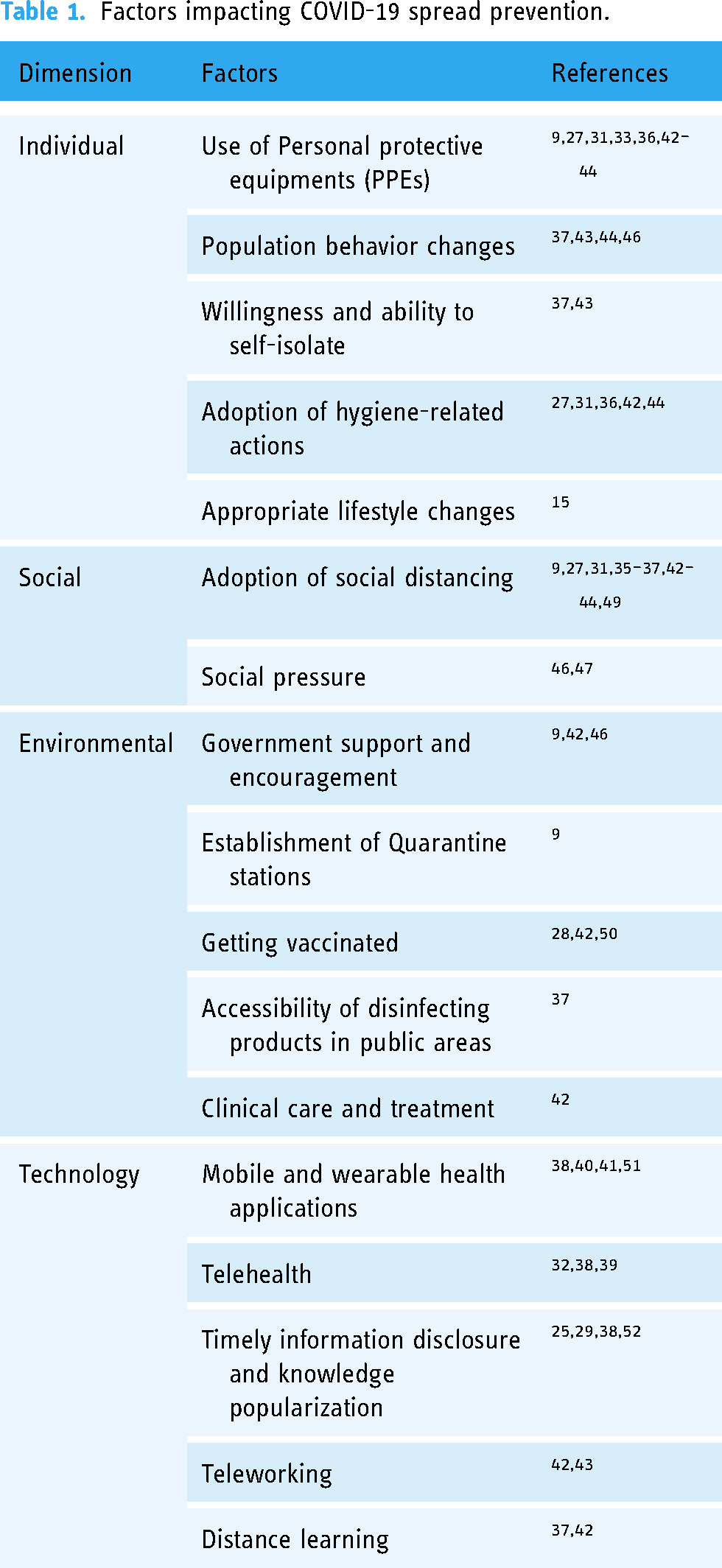
Use of personal protective equipments (PPEs)
Proper use of eye protection, facemasks, and disposable gloves has shown significant influence in preventing the virus spreads through several channels such as sneezing and touching. 53
Population behavior changes
COVID-19 consciousness is reflected in citizens’ behavior as most of them decide to follow social distancing and hygiene habits and avoid travel. Showing a positive perception toward epidemic prevention and changing people's behavior toward complying with government rules and strategies has been a big part of preventing COVID-19. 43
Willingness and ability to self-isolate
Commitment and ability to self-isolate in the case of having signs of coronavirus infection. Self-isolation is a voluntary quarantine in which individuals do not go to school, work, or other public areas and avoid using public facilities. 43
Adoption of hygiene-related actions
Adoption of hygiene-related activities such as spending more time cleaning or disinfecting objects and surfaces that might be touched (door knobs, lifts, etc.), using hand sanitizer or alcoholic-based hand gel, and washing hands with soap and water more frequently, keeping windows open to ventilate the environment.42,44
Appropriate lifestyle changes
Appropriate lifestyle changes by considering healthy nutrition, enough exercise and sleep, and avoiding alcohol intake and smoking can assist to minimize the risk of infection among individuals and COVID-19 spread. 15
Adoption of social distancing
Social distancing measures (SDMs) are forms of physical or non-pharmaceutical interventions. Social distancing is explained as a way to prohibit large mass gatherings and recommends people avoid socializing and keep physical distancing staying at least 2 m apart.4,54 By keeping individuals away from the potentially infectious population, social distancing can undoubtedly decrease the risk of getting infected. 35 Therefore, citizens must be home quarantined except for essential travel to prevent community transmission. 49 The governments closed all the country borders and even cities and non-essential facilities and services to avoid international and national traveling. This strategy can help control the disease's source and cut off the means of transmission in countries and cities. 9
Social pressure
social pressure is an assessment of how other people analyze the behavior of individuals and their intention to manage intention-based behavior. 55 The individuals’ expectation of the community and people who are important for them to execute the COVID-19 preventive actions. 47
Government support and encouragement
All public health measures to minimize the infection risk can be controlled with systematic policies to promote social connection and community resilience, secure the food supply, and protect incomes. Governments need to analyze the possible advantages and adverse effects of COVID-19 and employ policies to inspire society engagement, increase trust and cut economic and social damages. 42 In COVID-19, the governments need to form an efficient mechanism for joint control and prevention of the epidemic. The government has also enhanced the tool of military-ground cooperation to make sure that different control and prevention measures are performed correctly.9,46
Establishment of quarantine stations
Establishment of quarantine stations at public places (shopping malls, bus stations, highways, clinics, hospitals, airports, etc.) to check and control the body temperature of individuals, recognize those with fever signs and transfer them to selected spots for future investigation and medical examination. 9 According to Pépin, Bailly, 56 it is critical to prioritize the initial identification of infected individuals and quarantine patients to decrease the spread of COVID-19.
Getting vaccinated
Approved vaccines for COVID-19 offer an acceptable degree of protection and prevent individuals from affecting critically by the disease and dying from it. Vaccines can protect individuals from two aspects. Firstly, an active immune response is induced in the body of the person getting the vaccine which can quickly safeguard against exposure to the pathogen. Secondly, vaccines cut the spread of the virus to sensitive people indirectly as the possibility for spread is lessened with the higher vaccine coverage level in society. Therefore, vaccination is beneficial in protecting the larger community. 57
Accessibility of disinfecting products in public areas
Accessibility of sanitizing items such as disinfectant wipes, hand sanitizer, and disposable gloves in public places can help in controlling the pandemic. 37
Clinical care and treatment
A respiratory syndrome with cough and fever are common symptoms of COVID-19 infection. 58 Reports show that 80% of COVID-19 infections are considered mild respiratory diseases in which a patient is ambulatory and can typically be handled outside the hospital. For moderate to severe pneumonia, nearly 15% of patients require hospital care, and around 5% show critical illness signs requiring more intensive treatments and medical devices. 59 Almost one-quarter of hospitalized patients need to be moved to the ICU to control complicated conditions such as hypoxaemic respiratory failure or abnormally low blood pressure requiring specific support. 60 Remdesivir (Veklury) has been confirmed by the Food and Drug Administration (FDA) as a medicine for COVID-19 in specific conditions. Meanwhile, chest X-rays of patients have been prioritized due to the severity of the coronavirus.61,62 According to the Centers for Disease Control and Prevention (CDC), clinical supervision of COVID-19 comprises control measures and infection prevention, and supportive care, using mechanical ventilatory support and supplemental oxygen when indicated.
Mobile and wearable health applications
Health data generated by patients are considered more and more valuable in the Coronavirus pandemic. COVID-19 tracking apps installed on mobile phones play important roles in collecting and distributing patients’ data during the pandemic and thus preventing its infection. Apps for tracing, tracking, and immediate warning have been effectively utilized. Wearable technologies have also been effective in COVID-19 management. They are intelligent body-worn electronic gadgets for collecting, analyzing, and transferring health information (such as body signals related to critical symptoms and physical activities). These technologies can also deliver valuable information to their users through vibrotactile feedback or display technology. 63 Wearable devices play critical roles in tracking, detecting, and controlling transmissible diseases such as COVID-19.38,41
Telehealth
Telehealth is an integration of telemedicine functions and nonclinical services such as telenursing and tele-pharmacy. 64 Employment of remote consultation decreases the incidence of on-site diagnoses and diminishes the risk of the spread of infection resulting from the movement of detected patients. With the help of health information technology (HIT), remote services such as prevention strategies and consultation can be provided by major hospitals. This can enhance the power of health organizations to cope with the pandemic and decrease the pressure on designated clinics. 38 Meanwhile, the advantages of Internet diagnosis and treatment or Internet hospital platforms are considerable.
Timely information disclosure and knowledge popularization
Popularization of knowledge and accessibility to authoritative information about COVID-19 transmission help in identifying the diseases and self-protection scientifically. Information provided on official health administration websites and reliable online service platforms helps execute pandemic information inquiries and provide valuable information about the pandemic. 38 For example, “Worldometer” reports the updated statistical records on COVID-19 worldwide (covering new disease cases and deaths reported per day, distribution of disease by region, the severity of illness, etc.). WHO and Centers for Disease Control and Prevention (CDC) provide information networks and official Public Service Announcements (PSAs) on Coronavirus.
Teleworking
Teleworking is explained as a type of work done online, remotely, at a distance utilizing computer and telematics technologies to protect citizens from coronavirus disease. 65 According to WHO, providing flexible work arrangements can control COVID-19 transmission effectively.
Distance learning
Distance or online learning is defined as a shift from physical classroom teaching to online mode. 66 The COVID-19 pandemic has significantly impacted educational systems. Nearly total schools, universities, and colleges have been temporarily closed by governments globally to diminish the COVID-19 spread. In response, the utilization of distance learning platforms has been recommended by UNESCO to enable students to continue their classes at home. 67
Research method
As one of the structural modeling approaches, DEMATEL 68 is widely used to investigate the inter-relationship among the factors of a system.69–71 Unlike traditional techniques, this technique has been effective in discovering the interdependence among a system's elements. In addition, in many decision-making problems, it has been confirmed to help identify the cause-and-effect relationships among the evaluation factors. Accordingly, as the results of evaluating the factors are in cause and effect groups, it results can be better interpreted. In this study, DEMATEL based on fuzzy set theory was used to analyze the collected data to discover the relationships among the factors. 72 The steps of the DEMATEL technique based on fuzzy logic are as follows. 73
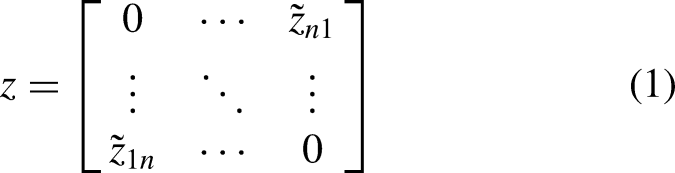


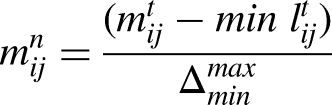

where

The 

The Converting Fuzzy data into the Crisp Score method generates crisp values. Accordingly, the total normalized crisp values are computed as follows:



We then calculate the values of
Data collection
The quantitative approach was employed in this research and data was collected by distributing questionnaires among experts. Health care workers and professionals such as doctors, nurses, staff of emergency medical service, clinical, and public health technicians working in the designated COVID-19 sections were selected to participate in this study. The questionnaire was designed online and sent to all designated experts through email and social media. 46 experts participated in this study. The team of experts consisted of 15 academics and 31 professionals with more than 15 years of experience working on public health, infectious diseases, epidemiology, or related fields in the subject. As the focus of this study was collecting data from experts, a sample size of 46 is appropriate to run fuzzy DEMATEL. 21 According to Hwang, Huang 76 and Ignacio, Malolos, 77 a small sample size is needed to obtain reliable and statistically significant results from the expert opinion-based DEMATEL method.
Analysis
Five fuzzy scales, which are listed in Table 2, were utilized for data collecting in fuzzy DEMATEL. The direct relation matrix, which is the pairwise comparison matrix of the experts, was created using the data gathered from all experts and is displayed in Table 3. Using the equations from Step 2, we next generated the normalized fuzzy direct-relation matrix. Table 4 presents this outcome.
The fuzzy scale in fuzzy DEMATEL.

The direct relation matrix.

The normalized fuzzy direct-relation matrix.

In Step 3, the fuzzy total-relation matrix was calculated. The fuzzy direct-relation matrix is displayed in Table 5. The fuzzy total-relation matrix is changed into a crisp total-relation matrix in the following step. The outcomes are shown in Table 6.
The fuzzy total-relation matrix.

The crisp total-relation matrix.
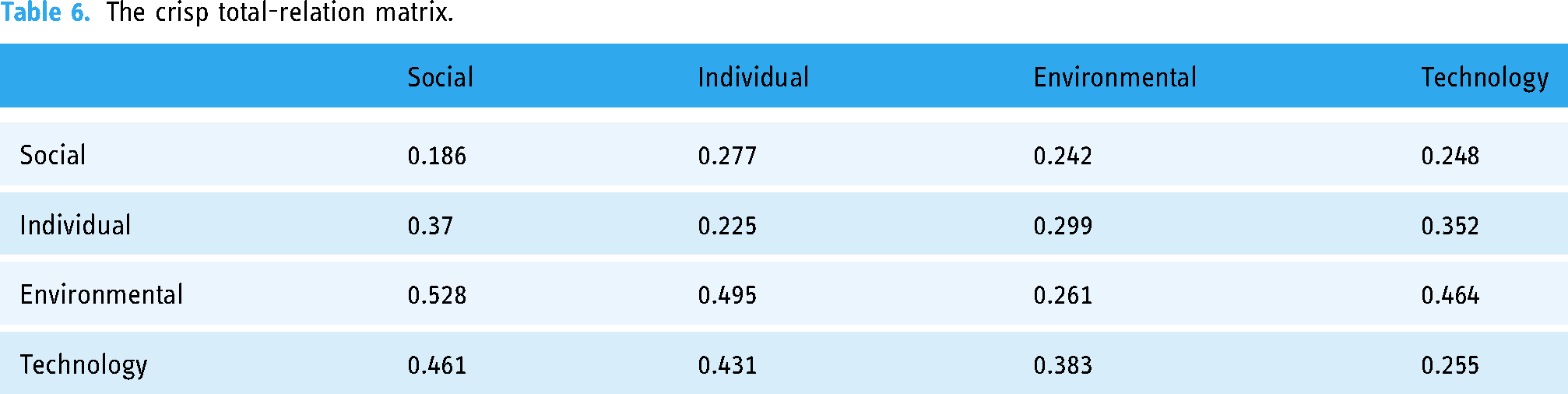
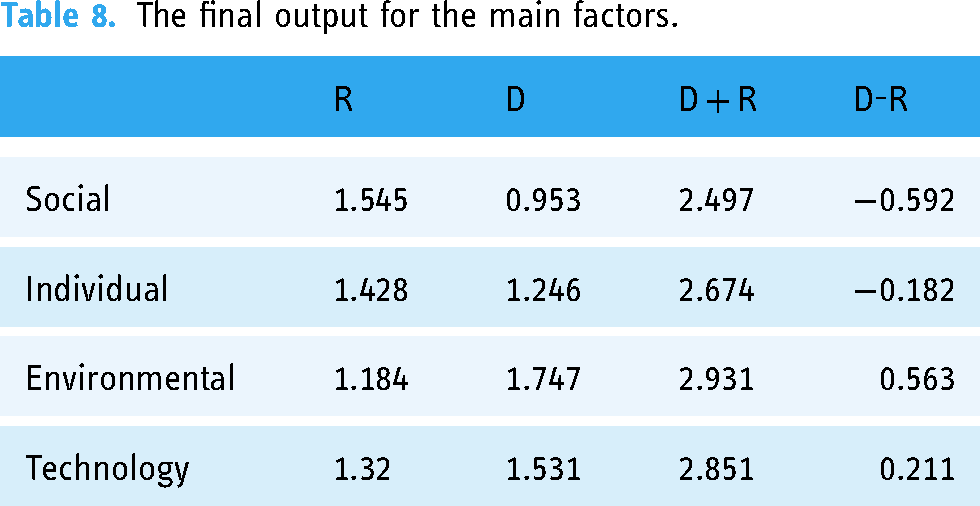
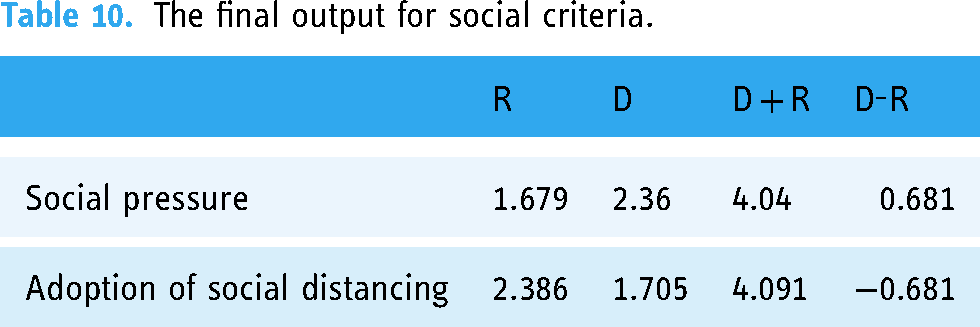
Important details about the factors can be found in Table 6. They can be calculated by D and R as D-R and D + R, respectively, where D-R denotes the net effects that a factor has on the system and D + R denotes the significance of a factor overall. Table 7 presents the outcomes. Additionally, we may identify the elements’ most significant effects using a clear total-relation matrix and a threshold. Table 8 presents this outcome. Tables 9–12 present the results for all criteria. In Appendix A, the complete DEMATEL results are shown.
The crisp total- relationships matrix by considering the threshold value.

The final output for the main factors.
The final output for individual criteria.

The final output for social criteria.
The final output for environmental criteria.

The final output for technology criteria.

According to Table 8, technology and environmental factors have the most influence on the other factors as their R–C > 0. In contrast, individual and social are the most impacted factors as their R–C < 0. The factors that impact others are cause factors, and those affected are effect factors. Meanwhile, environmental has the maximum R + C value, thus it is the most significant factor, followed by technology, individual, and social. According to the values in Table 8, we present the cause-effect relationship diagram in Figure 2. The use of personal protective equipments (PPEs) and adoption of hygiene-related actions are the main essential factors in the individual dimension, followed by appropriate lifestyle changes, population behavior changes, and willingness and ability to self-isolate (Table 9). Social distancing adoption is the most important factor within the social dimension (Table 10). Getting vaccinated is the most essential factor in the environment dimension, followed by clinical care and treatment, government support and encouragement, accessibility of disinfecting products in public areas, and establishment of quarantine stations (Table 11). Telehealth and teleworking are the most important while timely information disclosure and knowledge popularization and mobile and wearable health applications are the least critical factors in the technology dimension (Table 12).

Cause-effect relationship diagram.
Discussions
Getting vaccinated is the most critical factor in the environmental dimension in cutting the spread of COVID-19. A big part of the world's population should be immune to the virus to bring this pandemic to an end. Getting vaccinated is the safest way to achieve this aim. Vaccines usually have been a method that humankind has trusted to decrease the death caused by infectious diseases in the past. 78 According to CDC, COVID-19 vaccines efficiently prevent people from infecting by COVID-19. Getting vaccinated even can keep people from getting critically sick in case they get COVID-19. Since COVID-19 in January 2020, no successful vaccine was accessible against the virus until the fourth quarter of 2020. 79 In early December 2020, the first mass vaccination plan began and currently, several vaccines are in use in the world. As of 17 November 2021, a total of 7,370,902,499 doses of vaccine have been administered worldwide (41.6% of the population fully vaccinated). 78 Table 13 shows the list of vaccines for Emergency Use Listing (EUL) by WHO.
List of vaccines for EUL by WHO.

In Malaysia, the mass vaccination against COVID-19 was started with the Pfizer/BioNtech Comirnaty vaccine on 24 Feb 2021. As of 5 October 2022, 76.4% of the individuals have received the second dose of a two-dose vaccine or a single-dose vaccine. Statistics show that the vaccination schedule in the last six months is directly linked with a drop in COVID-19 infected cases and deaths, hospitalization, and patients in ICU and ventilated (Figure 3). So far, COVID-19 vaccines have shown apparent effectiveness against infection. However, many important questions, such as the interval between vaccine doses, the influence of new virus variants, the consequence of vaccines on symptomless infection in compared to severe illness, duration of protection, and the theoretically improved efficiency of mix-and-match methods that can be considered for booster shots, remain partially answered. 80 Therefore, according to WHO and CDC, even effective and safe vaccines can be a game-changing method for the unexpected future, individuals need to keep on sanitizing hands, using masks, ensuring adequate ventilation in covered areas, avoiding crowds and physically distancing.

Data and insights on COVID-19 in Malaysia. 81
Findings showed that using personal protective equipments (PPEs) and adopting social distancing are the most important measures in individual and social dimensions that help prevent COVID-19 infection. According to Schünemann, Akl 82 and Thu, Ngoc, 83 because of the shortage of effective medication, the best method to reduce pandemic spread is controlling virus transmission among individuals by vaccination, boosting awareness, and implementing appropriate preventive habits. In the first days of the pandemic, many professionals recommended against face mask use by the public, emphasizing their possible risks, such as an increase of a person's oxygen concentration level in prolong use, and that public use may cause supply reduction for healthcare workers. However, gradually it is confirmed that benefits of face mask use outweigh any potential downsides in protecting others against infection with COVID-19. 82 Wearing a mask is often recommended as appropriate PPE in cutting the spread of respiratory infections. According to research carried out by Liang, Gao 84 and Abboah-Offei, Salifu, 85 the right and early use of face masks has shown considerable protection against the transmission of respiratory viruses such as COVID-19. According to Abboah-Offei, Salifu, 85 wearing of face mask provides a double preventive purpose, regardless of the situation, type, or who uses the mask, protecting others and protecting oneself from infection by viral. Thus, the face mask serves excellent protection against transmission of COVID-19 if anyone wears it in public. Currently, due to the COVID-19 governments worldwide have regulated the compulsory usage of masks and other coverings for the face in conditions where close contact of individuals is unavoidable and frequent (inside shopping malls, public transport facilities, and workplaces.
Social distancing measures are regulated to reduce human contact at close distances in specific areas and even nationwide. Saez, Tobias 86 monitored the trend of deaths and confirmed cases in Spain before and after the launch of physical distancing and found that the rate of incidents significantly decreased after applying the social distancing rules. Statistics from 10 countries confirmed that it has typically taken 1 to 4 weeks since the promulgation of strict social distancing methods until daily positive and death cases are reduced. Nevertheless, the success of the social distancing methods in controlling COVID-19 infection is different based on the virus variations and the seriousness of the COVID-19 spread condition at the time of declaring social distancing rules. 83
The finding showed that telehealth is the most important technology-related factor that can help in decreasing the spread of COVID-19. According to Monaghesh and Hajizadeh, 87 telehealth effectively cuts the COVID-19 transmission risk. It is an appropriate solution for patients who are self-isolating and healthcare workers. Meanwhile, telehealth has appeared as an essential tool for the supervision of non-communicable and communicable illnesses among the elderly during the period of the COVID-19 outbreak. 88 This solution prevents physical contact, offers constant care to the community, and eventually decreases mortality and morbidity during the COVID-19 pandemic. Utilizing the available technologies to provide ideal delivery of services while reducing direct individual contacts is one of the successful measures in minimizing COVID-19 transmission. 89 Considering the rapid development of portable electronics, individuals have at least webcams and smartphones which can help in making communications between the healthcare provider and patient. 90 Television systems and video conferencing are also employed to deliver health care education to individuals in quarantine or hospitalized to cut the risk of exposure to others. 89 Medical Doctors, who are in quarantine, can use those platforms to look after their patients remotely. Wosik, Fudim 91 reported that during the COVID-19 surge in the US, telehealth adoption had increased significantly. The in-person clinic moved to e-consult, telephone, or video visits. Virtual intensivist service (Tele-ICU) was provided to permit specialists to monitor intubated patients remotely. In this situation, medical doctors can check the work of patients’ breathing, and ventilator settings, and remotely discuss with the bedside team while reducing the risk of exposure. COVID-19 conditions have caused severe negative impacts on the mental health of infected patients and the community in general. 92 To minimize close contact and adhere to social-distancing measures, many healthcare providers have switched to e-mental health strategies. In the COVID-19 pandemic, teleconsultation has been a satisfactory medium of interaction for mental health care in Malaysia. 93
Conclusions and recommendations
The COVID-19 pandemic has put a certain burden on worldwide public health and surprised the world with its swift mortality, morbidity, and spread.94,95 Considering the significance of infection prevention and control, 45 more attempts are required to determine factors that can prevent COVID-19 spread. So far, there is no systematic method to assess Coronavirus infection prevention behavior/measures. There is a significant lack of a comprehensive study addressing possible factors and exploring their level of importance in preventing COVID-19 infection. Therefore, the purpose of the current research is to identify the factors impacting COVID-19 infection prevention and rank them based on their level of importance using the DEMATEL method. DEMATEL allows for a comprehensive evaluation of the preventive measures and their potential consequences for future pandemics. This study sheds light on the efficacy of particular infection prevention strategies put into place in Malaysia. These findings can be used by policymakers and public health professionals to create evidence-based guidelines and policies for handling upcoming pandemics. The measures that have been identified can act as the basis for proactive and focused approaches to reduce the spread of infectious illnesses. Meanwhile, uncovering the relationships between different factors and their level of importance in controlling the pandemic can enable more effective resource allocation in future pandemics. Policymakers can allocate resources like financing, medical supplies, and manpower more efficiently to restrict the spread of the disease by prioritizing the most effective interventions. Utilizing limited resources effectively and efficiently is ensured by this strategy.
By reviewing the related literature and official websites, this study classified the factors impacting COVID-19 spread prevention into four different dimensions; individual, social, environmental, and technology. Next, DEMATEL was utilized to achieve the objectives of this research by collecting data from healthcare experts in Malaysia. Results showed that the environmental factor is the most significant dimension, followed by technology, individual, and social. Getting vaccinated is the most crucial factor in the environment dimension, followed by clinical care and treatment, government support and encouragement, accessibility of disinfecting products in public areas, and establishment of quarantine stations. Telehealth and teleworking are the most important factors in the technology dimension. Personal protective equipments (PPEs) and the adoption of hygiene-related actions are the main important factors in the individual dimension. The adoption of social distancing is the most crucial factor within the social dimension.
Even the mass vaccination is emphasized as the most successful strategy in managing the severity and spread of the COVID-19 pandemic, long-term vaccine improvement, preparation and delivery initiatives are required to implement successful COVID-19 vaccination. 14 Coincident with the quick progress of COVID-19 vaccines, worries about the protection and safety of such vaccines can rise vaccine hesitancy worldwide. Thus, vaccine hesitancy is a big challenge that must be overcome in fighting against Coronavirus disease. In this situation, drivers and barriers that influence vaccine acceptance in society need to be critically investigated. This can help public health parties to make better decisions about the COVID-19 vaccine plan. Meanwhile, there is an immediate need to initiate an awareness campaign to augment the acceptance rate of the COVID-19 vaccine. Appropriate information and strong evidence focusing on the risk and safety of vaccines must be prepared by health authorities for the general population. There should be strict control over the spread of unauthentic, doubtful, and inaccurate information on the news and social media platforms and more trusted information provided by health professionals and community leaders for the public. According to Jiang, Ma, 96 more education programs and instructions need to be designed for teens and people above the 40 s. Meanwhile, to improve attitudes and aid parents in choosing whether to vaccinate their children against COVID-19, communication and public health activities must be stepped up. 97 Considering the significant influence of health authorities’ recommendations, CDC has provided support for COVID-19 vaccine discussions and stressed the role of medical specialists in advising individuals to accept COVID-19 vaccines (“give your strong recommendation”). 50 Thus, provider, government, and healthcare specialist recommendations can enhance public trust and increase COVID-19 vaccine intentions.
Telehealth plans are aligned with stay-at-home and physical distancing rules and provide caregivers and patients with convenient medical care during the pandemic. Such services offer continuous outpatient patient care while minimizing nosocomial and community spread. 91 In pandemic situations, health systems need to provide a robust and sustainable telehealth infrastructure that can help more effectively use hospital staff, equipment, and space. Telehealth systems should be improved to link critical access and rural and hospitals into existing telehealth networks. This involves the critical reassessment of policies and regulations across various stakeholders, including the state medical board, local healthcare organizations, and the federal government. Meanwhile, the outcome and effectiveness of multiple services (telephone, in-person, video) need to be evaluated to avoid potential perverse incentives. To simplify the transition to telehealth systems for public health during the pandemic, telehealthcare providers need to confirm that they have considered adequate measures to safeguard patients’ data security and privacy. Meanwhile, ethical and practical challenges and policies and regulations for using digital health technologies with both patients and healthcare workers should be considered and resolved. Since artificial intelligence has significantly enhanced the delivery of health services, medical professionals should utilize these advances for more effective healthcare delivery to the public. 98
The use of Personal protective equipments (PPEs) and the adoption of social distancing play significant roles in controlling COVID-19 infections. Personal protective equipments have been an important measure during the COVID-19 epidemic. However, implementing individual methods may not be so efficient alone, and personal protective measures are recommended to mix perfectly with other measures. Social distancing prevents direct communication among individuals and decreases the potential cross-transmission of the virus. Imposing social distancing through laws and media campaigns does not always work effectively. Public health campaigns should emphasize implementing general social distancing rules, limiting mobility, and forcing individuals to stay at home, but also critically focus on facilitating the enforcement of regulations. Situational consciousness of the community can significantly augment the acceptance of social distancing and the use of PPEs and in turn, reduce the disease spread. Thus, policymakers and government, specialists, and health organizations need to set communication regulations that boost people's willingness toward such health-protective actions. It is advised that healthcare institutions design regulations that will guarantee that healthcare staff have access to the right PPE and are instructed on how to use it. Additionally, it can guide plans for controlling PPE shortages, strengthening supply chains, and fostering effective distribution during periods of high demand. Public health campaigns can be created to increase awareness, promote responsible behavior, and stress the long-term advantages of observing social distance controls during pandemics.
Research limitations and future directions
In this research, the most prevalent factors that can impact COVID-19 infection prevention were investigated in Malaysia. Future research should seek to replicate this study in other nations to learn more about the efficacy of COVID-19 infection prevention methods globally. Researchers can find parallels, variations, and probable factors that affect these metrics’ efficacy in various circumstances by comparing the data across nations. Future research should delve into more particular aspects that may differ among countries. To ascertain their impact on the efficacy of infection prevention methods, factors like culture, accessibility to the most recent medical technologies, geographical locations, and socioeconomic conditions could be examined. This study employed the DEMATEL approach to assess the level of significance of measures. Future studies can investigate the associations between the measures utilizing other statistical methods such as Structural Equation Modeling (SEM). In this study, data was gathered from a group of medical professionals. Future research, however, can enhance this strategy by including the viewpoints and opinions of the public. Policymakers and other stakeholders can benefit greatly from understanding how the public feels about infection control measures since this information can be used to better target interventions and communication plans to address public concerns and increase compliance. Future studies should concentrate on converting the conclusions into useful policy consequences. This entails assessing the viability and efficacy of various interventions, taking cost-effectiveness studies into account, and looking into implementation techniques that can make it easier for infection prevention measures to be adopted in various settings.
Footnotes
Acknowledgement
This paper is supported by the Universiti Kebangsaan Malaysia Tabung Dana Pecutan Penyelidikan research fund.
Contributorship
Elaheh performed conceptualization, methodology, writing, and editing. Mehrbakhsh performed methodology, data curation, and formal analysis. Mohd Hairul and Nurhizam performed the investigation and validation. Saeedeh performed review & editing.
Declaration of conflicting interests
The author(s) declared no potential conflicts of interest with respect to the research, authorship, and/or publication of this article.
Ethical approval
This article does not contain any ethical approval
Funding
The author(s) received no financial support for the research, authorship, and/or publication of this article.
Guarantor
Elaheh Yadegaridehkordi.
Informed consent
The authors certify that this paper consists of original, unpublished work which is not under consideration for publication elsewhere.

Appendix A: DEMATEL results
The crisp total-relationships matrix by considering the threshold value for technology criteria.

| Telehealth | Teleworking | Distance learning | Timely information disclosure and knowledge popularization | Mobile and wearable health applications | |
|---|---|---|---|---|---|
| Telehealth | 0 | 0.359 | 0.384 | 0.385 | 0.393 |
| Teleworking | 0.292 | 0 | 0.309 | 0.301 | 0.292 |
| Distance learning | 0.23 | 0.23 | 0 | 0.246 | 0.236 |
| Timely information disclosure and knowledge popularization | 0 | 0 | 0 | 0 | 0 |
| Mobile and wearable health applications | 0 | 0 | 0 | 0 | 0 |