



Abstract
Objective
The sensory deficit has been considered as one of the core features in children and adolescents with autism spectrum disorder (ASD). The present study aimed to examine the temporal processing of simple and more complex auditory inputs in ASD children and adolescents with an online assessment that can be conducted remotely.
Methods
One hundred fifty-eight children and adolescents aged 5–17 years participated in this study, including 79 ASD participants and 79 typically developing (TD) participants. The online assessment consisted of two temporal-order judgment tasks that required repeating the sequence of two pure tones or consonant–vowel (CV) syllabic pairs at varying interstimulus intervals (ISIs).
Results
Significantly lower accuracy rates were found in ASD than TD participants in the pure tone and the CV conditions with both short and long ISI. In addition, ASD participants (M = 245.97 ms) showed a significantly higher passing threshold than TD participants (M = 178.84 ms) in the CV task. Receiver operating characteristic analysis found that the age × ISI passing threshold composite yielded a sensitivity of 74.7% and a specificity of 50.6% at the cutoff point of −0.307 in differentiating ASD participants from TD participants.
Conclusion
In sum, children and adolescents with ASD showed impaired temporal processing of both simple and more complex auditory stimuli, and the online assessment seems to be sensitive in differentiating individuals with ASD from those with TD.
Keywords
Introduction
Temporal processing refers to the ability to perceive stimuli presented in rapid succession as short as in milliseconds, and such an ability to track time is essential for optimizing our interactions with the ever-changing complex world. By monitoring the passage of time, and reacting to and changing our behavior in time, we can create and execute mental activities effectively. It also serves as a foundation for higher-order cognition, learning, communication, and sensory, motor, and emotional processing.1,2 Temporal processing has been found to be associated with attention, 3 memory, 4 executive functions,4,5 and language. 6
Temporal processing deficit was reported as early as 1970s, when Tallal and colleagues found that children with abnormal language development showed impairment in sequencing and discriminating brief auditory stimuli.7,8 It is used to believe that the temporal processing deficit is a unique feature of children with language learning difficulties,9,12 but studies have shown that temporal processing deficits are also found in children with autism spectrum disorder (ASD)13,18 and attention-deficit/hyperactivity disorder (ADHD).19,25 Besides neurodevelopmental disorders, further empirical evidence has suggested temporal processing deficits in patients with neurodegenerative disorders, such as Parkinson's disease,26,27 frontotemporal dementia,28,29 Alzheimer's disease,28,30 and mild cognitive impairment, 31 and patients with schizophrenia.32,34 Therefore, temporal processing seems to be a sensitive indicator of neural processing deficit in general but not only specific to a single disorder.
Atypical sensory processing has been shown to be a core characteristic of children with ASD. This deficit has been observed in multiple sensory systems including vision, hearing, touch, proprioception, taste, and smell,35,36 and this deficit seems to affect the behavioral and cognitive processes of these children significantly.17,37 In addition, it has been suggested that a fundamental attribute of their sensory deficit relates to their difficulties in processing the temporal aspects of sensory inputs. 17 That is, two sensory inputs will be perceived as one unique if they occur within a limited range of temporal offset, but are more likely to be processed as two individual units if the temporal offset is beyond the range of processing. A wider temporal binding window (TBW; the period of time within which two sensory stimuli are perceived as perceptually bound) was repeatedly reported in ASD suggesting that they bind together stimuli that should not be bound.38,39
Several other studies have also reported that children with ASD demonstrated auditory temporal processing problems.14,15,18,40 In a study where two identical clicks in various stimulus onset asynchrony were presented, one for each ear, to the subjects and they were asked to make a judgment as to which ear the first click was presented. 15 The results showed that ASD children required 48% more time (107.8 ms) between auditory stimuli to reliably determine the presentation sequence of two click sounds than typically developing (TD) children (73 ms). Studies on high-functioning ASD children 18 and adults 41 also showed impaired judgment of tone duration. That is, high-functioning ASD tended to reproduce pure tone in response to varying standard stimulus duration less accurately.18,41 Besides, children with Asperger's syndrome (63.6% for speech sounds and 70.0% for nonspeech sounds) showed significantly lower hit rates, as compared with TD controls (96.7% for speech sounds and 96.1% for nonspeech sounds), in detecting duration changes of auditory stimuli. 40 Electrophysiological evidence also suggested atypical responses to the temporal structure of discrete auditory stimuli as reflected by the reduced mismatch negativity (MMN), which was regarded as a reflection of perceptual auditory discrimination, 42 in response to duration changes in nonspeech sounds 43 as well as speech sounds particularly in the left hemisphere. 40 Such auditory temporal difficulty may be related to the reported delayed latency of neuromagnetic evoked responses in the superior temporal gyrus in response to pure tones of the various pitch in ASD. 44
Although there was evidence showing that autistic individuals have temporal processing deficits in both simple nonspeech sounds (e.g., pure tones) and complex speech sounds cued by various acoustic features (e.g., consonant–vowel [CV] syllables, lexical tones), some other studies also proposed that the auditory temporal processing deficits in ASD may be specific to speech stimuli rather than nonspeech stimuli. Such domain-specific deficit was supported by theories such as Enhanced Perceptual Functioning 45 and Weak Central Coherence 46 in ASD, suggesting that autistic individuals process low-level, simple elements with higher efficiency or readiness than higher-level, complex elements. Consistent with these theories, studies examining audiovisual TBW in ASD reported enlarged TBW of speech stimuli (e.g., syllable) but not nonspeech stimuli (e.g., flashbeep).47,50 Regarding the auditory temporal processing of nonspeech and speech stimuli in ASD, one ERP study contrasted the processing of pure tones and lexical tones in Mandarin-speaking children. 51 Compared to TD children, ASD children showed enhanced MMN response to pitch changes in pure tones but smaller MMN amplitude in response to changes in the category of lexical tones. Another ERP study examined the MMN and P3a response elicited in the oddball paradigms with pure tones or vowels with different durations and observed distinct patterns of neural responses to changes in tone duration and changes in vowel duration. 52 Compared to TD children, ASD children showed significantly diminished response amplitude and delayed latency of MMN in the tone condition, but the MMN response was similar in the vowel condition. On the other hand, ASD children showed significantly diminished P3a response in the vowel condition but not in the pure tone condition. Overall, two distinct discrimination systems may be involved when individuals were processing nonspeech and speech stimuli, suggesting that these two types of stimuli should be employed in assessing the temporal processing of individuals with ASD.
Given that the temporal processing deficit seems to be a core deficit associated with ASD, and it is more robust in the auditory modality, 15 the present study aims to further examine the auditory temporal processing deficit in children and adolescents with ASD using a remote online assessment. This online temporal processing assessment involves the temporal-order judgment (TOJ) of simple auditory stimuli (i.e., pure tone) and more complex auditory stimuli (i.e., CV syllables). Our previous study has validated this online assessment on a group of ADHD children and adolescents, showing that ADHD participants were impaired in both the TOJ of pure tones and TOJ of CVs. 25 It is anticipated that individuals with ASD will have more difficulty to process complex than simple auditory stimuli. Besides, in our previous study, 25 this online assessment showed a good discrimination ability (sensitivity = 76%, specificity = 51%) between ADHD participants and TD participants by using the TOJ of pure tones and TOJ of CVs. We expect that this online assessment can also differentiate individuals with ASD from those with TD. Given that speech perception requires accurate tracking of temporal cues, deficits in discriminating and perceiving the temporal order of basic sound elements may lead to inaccurate speech perception and further hinder language development.53,54 One purpose of the present study is to examine whether an online assessment could be a screening tool for the potential temporal processing deficits that underlie the difficulties in language and social communication skills in individuals with ASD. To our knowledge, all the reported studies adopted face-to-face tests, our online assessment is a pioneer attempt to assess temporal processing ability remotely within a short time (i.e., 15–30 min). This type of assessment can be more flexibly applicable when people have to keep social distance during the pandemic of COVID-19 and can reach people in less accessible regions in the future.
Methods
Participants
A total of 158 children and adolescents aged between 5 and 17 years were recruited by posting advertisements on various social media (e.g., Facebook, WhatsApp), and from local primary schools. Participants were recruited if they were able to understand Cantonese, accessible to computers or tablets, with normal hearing, and normal or correct-to-normal vision. Those who met any one of the following criteria were excluded: (1) failed to complete the assessment due to technical problems, (2) failed to comprehend the instruction and pass the practice sessions, or unwilling to cooperate, (3) the performance was severely affected by technical problems as documented by experimenters.
Half of the recruited sample has been diagnosed with ASD according to the diagnostic proof provided by their parents. The diagnoses were made by a registered psychiatrist, pediatrician, or clinical psychologist at the Child Assessment Centre (CAC; a public health service in Hong Kong) or at private clinics based on the Diagnostic and Statistical Manual of Mental Disorders, Fifth edition (DSM-5) for ASD, including: (1) persistent deficits in social communication and social interaction across multiple contexts; (2) restricted, repetitive patterns of behavior, interests, or activities; (3) symptoms must be present in the early developmental period; (4) symptoms cause clinically significant impairment in social, occupational, or other important areas of current functioning; and (5) these disturbances are not better explained by intellectual disability (intellectual developmental disorder) or global developmental delay. 55 Given that comorbidities are common in individuals with ASD, parents of the ASD participants were also required to provide the diagnostic information of all the other neurodevelopmental disorders if applicable. There were 39 ASD participants without any comorbidity; 19 participants with ASD and ADHD; 9 participants with ASD, ADHD, and Special Learning Disorder (SpLD); 1 participant with ASD, ADHD, SpLD, anxiety, and depression, 1 participant with ASD, ADHD, and borderline intelligence; 2 participants with ASD, ADHD, limited intelligence or borderline intelligence, and Special Language Impairment (SLI); 1 participant with ASD and mild intellectual disability; 3 participants with ASD and SpLD; 3 participants with ASD and SLI; and 1 participant with ASD and anxiety.
The other half of the sample were age- and gender-matched TD individuals, without any reported diagnosis of developmental disorders, psychiatric disorders, and subjective complaints from parents on the participant's behavioral problems (i.e., difficulty in attention or self-control). There were 12 girls and 67 boys in each group.
Procedure
Online written consent forms were obtained from the parents of participants prior to the study. Each participant was assessed online using their own computers or tablets at home. This online test was developed by our research team with Python, and participants were allowed to access the tests via a web browser. A research assistant guided and monitored the participant and the parent to perform the task step-by-step via telecommunication (i.e., Zoom) and encouraged the child to complete the assessment. Participants and their parents were asked to adjust the volume of their equipment to ensure that the auditory stimuli could be heard clearly, and that the assessment could be done with or without headphones considering that some ASD participants may be unwilling to wear a headphone. The whole assessment lasted for 15–30 min. This study was conducted in accordance with the World Medical Association Declaration of Helsinki. The research protocol was approved by the Joint Chinese University of Hong Kong—New Territories East Cluster Clinical Research Ethics Committee (CREC Ref. No.: 2022.188).
Materials
Paradigm
The present online assessment adopted the same paradigm as described in Chan et al. 25 It was designed based on TOJ task, which is a well-known paradigm to assess the processing of perceptual latencies among information in different modalities. 56 In the TOJ task, pure tone and CV syllables were employed as stimuli. These two stimuli were presented using various lengths of interstimulus interval (ISI). Participants were required to repeat the sequence of stimulus presentations. There were two practice sessions before the formal test of each stimulus that allowed participants to get familiar with the stimuli and the paradigm. In the first practice session, participants were asked to identify individual sounds by pressing the corresponding response buttons. In the second practice session and the formal test, they were asked to repeat the sequence of sound pairs. The ISI used in the second practice session of the pure tone task and the CV task was 428 ms and 500 ms, respectively. No feedback was provided in the formal test. All the participants went through these procedures twice, with one TOJ task on pure tones, and another TOJ task on CVs.
To ensure the accurate timing of the stimulus presentation, first of all, participants were asked to perform the assessment with a stable internet connection. Participants who encountered technical problems that may affect the stimulus presentation were documented by the experimenters and excluded from data analysis. Secondly, for each combination of sound pairs and ISI levels, we merged two individual sounds with an ISI into a single audio file, so that in each trial, the sound pair was played as a single audio file with a specific, precise ISI.
Stimuli
Pure tone. The sound stimuli involved two types of square tone at high (3000 Hz) and low (300 Hz) frequencies. Each tonal sound had a duration of 15 ms. The formal test section contained 60 trials of tonal pairs. In the first 30 trials, tonal pairs were separated by ISI of 305 ms. The latter 30 trials were separated by ISI of 40 ms. The two ISIs were chosen because the minimum ISI between two successive stimuli for correctly reporting their temporal order is normally about 20–40 ms regardless of sensory modality as reported in some experimental studies.57,59 Kanabus et al. 57 have revealed an order threshold at 40 ms at which normal individuals could obtain 75% of correct responses in a TOJ task. The accuracy rates in ISI 40 ms and ISI 305 ms were assessed separately in the present study.
CV syllables. Six CV syllables including /ba/, /da/, /ga/, /pa/, /ta/, and /ka/ were adopted from the standard Bergen dichotic listening paradigm. 60 These CV syllables are composed of stop consonant with rapid frequency changes (formant transition) that occurs within few tens of milliseconds, 61 and the brief formant transition within CV syllables is critical for syllable discrimination. 6 Each CV sound had a duration ranging from 500 ms to 590 ms. In the formal test section, CVs were presented randomly in pairs, and separated by ISI of 20 levels (i.e., 500, 400, 300, 250, 200, 170, 140, 110, 90, 70, 50, 40, 30, 25, 20, 15, 10, 7, 3, 0 ms) in decreasing order. The exact number of trials for each ISI condition was not fixed. Same as the paradigm we used in our previous study, 25 the total number of trials ranged between 60 and 80. Different combinations of CV pairs were generated by six CVs and were presented randomly. The ISI within CV pairs were presented following the 3-down, 1-up staircase protocol used by Strehlow and colleagues. 62 The accuracy rate at each ISI level was calculated, and the shortest ISI at which the participants obtained three consecutive correct responses was regarded as the ISI passing threshold.
Community involvement
Although ASD children and adolescents were included as participants and their parents might provide assistance during the assessment in the present study, they were not involved in the development of research question, study design, measures, implementation, or interpretation and dissemination of the findings.
Results
Demographics
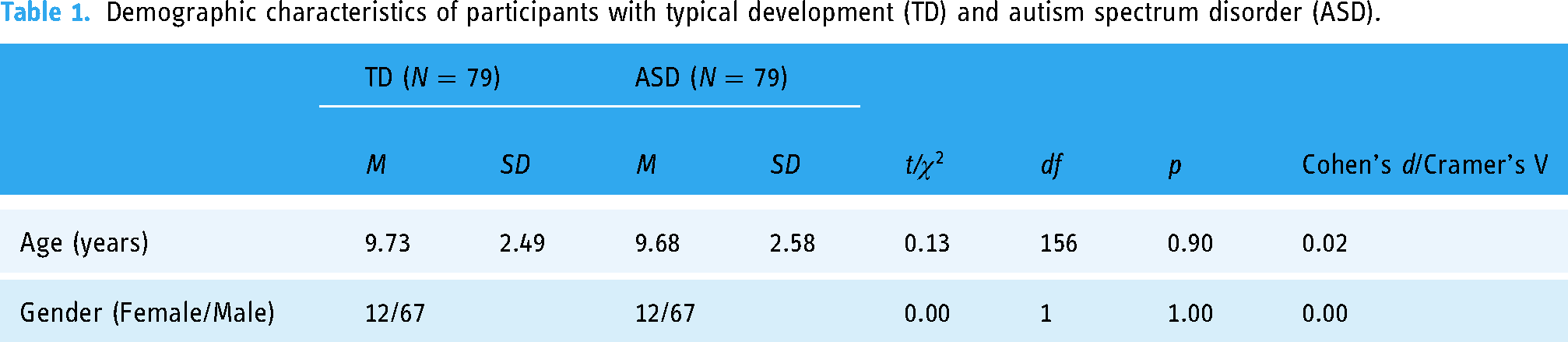
Table 1 showed that there was no significant difference between groups in terms of age (t(156) = 0.13, p = 0.90), and gender (
Demographic characteristics of participants with typical development (TD) and autism spectrum disorder (ASD).
Performance in the TOJ of pure tones
To evaluate the performance in the pure tone task, mixed ANOVA was performed to examine the accuracy rate of the two ISI conditions (305 ms and 40 ms) between two groups (TD and ASD). The between-group difference between the two conditions (8% in ISI 40 ms and 7% in ISI 305 ms) was not significant given the insignificant ISI Condition × Group interaction effect (F(1156) = 0.14, p = 0.71). The main effect of ISI Condition was significant (F(1, 156) = 88.34, p < 0.001,

Accuracy rate of the pure tone task in participants with typical development (TD) and autism spectrum disorder (ASD).
Performance in the TOJ of CV syllables
First, the ISI passing threshold was compared between ASD and TD groups using an independent t-test. There were 10 ASD participants and 2 TD participants excluded from the analysis because they failed to pass even the longest ISI (i.e., 500 ms). Results showed that the ISI passing threshold of ASD participants (M = 245.97 ms, SD = 183.13 ms) was significantly longer (t(144) = −2.16, p = 0.03, d = 0.36) than that of TD participants (M = 178.84 ms, SD = 191.26 ms). It suggests that ASD group has a higher passing threshold than TD group, that is, individuals with ASD required a longer interval time between stimuli to perceive them in a correct sequence.
Next, mixed ANOVA was performed to compare the accuracy rate across 20 levels of ISI between groups. Mauchly's test of sphericity suggested that the assumption of sphericity was violated (p < 0.001); therefore, Greenhouse–Geisser's estimate of epsilon (

Accuracy rate of the consonant–vowel (CV) syllable task in participants with typical development (TD) and autism spectrum disorder (ASD).
Accuracy rate (%) in the consonant–vowel (CV) syllable task in 20 interstimulus interval (ISI) conditions in participants with typical development (TD) and autism spectrum disorder (ASD).

Note. Degree of freedom (df) was adjusted for ISI conditions in which equal variance was not assumed. P values were adjusted using the Benjamini-Hochberg method to control the false discovery rate.* p < 0.05; ** p < 0.01.
Age of the participants with typical development (TD) and autism spectrum disorder (ASD) showing different ISI passing threshold in the consonant–vowel (CV) syllable task.

Figure 3 showed the cumulative percentage of TD and ASD participants who passed the CV task at each ISI level. The largest difference between the TD and ASD groups occurred in ISI 25 ms, at which 39% of the TD participants but only 16% of the ASD participants passed the CV task. Even for an ISI threshold as high as 250 ms, which was identified as a sufficient time for processing speech units in normal young adults, 63 the advantage of TD participants over ASD participants still persists. Although 68% of the TD participants passed the CV task with an ISI threshold equal to or shorter than 250 ms, only 54% of the ASD participants obtained the same level of ISI passing threshold. The discrepancy between the cumulative percentage of TD participants and ASD participants who passed the CV task reduced evidently at ISI 400 ms.

Cumulative percentage of participants with typical development (TD) and autism spectrum disorder (ASD) who passed each interstimulus interval (ISI) in the consonant–vowel (CV) syllable task.
Relationship between task performances
The relationship between the performance in the pure tone and the CV task was analyzed by Pearson correlation using the whole sample. According to Cohen's criteria, 64 the ISI passing the threshold of the CV task was moderately correlated with the accuracy rate in ISI 40 ms (Pearson's r = −0.42), and ISI 305 ms (Pearson's r = −0.34) in the pure tone task. The negative correlations between ISI passing threshold in the CV task and accuracy rates in the pure tone task were significant (p < 0.001), suggesting that a lower accuracy rate in the pure tone task was correlated with a longer interval time needed to pass the CV task. The accuracy rates at 20 ISI levels of the CV task were also significantly but positively correlated with the accuracy rates in both ISI conditions of the pure tone task. The correlation coefficients ranged from 0.19 to 0.50, and p-value ranged from smaller than 0.001–0.01. The accuracy rates at longer ISI (i.e., ISI at 300 ms or longer; r ranged from 0.44 to 0.50) than at shorter ISI (i.e., ISI at 3 ms or 0 ms; r ranged from 0.19 to 0.26) yielded a higher correlation with the accuracy rates in ISI 40 ms and ISI 305 ms in the pure tone task. There was no significant group difference in terms of the correlation between the ISI passing threshold of the CV task and accuracy at ISI 305 ms (F(1, 154) = 0.86, p = 0.35) or accuracy at ISI 40 ms (F(1, 154) = 0.40, p = 0.53) of the pure tone task.
Prediction for group membership using task performances and age
To evaluate the ability of the pure tone task and the CV task in predicting the TD and ASD group, stepwise binary logistic regression was performed. Three measurements of the temporal processing performance were used as predictors, including the accuracy at ISI 305 ms (tone), the accuracy at ISI 40 ms (tone), and the ISI passing threshold (CV). Considering that the age was significantly correlated with task performances in both the TD and the ASD group, the interaction between age and three measurements of temporal processing performance (i.e., age × accuracy at ISI 305 ms (tone), age × accuracy at ISI 40 ms (tone), age × ISI passing threshold (CV)] were also used as predictors. Forward selection based on likelihood ratio tests for coefficients was adopted for the regression model to automatically select significant predictor(s) for group membership.
Among the six predictors, only the age × ISI passing threshold (CV) was selected as a significant predictor in the prediction model (β = 0.000274, p = 0.003). This model explained 6% of the variance in the group membership (Cox and Snell 

Receiver operating characteristics curve of the composite score using the interaction between age and the interstimulus interval (ISI) passing threshold of the consonant–vowel (CV) syllable task for detecting children and adolescents with autism spectrum disorder (ASD).
Discussion
The present study aims to examine the temporal processing of simple auditory stimuli (i.e., pure tone) and more complex stimuli (i.e., CV sound) in individuals with ASD. The present study extended the results of our previous study on ADHD children and adolescents to individuals with ASD, showing that individuals with ASD were also impaired in processing the temporal order of both pure tones and CVs. 25 In the pure tone task, individuals with ASD demonstrated significantly lower accuracy rates than those with TD at both short (40 ms) and long (305 ms) ISI conditions in judging the temporal order of the two pure tones. The mean group difference (ISI 40 ms: 8%; ISI 305 ms: 7%) was comparable between the two ISI conditions, suggesting that individuals with ASD consistently performed worse than those with TD in judging the temporal order of pure tones regardless of the interval duration separating two pure tones. The impaired auditory temporal processing in the present study was consistent with the impairment reported in previous studies in terms of a higher threshold in a gap detection task 13 and in a TOJ task. 15 However, it was not consistent with Zhou et al.'s study 65 which reported intact auditory temporal acuity in ASD. The possible discrepancy between the present study and the results reported by Zhou and his colleagues could be related to the difference in sample size between the two studies. Although Zhou and his colleagues recruited 31 participants with ASD, the present study included 79 participants with ASD.
In the CV task, individuals with ASD consistently demonstrated a lower accuracy rate than those with TD across all ISI conditions from 0 ms to 500 ms. The mean ISI passing threshold and the distribution of ISI passing threshold suggested that ASD children and adolescents required a longer interval time than TD children and adolescents to discriminate and sequence CV syllables accurately. This result has shed some light on the existing limited literature on the behavioral performance of CV processing in a TOJ task in ASD. The impairment in discriminating and sequencing syllables with rapid formant transition seemed to be in line with two event-related potential studies66,67 reporting deviant neural responses toward CV syllable change in ASD. However, whether abnormal neural responses to CV syllable change are correlated with their impaired performance in CV temporal processing warrants further studies.
Besides, the between-group difference in the CV task was more robust than that in the pure tone task. The group difference in the majority of the ISI conditions in the CV task approached or reached a medium effect size (d ≥ 0.5), whereas the effect sizes of the two ISI conditions in the pure tone task were small (d = 0.36 and 0.33, respectively). Also, only the age × ISI passing threshold in the CV task was selected in the regression model as a significant predictor for group membership, but not the age × accuracy rates in the pure tone task. These results suggest that the temporal processing of CV stimuli seems to be more sensitive in discriminating individuals with ASD from those with TD. By using a cutoff point at −0.307 for the composite score of the ISI passing threshold in the CV task, the test yielded a sensitivity of 74.7% and a specificity of 50.6%. These results have provided some support for a greater impairment in temporal processing of more complex sound stimuli (i.e., speech syllables) than simple stimuli (i.e., pure tone) in ASD. It is worth noting that in our previous study on ADHD children and adolescents, ADHD participants were better predicted when both the ISI passing threshold and the accuracy at ISI 40 ms of the pure tone task were used. 25 The discrepancy between the significant predictors for ADHD and ASD suggests that ADHD and ASD children and adolescents may have different profiles in temporal processing. Although individuals with ADHD showed robust temporal processing deficits in both simple and complex auditory stimuli, individuals with ASD showed more salient deficits in processing complex auditory stimuli. According to the Weak Central Coherence hypothesis, 46 individuals with ASD show a tendency toward local processing rather than global processing. Therefore, autistic individuals may focus more on the local acoustic features and are less disadvantaged in discriminating pure tones that were only different in terms of frequency, but unable to properly process complex speech sounds combining various acoustic features. Other explanations include a lack of social interest and attention to speech stimuli compared to nonspeech stimuli in children with ASD.43,67 Furthermore, given that ASD sample of the present study and the ADHD sample of the previous study (Chan et al., 2022) were not matched in terms of various factors such as IQ, cognitive functions, and comorbidities, future study is warranted to recruit a more homogenous sample of ASD and ADHD that better control the potential confounding factors and develop a more sensitive and specific prediction model to differentiate between ASD and ADHD.
The results of the present study suggested that assessing temporal processing online remotely seemed to be sensitive in discriminating individuals with ASD from TD individuals. By assessing the temporal processing ability, our online assessment may give hint to parents or clinicians on the potential temporal processing deficits that underlie the difficulties in language and social communication skills in children with ASD. It was suggested that children who frequently fail to accurately perceive speech may have poor self-efficacy for communication, and even develop depression and anxiety. 68 In addition, negative social impacts such as peer rejection, social isolation, and difficulty in making friend or fulfilling occupational requirements may occur in those with impaired language functioning. 68 Our online assessment may provide information for parents and clinicians on the planning of precise interventions that target on fundamental temporal processing deficits, so to improve language abilities, social skills, and quality of life in autistic children. In addition, together with our previous study on ADHD children and adolescents, our online temporal processing assessment was valid in detecting both ADHD and ASD children and adolescents. Temporal processing deficits were found in many different brain disorders, and the population varied from young children to senile people.16,18,21,26,28,31 Therefore, this online test may be a potential early screening test for various neurological deficits with temporal processing deficits. Further studies on various clinical populations and comparing the performance across the different cohorts will provide clinically significant information. Besides, this online assessment approach may be applicable to a broad range of people without geographical constraints and when face-to-face contact is restricted.
The present study is the first attempt to develop an online screening test for children, and the result so far is encouraging. However, there are several limitations of the present study, and further investigation is warranted in order to make any conclusion regarding the clinical applicability of this type of screening test. First of all, the classification of ASD and TD groups was based on the report by the parents. Although a majority of the children were diagnosed by clinical psychologists in the CACs in Hong Kong (a government service available for all Hong Kong citizens), the diagnosis should be reliable, require written reports from the CAC in the future studies to confirm the parents’ report may make the results more reliable. In addition, due to the limitation of an online experiment, we were not able to assess and control the cognitive function and intelligence of the participants. Further study may collect information on diagnostic metrics and perform assessments on participants’ general intelligence, attention, executive function, and language abilities, so to verify the group classification and better control the potential confounding effects on temporal processing performance. Besides, there is potentially large heterogeneity in the comorbidities of ASD group and the severity of symptoms. Future studies may collect more information on the symptom severity and analyze its correlation with temporal processing performance. The age range (5–17) of the present study is large. However, only 18 (11.39%) of the participants were adolescents (i.e., aged 13–17 years). Therefore, a future study recruiting a larger sample of adolescents to examine the age-related change in auditory temporal processing from childhood to adolescence is warranted. It is noted that although the TD group and the ASD group were age- and gender-matched, a matched design may not fully eliminate the potential confounding effect of age. 69 Therefore, additional caution should be paid when interpreting the group difference in the temporal processing performance.
Previous studies on temporal processing adopted face-to-face tests and the stimuli were usually presented one for each ear, those traditional tests have been found to be sensitive in detecting the temporal processing deficit in children and adolescents with ASD. The present study further suggests that a remote online assessment without using headphones can also be a sensitive assessment. These results may be clinically significant as many children and adolescents with special educational needs including ASD are not very cooperative and unwilling to wear headphones. Therefore, the present study has shed some light on an alternative approach for assessing the temporal processing of special populations. However, further studies to compare the sensitivity of these two approaches are warranted.
Research ethics
The present study was conducted in accordance with the World Medical Association Declaration of Helsinki. The research protocol was approved by the Joint Chinese University of Hong Kong—New Territories East Cluster Clinical Research Ethics Committee (Reference number: 2021.029-T). Online consent forms were obtained from the parents of all the participants.
Footnotes
Acknowledgments
The authors would like to thank Quin Chan, Christy Cheung, Kenneth Lai, Evan Lau, and Katie Leung for collecting data for this study. Further appreciation is extended to all participants and parents for their assistance in the experiments.
Contributorship
ASC, ZD, TL, SLS, and MCC contributed to the conception, and design of the study. ZD, TL, and SLS contributed to the acquisition of the data. ASC, ZD, TL, and MCC contributed to the analysis, and interpretation of the data. All authors contributed to the drafting and revising of the manuscript.
Data sharing
The data that support the findings of this study are available from the corresponding author upon reasonable request.
Declaration of conflicting interests
The first author (ASC) received a grant from Lee Hysan Foundation. ASC is also the founder and director of Pro-Talent Association Ltd. All other authors have no conflict of interest to disclose.
Ethical approval
Not applicable.
Funding
The authors disclosed receipt of the following financialsupport for the research, authorship, and/or publicationof this article: This project is funded by a grant from Lee Hysan Foundation.
Guarantor
ASC.
