



Abstract
Background:
Adherence to the proper use of protective personal equipment (PPE) in health care facilities including public hospitals is challenging among sanitation workers(SWs) across the world in general and in developing countries in particular. Despite the emphasis inline up on various policies and guidelines for PPE use implementation, inconsistent use of PPE, disobedience to PPE regulations, negligence, ignorance, discomfort, and lacking infection prevention and control (IPC) practice have been identified as main associated factors. All these and other factors contributing for the non-compliance of PPE practice among SWs within the hospitals in nations with limited resources such as Ethiopia, as well as study regions. Thus, such non-adherence or improper application of PPE is a major concern, and ultimately the consequences of unworthy PPE use has had an influence on the health and safety of sanitary workers.
Objective:
The aim of this study was to assess compliance and associated factors of personal protective equipment among sanitary workers in selected public hospitals, eastern Ethiopia.
Methods:
A cross-sectional research design used with mixed of quantitative and qualitative data. Surveys were conducted on 809 hospital sanitary workers from May-to-August, 2023. Face-to-face interview was conducted for the quantitative data. Sixteen Key Informant interviews were participated. Field observation also conducted. Epi Data version 3.1 was used for data import, while Stata version 17 MP was used for analysis. Multilevel binary and multivariable regression were for the crude odds ratio and adjusted odds ratio. Variables were analyzed at four levels: Model-0, Model-1, Model-2, and Model-3 for outcome, individual level, hospital level, and individual and hospital levels, respectively. Of these, only model 3 was reported for the interpretation. The cut-point of p-value for crude odds ratio and adjusted odds ratio at model 3 were 0.20 and 0.05, respectively, with a 95% confidence interval reported.
Result:
Out of 809 sanitary workers, 729 (90.11%) of them were responded. The prevalence of compliance and noncompliance with protective personal equipment practice among sanitary workers were 46.78(95% CI: 43.11%–50.47%) and 53.22% (95% CI: 50.19%–57.11%), respectively. Multivariable multilevel analysis of model 3 shows that the overall variation for compliance of protective personal equipment practice between sanitary workers from hospitals to hospitals was 26.66%. The model also found that those had daily supervision (AOR = 13.71, 3.18–59.11), good infection prevention and control practice (AOR = 11.34, 1.97–65.24), and perceived less severity of protective personal equipment (AOR = 1.46, 0.85–2.59) were more likely to increase protective personal equipment practice.
Conclusion:
The study concluded that improper personal protective equipment practices among sanitary workers were caused by a shortage, discomfortable, wearing carelessly and negligence, felt less advantaged, and cues to action, and had worse self-efficacy. The study advised that maintaining a sufficient supply of protective personal equipment, increasing awareness of protective personal equipment utilization, and providing daily supervision are all necessary to improve the level of protective personal equipment compliance within the selected hospitals.

Introduction
Healthcare facilities including hospitals are considered to be one of the most hazardous occupational settings and can cause health risks on workers particularly sanitation and hygiene workers due to unsafe and unhygienic conditions. 1 To tackle these, it is useful to use proper personal protective equipment on the daily workers. 2 Thus, hospital staffs, particularly sanitary workers(SW), require adequate protective personal equipment (PPE) which is a standard precaution in any infection prevention and control (IPC) coverage program at any health care facility level. 3 There are different types of PPE. Of these, respirators, eye and ear protection, gloves, hard helmets, safety boots, and leg gear 4 are the most common advisable type of PPE in healthcare facilities particularly in hospitals.
However, the utilization of PPE in developing countries like Ethiopia is very challenging and therefore, only small numbers of the SWs were compliant with PPE practice within their workplace. For example, study found from Nigeria showed that, about 28% compliance with PPE among SW. 5 Some of the possible reasons for improper utilization of PPE in developing countries have been classified in four different reasons mentioned below. The first is a lack of PPE supplies and a late delivery of PPE. According to several research, SW may not have sufficient PPE. 6 Even if for those 382 (43.6%) PPE users, (22.5%) of them reported that they were not using it all the time while they are on duty. The main reasons identified were due to no access (83.7%), discomfort (25.6%) and to save time 12.8%. 7 Moreover, the study conducted in public hospitals in Ethiopia showed that about 77% of the participants perceived that the PPE was inadequate in their hospital. 8
The second reason is SW themselves didn’t utilize PPE at premise area during their daily works, which implying that there is practice gap. For example, study found from India, about 87% sanitation worker didn’t wear mask during the working hours. 9 Similar studies found that they are not using them properly, neglect, or misuse of PPE. 10 The other study conducted in Ethiopia, revealed that out of 233 overall clothing observed on workers on duty, 67.0% of them were punctured. 11 The same study also conducted in Ethiopia showed about 56.4% of them didn’t use PPE, and only 3.7% of them had overall PPE (gloves, facemask, boots, and apron). From 45% the nonusers, 61.9% of them failed to use it because they did not have PPE. 12
The third one is due to lack knowledge about PPE utilization, which implies that there is knowledge gap among the workers that lead them for health impairments. Example, study conducted in Ethiopia also showed about 36.7% of them did not have knowledge of PPE to prevent injuries. 12 The fourth one is due to discomfort of PPE, negligence of the SW, and to save their time they fail to use at the premises. For instance, study from Ethiopia showed that SW didn’t use PPE due to discomfort (21.5%), negligence (1.7%), and to save time 8.3%. 12 Similar studies found from Ethiopia showed that 14/9% of PPE are not comfortable for their work. 13 The study found that due to lack of PPE, the likelihood of risk was found to be 2.24 times more likely to occur among workers. 14 Those didn’t use PPE all the time had 2.62 times higher work risk than those who use PPE all the time while on duty. 7 The other study identified that those who used only a mask were 2.31-times more likely to be exposed to risk as compared to those who used a full-body suit. 15
Inline to above evidence, a lot of studies and theories explain that the course of executing certain factors aggravating poor compliance of PPE practice 16 ; which a product of the interaction between proximal and distal factors. 17 Institutional activities could trigger an employee’s action that could lead directly or indirectly to use of PPE, 17 which is known as the proximal factors. 18 The other study found that occupation (p < 0.001), institutional policy (p = 0.003), quality of PPE (p = 0.002), availability of PPE (p < 0.001), and improper size (p = 0.042) were significantly associated with PPE compliance. 19 Despite of fact that compliance and associated factors of PPE practiced among SWs in healthcare facility particularly in public hospitals found in eastern Ethiopia was not conducted yet. Therefore, this study gives overall compliance of PPE among SWs in public hospitals in Eastern Ethiopia for the further improvement.
Methods
Study settings and period
A cross-sectional study design was conducted in eight selected public hospitals, eastern Ethiopia (Figure 1) from 1st May to 30th August 2023. Eastern Ethiopia was purposely selected from the part of Ethiopia. At stage 1, eastern Ethiopia was divided into four states: Oromia state, Harari Regional State, Somali Regional state, and Dire Dawa city administrative. Then eight of them were selected at random from fourteen public hospitals with an equal probability allocated to each region. Hiwot Fana comprehensive specialized hospital (HFCSH), Jugola general hospital, Dilchora referral hospital, Sabian general hospital (SGH), Jigjiga University Sheik Hassan referral hospital (JUSHRH), Karamara general hospital (KGH), Bisidimo general hospital (BGH), and Chiro general hospital (CGH). The mean ± standard deviation by bed occupancy in eight hospitals was 269.5 ± 132.6 per a day. Meanwhile, mean ± SD for outpatient flow and inpatients in these selected hospitals were 154.4 ± 67.4 and 233.9 ± 125.4, respectively. 20 As human power capital for the eligible hospitals, the about 5680 hospital staff are working in these hospitals. 21

Map of study on selected public hospitals from eastern Ethiopia, 2023.
Study population
All hospitals and SW found in eastern Ethiopia were the source of study while, all selected public hospitals and SW in eastern Ethiopia were the study target.
Study variables
Dependent variable: Dependent variable is compliance with PPE. The standard questions were prepared for compliance of PPE among SW that was rated using Boolean Logic (YES (1)/NO (0). Independent variables: Independent variables are sociodemographic, individual factors (knowledge, attitude), IPC practice, hospital factors, and behavioral factors.
Inclusion and exclusion criteria
Inclusion criteria are SWs who are permanents, contracts, outsourced, and newly recruited SWs, those that have worked more than a month, in this study because it is anticipated that they would start their work properly after a month. While exclusion criteria are all hospital SW, those who were on annual, sick, and maternal leave during the study and SWs working less than 1 month didn’t be included.
Sample size determination
The prevalence of compliance with PPE was calculated using single proportion formula. The previous study obtained from Nigeria was 28%.
22
Therefore,
Sampling techniques
As illustrated above, 8 public hospitals were selected at random from a total of 14 public hospitals located throughout the regional states, with an equal probability allocated to each study location. Accordingly, a total of 234, 175, 82, and 318 SWs were eligible from HFCSH and JGJ (Harari regional state), BGH and CGH (Oromia regional state), DRF and SGH (Dire Dawa city administration) and from JUSHRH and KGH (Somali regional state), respectively (Figure 2).

Schematic representative of selection procedure of SWs, Eastern Ethiopia, 2023.
Assessment tools
The standard questions were prepared for compliance of PPE among SW that was rated using Boolean Logic (YES (1)/NO (0)). Safe or proper utilization of PPE includes gloves, mask, shield, apron/gown, and safety shoes gloves and head cover. In addition, to determine the perception of workers with PPE in terms of severity of PPE, barriers of PPE, and benefits of PPE, cues to action of PPE and self-efficacy of PPE was prepared. All questions were rated by Likert scale 1-5 (5: Strongly agree, 4: Agree, 3: Neutral, 2: Disagree, 1: Strongly disagree) adapted from Wright et al. 23 Then, PPE compliance practice score was classified as level 1: Unfavored with PPE for <median and level 2: Favored with PPE > median. Sociodemographic characteristics included age, gender, educational status, work experience, job categories, marital status, and monthly income. Individual factors: knowledge (rated as good if >3, fair if 2 (median) and >2 it is poor knowledge. Attitudinal level (favored if >3, neutral (median) if 3 and unfavored if <3. Behavioral factors: To assess the sleep disorders, heavy alcohol consumptions, chewing khat (it is a green leaf used as substance use) and smoke cigarette used Boolean Logic (YES (1)/NO (0)). For those answered “Yes,” they have been selected as 1: seldom /monthly; 2: Occasionally/weekly; 3: Frequently/daily. Institutional factors: To assess supervision, adequate PPE supply, training, workload, and work shift Boolean Logic (YES (1)/NO (0)) used. 24 Also, IPC practice was assessed from 5 questions (YES (1)/NO (0)) and then classified as compliant if “YES” < 3 score and noncompliant if “YES” < 3 scores.
Data collection methods
The goal of the study was introduced for the participants recruited for the quantitative and qualitative (Key Informant Interview (KII) and Field Observation). For these procedures, in order to reduce the information bias, no relationship established prior to study conducted. The following type of data collection methods were applied.
Part I: Quantitative data face-to-face interview
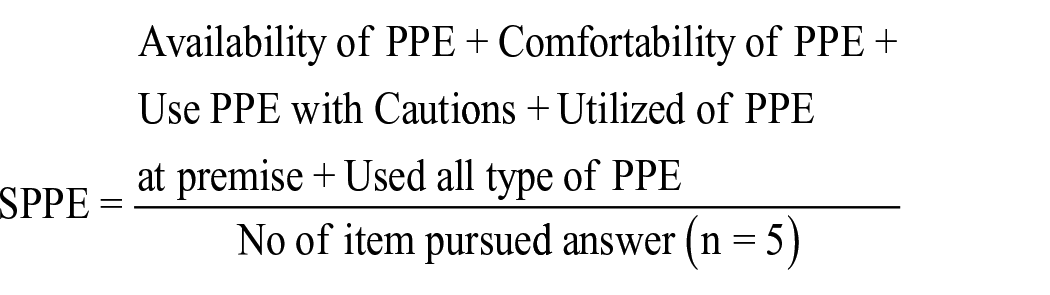
For the quantitative information, data was collected through face-to-face interview methods from SWs. The component of main PPE compliance included (1) PPE utilized during daily work, (2) availability of PPE, (3) comfortability of PPE, (4) PPE utilized with caution, and (5) all types of PPE utilized by SW in daily work. Then, it categorized as safe (proper) if all are used, while if improper or no use of PPE, it is called as at-risk for exposure where they are working according to 25 formula. Then, the safe use of PPE (SUPPE) among SW calculated as
Part II: Qualitative data: KIIs and observations
The aim of this assessment was to apply the quantitative data analysis for triangulation in order to corroborate the conclusions, particularly on PPE compliance. The qualitative data were obtained from eight hospital SWs’ representatives and observation carried out in these hospital before main study, which are described as below.
Key informant interviews
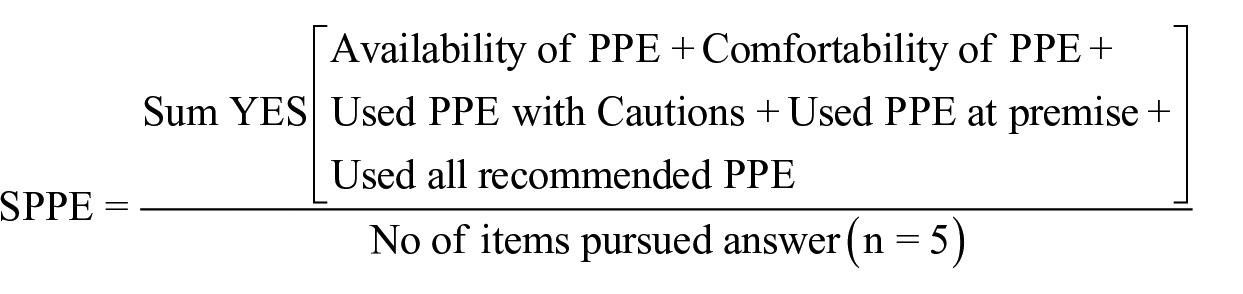
Key informant interviews were SWs’ representatives and IPC focal persons, which were purposive selected based on their work experiences and relevance of their profession within the hospitals. For data saturation, the adequate sample was recruited. Although there is no fixed rule for sample size in qualitative research, some researchers suggest using a sample size of 12–15 participants, especially in relatively homogeneous populations, to achieve saturation. 26 In this study, the number of KIIs was 16, which ranged between the suggested participants. Regarding data collection procedures, face-to-face interview with KIIs was conducted from 1st to 10th April 2023 in eight public hospitals. The assumption is comprised in an in-depth and holistic manner, through the collecting of rich narrative materials through the use of flexible research interviews in accordance with Speziale and Carpenter. 27 To avoid information link, no researchers were beside the work during data collection process. All KIIs have their own data code. A total of KII were interviewed using (YES (1) and NO (0)) on daily utilization of PPE at work by SWs, availability of PPE with SWs, comfortability of PPE with SWs, PPE utilized with caution by SWs and type of PPE with sufficient with SWs. Accordingly, the “number of positive responses (YES (1)) from KIIs” were used as numerator and then divided by “5 items asked” used as denominator according to 25 formula. Then, the safe use of PPE (SPPE) among SW calculated as
Observation checklist for PPE
In order to secure the information from the participants, the observational check list was conducted before main data collection period from 10st to 30th April 2023. It consisted of PPE availability and utilization in the hospital, availability of PPE by hospitals, comfortability of PPE for workers, and utilization of PPE at premise were considered in this assessment. Considering participants response, this observation also consisted of all types of PPE (gloves, mask, safety glasses/shield, apron/gown, and safety shoes). It has been responded as “Enough or Not Enough.” Field observation on utilization of PPE at premises was done on all participants before data collections was narratively discussed.
Data collectors and supervisors
Four data collectors were MSc in environmental health, two of them MPH in public health, two of them MSc in occupational health and safety were recruited for the data collectors. Meanwhile, four supervisors were recruited for the supervision in eight study areas. All data collectors were male.
Data collection procedures
The first shift begins at 7:00 a.m. and ends at 12:00 a.m. (Morning). The second shift begins at 1:00 p.m. and ends at 5:00 p.m. (Afternoon). The third shift (Night) begins at 12 p.m. and ends at 6:00 p.m. (These groups do not work on consecutive days). Therefore, after 2 days, similar procedures were followed for shift three.
Data quality
Standard and structured questionnaires were created to assure the validity of the data. The text was then translated into three local languages based on the preferences of the people and areas. The second step was to hire eight data collectors and four supervisors from relevant professions. Third, proper training for data collectors and supervisors was provided. The fourth is the work to be done on the quantitative data’s reliability and validity analysis to guarantee consistent measurement across time and across the various components in the instrument. 28 The fifth, a pretest was conducted on (5%) of Haramaya General Hospital SW for the clarity, and precision of the questionnaires. Qualitative information through KII and observations also conducted on the same hospitals.
Data analysis
Before being exported to Stata 17 (Created by StataCorp LP, College Station, Texas), the data were coded and exported into Epi data 3.1 (Created by EpiData Association, Odense Denmark). Descriptive statistics was used for categorical data (frequencies, proportions, and percentages) and for continuous variables (mean, median, and standard deviations). To explore the association between PPE compliance and independent variables, multilevel binary logistic regression model analysis was utilized. It was used for individual (Level 1) and hospital (Level 2) and combined variables (level 3). The crude odds ratio (COR) and adjusted odds ratio (AOR) and intra class coefficient (ICC) with a 95% confidence interval (CI) were reported. Candidates for model three logistic regression analysis were independent variables with p-value of 0.20 on the multilevel binary logistic regression analysis at models 1 and 2. To evaluate model fitness, Hosmer and Lemeshow (HL) goodness of fit tests were utilized. If the HL test results in a small Chi-square value with a bigger p-value more than 0.05, this suggests a successful logistic regression model fit and acceptable. In addition, multicollinearity was tested through variance inflation factor (VIF), which measures how much an independent variable’s variance is influenced was used with a cut-off point of 10. 29 Finally, only variables with a p-value of 0.05 were considered statistically significant. For those significant at multivariable were moved to structural equation modeling in order to correlate the associated factors on compliance of PPE practice. Regarding data analysis method and interpretation for the qualitative data, qualitative data was transformed into quantitative data through a process counting the frequency of each code, theme, and category of items. Then it was analyzed using simple excel Microsoft 2019 version (Created by Microsoft Corporations and released on September 24, 2018).
Result
Sociodemographic characteristics
Out of 809 SW, 729 (90.11%) of them were responded. The majority of them were female (98.49%), 24–35 years old (48.01%), married (69.41%), cleaners (93.14%), permanents (97.26%), and shift ones (49.38%). The mean ± SD for age, work experience, educational status, and monthly income salary were 34.35 ± 7.60, 6.65 ± 6.36, 6.78 ± 2.51, and $36.32 ± 6.68 (1982 ± 365ETB), respectively (Table 1).
Sociodemographic status of SWs in selected public hospitals in Eastern Ethiopia, 2023.

Key: Level I*(20.15 = 1100 ETB); level V** (2344 ETB), salary classification based on national job evaluation and grading (JEG), 2019 (Where 1 Dollar ($)) = 54.58 ETB, August, 2023.
Compliance of PPE practice
The prevalence of compliant and noncompliance with PPE practice among SWs in studied public hospitals in eastern Ethiopia were 46.78 (95% CI: 43.11%–50.47%) and 53.22% (95% CI: 50.19%–57.11%), respectively. The reason for the noncompliance were unavailability uncomfortability, used without cautions as well as didn’t used at premise all types of PPE, which accounted about 49.65% (Table 2). Moreover, safe use of PPE (SPPE) among SW calculated as
Compliance with personal protective equipment among SW in hospitals, 2023.

Used to calculate compliance or proper PPE (safe) utilization of among SWs.

KII and observation
The SWs’ representatives and IPC Focal Persons (KIIs), reported that all gloves, apron/gowns, masks, safety goggle/shield, safety boots, and head covers did not exist all time during our work. According to their feedback, 56.25% of the SWs were didn’t use PPE utilized during daily work due to unavailability of PPE, uncomfortability of PPE as well as due to they didn’t utilized PPE with caution. In addition, the field observation indicated that out of 729, 329 (45.13%) didn’t use during study period (Table 3).
Compliance of PPE practice assessment by sanitary workers’ representatives and infection prevention and control focal persons (KIIs) and field observation in hospitals, 2023.

Proper or safe PPE reported by 16 KIIs for the 5 items of PPE questions.
According to 25 formula, safe used PPE (SPPE) utilized calculated as

KIIs were reported that it was proper PPE practice by SWs within hospital. That means 10 KIIs out of 16 reported that unsafe or improper PPE was practiced within eight hospitals among SWs. **Stands observation on 729. During the observation period, 329 SWs were used at the time of observation that was used in calculation that has to be either proper or improper use of PPE.
Perception of SWs towards PPE utilization
The internal validity and the median were tested and calculated for the severity of PPE, barriers of PPE, benefits of PPE, clue to action of PPE, self-efficacy of PPE, which is presented in the following table. The overall perception of SW toward PPE utilization in selected public hospitals in study areas was 74.62% (95% CI: 71.30–77.74). Of this, perceived severity of PPE, barriers of PPE, benefits of PPE, clue to action of PPE and self-efficacy of PPE were 74.21%, 72.15%, 75.17%, 74.49%, and 77.09%, respectively (Table 4).
Perception of sanitary workers toward PPE in selected public hospitals 2023.

Compliance with PPE and associated factors
A total of 20 associated factors were selected for candidates of multilevel multivariable logistic regression at binary logistic regression stage for those statistically significant. Accordingly, the multilevel multivariable logistic regression report shows that higher 8 h/day reducing the compliance of PPE 33% times (AOR = 0.67, 95% CI: 0.35–1.09) as compared to their counter parts. SWs of those dissatisfied with work environment dropping the compliance of PPE is 59% times (AOR = 0.39, 95% CI: 0.17–0.86) as compared to their counterparts. On the other hand, daily supervision was highly associated with PPE compliance, and increasing compliance likelihood by over 13 times (AOR = 13.71, 95% CI: 3.18–59.11). In the same manner, had good IPC practice increasing compliance probability by 11.34 times (AOR = 11.34, 95% CI: 1.97–65.24) as compared to their counterparts. Also, SWs of those perceived as of less severity of PPE increasing compliance likelihood by 1.46 times (AOR = 1.46, 95% CI: 0.85–2.59) as compared to their counterparts (Table 5).
Model 3 multilevel binary logistic regression models for predictors of compliance with PPE among SWs in public hospitals, EE, 2023.

At model 3: *Statistically significant at 0.05; **Statistically significant at 0.20; HL goodness X2 = p-value = 0.1204, indicating it acceptable , b/s > 0.05; VIF: 2.98, indicating it is acceptable model b/s it is less than 10; ICC: 26.66% of the variance was between SWs among public hospitals ; LR (Likelihood ration): 0.473, indicating the deviance of model 3 from the model 0 was 0.473; Sensitivity = 78.99% indicating that the model’s ability predicted 78.99% of true positive; Specificity = 88.11% indicating that the model’s ability predicted 78.99% of true negative.
Correlation of PPE complaint and associated factors
The SEM model showed that daily supervision (β = 0.06, 95% CI: 0.02–0.12), perceived to self-efficacy of PPE (β = 0.29, 95% CI: 0.23–0.36), perceived to cue to action of PPE (β = 0.27, 95% CI: 0.20–0.34), perceived to benefits of PPE (β = 0.29, 95% CI: 0.25–0.33), and perceived to barriers of PPE (β = 0.13, 95% CI: 0.07–0.19) were positively correlated with PPE compliance among SW (Table 6).
Structural equations modelling of compliance with PPE (endogenous variable) and independent variables (exogenous) among SW in public hospitals, Ethiopia, 2023.

Significant value of p-value < 0.05 for independent variables on PPE compliant.
OIM: observed information matrix; Model fit measured by correlation between dependent and its prediction (mc) = 71.79%; Bentler–Raykov squared multiple correlation coefficient (mc2) = 51.55%.
Discussion
The current study found that noncompliance with PPE practice among SW in selected public hospitals was more than half percent. This finding is apparently contradicting the principle of basic standard precaution of equipment with an appropriate use, which is also a practice required for the basic level of IPC practice within healthcare facilities. 30 The other study found that such type of nonadherence with PPE practice has an implication of increased risk of infection among SWs during their daily works. 19 When it compares and contrasts, it was lower than the finding (88.60%) obtained from Tikur Anbasa hospitals, Ethiopia 30 and 56.4% found from South Ethiopia. 12 The discrepancy might be due to research methodology, level of study conducted by the research team, variation of hospital leaders’ commitments toward PPE, and attention of individual on PPE utilization.
Regarding type of PPE utilized, the current study found that gloves (40.7%) was the first rank utilized by the SWs and followed by safety goggle/face shield (21.6%). However, small percentage of SWs (4.4%) working in critical patients’ rooms were used in all kinds of PPE during their daily working time (Table 3). Similar studies found that safety shoes/boots were available for and used by 35.6% of the workers. Other PPE, including thick gloves, caps, and face masks, were provided and used by less than one-third of the workers. 31
The study identified that noncompliance of PPE utilization was reported by SWs during study period. Accordingly, the study found that 24.97% of SWs reported that they didn’t use PPE properly because they were not comfortable with the work conditions. The other study also found that the major difficulty in using full set of PPEs was identified as uncomfortable while doing work. 32 This finding also aligns with a study done in Egypt in 2020 which found discomfort and lack of knowledge using PPE as the main reasons of not using PPE. 33 The study found that 23.31% of SWs didn’t use it as the result of negligence, which is also among the other attributed factors for nonadherence to PPE among SWs. The current study was also higher than the other studies conducted in South Ethiopia, where only 43.10% PPE was unavailable, only 44.00% of PPE was accessible, and only 43.5% of the management supported for safety device practices. 34 The discrepancy between studies conducted in central Ethiopia might be due to the difference of study where the present study was supported by observational checklist, whereas the previous was not.
But, according to National School of Council/NSC, 25 adherence or proper use of PPE means that it is the sum of daily use of PPE properly, availability of PPE, comfortability of PPE, use with caution, and all types of PPE during work time by the workers.
On the other hand, the KIIs, reported that all gloves, aprons/gowns, masks, safety goggle, or shield, safety boots, and head covers did not exist all the time during our work. Of these KIIs, code 1, code 2, code 5, and code 8 reported the same opinion.
Not all SWs did not take PPE utilization training on room cleaning, during medical waste handling, management, or ways to prevent waste-based disease since we began working in the hospital, because the majority of management leaders and clinical leaders did not focus on waste segregation, generation, handling procedures, or management, instead focusing solely on hospital care service. In addition to this they reported as: “In addition, there is no formal PPE training for the newly hired workers as the result they are exposing by different occupational risk within the hospitals
According to their feedback, 56.25% of the SWs didn’t use PPE that were utilized during daily work due to unavailability of PPE, uncomfortability of PPE as well as due to fact that they didn’t utilize PPE with caution. In addition to this information, as SWs representative codes 1, 3, 5, and 7, similarly claimed that
As we know, SWs are considered ourselves to be slaves in the hospital since they wore our existent PPE as well as other uniform with open space without maintaining our privacy due to a lack of contained place for cloth as well as PPE. Moreover, they reported as “our staffs [SWs] have reliable sterile and disinfected equipment ready for use for average ⩾ 5 days per week or every day, but not of sufficient quantity.” Also, the current PPE utilized by our workers are not comfortable and sufficient This demonstrates that the hospital pays little attention to sanitary staff for those working sanitary working including medical waste management.”
In addition, the field observation indicated that out of all participants, 45.13% didn’t use PPE during the study period. Therefore, the overall current findings on compliance of PPE among the SWs apparently contradicts the principle of standard precaution, which is a practice required for PPE with an appropriate use including the other basic level of standard precaution of IPC procedures. 30 In addition to this field observation, the study revealed that the pooled noncompliance was due to being unavailable and uncomfortable, and those who didn’t utilize PPE at the premises among SW was 49.65%. Regardless of its percentage, the current study is consistent with 61.90%, where the findings of a majority of them failed to use it because of being unavailable, uncomfortable, and those didn’t utilize PPE at the premises. 12
The multilevel multivariable analysis model shows that those who had daily supervision were more likely to increase the level of PPE compliance by 13.71 times as compared to those who didn’t get supervision. In addition, SW of those who had good IPC practice were more likely to increase the level of PPE compliance by 11.34 times as compared to those who practice poor IPC. The study also found that the unfavored perception of SW toward PPE utilization during their daily work activities in selected public hospitals was almost 75.00%. Of this, the unfavored perception toward the severity of PPE among these groups was 74.00%. According to the final model analysis, those perceived unfavored severity of PPE were more likely to increase the level of PPE compliance by 1.46 times as compared to those perceived and favored about the severity of PPE.
The statistical model finding also shows that those SW who perceived and unfavored PPE as obstacle were more likely to have low adherence to PPE practice than those who perceived and favored PPE barriers. This study is slightly similar to the study found from other parts of Ethiopia, which stated that those perceived and favored to barrier PPE were found to be significant predictors of good PPE utilization as compared to less perceived workers. 35 Despite the fact that both studies demonstrated that severity is a strong predictor of excellent PPE usage, the disparity may be attributed to the work setting. In this study, those who perceived PPE usage as unfavorable,inspite of the advantages or the benefits from PPE were more likely to have low adherence to PPE practice than those who perceived this as favored to benefits from PPE. The study found that individuals who perceived unfavored to cue to action of PPE were less likely to have adherence to PPE practice than those who experienced favor.
In addition, when compared to those who had perceived favored self-efficacy of PPE, those perceived unfavored to self-efficacy of PPE were more likely to have lower adherence to PPE practice. That is, the lower the self-efficacy of PPE, the lesser the adherence to PPE practice. In contrast, this finding is comparable to a study conducted inside a country, which indicated that individuals with higher perceived self-efficacy were more likely to use PPE during their work activities. 35 Therefore, the current study in light to the previous, where both studies verified that self-efficacy is a strong predictor of excellent PPE usage, despite of fact that the disparity may be attributed to the work environment as well as sociodemographic characteristic of the participants.
Regarding, the four multilevel models, multilevel of Model 1 performed at individual level revealed that the compliance of PPE practice variance between SW from one hospital to other hospitals was 15.35%. On the other hand, it means that individual factors or variables were responsible for the variation of compliance of PPE practice within SW was 84.65%. In the same manner, Model 2 conducted at hospital level showed that the variance of compliance of PPE practice between hospitals was 17.59%. This indicated that 82.41% of the variance was attributed due to hospitals’ variables. Model 3 demonstrated at individual and hospital level found that the overall compliance of PPE practice variance between SW among hospitals was 26.66%, that indicated 73.66% of the variance within SW was attributed to both hospital and individual variables.
The final model, the SEM, demonstrates that the level of PPE compliance was negatively impacted by the negative attitude, work dissatisfaction, and poor IPC practices of SW. This suggests that when these factors decline, so too will the likelihood of PPE practice compliance among SW. In contrast, conduct supervision, perceived to self-efficacy of PPE, perceived to cue to action of PPE, perceived to benefits of PPE, and perceived to barriers of PPE were positively correlated with PPE compliance among SW. Regarding goodness of model fit, the correlation between complaint with PPE and determinants associated factors (mc) was 71.79%. Therefore, the overall correlation of compliance of PPE practice and associated factors due to individuals and hospital variables was more than 70%. The model also found that the Bentler–Raykov squared multiple correlation coefficient (mc2) was 51.55%, which indicate that the overall equation level goodness of model fit for SEM was more than half percent.
Strengths and limitations
Strengths of the study
Despite the fact that the study was a centered cross-sectional study, it has certain strengths: The first one is, the current study is a scientific foundation for compliance of PPE among SWs within public hospitals in eastern Ethiopia within a short period of time that helps them to improve the current status of PPE practice. Second, the study employed a high sample size as compared to other studies conducted in Ethiopia. This shows that the larger the sample size, the more accurate the average values will be that helps researchers identify outliers in data. Third, the current study conducted on the majority of the participants were hospital cleaners, which give strong evidences on PPE compliance among hygiene and sanitation workers in order to improve the current status of PPE practice within the public hospitals even at national level. Fourth, the study only by providing complete and open information on all components of a cross-sectional study can the potential value of its findings and the risk of bias be effectively appraised. Fifth, the setting, locations, including recruiting times, and data collecting were all reported within this article that helps future studies in order to compare and contrast their findings with the current study. Sixth, the qualifying criteria, as well as the sources and procedures of participant selection were well discussed. Seventh, statistical procedures, multilevel, was performed to estimate the variation between clustering of subjects (SWs) within clusters of higher-level units(hospitals); and also, structural equation modeling was done to know the correlation, magnitude of the independence on PPE compliance, which gives strong evidence on statistical analysis inline to PPE compliance.
Limitation of the study
There are various limitations to this study that should be mentioned. Because the data in this study were cross-sectional, a causal association could not be demonstrated. Future research should use a prospective design to give more solid proof of causation between noncompliance with PPE and getting an occupational disease. There is scant data on the long-term impacts of not wearing PPE and the effects of chemical and blood-borne pathogen exposure on workers’ health. Understanding the potential exposures and effects associated with PPE noncompliance can help local, state, and federal governments recognize the need of stressing PPE compliance in this occupation.
Conclusion
The current study revealed that improper PPE practices among SW in selected public hospitals in eastern Ethiopia was common due to a lack of PPE, discomfort with PPE, carelessness, and neglect with PPE. The study found that those who had occupational stress, job dissatisfaction, poor knowledge, and poor IPC practice were major risk factors for low PPE adherence. Moreover, this also found that perceived barrier of PPE, felt less advantages or benefits from PPE, perceived less cue to action of PPE, and lower perceived self-efficacy of PPE were the strongest predictors of PPE compliance. Thus, the study advised that maintaining a sufficient supply of PPE, increasing awareness of PPE utilization, and providing daily supervision are all necessary to improve the level of PPE compliance within the selected hospitals. Moreover, it suggested that this is the first study on PPE compliance among SW in public hospitals in Ethiopia, including study areas, it will hopefully serve as a point of reference for the policymakers particularly in public hospitals including healthcare facilities.
Supplemental Material
sj-pdf-1-smo-10.1177_20503121241308303 – Supplemental material for Compliance and associated factors of personal protective equipment among sanitary workers in selected public hospitals, Eastern Ethiopia: A cross-sectional study design
Supplemental material, sj-pdf-1-smo-10.1177_20503121241308303 for Compliance and associated factors of personal protective equipment among sanitary workers in selected public hospitals, Eastern Ethiopia: A cross-sectional study design by Sina Temesgen Tolera, Tesfaye Gobena, Abraham Geremew, Elka Toseva and Nega Assefa in SAGE Open Medicine
Footnotes
Acknowledgements
We acknowledged Haramaya University College of Health and Medical Sciences for the material supporting for our study.
Authors contributions
STT, TG, NA, AG, and ET contributed on conceptualized and developed the proposal. STT and TG wrote methods section and approved by NA, AG, and ET. STT, TG, NA, and AG supervised the field. STT, TG, and NA conducted data analysis. STT, AG, and ET wrote the result. STT, TG, and NA contributed on discussion and conclusion writing up.
Declaration of conflicting interests
The author(s) declared no potential conflicts of interest with respect to the research, authorship, and/or publication of this article.
Funding
The author(s) received no financial support for the research, authorship, and/or publication of this article.
Ethics approval
Ethical approval for this study was obtained from Haramaya University College of Health and Medical Sciences (CHMS), Institutional Health Research Ethics Review Committee [IHRERC] (Ref: IHRERC/064/2023).
Informed consent
Written informed consent was obtained from all subjects before the study.
Trial registration
Not applicable.

Supplemental material
Supplemental material for this article is available online.
References
Supplementary Material
Please find the following supplemental material available below.
For Open Access articles published under a Creative Commons License, all supplemental material carries the same license as the article it is associated with.
For non-Open Access articles published, all supplemental material carries a non-exclusive license, and permission requests for re-use of supplemental material or any part of supplemental material shall be sent directly to the copyright owner as specified in the copyright notice associated with the article.
