




Abstract
Background:
Clostridioides difficile infection (CDI) has been linked to over 200,000 cases of illness in hospitalized patients and over 20,000 deaths annually. Up to 25% of patients with an initial CDI episode will experience recurrent CDI (rCDI), which most commonly occurs in the first 8 weeks following antibiotic therapy. In patients with first or multiple rCDI, infection, the microbiome is similarly disrupted, which highlights the challenges of using antibiotics alone while underscoring the need for microbiome restoration regardless of the number of recurrences. In this systematic review, we describe the role of the gastrointestinal microbiome in CDI, and systematically review fecal microbiota spores, live-brpk (VOWST™; VOS for Vowst Oral Spores) for prevention of recurrence in rCDI.
Methods:
The PubMed database was searched using “recurrent Clostridioides difficile infection” AND (SER-109 OR VOS) and limited to clinical trials. The search yielded 7 results: 3 articles describing 3 clinical trials (two Phase 3 trials (ECOSPOR III and ECOSPOR IV) and one Phase 2 trial (ECOSPOR)), 1 describing follow-up of ECOSPOR III, 1 describing a post hoc analysis of comorbidities in ECOSPOR III, and 2 describing health-related quality of life in ECOSPOR III.
Results:
Compared with placebo, VOS following standard-of-care antibiotics for CDI significantly reduced risk of recurrence at 8 weeks (relative risk, 0.32 (95% CI: 0.18–0.58); p < 0.001; number needed to treat: 4) with a tolerable safety profile; rCDI rates remained low through 24 weeks. The disrupted microbiome, secondary to/exacerbated by antibiotic treatment, was rapidly (i.e., Week 1) restored with VOS. Compared with placebo, VOS demonstrated greater improvements in health-related quality of life.
Conclusions:
Clinical care of patients with rCDI now includes Food and Drug Administration-approved therapeutics to address microbiome restoration. Clinical trial evidence supports use of VOS following antibiotics and importance of microbiome restoration in rCDI.
Introduction
Clostridioides difficile infection (CDI) is an urgent public health threat that has been linked to over 200,000 cases of illness in hospitalized patients and over 20,000 deaths annually.1,2 Rates of community-associated CDI have also risen over the past decade from an incidence of 52.88 per 100,000 people in 2011–2012 to 55.9 per 100,000 people in 2021. 3 This rise in incidence has translated to an increase in hospitalizations in the US for community-associated CDI, with a rate of 17.1 per 100,000 persons in 2011 to 21.7 per 100,000 persons in 2017. 2
Moreover, up to 25% of patients with an initial CDI episode will experience recurrent CDI (rCDI), which most commonly occurs in the first 8 weeks following antibiotic therapy.4,5 Patients with rCDI are more likely to experience subsequent episodes than those with an initial CDI episode, which is often attributed to persistent microbiome disruption.4,6 Patients with rCDI critically have significantly higher morbidity and mortality rates than those with primary CDI. 7 Additionally, rCDI has a negative impact on health-related quality of life (HRQoL), with over 40% of patients believing they would never be rid of CDI symptoms. 8 Patients bear a substantial economic burden, primarily driven by repeated CDI-related hospitalizations, and over 80% of patients with rCDI had a CDI-related hospitalization within 12 months after their first recurrence. 9
The treatment of all CDI episodes requires the use of standard-of-care (SOC) antibiotics to resolve active infection. Guideline recommendations for treating an initial episode of CDI or a first or second episode of rCDI include fidaxomicin (200 mg twice daily for 10 days or 200 mg twice daily for 5 days, then once every other day for 20 days) or oral vancomycin (125 mg 4 times daily for 10 days or in a tapered/pulsed regimen).10,11 However, these agents do not eradicate C. difficile spores, which are capable of rapidly germinating into toxin-producing vegetative bacteria, resulting in recurrence. 12 Moreover, antibiotics do not correct for underlying disrupted microbiome secondary to the inciting antibiotic and its associated consequences. 13 Recent data show that the microbiome is similarly disrupted in patients with first or multiple rCDI; thus, highlighting the challenges of using antibiotics alone while underscoring the need for microbiome restoration regardless of the number of recurrences. 14 Several microbiome-based therapies have thus been utilized as adjunctive therapies to aid in the prevention of recurrence, with live biotherapeutic products (LBPs) serving as the first US Food and Drug Administration (FDA)-approved class of agents for this purpose.
In this systematic review, we aim to highlight the role of the microbiome in CDI development and recovery and discuss newly approved microbiota-based LBPs, with a specific focus (using a systematic approach) on fecal microbiota spores, live-brpk (VOWST™; formerly SER-109 and hereafter referred to as VOS for Vowst Oral Spores).
Pathophysiology and diagnosis of CDI
C. difficile infection occurs when the C. difficile bacterium produces enzymes and toxins that disrupt the integrity of the gut barrier and result in loss of functionality, ultimately leading to severe diarrhea, mucosal injury, and colitis.10,15,16 C. difficile exists in either a spore or vegetative form; the former serves as the major transmission vector following ingestion and is critically resistant to alcohol-based disinfectants. 16 The primary physiological defense against CDI is a person’s innate intestinal microflora, such as spore-forming Firmicutes, which modulates the bile acid pathways that play an integral role in host defense against colonization with pathogens such as C. difficile. Antibiotic-mediated disruption of the gastrointestinal microbiota leads to changes in microbe-associated metabolites that are favorable to the C. difficile life cycle.13,17,18 For example, loss of beneficial spore-forming Firmicutes can lead to an increase in the levels of primary bile acids (e.g., cholic acid and chenodeoxycholic acid), which generally stimulate C. difficile spore germination, and a decrease in the levels of secondary bile acids (e.g., deoxycholic acid and lithocholic acid), which generally inhibit vegetative C. difficile replication and growth.16,19
Risk factors for CDI encompass a variety of factors that influence the host immune system and/or disrupt gastrointestinal microbiota including cumulative antibiotic exposure, older age (>65 years), comorbidities (e.g., immunosuppression, inflammatory bowel disease, or chronic kidney disease), proton pump inhibitor use, and most significantly, a history of CDI recurrence.16,19 Prior hospitalization is a key risk factor for rCDI, as the rate of recurrence is consistently higher in patients with healthcare-associated CDI versus community-associated CDI. 2
C. difficile infection diagnosis is based on the presence of compatible symptoms (diarrhea, abdominal pain, loss of appetite, fever, and weakness) and a positive stool test for C. difficile toxin(s) A and/or B.10,15,16 C. difficile toxin testing, generally using at least two tests, is recommended in patients with a new onset of three or more unformed stools over 24 h.10,15 In clinical practice, testing may include the use of (a) enzyme immunoassays (EIAs), which can detect C. difficile toxins quickly, although false negatives may occur depending on specimen handling, (b) nucleic acid amplification testing such as polymerase chain reaction (PCR), which can confirm that a toxigenic strain is present, but not that the toxin is being produced, and (c) glutamate dehydrogenase immunoassays that detect an enzyme produced by all isolates of C. difficile, but does not distinguish between toxigenic and nontoxigenic strains.10,15 Thus, an increasing number of guidelines and experts recommend two-step testing with molecular testing (glutamate dehydrogenase or PCR) and toxin-production detection (EIA) to increase the sensitivity of case finding and to differentiate between colonization of C. difficile versus active infection.10,15
Therapeutic strategies for the prevention of rCDI
Because SOC antibiotic therapy for rCDI is often ineffective for correcting the gut microbiota dysbiosis underlying recurrence, restoration of host defenses with microbiome therapeutics following the use of SOC antibiotics has emerged as a promising treatment strategy to break the cycle of recurrence.13,17,18 Current treatment guidelines for patients with three or more episodes of CDI unresponsive to SOC antibiotics include fecal microbiota transplantation (FMT).10,11,15 FMT involves the transfer of stool from a screened healthy donor to a recipient via colonoscopy, enema, or duodenal infusion.10,15 However, FMT is not FDA-approved, preparation and administration of FMT is not standardized, and cases have been reported of FMT being associated with hospitalization and death due to the transmission of pathogenic agents, including drug-resistant bacteria.20,21 Thus, there had been a need for standardized, effective, and safe products to prevent future CDI recurrences. 13
There are two types of FDA-approved therapies for this purpose with differing underlying strategies: administration of a toxin-targeting monoclonal antibody or administration of gastrointestinal microbiota.22,23 Bezlotoxumab (Zinplava™), a monoclonal antibody that binds to C. difficile toxin B, was the first therapeutic developed to fulfill this unmet need and was approved by the FDA for adults in 2016 and children (⩾1 year of age) in 2023. 23 The first microbiota-based LBPs were approved for CDI management in 2022 and 2023 and are indicated for the prevention of recurrence of CDI in adult patients with rCDI following antibacterial treatment for rCDI.22–24 LBPs are defined by the FDA as biological products which are not vaccines and which contain live organisms intended for the prevention, treatment, or cure of a disease or condition. 25 Critically, neither bezlotoxumab or either LBP has activity against C. difficile bacteria, and therefore, treatment of rCDI with antibiotics is required.22–24
The two FDA-approved LBPs are fecal microbiota, live-jslm (REBYOTA™; formerly RBX2660; now RBL), and fecal microbiota spores, live-brpk (VOWST™; formerly SER-109; now VOS) (Table 1).11,15,26,27 RBL was approved first in November 2022; it is considered a whole-stool product and is administered via rectal enema. 24 In contrast, VOS is about 1% of the total mass of donor materials following a manufacturing process that yields a product enriched with purified Firmicutes spores administered orally in a capsule formulation. 28 VOS was approved in April 2023 and will serve as the focus for the remainder of this review. 22

CDI: Clostridioidies difficile infection; FDA: US Food and Drug Administration; FMT: fecal microbiota transplantation; LBP: live biotherapeutic product; NR: not reported; RBL: fecal microbiota, live-jslm (Rebyota); SOC: standard-of-care; VOS: Vowst Oral Spores (formerly SER-109).
VOWST™ Oral Spores
VOS is an FDA-approved orally administered human donor-derived microbiome therapeutic containing Firmicutes bacterial spores indicated to prevent the recurrence of CDI in adults following antibacterial treatment for rCDI.22,31 The proposed mechanism of action of the Firmicute spores in VOS is modulation of the conversion of primary bile acids to secondary bile acids in the gastrointestinal tract, resulting in the restoration of host defenses against bacterial pathogens and inhibition of C. difficile germination and growth (Figure 1).12,22,31

VOS is manufactured in accordance with Good Manufacturing Practice regulations and uses samples from healthy human donors who have completed extensive health examinations, laboratory testing, and health-related questionnaires. 31 Donor samples undergo a thorough series of manufacturing steps, including ethanol-based purification, to remove 99% of fibers and fecal solids and isolate Firmicute spores. 34 These rigorous manufacturing steps also rapidly inactivate potential bacterial, viral (including SARS-CoV-2), parasitic, and fungal pathogens, thereby mitigating the risk to patients beyond donor screening alone, while providing beneficial Firmicutes to reduce the risk of rCDI.28,34 Because Firmicutes spores are resistant to oxygen, heat, and gastric acid, they can be administered orally with a low pill burden and can be stored at room temperature.31,34
Product labeling for VOS instructs patients take a single dose of a laxative (i.e., 10 oz of magnesium citrate or, in patients with renal impairment, 250 mL GoLYTELY) on the day before and at least 8 h prior to taking the first dose of VOS to wash out any residual antibiotics that may remain in the gastrointestinal tract, which could otherwise inactivate VOS dose species.12,22 VOS is taken as a single daily dose of 4 oral capsules on an empty stomach for 3 consecutive days within 2–4 days following the completion of SOC antibiotic treatment for rCDI.12,22 Each capsule of VOS contains between 1 × 10⁶ to 3 × 10⁷ Firmicutes spore colony-forming units (CFUs) in 92% ± 4% (w/w) glycerol in saline. 22
Systematic review search methods
A systematic review was conducted with the aim of evaluating and summarizing all clinical trial evidence for the use of VOS. The PubMed database was searched for clinical trials using the terms “recurrent Clostridioides difficile infection” AND (SER-109 OR VOS) from inception. The search, conducted by authors in December 2023, yielded seven results; all seven results were included in this review, and no articles yielded from the search were excluded. Results included three articles describing the primary results of three clinical trials (the Phase 3 ECOSPOR III and ECOSPOR IV trials and the Phase 2 ECOSPOR trial),12,32,35 one article describing an extended follow-up of ECOSPOR III, 33 one article describing a post hoc analysis of comorbidities in ECOSPOR III, 36 and two articles describing HRQoL outcomes (including 1 validation study) in ECOSPOR III37,38 (Table 2). This review was conducted in accordance with the PRISMA checklist/guidelines (Figure 2). All data are from published materials that are referenced, and there are no new samples or models. The revised Cochrane risk-of-bias tool for randomized trials (RoB 2) was used to analyze bias in the Phase 3 ECOSPOR III and the Phase 2 ECOSPOR clinical trials. 39 The Risk of Bias in Non-randomized Studies—of Interventions (ROBINS-I) assessment tool was used to assess bias in the ECOSPOR IV clinical trial. 40 All authors reviewed the search results and individual articles independently for relevant data.
Results of PubMed search.

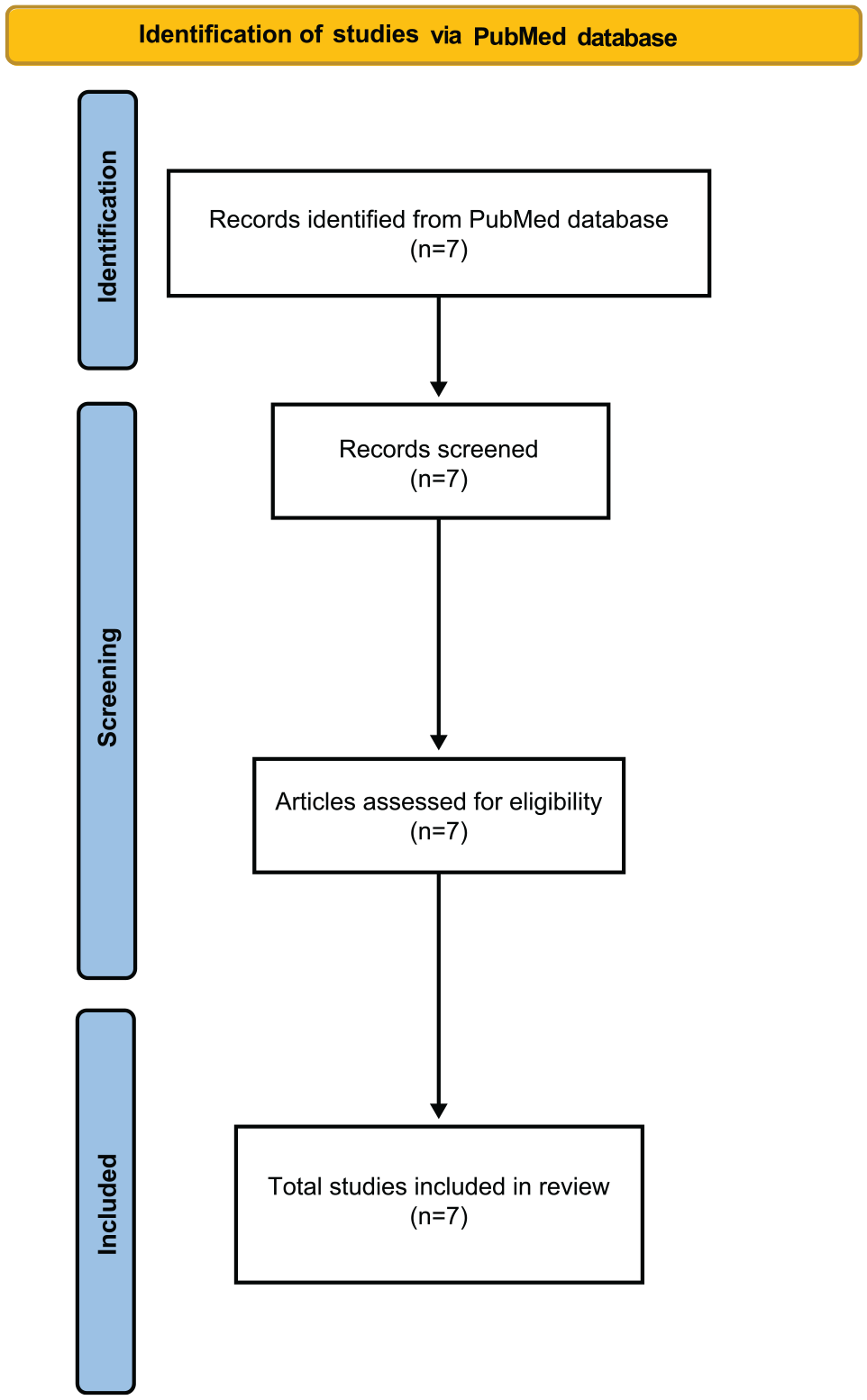
PRISMA flow diagram of study selection.
Results
Study design and patient population
Eligibility criteria and efficacy/safety endpoints across the identified clinical trials were similar (Table 3). In the pivotal, randomized, double-blind, placebo-controlled, Phase 3 ECOSPOR III clinical trial, patients with an established diagnosis consistent with rCDI, a positive C. difficile toxin test, and who completed a course of SOC antibiotics were randomized to either VOS (approximately 3 × 10⁷ spore CFUs) or identical-appearing placebo (92% glycerol, 8% normal saline (0.9%), and no product spores or nonspore solids) administered as four matching capsules taken orally once daily for three consecutive days, and stratified according to age (<65 or ⩾65 years) and prior antibiotic therapy (vancomycin or fidaxomicin) for rCDI. The primary efficacy objective was to demonstrate the superiority of VOS over placebo in reducing the rate of rCDI up to 8 weeks after dosing. 12 Other clinical outcomes evaluated in this trial included rate of CDI recurrence (for up to 24 weeks) and safety, accompanied by bioanalytical endpoints, such as microbiome engraftment and changes in fecal metabolomic profile.12,22 The open-label, single-arm, Phase 3 ECOSPOR IV trial enrolled patients into two cohorts (Cohort 1: rollover patients from ECOSPOR III who had on-study CDI recurrence; Cohort 2: de novo patients with ⩾1 CDI recurrence); all patients received VOS (approximately 3 × 10⁷ spore CFUs) via four capsules taken orally once daily for three consecutive days. 32 Endpoints evaluated in ECOSPOR IV were safety/tolerability and cumulative rates of rCDI through Week 24 following initiation of treatment. 32 Patients in the randomized, placebo-controlled ECOSPOR Phase 2 study for VOS had ⩾3 episodes of CDI within 9 months and were randomized (2:1) to receive a single dose of four oral capsules of VOS (approximately 1 × 10⁸ CFUs) or placebo; patients were stratified by age (<65 and ⩾65 years). Study endpoints included rate of diarrhea (Day 1 postdose through Week 8)/rCDI and safety (through Week 24 after initiation of treatment). 35 In ECOSPOR IV, batches from different single donors were used; information on batches and lots for ECOSPOR and ECOSPOR III was not available.41,42 Results of the RoB 2 and the ROBINS-I assessment tools indicate that all three clinical trials were judged to be at low risk of bias when assessing rates of recurrence of CDI.

CDI: Clostridioides difficile infection; EIA: enzyme immunoassay; PCR: polymerase chain reaction; VOS: Vowst Oral Spores (formerly SER-109).
Recurrence of CDI was defined as three or more unformed stools per day for two consecutive days, any positive result of a C. difficile stool test for toxin production (i.e., EIA for toxin or cell cytotoxicity neutralization assay or a PCR assay for detection of a toxin gene from a local or central laboratory), and a response to CDI antibiotic treatment.
Characteristics of patients enrolled in VOS clinical trials were reflective of those with greatest risk of recurrence.16,19 Most patients enrolled across these three clinical trials were White, female, aged ⩾ 65 years, and had a history of multiple CDI recurrences (Table 4).12,32,35 The SOC antibiotic was selected by the investigator, with vancomycin being the most common antibiotic regimen administered for the most recent qualifying episode of CDI (Table 4).12,32,35 A post hoc analysis of the ECOSPOR III trial reported that patients who received VOS in ECOSPOR III had a mean (standard deviation) Charlson Comorbidity Index (CCI) score of 4.1 (2.4); 32.4% had cardiovascular disease, 18.1% had malignancy, and 14.8% had renal impairment or failure. 36 Additionally, 13.7% of patients in ECOSPOR III took non–CDI-targeted antibiotics after treatment with VOS or placebo and 40.7% of patients were taking acid suppressive medications at baseline (proton pump inhibitor, n = 45; H2-receptor antagonists, n = 24; proton pump inhibitors with H2-receptor antagonists, n = 5). 36 Patients in ECOSPOR IV had a mean (standard deviation) CCI score of 3.8 (2.2); 21.3% had neoplasms (i.e., having history of malignancy or stable on maintenance chemotherapy) and 9.5% had chronic kidney disease. 32 For all patients in the ECOSPOR III trial and most patients (73.6%) in ECOSPOR IV, diagnostic criteria for CDI recurrence were evaluated by toxin-based EIA.12,32 Conversely, most patients (80.9%) in the ECOSPOR Phase 2 study were diagnosed with rCDI by a PCR algorithm. 35

CDI: Clostridioides difficile infection; PCR: polymerase chain reaction; RCT: randomized controlled trial; VOS: Vowst Oral Spores (formerly SER-109).
Rollover cohort from ECOSPOR III.
De novo patients.
Efficacy
Efficacy was assessed across all three clinical trials based on the rate of rCDI and recurrence-free rates at Weeks 8 and 24, respectively (Table 5). The ECOSPOR III trial met the primary endpoint of superiority of VOS compared with placebo in reducing the risk of CDI recurrence through Week 8 after initiating therapy (relative risk reduction of VOS following antibiotic therapy for CDI vs placebo following antibiotic therapy for CDI: 0.32 (0.18–0.58); p < 0.001). 12 Corresponding absolute rates of rCDI at Week 8 were 12% for VOS versus 40% for placebo; absolute risk reduction was 28% with a number needed to treat for VOS of 4. 12 A similarly low rate of rCDI by Week 8 (9%) was reported for patients who received VOS in the open-label ECOSPOR IV trial. 32 Results from the longer follow-up period of ECOSPOR III demonstrated that the reduction in CDI recurrence at Week 8 was maintained through Week 24 after initiation of therapy (relative risk (95% CI) of VOS vs placebo: 0.46 (0.30–0.73)). Corresponding absolute rates of rCDI at Week 24 were 21% for VOS versus 47% for placebo; absolute risk reduction was 26% with a number needed to treat for VOS of 4. 33 Concordantly, ECOSPOR IV results demonstrated similarly low rates of rCDI up to Week 24 in patients receiving VOS (14%). The ECOSPOR Phase 2 trial demonstrated no significant difference between VOS following antibiotic therapy for CDI versus placebo following antibiotic therapy for CDI in the rates of CDI recurrence through Week 8 (44% vs 53%, respectively). 35 This negative finding is attributable to the dose of VOS in the ECOSPOR Phase 2 trial being about 10-fold lower compared with the dose evaluated in the Phase 3 trials (i.e., approved label dose) and the difference in diagnostic testing requirements across trials.12,22,35

—: not applicable; NS: not significant; rCDI: recurrent Clostridioides difficile infection; VOS: Vowst Oral Spores (formerly SER-109).
In ECOSPOR III, a greater proportion of patients who received VOS, compared with placebo, were recurrence-free at Weeks 8 and 24, respectively (Week 8: 88% vs 60%; Week 24: 79% vs 53%). 33 ECOSPOR IV results demonstrated similarly high recurrence-free rates for patients who received VOS at Weeks 8 and 24 (91% and 86%, respectively). 32
A post hoc analysis of ECOSPOR III demonstrated that VOS-treated participants had a lower relative risk of CDI recurrence at Week 8 compared with placebo across all high-risk demographic subgroups that were analyzed (including age, sex, number of prior episodes, creatinine clearance at baseline, non-CDI antibiotic usage, use of acid suppressive medications at baseline, and CCI score categories of 0, 1–2, 3–4, and ⩾5). 36 Rates of rCDI at Week 8 were analyzed across relevant patient subgroups (i.e., age and antibiotics) and found to be consistent with rCDI rates in the overall population. Although patients who were ⩾65 years had numerically higher rates of recurrence in both Phase 3 clinical trials at Week 8 compared with those <65 years, the treatment effect of VOS was consistent across all age groups in both the ECOSPOR III (relative risk (95% CI), 0.36 (0.18–0.72) for ⩾65 years vs 0.24 (0.07–0.78) for <65 years) and ECOSPOR IV (rCDI rate (95% CI), 13% (8%–20%) for ⩾65 years vs 4% (1%–9%) for <65 years) trials. Similarly, although recurrence rates were numerically higher among patients who received vancomycin versus those who received fidaxomicin in the ECOSPOR III and ECOSPOR IV trials, the treatment effect was consistent between subgroups (ECOSPOR III: relative risk (95% CI), 0.41 (0.22–0.79) for vancomycin vs 0.09 (0.01–0.63) for fidaxomicin; ECOSPOR IV: rCDI rates (95% CI), 9% (5%–14%) for vancomycin vs 8% (3%–17%) for fidaxomicin).
Subgroup analyses comparing rates of CDI recurrence and recurrence-free rates in patients with first recurrence (history of 2 CDI episodes) versus those with multiple recurrences (history of ⩾3 CDI episodes) were also conducted in ECOSPOR IV. Results indicate that similarly low rates of CDI recurrence at Week 8 (rCDI rate (95% CI), 7% (2%–15%) for first recurrence vs 10% (6%–15%) for multiple recurrences) and recurrence-free rates at Week 8 (relative risk (95% CI), 94% (86%–98%) for first recurrence vs relative risk (95% CI), 90% (85%–94%) for multiple recurrences) were observed between subgroups, which were consistent with the findings of the overall population. 32
Compositional and metabolic shifts in the microbiome
In ECOSPOR III, stool specimens were collected at baseline, and at Weeks 1, 2, and 8, after dosing; in the ECOSPOR Phase 2 study, stool samples were collected at baseline, and at Weeks 1, 4, and 8, after dosing. Samples were analyzed for changes in species composition and bile acid concentrations, using whole metagenomic sequencing and liquid chromatography-mass spectrometry, respectively.12,31 Engraftment was quantified as the number of VOS dose species detected in posttreatment stool samples that had not been present at baseline.12,31 The metagenomic analyses conducted in ECOSPOR III demonstrated that patients who received VOS had a higher number of engrafting VOS dose species compared with placebo at Weeks 1 and 8. In the ECOSPOR Phase 2 study, patients who received VOS had significantly more VOS dose species than those who received placebo at Weeks 1, 4, and 8 (p < 0.001). The metabolomic analyses in ECOSPOR III identified consistently higher levels of secondary bile acid concentrations in patients who received VOS versus placebo at Weeks 1 and 8. 12 Post hoc analyses from ECOSPOR III show that compared with placebo, patients receiving VOS had greater reductions in primary bile acid concentrations and greater increases in secondary bile acid concentrations at Week 1 versus baseline; similar findings for VOS were observed with VOS-treated patients in ECOSPOR IV. 14 Additional analysis from the ECOSPOR Phase 2 study found a significant positive correlation between the number of VOS dose species and the improvement in secondary bile acid profiles of deoxycholic acid and lithocholic acid, observed as early as Week 1. Further analyses at Week 1 indicate that VOS-treated patients without an on-study CDI recurrence had significantly more dose species (27 vs 18; p < 0.05) and higher levels of deoxycholic acid and lithocholic acid compared with those who experienced on-study CDI recurrence. 35
Safety/Tolerability
Across all three clinical trials, most treatment-emergent adverse events (TEAEs) were mild or moderate in intensity, self-limiting, and gastrointestinal in nature.12,32,33,35 Of the 182 patients included in the safety population of the ECOSPOR III trial, 168 (92%) experienced TEAEs. The most common TEAEs reported for VOS versus placebo, respectively, were flatulence (70% vs 76%), fatigue (59% vs 63%), and abdominal distension (54% vs 53%). 12 In ECOSPOR IV, 141 (54%) of the 263 patients enrolled (all patients received study drug) experienced TEAEs; the most commonly observed TEAEs up to Week 8 were diarrhea (23%), flatulence (8%), and nausea (8%). 32 In the ECOSPOR Phase 2 trial, 66 (74%) of the 89 patients enrolled experienced TEAEs. Gastrointestinal disorders were the most reported TEAEs with similar occurrence rates across both treatment arms (VOS, 55% vs placebo, 45%). In ECOSPOR III, 51% of VOS- and 52% of placebo-treated patients experienced TEAEs that were considered treatment-related or possibly treatment-related. 12 In the safety analysis population of ECOSPOR IV, 12.2% of patients experienced TEAEs that were considered related or possibly related to VOS. In the ECOSPOR Phase 2 trial, 17% of patients (VOS, 18% vs placebo, 14%) experienced TEAEs considered related or possibly related to treatment. 32
No patients in the VOS arms of ECOSPOR III and ECOSPOR IV experienced a serious TEAE leading to study withdrawal. None of the serious AEs or deaths reported across the three trials were deemed to be related to treatment.12,32,35 Patients in the placebo arm of the ECOSPOR III trial experienced more serious TEAEs than those in the VOS arm (16% vs 8%, respectively); most of the serious TEAEs were diarrhea related to on-study CDI recurrence. In ECOSPOR III, no serious TEAEs related to VOS occurred through Week 8; three deaths occurred in the VOS arm. 12 In ECOSPOR IV, 33 (13%) of 263 patients experienced serious TEAEs and 8 (3%) patients experienced TEAEs leading to death. 32 Of the 89 patients in the ECOSPOR Phase 2 study, 12 (13%) experienced a serious TEAE (VOS, n = 9; placebo, n = 3); 1 death occurred in the VOS group. 35
HRQoL
An exploratory aim of ECOSPOR III was to evaluate the validity of the Clostridioides difficile Quality of Life Survey (Cdiff32) administered at baseline, Week 1, and Week 8 following the initiation of therapy.37,38 The Cdiff32 is a validated disease-specific instrument designed to evaluate the impact of CDI on HRQoL by compiling scores for 32 items across 3 major domains (physical, mental, and social relationships) with 4 subdomains (general physical complaints, specific physical complaints, anxiety future, and anxiety current). 38 Assessments based on ECOSPOR III confirmed the validity and reliability of the Cdiff32. 38 Baseline total and domain scores were similarly low between patients who received VOS and placebo. Patients who received VOS had significantly greater magnitudes of improvement versus placebo in their total and physical subdomain scores from baseline to as early as Week 1; these improvements continued through Week 8. At Week 8, the overall proportion of patients who reported that their HRQoL had improved, was unchanged, or had worsened was significantly different between patients who received VOS versus placebo, as demonstrated in their Cdiff32 total scores (66.3%, 28.1%, 5.6% in VOS vs 48.4%, 35.5%, and 16.1% in placebo, respectively; p = 0.02) and mental domain (64.7%, 30.3%, 2.2% in VOS vs 53.8%, 30.1%, and 16.1% in placebo, respectively; p = 0.005) postbaseline Cdiff32 scores. Patients who received VOS demonstrated improvements in their total and individual domain Cdiff 32 scores, regardless of whether they experienced an on-study CDI recurrence through Week 8. Regardless of treatment, patients who did not have on-study CDI recurrence reported significantly greater improvements from baseline through Week 8 in total Cdiff32 and domain scores compared with patients who experienced a CDI recurrence (least-squares mean treatment difference (95% CI) for total: −17.1 (−23.1 to −11.2); p < 0.001; physical: −17.7 (−24.6 to −10.8); p < 0.001; mental: −16.0 (−23.1 to −8.9); p < 0.001; social: −18.8 (−26.2 to −11.4); p < 0.001). 37 Interestingly, in the cohort that experienced an on-study recurrence, all domain scores increased from baseline for VOS while the opposite was observed for placebo with the majority of scores decreasing from baseline. 37 Not surprisingly, the magnitude of change from baseline was higher for VOS patients that did not have recurrence compared to those that did. 37
Discussion
Clinical care for patients with rCDI has entered a new era with the availability of FDA-approved, microbiome-targeted interventions.22,24,26 These novel drugs were evaluated in comprehensive clinical development programs that reported significant reduction in the risk of CDI recurrence compared with placebo.22,24 Our review focuses on VOS, the only orally administered member of this novel class of drugs, and aims to support healthcare professionals and their patients in making informed treatment decisions to reduce the burden of CDI recurrence.
In Phase 3 studies, VOS reduced the relative risk of rCDI by 68% versus placebo, following antibiotic treatment in patients with rCDI, with low rates of rCDI enduring through 24 weeks.12,32,33 Reduced rates of rCDI were consistent regardless of the risk factors for rCDI (e.g., age) and prior antibiotic therapy for the qualifying CDI episode.12,32 Most AEs observed in patients treated with VOS were gastrointestinal in nature and were mild or moderate in intensity. 12 Patients who received VOS also demonstrated greater improvements in disease-specific HRQoL. 37
This review is limited in that it only includes published articles and data; unpublished data and results could not be accessed for reporting or inclusion. Considering that this review is primarily focused on summarizing VOS clinical evidence from reputable and peer-reviewed sources, we believe that this methodology is accurate in capturing all currently available and relevant studies related to VOS. Another limitation is the heterogeneity of the clinical studies evaluated, including the differences in inclusion criteria and study design (i.e., number of CDI episodes and double-blind vs open-label).12,32,35 Additionally, not all studies used the FDA-approved dose across trials; however, doses in the Phase 3 trials were adjusted based on the efficacy findings from the Phase 2 trial.12,22,32,35
A proposed mechanism by which the VOS treatment effects may be conveyed is based on observations that patients treated with VOS had a higher number of newly appearing dose species in their microbiome and greater concentrations of secondary bile acids than patients treated with placebo; engraftment of dose species and increased concentrations of secondary bile acids were seen as early as 1 week after VOS treatment, demonstrating early microbiome restoration.12,14,35
Relevance to patient care and clinical practice in comparison with existing drugs
The use of antibiotics alone to treat recurrent C. difficile episodes can lead to incomplete recovery of protective microbiota critical to maintain host defenses and prevent future CDI recurrences. 43 Data showing similar microbiome disruption in patients with first and multiple CDI recurrences highlight that repeated use of antibiotics alone may be futile in these patients.14,44 Treatment with VOS after antibiotic therapy has the potential to address the challenge of microbiome disruption by promoting the rapid restoration of the gastrointestinal microbiome during the critical window of vulnerability when the risk for recurrence is highest. In addition, ease of use of VOS is likely preferable from a patient (i.e., orally administered capsules) and healthcare (i.e., does not require anesthesia or specialized staff/facilities for administration and can be prescribed for outpatient use following completion of CDI antibiotics) perspective.
Conclusion
Emerging evidence supports that the management of rCDI should follow a two-step approach, which includes treating the active infection with SOC antibiotics followed by a live biological product, such as VOS, to address the underlying pathophysiology of microbiome disruption, improve host defenses, and protect against C. difficile spore germination and growth. VOS is designed to provide rapid and effective repair of the disrupted microbiome using Firmicutes spores following antibiotic therapy for rCDI. Evidence from clinical trials to date has shown that VOS is efficacious, safe, and well tolerated in patients with rCDI and helps patients break the cycle of rCDI.
Footnotes
Acknowledgements
The clinical development program for VOS was sponsored by Seres Therapeutics. Writing, editorial, and submission assistance for this manuscript was provided by Stevin Joseph, PharmD, and Cheryl Casterline, MA (Peloton Advantage, LLC, an OPEN Health company), and funded by Nestlé Health Science. The authors confirm that they have authorized the submission of the manuscript via third party and have approved all statements or declarations (e.g., conflicting interests, funding) therein.
Author contributions
Kerry LaPlante, Robert Stevens, and Anne J Gonzales-Luna contributed to conception and design, contributed to acquisition, analysis, or interpretation of data, critically revised the manuscript for important intellectual content, gave final approval, and agree to be accountable for all aspects of work ensuring integrity and accuracy.
Declaration of conflicting interests
The author(s) declared the following potential conflicts of interest with respect to the research, authorship, and/or publication of this article: Kerry LaPlante has served as a consultant for Ferring Pharmaceuticals and Seres Therapeutics. Robert Stevens is a current employee and shareholder of Seres Therapeutics, Inc. Anne J Gonzales-Luna has served as a consultant for Ferring Pharmaceuticals and Innoviva Specialty Therapeutics and has received research grants from Seres Therapeutics and Paratek Pharmaceuticals.
Funding
The author(s) disclosed receipt of the following financial support for the research, authorship, and/or publication of this article: The clinical development program for VOS was sponsored by Seres Therapeutics.
Ethics approval and consent to participate
Not applicable.
Consent for publication
Not applicable.
Availability of data and materials
All data are from published materials that are referenced, and there are no new samples or models.