




Abstract
Background:
Ethiopia is one of the sub-Saharan African countries where the young population is densely found. Many studies reveal that the magnitude of risky sexual behavior is high in the youth. The consequences of risky sexual behavior developed during youth life may affect the sexual behavior in adult life, such as increasing the risk of acquiring and transmitting sexually transmitted infections, and predisposing to unwanted pregnancies. Our objective was to assess the risky sexual behaviors among daily laborers in Arjo-Didessa Sugar Factory, Jimma Arjo district, East Wollega zone, Southwest Ethiopia.
Methods:
An institution-based cross-sectional study was conducted among 422 randomly selected daily laborers in the Arjo-Didessa sugar factory. For the quantitative and qualitative study, a simple random and purposive sampling technique, respectively, was employed to select the study participants. After data collection, data were checked manually for completeness, and then cleaned and entered into EPI info version 7. Statistical analyses like descriptive, bivariate, and multivariate logistic regression were performed using SPSS version 24 to determine the association between predictors and outcome variables with the help of the calculated frequencies and odds ratio with 95% confidence interval, while a p-value of less than 0.05 was taken as statistically significant.
Results:
The mean age of study participants was 22.15 and standard deviation of ±2.9 years. Among the study participants who responded to having sex in the past 12 months, 171 (57%) with 95% confidence interval (0.51, 0.63) had ever experienced risky sexual practices. The findings of this study indicated that age from 20 to 24 years (adjusted odds ratio = 3.9, 95% confidence interval: 1.19–12.90), marital status (single) (adjusted odds ratio = 5.5, 95% confidence interval: 1.98–15.70), khat chewing (adjusted odds ratio = 7.12, 95% confidence interval: 2.2–23.4), influence of alcohol for sex (adjusted odds ratio = 3.7, 95% confidence interval: 1.1–12.23), watching pornographic films (adjusted odds ratio = 4.2, 95% confidence interval: 1.5–12.2), and having income less than US$17 (adjusted odds ratio = 0.03, 95% confidence interval: 0.01–0.77) and US$17–US$52 (adjusted odds ratio = 0.23, 95% confidence interval: 0.06–0.85) were significantly associated with risky sexual behavior.
Conclusion:
This study indicated that there are high-risk sexual practices among the study population. Age, marital status, income level, khat chewing, the influence of alcohol consumption to have sex, and pornographic viewing were found to be predisposing factors of the risky sexual behaviors among daily laborers at the Arjo-Didessa sugar factory. Enhancing sexual education and consulting the targeted groups for the behavioral change is highly advisable, which can reduce the consequences of risky sexual practices that prevailed in the study area.
Introduction
Risky sexual behavior continues to be a contributing factor for the increment of sexually transmitted infection (STI) and HIV, especially in adolescent and young groups. The global burden of these diseases is increasing with estimates of 498 million new cases of STI as per the World Health Organization (WHO) report of 2008, and 36.9 million peoples were living with HIV according to a report of United Nations Programme on HIV/AIDS (UNAIDS) 2009, with the majority (66%) of the people harboring HIV living in sub-Saharan Africa.1,2
During the transitional period from childhood to adulthood, the youth are very eager to practice everything without knowing its consequences. Young people are engaged in high-risk behaviors like drinking alcohol, chewing chat, using drugs, and smoking cigarettes. These behaviors, in turn, force them to practice risky sexual activities such as engaging in multiple sexual partners, sexual intercourse with commercial sex workers, and lack of using a condom.3–6
In most sub-Saharan Africa including Ethiopia, the young population movement in search of work outside their living environment and STI/HIV are highly linked and predisposes the mobile groups to acquire and transmit these infections along with unwanted pregnancies.7–9
Despite international efforts, studies reported that the rate of risky sexual practices is mostly increasing in developing countries due to the natural behavior of the young age groups being risk-takers. As reports revealed, young people in sub-Saharan Africa frequently engaged in unprotected sex, with multiple and commercial sex workers, including premarital sexual intercourse. As a result, the consequences that follow are unplanned pregnancies leading to unsafe abortions that may be fatal, or being a teenage mother; acquiring and transmitting STI; and affecting the sexual behavior during adult life.10–14
According to a study conducted in Bodiitti town, Ethiopia among high-school students, 29.1% of them had a history of sexual intercourse with the first coitus at a mean age of 16.6 years. The majority of the male students had engaged in their first sex for trial (39.8%) followed by peer pressure (26.5%), while 22% of females had had sex as a means of generating money. Among the respondents who had sex, 20.5% of them had had sex with two or more sexual partners, 8.7% of them had had sex with more than one sexual partner, and only 67.6% used condoms. Among the female respondents who committed sex, 40% had a history of pregnancies and 56.3% of the pregnant respondents had had an abortion. 14
According to a survey conducted in Ethiopia, reports revealed the varied magnitudes of risky sexual behaviors. For example, a study reported risky sexual behaviors among 37.9% of school students in Jimma zone, 44.9% among big construction enterprise workers in Bahir Dar city, and 42% in Debre Markos town.15–17
Although many studies of risky sexual behaviors and related factors have been conducted on school students, data on risky sexual behaviors and related factors in such occupational settings are limited. In response to this, we aimed to assess the risky sexual practices and associated factors among daily laborers working in Arjo-Didessa sugar factory, Jimma Arjo district, Southwest Ethiopia.
Methods
Study design and setting
An institutional-based cross-sectional study was conducted from 1 to 30 August 2019 in Arjo-Didessa Sugar Factory, Jima Arjo district, East Wollega Zone, Oromia Regional State, Southwest Ethiopia. Arjo Didessa sugar factory is located in the Western Oromia region in the East Wollega zone nearby the Didessa River at the boundary of the Buno Bedelle Zone. This Didessa valley crosses between three zones, namely, East Wollega, Buno Bedelle, and Jimma zones. It is found at a distance of 395 km far away from Addis Ababa, the capital city of Ethiopia in the west direction.
This sugar factory has 1265 permanent staff and an average of 2000 daily laborers. The number of daily laborers increases during the harvesting, plantation, and sugar production season. There is one health center constructed for the factory workers with three clinics around residential areas where daily laborers temporarily live.
Study population and eligibility criteria
All the daily laborers working in the factory and who were able to respond during the study period and fulfill the inclusion criteria formed the study population. Quantitative and qualitative methods were employed to address the magnitude of risky sexual behaviors and predisposing factors among daily laborers working in the Arjo-Didessa sugar factory. Individuals aged above 15 years, who stayed in the factory for longer than 6 months, and were healthy during data collection were included in the study.
Sample size determination and sampling technique
The sample size for the quantitative study was determined using a single population proportion considering the following assumptions: level of confidence, 95%, 5% margin of error and the prevalence of risky sexual behavior was taken as 50% to have the maximum sample size since there was no baseline data with a similar study setting and geographical location. Based on the above assumptions, the actual sample size calculated for the study was 422, including the nonresponse rate.
A total of 422 samples were distributed to the three residential areas where daily laborers live in the sugar factory for proportional allocation. After proportionally allocating the required sample size to each residential area (commands), the study participants were selected by a simple random sampling technique. According to the sample size, participants were selected by a random number generated by a computer from the total daily laborers’ list. The proportional allocation of sample is illustrated in Figure 1.

Schematic presentation of sampling procedure of daily laborers in Arjo-Didessa sugar factory, Southwest Ethiopia, East Wollega, Jima Arjo, 2019. This figure illustrates proportional allocation of the sample in three different residences working in the factory.
For the qualitative study, the key informants among daily laborers and health staff were purposively selected and face-to-face in-depth interview was conducted until the information required on the risky sexual behaviors was saturated.
Data collection procedures
Data for the quantitative section were collected using a structured Afan Oromo questionnaire. Four diploma nurse data collectors with previous experience in data collection were recruited. One supervisor with the first degree in health was assigned. Two days of training was given to the data collectors and supervisor on how to collect the data and other related procedures by the investigator. A standard questionnaire that addresses the objectives of the study under investigation was adapted through searching the relevant literatures.14–21 The questionnaire was initially prepared in English and then translated into Afan Oromo. The Afan Oromo version was again translated back to English to check for consistency of the meaning.
To supplement the quantitative data, qualitative data was collected through face-to- face in-depth interview. Data were collected at the workplace by the primary researcher, A.G.G. who was male, a health specialist, and had 2 years of research experience. The participants were selected purposively among daily laborers and permanent health staff until the required information was saturated. Semi-structured open-ended discussion guides were used to facilitate the discussion and all in-depth interviews were monitored by the principal investigator. Every discussion was tape-recorded, transcribed, and translated from Afan Oromo language to English, and finally summarized for writing the article.
Study variables
The outcome variable is risky sexual behavior, whereas the dependent variables include socio-demographic factors such as age, sex, religion, marital status, ethnicity, occupation and income, and behavioral factors like substance use (use of alcohols, khat, shisha, tobacco/cigarette), watching pornography, and peer pressure.
Data quality management
To assure the quality of data, the following measures were considered, including properly designing and pre-testing of the questionnaire, proper training of the data collectors and supervisors on the data collection procedures, and proper coding.
The Afan Oromo version questionnaire was pre-tested on 20 daily laborers of “Best Mineral Water” factory daily laborers in Jimma Arjo district. The interview guide was also pre-tested on a sample of key informants available at their workplace. The interview took up to 30 min. Continuous follow-up and supervision were made by supervisors and the principal investigator throughout the data collection period for checking the proper completeness and relevance of data. Data quality was also ensured during data coding, cleaning, entry to a computer, and during analysis.
Statistical analysis
Data collected were checked manually for completeness and consistency, and then cleaned, categorized, coded, and entered into EPI info version 7. For the sake of analysis, data were transferred to SPSS version 24. During the analysis, frequencies and OR with 95% CI were calculated to determine the association of selected variables with the outcome variable. Descriptive, bivariate, and multivariate logistic regression analyses were implemented to determine the association between predictors and outcome variables and to control cofounders. All variables associated with risky sexual behaviors in bivariate analysis were considered as candidate variables with p < 0.25 for the multivariable logistic regression model. A p-value of less than 0.05% and 95% CI that excludes 1 (unity) were considered to be statistically significant. Model fitness was tested using the Hosmer–Lemeshow test at p > 0.05 as a cutoff point. Qualitative data were recorded, transcribed, and translated to English, and finally used to supplement the quantitative findings and analyzed thematically.
Research ethics and patient consent
The ethical clearance with approval number DPH/116/2011 was obtained from the Research Ethics Review Committee (RERC) of Wollega University. A formal letter of cooperation was written to the management of the sugar factor for cooperation. Verbal consent obtained from the study subjects and written consent taken from the legally authorized representatives of the minor subjects was approved by the RERC of Wollega University prior to study initiation.
Operational definition
Risky sexual behavior: daily laborers in Arjo-Didessa sugar factory who experienced at least one of risky sexual behaviors such as having multiple sexual partners, sexual contact with casual sexual partner or commercial sex worker, or have an experience of unprotected sex (inconsistent condom use).
Results
Socio-demographic characteristics of respondents
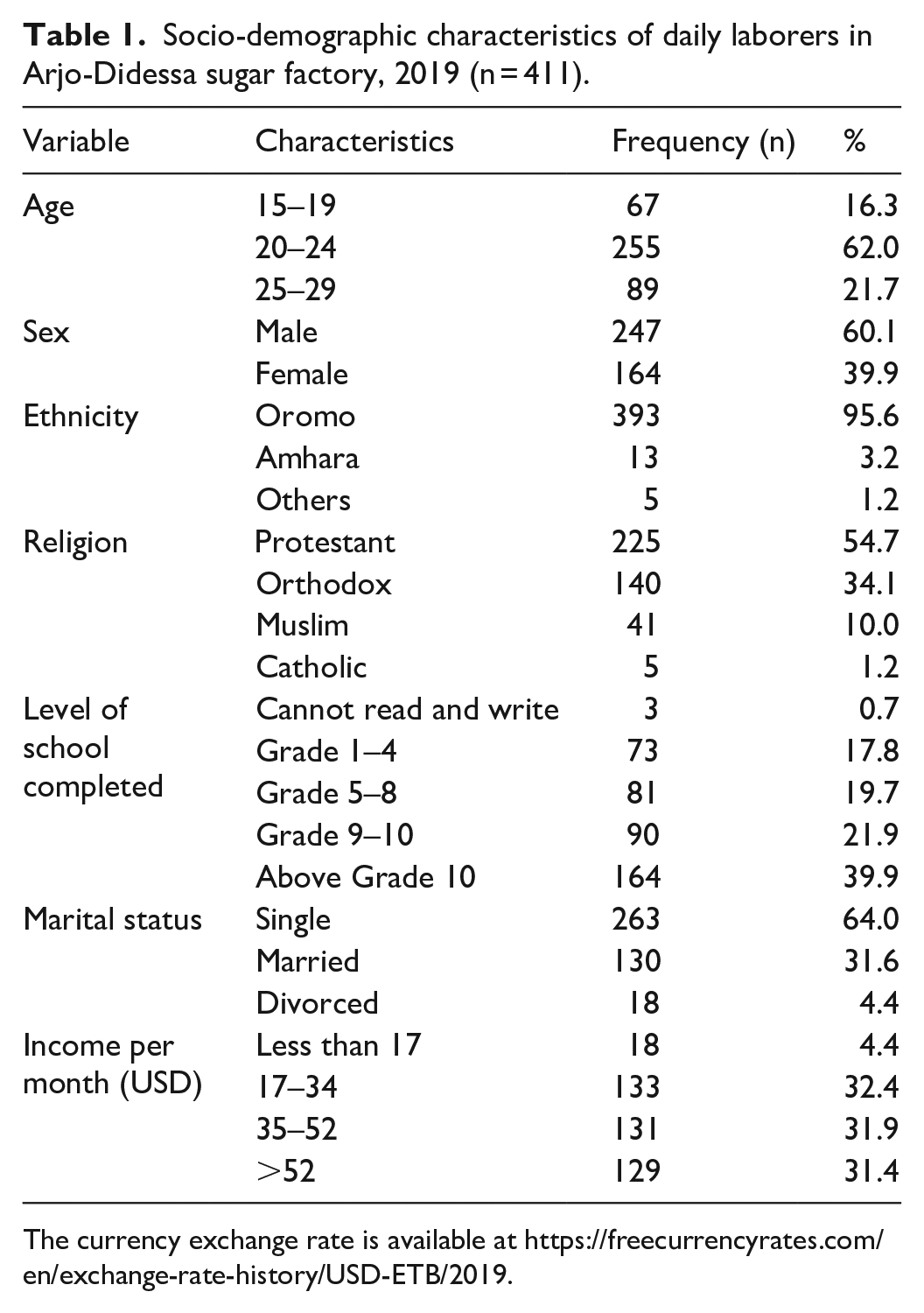
From the total of 422 participants who were selected for an interview, 411 respondents were interviewed and included in the analysis, and 11 respondents were excluded from the analysis, and the response rate was 97.4%. The majority of the study participants 247 (60.1%) were male and 255 (62%) study participants were in the age group of 20–24 years with a mean age of 22.15 (±2.9) years. Most of the respondents were protestant (225 (54.7%)) by religion and Oromo (393 (95.6%)) by ethnicity.
Regarding educational status, 164 (39.9%) respondents were above grade 10. A total of 264 (64%) of respondents were single and 130 were married currently and the mean age at first marriage was 20.42 (±1.97) years. The average monthly income of 133 (32.4%) respondents was between US$17 and US$34, for 131 (31.9%) it was between US$35 and US$52, and for 129 (31.4%) it was above US$52 (Table 1).
Socio-demographic characteristics of daily laborers in Arjo-Didessa sugar factory, 2019 (n = 411).
The currency exchange rate is available at https://freecurrencyrates.com/en/exchange-rate-history/USD-ETB/2019.
Risky sexual practices
Among the 411 study participants, 316 (76.8%) have ever experienced sexual intercourse in their lifetime. Of the sexually experienced respondents, 94 (29.7%) had two sexual partners and 80 (25.3%) had three and above sexual partners so far.
From the total 316 participants who have ever experienced sexual intercourse, 210 (66.5%) did not use a condom for the first time of their sexual intercourse. The mean age at first sexual intercourse was 19.18 (±2) years for males and 18.38 (±1.79) for female respondents with the minimum age at first sex being 15 years for both male and female respondents. More than two-third of the 211 (66.7%) respondents had had their first sex at the age of ⩽19 years. Of the sexually experienced participants, premarital sex was indulged in by 202 (63.9%). As regards the first time of premarital sex, the majority (116 (36.7%)) of them had first sexual intercourse with a regular partner, followed by 70 (22.2%) and 16 (5.1%) with casual and commercial partners, respectively (Table 2).
Sexual history among the study participants in Arjo-Didessa sugar factory, 2019.

Among 316 who had experienced sexual intercourse, 300 responded with having an experience of sexual intercourse in the past 12 months, of which 171 (57%) had experienced risky sexual practices. From the 300 respondents who had experienced sex in the past 12 months, 129 (43%) of them had a partner from daily laborers in the factory, while about 87 (29%) of the respondents’ partners were from the community nearby and 40 (13.3%) of their partners were from other places (Table 2).
Use of condom
Among all daily laborers who reported having sex with regular, casual, or commercial sex partners during their stay in the factory, only 176 (58.6%) of them used condoms consistently in the past 12 months with their partners. The common reasons cited by participants for inconsistent use of condoms were partner refusal (72%), reduced sexual pleasure (61%), and having trust in the partner (50%). The reasons for not using condom in the study site are illustrated in Figure 2.

Reasons for not using condom consistently among study participants in Arjo Didessa sugar factory, Jima Arjo district, East Wollega, Southwest Ethiopia, 2019. This indicates that the majority of the participants did not use condoms because their partners refused to use them and since it reduced the sexual pleasure during having sex.
Multiple sexual partners
Among the 300 participants who responded to having sex in the past 12 months, 175 (58.3%) sexually active participants had had sexual intercourse with only one partner in the past 12 months and 125 (41.7%) had had sexual practice with two or more partners.
Casual sex
From the 300 respondents who had experienced sex in the past 12 months, 119 (39.7%) participants executed sex with a casual partner, and about half of them used condoms consistently. A large proportion of them (61.9%) who executed sex with a casual partner were males.
Sex with commercial sex workers
Among the total 300 participants who were currently in a sexual relationship, 36 (12%) had had sex with commercial sex workers during their stay in the factory. From these, 26 (72.2%) responded to consistent use of condoms during the past 12 months. Practicing commercial sex was more prevalent among respondents with better current income (>US$52) 18 (50%), and 25 (69.4%) of them consumed alcohol and about half of them were khat consumers. The overall risky sexual behavior among laborers at the study site is 57%. The risky sexual behaviors are illustrated in Figure 3.
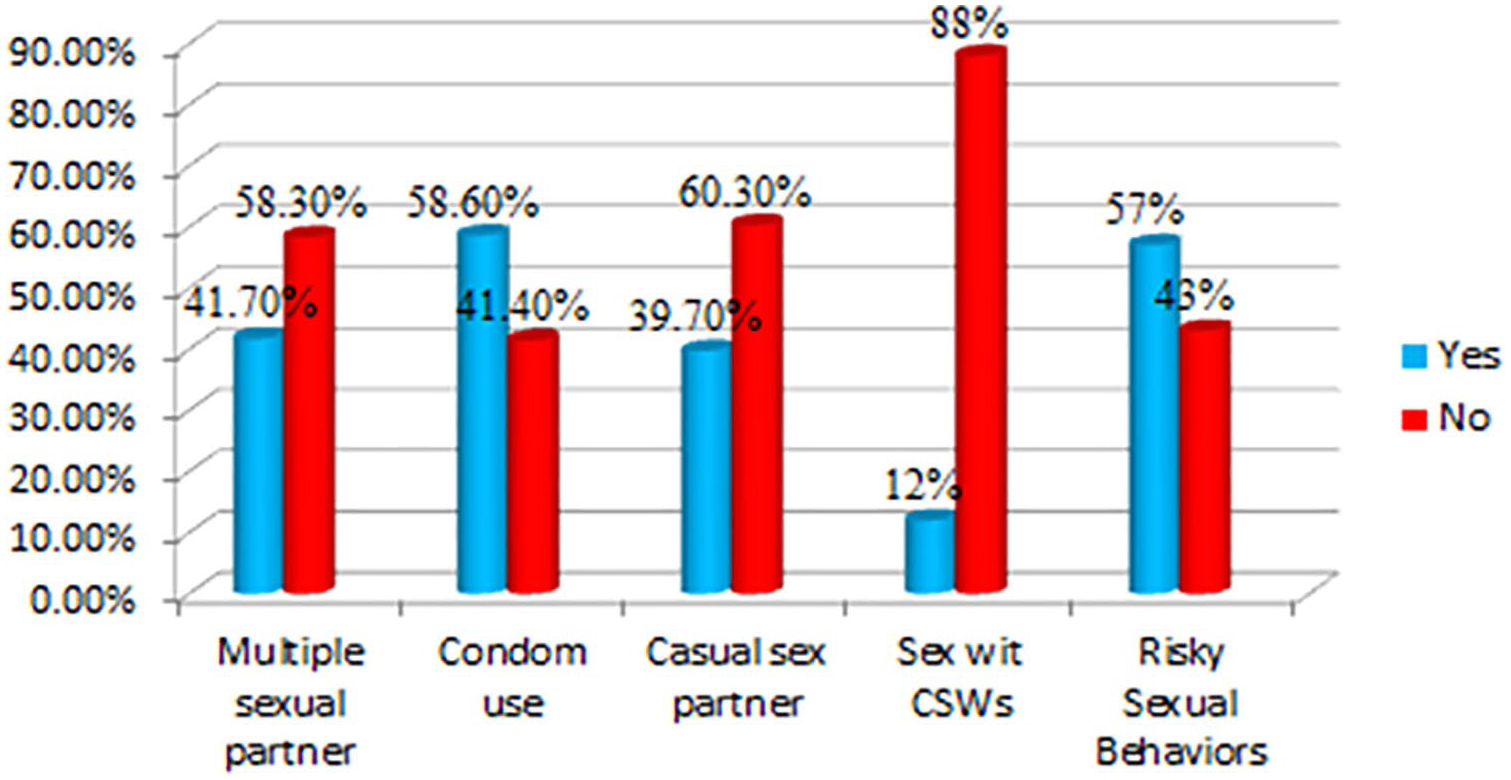
Risky sexual behaviors among daily laborers in Ajio Didessa sugar factory in the past 12 months, Jima Arjo district, East Wollega, Southwest Ethiopia, 2019. This figure indicates the possible risky sexual practices noted during the study.
Substance use
Among 324 study participants who responded to ever using any substance, 252 (77.8%) are currently consuming alcoholic beverages, 133 (41%) currently chewing khat, and 31 (9.6%) currently smoking cigarettes. Of all the study participants, 170 (41.4%) have currently watched pornography of which half of them (50%) were ever influenced by it and had sex (Table 3).
Substance use and other behaviors among study participants in Arjo-Didessa sugar factory, 2019.

VCT: voluntary counseling and testing.
Qualitative result
Eight in-depth interviews were made among purposively selected health professionals and daily laborers.
In-depth interviews were mainly focused on assessing common risky sexual behaviors, factors that aggravate risky sexual behavior, factors that initiate sexual desire the most, and measures to be taken regarding improvement of the risky sexual behavior of daily laborers.
In-depth interview participant 1 (p1) was a male participant aged 32, who was a daily laborer in the sugar factory. According to his response, there were various risk factors which daily laborers encountered. Some of them were multiple sex partners, casual sex, and unprotected sex. He added that the place where daily laborers live is very conducive to practicing sex because the male resident block is located very close to that of females, and also the sugarcane environment may serve as a safe place to practice sex, as they can hide under the sugarcane.
Discussant 2 (p2) was a male participant aged 28, who was a health professional and HIV prevention and control focal person at the health center in the sugar factory. The response of Discussant 2 is almost similar to that of 1. In addition, he responded that daily laborers need to practice either abstinence, be faithful, or use condoms consistently, and also peer group discussion is mandatory.
Discussant 3 (p3) was a male participant aged 33, who was a health professional in the health center near the sugar factory. He said that there are factors that aggravate risky sexual behaviors of daily laborers like alcohol consumption, khat chewing, and other substances. These aggravating factors initiate the sexual desires of daily laborers so that they practice risky sexual behaviors like multiple sex, casual sex, and unprotected sex. The discussant also added that behavioral change communications and peer group discussions are very much important to prevent the risky sexual behaviors of daily laborers.
Another discussant 4 (p4) male participant aged 25, who was a health professional and youth-friendly service focal person stated that daily laborers practice sex due to peer pressure. He also added that being away from family members also aggravates daily laborers’ risky sexual behaviors.
Discussant 5 (p5) was a female participant aged 26, who was a health extension worker at the sugar factory. She said that the workplace and living areas of daily laborers are not well separated and daily laborers start a relationship with strange daily laborers (casual), and these factors contribute to practice risky sexual behaviors.
Predictors of risky sexual behaviors
Bivariate analysis
Simple logistic regression (bivariable analysis) was performed to identify the association between each independent and dependent variable. All variables associated with risky sexual behaviors in this bivariate analysis were considered as candidate variables with p < 0.25 for the multivariable logistic regression model (Table 4).
Bivariate analysis of socio-demographic, sexual history, substance use, and other behaviors with risky sexual behavior among study participants of Arjo-Didessa sugar factory, 2019 (n = 300).

Multivariable analysis
Multiple logistic regression analysis was performed to identify the factors associated with risky sexual behaviors of daily laborers. Coefficients were expressed as crude and adjusted OR relative to the referent category and several risk factors have emerged as a significant predictor of risky sexual behaviors.
Among the socio-demographic variables, sex, age, and marital status of the respondents and from the socioeconomic variable, the monthly income of the respondents was analyzed using logistic regression against risky sexual behaviors. From behavioral variables, sex with a regular partner, chewing khat, and alcohol consumption, sex influenced by alcohol, and always watching pornographic films were analyzed using logistic regression against risky sexual behavior.
The findings of this study showed that participants from 20 to 24 years were 3.9 times (AOR = 3.9, 95% CI: 1.19–12.90) more likely to practice risky sexual behaviors than respondents aged from 25 to 29 years (Table 5).
Factors associated with risky sexual behaviors among daily laborers in Arjo Didessa sugar factory, 2019 (n = 300).

The marital status of study participants also had a significant association with risky sexual behavior. Single/never married participants are 5.5 times (AOR = 5.5, 95% CI: 1.98–15.70) more likely to practice risky sexual behaviors compared to those who had married. The other variable that is significantly associated with risky sexual behavior is the income level of the respondents. Having an income level of less than US$17 and US$17–US$34 per month decreases the odds of risky sexual behavior by 97% (AOR = 0.03, 95% CI: 0.01–0.77) and 73% (AOR = 0.23, 95% CI: 0.06–0.85) respectively (Table 5).
Chewing khat was found to have a significant association with risky sexual behavior. It was found that those chewing khat were 7.12 times more likely to practice risky sexual behaviors than those who were not chewing khat (AOR = 7.12, 95% CI: 2.2–23.4) (Table 5).
The influence of alcohol on sex was significantly associated with practicing risky sexual behavior. Respondents who consumed alcoholic beverages were about 3.7 times more likely to be influenced by it and practice risky sexual behaviors compared to non-users of alcoholic beverages (AOR = 3.7, 95% CI: 1.1–12.23). The other behavioral factor that has shown significant association was watching pornographic films. Participants who responded to have ever seen pornographic films were 4.2 times more likely to practice risky sexual behavior compared to those respondents who have never seen pornographic films (AOR = 4.2, 95% CI: 1.5–12.2) (Table 5).
Discussion
According to the study findings, the magnitude of risky sexual behavior among the study participants was 57% with 95% CI (0.51, 0.63). This finding is higher compared to the study conducted on risky sexual behaviors among big construction enterprise daily laborers in Bahir Dar, Ethiopia; among governmental higher institution students in Debre Markos town, North West Ethiopia, and among female students of Madawalabu University, Ethiopia revealed the prevalence of risky sexual behavior, which was 44.9%, 42%, and 36.8%, respectively.16–18
Our study result is comparable to the study done on risky sexual behaviors among preparatory school students in the Gurage zone, Ethiopia, revealing that the magnitude of risky sexual behavior was 53.7%. 19
This study finding is lower when compared to the study done on Risky Sexual Behavior among seasonal migrant laborers in Metema district, Northwest Ethiopia, and among Cobblestone Chiseling Daily Laborer, Addis Ababa, which revealed that the magnitude of risky sexual behavior was 79.4% and 64.9% respectively,20,21 but higher than the study conducted among Jiga High School and Preparatory School students in Amhara region, among students of Haramaya University and among school adolescents in Addis Ababa in which 14.7%, 11.5%, and 10.6%, respectively, were involved in risky sexual practices.13,22,23 The difference may occur due to cultural differences, accessibility of risk factors, and geographic area.
The findings of this study showed that participants from 20 to 24 years were 3.9 times (AOR = 3.9, 95% CI: 1.19–12.90) more likely to practice risky sexual behaviors than respondents aged from 25 to 29 years. The study is unable to provide reasons why the older groups were less likely to engage in risky behaviors. The possible reasons could be that the younger aged groups are greater risk-takers and are more likely to be engaged to practice risky sexual behaviors. Further studies are advised for a better understanding of the association between age and reasons for sexual activity.
Discussant 4 (p4) said that the “majority of daily laborers who come to the youth-friendly service department for counseling service after committing risky sexual behaviors are young aged groups.”
The other variable that is significantly associated with risky sexual behavior is the income level of the respondents. Having an income level less than US$17 and US$17–US$52 per month decreases the odds of risky sexual behavior by 97% (AOR = 0.03, 95% CI: (0.01–0.77) and 73% (AOR = 0.23, 95% CI: 0.06–0.85), respectively.
This finding is in line with a study done among seasonal laborers in the Metema district, northwest Ethiopia, that daily laborers with a higher income were more likely to have multiple sexual partners and practice risky sexual behavior than those who earned less. 20 This might be because respondents whose income is lower may not be able to pay for sexual practice.
The influence of alcohol on sex was significantly associated with practicing risky sexual behavior. Respondents who consumed alcoholic beverages were about 3.7 times more likely to be influenced by it and practice risky sexual behaviors compared to non-users of alcoholic beverages (AOR = 3.7, 95% CI: 1.1–12.23).
This is in line with the study done on the determinants of alcohol drinking and its association with sexual practices among high-school students at Addis Ababa, Ethiopia: 23 prevalence and associated factors of sexually transmitted infections among students of Wolaita Sodo University, southern Ethiopia; 24 risky sexual behaviors among adolescent students in north Gondar, Ethiopia; 25 risky sexual behavior among adolescent students in north Gondar, Ethiopia; 26 and prevalence and associated factors among undergraduate students of state universities in Western Province in Sri Lanka. 27
Chewing khat was found to have a significant association with risky sexual behavior. It was found that those chewing khat were 7 times more likely to practice risky sexual behaviors than those who were not (AOR = 7.12, 95% CI: 2.2–23.4). This is higher than the study conducted on the assessment of sexual violence and associated factors among students of Madawalabu University and substance use and risky sexual behavior among Haramaya University students18,22 This might be because khat is restricted to outside the campus so that students cannot access it whenever they want to. On the contrary, this study is lower when compared to the study done in Bahir Dar town, Ethiopia, among female unmarried school students who chewed khat were 8.99 times more likely to practice risky sexual behaviors. 28
The marital status of the study participants also had a significant association with risky sexual behavior. Single/never married participants were 5.5 times (AOR = 5.5, 95% CI: 1.98–15.70) more likely to have risky sexual behaviors compared to those who were married.
This result is higher compared to the study conducted among private college students in Nekemte Town in which unmarried students were nearly 3 times more likely to have multiple sexual partners than married. 29 This difference might be that individuals separated from their parents start to practice risky sexual behaviors because they are out of control.
The qualitative result that discussant 4 (p4) said “being apart from family members and/or parents may aggravate daily laborers risky sexual behaviors.”
According to the qualitative finding, discussant 3 (p3) also said that “substance use especially alcohol is an aggravating factor that initiates sexual desire of daily laborers so that they are influenced by it and practice risky sexual behaviors.”
However, this study is lower when compared to the study done on the premarital sexual debut of the female school students in Bahir Dar town, Ethiopia; risky sexual practice and associated factors among secondary and preparatory school students of Aksum town, northern Ethiopia, 2018, and in Nekemte town among private college students showed that respondents who viewed sexual films were 4.9, 10.2, and 10.7 times more likely to practice risky sexual behavior respectively.28–30 This variation may be owing to the differences in place of residence and accessibility of the Internet and sophisticated mobile phone around urban areas.
Watching pornographic films has also shown a significant association. Participants who responded to have ever seen pornographic films were 4.2 times more likely to practice risky sexual behavior compared to those respondents who have never seen pornographic films (AOR = 4.2, 95% CI: 1.5–12.2). This study is similar to the study done in Cameroon on the prevalence and correlates of HIV-risky sexual behaviors among students attending the medical and social welfare center of the University of Maroua, Cameroon. It revealed that students who have seen pornographic films were 4.3 times more likely to have lifetime sexual partners than non-pornographic viewers (AOR: 4.3, 95% CI: 1.9–9.5; p < 0.001). 31 Our study revealed that respondents in the age group of 20–24 are 4× more likely vulnerable to risky sexual behaviors when compared to other age groups (AOR = 3.9, 95% CI: 1.19–12.90). This finding is almost similar to the study done on risky sexual behavior and predisposing factors among Jimma University students, which revealed students of age >20 years are 4.7× more likely at risk of risky sexual practices when compared to the other age groups (AOR = 4.77, 95% CI: 2.43–9.35). 32
Conclusion
The study found that risky sexual behavior is highly practiced among the study participants. They were practicing risky sexual behaviors such as inconsistent use of a condom, practicing sex with casual partners, having multiple sexual partners, and having sex with commercial sex workers, age, marital status, income level, khat chewing, the influence of alcohol to have sex, and watching pornographic films were found to be factors associated with risky sexual behaviors of daily laborers. Therefore, strengthening sexual education and consulting the targeted groups for the behavioral change is highly recommended to minimize the consequences of risky sexual practices that prevailed in the study area, which ultimately demands the involvement of organizational agencies working on STIs/HIV at community and district levels.
Limitations of the study
Limitations of adequate references, especially on risky sexual behaviors on similar study setting and geographical location for comparison of results.
Social desirability bias due to sensitive and personal questions related to sexuality.
There was a possibility of recall biases during determination of some sexual behavior.
Supplemental Material
sj-pdf-1-smo-10.1177_2050312121994358 – Supplemental material for Risky sexual behavior and its associated factors among daily laborers in Arjo-Didessa sugar factory, Jimma Arjo, Southwest Ethiopia: An institution-based cross-sectional study
Supplemental material, sj-pdf-1-smo-10.1177_2050312121994358 for Risky sexual behavior and its associated factors among daily laborers in Arjo-Didessa sugar factory, Jimma Arjo, Southwest Ethiopia: An institution-based cross-sectional study by Ayele Gezahegn Gemechu, Lemessa Assefa Ayana, Zelalem Desalegn Waqtole, Edosa Kifle Tola and Markos Desalegn Beyene in SAGE Open Medicine
Footnotes
Acknowledgements
The authors are grateful to the data collectors and to the study subjects for their voluntary participation in the study.
Author contributions
A.G.G. and L.A.A. made substantial contributions to the design and concept of the preliminary study; Z.D.W., E.K.T., and M.D.B. supported the data collection, analysis, and interpretation; E.K.T., L.A.A., and Z.D.W. prepared the drafts of the manuscript; and A.G.G., E.K.T., and M.D.B. helped the study in revising the drafts of the article for the important intellectual content. Finally, all the authors read and approved the final version of the article to be published, and they are equally accountable for all aspects of the work, as well.
Declaration of conflicting interests
The author(s) declared no potential conflicts of interest with respect to the research, authorship, and/or publication of this article.
Ethical approval
Ethical approval for this study was obtained from the research ethics review committee (RERC) of Wollega University (DPH/116/2011).
Funding
The author(s) received no financial support for the research, authorship, and/or publication of this article.

Availability of data and materials
The data analyzed during the study are available from the corresponding author upon formal request.
Informed consent
Verbal consent obtained from the study subjects and written consent taken from the legally authorized representatives of the minor subjects was approved by the RERC of Wollega University prior to study initiation.
Supplemental material
Supplemental material for this article is available online.
References
Supplementary Material
Please find the following supplemental material available below.
For Open Access articles published under a Creative Commons License, all supplemental material carries the same license as the article it is associated with.
For non-Open Access articles published, all supplemental material carries a non-exclusive license, and permission requests for re-use of supplemental material or any part of supplemental material shall be sent directly to the copyright owner as specified in the copyright notice associated with the article.
