




Abstract
The global proportion of people aged 60 and above is projected to double by 2050, exceeding 20% of the population. Despite this demographic shift, mass media often misrepresents senior women, associating their value with appearance, while “anti-aging” marketing perpetuates the desire to conceal signs of aging. These portrayals contribute to internalized ageism and gerascophobia, disproportionately affecting women. Visual social media platforms like TikTok have become spaces to explore and challenge these narratives. This study examines how women's aging is depicted on TikTok through user-generated content. Using netnography and qualitative content analysis, 300 TikTok posts tagged #aging and #antiaging from November 2023 to January 2024 were analyzed. Findings reveal that aging is framed largely as a physical process, with women more likely to focus on appearance-related content, reflecting societal pressures. Seven key portrayals were identified: “Anti-aging,” “Looking younger and glowier,” “Illustrating the aging process,” “Accepting aging,” “Promoting healthier and longer life,” “Challenging ageist stereotypes,” and “Addressing premature aging.” Finally, this study contributes to understanding age-related discourses in digital spaces and their implications for combating ageism.
Introduction
As the proportion of senior citizens in the global population has been increasing drastically due to the demographic transition and improved life expectancy, the United Nations (UN) initiated a global collaboration, “Decade of Healthy Aging: 2021–2030,” to ensure older adults experience healthy and inclusive lives. Thus, their foremost action plan is to combat ageism by changing how people think, feel, and act toward age and aging (World Health Organization [WHO], 2020). Therefore, it is imperative to study how people of all ages describe aging as a process and how older adults are portrayed in the media, as it heavily impacts people's perspectives on aging.
Unfortunately, present studies (Edström, 2018; Lemish & Muhlbauer, 2012) have witnessed the underrepresentation and misrepresentation of older people in traditional media. Such portrayals influence society's view on aging and shape how members of this group perceive themselves. In this sense, a symbolic annihilation (Gerbner, 1970) in the media occurs through the absence or underrepresentation of certain groups—such as older women—rendering them invisible and reinforcing societal marginalization. Moreover, in many circumstances, these women are depicted in an objectified perspective (Mulvey, 1989) as objects of the “male gaze,” as further discussed and exemplified in the theoretical section of this paper, focusing on their physical attributes and beauty, which diminishes their agency and reinforces patriarchal structures.
Although women's representation in traditional media has been thoroughly explored, little scientific attention has focused on their depiction on visual social media, such as Instagram and TikTok. The popularization of these mobile-based platforms has reshaped how aging is discussed and represented in digital spaces. Unlike traditional media, where institutional gatekeepers mediate narratives, mobile media fosters a participatory culture in which users create and share aging-related content through user-generated content (UGC). For clarity, throughout this paper, we refer to UGC based on Santos’ (2022) definition—further explored in the literature review—as any text, data, or action shared by users on independent channels to create expressive or communicative impact, individually or collectively. According to the Multi-Step Flow Theory, an extension of Two-Step Flow Theory, contents created by ordinary users (as distinguished from brands and organizational accounts) are an efficient means of diffusing information and ideology.
Taking this background, the study explores the following research question: “How is women's aging depicted on TikTok through user-generated content (UGC)?” Although visually centered platforms such as Instagram and YouTube also feature aging-related content, TikTok's distinct algorithm, short-form video format, and highly interactive nature make it an ideal site for studying digital ageism. Unlike Instagram, where polished, curated aesthetics dominate, or YouTube, which relies mainly on long-form content, TikTok encourages spontaneous, participatory, and often unfiltered discussions about aging. Additionally, TikTok's diverse user base, with a concentration of young adults (Pew Research Center, 2024), makes it particularly relevant for examining intergenerational perceptions of aging.
In this context, the research incorporates methods of netnography (Kozinets, 2015) and qualitative content analysis (Kuckartz, 2019) to produce an in-depth analysis of the topic. The corpus comprises the most recent TikTok posts in English tagged with #aging and #antiaging on three different dates from November 2023 to January 2024 (N = 300). The researchers used the function “most recent videos,” and scraped all the posts under the hashtags (#), which were primarily produced by regular users, not from companies. Although the sample includes UGC featuring both men and women, this paper focuses on women's aging portrayal due to the distinct themes observed in the data. Even though men were featured in almost a quarter of the dataset, their videos explicitly target female audiences.
This paper is organized into four main sections. The first part discusses the theoretical framework, including aging perceptions influenced by anti-aging marketing, the role of TikTok in UGC, and women's portrayal on TikTok. The second section details the methodology, covering data collection, coding processes, and limitations. The third segment presents findings, including identified themes and perspectives on aging. The last section highlights key insights and implications, answers the research question, and points out avenues for future research. Finally, this research contributes to understanding how visual social media narratives, more precisely those on TikTok, might reshape or transform contemporary discussions about aging, contrasting or reinforcing traditional media depictions, thus potentially impacting the audience's perception of the topic.
Theoretical framework
Fear of aging: The influence of anti-aging marketing on women's perception of aging
Age is not the sole specifier of human status but coexists with other social constructs such as gender, ethnicity, and race. Thus, the inception of the term “ageism” has generated a whole new scientific research area that explores the intersection of age and other constructs, resulting in multiple marginalizations (Ayalon & Tesch-Römer, 2018). In 1993, gendered ageism was introduced as a double jeopardy, where two interconnected societal elements result in increased fragility to social discrimination (Itzin & Phillipson, 1993). The concept emphasizes the prevalence of patriarchal norms and the preoccupation with youth in society, leading to a more drastic decline in senior women's status compared to men of the same age. In this respect, Martin et al. (2000) pointed out that women feel heavier pressure to portray themselves from a positive angle.
Numerous studies highlight age-based marginalization toward older females (Ayalon & Tesch-Römer, 2018; Momtaz et al., 2021; Muise & Desmarais, 2010; Rook et al., 1989; Runfola et al., 2013), though gendered ageism is not solely directed at older women, automatically ascribing them to a pre-assumed subordinary social group. Ayalon and Tesch-Römer (2018) argue that gendered ageism stems from the ideology of youthfulness being overly valued in contemporaneity. Hence, societies tend to form categorical inequalities that reproduce systems of discrimination and innate prejudice (p. 40). For example, the categories “young” and “old” carry opposing connotations—active and full of life versus passive and void of life—reflecting what DeRenzo and Malley (1993) called the “lexicon of ageism,” a set of culturally loaded terms (e.g., “over the hill” and “spinster”) that frame aging as decline. To avoid these negative connotations, older women often try to conceal their signs of aging, although this might not affect all women in the same way.
Irrational concern and abnormal anxiety about one's advancing age are defined as “gerascophobia,” or fear of aging (Momtaz et al., 2021), which adversely impacts both physical and mental well-being, leading to poor life satisfaction (Reker & Woo, 2011). To determine the underlying factors leading to this phenomenon, two main theories were developed. According to the Social Clock Theory, anxiety about aging stems from social expectations regulating the timing of major life events, such as graduating from university, getting hired in the first job, and giving birth to the first child (Rook et al., 1989). People fear aging because they believe they have not accomplished enough. Alternatively, the Double Standard of Aging Theory argues that societal expectations requiring women to retain their youthful appearance are the core reason for aging-related fears (Momtaz et al., 2021; Sontag, 1972). Men are mainly valued by their accomplishments, which usually grow as they age, whereas women are valued according to their appearance, which changes over the years (Nosek et al., 2002).
Muise and Desmarais (2010) found that aging anxiety stems from internalized societal pressure to maintain a youthful image, motivating women's purchases of anti-aging products. This internalization resonates with the Stereotype Embodiment Theory (Levy, 2009) suggesting that age-related stereotypes, once absorbed over time, influence individuals’ self-perceptions, behaviors, and overall well-being throughout the life course. As a result, these internalized anxieties have fueled the growing social relevance of the anti-aging discourse, contributing to the exponential expansion of the global anti-aging market—primarily driven by pharmaceutical and cosmetic products—which reached 50.48 billion dollars in 2022 and is projected to hit roughly 90 billion dollars by 2032 (Anti-aging cosmetics market size, 2023). Moreover, anti-aging discourse and routines have also gained immense popularity among younger populations, including Generation Z. One contributing factor to this phenomenon is the increased use of social media and videoconferencing, where one constantly sees oneself on the screen, thus amplifying the dissatisfaction with one's appearance and leading to a new trend called “prejuvenation,” as discussed further in this article.
To further explore this topic, it is necessary to understand how women, specifically older women and women's aging as a process, are portrayed in the media and in cosmetics advertising promoting commodified femininity. A discourse of “gender differences” stems from the realization that femininity and consumerism were intimately connected, whereas this was not the case for masculinity (Ringrow, 2016). To illustrate, the notion of “commodified femininity” is deeply ingrained in people's minds, presupposing that desired femininity may be achieved by sufficient beauty work done through consumption or self-care practices. According to Benwell and Stokoe (2006), the first and foremost rule of commodified consumerism relies on the assumption that “aging is bad; it must be striven against or disguised” (p. 21). Hence, it is customary to encounter advertisements stating the importance of the age-reversing process with the juxtaposition of a young model and an anti-aging facial cream.
As explained by Ringrow (2016), the vast majority of cosmetics advertisements follow the principle of the problem-solution pattern to highlight the importance of their goods (i.e., facial creams and face masks). Hence, in most cases, the female body is framed as inadequate, requiring solutions and enhancements through appropriate cosmetic products (Ringrow, 2016). Thus, women tend to overemphasize their appearance and view their bodies as problems seeking solutions, leading to lower self-confidence and esteem. Yet the cosmetic industry frames this phenomenon as an opportunity for continual enhancement of one's beauty and youthfulness.
Intriguingly, the cosmeceutical sector's first and foremost target of women's inadequacy is aging, emphasizing the need for postponing or disguising its signs and reinforcing “the unwatchability of old age” (Ringrow, 2016, p. 32). While adhering to the main “problem-solution” approach, marketers have been employing different framing methods, reflecting the sociocultural condition of the period. Brown and Knight (2015) identified five key themes in cosmetics advertisements targeting older women: femininity, aging, repairing, fighting, and advice (Brown & Knight, 2015). The first category emphasizes the significance of the loveliness, glow, and purity brought by the face cream for approval or submission to men. An example may be an advertisement slogan from 1964 saying: “Tempt with your lips, your fingerprints; be subtly inviting. He can’t resist new tempt colors” (Brown & Knight, 2015, p. 77). Upon closer scrutiny, the statement brings back the discussion of the male gaze in the portrayal of women in the media.
The second category, “aging,” points out the urgency of eluding advanced age with strong terms including “anti-aging,” “age-defying,” and many more (Brown & Knight, 2015). In addition, “repairing” frames aging as an internal impediment that requires disguise, improvement, or even a correction, whereas “fighting” treats signs of aging (e.g., wrinkles, fine lines) as an external enemy that women ought to combat. Due to the changes in gender power dynamics, an approach to depicting women has also been modified by displaying the boldness and might of the target audience. Between 2000 and 2010, framings of aging, repairing, and fighting were widely used (Brown & Knight, 2015), reminding women that they have power as well as responsibility over their youth and beauty.
Lastly, the “advice” approach primarily focuses on the process of product usage and tends to utilize more scientific and pseudo-scientific descriptions (Brown & Knight, 2015). Yet even consumers who actively purchase anti-aging products demand that marketers explain the effectiveness of the products from a scientific perspective instead of offering unrealistic promises (Muise & Desmarais, 2010). In fact, a 53-year-old female interviewee of the study stated that advertisers ought to rethink their “ridiculous wording” (Muise & Desmarais, 2010, p. 134) and be more respectful of their consumers’ intelligence.
However, the constant advancement of mobile communications through visual social media has enormously altered the commercial landscape of the self-care industry and self-presentation (Amalina, 2023, Veloso da Silva, 2025) and the influence of marketers due to UGC. Hence, it is important to scrutinize cosmetics advertisements as well as the overall representation of women's age advancements on these contemporary platforms.
Despite this progress, a recent study by Charvát and Fikejzová (2024) that analyzes TikTok's artificial intelligence (AI) aged filter argues that it still contributes to neoliberal ageism by promoting a fear of aging and the moral obligation to maintain youth, especially among women. Drawing on discourse analysis of 300 videos, the authors identify 3 dominant themes: fear and dismay at one's own aged appearance, the idea that looking old is morally and socially wrong, and the belief that science and technology—such as skincare routines and cosmeceuticals—offer the means to “fix” or prevent aging. Interestingly, according to the authors, the filter also perpetuates the “technomyth of youth,” thus treating aging as a series of problems solvable through consumer products and scientific-sounding solutions. Before describing the empirical research we conducted, it is necessary to further clarify the characteristics of UGC and continue the discussion on the chosen platform for this study, TikTok.
UGC: Opinion leaders in the digital age
As discussed throughout this paper, mass media has traditionally depicted events through potentially biased lenses, treating audiences as passive receivers. However, social media and smartphones favor users to become co-producers of information, promoting collective discussions that might contribute to challenging normative ideologies (Rosales et al., 2023). The evolution of media influence theories, like the Two-Step Flow model by Lazarsfeld et al. (1948), introduced “opinion leaders” as influential intermediaries between mass media and the public. Over the decades, this concept expanded into the Multi-Step Flow Theory, recognizing multiple communication paths and the important impact of ordinary users on media coverage. To illustrate, Ognyanova (2017) stated that opinion leaders typically adhere to societal norms and do not strongly deviate from central values to maintain their figure, deeply ingrained in the dominating ideology. Yet people who challenge prevailing norms and beliefs are at the periphery of social systems which critically view them as outsiders.
Livingstone (2006) suggests that the idea of “personal influence” (E. Katz & Lazarsfeld, 1955) can contribute to understanding new media audiences by emphasizing the role of interpersonal communication and social context in media effects, especially with the fuzzy boundaries between producers and consumers. Accordingly, an ideal manifestation of the multi-step paradigm is social media, such as TikTok, Instagram, and Facebook, a digital arena blurring the line between mass media and interpersonal communication (Ognyanova, 2017). By facilitating the creation and diffusion of their users’ contents through simplified editing tools and complex algorithms, these platforms offer the general public an opportunity to question and challenge dominant ideologies and exchange their perspectives. Moreover, Ognyanova (2017) claimed that social media users are the most efficient means of disseminating information and ideology. In this sense, these users are also opinion leaders, as these platforms’ structures and algorithm allow user-generated content (Santos, 2022) to become popular and influence the audience's perception of varied topics.
TikTok, a smartphone application that allows its members to generate and share their own short-format videos, was chosen as the arena of this current research. Since its inception in 2017, it became the most downloaded app of 2020 (Miltsov, 2022) and the sixth most-used social media platform, obtaining 3 billion total downloads and more than 1 billion global active users (Macready, 2024). Moreover, it is considered a fertile research site to study youth culture because of its extraordinary popularity among younger generations, specifically people between the ages of 10 and 29. Yet an emerging demographic change has been discovered on the platform, as more individuals from older generations have been joining the app (Miltsov, 2022). For example, in the USA, the proportion of TikTok users above the age of 29 has increased dramatically, going from 38% to 52% of total users between 2020 and 2021, respectively.
Taking this background, Miltsov (2022) highlights that TikTok is an invaluable digital space to explore how people, including younger and older populations, participate in social and political ideology, communicate, and portray themselves. Additionally, as demonstrated by J. E. Katz (2023), TikTok exemplifies the trend toward visual communication dominance in contemporary media studies, reflecting the importance of short-form video production and its impact on research on mobile communication and social behavior.
An example of research regarding ageism on the platform comes from Ng and Indran (2022a), who investigate how younger generations portray Baby Boomers on TikTok through the use of hashtags like #OkBoomer and #Boomer. Analyzing 332 videos that collectively received over 5.4 billion views, the researchers identified 5 major themes of intergenerational hostility. The most common was negative encounters with Baby Boomers (79%), where younger users shared stories of being patronized or mistreated by older individuals. The second theme (58%) centered around conflicting values and beliefs, such as differences in political views. About 39% of videos portrayed Baby Boomers as antagonizing younger generations, while another 22% used the “Karen” meme, a symbol of hostility and irrationality. The final theme (7%) addressed the wealth gap, with younger users expressing frustration over economic inequalities. The study emphasizes that although some content is explicitly ageist, much of it reflects broader frustrations with systemic issues and value clashes. In the next section, we continue this discussion to focus on studies that address how women's aging is depicted on the platform.
Women's aging portrayal on TikTok
According to Ng and Indran (2023), senior TikTokers' self-portrayal varied across different domains, including physical functioning, cognitive functioning, and social interaction. Whereas physical ability and social interactions were predominantly portrayed from a positive perspective, cognitive functioning tended to be framed negatively. Yet it is important to note that the positive self-presentation of older individuals outnumbered negative frames by 10 times, suggesting that they consciously strive to correct misconceptions about aging and ultimately eradicate ageism (Ng and Indran, 2022b). Moreover, the study indicates that older women produced twice as much content as older men (Ng and Indran, 2023).
In other research, Yu and Zhao (2022) highlighted that TikTok's senior content creators, as opinion leaders, promote the notion of successful aging and challenge ageism by showing their active lifestyle and independence. However, despite their positive ramifications, the videos are criticized for being ageist by disregarding older people with chronic diseases and propagating a homogeneous healthy aging paradigm. In essence, TikTok's content monetization further incentivizes the production of such content, thereby transforming viewers into potential consumers of products implicitly or explicitly advertised on the videos. Essentially, it was revealed that on TikTok, the majority of older content producers’ accounts contained a commercial link to anti-aging products (Yu & Zhao, 2022). Hence, the paradigms of pro-aging and anti-aging coexist on TikTok.
Pertaining to anti-aging narratives, an outstanding development in aesthetic dermatology and its advanced marketing strategies merged with UGC led to an elevated urge to retain a youthful look and delay the aging process, based on Haykal et al. (2023). The main anti-aging advertising message delivered to millennials is the reversal and correction of an older appearance. However, to expand their target, marketers adopt a narrative for Generation Z (i.e., the youngest population of adults). It is called “prejuvenation,” a preventive treatment for aging, encouraging youngsters to practice skin-care routines and attend non-invasive cosmetic operations (e.g., dermal fillers, laser skin rejuvenation) even before noticing aging signs. This led to Generation Z having an unprecedented urge to prolong their youthful appearance and a tendency to refuse the notion of aging, reflecting the wider societal shift to view aging positively and value older people. The paradigm stems from highly visual social media platforms where various beauty trends (e.g., skincare routines, innovative beauty devices, and surgical and non-surgical beauty procedures) circulate across UGC, fueled by paid partnerships.
However, this trend has extended beyond Generation Z, permeating even younger demographics, including Generation Alpha. Dermatologists have reported a concerning trend where children as young as 10 years old are pressuring their parents to purchase anti-aging products, resulting in medical skin issues such as dermatitis and other adverse reactions (Mullane, 2024). They also emphasized the profound influence of social media, particularly TikTok, in popularizing anti-aging narratives among younger demographics (Marsh, 2024). In response to these growing concerns, a Swedish pharmacy has taken proactive measures by banning the sale of anti-aging skincare products to children under 15 years old without parental consent (Bryant, 2024).
Whereas previous studies primarily centered on older individuals’ self-representation, analysis of how visual social media users from all age groups discuss aging in general and disseminate anti-aging narratives is still a knowledge gap. Therefore, the present study focuses on TikTok's UGC, a contemporary manifestation of opinion leaders influencing public narratives about aging, and explores the research question: ‘How is women's aging depicted on TikTok through UGC?’
Methodology
The empirical part of the study employs two reciprocal research methods: netnography (Kozinets, 2015) and qualitative content analysis (Kuckartz, 2019). Netnography, as an internet-based research approach aiming to explore human interactions and experiences through immersion, allowed us to dive deeper into cultural understandings, starting from the context behind usual conversations, posts, interactions, and experiences, instead of seeing data through a decontextualized and statistical approach. Kozinets (2015) states that netnography, like its older sibling, ethnography, “attaches itself to and incorporates a vast variety of different research techniques and approaches” (p. 42). In this sense, the research applies qualitative content analysis (Kuckartz, 2019) to classify and systematize the collected data into meaningful categories.
Cultural entrée and data collection
As an exploratory study aiming to analyze the collective online narratives about women's aging, the first empirical step in the netnography (Kozinets, 2015) aimed to identify a suitable space to gather data. Although Instagram acquired the highest number of posts (i.e., 1.3 million) under the hashtag aging (i.e., #aging), the vast majority of the contents were posted by marketers advertising their products. However, TikTok offered much deeper insight into how ordinary people view aging through its approximately 160,300 short-format videos with 1.9 billion collective views. In addition, the hashtag anti-aging (i.e., #antiaging) contained more than 660,600 videos with 7.1 billion collective views, outnumbering all age-related hashtags.
Since hashtags are social media nodes for grammatizing and categorizing the contents under collective activity or ideology, they are utilized as the main technique to collect the samples. The contents under #aging and #antiaging were gathered through the purposive sampling method, as they should indicate what users may encounter on the platform. To illustrate, #aging and #antiaging were entered into the search engine of the platform, which enabled videos with the highest views and engagement rate to appear at the top of the hashtag search results. Thus, each time and for each hashtag, the first 50 videos were saved to Google Drive. As the search was conducted in English, we focused the analysis on content that had English as the main language. Additionally, we aimed at collecting posts shared by regular users, not companies’ accounts, although recognizing that some of those more influential content producers can also monetize their activity on the platform, but are not clearly a for-profit structured company with strategic marketing teams.
Considering that TikTok's recommendation algorithm, which shows distinct contents to each user, is proprietary, a new TikTok account was created to minimize potential personalization in the samples. Moreover, the data collection process was divided into 3 stages, in which 100 videos (i.e., 50 from #aging and 50 from #antiaging) were retrieved on November 15, 2023, December 15, 2023, and January 15, 2024, respectively, resulting in 300 short-video format archival data.
Due to the potential risks of imparting content creators’ identities, personal data in the samples were ethically treated according to TikTok's Privacy policy (2023) and TikTok research API terms of service (2023). Researchers obtained permission from content creators for their content to be displayed as examples in the paper, whereas for samples without the creator's approval to share, we have applied a data anonymization technique by hiding their personal identifiers and paraphrasing their speech.
Coding process
Compared to quantitative research approaches, the methodologies used in the paper are relatively subjective since they aim to interpret meanings and themes. Therefore, 10% (i.e., 15 videos under #aging, 15 videos under #antiaging) of the sample was independently co-coded by an intercoder who received intercoder training and followed a codebook (Supplementary Appendix A). Subsequently, coders discussed their independent coding results, leading to a higher alignment of mutual understanding and essential revisions in the coding process (Supplementary Appendix A).
Afterward, the categorizations of two coders were validated by Cohen's Kappa interrater reliability test through SPSS, a statistical software widely used in the social sciences. As a result of a multi-step co-coding process, 0.947 (i.e., 94.7%) was computed as the Kappa value, affirming nearly perfect agreement between coders, ergo indicating the reliability of samples’ classification (Table 1).
Cohen's Kappa value calculated in SPSS.

Defining categories
Based on the theoretical framework and netnography, the research applied both inductive and deductive approaches when elaborating the categories of analysis, which resulted in the creation of a codebook, to reduce biases while ensuring the connection with relevant theories from the literature. To illustrate, four categories were formulated inductively during an immersion through netnography, whereas one category was deductively derived from a previous research finding (Brown & Knight, 2015) examining the depiction of women's aging in skincare product advertisements.
To elucidate, during the netnographic observation (i.e., lurking) and data collection process, analytical memos were written to highlight recurring patterns (i.e., potential codes), which are noteworthy to the objective of the study. To ensure that the analysis goes beyond mere data classification, thematic interpretation was employed, exploring underlying meanings and patterns of videos. For example, the code “Promoting Anti-Aging Narrative” emerged by examining recurring languages, visual motifs, and cultural implications. Following an initial pilot study, a codebook was developed. The complete codebook is provided in Appendix A for reference.
The first category specified content's objects (e.g., product, graphic, and human), based on what or whom videos predominantly showcased. In addition, if videos were human-centered, the category would further define people's gender, professional affiliation, and usage of TikTok “Aged Filters.” It allowed an extensive analysis of the characteristics of humans discussing aging from certain perspectives.
The second category investigates samples’ perspectives on age-related discussions. To illustrate, videos are coded as “External” if they highlight potential changes in people's appearance (viz., facial structure, wrinkles, skin loosening), whereas some contents emphasize internal subjects that are closely related to one's physical and emotional health. For example, videos advising how to prevent Alzheimer's were categorized as “Internal,” whereas contents regarding anti-aging skin-care tips were coded as “External.” However, the variable “Mixed” was applied when contents highlighted both external and internal subjects pertaining to the aging process.
Moving on to the following category, “Aging Portrayals” aimed to understand how women's aging is represented in the videos. Analytical memos allowed inductive detection of overarching aging depictions such as accepting aging, promoting an anti-aging narrative, challenging ageist stereotypes, illustrating an aging process either from professional or personal perspectives, promoting a healthier and longer life, aspiring to a younger and “glowier” look, and, lastly, addressing premature aging. Since these codes were derived by netnographic immersion, they could effectively capture major viewpoints on aging.
Advancing to the fourth category, the objectives of videos were classified into three categories: informing/educating, entertainment, and product promotion. These codes facilitate further analysis of how aging could be framed differently based on the content's purpose. The last category was deductively procured from a study on women's depiction of beauty advertisements (Brown & Knight, 2015). It classified the main approaches (i.e., advice/guidance, femininity, aging, repairing/mending, and fighting) of advertising beauty products (viz., age-related skincare goods). Yet it is crucial to note that the fifth category was only applied when the content's objective was coded as product promotion.
Transparency and limitations
Regarding the transparency and limitations, aspects that Kozinets (2015) suggests researchers address when conducting a netnography, although a new account was created to reduce bias, following the methodological practices of existing research (Southerton, 2021), it is not possible to determine with accuracy or to eliminate TikTok's recommendation algorithm influence in the sample. Therefore, device-related and user-specific attributes such as location and the interaction with samples could still lead to biases in the data collection process. Moreover, our study focuses only on content in the English language, and thus may not be capturing discussions in other languages, potentially resulting in a sample reflecting a predominantly western perspective.
Results
The object of the content
Humans were a primary object of the contents, accounting for 93.1% of samples under #aging and 99.3% under #antiaging. Taking gender into account, 66.7% of #aging and 73% of #antiaging content showed women, showcasing the popularity of the aging narrative amongst women, whereas males made up a consistent 23% of the content under both hashtags. Moreover, some male content creators directly targeted female audiences by specifically highlighting “The Anti-Aging Supplements for Women” and mentioning “Women age faster than men.”
Reflecting on the theoretical framework, this may be a manifestation of the Double Standard of Aging Theory (Momtaz et al., 2021; Sontag, 1972), stating that women are more prone to aging anxiety due to social expectations requiring women to preserve their youthful appearance. Hence, female content creators’ predisposition to view aging solely through the lens of appearance may depict their fear of aging. Additionally, it can concurrently represent the aging anxiety of the female audience, as some male creators have specifically tailored their content for female TikTok users.
Aging perspectives
Regarding the aging perspectives, roughly 73% of total samples viewed aging as an external process, focusing on visible changes (i.e., wrinkles, hyperpigmentation, and eye bags). For example, users exhibited different reactions toward “Aged Filter,” TikTok's digital tool using augmented reality to simulate how users might appear in their older years by adding visual markers of aging (e.g., wrinkles and gray hair) to their current appearance. Content creators expressed shock, sadness, humor, or even distress upon seeing their “aged” faces, with some vowing to intensify their anti-aging routines. A content creator, after applying the “Aged Filter,” exclaimed: “I need to buy a gun!” Her exaggerated response highlights the deep-seated anxiety surrounding visible signs of aging.
Moving on, a quarter of samples viewed age-related topics from an internal perspective, highlighting various topics including individuals’ experiences of maturing, hacks for living longer, the prevention of Alzheimer's disease, and life lessons from older people. For example, a sample featured an interviewer asking a senior woman: “What has been the most unexpected part of getting older?” The woman candidly shared her experiences with physical changes and how she adapted to them, offering a nuanced and realistic perspective on aging. Her narrative highlighted the emotional and psychological dimensions of aging, contrasting sharply with the appearance-focused content prevalent under #antiaging. This duality reflects the tension between societal pressures to maintain youthfulness and the lived realities of aging, offering viewers both superficial and profound insights into the aging process.
Aging portrayals
As shown in Figure 1, contents promoting anti-aging narrative constituted the highest portion of the samples, representing almost 40% of the dataset. Broadly, these videos presented distinct “anti-aging” routines (e.g., taking supplements, mental and physical exercise, dietary plans, etc.) framing aging as a problem to be solved. This aligns with the problem-solution approach in cosmetics marketing (Ringrow, 2016), where aging is portrayed as undesirable and something that should be “fixed.”
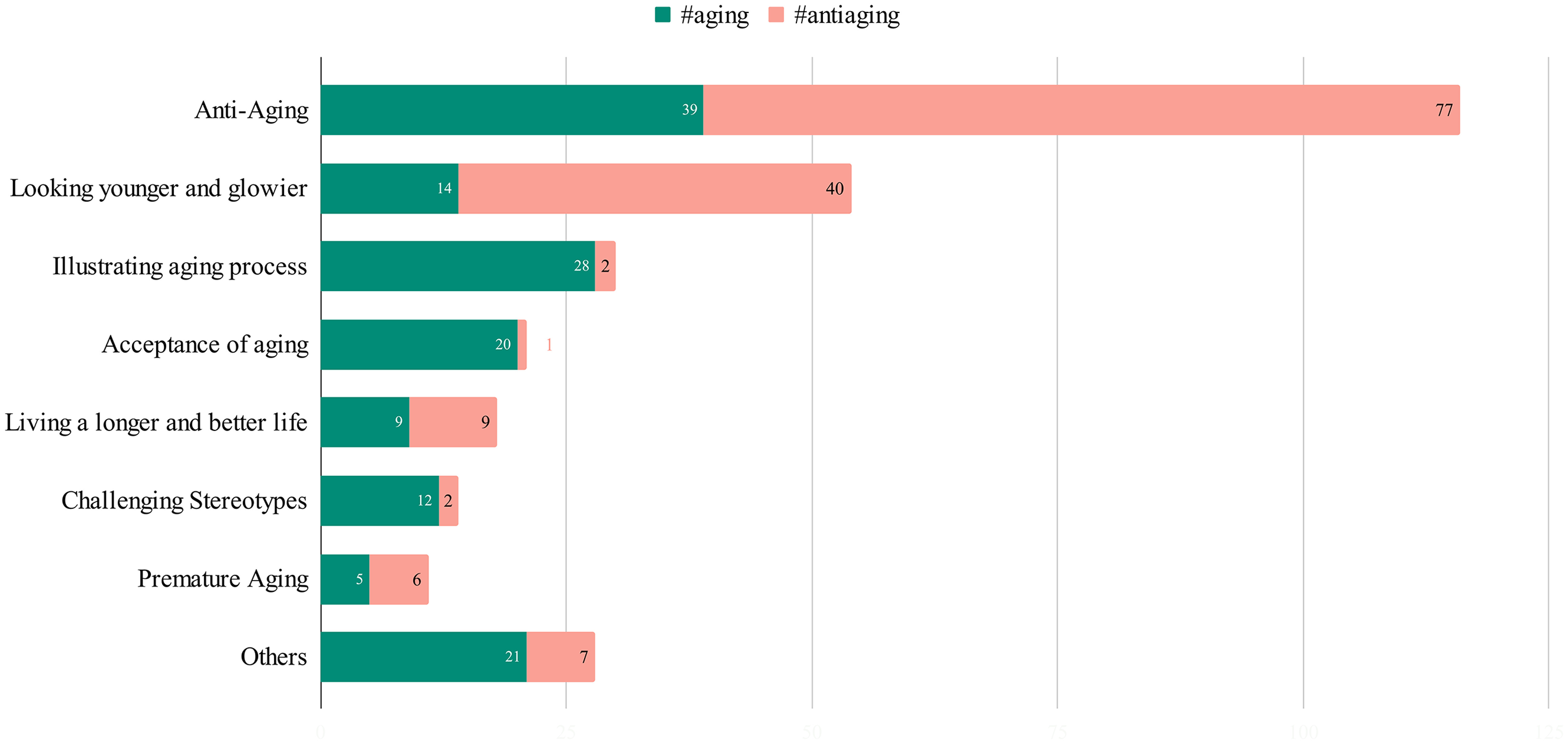
Portrayal of aging on TikTok.
For example, one video featured a woman in her early thirties sharing her personal “secrets” for retaining youthful skin, reflecting the pervasive societal pressure to maintain a youthful appearance. She began by stating “I actually trained my face not to move too much,” explaining that she consciously limited her facial expressions to prevent the formation of wrinkles. This practice demonstrates the extent to which women are expected to control even their natural behaviors to conform to beauty standards. She then recounted a childhood memory, saying: “I remember when I was growing up I would do a lot of crazy expressions, but my mom would be like, ‘you are moving your face too much’, and it actually helped me.” This anecdote shows the early internalization of societal pressures to maintain a youthful appearance, as her mother's advice shaped her beauty practices from a young age, with such narratives reflecting the Double Standard of Aging Theory (Momtaz et al., 2021). Finally, she added, “I also started using eye-cream when I was eighteen,” emphasizing the growing trend of prejuvenation (Haykal et al., 2023).
Subsequently, 20% of the samples encouraged viewers to achieve a younger, “glowier” appearance. They did not express the willingness to defy or delay aging; instead, they implicitly conveyed a desire for youth restoration, revealing how societal beauty norms are internalized and reproduced in subtle ways. To illustrate, a 50-year-old creator demonstrated her “5-minute morning glow routine,” applying retinol serum and “anti-aging” marketed products while emphasizing the importance of looking “fresh” and “glowy.” She stated: “It's not about looking younger—it's about feeling confident and glowing from within.” Although her message appears empowering, the use of “youth-boosting” products subtly reinforces the association between youth and beauty. The video's popularity and comments praising her “ageless glow” reflect the broader cultural valorization of youthfulness, even when framed as self-care or confidence-building.
Furthermore, samples illustrating the aging process elucidate maturing with either a scientific basis or personal experience, offering a factual or experiential view of aging, which contrast with the problem-solution approach of anti-aging marketing. Medical professionals presented age-related physical alterations, which enabled the audience to better understand their bodies. Meanwhile, some users shared their first-hand experiences (e.g., unexpected physical deterioration, facial dysmorphia, changes in people's attitudes), initiating discussions in relation to aging. To exemplify, the first content creator shown in Figure 2 revealed her life journey by narrating: In case you are feeling old, it's your reminder today that I met my husband when I was 37, got married at 39, had my first baby right before my 40th birthday, and my second when I was 43. There is still time, and I am almost 60. I feel like I am just getting started. Don’t worry! You have time, you can create and be anything you want, and you can reinvent yourself anytime you want. Life is an amazing journey. Enjoy it. (Creator 1: @clarissadanehughes, about the portrayal “Illustrating aging process”)
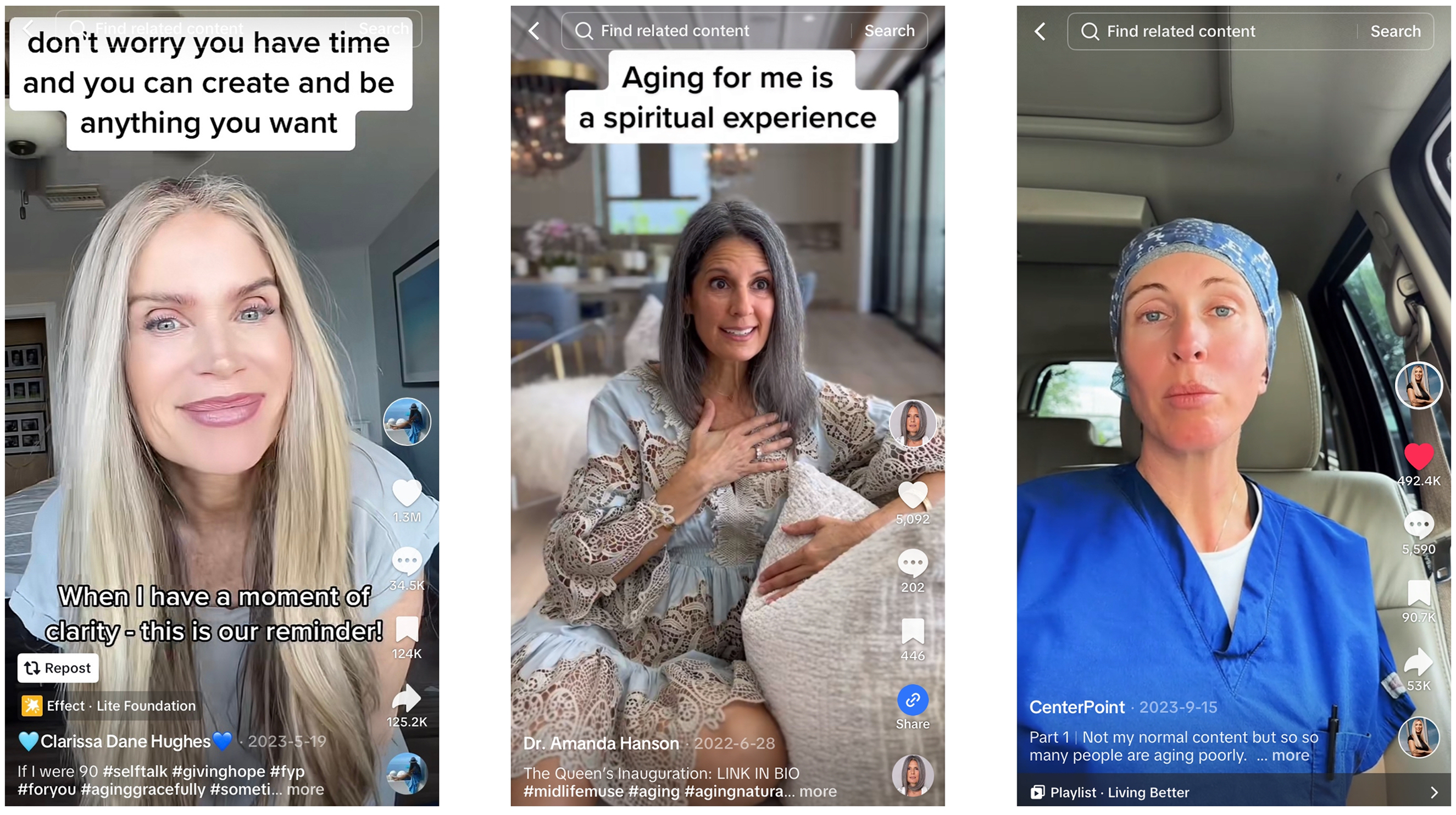
TikTokers content about aging as a process and its acceptance. Reprinted with permission from @clarissadanehughes, @midlifemuse, and @laurenyancey909.
Pertaining to the body of literature, @clarissadanehughes touched upon the discussion of Social Clock Theory (Rook et al., 1989) and aging anxiety. To demonstrate, the theory proposes that social expectations determining the timing of significant life events are an underlying reason for age-related fears. Ergo, the above-mentioned content was analyzed as reminding the audience that every person has unique and distinctive timing in their major events by illustrating her own life story.
Proceeding to the next portrayal, “Accepting aging” encompassed samples highlighting the importance of embracing the aging process. These videos concurrently emphasized the “beauty” and “soulfulness” of the aging process and boldly refused to engage in anti-aging practices, offering a more progressive standpoint to approach aging. This theme shows TikTok can be a space for counter-narratives that resist the commodification of femininity (Benwell & Stokoe, 2006) and the pressure to conform to youthful beauty standards. It aligns with the broader discourse on healthy aging (WHO, 2020). To illustrate, the content creator depicted in the second screen capture of Figure 2 stated that we were meant to age and explained: It is one of the most wholly sacred rites of passage, so I won’t mute it, I won’t cover it up, I won’t freeze myself in time. If we are running to all the places saying, make this stop, make this go away, freeze this, I don’t like it, we will never actually access the spirituality of aging. Aging is a gift and I refuse to wrap myself up. (Creator 2: @midlifemuse, about the portrayal “Accepting aging”)
Her narrative reflects a profound shift in how aging is perceived, moving away from fear and resistance toward acceptance and empowerment, exemplifying how TikTok can serve as a platform for redefining societal norms and fostering a more inclusive, empowering discourse on aging.
Contents “Promoting healthier and longer life” introduced various guidance to retain physical as well as mental health, leading to a prolonged and happy life, widely referred to as “successful aging” and “optimal aging.” This shifts the public focus from appearance to overall health and longevity, emphasizing a more holistic approach to aging. For example, a cataract surgeon depicted in the third screen capture of Figure 2 shared lifestyle tips she had learned in her clinic. Firstly, she explained the importance of maintaining a home garden by commenting that having a garden has nothing to do with eating anything out of that silly [sic] garden; I think it's about having plans for the future; it's about that person having something to look forward to and having something that they are working towards.
Secondly, she encouraged the audience to lift weights by highlighting that “it is the only proven way to increase bone density.” Lastly, she warned not to retire early unless one is planning to move to a second career or to a hobby that requires mental exercise by further explaining that the brain needs exercise: “Just get a part-time job that starts later, volunteer somewhere, stay active, but when you retire and your purpose is gone and your mental exercise is gone, you will go downhill” (Creator 3: @laurenyancey909, about the portrayal “Living longer and better”).
The sixth portrayal, “Challenging ageist stereotypes,” accumulated samples aiming to confront and dispute overarching age-related prejudices as well as the stereotypical lifestyles and behaviors expected of older people, showcasing how TikTok users challenge societal stereotypes. For instance, the content portraying a senior woman shed light on how people tend to homogenize older adults by classifying them into the single “aged” category by accentuating that “I am not a parent and I am not a granny, and I never wanted to be. I am not a granny. I don’t feel like one, I don’t relate to it. So, call me witch, call me bitch [sic], but do not call me granny.”
In another example of this portrayal, a senior lady discussed the issue of being age-appropriate, highlighting humans’ tendency to assume that certain practices are age-appropriate for people in certain age groups. She exemplified the argument with a beauty and personal style-related stereotypization, expecting women in their fifties to cut their hair short. Essentially, she confessed that she had been unconsciously internalizing such ageist stereotypes, assuming she should trim her hair short. This underscores how societal stereotypes can limit older adults’ sense of identity and self-expression.
This theme reflects the growing concern among younger generations (e.g., Generation Z) about aging, even before visible signs appear. Videos under this theme often feature anti-aging routines or discussions about “prejuvenation,” where younger individuals take preventive measures to delay aging. This theme answers the research question by showing how anti-aging discourse has expanded to include younger demographics, reflecting a broader societal shift toward valuing youthfulness at all ages. It also highlights the influence of visual platforms like TikTok in amplifying these concerns.
Advancing to the last portrayal, 11 videos addressed premature aging, reflecting the growing concern among younger generations (e.g., Generation Z, Generation Alpha) about aging, even before visible signs appear. Videos under this theme often feature anti-aging routines or discussions about “prejuvenation,” where younger individuals take preventive measures to delay aging. These samples show how anti-aging discourse has expanded to include younger demographics, reflecting a broader societal shift toward valuing youthfulness at all ages. It also highlights the influence of visual platforms like TikTok in amplifying these concerns. For example, a TikTok interview conferred about the appearance of youngsters by commenting: “Apparently Gen Z [sic] is, like, aging really rapidly.” As a response, the second speaker added: “I mean they are chronically online: depresso, stresso [sic].”
Concerning existing literature, Haykal et al. (2023) discovered an unprecedented urge among youngsters, defined as Generation Z, to prolong their youth and delay aging. Confirming their finding, a 14-year-old content creator showed her anti-aging routine that she had been practicing since the age of 12. The creator confidently demonstrated her daily routines, such as taking two apple cider vinegar pills, drinking green tea, applying sun-cream, taping up the car window with construction paper as it blocks most of the UV rays, using face sheet masks twice a day, and sleeping on a satin pillowcase. This video exemplifies the internalization of societal beauty standards at an alarmingly young age, raising concerns about the long-term physical, psychological, and social impacts.
Content objective
Across the samples, three primary objectives emerged: “Informing” (55%), educating and raising awareness about aging; “Entertaining” (25%), using humor and storytelling to engage viewers; and “Promotion” (17%), featuring sponsored content advertising skincare products or cosmetic procedures. Notably, 86% of promotional videos were tagged under #antiaging, whereas less than 15% appeared under #aging. This reflects an intention of those users to disseminate a narrative that is prevalent in cosmetics marketing, sharing a view that perpetuates the problem-solution approach, thus supporting previous studies (Ringrow, 2016).
It highlights how TikTok serves as a multifaceted platform for discussing aging, where informative, entertaining, and promotional contents coexist. Although informative and entertaining videos offer opportunities for education and empowerment, the prevalence of promotional content under #antiaging underscores the platform's role in amplifying societal pressures to conform to youthful beauty standards. This duality reflects the broader tension between challenging and reinforcing ageist narratives in digital spaces.
Promotional theme
Drawing on Brown and Knight's (2015) studies, this section analyzes promotional TikTok videos to identify key approaches in marketing beauty-related goods and services. Although the theme of “Fighting” was absent, the other four approaches—“Advice” (38%), “Femininity” (24%), “Repairing” (22%), and “Aging” (16%)—were prevalent in the dataset. The dominance of “Advice” reflects a strategic shift toward framing promotional content as helpful recommendations rather than direct sales pitches.
An overarching feature of “Advice”-themed videos was the detailed usage instructions and advisory framed speech, persuading the audience that the aim of the video was to assist them rather than sell a product. To exemplify the most widely used promotional approach, a video, promoting hyaluronic acid powder, began with the speaker stating “I have to tell you about something I have been incorporating. And honey, I feel like we are onto some shit [sic],” framing that she intended to advise and share skincare tips that were effective on her skin, instead of directly advertising the product. Subsequently, she demonstrated how to prepare and use the powder through step-by-step instructions such as adding distilled water into the container, adding a scoop of powder, shaking the mixture until it dissolves, keeping the blend in the refrigerator until the texture turns to jelly, and applying the mixture to the skin before the moisturizer.
Regarding the absence of the theme “Fighting,” TikTok commercial samples of this study employed keywords such as “slow down aging” and “delay aging” instead of framing maturing as a battleground to combat against physical signs of aging. Yet, prior to reaching a conclusion, it is essential to note that the types of contents analyzed in the two studies were different; the first analyzed print advertisements in print media, whereas the latter examined audio-visual contents on social media.
Discussion
As aging is an integral part of human life, it is a frequent topic of discussion in daily conversations, traditional media, and social media. Hence, it is important to scientifically explore how these discussions frame the process of maturing as they affect not only people's perceptions of aging but also the self-perception of older adults. Namely, due to the ubiquity of visual social media, UGC posted on these platforms (e.g., TikTok, Instagram) plays an essential role in influencing people's views on topics, including the aging process. The multimedia content produced and shared as advisory by individuals, instead of a traditional marketing approach with a corporate advertisement, creates a sense of testimony that is now used to dispute the narratives about aging in digital spaces.
Therefore, this exploratory research incorporated netnography and qualitative content analysis to answer a research inquiry: how is women's aging depicted on TikTok through UGC? Our results demonstrate that more women created contents about aging and anti-aging practices than men on TikTok. When men are depicted in these videos, they are often explicitly tailored to engage a female audience and attract their attention to reflect on the topic. Regarding the perspectives of aging, almost three-quarters of samples treated maturing as an external process, focusing on physical signs of aging. Recalling the Double Standard of Aging Theory (Momtaz et al., 2021; Sontag, 1972), our research shows that women were more likely to perceive aging from a visual perspective, highlighting changes in appearance and approaches to responding to signs of aging.
This may stem from established societal beauty standards that emphasize youthfulness as a central component of female desirability (Sontag, 1972), reinforcing the “male gaze.” Unlike men, who may not face the same level of scrutiny regarding their aging process, women are more likely to perceive aging in terms of visible external changes, reflecting both personal concerns and broader cultural pressures. Furthermore, the emphasis on anti-aging narratives on TikTok contrasts with the active and healthy-aging discourse promoted by international organizations such as the WHO and the UN, which focus on well-being, functional ability, and social participation (WHO, 2020). Although some content in our dataset did highlight optimal aging, mental well-being, and longevity, these narratives were less prevalent than those centered on appearance.
Additionally, the nature of TikTok as a visually driven platform where users simplify complex topics into digestible, visually appealing content can reinforce narratives that emphasize physical attributes over other dimensions of aging, such as internal or experiential aspects of growing older. The tendency to frame aging through a visual lens aligns with broader shifts in digital culture, where the prominence of image-based platforms has contributed to the growing importance of aesthetic self-presentation (Veloso da Silva, 2025).
In connection with that, the analysis identified seven main aging portrayals, such as promoting anti-aging narratives, aspiring to a younger and “glowier” look, illustrating the aging process, accepting aging, promoting a healthier and longer life, challenging ageist stereotypes, and addressing premature aging (listed from the most widely used to the least used portrayals). Although videos about premature aging comprised the least portion of the dataset, the contents vividly portrayed younger generations’ concerns toward aging through their anti-aging routines and the discourse of prejuvenation, aligning with the findings of Haykal et al. (2023). Conversely, videos of senior women sharing their personal experience of aging offer insight into understanding the causes of aging anxiety, resonating with Social Clock Theory (Momtaz et al., 2021; Rook et al., 1989). These contents also empower and guide viewers in their maturing journey by offering the narratives of optimal and healthy aging, with creators acting as digital opinion leaders. Hence, the content on TikTok concomitantly reinforces certain stereotypes while also offering the scope for more precise information (e.g., from specialists) and challenging prevailing narratives. This coexistence of contrasting narratives—both reinforcing and challenging traditional views on aging—shows the participatory nature of UGC.
Additionally, the objectives of UGC ranged from informing and entertaining to promoting. Concerning videos with paid partnerships, the vast majority of promotional videos were uploaded under #antiaging, aiming to advertise beauty products or services. In addition, sponsored videos predominantly employed the theme of “Advice” by providing step-by-step instructions on product usage, sharing personal experiences, and offering guidance to the audience.
Conclusion
This study highlights how TikTok serves as an online space for users to discuss and contribute to (re)shaping societal perceptions of aging, especially about women. The predominance of external perspectives on aging, as well as the emphasis on anti-aging and youthful appearance, shows that beauty standards and societal expectations on women that have been prevalent in traditional media are still reflected on UGC, thus potentially reinforcing certain viewpoints. Contrastingly, the presence of content illustrating the aging process, challenging stereotypes, and promoting acceptance of aging indicates a positive shift towards more inclusive and empowering narratives about aging. Therefore, the platform has the scope to both contribute to prevailing discourses and provide counter-arguments, being a diverse space for discussions. Yet TikTok's system, its algorithm, and how well users play with it to obtain visibility might also influence which content becomes more widely debated.
These findings have practical implications for varied publics, including content creators, public health advocates, and marketers who want to influence online aging narratives. Considering that TikTok serves as a place of both reinforcement and resistance to ageist ideologies, initiatives aiming to promote more inclusive representations of aging should strategically engage with the platform's visual culture and logic. For example, collaborating with influential users to produce content that challenges gendered ageism and promotes aging as a more holistic process rather than a cosmetic problem. Moreover, brands and marketers can adopt our results to shift away from fear-based anti-aging rhetoric and practice more respectful messaging that aligns with contemporary understandings of age and identity.
Finally, further studies on this topic could focus on conducting cross-platform and multi-language research to compare how aging is depicted on other social media platforms in comparison with TikTok and in other languages. This approach would provide a broader understanding of the narratives prevalent in various digital spaces and in different countries, further contributing to the knowledge of other social and cultural aspects related to aging in distinct societies. Additionally, future research could develop a longitudinal analysis to examine how representations of aging on social media evolve over time, thus identifying trends and shifts in the discussions about aging.
Supplemental Material
sj-docx-1-mmc-10.1177_20501579251350900 - Supplemental material for Digital ageism? Analyzing women's depictions on TikTok through user-generated content under #aging and #antiaging
Supplemental material, sj-docx-1-mmc-10.1177_20501579251350900 for Digital ageism? Analyzing women's depictions on TikTok through user-generated content under #aging and #antiaging by Ariuntsetseg Erdenebat and Admilson Veloso da Silva in Mobile Media & Communication
Footnotes
Acknowledgement
This paper is the result of a research project developed by Ariuntsetseg Erdenebat and supervised by Admilson Veloso da Silva as part of the Scientific Students' Associations Conference in Budapest (in Hungarian, Tudományos Diákköri Konferencia, TDK). Their investigation won first place in the Communication and Media section at the Corvinus University of Budapest in May 2024 and was classified to represent the university in the national round (OTDK).
Declaration of conflicting interests
The authors declared no potential conflicts of interest with respect to the research, authorship, and/or publication of this article.
Funding
The authors received no financial support for the research, authorship, and/or publication of this article.
Informed consent statement
The authors obtained informed consent from the content creators whose video captures are depicted in this article.

Supplemental material
Supplemental material for this article is available online.
Author biographies
Ariuntsetseg Erdenebat is a Mongolian graduate who has completed her Bachelor's degree in Communication and Media Science at Corvinus University of Budapest and researches aging narratives on visual social media platforms.
Admilson Veloso da Silva is a Brazilian journalist with an MBA in Digital Communication, a master's degree in Social Communication, and a Ph.D. in Communication Science from the Corvinus University of Budapest. Additionally, Veloso is an Assistant Research Fellow at the Institute of Finance and the Institute of Marketing and Communication Sciences from Corvinus, with previous industry experience in journalism, digital marketing, social media management, and public relations. His main research interests are social media studies, youth self-presentation, and visual mobile communication.
References
Supplementary Material
Please find the following supplemental material available below.
For Open Access articles published under a Creative Commons License, all supplemental material carries the same license as the article it is associated with.
For non-Open Access articles published, all supplemental material carries a non-exclusive license, and permission requests for re-use of supplemental material or any part of supplemental material shall be sent directly to the copyright owner as specified in the copyright notice associated with the article.
