




Abstract
This paper argues that understanding the power of TikTok’s visual discourse is a crucial part of conceptualising the character, inspiration, and ambition of Iran’s Gen-Z-led uprising, both at home and across the diaspora. TikTok is a social media platform that depends on visuality. As such, it creates its own specific forms of messaging. This paper seeks to apply an innovative methodology of ‘Visual Discourse Tracing’ to the Iranian protests. It uses this carefully devised, process-driven method, to highlight the core ways in which TikTok has amplified the message of the Iranian protests, connecting to the grassroots movement and to the longer history of Iranian women’s struggle for freedom. Visuality and social media have been crucial in shaping the character of these contemporary protests, necessitating proper theorisation when understanding the wider Iranian protest movement.
Introduction
This paper highlights the core visual styles that have characterised the Iranian protest movement across TikTok, following the death of Mahsa Amini on the 16th of September 2022. It also speaks to the way in which TikTok creators have recontextualised and transformed visual styles, frames and themes from across the long history of the Iranian women’s movement. While significant, it is important to state that these practices are only a fraction of the vast range of behaviours through which the Iranian women’s movement has manifested itself. The paper in this sense makes a narrow, yet important contribution to conceptualising the ‘Woman, Life, Freedom’ movement. It focuses on analysing the 30 most-liked TikTok videos, running from the 16th of September to the 31st of October 2022. This period coincided with unprecedented international coverage. On Twitter/X, there were 350 million Tweets on the Persian #Mahsa_Amini hashtag during this time (Jones, 2022). TikTok also saw huge spikes in content-creation. The paper speaks to the central research question:
How have Iranians within Iran, and across the diaspora community, used TikTok to contribute to the cause of ‘Woman, Life, Freedom’, following the death of Mahsa Amini?
In answer to this, the paper argues that young Iranians have effectively harnessed the potential of popular TikTok formats and styles, as well as recontextualising, transforming and both consciously and unconsciously repurposing prominent symbolism from the Iranian women’s movement from 1979 onwards. This has highlighted the lived experiences of Iranian women, and in doing so speaks to the causes of the protest movement.
The death of Mahsa Amini provided the grounds for a nation-wide protest against the regime. In this way, her death brought together previously disparate people from across Iranian society, with their own set of grievances against Khamenei’s rule. Her death was a powder keg that ignited the long-standing Iranian women’s movement into action. Grievances around marriage, women in the workplace, divorce, sexual violence, gender equality and mandatory hijab were brought together behind the banner of Mahsa Amini. While the protest was cross-generational, it was driven by Gen-Z (born 1997–2012), who were the most unanimous in their disdain for the Islamic Republic – their cause was closely linked to freedom of expression. As TikTok is primarily used by young people, this part of the Iranian movement has had certain capacities to play a potential role in raising youth awareness around the world. The top 30 videos have amassed over 42 million likes.
I am very aware of the importance of allowing this content to speak for itself and refraining from inflecting too much of my own positional perspective onto it. In June of 2023, I attended a talk entitled ‘Woman, Life, Freedom: Solidarity with Iran’. The panel consisted entirely of Iranian women, including British-Iranian author and former prisoner of the Iranian state Nazanin Zaghari-Ratcliffe. The speakers emphasised the importance of publicising and understanding the women’s struggle in Iran, but to be cautious of both orientalist tropes, and of speaking for the women of Iran. This paper seeks to abide by these ideas as guiding research principles.
The paper first provides an account of the death of Mahsa Amini, the suppression of the protest movement, the subsequent firestorm across social media, and the generational elements characterising the struggle. Secondly, I detail the specific utility of TikTok as a site of social protest, as well as its specific power within the Iranian protest movement. Thirdly, I detail the specific power of visual discourse, understanding it as immediate, circulable and often unambiguous.
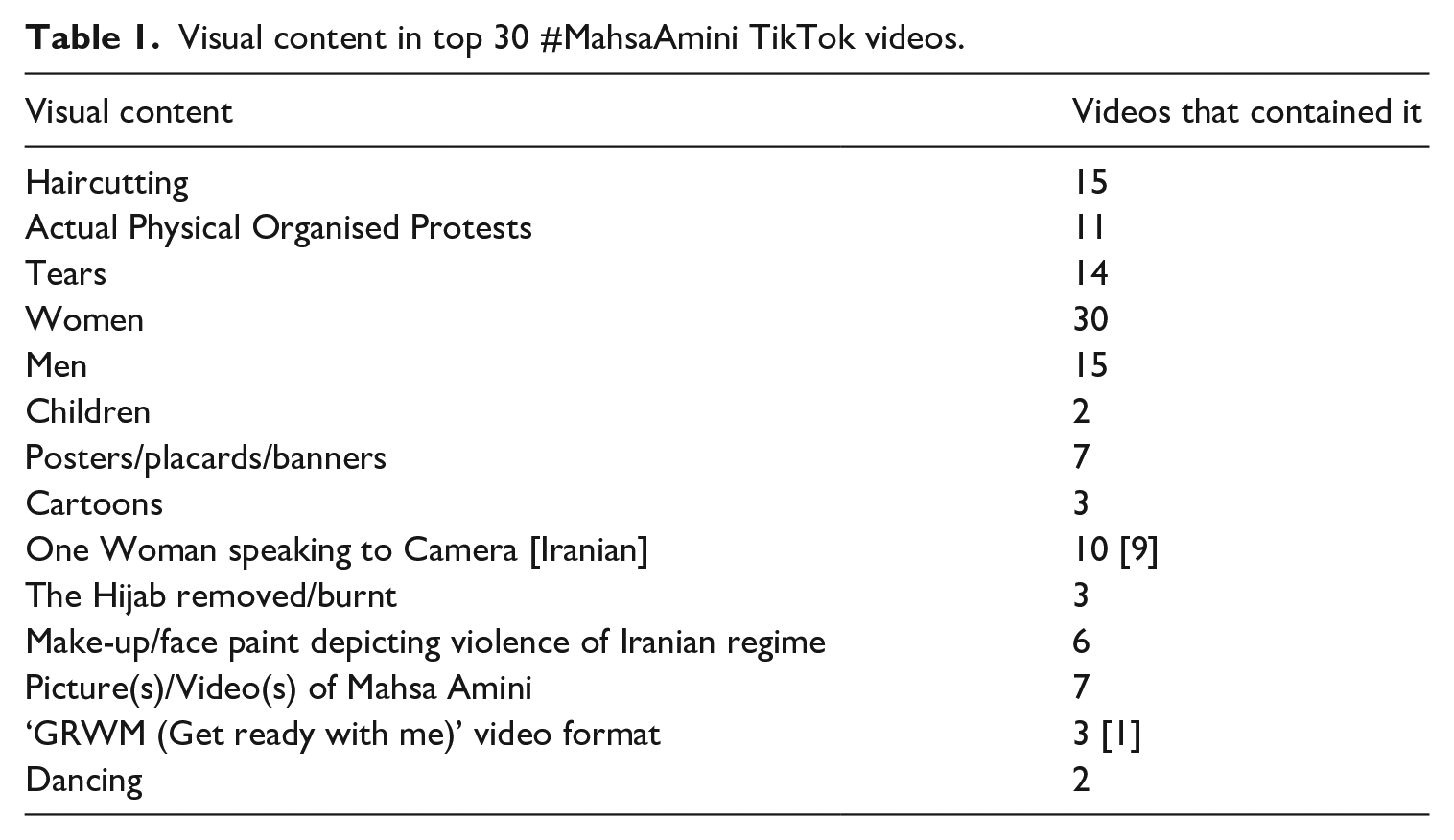
Fourthly, the paper details the methodology of Visual Discourse Tracing (VDT), showing its suitability for capturing visual culture present across the 30 TikTok Videos. Fifthly, the paper presents the results, which is Step 1 (Visual Design) of VDT. Table 1 details the occurrence of various visual frames. Sixthly, I analyse the production, distribution and consumption of the videos – which is limited in its reach due to the high levels of data protection on the platform and the option of anonymity. This is Step 2 of the methodology, known as ‘Visual Interpretation’. Seventhly, the paper conducts Step 3, ‘Visual Explanation’. Here, the core visual frames are condensed into several sections for analysis – these are ‘Get Ready With Me Videos’, ‘Make-up’, Haircutting/Hijab Burning and Removal’ and ‘Iranian Woman to Camera’. Together, these different frames have worked to create an effective, powerful, emotive, visual culture – which is deeply connected to the history of the Iranian women’s movement.
Visual content in top 30 #MahsaAmini TikTok videos.
Mahsa Amini, social media and the Iranian protests
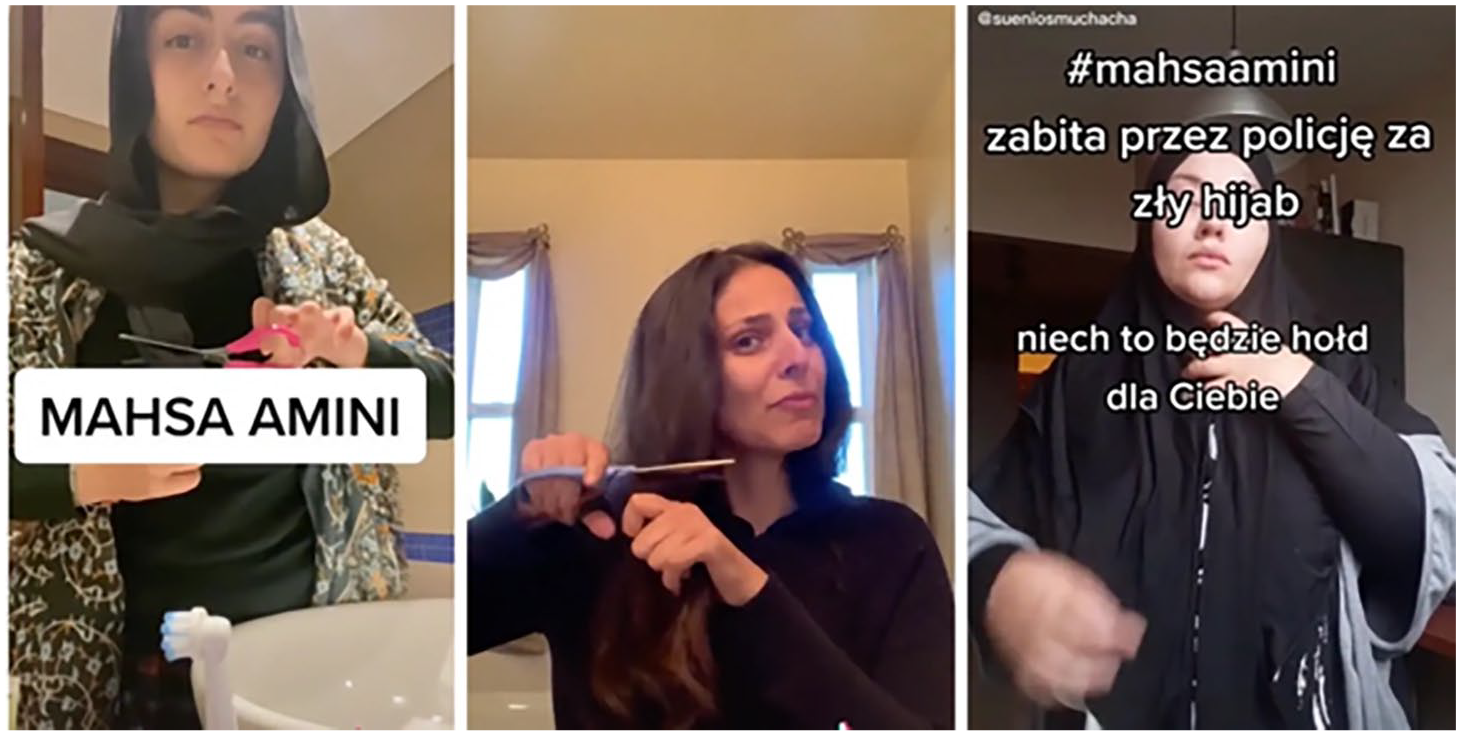
On the 13th of September 2022, Mahsa Amini, a 22-year-old Kurdish Iranian woman, was arrested by ‘The Guidance Patrol’. They are also sometimes referred to as ‘the morality police’. She was arrested for not wearing the hijab ‘properly’. Footage later shows her collapsing. On the 16th of September, Mahsa Amini died while in the custody of the morality police. Since then, Iranians have been protesting in a variety of different ways – in the streets, in places of work, in schools, and on social media. The image below shows three women engaging in haircutting as form of social protest on TikTok.
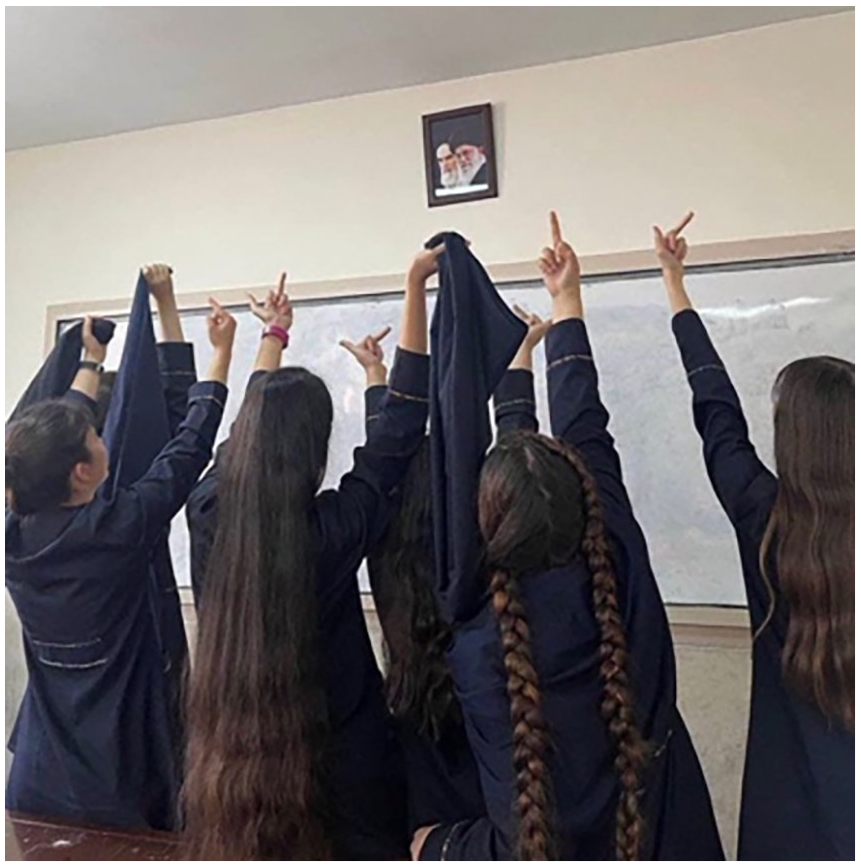
Footage also shows women and girls knocking off the turbans of Iranian Shi’a clerics, stamping on Khamenei’s picture, and showing him the middle finger. The image below shows Iranian schoolgirls holding their removed hijabs in one hand while they raise their middle fingers up to a picture of Ayatollahs Khomeini and Khamenei.
(@farokh, 2010)
Young people have faced severe consequences for their involvement in the protest movement. The Iranian ‘Human Rights Activist News Agency’ puts the total number of dead protesters at 530 (BBC, 2023). While people from across Iranian society have supported the movement, the Iranian youth have represented the tip of the spear. Undeterred by the death of their peers, protesters doubled down for many months, growing the profile of the movement across the world.
As such, there is a sense in which this movement can be described as ‘generational’. Iran’s median age is currently 31.7 (World Population Review, 2023). On social media, the movement has been able to achieve unprecedented levels of publicity internationally. Elements of the Iranian diaspora, calculated at 4,037,258 in 2021 (Academic Accelerator, 2021), have contributed on TikTok. Through social media, ‘transnational space becomes a space in which different physical and virtual positions and actions overlap, enabling the construction and negotiation of identities and interactions among Iranians all over the world’ (Ghorashi and Boersma, 2009: 687).
TikTok as a site of social protest
TikTok content is multimodal, usually containing visual, musical and linguistic discourse. The fusion of these modes of communication creates videos which are unambiguous, emotive, connected and direct. Many of them copy and/or mimic each other, using similar custom templates and songs. While it would be reductive to call the videos ‘memes’, they do seem to be ‘memetic’, in that they are ‘related to each other in complex, creative, and surprising ways’ (Shifman, 2013: 2). In this sense, they are intertextual/inter-visual, and speak to each other. Individual TikTok videos of the Iranian protest movement cannot be understood in isolation, but as small elements of culture, that constitute meaning as part of a much larger whole.
Social movements benefit significantly from the platform, as ‘[t]he connections between users, including their (in)direct interactions, the intimacies, and other affective registers yielded, function as momentums of the movements by forming “affective publics”’ (Lee and Abidin, 2023, 3). TikTok is a particularly visceral and evocative platform. Visual content is often highly stylised and caricatured. So, TikTok videos that purport to raise awareness of political oppression, facilitate the construction of highly graphic, emotive and impactful digital narratives. Users deploy ‘non-verbal messages in strengthening the messages delivered so that their presentations are stronger and get a wider reach’ (Putro and Palupi, 2022: 41). Literat and Kligler-Vilenchik (2023: 1) view the platform as ‘a vital space to study social movements due to its centrality in youth lives and its ability to give voice to youth political expression in richly creative ways’.
In Iran, TikTok is technically banned, as are most social media platforms. However, youth activists have been able to access the app through Virtual Private Networks (VPNs). The ‘Regulatory System for Cyberspace Bill’ has sought to further restrict Iranians’ access to the Internet and social media, in an aim to force the population onto the restricted and monitored ‘National Information Network’. In particular, the bill has sought to outlaw the use of VPNs, which many young Iranians use to access blocked sites like Facebook, Twitter/X and YouTube. The voice of protest is being supressed at every turn by the Islamic Republic. Usefully, the Iranian diaspora have amplified their increasingly quietened voices. As Roksaneh Salartash put it: Many argue that ‘performative activism’ on social media is not effective, but the current uprising in Iran is a unique case. The people in Iran are so limited in their speech. Protestors who share photos and videos of the revolution online often get arrested or threatened by police. This is why the Iranian diaspora worldwide have become their voices. While the regime uses the media as a tool of oppression, the Iranian diaspora uses it to expose the country’s human rights violations and keep the movement’s momentum around the world (Salartash, 2022).
Specific power of the visual
This paper understands visuality as having an immediate, emotive, often unambiguous nature, which marks it out as distinct from other forms of discourse. Schlag (2016) provided the motivation for analysing the visual, pointing to its neglect within international relations, security studies and political science moreover. The temptation has been to focus on language through discourse analysis, neglecting the visual as its own powerful form of communication. As she put it, ‘symbolic forms do themselves constitute meaning and cannot be reduced to the spoken or written word alone’ (Schlag, 2016: 181).
Hansen (2011) argued that images are immediate, circulable and ambiguous. They are immediate in the sense that they elicit an emotional reaction as soon as they are observed. This is especially true when considering the visceral and often traumatic visual content contained within the videos of the Iranian women’s movement. There is good science to support this, particularly within the field of posttraumatic stress disorder (PTSD), showing that the majority of flashbacks contain visual memories (Wang et al., 2019). Visual stimuli leave a specifically deep and profound impact on the human psyche. They leave an imprint. As Pant (2015) points out, the human brain translates visual data and processes its meaning 60,000 more quickly than language. In this way, images are uniquely and immediately emotional.
In the world of social media, especially TikTok, images are increasingly ‘circulable’. Hansen (2011) uses the term ‘circulability’ to refer to the rapid way in which images spread. Pictures depicting traumatic events do so especially rapidly, searing themselves into the public consciousness. This was true even before the world of social media, in which images such as ‘Tank Man’ and ‘Napalm Girl’ forced their way into the international psyche due to both their emotive and explanatory character (Der Derian, 1992, 134). A contemporary example of this is Alan Kurdi, a 2-year-old Kurdish Syrian boy whose dead body was pictured on a Turkish beach. This image spread in such a way that it elicited an outpouring of support for refugees fleeing Syria, raising awareness of their struggle. As Mielczarek put it, ‘[w]ithin hours, Aylan was a symbol, a hashtag and a meme’ (2018: 1). Social media exaggerates the immediacy of this process. When opening an app, users can see traumatic and disturbing content ‘by accident’. As Hansen writes, this is something to pay close attention to as, ‘the possibility of seeing – even if one decides not to – is in itself an important condition’ (Hansen, 2011: 57). While this may be traumatising for individuals, social movements benefit from this ability to elicit widespread awareness and provoke a response.
The third part of Hansen’s theory, ‘ambiguity’, is where this paper deviates. Images, especially traumatic and emotive images, often have a clear and unambiguous meaning. For instance, the image of the second plane hitting the World Trade Centre has immediate meaning – words are not needed to fill in the blanks. Subtitles and headings can help to frame a picture, or use it in a political way, but they are not always necessary. They can add to meaning, but they are not required for meaning to exist. This is often forgotten in the modern era of social media, in which content creators pack their videos full of captions and scripts. Often, traumatic images speak for themselves.
Visual discourse tracing
Across a variety of different case studies, I have been gradually developing a systematic approach to analysing visual discourse, adapting LeGreco and Tracy’s (2009) process of Discourse Tracing and Wang’s (2014) approach of Visual Grammar. Both of these methodologies can be seen as being influenced by, and as reactions to, Critical Discourse Analysis (CDA). Drawing on these approaches, this paper constructs a methodology called Visual Discourse Tracing (VDT).
LeGreco and Tracy’s (2009: 20) Discourse Tracing claims to enable ‘scholars to critically analyse the power relations associated with change and proceed with a systematic data analysis process that is accessible and transparent’. While influenced by CDA’s focus on context and power, they argue that it has suffered from a lack of clarity – ‘the systematic ways in which the methods unfold are left implicit’ (LeGreco and Tracy, 2009: 20). In response, they provided a clear approach to critically tracing the development of discourses across time. Their process is as follows:
1) Establish the case study around a point of turmoil or rupture. Review relevant literature.
2) Collect micro data (e.g., tweets, TikTok videos), meso data (e.g. official documents), and macro data (historical/contextual information). This data should then be ordered in a chronological format. Themes can then be established through reading through the data.
3) Research questions should be created, based on these core themes. The case study is then written up as a response to these questions.
4) Draw conclusions and establish further implications.
This notion of identifying and analysing specific themes, that develop across rupture points, has been very influential to the development of VDT.
However, as Wang opined, ‘in more than 20 years’ development of CDA, it has mainly focused on verbal texts, and ignored the visual as secondary to verbal texts’ (2014: 265). Wang’s (2014) work is highly influential to this paper, as it synthesises the guiding principles of CDA into a method for conducting visual analysis. The first three steps of VDT are largely drawn from his model of ‘visual grammar’ but have been updated and clarified. Furthermore, three innovations are made to step three, which ask researchers to properly conceptualise relevant frames, identities and inter-visual contexts and histories before drawing conclusions. This paper extends van Dijk’s (2008: 3) contention that ‘understanding discourse is understanding text/talk-in-context’ to the visual.
Step 1: Visual Design (Wang, 2014). This step encourages scholars to observe what characters, objects, figures and actions are contained within their images. It entails a close consideration/reading of the actualities of the video or image. It is important to describe the images as displayed at this stage, without making judgments or attempts at thematic analysis. This is so that later analysis is not adversely affected by early biases and judgments.
Step 2: Visual interpretation (Wang, 2014). This step seeks to analyse three factors – production, distribution, and consumption: ‘during “production,” producers . . . are the main focus; ‘distribution’ focuses on how the news media disseminate ideologies . . .; and “consumption” is concerned with how viewers unconsciously assimilate the ideology’ (Wang, 2014: 269). Specifically, this step marks a break from CDA methods. Fairclough’s (2003) notion of ‘interpretation’ focused on intertextuality, interdiscursivity and discursive strategies. This paper believes these processes are important – but are best left to Step 3. Interpretation here is much more concerned with socio-political context – understanding the power-related implications of who produces, distributes and consumes visual content. This step is crucial in understanding how visual discourses gather and change meaning as they pass through these three levels. It gives an impression of any ideology that may be encoded within the images. However, on TikTok and social media moreover, this Step may lead to the conclusion that content creators are difficult to verify and so researchers must caution against assuming identity and intentionality.
Step 3: Visual explanation (Wang, 2014). This step examines wider socio-cultural-political contexts within and through which discursive practices are ascribed interpretations and meanings. It encourages researchers to conduct an analysis in which ‘the ideologies deconstructed by the first two steps are presented clearly within a larger social or cultural context’ (Wang, 2014: 269–270). In this way, it allows for a contextually grounded tracing of visual narratives, which considers how visual semiosis contributes to a wider movement or discourse. A prior understanding of the core historical/contextual realities is crucial before conducting this analysis. In this paper, core question such as ‘what actually occurred and why?’ and ‘what relevant social practices are at play?’ have been briefly covered in the earlier section about ‘Mahsa Amini, social media, and the Iranian protests’. Step 3 analysis details the ways in which the TikTok videos speak to these realities in depth.
Unfortunately, Wang (2014) does not give due consideration to the importance of ‘frame’ and ‘identity’ at this particular stage. While Step 1 identifies the actualities of images, Step 3 asks researchers to conduct a thematic analysis on these objects, characters and actions. With a proper understanding of identity, framing and inter-visual meaning, it is possible to analyse the dominant themes, their success and their correspondence to relevant historical-contextual events. In my previous paper, ‘How to analyse visual propaganda in the Middle East’, I offered two suggestions to rectify this.
Innovation A: Frame. It is important at this stage to consider the idea of frame, or narrative. Borrowed from semiotic analysis, this concept refers to ‘a central organizing idea or storyline that provides meaning to an unfolding strip of events, weaving a connection among them’ (Gamson and Modigliani, 1987: 143). Awareness of prominent narratives is important, as it allows for better understanding of purpose and meaning (Walsh, 2022: 7). Innovation B: Identity. To be comprehensive, research projects should consider the specificities of these relevant identities . . . This requires significant analysis of data and literature, as well as theoretical innovation (Walsh, 2022: 7).
Also, while Wang pays some attention to considerations of visual intertextuality/interdiscursivity, this is ultimately underdeveloped. This paper’s concept of ‘frame’ or ‘narrative’ can be aptly understood through the notion of inter-visuality, heavily influenced by Fairclough (1992) and Wodak’s (2011) work on intertextuality and interdiscursivity. Identity can similarly be viewed as being constructed through these connected and historied narratives. Intertextuality speaks to the ‘insertion of history into a text and of this text into history’ (Kristeva, 1986; 39). Through these perspectives, it is possible to understand how these frames, narratives and identities are recontextualised and transformed. This paper understands recontextualization as the replication of visual elements, themes, frames and identities from their original context, into new, but connected ones. It understands transformation as ‘tangible . . . changes when one discourse is converting from one social practice to another’ (Wu et al., 2016: 442).
Put simply inter-visuality ‘examines how images don’t simply illustrate texts but also look to other images’ (Callahan, 2020: 37–38). In this understanding, an ‘image never stands alone. It belongs to a system of visuality’ (Ranciére, 2011: 99). As stated, this paper understands the visual as important in its own right. While studies into showing the imagery’s relation to prominent texts within the protest movement would be noteworthy, this article focuses specifically on visuality. It is unique in the way it applies the concepts of intertextuality to the visual, showing not only how TikTok videos speak to each other to create complex digital visual narratives, but speaking also to the visuality of the long history of the women’s struggle in Iran.
Innovation C: Inter-visuality. Contextualising particular images requires due consideration to the ways in which they speak to visual narratives across the history of the concept or movement, in this case the Iranian women’s struggle. Equally important are the images’ resonance with the other images in the dataset and the wider ‘Woman, Life, Freedom’ movement; and the way in which they co-opt common visual, textual, and auditory frames, styles, and genres from across other content on the given platform, in this case TikTok.
Results and discussion
This section first outlines the most prominent imagery contained within the 30 TikTok videos in Table 1 and briefly reflects upon their inter-visual relationship with the wider movement (Step 1). It then analyses the production, distribution and consumption of these videos (Step 2), arguing that the format of TikTok prevents researchers from making assumptions about identity and intentionality, but acknowledging that the videos had a large, most-likely Gen-Z-dominated audience. Step 3 analyses the most prominent frames in detail, showing their connectedness with the wider movement and the long history of the Iranian women’s movement.
Step 1: Visual design
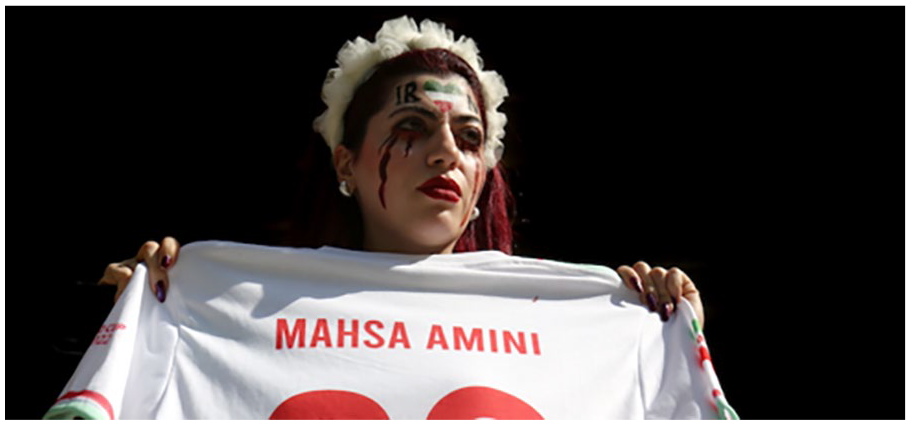
Across the dataset, practices that have been cornerstone symbols of the internal protests within Iran were present. Their prominence across diasporic groups and allies shows how the protest has trickled into the wider global consciousness. In this sense, those within Iran and outside of Iran are talking to each other through shared symbolism, interdiscursivity and inter-visuality. Make-up was used in a creative and evocative way – depicting black eyes, blood, slogans and calling for help. Make-up effectively and simply symbolised the current and historical violence facing women in the Islamic Republic, speaking to the long history of women’s oppression in Iran. This has been seen across the ‘Woman, Life, Freedom’ movement. Below is an image of an Iranian woman using this style of makeup, but this time in person at the Qatar World Cup, another core site of protest.
Step 2: Visual interpretation
Production
It was not possible to pinpoint the location of each account and/or video. TikTok allows users to withhold their location from public view, in line with security and data protection. However, some accounts choose to provide this information regardless. The young woman depicted in @tytysplanett (2022) and @persiatok’s (2022) video suggests that she is in Iran. Many of the accounts are said to be based in Europe, Canada and the United States (US).
However, most of the videos did contain content involving Iranian women from across the world. Videos containing an Iranian woman speaking directly to camera may appear easier to confirm as legitimate lone actors; however, TikTok makes it especially difficult to get detailed information about accounts and influencers. As such, it is not possible to be certain of specific identity or intentionality. The ambiguous nature of TikTok accounts poses a consistent issue for the truth claims of research conducted on the platform. Some of the accounts that clip footage from elsewhere are made by very obscurely named, anonymous accounts, such as @persiatok and @itsblurry7. While these may be more overtly suspicious, none of the accounts are completely verifiable.
Distribution
The videos were shared hundreds of thousands of times, by accounts from all over the world. Compared with the earlier days of broadcasting, in which distribution was controlled by specific media outlets, TikTok paints an acutely complex picture. Couple the high number of shares with the unknown intentionality, purpose, and identity of the accounts, and it is very difficult to get a grasp of the nature of distribution that goes beyond a simple numerical value.
While only two of the accounts in my dataset were entirely anonymous, it is impossible to be certain of the identity and intentionality of the named accounts, nor who is sharing their content. Even accounts that contain the same person across many hundreds of videos could hypothetically be copied from a source account.
The TikTok videos in this dataset were shared widely, by a large number of accounts. They have made contributions to the discourse of the Iranian women’s movement, but to discuss the intentionality behind not only their creation, but who was sharing them, is beyond the scope of this paper.
Consumption
On TikTok, videos spread rapidly across the world, most prominently to other young people, who engage via commenting, sharing and ‘stitching’. 25% of users are between 10 and 19 years old, 22.4% between 20 and 29 and 21.7% between 30 and 39 (Shepherd, 2023).
The top 30 TikTok videos mentioning Mahsa Amini in their caption or a hashtag between 16th September and the 31st of October 2022 have amassed 42,219,000 likes as of August 2023. Each video received at least 514.2 thousand likes. All of them contained some use of the English language. TikTok does not allow researchers to view where these likes came from in the world. This is unfortunate, as it would give a sense of where the movement had most resonated.
Nevertheless, due to the demographics of TikTok, it can be reliably surmised that the majority of the viewers were from Gen-Z. Reaching over 42 million likes, these 30 videos have reached a large, most likely young, audience.
Step 3: Visual explanation
GRWM
One particularly powerful form of video, common across TikTok, is the ‘Get Ready with Me’ (GRWM) format. Writing on the impact of GRWM videos, Hill (2019: 338) has argued that influencers ‘engage in acts of stylized self-representation, and over time and through the repeated synoptic viewing of their videos . . . they each seemingly stabilize into culturally intelligible female subjects’.
(@nikaazarrii, 2022) (@soulmaz, 2022) (@sararoudbari, 2022)
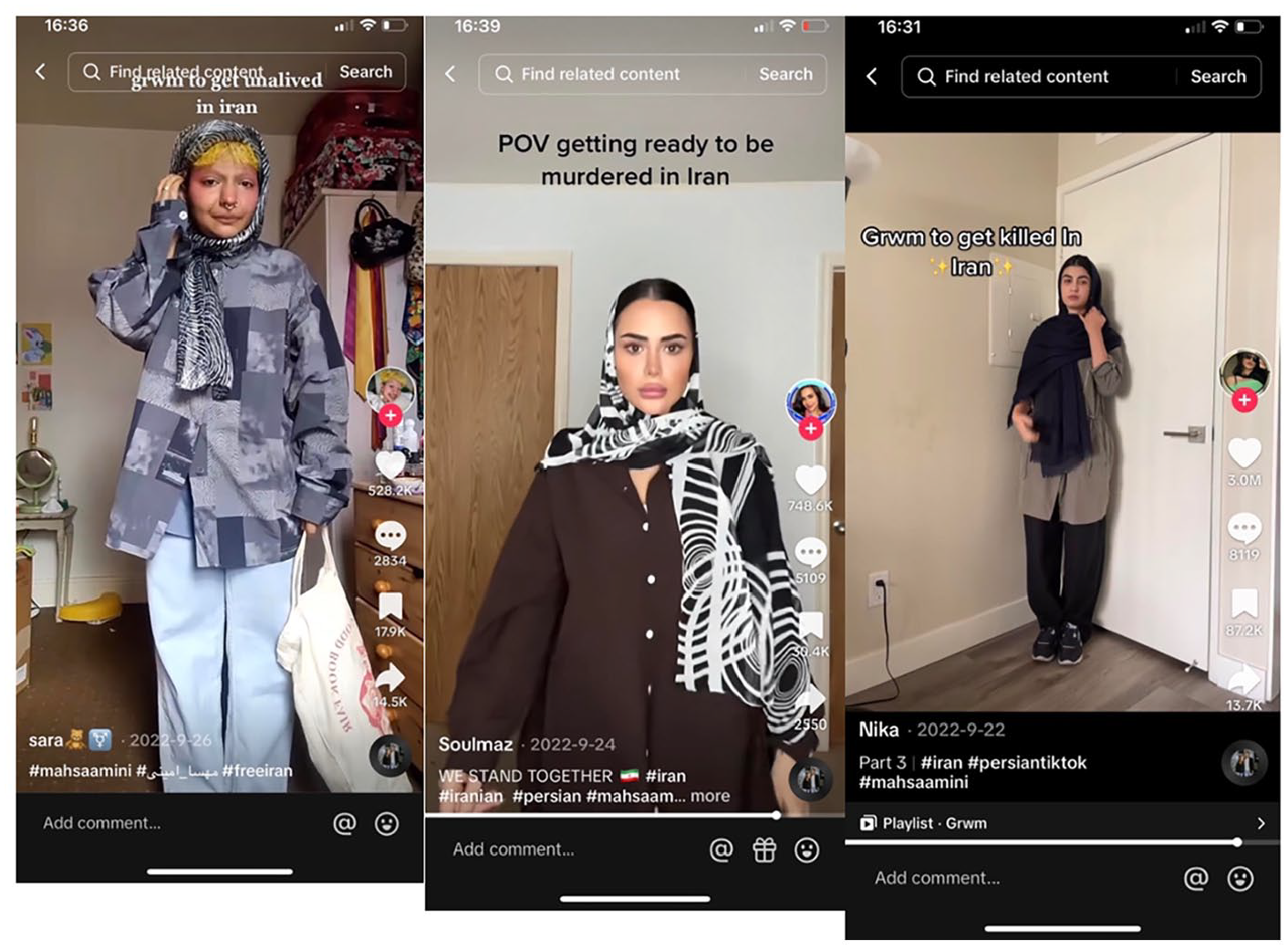
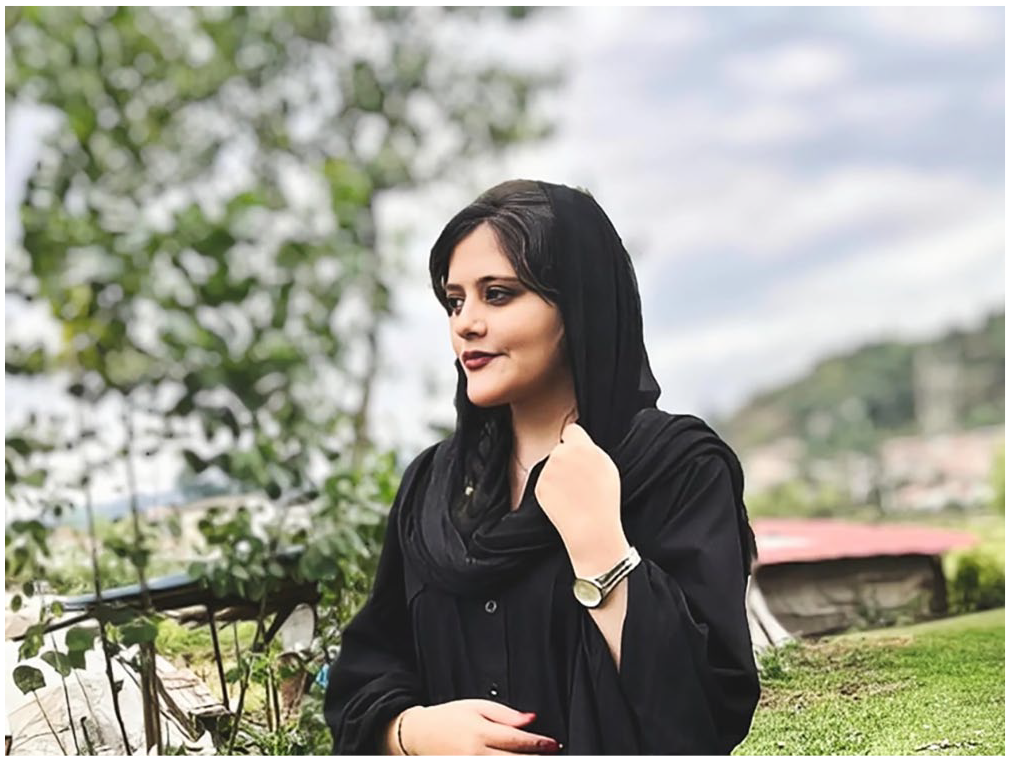
The screenshots above all show young women wearing headscarves. The three captions read ‘Grwm to get killed in Iran’ (@nikaazarrii, 2022), ‘POV getting ready to be murdered in Iran’ (@soulmaz, 2022), ‘GRWM to get unalived in Iran’ (@sararoudbari, 2022). All three seem to be specifically referring to of Mahsa Amini, appearing within ten days of her death. Mahsa Amini wore her hijab in a similar fashion to the young women in these videos, wearing some makeup and leaving some hair visible. In this sense, there is an inter-visual relationship between the videos and Mahsa Amini. The recontextualization of her image serves as a powerful symbol of a young woman, wanting to freely express herself, but being forced into abiding by the Islamic Republic’s standards. Below is the classic image of Mahsa Amini, replicated in videos, on banners, and throughout the consciousness of the protest movement.
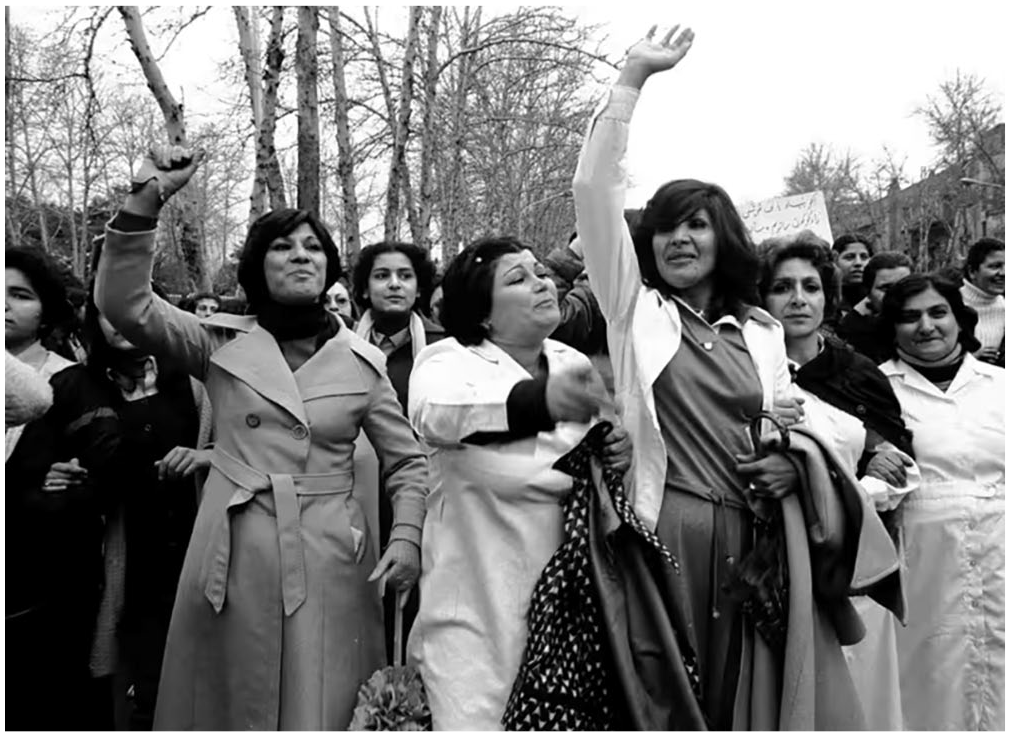
GRWM videos typically show young women freely expressing themselves and their identity through clothes. The protest movement has flipped this – using the easily translatable and universal medium of fashion to denote the lack of freedom of expression in Iran. In this way, the creators have transformed this visual style/genre through inter-visuality. @sararoudbari (2022) and @nikaazarrii (2022) are both in tears when wearing the hijab, denoting a sense of despair, fear, and trauma. The focus on the lack of ‘freedom of expression’ has appeared consistently across the long history of the Iranian women’s movement. Below is an image from the 8th of March 1979 in Tehran, showing women protesting against compulsory hijab in the months following the Islamic Revolution.
Makeup
Make-up tutorials are extraordinarily popular across TikTok – they represent a significant percentage of all videos. Content creator Purple Haze Mue told Dazed, ‘[m]ake-up is a great way to grasp people’s attention and spread messages. It’s a non-threatening and a non-aggressive way to speak to all kinds of people, even those who don’t enjoy beauty’ (Newman, 2021). Content creators have not merely recontextualised the use of make-up, but really transformed its meaning on TikTok, into an overtly political tool.
The videos in the dataset have further developed and recontextualised this new functionality, to create visceral visual narratives Make-up was used in a variety of ways, not purely as ‘make-up tutorials’, but also to tell stories, and on the faces of protestors on the streets. The below example, from @makeupbyshab (2022), uses make-up to denote the brutality of the Iranian morality police.
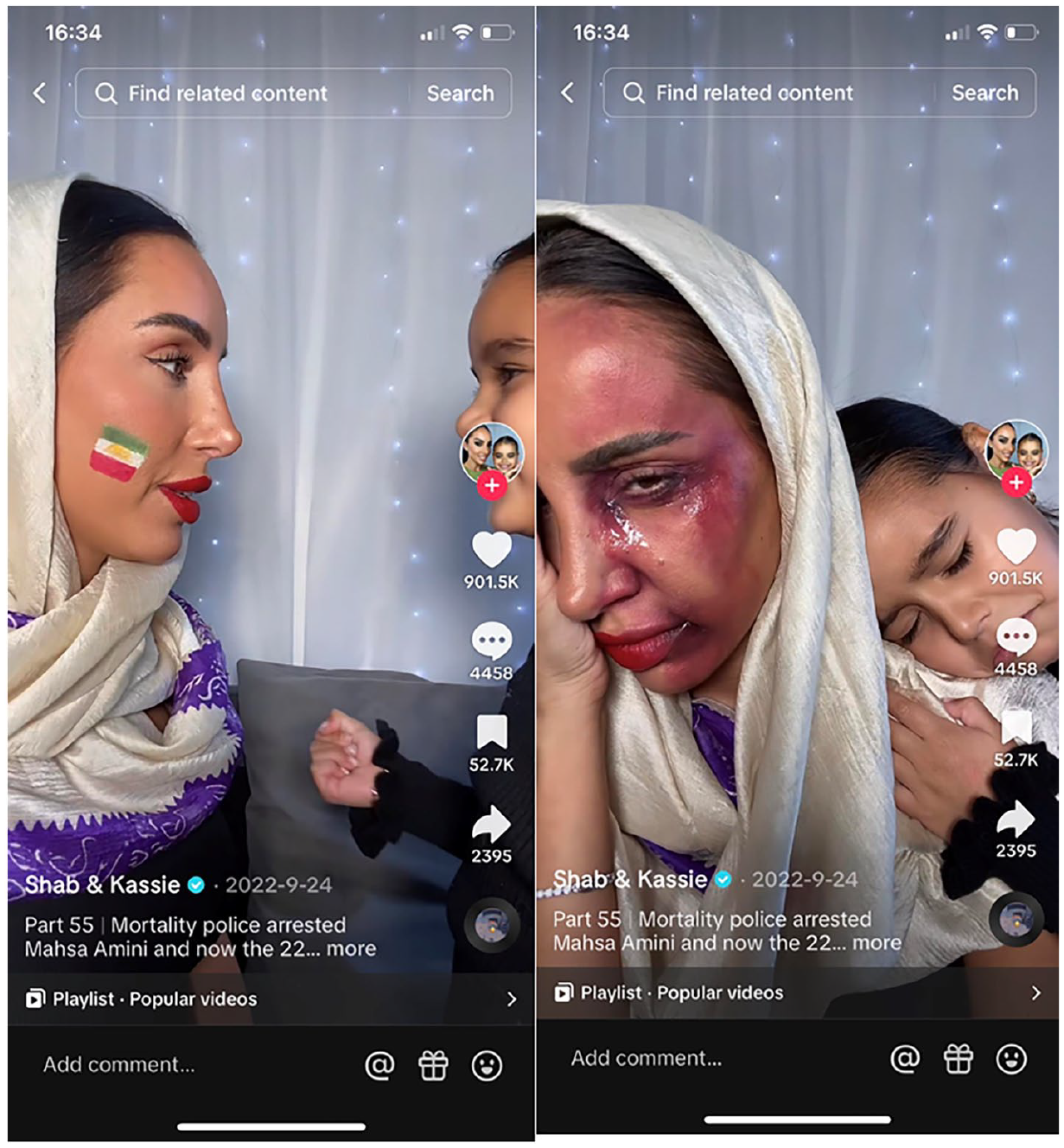
On the left, the mother is seen wearing her hijab in a relaxed fashion. The headscarf then falls off. When the daughter tries to pull it back on, the screen flashes and the mother is shown as having a black eye (made with make-up), implying she has been punished by the morality police. In this way, makeup may constitute an ‘overt form of self-presentation and political combat’ (White, 2019: 140). Furthermore, the symbolism of the suffering child is universal in its ability to engender empathy and support (Bouvier and Machin, 2018; Seo, 2014). The presence of the flag of the Islamic Republic on the cheek is a common theme across many videos, making the audience completely clear on who the video is criticising.
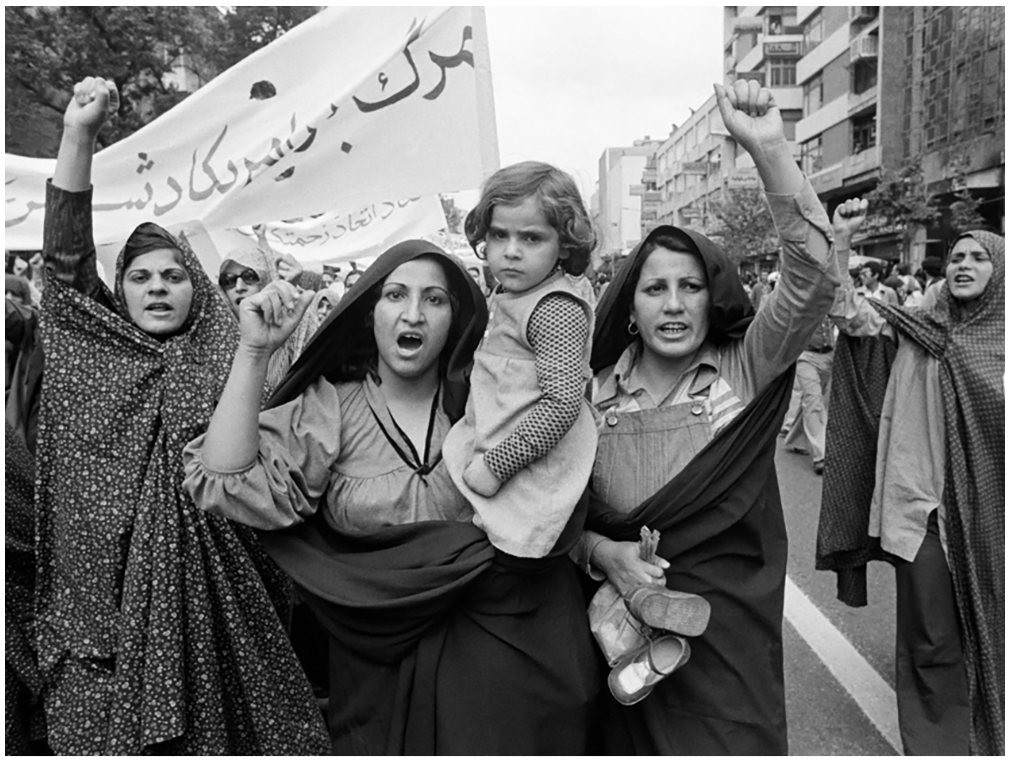
Cross-generational engagement in protest – particularly that of mother and daughter, constitutes a recurring frame, from 1979 onwards, emphasizing solidarity across the broad spectrum of Iranian women and girls. Below is an image from Iran on the 1st of May 1979. Central to the image is a mother holding her daughter in one arm and a clenched fist in the other, protesting against the Islamic Republic’s treatment of women.
Furthermore, the wearing of make-up and the partial or full removal of the hijab has played a central role in constituting the identity of the strong, secular, Iranian woman throughout the modern period. Pardis Mahdavi (2023) writes of the 1980s, ‘the headscarf sliding back one millimeter at a time, [earned] the movement the nickname the “Millimeter Revolution.” The more strands of hair pulled forward, the more revolutionary the individual. If the hair was dyed, even bolder’. Below is an image of a mass protest from 1979, shortly after the Islamic Revolution.
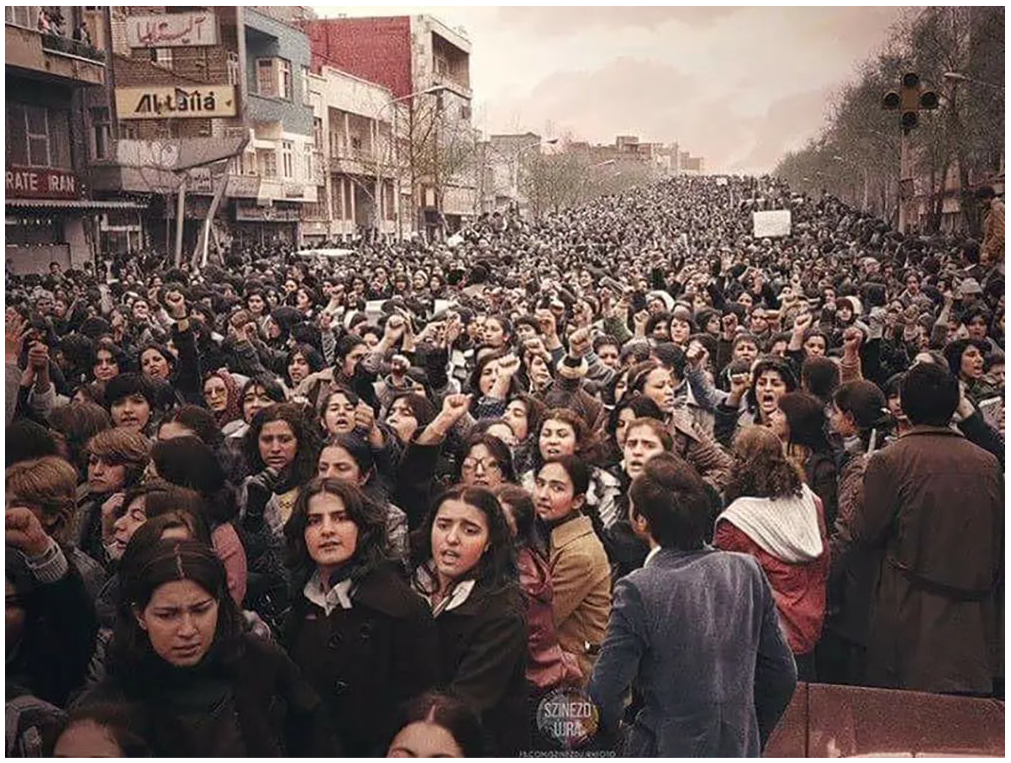
During this period, as Sadeghi-Boroujerdi (2023: 49) wrote:
The protests were met with violence and intimidation by pro-Khomeini Islamist forces and the chant, ‘either hijab or a smack in the head!’ Many women refused to be intimidated and despite unremitting pressure continued to found women’s associations and groups in spaces and institutions where dissent remained possible.
Thus, the violence depicted by @makeupbyshab evokes many instances of the violent suppression of women’s rights, prominent within Iranian and diasporic consciousness.
In a YouTube video, content-creator Arian Rodriguez (2015) said make-up ‘is not self-indulgence, it is self-preservation, and that is an act of political warfare’. There is a sense in which make-up works as a powerful expression of resistance against the Islamic Republic, reclaiming the right to freedom of expression and dispelling notions that the wearing of make-up denotes Western patriarchy.
These modes of expression have powerfully conveyed meaning and have been popular across social media, both within and outside of Iran. As Campbell (2023) put it:
Content generation on social media and other platforms about the protests has largely been driven by and around women, with young women in particular utilizing popular video-sharing formats or apps like TikTok to blend cultural and political commentary, in the form of make-up or fashion tutorials that are designed to draw attention to the injustice of Mahsa’s death, while cleverly evading the platform’s moderation of politically charged content.
Haircutting and removal/burning of hijab
Like applying make-up, ‘cutting hair is a symbolic gesture rallying rebels against the Islamic regime’ (Chafiq, 2022). Furthermore, ‘[w]omen burned their headscarves in protests, which spread rapidly across the country, as a symbol of their rejection of the state’s control over their private choices’ (Bazoobandi, 2022). The Islamic Republic is determined to hold onto mandatory hijab, due to its remarkable ability to construct the identity of women, demarcating the boundaries of their agency within Iranian life. There is an Islamic basis to the practice, but even more important to Tehran is the hijab’s ability to help them to maintain control over their population. Thus, the two practices of haircutting and removing/burning the hijab can be viewed as profound symbols of resistance against the regime. Removal of the hijab is a message in itself, but to then cut the exposed hair and burn the hijab is demonstrative of a more emphatic expression of resistance. The four images below all use haircutting in different, but equally powerful ways.
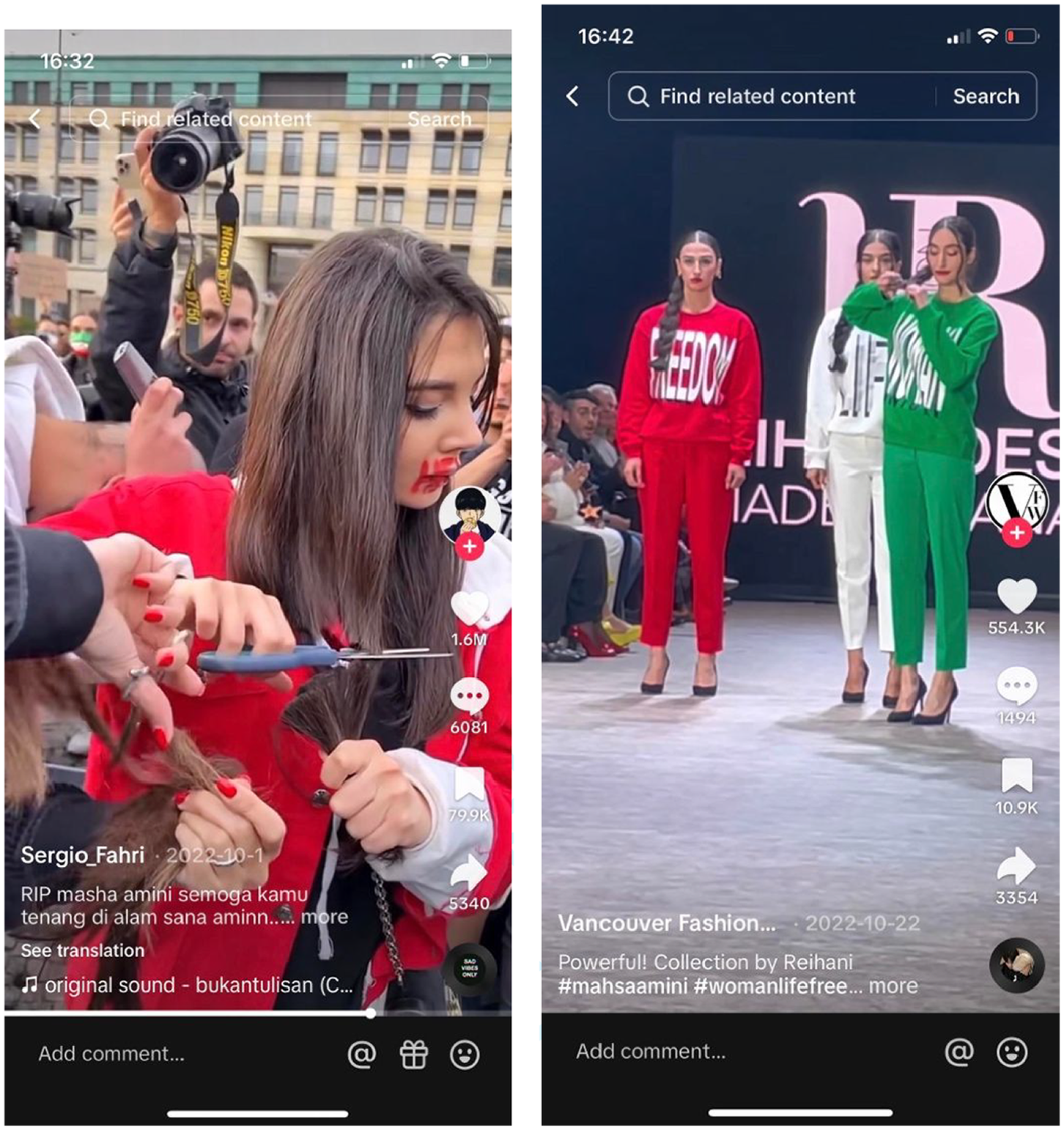
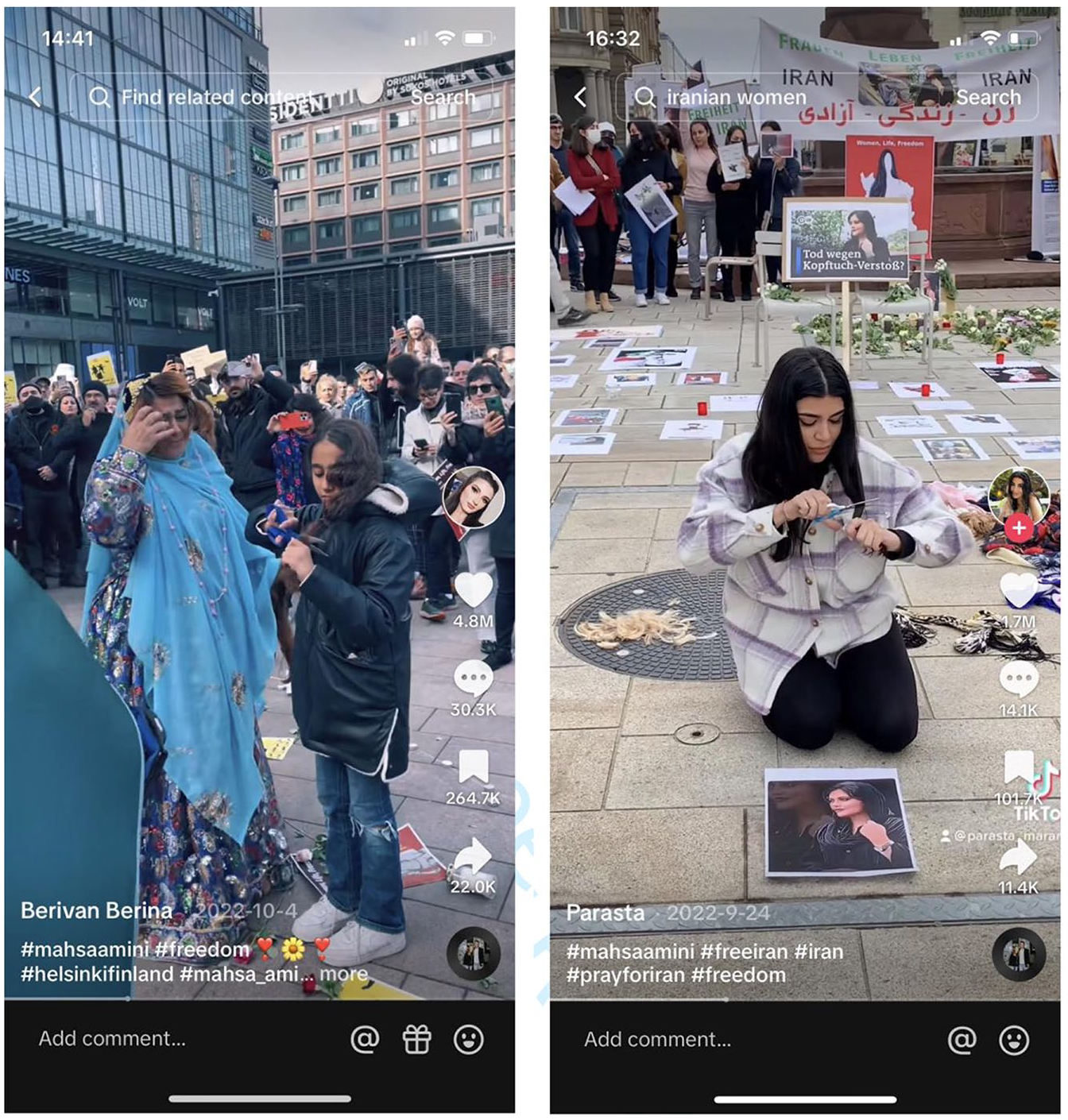
The significance of this symbolic form of haircutting, known as Gisuborān, is profound within Iranian/Persian culture, dating back one thousand years to the epic poem Shahnameh. In the poem, the heroic king of Persia, Siyavash, is unjustly killed. His wife Farangis, and the girls following her, cut off their hair in an act of protest. Ever since, this act has come to symbolise feelings of mourning, anger, injustice and frustration. In this sense, the prominence of haircutting on TikTok recontextualises canonical cultural texts into contemporary expressions. It has been widespread across the ‘Woman, Life, Freedom’ movement, inter-visually connecting the disparate parts of the protest through shared visual styles. Speaking of the interdiscursive/intertextual relationship, Shara Atashi opined: Women cutting their hair is an ancient Persian tradition . . . when the fury is stronger than the power of the oppressor. The moment we have been waiting for has come. Politics fuelled by poetry. [Haircutting] is itself a ceremony of mourning to better expose the suffering at the loss of a loved one (Alkhaldi and Ebrahim, 2022).
However, perhaps the most extraordinary mode of protest, hijab burning, is a fairly modern phenomenon. Hijab burning has occurred both online and on the streets across the ‘Woman, Life Freedom’ protest, but it does not connect as closely to the longer history of the women’s movement as other forms of expression. The video from @iammohammad (2022), shown below, depicts a protest apparently within Iran. Although the account’s personal location is marked as New York, the footage seems to show the streets of an Iranian city, suggesting this content was not generated by the user but borrowed from elsewhere. Women are seen rhythmically moving towards the fire, swinging their removed hijabs, and throwing them into the flames. The caption reads: ‘They killed her, But Mahsa Amini is alive in our mind’. The video was posted just 6 days after Mahsa Amini’s death.
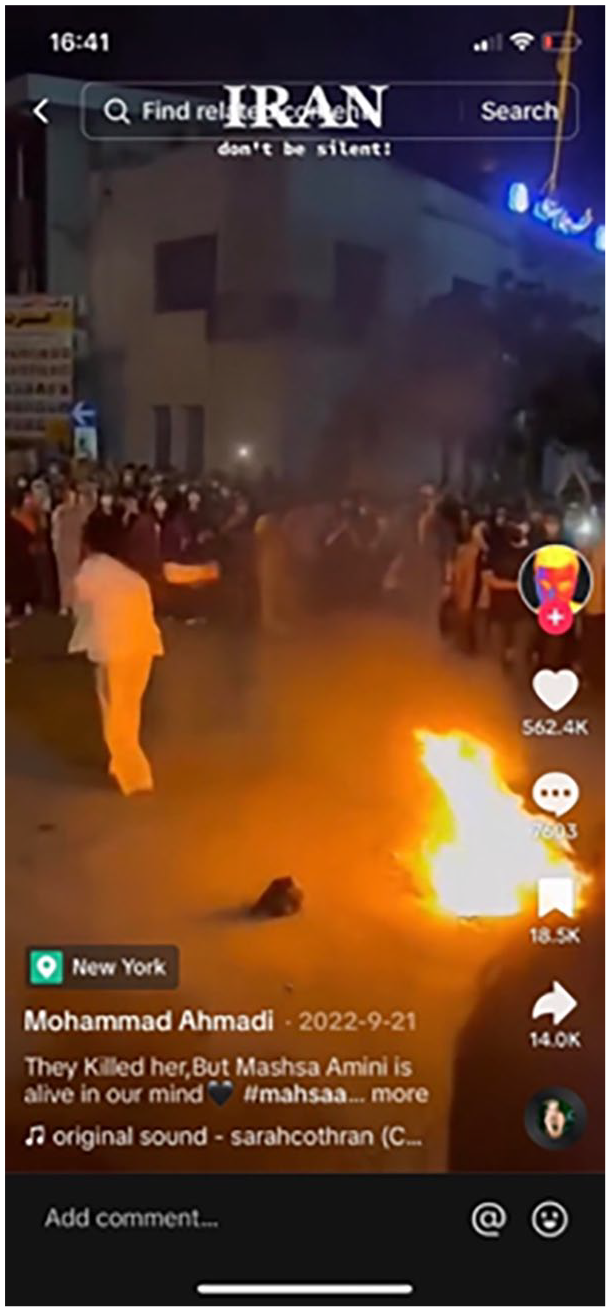
Writing about the burning of the hijab following Mahsa Amini’s death, Bazoobandi (2022) opined: Across the world, the hijab is a personal religious choice made by women. In Iran, however, it was transformed into a symbol of oppression and marginalization. The current rejection of the hijab by Iranian protesters, therefore, does not necessarily equal a rejection of Islam, or Islamic values. Rather, it represents the anger and frustration of the people – namely women – who have been deprived of their basic freedom of choice for decades.
Iranian women to camera
Both within Iran, and across the Iranian diaspora, TikTok videos were created in which a single Iranian woman spoke to the camera. This style of video is common across the dataset, but also makes up a large percentage of videos across the platform. This is a very modern format – whereas women previously used to express themselves primarily through street protests, young Iranian women are now turning to this personal, direct format, that speaks to individual lived experience.
The second most liked video in this dataset (3.8 million likes) was produced by a young Iranian woman, apparently from within Iran, under the handle @tytysplanett (2022). Her words interact with her tearful, exhausted, fearful physical expression to create a powerful demonstration of the impact of the death of Mahsa Amini and the subsequent crackdown on protestors within the country. She says: I don’t know where my family is . . . They said that everyone are being killed . . . I feel like I’m trapped in a small case . . . I have my human rights. I just want them I want nothing more . . . If you don’t stand with me I’m going to lose faith in everyone (@tytysplanett, 2022).
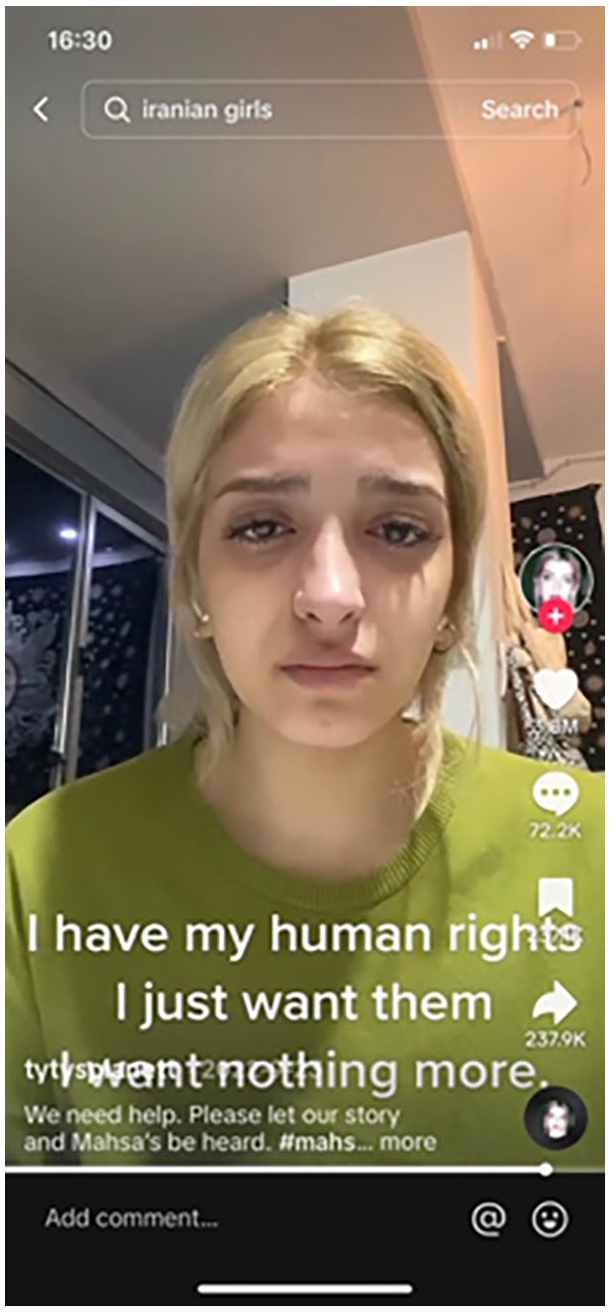
Her narrative is an unconscious (she is simply speaking about her own experience) recontextualization of the suffering experienced throughout the history of the Iranian women’s movement. She is talking to them, and they to her. As such, a deep inter-visual connection exists. In 1979, despite the Leftist posturing of Ayatollah Khomeini, once in power, the Islamic Republic quickly abolished the Shah’s Family Protection Law. This move granted men full custodianship over women, giving them absolute power in matters of divorce, and reducing the legal age of marriage for girls to nine. Female protesters were imprisoned, tortured and executed. Nahid Persson Sarvestani managed to escape. In the film, My Stolen Revolution, she stated: ‘[w]e who had fought for freedom were now locked up behind the veil . . . Many of my friends were arrested. They were forced from their homes and jailed as political prisoners . . . The same regime still holds power’ (My Stolen Revolution, 2013). The sense of imprisonment, claustrophobia, and constriction, so viscerally conveyed by @tytysplanett, speaks to the nature of the suffering of Iranian women from the very beginning of the Islamic Republic onwards. This may explain the video’s power and popularity.
Conclusion
This paper has detailed and contextualised the core dynamics of the wider Iranian protest movement on TikTok. Via utilising the novel method of VDT, it has shown the core elements of the movement’s visual culture. Defining the Iranian protests as ‘generational’ is simplistic, but it is true to say that ‘Gen Z’ have driven many elements of the struggle. GRWM videos, make-up tutorials, haircutting, hijab burning and direct videos have created an interactive, visual protest culture across TikTok. Sharing the symbolism of the grassroots movement within Iran, haircutting, hijab removal and burning, pictures of Mahsa Amini, and political slogans such as ‘Woman, Life, Freedom’ have been widely dispersed. The TikTok videos also possess a deep inter-visual connectedness to the longer history of the Iranian women’s movement. In total, the top 30 TikTok videos containing mention of Mahsa Amini posted from her death on the 16th of September to the end of October 2022, amassed over 42 million likes by August 2023, as well as hundreds of thousands of shares and comments. This paper contributes to the understanding of the movement, especially the involvement of the wider, global, Iranian diaspora, who have played a crucial role due to the Islamic Republic’s crackdown on Internet usage within Iran. It has sought to amplify the voices of the women’s movement; not to speak for them or make assumptions about their intentionality. Through this, the paper has highlighted the ways in which visuality has contributed to the protest culture following the death of Mahsa Amini. TikTok dynamics are crucial parts of the picture, potentially helping young people especially to make sense of the suffering of women and girls within Iran, in their pursuit of ‘Woman, Life, Freedom’.
Footnotes
Declaration of conflicting interests
The author declared no potential conflicts of interest with respect to the research, authorship, and/or publication of this article.
Funding
The author received no financial support for the research, authorship, and/or publication of this article.
