




Abstract
People aged over 65 (“older adults”) are among the first to enter later life in a digital data-saturated world. Many older adults across the world are surrounded by mobile media and computational data in their everyday lives. Mobile media, including smartphones, tablets, and wearables, are near-ubiquitous in Australia. At the same time, older adults are among the most digitally excluded in the country and older adults have diverse feelings towards mobile media. High rates of mobile media absorption in the everyday lives of older Australians can obscure the heterogeneity of experiences, perceptions, and concerns towards digital data. In this paper, we use creative speculative methods to unearth older adults’ current and future mobile media affordances (contexts of use), fears and concerns, and what using these methods can reveal about contemporary and future-orientated ageing in data practices.
Introduction
The United Nations (UN) Decade of Healthy Ageing challenges us to create a better world in which to grow old (Decade of Health Ageing, 2022). The four key pillars of the challenge are focused on how societies can holistically improve the lives of older adults. Digital technologies can play a key role in ageing well (Baldassar et al., 2007; Maccora et al., 2019; Sawchuk et al., 2019; Rosales & Fernandez-Ardevol, 2019a) and in imagining “aging futures” (Dalmer et al., 2022). People aged over 65 (“older adults”) are among the first to enter later life in a digital data-saturated world. Many older adults across the world are surrounded by mobile media and computational data in their everyday lives. Mobile media—including smartphones, tablets, and wearables—are near-ubiquitous in Australia (Thomas et al., 2023). At the same time, older adults are among the most digitally excluded in the country. The Australian Digital Inclusion Index (ADII) 2023 reports that “those aged 65–74 record scores 12.1 points below the national average, while those over 75 record scores 24.6 points below” (Thomas et al., 2023, p. 6). This age-based quantitative measure of the “digital divide”—while highly informative of trends—does not capture in detail the diversity of ways that older people feel towards mobile media.
Despite the persistent digital divide, high rates of mobile media uptake in the lives of older Australians can obscure the heterogeneity of feelings towards and concerns about digital data (Figueiredo et al., 2023; McCosker et al., 2021). These concerns can include worrying about the creep of the digital into ever more aspects of their lives (social, health, finance and shopping) and fears for future social, political, and economic consequences of this technological encroachment and datafication. At the same time, older adults can envisage highly integrated “caring media futures” (Gibson et al., 2021) with mobile media that make later life easier, more comfortable, and safer in their own homes.
In this paper, we deploy creative speculative methods to reveal older adults’ contemporary and future-aspirational mobile media affordances (contexts of use), fears and concerns—and what using these methods can reveal about emerging ageing in data practices. Mobile media affordances have been studied previously through interviews (e.g., Jung & Sundar, 2018; Mascheroni & Vincent, 2016) and quantitative surveys (e.g., Li et al., 2022) that focus on how participants are currently incorporating mobile media into their everyday lives. As scholars such as Schrock (2015) and Nagy and Neff (2015) argue, affordances attune us to the potential for communication and connection made possible (or not) by technologies through focusing on the social aspects of technology take-up and use. We use an affordance approach to older adults’ speculative futures with mobile media to account for socially stratified and locationally specific uses of mobile media in ageing with data.
Previous research indicates that creatively exploring the role of ageing in and through data can help us to reimagine how we think/feel about ageing well (Hjorth & Lupton, 2021). Studies of mobile media with older adults have previously employed methods such as surveys (e.g., Nimrod, 2016; Taipale et al., 2024), discussion focus groups (e.g., Kadylak et al., 2018), and semi-structured interviews (e.g., Ivan & Fernández-Ardèvol, 2017; Yu et al., 2023), revealing that there is a methodological gap for playful, creative approaches. Creative methods can help us expose power relations and transform our feelings about experiences (Gerber et al., 2022; Hjorth, 2022; Miller, 2021).
This paper makes empirical and methodological contributions to ageing and mobile media research. Our research draws on an Australian government-funded project where we investigate how technology—as an entanglement of social and material phenomena—can contribute to ageing well in the home. The methods we outline here are intended to open new possibilities for advancing our understanding of ageing with technology (predominantly mobile media) and contribute to better tools for making ageing well practices more accessible. Our key takeaway is that using creative (and playful) methods with older adults can contribute to beneficial, accessible, and equitable ageing futures.
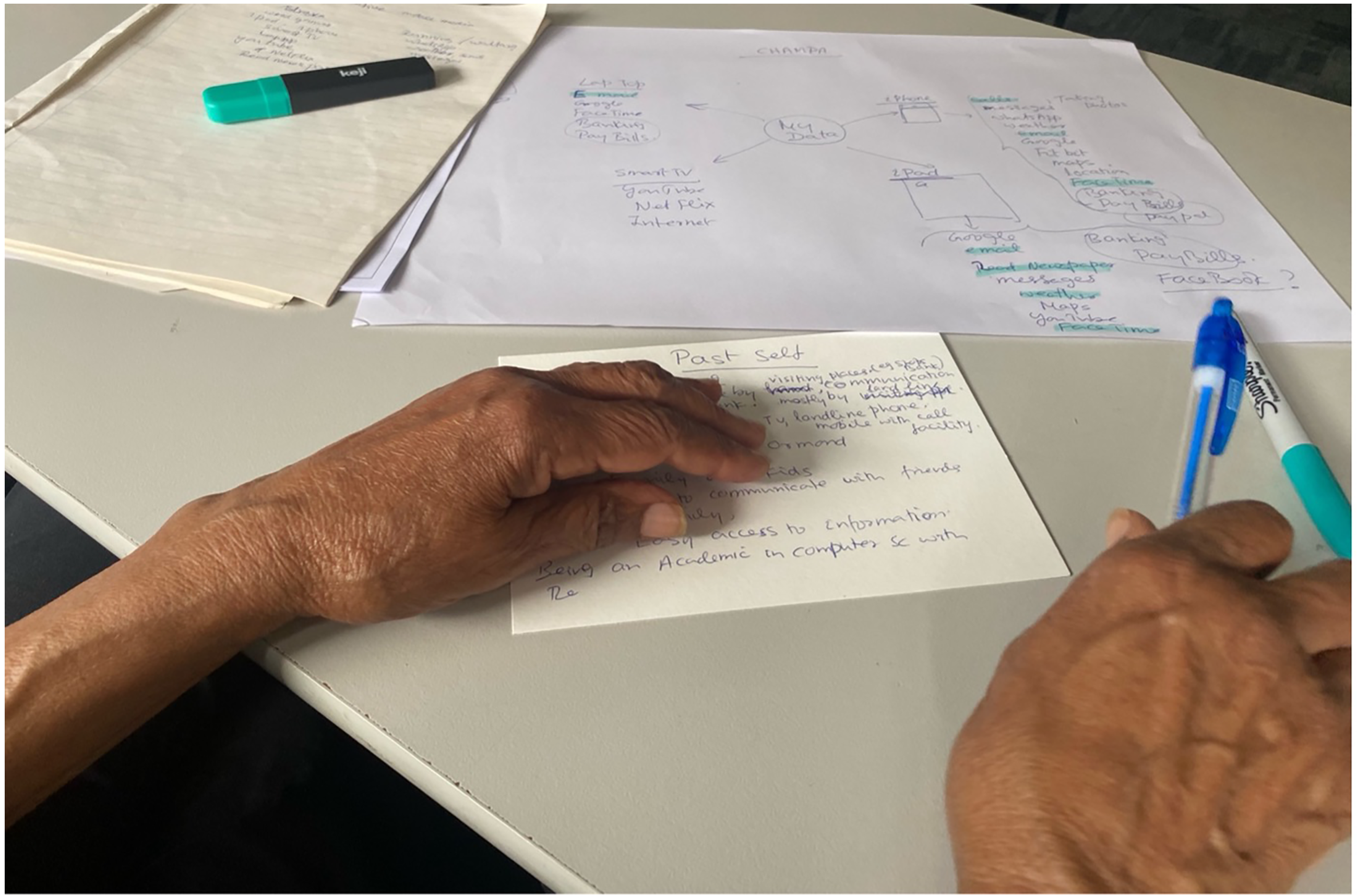
In this paper we focus on four workshops/playshops with 52 older adult participants from regional and urban Victoria, Australia. The playshop participants’ media literacy ranged from very high to relatively low. We seek to explore the important role of creative methods to elicit perceptions, practices, and tacit feelings about mobile media in everyday life. Through techniques such as postcard prompts we sought to create supportive and creative environments for participants to reflect on their perceptions and practices (see Figure 1). In this paper, we begin by outlining previous research and providing context for media and digital access, literacy, and inclusion in Australia. This is followed by details about the scope of this study. We then turn to our playshops—introducing the rationale for the methods and outlining the key themes that we gathered from our analysis. We conclude with some future directions for understanding older adults’ lived experiences of mobile media in a time of profound change.
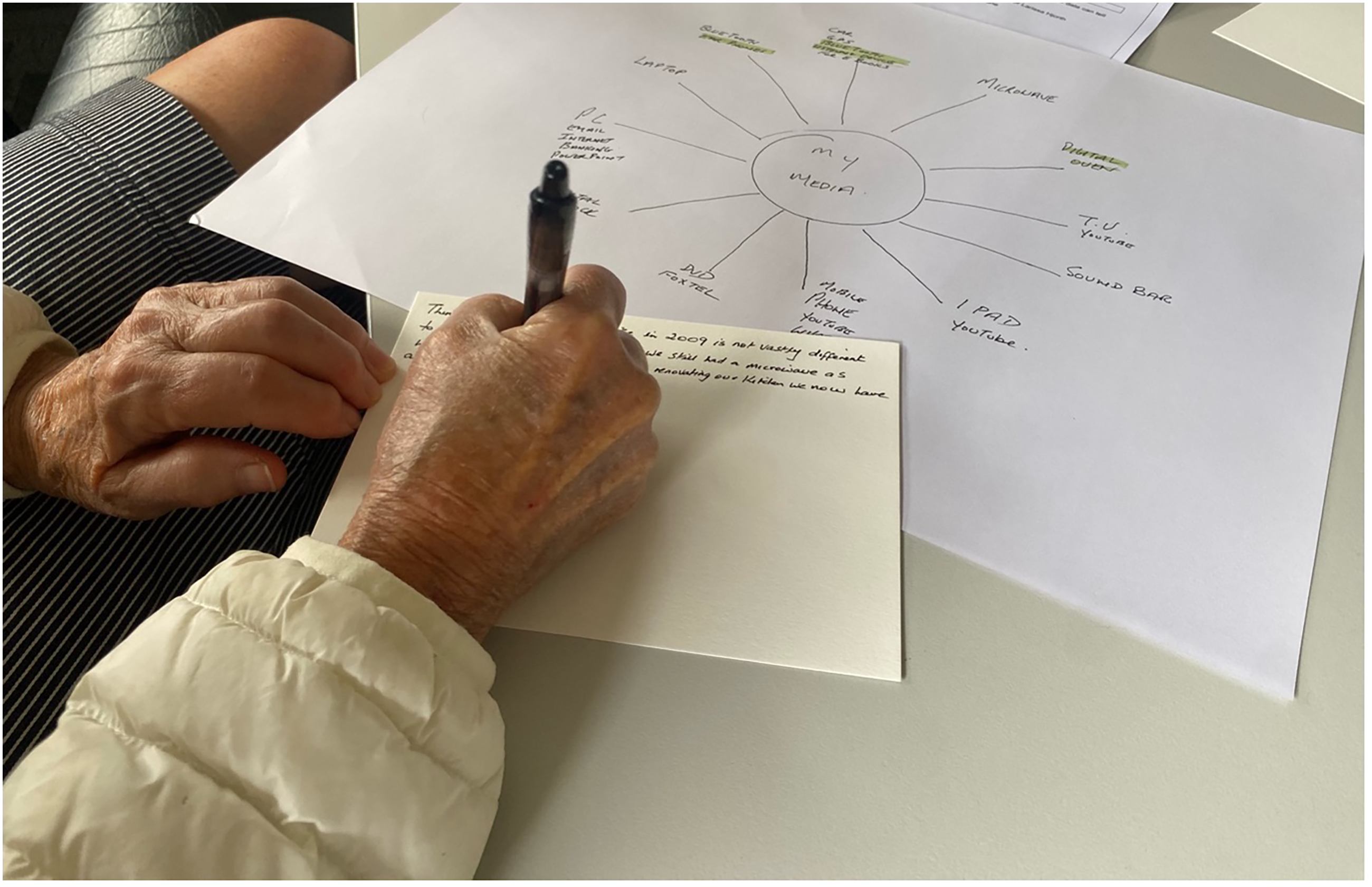
A participant writing a response to a postcard prompt during a participatory playshop.
Media and digital access, literacy, and inclusion
Media access and literacy of older adults has been interesting academics and policymakers since at least the mid-1990s (Robinson et al., 2020). Across the world, digital inaccessibility and exclusion of older adults has been framed as a matter of priority by international organizations including the World Health Organization and the UN (Sah, 2023; United Nations Economic Commission for Europe, 2021; World Health Organization, 2022), particularly as digital exclusion is often caused by and exacerbates social and economic inequalities (Gell et al., 2015; Hargittai & Dobransky, 2017; Tsatsou, 2022). In Australia, longitudinal studies of digital inclusion conducted through the ADII show that a digital divide persists between older and younger Australians, with those aged over 75 among the most digitally excluded (Thomas et al., 2023).
The ADII measures digital inclusion across three criteria—access, affordability, and ability—which provides a holistic assessment of trends in digital inclusion. The tripartite digital inclusion measurement acknowledges that simply providing access to digital media and technologies does not necessarily lead to older adults feeling more connected and engaged (Notley et al., 2024). Furthermore, access to digital technologies alone cannot resolve anxieties, fears, and concerns about the techno-creep of the digital into everyday life. These concerns may be the result of being literate about contemporary debates and discourses about the role of digital media and technology rather than digital exclusion. Therefore, digital inclusion needs to be explored in context with media literacy and affordability to get a better understanding of how older adults live with the digital.
While media literacy is an essential component of ensuring an equitable digital future for older adults, it is also important to understand access, literacy, and inclusion as unfixed, uneven and in flux as older adults negotiate living with the digital. Indeed, as the ADII makes clear, digital access, affordability and ability are interrelated and interconnected differently depending on location (Thomas et al., 2023). Given the vastness of Australia, digital inclusion is strongly divided along urban/regional lines. Poor technological infrastructure and economic disadvantage are among the key driving factors of regional and remote areas being less digitally included than their urban counterparts (Thomas et al., 2023). Digital exclusion is often compounded by a lack of investment in communities and infrastructure in regional and remote areas, leaving those communities at a significant social and economic disadvantage.
Importantly, although digital inclusion is trending upwards in Australia, there remains a large portion of the population who are considered digitally excluded, many of whom are older adults. Yet we must also acknowledge that recent research has highlighted the diversity of older adult's digital access, literacy, and inclusion (Maccora et al., 2019; McCosker et al., 2021). In their 2019 report exploring digital literacy among older adults in Australia, Maccora et al. argued “there is a wide variety of both skill and comfort levels, as well as willingness to engage, when it comes to online technology” (Maccora et al., p. 4). Maccora et al.'s (2019) research also highlights the importance of complexifying and challenging ageist assumptions about older adults’ uses of digital media and technology.
Understanding the diversity of older adults’ digital access and inclusion is supported by taking an affordance approach. Previous research into digital access, inclusion and affordances has suggested that addressing gaps or disparities requires situating technology within social contexts. For instance, Correa et al. (2023) deploy the concept of “transitional affordances” to account for the ways in which the Chilean cultural context and changing modes of online access makes connection possible for some while also limiting connectivity for others. Similarly, Faith and Hernandez argue that an affordance approach adds “nuance and depth to our understanding both of digital exclusion and how we might address it” (Faith & Hernandez, 2024, p. 15) as it helps to illuminate the complexity of digital access and inclusion through contextual analysis. In our next section, we frame the study and outline our creative, playful methods.
Older adults, play and mobile media in everyday life
Creative practice (arts-based and design-based) methods can help to elicit some of the complex perceptions and practices around technologies. With the increase of so-called artificial intelligence (AI) through large language models being deployed in and by everyday mobile media such as smartphones, it is important to capture the hopes, desires, anxieties and imaginaries around the possibilities and limitations in this rapidly changing space. Through what Bill Gaver et al. (1999) call cultural probes—that is, postcard, writing, photo, drawing prompts—participants can explore some of their tacit feelings around technology in everyday life. This is an inclusive method that allows all participants a way to frame their media literacies across a wide spectrum of use.
In our three-year study, we deploy ethnography and creative methods to uncover older adult diverse tacit feelings and lived experience of everyday mobile media use. As a mundane vehicle for the rise of datafication and AI in our lives, examining perceptions and practices can open-up a view onto how technology more generally is understood. In this project, we seek to understand the role of data, datafication and digital media in the everyday life of older adults. By data we mean digital information collected consciously and unconsciously by people and technology. By datafication, we mean “the quantification of human life through digital information” (Mejias & Couldry, 2019, p. 1). Such processes can make it possible to make meaning from large amounts of personal digital information in everyday life, replicating older analog processes (Flensburg & Lomborg, 2023). Data and datafication are not neutral and are always imbricated in power relations. As Dalmer et al. note, “the datafication of aging and care expresses relations of power in technical and embodied ways” (Dalmer et al., 2022, p. 80). As uses of data referenced in this paper are about people's attitudes to the ways their personal digital information is collected and used, we use “uses of data” and “datafication” interchangeably. We are led by the question: As the first generation to age in and through data, what can the diverse cohort of older adults (64–90 years old) show us about the possibilities and challenges of data in our lives?
The project utilizes participatory playshops (as opposed to workshops) with different University of the Third Age (U3A) groups and ethnographic interviews in the home to capture, collect and conceptualize possibilities and challenges in mundane datafication and automation in everyday life. We conducted four three-hour playshops with both regional and urban U3A groups (total 52 participants) to explore different cohorts and experiences. In Australia, uneven literacy and access to digital media have created exclusion, reflecting a deeper cultural dissonance for those seen lagging in later life. Despite being a diverse group of technology users, a National Seniors Australia report identifies that their barriers relate to a digital world “designed by and for young, not older people” ignoring their needs and abilities (Orthia et al., 2022, p. 51).
While applying play can operate in many ways—from a mode of critical inquiry and a series of methods to speculative design—it has been relatively under-explored in the older adults’ space. Despite the pivotal role of play as a contemporary critical literacy in digital culture (Sicart, 2014), older adult play in, on and through digital media has been overlooked—reflecting broader digital ageisms (Hjorth et al., 2020a; Neves, Waycott & Malta, 2018; Gibson et al., 2021; Rosales & Fernandez-Ardevol, 2019b). Play offers opportunities for reflection and creativity as well as enhancing empathy and sociality—the ambient play of digital media in everyday life provides many encounters and opportunities for social connection (Hjorth et al., 2020b). Understanding the complex configuration of digital media practices—to challenge stereotypes about ageing and technology as well as capture the uneven literacies—can help shape more effective models for enhancing social connection. In the next section we provide details about our recruitment methods and participants.
Recruitment and participants
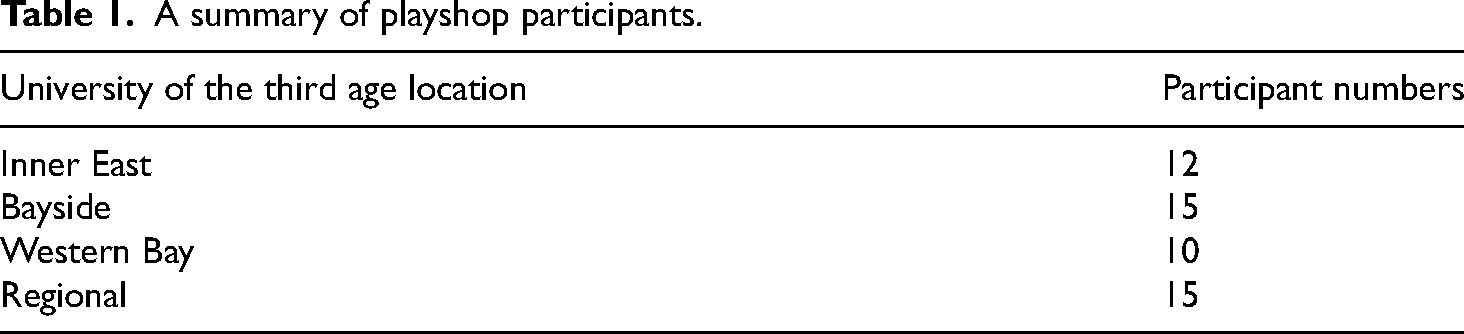
The project received University ethics approval before data collection began. The project is overseen by an advisory committee consisting of key stakeholders—including older adult representatives who provide critical feedback on the aims, scope, methods, and outcomes of the project to ensure we are conducting research with and for older adults (James & Buffel, 2023). The project began with a series of workshops with different U3As to capture some of the diverse experiences, perceptions, and practices. Each of the four workshops had 10–15 participants (see Table 1) and ran for three hours. In the first workshop one of our participants announced “I have worked all my life. I am now retired. I don’t want to work, I want to play.” Taking this feedback onboard as part of the iterative process, we reframed our workshops into playshops.
A summary of playshop participants.
The concept of playshop is not new—Wohlwend and Medina (2013) explored the role of writing playshops to produce cultural imaginaries. In play theory, Rauch et al. (2016) considered how applied play theory in different contexts can enrich creativity, sociality, innovation, and critical thinking (Huizinga, 1950, Caillois, 1961, Sutton-Smith, 1997, Salen & Zimmerman, 2004; Flanagan, 2009, Sicart, 2014). Playshops were initially developed by early childhood education researchers as an approach to curriculum “that recognizes play as a literacy that produces cultural texts and a tactic for reimagining cultural contexts” (Wohlwend & Medina, 2013, 199). Playshops enable participants to explore “spaces and imaginaries” (Wohlwend & Medina, 2013, p. 199) through discussion, creativity, and collaboration. We found that framing group discussions as playshops opened-up possibilities for imagination as participants explored how technology had changed throughout their lives, and playfully speculated about the future. Putting play at the center of the exploration, we sought to bring curiosity, sociality, and experimentation to the forefront.
The U3A network in Victoria is a key partner on the project and we recruited participants for the playshops and home ethnographies through their communities across the state. We wanted to speak to a geographically diverse cohort of participants because of the differences in digital connectivity between urban and regional/rural areas around the country (Thomas et al., 2023). Participants were diverse in terms of their ages, socioeconomic status, and cultural backgrounds, reflecting the diversity of the U3A Victoria community. In addition to participant pseudonyms, we have also given the locations of the playshops’ pseudonyms to protect privacy; the locations’ pseudonymous titles refer to their position relative to the state capital Melbourne.
In addition to the playshops, we recruited 23 participants to investigate their home data lives over two years. For this aspect of the research, participants were recruited through the playshops and the broader U3A community. Ethnographic participants were aged between 67 and 92, with most participants aged in their 70 s. Each year we conducted two home visits to explore in detail their practices and motivations around living with data in the home. From perceptions and practices around their smartphones and smart devices, we considered some of the possibilities and limitations to ageing well in place. The playshops and the ethnographic home visits were dialectical in that processes and results from each method contributed to the other, ensuring we were learning from participants’ lived experience.
In our fieldwork we sought to understand uses of data beyond just health; as Rosales and Fernandez-Ardevol (2019a) indicate, much of the work around technology reflects systematic ageism whereby older adults’ use of technology is only seen in terms of health rather than more broadly as active participants in shaping technology use across various sectors. Rosales and Fernandez-Ardevol (2019b) document how big data—and corresponding algorithmic technologies—perpetuate and sustain ageist attitudes, actions, and language through the active exclusion of older adult habits, interests, and values from their datasets. In this paper, we are drawing on our playshop methods and data to argue that playful methods with older adults can contribute to more equitable aging futures.
Playshops: Creative methods for understanding older adults’ mobile media practices
In Mobile Media Methods, Hjorth and Goggin explore methods as procedures, techniques, approaches and conceptual lens for investigation, inquiry, and research (Hjorth & Goggin, 2024). They note that methods are shaped in dialogue with the field and theories. Mobile media methods expand our repertoire of methods. Embedded in and by social contexts, mobile media are deeply attuned to social practice. As they argue, mobile media also offer a treasure trove of new concepts, methods, and techniques to do research—representing a new phase in digital methods.
While there has been a growth in mobile media methods using sensing technologies to track responses and uses, this needs to be incorporated with other qualitative methods such as creative and arts-based methods to address the motivations and tacit feelings. Arts-based methods can allow participants different ways to narrate and make sense of their practices and emotions in ways that quantitative methods cannot engage. In this study, we used a mixed methods approach allowing older adults different ways to think about their data and media literacy practices now and in the future.
Creative practice ethnography (Hjorth et al., 2020a) can allow us to uncover (and make visible) some of the unspoken feelings and experiences around everyday media practices. Because the practices are quotidian, they can become invisible, normalized, and hard for participants to narrate, especially in relation to speculative or future-oriented scenarios. Through creative and arts-based prompts such as writing, drawing, and photos, the vitalities of everyday life and potential futures can come into focus. Creative practice ethnography seeks to bring creative methods to ethnographic inquiry, deploying participatory installations that use postcards, photos, drawing, and making to critically think through tacit practices and motivations (Hjorth et al., 2020b). Creative practice can also provide ways to engage in reciprocity—for example, participatory design and co-design techniques are aimed at not only giving voice to participants but also helping them to connect to hope, action, and social change.
Creative and arts-based methods have increasingly been deployed by non-art researchers to elicit tacit practices and lived experiences of participants (Leavy, 2015). In locations such as Canada, creative techniques such as “research creation” (e.g., theater, writing, games, and photography) are a form of critical making to enable understanding of complex environments (Leavy, 2015). The work of the Canadian Aging in Data network deploys research creation tools such as escape rooms to uncover and give voice to often unarticulated feelings around complex situations such as elder mistreatment (Lafontaine et al., 2020). Research creation techniques such as comics can be used as powerful science communication tools to think about ageing differently (Dalmer & Serantes, 2022). In Australia, Evonne Miller uses arts-based methods such as photography and writing to explore lived experiences of older adults in aged care (Miller, 2021).
For Springgay and Truman (2018, pp. 204–205), research creation is about methods reflecting the “entangled in relations” in which “thinking–making–doing” is crucial. Ethnographers such as Vannini (2015) have highlighted the role of ethnography as a form of creative practice unto itself, to capture some of the non-representation vitalities of lived experience. Non-representational methodologies, as evoked through critical, creative making, can enhance ethnographies, giving rise to affectivities, vitalities, and subjectivities.
Some examples of creative critical making include techniques such as Gaver et al.'s (1999) “cultural probes”—techniques such as postcard prompts, photos, and creative writing. “Cultural probes” become a system of practice used to inspire ideas about the future and gather data from people's lives. For Gaver et al. (1999), “cultural probes” play a powerful role in codesign workshops in which participants come together to enrich their discussions and understandings of lived experience.
In our playshops, we deployed cultural probes through postcard prompts. Postcards are evocative objects. They are an example of mobile media before the mobile phone. In early work on mobile phone etiquette and language, there are parallels between the techniques of mobile phones such as Short Message Service (SMS) and Multimedia Messaging Service (MMS) with postcards (Hjorth, 2005). As Hjorth argues, mobile phone practices sketch a cartography of telepresence (Milne, 2004; Morse, 1998) that was found in genres such as the postcard and extended through its remediation in mobile media. The postcard can be a powerful metaphor for understanding “practices of telepresence/co-presence that include gestures of both intimacy and hallmark clichés” (Hjorth, 2005, n.p).
The postcard is a familiar object for placemaking and co-presence. Postcards evoke feelings of travel, home, locality, and co-presence. It is about “wishing you were here” and “thinking of you” while on the move. It suggests that places are “stories so far” (Massey, 2005). As familiar objects, postcards as cultural prompts play an important role in how we think about and think with mobile media as vehicles for our sense of placemaking in the world. They become powerful and yet accessible ways to join participants together in speculative and placemaking stories.
Deploying postcard prompts (i.e., write a postcard to your past self, present self, and future self about data in the home; see Figure 2) and data maps (i.e., what are the devices, where are they used, why are they used), we sought to connect everyday data practices with participants’ visions for the future. Conducting these playshops in suburbs and regional towns, we engaged participants from a range of cultural, linguistic, and socio-economic backgrounds. In the next section we discuss some of the specific examples of postcard prompt responses to summarize some of the key perceptions and practices for older adults in Victoria, Australia.
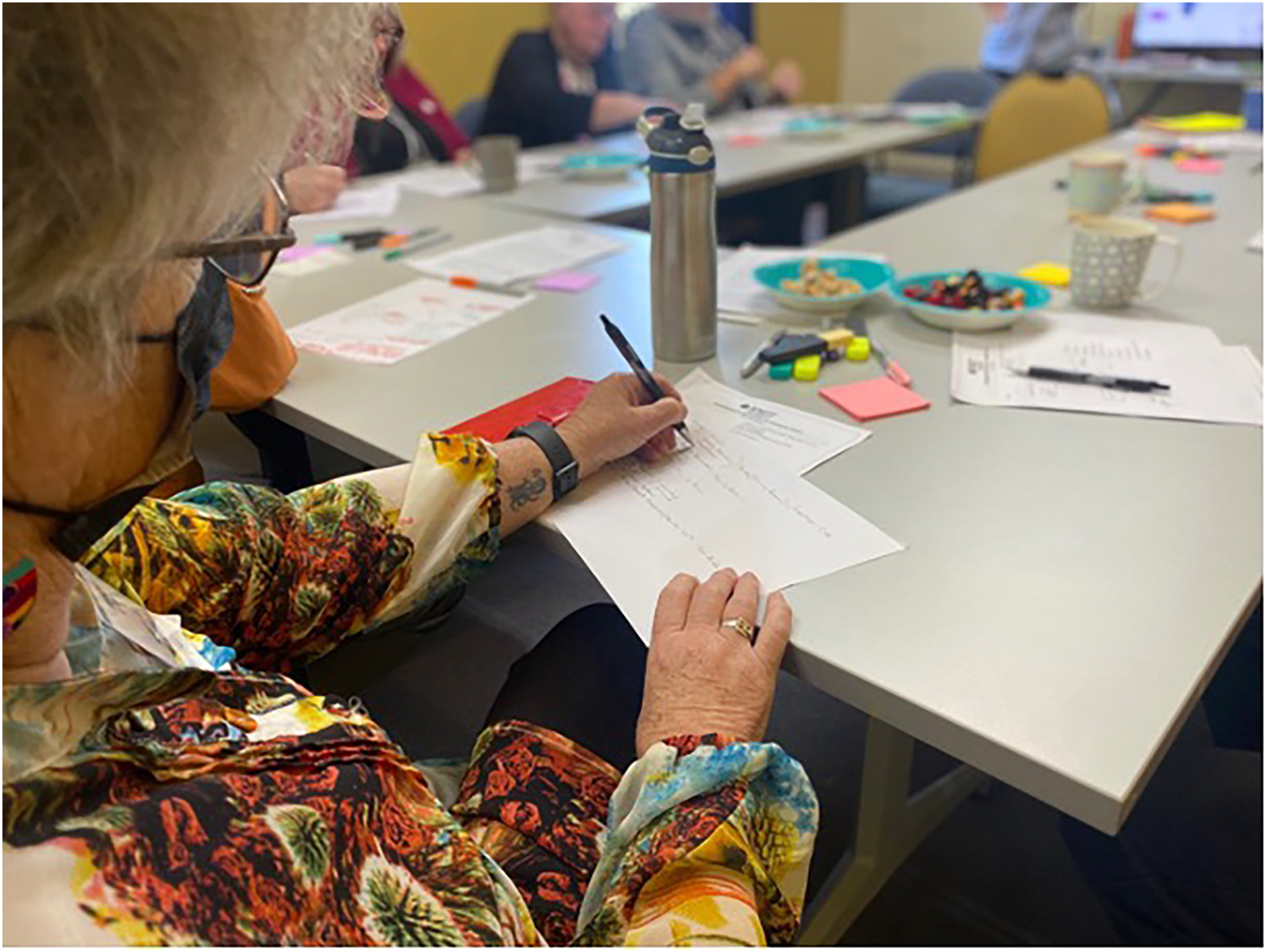
“Postcards to future self” codesign playshop.
Playshops’ findings
The playshops sought to use play to enhance and enrich critical creative reflective thinking and self-reflection. As aforementioned, play enhances empathy, creativity and sociality—as scholars such as Huizinga (1950) and Sutton-Smith (1997) note, play reflects cultural, social and educational norms, while at the same time providing a space for experimentation, reworlding and recalibration. Research with older adults about their memories of play found that participants reported play to be integral throughout the lifespan, with one participant reporting, “you should never stop playing” (Burr et al., 2019, p. 359). Combining play with co-design creates methods that are focused on relationality and social connection. Here we think about co-design playshops as facilitating social relations as a kind of care (Light & Akama, 2014, n.p).
Participants responded to postcard prompts related to the past, present and future, with the latter two temporalities delivering the most affectively mixed responses. Initially in the Inner East playshop, we asked participants only about the distant future—2050—but we found that several participants found this timescale confronting. We then adjusted in future playshops to ask participants to reflect on the recent past (2009) and near future (2034) to provide a comparison. Some participants were emotionally triggered by thinking 10 years in the future, so they were invited to respond to the prompt in the present.
After each playshop, we summarized the discussion and thematically analyzed the data collected through the maps and postcards. We drew on Braun and Clarke's (2006) thematic analysis framework to conduct the analysis. In our analysis of the postcard responses, we found a great deal of ambivalence about the influence of technology in the present and future. Some participants acknowledged that technology, especially smartphones, had enabled a great deal of positive change in their lives. At the same time, many participants also expressed fears and concerns about the influence of AI, scams, and algorithms, especially around the restriction of agency that can occur as people get older. When asked to reflect on the recent past, participants often fondly reminisced because they felt that the technology they had used in 2009 was more user-friendly.
In this paper, we chose to report on five overlapping and interrelated themes from the data we collected in the postcard activities and their related discussion: trust/mistrust; adaptation; losing agency; privacy breaches and online scams; and optimism. These themes were determined based on their relevance to answering our research question: what can the diverse cohort of older adults (64–90 years old) show us about the possibilities and challenges of data in our lives? As our participants creatively speculated on diverse futures with technology and data, the clusters of responses around these themes help us to demonstrate the ambivalence and complexity of their feelings. It is to these themes that we now turn.
Trust/mistrust
Trust/mistrust was an overarching theme across all the playshops, intersecting with and informing other key themes. Participants often described feeling a lack of trust in corporations and governments handling their personal digital data due to limited or inadequate regulation. Some participants also described feeling that their trust in institutions, which had once been strong, was now being eroded, for which they blamed technology. Although participants described feeling mistrustful and in some cases were quite pessimistic, there was also a sense that their trust could be restored if changes to the ways technology was deployed and managed were implemented. These sentiments were expressed across past, present, and future temporalities, with particular emphasis on how technological changes had made the present and future worse compared with the past.
“Life was simpler” in the past for some of our participants. These participants talked with fondness about older technologies including Video Home System (VHS) tapes and “dumb” phones. According to participant Ann, these devices had been “easy to use… once you got it, you got it.” Some participants felt that earlier technologies had not required them to keep up with rapid changes, and software and hardware upgrades. For other participants, their mistrust of technology was a source of pride.
As participant Sandra put it in her postcard to her future self, “You are resisting technology in your home—keep it up!” Another participant, Marie, told us she had a “dumb phone, which stays in the kitchen all day and beside my bed at night to please my children.” The sense of nostalgia did not seem to be a barrier to participants taking up newer technologies, rather it was a way for them to explore feelings of frustration and limitation in the present. Regional participant Josie's present/future postcard summarized much of the discussion about trust across all three playshops:
“Dear Future Self, The technology will continue to change therefore I will need to ‘learn’ to use more apps and keep ahead with the changes to keep pace with the world, as it is everchanging hopefully all ‘new’ technology is good and we feel we can trust what we will use or be aware of possible danger with some of it.”
Adaptation
The importance of adaptation and resilience in the face of change was another strong theme across the workshops. Participants discussed taking up new technologies with both excitement and trepidation. The expansion of technological changes was summarized by Bayside participant Chris who said “We [older people] have lived through an incredible period of innovation… We’ve not just gone through one we’ve gone through several.” The scale of innovation for many participants has felt enormous and sometimes overwhelming. These changes have also been felt unevenly across demographics. Our regional workshop was held in an area that is more traditionally working class and where the current median weekly household income is approximately $150 less than the national average (Australian Bureau of Statistics, 2023). This context was highlighted by participant Andrew who said (see Figure 3): “This particular age group over 65 s, it's in our working lives when computers came in. But it was very much a white-collar work thing, whereas blue-collar workers didn’t [use computers]. So blue-collar workers came in very, very late when it became cheap enough and now there's a lot of mistrust. So there's quite a wide gap now between people that do and people that don’t [feel comfortable with technology].” Participant Andrew writes a postcard to his future self during our Regional playshop.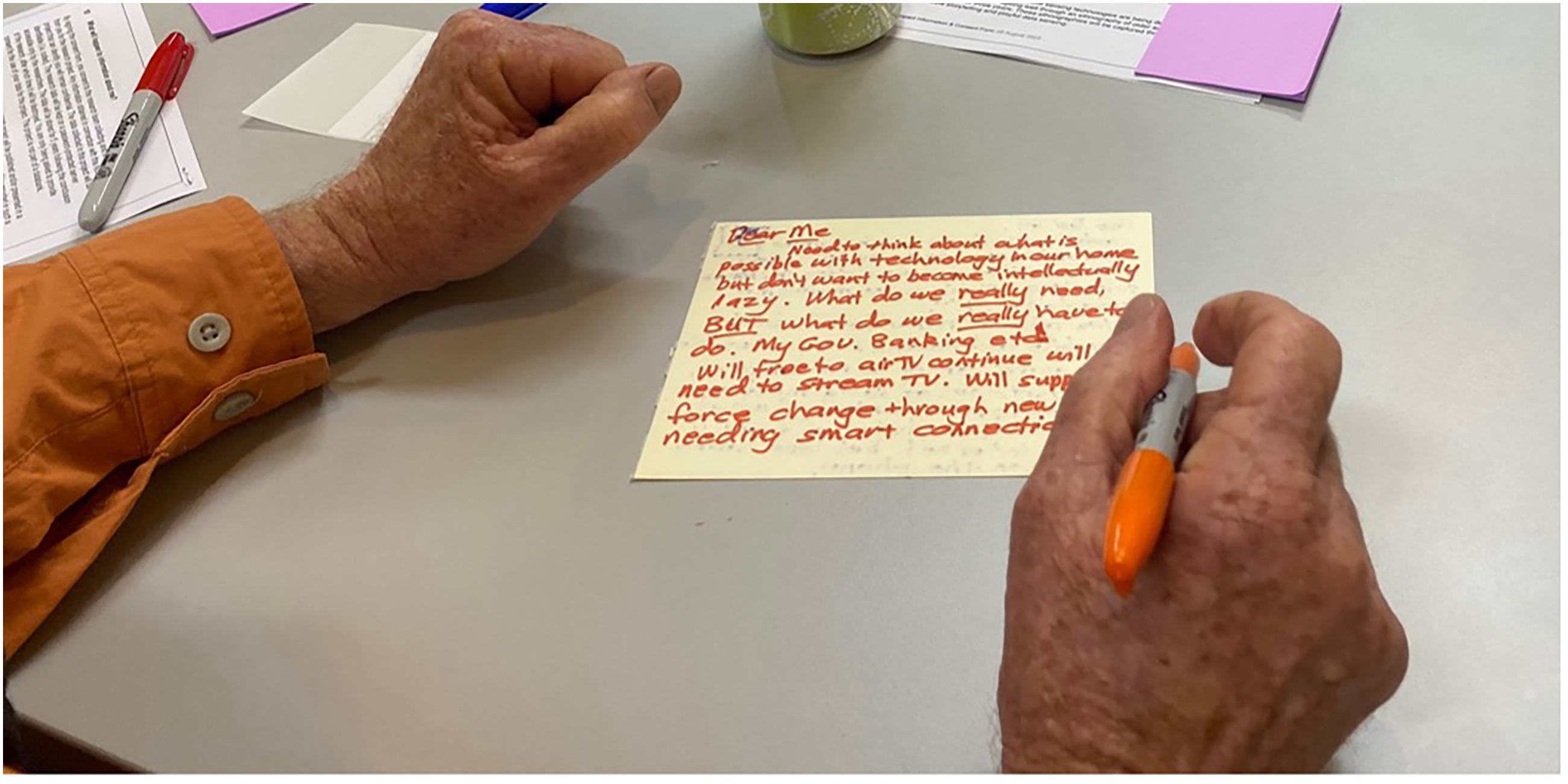
At the same time, keeping up with technology was also framed as a “lifesaving” intervention—Western Bay participant Greta described how using a continuous glucose monitor enabled her to easily manage her diabetes through her smartphone. For some participants however, these changes manifested in a fear of losing agency and control.
Participant Maya writes a postcard to her past self in our Bayside playshop.
Losing agency
For some older adults, increasing datafication and technification of everyday life has resulted in feeling a loss of agency and control. For some participants in our study, these fears are related to current technological interventions while for others the fears are more speculative. Across our playshops, participants were concerned that some of their peers were being forced into adopting online systems, technologies, or technology-based interventions that did not suit them, did not work or that they were not interested in. For instance, in our Regional playshop, participant Graham said, “I don't think you can opt-out anymore. I think that the opportunity to opt-out has been taken away from people.”
Some participants also articulated how being forced to use online systems had made life more challenging or complicated. For instance, Western Bay participant Greg noted that the local council had implemented an online booking system for the tennis courts, but the system was often so unreliable that “people don’t take any notice of the online system and just show up.” Being denied the choice whether to use online systems and services in the present day was seen by participants such as Greg as an inconvenience, while for participants such as Graham it was an indicator of social division and exclusion. For some participants, losing some agency to technology in the present day was an ominous indicator of future dystopia.
In the first iteration of our playshop in the Inner East, we asked participants to speculate about the distant future. Some participants imagined utopian visions of caring robotic futures. For others, however, the distant future was akin to “The Hunger Games” as participant Jim put it, in which corporations had been granted too much power and humans would be controlled and manipulated. For instance, participant Lynne posited a version of the future where minds, bodies and societies were “optimized” by unfeeling, uncaring machines. Participant Ian predicted that 2050 would be “expensive, high maintenance automation of homes… humans will be redundant so why live? Machines controlling everything. Who controls the machines?”
Another participant, Sue, predicted a world where microchips would be implanted into bodies to enable greater automation around the home, easing the burden of some of life's mundane tasks while also transmitting huge amounts of sensorial data to corporations. While Sue believed her vision was positioned somewhere between optimism and pessimism, the concerns she and other participants raised about corporate control and manipulation were also echoed in other contexts when participants discussed privacy breaches and online scams.
Privacy breaches and online scams
Privacy breaches and scams facilitated through mobile and digital media were topics that participants discussed in every playshop. Australians lost $2.7 billion to scams in 2023 (Australian Competition and Consumer Commission, 2024). Adults aged over 65 “suffered the greatest harm at the hands of scammers… [and] were the only age group to experience an increase in reported losses” (Australian Competition and Consumer Commission, 2024, n.p.). In addition to scams, several recent unprecedented data breaches through large Australian corporations have raised considerable alarm as millions of customers’ identifying information, ID documentation and medical records were breached (e.g., Office of the Australian Information Commissioner, 2024). As media, governments and corporations have sought to manage information about the breaches and reassure customers, we do not yet fully understand how these reported breaches and scams are impacting older adults’ everyday practices and tacit feelings.
In our playshops, we found that many participants referred to being concerned about privacy breaches and scams. Western Bay participants Jane and Sally both expressed concern in their postcards to their present/future selves. Jane wrote, “I’m concerned with the privacy scams which are prevalent,” while Sally wrote “What worries me about the internet is that our bank account could get hacked. I hope we have that covered.”
As we indicated previously, trust and mistrust were important themes for participants, especially when they were discussing mobile banking and the risks they felt were inherent in online transactions. Feelings of concern and worry are understandable, especially when contemporary technology can feel opaque compared to previous devices and systems. However, not all participants were concerned about online scams. Despite some fearful discussion, participants also used the playshop as an opportunity to share knowledge as a care practice to relieve others’ worries. For instance, Bayside participant Chris was optimistic about the future in his postcard: “There's no doubt that the solutions will be found to curb the excesses like online scams etc, which digital technology has allowed. But we cannot perceive what will emerge, it's just beyond us.”
Optimism
Throughout the playshops, participants carefully shared their thoughts, feelings, and beliefs about the future of technology, especially when referring to optimism about the future. As aforementioned, some participants were worried about the future influence of technology. Other participants said they had not worried in the past, as Western Bay participant Sandra wrote in her postcard to her past self:
“Dear past self, It's good you aren’t worried about technology because everything will be ok. Enjoy the benefits of talking to mum cheaply [Skype audio] and being able to research/get info quickly. Stay happy!”
In the playshop discussion, we found that participants shared their thoughts, feelings, experiences, and expectations as a way of caring for each other. Participants were often hopeful about the future and shared this hope with others to create positive affective resonances. For instance, two Western Bay participants—James and Caroline—wrote hopefully about the future in their postcards. James wrote that change was something to be excited by, “Life and technology are exciting and change is very exciting… But continue to control [technology], not let it control you.” While Caroline wrote about the importance of balancing the influence of technology with in-person interactions. As she wrote, “I hope that in the future we develop a heathy balance between using technology and maintaining relationships.” These postcards captured participants’ feelings about the importance of living with or alongside technology, neither fearing it nor being enraptured by it.
Building on James's sense that change can be exciting, other participants also expressed optimism and excitement when they described possible speculative futures with technology. These exciting futures were counterbalanced by the possibility that increased technological intervention in the homes of older adults could make them less independent and more surveilled. Therefore, increasing the use of technology in older adults’ homes must be done with their agency, autonomy, and dignity at the forefront.
Conclusion
In this paper we have explored creative (arts and design-based) methods to uncover some of the feelings, experiences, and perceptions of Australian older adults towards datafication. As one of the most divergent cohorts spanning multiple generations, their understandings and practices can put the technological phenomenon into context—socially, culturally, and generationally. This paper makes a methodological contribution to ageing and mobile media research through our playshop approach, and an empirical contribution through our analysis of playshop themes. Our research seeks to investigate how technology—as an entanglement of social and material phenomenon—can contribute to ageing well in the home.
Through four playshops in diverse locations we have outlined some of the creative methods we deployed to uncover often-tacit practices, perceptions, and experiences. In our analysis of the playshops, we found five overlapping and interrelated themes: trust/mistrust; adaptation; losing agency; privacy breaches and online scams; and optimism. Examples within the themes highlight the diversity and complexity of feelings and attitudes that older adults can feel towards technology, uses of data and mobile media in their everyday lives. This complexity demonstrates the importance of self-determination in the development of policies affecting older people. Addressing mistrust of technology and worries about scams should be a priority for governments and corporations to ensure that ageing in place is done with care and consideration of the rights of older persons to agency, autonomy, and dignity.
There are many opportunities for future research and addressing limitations. The playshop model can be time-intensive and may require a degree of vulnerability with which potential participants might be uncomfortable. These limitations could be addressed by establishing strong research partnerships with organizations run by and for older adults. Future research could explore these themes in more detail by holding thematically specific playshops or by conducting follow-up interviews with participants. One of the limitations of the study is its size and scope, which is geographically limited to the state of Victoria. This limitation could be addressed by expanding the scope of the research to other states and territories in Australia to compare findings, or conducting research in diverse contexts to explore similarities and differences.
Footnotes
Data availability statement
Data from this project are not able to be shared because the research is still in progress.
Declaration of conflicting interests
The authors declared no potential conflicts of interest with respect to the research, authorship, and/or publication of this article.
Ethical approval and informed consent statements
Ethics approval for the research was obtained through the Royal Melbourne Institute of Technology University's Human Research Ethics (Approval ID: 26667). Written informed consent for audio and visual data collection was obtained from participants before any data collection commenced.
Funding
Funding for this research was provided by the Australian Research Council through the Discovery Project “Ageing in and through Data: What data can tell us about ageing” (grant number DP230103075).
