




Abstract
During the COVID-19 pandemic lockdowns (2020-2021), almost all facets of life were rendered digital – health, work, schooling, and logistics. In this phenomenon, not only did digital access become synonymous with social inclusion but inequalities were also amplified – particularly in the case of older adults (65 years and over). Contemporary older adults represent one of the most diverse spectrums of digital media users – spanning from technologically savvy to non-users. As the first generation of older adults to age in and through data in a data-saturated world, their understandings and experiences can teach us much about the possibilities and limitations of new media. Understanding these practices through cultural probes – like drawing, photos and writing prompts – can enable playful behaviours that not only elicit new thoughts and actions but also allow insight into some of the tacit lived experience that can support opportunities for technological use. In this paper, we ask: How can we playfully co-design through personas to enhance understandings of older adults’ lived experience of digital media? In this paper, we focus on the six co-design workshops in which we deployed personas as representations of digital experience to challenge, explore, provoke and help build nuanced tools for implementation. Through personas, speculative fiction and lived experience collide, offering some fascinating ways to rethink the digital-social dimension for older adults now and into the future.
Keywords
Introduction
…as an older person, you can go one of two ways: you can take up technology and go with it and learn with it, or else you can hide from it. People like that don’t realise what they’re missing out in life (Judy, 79).
As 79 year-old participant Judy notes, digital media and data have become synonymous with everyday life – and, as literature suggests, can play a key role in ageing well (Maccora et al., 2019; Rosales and Fernandez-Ardevol, 2019a, 2019b; Sawchuk and Crow, 2012; Sawchuk, 2018; Sawchuk and DeJong, 2019; Neves and Vetere, 2018; Waycott et al., 2019; Baldassar et al., 2006; Baldassar and Wilding, 2020; Dalmer et al., 2022). As Rosales and Fernandez-Ardevol indicate, much of the work around technology reflects systematic ageism whereby older adults’ use of technology is only seen in terms of health rather than more broadly as active participants in shaping technology use across various sectors (2019a). For instance, during the pandemic, QR codes became a dominant technology in contract tracing and evidencing vaccination status, requiring a level of skill and technology that many older adults lacked or were uninterested in (Morrison et al., 2023).
This digital shift, like many others, did not place older adults and their lived experience at the centre of this imagined health care response, nor did it focus on offering opportunities for placemaking and wayfaring that catered for those in later life (Davies et al., 2024; Sheahan et al., 2023). Further, we saw digital technologies become central to social inclusion (Aleti et al., 2023; McCosker et al., 2021). For example, a lack of digital literacy resulted in a higher risk of social exclusion (Hjorth, 2022; McCosker et al., 2021). These issues persist, and more research is required to better understand this diverse and complex demographic, their wide spectrum of digital literacy skills, and how technology, in particular, links to ageing well (Maccora et al., 2019; Comunello et al., 2015; Marshall, 2018; Waycott et al., 2019).
In Australia, uneven literacy and access to digital media have created exclusion with such consequences, reflecting a deeper cultural dissonance for those seen lagging in later life. While a diverse group of technology users, a National Seniors Australia report identifies that barriers to adoption are a result of a digital world ‘designed and built for young, not older people’ ignoring their needs and abilities (Orthia et al., 2021, p. 51). Research into the role of digital media in connecting older adults has started to unearth the ageist stereotypes that inform our models of technology use (Hjorth et al., 2020; Neves et al., 2018; Hjorth and Lupton, 2022; Rosales and Fernandez-Ardevol, 2019b). For example, Neves, Waycott and Malta’s (2018) cross-cultural study of technology adoption found almost universal assumptions of technophobia, digital illiteracy, and technology non-use were placed on older adults, with Rosales and Fernandez-Ardevol (2019a) documenting how big data – and corresponding algorithmic technologies – perpetuate and sustain ageist attitudes, actions and language through the active exclusion of older adult habits, interests and values from their datasets.
Moreover, the pivotal role of play as a contemporary critical literacy in digital culture (Sicart, 2014) has been overlooked with older adult cohort. Play offers opportunities for reflection and creativity as well as enhance empathy and sociality – the ambient play of digital media in everyday life provides many encounters and opportunities for social connection (Hjorth and Richardson, 2020). Understanding the complex configuration of digital media practices – to challenge stereotypes about ageing and technology as well as capture uneven literacies – can help shape more effective models for enhancing social connection.
Specifically, we need to put older adults and their lived experiences at the centre of the reimaging of the digital and data if we are going to develop nuanced models of and for ageing futures. Participatory methodologies – such as cultural probes – are well understood as ideal starting points for eliciting perspectives and collaborating with older adults, enabling ‘confident and productive cooperation between researchers/designers and participants’ (Maaß and Buchmüller, 2018, p. 120). While probes have been used to query the assisted living and social engagement technologies with older adults (Wherton et al., 2012), these employ cameras and workbooks that can limit creative and opportunities to question and challenge the status quo (Sheahan J. (2022)). Although ‘playful behaviours’ are becoming more prevalent in the literature, the focus has been limited to young people, design students and families (Bernhaupt et al., 2007; Christiansen and Gudiksen, 2021; Sjøvoll and Gulden, 2016). In recognising the need for research that further centres older adults in lived experience methodologies, this paper seeks to ask: How can we playfully co-design through personas to enhance understandings of older adults’ lived experience of digital media?
This paper draws on a project funded by the Australian Communications Consumer Action Network (ACCAN) in which we collaborated with the University of the Third Age (U3A) community to explore perceptions and practices of technology use and risk. In this paper, we focus on the co-design workshops in which we deployed the persona (i.e. representations of digital experience) to enhance playful scenarios of use that, in turn, informed the building of ICT literacy tools for implementation.
Co-design has become a very familiar approach used in various contexts and has numerous meanings (Steen, 2013; de la Guía et al., 2017). In many cases, such as policy, co-design is used to refer to a consultative process (Blomkamp, 2018; Kim and Young Nam, 2021). However, for participatory design researchers, co-design has its origins in collaborative, iterative processes that seek to explore power relationships and often tacit meanings actively. As Avram (2019) note, contemporary co-designing in data-saturated worlds requires acknowledging the problem of platform capitalism (i.e. how platform propriety creates affordances that shape practices) by shifting the emphasis from sharing to caring economies. As platform algorithms shape how we experience digital media, there is an increasing importance to reflect upon these power relations – both exploitative and empowering – when co-designing.
For Ann Light and Yoko Akama (2018), co-design should structure ‘social relations as a kind of care’ (n.p). That is, being mindful of the power relationships and concerns and not trying to step in and solve them for the participants. Drawing on the important work around care as a social relationality, as positioned by feminist scholars Annemarie Mol (2008) and de la Bellacasa (2017), Avram (2019) argues reconceptualising care as a practice, technique, and way of being in the world can help to inform more nuanced models of co-design. Co-design practitioners operationalise these values in caring for others in the planning and conducting of co-design, with Kelly Ann McKercher’s (2020) Model of Care for Co-design demonstrating the benefits of focussing on relationality, trust, and transparency. The qualities of co-design as learning and playful exercise help develop and recognise these physical, social, cognitive and emotional sensibilities that are central to creativity and care.
Play can also be understood as a series of methods and a mode of/for critical inquiry. As digital media scholars note, play has become a crucial literacy (Sicart, 2014) in what has been called the ‘ludification’ of digital culture (Raessens, 2006). The digital is embedded with playful logic, even more with the computational turn (Sicart, 2022). Play enhances empathy, creativity and sociality – as scholars such as Huizinga (1937) and Sutton-Smith (1997) note, play reflects cultural, social and educational norms, while at the same time providing a space for experimentation, reworlding and recalibration. Combining play with co-design creates methods that are focused on relationality and social connection.
In addressing older adults’ lived experiences of digital-social inclusion, this paper begins with an outline of literature on co-designing, especially with older adults. We then discuss the summary of the project, its methods and collaborative modes with U3A. Finally, we explore the possibilities of co-designing workshops, especially through the cultural probe of persona, to highlight lived experiences of older adults and digital media.
Co-designing with older adults
Participatory modes of research offer opportunities to both enhance our understandings of certain cohorts and demographics through emancipatory means and consider the political implications of seeking to design with others (Pihkala and Karasti, 2018; Stoudt, 2007). Notably, co-design methods enable researchers to engage older adults in collaborative processes as valuable partners while also navigating the barriers unique for those in later life; most approaches explore needs and ideation, prototyping, or pilot testing (Sumner, 2020). Within this context, co-design has formed as a promising technique for supporting older participants with low levels of education and limited experience of ICT use, with examples of it reducing barriers and enabling such individuals to identify critical aspects of services and products for development (Almeida-Ferreira et al., 2017). However, such benefits need to be understood alongside the unique power dynamics that come with facilitating – Dawn Sakaguchi-Tang and colleagues (2021) highlight how unbalanced interactions form through limiting negotiation or collaboration within design activities, requiring us to think critically about our engagement with others.
This negotiation of co-creation by older adults through participatory means continues to provide a critical juncture around the ethical tensions of representing others and how configurations of participation influence such outputs. Human-computer interaction (HCI) researcher Jenny Waycott and colleagues (2017) focus upon this notion of ethical ambiguity through the process of seeking to ‘give voice’ through collaborative storytelling – offering a critical lens into how various stakeholders influence and even transform findings, such as shared stories into curated communication pieces. They ultimately call for increased transparency with participants and in the communication of research around the processes themselves and how individuals are involved. This call responds to a broader inconsistency that Jennifer Sumner and colleagues (2020) have found in how co-design approaches are undertaken due to the flexibility of the method, whether it is the number of steps or rounds of iteration or the various combinations of workshops, focus groups, interview and observational techniques employed. Scholars are now exploring how differing configurations of participation influence the versions of ageing which are enacted and materialise through creating with older adults, requiring an awareness of not only the subject matter but also the political and methodological understandings of co-design (Fischer, 2021).
These nuances become critical in the context of co-designing with older adults – acknowledging the cohort’s diversity in ways that honour their lived experience and empower them (Sumner, 2020). This process involves acknowledging the ways in which new media are ageing too (Loos and Ivan, 2022) and how this shapes socio-technological contexts and ecologies spanning ICTs to digital media more broadly. In drawing upon lived experience, scholars co-designing with older adults have focused on ageing and technology towards realising interventionist opportunities (Leonardi, 2008; Almeida-Ferreira et al., 2017; Mikus, 2021; Havukainen, 2020). Such examples of engaging older adults on topics of ICTs evidence the provision of a diverse set of activities to enable multiple ways of participating, combining rapport-building and adaptive practices to empower joint inquiry and shift power balances (Ostrowski et al., 2021). A key aspect and outcome of co-design – which also intersects with this notion of empowerment – is the mutual learning that accompanies this research, in which all stakeholders come to form new insights and understandings through exploring the experiences of each other (Fischer, 2021). Within the context of older adults’ everyday experiences with digital technologies, Björn Fischer and colleagues (2021) noted how mutual learning saw participants not only inform researchers of their perspectives on how using technology to ‘connect’ often was not just in relation to their significant others, but also documenting the various apps or techniques mentioned by other participants.
In engaging with these matters, this research builds reflexivity and new contexts into co-designing for older adults regarding perceptions of ICT risk. Specifically, we focus on the configuration and representation of participation alongside the valuing of mutual learning and understanding the ethical and political dynamics at play. Evidently, there are combinations of workshops, focus groups, interviews, and direct observations that have been employed, with our interests in modes of participation that engaged with storytelling through lived experience. As this research is part of a wider project that has been able to survey a large cohort of older adults on issues of perceived risks and digital literacy, our own workshops are informed by these insights.
Considering this context, we formed around a scenario personarrative method (Vallet, 2020), that can provide narrative and insight into the lived experience of people beyond other methods of focus groups or usability walkthroughs (Fuglerud, 2020). This method involves building a typology of personas and navigating them through thematic and narrative-based scenarios. Through this process, we allow for what John Carroll (1999: 1) describes as ‘multiple views of an interaction’ and ‘diverse kinds and amounts of detailing’, allowing participants to use their own experiences and perceptions to help guide the development of complex interventions through the personas and scenarios that they create (Valaitis, 2014). By enabling our older participants to add qualities and ‘enrich’ these personas and then map their navigation of multiple scenarios, we can explore whether this configuration offers opportunities for mutual learning and what representations of ageing it forms. We explore this and more in our ACCAN Co-designing Participatory Strategies with Older Adults to Reduce Perceived Risk and Promote Digital Inclusion Project, as discussed below. In the next section, we describe the context for the broader research design and methods. We then focus specifically on the co-design workshop methods to illustrate older adults’ lived experience of digital media.
Methods and context
The co-design workshops of focus were part of a wider research program between researchers and members of the University of the Third Age (U3A) that sought to investigate how technology use supports older adults’ connectedness and enhances social inclusion and participation. Coinciding with the pandemic – which saw some of the world’s longest lockdowns in Melbourne, Australia (262 days) (Jose, 2021) – the project had to pivot many of its methods to digital even though most U3A communities preferred face-to-face (f2f) activities. As an international network of affiliate learning centres, U3A promotes lifelong learning and social connections amongst older adults, retired or semi-retired. Each group offers different classes and activities, which, until COVID, were face-to-face (f2f) but had to move primarily online during the pandemic. As our own project sought to explore what this reality meant for many older adults as they unevenly came to digital media for various reasons and motivations, this context provided a critical juncture for connecting perceptions and practices with dialogue – potentially reshaping and reimagining digital media in everyday life.
The multidisciplinary and multimethod project followed a four-stage process: Explore/Quantify, Understand, Co-design and Disseminate, where Stages 1 and 2 involved mixed methods – semi-structured video interviews, followed by paper and online surveys (Figure 1) (Figueiredo et al., 2021). Stage 1 involved 22 individuals from the U3A Victorian Network, recruited via email and phone, aged between 59 and 85 years old. Following semi-structured interviews focused on perceived risks (alongside topics of safety and care) ranged from 30 to 90 min in length. 13 participants were women and eight men – with four respondents self-reported as culturally and linguistically diverse (CALD) persons. The four stages of the project.
Stage 2, the ethnographic interview dimension, was complemented by an ICT survey was shared through the 104 Members U3As and their 33,000 members, alongside promotion online and through social seniors’ programs, and saw 706 surveys collected. Measuring seniors’ engagement with the digital economy, risk perception associated with ICT, & digital competency, the survey involved significantly more female participants (69.2%) than male participants (30.7%), with the largest age category of participants being 70-74 (37.8%). These stages examined the language, contexts, and meanings associated with risk perceptions and ICT use and quantified the types of perceived risks associated with ICT and their influence on ICT use and engagement in the digital economy. Stage 2 used ethnographic interviews to better understand the emerging findings in specific contexts.
Responding to the interview and survey findings of Stages 1 and 2, personas were designed that sought to represent this community and put lived experience at the centre of the co-design workshops for Stage 3 – Co-design dimension through workshops. These findings paralleled the U3A demographics, with 69% of respondents being women over the age of 60 years old and living in their own homes (Figueiredo et al., 2021, 2022). The survey documented how older adults with lower digital literacy had a significantly greater desire to increase their proficiency with ICT while also being more worried about not keeping up and remaining current with ICT. Digital literacy (high vs low) was found to be associated with higher engagement in the digital economy, including more frequently used ICT for all engagement activity types compared with people who scored low on digital literacy.
In the next section, we discuss the six co-design workshops with the U3A community. These workshops consisted of the following number of participants – WK 1 (12ppl), WK 2 (14ppl), and Workshops 3, 4 and 5 (13, 25, 9 ppl). We reflect upon the learnings from the workshops – which took both online and f2f forms – and the role of co-design methods to heighten lived experience around digital media.
Workshop Design
The workshops were orientated around two co-design sessions in which participants ‘enriched’ a persona (Sheahan, 2023). This enrichment involved personas being placed into various thematic situations with issues to solve. This approach to research, through co-design methods, is well understood in literature: that personas can provide narrative and insight into the lived experience of people beyond other methods of focus groups or usability walkthroughs (Fuglerud, 2020). Critical to our project and purpose, personas can be based on collected data, such as extensive surveying and ethnography conducted in Stages 1 and 2. As Kristin Skeide Fuglerud and colleagues (2020) note, the challenges of maintaining statistical representativity while condensing such quantitative information into only a few personas can be an issue. However, this is where the scenarios of use, which put the personas into action (and the messiness of life), are crucial.
Complementing and enhancing the co-creation of a persona is scenario mapping/thinking, which places said personas into present or future scenarios, again drawing on our key insights to provide specific domains and environments to navigate (Saadati et al., 2021). Scenario techniques are valuable when dealing with issues of complexity and uncertainty (Vallet, 2020). Scenarios of use should include emotions so to increase the reader’s understanding of the user and his/her use activities. This factor is particularly important when focussing on less work-oriented and instead on non-instrumental aspects of design (Lopez-Lorca, 2014).
By placing lived experience through the persona methodology at the centre, these workshops sought to consider how the wide spectrum of digital and data literacies could be represented in nuanced ways that allowed older adults to identify with such experiences. As the first cohort of older adults to grow in, through and with digital media, we needed to identify what were the barriers to uptake and whether they could be overcome. Or whether there are some barriers that can’t be overcome and that some examples of ‘non-use’ can be about agency (see Waycott, 2017). How can we co-design in productive ways that put lived experience at the centre of digital media practices and acknowledge that imaging ‘ageing futures’ involves spectrums of use and non-use? In the next section, we explore the role of personas as a cultural probe – the term Bill Gaver et al. (1999) coined to talk through artefacts as a way to elicit conversation, discussion, speculation and reflection.
Persona as playful cultural probe method
Fuglerud (2020) note, ‘personas are “fictitious, specific, concrete representations of target users” and are used to keep people in mind throughout the design cycle’ (1). As they argue, personas have come under criticism for being simplistic representations of users for technology industry user experience. However, they can also be playful cultural probes that allow participants to explore empathy and creativity in profound ways – especially through the playful possibilities of scenarios of use to contextualise them.
In this project personas are employed as ‘silhouettes’ (of, and for, lived experience) which offer playful ways to think in and through certain issues like digital literacy. They can be viewed as enhancing empathy and thinking through different collective ways of scenarios of use. Acknowledging the vast body of design and HCI literature on personas (Fuglerud, 2020), in this paper we depart from these ‘user’ approaches and instead frame personas as playful probes that coalesce perceptions with practices. This approach to personas as a play methodology speaks to the wealth of literature around play as a core literacy in contemporary culture (Sicart, 2014).
The rise of digital culture has also witnessed the increase in the playful – from ludification (play-like, Raessen, 2006) to gamification (game techniques like leaderboards and awards) (Walz and Detering, 2014; Frissen et al., 2015). However, play has a long and important history as not only a social and cultural practice but also as core literacy (Salen and Zimmerman, 2003; Huizinga, 1937). Play can take multiple roles – such as cultural probe, mode of inquiry, and practice. Play is culturally and socially specific (Sutton-Smith, 1997) and far exceeds the confines of just digital games. Play allows for social, empathic and creative ways for sensemaking. At yet, play as a co-design method has been predominantly ageist, focussing on children or young people – missing the opportunity for older adult experimentation.
Personas are, as we argue, methods for enacting play at the centre of our reimagining. They are useful techniques for asking participants to both reflect on lived experience while also to speculate about future scenarios. In this way, personas are also about how we imagine the future in and through the present. And, in turn, they nod to the work in Design Anthropology and Future Anthropology by the likes of Akama, Sarah Pink and Juan Salazar around problematising design futures. Personas, when activated through examples in everyday life, can allow participants to think through possibilities and uncertainties in playful ways (Akama et al., 2018; Salazar et al., 2017). As Pink notes, social scientists ‘complicate’ how we think about the future – especially the technological imaginaries (2022). As the work of Annette Markham offers, speculative practices around the future have a complex relationship with memory (2020).
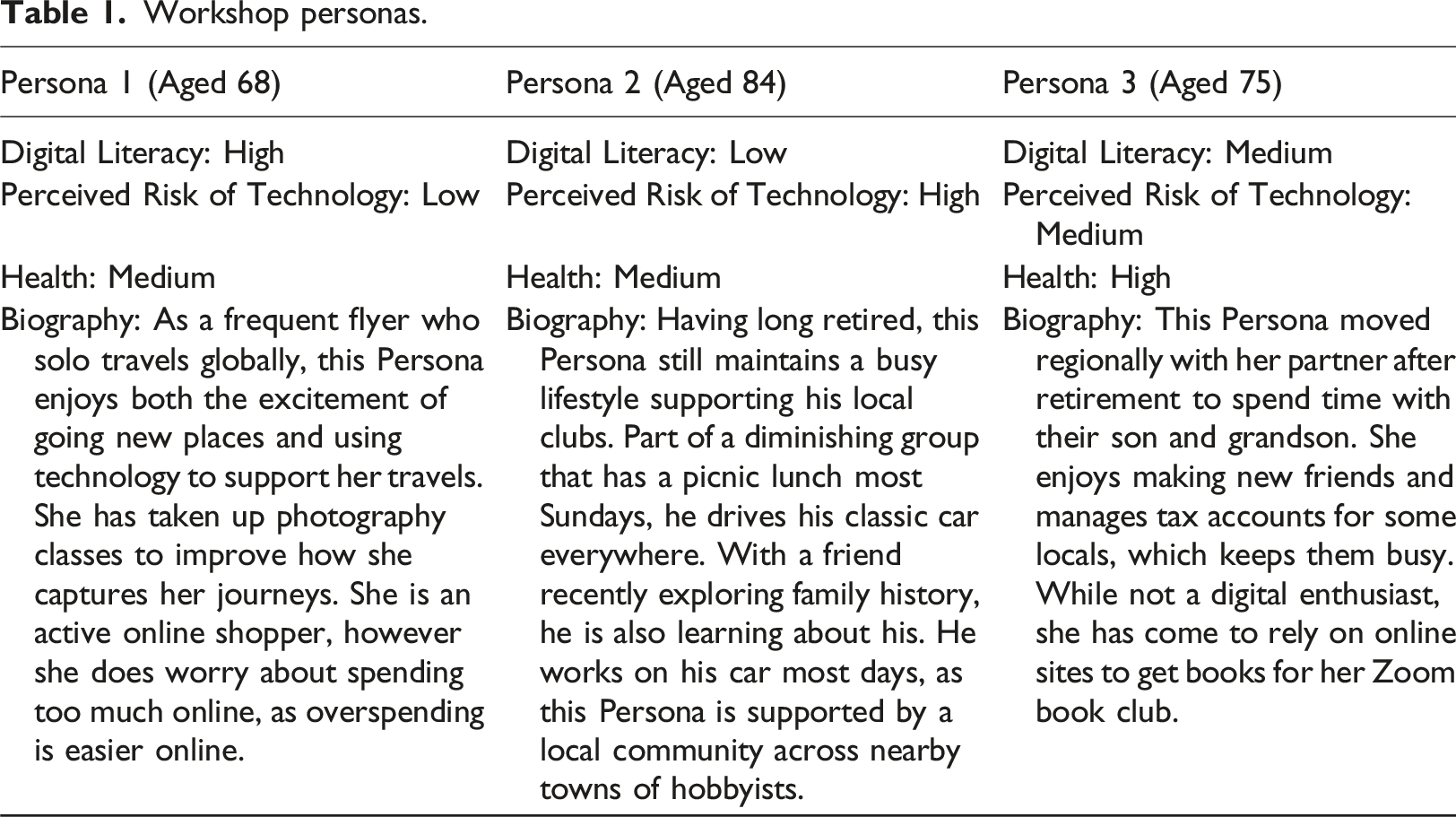
Workshop personas.
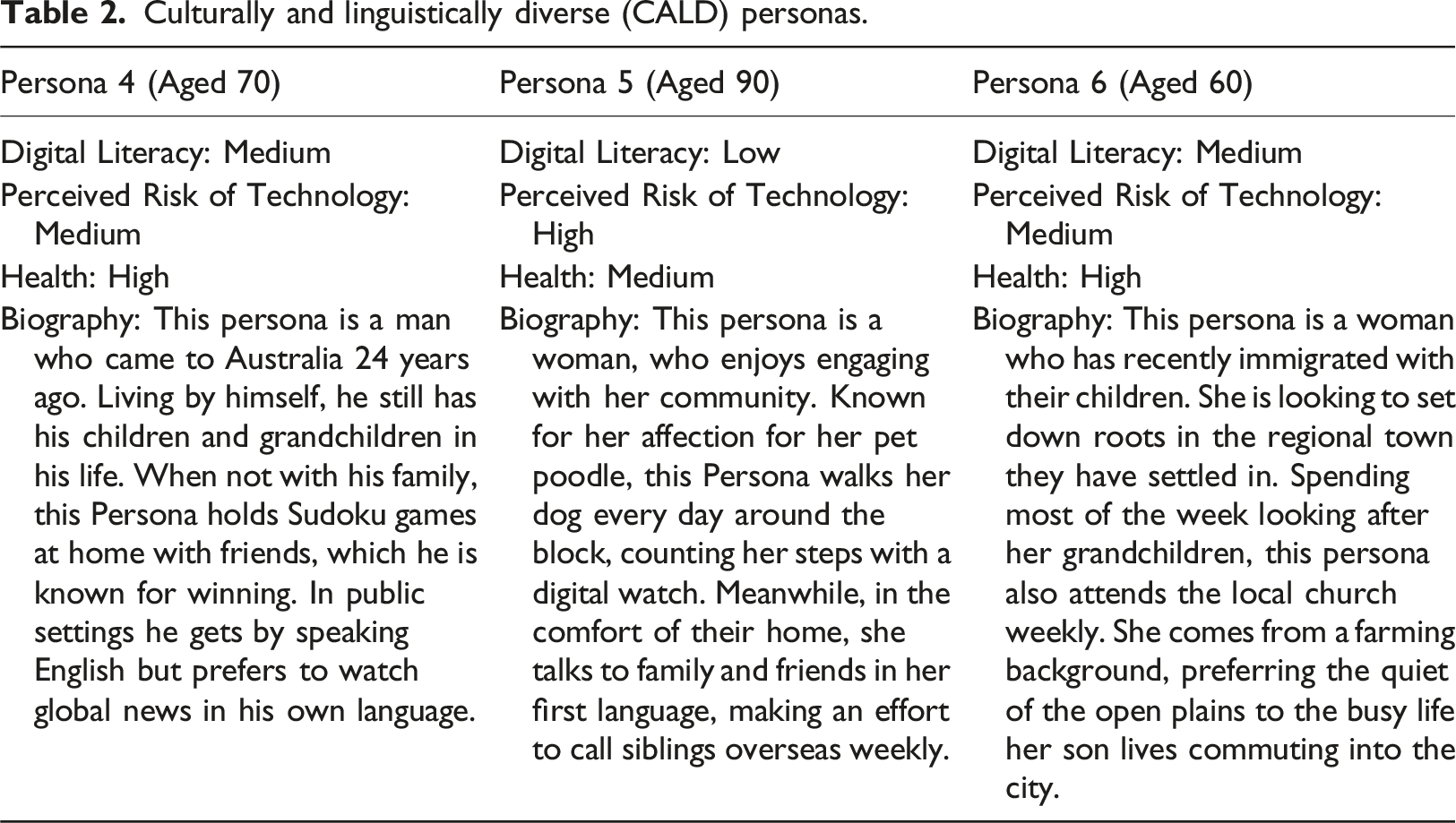
Culturally and linguistically diverse (CALD) personas.
Online workshops
ICT-related risk scenarios.
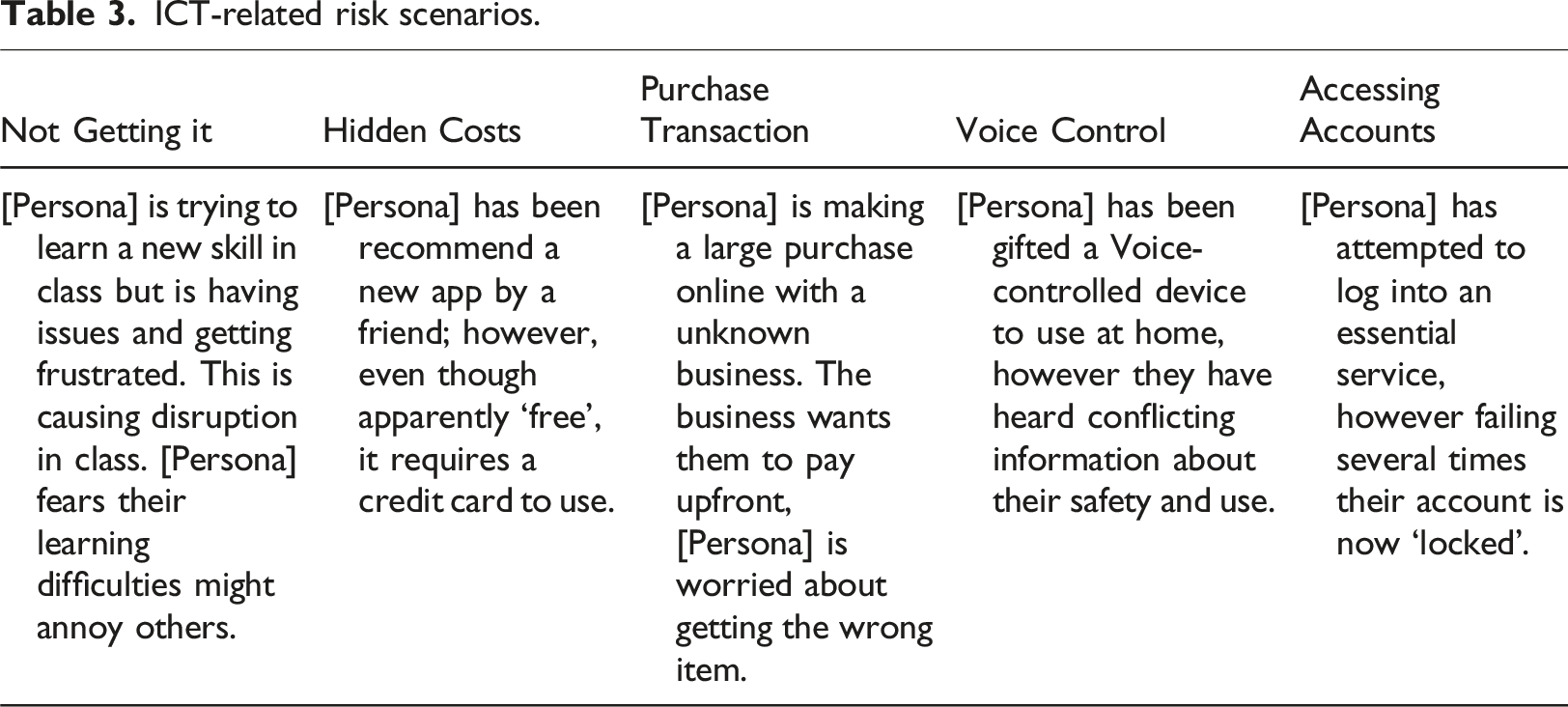
In the online workshops, the personas offered participants a vehicle to keep centred on lived experience. By placing these personas into several prepared, ICT-related risk scenarios (Table 3), each group could position themselves and put personas into action, providing a sense of embodiment (despite the workshop being online). These risk scenarios, as outlined in Table 3, include: not getting it, hidden costs, purchase transaction, voice control and accessing accounts.
Participants had to keep asking themselves and others, ‘what would I do in this situation?’ They moved between speculation and operationalising, between perceptions and practices. It is this type of oscillation between different states and positionalities that allows for creativity, risk-taking, and play. The personas helped participants think beyond themselves and stretch for a ‘what if’ moonwalk. But they also, as silhouettes of lived experience, offered a relationality to keep the participants moving back to the scenario.
Workshop 1: Mentors (12ppl)
The first day of the workshop involved a training session with the Miro tool, followed by the persona-enriching activity conducted in groups of 3-5 older adults and 2-3 researchers (see Figure 2). We quickly learnt that the Miro tool at the centre of our workshop was not as intuitive to pick up as we thought, with many of these technically savvy ICT users struggling to understand and manage the tool. As facilitators, the researchers were able to manage these issues by acting as ‘scribes’ and writing participant’s comments to support those who were not able or confident enough to write down their responses. The persona activity itself saw an insightful discussion around the details of the persona, as each group responded to questions regarding the technical and health-related aspirations of this imaginary individual (the persona), drawing on their own experiences teaching classes and engaging with U3A members of various levels and abilities. Screenshot from online workshop WK 1.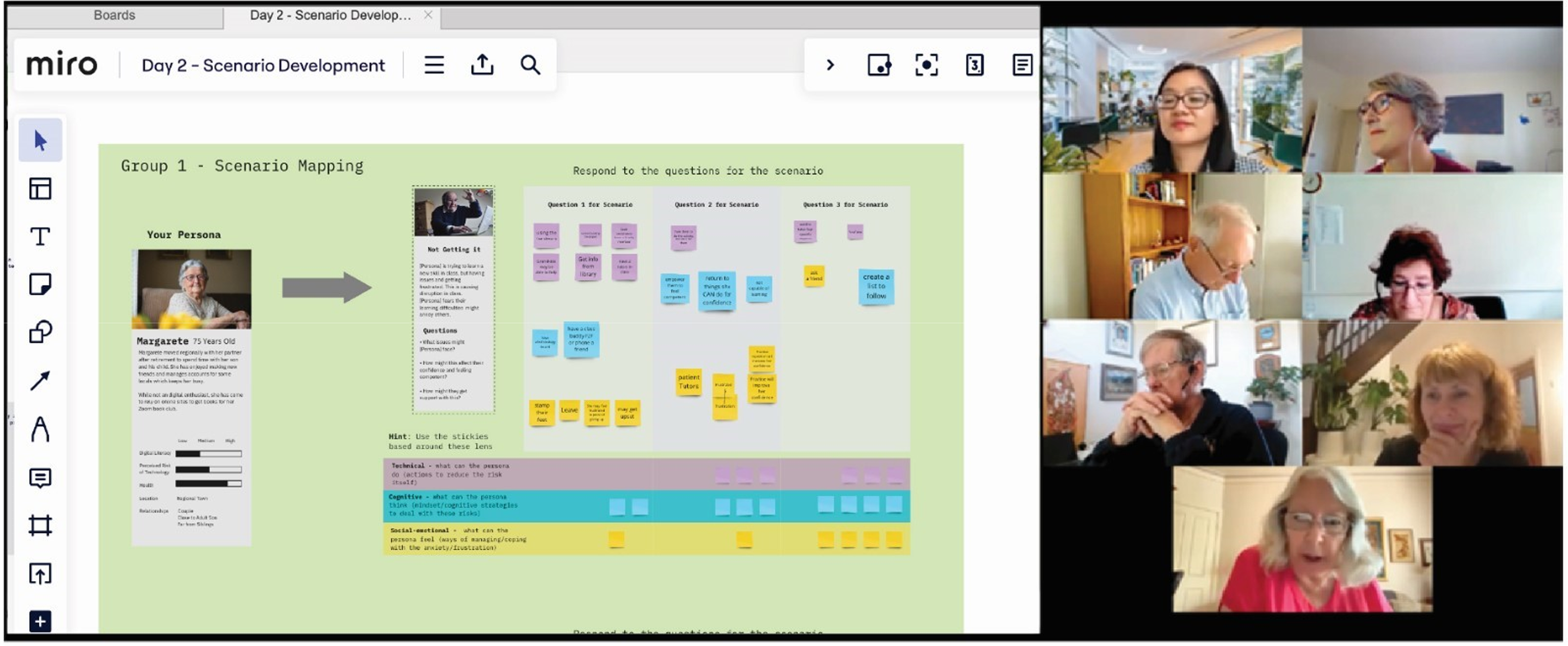
On the second day, more participants were skilled enough to make their own notes, with several having taken their own time to learn the Miro tool, requiring less note-taking support. The focus of the day involved completing five scenarios (see Table 3) in which participants were asked to consider some ICT issues the persona might face: not getting it, hidden costs, purchase transaction, voice control and accessing accounts. Participants were asked to consider the persona’s competence in dealing with these issues, as well as likely sources of support. Responses were then categorised by the participants and facilitators as either technical (actions), cognitive (thinking) or socio-emotional (feeling), as a process of analysis that was not so effectively received.
Workshop 2: Online with Miro Scribers (14 ppl)
Taking the learnings from Workshop 1 in which technologically savvy participants (U3A tech mentors) struggled with the Miro application, we revised our process, so each group had a facilitator and someone who transcribed the conversation onto MIRO. This allowed participants to focus on the personas and discussion rather than being preoccupied by using new software. This workshop lasted 5 h.
Workshop 3, 4, 5: Face to Face (13, 25, 9 ppl)
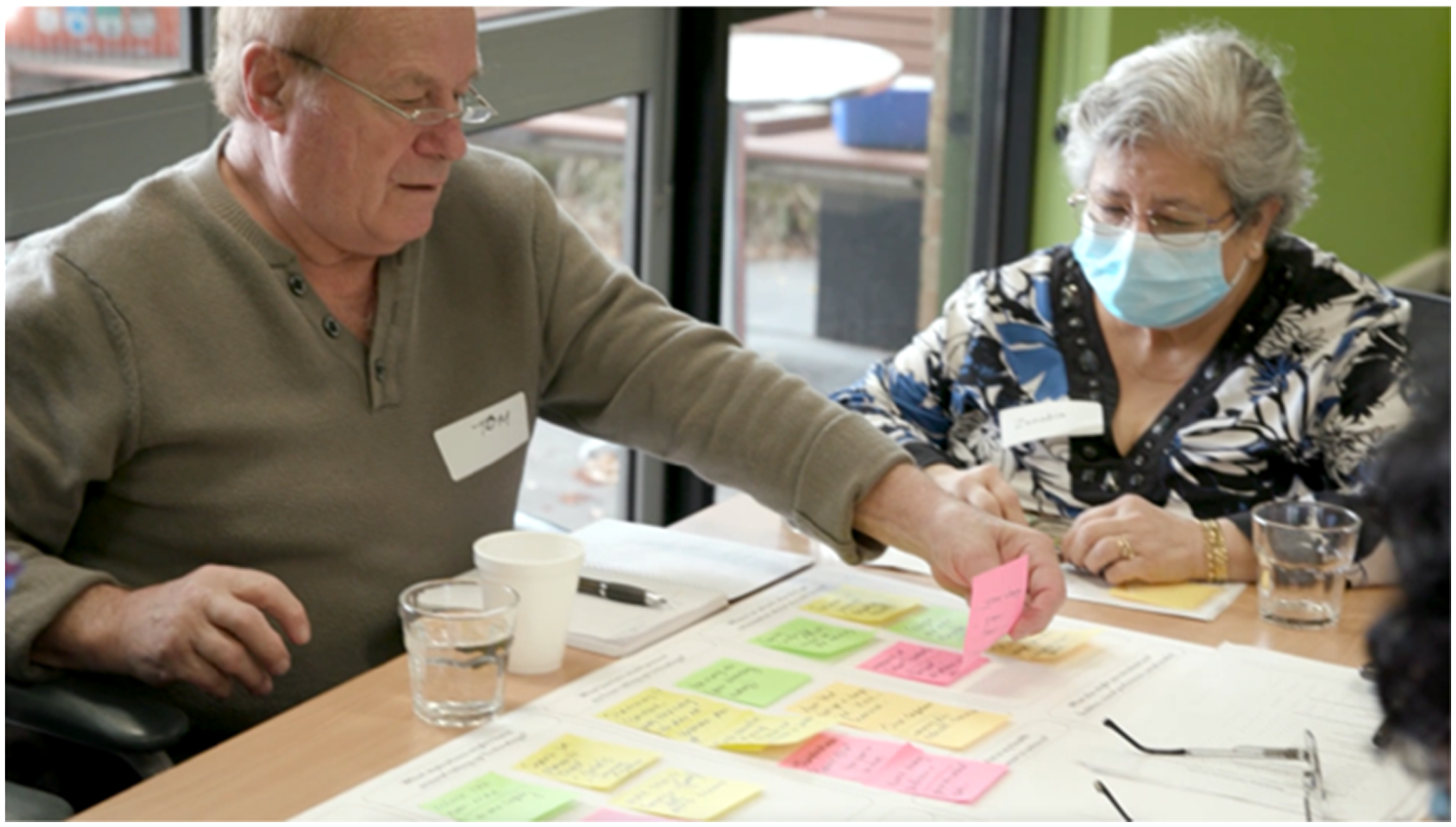
These workshops were face-to-face (f2f), one-day events conducted in northern Melbourne at community centres in Wollert (n = 13) and Thomastown (n = 25, n = 9), that saw engagement and dialogue further enhanced (Figures 3 and 4). As in-person sessions, the researchers drew on U3A leadership to facilitate them; however, the activities were conducted by the researchers, with mentors and teachers participating in some workshops. Most participants wore masks, with researchers providing masks and disinfectants, alongside personal markers and sticky notes, to ensure public safety. These f2f workshops were more engaging than the online workshops as they allowed participants with a diversity of digital media perceptions and practices to contribute meaningfully without being hindered by technological intervention. These workshops lasted 6 hours at U3A facility. U3A community engaging with the workshops at U3A. U3A community engaging with the workshops at U3A.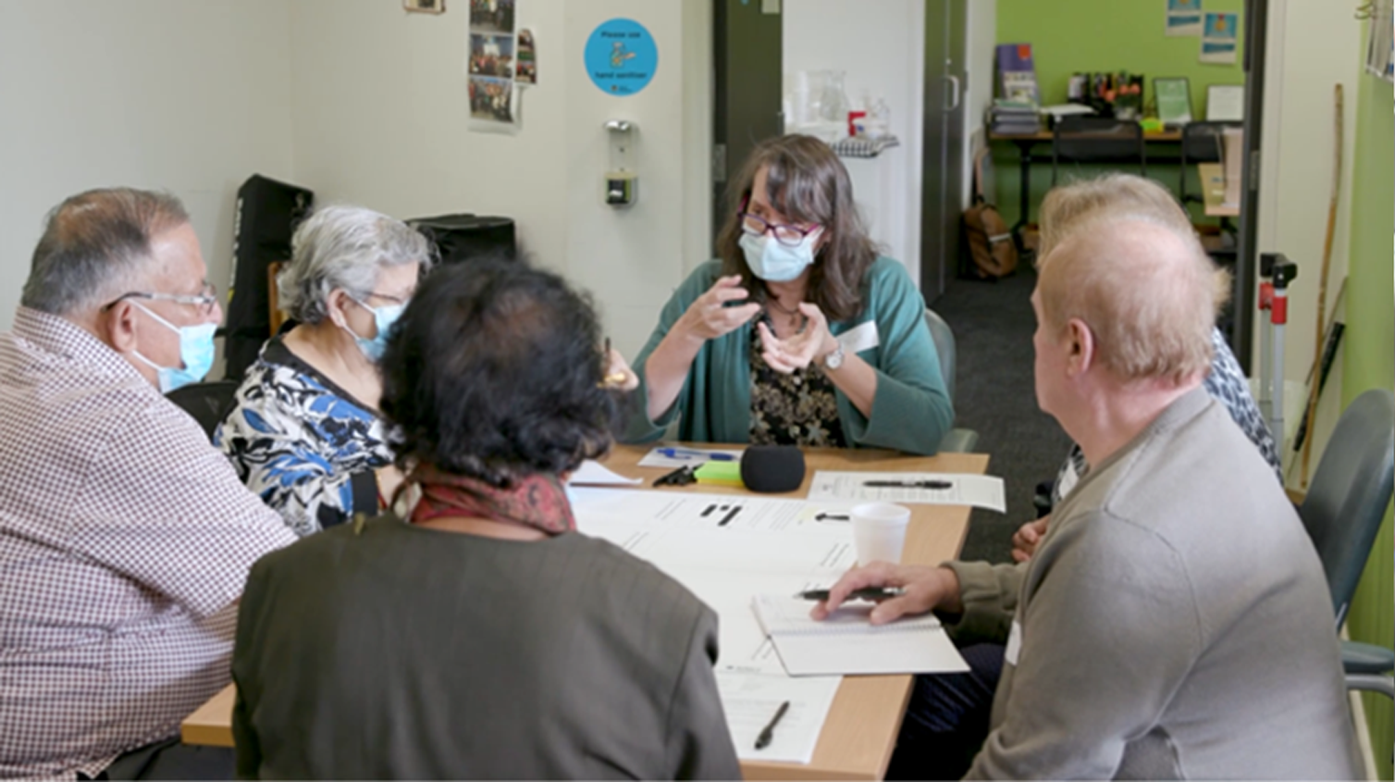
Workshop insights and participation
In realising the role of personas in co-designing with older adults, we consider how their playful nature can enable us to elicit the lived experiences of those in later life in potentially more engaging and meaningful ways. Here, personas allowed for playful transgression – expanding empathy, possibilities and speculations. They also constantly grounded the workshops back to the importance of lived experience and the need to honour these practices and perceptions. In reflecting on the online and in-person workshops, personas provided an important vehicle for engaging older participants in the often-complex topics of ICT use and perceived risks of technologies. As we go into detail, the persona-scenario approach enables participants to humanise others, encourages imagination, and supports careful practices, suggesting the implications of taking a much more playful and creative approach to understanding lived experiences in later life.
First, we highlight how this method supported participants in considering personal qualities and contextualising aspects of ICT issues, helping humanise given scenarios. This was apparent in the initial workshop; when engaging the tech-savvy mentors of U3A, we saw participants were drawn to enrich the personas as if they were their students. However, our framework involved them having examined not only the technical but also the cognitive and socio-emotional facets of these imaginary individuals. Due to this process, participants reflected on how instrumental the lifestyle and historical contexts of such individuals were in acknowledging their skill levels and intentions with their devices, suggesting the learning they had also benefitted from through the sessions. The later workshop with a broader group of U3A members reaffirmed this contextual process. Participants focused on how familiarity developed with practice to navigate ICT issues, making the devices an individual had key to opportunities to learn and play and ultimately improving their skills.
In addition, we documented how providing a spectrum of personas (see Table 3) with varying low to high levels of digital literacy was key to enabling participants to articulate clear delineations and consistencies in the opportunities and challenges posed to older adults. For example, across multiple workshops, participants described how the higher literacy personas would aspire to use their skillsets as a multipurpose platform for expanding their activities, whereas the lower tier personas remained focused on increasing social connection and becoming more comfortable using devices for everyday things. By employing their imaginations, participants could impress their own values and desires onto these fictional individuals, articulating the opportunities they found through technology literacy and limitations they had encountered themselves. By comparison, barriers in personal traits – such as impatience or memory loss, in the high cost of technologies, and in the location of personas, such as the reduced online access and device availability for individuals living in remote regions of the country – were consistent across the participant cohort, offering important insights for both older adults and the organisations that seek to support them.
Finally, it is important to note how the enrichment process evolved through the workshop sessions, and how this was key to engaging CALD attendees. Where earlier workshops with U3A membership saw personas of various ages and backgrounds provided to enrich, it became critical in the later ones to form more multicultural identities for CALD participants to connect with. In being sensitive and aware of the impacts of trauma and the importance of safety and belonging in co-design, these specific CALD personas helped participants problematise the relationship between age, ethnicity and technology. Here, personas acted as a medium that not only created tensions but also enabled more careful practices, sitting between perceptions and practices and seeking to bridge these differences through tropes from lived experience.
Corresponding and complimenting the persona enrichment, the scenario mapping (or scenarios of use) exercise provided a context for these emerging personified imaginaries to be speculated and actualised. They gave context and nuance, allowing participants to move through possibilities and potentialities, challenging and questioning the abstractions they saw. While the enrichment process focused primarily on the various attributes of this persona, the series of scenarios built on our ethnographic findings regarding experiences of financial, privacy, purchasing, and functional ICT risk (see Table 3). These very practical situations were relatable enough to participants that they did not simply ‘problem-solve’ the situations but could engage and offer critical propositions. For example, a scenario based around the social pressure of not understanding something in a class context saw participants not only discuss methods for gaining support but also playfully speculate upon the role of other students, teachers, and the institution in engaging this situation. These perspectives were overlayed with not only functional – but also social and emotional lenses – in which participants were able to reflect on their own feelings and ways of processing such challenges, such as the isolation issues in class can bring, particularly for those with language barriers and a shy personality.
Facilitating diverse and nuanced exercises was most apparent in our first workshop in person with members of the Wollert community. Here, we worked with a group of older Egyptian immigrants to reframe and adapt the given persona to reflect their reality – in which they actively changed the persona’s name and background to reflect their own. The resulting enrichment highlights how a CALD experience of ICT use and risk can differ from others, such that we saw it necessary to provide an additional to CALD personas, alongside the removal of pre-filled persona names, in the later sessions. This had two important outcomes: we were able to affirm for CALD participants how valuable and important their lived experience was, and more broadly, we enabled all groups to assign a name and background through the enrichment process that aided them in investing further in the process. This episode provides an example of how play and care intersect through co-design, making it essential to provide safe, collaborative, and empowering environments that enable choice and trust to emerge.
These insights affirm how central mutual learning is in the co-design process, and how valuing nuances throughout workshops can support the personalising and humanising ICT for older adults. Across our insights, personas formed a vehicle through which not only older adults but also those who support them with technology were able to articulate the possibilities and limits of seniors’ media practices. As we highlight, a persona-scenario approach involves not only learning from participants in developing contextual understandings of ICT use but also in developing personas that participants can relate to and potentially learn from themselves. As noted by Fuglerud and colleagues (2020), this method enables deeper insight into the lived experience of people, which our work also indicates: through learning of the opportunities that higher digital literacy can offer, documenting financial and location-based barriers that exist across, and enabling CALD participants to articulate and explore the unique issues they face. Ultimately, we see how being attentive to the nuances of co-designing with older adults was invaluable in characterising the personal and environmental factors older adults must navigate with ICT use.
Conclusion
In this paper, we have explored the possibilities and limits around how we can playfully co-design through persona workshops to reflect on opportunities and barriers of digital media for social inclusion for older adults. Through the persona perceptions and practices, participants can dance between speculation and potentiality, uncertainty, and imaginaries (Akama et al., 2018). They provide playful ways to evoke empathy and understanding around possibilities – now and in the future. We explored the question: How can we playfully co-design through personas to enhance understandings of older adults’ lived experience of digital media?
Conducted through pandemic lockdowns whereby many older adults were forced to use digital and online media, the ACCAN Co-designing Participatory Strategies with Older Adults to Reduce Perceived Risk and Promote Digital Inclusion project explored many perceptions and practices with the U3A community. Reinforcing the inequality of digital-social inclusion, the workshops illustrated the need for models which engage an individual’s level of digital literacy and their preferences for accessing support. Methodologically, we highlight the limitations of online participation for non-tech savvy users as well as the power of personas for enhancing empathy. Deploying creative and alternative methods for research engagement and dissemination can play a key role in the take-up of research findings (Hjorth et al., 2019; Miller, 2021). Through playful co-design of personas, we have indicated ways in which to give voice to experience, building on previous orientations to elicit lived experiences of ICT in later life.
Through the discussion of co-design workshops and focussing on personas as way to ground practices with perceptions, this paper has sought to think through some of the challenges and possibilities for researchers working with older adults around digital media. We need to experiment more with methods to bring lived experience to the forefront in understanding digital media for older adults. We need to bring play to our methods to enhance creativity, empathy, and connection. We need to offer more nuanced models that acknowledge the diversity and richness of older adult’s digital media engagement spectrum from non- to tech-savvy users. This paper has focused on co-design methods through the persona as a cultural probe to reflect on the lived experience of older adults. Cultural probes such as the persona allow for tacit feelings and emotions to be explored and highlight lived experience in the digital-social. As research in the field highlights, creative methods that focus on lived experience of older adults allows for greater insights into barriers and opportunities for them in the digital-social contexts.
Footnotes
Declaration of conflicting interests
The author(s) declared no potential conflicts of interest with respect to the research, authorship, and/or publication of this article.
Funding
The author(s) disclosed receipt of the following financial support for the research, authorship, and/or publication of this article: This project was funded by a grant from the Australian Communications Consumer Action Network (ACCAN). The operation of the Australian Communications Consumer Action Network is made possible by funding provided by the Commonwealth of Australia under section 593 of the Telecommunications Act 1997. This funding is recovered from charges on telecommunications carriers.
