




Abstract
Balancing everyday tasks with the expectations of others regarding one's availability via smartphone is a challenge, especially for mothers. This research replicated and further developed studies by Halfmann and colleagues in 2021 and 2024 that yielded contradictory results regarding the conditions of feelings of guilt about (not) using the smartphone. More specifically, we investigated how smartphone-related goal conflict, the availability norm, and the parental phone use norm are related to mothers’ feelings of guilt when completing non-stressful everyday tasks. In addition, we researched how smartphone-related goal conflict and guilt are linked with experiences of recovery and task accomplishment. Results from a preregistered experience sampling study among 227 mothers of young children were largely in line with our hypotheses. They revealed, among others, that frequent smartphone use was more strongly linked with guilt when mothers perceived high goal conflict. If the availability norm was salient, little smartphone use was associated with more guilt. The results also indicated that the availability norm partly legitimized frequent smartphone use despite goal conflict. Nevertheless, overall, the findings suggest that mothers tend to experience low levels of guilt about their smartphone usage behavior and that these feelings do not impair the recovery from tasks.
Smartphones and mobile Internet access have a profound impact on the daily lives of many people around the world. Because these technologies can be used anywhere and any time, they shape everyday practices and color expectations of availability we put on others as well as on ourselves (Ling, 2016). This can result in blurred boundaries between different life domains, leading to a spillover of tasks from one sphere into the other (McDaniel et al., 2021). Perhaps one of the areas where this is most evident is the family environment (Aryee et al., 2005). This means that demands from one domain, such as social media notifications and calls from friends or work-related emails, may interfere with everyday family life (McDaniel, 2019). On the other hand, parents might organize family life via smartphones while they are at work (Liu et al., 2021; Sowon et al., 2019).
Mothers are particularly prone to feeling guilty, including regarding their smartphone use (e.g., Liss et al., 2013; Wolfers, 2021). Everyday situations in which they interact with others or perform a task (e.g., supervising a child) but at the same time are expected to be available via smartphone (e.g., by friends or work colleagues) could be particularly challenging (Halfmann, 2021). If they respond to calls and messages in such situations, they may feel guilty because they perceive a goal conflict (Panek, 2014). If they do not use the smartphone, they may feel guilty about violating the availability norm (Bayer et al., 2016; Hall, 2017; Hall & Baym, 2012). Frequent feelings of guilt are positively associated with depressive symptoms (Kim et al., 2011). Therefore, if constant mobile connectivity comes with constant guilt this could be considered problematic for maternal well-being.
Generally speaking, the impact of smartphone use on well-being depends on contexts, such as current goals, social roles, and affective states like perceived stress (Vanden Abeele, 2021). Yet it is still unclear in which contexts feelings of guilt regarding smartphone use arise. In three experimental studies, Halfmann et al. (2021, 2024) investigated how perceived goal conflict and the availability norm influence guilt about (not) using mobile messengers. However, the results were inconsistent and largely deviated from the hypotheses, possibly due to methodological difficulties in studying messenger use and guilt experimentally. The present study, therefore, aims to replicate and develop these previous studies by using a different methodological approach.
Furthermore, previous research on feelings of guilt about smartphone use is predominantly based on student samples and explored the emergence of guilt in situations that tend to be stressful—for example, when completing study or work tasks (e.g., Halfmann et al., 2021, 2024; Hall, 2017; Liu et al., 2021; A. Meier et al., 2016). To gain further insight into the complexities of daily smartphone use, we examine a different user group and a different situational context, namely mothers with young children while performing non-stressful everyday tasks. The term task refers to a series of actions aimed at achieving a specific goal (Locke et al., 1981). In our context, such tasks could be doing household chores, playing with children, or answering emails at work, but also leisure activities like having a coffee or reading a book.
Our overarching research question is: under what conditions and with what consequences do mothers feel guilty when they (do not) use their smartphones while performing tasks in non-stressful situations? More specifically, we investigate whether goal conflict, the availability norm, and the parental phone use norm (i.e., no smartphone use in the presence of children) are linked with guilt about smartphone usage behavior. So far, researchers have usually linked media-related goal conflicts and the availability norm to the experience of stress (e.g., Gilbert et al., 2023; Hall, 2017; Steele et al., 2020; Thomée et al., 2011). How goal conflicts and the availability norm work in non-stressful situations is unclear. In addition, we research how smartphone use and guilt relate to recovery and accomplishment experiences. Both recovery from stress and perceived success in the pursuit of personal, academic, or professional goals are important for the well-being of individuals (Huta & Waterman, 2014; Sonnentag & Fritz, 2007).
In the following, we first explain the conditions under which feelings of guilt may arise. We then elaborate on smartphone use and guilt among mothers and apply the hypotheses developed by Halfmann et al. (2021) to this particular user group. Finally, we outline potential consequences for experiences of recovery and task accomplishment. We test our hypotheses based on an experience sampling study.
Guilt about smartphone usage behavior
Guilt is considered a self-conscious emotion because it arises when individuals evaluate their own behavior (Tracy & Robins, 2004). More specifically, guilt denotes the painful feeling “associated with the recognition that one has violated a personally relevant moral or social standard” (Kugler & Jones, 1992, p. 318). Importantly, feelings of guilt only arise when the individual feels personally responsible for violating a goal or norm (Tracy & Robins, 2004). Smartphone use is often considered a “guilty pleasure” (Panek, 2014, p. 562). The underlying assumption is that particularly mobile and social media use is instantly pleasurable by satisfying psychological needs, such as the need for relatedness, which leads individuals to use media even in situations where that use conflicts with other important goals (e.g., Halfmann, 2021; Hofmann et al., 2017; van Koningsbruggen et al., 2018). Researchers have suggested that whenever users perceive such a goal conflict, they evaluate their media use as a self-control failure and feel guilty about it (e.g., Myrick, 2015; Panek, 2014; Reinecke & Hofmann, 2016; Reinecke et al., 2014).
Halfmann et al. (2021) extended this view by considering that not using the smartphone can lead to guilt as well, namely when users feel that they violate the availability norm. This norm demands that users check their smartphones regularly for new calls or messages and answer them quickly (Hall & Baym, 2012; Ling, 2016). It is based on the general feeling of individuals that others (e.g., family members, friends, work colleagues) could contact them at any time via their smartphone (Bayer et al., 2016). A norm can only influence the cognitions and behavior of individuals if it is salient, meaning that it is situationally in their cognitive focus (Kallgren et al., 2000). Hence, when the availability norm is salient, but users do not check their phone or check it too infrequently, they should perceive a norm violation (Bayer et al., 2016). Consequently, Halfmann et al. (2021) assumed that both perceiving a goal conflict and availability norm violation can trigger guilt about messenger usage behavior. Because feelings of guilt are unpleasant, individuals typically use strategies to avoid or reduce them, such as excusing their behavior (Baumeister et al., 1994). Halfmann et al. (2021) therefore further expected that individuals evaluate messenger use that conflicts with other goals as more legitimate if they feel they had to be available. On the other hand, they assumed that the pursuit of an important goal may legitimize less frequent messenger use despite expected availability.
However, these assumptions were largely not confirmed in three empirical studies, namely a vignette experiment and two laboratory experiments (Halfmann et al., 2021, 2024). Results of two of the three studies supported the hypothesis that high goal conflict (i.e., messenger use conflicts with studying for a test) triggers feelings of guilt about frequent messenger use. Furthermore, whereas the vignette experiment showed that a high salience of the availability norm increases guilt about not using messengers (Halfmann et al., 2021), findings from one laboratory experiment revealed that the availability norm is linked with lower feelings of guilt about little messenger use (Halfmann et al., 2024). Only one of the studies found evidence that important goals (e.g., having to study) help individuals to excuse little messenger use despite expected availability (Halfmann et al., 2024). Halfmann et al. (2021, 2024) attributed the unexpected and inconsistent findings in part to the artificiality of the vignette setting and difficulties in studying smartphone use and guilt in the laboratory. They argued that individuals are likely to feel less strong emotions in response to vignette descriptions than to actual experiences, and that guilt is unlikely to arise as readily in a laboratory scenario because participants do not feel responsible for their behavior during study participation. Therefore, the present study aims to retest the hypotheses in the everyday life of users, using a different methodological approach.
Furthermore, it is possible that messenger use generally does not evoke strong feelings of guilt, for example, because it tends to be a rather short activity. It might therefore be helpful to investigate smartphone use in general instead. In fact, previous research suggests that smartphone use as an activity in itself tends to be viewed negatively in many societies and therefore may lead to guilt (for an overview, see Reinecke & Meier, 2020). It should also be noted that previous studies have focused on conflicts between media use and study goals (e.g., Halfmann et al., 2021, 2024; A. Meier et al., 2016; Panek, 2014), which limits the generalizability of their findings. For example, study goals may be associated with particular stress (A. Meier et al., 2016), raising the question of the extent to which guilt arises in non-stressful situations. In the following, we explain why it is meaningful to additionally examine guilt regarding smartphone use specifically for mothers’ completion of non-stressful everyday tasks.
Maternal smartphone use and guilt
Studies show that analogous to other populations, smartphone use among parents is increasing (Common Sense Media, 2019). Due to their high mobility and quick start-up time, smartphones are often present during everyday activities. Within the family context, this means that smartphones are often used while parenting (Kushlev & Dunn, 2019; Radesky et al., 2014), which has given rise to both public and scholarly concerns about the impact of these behaviors on children (Wolfers et al., 2020). Much like other discussions on parenting standards, smartphone use has become a normatively loaded issue evoking negative emotions such as uncertainty and guilt among parents (Hiniker et al., 2015; Wolfers, 2021; Wolfers et al., 2023).
Existing research indicates that mothers in particular are prone to experiencing guilt—even when the division of childcare is equally divided with their partner (Collins, 2021; Miller & Strachan, 2020). Fueled by strong societal ideals of good parenting, scholars have argued that mothers tend to carry the bulk of responsibility regarding their children's development and are thus more susceptible to fears of negative evaluation (Jackson & Mannix, 2004; Liss et al., 2013). This is especially true for mothers of young children (Liss et al., 2013; Miller & Strachan, 2020). As a result, the fear of negative evaluation and their own feeling of not living up to societal ideals of a good mother lead to feelings of guilt (Liss et al., 2013). Because guilt among mothers is so pervasive and seems to be an integral component of motherhood, it has been framed as maternal guilt (Sutherland, 2010).
As mothers typically take up the majority of household and child-rearing tasks (Kurowska, 2020; Sutherland, 2010) it may be precisely these everyday tasks that are most likely to be interrupted by smartphone use and therefore result in increased goal conflict and guilt among mothers. Although not using the smartphone could help mothers complete everyday tasks well and avoid goal conflicts, it could simultaneously make them feel as if they are not meeting others’ expectations about their availability. Previous research suggests that the availability norm becomes particularly salient for mothers when they are not with their children because they still need to be available in case of emergency (Sowon et al., 2019). Overall, these considerations illustrate that the dilemma between smartphone use and non-use while taking care of everyday tasks might be particularly strong for mothers.
Conditions of guilt about smartphone usage behavior among mothers
Based on these lines of thought, Halfmann et al.'s (2021) hypotheses can be applied to smartphone use by mothers while performing everyday tasks in non-stressful situations as follows: the strength of goal conflict (i.e., conflict between smartphone use and everyday tasks) should moderate the influence of smartphone use on guilt, such that more frequent smartphone use is more positively related to guilt when goal conflict is high as compared to low (
A high availability norm salience should increase feelings of guilt if individuals do not use their phones. However, it must be considered that mothers experience specific expectations regarding their smartphone use that might be different from other user groups such as students. As outlined above, parents perceive a strong norm against using the phone in the presence of their children (e.g., Wolfers, 2021). Public discussions and campaigns have encouraged parents to not use their phones around their children (e.g., Christakis, 2018; Drug Commissioner of the German Government, 2017), potentially creating normative pressure working against pressure from the availability norm. Not living up to this parental phone use norm might give mothers the impression that they are “bad” mothers, triggering guilt (Liss et al., 2013). There is still limited research on the role this norm plays in parental phone use, but a first study indicates it might be important (Wolfers, 2021). Because this norm could be important for our study context, we will additionally explore how the salience of the parental phone use norm is related to feelings of guilt (
Recovery and accomplishment experiences among mothers
Lastly, the current study will extend the work of Halfmann et al. (2021, 2024) by examining the role of smartphone use and guilt in mothers’ experiences of recovery and accomplishment of tasks.
The construct of recovery refers to “a process during which individual functional systems that have been called upon during a stressful experience return to their prestressor levels” (Sonnentag & Fritz, 2007, p. 205). This process includes relaxation and psychological detachment from stressful situations, experiences of mastery that reinforce feelings of competence, and control over one's ability to influence events in life (Sonnentag & Fritz, 2007). Researchers have argued that smartphones play a paradoxical role in these experiences: although they can introduce potentially stressful availability demands, these devices are also particularly suited to address recovery dimensions and can therefore help in the recovery from everyday tasks (e.g., Rieger et al., 2017; Vanden Abeele, 2021). For example, quickly scrolling through social media or calling someone might help individuals mentally disengage from daily tasks without much effort, while entertaining activities such as watching videos may offer relaxation. Mothers in particular have been found to benefit from such smartphone breaks (Wolfers, 2021).
However, guilt about media use can interfere with the experience of recovery (Reinecke & Hofmann, 2016; Reinecke et al., 2014). Because guilt is a painful emotion and is associated with aversive arousal states such as anxiety and distress (Baumeister et al., 1994; Kugler & Jones, 1992), it represents a stressor that demands psychological resources and runs counter to the experience of recovery (Reinecke et al., 2014). It seems likely that when mothers use their smartphones during a break from everyday tasks and experience guilt about this, the experience of recovery is impaired.
In a similar vein, as explained above, mothers may also feel guilty about not using the smartphone, which could equally mitigate recovery experiences during breaks without smartphone use. It is therefore hypothesized that guilt about smartphone (non-)use will be negatively related to recovery experiences during breaks from tasks (
Finally, although using the smartphone can provide an easy way to experience recovery, it can also give mothers the feeling of being less successful in accomplishing tasks. The term accomplishment experiences refers to the subjective experience of being effective and making progress in completing tasks, such as those related to one's job or household (Mederer, 1993; J. A. Meier et al., 2006). In the context of our study, the term accomplishment experience also refers to the experience of successfully completing smaller tasks, such as making a coffee, changing diapers, or going for a walk. Completing such tasks and thus feeling competent is a basic human need that is crucial for the well-being of individuals (Huta & Waterman, 2014; Ryan & Deci, 2000). Previous research has looked at how smartphone use influences task accomplishment, but mainly in the work context. More specifically, it has been shown that smartphone use decreases perceived productivity and task accomplishment due to recurring interruptions (e.g., Kushlev et al., 2016; Sonnentag et al., 2018). It can be concluded from these studies that only specific situations of smartphone use interfere with task accomplishment, namely those in which a goal conflict is triggered. This should also apply to mothers and the completion of daily household or childcare tasks. When mothers experience a goal conflict, this means they have to stop or at least interrupt pursuing their task to use the smartphone. Consequently, goal conflict in relation to smartphone use should be negatively related to perceived task accomplishment (
Method
We conducted an experience sampling study with mothers of young children in November 2020 in Germany. Hypotheses, study design, and analyses were preregistered (https://osf.io/qr89w). The data and data analysis can be found on the Open Science Framework (OSF; https://osf.io/w2f3r/).
Sample
We recruited mothers of at least one child under the age of 7. Participants had to use an Android-based smartphone as the experience sampling app was developed for Android. In total, 234 mothers answered the pre-survey. Seven were excluded because they did not answer any experience sampling questionnaire. Our final sample consists of 227 mothers. They were on average 33.2 years old (SD = 4.3) and well educated (61% finished a university degree). Of the final sample, 37% were on parental leave, 8% were stay-at-home mothers, 8% were in education, 33% worked part-time, and 10% worked full-time (3% other). This is slightly lower than the percentage of mothers working full-time in a representative sample of German mothers with a child under 6 (13%; Keller & Kahle, 2018).
Mothers overall answered 4,965 daily questionnaires (compliance rate: 76%). In this project, we use a sample of 2,910 questionnaires in which mothers reported that they had not experienced a stressful situation in the past two hours. 1 Thus, we explore smartphone use by mothers in less stressful, everyday situations. Excluding 31 incomplete questionnaires resulted in a final sample of 2,879 situational questionnaires.
Procedure
Mothers were recruited from all over Germany using personal contacts, snowball sampling, social media posts and advertisements, and asking family and childcare centers to distribute the link. Interested mothers were directed to a Qualtrics survey where they received detailed explanations about the study procedure and provided their informed consent. The study was approved by the ethics committee of the Leibniz-Institut für Wissensmedien, Tübingen, Germany (LEK 2020/047).
Mothers who agreed to participate were asked to download the app movisensXS version 1.5.8 (movisens GmbH, 2020) and answered a pre-survey. Among other questions, they were asked to indicate their general smartphone use frequency (M = 3.99, SD = 0.79; scale from 1 = never to 5 = all the time). In the experience sampling period, they were sent four questionnaires a day for 7 ± days at predefined times (9 a.m., 12.30 p.m., 4 p.m., 7.30 p.m.) and could delay answering the survey for 35 min. At the end, mothers answered a post-survey. We used a reimbursement scheme in which filling out more questionnaires resulted in a higher reimbursement (up to €48.80).
Measures
In this paper, we predominantly use measures asked in the situational questionnaires (see OSF for an overview of all measures).
Tasks
Participants were always asked about the last task they pursued. They were instructed that we define tasks very broadly, including tasks such as spending time with their children or relaxing. We asked participants to briefly describe the task, to indicate to which area of their life the task belonged (options: family, work/university/education, household, leisure time, other), and who was present (options: children, partner, friends or other family members, colleagues, other parents or children, unknown individuals, or nobody else). Descriptive results on tasks are reported in the results section.
Importantly, the following measurements referred to the situation in which participants pursued the reported (last) task.
Smartphone use
Participants were asked if they used their smartphones during the task. The smartphone was used in 1,170 (41%) situations. Participants who reported yes indicated whether they used their smartphone only for the task (n = 253), partly for the task (n = 247), or for something else (n = 670). Moreover, they provided information on the frequency of smartphone use on a scale from 1 (not at all) to 5 (very frequently). Participants who reported not using the smartphone in the first item on smartphone use were coded 1 (M = 1.78, SD = 1.16).
Goal conflict
To measure goal conflict, participants were asked whether they experienced a conflict between the task and how they dealt with their smartphones (M = 1.53, SD = 1.03) on a scale from 1 (does not apply) to 5 (fully applies) building on Halfmann et al. (2021).
Availability norm
Following Halfmann et al. (2021), we assessed availability norm salience by asking whether participants felt they had to be available for others during the task on a scale from 1 (does not apply) to 5 (fully applies; M = 1.68, SD = 1.11).
Parental phone use norm
When participants indicated that their children were present, the salience of the parental phone use norm was assessed by asking them whether they felt they should not use their phone to not appear as a bad mother on a scale from 1 (does not apply) to 5 (fully applies; M = 2.01, SD = 1.39).
Feelings of guilt
We measured guilt about (not) using the smartphone with three items (e.g., “I felt guilty about it”; α = 0.67, M = 1.59, SD = 0.74), on a scale from 1 (does not apply) to 5 (fully applies). Based on pretest feedback, the question was introduced by explaining that “some people expect from us that we are always available through our smartphones, while others expect that we use it less.”
Recovery experiences
Participants who used their smartphone at least partly non-task related (n = 917) were asked to report on how they felt during their smartphone use with four items from Rieger et al. (2017; e.g., “I could do things where I can relax”) on a scale from 1 (does not apply) to 5 (fully applies). We selected one item from each of the recovery dimensions of psychological detachment, relaxation, mastery, and control experiences. Moreover, we asked participants who did not use their smartphone or only used it to pursue their task to indicate whether they interrupted the task for any other activity (e.g., looking out of the window). Participants who indicated yes (n = 652) were then asked to rate the same items for this non-smartphone break. We combined both questions into the same variable and formed a mean index of the four items (α = 0.65, M = 2.89, SD = 0.92). However, the correlations between the items were partly small (.11 < rs > .74), indicating it might be worth looking at the items independently.
Accomplishment experiences
Finally, accomplishment experiences were measured with two items (e.g., “I am satisfied with how I completed the task” based on Alliger and Williams (1993) and “I reached my goal”) on a scale from 1 (do not agree) to 5 (fully agree, r = .72, M = 4.57, SD = 0.74).
Data analysis strategy
Because the experience sampling questionnaires are nested within participants, we ran multilevel models with a random intercept for each dependent variable. Following Enders and Tofighi (2007), individual-level variables were grand-mean centered, and task-level variables were group-mean centered. In each model, we controlled for the age of the mother, education level (university degree or not), and general phone use frequency. We performed a stepwise procedure including first the control variables to the random-intercept model. Next, we added the independent variables included in the hypotheses in a stepwise procedure. In the last step, interactions were introduced. We interpreted a hypothesis as supported if the addition of the respective fixed effect led to a significant increase in variance and if the final model indicated a t-value above |2| which corresponds to a significant effect (Gelman & Hill, 2007). Because all effects with t > |2| also showed a significant increase in variance we only report results for the final models (for formulas of the final models, see the table notes, Tables 1 and 2). Results of the Chi-square tests can be found in the R output file on OSF. For the analyses including the parental phone use norm, we limited the sample to situations in which children were around (the results for the full sample for recovery and task accomplishment can be found in the Appendix on OSF). In addition, for the recovery analyses the sample was limited to situations in which either a phone was used for something not relating to the task or the task was interrupted by any other activity.
Multilevel linear regression analysis on situational guilt for phone usage (final models).
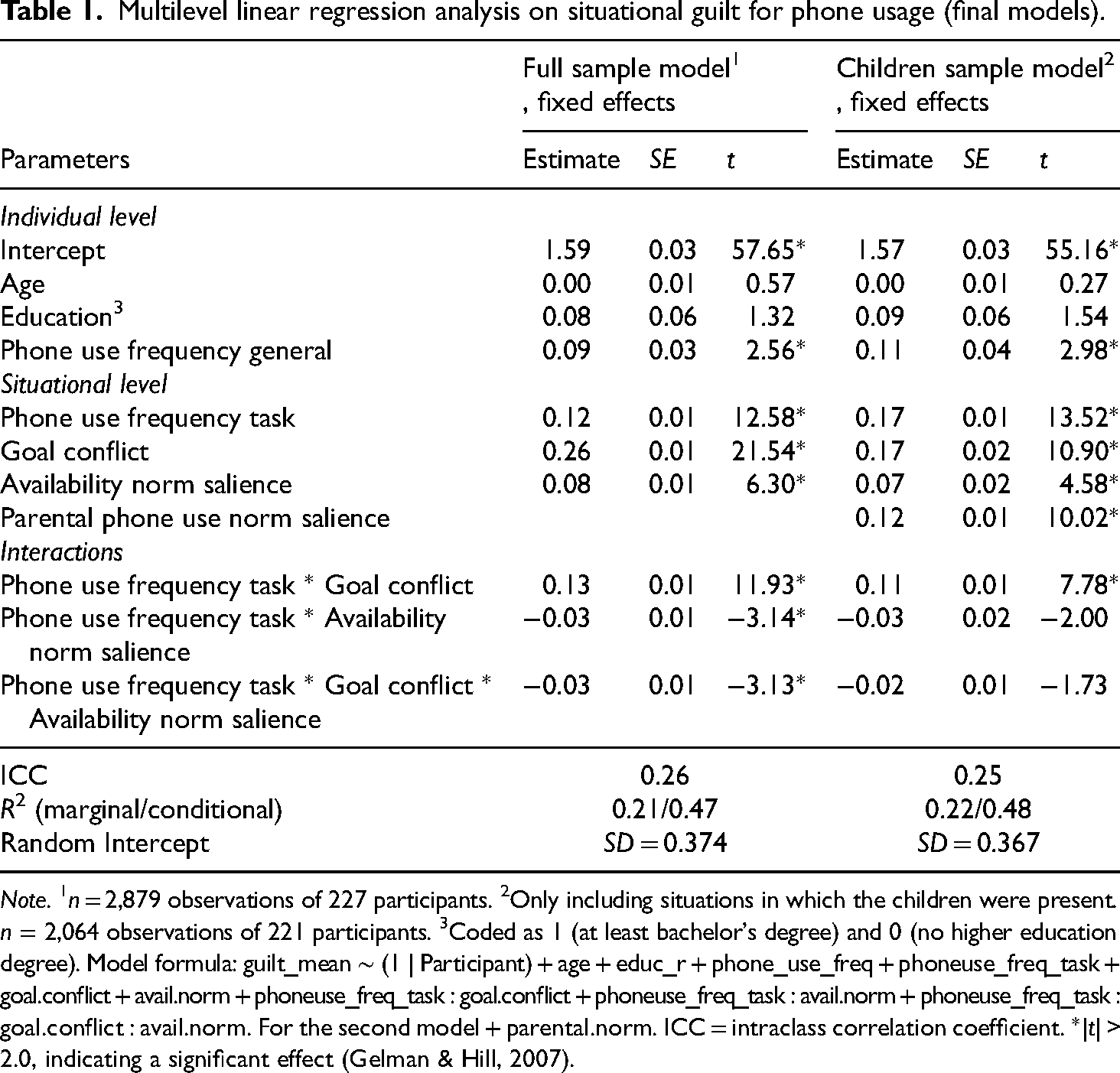
Note. 1n = 2,879 observations of 227 participants. 2Only including situations in which the children were present. n = 2,064 observations of 221 participants. 3Coded as 1 (at least bachelor's degree) and 0 (no higher education degree). Model formula: guilt_mean ∼ (1 | Participant) + age + educ_r + phone_use_freq + phoneuse_freq_task + goal.conflict + avail.norm + phoneuse_freq_task : goal.conflict + phoneuse_freq_task : avail.norm + phoneuse_freq_task : goal.conflict : avail.norm. For the second model + parental.norm. ICC = intraclass correlation coefficient. *|t| > 2.0, indicating a significant effect (Gelman & Hill, 2007).
Multilevel linear regression analysis on recovery and task accomplishment (exploratory analyses).
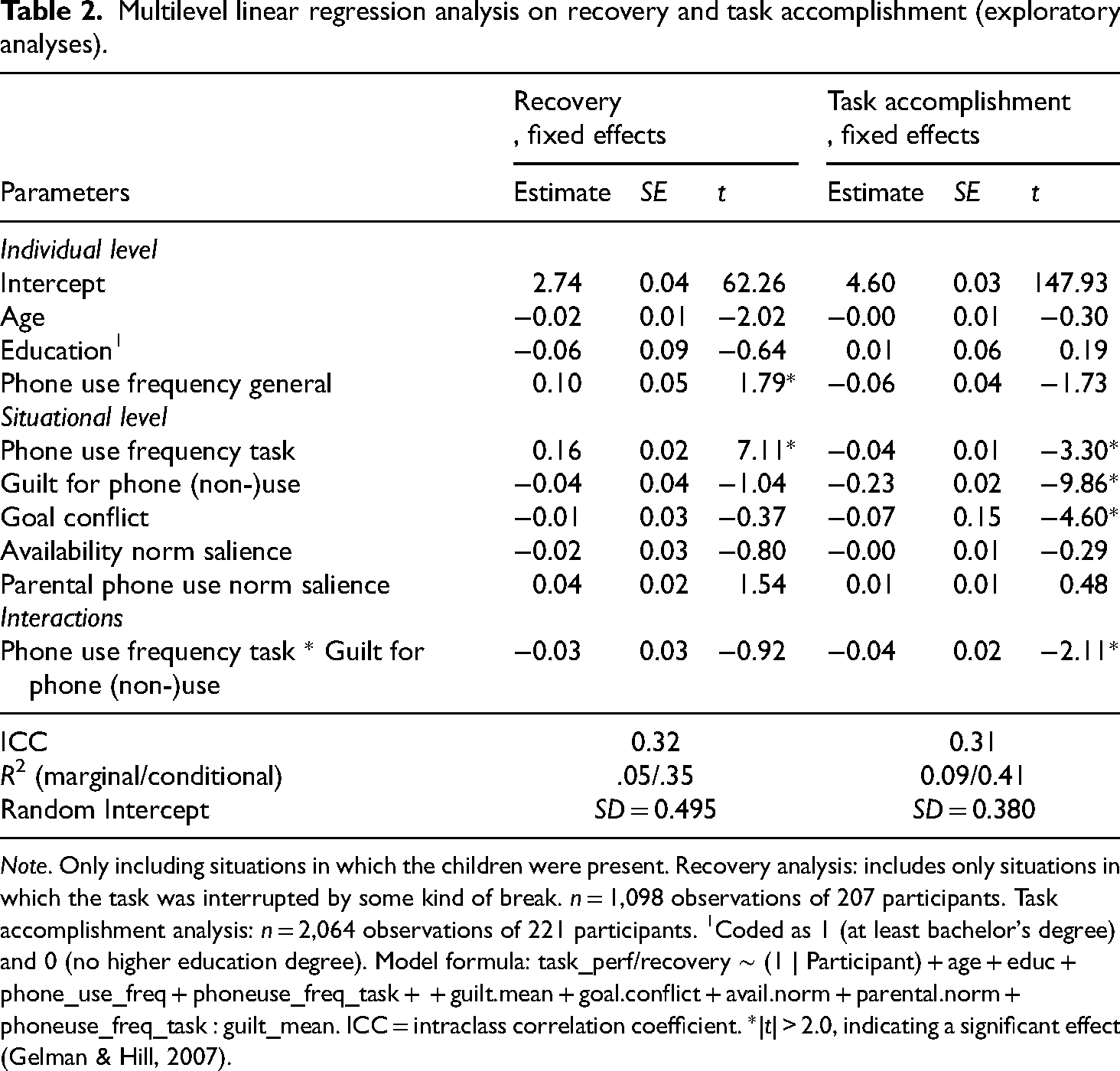
Note. Only including situations in which the children were present. Recovery analysis: includes only situations in which the task was interrupted by some kind of break. n = 1,098 observations of 207 participants. Task accomplishment analysis: n = 2,064 observations of 221 participants. 1Coded as 1 (at least bachelor's degree) and 0 (no higher education degree). Model formula: task_perf/recovery ∼ (1 | Participant) + age + educ + phone_use_freq + phoneuse_freq_task + + guilt.mean + goal.conflict + avail.norm + parental.norm + phoneuse_freq_task : guilt_mean. ICC = intraclass correlation coefficient. *|t| > 2.0, indicating a significant effect (Gelman & Hill, 2007).
Results
Descriptive results
The description of the tasks showed that, as intended, mothers reported mostly on small everyday tasks. Most tasks were related to family responsibilities (59%), leisure time (27%), or household chores (26%, choices not exclusive). Eleven percent of the tasks were work-related (6% other). Importantly, most tasks were completed with children around (72%). Examples of tasks from the open-ended descriptions relating to family or household chores included having lunch or dinner, nursing, changing diapers, cooking, playing with the child, buying groceries, tidying, or putting the children to bed. Work-related tasks included, for example, tasks such as writing emails, making a phone call, participating in a meeting, or prepping for a work- or study-related task. Leisure-related activities included going for a walk, drinking coffee, and meeting or talking to friends. Overall, phones were used in less than half of the situations (41%) and used less often when children were around (37%) compared to when children were not around (50%). The correlation matrix including both within- and between-person correlations can be found in Appendix A on OSF.
Hypotheses tests
Table 1 lists the results of a multilevel regression model predicting guilt. Smartphone use frequency, goal conflict, and availability norm salience were all significantly related to increased guilt. As predicted in H1, frequent smartphone use was more strongly related to guilt when participants experienced a high goal conflict, whereas the relationship was smaller or absent for situations in which low goal conflict was experienced (see Figure 1). Moreover, supporting H2, less frequent phone use was more strongly related to guilt for high as compared to low availability norm salience (see Figure 2). The results also revealed a significant three-way interaction: supporting H3a, when norm salience was high, experiencing high goal conflict and using the smartphone more frequently was linked with lower levels of guilt than when norm salience was low (see Figure 3, right side in the upper figure). However, rejecting H3b, when goal conflict was high, experiencing high norm salience and using the smartphone less frequently was not linked with lower but with slightly higher levels of guilt than when goal conflict was low (see Figure 3, right side in the lower figure). To test the effect of the parental phone use norm (i.e., no smartphone use in the presence of children), we created a subsample that only contained situations in which the children were present. Regarding RQ1, we found that higher perceived salience of the parental phone norm was significantly and positively related to guilt (see Table 1, right columns). In an additional analysis, we confirmed that this relationship was considerably stronger for higher phone use frequency (see Figure A1 in the Appendix on OSF for a full report of this analysis).
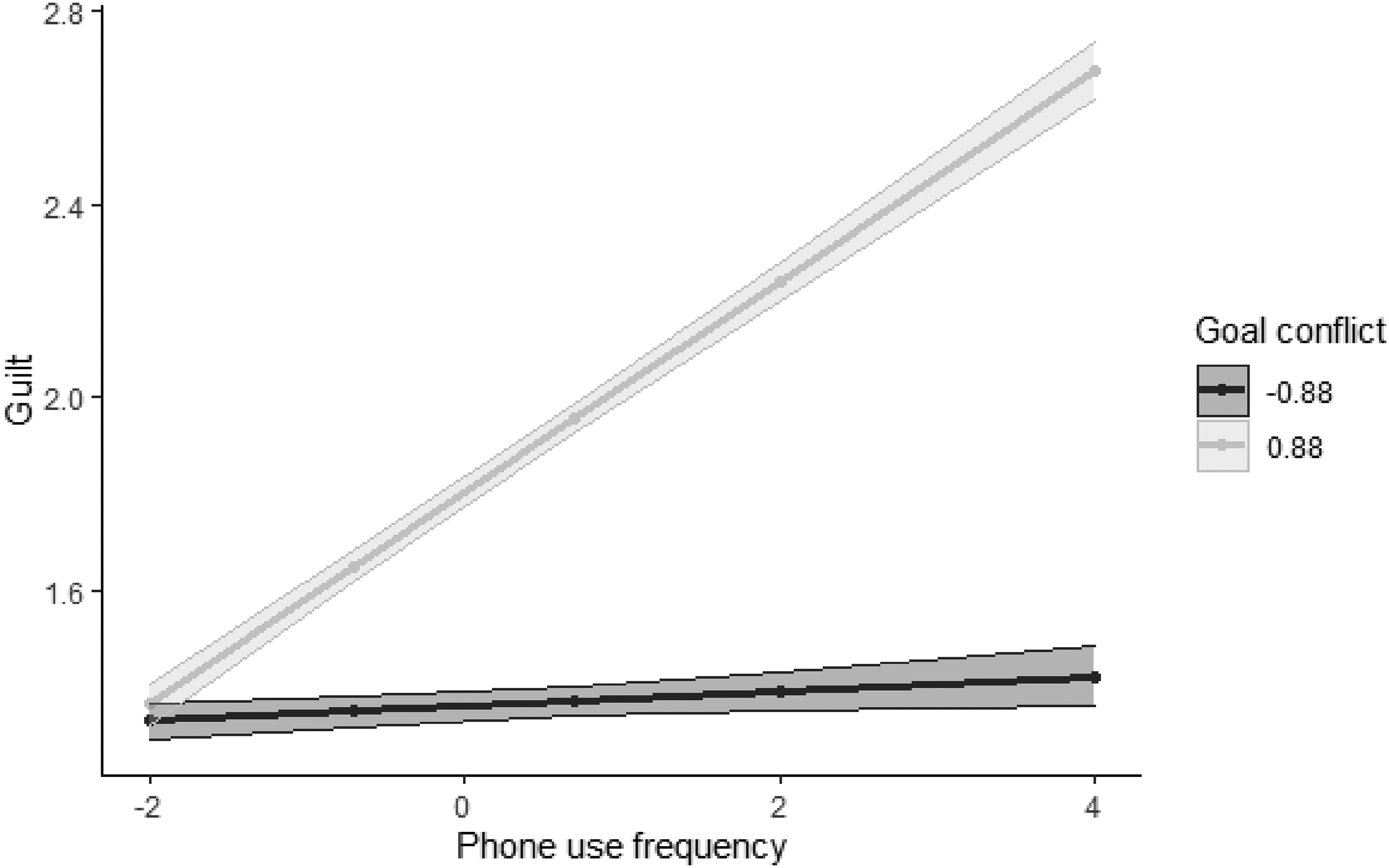
The interaction effect of goal conflict and phone use frequency in predicting guilt.
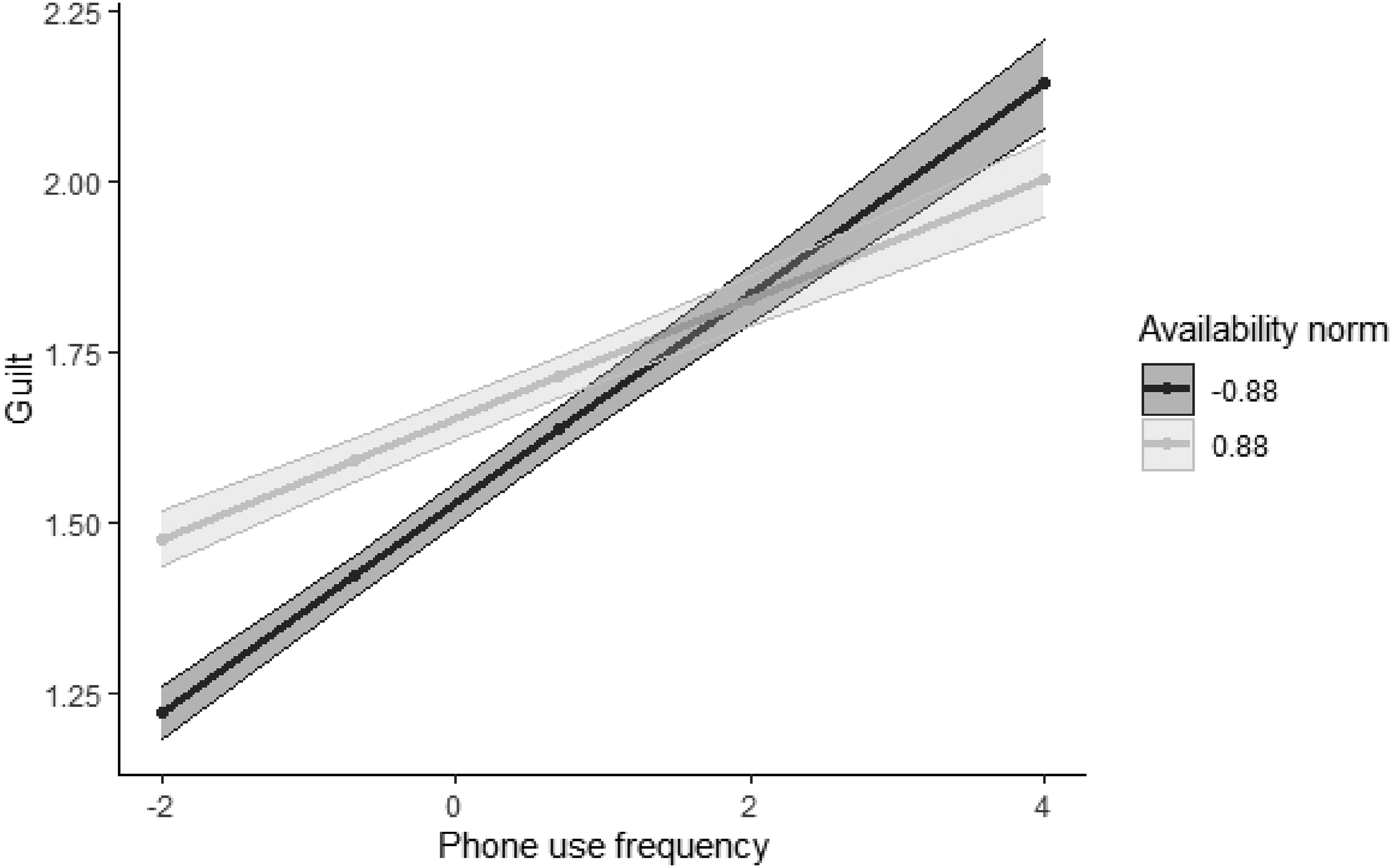
The interaction effect of availability norm salience and phone use frequency in predicting guilt.
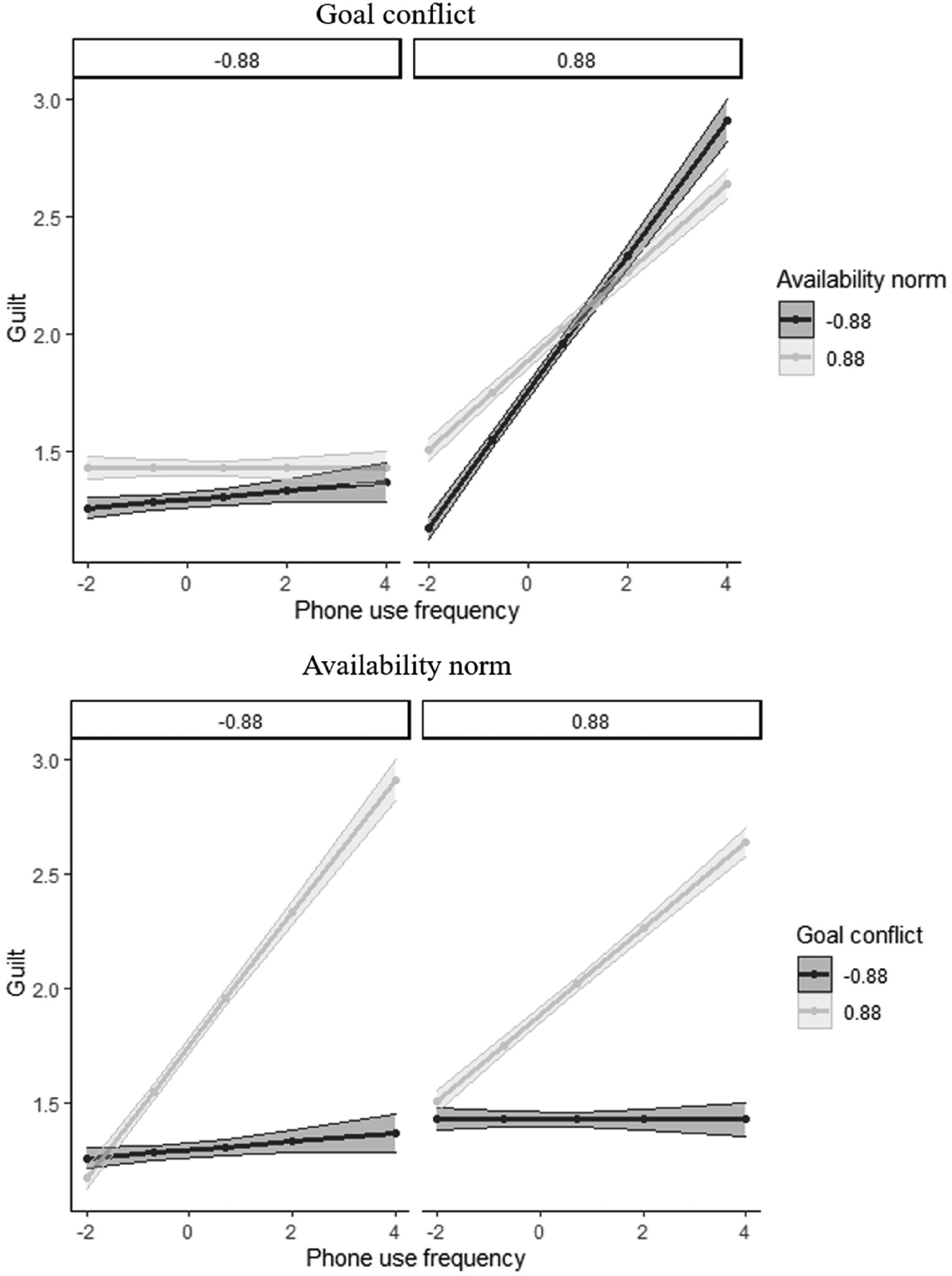
The three-way interaction effect of goal conflict, availability norm salience, and phone use frequency in predicting guilt shown in both directions.
In addition, we looked at the predictors of recovery and task accomplishment. In H4, we expected that guilt would be negatively related to recovery. However, guilt was not a significant predictor of recovery (model including controls and guilt, full sample: b = −0.02, SE = 0.03, t = −0.82). We thus found no support for H4. Goal conflict was significantly associated with reduced task accomplishment (model including controls and goal conflict, full sample: b = −0.18, SE = 0.01, t = −14.19), supporting H5.
Exploratory analyses
We ran additional, non-preregistered analyses. First, because the correlations between the items of recovery were partly low, we reran the analyses for each of the items separately. For one of the items, namely the one reflecting the recovery dimension of control, we did find the expected negative relationship (b = −0.20, SE = 0.04, t = −5.41). The stronger the feelings of guilt were, the less control was experienced during the break from the task.
Second, we tested whether recovery experience and task accomplishment were associated with any of the other predictors examined in this study. Table 2 (left columns) shows that better recovery was experienced during breaks in which a smartphone was used than during breaks in which no smartphone was used. Furthermore, Table 2 (right columns) shows that in addition to goal conflict, smartphone use frequency and guilt were linked with decreased task accomplishment. The interaction effect between guilt and smartphone use showed an interesting pattern. As illustrated in Figure 4, smartphone use frequency during the tasks was nearly unrelated to task accomplishment when guilt was low, whereas experienced guilt and smartphone use seem to amplify each other in decreasing task accomplishment. As a robustness check, we reran all analyses including the task type (work- or family/household-related) and the audience (e.g., partner/colleagues) as control variables. Results did not change (see Appendix, Tables A4–A6).
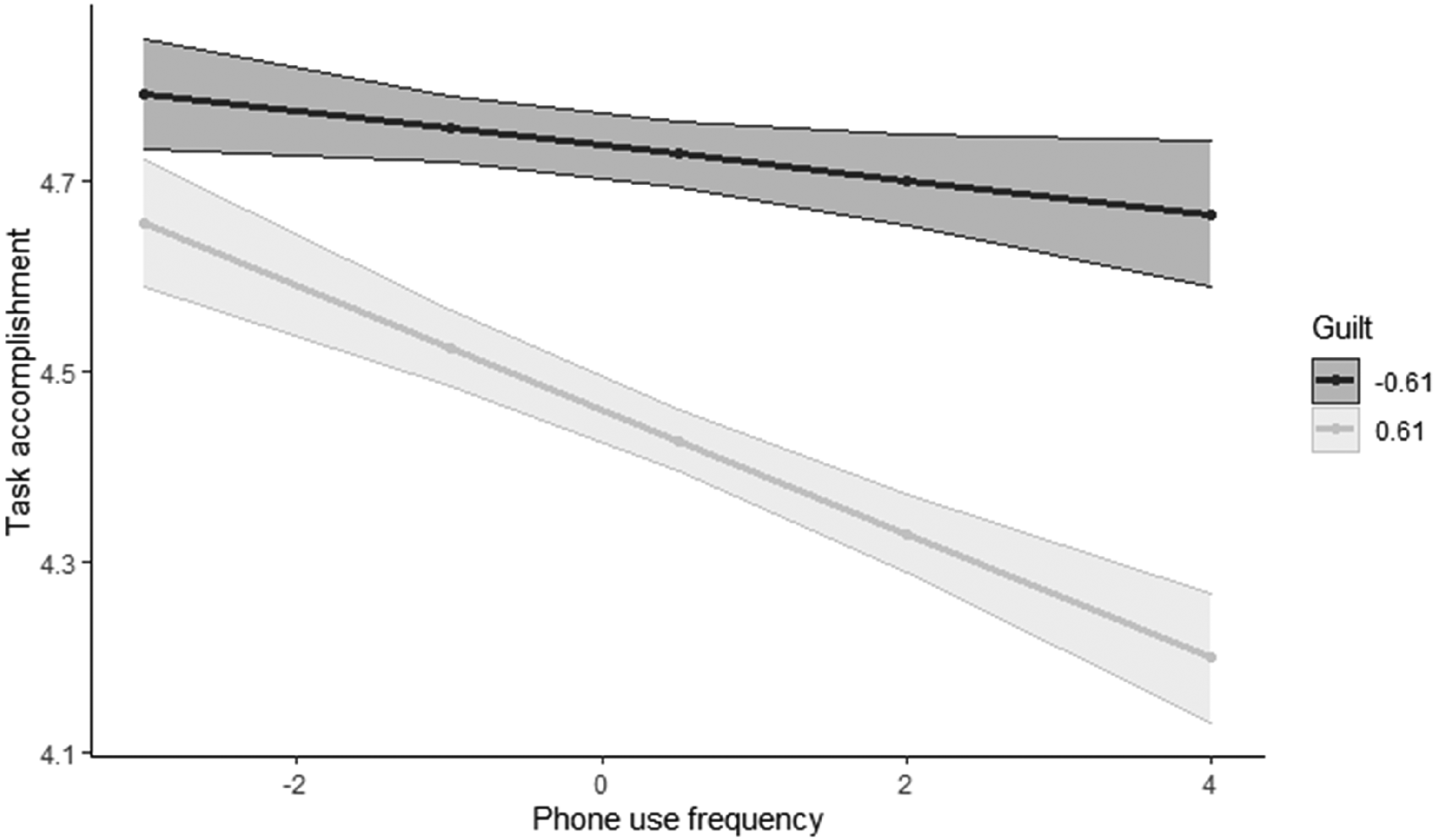
The interaction effect of guilt around phone (non)use and phone use frequency in predicting task accomplishment.
Discussion
This study examined the boundary conditions of feelings of guilt regarding smartphone (non-)use among mothers while performing tasks in non-stressful situations. To this end, we replicated and further developed three studies by Halfmann et al. (2021, 2024). We aimed to test the role of goal conflict (i.e., conflict between smartphone use and everyday tasks) and the availability norm (i.e., perceived expectation to answer messages and calls quickly) in the association between smartphone use and feelings of guilt. We found that both play an important role in predicting guilt but also modify each other's influence. In addition, given our focus on mothers, we explored and confirmed the relevance of the salience of the parental phone use norm (i.e., the feeling that one should not use the smartphone in the presence of one's children) for feelings of guilt around smartphone use. Finally, this study aimed to examine how these dynamics relate to recovery and accomplishment experiences. As such, we did not find that guilt was negatively related to recovery experiences during breaks from tasks but confirmed that goal conflict due to smartphone use interfered with accomplishment experiences among mothers. We will outline these findings in more detail in the following.
Guilt about smartphone usage behavior
As expected, when mothers experienced high goal conflict, they felt guiltier about using their smartphones. This is in line with literature linking goal conflict and specifically conflicting media use with adverse well-being outcomes such as increased rumination and guilt (e.g., Boudreaux & Ozer, 2013; Reinecke et al., 2014). Conversely, using the smartphone less frequently was associated with more guilt when the availability norm was salient. This adds to the notion that expectations of ubiquitous availability have negative mental health consequences when they are not met (e.g., Hall, 2017; Thomée et al., 2010).
So far, goal conflict and the availability norm have typically been studied separately (Halfmann et al., 2021). This study shows how they interact in influencing feelings of guilt. The findings revealed that high salience of the availability norm reduced guilt about frequent and conflicting smartphone use, presumably because this made mothers view their smartphone use as more legitimate (Halfmann et al., 2021). Excusing one's smartphone usage behavior by referring to the availability norm may thus be a way to successfully cope with guilt. Unexpectedly, however, results revealed that when goal conflict was high, experiencing high availability norm salience and using the smartphone less frequently was linked with slightly higher levels of guilt. Consequently, pursuing a task probably did not serve as a legitimation, but may have acted as a separate stressor.
Similar to much discourse on parenting standards, smartphone use has become a normatively loaded issue among parents (e.g., Wolfers et al., 2023). Our study indicates that mothers indeed feel more guilt about their smartphone use when the parental phone use norm is situationally salient. This finding thereby underlines the importance of considering different contexts when assessing the impact of smartphone use on well-being (Vanden Abeele, 2021). In this respect, maternal smartphone use constitutes one such area that warrants further scholarly attention.
Previous studies on guilt about media-related goal conflicts have focused on study goals that involve stress (e.g., Halfmann et al., 2021, 2024; A. Meier et al., 2016). Our research shows that guilt can occur even during the completion of non-stressful everyday tasks (e.g., having dinner, nursing, writing emails). Nevertheless, although our results on the conditions of guilt are largely consistent with the hypotheses, it must be emphasized that, on average, participants in our study reported low levels of goal conflict, availability norm salience, and guilt. This fits with previous research findings (Halfmann et al., 2021, 2024), which is why it is possible that these experiences do not greatly affect individuals in everyday life. On the other hand, regular feelings of guilt about one's own smartphone use, even if minor, could lead to more serious consequences for mental health over time (Kim et al., 2011).
Recovery and task accomplishment among mothers
Next, this study examined the role of smartphone use and guilt in mothers’ experiences of recovery and being effective in accomplishing tasks. Although smartphones can introduce stressful availability demands, they can concurrently play an important role in recovery processes by providing quick access to activities that offer relaxation, distract from stressful events, and replenish spent resources (e.g., Rieger et al., 2017; Vanden Abeele, 2021). Based on these considerations, we expected feelings of guilt arising due to both smartphone use and non-use to interfere with recovery processes.
In contrast to our assumptions and previous research (e.g., Reinecke & Hofmann, 2016), however, feelings of guilt were not linked with recovery. This could be related to the finding that, on average, mothers experienced only low levels of guilt which may have been insufficient to hamper recovery processes. In addition, a second potential explanation can be traced back to the conceptual basis of our recovery variable. Specifically, when looking separately at the recovery dimensions that underlie this construct, we found that guilt was only negatively linked with experienced control during breaks from tasks, but no significant associations existed with mastery, relaxation, and psychological detachment. Control refers to the extent to which the individual can decide when, how, and what leisure activity to pursue (Sonnentag & Fritz, 2007). Thus, feelings of guilt about smartphone usage might only interfere with individual freedom of choice, but may not impede any experiences of relaxation, psychological detachment, or mastery. This line of reasoning is supported by the fact that guilt serves to promote norm-conforming behavior (Baumeister et al., 1994). In other words, mothers who felt guilty may therefore have felt pressured to engage in norm-conforming behavior (e.g., answering messages on the smartphone, taking care of their children), leading them to experience less control over their activities. Future studies may explore these dynamics further.
Finally, this study explored mothers’ experiences of task accomplishment—that is, their experience of being effective and making progress in completing tasks. In line with our expectations, smartphone-related goal conflict was associated with lower perceived task accomplishment among mothers. Exploratory analyses suggested that smartphone use frequency, in contrast, was nearly unrelated to accomplishment experiences. Instead, experienced guilt and smartphone use frequency appear to reinforce each other in reducing accomplishment experiences. This suggests that it is not so much smartphone use per se, but individuals’ negative evaluation of smartphone use that can lead to adverse effects. Interestingly, recovery was also better during breaks when a smartphone was used, supporting the notion that smartphones are an effective tool for experiencing recovery (Rieger et al., 2017; Wolfers, 2021). Together, these findings reveal a paradox between the strongly negative normative view of smartphone use (Reinecke & Meier, 2020) and the possible beneficial effects of smartphone use on the well-being of mothers (Wolfers, 2021).
Among the limitations of the study is that all measures relied on self-reports and may be biased by social desirability. Also, not all measures were based on validated scales. The parental phone use norm measure additionally used a double negation which could have decreased comprehensibility. Given its growing importance, validating scales for assessing normative pressure around phone use is an important next step for future research. Because we focused on non-stressful, everyday situations among a convenience sample of mothers, the generalizability of the results to stressful situations and other user groups needs additional testing. People probably use and evaluate their smartphones differently in non-stressful situations than in stressful situations. It is conceivable that smartphone-related goal conflicts lead to fewer feelings of guilt in non-stressful situations, as there is less time stress, for example, meaning that tasks can possibly be completed later (Kubany & Watson, 2003). On the other hand, a violation of the availability norm could lead to stronger feelings of guilt, as one would have had the capacity to be available for others, which could make people feel more responsible for the norm violation (Tracy & Robins, 2004). However, these are all speculations that need to be investigated in future research.
Furthermore, our data do not allow for a test of causality, making it possible that the effect directions are opposite to our hypotheses. For instance, reduced accomplishment experiences may have caused participants to be more aware of the conflict between the task and their smartphone use. Moreover, we examined smartphone use in general. Future research could comparatively investigate feelings of guilt when (not) using certain content or applications (e.g., entertainment media versus messenger use) and when receiving requests from close or distant communication partners (Dogruel & Schnauber-Stockmann, 2021). Finally, the COVID-19 pandemic may have influenced the results of this study. At the time of data collection, citizens had to wear protective masks, limit private gatherings with others to one additional household, and refrain from traveling and leisure-related activities with public access. In the context of our study, this could have led to increased use and relevance of the smartphone for interpersonal communication and recovery.
Conclusion
In conclusion, the findings of this study paint a complex picture of the conditions and consequences of maternal feelings of guilt regarding their smartphone usage but also indicate that harmful effects are rather small. Still, even low levels of guilt about (not) using the smartphone could account for changes in well-being in everyday life cumulating to larger changes in the longer run (Kim et al., 2011). However, in line with Vanden Abeele's (2021) considerations on digital well-being as a dynamic construct, our study shows that such harmful effects depend on the context: competing goals (i.e., task accomplishment) and social roles (e.g., as a mother, as a friend who is available via smartphone) are crucial in determining whether guilt arises about one's own smartphone use. Our findings thus indicate that mothers make multifaceted usage decisions in everyday life and that their evaluation of these decisions shapes further experiences like task accomplishment. This underscores that to understand the impact of smartphones on diverse user groups, we need to understand the integration and use of smartphones in their everyday contexts.
Supplemental Material
sj-pdf-1-mmc-10.1177_20501579241252098 - Supplemental material for Can mothers avoid guilt about their smartphone usage behavior? Effects of the availability norm and goal conflict on guilt, recovery, and accomplishment experiences
Supplemental material, sj-pdf-1-mmc-10.1177_20501579241252098 for Can mothers avoid guilt about their smartphone usage behavior? Effects of the availability norm and goal conflict on guilt, recovery, and accomplishment experiences by Annabell Halfmann, Lara N. Wolfers and Anneleen Meeus in Mobile Media & Communication
Footnotes
Declaration of conflicting interests
The authors declared no potential conflicts of interest with respect to the research, authorship, and/or publication of this article.
Funding
The authors disclosed receipt of the following financial support for the research, authorship, and/or publication of this article: One author of this article (Dr Anneleen Meeus) is funded by a postdoctoral fellowship by the Research Foundation Flanders (FWO) (grant number 12D2323N). We are thankful for the foundation's support.

Supplemental material
Supplemental material for this article is available online (https://osf.io/w2f3r/).
Notes
Author biographies
Annabell Halfmann is a postdoctoral researcher at the Institute for Media and Communication Studies, University of Mannheim (Germany). She researches self-control and social norms related to mobile media use, its impact on well-being, as well as the use and effects of news and entertainment media.
Lara N. Wolfers is an assistant professor in the Amsterdam School of Communication Research (ASCoR) at the University of Amsterdam (The Netherlands). She studies how media and social media are used in the family context and how this usage relates to the well-being of the family members. She also studies how media can be used for coping with stress.
Anneleen Meeus is a postdoctoral researcher at the School for Mass Communication Research, KU Leuven (Belgium). Her research focuses on the role of mobile devices and social media use in preadolescents' psychosocial well-being.
References
Supplementary Material
Please find the following supplemental material available below.
For Open Access articles published under a Creative Commons License, all supplemental material carries the same license as the article it is associated with.
For non-Open Access articles published, all supplemental material carries a non-exclusive license, and permission requests for re-use of supplemental material or any part of supplemental material shall be sent directly to the copyright owner as specified in the copyright notice associated with the article.
