



Abstract
This article analyzes visual art and radio broadcasting as semiotic practices that serve as crucial sites of child and youth participation in Indigenous social movements. Looking specifically at a movement against organized crime, political corruption, and environmental exploitation that emerged in 2011 among the Purépechan people of Cherán, Michoacán, México, we show how young people’s creative practices present a significant challenge to hegemonic models of adult- directed political socialization and participation, although they do not result in a total flattening of age-based hierarchies. Drawing on multimodal ethnographic fieldwork and personal experience in the movement, we show how the creative practices of youth activists facilitate the production and circulation of visual and sonic content that conveys historical and onto-epistemological frameworks which guide the movement. We also show how the circulation of this content generates the potential to influence those who come into contact with it, including both Purépechans and non-Purépechans who reside well beyond the borders of Cherán. In doing so, we demonstrate that multimodal ethnographic attention to the ways in which young people’s diverse semiotic repertoires are deployed in contexts of political activism can provide valuable insights about political socialization, intergenerational relationships, and the entanglement of a variety of politically charged semiotic forms in everyday life.
Keywords
Introduction
April 15, 2011 was a momentous day in Cherán, an Indigenous Purépechan community in the state of Michoacán, México. On this day, a confrontation between illicit loggers and a small group of community members inaugurated a social movement that has since touched the lives of virtually every member of the community, from children to elders. The movement, known locally as el levantamiento, or “the uprising,” began in attempts to resist the violence and exploitation to which organized crime groups and corrupt municipal politicians had subjected the town for years. Since its inception, the movement has gained widespread attention, with many prominent news outlets covering it (Agren, 2018; Holman, 2015; Martínez, 2015; Woldenberg and Estrada Serafín, 2012; Zabludovsky, 2012). The movement’s success has even inspired calls to “cheranizar México,” or to remake the entire country in the image of Cherán (Martínez, 2018).
This article is based on a combination of ethnographic research and direct involvement in el levantamiento. We show how the movement has been built through intergenerational political collaborations in which children and youth are encouraged to take an active role. We focus particularly on young people’s involvement in visual art and radio production, showing how they use these practices to create and circulate visual and sonic content that conveys local histories and “onto-epistemologies,” or entangled ways of remembering, being, and knowing that guide the movement (Barad, 2007; Salazar Pérez et al., 2017). 1
We begin our discussion with a review of ethnographic literature on youth political activism, drawing on work that centers young people’s artistic and creative practices as sites of resistance to adult-directed models of political socialization and participation. We then draw on literature in linguistic anthropology to suggest that young people’s creative practices can be seen as part of a broader “semiotic repertoire,” a concept which we describe in more detail below (Ochs et al., 2005).
Challenging adult-directed models of politics via multimodal semiotic repertoires
Adult-directed models of political socialization and participation are common structural elements of many governments throughout the world. These models can take multiple forms, but they all imply that political activities should be controlled by adults and legitimate political participation cannot happen until adulthood, which is marked by the attainment of a specific age. Adult-directed models are also often offered as an antidote to a perceived decline in youth interest in politics (Rossi, 2009). Such framings provide justification for youth civic engagement programs throughout the world, implying that adult-led interventions are the solution to this supposed crisis of youth political apathy (Gordon and Taft, 2011).
In the past decade, scholars in childhood studies and related fields have criticized adult-directed models, arguing that they are inadequate for understanding the diversity of ways in which children and youth think about and participate in political action (Gordon and Taft, 2011; Habashi, 2017; Taft, 2011, 2019). In the search for alternatives, scholars have looked to social movements in which young people play prominent leadership and organizing roles (Flacks, 1971; Gamber-Thompson and Zimmerman, 2016; Gordon and Taft, 2011; Habashi, 2017; Kligler-Vilenchik, 2016; Magaña, 2017; Shresthova, 2016; Taft, 2011, 2019). This work shows that young people’s creative practices constitute channels through which hegemonic, adult-directed models have been powerfully resisted. These examples clearly demonstrate that youth-led practices of artistic and intellectual expression, such as graffiti, street art, writing, video production, and public presentations, can challenge and destabilize adult-directed models.
We build on this work by bringing it into conversation with the concept of “semiotic repertoires.” This concept is genealogically linked to the concept of “linguistic repertoires,” which was brought into the field of linguistic anthropology by Gumperz and Hymes (1972), who defined it as “the totality of linguistic resources. . .available to members of particular communities” (p. 20). More recent work, however, has attempted to move beyond a focus on spoken or written language as the primary sites of sign production (or semiosis) by developing the concept of “semiotic repertoires,” which emphasizes not only the role of language in semiosis, but also “somatic, visual, vocal, and musical resources, along with artifacts that mediate and enable these resources” (Ochs et al., 2005: 558).
In what follows, we draw on the aforementioned case of the Purépechan social movement taking place in Cherán in order to explore how young people’s semiotic repertoires shape and are shaped by intergenerational processes of political socialization and participation. We focus on two practices that young Purépechans use to produce politically charged semiotic forms: visual art and radio broadcasting. In doing so, we show how both practices are deployed in the service of enacting, representing, and circulating Purépechan histories and onto-epistemologies, which present a powerful challenge to adult-directed models of political participation and socialization, as well as to ongoing legacies of colonization and capitalist exploitation. Before we discuss our findings, we will briefly describe the sociohistorical context of the movement, as well as our methods and positionalities.
El Levantamiento: A Brief History of Organized Resistance
Cherán is a town of roughly 16,000 people in the central region of the Mexican state of Michoacán. It is populated by the Purépecha, an Indigenous group whose members pride themselves on a heritage of resistance that reaches back to the time of the Aztec Empire, and which has endured through the eras of Spanish colonization, anti-colonial revolution, Mexican state formation, and the current moment of neoliberalization (Verástique, 2000). Cherán has been the site of multiple uprisings in the past 150 years, and the history of these uprisings has become part of the community’s collective memory, which shapes how inhabitants articulate their existence and ways of knowing the world (Velázquez Morales, 2014).
El levantamiento is the sixth movement to occur in Cherán since the 1870s (Velázquez Morales, 2014). The movement is in part a response to the violence and exploitation caused by the Mexican government’s U.S.-inspired “War on Drugs,” which was designed in paid consultation with the “tough on crime” politician Rudy Giuliani (Mountz and Curran, 2009). Employing the rhetoric of “zero tolerance” and advancing neoliberal policies of militarized policing and control, however, has not been effective in quelling the violence and exploitation of narcotrafficking organizations, which have continued to act with impunity (Grant, 2020). Rather than giving rise to the multicultural, capitalist utopia once promised by proponents of global neoliberalism, such policies have instead nurtured what anthropologist Shannon Speed calls neoliberal multicriminalism, or a situation “in which violent, corrupt, and lawless states are driven by profit motives in massive scale illegal economies that lack any reasonable regulation or protection of basic human rights” (Speed, 2016: 280). Furthermore, as Hernández and Speed (2012) argue, the Mexican government has attempted to distract from the failures of neoliberal policies by subjecting Indigenous people and the poor to extreme sentences for minor drug-related offenses. In short, poor and Indigenous people are most likely to be harmed and exploited by the forms of political corruption and criminality which have flourished in the context of neoliberal multicriminalism.
Yet as the case of el levantamiento in Cherán shows, Indigenous communities have not passively accepted this situation. According to the most prominent version of the story, el levantamiento started when a group of women decided that the community could no longer bear the constant crime and violence. Armed with rocks, sticks, and fireworks, the women blockaded the road leading out of the forest surrounding the community, stopping trucks full of illicit loggers (employed by narcotrafficking organizations) whose activity had been enabled by bribes to corrupt municipal politicians. As tensions mounted, more and more community members joined the blockade. Eventually, municipal police intervened, but the events of that day sparked a new spirit of activism (Pressly, 2016).
After the initial events that spawned el levantamiento, the people of Cherán continued to organize. Through many nights of dialogue around las fogatas, or communal bonfires, they have organized one of the most effective Indigenous social movements in Mexican history (Velázquez Morales and Lepe Lira, 2013). In addition to organizing at the community level, they have also achieved structural change at the federal level. With the help of Colectivo Emancipaciones, a group of lawyers, scholars, and activists who fight for Indigenous rights, the community undertook a legal battle for the right to self-government (Aragón Andrade, 2019). They took their case all the way to the Mexican Supreme Court, which, in 2014, ruled in their favor, transforming Cherán into a self-governing Indigenous territory. The ruling has enabled Cherán to legally do away with the previous municipal government and to hold their own elections rooted in Purépechan customs (Aragón Andrade, 2019). In addition to these initiatives, the community has also successfully organized a number of other projects, including a local security force, a radio station, an artists’ collective, a film production crew, and a re-forestation project aimed at healing the environmental damage wrought by years of illicit logging.
To return to the conceptual issues with which we opened this paper, a significant characteristic of the activities which constitute el levantamiento is the participation of children and youth. The involvement of young people in political action is not seen as unusual or inappropriate by most Purépechans, who tend to inhabit distinct onto-epistemologies from those which inform adult-directed models of political participation. Many Purépechans feel that it is important for young people to actively mold their political capacities and contribute as members of their community, or irheti, which is a Purépechan term roughly analogous to “citizen.” 2 Through political participation, young people also develop a sense purhejkukua, a Purépechan term that indexes a commitment to protecting and fighting for one’s community. These ideals of community membership place high value on young people’s active participation in political processes, and, as we will show below, this has given rise to unique forms of intergenerational political engagement. But before presenting our ethnographic material, we first describe our methods and positionalities.
Notes on method: Multimodal ethnography and the decolonization of academic research
We conceive this work as a collaborative process of “multimodal ethnography” (Aru et al., 2017; Dicks et al., 2006; Varvantakis and Sevasti-Melissa, 2019). In contrast to more traditional conceptions of ethnography, which prioritize written field notes and interviews, multimodal ethnography combines these practices with other modalities, such as photography and video. Of course, ethnographic photography and film have existed for some time (e.g. Mead and MacGregor, 1951), but the paradigm of multimodal ethnography does not only view multimodal semiotic practices as potential sources of ethnographic documentation. It also offers attention to the ways in which multiple semiotic modes become entangled in everyday life. As Dicks et al. (2006: 77) suggest, multimodal ethnography understands meaning as “emerging from the fusion of differently mediated forms into new, ‘multi-semiotic’ modes.” In other words, multimodal ethnography does not frame diverse semiotic modes, such as writing and painting, as isolated, but rather as entangled and interacting. This makes multimodal ethnography a useful tool for studying the semiotic repertoires that shape processes of political socialization and participation.
Beyond the multimodal aspects of our methodology, we also see our collaboration as heeding calls to work toward the decolonization of academic research. For example, Salazar Pérez et al. (2017) call for scholars in childhood studies to overcome the longstanding colonialist dynamic in which people of color are treated as sources of “raw data” to be analyzed primarily through European and Euro-American theoretical frameworks. We join other scholars in seeking to alter structures of power in academic work by rejecting scholarly practices which place white subjects of Europe and the United States on the side of theory, while people of color and Indigenous peoples are treated as mere sources of data. Countering this dynamic requires horizontal intellectual collaborations and sustained attention to the theoretical contributions of Indigenous people and people of color. Furthermore, it requires a multimodal understanding of semiosis. In other words, it requires recognition that knowledge production does not only occur in spoken or written language, as is often implied in academic contexts.
In addition to describing our methodological, ethical, and conceptual commitments, it is also important to describe our positionalities and the nature of our collaboration. Anthony is a white medical anthropologist from the United States whose research focuses on the technological mediation of semiotic processes among young people in contexts of suffering, illness, and violence (Wright, 2019). He has conducted 6 months of ethnographic research on intergenerational relationships and youth activism in Morelia, México, as well as historical research (in collaboration with a group of historians from the Universidad Michoacana de San Nicolás de Hidalgo) on the politics of early anthropological research among Indigenous and rural communities of Michoacán (Wright, 2018).
Beyond having an intellectual and ethical impact on Anthony, this collaborative historical work facilitated his introduction to Jurhamuti, who is a native of Cherán. Jurhamuti holds a master’s degree in Latin American intercultural bilingual education, and he is currently a doctoral candidate in Sociocultural Studies at the Universidad Mayor de San Simón in Cochabamba, Bolivia. He has conducted extensive research on Purépechan language use and education, as well as on the role of children in Cherán’s social movement (Velázquez Morales, 2014, 2018). As a member of the community, he has also been intimately involved in the movement since its inception. He has participated in countless demonstrations and dialogues with his fellow cheranenses (the local term for people from Cherán), and he has facilitated various workshops and activities, helping to create spaces for young people to engage with the movement.
In what follows, we draw on ethnographic observations, interviews, and photographic reproductions of young people’s artwork to illustrate some of the specific ways that semiotic practices are used to articulate and circulate Purépechan histories and onto-epistemologies, which guide the intergenerational political collaborations of el levantamiento. In particular, we focus on visual art and radio broadcasting, showing how these practices rely on ideals of youth-directedness that challenge the kinds of hegemonic, adult-directed models of political participation discussed at the beginning of this article. Furthermore, we show how the use of networked digital technologies facilitates the circulation of youth-created art and radio to spaces and audiences well beyond Cherán, and even beyond México. As we will discuss, this gives rise to questions about the ways in which both Purépechans and non-Purépechans will be influenced by the semiotic output of the movement.
El Consejo de Jóvenes: Youth-Directed Public Art Projects
We can boast that Cherán is a space where you can come to see art without even entering an institution [like an art museum]. . .You simply arrive in Cherán and you walk the street and you see art. -Giovani Fabián Guerrero, artist and leader of Cherán’s Consejo de Jóvenes
A striking visual feature of Cherán is its public murals (see Figure 1). Unlike many other towns in Michoacán, however, Cherán’s murals are not advertisements for local political parties or various commodities. Instead, public art in Cherán reiterates the history and culture of the Purépechan people. The murals also portray other Indigenous movements, such as the Zapatista rebellion, emphasizing shared struggles to defend Indigenous communities from violence and exploitation. The murals portray this history in colorful and multilayered detail, evoking a complex mix of emotions and perspectives—from the pain and suffering brought on by centuries of violence against Indigenous peoples, to the distinct sense of Purépechan identity, honor, and dignity developed through participation in Cherán’s struggles.
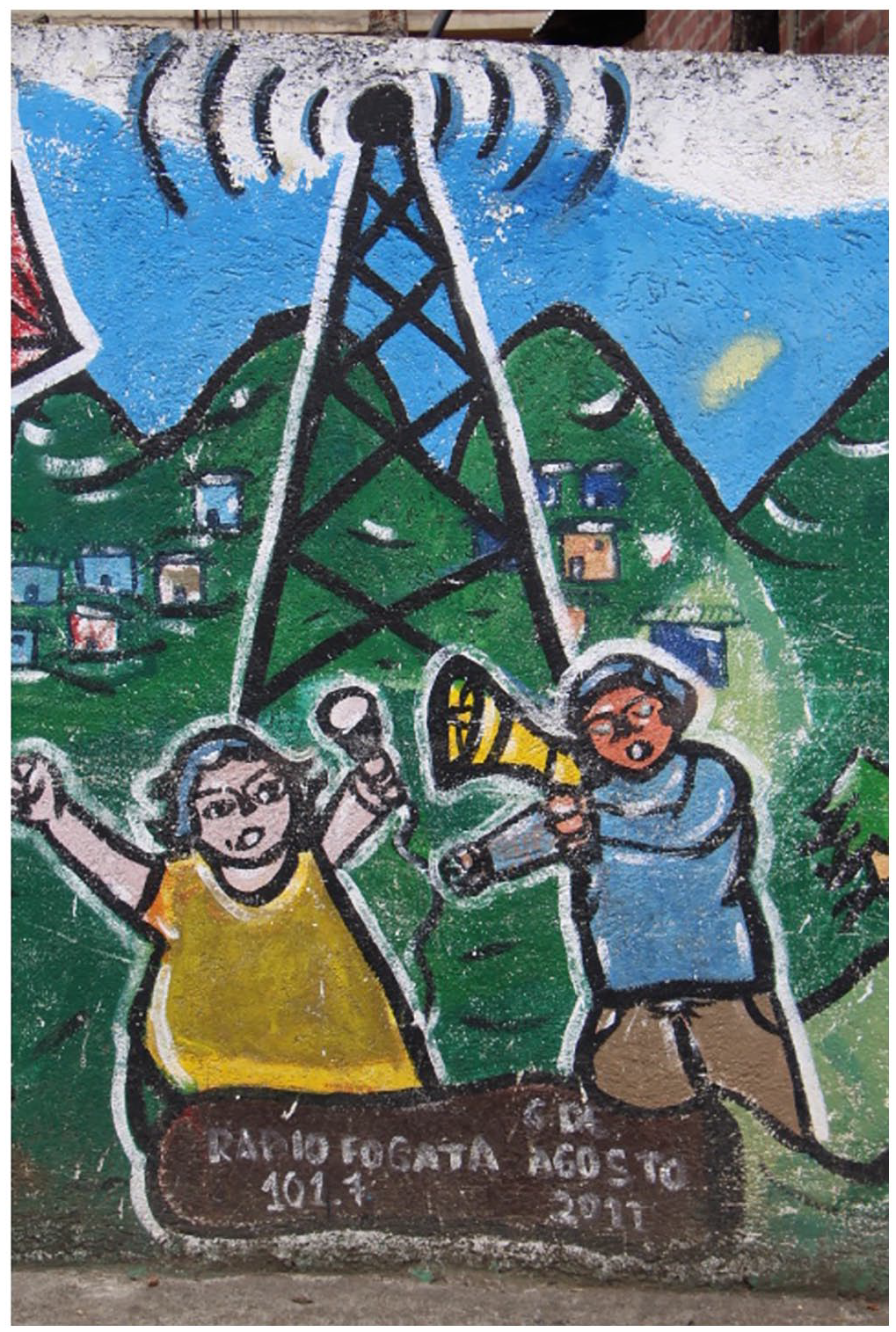
A segment of a mural located at the Kumitzaro Bridge in Cheran. The mural was a group project organized by the CJ for the ExJoven art exposition in the year of 2019.
Of course, as an art form, murals have a long history in México, with the most widely recognized examples being the murals of Diego Rivera. We do not mean to imply that the use of public art as mode of political socialization is unique to the current movement. But we do emphasize how el levantamiento has provided renewed inspiration for the production of public art by children and youth. One way this has occurred is through the efforts of the Consejo de Jóvenes (CJ), or the Youth Council, which formed in 2015 under the local government of Cherán as part of the aforementioned organizing process. The CJ appoints youth leaders to represent the interests of the children and youth of Cherán and to organize youth-led activities, such as public art projects. While the CJ is a space in which young people of all ages participate, it nevertheless has an experience-dependent hierarchical structure, with an elected leader who organizes the group’s initiatives in collaboration with its members. The first leader appointed to the CJ in 2015 was Giovani Fabián Guerrero, a local youth artist who was 22 years old at the time. As leader of the CJ, Giovani has advocated for getting young people involved in public art projects as a way of making sense of their relationship to el levantamiento and to Cherán’s broader history of struggle. These initiatives have involved art workshops, public mural painting, a youth arts collective known as Cherani, an annual youth arts forum called ExJoven, and a website called Cherán Crea (See Figures 2-4 for examples of work featured in public exhibitions).
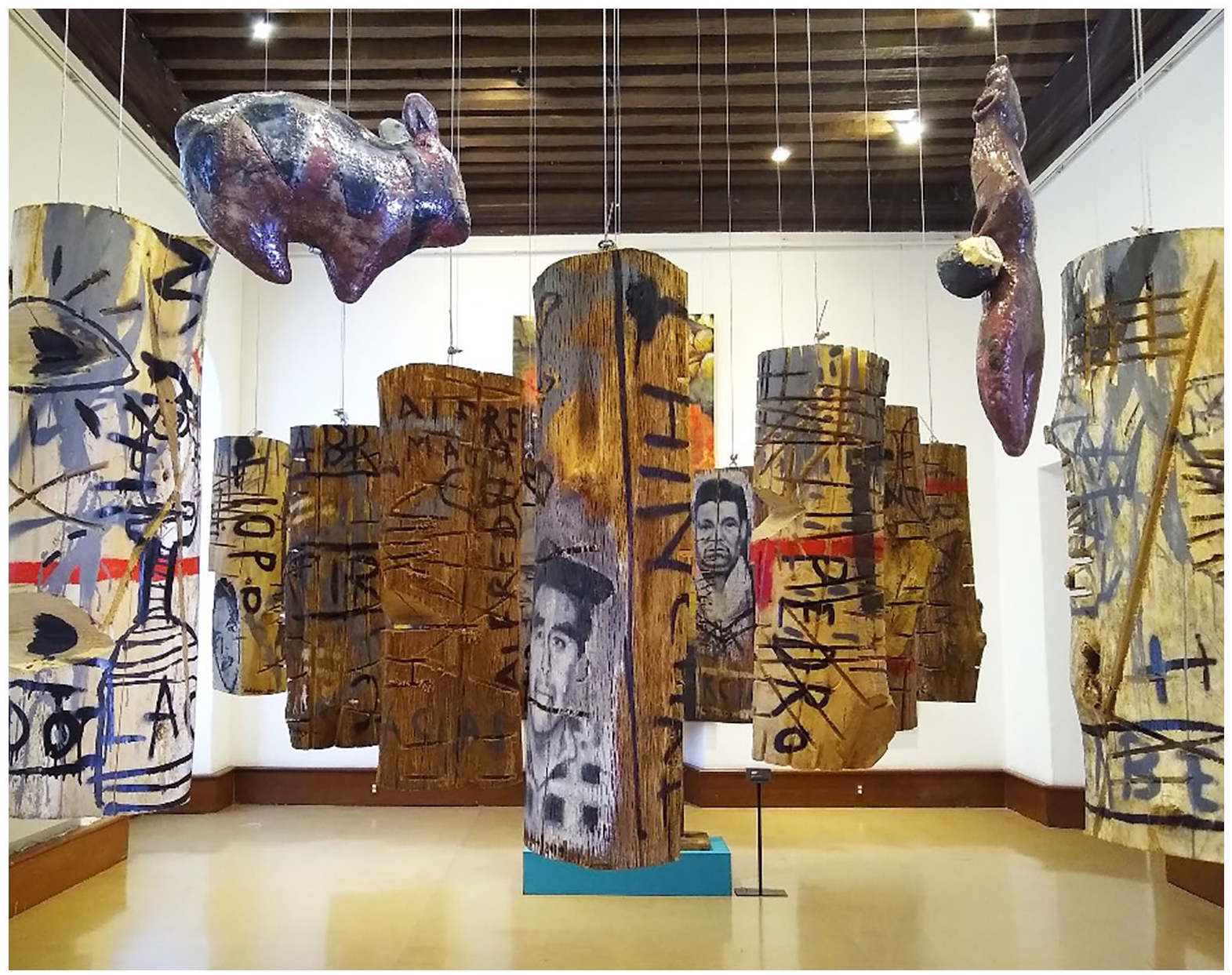
Los de Cherán by Francisco Huároco Rosas. The portraits affixed to the logs are of community members who have been murdered for fighting to defend the forest.
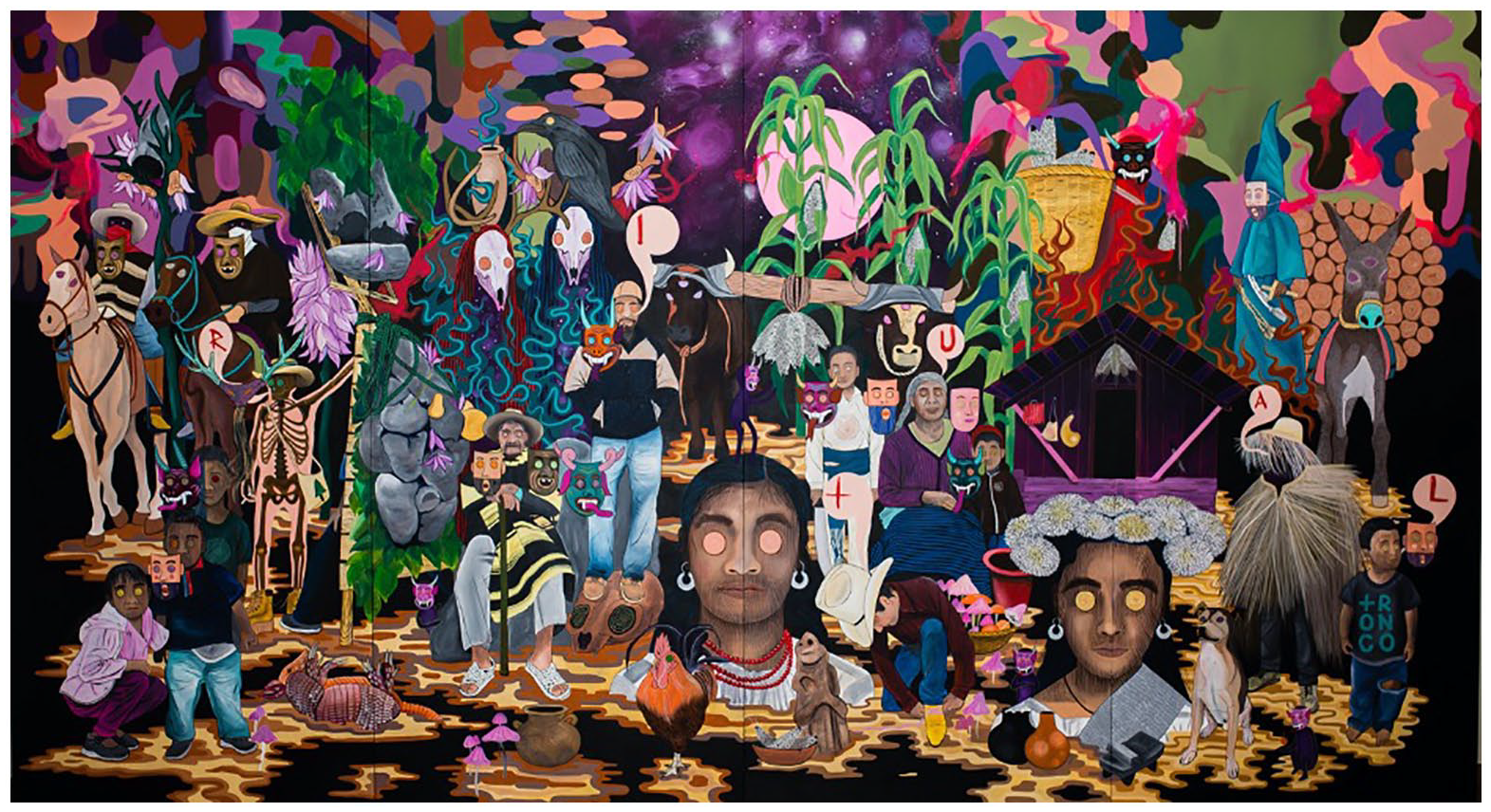
Transición de Espacio Ritual by Giovani Fabián Guerrero, who paints under the name Tóxico. Painted for the Cherani exhibition held at Palacio Clavijero in Morelia, Michoacán.
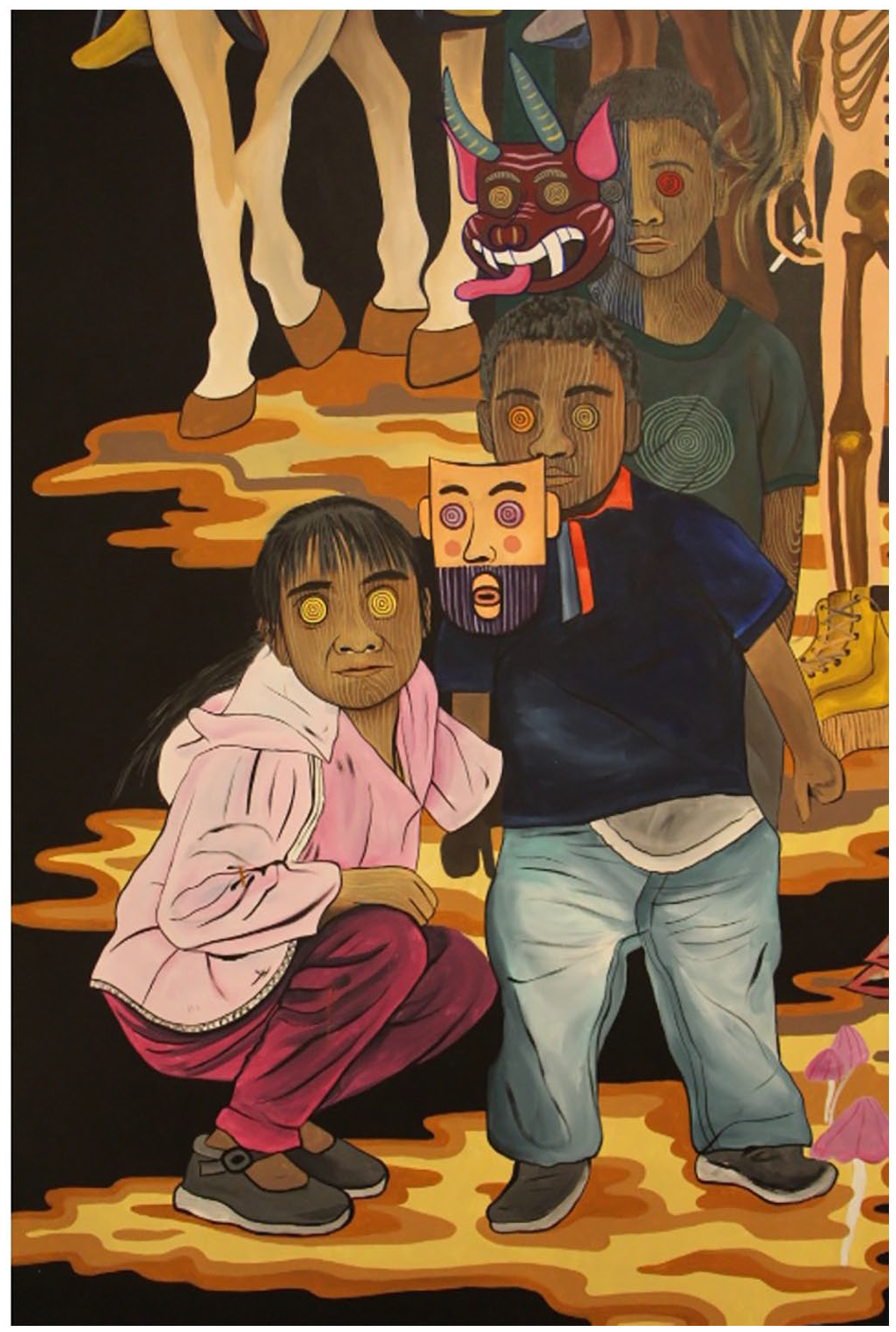
A segment of Transición de Espacio Ritual by Giovani Fabián Guerrero, who paints under the name Tóxico.
As Giovani describes it, there have always been young cheranenses, such as himself, who have a love for art. However, el levantamiento has had a profound impact on the stylization and content of young people’s art. Prior to the movement, Giovani remembers how many young artists in Cherán were inspired primarily by artistic trends that emerged elsewhere and were brought to Cherán via processes of migration and the increasing presence of networked digital technologies: Here, I remember that graffiti, or street art, began to emerge in the 2000s. All of the kids. . .well, we wanted to make “tags,” we wanted to do “bombs”. . .a trend that emerged in the United States, right? And because of the effect of migration [to the United States], all of those elements began to arrive in the community. So, it perhaps could be said that before everything [that happened with el levantamiento], what I [and my friends] made had to do specifically with outside themes, not with local themes.
Through involvement with the CJ, however, young artists began to incorporate more distinctly Purépechan elements into their artwork. Of course, this does not mean that young people suddenly rejected all artistic styles, such as tagging, which originated elsewhere. Young cheranenses have maintained interest in a multitude of artistic styles, but they have also begun to make more concerted attempts to develop styles unique to Cherán and the Purépechan ways of being and knowing that animate life in the community. In particular, young people began to incorporate semiotic elements that are clearly inspired by involvement in el levantamiento and the struggles that led up to it. The murals and other works of art produced by the CJ began to include imagery such as communal bonfires, the local security force, and various representations of Purépechan people and spiritual entities. Some of the artworks also memorialize people who have given their lives in the name of protecting the community (see Figure 2).
The artworks also include symbols, such as trees and wood, which carry a powerful affective and moral force in the context of the struggle against environmental exploitation. For example, in the Figure 4 below, the children’s skin and eyes are marked with wood grain, emphasizing the vital relationship between the community and the surrounding forest, which is valued not only for its material resources, such as water and firewood, but also for the vital spiritual sustenance it provides, as the forest is viewed as home to a number of spirits that play a significant role in Purépechan life. The public juxtaposition of these symbols with imagery of the movement serves as a visual message about the strength and vitality of the community of Cherán and of the Purépechan ways of being and knowing that sustain their people despite centuries of subjection to violence and exploitation.
In short, the artwork created by members of the CJ has enacted a radical rearticulation of young people’s art and its political role in the community. By participating in artistic production, young people have not only developed their political capacities and understandings of the movement and its relationship to Purépechan histories and onto-epistemologies, but they have also implanted politically and morally charged semiotic forms in public space, as well as online, and these continue to exert an influence that can have an impact on people in the community and beyond. The circulation of their work is facilitated by migration and social media use, and this has resulted in many outsiders visiting Cherán in order to see the community’s public art. It has also resulted in a number of invitations for local artists to offer expositions and workshops in other communities throughout Mexico.
In the following section, we shift our attention toward a different practice that is integral to young cheranenses’ semiotic repertoires: radio broadcasting. We describe how el levantamiento has given rise to an intergenerationally operated radio station known as Radio Fogata, which provides young people space to produce radio programs that address issues relevant to Cherán and the broader Purépechan diaspora, as well as to Indigenous communities throughout the world.
Radio Fogata: Youth-Directed Radio Broadcasting
“Where your voice burns like fire. [Donde tu voz arde como el fuego.]”
Radio broadcasting is another semiotic practice which young cheranenses use in the context of el levantamiento. With the help of several key adults, the CJ has organized a local radio station known as Radio Fogata, where children and youth play a primary role in producing and broadcasting diverse radio programs. Radio Fogata plays content ranging from political dialogues, to news, to entertainment. When the station is not playing “talk radio” style programing, it often broadcasts Purépechan music, particularly the folk songs known as pirekua.
The development of the station was motivated by a common desire among its organizing members to counter false narratives about the movement that were emerging in mainstream Mexican media. At the beginning of the movement, mainstream media outlets commonly represented the community as full of “insurgents” who were seeking to cause violent political upheaval, as opposed to members of a legitimate social movement aimed at restoring peace and wellbeing to an Indigenous community that had long been affected by violence, corruption, and exploitation. Much of Radio Fogata’s programing has directly challenged these messages by presenting Purépechan perspectives on the movement and its relation to the conditions of colonial and capitalist exploitation to which Indigenous communities have long been subjected.
In addition to countering stigmatizing and inaccurate narratives about the movement, Radio Fogata has also served as a way of informing the community about important discussions and decisions. The name of the station is derived from the central role of las fogatas, or communal bonfires, in political dialogue, and the station carries out a very similar function. Like the public dialogues that occur around the actual flames of las fogatas, part of the radio station’s goal is to facilitate similar dialogues that, because of their digital format, can reach segments of the community who are for various reasons unable to be physically present at community assemblies. The station also runs a social media page where listeners can leave questions and comments about various issues related to the movement, which facilitates further dialogue.
Beyond serving the function of keeping local community members up to date on the most recent developments taking place at various community assemblies, Radio Fogata also serves as a method of disseminating information to the Purépechan diaspora throughout the world, particularly in the United States, which is the most common destination for Purépechan migrants. Finding ways to transmit Purépechan perspectives across national borders is central not only to informing people about the movement, but it is also seen as a crucial way of preserving Purépechan culture among younger generations. As Chavira describes it: There are many of our people who have left, young, married people, to the United States, and maybe they have returned to Cherán, right? But their children do not. Because, as children, they were never brought here, perhaps because in the beginning they were not there legally. . .and that meant that years passed. And when they finally are able to legalize their situation there in the United States and they return [to Cherán]. . .their children do not come with them because they are already grown. . .and because they don’t even know Cherán. For example, they say, “No, why would I go to Cherán? I don’t know anything [about it], right?” And this is where we make the invitation. They are still Purépechan, right? Just because they were born in the United States and they do not even speak Spanish well does not mean that they are not Purépechan. They are Purépechan because their parents are Purépechan like us, right?
Here Chavira suggests that Radio Fogata is not only about providing a space for children and youth who currently live in Cherán and who actively identify as Purépechan to take part in the movement. It is also about preserving ties between Cherán and generations of young Purépechans who, because of the conditions of the global capitalist economy and the militarization of the U.S.-Mexico border, have been prevented from intimately experiencing the place their parents call home. Of course, much more could be said about the way Chavira frames the transmission of Purépechan identity, but we do not have space for that here. What we want to emphasize is that Radio Fogata’s programing is designed to disseminate Purépechan semiotic forms in hopes they will have a socializing influence on listeners in multiple locations throughout the world. As Chavira imagines it, even if a young person’s ability to understand talk-oriented programs is limited by their lack of fluency in Spanish, they can nevertheless listen to the musical programing, which he imagines as a kind of sonic invitation to participate in Purépechan culture, a culture to which Chavira and many other cheranenses insist the children of migrants still belong.
The semiotic multimodality and intergenerationality of Purépechan political activity
In placing our account of Purépechan youth-led public art and radio projects in conversation with the literatures on adult-directed models of political participation and semiotic multimodality that we reviewed at the beginning of this article, we wish to draw out three interrelated points. First, our account suggests that the Purépechan onto-epistemological frameworks which constitute young people as legitimate political participants give rise to unique forms of political activity, but they do not enact a total flattening of generational hierarchies—a finding which resonates with Taft’s (2019) study of ideals of youth-directedness in the context of working children’s activism in Peru. Although the CJ and Radio Fogata are conceived as youth-directed spaces, in practice this does not mean that adults do not have an influence over these spaces or that time-dependent forms of skill and experience don’t matter. For example, Giovani, a 22-year-old, was elected to be the leader of the CJ in part because of his existing relationship to organizing, as his father had been deeply involved in local politics for much of his life. As for Radio Fogata, Chavira, an older adult, has played an important role in building and maintaining the station.
At the same time, neither Giovani nor Chavira are seen as final authorities in either space. Although Giovani is described as the “leader” of the CJ, conceptions of leadership among the Purépecha do not emphasize aggressive dominance or overbearing authority. Rather, effective leaders are conceptualized as those who listen carefully, who facilitate collaboration, and who do not allow their personal desires to override the needs or interests of group members, including young people, who are seen, regardless of age, as valuable partners from which leaders may also learn. While it is unarguable that many Purépechans find it important to develop one’s political consciousness and capacities prior to assuming a position of leadership, this does not mean that political learning stops upon the assumption of a leadership role. Instead, many Purépechans see political learning as a process in which all community members, including leaders, must be perpetually engaged. Futhermore, while time-dependent accumulations of experience are not insignificant to the people of Cherán, this does not mean that political reputations map neatly onto embodied constructs of age or life stage. Neither age nor adulthood are seen as offering a definitive guarantee of the substance or value of any particular person’s political consciousness or capacities, and there are young people who are viewed as holding deep political knowledge and authority.
The second point that we wish to draw out here is that intergenerational political practices rely on the use of diverse semiotic repertoires, and this entails the entanglement of multiple semiotic forms and practices. While many of the respective activities of youth artists and radio broadcasters take place at separate times and locations, there are also important ways in which they interact in everyday life. For example, Figure 5 shows a mural that youth artists painted in the building that houses Radio Fogata. The statement in the mural, which can be translated as “the communal voice burns like fire” is a take on the station’s motto, and it provides a striking visual backdrop to the everyday activities that take place within the station. In a similar way, many other murals that youth have painted throughout Cherán become entangled in everyday forms of political action, such as communal assemblies and neighborhood dialogues around bonfires. By representing Purépechan histories and onto-epistemologies in vivid detail, these works semiotically reiterate the value of Indigenous political struggle and energize the ongoing activities of el levantamiento and the various projects associated with it.
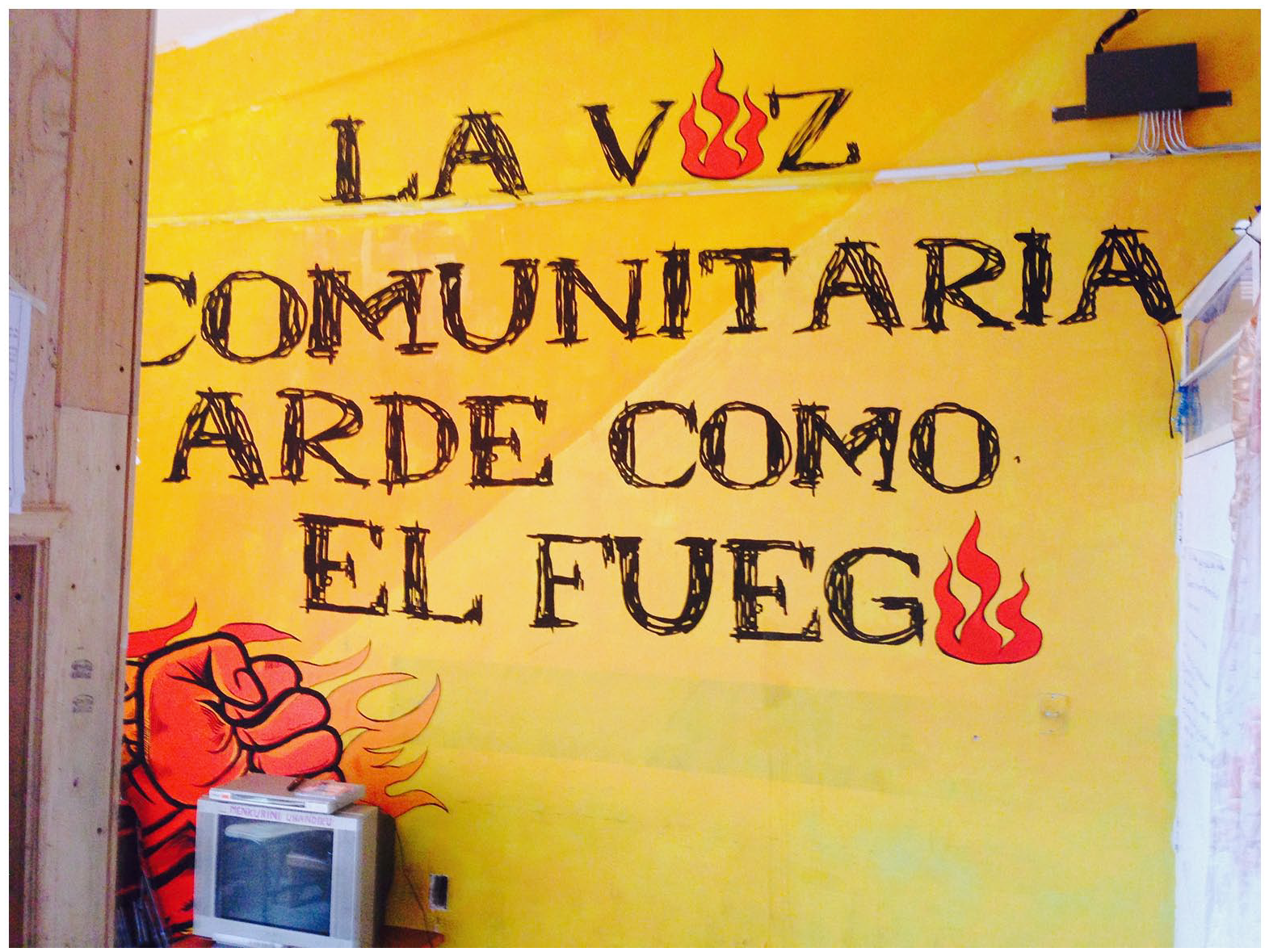
A group mural painted in the station of Radio Fogata. The statement can be translated as “the communal voice burns like fire.”
Yet we also want to emphasize that the influence exerted by young people’s semiotic practices does not remain within the boundaries of Cherán or its movement, as members of the CJ have also traveled and used networked digital technologies to reproduce their art and circulate it throughout the world. Similarly, Radio Fogata digitally circulates a mix of sonic forms, including political dialogues, Purépechan music, and narratives of historical and current events. As Chavira emphasizes, these broadcasts make information accessible to community members who can’t be present at communal events, and they also serve as an invitation to members of the Purépechan diaspora to continue participating in Purépechan politics and culture. This resonates with a point that Magaña (2017, 2020) makes in his ethnographic research with youth activists during a major Oaxacan social movement in 2006 and its aftermath. As Magaña shows, young people’s activist practices drew on specific “social movement legacies,” particularly that of the Zapatista Army of National Liberation (EZLN). Drawing on Meyer and Whittier’s (1994) concept of “social movement spillover,” Magaña emphasizes that social movements are not bounded projects; instead, they exert influence through a variety of channels, inspiring political activity among heterogeneous groups of people. In the same way that the Zapatistas inspired the movement in Oaxaca in 2006, youth artists and radio broadcasters in the context of el levantamiento have also been inspired by past forms of Indigenous activism. And just as importantly, they are producing and circulating semiotic forms that may in turn inspire future forms of political action, as well as deeper knowledge of Purépechan history and culture.
This brings us to our third point, which is related to the question of how these circulating semiotic forms may influence people from outside of the community. As we mentioned in the introduction, the success of Cherán’s movement has given rise to calls to “cheranizar Mexico,” or to remake the entire nation in Cherán’s image. However, many of the cheranenses who have built the movement are skeptical of such calls insofar as they seem to imply the possibility of transplanting carbon copies of the movement throughout the country. But the entire country does not share Cherán’s unique history and culture, which participants feel are essential components of their movement’s success. For this reason, they feel that trying to reproduce the movement’s exact form in a different setting would likely not work. Furthermore, such calls run the risk of promoting the movement’s co-optation by more powerful actors, thus diluting its political force. Yet this is not to say that the cheranenses engaged in the semiotic work of the movement do not want to influence or inspire non-Purépechans. They simply do not want this influence or inspiration to take the form of ignorant appropriation or self-serving co-optation. Ultimately, many cheranenses hope that their work will inspire people throughout the world to engage in direct actions that challenge legacies of colonial domination and extractive capitalism, but they encourage people to do so in ways that are sensitive to the specificities of a variety of local conditions, and they also express concern that ignorant or nefarious actors could appropriate the movement in ways that may weaken its potential as a force for change.
Conclusion
In this article, we have recounted a brief history of Cherán’s struggle against the violence and exploitation generated in part by the neoliberal policies of Mexico’s War on Drugs, and we have ethnographically described recent initiatives dedicated to facilitating young people’s agentic participation in el levantamiento via multimodal semiotic repertoires, particularly practices of visual art and radio broadcasting. We emphasize how these initiatives challenge adult-directed models of political socialization by deploying Purépechan onto-epistemologies, or entangled ways of being and knowing, which convey Cherán’s history of struggle and which frame young people as legitimate political participants and even leaders. Although adult-directed models are certainly present in Cherán, they exist in tension with youth-directed models, and this gives rise to unique forms of intergenerational collaboration. While Cherán’s commitment to including the youngest generations as participants in the movement has not resulted in a total flattening of age-based hierarchies, and while we do not deny what we see as the necessary forms of intergenerational interdependency that guide the movement, we nevertheless think it would be a mistake to write ideals of youth-directedness off as unrealistic or ineffective, as they shape political practices in important ways even if they are not totally determinative.
In short, we read the practices described above as a profound challenge to normative models of political socialization that exclude young people from any legitimate form of political participation by framing them as immature subjects who must wait until they reach a certain age in order to participate in politics. While cheranenses certainly acknowledge the importance of practice and experience in the formation of political consciousness, they do not frame the issue in terms of reaching a discrete age. All cheranenses are called to participate in the political life of the community, regardless of their age, level of experience, or knowledge. While those who have accumulated certain forms of knowledge and experience are most likely to be recognized and respected as leaders, they are encouraged not to wield their status in ways that delegitimize or infantilize the contributions of less experienced members, and they strive to remain open to the influence of even their youngest collaborators. Furthermore, by incorporating a broad set of semiotic practices into their everyday activities, the movement has created a variety of channels through which young people with diverse interests and talents may feel compelled to contribute, and through which Purépechans and non-Purépechans who live outside of the community can learn about the movement and, for better or worse, draw inspiration.
Footnotes
Funding
The author(s) received no financial support for the research, authorship, and/or publication of this article.
