




Abstract
With the introduction of personal computer systems and subsequent technologies that make flow of information fast and efficient, a new age emerged that is often termed as ‘digital age’ or ‘digital era’. During this age, the capabilities of individuals and societies to access and use multiple forms of convergent media content got enhanced manifold. It also led to a revolution in the industry of ‘news and views’. This convergent media is popularly known as the ‘New Media’. While this new (digital) media is taking new shapes across the globe, it is still struggling for survival in one part of the world called Kashmir.
Due to frequent suspensions of internet service in the valley, the digital media of Kashmir faces multiple challenges that are mostly unknown to other parts of the world. During 2010, 2012 and 2016 uprisings in Kashmir and more recently in 2019–2020, when Indian government decided to scrap the autonomy and special status of the valley, this place was excluded digitally that had a huge setback not only to the growth of New Media, but on education, health and economy as well. This paper studies this digital exclusion and its impact on journalism and mass communication in Kashmir.
Keywords
Introduction
The advanced technological development has led to the growth of digital media and has brought with it lots of opportunities for mass media, education, commerce, community involvement, politics, employment, communication, health and emergency information. The increasing ubiquity of digital devices and easy accessibility of internet has offered useful, innovative and reusable solutions to earlier complex problems. After the fourth industrial revolution, the dependence on the digital media has increased many folds and its applicability seems unavoidable. It has critically influenced media usage patterns and livelihood of people globally.
While the internet and digital technology have become the heart of how public, economic and social life functions, the digital exclusion is debilitating. This paper is an attempt to understand the digital exclusion in Indian part of Kashmir and its impact on journalism and mass media in the Valley. It also focuses on the access and reach of the Kashmiri people to internet and digital technology.
The technique of narrative analysis, whereby the researcher interprets the stories that are told within the context of research and/or are shared in everyday life (Allen, 2017) is adopted for this research. Catherine Kohler Riessman, an Emerita Professor at Boston University, USA defines narrative analysis as a technique ‘to understand how research participants construct story and narrative from their own personal experience’. Narratives can be derived from journals, letters, conversations, autobiographies, transcripts of interviews or focus groups (Riessman, 1993). Narrative analysis involves dual layers of interpretation – firstly, the research respondents interpret their own experiences through narrative and secondly the researcher interprets the construction of that narrative. Besides, analysing ten different interviews of the working journalists, ten working journalists (including editors) were contacted for the purpose of this study. The sample includes two journalists working with international media, three working for national media and five associated with local media. One among these journalists wished to be anonymous, therefore her identity has been masked. The inductive method for narrative analysis was adopted, while the individual narratives were split into smaller pieces and thematically grouped.
For the purpose of this study, the definition of ‘Working Journalist’ is derived from an Indian Law and applied to other media organizations (Television, Radio, and news web portals). A ‘Working Journalist’ is ‘a person whose principal avocation is that of a journalist and who is employed as such, either whole-time or part-time, in or in relation to, one or more newspaper establishments (media organizations), and includes an editor, a leader-writer, content-writer, news editor, sub-editor, feature-writer, copy-tester, reporter, correspondent, cartoonist, news-photographer and proof-reader, but does not include any such person who is employed mainly in a managerial or administrative capacity, or being employed in a supervisory capacity’ (The Working Journalists and Other Newspaper Employees (Conditions of Service) Act, 1955). Video-journalists, content writers and online editors are also covered in this research. The data pertaining to access, usage and impact of internet suspensions in Kashmir was accessed from several secondary sources of information that include research journals, books, newspaper/magazine articles, video and radio interviews.
Digital exclusion
Digital exclusion refers to the unequal access and/or capacity to use information and communication technologies (ICTs) that have now become crucial for efficient participation in society. Digital exclusion is identified with systemic differences in access to and use of new technologies among individuals from varied educational, economic, occupational and locational backgrounds. It is also defined as the divide created between those individuals, firms, institutions, regions, and societies that have the material and cultural conditions to operate in the digital world, and those who cannot adapt to the speed of the change (Tomczyńska, 2017).
The digital technological advancement has transformed the ways people communicate, work, learn, entertain, participate and develop. It has become integral to almost all facets of life and those who are excluded lack the opportunity to participate in society. The digitally excluded people are in danger of being left behind in society, as more and more services, including vital public services are going online (Gann, 2018).
The internet shutdown blocks people from getting essential information and services. During this global health crisis, shutdowns directly harm people’s health and lives, and undermine efforts to bring the pandemic under control (Human Rights Watch, 2021). Given the participatory nature of contemporary information and communication technologies (ICTs), digital exclusion leads to social exclusion as it has been observed that engagement with ICTs is a prerequisite to equal and full participation in society. People with good access to internet services and possessing digital skills are at an advantage over the ones who don’t have access to internet (Chris Martin, 2016). The concept of digital exclusion was first used in the United States. Available literature on the term ‘digital exclusion’ also relates it to the term ‘information and communication poverty’.
Theoretical framework
The theory of technological determinism, as introduced by the American sociologist and economist Thorstein Veblen is based on the belief that ‘technology is the principal initiator of a society’s transformation’ and ‘any social changes are controlled by the technology, technological development, communications technology and media’ (Hauer, 2017). In the contemporary society, the technological advancements radically influence the awareness and education of the people. It has changed the ways people shop, use literature, pay taxes, avail services, offer trainings and obtain academic degrees as well as recruit staff. As per the theory, new media also play an important role in shaping the individual as well as societal frameworks. Thus, it becomes quite necessary to keep abreast with the technological developments at individual as well as organizational levels. Some of the main proponents of this theory were Clarence Ayres, Karl Marx, Langdon Winner, William Ogburn, Robert Heilbroner and others who were of the opinion that technology directly or indirectly influences the way a society shapes up.
One of the normative theories proposed by Fred Siebert and Theodore Peterson in 17th century England called Authoritarian Theory propounds that all forms of communication are controlled either by elite, the government or the influential bureaucrats, and that the media is not free from the censorship. It argues that the government imposes censorship to prevent threats and educate the public about government policies (Siebert et al., 1984). The restrictions on the internet services and digital media in Kashmir reveals that even the online media is not free to operate. This authority to regulate media becomes evident when the governments put curbs on communication systems and services and prevent the journalists to document or reflect the actual situation on ground and only a selective narrative is allowed to be propagated. The theory of panoptical surveillance introduced by Jeremy Bentham and Michel Foucault in 1975 also points towards this surveillance by the States. Panoptic surveillance can be understood as a state of constant monitoring (Timan and Galic, 2017). “The basic setup of Bentham’s panopticon was a central tower surrounded by cells. In the central tower there is a watchman and the cells are filled with prisoners, workers and children depending on the use of the building. The tower shines bright light so that the watchman is able to see everyone in the cells. The people in the cells, however, aren’t able to see the watchman, and therefore have to assume that they are always under observation.” (McMullan, 2015). While Kashmir has witnessed several communication and mobility restrictions, selective communication channels are always allowed to run. The respondents argue that it is a part of panoptic surveillance by the State authority.
Internet as a need
Internet has now become a necessity and its popularity continue to grow as new features and options are getting added to it. It is more important for a journalist mainly due to its ability to gather news and report the same in real-time. Appreciating the huge capabilities of the digital media, the Government of India launched the Digital India campaign on 1 July 2015 with an aim to empower the country and its people, improve infrastructure, introduce a better quality of life and raise India’s stature in the global scenario (Government of India, 2019). The essence of Digital India can be summed up as “empowering Indians with the power of technology, bridging the digital divide between digital haves and digital have-nots. This must usher digital inclusion in a society and be based upon technology, which is home-grown and low cost.” (Ministry of Electronics and Information Technology, G.o, 2020). To make his programme a success, the government launched several projects for which Internet is a must. For this, the government is also working to increase the internet penetration across the country.
In January 2020, the Supreme Court of India also declared Internet access as a fundamental right (as guaranteed in the Chapter III of Indian Constitution) and said that government cannot deprive its citizens of this fundamental right except under the explicit conditions mentioned in the Indian Constitution. The ruling was in sync with the United Nations recommendation that every country should make access to Internet as a fundamental right (Dutta, 2020). However, the court stopped short of calling for an immediate restoration of internet services in Jammu and Kashmir where the internet restrictions were in force for more than 500 days. It merely asked for a review of the orders suspending the internet.
As this digital media is emerging worldwide, it is also gaining popularity in Kashmir especially among the youth both in rural and urban areas. The news media of the Valley also adopted the techniques to reach its audience. Leading newspapers and magazines of the Valley (that include Greater Kashmir, Rising Kashmir, Kashmir Times, Kashmir Monitor, Kashmir Observer, Kashmir Life, and the Urdu/Kashmiri newspapers like Aftab, Alsafa, Uzma, Sangarmaal, etc.) have started their online editions. Magazines from Kashmir that include Kashmir Scan, Conveyor, KashmirWala, Hamara Kashmir, etc. have also launched their e-editions. Different news web portals have been launched. For example, Kashmir Dispatch, Kashmir News, JK News, J and K Now, Scoop News and many more. Therefore, internet and online media is very essential to keep the masses informed and aware.
Penetration of Internet in Kashmir
Kashmir is an Indian valley with a unique geographical position, famous worldwide for its beauty and natural scenery. Its high snow-clad mountains, scenic spots, beautiful valleys, rivers with ice-cold water, attractive lakes and springs and ever-green fields, dense forests and beautiful health resorts, enhance its grandeur and are a source of great attraction for tourists. However, from last three decades, it is also an acknowledged conflict zone reeling under continuous violence. The conflict in Kashmir has left more than 40,000 deadsince 1989 and more than 6221 people have received pellet gun injuries in 2016 alone (Connelly, 2019). The unofficial figures claim the number of deaths in Kashmir is around 0.1 million since the armed struggle started in the year 1989.
India possesses world’s second largest internet user base, accounting for about 12% of all internet users globally as per Mary Meeker Report on Internet Trends (PTI, 2019). Studies show that internet penetration in Kashmir is higher than most of the Indian states. Referring to a report of Telecom Regulatory Authority of India, a popular English daily newspaper reported that Jammu and Kashmir had 3.5 million internet users and 9.6 million mobile phone subscribers in the year 2015. Unlike other parts of the country, the number of internet subscribers in rural areas (1.81 million) is more in Jammu and Kashmir than in urban areas (1.72 million subscribers). The report also revealed that the internet penetration in Jammu and Kashmir is higher than the all-India average. As against 25.37% all-India average of Internet subscribers, it was reported as 28.62% in Jammu and Kashmir and in rural areas, it was 20.32% in Jammu and Kashmir while being only 13.17% at all-India level in 2015 (Mirani, JK has 35 lakh internet users, 96 lakh mobile-phone subscribers, 2015).
In September 2019, the internet penetration in India was 36% while it was 49% in Jammu and Kashmir. It is third highest in India only after Delhi and Kerala. The figures are based on the survey conducted by a German Company between January and March 2019 (Keelery, 2020).
Tele-density (number of telephone connections per hundred individuals) in India and Jammu & Kashmir.
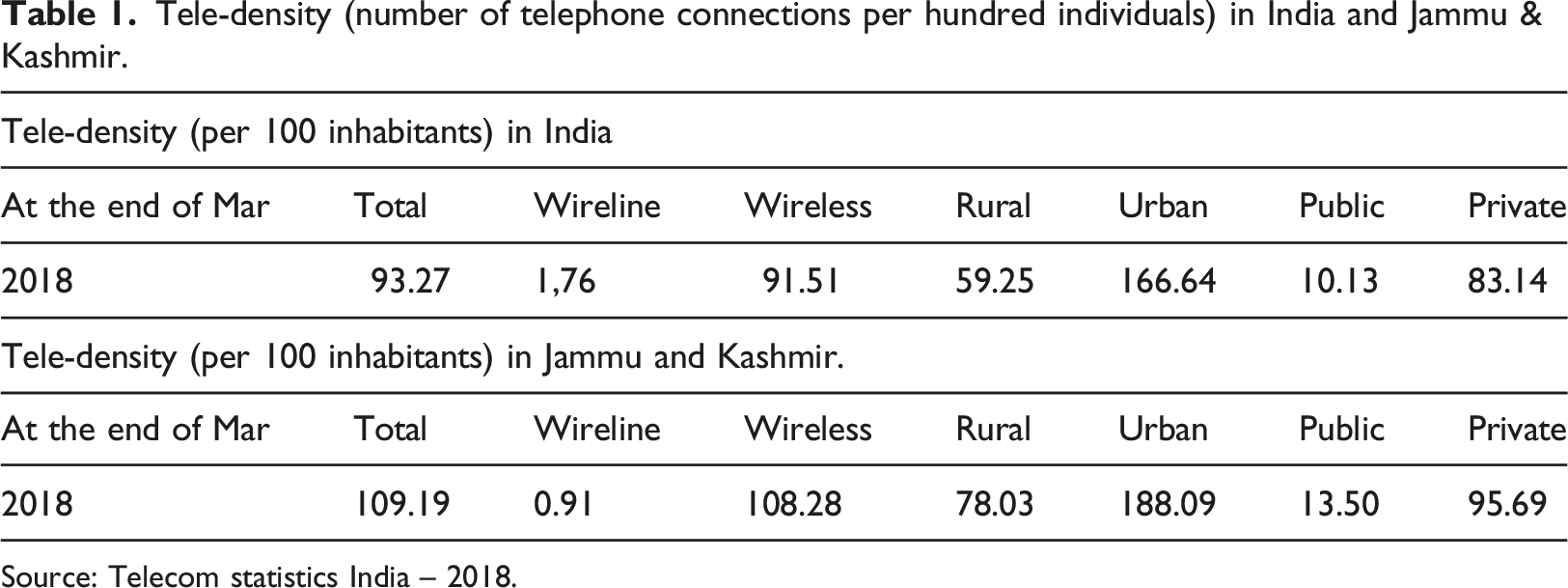
Source: Telecom statistics India – 2018.
Since 2011, there were huge advancements in the internet related technologies in the Valley as more service providers (BSNL, TATA, Reliance, Airtel, Aircel, etc.) launched their services in Kashmir. However, all these networks often become lifeless in Kashmir without internet, thereby killing all vehicles for information dissemination.
Growth of digital media in Kashmir
Despite several unfavourable policies and frequent suspensions of internet services in the Valley, the online media has emerged as a popular medium for disseminating news. As per the media reports, the sale of the print versions of the Valley newspapers and magazines saw a sharp decline as the readers were turning to the online editions of the newspapers. Though the mobile phone services were introduced quite late in the Valley (in August 2003) as compared to other parts of the country, but it took lesser time to get recognized as a news media. In many places of the country, the mobile phone service started on 31 July 1995. There are some other reasons also for the decline of the readership of the newspapers in Kashmir but the introduction and emergence of online media in the Valley is considered its prime reason (Maqbool, 2019).
A research published in the year 2011 revealed that Kashmiri youth use internet mainly for accessing local newspapers and to get news from Kashmir specific websites. The usage of social networking websites comes close at the second position and Facebook is the most popular site among these (Bhehra, 2011). Over the years, the usage of new media for news has increased manifold in Kashmir. The younger generation is more internet-savvy and prefers to gather news on web. Jammu and Kashmir has more than two million internet subscribers. (Mirani, 2014). With the internet emerging as an important medium of communication across the globe, facts reveal that Srinagar has become highest in the union territory in terms of Internet usage with more than 21,532 broadband internet connections operational. The data further revealed that 75% of Srinagarites are using internet connections. (Manzoor, 2014). The number of internet connections has increased tremendously since 2014.
During the 2008 and 2010 uprisings, when people were restricted to their homes due to continuous strikes and curfews, the media too had to experience difficult times. To this end, internet provided easy access to news. Regarding one such online news portals in Kashmir Kashmir Dispatch, another popular Kashmiri weekly newspaper Kashmir Life wrote The portal became popular during the summer unrest as most the newspapers in Kashmir were not published in the face of severe curfews and restrictions put on movement of people including journalists. As the web portal was bereft of any trappings of printing and circulation it was able to report news round the clock, which proved to be a boon for the portal launched on April 2010. (Qureshi, 2011).
The political and social developments that Kashmir witnessed from last six decades had made the people of Valley news-addicts. These developments have also made this place a ‘news-hub’ where almost all news organizations have a correspondent. The news media of Kashmir has multiplied at an alarming rate. Since the Valley had a wide base of internet subscription, it made it easy for the news media to adopt the online medium for dissemination of the news. Almost all the newspapers from the Valley (English as well as vernacular) developed their online editions and most of them developed their e-papers as well. Several news portals were created that gained popularity in very less period (Hassan, 2017).
A quick review of the Facebook pages on Kashmir shows more than hundred Facebook accounts with the name ‘Kashmir’. Most of them are regularly updated by the page administrators with the information about the events in Kashmir. A random survey of Facebook pages on Kashmir and a qualitative reading of some of the popular blogs also show this medium is also widely used by the people of Kashmir to propagate their ideas and share information. This new media is being actively used in shaping the political discourse and utilised actively by groups belonging to different ideologies. All the political leaders and separatist representatives from the Valley have their accounts on social networking sites (with Facebook and Twitter topping the list) through which they usually communicate with the masses.
A news article by Associated Press headlined ‘Facebook, YouTube used as weapons in Kashmir fight’ published in The Washington Post reads as “With student discussion groups banned and thousands of security operatives believed to be snooping on protesters, the youth of Kashmir are using the Internet as a virtual meeting place. Social networking sites, though presumably under Indian surveillance, have proven to be more effective than any previous form of political communication in Kashmir. The struggle on the streets and in the corners of cyberspace has a mutually complementary nature.” (Hussain, 2010).
Internet suspensions in Kashmir
In the year 2016, UN condemned internet disruptions as human rights violation. Despite this, about 21 countries across the globe have been shutting the internet services totally or partially for months together. The year 2020 witnessed internet shutdown in 21 countries, with India being the most economically impacted nation at a cost of $2.8 billion affecting 268 million people (Samuel Woodhams, 2020). India restricted internet use for 8927 h of black-out or curbed bandwidth access during the year. India had 67% of the world’s documented internet shutdowns in 2018. (The Wire, 2021). India had the maximum number of internet shutdowns in the world, even excluding the ones in the Union Territory of Jammu and Kashmir (Freedom House, 2021).
Internet Shutdowns in India and world (2019 & 2020).
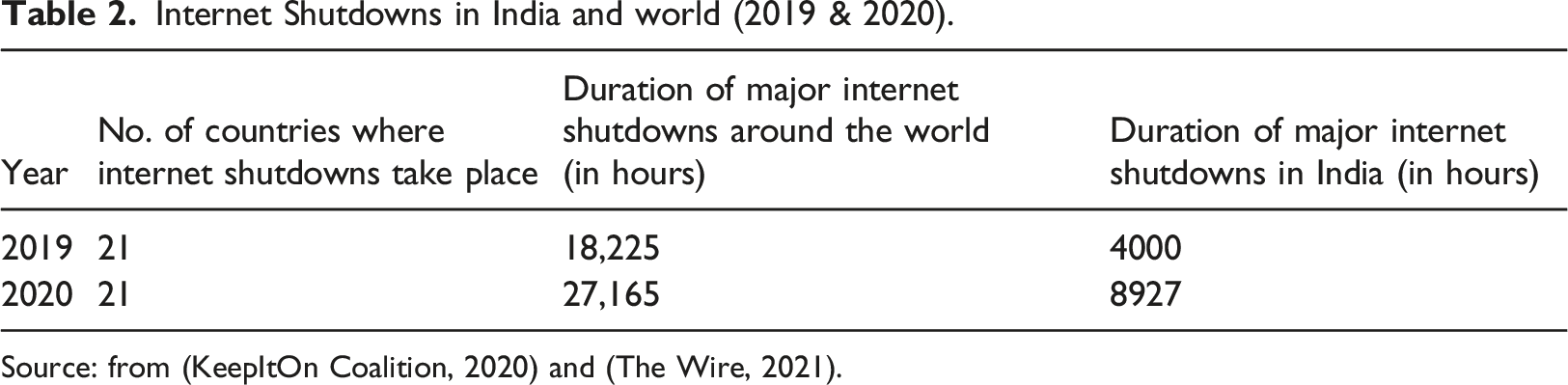
Source: from (KeepItOn Coalition, 2020) and (The Wire, 2021).
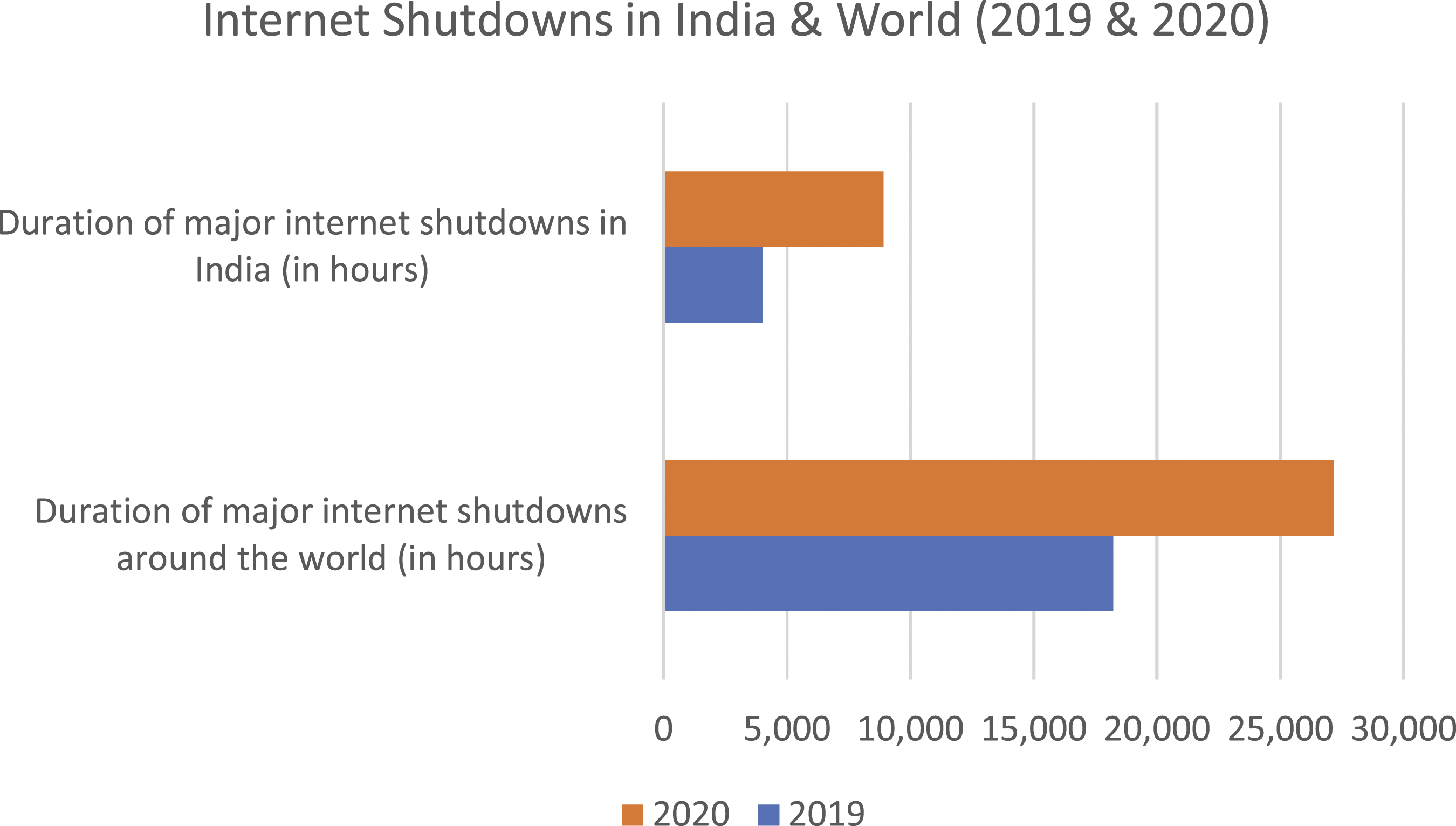
Internet shutdowns in India & world (2019 & 2020).
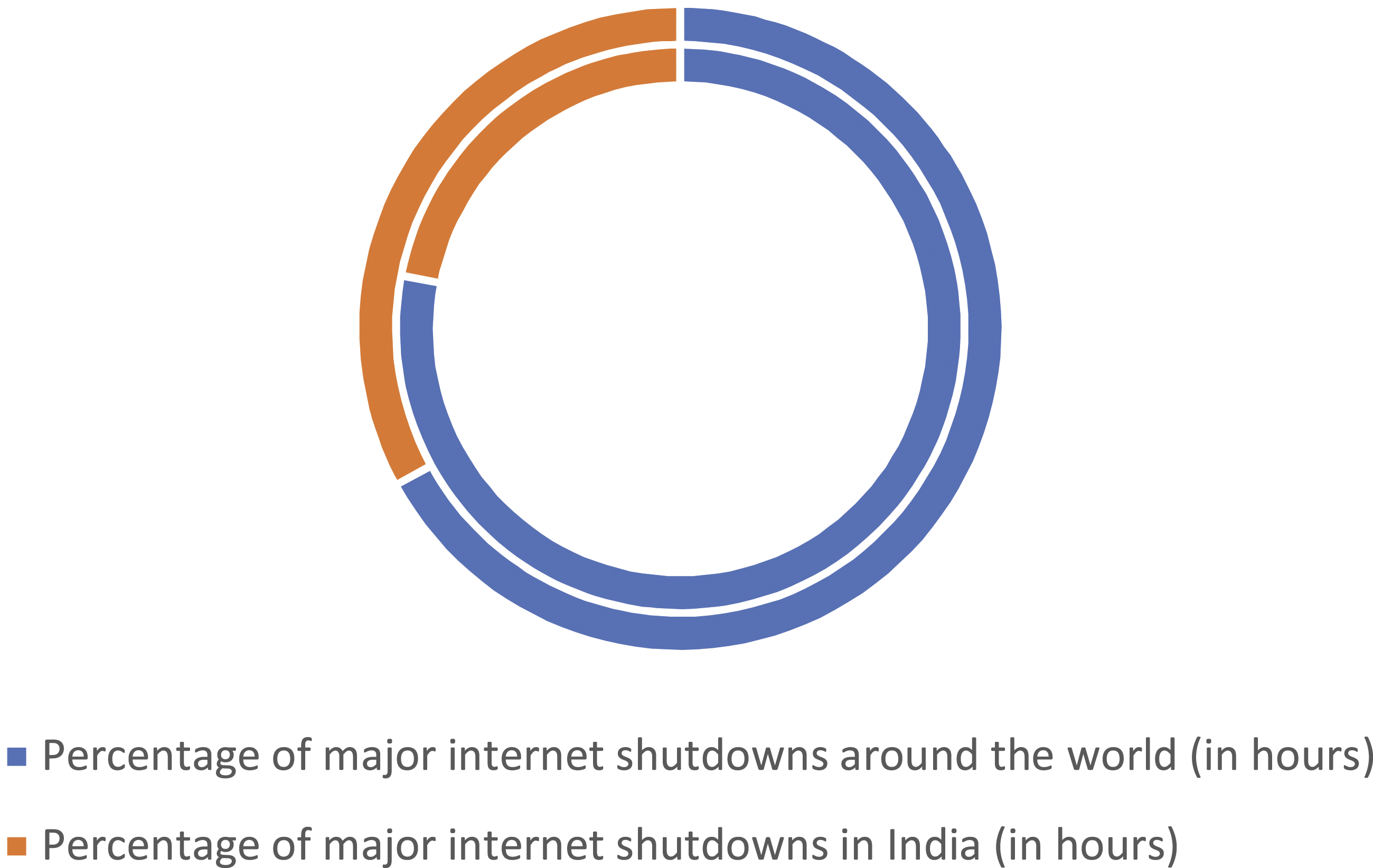
Parentage of major internet shutdowns in India & around the world (Inner Circle is for year 2019 and outer circle for 2020).
The suspension of the internet services in Kashmir is considered a routine affair and if there is no suspension, it hits the headlines of the prominent national newspapers (Press Trust of India, 2015). One such story was by PTI was published in The Indian Express on Indian Republic Day in 2017 that was headlined Kashmir: Mobile telephone, internet services not suspended on Republic Day. While the world was preparing for 5G, even the high-speed 3G and 4G internet services remained suspended in Kashmir for the whole of 2020. The authorities have also been clamping down on mobile services in ‘times of trouble’ in Kashmir and the place is witness to such disturbances since the year 1989. The government had imposed a ban on Short Messaging Service (SMS) in Jammu and Kashmir following the 2008 Amarnath Land Row agitation, 2010 summer agitation, post hanging of Parliament attack convict Mohammad Afzal Guru and the most recent being during the 2019 lockdown when all sorts of communication channels were also locked down (PTI, 2017).
Documenting the internet shutdowns in the Jammu and Kashmir, a report by UNCHR (United Nation High Commission for Refugees) published in Nov. 2017 says: Officials ordered service providers in the Kashmir Valley to block 22 social media sites for a month, including Facebook, Twitter, and WhatsApp.
There is limited access to internet services in the Valley. Nearly 40 information communication technology (ICT) shutdowns were ordered by local authorities, some lasting several months in Jammu and Kashmir.
Shutdowns affect both mobile and fixed-line connections, and lasts for several months. According to a report published on 29 May 2017 by Centre for Communication Governance at National Law University Delhi, since the year 2010, there have been 36 incidents of internet shutdowns in Jammu and Kashmir. As per this report, an earlier version of which was also submitted to Supreme Court of India in the case of Gaurav Suresh Bhai Vyas versus State of Gujarat and Ors, this is the highest figure than in any other part of the country (Singh, 2017).
The 36 incidents of the internet shutdown in Jammu and Kashmir between 2010–2017 as per the report (Singh, 2017) includes: - Mobile services suspension in entire Jammu and Kashmir on Republic Days in 2010, 2011, 2012, 2013, 2014, 2016 and Independence Days in 2010, 2011, 2012, 2013, 2014, 2015, 2016. - Mobile services (including SMS service) suspension in North Kashmir from June 29 – 12 July 2010 - The telecom companies of Jammu and Kashmir were directed to block the access to YouTube and Facebook in Kashmir to curb the potential protests over an anti-Islamic short film ‘Innocence of Muslim’ by an American national that has angered Muslims. The government snapped cellular phone and internet services and imposed curfew-like restrictions in volatile parts of Kashmir to keep protesters at bay. (Hindustan Times, 2012). The restrictions were in place from September 21 – 1 Oct. 2012. - Complete suspension of Internet shutdown in the wake of the hanging of Afzal Guru (Feb. 9–14, 2013). - Mobile internet services were suspended in view of the protests to observe the first death anniversary of Afzal Guru (Feb. 9–19, 2014). - Internet suspended to prevent some separatist leaders from addressing a UN Human Rights Committee event in Geneva using internet service. (17 March 2014 – not available) - Suspension of mobile internet services in Kashmir in view of Prime Minister’s visit to the Valley (7 Nov. 2015). - Mobile internet services suspended in five districts (Srinagar, Kupwara, Baramulla, Bandipora and Ganderbal) (April 14–18, 2016) - Suspension of Mobile and internet services after the killing of a Hizbul Mujahideen militant, Burhan Wani (9 July 2016 – 27 Jan. 2017, though the post-paid mobile internet services were restored on 19 Nov. 2016. - Mobile phone services suspended amid fears of Friday clashes (August 11–20, 2016) - Internet services suspended in three districts falling under the Srinagar Parliamentary constituency to polls. (April 9–11, 2017) and on April 123, 2017 in view of re-polling in parts of Srinagar Lok Sabha constituency. - The SMS services are also suspended in the Valley in 2008 during Amarnath Land Row uprising, 2010 summer uprising and post hanging of Afzal Guru. In 2016, mobile telephone and mobile internet services were also snapped for a long period (Press Trust of India, 2017).
During the first 6 months in 2019, Jammu and Kashmir witnessed the highest number of internet shutdowns than any other part of the country as reported by the Software Freedom Law Centre’ (SFCL), an Internet Shutdown tracker. It reported that in June 2019 only, Kashmir experienced internet shutdown seven times. During the first 6 months of 2019, internet services were suspended 51 times in Kashmir. As reported by SFCL, there is an average of 10 internet service shutdowns every month in Kashmir. It is worth noting that in 2018, the 100-shutdown mark was crossed in September. These shutdowns in Jammu and Kashmir accounts for over 80% of all internet shutdowns in India in 2018. (Bhat, 2019).
Below are some of the figures regarding the shutdowns in India as tracked by SFCL (Software Freedom Law Centre, 2019–20): - - Between 2012–2018, there were 125 internet shutdowns in Jammu and Kashmir out of the total 331 internet shutdowns in India. - The first reported instances of internet shutdowns in the state were in 2013, with 3 in total that year. It was the only state (now union territory) to have internet shutdowns in 2013 and 2014. - In 2018, 134 internet shutdowns have been reported, compared to 79 Internet shutdowns in 2017, and 6 internet shutdowns in 2014. - The actual number of internet shutdowns is likely much higher, since many shutdowns are ordered secretively by state governments, and not always reported by the news media.
The longest shutdown reported by SFCL include 213 days internet services suspension in Kashmir from 4 August 2019 4 March 2020. In 2019, India shut down the internet for 175 days in Jammu and Kashmir. This was the second-longest internet shutdown globally in 2019. It was also among the longest shutdowns recorded in India till date.
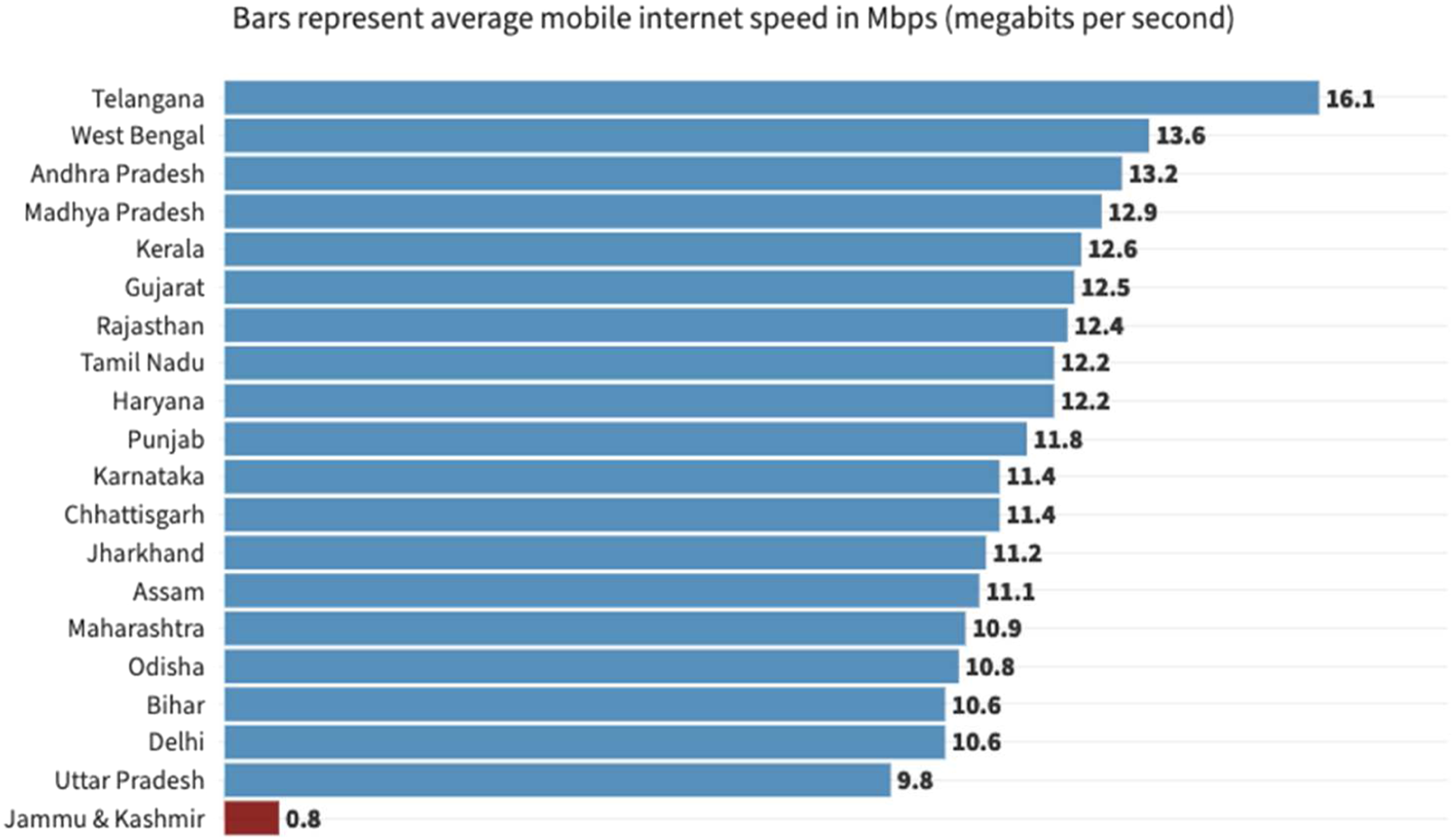
The data presented by Statista, a German company that maintains and provides market and consumer data in over 57 nations, shows that the number of internet shutdowns across Jammu and Kashmir in India has increased every year since 2012, pointing towards an alarming isolation of internet freedom for the citizens of Kashmir (Figure 3). While the number of shutdowns were less than 10 from 2012–2015, it was 10 in 2016, 32 in 2017, 65 in 2018 (Statista.com, 2020). During 2019, there were reportedly 55 shutdowns but the 55th shutdown (implemented on 4 August 2019) continued for 149 days (till the end of that year. For the whole year of 2020, there was no access to the 3G and 4G internet services in the Valley. The slow speed 2G services were restored in the Valley on March 2020, that was also suspended during elections, encounters, visits of VVIPs, etc. The average mobile internet speed in Jammu and Kashmir is very low when compared to the speed in other states and union territories of India. The analysis of the raw data published by a global internet speed testing application revealed that while it is 16.1 megabits per second in Telangana and between 10–14 megabits per second in other states and union territories, it is only 0.8 megabits per second in Jammu and Kashmir Figure 4. Number of Internet shutdowns (Source: Statista.com (2020), Times of India (2019). Average mobile internet speed in jammu and kashmir compared to other big states and union territories of India.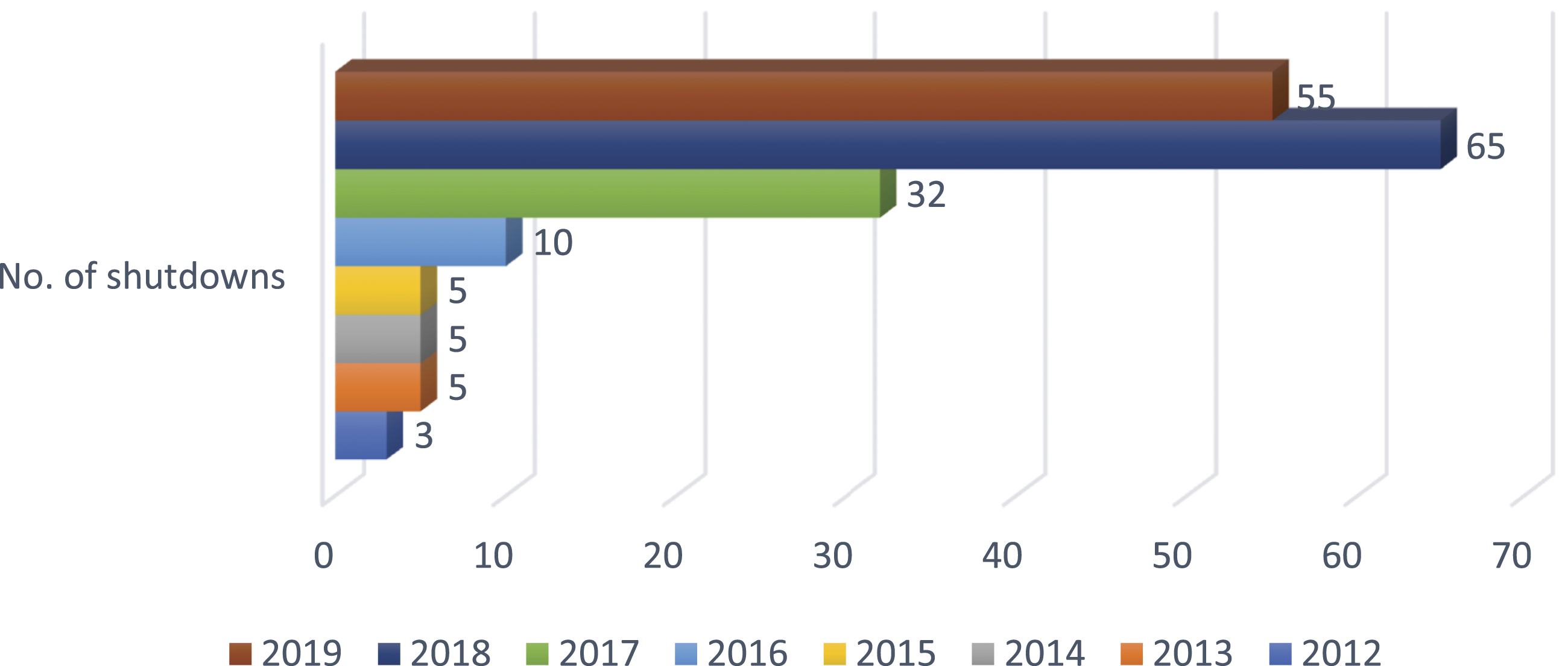
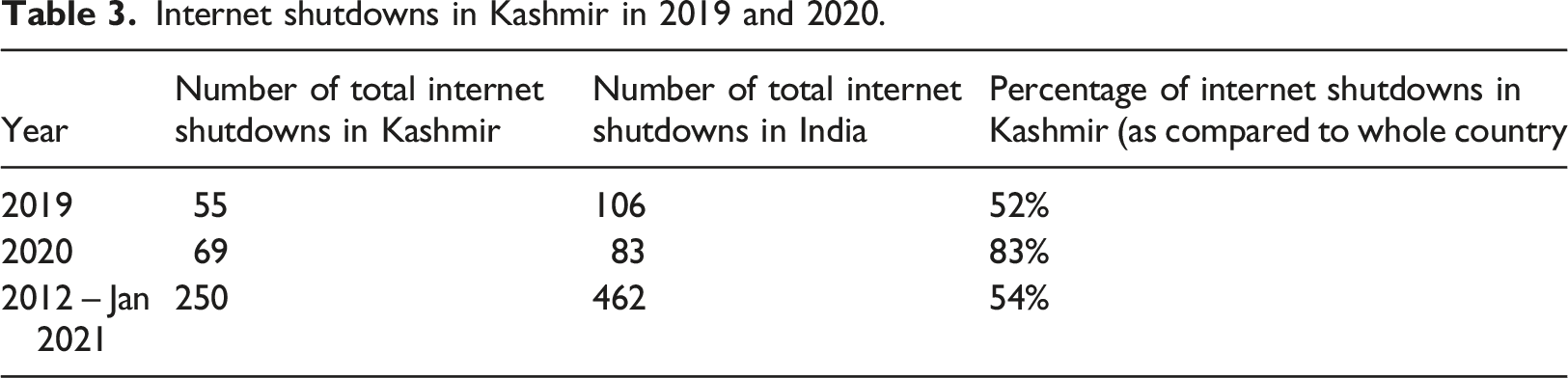
In the year 2019 and 2021, there have been 55 and 69 internet shutdowns in Kashmir respectively. Out of the 46 internet shutdowns during first 7 months of 2020 (January – August), 38 shutdowns were in Kashmir only. There have been 250 internet shutdowns in Kashmir alone as compared to 462 shutdowns in the whole country.
The table clearly explains that more than half of the internet shutdowns imposed in the country have been imposed in Kashmir alone. This percentage reached 83% in the year 2020. These figures could be well understood in the light of the data below:
Internet shutdowns in Kashmir in 2019 and 2020.
Number of days with no internet facility/limited internet facility in Kashmir (2019 and 2020).

In the year 2019, there was no internet facility in Kashmir for 174 days that included 150 days from August 4 to 31 December 2019. In the year 2020, there was no internet facility available in Kashmir for 64 days (from January 1 to 4 March 2020) and for the remaining days of the year, only 2G internet services were available. Therefore, the Valley was without internet facility or had limited access to the internet facilities for more than 500 days from 4 August 2019 to 31 January 2021.
Though there are some planned internet shutdowns in the Valley but most of these shutdowns are immediate and implemented on a short notice. Usually, the complete shutdowns of Internet happen on specific days like 15th August (Independence Day), 26th January (Republic Day) and 8th July (death anniversary of militant Burhan Wani). These are the expected shutdowns. However, in 90% of the cases, there are orders for an Internet shutdown on a short notice and immediate compliance is expected. Except for the planned shutdowns, a period of 30 min is provided to the telecom service provider to execute the shutdown orders. Usually, the telecom service providers get a message (like Short Messaging Service) or an email from a designated member of the state authority ordering the shutdown. The formal orders for the same are issued later in the urgent cases. The speed and targeted granularity of an Internet shutdown depends entirely on how evolved the technology of the service providers is (Rajat Kathuria, 2018).
Impact on journalism
The newspapers in Kashmir term the frequent suspension of internet services in Kashmir as “e-curfew”. From the government’s point of view, this helps prevent what it often calls “anti-national activity”, but there is no clarity on this statement also. As per a journalist researching on the emergence of digital media in India at Harvard University’s South Asia Institute, “these regular, deliberate restrictions on internet access contrast sharply with India’s otherwise forward-thinking technology polices” (Shah, 2016). While on one hand, India aims to increase the number and quality of internet connections in the country, and encourages local digital entrepreneurship and innovation, on the other hand, its decisions to frequently curb the internet services in Kashmir badly hits its digital media.
Impact on news collection
Communication blackout in a digital age is a threat to the new-age journalism. “During communication blackout, it was impossible for journalists to gather information from different beats of news or cross-check the facts, or pitching good ideas to the media outlets. At the time when even phone-call services were suspended, it was not possible to contact the news sources or media organizations” (I. Pandow, Personal Communication, February 2021). Pandow is a freelance local journalist from Kashmir whose work was badly affected during 2019 communication blockade.
The internet ban has taken a huge toll on Kashmir media, impacting the quality of journalism and making many journalists redundant as they fail to send their contributions to their media organizations. Unlike the scribes operating from Srinagar, the blockade proved deadly to the district reporters since internet services were suspended in Kashmir. (Khurshid, 2019).
The frequent suspension of internet and mobile services in the Valley badly affected the online news media of Kashmir. ‘Reporting without internet or with restricted low speed internet services in the Valley had made it extremely difficult to obtain real-time information and report in real-time. It also hampered verification of information. The local media was the worst affected media’ (S. Akhter, Personal Communication, November 2020). Akhter is a local journalist working as reporter-cum-editor with an Urdu daily from Kashmir.
The communication blockade proved fatal for journalism in Kashmir as journalists were forced to remain confined within the four walls. There was not an iota of difference between a journalist and a layman as the former had no means available to get the information and spread it to the latter (A. Hussain, Personal Communication, January 2021). Hussain is working with a local newspaper Kashmir Story and had lost many of his assignments during the internet ban.
Surveillance on journalism
During the lockdown, correspondents of national and international news organization had no option but to file their reports from a Media Facilitation Centre managed by the government that was set up in one of the hotels in Srinagar. Before setting up this Media Facilitation Centre, the Valley journalists used to save their drafts on removable drives that were couriered outside Delhi to be filed by its concerned media organization.
As per the journalists from the Valley, the communication blockade during 2019 was the worst of its kind as “suddenly all the network connections were off, with no contact with other colleagues and offices, it was a total blackout”. For several weeks journalists from this place tried to visit places for accessing the internet but nothing worked. All the stories remained unreported as there was not a single place to send out the information. After month or so, journalists were given government operated space with four work stations, and with no privacy at all. In a way, journalists were forced to use those systems to send out the information as there were no other means. “I personally travelled by air to New Delhi to file my news stories as there was no privacy at the government operated space. Visiting Delhi to file the stories had become a new normal for me.” (M. Mattoo, Personal Communication, January 2021). Mattoo is a freelance journalist working with national and international media organizations including Nurphoto and Images Life (International News agencies).
For more than two hundred journalists, there were only a few computers, meaning each journalist had to wait for hours. Many journalists refrained from accessing the internet from this facility as they had a suspicion that their online communications were getting monitored (International Press Institute, 2020), pointing towards the concept of ‘panoptical surveillance’. Many journalists from the remote areas of Kashmir couldn’t reach the facilitation centre as it was stationed in the heart of the Srinagar city and no public transport was allowed (I. Pandow, Personal Communication).
Impact on news reporting
The complete ban on internet services in the Valley that started in August 2019 lasted for about 6 months and is considered the longest blackout ever recorded in a democracy. This gag had taken away the main tool of reporting from the journalists. It was extremely difficult for the journalists working for national and international media report to their organizations. As per a Kashmiri news editor in Hyderabad, the news feed from Kashmir used to take much longer than expected. “For every feed from Valley, the news desk had to wait for hours and sometimes days as the reporters in Kashmir had to travel long distances to access internet and send their feed” (Abid, Personal Communication, January 2021). During the blockade, Abid was working with News18 network from Hyderabad.
As there were hundreds of journalists waiting for their turns to access internet, each one used to get access internet services for short period of time (few minutes). Hence, all the stories were not reported. Even if a journalist had more than one story to report, but due to the limited access to internet at the Media Facilitation Centre, they had to prioritise and drop some news (M. Mattoo, Personal Communication, January 2021).
The inability to respond to playbacks and queries from editors on email and phone, especially regarding fact-checks, meant that stories could not be carried in the national media (Network of Women in Media; Free Speech Collective, 2019). For many weeks, the journalists from the Valley especially from the remote-areas were not able to report anything (I. Malik, Personal Communication, 26 December 2020). Malik, a gold medallist in Journalism and Mass Communication is presently working as Online Editor with a local English daily Rising Kashmir.
According to an internationally recognised Kashmiri journalist presently working with Aljazeera News Network, the brave journalists from Kashmir were battling serious restrictions on press freedom in the region, though this blockade had no impact on his work since he was away from the Valley (S. Shafi, Personal Communication, 18 January 2021).
Besides documenting the narratives of the Kashmiri journalists, the report News Behind The Barbed Wire published by Network of Women in Media (India) also discussed the problems faced by the journalists in the absence of high-speed internet connectivity. The report is based on the interviews of more than 70 journalists, correspondents and editors of newspapers and news-sites in Srinagar and South Kashmir, members of the local administration and citizens. It says, “In absence of reportage from the ground, the government’s control of the narrative of normalcy in Kashmir is near total. There is a deafening silence and invisibilities of voices from Kashmir expressing alienation, anger, and disillusionment at perceived breach of trust. This is intrinsically undemocratic and harmful, as it privileges the voices of authority and weakens those who speak truth to power” (Network of Women in Media; Free Speech Collective, 2019). This points towards the Authoritarian Theory discussed in the first section of the paper where the State allows only selective narrative to be propagated.
Impact on journalism jobs
Media persons belonging to rural areas were the worst hit as the gag completely rendered them incommunicado. Several among them were fired by their organizations. (Abid, Personal Communication, February 2021). As per the report of Indian Council for Research on International Economic Relations published in April 2018, ‘Big media houses with VSAT (a very small aperture terminal) connections did not suffer due to the internet blockade. However, approximately 40% journalists lost their jobs since they couldn’t report effectively due to lack of connectivity (Rajat Kathuria, 2018). VSAT functions as small earth station for receiving and sending media content like data, audio and video signals using satellite communication networks.
This communication disruption affected the freelance women journalists more severely as they had limited resources to travel outside Kashmir and did not find it secure to travel to Srinagar for accessing the internet (S. Nisa, Independent Journalist, January 2021).
As per the Information Technology experts, the present-day websites are very dynamic in design and need high-speed internet connectivity. While the earlier websites were more-or-less static that worked well on 2G network, almost all the websites nowadays are dynamic. These sites have high-definition images, videos, animations, widgets, and other extensions for which high-speed internet connectivity is a must. Besides, restricting the abilities of the journalists to report, file stories and verify the information, this is another setback for the news media in Kashmir. ‘Before the blockade, some journalists would run their own news portals which they had to shut in absence of an internet connection. When the internet was restored, these portals had lost all their audiences’ (Abid, Personal Communication, February 2021).
Impact on social media
Social media is an effective medium for information dissemination in the present scenario. This is an effective tool for journalists as well. Making the social media unusable for the media personnel, limits their abilities to gather information, verify the facts and report about the same. Though the 2G internet services were restored in the Valley in March 2020 but in absence of the high-speed internet connectivity, the access was not helpful. This has severely affected the news industry as the readers were not able to access the e-editions of the newspapers on their mobile sets. As per the journalists, the curbs are there to restrict the flow of information through the social media networks, as news cannot be controlled there.
On 17 May 2020, the International Press Institute (IPI), a global network of editors, media executives and journalists for press freedom called on the government of India to stop the intimidation and harassment of journalists and restoring full speed internet and access to social media in Jammu and Kashmir. The disturbing situation of the media freedom in Kashmir was published in the special report of IPI also. As per the report, … the conditions for journalists to work in Jammu and Kashmir have worsened on many fronts. In addition to harassment by the security forces, journalists in Kashmir are facing difficulties in reporting because of a continued blockade on high-speed internet access by the government and a ban on the use of social media, which has now at least temporarily been lifted. (Minna Heikura, 2020).
A study conducted among 150 university students of Kashmir in 2019 revealed that in absence of the internet services (and thereby social media) in Kashmir, the youth lost an important platform to vent their emotions (including anger and hostility) and if this media is taken away, suppressed feelings will build up and become more intense inside, causing a number of uncontrolled dangerous problems among youth. It further revealed that most of the male students use internet-dependent social media for emotional release and most of the females use it for reflecting their social status (Liyakat, 2017).
Between August 2019 and March 2020, some Kashmiri people, including journalists were circumventing the social media ban by using virtual private networks (VPN). However, these VPNs were not a viable solution to good speed internet and they were also banned by the Jammu and Kashmir administration. According to media reports, the authorities were probing hundreds of suspected users who were allegedly “misusing social media to propagate unlawful activities and secessionist ideology” (International Press Institute, 2020).
After 5 months of complete communication blockade, internet services (only broadband services) were restored to hospitals, banks, government offices, hoteliers and travel companies. As per the journalists, it was unfair when internet services were restored for hoteliers, travel companies and government (Peterson, 2020). Journalists considered it unfair that the same services were not resorted for them. ‘Debarring the local Kashmiri journalists, the access to high-speed internet when the same was provided to hotels, travels companies and government offices was seen as deliberate strategy to deny local journalists (their ability to work) in a free environment (International Press Institute, 2020).
Impact on economy, education and health information
Internet enhances the output of the economically productive activities (Steele, 2018). It provides a large online market for the sale and purchase of goods and services without much hassle. While customers around the world can shop online and compare prices to get the best bargains, participate in online auctions and safely and securely transact online this translates to economic empowerment, it is not available for the people of the Valley.
As per a report by Indian Council for Research on International Economic Relations, ‘the internet could have boosted the economy of Kashmir by about five times’ (Rajat Kathuria, 2018). The online maps like Google maps do not work in Kashmir and there are no live traffic updates like in most parts of the world. Though some e-commerce start-ups did set up their units in the Valley but they couldn’t grow. Most of them either closed their units and shifted to other places within and outside the country. The unavailability of internet also discouraged many educated Kashmiri youth to drop their ideas of start-up projects that are dependent on the digital media. Internet shutdowns have caused losses to traders as well and with the extension of Goods and Services Tax to Jammu and Kashmir, their problems got exacerbated (as it needs traders to submit invoices online).
There is no digital entrepreneurship or innovation in the Valley. All the business enterprise dependent on the internet connectivity like cyber-cafes, internet parlours, travel agencies, e-commerce, online banking, etc. become useless. The suspension of internet connectivity also comes as a nightmare for Jammu and Kashmir entrepreneurs especially for the ones who use social media to market their products. The impact of the internet suspension is not just on businesses but on the minds of the people as well. As per a young entrepreneur from the Valley “When the businesses get hit, it brings frustration and depression, and they start cursing themselves” (Malik, 2020).
The education sector also suffered losses as the research and several co-curricular activities are mostly internet dependent. The internet connectivity opens the doors for a large reservoir of information and knowledge to students and scholars. The accessibility and availability of Information and Communications Technology have been associated with academic success and robust research activities since users can quickly make references. Education is a very dynamic sector and regular upgradation is critical to success. Thus, internet connectivity helps to remain updated regarding the latest trends and helps revolutionize research skills. As the educational institutions remain closed for longer periods in Kashmir during winters, strikes and curfews, these internet restrictions also deprive them of the web resources and access to educational or institutional websites. Consequentially there is huge setback to the education sector.
The internet gag has even affected some of the flagship programs of Government of India especially Aadhaar registration and several health schemes like AYUSH that were suspended,leaving patients high and dry. Businessmen and industrialists also suffered due to the loss or restrictions on the connectivity, as they faced difficulty in making the e-transactions and filing Goods and Service Tax (GST) returns. (Ahmad, 2019).
The communication blockade badly affected the health and patient-care as the therapies of several cancer patients got delayed and many others missed their timely doses of medication. Though media played a role during this crisis, but that was very limited. “Some people approached media organization through reporters for help in procuring the medicines that were not available in Kashmir, who in turn used to run the requests on their channels or social media. That helped in many cases” (Abid, Personal Communication, January 2021).
In absence of other sources of entertainment and social engagement, the data consumption is much higher in Kashmir when compared to other parts of the country. People of Kashmir sometimes consume 1 GigaByte of internet data per day. However, this consumption falls drastically in case of internet shutdowns, thereby causing loss not only to the service providers but also to consumers who buy the internet plans as per their requirements and then they are not able to use it. Sometimes, there is also internet speed throttling (reducing the internet speed) when the administration wants to discourage use of picture and video uploads on social media, instead of a complete shutdown (Minna Heikura, 2020).
Conclusion
It is evident that with the development of new communication technologies, the dissemination of news also underwent several changes compared to the past. The news media in Kashmir also got revolutionized with the introduction of the internet and related services. At the same time, this new media faced many obstacles in Kashmir that hampered its widespread growth. Despite having a good internet penetration in the Valley, this medium often loses its lifeline (internet) that renders this new media useless. The lack of internet services has hugely impacted journalism rendering almost all the online editions, e-papers, and news portals non-functional.
Considering the importance of technology in the development of a country, it is exceptionally essential to ensure internet accessibility to its people, but, the unavailability of internet in the Valley has seriously hampered the work of journalists. Working without internet or with restricted access has severely hindered journalists from reporting about development especially in the remote areas of the Valley. It has been difficult to get real-time information, report in real-time from the ground and contact the sources. Journalists have been forced to rely on press briefs issued once or twice a week by the state government, without possibilities to verify the stories. The relevance of Panopticon theory in this study is pertinent as the journalists in Kashmir have experienced continuous digital surveillance and wherever the surveillance was not possible, the communication was hindered.
After about 5 months of complete internet shutdown, mobile internet was restored in Kashmir on 25 January 2020 and on 5 March 2020 social media ban was also lifted. However, on 11 August 2020 the centre government told the Supreme Court of India that the situation in Jammu and Kashmir is not conducive to resume 4G internet services in Jammu and Kashmir (Mahapatra, 2020) and a special committee was formed to look into the issue of internet restoration in Jammu and Kashmir (PTI, 2020). Under these circumstances, the continuous access to high-speed internet and free function of new media seems a distant dream for the people of Kashmir. In the absence of this digital media, the Valley is encountering extreme ‘information and communication poverty’.
Footnotes
Declaration of Conflicting Interests
The author(s) declared no potential conflicts of interest with respect to the research, authorship, and/or publication of this article.
Funding
The author(s) received no financial support for the research, authorship, and/or publication of this article.
