




Abstract
The recent years have observed a notable rise in online activities and interactions. One of the popular online interaction zones are fandom communities comprising fans of any artist, band, TV show, movie, book, and so on. These fans come together on various platforms to enthuse about their favorites with people who share their admiration and interests. One such platform is Twitter and the fandom community is Stan Twitter. Within those fandoms, K-Pop fandom stands out because of the density of English as a second or foreign language speakers in this community. Taking this community as its sample, this study explores the ways in which the non-native English speaking fandom members use English to communicate on this platform. Moreover, the study focuses on the interpretation and usage of meme discourse by these non-native English speaking members. The findings reveal that the fandom members learn memetic discourse by internalizing it in the form of schemas, which means that they learn the whole chunk of interaction rather than learning individual words. The study has also explored overall language-learning within this community, and has discussed the implications of fandom activities as potential learning aids.
Keywords
Introduction
The virtual world has made it possible for people to communicate across linguistic barriers, geographical boundaries, and physical distances (Tuttle, 2016). People, especially youth, interact online (Xu et al., 2018). Languages used for communication in this space have specific patterns, linguistic structures, and rules (Ekundayo, 2014; Thurairaj et al., 2015; Tuttle, 2016) that are vastly different from those found in the standard English language (Drouin and Driver, 2014; Grace et al., 2015). Usually, the use of an online variety of English has a negative impact on a user’s language proficiency (Tayebinik and Puteh, 2012). However, there is evidence supporting some positive impact of the language used in online communities on a user’s language skills (Chen and Kent, 2020; Ekundayo, 2014). The negative effect is spelling deficiency and the positive effects are an improvement in creative skills and expression in writing (Grace et al., 2015).
The language used online is a relatively new area of research exploration from a language learning perspective (Abrahim et al., 2018; Godwin-Jones, 2018; Holmberg, 2019). However, we would argue that relevant investigation has been carried out for exploring sign language and other types of communication, such as analyzing online language like slang and exploring ways of normalizing and annotating it (Teodorescu and Saharia, 2015), analyzing sentiment behind the language used online – both textual and visual (Kumar et al., 2020; Miltner, 2014), or analyzing hidden meanings and messages conveyed through posts users make on platforms such as Twitter and Facebook (Graham et al., 2013). Of these research areas, the last two are focused on the meaning behind the online language and not the language itself (Graham et al., 2013; Miltner, 2014). The first area – normalization and annotation of internet slang – does focus on the language itself (Teodorescu and Saharia, 2015), but by calling it ‘slang’, the negative connotations associated with the term itself carry on to the content. Other types of online communication, such as the use of emoticons and emojis (Daniel and Camp, 2020; Pavalanathan and Eisenstein, 2016), have also been explored. However, the language itself remains relatively overlooked.
One popular online domain is fandom activity, where people gather to enthuse about their favorite celebrity figure, idol, musician, model, and TV show (de Kloet and van Zoonen, 2007; Kang et al., 2019). Cambridge Dictionary defines fandom as a group of people who are “fans of someone or something” and are very passionate about the subject or object of their fandom (Fandom, 2019). Fandom practices have also been associated with negative connotations, such as hysteria, obsession, and addiction (de Kloet and van Zoonen, 2007), thereby leading to a negative perception of some online activities (Livingstone and Helsper, 2008).
The impact some informal online platforms may have on a user’s language proficiency, particularly when the user is a non-native speaker of the English language, is relatively underexplored. These informal platforms have the potential to be language learning sites (Lyrigkou, 2018). As mentioned, the existing scholarship has focused on the linguistic characteristics of internet language and the semantic dimension of online discourse, but the impact of this language on a non-native English user’s English language proficiency has remained under-explored. Studies on an internet user’s language skills have looked at sites for fandom of creative productions, such as fanfiction, artwork production websites (Magnifico et al., 2015), or virtual reality gaming forums (Gee, 2005). One development in this field has been the investigation of fansubbing 1 (Lakarnchua, 2015), but the study is limited to the question of whether fansubbing helps in language learning and does not explore the learning processes therein. Since English is the most common spoken language in the world (Blommaert, 2013, Haidar, 2019a), the language used to interact with other fandom members is mostly English (Aisyah, 2017). Therefore, this platform, of which most users are non-native English speakers, is an apt site to explore the learning of English as a second or foreign language through fandom interaction.
The rest of the paper elaborates on social media and K-Pop, after which follows a description of memetic discourse, the theoretical framework, and methodology. This study uses the theory of schematic learning (Rumelhart, 1980) to analyze the interactions within the selected sample of the K-Pop Stan Twitter community. While exploring language learning processes within the K-Pop Stan Twitter community, this study argues that the peripheral language learning process is a form of schematic learning through which the Stan Twitter members internalize the structure and functions of memetic discourse and learn how to interpret and use it. Finally, in the discussion section, the study proposes that the internalization of this discourse enables the learners to improve their English language proficiency, as it opens for them the doors to the understanding, exploration, interpretation, and usage of figurative discourse.
Social media and K-Pop
More than four billion people in the world use the internet, including 3.196 billion who use social media (Appel et al., 2020; Kemp, 2018). Technology is at the fingertips of the new generation (Bennett et al., 2008; Montiel et al., 2020). They actively and readily produce, share, search, and consume online content (Bolton et al., 2013). They possess “Social Media Competence” (Xu et al., 2018: 4), which is the ability to interact with social media appropriately. The internet has become a hub for creative activity based on both original production and existing characters, movies, serials, artists, and so on, allowing for different ways of creative expression (Ståhl and Kaihovirta, 2019). One popular mode of online activity is fandom practice, a domain mostly permeated by youngsters (as evidenced by the polls in Figure 1). Although the term ‘fan’ has often been associated with negative connotations like hysteria, obsession, and addiction (de Kloet and van Zoonen, 2007), recent research has found positive aspects of fandom activities (Hills, 2015; Taalas and Hirsjärvi, 2013). It has been noted that fandom spaces allow for a variety of creative practices, with several positive impacts on the users (Taalas and Hirsjärvi, 2013). Moreover, a fandom functions like a social community (Jenkins, 2014), wherein members actively engage in communication with each other (Carter, 2018) and develop interpersonal relationships.
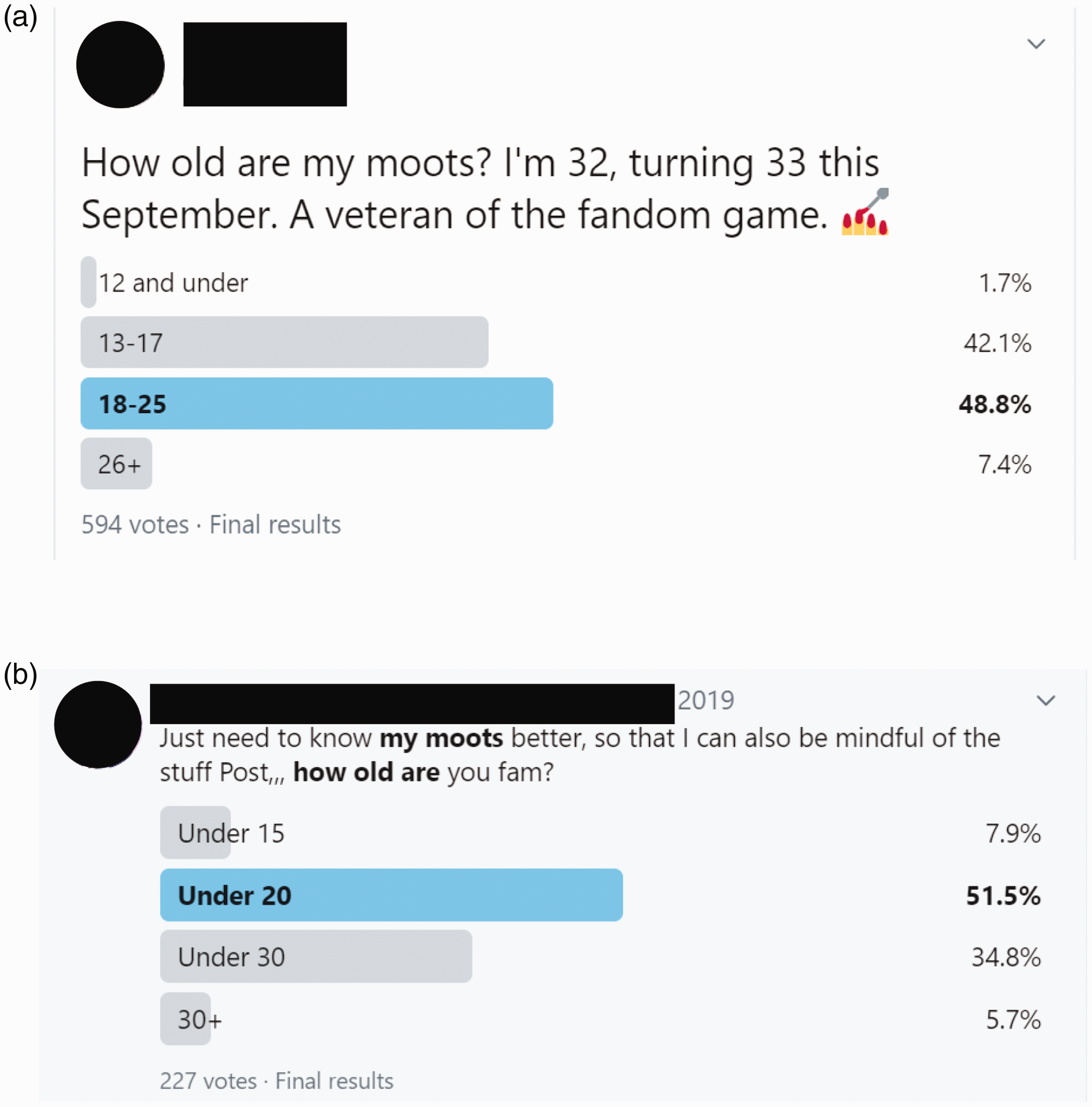
Answered polls on Stan Twitter members’ ages.
Fandom activities, when consolidated on and around the famous online platform Twitter, form a community termed “Stan Twitter”. Stan Twitter is defined as a community of passionate fans on Twitter (Bellos, 2018), a judgment free zone where people can gather and talk about their favorite shows, music, and books (Tony, 2017), and a place where various users from all over the world gather to hype their favorite celebrities (Krishna, 2018). Within K-Pop fandom, there are different factions of fans based on the idol or groups followed. For instance, the fans of the boygroup Monsta X are called Monbebe, a title given to them by the official artists.
The K-Pop phenomenon has recently experienced a massive growth, expanding to engage a broad audience, including the US, UK, Turkey, Egypt, Asia, and Southeast Asia (Choi et al., 2014). Consequently, K-Pop fandom includes members belonging to diverse countries and continents. In fact, K-Pop fandom has been a major contributor to Twitter’s growing popularity as a social media platform (Park, 2019). This fandom has also seen a rapid growth in research, such as investigating K-Pop’s growing popularity (Choi et al., 2014), exploring K-Pop as a cultural phenomenon (Meza and Park, 2015), hashtagging in the K-Pop community (Kim et al., 2014), and exploring how K-Pop has gained a global audience and has led to cultural diffusion and popularization of Korean culture in the global market (Xu et al., 2017). Owing to its rise in popularity, the topic of K-Pop and K-Pop fandom, has become an area of interest for current researchers. K-Pop fandom, when based on Twitter, is called the K-Pop Stan Twitter community, as previously mentioned. This community makes use of memes for communicative and expressive purposes, which is a major aspect of this study.
Memetic discourse
Memes (i.e. internet memes) are figurative expressions that can be presented in the form of a text, image, video, or a combination of all three. Language memes can be replicated and transmitted in two ways: the same content being transmitted through different patterns or a set pattern being filled in with different content (He, 2008). These two ways are also termed “mimicry” and “remixing”, respectively (Shifman, 2013: 365). In these ways, memes contribute towards language development since they are replicated and transmitted through language (He, 2008). Memetic discourse can be formulaic sequences processed by the brain as a whole rather than as individual words (Sun, 2016). Formulaic sequences are strings of lexical items that have long-time existence, community-wide use, and no specific rules that govern their making or interpretation (Nattinger and DeCarrio, 1992). These sequences are internalized as a whole rather than as individual words (Sun, 2016). In Stan Twitter, people with limited knowledge of the English language encounter memetic discourse. This input of memetic discourse (discourse that is figurative in nature and cannot be understood by understanding literal meanings of individual words) can be termed as ‘comprehensible input’ (Krashen, 1981), where input is one level above the learner’s current level. When faced with this input, the non-native English language speakers are forced to both understand and use this discourse themselves. Inevitably, this process involves some level of language learning and comprehension on their part. This study explores these language learning practices of the participants of the community under consideration.
Schematic learning and memetic discourse
The phenomenon of a non-native English speaker with limited proficiency being able to understand memetic discourse in English is explored in this study. The learning process is unconscious and unintentional, as most members join the community due to their shared interest and not primarily for the purpose of learning English. This study argues that members understand the content through schematic learning. In schematic learning, the learner unconsciously internalizes patterns and organizational structures of conversations upon repeated encounters (Rumelhart, 1980). A schema is defined as a structure or pattern in the learner’s mind that aids in making predictions based on a general structure of a body of information (Rumelhart, 1980; Zhang, 2010). Information is theorized to be stored in the form of units or patterns and, based on these internalized patterns, one can predict future information units in a particular context (Bartlett, 1932; Rumelhart, 1980). Repetition is a key factor, as repeated encounters with certain patterns and sequences are internalized faster (Zhang, 2010). New information, upon entering the learner’s system, interact and modify schematic patterns and, at times, form new schematic structures in the mind (Rumelhart, 1980; Zhang, 2010).
The idea of schema theory has been found to be effective for reading comprehension (David et al., 2015; Li, 2006; Zhang, 2010) and listening comprehension (Gilakjani and Ahmadi, 2011). Being a psychological theory by origin, it has been applied to the study of behavioral patterns as well (Carmon et al., 2010). These studies see schematic patterns in the offline world, and are mostly guided or indicated by visual cues, such as visual cues to guide listening and reading, and gestures and postures in the study of behavioral patterns. Self-instruction is a form of schematic learning in which learners control and design the conditions to facilitate their own learning (Martin, 1984). Self-instruction in fact works through the creation and modification of schematic patterns (Martin, 1984).
As discussed, social media platforms use memetic discourse or meme content frequently, and an encounter with this discourse in the online world is inevitable and unavoidable (Shifman, 2013). An example of this is shown in Figure 2, wherein the content of the tweet is largely memetic discourse, and its intended meaning cannot be understood through the literal meaning. Parts (a) and (b) are from Monsta X Stan Twitter – the K-Pop Stan Twitter community dedicated to the boygroup named Monsta X, whereas (c) is an example from a general Stan Twitter account. As evident, the meaning intended is not literal – Monsta X member Wonho did not save the ‘fish turtles and the oceaan’, Kihyun did not eat CDs and is not a CD, and a K-Pop song was definitely not the national anthem of the tweeter’s country (or any country in general). Rather, the tweets mean to convey the depth of the admiration and passion the fans carry in their hearts for their idols.
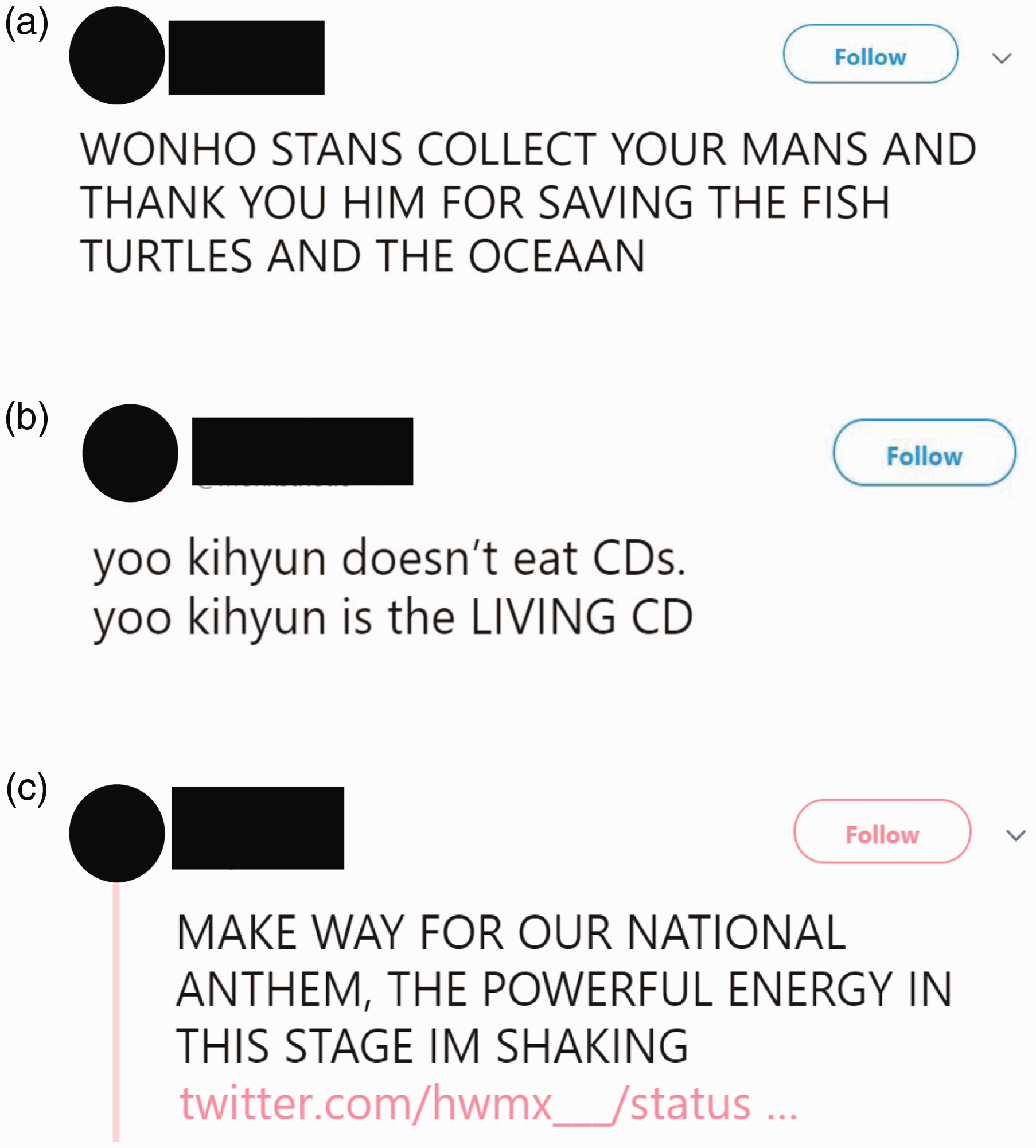
Memetic Discourse on Monsta X Stan Twitter.
Stan Twitter and the different fandom factions within Stan Twitter attract people with the promise of an interactive and lively gathering (Highfield et al., 2013). In addition, one of the most sought-after communities by a fan is a place where they can talk freely about their likes and dislikes to others having similar interests (de Kloet and van Zoonen, 2007). They will, therefore, find it unavoidable that they start learning to communicate using the meme discourse, predominantly used on social media platforms (Shifman, 2013). Since there is no formal way of learning memetic discourse, their learning will consist mainly of self-instruction. In this study, we measure the participants’ learning by looking at their contribution to the discussions and through their perception as they answer questions related to their language learning experiences during the interviews.
Methodology
Human knowledge is socially constructed through life experiences (Crotty, 2003; Guba and Lincoln, 2000). The study is guided by the interpretivist paradigm and its belief in a socially constructed reality (Check and Schutt, 2012). The study explores research participants’ experiences within the fandom community using qualitative methods. Qualitative research allows the researcher to collect in-depth data in a natural setting, focusing on the participants’ perspectives (Lincoln and Guba, 1985; Marshall and Rossman, 2011). Since the learning processes happening in the community were mostly covert – the real reason for the gathering of the people being their shared admiration for the idols they follow – direct observation of the learning process was difficult. As such, the only way to understand the community was through participation in the community. Therefore, the qualitative method was chosen for the study, as it allowed us to take into consideration the descriptive answers given by the research participants.
Study participants
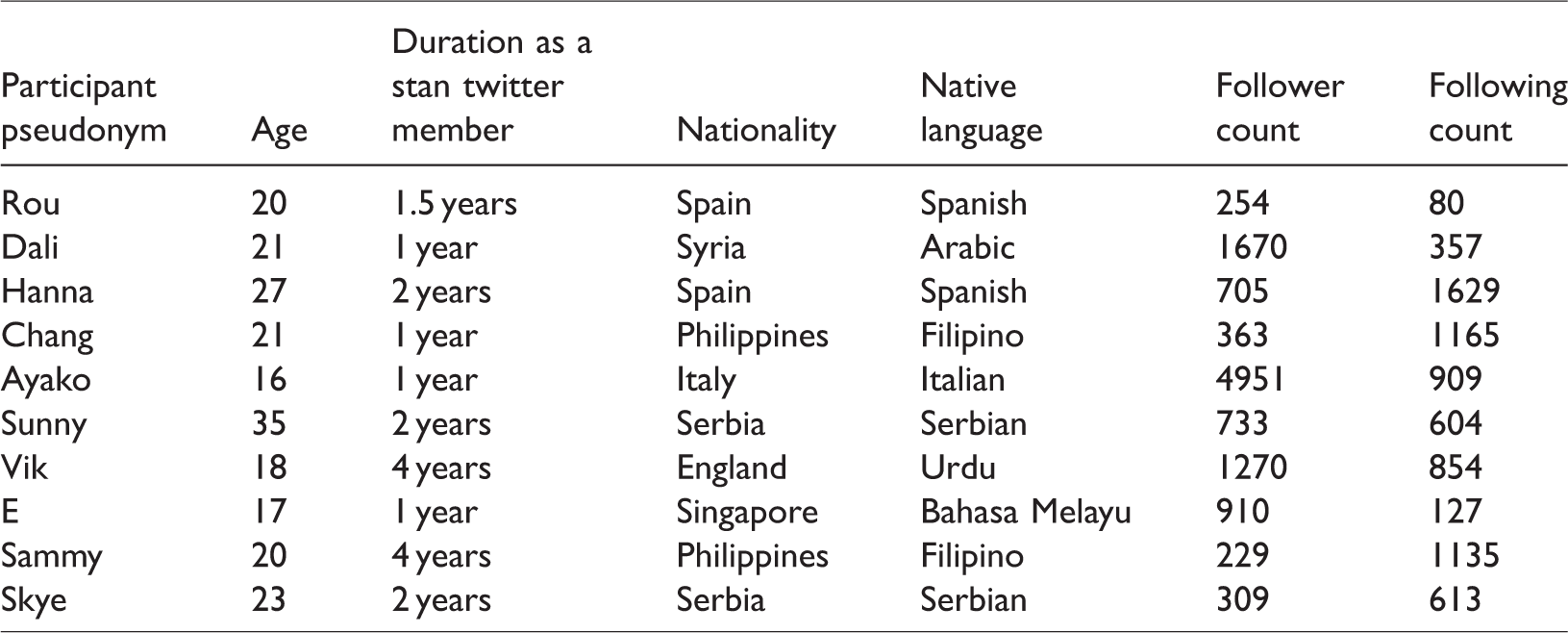
The community chosen as the population for the study was the K-Pop Stan Twitter community, the boygroup Monsta X. This group was chosen due to its recent rise in international acclaim since they are slowly building up their international fanbase (Deen, 2018; Herman, 2018; Hodoyan-Gastelum, 2018; Park, 2019). The sample was collected through convenience sampling by selecting those participants whom the author was already in contact with, as a member of K-Pop Stan Twitter herself. The researcher first shortlisted active Stan Twitter members by browsing through the replies under the ten most recent tweets posted by the official Monsta X account. The thirty shortlisted users were then asked to fill out a Google form, on which they had to provide some basic demographic details such as their name or a pseudonym, age, nationality, and native language. Moreover, they were made aware of the study and asked for their participation through a written online interview. Although all thirty users were eligible, some of them showed hesitance in sharing their experiences and letting their twitter feed be used in the research, while some had time constraints due to work and other responsibilities. The study, thus, had ten willing research participants. Each of these participants opted to use a pseudonym for their representation in this study, and the details of their demographic data along with their chosen names are given in Table 1.
Particulars of the research participants.
Data collection
The research tools employed in this study were participant observations and interviews. Participant observers are also a part of the community, which helps the researcher become aware of some of the key issues or trends within the community (Rubin and Rubin, 2012). It thus sensitizes the researcher towards the contents of the responses they will receive in the interview. The researcher usually plays a very low-key role to reduce the possibility of the data being affected by his/her presence (Rubin and Rubin, 2012). The first author was the participant observer for five months (i.e. August 2018–December 2018). Although she was a member of the fandom community for quite some time, the data for the study were collected during that time. In the first stage of sample collection, the thirty active users were contacted and informed of the participant observer’s identity as the researcher. The first author observed the discussion in the group, focusing on the production and interpretation of the memes by members in the comments. She recorded the activities in the field notes. The participant observer took notes on all the activity happening in the group and wrote daily field notes to record the activity (Nespor, 2006). She also noted down the group dynamics and relationships among the group members. These notes allowed us to keep track of events that happened during the data collection process.
Interviews are ideal research tools for researchers interested in other people’s stories, (Siedman, 2006) and thus, serve as a useful tool for this study. We used a semi-structured interview that contained limited pre-planned questions. The researcher made follow-up questions based on the responses she received from the interviewees (Rubin and Rubin, 2012). The respondents had a limited grasp of the English language and there was the possibility that there would be need for further clarifications and additional questions. Semi-structured interviews allowed a margin for the modification of questions during the interview. The interviews were conducted online, as the users lived faraway, making physical interviews impossible. The time span of an interview was about two to three (i.e. 2–3) hours, due to the asynchronous nature of online communication. The interviewees were given a choice to either complete the interview in one session or to break it into two or three sessions. Except one participant, all other participants were interviewed in one session.
Data analysis
The data were manually coded, which allowed the researcher to make sense of large amounts of raw data (Basit, 2003), and to identify patterns within the data (Charmaz, 2014). A code is most often a word or a phrase used to label a portion of the qualitative data (Saldaña, 2013), generated based on the activity happening within that particular portion of the data. We used a descriptive coding technique, wherein a data strand is labelled based on the content in that strand (Saldaña, 2013). In other words, data is coded (can be at word, clause, phrase, sentence, or line level) on the basis of the content within the particular strand separated (e.g. if data strands are separated at sentence level, as was done in the current study, one sentence of the data would make one data strand). This resulted in the generation of a list of primary codes, which were then refined and revised to increase accuracy (Figure 3). Then, the most frequently occurring codes were shortlisted (Charmaz, 2014), and similar codes were grouped under one category (Figure 4). The various emergent categories were then studied to identify thematic relationships between them (Figure 5), and the resultant themes are presented.
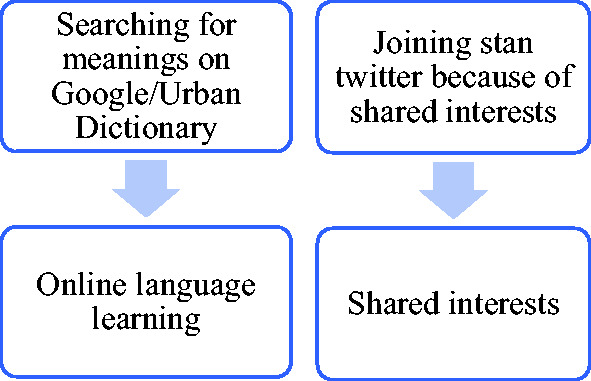
Revision of primary codes in secondary coding stage.
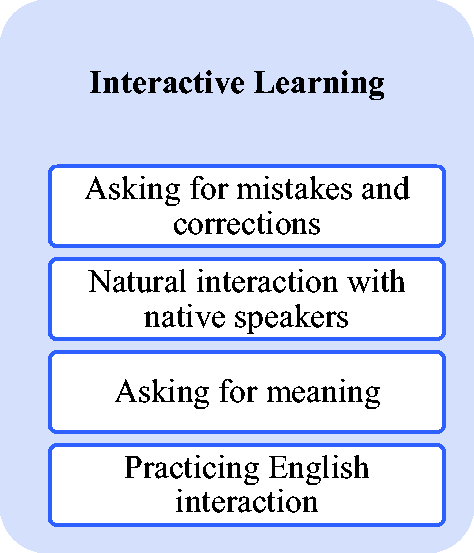
Grouping of similar codes under one category.
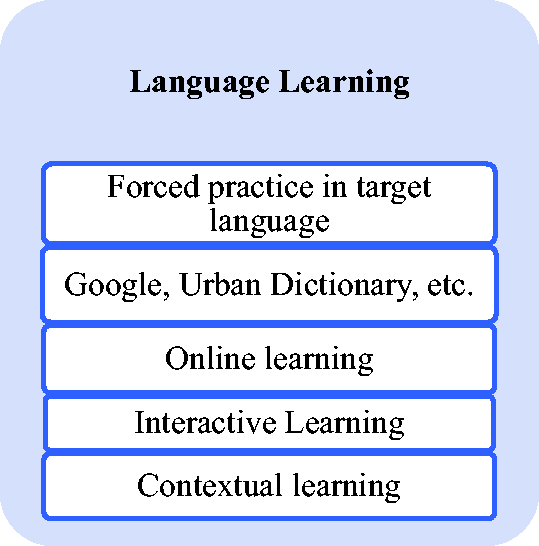
Similar categories grouped under one theme.
Results
Language learning
The Stan Twitter community is directed towards the expression of love and admiration towards the members’ favorite idols. This community unites people from all over the world, who are drawn to each other due to their shared interest. It has been observed that the members learn to communicate using the English language, even though English is not the native language for the majority of the fandom members (Fieldnotes). Additionally, they learn to communicate using the popular online language of meme discourse. This learning is largely a by-product of the community activities, as the community’s existence is not directed towards that particular learning process. Therefore, the increase in knowledge and skills is a by-product of their engagement within the community.
Learning through Stan Twitter
Stan Twitter communication is mostly carried out in English, where they use it as a lingua franca (ELF). The respondents of the study responded positively to the question of Stan Twitter as a language learning platform. Sammy stressed on the role of Stan Twitter as a place where she can practice her English language skills in a natural setting without fear of judgment. “In real life, people judge you for your grammar mistakes”, says Sammy. “It’s sad, really, because you become too scared to even try [speaking English]” (Interview, 19/01/2019). Stan Twitter allows her to keep track of her favorites and interact with people without fearing judgment on her grammatical mistakes. Vik shares a different perspective on the role of Stan Twitter in helping people learn English. In order to interact with other members of the community, you “have no choice but to speak in English” (Interview, 18/01/2019). The Output hypothesis (Swain, 1985) postulates that language learners need to be forced to use the target language to improve their language skills (Swain, 1985). This hypothesis considers produced language as a learning process (Izumi, 2002; Swain, 1985). The situation described by Vik is a virtual manifestation of the output hypothesis, where non-native speakers slowly improve their linguistic abilities through the use of English.
Of course, as briefly visited in the preceding discussion, the online communication defies the rules of English and is a language of its own. As such, there is danger of negative impact on the users’ language proficiency. The area of negative effects of online language on the user has been investigated in various studies (Averianova, 2012; Nobata et al., 2016). In addition, the presence, impact, and implications of offensive language on social media have also been explored (Chen et al., 2012; Nobata et al., 2016; Pitsilis et al., Ramampiaro and Langseth, 2018). The current study explores the Stan Twitter space as a possible learning platform. Through this interaction, the outcome will indeed have both a positive and a negative impact on the language ability of the members.
An additional point to be noted here is that using English is required for all community activities (Fieldnotes). The kind of activities the fandom members engage in are birthday events for each Monsta X member, hashtag trends 2 for big and/or small accomplishments (trending a certain phrase on Twitter by using it in maximum number of tweets), streaming events (increasing the number of views and/or listens on platforms like YouTube and the Korean album streaming platform Melon), and various others activities (Vik, Sunny, Dali, Chang, Interviews; Fieldnotes). These events accomplish the community’s goal to support Monsta X and promote them, so that they can get more recognition. These events and activities create stronger ties between community members as well (Chang, Interview). These bonds lead to more frequent interaction between users, which, in turn, leads to an improvement in language skills as they communicate in English.
Learning through interaction
Another common string noticed in the interviews is the concept of learning through interaction. Respondents such as Dali, Rou, Hanna, and Chang emphasized interaction useful for learning new vocabulary, new expressions, and new meanings on Stan Twitter. Dali and Rou especially stressed the role of “ask[ing] someone about the meaning” (Rou, Interview, 26/10/2018), when confused about what a “word means or when an expression is unfamiliar” (Dali, Interview, 13/12/2018). Chang, herself, expressed reluctance to ask, preferring to wait “until someone else ask about the meaning”, but if no one does, “I ask [the tweet poster] myself” (Interview, 05/01/2019). She is shy about replying to other people’s tweets.
The atmosphere of the community is generally very inviting and friendly, and if a member asks for elaboration, clarification, or any other kind of help, the member will not be ignored and someone will definitely answer (Fieldnotes, 10/01/2019). Of course, any point of collision between different people is bound to happen and create conflict, and the same is true for the Stan Twitter (Figure 6). However, “There are more nice people than [there are] bad people here” (Sammy, Interview, 19/01/2019), and this is something all the participants highlighted when asked about possible conflicts or negative interactions with the community members. Moreover, this factor was also observed during observations (Figure 7), wherein several members banded together to make a Stan Twitter feel better after a negative interaction (7a). Members also stated that despite the ‘drama’ on this platform, the positives outweigh the negatives (7 b).
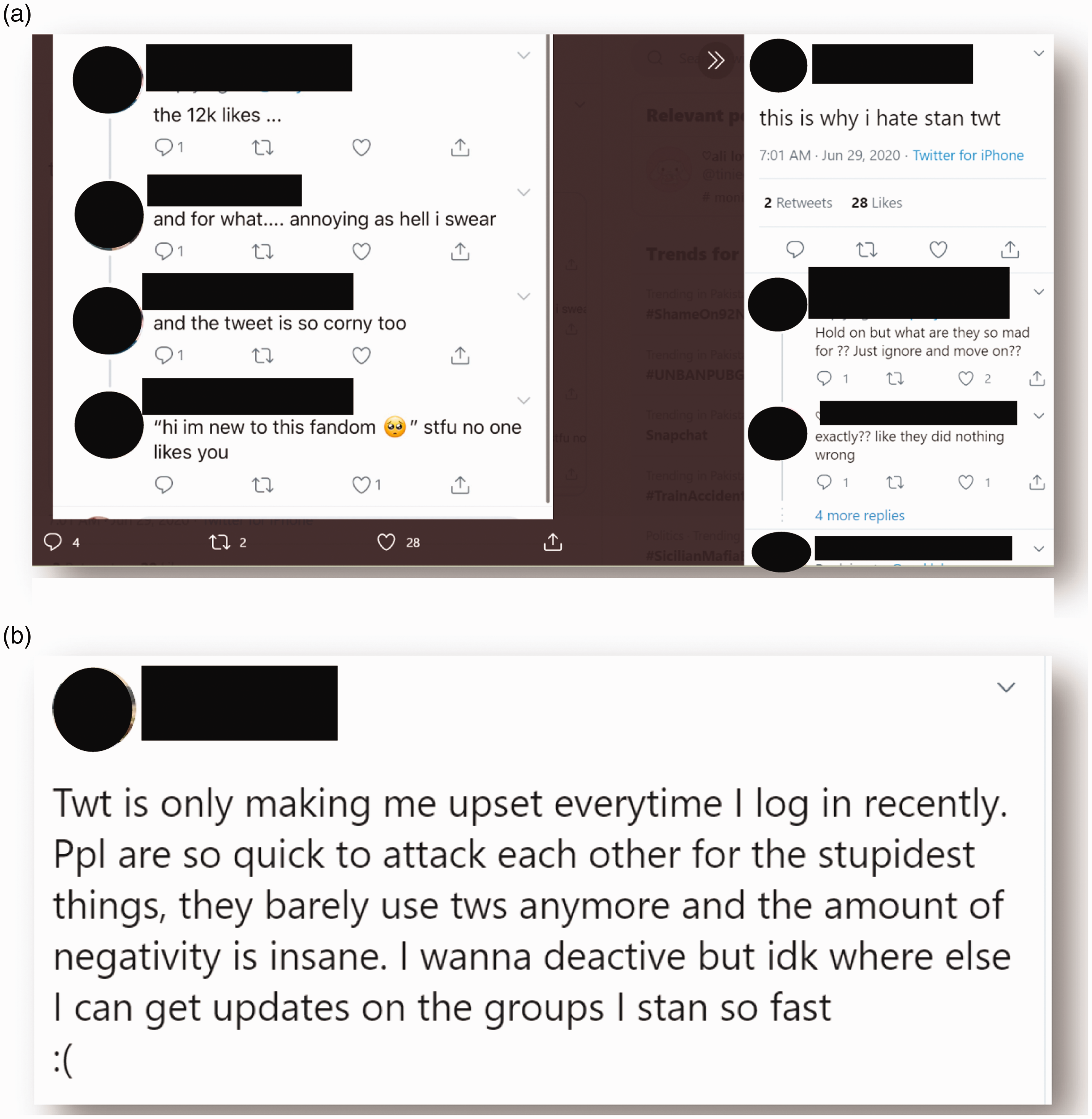
Examples of negative interactions on Stan Twitter.
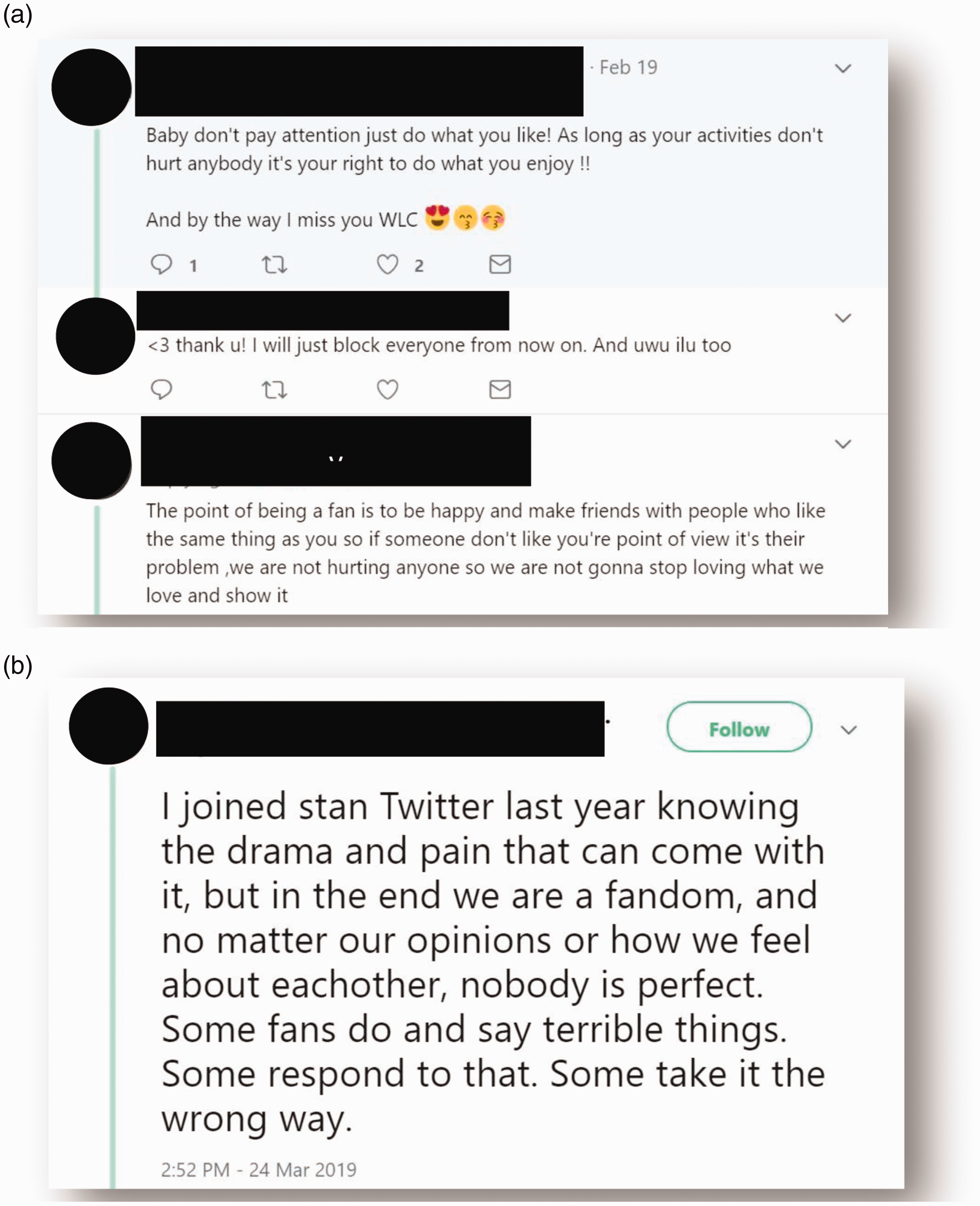
Positive interactions on Stan Twitter.
The platform of Stan Twitter becomes a sort of learning space where people come across unfamiliar use of words, expressions, and phrases. “The one who posts such words/expressions is always kind enough to reply” (Chang, Interview, 05/01/2019), “but in the few rare instances they don’t, someone else who has seen people asking for meaning takes the time to answer” (Dali, Interview, 13/12/2019). Therefore, Stan Twitter provides natural English interaction for non-native speakers of the English language, providing them opportunities to learn and improve their language while they follow and stay updated on their favorite artists.
This interaction is also a requirement for the fandom events. To execute these events successfully, effective communication and collaboration across the fandom is required (Sunny, Interview). This is because on social media platforms, one’s value is measured not on the basis of their social, political or economic status in the physical world, but by their contribution (Levina and Arriaga, 2014; Malik and Haidar, 2020). Users are required to tailor their contributions according to an imagined audience (Ståhl and Kaihovirta, 2019) and share content that they feel would be accepted and appreciated within the circle. The implication is that Stan Twitter members would be known for the content and the way they contribute towards the goal of the community. Consequently, the content must be in a language that can be understood by the majority of fandom members. Hence, the use of English becomes inevitable.
Schematic learning
As has been discussed, the members learn from interaction when asking others about the meanings and communicating with proficient speakers. However, these techniques remain secondary, since only active members can learn through these techniques. Everyone is not confident or outspoken enough to ask about things or to start and/or maintain conversations, yet they learn new things from Stan Twitter (Hanna, Rou, Interview) as evident: They [Stan Twitter] come up with new words every day… [I get] surprised that they do react to something with this WORD. Like if I know what it means but never thought of using it there… although I’m getting used to it now… It gives a positive effect for learning English in general because you'll eventually have to deal with the others here who are better than you. (Dali, Interview, 13/12/2018)
In schematic learning, “the idea of comprehension of the whole text” is “based on the needs matching with one’s knowledge” (Huang, 2009: 139). For people with low English language proficiency, such as E, Rou, Chang, and Dali, this method works the best, as they can learn by seeing “more and more example of Stan Twitter meme used” (Rou, Interview, 26/10/2018). When they repeatedly encounter instances of figurative discourse, they look at the context, and they “know that it [i.e. the memetic expression] is used when the messages before or after say certain thing” (Dali, Interview, 13/12/2018); that is, they not only memorize the expression itself, but the sequence of patterns in which that expression is used. Moreover, they do not memorize by repeatedly saying the patterns out loud, as is typically done when one wishes to memorize something; rather, their mind picks up on those patterns and internalizes them, so that “the next time we see a similar context, we know at once what meme to use there without thinking” (Vik, Interview, 18/01/2019). This implies that there is no need for them to remember; rather, they look at the context and instantly know what expression is appropriate.
Therefore, it can be deduced that instead of rote learning, non-native English language learners find it more helpful to be given a set of examples where the unfamiliar words or expressions are being used. Upon encountering such instances, they look at the context to understand the sequence or pattern of usage and internalize those patterns. Upon seeing similar patterns again, their mind automatically provides them the internalized pattern and they just ‘know’ what expression or word would be appropriate there. This kind of learning is called ‘schematic learning’, and the patterns that are internalized during the learning process are termed ‘schemas’ (Rumelhart, 1980). Once internalized, these patterns help learners make decisions about what is appropriate or not in a certain context.
For instance, the expression ‘my wig’ is used on Stan Twitter as a reply to any picture, post or video that took you off guard or caught you by surprise and impressed you (Fieldnotes, 12/11/2018). Therefore, it is often seen in replies to an idol’s official posts about their new music videos, their new album announcements, or even their pictures. A person learning this expression would look at the patterns of its usage; such as, ‘it is used when the idol posts a picture’, ‘it is used to express admiration’ or ‘it is used when you really like something’. This arrangement would then be internalized by them. The next time the idol posts a picture, they would instantly know that one appropriate response to the post is replying with the words ‘my wig’. Lastly, they might get validation for their memetic discourse use by other Stan Twitter members either liking or retweeting their reply. This would help boost their confidence in their Stan Twitter language use and they would feel more comfortable next time they use a memetic expression.
It has been noted that learning a second language in the form of formulaic sequences enhances the learner’s oral proficiency in the target language (Boers et al., 2006). Although the existing scholarship also points towards the effects of formulaic sequences being dependent on the morphological similarities between the first language and target language, the prevalent notion of positive impact of learning through formulaic sequences on the learners’ oral proficiency still stands strong (Stengers et al., 2011). Moreover, formulaic sequences have a positive impact on the acquisition of grammar and vocabulary (Ellis, 2012), fluent expression in target language (Wood, 2009), and reduction of pauses due to hesitation or insecurity over one’s language skills in the target language (Wood, 2006). As such, it can be deduced that learning through formulaic sequences has a positive effect on the learner’s second language learning process.
One last thing that should be mentioned here is that memetic expressions and figurative discourse are also heavily embedded in the Spanish language. Two of the interview respondents were Spanish. They highlighted the fact that since Spanish “has lots of meme expressions” (Rou, Interview, 26/10/2018), it was “easy to understand memes in English” (Hanna, Interview, 29/12/2018). Of course, they had difficulties at first, but they were quick in picking up the meaning of memetic expressions because their native language contains a lot of similar expressions.
This is possible because Rou and Hanna have internalized the meme patterns of their language. Meme expressions are built the same way no matter what language it is: there is a witty reply, usually a reference to a popular movie or photo or TV show, and over time it gets modified and molded to suit different contexts depending on who uses it (Knobel and Lankshear, 2007). This basic pattern of memetic discourse has been internalized by Rou and Hanna in Spanish. When they encounter English memetic expressions, it only becomes a matter of schematic patterns; they have the Spanish meme schematic structures already embedded in their brains, and upon encountering English memes, they start to internalize those schematic patterns as well. This process is expedited by the already existing Spanish memetic expression patterns in their minds, as the patterns are similar and help to reinforce each other. As has been theorized, when new schematic patterns are encountered, they either modify existing schemas or they aid in the creation of new schemas (Rumelhart, 1980). The process being discussed is a case of merging schemas, where the new input (English memetic discourse) is incorporated into the existing data (Spanish memetic discourse) and modifies it. Therefore, these learners can learn and adapt to the Stan Twitter language at a much faster pace than others.
Discussions and conclusion
The study has revealed that learning takes place within the K-Pop Stan Twitter community. The community members have stated that the platform improve their English language skills. They are learning online through search engines, encounters with memetic discourse on Stan Twitter, interaction, and schematic internalization of patterns and sequences. The learning processes are peripheral to the explicit goals of the community. The members work together towards the goal of supporting, promoting, and expressing their love for the artists they follow. Language learning takes place in the backdrop of these goals.
As has been discussed, the K-Pop Stan Twitter community has members with diverse linguistic backgrounds (Choi et al., 2014), and the most used language for communication on this platform is English (Aisyah, 2017). Online platforms make using the English language inevitable (Lyrigkou, 2018). Communication takes place largely through the use, modification, and forwarding of figurative expressions, which pose a problem for newcomers who are not proficient in the English language. However, with the passage of time, the members of Stan Twitter start interpreting and using the figurative discourse. They do not actively try to learn the meme discourse, but seeing it again and again helps them gain an idea of what expression goes where. Therefore, they internalize certain patterns and sequences of bodies of information. The idea of memetic discourse as formulaic sequences also supports this idea, as formulaic sequences are internalized as a whole and not as individual words (Wood, 2006, 2009). As such, it can be deduced that the members of Stan Twitter are internalizing the meme expressions in the form of chunks rather than as individual words.
Schematic learning (Rumelhart, 1980) is a promising and efficient way of learning (Zhang, 2010). It works on the principle of internalization of patterns as mental structures (Bartlett, 1932; Rumelhart, 1980). These structures help individuals make predictions about what comes next and what is appropriate in each context (Zhang, 2010). The descriptions given by the interviewees about how they learn to understand and use figurative discourse falls in line with the tenets of schemata theory (Rumelhart, 1980). Although the schematic patterns, till now, have mostly been studied in the physical world, the study has revealed that schematic patterns exist in the virtual world as well. This phenomenon is evident in the case of memetic discourse – a popular genre due to social media – where learning takes place by internalizing the concept instead of dividing it into parts. It can be argued that due to excessive multimodal communication, the information is received in patterns instead of parts. This can help in improving English instruction in developing countries where students have limited access to the English language, especially those who belong to low socio-economic backgrounds (Haidar, 2019b; Haidar and Fang, 2019).
The figurative nature of memetic discourse can aid language learning in ways that differ from formal learning environments. Formal learning environments carry the danger of getting monotonous and uninteresting, as the atmosphere differs greatly from how they would imagine their learning to go (Yim, 2015). As such, they pursue learning platforms outside school, and these platforms are efficient in enhancing their language learning abilities as well as the speed at which they learn new things (Yim, 2015). As three of the study participants were school-going, this factor can be considered as an operative aspect in their attraction towards the Stan Twitter platform as a favorable language learning environment. Although they do not express strong dislike towards their schools, they emphasize the unattractive nature of their schools as opposed to the Stan Twitter platform on which they can learn through interaction and fandom activities with like-minded peers. In fact, two of the three school-going participants indicated that the process of understanding and using memetic discourse on Stan Twitter shows the arbitrariness of meaning and its dependence on context, as well as a deeper comprehension of figurative discourse in the English language. Both factors have, then, boosted up their academic performance as well (Vik, Ayako, E, Interviews).
The interviewees stated that figurative discourse helped them to explore English language in ways that they had not imagined. These expressions helped them discover a dimension to meaning-making that they had not considered; that of meaning beyond the literal words. Previously, they had been focused on learning dictionary meanings of words and adding those meanings to their reservoir of slowly increasing vocabulary. Figurative discourse, however, helped them see both meaning beyond a literal definition and meaning emergent from a single expression in different contexts. Furthermore, figurative discourse improved their academic scores, allowing them to progress in their English language classes. As such, they learned the arbitrary nature of language, and its fickle nature in terms of meaning-making. Encountering memetic discourse on Stan Twitter, internalizing the patterns of memetic discourse, and deciphering meaning based on those patterns made this learning possible. Therefore, the K-Pop Stan Twitter community carries the potential to be a learning aid for non-native English language speakers.
We argue that the learning of memetic discourse can stand as a positive step in second language learning of non-native English speakers. It has been discussed that memes can be considered as formulaic sequences (Sun, 2016) that enhance second language learning through formulaic sequences. It is a logical deduction that learning memetic discourse would also have a positive impact on a non-native English speaker’s language learning. It can be argued, thus, that language learning on Stan Twitter can be done through the process of schematic understanding. Moreover, since the learning is unconscious and a by-product of the community activities, it seems more appropriate to classify it as schematic learning.
In conclusion, this study has explored the language-learning experience of the non-native English-speaking fandom members. It has been revealed that members encountering the figurative expressions on Stan Twitter internalize not the meanings of the expressions, but the patterns of their use (Interviews). Through these patterns, they learn how to interpret the meanings of those figurative expressions, and this process improves their English language abilities. This process of learning is called schematic learning (Rumelhart, 1980), and it is one of the most efficient and naturally occurring learning processes (Li, 2006; Zhang, 2010). However, the existence of schemas has usually been associated with the physical world. This study extends the reach of the theory of schematic learning towards the virtual world and presents one of the ways to help non-native English language learners improve their language proficiency.
Footnotes
Declaration of conflicting interests
The author(s) declared no potential conflicts of interest with respect to the research, authorship, and/or publication of this article.
Funding
The author(s) received no financial support for the research, authorship, and/or publication of this article.
