




Abstract
Public universities in Kenya are, today, turning to the use of e-learning in an attempt to cope with the rapidly increasing demand for university education. This research was conducted between February 2012 and February 2014 to determine the challenges affecting the adoption of e-learning in these institutions of higher learning. Data were collected using questionnaires administered to 420 lecturers and 210 students, and analysed through the use of simple descriptive statistics. Lecturers ranked heavy workloads the most serious challenge affecting the adoption of e-learning, followed by: insufficient Internet connectivity, denial of copyrights for their developed e-learning modules, limited information and communication technology (ICT) skills, lack of incentives, shortage of computers/laptops, inadequate computer laboratories, and insufficient time for online interaction. Students, on the other hand, ranked insufficient Internet connectivity the number-one challenge, followed by: lack of computers/laptops, inadequate computer laboratories, limited ICT skills, and insufficient time for online interaction. The paper concludes that as a result of these challenges, the adoption of e-learning is slow and still at its infancy stage in public universities in Kenya. It recommends that universities should invest heavily in the improvement of e-learning infrastructure, e-learning content development, capacity building, attitude change, and enhancement of e-learning awareness.
Background to the study
Enrolment in schools and universities.
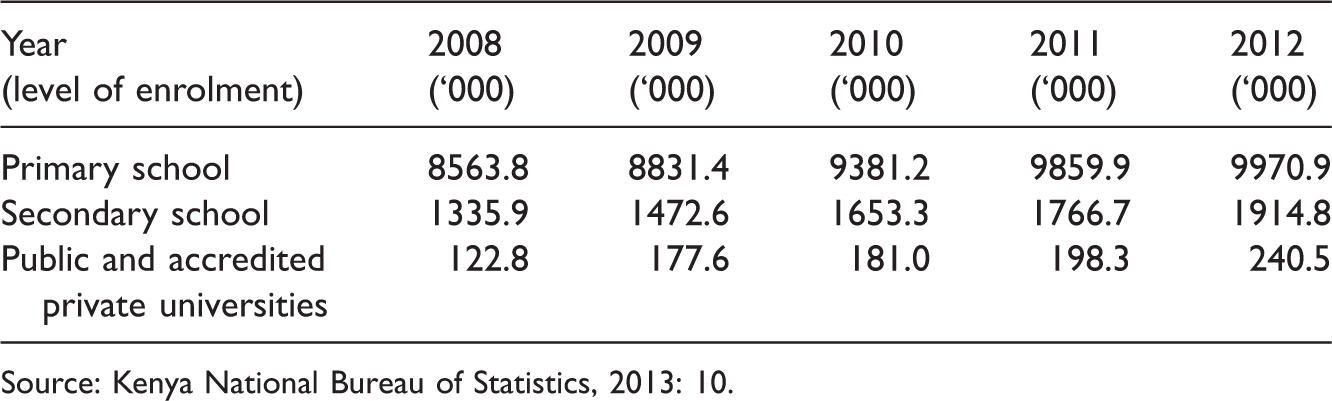
Source: Kenya National Bureau of Statistics, 2013: 10.
Growth in number of candidates.
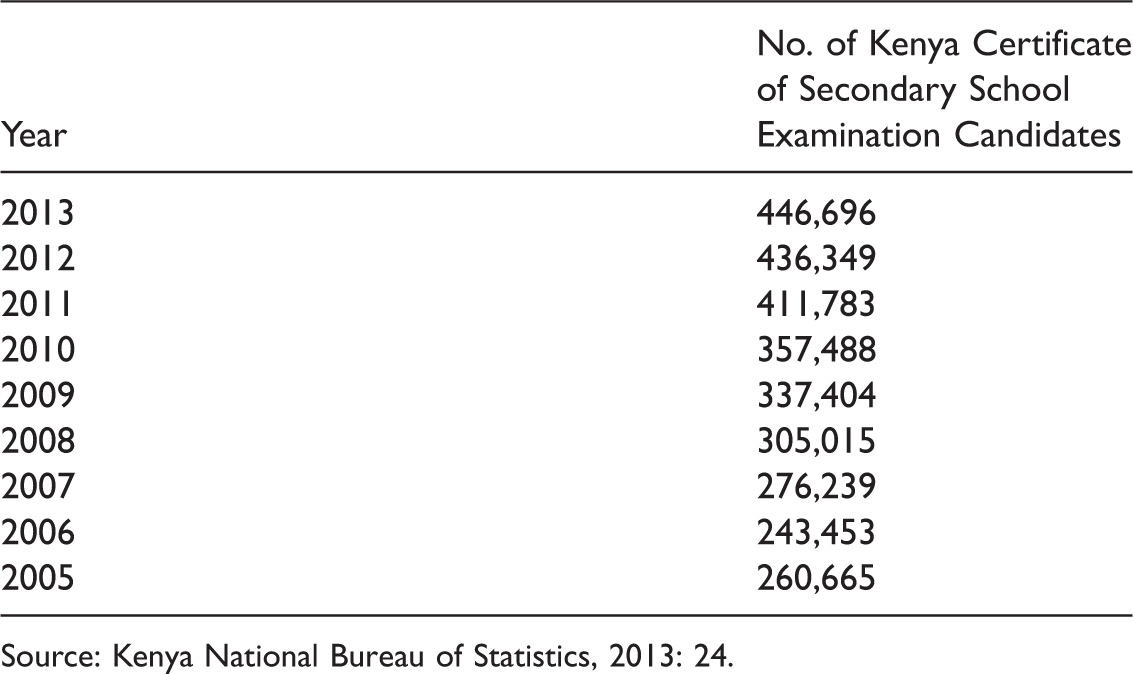
Source: Kenya National Bureau of Statistics, 2013: 24.
The second factor responsible for the high demand in university education is the sharp rise in the number of working class people who are joining universities, a fact attributable to three reasons: 1) a growing perception that university education guarantees lifelong and secure employment; 2) the changing nature of the job market characterized by high mobility, which is forcing people to seek further education and training; and 3) the desire to advance in current employment in order to create prospects for future careers.
Third, as Gudo et al. (2011) observe, it is much easier to join a university today than was the case before, when the only way was through a convincing pass in Kenya Advanced Certificate of Education (KACE) examination. During those days, securing a place in university was very competitive since there were only few universities in the country and many people could not afford the cost of university education abroad. Today, the minimum entry grade has been relaxed to a C + and, consequently, the number of students qualifying to join these institutions of higher learning has more than quadrupled (Gudo et al., 2011).
Unfortunately, Kenya’s 52 public, private, and constituent university college institutions (ICEF Monitor, 2013) are unable to cope with the growing demand. For example, the number of first-year students admitted to public universities in 2013 rose by 26% over the previous year. This means that a large number of students, about 70% who attain the minimum entry grade of C+, miss places in the public universities (Boit and Kipkoech, 2012).
Universities and the Kenya Government have, however, put in place various mechanisms in order to bridge the gap between the demand for and supply of university education. Some of these measures are:
Delinking admission from accommodation: For a long time, admission in public universities was pegged on availability of accommodation. However, today this requirement has been relaxed. Students are expected to make their own accommodation arrangements if the same is not available in the university where they are admitted. Establishment of module II programmes: These programmes, which started in the 1990s, are open to self-sponsored students. Any student who is qualified to join the university but fails to secure admission through the Kenya Universities and Colleges Central Placement Board (KUCCPB) is free to enter the university as a privately sponsored student. Upgrading of middle-level colleges: Recently, the government upgraded several middle-level tertiary colleges to university colleges and, later, to fully fledged universities. For example, between October 2012 and March 2013, 13 university colleges were granted charters and thereby upgraded to independent universities. National Open University of Kenya (NOUK): The government of Kenya is set to establish the NOUK, which has a likelihood of raising the annual intake to more than 8000 students, creating space for more than 40,000 students who qualify each year but are locked out of existing universities (Nganga, 2010). Information and communication technology (ICT): Today, universities are embracing ICT-based modes of pedagogy; in particular, e-learning, which is gaining popularity largely because of its flexibility. It enables students to study while working and can take place anywhere as long there is Internet connectivity (Hollow and ICWE, 2009).
This paper followed up the case of the adoption of e-learning, which has the potential of enhancing the accessibility of university education in Kenya.
Literature review
The worldwide e-learning industry is estimated to be worth over US$48b, with much of it spent in the developed world where a large number of students are taking courses online (Tavangarian et al., 2004). For example, by 2006, 3.5 million students were participating in online learning at institutions of higher education in the US (Allen and Seaman, 2008). According to the same authors, there was an average annual increase of around 12–14% in enrolment for fully online learning courses between 2004 and 2009 in the post-secondary system of education in the US, compared with an average annual increase of 2% in the overall enrolment during the same period. They claim that almost a quarter of all students in post-secondary education were taking fully online courses in 2008.
While the developed world is increasingly embracing e-learning, the same is not true of Africa. According to Mpofu et al. (2012), the adoption of e-learning in Africa is slow, as evidenced by the low number of African scholars who are familiar with teaching in an online environment. Hollow and ICWE (2009), reporting on a survey of 147 e-learning practitioners from 34 countries in Africa, observed that e-learning was developing at a slow pace due to many challenges that impede its adoption and utilization in the universities. The most notorious challenges included: lack of human capacity, as very few lecturers were trained extensively on how to use e-learning; and financial constraints to meet the cost of bandwidth and other e-learning infrastructure.
Kamba (2009) revealed the slow adoption of e-learning in 18 universities in Nigeria, a problem he attributed to a low level of investment and lack of commitment in developing e-learning applications. Particularly intriguing was the fact that most of the staff and students in the universities used Internet e-learning sites mainly for the sake of finding information related to their research, but not for real online learning. The study also found that some of the universities had web pages that were more often than not used for the advertisement and marketing of the universities but not for e-leaning activities.
Walimbwa (2008) observed that despite e-learning growing rapidly worldwide, East African universities were yet to fully maximize their potential; a problem that was blamed on insufficient resources and an indifferent attitude. Walimbwa’s study focused on the University of Dar es Salaam (Tanzania), Makerere University (Uganda), and the University of Nairobi (Kenya). It revealed a lack of requisite skills and sufficient human capacity for the meaningful implementation of e-learning in these universities. Limited Internet bandwidth and no policy harmonization were also significant factors that hindered the rapid adoption of e-learning in these universities.
Kasse and Balunywa (2013) observed a slow adoption of e-learning in Makerere University Kampala; Makerere University Business School; Kampala International University, and Islamic University in Uganda. They found out that e-learning was used mostly as a means of delivering learning material (80%), and minimally used to conduct discussions (12%) and assessment (2%). Infrastructural technical incompetence and attitudinal challenges (by staff and students) were identified as the major factors limiting the full-scale adoption of e-learning in these institutions.
A study conducted in some universities in Tanzania revealed a slow implementation of e-learning (Sanga et al., 2007). Among the 10 universities studied, only the University of Dar es Salaam had managed to implement platforms such as WebCT and Blackboard, which are e-learning proprietary software. Other universities such as the Sokoine University of Agriculture, Mzumbe University, and the Open University of Tanzania possessed basic ICT infrastructure such as Local Area Network (LAN), Internet, computers, CD, and DVD facilities that formed the basis for the establishment of an e-learning platform; however, the implementation of e-learning was minimal.
Elsewhere, Acosta and Odhiambo (2009) revealed a low rate of acceptance and usage of e-learning by students in the Jomo Kenyatta University of Agriculture and Technology (JKUAT) and the United States International University in Kenya. Findings of their study showed that audio-visual forms of content delivery, which have the potential of enhancing effective-learning, were not being exploited fully in the universities. Instead, lecturers placed too much emphasis on the uploading of reading material on the e-learning platforms.
From the foregoing, it is evident that many African countries have not yet fully embraced e-learning. This paper provides a comprehensive ranked list of challenges impeding the adoption of e-learning in public universities in Kenya.
Objective
The objective of this study was to rank challenges affecting the adoption and utilization of e-learning in public universities in Kenya in order of seriousness.
Methodology
This study used a descriptive survey methodology. It was conducted between February 2012 and February 2014 in the seven public universities which existed in Kenya at that time: the University of Nairobi (UoN), Moi University (MU), Egerton University (EU), Kenyatta University (KU), JKUAT, Maseno University (MAU), and the Masinde Muliro University of Science and Technology (MMUST). Both primary and secondary data were used.
Types and sources of data
Primary sources of data
Primary data were collected using two research tools: questionnaires and in-depth interviews. Two separate structured questionnaires were designed and self-administered to lecturers and students in selected departments in public universities in Kenya. In the questionnaires, students and lecturers were provided with a list of challenges likely to affect the adoption of e-learning. They were required to rank the challenges in order of seriousness. In addition, in-depth interviews were conducted focusing mainly on university managers such as Deputy Vice-Chancellors and Registrars in charge of Academic Affairs, Deans of relevant schools, Directors/Coordinators of open-learning/distance-learning institutes and Officers from the Ministry of Higher Education. Through the interviews, additional insights into the challenges affecting the adoption of e-learning were collected.
Secondary data
Soft and hard copies of documents obtained through the Internet and libraries were analysed to capture the challenges facing e-learning in public universities in Kenya and other parts of the world.
Sampling procedure
This study adopted a multi-stage sampling procedure. Stage one involved the identification and selection of three schools/faculties that offered undergraduate degree programs which were common in all public universities. These included: Bachelor of Science (General), Bachelor of Commerce /Business Administration, and Bachelor of Computer science/ICT.
Stage two involved the selection of departments for inclusion in the study. Purposive sampling was applied in the selection of one department in each of the three identified degree programs in the various universities. Only departments that had more than 10 lecturers were included in the sampling process. Three departments per university were selected, giving a total of 21 departments from the seven universities.
Stage three involved the selection of lecturers and students who were the main respondents of this study. From each department, 10 lecturers were randomly selected. The three departments sampled from each university gave a total of 30 lecturer respondents. In total, 210 lecturers formed the sample size from the seven public universities.
From the student population, a total of 20 students per department were randomly sampled, giving rise to a total of 60 students from three departments per university. This resulted in a total sample of 420 students from the seven public universities.
Data analysis
Collected data were coded and the responses from the questionnaires arranged and grouped according to individual research questions. The data were then entered into the appropriate categories in computer worksheets using the Statistical Package for Social Sciences version 16.0 and Microsoft Excel. Descriptive statistics including means, frequencies, and percentages were used to analyse the data. The results were presented in the form of pie charts, graphs, and tables. Content analysis of the information from the interview schedules was carried out and presented thematically in line with the study objective.
Results and discussion
Challenges affecting adoption of e-learning
Status of e-learning policy.
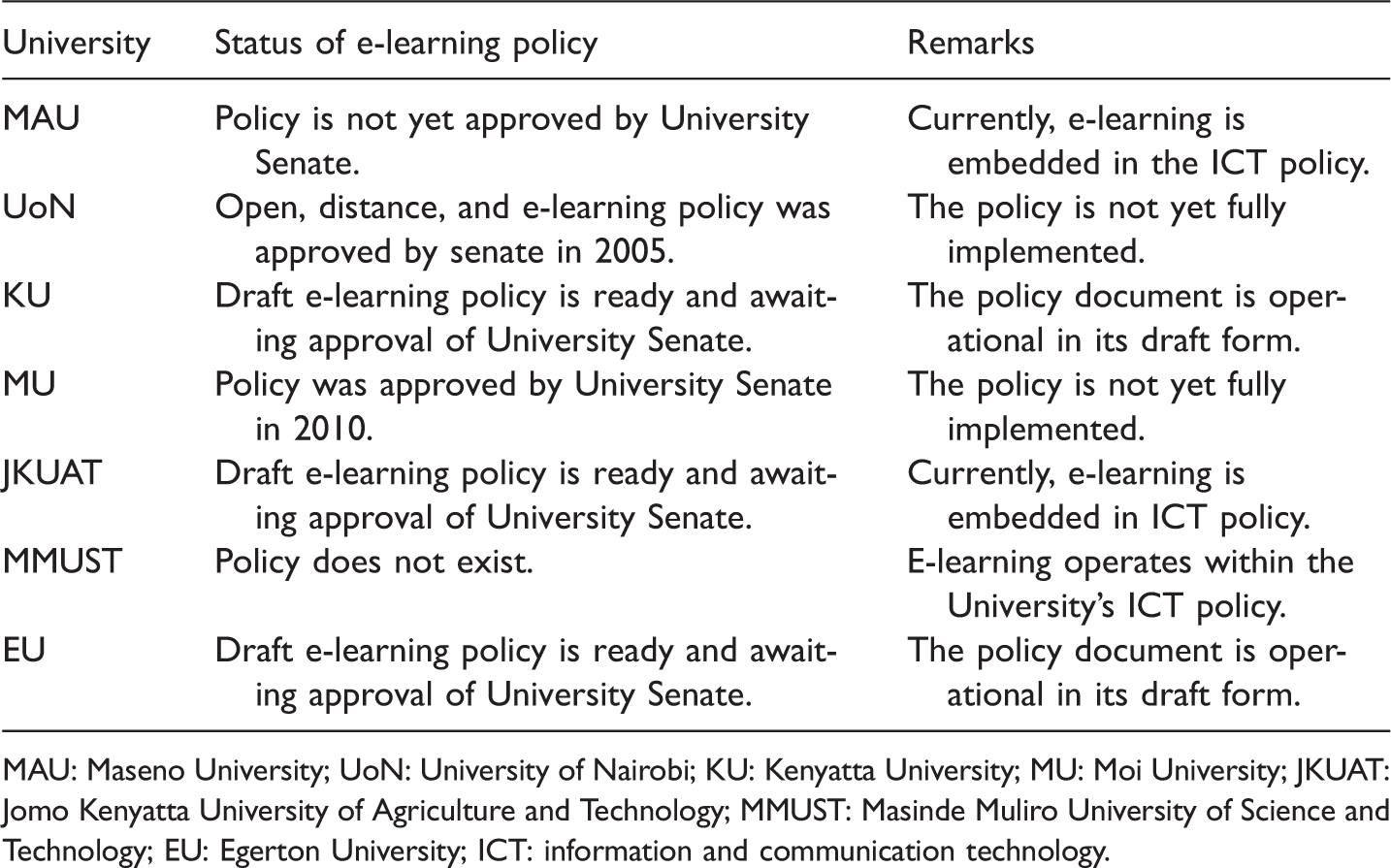
MAU: Maseno University; UoN: University of Nairobi; KU: Kenyatta University; MU: Moi University; JKUAT: Jomo Kenyatta University of Agriculture and Technology; MMUST: Masinde Muliro University of Science and Technology; EU: Egerton University; ICT: information and communication technology.
The challenges contributing to the slow adoption and utilization of e-learning in public universities in Kenya are presented and discussed in the subsequent sections under the two following categories: lecturer-related challenges and student-related challenges.
Lecturer-related challenges
Ranking of e-learning challenges by lecturers.
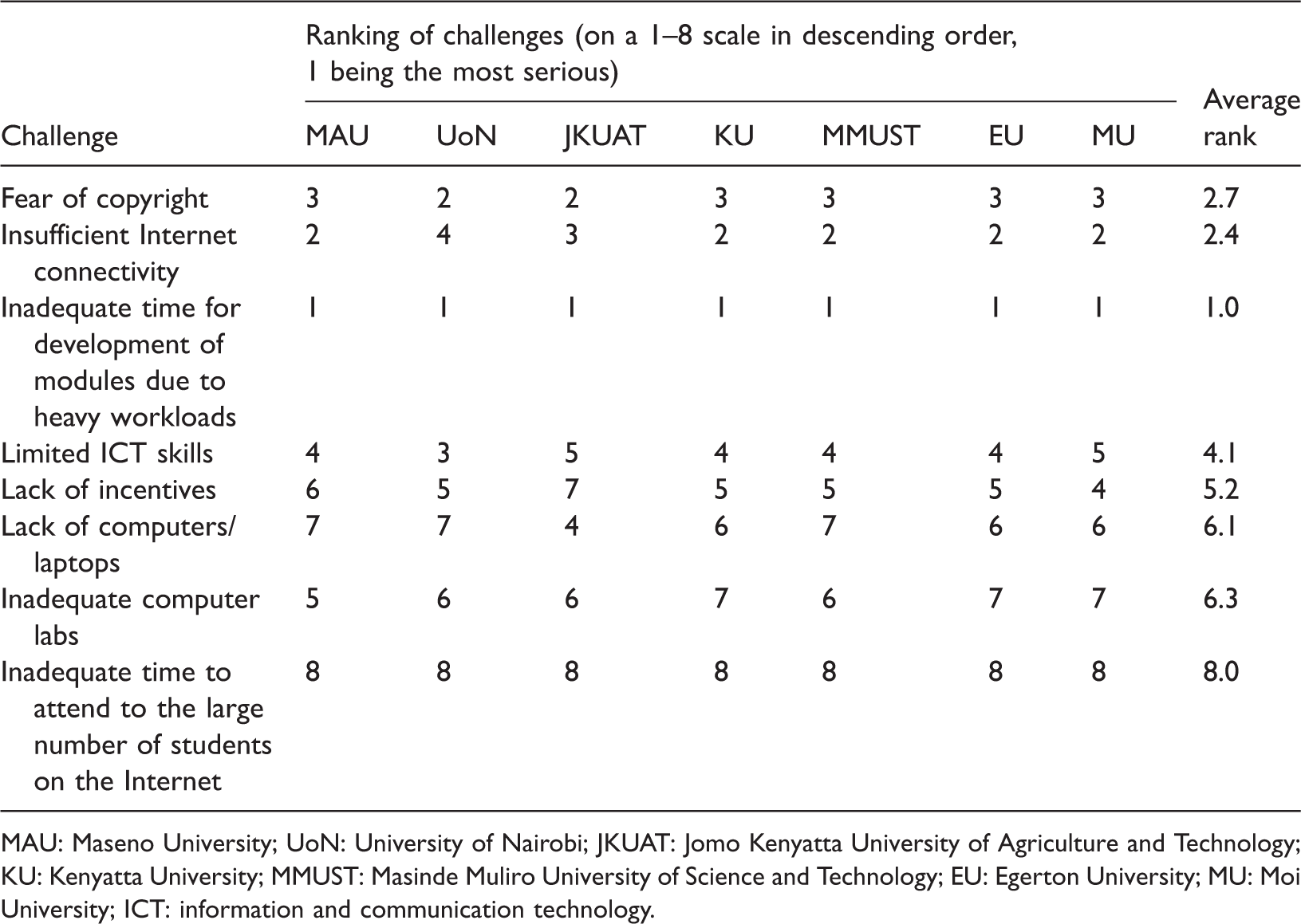
MAU: Maseno University; UoN: University of Nairobi; JKUAT: Jomo Kenyatta University of Agriculture and Technology; KU: Kenyatta University; MMUST: Masinde Muliro University of Science and Technology; EU: Egerton University; MU: Moi University; ICT: information and communication technology.
Heavy workloads
Availability of time for developing e-learning materials and participating in e-learning course content development are important in the adoption of computer-based learning. This notwithstanding, 83% of the lecturers pointed out that heavy workload was their biggest hindrance to the adoption and utilization of e-learning. This problem was ranked 1 on an 8-point scale and was attributed to the following factors:
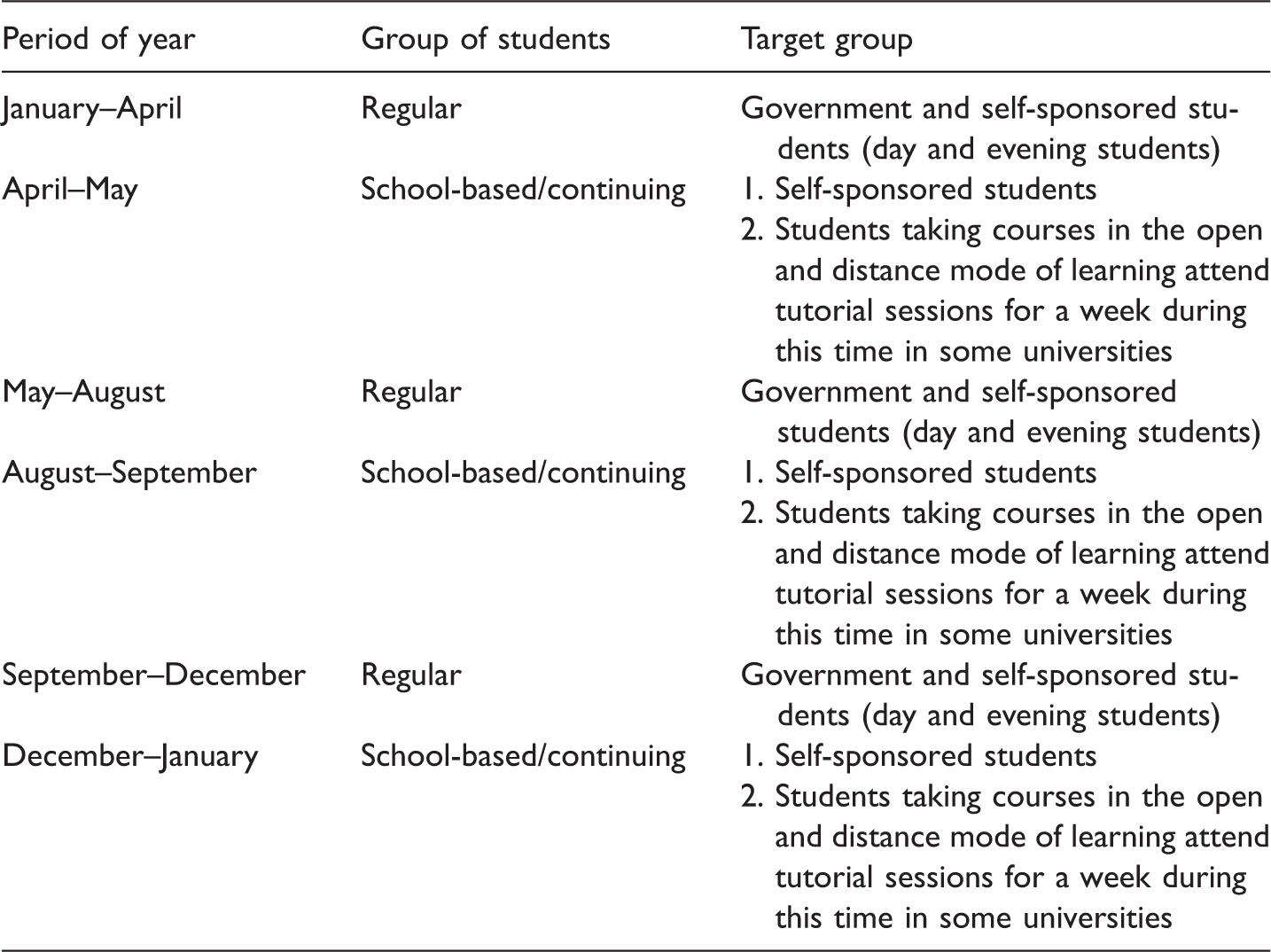
Continuously increasing enrolment and busy university calendar: Many lecturers said that they taught the mandatory 3–4 course units per semester, some of which had an enrolment of over 500 students. They complained that the preparation of course materials, teaching, marking of Continuous Assessment Tests (CATs) and grading of end-of-semester examinations were time consuming. This problem was aggravated by the fact that many universities operated throughout the year with no time for lecturers to take annual leave (Table 5). Supervision of postgraduate students: In addition to teaching undergraduate courses, lecturers who hold a PhD degree teach and supervise postgraduate students. Lecturers in schools with many postgraduate students reported that they were overwhelmed by the ever rising number of theses/projects for supervision. In some instances, it was reported that lecturers supervised over 40 theses and projects per person in an academic year – an activity that they described as time consuming and wearisome. Administrative duties: In addition to teaching, university academic staff performed administrative duties such as: (i) Headship of Departments, Schools, Directorates, and Institutes; (ii) coordination of examinations; and (iii) chairing university committees. Shortage of teaching staff: Up to September 2012, there were only seven public universities in the country. Since then, this number and that of constituent university colleges has increased to 31 countrywide. The creation of new public universities has resulted in a severe shortage of qualified academic staff. The few teaching staff members were forced to shoulder the extra workload for the functionality of the universities. This meant that some lecturers taught more than the required three units. Annual academic calendar in public universities.
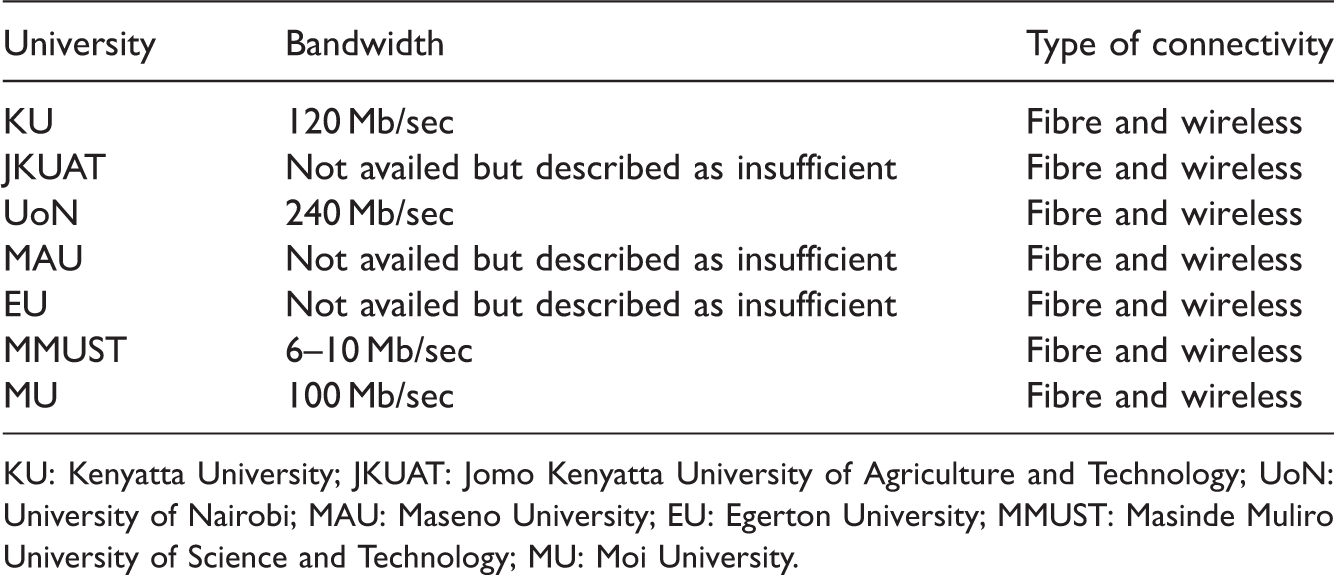
Insufficient Internet connectivity
Internet connectivity in public universities.
KU: Kenyatta University; JKUAT: Jomo Kenyatta University of Agriculture and Technology; UoN: University of Nairobi; MAU: Maseno University; EU: Egerton University; MMUST: Masinde Muliro University of Science and Technology; MU: Moi University.
The senior managers of the universities explained that the cost of Internet was high, prohibitive, and the main reason for the lack of sufficient Internet connectivity in most of the universities. Additionally, the remote location of some areas, far from Internet signals, was described as a major hindrance to Internet connectivity.
Fear of denial of copyright
Fear of denial of copyright was ranked the third most serious challenge impeding the adoption of e-learning in public universities. Lecturers complained that universities denied them copyrights for the modules that they wrote and uploaded on the e-learning platforms. Listening to the lecturers and university administrators talk, there appeared to be a dilemma on this issue. Lecturers, on the one hand, claimed full copyright of the modules that they developed, while, on the other hand, the universities claimed full ownership rights of the same, arguing that lecturers were their full-time employees. On the side of the lecturer, the problem stemmed from the following two concerns:
Poor remuneration for developing e-learning modules: Most universities paid an average one-time off payment of Kshs.120,000.00 (US$1300) for the development of a module. Lecturers described this amount as incommensurate with the effort that was required in the development of an e-module. This was considered particularly disappointing in view of the fact that the universities continued to benefit from the proceeds obtained from the sales of the e-modules any time students registered for the course unit. Lack of protection for the developed e-modules: E-materials written by the lecturers were not protected and anybody could use them; not just for teaching, but also for publishing.
On the side of the university management, the predicament on copyright was attributed to the fact that lecturers were employees of the universities regardless of the mode of pedagogy. Lecturers were accused of using university time and resources to develop e-learning modules and teach the same to students registered in the university which employed them and expect huge payment.
Limited ICT skills
Lecturers ranked limited ICT skills fourth among the challenges impeding the adoption and full utilization of e-learning in public universities in Kenya. They explained that the ability and confidence of a teacher in using computers and other ICT technologies in imparting knowledge and skills to their students was imperative for e-learning. This ability was dependent on the teacher’s prior experience in the technology’s use and the level of the acquired skills. In the case where lecturers lacked confidence to utilize technology, they would either not use it at all or use it ineffectively, thus compromising the successful implementation of e-learning.
The findings of this study revealed that the majority of the lecturers (55%) were not trained in the utilization of e-learning and were, therefore, not competent to handle online courses. Indeed, only 17% of the lecturers had undergone formal training in e-learning, the majority of which were trained in-house. About 20% of respondents acquired e-learning knowledge through self-training, while 8% were trained by colleagues (Figure 1).
Level of e-learning competency.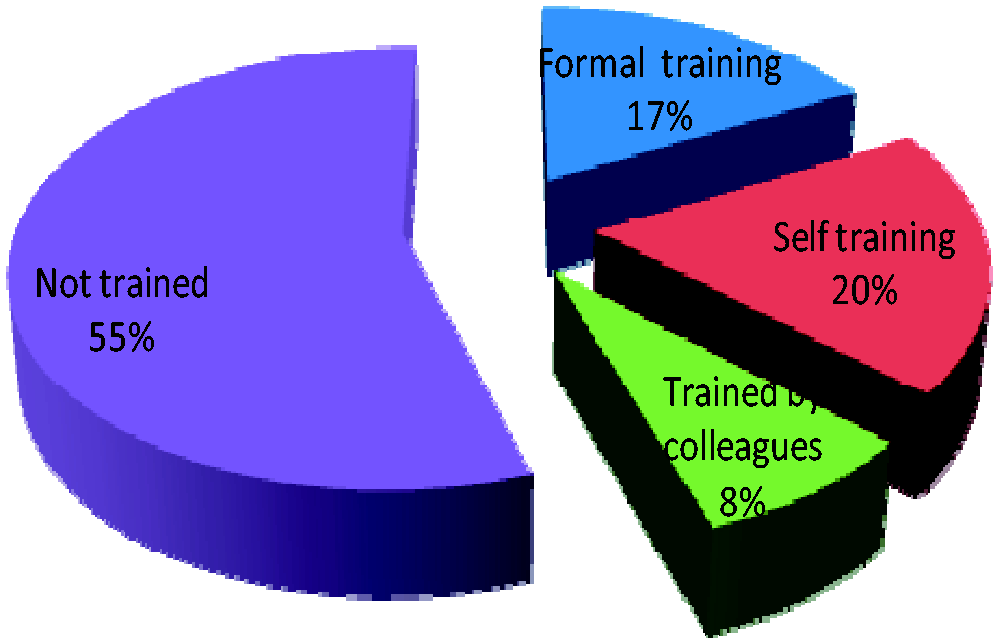
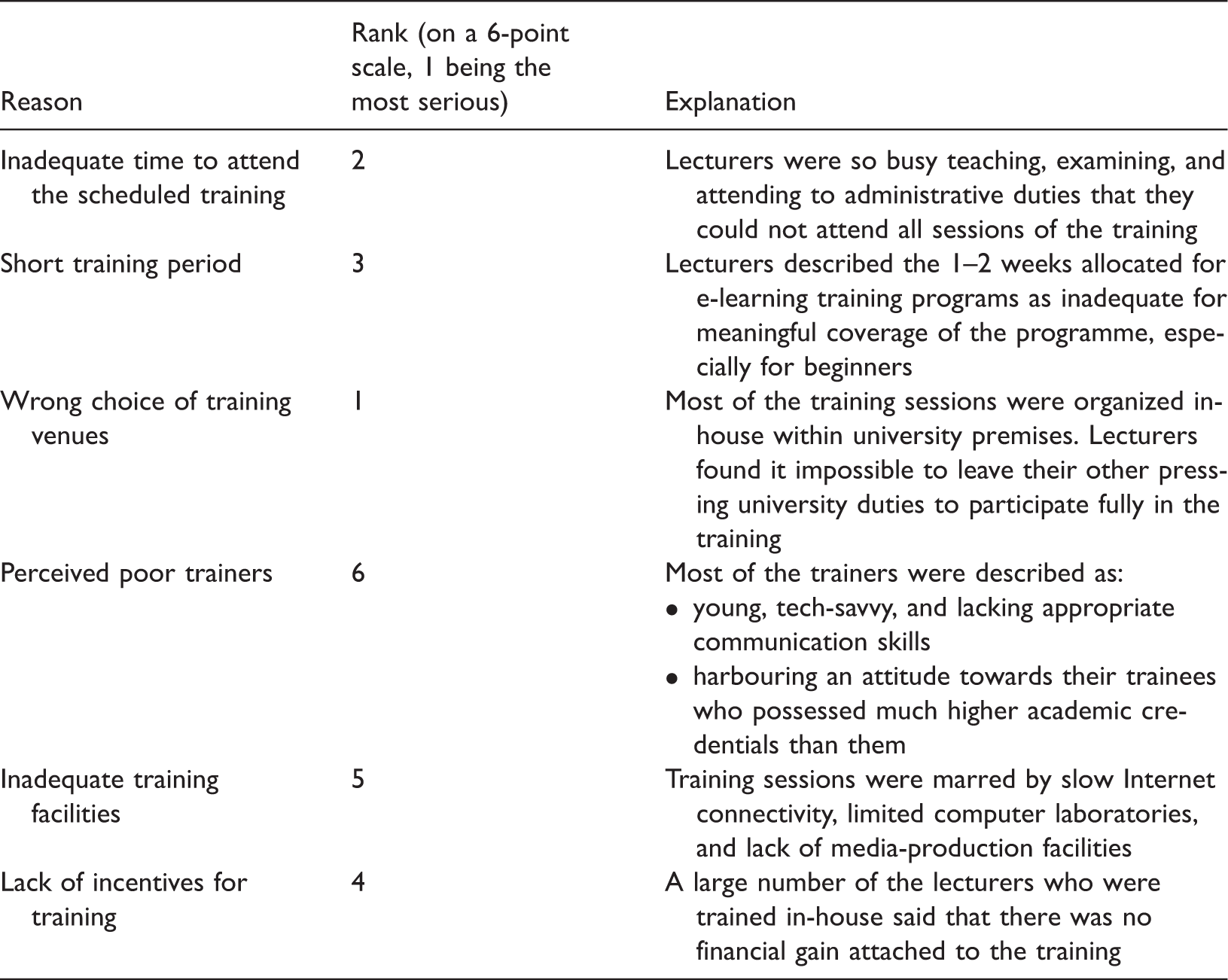
When asked to rate the quality of training they had received, 20% of the lecturers who participated in in-house training rated it as adequate, 59% regarded it fairly adequate, and 7% rated it as inadequate (Figure 2). Those not in favour of in-house training blamed it on the wrong choice of training venues, inadequate time to attend to the training, short training period, lack of incentives for training, inadequate training facilities, and poor quality of trainers (Table 7).
Rating of quality of e-learning training. Reasons for dissatisfaction with in-house training.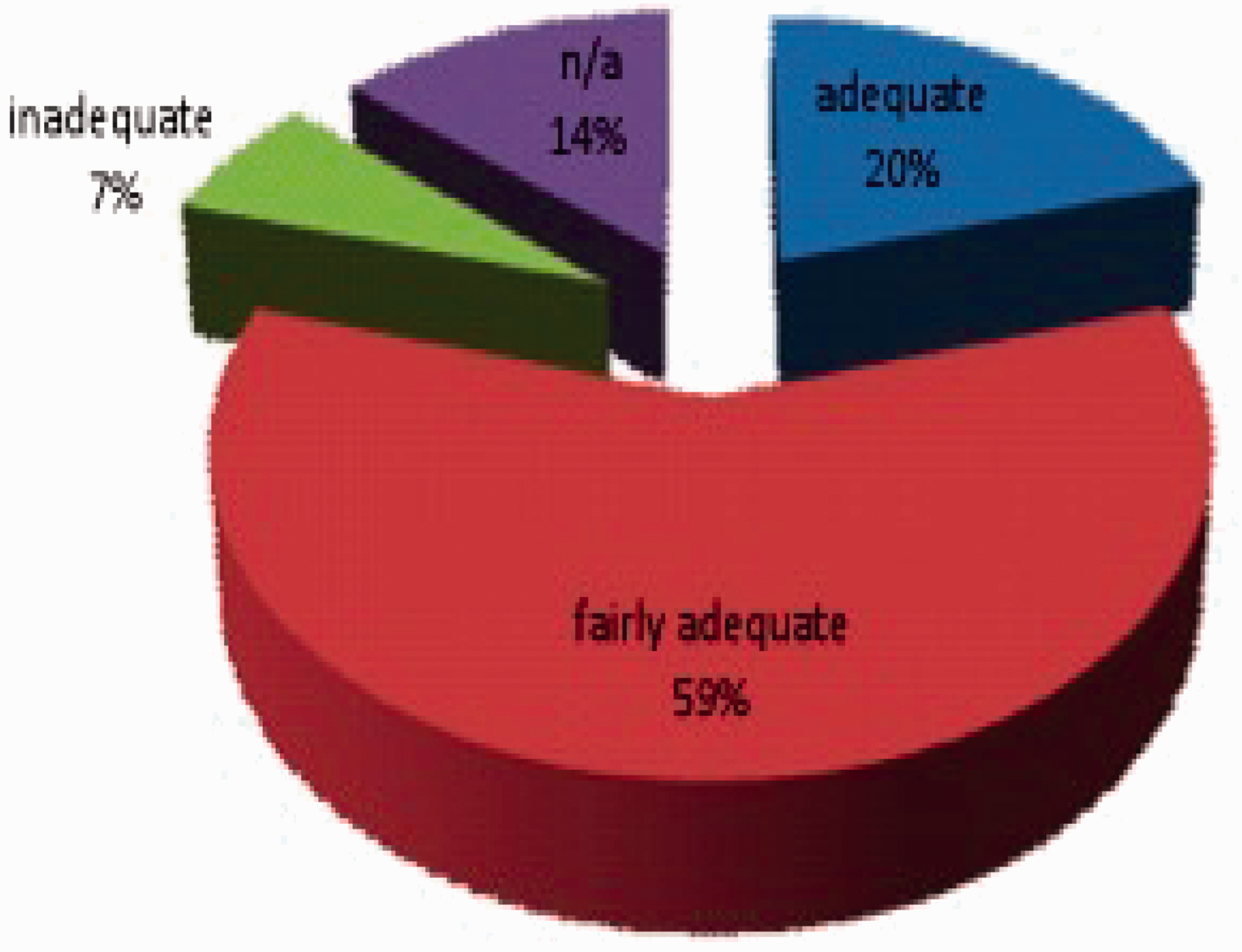
Lack of incentives
Incentives are a source of motivation in life. It is a fact that in most cases people who are highly motivated perform better than those who are not provided with appropriate and adequate incentives. This notwithstanding, most lecturers felt that they were not rewarded enough for their effort in developing and using e-learning modules. As a result, they ranked this challenge fifth among the eight challenges impeding e-learning. Their main areas of concern included the following:
Low pay for development of e-learning modules: Lecturers considered the Kshs.120,000 (US$1300) paid per module grossly inadequate. They argued that developing quality e-modules was resource intensive. Failure by universities to recognize e-learning modules for promotion: Lecturers complained that the failure by university managers to consider peer-reviewed e-modules for promotion negatively affected their career growth. They asserted that e-modules should be treated like any other publication and, therefore, be considered for promotion.
Lack of computers/laptops
The availability of personal computers/desktops/laptops is essential for the effective utilization of e-learning since this mode of pedagogy is computer-based. However, this challenge was ranked sixth among the eight challenges impeding the adoption and utilization of e-learning in public universities. This was because only slightly more than a quarter of the lecturers (29%) did not own personal computers or laptops.
It was reported that some departments owned a few laptops and projectors which were shared among staff to prepare e-learning materials, upload them to the university platforms, and teach online. In some other instances, a few lecturers (34%) were provided with desktops and/or laptops. In the latter case, lecturers argued that reliance on university facilities was difficult since they were restricted to using them during office hours only.
Inadequate computer laboratories
Lecturers and university managers observed that public universities were ill-equipped to handle e-learning. Their argument was that the number of computer laboratories and resource rooms did not match the growing number of students. This problem resulted in congestion in the laboratories, especially when students were attending online classes, during examination periods, and/or when they were researching for assignments. University managers attributed this problem to financial difficulties that most universities were currently experiencing due to their over-reliance on government funding. According to the managers, funds received from the government were not sufficient for recurrent expenditure and development projects such as hostels, classrooms, laboratories, and offices.
However, lecturers did not consider the problem of inadequate computer laboratories a serious challenge since most of them owned personal computers and/or laptops and could access the Internet from their offices or at their residency. They considered it more of a student problem than a lecturer problem, and were of the opinion that universities were addressing it by providing hotspots. In this regard, lecturers ranked the problem of inadequate computer laboratories lowly, at number seven among the eight problems impeding the adoption and utilization of e-learning.
Large number of students online
The timely response to issues raised online by students is imperative since it determines the uptake of e-learning as a mode of content delivery. For e-learning to be effective, lecturers and students should interact frequently online, particularly in discussion forums. This being the case, it then follows that the more students registered for a course, the more the time that will be required by the lecturer for individualized attention.
According to the findings of this study, some universities offered at least three common and compulsory units online. Common units had the highest number of registered students compared to other units. In KU, for example, the course UCU 100: Communication Skills is taken by an average of 1200 students at any one given semester. With such a high number of students, and considering that lecturers teach a minimum of three units, it is doubtful whether any meaningful and effective e-learning could take place. But this notwithstanding, this problem was ranked the last among the eight challenges impeding the adoption of e-learning in public universities in Kenya. The low ranking was taken as a confirmation that most lectures were not using e-learning and, therefore, did not appreciate the relationship between large numbers of students and effective online teaching.
Student-related challenges
Ranking of e-learning challenges by students.
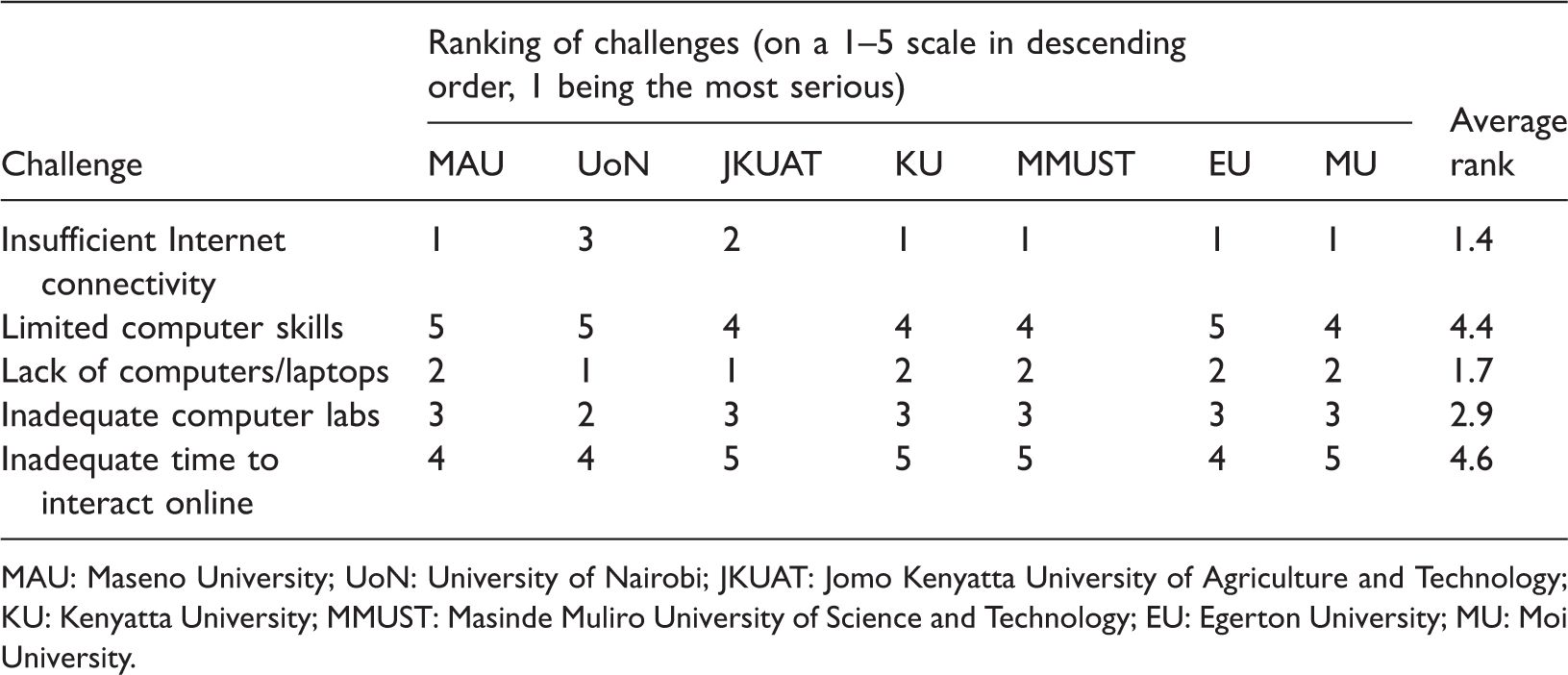
MAU: Maseno University; UoN: University of Nairobi; JKUAT: Jomo Kenyatta University of Agriculture and Technology; KU: Kenyatta University; MMUST: Masinde Muliro University of Science and Technology; EU: Egerton University; MU: Moi University.
Insufficient Internet connectivity
Insufficient Internet connectivity is one of the major problems affecting the adoption of e-learning by both students and lecturers. However, while lecturers ranked it second, students ranked it the leading challenge hindering their effective adoption and utilization of e-learning. With the exception of JKUAT and UoN, students in the other public universities rated insufficient Internet connectivity a very serious challenge (Table 8). Students pointed out that the problems emanating from insufficient Internet connectivity were most critical during university academic peak seasons, such as when writing term papers, preparing for CATs, and end-of-semester examinations periods. Students reported that the Internet was jammed and extremely slow during such times. Students residing off-campus in hostels that did not have Internet connections suffered most.
Lack of computers/laptops
Most of the students complained that computers were expensive and beyond their reach and, therefore, ranked it the second most serious challenge impeding the effective use of e-learning in public universities. The market price of a new laptop ranged between Kshs.30,000.00 (US$330) and Kshs.80,000.00 (US$880). As such, although most of the students appreciated the importance of owning personal laptops, over 70% of them did not own any. This category of students relied heavily on university and borrowed computers/laptops. However, some universities were making efforts to facilitate students to buy laptops by partnering with the private sector – in particular, Equity Bank and Safaricom.
Inadequate computer laboratories
Students ranked the problem of inadequate computer laboratories the third most serious challenge affecting the adoption and utilization of e-learning in public universities (Table 8). The findings of this study revealed that none of the public universities had an adequate number of computer laboratories. Students complained of congestion in the few laboratories and resource rooms available, especially when taking online lessons and also when researching for their assignments/term papers. In some universities, students woke up early to book space in the computer rooms. Students who missed space early in the morning waited for long hours before space would become available.
To address the problem of limited computer laboratories, some universities controlled the duration of using the computer laboratories by the students. In other instances, some universities provided hotspots at convenient locations such as the hostels and dining halls in order to ease congestion from the computer laboratories.
Limited computer skills
Limited computer skills was ranked the fourth challenge affecting the adoption and effective utilization of e-learning in public universities. The findings of this research revealed that most of the students (67%) were computer literate. They possessed basic computer skills that enabled them to navigate their way around university e-learning platforms. Students acquired computer skills from either the secondary schools that they attended, computer colleges, and/or universities where introductory computer courses were taught as core units. Some universities, such as KU and JKUAT, organized e-learning sensitization programs for all new students during their orientation week.
Inadequate time to interact online
The study established that other than downloading lecture notes and submitting assignments, students rarely interacted with their lecturers and fellow students online. Most of them (72%) who registered for online units said that they downloaded modules and/or printed them and read them as hard copies. This was because a number of them, especially those who enrolled for a maximum of eight units per semester, were too busy with assignments and attending to face-to-face (F2F) lectures; a problem further compounded by slow Internet connectivity. Strange enough, this problem was not considered very serious and, therefore, ranked last.
Other challenges of e-learning
In addition to the ranked challenges, the following three challenges were mentioned by students, lecturers, and university managers as having an impact on the adoption of e-learning in public universities.
Negative attitude towards e-learning
All respondents agreed that attitude was critical in the adoption of new innovations. This notwithstanding, it was reported that a few students and lecturers viewed e-learning negatively and were reluctant to adopt it. The elderly lecturers were singled out as the majority of those who harboured negative attitudes towards e-learning. This group of students and lecturers were described as technology averse, phobic, and conservative.
Non-compensation for Internet outside the university
While public universities have made some strides in the provision of Internet facilities, these are only accessible within the university premises and within a certain radius from the servers. Some lecturers and students asserted that they were inconvenienced during weekends and in the evenings because they could not access university Internet facilities from the confines of their residences. Their only choice was the use of modems, cyber cafés, or personal Internet connections which were beyond the reach of some students and lecturers.
Fear of criticism
On the one hand, some lecturers expressed fear of criticism by colleagues and students. They were afraid that their teaching materials that are posted online will be open to criticism by those who access them on the platform. On the other hand, students expressed the fear that employers were sceptical about hiring graduates who earned their degrees through e-learning. It was reported that some employers argued that e-learning was not well developed in the country and, therefore, students trained through this mode of study were inadequately prepared for the job market. In other instances, students were apprehensive about the quality and certification of online learning in the country. They feared that certificates obtained from e-learning were inferior compared to those obtained from traditional or conventional pedagogical programmes.
Discussion
The demand for university education in Kenya is growing at an unprecedented rate. Several strategies including e-learning have been put in place to cope with the increasing demand. E-learning is a flexible mode of pedagogy that, if well thought out, can accommodate nearly all qualified students seeking university education. Unfortunately, the findings of this study revealed that e-learning is growing at a slow pace among the public universities in Kenya, a problem attributable to the many challenges that face this mode of content delivery.
This situation is not unique to universities in Kenya. Similar challenges were reported to negatively impact the adoption and utilization of e-learning in universities in East Africa and Africa as a whole. Hollow and ICWE (2009) and Walimbwa (2008) identified lack of human capacity as one of the most notorious challenges impeding the adoption of e learning. Mpofu et al. (2012) observed that the majority of the lecturers facilitating open, distance, and e-learning in Zimbabwe were not properly trained on open and distance learning as a mode of delivery and were not familiar with teaching in an online environment. Walimbwa (2008) observed that insufficient resources and an indifferent attitude, in particular, from the teaching fraternity were major hindrances in the adoption of e-learning in East African Universities. Lack of skills and sufficient human capacity further contributed to low e-learning implementation. Limited Internet bandwidth was also a significant factor hindering e-learning from growing in these universities. Kasse and Balunywa (2013) revealed major infrastructural weaknesses; in particular, the unavailability of Internet connectivity, technical incompetence, and attitudinal challenges that limited the full-scale adoption of e-learning in institutions of higher learning in Uganda. Similar concerns were raised in Tanzania by Ndume et al. (2008). In Kenya, Acosta and Odhiambo (2009) identified inadequate training and heavy workloads as the main reasons that made lecturers place too much emphasis on the uploading of reading materials to the e-learning platforms as opposed to actual online teaching.
A critical scrutiny of the ranked challenges indicated the existence of a major financial constraint that is faced by all public universities. Insufficient Internet connectivity, heavy workloads, limited ICT/computer skills, lack of incentives, inadequate number of computers and/or laptops, and inadequate computer laboratories are largely challenges of a financial nature. Going by the revelations of the university managers, most of the public universities lack the financial capability to invest in modern high-speed computers. Consequently, public universities are constrained in the provision of equipped computer laboratories to accommodate a large student population, availability of sufficient bandwidth, and adequate and quality teaching staff and technicians. They are also not sufficiently able to train teaching staff in appropriate e-learning skills and delivery.
Conclusion
E-learning, undoubtedly, forms part of the solution to the increasing demand for university education in Kenya. However, the findings of this study revealed that e-learning in most of the public universities in Kenya is still at its infancy stage; a situation that is similar in universities in many other African countries. Most universities have not yet embraced this mode of pedagogy fully, a problem attributable to the several challenges experienced by both lecturers and students. Lecturers ranked the challenges affecting their adoption of e-learning as follows (in order of seriousness): heavy workloads, insufficient Internet connectivity, fear of copyright, limited ICT skills, lack of incentives, lack of computers/laptops to enable lecturers to fully adopt e-learning, and inadequate time to attend to the large number of students registered for online course units on e-learning platform. Students ranked insufficient Internet connectivity as the leading challenge, followed by lack of computers/laptops, inadequate computer laboratories, limited computer skills, and inadequate time to interact online. Overall, these challenges emanate from inadequate financial resources in the public universities.
Recommendations
The study makes the following recommendations:
E-learning policies: Universities should strive to have approved e-learning policies to guide the implementation of online learning. Increase funding for e-learning: The government and universities should prioritize e-learning and set aside more funds for its development. The funds should be channelled towards the improvement of ICT infrastructure, research, capacity building, attitude change, and awareness creation. Compulsory requirement for all students to own a laptop before joining the university: It should be compulsory for all students to own a laptop/tablet before admission in the universities. The latter should partner with the private sector to finance this venture and make laptops affordable by students. Copyrights policy: Universities should relinquish copyrights to lecturers who write quality and peer-reviewed modules.
Footnotes
Acknowledgements
We are deeply indebted to the National Commission for Science, Technology, and Innovations for their financial support, without which this research could not have been realized. We are also grateful to the seven public universities that were included in this study for granting us permission to conduct the research in their institutions. In particular, we appreciate the goodwill from university administrators, lecturers, and students who provided data for this study. We also express our sincere gratitude to South Eastern Kenya University (SEKU) for managing our research funds and releasing them timely, without any delays. Lastly, we are thankful to the Government of Kenya, SEKU, and KU for granting us permission to conduct this research.
Declaration of Conflicting Interests
The author(s) declared no potential conflicts of interest with respect to the research, authorship, and/or publication of this article.
Funding
The author(s) disclosed receipt of the following financial support for the research, authorship, and/or publication of this article: This research was funded by National Commission for Science, Technology and Innovations (NACOSTI) formerly National Council for Science and Technology (NCST) under research grant contract number NCST/5/003/W/2nd CALL/90. We are grateful for their support.