



Abstract
The ubiquity of information and communication technologies (ICTs) have considerably transformed the higher educational landscape and are now providing an increasing number of novel and dynamic pathways for education delivery. The steady growth of flexible and affordable ICTs is impacting upon the higher education domain resulting in a departure from traditional education systems to more technologically driven forms of pedagogy. The purpose of this study was to investigate how best to exploit the available ICT infrastructures to support the creation of an open digital university at Mzuzu University in Malawi and to investigate the implications on a wider African context. The data were collected from lecturers, campus-based undergraduate students, and open and distance learning undergraduate students. The main results reveal that students and lecturers at Mzuzu University are conversant with a plethora of ICTs that can be adopted and customised to create a digital university. In that regard, we conclude that a digital university is possible in Malawi. We further conclude that, considering that African universities operate in mostly similar economic, technological and political landscapes, African universities are ready to embrace the concept of a digital university. This is regardless of the prevailing challenges.
Keywords
Introduction
Advancements in information and communication technologies (ICTs), coupled with students’ changing needs and the need for flexible teaching methods, have greatly impacted upon higher education globally. One area of higher education which is increasingly being driven by the ubiquity of ICTs is open and distance learning (Siemens et al., 2015a: 7). In fact, the world is increasingly becoming digital and ‘higher education is not immune to this transition’ (Siemens et al., 2015a: 7).
Over the years, the scope and descriptions of distance learning have changed (Chawinga and Zozie, 2016a; Siemens et al., 2015a: 7) and are now predominantly premised on the understanding that students and teachers are separated by space, time, or both, for the majority or the complete duration of teaching and learning (Chawinga and Zozie, 2016a; Moore and Kearsley, 2004; Siemens et al., 2015a: 7; Valentine, 2002). The changes in the scope and definition of distance education can be attributed to the emergence and use of new forms of educational technology (Moore et al., 2011) which are now the main drivers of distance education (Siemens et al., 2015a: 7). However, the most widely adopted and encompassing definition, which also underpins this study, is provided by Moore and Kearsley (2004: 2): ‘teaching and planned learning in which teaching normally occurs in a different place from learning, requiring communication through technologies as well as special institutional organization’. The reason we have adopted this definition for this study is that the focus in our study is towards the creation of more digitally orientated forms of pedagogy in higher education that are driven by the ‘growth and sophistication of Internet-based technologies’ (Skrypnyk et al., 2015: 59).
It is worth mentioning that the wide range of emerging learning technologies has resulted in many different terms that align with the use of ICTs in higher education. Such terms include online learning, web-based learning, blended learning, e-learning, learning management systems (LMS), computer-aided instruction, computer-supported instruction, technology-enhanced learning, Internet-based training, virtual learning environments and Massive Open Online Courses (Chawinga, 2016; Chawinga and Zozie, 2016a; Daniel, 2014; Moore and Kearsley, 2004; Siemens, 2012). Though Moore and Kearsley (2004) argue that to a large extent, the above-mentioned terms fall under the umbrella ‘distance education’, it is generally agreed that these terms may also equally apply to current campus-based learning (Chawinga, 2016). To this end, we are of the view that the concept of digital university implies the use of a wide range of ICTs, particularly web-based technologies, to conduct learning and teaching in both campus-based and distance learning modes of higher education. Thus, the term digital university suggests that students can be campus-based but that the instructor’s predominant use of web-based technologies effectively means fewer face-to-face (f2f) interactions. The delivery mode consisting of a combination of online technologies and f2f instruction has been described in the literature as blended learning (Skrypnyk et al., 2015: 61). On the other hand, the concept of a digital university in the distance education mode implies that all the teaching and learning is conducted online using web-based applications. This has led to the emergence of the term open and distance e-learning, already the case at the Philippines Open University, for example (Arinto, 2013; Arinto, 2016: 163).
The concept of a digital university: what is it really?
As outlined, since there are various terms that refer to the use of technologies in learning, it has been difficult to select the most appropriate term to represent technological pedagogy (Rudestam and Schoenholtz-Read, 2010). This is the reason we now endeavour to clarify what we mean by a digital university.
Previously, distance education was dependent on traditional content delivery through postal services, telephones, and other forms of mass media such as the radio and television (Chawinga and Zozie, 2016b; Garrison, 2011: 3). Likewise, campus-based education was largely conducted through closed classrooms where the tutor dominated the talk while students listened expectantly (Chawinga, 2016). However, advancements in information and communications have profoundly transformed both distance and on-campus modes of instruction in higher education (Chawinga, 2016; Siemens et al., 2015a: 13). The physical distance between students and instructors in distance education has been bridged through technological development (Anderson and Dron, 2010), digital computing technology, the Internet, and the World Wide Web being the major catalysts (Chawinga and Zozie, 2016a; Siemens et al., 2015a: 13). It is worth mentioning that although traditional distance education and the digital university share some common attributes in terms of their emphasis on ‘anytime’ and ‘anyplace’, our envisaged digital university aims to foster both asynchronous and synchronous interaction amongst students themselves, and with their instructors. This implies that students are no longer at a distance, as was the case with traditional distance education (Moore, 1993), and that teaching and learning are no longer dependent upon confined classrooms or particular working hours – as was the case in traditional campus-based modes (Chawinga, 2016). In summary, the concept of a ‘digital university’ embraces various terms (outlined earlier) and espoused by Chawinga (2016), Chawinga and Zozie (2016a), Arinto (2016: 163), Daniel (2014), Arinto (2013), Siemens (2012), Rudestam and Schoenholtz-Read (2010), Means et al. (2013), and Moore and Kearsley (2004). Joksimović et al. (2015: 121) argue ‘…with the further development of online education, it seems that both learning paradigms are evolving into a single learning approach – digital learning’. In line with this thinking we emphasise that courses, in a digital university, are delivered wholly via web-based technologies to the exclusion of print-based, broadcast television or radio, videoconferencing, videocassettes, and stand-alone educational software programs. Finally, we agree with Siemens et al. (2015b: 200) that a digital university is a multifaceted concept representing a complex relationship of factors involving the interaction of humans with technologies, data and content.
Problem statement
This study is mainly motivated by the thriving ICTs at Mzuzu University (Malawi) and more widely in Malawi. In the past decade, Mzuzu University (MZUNI) has been heavily investing in ICTs particularly, Internet technologies (Chawinga, 2016, 2017). As lecturers at MZUNI, we have also observed that mobile technologies, especially smartphones and laptops, are a common sight amongst online distance learning (ODL) and campus-based students and lecturers. At national level, there has been an increasing uptake of ICTs across Malawi, and this development may be attributed to the proliferation of smartphones or Internet enabled phones and Internet data bundles which are somewhat subsidised by mobile network service providers (Chaputula, 2012; Mtingwi and Van Belle, 2012). Worth acknowledging is that several studies have been conducted at MZUNI on the use of ICTs in teaching and learning. Chawinga (2016) focused on the use of Twitter by undergraduate students, Chawinga and Zinn (2016) investigated the use of Web 2.0 by students, Chawinga and Zinn (2015) researched the use of Web 2.0 by lecturers, and Chaputula (2012) looked at the general use of ICTs by students and lecturers. So, what gaps have these studies identified? Certainty, the focus of the studies mentioned has been on how ICTs can be used to foster teaching and learning for a campus-based mode. Our current study takes a rather different route. We focus on investigating the readiness of MZUNI in creating a digital university where web-based technologies are to be exclusively used to connect instructors and students in both campus-based and ODL instructional modes. It is not unreasonable to question the reasons for the particular focus on web-based technologies at the expense of other ICTs such as television and radio which are equally important. To answer this, we follow a line of argument put forward by Skrypnyk et al. (2015: 60) who say: ‘while the initial information technologies adopted in education were computer-based and for personal use, educational IT [information technology] is now predominately located on the web (or cloud) and is more socially oriented’. Thus, to effectively accomplish the aim of this study, we address the following objectives:
Assess the status of existing ICT infrastructures for creating a digital university.
Determine anticipated benefits of a digital university.
Investigate anticipated enablers and inhibitors to creating a digital university.
The study was primarily undertaken to introduce, popularise and demonstrate the rich value that a digital university offers to academics, administrators, and students, in Malawi and possibly across Africa. This is important especially considering that building a digital university is a novel project and for such an initiative to take ground, Singh and Hardaker (2014) argue that policy-makers must be aware of the ‘cultural configuration’ within their organisation for the project to succeed. Our other aim is to inform future research and practice in digital learning, which is of course, an emerging concept in the higher education domain.
Literature review
In this section, we review some published scholarly work related to the concept of a ‘digital university’. This is important because Siemens et al. (2015a: 7) argue that in order to ensure a robust future for digital learning in higher education, there is need to ‘first take stock of what we know and what has been well researched’. As already stated, the scope of a digital university as has been described in this paper is cross-cutting because it uses sophisticated Internet-based technologies to deliver education to campus-based and open and distance learning modes. Thus, the literature reviewed in this section centres around studies that focus on the use of web-based technologies either in campus-based or distance instructional modes.
As already discussed, ‘technology infrastructure shapes learning and learning opportunities’ (Siemens et al., 2015b: 200). Advancements in various technologies bordering on Internet, mobile devices and apps, the recent emergence and growth of social media, or Web 2.0, and the participative web are central in forming robust digital learning (Arinto, 2016: 163; Chawinga, 2016, Siemens et al., 2015b: 200). Since the development of Web 2.0 in 2004 (O’Reilly, 2005), lecturers have increasingly embraced a range of technologies for their teaching and research (Chawinga, 2016; Chawinga and Zinn, 2015, 2016; De Wever et al., 2015; Huang et al., 2013: 57; Siemens et al., 2015b: 205). These include blogs, wikis, syndication through Rich Site Summary, social tagging and bookmarking, and social networking applications such as Facebook, Twitter, WhatsApp, Flickr, YouTube, Delicious, World of Warcraft, and Second Life.
One might question whether higher education really ‘needs’ another model of learning – such as a digital university. Why not just rely on blended learning or open and distance learning? It is well argued in the literature that blended learning or open and distance learning are more-costly to run than a digital university. For example, blended learning tends to involve additional time, instructional resources, and course elements encouraging interaction among learners (Jaggars and Bailey, 2010; Landers, 2009; Means et al., 2013). Instead, digital technology is touted as a catalyst for the much-hyped leaner-centred approach to teaching (Chawinga, 2016; Siemens et al., 2015b: 205) where students are encouraged to have more responsibility for their learning (Koch, 2014; Peterson, 2008). In that way, students have a liberty to choose the content that they want to ‘learn, when to learn, and who to learn with’ (Joksimović et al., 2015: 97) thereby increasing peer interaction (Chawinga, 2016) with the instructor who assumes a ‘more passive and nondirective role’ (Koch, 2014: 1385). However, much as Koch (2014) claims that the instructor is mostly passive, they in fact play a pivotal role behind the scenes in key activities such as marking assignments, developing curriculum and syllabuses, and playing an ‘active supportive and guiding role’ (Marks et al., 2005: 549). Therefore, the role of an instructor in a digital university should not be underestimated because for it to succeed, there is a need for ‘well-designed courses with interactive and engaging content, structured collaboration between peers, flexible deadlines to allow students to pace their learning, continuous monitoring of student progress, and the provision of formative feedback when needed’ (Joksimović et al., 2015: 118). A series of studies by Arinto (2016: 163), Chawinga and Zozie, (2016a), Arinto (2013), Clardy (2009), Grandzol and Grandzol, (2006) and Valentine (2002), have all independently shown that a digital university has a potential to significantly alleviate overcrowded classrooms, and increase student enrolment while simultaneously reducing cost.
An increase in the use of technology in higher education has not been spared from criticism. One scepticism focuses on the ability to achieve quality learning by purely relying on technology. Siemens et al. (2015a: 7) have argued that the ever-growing adoption of educational technology has also sparked debate on the relative importance of instruction and pedagogy, versus educational technology and media, on the quality of learning. Adopting a digital university requires a more complex role for the instructor in online settings and more importantly, the need for more innovative research that comes up with best practices for equipping students with self-regulatory skills (Joksimović et al., 2015: 95). Finally, one of the most common inhibitors is the cost of IT infrastructure for setting up and running a digital university (Chawinga and Zinn, 2016; Chawinga and Zozie, 2016b). Additional challenges include the cost of training instructors, feelings of isolation, and technology gaps (Joksimović et al., 2015: 9). Some recent studies by Chawinga and Zinn (2015, 2016) and Singh and Hardaker (2014), have shown that adoption of a digital university is affected by individual attitudes of students, lecturers, and administrators, towards technology and digital literacy. Chawinga and Zinn (2015, 2016) indicate further that usefulness and ease of use affect the adoption of technology pedagogy by students and lecturers. Figure 1 presents a summary of various factors that need to be considered when setting up a digital university as proposed by Joksimović et al. (2015).
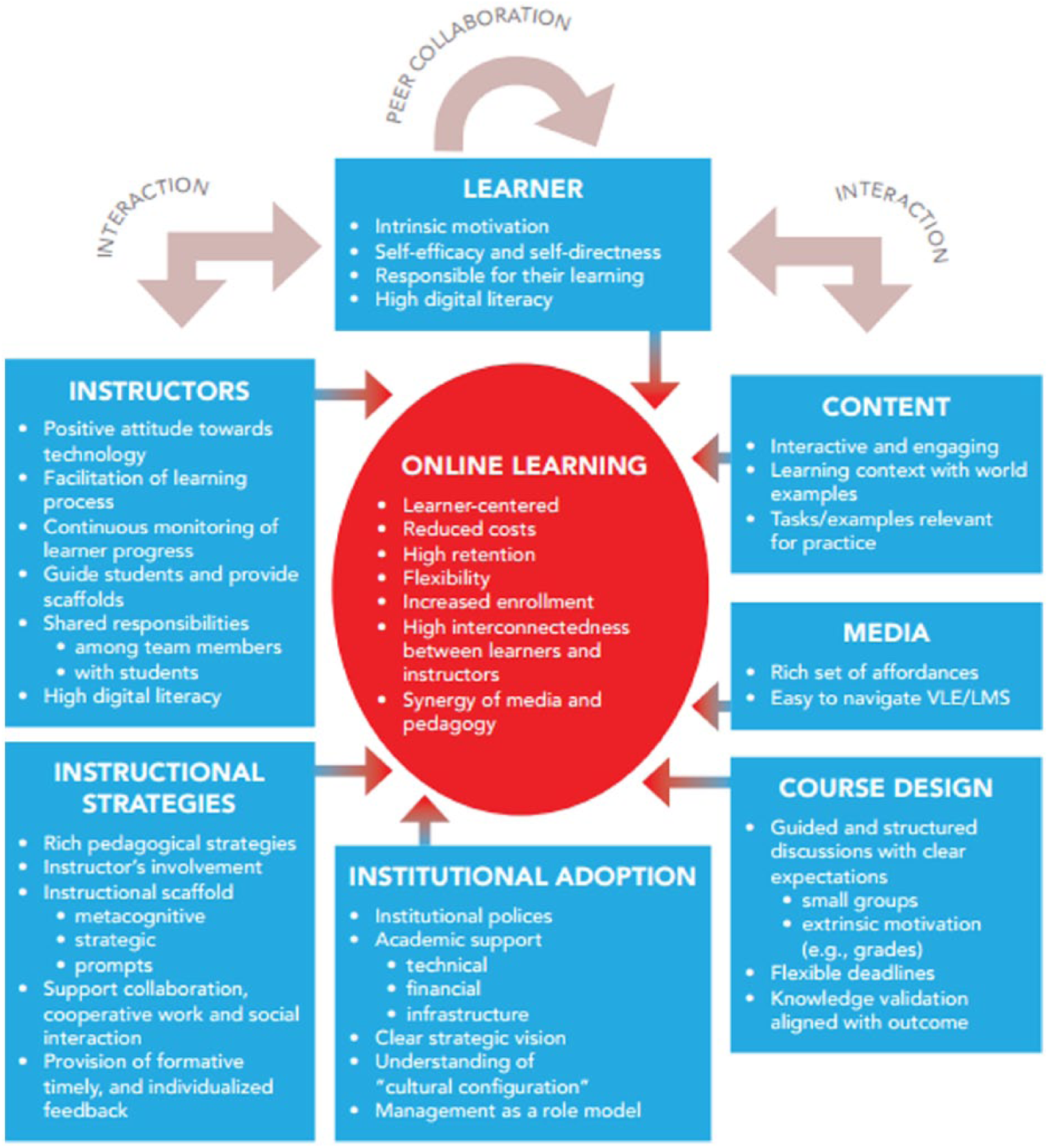
A conceptual diagram of the most significant factors that frame educational experience in an online learning setting (Joksimović et al., 2015: 120).
Data collection methods
This study focused on lecturers and undergraduate students in three faculties at Mzuzu University – Education, Health Sciences, and Information Science and Communications. These faculties were chosen using purposive sampling because the lecturers in these faculties had already started using technologies in their learning and teaching. This sampling method may not be representative of the population and one of its limitations is that it may have introduced bias into the study. On reflection, input of those who had not yet started using technology could also have been sought. However, we thought that based on academic staffs’ prior experience of technology use in support of learning (Fraenkel and Wallen, 2009) we would be able to elicit the necessary insights to help map an open digital university in Malawi. Some lecturers in the Faculty of Education are involved in facilitating courses in ODL and have produced e-learning instructional materials for Bachelor of Arts Education and Bachelor of Science Education programmes for the ODL learning mode. Some are also enthusiastic users of the Moodle Learning Management system. Lecturers in the faculties of Health Sciences and Information Science and Communications use blended learning in their classes and we thought that we would be able to glean valuable information from their experiences. Twenty-three lecturers and seventy students were included in the study. We sought ethical approval from Mzuzu University management and sought informed consent from participants.
We administered a questionnaire for lecturers and heads of the following departments to distribute to their own members: Security Studies, Information and Communication studies; Library and Information Science; Languages and Literature; Chemistry; and Mathematics and Nursing and Midwifery. A questionnaire was also distributed to the Dean of Education, Deputy Dean of Education, and Dean of Students. A questionnaire designed to elicit students’ responses was given to the Deputy Director of the Centre for Open and Distance Learning, Head of Department of Security Studies, and Head of Information and Communication Technology department to distribute to students. The questionnaire for students contained two sections: a section seeking demographic information; and a section relating to students’ access to electronic media. The questionnaire for lecturers had four sections: a section requiring respondents to supply demographic information; questions relating to print-based instructional resources participants have; a section on respondents’ skills for repurposing paper-based instructional materials into electronic resources; and questions relating to participants’ access to electronic resources. Both questionnaires had a mix of open-ended and closed-ended questions that enabled us to collect both qualitative and quantitative data. Some questions required participants to select from a list of options while others were open-ended to solicit views and opinions of respondents on various issues in relation to a digital and open university. Data were collected in January 2015.
Data presentation and discussion
Background information
The total number of respondents in this study was 93 of whom 78 (84%) were males and 15 (16%) were females. The majority of respondents were male. This is typical of a Malawian tertiary education institution since the number of females who reach university is very low. More females than males drop out of school at primary and secondary school levels. This has a knock-on effect at tertiary level as well. Students were from the following programmes of study: Security Studies; Bachelor of Arts Education (ODL mode); Bachelor of Science Education (ODL mode); and Information and Communication Technology.
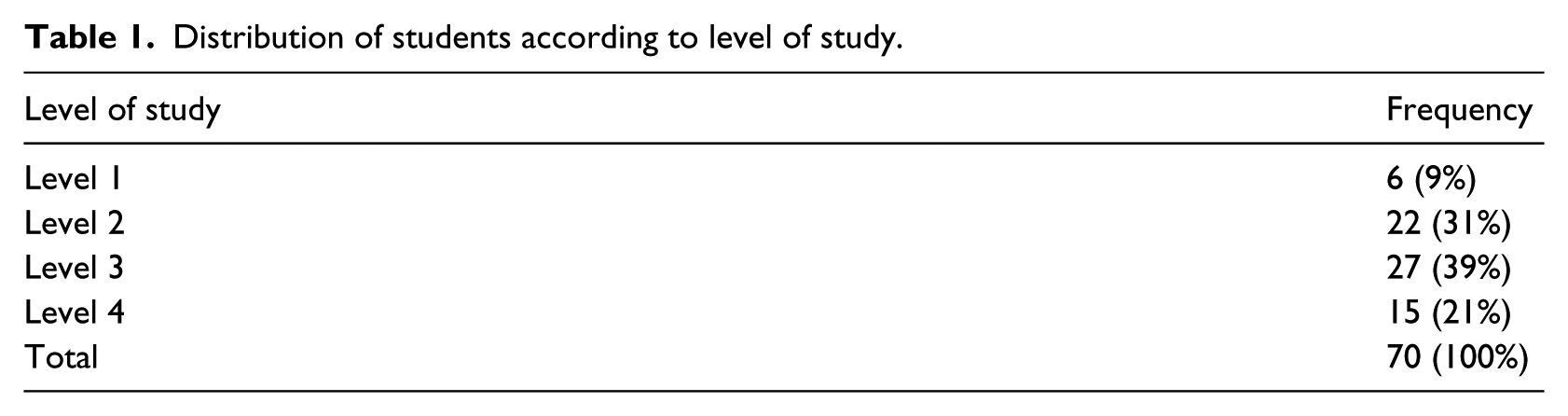
Table 1 shows the distribution of the student participants from all levels of study. Many students who join university from secondary school level do not know how to use computers. Most of them touch a computer for the first time at university. This compels many lecturers to start using technology in their classes when students are in the second year of study. This explains the low percentage of respondents of Level 1 students in Table 1. Ten Level 1 students did not respond to the questionnaire.
Distribution of students according to level of study.
Level of experience of lecturers and students in using electronic technology for learning
We asked respondents to indicate their level of experience in using technology. The question requested the participants to choose among the following responses: non-user; novice; average; and expert. This information was sought to determine the entry characteristics of respondents to enable us to map existing knowledge and skills of students and staff regarding use of technology. Their responses are summarised in Figure 2.
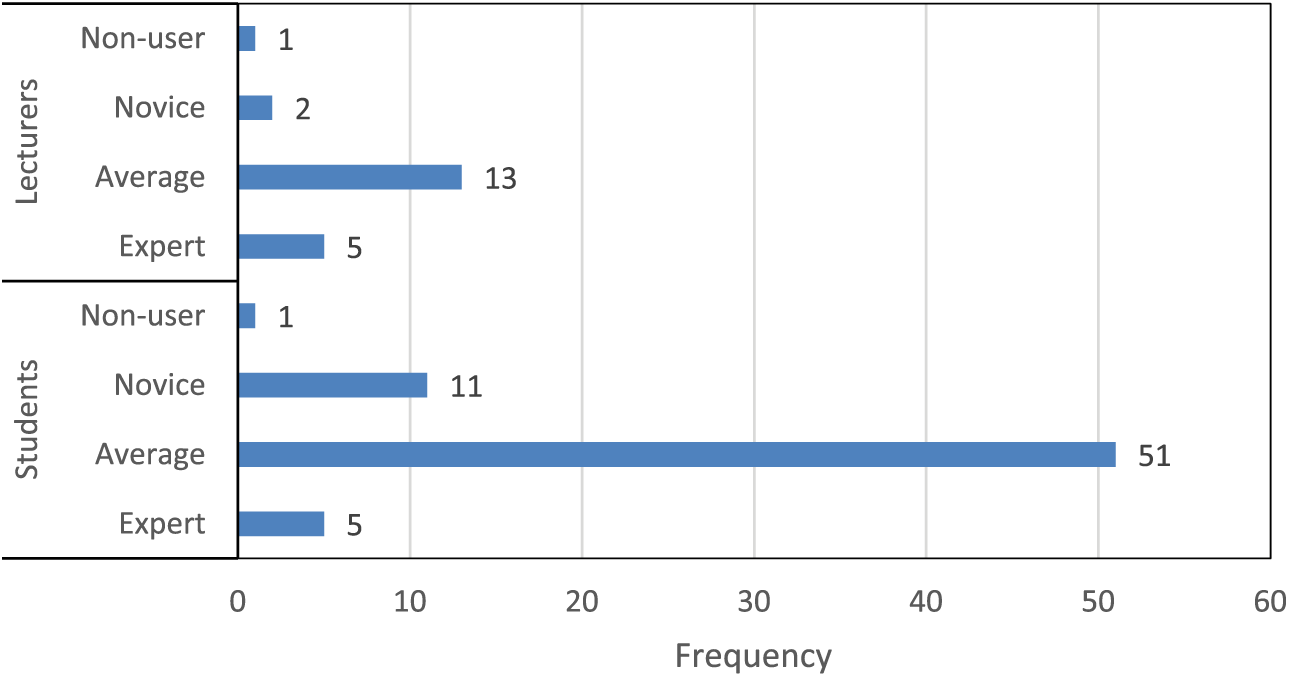
Level of experience of lecturers and students in using electronic technology for teaching and learning (n = 89).
Four respondents did not respond to this item. The two lecturers who did not respond left for further studies soon after collecting the questionnaires. It was not possible to obtain their input after they had left. The majority (72%) of respondents were average users while only 2% were non-users. If we add all users together (novice, average and expert), the results show that 98% were users.
Availability of resources
In order to build a digital university, we thought that it was imperative to find out what human and non-human resources were available locally. This section presents findings on respondents’ access to education technology resources and the available skills of lecturers for designing e-learning instructional materials. Firstly, we wanted to find out technologies for e-learning that lecturers had access to by asking them to indicate e-resources to which they have access. They were provided with a list of items to choose from. The findings on this item are presented in Figure 3. It can be seen from Figure 3 that some resources that can be used for designing a digital university were available to at least 50% of lecturers. These included computers, learning materials in print format and Portable Document Format (PDF)converters. It was gratifying to discover that all respondents had access to computers. This means that it will be possible to redesign instructional materials which are in print form into electronic format. It should be possible to use the resources that are locally available to start the process of building a digital university. What is crucial for this venture to be successful is to educate people on the importance of sharing limited resources at their disposal. For example, participants with web design, video and audio editing skills could be asked to teach others. We could amass whatever resources we have on campus before seeking external support. Resources that are missing completely, for example, audio editing, Text-to-Speech and Speech-to-Text software as well as video and digital cameras which were in short supply, could be purchased.
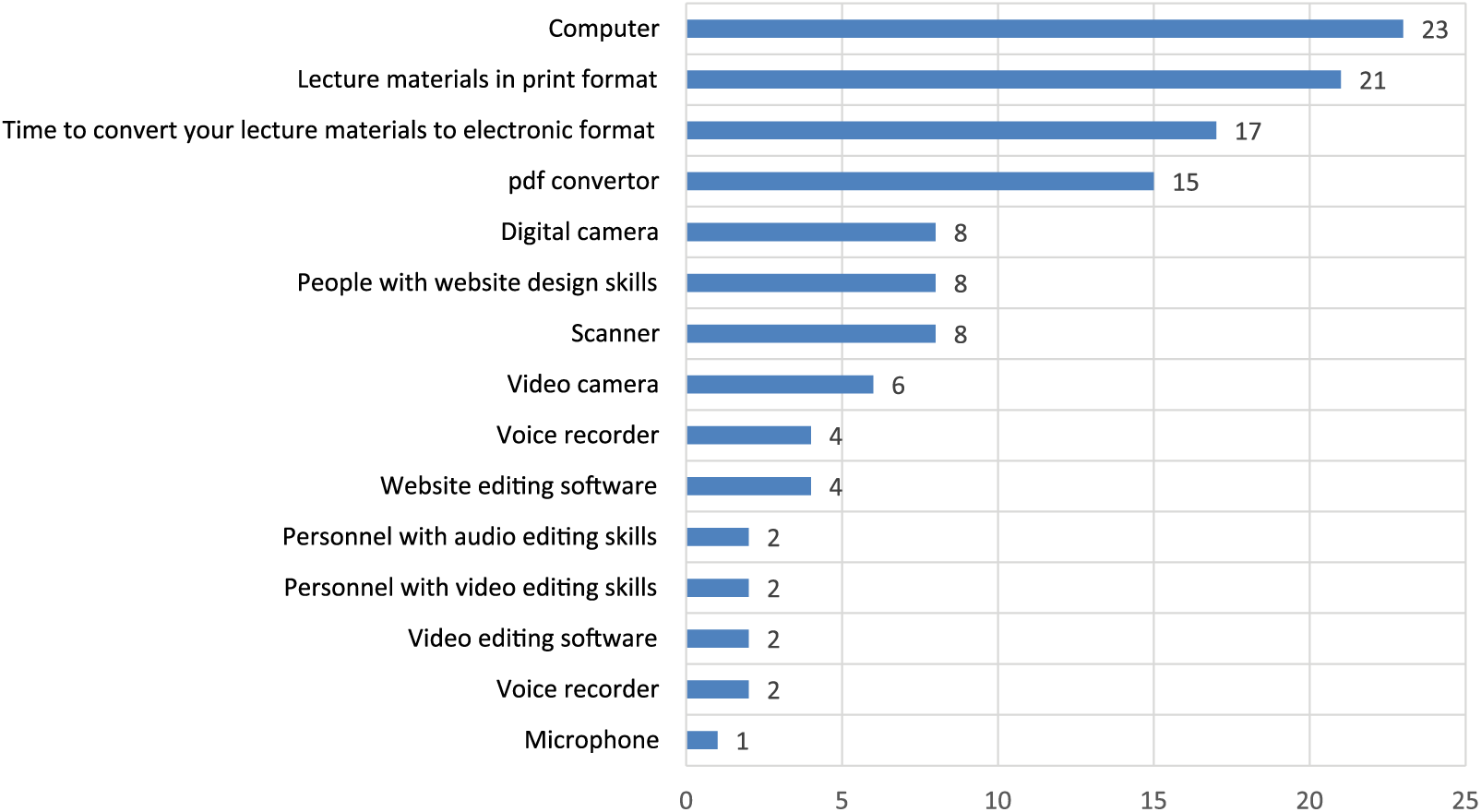
Access to resources for repurposing instructional materials (n = 23).
Enabling factors
Many opportunities exist nowadays for accessing instructional materials. Educators can use open source software, free web hosting, free LMS such as Moodle and social media such as Facebook, Twitter and WhatsApp to distribute instructional materials. The study found that most of the lecturers (83%) had the following skills required for designing materials for e-learning: converting documents into PDF format; and finding relevant instructional materials on the Internet. Another enabling factor that this study found was that 93% of lecturers had some experience of using technology. Some lecturers were already using technology such as Microsoft Office products (e.g., Word, Excel and PowerPoint). One lecturer said, ‘I mostly use PowerPoint when teaching. I no longer use chalkboard but sometimes I use whiteboard markers for the whiteboard’. She uses PowerPoint because she teaches large classes of about 150 students and finds it more efficient to teach using this software. Some lecturers use Excel, multimedia projectors, eBooks and the Internet. In addition, some lecturers use technologies such as Moodle and anti-plagiarism software called Turnitin. Out of the 23 lecturers, 12 have previous experience of designing e-learning materials. This level of experience is a big asset to the institution – since they can be deployed to help train others.
Lecturers were asked to indicate the media that they find practical to distribute electronic instructional materials. The top five technologies that lecturers used are presented in Figure 4. These include the Internet, Facebook, memory sticks, personal computers and ordinary cell phones.
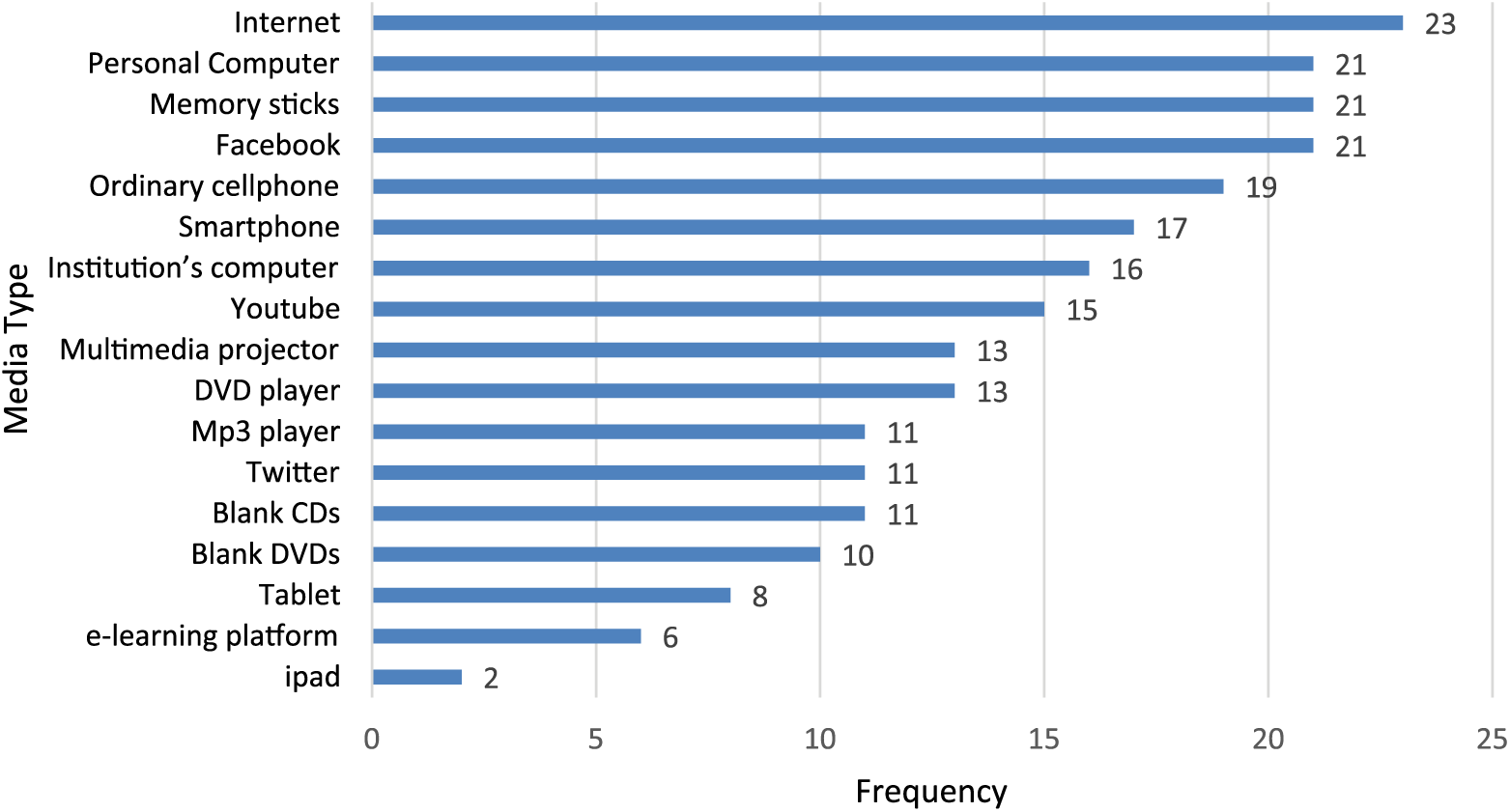
Sustainable electronic media for lecturers (n = 23).
These findings imply that all lecturers would find it easy to distribute their lessons online. Access to the Internet by lecturers is now easy because the bandwidth and the number of access points on campus have been increased. If managed properly and by establishing rules and regulations to be followed when using Facebook for academic purposes, Facebook offers potential as a platform for e-learning.
Students were also asked to indicate which electronic media they find useful for learning (see Figure 5). Many students (64%) indicated that a sustainable way to access electronic instructional materials is through the Internet. But this leaves out a significant percentage (36%) who did not find the Internet sustainable. This means that a combination of media should be used. Media that at least half of university students find sustainable to use are the Internet, Facebook, and ordinary cell phones.
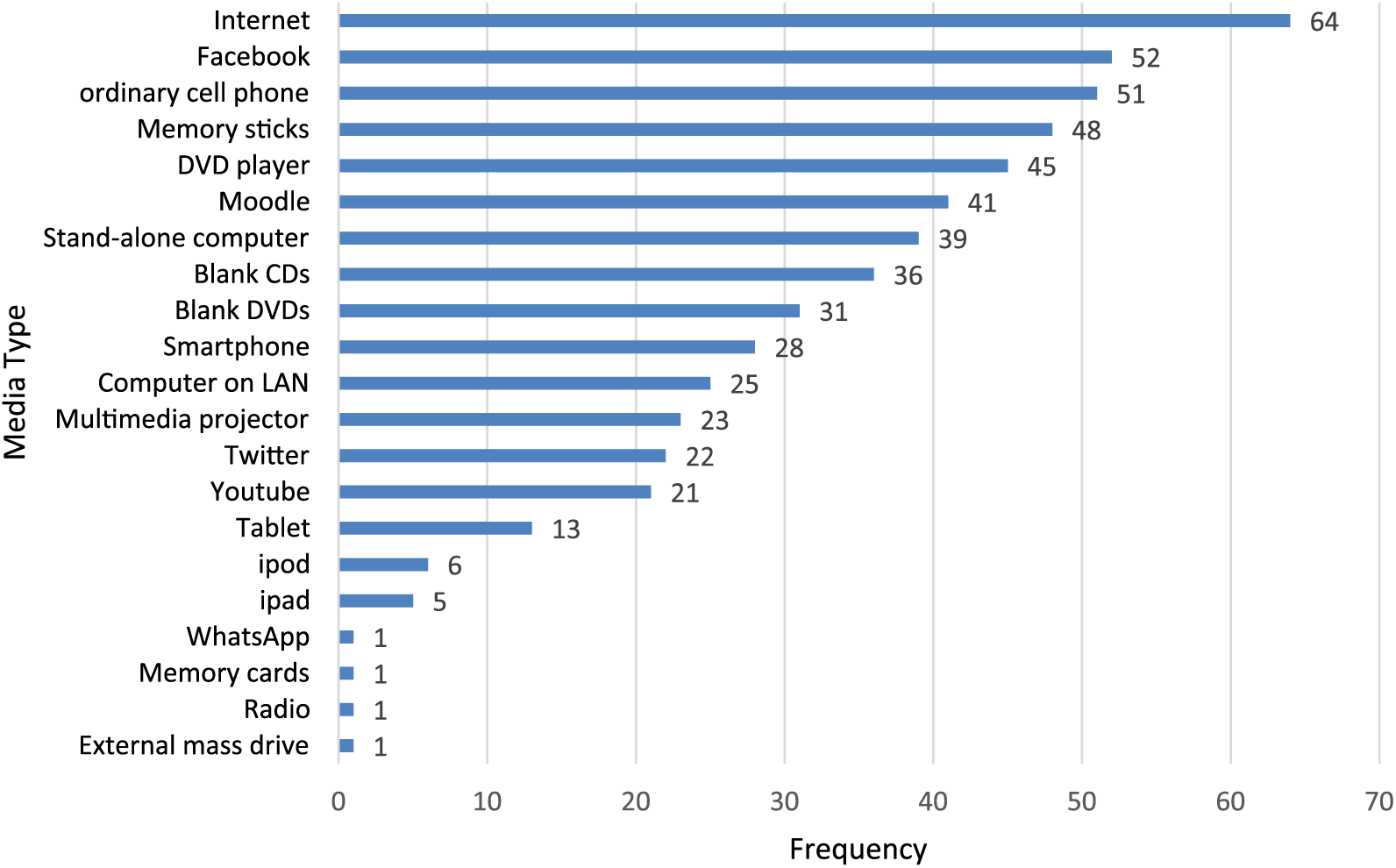
Sustainable electronic media for university students (n = 64).
Lecturers and students find Facebook a sustainable way to engage in e-learning. This offers potential to be utilised for electronic delivery of instruction in a digital university. In addition, many students at Mzuzu University nowadays bring their personal laptops onto campus.
Teachers and lecturers were asked to indicate media formats that they have previously used to design e-learning materials. Findings showed that the most common format for e-learning instructional materials used by teachers and lecturers was PowerPoint. Video and audio media of instruction were not common modes of instruction in teaching and learning. This finding means that teachers and lecturers need to be taught how to design and deliver lessons using these media. It was also found that a few teachers and lecturers who used e-learning materials mostly distribute their electronic instructional materials using flash disks (see Figure 6). It could be that lecturers use flash disks to distribute their materials to students who have personal laptops. Using CDs and DVDs to distribute electronic materials in addition to flash disks would increase the number of students with access to these materials because many students in secondary schools and Mzuzu University have access to DVD players.
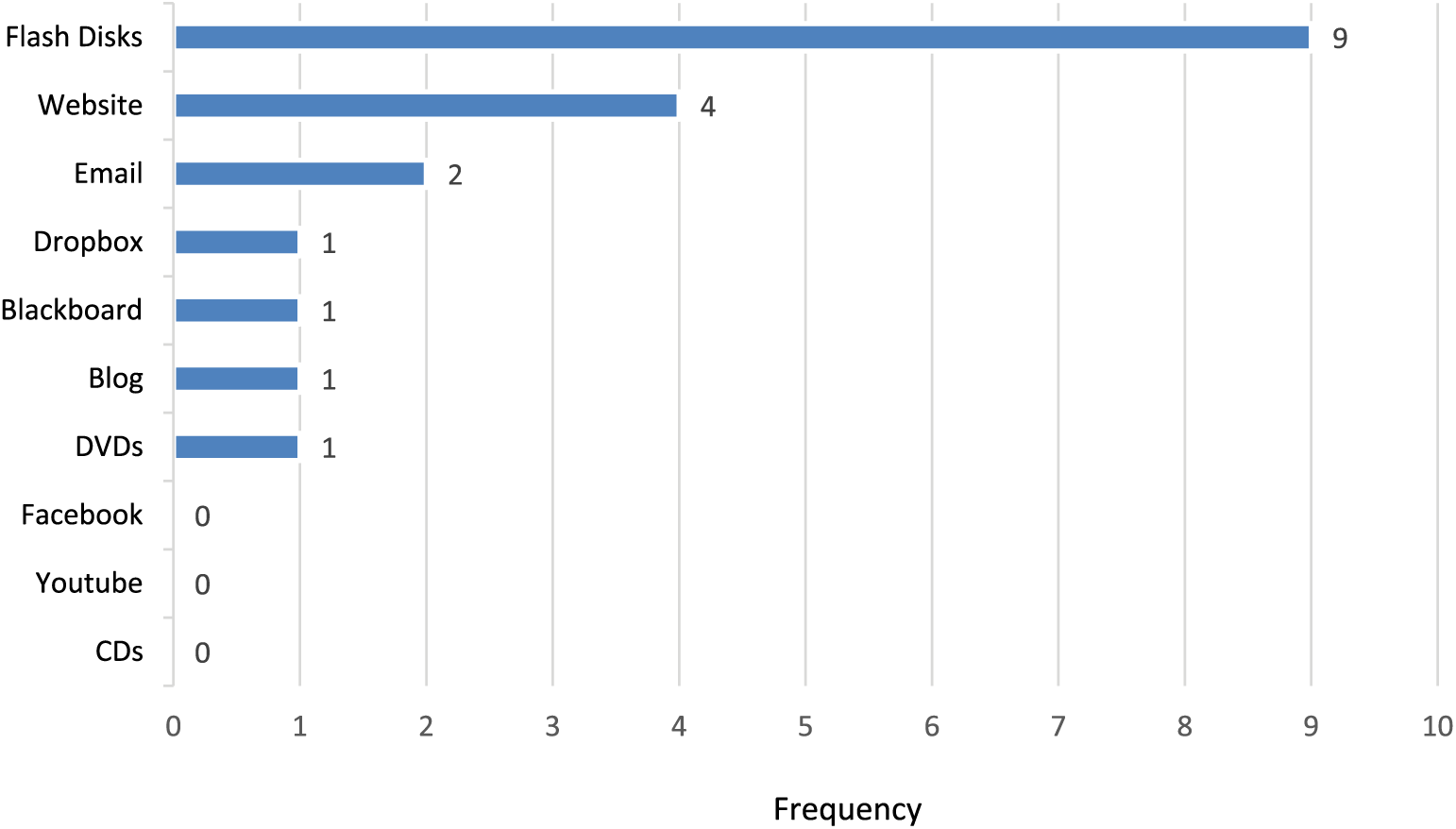
Media used to distribute e-learning instructional materials.
Challenges
Challenges that are likely to be faced by learners in the proposed digital university at Mzuzu University when accessing e-learning content may include lack of expertise of working with Linux or Ubuntu operating systems, shortage of computers, tablets or smartphones, and high Internet connectivity charges. Another challenge that will need to be tackled is over-reliance on the lecturer as the sole provider of teaching and learning resources for students. We asked students to indicate whether they use additional resources to supplement what they learn in class (or not). The study found that the majority of university students (61%) did not use supplementary e-learning instructional materials. Those students who do use additional materials mainly obtained them from the Internet. These findings seem to suggest that learners should be taught how to search, find and evaluate information they find on the Internet. There will be a need to introduce an information literacy course to all learners in the proposed digital university as a first-year course. In addition, the digital university should acquire more computers or tablets or other means of distributing and accessing electronic content. These measures would empower learners to access electronic teaching and learning resources easily. Only a few lecturers had time to redesign their lecture materials from print to electronic. This means that there is need to convince more lecturers of the importance of developing electronic learning materials or else the university would have to hire someone to do the job. Another way to facilitate production of these materials would be to give incentives to lecturers as a token of appreciation for the extra work. It was also noted that the uptake of technology in teaching and learning was low. One possible contributing factor to this phenomenon could be the lack of a policy on e-learning. It is very difficult to convince lecturers and students to use e-learning without a policy because one chooses whether to use technology or not. When we asked lecturers if there were policies on e-learning at Mzuzu University, only 3 respondents out of 23 indicated that policies on e-learning were available. If learning institutions developed policies on e-learning and made it mandatory for all members of academic staff and students to adhere to them, people would be obliged to use e-learning in learning and teaching. Another challenge this study revealed is that some lecturers do not have knowledge and skills for distributing instructional materials onto the Web. Nowadays lecturers are expected to know how to upload materials onto the Web to allow their learners access to locally produced teaching and learning materials that can be accessed anytime. Critical skills that most lecturers lack to enable them to convert printed instructional materials to electronic format are: (a) editing speech using voice editing software; (b) using Text-to-Speech software; (c) using Speech Recognition software; (d) editing videos and using video editing software; (e) designing web pages and blogs; and (f) using LMS such as Moodle. These findings are in line with what Odora and Matoti (2015) found in their study titled ‘The Digital Age: Changing Roles of Lecturers at a University of Technology in South Africa’. They found that although the majority of lecturers had access to a wide range of digital technology, the findings did not suggest that the lecturers used the technologies in learning and teaching. Furthermore, their study revealed that 64% did not use a computer to create web pages. Only a very small proportion of respondents used a computer for creating and editing audio and video.
Another challenge that needs to be tackled is the attitude of lecturers. There are some lecturers who have a negative attitude towards using technology in learning and teaching. For instance, there are a few lecturers who have not used Moodle since the e-learning platform was installed a couple of years ago even though several attempts were made to publicise its existence to the lecturers. More challenges that need to be solved include intermittent power supply, which makes Internet access difficult (Chaputula, 2012) and the very considerable cost of the Internet connectivity (eLearning Industry, 2016). Malawi’s reliance on only one source of electrical power is certainly a significant challenge. The country must invest in other sources such as renewable energy in order to have sustainable power supply to make digital learning possible. There is also a need to negotiate with Internet providers for concessionary rates for educational institutions.
Implications of digital university for Africa
Information sharing
For the concept of digital university to be a reality, sharing of digital resources amongst African universities is mandatory; a view shared by Kasalu and Ojiambo (2015). They observe that university libraries need to share resources and have access to remote information learning resources. In the 21st Century, ICTs have created increased demand for information therefore, there is need for more funding for universities. Kasalu and Ojiambo (2015) further reiterate that in Kenya, the need to share information is enormous because universities have limited resources and there is lack of support by parent ministries. University libraries in Africa need to share information because the amount of information generated has become so huge such that no single library can collect it all single-handedly. It is now very easy to share information using computer networks. With a single click of a computer button, it is possible to share and access information available locally and internationally. The concept of sharing educational resources in Africa is a good one but it has its challenges. Kasalu and Ojiambo (2015) identify the following challenges that impede information resources sharing: (a) poor information and communication infrastructure; (b) slow uptake of modern ICTs by universities; (c) copyright issues; (d) delay in paying publishers of e-resources by university; and (e) unwillingness by some libraries to share their information resources. For information sharing to succeed, there is need to eradicate the ‘self-sufficiency’ syndrome from African universities.
National research and educational networks
Digital universities can succeed if universities in Africa can form networks for education and research. Some African countries already have National Research and Education Networks (NRENs) that provide Internet infrastructure and service to research and education communities in their respective countries. Another venture by African countries of securing high speed and affordable Internet connectivity for the African research and education community is the UbuntuNet Alliance. It was established in the latter half of 2005 by the Malawi Research Education Network, the Mozambique Research and Education Network, the Kenya National Education Network (KENET), the Rwandan Education and Research Network and the Tertiary Education and Research Network of South Africa (UbuntuNe Alliance, n.d.). Kasalu and Ojiambo (2015) note that there are several collaborative ventures among university libraries in Kenya to share resources. These include: Electronic Supply of Academic Publications; KENET; Database of African Theses and Dissertation, and African Virtual Library-Kenya. Other African countries can build on what has already started in Kenya. In addition to education and research, strong NRENs can have a significant impact on the social and economic growth of a country. Although Africa has embarked on the idea of purchasing and managing bandwidth as consortia, Etim (2016) contends that Africa as a continent has lagged behind. She goes on to say that in most of Africa, adequate Internet access presents a great challenge for university administrators.
Open educational resources (OERs) and continuing professional development (CPD)
For a digital university in Africa to be possible, institutions of higher learning which have limited resources for teaching and learning should consider using free/libre and open-source software, OERs, free webhosting, free LMS, student response systems and social media such as Facebook, Twitter and WhatsApp instead of solely relying on proprietary software. In addition, institutions of higher learning should mount CPD programmes to train educators on how to redesign existing instructional materials that are in print format for e-learning mode of delivery.
Access to e-resources
Once the challenge of availability of e-resources has been solved, there will be a need for educational institutions to ensure that learners have access to these resources all day every day. This means that there should be uninterrupted electrical power supply to local servers and servers on the Internet. Institutions of higher learning should invest in alternative power sources such as solar and wind energy should power supply on the national grid fail.
In summary, based on the evidence emerging from this study, we argue that digital learning mediated by many technological applications is possible. What is required however, is proper planning and well-designed courses that are appropriately supported by the right mix of technologies. Our findings attest to earlier claims made by Joksimović et al. (2015: 121) that ‘with the further development of online education, it seems that both learning paradigms are evolving into a single learning approach – digital learning’.
Footnotes
Declaration of conflicting interests
The author(s) declared no potential conflicts of interest with respect to the research, authorship, and/or publication of this article.
Funding
The author(s) received no financial support for the research, authorship, and/or publication of this article.