




Abstract
This study presents an overview and critical analysis of the literature related to Twitter and language learning published from 2009 to 2016. Seventeen studies were selected for inclusion based on a four-phase identification procedure, which helped us to identify published studies that resulted in a content analysis of themes in the articles emerging from the data set. Guiding questions include the following: What types of research have been conducted on Twitter in educational settings? How was Twitter used for language learning? What educational benefits were found by using Twitter for language learning? and What challenges and future research does the current research offer for Twitter and language learning? The analysis points to the potential of microblogging as a way to promote interaction and communication, potentially with native speakers, to build community, and to encourage noticing and negotiation of meaning. Results reveal that Twitter is used diversely in language education settings; it can be used at different levels, settings, and with a variety of tasks. They also shed light on educational practices and how language learning students interact with native speakers, develop language skills and competencies, and build community in the language classroom.
Introduction
In the last two decades, technological developments have continued to play a crucial role in language learning. Research in language education has been shaped by many innovative technological tools, such as email, chat, wikis, and social media. Twitter, one social media tool, has held an important place in both academic and non-academic settings, opening up new spaces for teaching and learning.
Despite its recent struggles, Twitter has grown in popularity significantly in the last 10 years and now ranks just behind Facebook in total number of users. Twitter reports that, as of September 2015, there were 320 million active Twitter users (Twitter, 2016) who send 500 million tweets per day (Oreskovic, 2015). Within the classroom setting, there has been a striking increase in the number of students using mobile devices. In fact, 80 percent of active Twitter users are on hand-held devices (Twitter, 2016). Twitter can serve as a means to create value in the shared experiences that students create by using these new tools.
Twitter’s popularity is likely due to various attributes that have shaped it. Firstly, Twitter has grown in popularity despite its 140-character limit per tweet, which, according to Jack Dorsey, CEO of Twitter, inspires users to be creative and brief (Bowman, 2016). Further, as a more contextualized yet personal outlet, Twitter gauges a user’s interests and suggests others to follow, which is different than social media tools like Facebook. As Twitter approaches its 10-year anniversary, it is considering modifications to its platform, such as possibly implementing a 10,000-character limit (which is also the direct message limit) and changing its reverse chronological timeline (Wagner, 2016). These changes, if implemented, could re-shape the way in which Twitter is used and perceived.
Twitter has not only gained a stronghold in popular culture, but also in educational circles for both formal and informal use. Teachers embrace Twitter for professional development and use it to expand their personal learning network. As a space where teachers can network, learn, and engage in an idea collision, teachers nationally and internationally can participate in Twitter chats and join Twitter communities. In the classroom Twitter has been used as a quasi-learning management system, in particular for back channeling, daily communication, virtual office hours, out-of-class chat sessions, note-taking, and pop-quizzes, as well as sending reminders and extending the classroom community. Twitter allows for the continuous sharing of content and the establishment of lasting dialogues with other educators.
Some believe that tweeting has given way to a new literacy practice, Twitteracy, which combines both traditional and new literacies, and necessitates an understanding of the language of hashtags and other Twitter-related terms. Greenhow and Gleason (2012) propose that “new literacies scholars conceptualize literacy from a broader, sociocultural perspective as a dynamic, situationally specific, multimodal, and socially mediated practice that both shapes and is shaped by digital technologies” (p.466). Reading and writing in these new virtual spaces may not be individualistic or completely original, but encompasses a type of recycling and remixing, which Greenhow and Gleason (2012) confirm is fundamental to how young people create new texts (Alvermann, 2008). Considering these developments of Twitter, we now look broadly at ways in which this tool has been implemented in the language classroom.
Shortly after Twitter’s inception in 2006, Antenos-Conforti (2009) conducted the first study documenting the use of Twitter in a language class. Since her work was published, there have been numerous studies examining the role of Twitter in language learning settings, from tweeting to understanding hashtags. Some of the ways Twitter has been documented in language learning include students’ analysis of native speaker (NS) tweets (Blattner et al., 2015, 2016b), student interpretations of hashtags Blattner et al., 2016b), the development of vocabulary (Perez-Sabater and Montero-Fleta, 2015), pronunciation practice (Fouz-Gonzaléz and Mompean, 2012; Mompean and Fouz-Gonzalés, 2016), dynamic assessment (Cacchione, 2015), grammatical practice (Hattem, 2012, 2014), development of autonomy (Leis, 2014), promotion of cultural competence (Antenos-Conforti, 2009; Borau et al., 2009), collaborative learning (Stepanyan et al., 2010), community building (Kim and Lim, 2010; Lomicka and Lord, 2011; Stepanyan et al., 2010), motivation (Kim and Lim, 2010), development of social presence (Lomicka and Lord, 2011), and promotion of collaborative writing (Castrillo de Larreta-Azelain, 2013).
In its early years, Twitter research often presented informal accounts of use in the language classroom and also addressed learner perceptions and beliefs about microblogging. However, with the implementation of creative task design, Twitter can also encourage reciprocity and critical thinking and transform how we educate. Over the last 10 years, the research on Twitter, albeit limited, has addressed a variety of educational contexts, activities, practices, and skills. This analysis acknowledges and relies heavily on an analytical framework employed in a study conducted on Twitter and education between the years 2008 and 2011 (Gao et al., 2012). However, a comprehensive, critical, and more timely review of the published research in the area of language learning is needed to establish a more complete understanding of Twitter and address aspects such as current and future research and practice.
Research questions
In this analysis, we attempt to answer the following questions on Twitter and language learning.
What types of research have been conducted on Twitter in educational settings? How was Twitter used for language learning? What educational benefits were found by using Twitter for language learning? What challenges and future research does the current research offer for Twitter and language learning?
Methodology
Selection criteria
Adhering closely to the method employed by Gao et al. (2012), the following selection criteria were devised.
Research had to focus on using Twitter for language learning in an educational setting. Informal studies about other microblogging tools (e.g., Plurk) or repurposing other tools as a microblogging tool (e.g., EdModo) were excluded from this analysis. Research had to be empirical studies reporting actual qualitative or quantitative data derived from observation or experimental studies. Any research relying on anecdotal experience was excluded. Theoretical papers on how to use Twitter in the classroom, but not reporting on actual use, were also excluded from the analysis.
Identification of studies
To identify studies for this article, the researchers again employed similar search criteria to that used by Gao et al. (2012), and carried out the search independently in four phases. This identification was followed by a comprehensive descriptive approach to analyzing the data.
Phase one
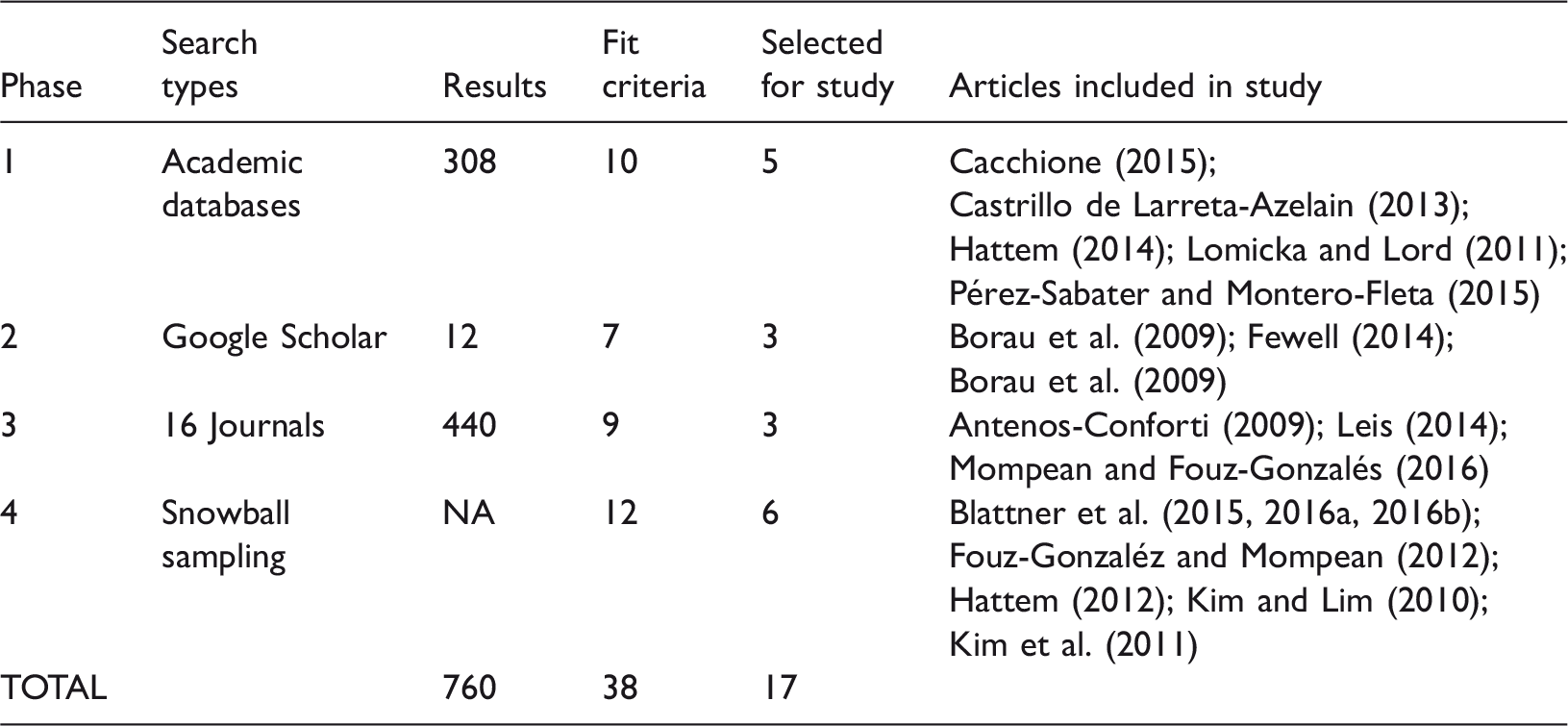
In the first phase, we conducted a search using five academic databases: Academic Search Premier, ERIC, Directory of Open Access Journals, JSTOR, and ProQuest, using search parameters that limited the search to peer-reviewed articles with a date range from 2007 to 2016. The search terms used were as follows: Twitter AND “language learning” and Microblogging AND “language learning”. This phase yielded 308 results, 10 of which fit the selection criteria. After further analysis, five articles were excluded, and five articles were included in the study.
Phase two
In phase two, Google Scholar was searched using the terms Twitter AND “language learning” and Microblogging AND “language learning”. The search terms provided more than 16,000 returns. Google Scholar was then utilized an additional time, restricting the search terms to in-title-only, which produced a more manageable search. This second search yielded 12 results, 10 of which fit the selection criteria. Of these 10 articles, three had already been selected from Phase 1. After analysis of the remaining seven articles that fit the criteria, three articles were included in the study.
Phase three
In the third phase, 16 prominent international journals with a focus on language learning and technology were searched via Google Scholar, using the same search terms, but limiting the search to each particular journal (Return articles published in). The journals include the following: Language Learning and Technology, CALICO, Computer-Assisted Language Learning, ReCall, British Journal of Educational Technology, Canadian Journal of Learning Technology, Asian EFL Journal, International Journal of Computer-Assisted Language Learning and Teaching, Hispania, French Review, Die Unterrichtspraxis, Alsic, System, Foreign Language Annals, TESL-EJ, and JALT-CALL. This phase yielded 440 results, nine of which fit the selection criteria, and three of which were included in the study.
Phase four
The fourth phase employed a snowball selection method in which the authors reviewed articles cited in the reference sections of those papers already included in the study. This phase resulted in 12 more articles that fit the selection criteria. After further analysis, six more articles were included in the study, which yielded at total of 17 articles (See Table 1).
Analysis of studies
While we were not able to perform a meta-analysis due to the lack of statistical information in the studies used, we did engage in a comprehensive descriptive approach to analyzing the data. Using a content analysis and following Gao et al. (2012), we conducted the analysis in three phases: in the first phase, we analyzed each article for the following information and entered it into a spreadsheet with the following categories: setting, duration, participants, data sets, skill focus, learning objectives, learning activities, research findings, conclusions, limitations, and implications. The researchers divided the articles that fit the selection criteria in half, read the articles, and entered the data into the spreadsheet. The researchers then exchanged articles, read them, and came to a consensus on the data the other had entered into the spreadsheet. During this phase, some articles were excluded. After initially satisfying the selection criteria, upon further analysis, the excluded studies exhibited weaknesses in research methods, reporting data, or did not use Twitter in an educational setting. In a second phrase, each researcher independently coded the research focus and learning objectives categories to identify common themes in the literature. The following themes were identified: learner autonomy/motivation, community building/development, interaction with NSs, language skills and competencies, (e.g., grammar, vocabulary, writing, pronunciation, pragmatics, cultural competence), and communication/ interaction. In a third phase, and based on their review and analysis of the 17 studies, researchers exchanged and discussed ideas for challenges and future directions of research on Twitter in language learning.
Results
After carefully reviewing the 17 studies, results indicate that Twitter has been employed very diversely in language education settings. For example, Twitter can be used between classes, teachers and students, students and students, students and NSs, or even celebrities or well-known tweeters. It can also be used at different levels, settings, and with a variety of tasks. This section discusses the general information about the research studies that address Twitter and language learning.
Keywords
Examining the keywords in the abstracts helps lend a focus to the emergent themes in the literature, and provides a helpful overview. To analyze the keywords, we copied them from each article and input them in Vocab Profiler (http://www.lextutor.ca/vp/eng/), which analyzes texts for types and tokens, among other characteristics. The analysis revealed that 13 of the 17 articles contained keywords, totaling 131 tokens and 71 types. The 10 most common terms are unsurprisingly more general and do not reveal any topics, trends, or themes in the literature, such as learning, language, microblogging, Twitter, social-networking, communication, and mobile. Looking at the least common terms, however, does shed light on how researchers have been investigating Twitter in the classroom and what themes are emerging from its usage, revealing such terms as interaction, native speakers, pragmatics, hashtags, grammar, pronunciation, and motivation (see Figure 1).
Most common keywords displayed in a keyword cloud.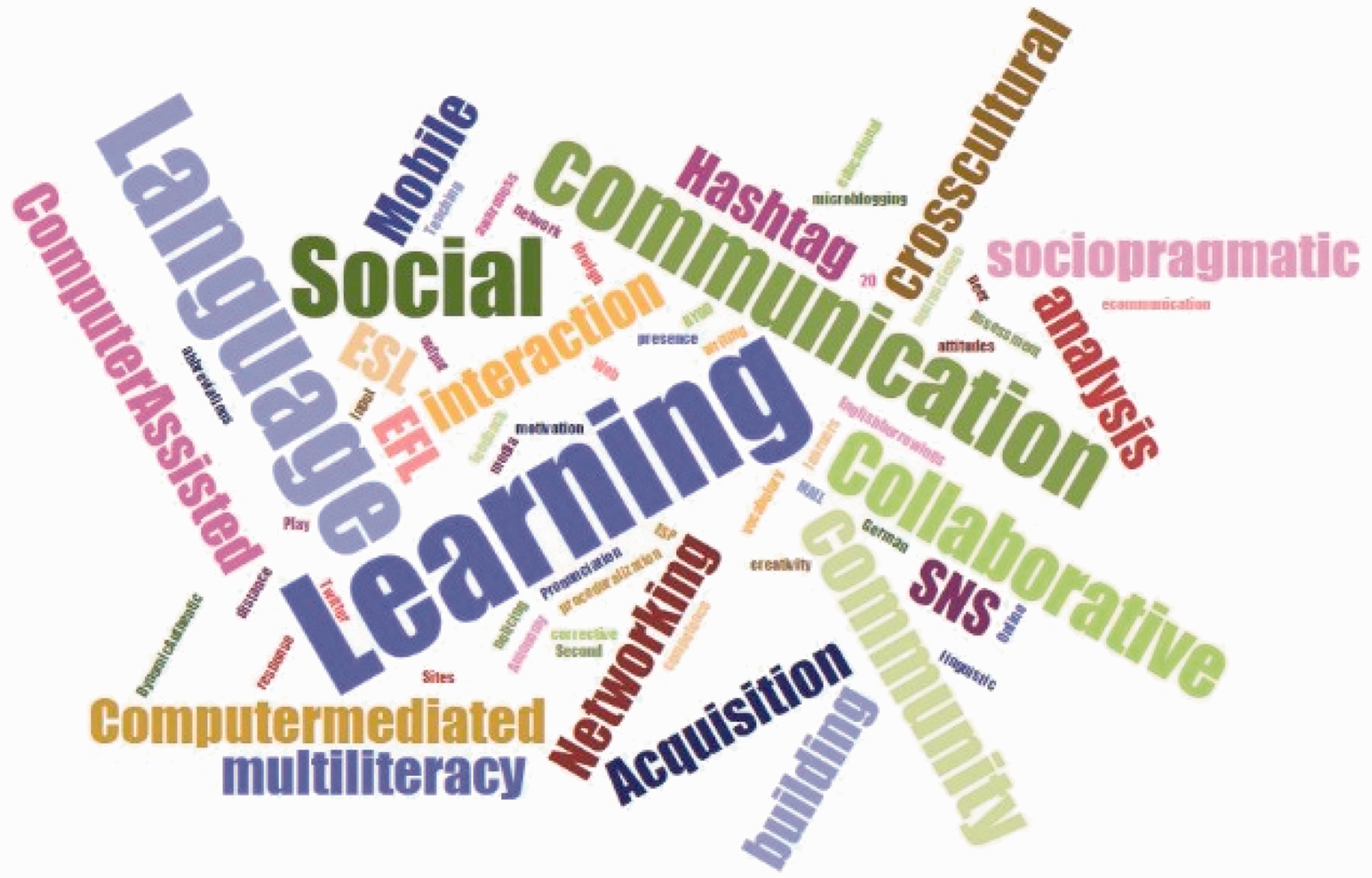
Setting
Results of search phases.
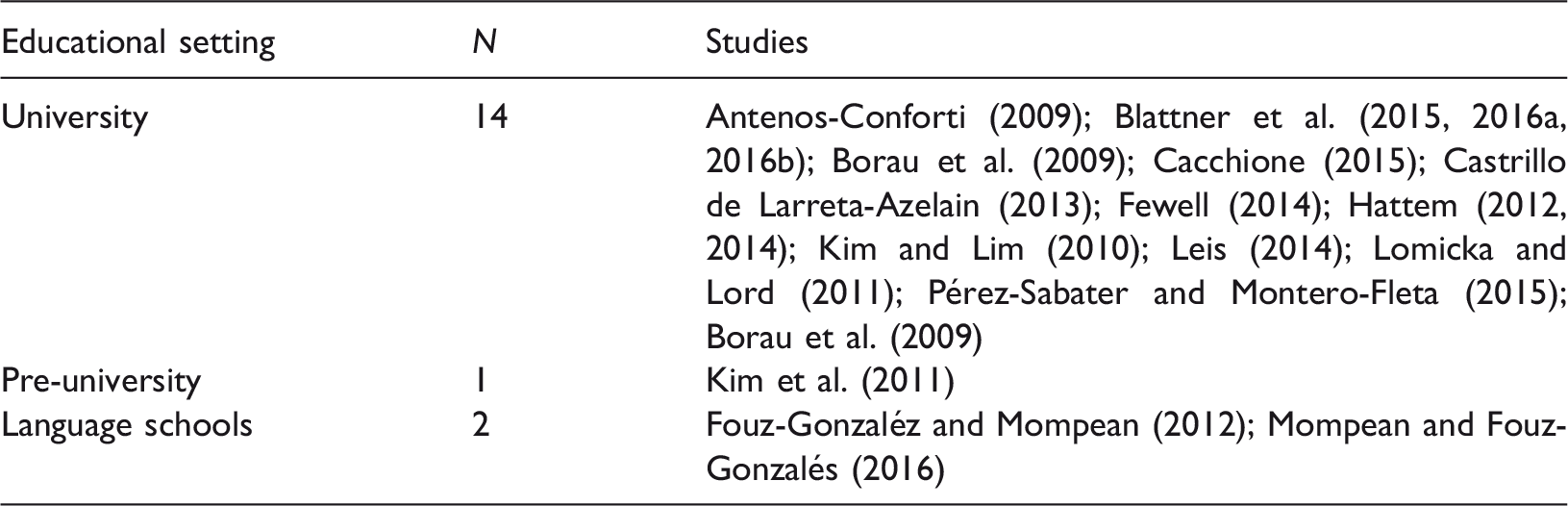
Educational settings (N = 17).
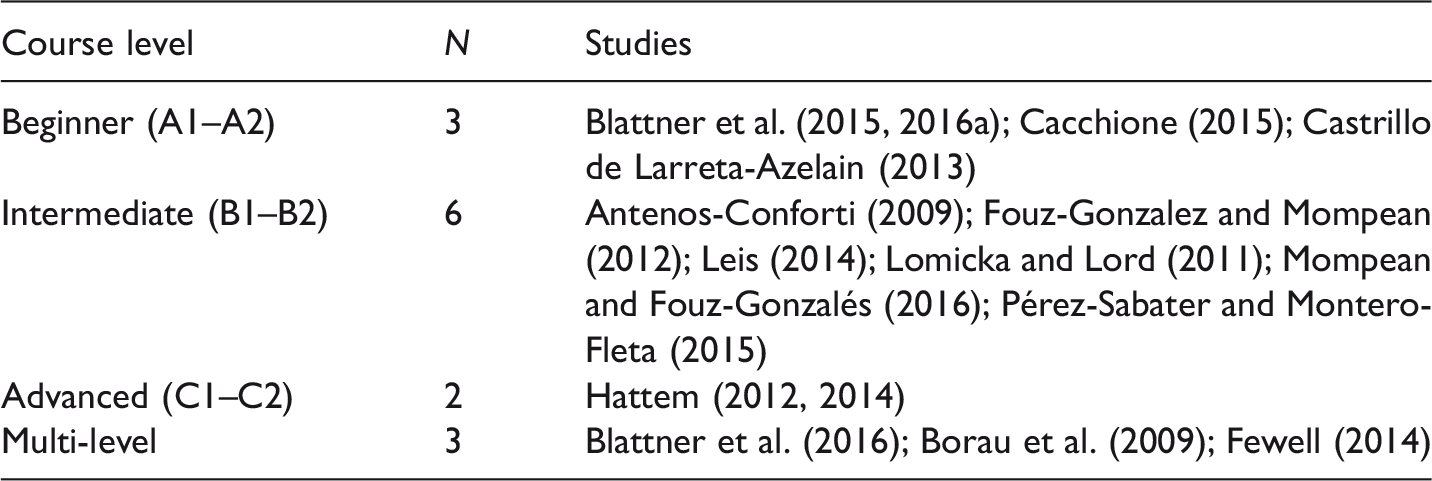
Course level (N = 15).
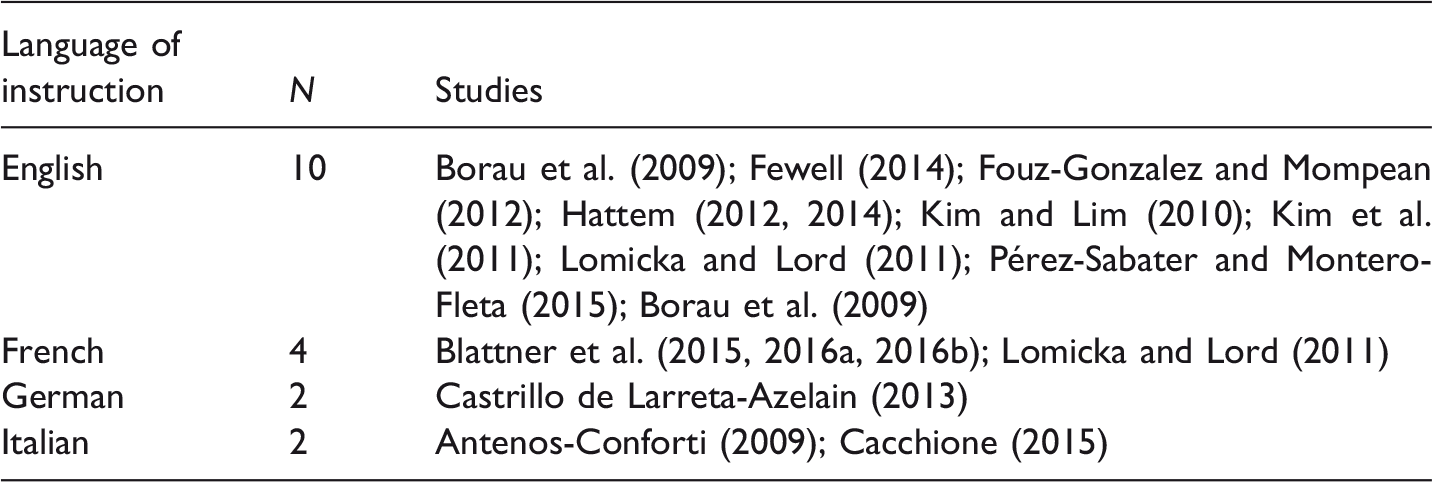
Language of instruction (N = 18).
Participants
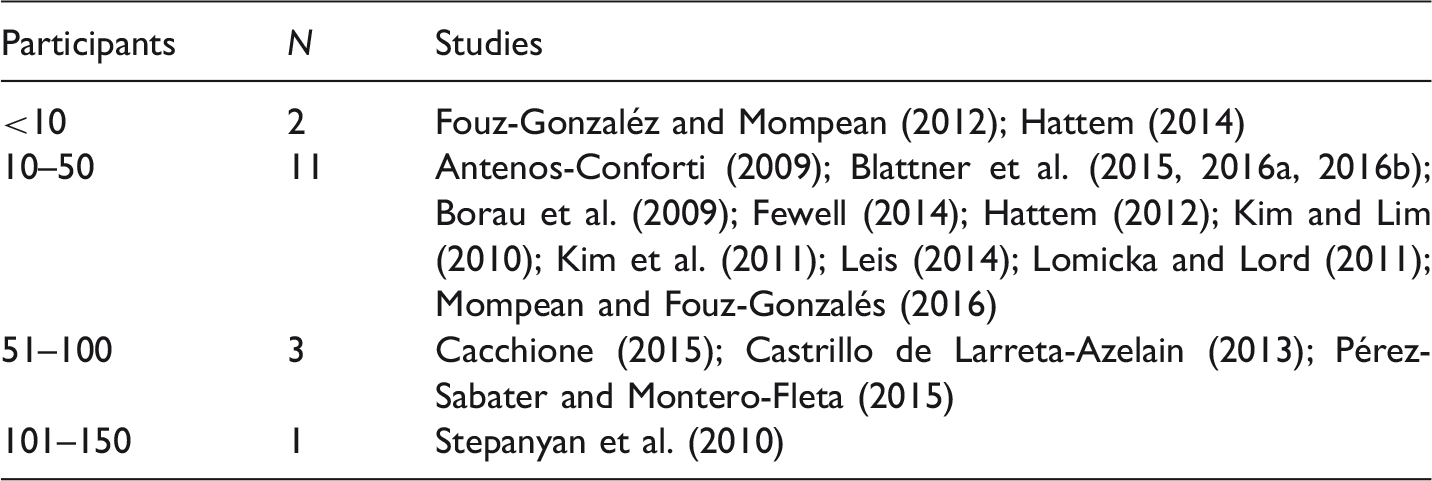
Participant size (N = 17).
Duration
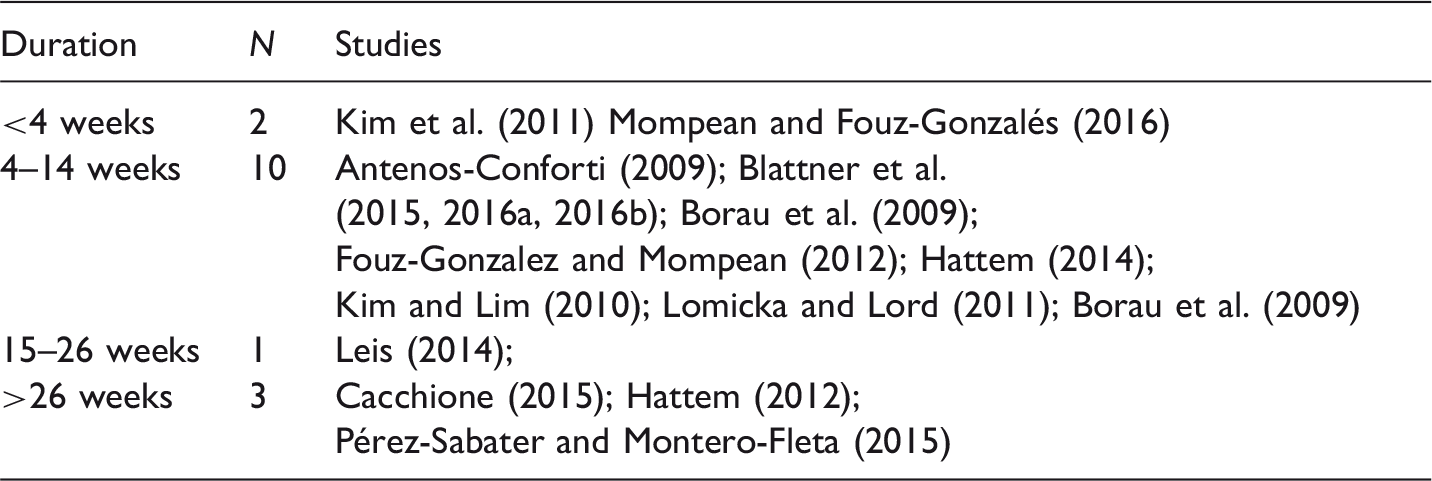
Duration of studies (N = 16).
Learning activities
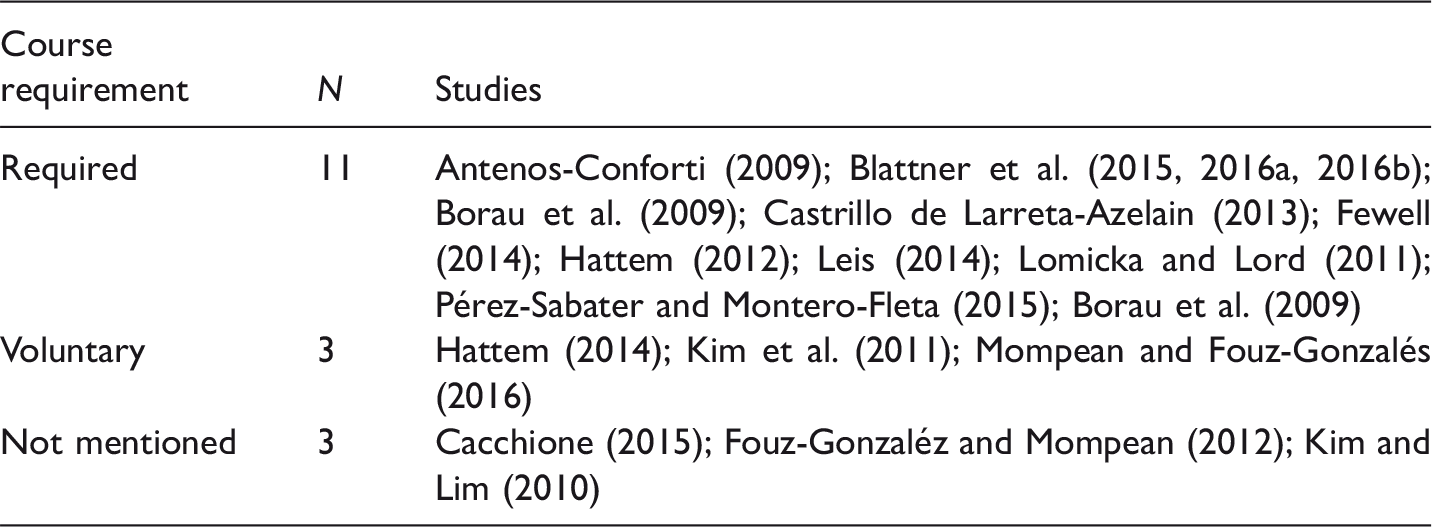
Course requirement (N = 17).
Data sets (N = 31).
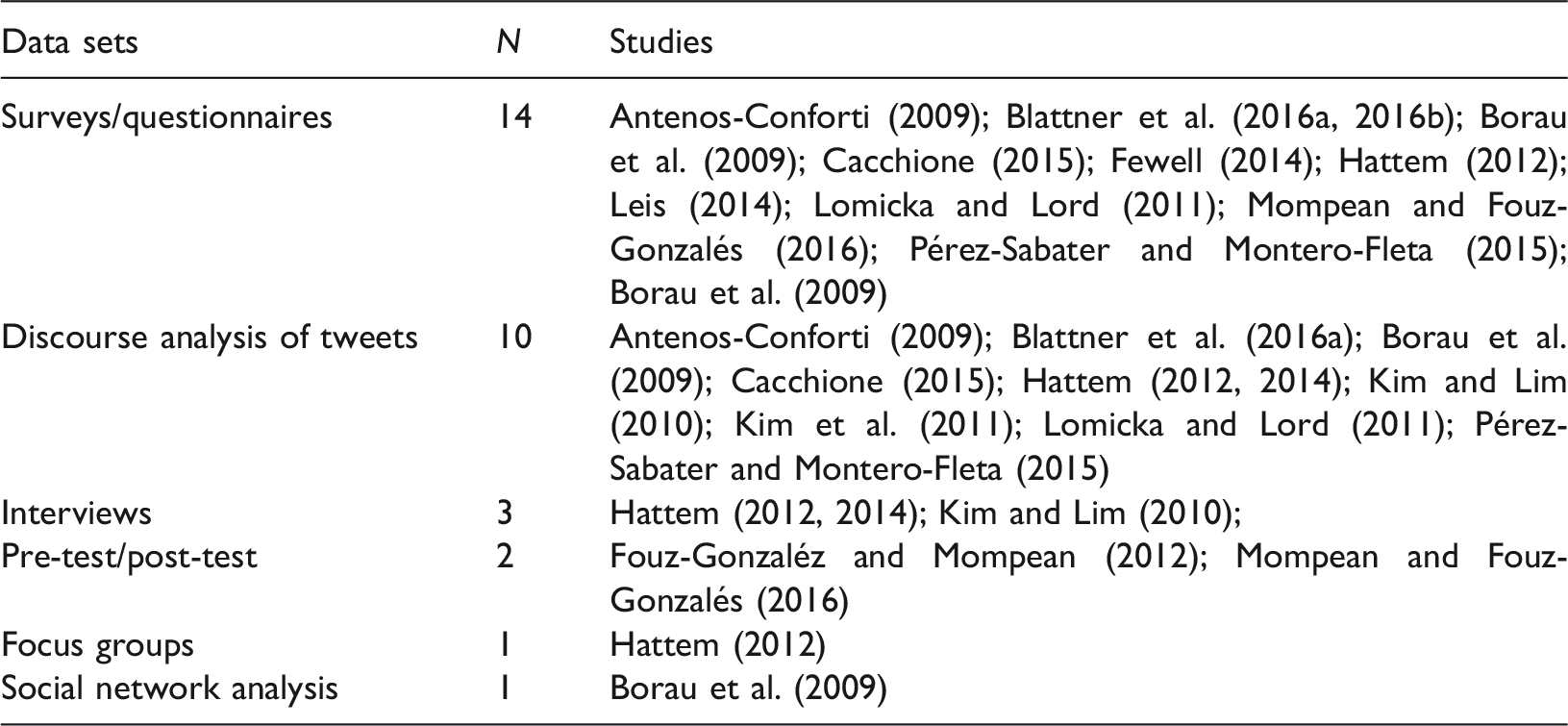
Data sets
The studies were further analyzed by data set, including discourse analysis, surveys/questionnaires, interviews, pre-test/post-test, and focus groups. The data indicated that 10 studies used discourse analysis of the tweets, 14 studies used surveys or questionnaires, three studies used interviews, an additional two studies used pretest/post-test scores, one study utilized a focus group, and one study applied a social network analysis (SNA; see Table 8).
Discussion
Emerging themes from the corpus of studies.
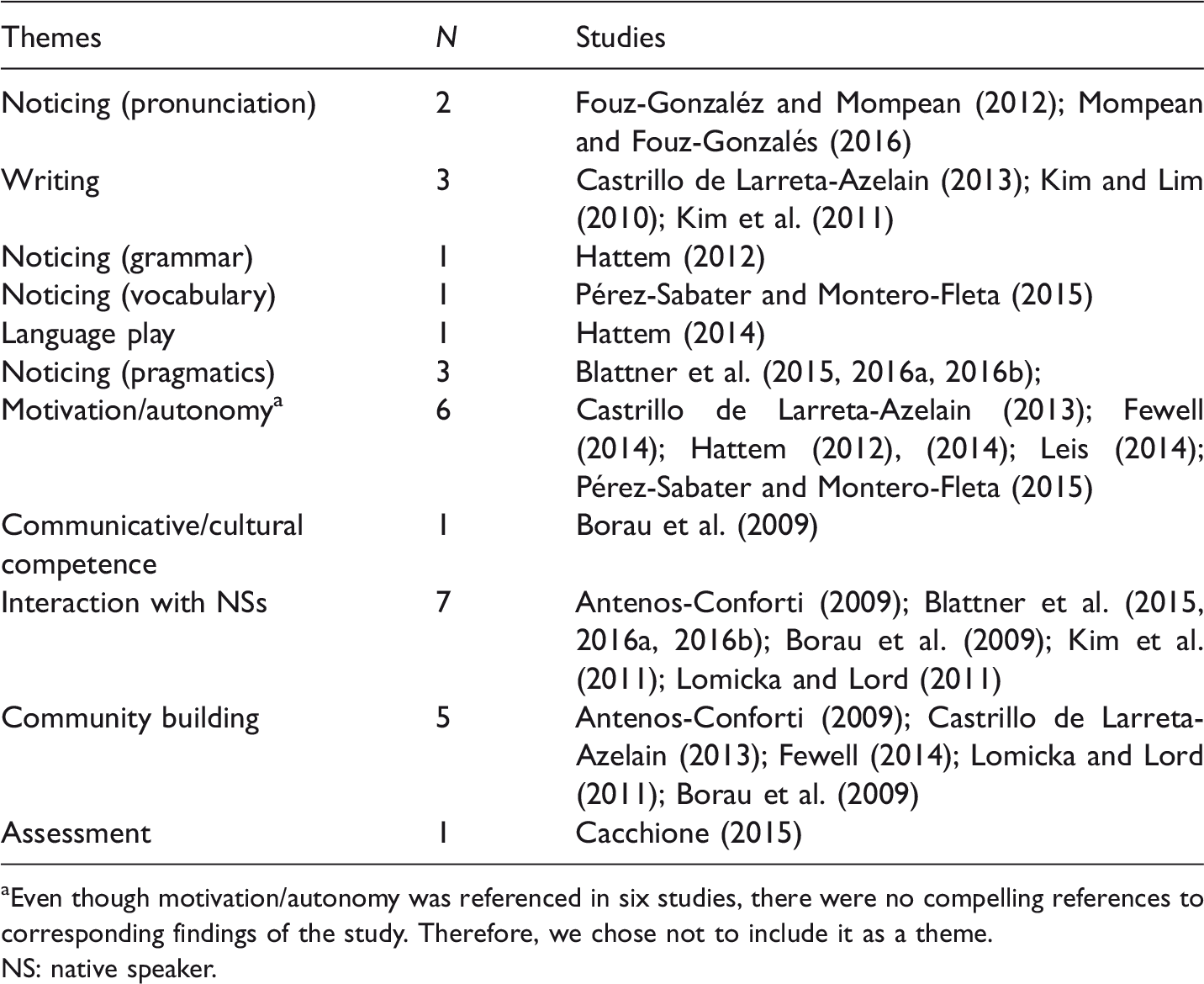
Even though motivation/autonomy was referenced in six studies, there were no compelling references to corresponding findings of the study. Therefore, we chose not to include it as a theme.
NS: native speaker.
An analysis of the educational practices across the studies sheds light on how teachers use Twitter in the language classroom to achieve various educational goals. In this section, major themes are presented that illustrate how students interact with NSs, develop language skills and competencies, and build community in the language classroom.
Interaction with native speakers
Interaction with NSs can provide opportunities for authentic communication and exchange, motivation, engagement, negotiation of meaning, the development of intercultural competence, and input/output. Partnerships with NSs can be engaging while increasing intercultural awareness, as well as linguistic proficiency (Kern, 1995; Kinginger, 2004). In fact, Klapper (2006) claims that “perhaps the most exciting application of the web in language learning is its capacity for bringing together students and native speakers” (p.191).
Over the last 8 years, one theme that has emerged from the research published in language learning and Twitter is the potential that microblogging holds to interact with NSs. Of the 17 studies reviewed in this analysis, seven mention interaction and communication with NSs as a possible use for Twitter. These seven studies incorporate the use of NSs in very different ways – from open community opportunities, where students are encouraged to communicate with those beyond peers in their classroom, to partnerships with NSs where they become part of the closed community of learners, to following NS tweets. For example, Antenos-Conforti (2009) incorporated NSs who were professional technology specialists that the author had followed for 7 months prior to the project. Students followed these professionals’ Twitter accounts but were not required to communicate with them directly. The involvement of NSs was cursory and not direct, required, or consistent and the study does not go into specific detail on conversations or interaction with the NS community. However, students did react positively to NS communication. Borau et al. (2009) reported that about half of their participants mentioned that they interacted with NSs on Twitter but did not have data to support this claim. They also reported that students recognized Twitter as an opportunity to communicate with NSs. Similar to Borau et al. (2009), Kim et al. (2011) encouraged students to tweet with people in Twitter communities and some students also followed celebrities and tweeted with them. NS interaction was not required. In Lomicka and Lord’s (2011) study, students in a French class in the USA used Twitter with a class of NSs in France. The students in France did not turn out to be regular tweeters and, of the French students, only three posted tweets on a weekly basis. The students in the USA commented that their French counterparts did not tweet as often as they had hoped, but that they were interested in knowing what was going on in the French students’ lives. Although a tweeting project was built into the study between students in the USA and in France, due to the novelty of the tool and low usage in France at the time in educational contexts, NSs generally did not embrace this tool for interaction and exchange. In the studies conducted by Blattner et al. (2015, 2016b, 2016a), students were required to follow well-known NS tweeters. Although students became familiar with these tweeters during a period of time and performed an analysis of their tweets, they generally did not interact or communicate with them.
The studies above all point to a similar trend, which is that there is an interest in the incorporation of NSs into Twitter projects; however, it is often not set up in ways that are consistent or regular. We also see that NS involvement is challenging to establish and maintain, as in the study conducted by Lomicka and Lord (2011). Their study also implied that student interaction with NSs was difficult to enforce or control in order to establish equality in posting requirements. In other studies, interaction with NSs was limited to a “following situation” rather than engaging and meaningful interaction and communication, allowing for the potential of negotiation of meaning. Still, following NS tweeters is optimal for acquiring comprehensible input, interacting with the text itself, and even for noticing different aspects of second-language (L2) input (Schmidt, 2001). Twitter can be helpful in creating a virtual classroom and providing a space for interaction; it can enrich the classroom by connecting students and teachers and students and NSs. To that end, Sayers and Brown (1987) advocate that “… students need authentic contacts with native speakers and much practice in a range of language skills—including reading and writing—if they are to develop cultural awareness and communicative competence” (p.23). Keeping that in mind, more studies are needed that explore interaction, communication, and negotiation with NSs using Twitter, where posts from both groups are analyzed, and where both groups of speakers are included in the data collection and analysis.
Language skills and competencies
Research into language learning and Twitter has also investigated how language teachers can leverage Twitter to develop students’ core language skills and competencies. The coverage area in the studies is broad and includes such skills and competencies as writing, grammar, specialized vocabulary, pronunciation, pragmatics, and cultural competence. These studies have yielded interesting results mainly on how Twitter can be used to help draw students’ attention to particular features in the language, helping them improve their linguistic and cultural competence and awareness.
One thread that emerged from the research on skill and competence development suggests Twitter may facilitate noticing (Schmidt, 2001) by increasing the saliency of the target structures. Two studies (Fouz-Gonzaléz and Mompean, 2012; Mompean and Fouz-Gonzalés, 2016) show how Twitter had a beneficial effect on pronunciation features that are problematic for native Spanish speakers learning English. The researchers helped students notice these features through tweets containing explicit instruction and enhanced input in the form of capitalization of stressed syllables, occasional translations, and authentic examples embedded as multimedia files and links in the tweets. Pre/post-test scores revealed a strong gain-rate for those who had completed the Twitter program. In another study, Hattem (2012) investigated the role Twitter could play in developing students’ grammatical competence by using its features to increase noticeability by restricting target structures and having students make them more salient through capitalization and codification. The researcher then provided positive feedback using the favorite and retweet functions to increase the frequency of positive exemplars. Qualitative data suggests students were able to notice mistakes, exemplar corrections, and positive feedback. It was also found that the audience effect may have led the students to focus-on-form more so they did not make a mistake in front of their peers. Moreover, Blattner et al. (2015) applied the concept of noticing when investigating whether students could develop intercultural competence and pragmatic awareness by analyzing and interpreting hashtags in tweets of well-known native French speakers. As part of the task, students were required to analyze six tweets per week and fill out a comprehensive linguistic questionnaire that directed learners to notice particular features in the tweet and its hashtags, such as atypical conventions, acronyms, and visual cues. Students, in general, showed strong comprehension rates, correctly interpreting the tweet content and hashtag, leading the researchers to conclude that the task facilitated noticing.
Other studies demonstrate how students and instructors can interact on Twitter to provide corrective feedback. Hattem (2012) provided explicit, metalinguistic, output-prompting corrective feedback to students using the Twitter reply feature. Quantitative data shows students repaired their mistakes with a high frequency, while qualitative data suggest students believed they gained confidence, accuracy, and automaticity in producing and monitoring tweets containing complex grammar. Castrillo de Larreta-Azelain (2013) also used Twitter to give students corrective feedback in preparation for a final writing task. Results of the study were generally positive, suggesting students thought Twitter had a positive impact on their writing by reducing anxiety, increasing their confidence, and effectively preparing them for the final task. Students mentioned some aspects of Twitter that contributed to their positive impression, for example, the character limit, while the researchers remarked that certain freedoms provided by Twitter, viz., lack of time constraints and real-time interventions, also positively contributed to helping the students learn how to write. Furthermore, Pérez-Sabater and Montero-Fleta (2015) investigated how Twitter could be used to engage in peer-to-peer, positive and corrective feedback for tweets containing specialized English vocabulary. Students were instructed how to provide corrective feedback to peers. The study showed students were able to successfully incorporate specific vocabulary into tweets and tended to provide more positive than corrective feedback. A small majority also were also able to notice mistakes and provide corrective feedback to their peers, generally on spelling mistakes, and preferring recasts over metalinguistic explanations.
The effectiveness of Twitter as a forum for negotiation of meaning has also been a topic of research. Borau et al. (2009) investigated whether Twitter could be used to develop strategic competence, in particular, the appeal for assistance. They note that the use of online dictionaries and the limitation of the 140-character limit inhibit repair of communication breakdowns and conclude it does not help build strategic competence. Hattem (2012) also notes that students rarely engaged in negotiation of meaning, doing so only when using Twitter synchronously, and as part of a well-established social group. On the other hand, other studies show that students negotiated meaning and created rich learning opportunities. According to Antenos-Conforti-(2009), Twitter has the potential to be a forum for informal negotiation of meaning as language learners connect with NSs. In a small case study, Hattem (2014) found evidence of negotiation of meaning among three students who frequently collaborated on Twitter in real-time to practice grammar. Other studies also mentioned that Twitter may help to promote peer-to-peer negotiation of meaning interaction (Castrillo de Larreta-Azelain, 2015; Kim et al., 2011).
Community building
The use of Twitter can provide benefits of authenticity and encourage students to build learning communities in the classroom (Newgarden, 2009). In fact, the formation of virtual learning communities is a key factor of success of the online courses (Collison et al., 2000; Palloff and Pratt, 2003). Participants who actively tweet are able to build a community and have a strong membership in it (Antenos-Conforti, 2009); the development of communities can also aid acquisition and allow students to participate both in the periphery (as followers) and also as a full community member (as tweeters themselves).
The literature sheds light on community building in different ways, ranging from a community of classroom learners to a community extending beyond the classroom to include NSs to a community that develops through interaction with celebrities and well-known tweeters. Several studies in our corpus revealed that using Twitter as a bounded community in educational language learning settings contributes directly to the building of classroom community (Antenos-Conforti, 2009; Castrillo de Larreta-Azelain, 2013; Fewell, 2014; Lomicka and Lord, 2011). Antenos-Conforti (2009) discusses the importance of community building (among classmates and beyond) and states that the use of Twitter was relevant to meaningful and real-life language use and that it fostered a strong sense of community in which students were willing to participate. In other words, teachers should not necessarily force interactions. Another aspect of learning that can promote the development of communities is the sharing of personal information that may not necessarily relate to students’ language learning experiences. For example, Castrillo de Larreta-Azelain’s (2013) findings suggest that an online learning community was established, set up initially by the teacher who maintained exclusive use of the target language. After performing a content analysis of the tweets, she found clear tendencies toward the creating of a new learning community as students share personal aspects of themselves and use various linguistic markers that support the community formation. She concludes that in using Twitter, students did create a “new learning community, which was less teacher dependent, and that gave students a context to comfortably and easily practice their writing competence in German negotiating meanings in a learner-centered community” (p.135). Likewise, Fewell (2014) indicated that a stronger community bond was formed by using this microblogging tool; using a Likert-type questionnaire, Fewell found that the development of a community represented a positive aspect of the experience for learners. Lomicka and Lord (2011) suggested that through Twitter, learners can become part of a collaborative community where they can learn, share with each other, and reflect. Their findings indicated a high appreciation for communicating outside of class and for sharing information, which contributed to building a strong community among classmates.
Other interesting details also emerged from the research, such as the observation that communities played a role in extending opportunities for taking risks in language learning, establishing a sense of belonging, increasing motivation, and providing real-life possibilities for authentic exchange. Hattem (2014) indicated in his case study that the “camaraderie and support apparent in a micro-community of 3 particular learners may have further helped to establish a space which opened up opportunities for language play and risk-taking” (p.165). He further posited that their community formation may not have been as successful if they had not “spun-off Twitter from a microblog to a quasi-instant messenger” (p.166). Borau et al. (2009) also claim that their results suggest that students in the Twitter project formed a community. They found that through social coherence and interaction, online communities were formed and allowed students to exchange information and facilitated a sense of belonging, thus increasing their motivation to conform to the group learning behaviors. Finally, Kim et al. (2011) provide an example extension of the community to include Tweeter celebrities. They give an example of one student who followed a celebrity on Twitter and, as a result, found that he became a part of the community of followers using his target language. They further claim that Twitter does play a role in establishing a community with language learning opportunities, which does not just include those in their class but extends into real life and contributes to building a new community with those involved in the interaction and with whom they might never communicate in face-to-face situations. They speak to the value in using Twitter as a venue to build community in order to share facts and information in the target language.
In summary, studies have suggested that Twitter is instrumental in the formation of a community; however, evidence showing this development has not been well-documented with empirical research. We know that the benefits of community development include authentic communication, real-life communication, more opportunities to practice the target language, and blended and online learning, but the success of those aspects depends on the consistency of participation from the community, the nature of the community, and learners’ willingness to interact with others and to share information about themselves.
Challenges and future directions
Challenges
After we critically analyzed the 18 studies, several challenges in using Twitter in the language classroom appeared. Firstly, students can feel overwhelmed with Twitter, with having to check in regularly, write tweets, respond to comments, and read their classmates’ tweets. This challenge was also noted by Gao et al. (2012). In fact, Ebner et al. (2010) point out that Twitter users who are unfamiliar with microblogging systems report that Twitter can produce “an unwieldy information flow, known as information overload” (p.98). That said, it is important to train students in best practices for Twitter management, particularly in the area of posts and use of hashtags so that messages directed at a particular community can be easily searched and read. Other characteristics, such as age, gender, and new media experience, may also deepen our understanding of what helps a user manage Twitter effectively.
Secondly, other students expressed a desire to work with NSs; however, the logistics of arranging this exchange and interaction with classes in other countries poses a challenge. Few studies, if any, capitalize on the rich exchange and interaction that could occur between target language speakers and NSs on Twitter. Antenos-Conforti (2009) asserted that students followed NSs but were not required to interact with them, despite the claim that participants were interested in having more NS contact. Because NSs were not a required part of the task, the participants may not have taken advantage of the opportunity to interact with NSs. Lomicka and Lord (2011) were faced with the challenge of NS participation when the assigned tasks were not enforced in the same way in the home and target country. At the same time, students in their study desired more exchange with NSs and wanted to get to know them better. NSs claimed that they were not comfortable enough with or familiar with Twitter and few used it regularly to interact. It is therefore important to continue to seek out more pedagogically sound ways to incorporate NSs in various Twitter tasks and to carefully craft tasks with the partner teacher in both countries. Regardless, it is crucial that tasks are structured in a way that allows for the innovative use of NSs. Both familiarity with the tools and commitment to the task may help to strengthen the NS exchange.
Finally, some studies pointed to trends that limited participation and interaction. Interaction may be limited by social networks that exist outside of the classroom and that tend to largely reproduce themselves in social networks (Stefanone and Gay, 2008). In a few cases, participation was shown to be limited for students who did not feel comfortable with others seeing their production. Teachers wanting to utilize Twitter to promote student interaction and participation should thus consider these factors during task design and initiation.
Future directions
After having reviewed the corpus of articles for this critical analysis, we discuss some of the limitations of the current research on Twitter and language learning and suggest possible directions for future research. Firstly, future research could re-envision communities to extend beyond the classroom community. While some of the research in this critical analysis studied used Twitter as a closed community, only following and interacting with class members, other studies used Twitter with an open public community, whether interacting with NSs, or with a more non-restricted community. The type of community that is part of the task affects task design as well as the noticeability of target structures/ideas.
Next, research is also needed to explore how microblogging can produce observable outcomes in skill and knowledge development. The studies included in this analysis suggest Twitter can be used to develop pronunciation, grammar, vocabulary, and writing skills. However, the sample size is small and further research in these areas, as well as listening and reading, is warranted. Furthermore, more experimental studies, as seen in Fouz-Gonzaléz and Mompean (2012), which measure outcomes from pre/post-test scores, and the use of controlled studies are need needed and could also shed light on whether using Twitter can facilitate the acquisition process.
In addition, more research is needed to explore the growing phenomenon of hashtag use in language learning. For example, Blattner et al. (2016a) suggest that studies explore NS hashtags and further analyze what type of hashtags are the most difficult to interpret for L2 learners. They also urge that future work explore tags on different social networking tools (in addition to Twitter), and how students understand and interpret the tags both with and without contextual tools. Finally, they push for research that investigates student-generated tags (Blattner et al., 2016a).
Furthermore, researchers should explore how to promote positive interaction on Twitter. Some studies suggest Twitter is an effective forum to negotiate meaning, while others suggest it is not. In some studies, participation and interaction between students is plentiful, yet in others it is not. How does task design affect student interaction and development? Which type of tasks tend to promote negotiation of meaning and corrective feedback? How can we break the boundaries of existing networks to create interactions among students who typically do not communicate with each other? How can we create a robust learning community in which instructor, student, peer, and NS resolve communication breakdowns and promote learning?
Finally, as Twitter embraces changes in the traditional 140-character limit and as it has tried to keep up with its competition by adding buttons, functions, and new features, it is experiencing a stunt in growth. Like other social media outlets, Twitter has encountered the challenge of abuse and low-quality interactions. As Twitter evolves, we must prepare to navigate with Twitter’s ever-changing platform and explore questions such as, How would changing the character limit affect the learner/task? How might new functions and buttons impede the language learning process? And if Twitter were to disappear, what would we have learned? It remains to be seen whether or not Twitter will become more user or student friendly, which would allow some publishers to gather tweets around breaking news and events and publish them as collections. This type of feature would also hold potential for diverse educational projects and research.
Conclusion
While Twitter’s platform has remained relatively unchanged over the last decade, it has nonetheless seen its share of struggles. Recently, attempts have been made to make Twitter more user friendly, and new features have surfaced, such as “Moments,” which can help users understand Twitter better. The repercussions of these changes are yet to be seen, but could drastically change the way Twitter has been utilized, not only in language learning but also around the world.
The use of Twitter in language learning has evolved considerably since 2009. Twitter serves as a strong pedagogical tool to allow students to use the timeline inside and outside of the classroom, to interact with classmates, the teacher, and even with NSs in different parts of the world. While the studies report interesting trends related to the use of NSs, community building, and interaction/noticing, they also reveal noteworthy discrepancies in terms of settings, number of participations, level of course, language of instruction, duration, and course requirements, which have made it difficult to compare and synthesize the findings across the studies. The analysis, therefore, has led to limited conclusive results. With the earliest research in language learning dating from 2009, it has been crucial to take a step back, examine the trends of Twitter and language learning, and propose ways to continue the research from this point forward. It is our hope that this article has allowed educators to reflect on Twitter and its presence in language learning and teaching.
Footnotes
Funding
This research received no specific grant from any funding agency in the public, commercial, or not-for-profit sectors.