




Abstract
Objective
To identify the 50 most-cited articles in meniscal allograft transplantation (MAT) research and analyze their characteristics.
Design
In September 2017, the Scopus database was queried to identify the 50 most-cited articles in MAT research. Variables analyzed include number of citations, publication year, journal, institution, country of origin, article type, study design, and level of evidence. Citation density was calculated for each article. The correlation between citation density and publication year and the correlation between level of evidence and number of citations, citation density, and publication year were computed.
Results
The 50 most-cited articles were published in 12 journals between 1986 and 2011. The number of citations ranged from 59 to 290 (109.3 ± 48.6). Citation density ranged from 2.7 to 17.6 citations per year (7.0 ± 3.3). There was a positive correlation between citation density and publication year (r = +0.489, P < 0.001). Overall, 56% of the articles were clinical and 44% were basic science. Of the 28 clinical articles, 61% were level IV or V evidence. Level of evidence was not significantly correlated with number of citations (r = −0.059, P = 0.766), citation density (r = +0.030, P = 0.880), or publication year (r = −0.0009, P = 0.996).
Conclusion
This analysis provides the orthopedic community with a readily accessible list of the classic citations in MAT research and provides insight into the historical development of this procedure. Although there was a moderate positive correlation between citation density and publication year, articles with stronger levels of evidence were not more frequently cited despite the increasing trend toward evidence-based practice.
Introduction
Meniscal allograft transplantation began to appear in the medical literature in the mid-1980s.1-3 Because of the growing realization that total and subtotal meniscectomy for symptomatic meniscal tears was not a benign therapy, the 1990s brought increasing interest in the idea of transplantation. As studies repeatedly demonstrated increased contact forces, decreased contact areas, and accelerated development of degenerative joint disease in knees that had undergone prior partial or complete meniscectomy,4-6 researchers sought alternatives. Knee arthroplasty, while appealing in many ways, was not ideal for a young and active patient population. Meniscal allograft transplantation was an obvious solution to restore the portion of the knee that had been removed in an attempt to recreate anatomic force distribution.
In 1983, Toyonaga et al. 1 reported results of a Teflon-net substitute meniscus, which preserved knee joint function more effectively than regenerated or absent menisci in their sample of canines. Shortly thereafter, Canham and Stanish 2 published results of medial meniscal allograft transplantation in canines, demonstrating that implantation of completely detached menisci was feasible; moreover, they noted that no loose bodies or partial detachments were found in the reimplantation or tissue culture-stored allogenic menisci. In 1989, Milachowski et al. 3 published results of meniscal allograft transplantation in 30 sheep and 22 human patients at a mean follow-up of 14 months; this was the first report of meniscal allograft transplantation in humans, and the authors concluded that short-term results were satisfactory. Subsequently, several basic science and clinical outcome studies of meniscal allograft transplantation have been published in the literature.
The number of times an article has been cited in the literature and the average number of citations since its date of publication, also known as the citation density, can be used as indicators of a given publication’s influence on its respective specialty or subspecialty. To date, several studies have used citation or bibliometric analyses to identify the most influential or “classic” publications in various areas of medical research.7-11 In recent years, citation analyses have increased in popularity in the orthopedic literature.12-15 To our knowledge, there has not been a citation analysis published in the area of meniscal allograft transplantation research. Therefore, the purpose of this study was to identify the 50 most-cited articles in meniscal allograft transplantation research and analyze various characteristics of these publications in order to gain insight into the historical development of this procedure.
Methods
In September 2017, the Scopus abstract and citation database (Elsevier, Amsterdam, The Netherlands) was used to perform an advanced search for meniscal allograft transplantation. A total of 206 journals in the subject area of orthopedics and sports medicine are indexed in Scopus. The search results were sorted according to the number of times each article was cited in descending order. Titles and abstracts were reviewed to identify articles that were appropriately related to meniscal allograft transplantation until the 50 most frequently cited articles were retrieved. Once the top 50 cited articles were retrieved, various objective and subjective bibliometric data points were recorded through careful review of each article.
The following objective data points were recorded for each article: date of publication, number of times cited, source journal, primary institution, and country of origin (according to each corresponding author’s address). Subjective data points were also collected for each article; these data points included article type (basic science vs. clinical) and article subtype (clinical subtypes: technique article, review article, meta-analysis, case series, case-control, prospective cohort study, retrospective cohort study, randomized controlled trial, nonrandomized controlled trial, expert opinion; basic science subtypes: anatomic study, biomechanical study, animal study, in vitro study, review article). Moreover, the appropriate level of evidence was assigned to each clinical article according to the classification system set forth by Wright et al. 16 in The Journal of Joint and Bone Surgery. The articles were independently reviewed and classified by 2 authors.
Statistical Analysis
Compilation of data and statistical analyses were performed using Microsoft Excel (Microsoft Corporation, Redmond, WA, USA). Citation density, defined as the average number of citations per year since the date of publication, was calculated for each article. Pearson’s correlation coefficient (r) was used to determine the relationship between variables, and P < 0.05 was considered statistically significant.
Results
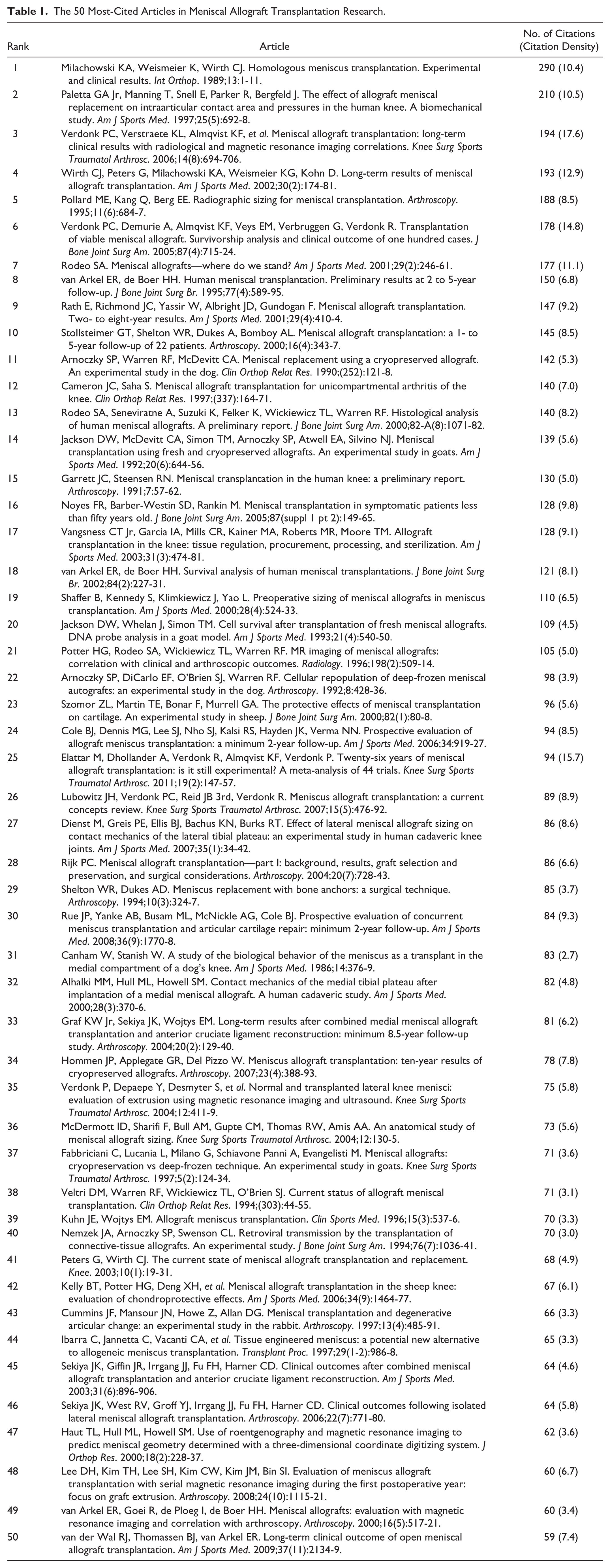
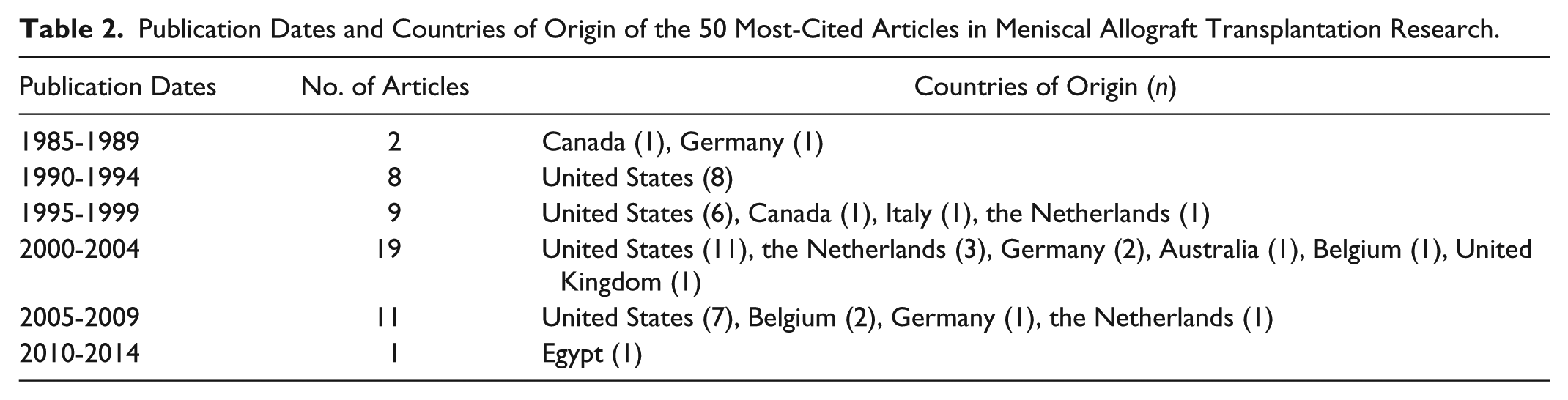
After reviewing the initial Scopus search results, 4 articles were excluded because they were not appropriately related to meniscal allograft transplantation. Of the 50 most frequently cited articles in meniscal allograft transplantation research, the number of citations ranged from 59 to 290, with a mean of 109.3 ± 48.6 citations ( Table 1 ). Citation density ranged from 2.7 to 17.6 citations per year, with a mean of 7.0 ± 3.3 citations per year. The top 50 articles were published between 1986 and 2011; however, the majority of the articles were published in the 2000s (31 articles) ( Fig. 1 ). A moderate positive correlation was noted between citation density and year of publication (r = +0.489, P < 0.001) ( Fig. 2 ). According to the address of each corresponding author, the 50 most-cited articles originated from 9 countries, with the United States accounting for 32 articles (64%) followed by the Netherlands with 5 articles (10%) ( Table 2 ). The Hospital for Special Surgery was the top contributing institution, accounting for 14% (7 articles) of the top cited articles.
The 50 Most-Cited Articles in Meniscal Allograft Transplantation Research.
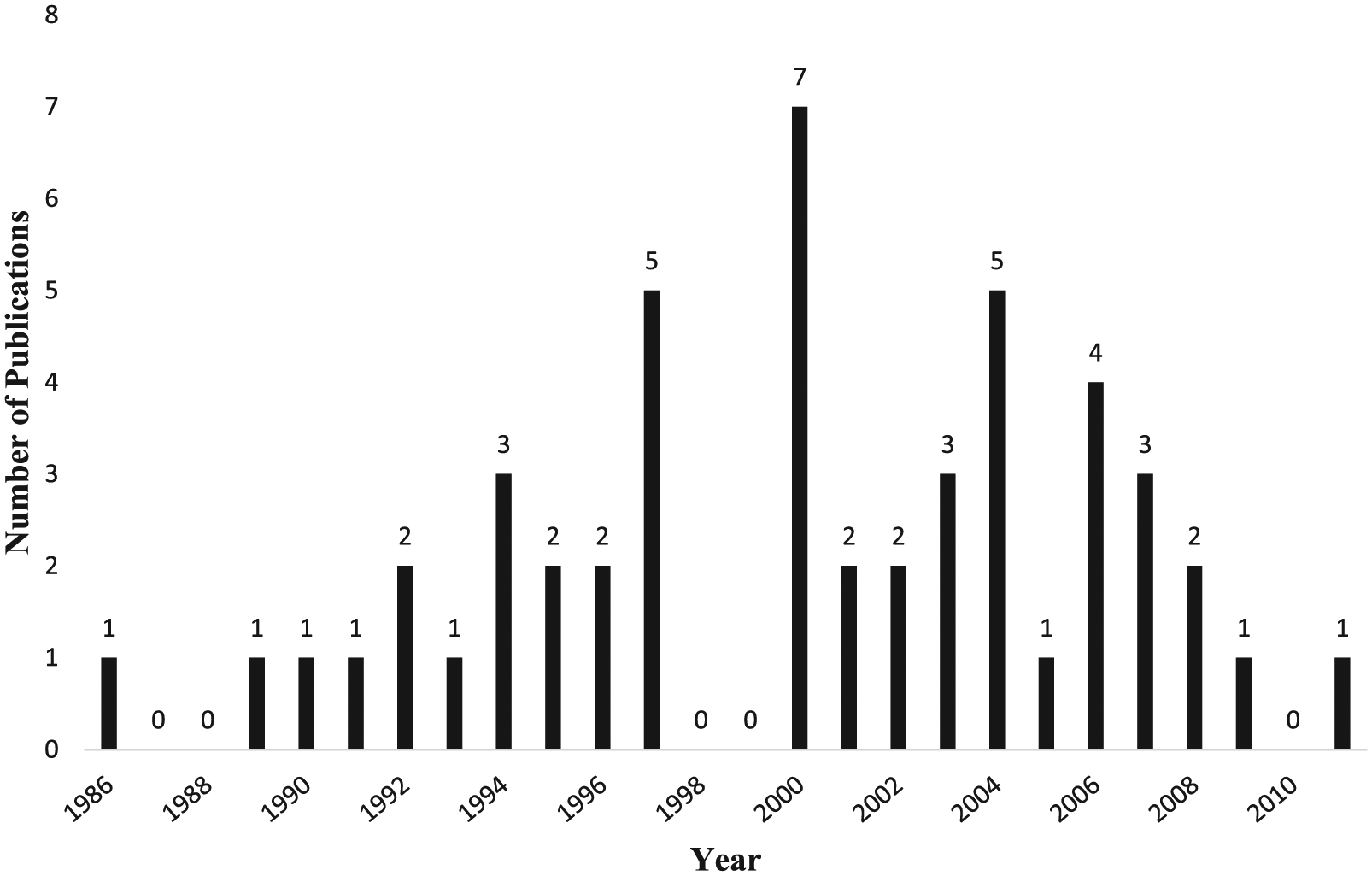
Number of articles in the top 50 by year of publication.
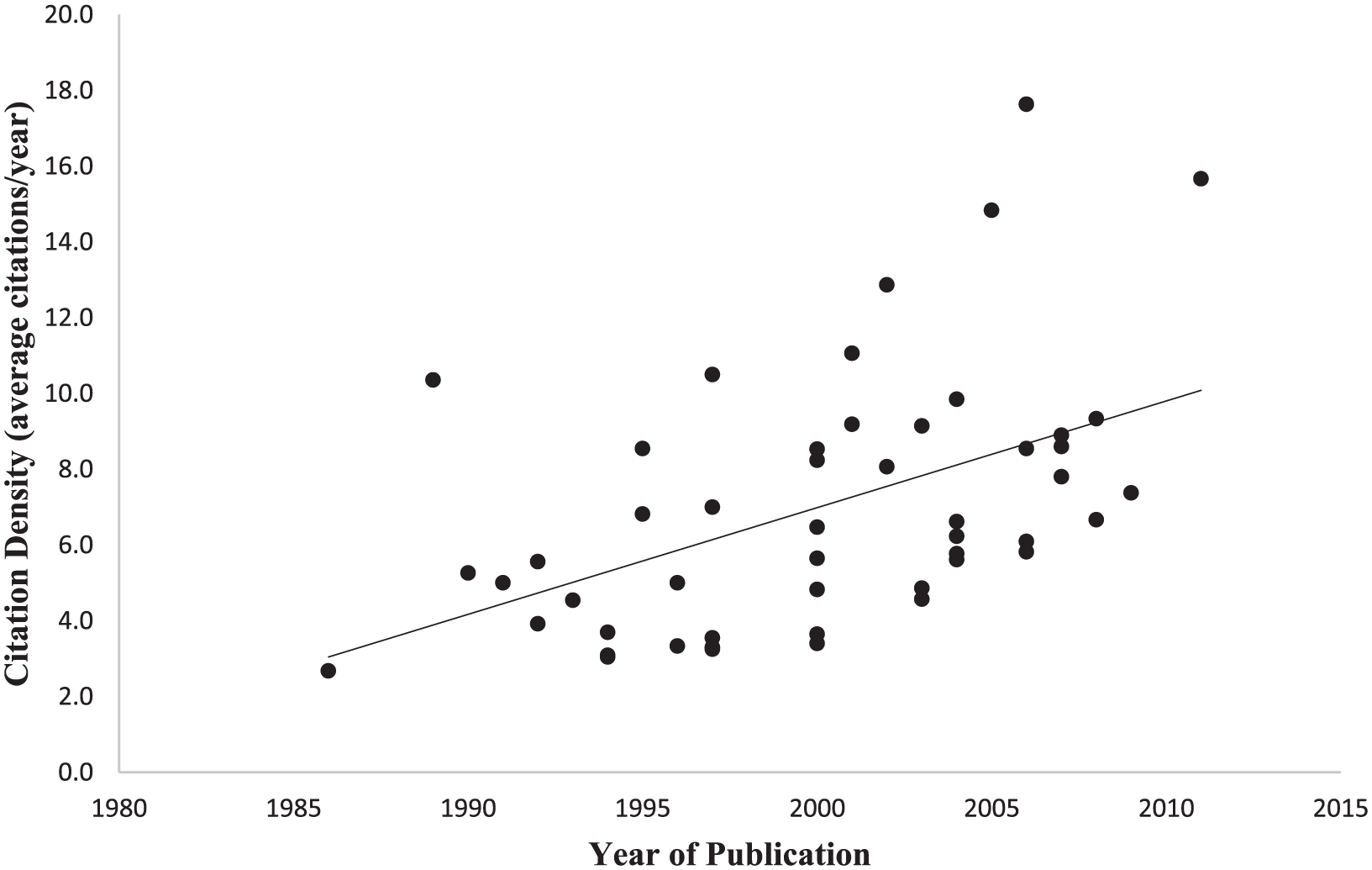
Scatterplot demonstrating citation density (y-axis) versus year of publication (x-axis) for the 50 most-cited articles in meniscal allograft transplantation research. A moderate positive correlation was noted between the 2 variables (r = +0.489, P < 0.001).
Publication Dates and Countries of Origin of the 50 Most-Cited Articles in Meniscal Allograft Transplantation Research.
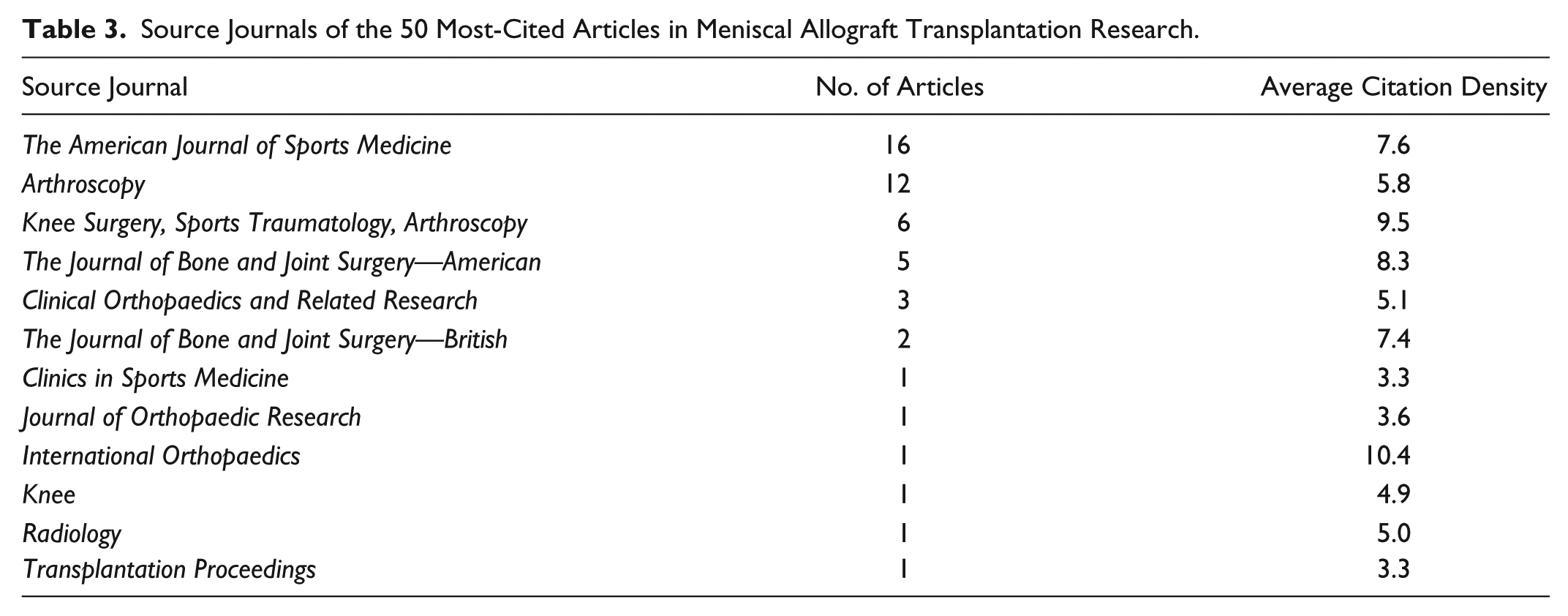
The 50 most-cited articles were published in a total of 12 journals ( Table 3 ). The top 3 source journals were The American Journal of Sports Medicine (32%, 16 articles), Arthroscopy (24%, 12 articles), and Knee Surgery, Sports Traumatology, Arthroscopy (12%, 6 articles); the greatest average citation density was noted among articles published in Knee Surgery, Sports Traumatology, Arthroscopy (9.5), followed by The Journal of Bone and Joint Surgery—American (8.3), and The American Journal of Sports Medicine (7.6). Ewoud van Arkel and Peter Verdonk were each listed as primary authors of 3 of the top 50 cited articles in meniscal allograft transplantation research.
Source Journals of the 50 Most-Cited Articles in Meniscal Allograft Transplantation Research.
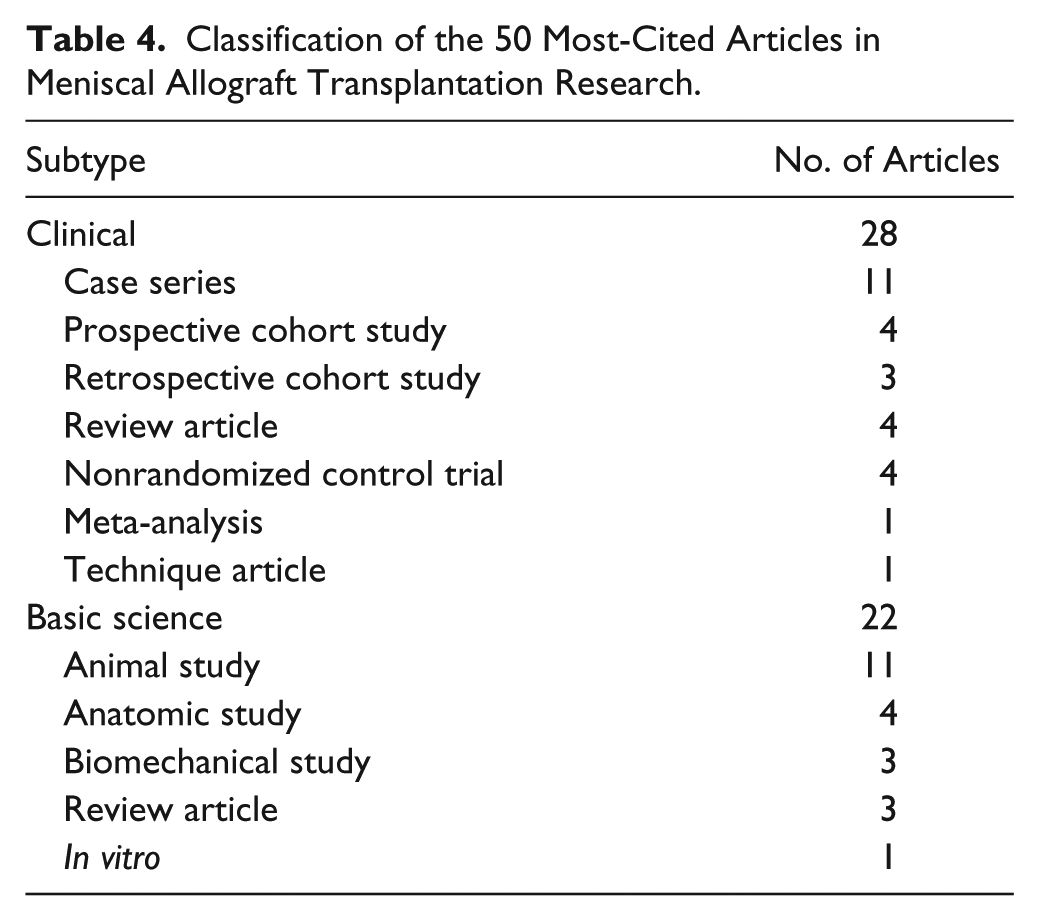
Overall, 56% of the articles were clinical and 44% were basic science. The most common clinical article and basic science article subtypes were case series (20%) and animal studies (22%), respectively ( Table 4 ). Of the 28 clinical articles, 61% (17 articles) were classified as either level IV or V evidence according to the criteria set forth by Wright et al. 16 in The Journal of Bone and Joint Surgery ( Table 5 ). Moreover, level of evidence was not correlated with the number of citations (r = −0.059, P = 0.766), citation density (r = +0.030, P = 0.880), or year of publication (r = −0.0009, P = 0.996).
Classification of the 50 Most-Cited Articles in Meniscal Allograft Transplantation Research.
Level of Evidence of the 50 Most-Cited Articles in Meniscal Allograft Transplantation Research.
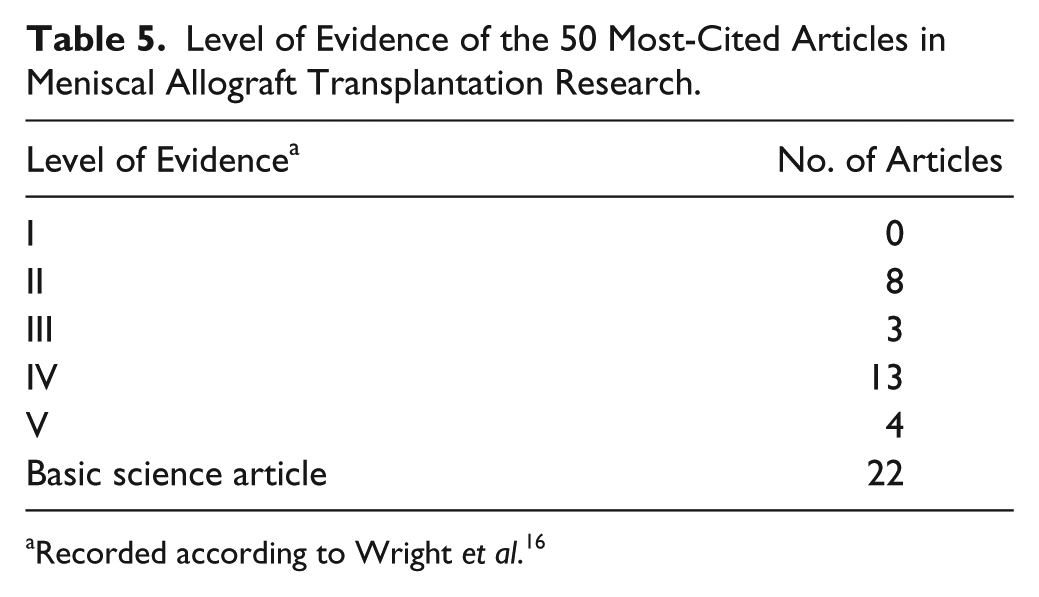
Recorded according to Wright et al. 16
Discussion
This bibliometric analysis provides a list of the 50 most-cited articles in meniscal allograft transplantation research and highlights various characteristics of these publications. As one would expect, papers published many years earlier have had more time to accumulate citations. This is controlled for by citation density, defined as the average number of citations per year. The more recently published articles on this list had higher citation densities, and there was a statistically significant moderate positive correlation between citation density and year of publication (P < 0.001); given that articles published more recently would have to be cited at an increased rate relative to older articles to make it on the most-cited list, this finding certainly makes intuitive sense. Of the 28 clinical articles on the most-cited list, 61% of the articles were either level IV or V evidence, indicating that a fair number of lower level evidence publications are highly cited in this area of research. In addition, level of evidence was not significantly correlated with number of citations, citation density, or year of publication. Despite the increasing trend toward evidence-based medicine, clinical articles with stronger levels of evidence, according to the widely used criteria set forth by The Journal of Bone and Joint Surgery, 16 were not more frequently cited. Moreover, the top 50 cited articles were all published between 1986 and 2011. While this analysis cannot be used to speculate on the overall number of publications per year as it only includes the 50 most-cited articles relevant to meniscal allograft transplantation, the publication dates of the articles on this list form an approximate bell curve with a peak around the year 2000. This timing may relate to the peak period of popularity of meniscal transplant research.
The articles within this list provide insight into the historical development of meniscal allograft transplantation and can help chronicle its evolution over time. The top cited article, with 290 citations, was the first report of meniscal allograft transplantation in humans published by Milachowski et al. 3 in 1989. Following this landmark study, additional outcome studies demonstrated satisfactory results in humans.17,18 As the procedure gained popularity, investigators began to study additional factors such as allograft size-matching,19,20 which likely affects failure rates in the case of undersized meniscal allografts and force distribution effectiveness in the case of oversized meniscal allografts. 21 Multiple animal studies examined the cellular characteristics of allografts over time and demonstrated that host cells swiftly repopulate the donor matrix, obviating any need for transplanting allografts with viable donor cells.22-24 Paletta et al. 25 demonstrated the biomechanical importance of root fixation, and a recent meta-analysis found that the technique of root fixation did not influence clinical outcomes. 26
While radiographic and clinical findings do not always correlate, multiple authors have found radiographic signs of severe degenerative changes as well as symptoms of pain and dysfunction in patients with previous total meniscectomy at 17 to 22 years postoperatively 5 and 5 to 15 years postoperatively, 27 including in 89% of patients at 14.5 years postmeniscectomy. 28 In 1983, Northmore-Ball et al. 29 published a study showing far higher postoperative satisfaction following arthroscopic partial meniscectomy than following open total meniscectomy (90% vs. 68%). If rates of total meniscectomy peaked around this time and have declined since, it may also partly explain a peak in research interest 15 to 20 years later as symptomatic postmeniscectomy patients presented to clinics seeking solutions to their pain and functional limitations. Over time, surgical techniques as well as indications have evolved. Currently, the primary indication for meniscal allograft transplantation is pain localized to the postmeniscectomy knee joint compartment prior to the onset of osteoarthritis. Articular comorbidities such as instability, malalignment, and any cartilage defects are usually addressed simultaneously or in a staged fashion. Overall, meniscus allograft transplantation results in significant improvements in knee pain and function with a low retear and failure rate. 26
Limitations
This study is not without its limitations. First, there certainly may be classic and influential articles that are not included in this list of 50 most-cited articles. For example, more recent publications that have not had enough time to accumulate citations due to the amount of time elapsed since publication may still be considered influential. Second, this list only includes publications in the peer-reviewed literature; there may be lectures, textbooks, and presentations relevant to meniscal allograft transplantation that are frequently cited classic works. Third, it is possible that some publications are repeatedly cited because they include highly regarded authors and not necessarily because of the quality of the publications. Finally, both the number of citations and citation density are sensitive to self-citation, which has the potential to overestimate the impact of a given publication on its respective field. Self-citation rates have been noted to be higher for specialized orthopedic journals when compared with general orthopedic journals. 30 Therefore, it is important to keep the aforementioned biases in mind when interpreting the results of bibliometric analyses. Despite these limitations, an article’s number of citations and citation density are 2 measures that are widely used to ascertain how influential a publication is within its specialty or subspecialty.
Conclusion
This bibliometric analysis provides insight into the historical development of meniscal allograft transplantation and presents a readily accessible list of the classic publications for this procedure, which may be useful for residency and fellowship curriculum development. In addition to identifying the 50 most-cited articles in meniscal allograft transplantation research, this study also provides insights into the factors that make publications on this topic influential. Although there was a moderate positive correlation between citation density and year of publication, articles with stronger levels of evidence do not appear to be more frequently cited despite the increasing propensity toward evidence-based practice in the field of orthopedic surgery.
Footnotes
Authors’ Note
This work was performed at the Rothman Institute at Thomas Jefferson University.
Acknowledgments and Funding
The author(s) received no financial support for the research, authorship, and/or publication of this article.
Declaration of Conflicting Interests
The author(s) declared no potential conflicts of interest with respect to the research, authorship, and/or publication of this article.