




Abstract
Objective
To determine the 50 most cited articles in orthopedic cartilage surgery and their characteristics.
Design
A systematic review of the Science Citation Index Expanded was performed for articles related to cartilage surgery published in the 66 journals under the category “Orthopedics.” The 50 most cited articles were determined, and the following characteristics were analyzed for each article: authors, journal and year of publication, number of citations, geographic origin, article type (basic science or clinical), article subtype by study design, and level of evidence. Citation density (total number of citations/years since publication) was also computed.
Results
The 50 most cited articles ranged from 989 to 172 citations, with citation density ranging from 71.5 to 4.1. The publication years spanned from 1968 to 2008, with the 2000s accounting for half (25) of the articles and the highest mean citation density (14.6). The 50 most cited articles were published in 11 journals. The majority of the articles (29) were clinical, with level IV representing the most common level of evidence (10). The remaining basic science articles were most commonly animal in vivo studies (14). Stronger level of evidence was correlated with overall number of citations (P = 0.044), citation density (P < 0.001), and year of publication (P = 0.003).
Conclusions
Articles with stronger levels of evidence are more highly cited, with an increasing trend as evidence-based practice has been emphasized. This article list provides clinicians, researchers, and trainees with a group of “citation classics” in orthopedic cartilage surgery.
Introduction
Orthopedic surgery is approaching an exciting transitional period as advances in the understanding of musculoskeletal basic science and technology translate into novel techniques and interventions. Cartilage surgery, in particular, has benefited from research efforts as knowledge regarding traditional methods in cartilage repair and restoration have resulted in significant innovation that has led to rapid development of new surgical techniques.1-4 Within the orthopedics community, there has been a recent effort to chronicle these efforts, both for historical purposes among researchers and for the education of trainees in standardized reading curricula.
Within academic medicine, the number of times an article is cited by other authors has been widely considered to be a reliable indicator of its academic merit and influence within a subject area.5-9 Indeed, metrics of research productivity and merit such as the h-index for authors and the impact factor for journals are computed using the number of citations associated with the journals that they publish. 10 Since Lefaivre et al. 11 determined the 100 most cited articles in orthopedic surgery, there have been numerous reports identifying the most referenced articles across a variety of orthopedic subspecialties and subject areas, including shoulder, 12 hand,13,14 foot and ankle, 15 arthroscopic surgery, 16 elbow, 17 hip and knee arthroplasty, 18 pediatric orthopedics, 19 and trauma surgery. 20 In seeking these “citation classics,” others have reported bibliometric analyses on the top cited orthopedic articles from individual journals21,22 and geographic origins.23-25 In all instances, these reviews provide a frame of reference for the quality of research and evolution of practice, controversy, and research goals within their respective fields.
The purpose of this study was to determine the 50 most cited articles in orthopedic cartilage surgery and the characteristics that make them important to practitioners and researchers within the field. To do this, we used data from the Thomson Reuters Web of Science citation indexing service to perform a comprehensive, systematic citation search of all orthopedic-specific publications journal by journal. Given the nature of the field, we hypothesized that a significant proportion of observed citations would be basic science studies. Additionally, given the recent emergence of popular cartilage repair/restoration techniques, we believed the majority of top citations would be composed of modern studies from the past few decades.
Methods
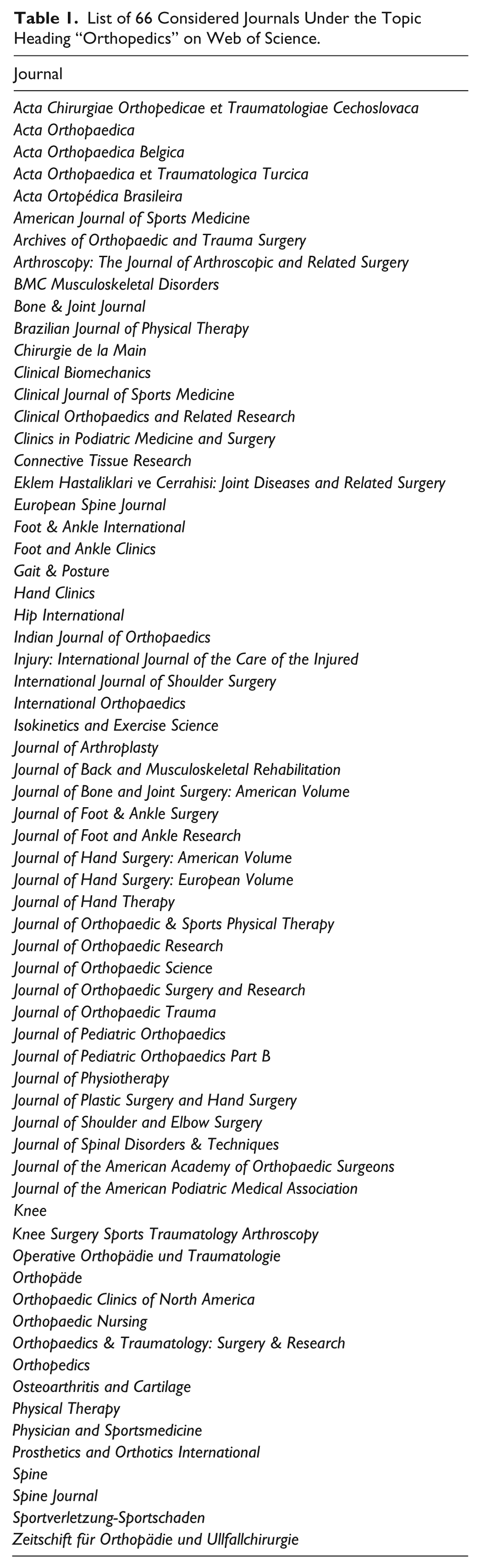
As of August 2014, the Thomson Reuters Science Citation Index Expanded (formerly known as the Institute for Scientific Information Science Citation Index) listed 66 journals under the subject category selection of “Orthopedics.” This search engine provides a systematic, objective means to critically evaluate the leading scientific literature with citation data. The identified journals ( Table 1 ) range from general and subspecialty-specific clinical journals to basic science journals both directly and peripherally related to the practice of orthopedic surgery. In September 2014, we queried each of the 66 journals individually using the Web of Science “Cited Reference Search” to list published articles in order of greatest to least number of citations. For each journal, the titles and abstracts of each of these articles were reviewed to identify the articles that were related to cartilage surgery with the most citations. This list was combined for all journals to determine a list of the top 50 cited articles in cartilage surgery.
List of 66 Considered Journals Under the Topic Heading “Orthopedics” on Web of Science.
Following the methods of Lefaivre et al. 11 and Namdari et al., 12 each article in the 50 most cited articles was reviewed and the following information was recorded: authors, journal of publication, year of publication, number of citations, geographic origin of (primary) author, and article type (basic science article or clinical research article). For basic science articles, articles were subtyped as one of the following: (1) biomechanics, (2) anatomic, (3) in vitro, (4) animal in vivo, or (5) review article. For clinical articles, articles were subtyped as one of the following: (1) randomized controlled trial, (2) nonrandomized controlled trial, (3) cohort study, (4) case-control study, (5) case series, (6) case report, (7) review article, or (8) expert opinion. For each clinical article, the level of evidence was determined independently by 2 authors (S.L.S. and K.J.J.) based on guidelines published by The Journal of Bone and Joint Surgery, American volume. 26 Using previous methods, each article was also categorized as either (1) methodologic, defined as introducing or testing a new classification/scoring system or surgical technique or (2) nonmethodologic. For each article, the citation density (defined as the total number of citations/years since publication) was also computed.
Comparison of means between groups (methodologic vs. nonmethodologic) was performed using the independent samples t test. Inter-rater agreement for categorical items (level of evidence) was determined using Cohen’s kappa coefficient. Spearman’s rank correlation coefficient (ρ) was used to assess correlation between ordinal and continuous variables (e.g., level of evidence by citation count, citation density, year of publication). All statistical analyses were performed using SPSS 21 software (IBM Corp., Armonk, NY). Statistical significance was defined as P < 0.05.
Results
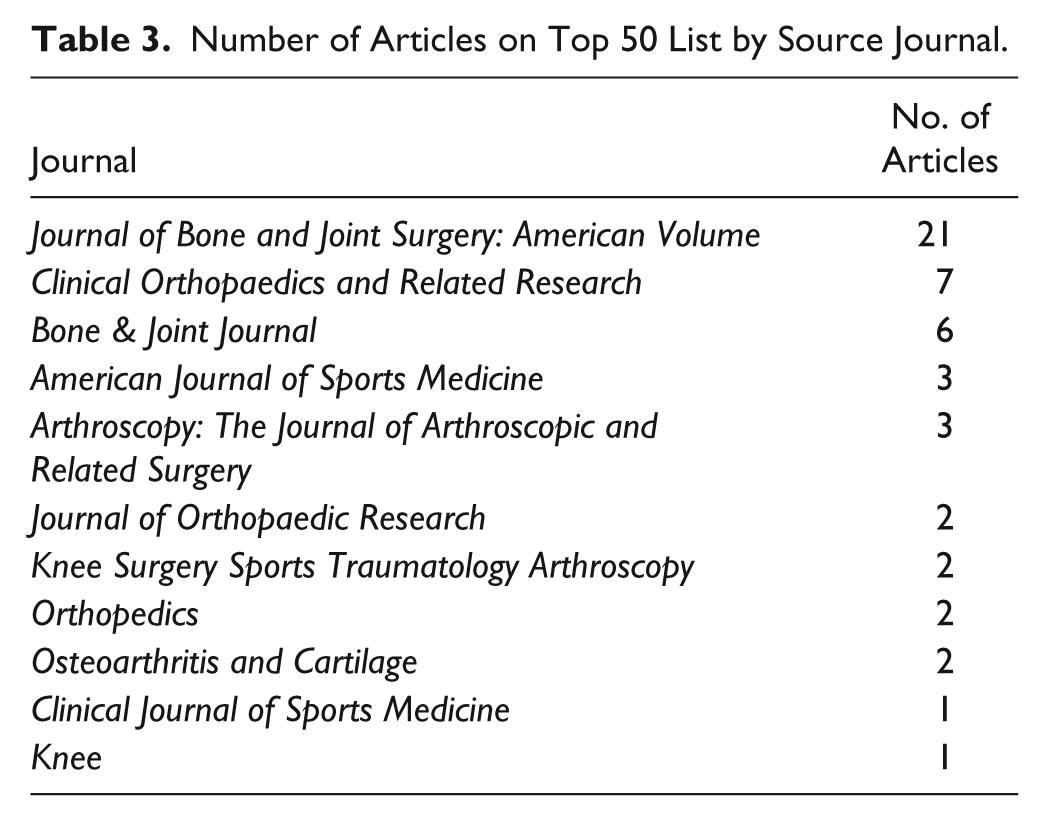
The top 50 most cited articles were identified and spanned from 989 to 172 citations ( Table 2 ). The citation density ranged from 71.5 to 4.1. The publication years of the most cited articles ranged from 1968 to 2008, with the 2000s accounting for the most articles (25). Only 3 articles were published before 1980 ( Fig. 1 ). Among all decades, the 1980s had the highest mean number of citations (387) while the 2000s had the highest mean citation density (30.8) ( Fig. 2 ). The articles were published in 11 of the 66 general and subspecialty journals in the query, with the Journal of Bone and Joint Surgery, American volume (n = 21) accounting for the most citations ( Table 3 ).
Top 50 Most Cited Cartilage-Specific Articles.
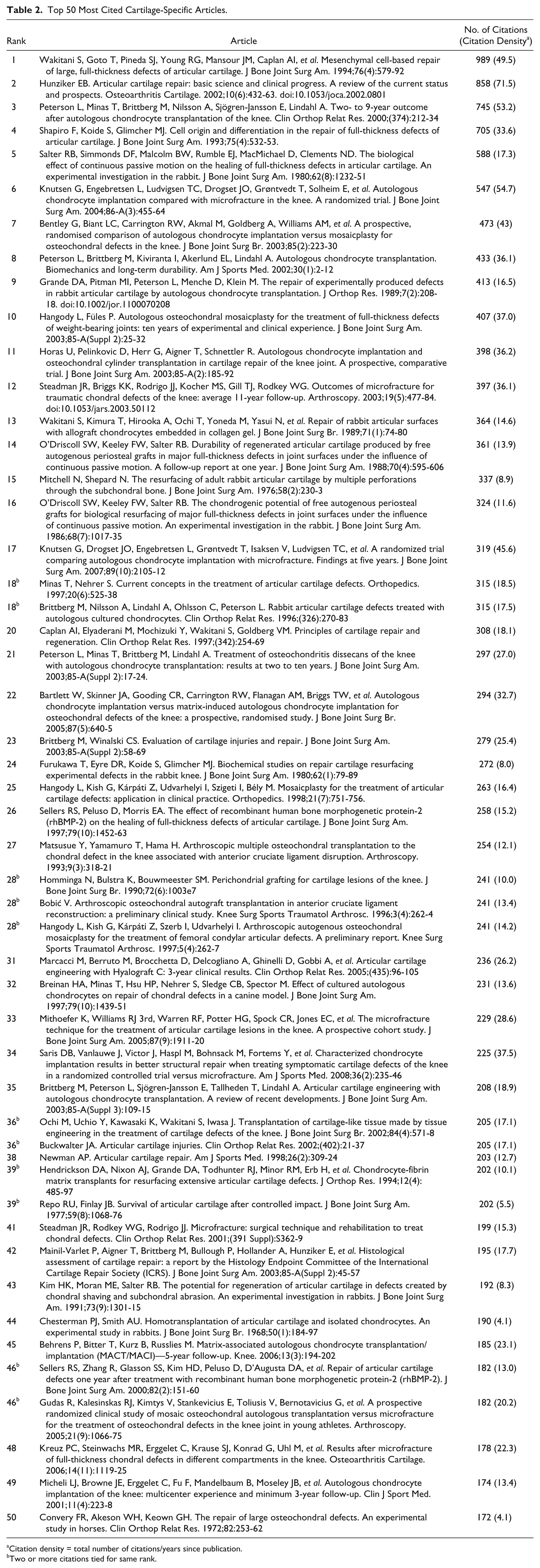
Citation density = total number of citations/years since publication.
Two or more citations tied for same rank.
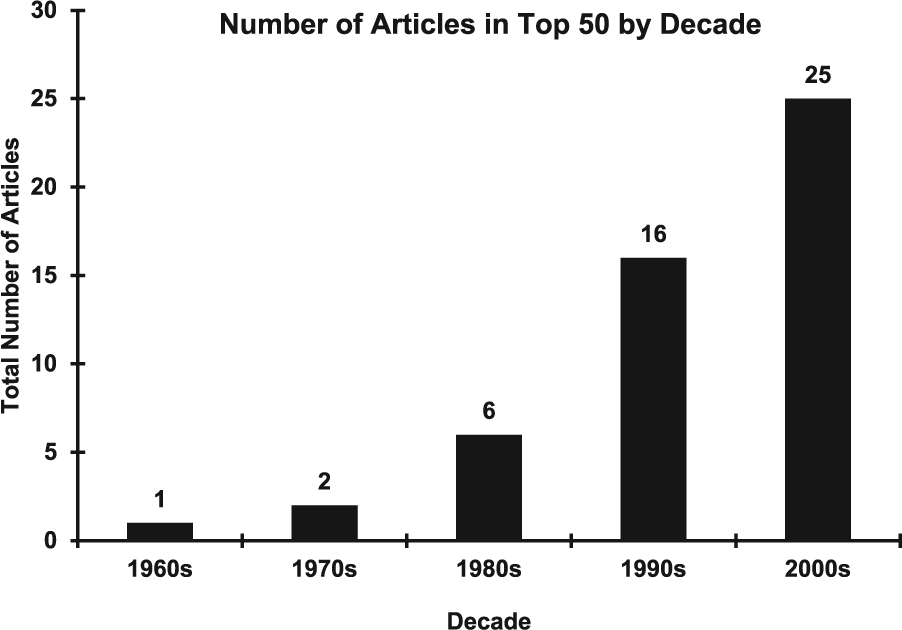
Number of articles in the top 50 by decade of publication.
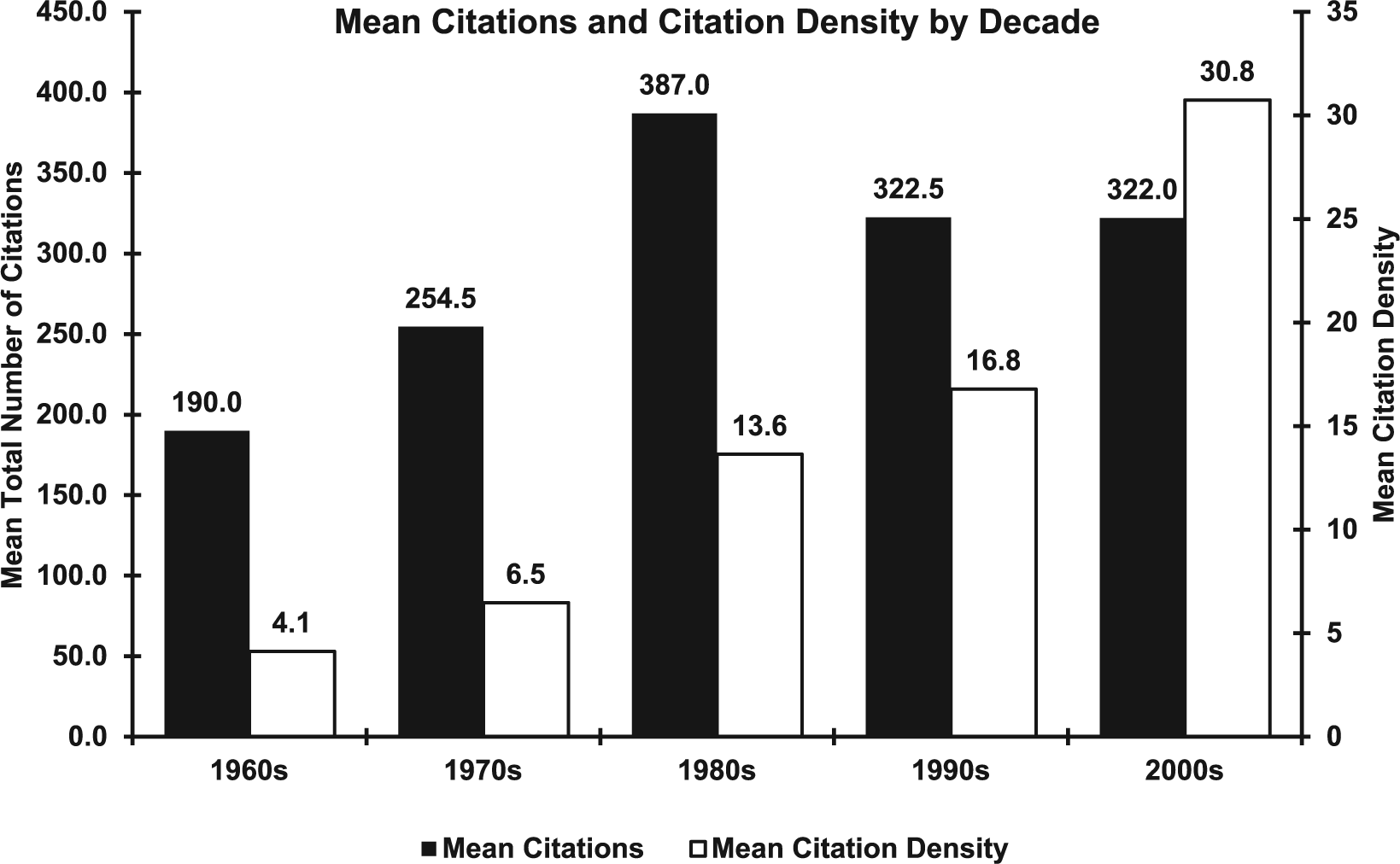
Mean total number of citations and citation density of top 50 articles by decade of publication.
Number of Articles on Top 50 List by Source Journal.
Though all the articles were published in the English language, they originated from 12 countries. The number of articles by country of origin was led by the United States (n = 17), followed by Sweden (n = 6), Canada (n = 5), the United Kingdom (n = 5), Germany (n = 3), Hungary (n = 3), and Japan (n = 3). The Netherlands, Norway, and Switzerland each contributed 2 articles, while Italy and Lithuania each contributed one article to the list. The top primary authors were M. Brittberg, L. Hangody, and L. Peterson, as each contributed 3 articles to the list as primary authors. G. Knutsen, S.W. O’Driscoll, R.S. Sellers, J.R. Steadman, and S. Wakitani each also contributed 2 articles to the list as first authors. The most cited author overall was M. Brittberg, as he was a contributing author to 7 articles overall. The primary author of the top article on this list (S. Wakitani) contributed to 5 articles overall.
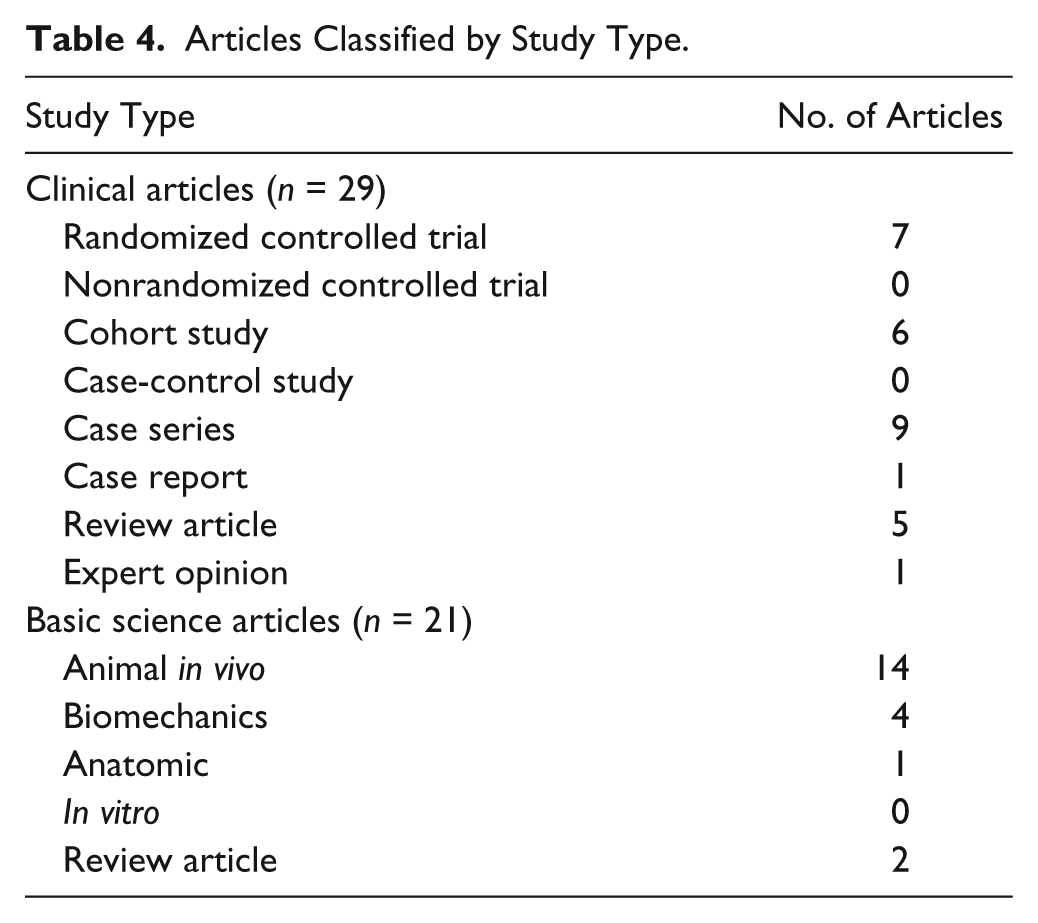
Of the top 50 articles, the number of clinical articles (n = 29) was greater than basic science articles (n = 21) ( Table 4 ). Among the top clinical articles, case-control studies (n = 9) and randomized controlled trials (n = 7) were the most common study design. Animal in vivo studies (n = 14) were the most frequent among the top basic science articles. Among the most cited articles, 6 were methodologic in that they proposed a new classification/scoring system or technique. There was no statistically significant difference in the number of citations (378 vs. 317 citations, P = 0.443) or citation density (24.2 vs. 22.5 per year, P = 0.792) between methodologic and nonmethodologic articles, respectively. For the 29 clinical articles, the level of evidence was determined by 2 independent reviewers who had perfect agreement (κ = 1). The most common level of evidence was IV, with 10 of the 29 clinical articles falling in this category ( Fig. 3 ). The level of evidence was significantly correlated with the overall number of citations (ρ = −0.262, P = 0.044), citation density (ρ = −0.627, P < 0.001), and year of publication (ρ = −0.536, P = 0.003). That is, a lower level of evidence (i.e., greater strength of evidence) is correlated with a greater number of citations and citation density, as well as with articles published more recently.
Articles Classified by Study Type.
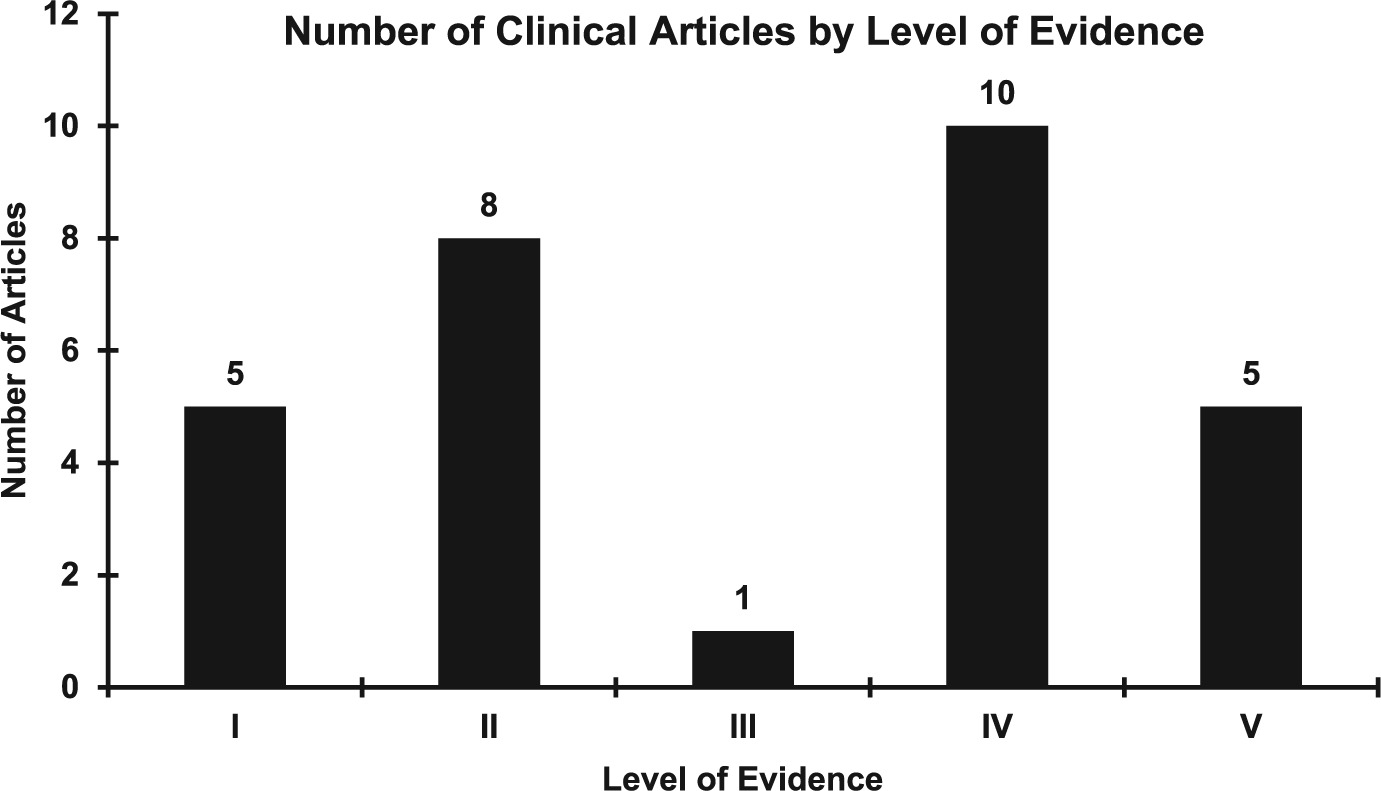
Number of clinical articles within the top 50 by level of evidence.
Discussion
In medical literature, the number of times an article is cited by other authors is often used as an indicator of influence within a field for authors, journals, and topics of study alike.5-9 This list of the top 50 most cited articles in orthopedic cartilage surgery provides seminal papers in the field for historical purposes, identifying authors and topics that have had profound influence on the progression of the field in the past 50 years. The articles within this list can help chronicle the evolution of standard practice and controversies as a guide for future research study and clinical practice. They may also be used in the development of reference lists used for resident and fellowship training.
By analyzing the characteristics of these landmark articles, we sought to determine the characteristics that make these works important to peers within the field. Here, we found that the 2000s, as a decade, accounted for half of the articles within the top 50 ( Fig. 1 ) and had the greatest citation density ( Fig. 2 ). This observation is in contrast to the hand, shoulder, and arthroscopic surgery literature where the most cited articles were predominantly from the 1980s and 1990s. This finding reflects the relatively recent emergence and refinement of cartilage repair techniques such as autologous chondrocyte implantation (ACI) and osteoarticular transfer system (OATS), which were the focus of multiple articles in our list. 27 It is also impressive in light of the fact that time provides an innate advantage in terms of overall number of citations, which was the primary inclusion criteria for this query. It is likely that an even greater proportion of the top articles would have been published after 2000 had citation density, which normalizes for publication time, been used as the primary search criteria. Furthermore, this may reflect the delayed impact of cartilage basic science and translational research, which we found to be more frequently cited in this study than in other subspecialties. Indeed, 21 of the top 50 articles (42%) were basic science articles compared with just 16% to 27% in major subspecialties such as shoulder, elbow, arthroscopy, and hand.12,13,16,17 These were predominantly animal in vivo studies that served as models for pilot investigations and refinement of surgical techniques. This finding may reflect the importance of incremental testing in the laboratory prior to clinical application. Similarly, 42% of osteoporosis and 46% of anterior cruciate ligament citation classics were basic science works.28,29 We also found that the most cited articles among peers came from a small cohort of reputable journals in the orthopedics literature. Of the 11 general and subspecialty journals that were responsible for the most cited works ( Table 3 ), 10 are in the top quartile of journal rankings by the SCImago Journal & Country Rank under the category of “Orthopedics and Sports Medicine.” The Journal of Bone and Joint Surgery, American volume, which was the publisher for 21 out of the 50 articles, had the highest official impact factor in 2014 (5.280) of the 66 queried journals (Thomson Reuters Journal Citation Reports, www.impact-factor.org).
The level of evidence analysis performed in this review also yielded interesting results, particularly in light of the level of evidence gap perceived by some experts within the orthopedic research community. 30 Although level of evidence IV was the most common among clinical studies, there was a greater proportion of level I/II studies (13 of 29 studies) compared with previous studies for both subspecialty and general orthopedics ( Fig. 3 ).11,12,17,19 This sizeable number of randomized controlled trials and prospective cohort studies reflects the increasing emphasis on evidence-based practice across all medical disciplines in recent years since the concept was introduced and popularized in the 1990s. 31 Indeed, this study found that there was a statistically significant increase in the quality of evidence with transition into the modern era after the 1990s and 2000s (P = 0.003). Furthermore, we observed that a lower level of evidence (e.g., greater strength of evidence) was correlated with a greater overall number of citations (P = 0.044) and citation density (P = 0.003), which demonstrates the importance of quality research findings among citing peers within the field. We anticipate that this emphasis on evidence-based practice will continue to have a delayed effect on the most cited cartilage literature, which will manifest as studies with higher strength of evidence on such bibliometric analyses in the future.
Overall, we found a strong widespread presence in cartilage-related research. While the United States had the greatest contribution in the overwhelming majority of other bibliometric analyses in orthopedic subspecialties,11,17,18,20,28 this study found that only 17 of the top 50 articles (34%) had corresponding authors from the United States, with Sweden, Canada, the United Kingdom, and other countries contributing articles to the most-cited list. Among all authors, the most frequently cited were M. Brittberg (Sweden), L. Hangody (Hungary), and L. Peterson (Sweden). This highlights the influence of international researchers and clinicians whose contributions have been monumental in the evolution of cartilage surgery from both the fundamental understanding and clinical management of disease processes. It also reinforces the importance of international discovery and collaboration, which was been the subject of several bibliometric studies.23-25 Finally, the stringent regulatory environment and cost of randomized clinical studies in the United States may potentially explain why these studies are more likely to originate from abroad.32-34
This citation analysis study has a number of limitations that require consideration. First, a query for 50 articles, as within any other number, is arbitrary. Previous orthopedic bibliometric analyses have determined lists that range in size from the top 20 to the top 100.11,16,18,19,21,22 Based on these studies, we chose to determine the top 50 because it represents a reasonable number of articles for analysis based on the size of the overall literature within the subspecialty. Second, the query reviewed a subset of 66 journals under the category of Thomson Reuters Science Citation Index Expanded, a search protocol that was initially introduced by Lefaivre et al. 11 in their analysis of the most cited articles in orthopedic surgery and has since been replicated in all the aforementioned citation analyses. It is conceivable that other highly cited and influential works related to cartilage surgery may be published in general medical or basic research journals that were not indexed using this search engine and thus would be appropriately identified using the study design.16,28 This is particularly important in a field where basic science and translational research, which may be published in journals not exclusively associated with orthopedics, has such a profound impact. Similarly, we are unable to account for citations in textbooks, lectures, or other non–peer-reviewed literature. Next, we recognize the inherent limitation of citations to reflect influence and impact within a field. The most cited works identified in this list and others do not necessarily represent the best clinical or basic science. Citations are inherently susceptible to sources of bias such as self-citation, language of publication, and timing of publication. While this is partially accounted for by our analysis of citation density, the top 50 list was determined using total citation number as the primary metric, and other more recently published articles that may have a higher citation density, and thus have greater influence, could be excluded as a result of this disadvantage. We also recognize that in the scientific community there is a tendency to adhere to paradigm via a “snowball effect” whereby authors are more likely to cite articles because of previous citations by authors rather than independently analyzing it or other primary literature for content and quality. 35 As such, we acknowledge that this study potentially excludes other influential articles that would belong in a historical or teaching curriculum on cartilage surgery, and recommend the judicious use of works from other journal publications, textbooks, instructional course lectures, and academic venues for historical and training purposes.
In conclusion, we present the top 50 articles in the subspecialty of orthopedic cartilage surgery by the total number of citations. Our analysis found that the greatest number of these articles were published after 2000 and were clinical articles. While the United States accounted for the most works in the list, there was a strong international presence with the most cited authors originating from Sweden and Hungary. Clinical articles were predominantly level of evidence IV, though randomized controlled trials and prospective cohort studies were well represented. Basic science articles accounted for a sizeable portion, and were predominantly animal in vivo studies. There was a significant correlation between level of evidence and year of publication, which underscores the increasing emphasis on evidence-based practice in recent years. The publications presented in this article provide clinicians, researchers, and trainees alike with a group of “citation classics” in the subspecialty of orthopedic cartilage surgery.
Footnotes
Authors’ Note
This study was primarily performed at the Department of Orthopedic Surgery in the David Geffen School of Medicine at University of California, Los Angeles.
Acknowledgments and Funding
The author(s) received no financial support for the research, authorship, and/or publication of this article.
Declaration of Conflicting Interests
The author(s) declared no potential conflicts of interest with respect to the research, authorship, and/or publication of this article.