



Abstract
In order to foster a more sustainable approach to nanotechnology, there is a rising interest in investigating the potential of fruit and vegetable waste as a resource for the synthesis of nanoparticles. This technique places an emphasis on the ecologically friendly creation of nanoparticles, providing an option that is both cost-effective and favorable to the environment in comparison to the conventional chemical procedures. Due to the abundance of bioactive components such as polyphenols, flavonoids, and vitamins that it contains, vegetable and fruit waste may be used as a natural reducing and stabilizing agent in the process of nanoparticle manufacturing. These nanoparticles have distinctive physicochemical features, which makes them appropriate for a wide variety of biological applications. Studies have shown that nanoparticles synthesized from fruit and vegetable waste possess considerable antibacterial, antioxidant, and anticancer capabilities, which highlights their prospective applications in the fields of pharmaceutical, biomedical, and environmental technology. Relevant literatures on fruit and vegetable waste have been collected using the keywords “Nanoparticles synthesized from fruit and vegetable waste” from search engine like google scholar, mendeley, scifinder, etc Furthermore, this strategy not only brings to an increase in the value of agricultural by-products, but it also tackles important problems like the control of waste and the effective use of scarce resources.
Introduction
Owing to imbalances in the increase of the human population and the fast development of urbanization, natural resources are under significant stress. 1 Developing countries are confronting the great issue of sustainable food supply. A crucial aspect contributing to this difficulty is the inefficiency in food systems, where considerable amounts of product never reach customers owing to poor postharvest processing, storage, and transportation infrastructure. 2 The volume of garbage has risen markedly. The United Nations has forecasted a 70% rise in world food demand, mostly occurring in emerging nations. 3 The current global population of 8 billion may rise to around 9.7 billion by 2050. The global population is projected to increase by around 90 million individuals per year over the next three decades. 4 The increasing population in emerging nations necessitates addressing the question of sufficient food supply. 5 This necessitates the production of increased food quantities to satisfy human demands amid constrained world resources (minerals, forests, arable land, and water). 6 Moreover, climate change may exacerbate stress on human agriculture, since increased droughts and floods impede agricultural output worldwide. This inefficiency results in significant food waste, exacerbating hunger problems and environmental consequences. 7 With the rise in world population, the need for food production escalates, therefore resulting in heightened food waste. To tackle this difficulty, a variety of technical advances are being used. These include AI-driven agricultural tools for soil monitoring and livestock management, climate-smart agricultural practices, and innovative food processing and preservation techniques. 8 Moreover, inclusive innovation is progressively used to reform food systems and tackle global hunger. 9 The notion of a circular economy, which seeks to extract value from waste products, has lately garnered considerable attention. This method is especially relevant in poor countries, which generate over 2.32 million tonnes of household food waste each year. 10 Utilizing this waste, particularly from fruits and vegetables, may provide bioactive chemicals and other value-added products, providing socio-economic and environmental advantages. Recently, the identification of a sustainable and environmentally benign biochemical process for the synthesis of silver nanoparticles has garnered significant interest. 11 Nanostructures are a novel aspect of science and technology focused on the manufacturing and alteration of molecular configurations at the nanoscale level. Pharmacology, medicinal administration, electromechanical systems, biological sensors, cosmetology, optical energy, agricultural sectors, scanning technologies, and several other fields are increasingly linked to nanoparticles. 12 Kitchen-generated biodegradable matter was not regarded as a significant substance a few years ago. 13 Recent apprehensions about nutrition, conservation, ecological limitations, and socioeconomic ramifications of kitchen organic waste have intensified research aimed at developing alternatives to mitigate food waste and promote effective trash disposal techniques. 14 Consequently, efficient and cost-effective ways to mitigate food waste and develop enhanced food waste utilization techniques that may assist in global supply chain planning are deemed acceptable. 15 The objective of these techniques is to measure the efficiency and advantages derived from kitchen household trash, therefore decreasing the volume of refuse that is deposited in landfills. 16 The production of NPs from vegetable and fruit waste and the synthesis of nanoparticles represent a unique combination. 17 An increasing interest in green-synthesized silver nanoparticles using vegetable-based composites has emerged due to their cost-effectiveness, absence of toxic chemicals, and environmental friendliness. 18 The plant extract functions as a stabilizing agent due to its antioxidant and antibacterial properties. A substantial array of chemicals may be detected in kitchen trash. Consequently, silver nanostructures have garnered the attention of researchers due to their remarkable features. 19 Numerous advantageous compounds are present in the outer peels of fruits and vegetables, which are often thrown as waste. These materials may serve as raw resources for the synthesis of AgNPs, representing a viable technique for food waste management. Peels of fruits and vegetables contain 15% more phenolic chemicals than their pulp. Enhanced efficiency, productivity, and sustainability have been shown in biologically synthesized AgNPs. 20 Silver nanoparticles (AgNPs) are viable options for preventing bacterial development, suggesting a feasible method for the preservation of fruits and vegetables. 21 Notwithstanding the ambiguities over their use due to their nascent utilization, some nanomaterials are generally considered safe and non-toxic for food packaging applications. 22 Consequently, several reports on their use in packaging materials persist. ZnO nanoparticles integrated with several edible coating solutions, such as chitosan combined with aloe vera gel, have shown the ability to extend the shelf life of pineapple (Ananas comosus). 23 Furthermore, when mixed with biopolymers like alginate and chitosan coatings, it effectively preserved the qualitative characteristics of guava fruit. The chitosan-TiO2 combination significantly extended the shelf life of grapes. 24 This paper offers a thorough evaluation of the possibilities of various fruit and vegetable waste in the synthesis of metal oxide nanoparticles. It investigates the biological properties of these nanoparticles that render them appropriate for the development of active food packaging materials in postharvest nanotechnology. The study addresses the problems and constraints related to the biological and postharvest usage of these nanoparticles.
Fruit and Vegetable as Nanofactories
There has been a considerable increase in the amount of garbage produced as a result of the growing population throughout the world, which has led to a major growth in the demand for fruits and vegetables. In the end, around sixty percent of fruits and vegetables are either tossed peels or food that has gone bad. 25 The incorrect disposal of this trash or its buildup adds to environmental deterioration, which in turn affects the quality of the land, water, and air, and exacerbates ecological problems, especially when the climate is changing. These kinds of behaviors have a detrimental effect on ecosystems and living species, which highlights the critical need for waste management techniques that are environmentally responsible. 26
Taking this into consideration, the transformation of waste from fruits and vegetables into materials on a micro or nanoscale or goods of high value has emerged as a potentially fruitful technique. This technique makes use of the bioactive components that are present in such waste, such as amino acids, polyphenols (such as caffeic acid and gallic acid), vitamins, and minerals, in order to produce goods that are helpful to society as well as the economy. 27 For the purpose of producing nanoparticles, vegetable waste, in particular, is a very useful resource that may be used as a "nanofactory." This technology eliminates the need for dangerous reducing agents, reduces the toxicity of nanoparticles, and makes it possible to manufacture nanoparticles with forms, sizes, and functional groups that may be customized 28 Nanoparticles that are generated from vegetable waste have a number of distinctive characteristics, including low toxicity and flexibility, which makes them an excellent choice for a wide range of biological applications. This novel technology not only tackles the issues that are associated with waste management, but it also improves resource usage by transforming agricultural leftovers into valuable nanomaterials, which in turn promotes sustainable development. 29
Synthesis of Carbon-Based Nanomaterials from Fruit and Vegetable Waste
Nanomaterials that are based on carbon, such as carbon nanotubes (CNTs), carbon nanofibers (CNFs), graphene, graphene oxide, and fullerenes have wide variety of applications. In addition to their use in environmental cleanup, dye removal, developments in agriculture, pharmaceutical waste management, wound healing, drug delivery, medical applications, and sensor technologies, these materials also play an important role in the management of pharmaceutical waste. 30 Nanomaterials based on carbon often have a lower level of toxicity when compared to nanoparticles manufactured from metals. Nevertheless, worries surrounding their possible toxicity continue to exist, which calls for further research to be conducted. 31
The synthesis of carbon-based nanomaterials from leftover vegetable products has emerged as a viable and ecologically safe technique in recent years. Because it offers safer alternatives for a range of applications, this approach is particularly helpful in the biomedical industry. For instance, Galus and colleagues successfully synthesized CNTs using ferrocene as the catalyst and palm frying oil as the carbon source. 32 They furthermore achieved a degree of purity that was roughly 85%. In a similar manner, Ashfaq showed the creation of CNTs by the process of chemical vapor deposition. He did this by using rice straw that had been treated to hydrothermal carbonization, the catalysts being ferrocene and nickel nitrate, and the environment being nitrogen. These studies help to value waste and advance sustainable nanotechnology by demonstrating the potential of vegetable and agricultural waste as renewable resources for the creation of premium carbon-based nanomaterials. 33
The biosynthesis of metal and metal-oxide nanoparticles (NPs) from vegetable waste is a simple, economical, sustainable, and environmentally advantageous method. Figure 1 shows the green synthesis of nanomaterials using fruit and vegetable wastes. This eco-friendly method of synthesis offers a practical substitute for traditional chemical processes. Nanoparticles are formed by the self-organization of precursor building pieces, which are constituted of molecules and atoms. This process is accomplished through the use of a bottom-up technique. This approach is in line with the efforts being made to create environmentally benign technology for the manufacture of nanoparticles. 34
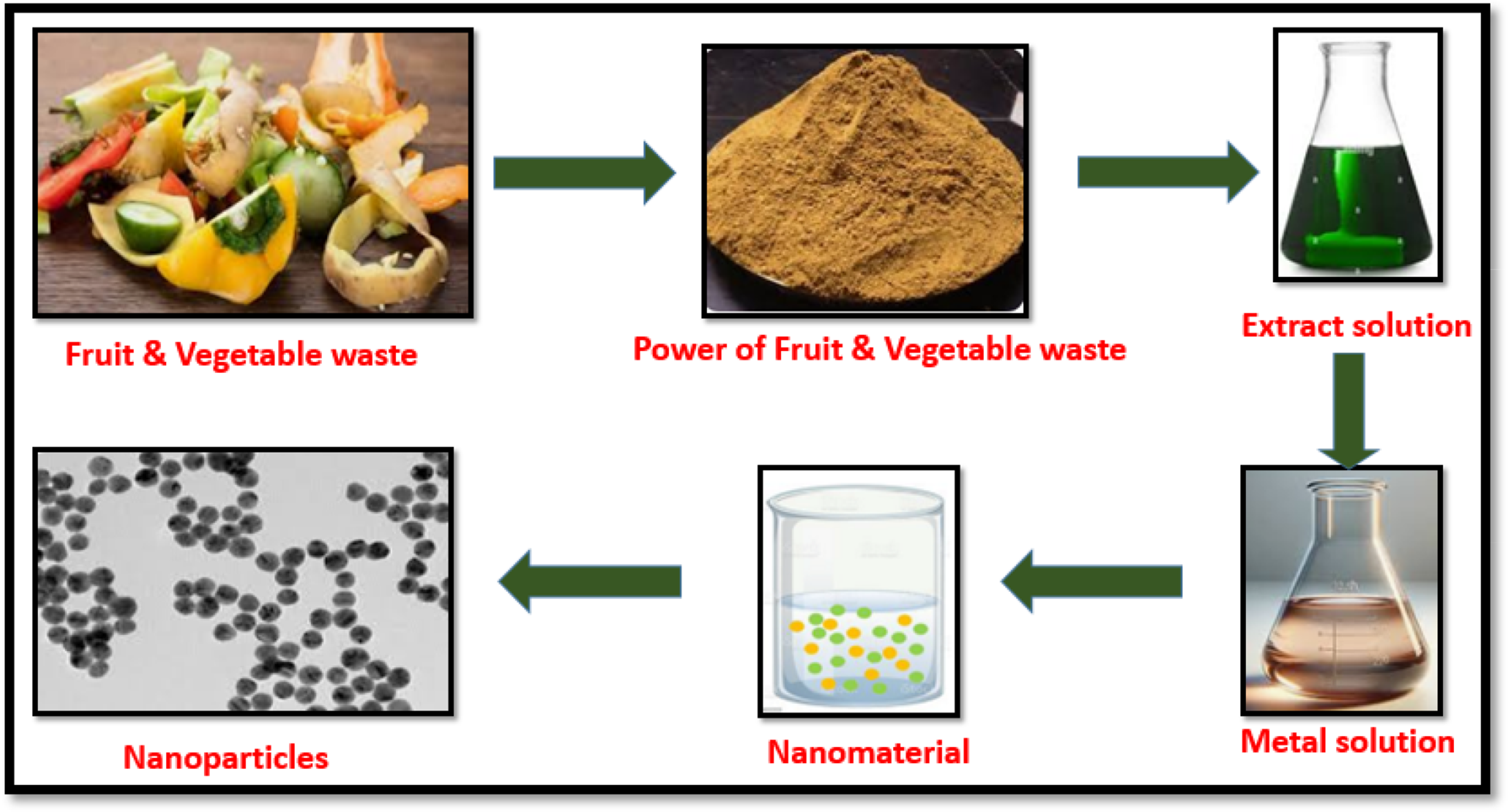
Green Synthesis of Nanomaterials Using Fruit and Vegetable Wastes.
Current Challenges and Opportunities in Transforming Fruit and Vegetable Waste into Nanoparticles
Transforming fruit and vegetable waste into nanoparticles has several scientific, technological, and economic obstacles. A primary concern is the inconsistency in waste composition. Species, maturity, and environmental circumstances affect the biochemical composition of the waste, resulting in variations in nanoparticle formation. A further problem involves enhancing green synthesis methodologies. 57 While plant extracts possess bioactive chemicals that facilitate nanoparticle synthesis, regulating their dimensions, morphology, and stability remains intricate. The existence of various phytochemicals may lead to erratic responses, requiring meticulous standardization of extraction and synthesis parameters. The efficacy of the synthesis process is another essential concern. Isolating bioactive chemicals while maintaining their reactivity necessitates meticulous selection of solvents and processing techniques. 58 Certain procedures require elevated temperatures or prolonged periods, rendering them energy-intensive and potentially compromising their sustainability. Moreover, scalability and cost-efficiency present considerable obstacles. Although most synthesis methods exhibit efficacy under laboratory settings, scaling production encounters challenges stemming from variations in raw material characteristics and the necessity for sophisticated purification techniques. The economic feasibility hinges on the equilibrium between processing expenses and the market valuation of the nanoparticles. Moreover, legal and safety factors influence the marketing of these nanoparticles. The existence of biological residues and potential contamination requires comprehensive characterization and testing prior to application in biomedical, pharmacological, or environmental domains. Establishing quality control procedures is crucial for ensuring the uniformity and safety of products. 59 Addressing these problems necessitates interdisciplinary collaboration, improved process optimization, and progress in green chemistry to boost the efficiency, dependability, and sustainability of nanoparticle synthesis from fruit and vegetable waste. Figure 2 represents the challenges and opportunities in transforming fruit and vegetable waste into nanoparticles

Challenges and Opportunities in Transforming Fruit and Vegetable Waste into Nanoparticles.
Challenges in Fruit and Vegetable Waste-Derived Nanoparticles
Geographical location, plant species, and seasonality all affect the makeup of fruit and vegetable waste. This inconsistency impacts the efficiency and reproducibility of nanoparticle synthesis. 60
Green synthesis techniques necessitate meticulous regulation of temperature, pH, and reaction duration to produce homogeneous nanoparticles. Maintaining consistency and quality remains a challenge due to the ongoing challenge of establishing established processes.. 61
The majority of studies concentrate on laboratory-scale synthesis, with less investigation into industrial-scale manufacturing. Scaling up necessitates tackling difficulties associated with yield, cost efficiency, and automation. 62
Opportunities in Advancing Fruit and Vegetable Waste-Derived Nanoparticles
Investigations into low-energy, environmentally sustainable methods, like microwave-assisted and ultrasound-assisted synthesis, can improve production efficiency and save expenses. 63
Employing agriculture and food sector waste for nanoparticle synthesis corresponds with global sustainability objectives, diminishing landfill waste and fostering resource recycling. 64
Biogenic nanoparticles exhibit antimicrobial, antioxidant, and catalytic properties, presenting innovative opportunities for drug delivery, enhancement of plant growth, and environmental remediation. 65
The development of commercially viable nanoparticle products derived from fruit and vegetable detritus can be expedited by fortifying partnerships between researchers, industries, and policymakers. 66
The potential applications of biogenic nanoparticles are enhanced by the utilization of sophisticated imaging and spectroscopic techniques, including atomic force microscopy (AFM) and x-ray diffraction (XRD), which facilitate a more profound comprehension of their structure and functionality. 67
In spite of the obstacles associated with the conversion of fruit and vegetable waste into nanoparticles, ongoing research presents promising prospects for the expansion of production, the improvement of nanoparticle stability, and the expansion of their applications. In order to foster sustainable development, future research should prioritize the optimization of synthesis techniques, the assessment of safety concerns, and the integration of biogenic nanoparticles into circular economy frameworks.
Biosynthesis of NPs from Fruit and Vegetable Waste
Biosynthesis of NPs from Fruit and Vegetable waste has been shown to be useful in a variety of applications, including the elimination of pollutants from water and the demonstrated ability to display antibacterial capabilities. Because of this, the synthesis of nanoparticles made of metal and metal oxide has been facilitated. This unique strategy decreases the influence that materials have on the environment while simultaneously adding value to materials that have been discarded. 35 It does this by converting waste from agriculture and food into useful resources for the synthesis of nanomaterials. This environmentally responsible approach is shown by a diagrammatic summary of the biosynthetic process that makes use of waste from food or vegetables. 36 Table 1 represents the biodegradable waste extracts derived nanoparticles and their application.
Biodegradable Waste Extracts Derived Nanoparticles and Their Application.

Metal and Metal Oxide Nanoparticles
The typical structure of metallic nanoparticles, or MNPs, consists of an inorganic metal or metal oxide core and an exterior shell composed of either organic or inorganic material. One of the most important factors that determines the biological interactions of MNPs is the shape of these particles. Shapes such as spheres, rods, ellipsoids, cylinders, triangles, and hexagons are often seen in everyday life. 68 Nanoparticles (NPs) may have a considerable impact on their capacity to penetrate biological barriers, cellular absorption methods, circulation time, and target specificity. 69 This is because the shape of NPs can directly affect these characteristics. For example, HeLa cells are able to more easily absorb spherical gold nanoparticles than they are able to ingest rod-shaped gold nanoparticles of the same size. In addition, MNPs display a variety of behaviors, including aggregation, interaction with natural organic matter (NOM) in water, and surface adsorption, all of which are regulated by the physicochemical features of the MNPs. For the purpose of determining their features, solubility is also an extremely important factor. 70
One common technique for creating metal oxide nanoparticles, or MNPs, is the hydrolysis of metal salts at room temperature or slightly higher temperatures (below 100 °C). MONPs differ from conventional materials in both physical and chemical characteristics due to their nanoscale size and high density of active corner or edge surface sites. Examples of organic compounds that may be produced from fruit and vegetable waste include alkaloids, enzymes, phenolics, proteins, polysaccharides, tannins, and terpenoids. These materials may be used as organic reducing agents while creating nanoparticles. 71 The peels of a variety of fruits, including bananas, oranges, jackfruit, lemons, mangoes, pomegranates, tangerines, and mangosteens, may be used to create metal oxide nanoparticles. Furthermore, agricultural output waste might be a resource for nanoparticle manufacturing. For instance, weeds that are found in agricultural areas serve as bioreactors that are responsible for the production of nanoparticles. The Lantana camara plant is capable of producing copper nanoparticles, the Ipomoea carnea plant can produce silver nanoparticles, and the Gloriosa superba L. plant can produce copper oxide nanoparticles. 72
Gold Nanoparticles (AuNPs)
Au nanoparticles, also known as gold nanoparticles, are very stable and display features that may be customized at the nanoscale. Their biosynthesis often entails the use of a wide variety of extracts from fruit peels. When it comes to the creation of gold nanoparticles (Au NPs), for example, extracts of pomegranate peel may function as both reducing and stabilizing agents. Certain amounts of pomegranate peel extract and chloroauric acid solution (HAuCl4) are mixed together in this procedure. The combination is then kept at room temperature for a period of twenty-four hours while being shaken intermittently. A shift in hue from gold to pink is an indication that gold nanoparticles are being formed. 73
In a similar manner, gold nanoparticles (Au NPs) may be manufactured by a basic process that does not need the utilization of specialist apparatus by utilizing the red and green waste components of watermelon extract. In order to analyze the nanoparticles that are produced, many methods are used. These techniques include energy-dispersive spectroscopy (EDS), x-ray diffraction, scanning electron microscopy (SEM), and ultraviolet-visible spectroscopy (UV-VIS). In addition, the Kirby Bauer sensitivity technique was used to assess their antibacterial activity, and the results showed that they were effective against both Staphylococcus epidermidis and E. coli. 74
Silver Nanoparticles (AgNPs)
The production of silver nanoparticles (AgNPs) by the use of plant extracts is regarded as an easy and cost-effective method in the area of nanotechnology. This method offers a wide range of applications across a variety of academic disciplines. 75 By controlling the circumstances of the reaction, such as temperature and pH, it is possible to make silver nanoparticles (AgNPs) with diameters smaller than 10 nanometers and morphologies that are distinct from the conventional spherical form. One example is the use of pomegranate peel extract, which is abundant in phenolic compounds, gallic acid, flavonoids, and anthocyanidins. This extract has been employed for the reduction of silver ions in order to produce nanoparticles. 76
The fruit shell of Tamarindus indica has also been used to establish a process that is both environmentally friendly and cost-effective. The AgNPs that are produced as a consequence of this approach have the potential to be used in therapeutic applications, including the treatment of breast cancer. 77 In addition, the geranium leaf residue contains chemicals such as terpenoids that make it easier for silver ions to be converted into nanoparticles throughout the process. An additional efficient reducing agent for the manufacture of silver nanoparticles is banana peel extract (BPE). This extract has a high concentration of natural polymers such as lignin, cellulose, hemicellulose, and pectin of various types. 78 Another example is the production of silver nanoparticles (AgNPs) using phenolic-rich extracts from waste products derived from bilberry and red currant. During the procedure, a combination of phenolic extract and silver nitrate solution was stirred in glass vials that were thermostated. The temperature range was from 20 to 60 degrees Celsius, and the pH range was from 8 to 12; the levels were adjusted using sodium hydroxide. UV-visible spectroscopy at 420 nm, dynamic light scattering (DLS), and zeta potential analysis were used in order to carry out the process of characterizing the nanoparticles that were manufactured. 79
Copper Nanoparticles (CuNPs)
The synthesis of copper nanoparticles, also known as CuNPs, has been accomplished by a variety of chemical and physical processes. Even though it takes a substantial quantity of surfactant, the microemulsion technique is one of the most often used chemical procedures. However, it is also one of the most expensive. As an alternative, one may use algal extracts in a more environmentally friendly technique of synthesis. 80 During this procedure, a solution of CuSO4 is made and then combined with an algal extract in a drop-by-drop manner while being continuously stirred. Later, the mixture is subjected to agitation in a rotary shaker at room temperature (150 revolutions per minute). The creation of copper oxide nanoparticles (CuO-NPs) is confirmed by a color shift from green to brown over a period of six hours. After centrifuging the solution at a speed of 7000 revolutions per minute for a period of five minutes, the particles that are produced are then submitted to further examination. 81
An early confirmation of the synthesis of CuO-NPs is achieved by the use of UV-visible spectroscopy. Identification of the functional groups in the algal extract that are responsible for the creation of nanoparticles is accomplished via the use of infrared spectroscopy (IR). X-ray diffraction (XRD) examination is used to detect crystallinity and phase composition within the range of 10–90° 2θ. Transmission electron microscopy (TEM) and SEM are two techniques that disclose the surface structure, size, and shape. 82
A green synthesis of copper nanoparticles was achieved by Din et al utilizing aqueous extracts from two different sources: waste leftovers from the manufacturing of juice from bilberry (Vaccinium myrtillus L.) and non-edible "false bilberry" (Vaccinium uliginosum L. subsp. gaultherioides). Nanoparticles may be produced using this environmentally beneficial technology, which makes use of natural resources. 83
Zinc Oxide Nanoparticles (ZnONPs)
Zinc oxide nanoparticles, also known as ZnO NPs, have the ability to produce reactive oxygen species (ROS), which include hydrogen peroxide, superoxide anions, and hydroxyl radicals. It is because of this feature, in addition to their large surface area and antibacterial action, that ZnO nanoparticles are effective against a wide variety of parasites. 84 Using discarded fruit peels from Punica granatum and Musa acuminata, ZnO nanoparticles have been produced. The analysis of these nanoparticles was carried out using SEM, ultraviolet-visible spectroscopy (UV-VIS), and x-ray diffraction (XRD). The uses of these nanoparticles may be found in a variety of sectors, such as biology, biomedicine, environmental science, industry, agriculture, and food technology. 85
In addition, zinc oxide nanoparticles (ZnO NPs) have been manufactured by using the seed extracts of Dimocarpus longan Lour. There are phytochemicals such as catechins, vitamins, proteins, carbohydrates, and flavonoids that are found in these seeds, which are often thrown away as trash. These phytochemicals function as reducing and stabilizing agents. 86 In order to produce nanoparticles, zinc acetate solution is combined with seed extract in a range of concentrations. The reaction is then carried out in a microwave oven at a variety of power levels (ranging from 450 to 800 W) and irradiation cycles. Powder X-ray diffraction shows that the ZnO nanoparticles that are produced are generally between 40 and 80 nanometers in size and have a hexagonal pure phase. The TEM study demonstrates that the nanoparticles contain a majority of irregular forms. 87
ZnO nanoparticles are useful in wastewater treatment in addition to their effectiveness in environmental applications. As a result of their ability to enhance the photocatalytic breakdown of dyes including methylene blue (MB), malachite green (MG), methyl orange (MO), and orange II (OII), they are an excellent method for treating effluents from textile industry. 88
Titanium Dioxide Nanoparticles (TiO2NPs)
Because of their photocatalytic characteristics, high chemical stability, and non-toxic nature, titanium dioxide nanoparticles (TiO2NPs) have been widely researched for a variety of applications. This is because they are ecologically benign. Cosmetics, medicines, UV protection, food colorants, toothpaste, and paper goods are just some of the many industries that make extensive use of them. In addition to this, TiO2 nanoparticles have impressive antimicrobial properties. 89
The use of bacterial cellulose (BC) that is obtained from agricultural waste, such as sugarcane molasses and rotten apple waste, forms the basis of a sustainable technique for the synthesis of titanium dioxide nanoparticles (TiO2 NPs). BC that is generated by Achromobacter sp. M15 is used in this environmentally friendly synthesis technique in order to decrease titanium tetraisopropoxide. 90 In order to generate titanium dioxide nanoparticles, the sol-gel technique is used, and 3-glycidyloxypropyltrimethoxysilane (GPTMS) is included into the process. According to the findings of TEM, the nanoparticles that were produced had diameters that range from 5 to 10 nanometers (33). Using techniques such as Fourier-transform infrared spectroscopy (FTIR), thermal gravimetric analysis (TGA), mechanical property assessments, SEM, and energy-dispersive x-ray spectroscopy (EDX), research has been conducted to characterize fabrics that have been treated with TiO2 nanoparticles. The results of these studies have demonstrated improved performance and functional properties. 91
Palladium Nanoparticles (PdNPs)
Palladium nanoparticles, also known as PdNPs, are characterized by their remarkable physicochemical features. These attributes include a high level of thermal and chemical stability, remarkable photocatalytic activity, and outstanding electrical and optical properties. With these characteristics, Pd nanoparticles are very adaptable and may be used in a wide variety of applications, including organic synthesis, hydrogen storage, fuel cells, sensors, catalysis, and the fabrication of active membranes. 92
Using ingredients that are less harmful to the environment, Pd nanoparticles have been manufactured via the use of green synthesis techniques. One example of a product that has been exploited in bio-inspired palladium nanoparticle manufacturing is BPE, which is a chemical that is both environmentally friendly and non-toxic. The reduction of palladium chloride is accomplished by the use of peel powder that has been boiled, crushed, acetone-precipitated, and air-dried using this method. x-ray diffraction (XRD), scanning electron microscopy with energy-dispersive x-ray (SEM-EDX) analysis, and ultraviolet-visible spectroscopy are the methods that are used in order to describe the Pd nanoparticles that are produced. 93
Moreover, watermelon rind, which is a typical waste product from agricultural production, has been used as a reducing and capping agent for the production of lead nanoparticles. A noticeable color shift from a light yellow to a dark brown suggests the creation of nanoparticles, which is verified by UV-visible spectroscopy after the nanoparticles have been obtained. 63 . Quantitative methods such as X-ray diffraction (XRD), Fourier transform infrared spectroscopy (FTIR), DLS, atomic force microscopy (AFM), and TEM are used in the process of further characterization of lead nanoparticles (NPs). The spherical Pd nanoparticles that were generated exhibit catalytic activity, which highlights the fact that they have the potential to be used in a variety of applications. 94
Application of Biosynthesized Nanoparticles
The fruit and vegetable waste-derived nanoparticles have exceptional qualities such increased stability, biocompatibility, and large surface area, which make them appropriate for a wide range of uses. Table 2 represents the various classes of bioactive compounds from fruit by-products. They have shown promise in the biological sciences as cancer treatments, drug delivery systems, and antibacterial agents. These nanoparticles are essential for air purification, heavy metal removal, and wastewater treatment in environmental research. They also aid in soil treatment, insect control, and the improvement of plant development in agriculture. They are also used in the food sector for vitamin fortification, antimicrobial packaging, and food preservation. Additionally, these nanoparticles aid in the manufacturing of biofuel, act as green catalysts, and support photocatalysis for energy conversion in the energy industry. Figure 3 shows the applications of nanoparticles synthesized from fruit & vegetable waste in different sectors.

Applications of Nanoparticles Synthesized from Fruit & Vegetable Waste.
Various Classes of Bioactive Compounds from Fruit by-Products.

Potential Applications and Implications of Nanoparticles Derived from Fruit and Vegetable Waste in Agriculture
The utilization of nanoparticles synthesized from fruit and vegetable waste has garnered attention as a cost-effective and environmentally benign solution in agriculture. These biogenic nanoparticles provide advantages such as enhanced nutrient delivery, antimicrobial properties, and soil remediation, thereby promoting sustainable agricultural practices.
Nano-Fertilizers for Improved Nutrient Efficiency
The utilization of nanoparticles that are formed from the waste of fruits and vegetables is a key factor in the enhancement of the availability of nutrients for plants. 111 When compared to conventional fertilisers, these nano-fertilizers derived from biomaterials make it easier for plants to absorb vital nutrients, resulting in a release that is both more focused and more prolonged. Through the enhancement of nutrient uptake, they manage to minimize the loss of nutrients and greatly cut down on leaching losses, thereby contributing to the preservation of soil quality and preventing environmental contamination. As a consequence of this, the application of these nanoparticles contributes to higher crop yield and improves long-term soil fertility. This helps to support sustainable farming practices while simultaneously lowering the reliance on synthetic fertilisers. 112
Bio-Nanopesticides for Pest and Disease Management
It has been demonstrated that nanoparticles that are produced using environmentally friendly technologies, in particular silver, copper, and zinc oxide, possess powerful antibacterial capabilities. The fact that these nanoparticles are able to efficiently attack bacterial and fungal infections makes them an intriguing alternative to the synthetic pesticides that are traditionally widely used. In agriculture and healthcare, the utilization of these products can contribute to the reduction of chemical residues in the environment, the reduction of the danger of pesticide resistance, and the promotion of environmentally friendly pest management practices 113
Soil Remediation and Heavy Metal Removal
As a result of their ability to effectively absorb heavy metals and other environmental pollutants, nanoparticles that are obtained from plant waste play an essential function in the process of soil decontamination. Among these, carbon-based nanoparticles have demonstrated great promise in enhancing the health of soil by immobilizing hazardous chemicals and preventing plants from absorbing them. By promoting sustainable soil management techniques and assisting in the restoration of contaminated agricultural land, their application not only helps to reduce the long-term ecological impact of heavy metal pollution, but it also helps to restore polluted agricultural land. 114
Growth Promotion and Stress Tolerance in Crops
Through the regulation of enzyme activity and the enhancement of stress response mechanisms, biogenic nanoparticles play a significant role in the process of increasing seed germination, root development, and overall plant growth to a significant degree. In particular, it has been discovered that iron oxide and zinc nanoparticles can enhance the resistance of plants to the effects of salt stress and drought by assisting in the retention of water, the uptake of nutrients, and the activation of defense mechanisms that are associated to stress. The application of these technologies in agriculture provides a sustainable method for increasing agricultural output, particularly in areas that are impacted by extreme environmental circumstances. 115
Water Purification for Sustainable Irrigation
The elimination of pollutants and pathogens from irrigation water has been successfully accomplished through the utilization of nanoparticles for water purification systems. These nanoparticles were synthesized from waste vegetables and fruits. Adsorbing heavy metals, decomposing organic contaminants, and neutralizing dangerous microbes are all ways in which these nanoparticles, which are favorable to the environment, improve water quality. Through the provision of a consistent supply of clean water for agricultural purposes, they contribute to the reduction of the occurrence of waterborne plant diseases, the promotion of healthy crop growth, and the support of farming practices that are environmentally responsible. 116
Agricultural practices have the potential to undergo significant change if nanoparticles that are produced from waste products of fruits and vegetables are incorporated into agricultural production. Through the enhancement of nutrient intake, the reduction of the requirement for synthetic fertilizers and pesticides, and the contribution to the remediation of soil and water, these biogenic nanomaterials have the potential to increase crop output. Moreover, their eco-friendly character helps to promote sustainable agriculture methods while simultaneously reducing the amount of pollution that is released into the environment. However, additional study is necessary to evaluate their long-term effects on the environment, optimize techniques of production on a large scale, and build regulatory frameworks in order to guarantee that their implementation in agricultural systems is both safe and effective without compromising safety. 117
Potential Applications and Implications of Nanoparticles Derived from Fruit and Vegetable Waste in the Energy Sector
Nanoparticles sourced from fruit and vegetable waste have attracted significant attention in the energy sector because of their sustainability, cost-effectiveness, and potential to act as environmentally friendly substitutes for traditional synthetic nanomaterials. 118 The bio-synthesized nanoparticles exhibit distinctive characteristics, such as a large surface area, outstanding conductivity, and exceptional catalytic efficiency, rendering them particularly appropriate for a range of energy-related applications. These have been investigated for applications in energy generation, storage, and conversion technologies, including fuel cells, supercapacitors, and lithium-ion batteries (LIBs). Their incorporation into these systems not only improves efficiency but also facilitates the shift towards more environmentally friendly and sustainable energy options. 119
Renewable Energy Harvesting
Investigations have been conducted to determine whether or not nanoparticles that are produced from waste from fruits and vegetables have the ability to convert solar energy. When it comes to improving the efficiency of dye-sensitized solar cells (DSSCs) and perovskite solar cells, nanoparticles that are formed from carbon and metals that are derived from biological sources have demonstrated significant potential. Higher energy conversion efficiencies are achieved as a result of these nanoparticles because they improve light absorption, promote efficient electron transport, and boost charge separation. The fact that they are both environmentally benign and cost-effective makes them a sustainable alternative to conventional materials, which in turn contributes to the development of green energy technology. 120
Fuel Cell Technology
Nanoparticles that have been synthesized using environmentally friendly methods have been found to be effective electrocatalysts in fuel cells, which helps to assist the generation of sustainable energy. Nanoparticles generated from plants, particularly those made of metal oxides and carbon nanostructures, play a significant part in the enhancement of important electrochemical reactions. These reactions include the oxygen reduction reaction (ORR) and the hydrogen evolution reaction (HER). They are potential alternatives to conventional platinum-based catalysts because of their high catalytic activity, stability, and cost-effectiveness. This reduces the reliance on resources that are scarce and expensive. Not only does the incorporation of these bio-synthesized nanoparticles into fuel cell technology result in an increase in energy efficiency, but it also encourages the development of solutions that employ renewable and environmentally acceptable energy sources. 121
Energy Storage: Batteries and Supercapacitors
Nanoparticles that are produced from waste from fruits and vegetables have been effectively put into LIBs and supercapacitors in order to improve the electrochemical performance of these devices. As a result of their better charge storage capacity, high conductivity, and remarkable cycling stability, carbon-based nanoparticles generated from plant waste are ideally suited for applications that include energy storage. The utilization of these materials enhances the effectiveness and durability of batteries and supercapacitors, hence helping to the creation of energy storage devices that are both high-performing and environmentally friendly. These bio-synthesized nanoparticles offer greener and more cost-effective energy solutions by substituting standard synthetic materials with alternatives that are beneficial to the environment. 122
Biofuels and Hydrogen Production
Nanoparticles derived from fruit and vegetable waste act as effective catalysts in biofuel production, greatly improving the efficiency of biomass conversion processes. Bio-derived nanoparticles enhance enzymatic hydrolysis, aiding in the decomposition of complex biomolecules into fermentable sugars, resulting in increased yields of bioethanol and biodiesel. Moreover, nanomaterials are essential in the advancement of sustainable hydrogen energy production through their facilitation of photocatalytic and electrochemical water splitting processes. Their capacity to enhance reaction rates and boost energy efficiency positions them as strong contenders for green hydrogen production, aiding in the progression of renewable energy technologies and diminishing reliance on fossil fuels. 123
Thermoelectric Applications
Bio-synthesized nanoparticles have been investigated for their potential applications in thermoelectric devices, which effectively transform heat into electricity. Metal oxide nanoparticles obtained from plant waste have shown potential in enhancing the thermoelectric properties of materials, specifically by increasing electrical conductivity and decreasing thermal conductivity. This leads to enhanced efficiency in waste heat recovery, rendering these nanoparticles significantly advantageous for industrial uses. Through the application of waste heat generated from manufacturing processes, transportation, and power plants, these sustainable nanomaterials play a significant role in energy conservation and the advancement of environmentally friendly energy solutions. 124
The integration of nanoparticles sourced from fruit and vegetable waste within the energy sector presents a sustainable and environmentally friendly option compared to conventional nanomaterials. Their use in energy storage, conversion, and generation could significantly reduce dependence on limited and expensive materials, thereby enhancing the accessibility and sustainability of renewable energy technologies. The bio-synthesized nanoparticles play a significant role in the development of LIBs, supercapacitors, fuel cells, and thermoelectric devices, improving energy efficiency and overall performance. Nonetheless, additional investigation is required to enhance their synthesis processes, boost their stability and efficiency, and create scalable production methods to support their commercialization and broader acceptance. 125
Potential Applications and Implications of Nanoparticles Derived from Fruit and Vegetable Waste in Medical Sector
Fruit and vegetable waste-derived nanoparticles have drawn a lot of interest in the medical community because of their special qualities, which include high biocompatibility, environmentally friendly synthesis, and the presence of naturally occurring bioactive chemicals. By using plant-based materials instead of hazardous chemical reagents, the synthesis of nanoparticles is safer, more environmentally friendly, and consistent with the principles of green chemistry. 126
Because of their biocompatibility and capacity to contain therapeutic chemicals, these nanoparticles have one of the most promising uses in drug delivery systems, where they improve targeted drug administration. These nanoparticles are especially helpful in treating chronic diseases because they can increase the bioavailability of medications, provide regulated release, and lessen any negative effects.
Drug Delivery Systems
Because of their tiny size, high surface area, and improved bioavailability, fruit and vegetable waste-derived nanoparticles have shown great promise as effective drug carriers. Because of their nanoscale size, they can interact with biological systems more effectively, allowing for more accurate drug targeting and fewer side effects. These nanoparticles’ capacity to encapsulate therapeutic substances, shielding them from deterioration and enabling sustained and regulated drug release, is one of their main advantages in drug delivery. 127 By ensuring a constant drug concentration in the bloodstream, this controlled release mechanism lowers the frequency of delivery and increases patient compliance. These characteristics are especially helpful in cancer treatment, where precise administration is necessary to optimize treatment effectiveness while reducing harm to healthy cells. Through synergistic effects, these nanoparticles may also improve the anticancer activity of the medications they carry by integrating bioactive substances that are naturally found in fruit and vegetable waste. These nanoparticles have potential use in the treatment of chronic illnesses like diabetes, heart disease, and neurological problems in addition to oncology. 128 Their potential uses in neurology, especially for medication administration in Alzheimer's and Parkinson's disease, are increased by their capacity to pass across biological barriers, such as the blood-brain barrier. All things considered, fruit and vegetable-derived nanoparticles are a prospective substitute for synthetic carriers due to their biocompatibility, environmental friendliness, and functional diversity. To guarantee their broad use in contemporary medicine, more study is necessary to maximize scalability, reproducibility, and clinical validation. 129
Antioxidant and Anti-Inflammatory Applications
Nanoparticles derived from plant waste are abundant with bioactive components, including flavonoids and phenolic acids, which provide notable antioxidant and anti-inflammatory activities. These natural antioxidants are essential in neutralizing ROS, therefore alleviating oxidative stress, a significant factor in numerous chronic diseases. As a result, these nanoparticles have been investigated for therapeutic applications in cardiovascular and neurological illnesses. 130 In the realm of cardiovascular health, plant-derived nanoparticles have shown promise in modulating blood pressure, lipid profiles, and endothelial function, hence diminishing the risk of cardiovascular illnesses. Their antioxidant qualities contribute to vascular health by reducing oxidative damage to endothelial cells and regulating inflammatory responses in the cardiovascular system. Oxidative stress is linked in the aetiology of neurodegenerative diseases, including Alzheimer's and Parkinson's diseases. Plant-derived antioxidants, particularly those administered using nanoparticles, have demonstrated potential in mitigating brain damage by combating oxidative stress and inflammation. 131 Research has demonstrated the neuroprotective capabilities of plant-derived antioxidants such as Laurus nobilis and Aronia melanocarpa in alleviating neurodegenerative processes. Moreover, flavonoid-encapsulated nanoparticles have demonstrated efficacy in mitigating oxidative damage in bacterial cells, indicating their potential utility in addressing oxidative stress-related disorders. The continuous release of flavonoids from these nanoparticles guarantees extended antioxidant effects, potentially advantageous in the management of chronic diseases. Although these findings are encouraging, it is imperative to do additional research to comprehensively ascertain the therapeutic potential and safety profiles of plant-derived nanoparticles in clinical contexts. 132
Bioimaging and Diagnostics
Carbon-based nanoparticles, specifically carbon dots (CDs), derived from fruit and vegetable waste, demonstrate significant fluorescence characteristics, rendering them advantageous for bioimaging and diagnostic purposes. Their pronounced luminosity and biocompatibility facilitate their application as contrast agents in imaging modalities such as fluorescence microscopy, assisting in the early detection of diseases. 133 The environmentally sustainable production of these CDs from renewable resources conforms to sustainable methods, providing a cost-efficient substitute for conventional semiconductor quantum dots, which frequently include hazardous heavy metals. This eco-friendly method not only diminishes environmental effect but also improves the safety profile of nanoparticles for biological applications. Besides fluorescence microscopy, CDs have been investigated for their applicability in alternative imaging modalities. When suitably functionalized, they can act as contrast agents in magnetic resonance imaging (MRI), offering multipurpose platforms for thorough diagnostic imaging. The incorporation of these plant-waste-derived CDs into bioimaging technologies has potential for enhancing non-invasive diagnostic techniques, thus enabling early illness diagnosis and surveillance. 134
Antimicrobial Activity of Biosynthesis of NPs from Fruit and Vegetable Wastes
The nanoparticles (NPs) that are produced by biosynthesis have been shown to possess outstanding antibacterial characteristics, and their toxicity is substantially reduced when compared to those that are produced through chemical synthesis. There has been a significant amount of research conducted on the synthesis of nanoparticles utilizing vegetable waste, with the purpose of evaluating their effectiveness against a variety of bacterial and fungal strains. These investigations repeatedly highlight the better antibacterial activity of biosynthesized nanoparticles as well as their lower effect on the environment because of their biosynthesis. 135 By way of illustration, Jayabhaye et al synthesized silver nanoparticles (Ag-NPs) by using vegetable waste from Moringa oleifera and Murraya koenigii as reducing agents. The nanoparticles that were produced as a consequence had significant antibacterial activity against Staphylococcus aureus and was able to retain their stability for a period of up to four weeks without coming together. In a similar manner, Mythili and her colleagues were able to synthesis Ag-NPs by using vegetable peels and veggies that were wasted. These nanoparticles, which ranged in size from 10 to 90 nanometers (with an average of around 43 nanometers), shown a remarkable antibacterial efficacy against Gram-negative bacteria (Klebsiella spp.) as well as Gram-positive bacteria (Staphylococcus spp.). 136
In another work, waste from vegetables to generate gold nanoparticles (Au-NPs) with sizes ranging from 10 to 70 nm. These Au-NPs shown potent antibacterial action against clinical bacterial strains. Additionally, waste from Petroselinum crispum, Beta vulgaris, and Lepidium aucheri in order to synthesis Ag-NPs that were able to efficiently suppress the growth of Staphylococcus aureus and Escherichia coli. 137 Citrus limetta peel extract was used by Dutta et al in order to manufacture silver nanoparticles (Ag-NPs), which were then examined for their ability to inhibit the growth of bacteria and fungi. E. coli, S. aureus, Micrococcus luteus, and S. epidermidis were among the bacterial strains that were effectively targeted by these nanoparticles. Candida and other fungal species were also successfully targeted by these nanoparticles. It was shown that they demonstrated mechanisms such as membrane rupture and anti-biofilm action. 138 These results highlight the potential of vegetable waste as an environmentally benign and cost-efficient resource for the synthesis of nanoparticles that have a high antibacterial effectiveness and minimum impact on the environment.
Anticancer Activity of Biosynthesis of NPs from Fruit and Vegetable Wastes
Cancer is a comprehensive term that refers to a collection of illnesses that are characterized by uncontrolled cell proliferation and are responsible for around 8.2 million deaths year. It is crucial to have improved therapy techniques since there are over 200 distinct varieties of cancer that have been found. The use of nanotechnology with immunology in the treatment of cancer has shown that nano-immune-chemotherapy has the potential to be effective. Nanoparticles made of a variety of metals and metal oxides demonstrate preferential cytotoxicity against malignant cells while sparing normal cells, which makes them valuable agents in the treatment of cancer. 139 One example is the synthesis of silver nanoparticles (Ag NPs) by Das et al, who used waste extract from pineapple peel. Not only did these nanoparticles exhibit antibacterial activity, but they also displayed antioxidative, anti-diabetic, and cytotoxic activities against HepG2 cancer cells. These nanoparticles have the potential to be used in the treatment of acute illnesses, the development of medications for diseases such as cancer and diabetes, the dressing of wounds, and the fight against bacterial infections. 140
Furthermore, the development of bimetallic nanoparticles by the use of Trapa natans peel extract has shown a substantial amount of promise. The nanoparticles of silver (15 nm) and gold (25 nm) that were generated from this extract exhibited cytotoxic action against a variety of cancer cells. When compared to their metallic counterparts, bimetallic nanoparticles have a number of benefits since they combine the characteristics of both metals. These composites have been shown to be capable of inducing mitochondrial stress and ROS-mediated apoptosis in cancer cells without the involvement of the p53 pathway, which puts them in a position to be a potential option for p53-targeted treatments. 141 Bimetallic composite nanoparticles have a significant amount of promise for future uses in nanomedicine, particularly in the treatment of cancer. In order to advance cancer therapies, they are a potential choice since their synthesis is not only easy but also efficient, cost-effective, and uncomplicated. 142
Antiviral Activity of Biosynthesis of NPs from Fruit and Vegetable Wastes
The significance of nanotechnology in the field of virology has increased at a pace that is exponential over the course of the last decade. Nanoparticles made of a variety of metals and metal oxides are displaying virucidal capabilities, which allow them to combat a wide range of viruses, including the Human Immunodeficiency Virus (HIV), hepatitis (types A, B, C, and E), and herpes simplex virus (HSV-1&2). Metallic nanomaterials may diffuse into the cell and influence the cell by damaging the viral genome (DNA or RNA), in addition to directly engaging with the glycoproteins that are found on the surface of viral cells. Metal nanoparticles display antiviral action when they contact with the surfaces of viral cells. Metallic nanoparticles have the ability to connect with the genetic components of the cell, which in turn inhibits replication and so prevents the cell from spreading infection. 143
In accordance with the findings, the metallic nanoparticles that demonstrate antiviral effects against enveloped viruses are the most often found to be silver and gold materials. In addition to exhibiting antiviral action, silver nanoparticles that are mediated by algae have the potential to be widely used in a variety of nano-silver goods, including wound dressings that are coated with AgNp, surgical tools, implants, and other forms of medical technology. 144
Tissue Engineering and Regenerative Medicine
Biocompatible nanoparticles derived from plant waste have garnered considerable interest in tissue engineering owing to their environmentally friendly characteristics and potential biological uses. These nanoparticles augment cellular interactions by facilitating cell adhesion, proliferation, and differentiation, rendering them exceptionally appropriate for many regenerative medicine applications. They specifically enhance wound healing by promoting tissue regeneration, assist in bone repair through the facilitation of osteogenic differentiation, and are crucial to scaffold creation by creating a biomimetic environment for cellular proliferation. The ecological and economical characteristics of plant-derived nanoparticles underscore their promise as novel biomaterials in regenerative medicine. 145
Food Packaging
By preserving goods and shielding them from potentially hazardous bacteria, food packaging is an essential component in the whole process of assuring the safety of food. Primary packaging provides direct contact with the product, whereas secondary packaging focuses on transportation, storage, and distribution. 146 Both types of packaging are included in this process. The term "nano food packaging," which refers to packaging that contains nanoparticles, has seen a surge in popularity within the food sector in recent years. However, concerns about the toxicity of nanoparticles continue to be a prominent issue of dispute among members of the scientific community. 147
Innovations in food packaging materials that are driven by nanotechnology provide the possibility of resolving difficulties with product safety, material performance, and cost efficiency, in addition to environmental sustainability. Proper packaging helps to limit the amount of food that is wasted and ensures that items are delivered in a safe and nutritious manner. Nanoparticles consisting of metals and metal oxides, such as those formed from zinc oxide (ZnO), are being investigated for their potential use as suitable substitutes for conventional antibiotics in the food processing and medical industries. The use of these nanoparticles as antimicrobial agents in food packaging has shown that they have the potential to prevent contamination and increase the shelf life of the product. 148 For instance, zinc oxide (ZnO) is used in the food sector not only as an antibacterial agent but also as a significant source of zinc, which is an important micronutrient. These films are appropriate for use in food packaging because the incorporation of zinc oxide (ZnO) into a polylactic acid (PLA) matrix improves both the mechanical qualities and the antibacterial activity of the films. Nanoparticles manufactured from zinc oxide and titanium dioxide are often used in active packaging systems because to the antibacterial qualities that they possess. 149
Dye Degradation Using Nanoparticles Synthesized from Fruit and Vegetable Waste
The degradation of dyes in water has been accomplished by the use of nanoparticles (NPs), which include zinc oxide (ZnO), gold oxide (AuO), and silver oxide (AgO). However, there are still worries about the possible hazards to the environment that might be caused by nanoparticle leakage. A sustainable source for the synthesis of metal and metal-oxide nanoparticles has been investigated as an alternative. 150 This waste from fruits and vegetables has been investigated as a potential solution that is beneficial to the environment. For instance, Researchers used Sterculia acuminata extract to create gold nanoparticles (Au-NPs), and then they evaluated the efficacy of these nanoparticles in the degradation of dyes such as methylene blue (MB), methyl orange (MO), 4-nitrophenol, and straight blue 24. The Au-NPs shown remarkable dye degradation rates, with MB and MO degrading more quickly (within 12 min) than 4-nitrophenol and straight blue 24, which took 36 and 18 min, respectively. The Au-NPs also demonstrated much quicker degradation rates. 151
After synthesizing zinc oxide nanoparticles (ZnO-NPs) from Moringa oleifera waste, showed the photocatalytic activity of these particles by degrading crystal violet dye. They were able to achieve a 74% degradation rate in only seventy minutes. The fact that these ZnO-NPs had considerable antibacterial and antifungal action while displaying negligible toxicity to red blood cells makes them acceptable for use in environmental applications. In a similar manner, Singh and his colleagues were able to produce ZnO-NPs by using Pithecellobium dulce extract. 152 This extract was able to breakdown around 63% of methylene blue and exhibited antifungal activity by suppressing the development of Aspergillus flavus and Aspergillus niger by 63% and 43%, respectively. It has also been shown that silver nanoparticles, commonly known as Ag-NPs, are capable of degrading dyes such as reactive blue 9 and reactive yellow. Researchers Singh et al synthesized these nanoparticles with the help of Trigonella foenum-graecum extract, underlining the potential of these nanoparticles for the degradation of dyes and the remediation of environmental problems. An overall conclusion that can be drawn from these results is that nanoparticles that are created from vegetable waste have the potential to provide an ecologically friendly and efficient solution to the problem of water pollution. 153
Other Application of Biosynthesis of NPs from Fruit and Vegetable Wastes
There are a range of biological illnesses, including as cancer and infectious diseases, for which nanomaterials have emerged as potentially useful diagnostic and therapeutic tools. These nanoparticles, also known as NPs, serve as transporters for therapeutic compounds, transporting them directly to patients in order to cure a variety of disorders. Nanomaterials that are generated from waste from vegetables or fruits provide a number of benefits that are not available with standard processes. These benefits include improved biocompatibility, stability, and reactivity qualities. 154
Thermally-assisted carbonization with the assistance of concentrated sulfuric acid is a unique strategy that may be used for the synthesis of fluorescent carbon nanoparticles (CNPs) from discarded rice husk. CNPs are able to be used in sensing applications as a result of the interaction that occurs between them and metal ions. This technique offers a possible alternative to conventional fluorescent dyes or quantum dots, both of which may be less beneficial to the environment owing to the toxicity of their production methods and the complexity of their manufacturing procedures. 155
Fewer studies have investigated the use of nanoparticles obtained from vegetables as a cancer therapy, despite the fact that a significant amount of research has been conducted on the synthesis of nanomaterials from fruit waste and the investigation of their possible anticancer properties. 59 They then applied these nanoparticles to A549 cell lines in order to assess their anticancer effects. Their research revealed that the Ag-NPs had strong anticancer activity, as they were able to eliminate roughly 70% of the cells that were subjected to treatment. Additionally, the Ag-NPs exhibited remarkable stability throughout the experiment. Based on these findings, it seems that nanoparticles produced from vegetable waste have the potential to be an ecologically sustainable and efficient cancer therapy alternative. 156
Copper nanoparticles are also receiving interest owing to the many uses they have in a variety of fields, including medical, electronics, optics, nanofluids, conductive coatings, nanofluids, and antibacterial agents. In comparison to silver nanoparticles, they are often favored because of their cheaper cost, higher level of physical and chemical stability, and the simplicity with which they may be integrated with polymers. The creation of value-added goods via the use of waste from horticulture products, which is very inexpensive, is an innovative step toward improving sustainability. 157
Strengths and Limitations of Nanoparticles Synthesised from Fruit and Vegetable Waste
The utilization of fruit and vegetable waste for the synthesis of nanoparticles (NPs) presents a sustainable and eco-friendly approach within nanotechnology. This method leverages the rich bioactive compounds inherent in these wastes, such as flavonoids, phenols, and tannins, to act as natural reducing and capping agents in NP synthesis. 158 Despite the promise of this green synthesis route, several challenges persist, necessitating focused future research to enhance its efficacy and applicability. A primary challenge in the biogenic synthesis of NPs is achieving consistent control over particle size and morphology. Variations in the biochemical composition of plant wastes, influenced by factors like species, growth conditions, and harvest times, can lead to inconsistencies in NP characteristics. To address this, future research should prioritize the standardization of extraction protocols and synthesis conditions. Developing comprehensive databases that catalog the phytochemical profiles of various fruit and vegetable wastes could aid in predicting and controlling NP synthesis outcomes. 159 Additionally, employing advanced analytical techniques, such as synchrotron-based methods, may provide deeper insights into the mechanistic aspects of NP formation, facilitating more precise control over their properties. Another significant hurdle is the scalability of green synthesis methods. While laboratory-scale syntheses have demonstrated success, translating these processes to industrial scales remains challenging due to factors like yield limitations and process reproducibility. Future research should explore the integration of innovative technologies, such as microwave-assisted hydrothermal synthesis, which has shown potential in reducing reaction times and enhancing yield efficiencies. Combining such techniques with green synthesis could bridge the gap between laboratory and industrial applications, making the process more viable for large-scale production. 160 The purification and stabilization of biogenically synthesized NPs also present challenges. Residual organic compounds from plant extracts can adhere to NP surfaces, potentially affecting their functionality and application. Developing efficient purification strategies that remove unwanted residues without compromising NP integrity is essential. Research into environmentally benign solvents and purification agents, as well as membrane-based separation techniques, could offer solutions to this issue. 161
Understanding the environmental and health implications of deploying biogenic NPs is crucial. While these NPs are synthesized using natural materials, their interactions within biological systems and ecosystems require thorough investigation. Future studies should focus on the toxicological profiles of these NPs, assessing their biocompatibility and potential ecological impacts. Such research is vital to ensure the safe application of biogenic NPs, particularly in fields like medicine and agriculture. 162 The valorisation of specific types of fruit and vegetable waste for targeted applications represents a promising research avenue. For instance, potato peels have been successfully utilized to synthesize silver nanoparticles with notable antibacterial properties, suggesting potential applications in wastewater treatment and as antimicrobial agents. Expanding this approach to other types of agro-waste could lead to the development of a diverse range of NPs with tailored functionalities, thereby contributing to waste reduction and resource efficiency. 163 Interdisciplinary collaboration stands as a cornerstone for advancing the field of biogenic NP synthesis. Bringing together experts in botany, chemistry, materials science, and environmental science can foster a holistic understanding of the synthesis processes and their applications. Such collaborative efforts can accelerate the development of standardized protocols, enhance process efficiencies, and ensure the environmental sustainability of biogenic NP production. 164 In conclusion, while the synthesis of nanoparticles from fruit and vegetable waste holds significant promise for sustainable nanotechnology, addressing the existing challenges requires concerted research efforts. By focusing on standardization, scalability, purification, safety assessments, waste valorisation, and interdisciplinary collaboration, the field can advance towards the practical and safe application of biogenic nanoparticles across various industries. 165
Future Prospects
Globally, the alarming level of food waste, estimated yearly creation of 2.32 million tonnes, shows the necessity to implement sustainable solutions. Lack of adequate disposal locations, extensive storage, and processing create substantial barriers, underlining the need for novel technology adapted to these tasks. Hence, the use of food wastes, such as those from fruits and vegetables, in the synthesis of valuable metal oxide nanoparticles, leveraging their immense bioresources, presents an alternative platform for this waste management dilemma. Fruit and vegetable waste recycling are vital for sustained human growth. Their adoption as a mediating agent for nanoparticle production therefore marks a key development in adopting a circular economy. 166 This unique solution solves key challenges of food security and waste management, thereby paving the road for a sustainable future. Therefore, the usage of fruit and vegetable waste for nanoparticle production capitalizes on their intrinsic bioactive ingredients, steering away from conventional chemical-based approaches and contributing to the value addition of waste materials. Furthermore, the application of the resulting metal oxide nanoparticles as additive materials into biopolymer packaging materials offers beyond basic packaging functionalities, extending shelf life by acting as antioxidants and antimicrobial agents and improving critical physicochemical properties needed for proper intelligent packing materials. 167 Their inclusion into edible coatings and films considerably increases food preservation and safety, thus contributing to the worldwide drive of minimizing food waste. The phytochemicals and bioactive compounds found in the peel extract may play a function in the production, capping, and stability of the nanoparticles. 168 Additionally, antibacterial activities were evaluated against the very lethal Gram-negative bacterium Escherichia coli. Food waste is a big problem that is increasing worse every day. During and after harvesting, a tremendous quantity of food is squandered. Nanoparticles are a viable and ecologically advantageous answer in such instances. Silver nanoparticles (AgNPs) have diverse applications across several industries. It has the capacity to provide choices for the welfare of the populace. The synthesis of nanoparticles from domestic trash will facilitate the mitigation of food waste and, in turn, assist in addressing environmental difficulties and preventing waste accumulation. 169 Nonetheless, ascertaining the full potential of nanoparticles for waste management remains a worry for academics, hence presenting future research prospects.
Nonetheless, despite the great potential of this strategy, some obstacles remain, including toxicity concerns associated with nanoparticle migration, scaling limitations, and the lack of standardized procedures. Furthermore, economies of scale constitute a significant hurdle, underscoring the need for commercial-scale infrastructure to enable mass manufacturing. 127 These difficulties demand multidisciplinary research and cooperation, incorporating skills from nanotechnology, food science, and environmental management. 128 To address the existing limitations and enhance widespread applications, particularly regarding yield variability and insufficient regulations, it is essential to promote technological innovations in synthesis and process methodologies to improve scalability and reproducibility. This encompasses improved regulation of reaction parameters and product quality, with the creation of innovative nanomaterials exhibiting superior stability and usefulness for particular culinary applications. Moreover, promoting cooperation among researchers may address scaling challenges. 170 This may include establishing a network focused on enhancing the discipline and disseminating optimal strategies related to synthetic techniques and purifying procedures that may augment yield throughout manufacturing. Moreover, thorough norms and regulations specifically designed for the use of nanomaterials are needed. Standardized methodologies for the synthesis, characterization, and safety evaluation of nanoparticle-based additives, along with appropriate labelling requirements for consumer awareness and adherence to regulatory standards, are essential to address the deficiencies hindering the broad acceptance of nanoparticles in food preservation technology. 171 Nanoparticles derived from fruit and vegetable waste provide significant potential as well as considerable obstacles. Significant hurdles encompass attaining exact control over nanoparticle dimensions and morphology, maintaining uniform quality across various waste sources, and mitigating potential environmental repercussions linked to large-scale manufacturing. Future research should concentrate on establishing standardized extraction and synthesis techniques to guarantee uniformity and repeatability in overcoming these problems. Examining the environmental impacts of these biogenic nanoparticles is crucial to verify their safety and sustainability. 172 Furthermore, investigating the application of waste-derived nanoparticles in energy storage, environmental remediation, and medicine may augment their worth and foster sustainable practices. By focussing on these aspects, the discipline can advance towards more effective and sustainable use of fruit and vegetable waste for nanoparticle synthesis.
Conclusion
Significant resource for environmentally sustainable nanoparticle synthesis is the continuous generation of plant waste, which provides opportunities for research and development. The production of nanoparticles may be accomplished by the use of these waste materials, which provides a more environmentally friendly approach to the synthesis and stabilization of nanomaterials. There are multiple steps involved in the process of biosynthesis, including nucleation, growth, and stability. There are a number of parameters that play a significant effect in influencing the development of nanoparticles as well as their qualities. These factors include pH, temperature, and the kind of vegetable extract that is used. One of the most significant benefits of green synthesis is that, in comparison to traditional procedures, it has a low level of toxicity, a high level of biocompatibility, and a little effect on the environment. Furthermore, the use of various vegetable extracts enables precise control over the size and form of the nanoparticles, which in turn enhances the efficacy of the nanoparticles for a broad variety of applications. Nanoparticles that are formed from vegetable waste have thus become an increasingly useful choice in the area of biomedicine as a consequence of many factors.
Footnotes
Author Contributions
Funding
The authors received no financial support for the research, authorship, and/or publication of this article.
Declaration of Conflicting Interests
The authors declared no potential conflicts of interest with respect to the research, authorship, and/or publication of this article.
