



Abstract
This is a visual representation of the abstract.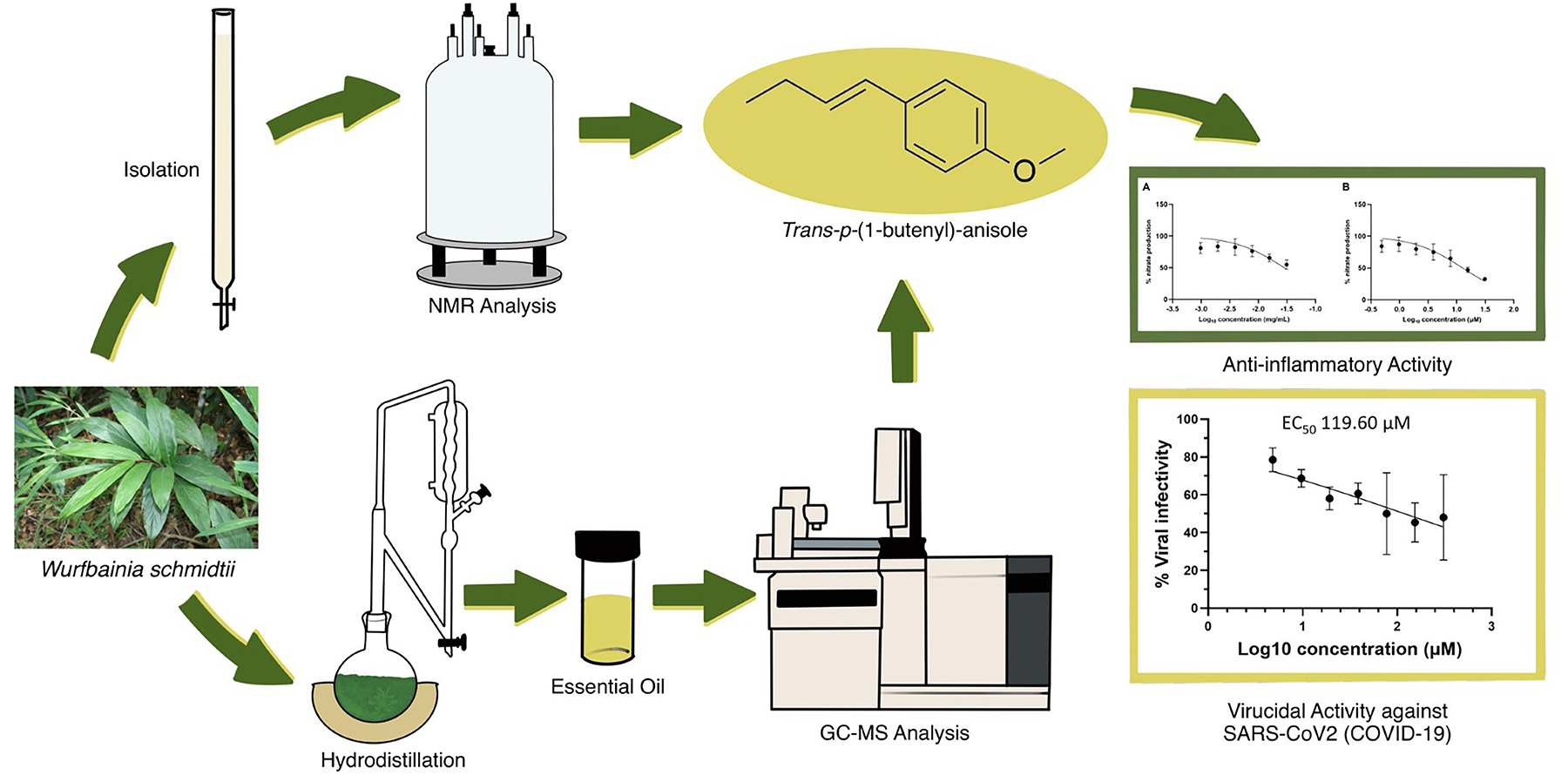
Introduction
Wurfbainia schmidtii (K.Schum.) Škorničk. & A.D.Poulsen commonly known in Thai as “Wan-Sao-Long”, belongs to the Zingiberaceae family, and it is a Thai medicinal herb that relieves flatulence and stomachache in northern and eastern Thailand.
1
This herbal plant, W. schmidtii (K.Schum.) Škorničk. & A.D.Poulsen, is an aromatic plant, which was previously known as Amomum schmidtii before Boer's group discovered that the genus Amomum could be separated into several genera.
2
W. schmidtii was named as synonyms Amomum biflorum and Amomum schmidtii, and previous studies referred to it by these names.3–6 However, its name was recently revised to W. schmidtii (K.Schum.) Škorničk. & A.D.Poulsen.2,7 Previous works showed that essential oils of Amomum species possess pharmacological activities such as antimicrobial, anti-inflammatory, antioxidant, antibacterial, and sedative activities.3,8,9 The chemical constituents of essential oils that contribute to these biological activities are monoterpene hydrocarbons, oxygenated monoterpenes, sesquiterpene hydrocarbons, oxygenated sesquiterpenes, and non-terpenes.
10
trans-p-(l-Butenyl)anisole (
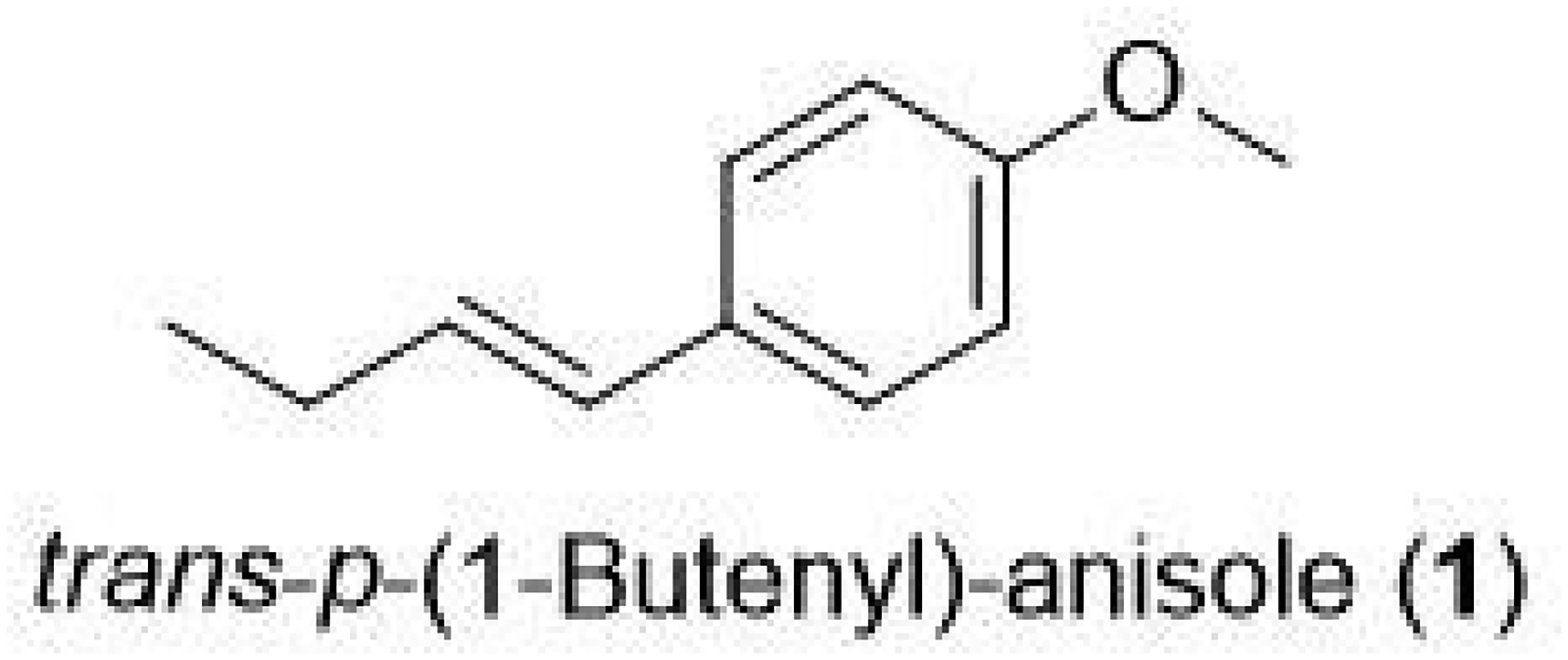
Structure of trans-p-(1-butenyl)-anisole (
Essential oils with anti-inflammatory properties have been used in various applications, for example, modulating colon pathophysiology, 13 and management of rheumatoid arthritis. 14 Recently, a number of works reported anti-inflammatory activity of essential oils. 15 For example, essential oils of Homalomena pendula and H. cochinchinensis rhizomes display moderate anti-inflammatory activity, 16 while those from Piper caldense, P. mosenii, and P. mikanianum showed anti-inflammatory activity in adult zebrafish models. 17 Mint essential oils from Mentha arvensis, M. citrata, and M. spicata exert anti-inflammatory activity by inhibition of 5-lipoxygenase enzyme. 18 Essential oils of Euodia lepta showed anti-inflammatory activity in lipopolysaccharides (LPS)-stimulated macrophages, 19 whereas that of Artemisia vulgaris exhibited anti-inflammatory, antioxidant, and anti-bacterial activities. 20 Upon the above reports, we hypothesize that the essential oil of W. schmidtii may exhibit anti-inflammatory activity. Therefore, in this study, we evaluate anti-inflammatory activity of this plant, and report in this work. Severe acute respiratory syndrome coronavirus 2 (SARS-CoV-2) is a causative agent for COVID-19, whose pandemic has caused a global health problem. Infection with SARS-CoV-2 virus leads to considerable inflammation in different organs, causing excessive inflammatory responses and multi-organ damage. 21 We also report virucidal activity of the essential oil from W. schmidtii against SARS-CoV-2 virus in this work.
Materials and Methods
Plant Materials, Extraction, and Isolation Procedure
Leaves of Wurfbainia schmidtii were obtained from Amnatcharoen Province, Thailand, and W. schmidtii was authenticated by Dr Wittaya Kaewsri, Mahidol University, and and a specimen (no. Kaewsri_58) was deposited at Bangkok Herbarium and Forest Herbarium, Thailand. The dried chopped leaves of W. schmidtii (457.57 g) were ground using a blender, and then extracted by maceration in 2L hexane (AR grade) overnight at room temperature. The extraction was repeated thrice, and filtrates were combined. The extracts were filtered using Whatman filter paper, and the filtrates were combined and dried using a rotary evaporator under reduced pressure, at 37 °C, giving 17.77 g of crude extract. A crude extract was fractionated by Sephadex LH-20 (3 × 75 cm) column chromatography and eluted with EtOH (AR grade), to obtain eleven fractions (F1-F11). Fraction 5 contained a major compound, trans-p-(1-butenyl)-anisole (
The essential oils of W. schmidtii leaves were obtained by hydrodistillation using a Clevenger steam distillation apparatus. Forty grams of dried chopped leaves were placed in a round bottom flask, filled with 250 mL of distilled water. Hydrodistillation was performed for 2–4 h for each round to collect essential oil, and the hydrodistillation was repeated thrice. The oils were combined, and dried over anhydrous sodium sulfate, giving 495.93 mg of essential oils. Essential oils of W. schmidtii were stored in the freezer at −20 °C until further analyses or use for evaluation of biological activities.
Gas Chromatography-Mass Spectrometry (GC-MS) Analysis
The chemical composition of essential oil obtained from W. schmidtii leaves was examined through gas chromatography-mass spectrometry (GC-MS). The analysis was carried out using an Agilent 6890N gas chromatograph equipped with an electron impact ionization and mass-selective detector (Agilent 5973). A fused-silica capillary DB5-MS column (30 m × 0.25 mm i.d., 0.25 μm) from J&W Scientific, USA, served as the chromatographic column, with helium serving as the carrier gas at a flow rate of 1.0 mL/min. The injection volume was set at 1.0 μL, and the injector temperature was maintained at 250 °C. The electron impact ionization was performed at an ionization energy of 70 eV, with both ion source and interface temperatures set to 250 °C. The temperature program of the oven was initiated at 60 °C and ramped up to 200 °C at a rate of 3 °C/min. The acquisition mode operated in scan mode, covering mass-to-charge ratios (m/z) from 30 to 300. Identification of volatile components relied on computer matching and comparison of mass spectra with the NIST20 libraries. Kovats retention indices were determined using linear interpolation of the retention times of n-alkanes, and literature values reported by Adams (2017) 22 were cross-referenced. This comprehensive GC-MS analysis furnishes detailed insights into the sample's chemical composition, contributing valuable information for scholarly research and publications.
Cell Line and Virus
The human epithelial lung carcinoma cells, which stably express human angiotensin I-converting enzyme-2 (A549-hACE2), were obtained from InvivoGen (San Diego, CA, USA) and maintained in Dulbecco's modified Eagle's medium (DMEM)/High glucose (Cytiva, Marlborough, MA, USA) supplemented with 10% fetal bovine serum (Sigma, St. Louis, MO, USA) and antibiotics. 23 The SARS-CoV-2 Delta variant (B.1.617.2) was provided by Dr Anan Jongkaewwattana (National Center for Genetic Engineering and Biotechnology or BIOTEC, Thailand). 23
Cytotoxicity Test
Cytotoxicity test was performed according to a previous report. 24 Suspension of RAW 264.7 cells (mouse macrophage cell line, ATCC TIB-71, Rockville, MD, USA) in phenol red-free medium was seeded in 96-well plate at 30,000 cells/100 µL/well and cultured at 37 °C for 24 h to allow cell attachment. RAW 264.7 cell line (ATCC number: TIB-71) was obtained from the American Type Culture Collection (ATCC). Then, 25 µL of the medium containing various concentrations of test sample was added to each well, and the cells were further incubated for 24 h. Since RAW 264.7 cells attached to the plate weakly, a modified MTT assay for non-adherent cells was used to determine cell viability. 25 At the end of treatment, an MTT solution (25 µL) was added to each well and further incubated for 4 h. Subsequently, lysis solution (20% SDS in 10 mM of HCl, 100 µL/well) was added to lyse cells and solubilize formazan crystals formed by mitochondrial activity of viable cells. The plate was left in the dark at room temperature for another 2 days. The absorbance at wavelength 550 nm was measured and subtracted with absorbance at the reference wavelength 650 nm. The absorbance of untreated control cells was assigned as 100% cell viability. Three replicates were investigated for each sample.
Anti-inflammatory Assay
Anti-inflammatory effects of the essential oil and trans-p-(1-butenyl)-anisole (
Virucidal and Antiviral Assays against SARS-CoV-2
Virucidal activity is the ability of agent to inactivate virus before infection to host cells. While antiviral activity is the ability of agent to suppress virus propagation inside host cells after infection. Evaluation of virucidal and antiviral activities was followed the method described previously.
27
The major compound, trans-p-(l-butenyl)-anisole (
To assess the cytotoxicity of compound
For the antiviral assay, the effect of trans-p-(1-butenyl)-anisole (
Statistical Analysis
Statistical analysis was performed by using GraphPad Prism version 10.1.2 for anti-inflammatory assay. The results are presented as mean ± SD, and analyzed by Student's t-test. A p value less than 0.05 was considered statistically significant. The EC50 and CC50 values of antiviral and virucidal activities were determined by fitting data to a sigmoidal dose-response curve using the log(inhibition) versus normalized response with a variable slope equation in GraphPad Prism software (version 9.0).
Results and Discussion
Chemical Constituents of Wurfbainia schmidtii
Leaves of W. schmidtii were extracted with hexane to give a crude hexane extract, and they were hydrodistilled to obtain essential oil. A crude hexane extract of W. schmidtii was separated by chromatographic technique to give trans-p-(l-butenyl)-anisole (

1H NMR spectra of A, trans-p-(1-butenyl)-anisole (1); B, essential oil of W. schmidtii; and C, a crude hexane extract of W. schmidtii.
Chemical Constituents of W. schmidtii Essential oil as Revealed by GC-MS Analysis.

As noted in the introduction, W. schmidtii was formerly classified within the Amomum genus and commonly referred to as either Amomum schmidtii or Amomum biflorum. Previous studies often used the nomenclature A. schmidtii or A. biflorum.3–6 However, the chemical compositions of A. schmidtii or A. biflorum varied across these reports, and the variations in oil composition might be from: i) plants grown in different geographical areas with difference in climate and soil properties may have different chemical compositions, and ii) an error in the taxonomic classification because plants in the Amomum genus closely resemble the Wurfbainia genus. For instance, trans-p-(1-butenyl)-anisole (
Cytotoxicity and Anti-Inflammatory Activity
The anti-inflammatory activity of the essential oil from W. schmidtii leaves and its major compound, trans-p-(1-butenyl)-anisole (
Cytotoxicity and Inhibition of LPS-Induced Nitric Oxide Production by W. schmidtii Essential oil.

Cytotoxicity and Inhibition of LPS-Stimulated Nitric Oxide Production by Trans-p-(1-Butenyl)-anisole (
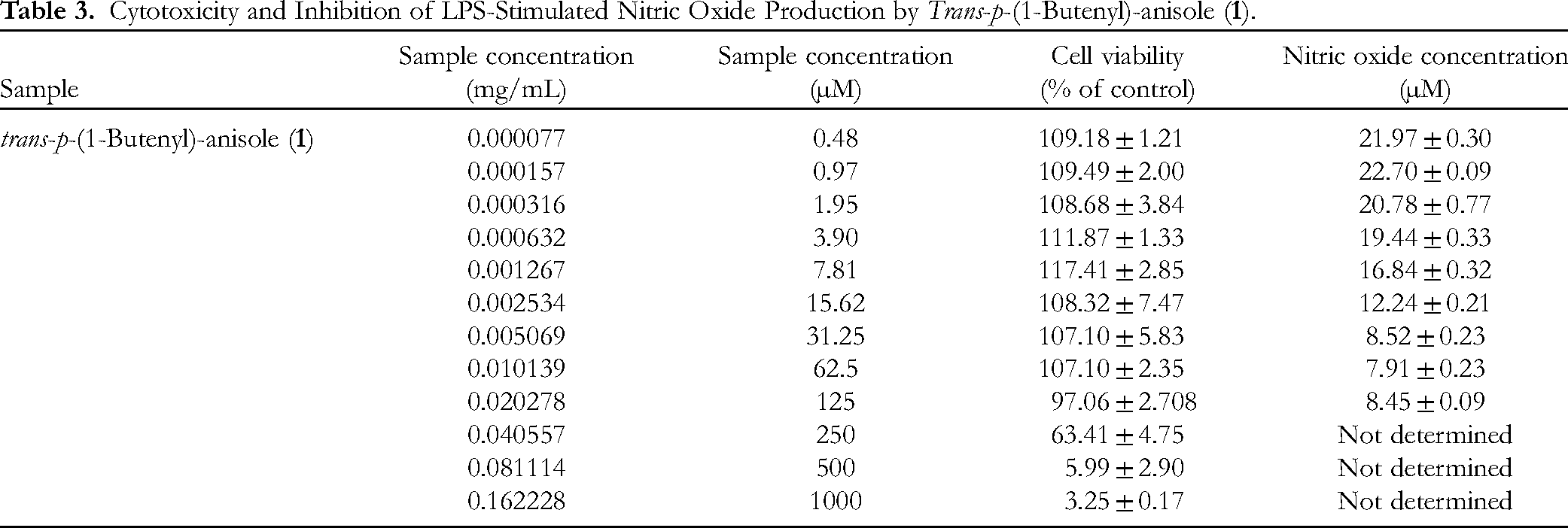
Cells cultured without treatment (untreated cells) were used as a control, while vermelhotin (10 µM) was used as a positive control.
26
There was an increase in nitric oxide production in LPS-stimulated untreated cells to a level of 26.34 µM, compared to the basal level of 11.21 µM in untreated cells without LPS stimulation. Both W. schmidtii essential oil and trans-p-(1-butenyl)-anisole (
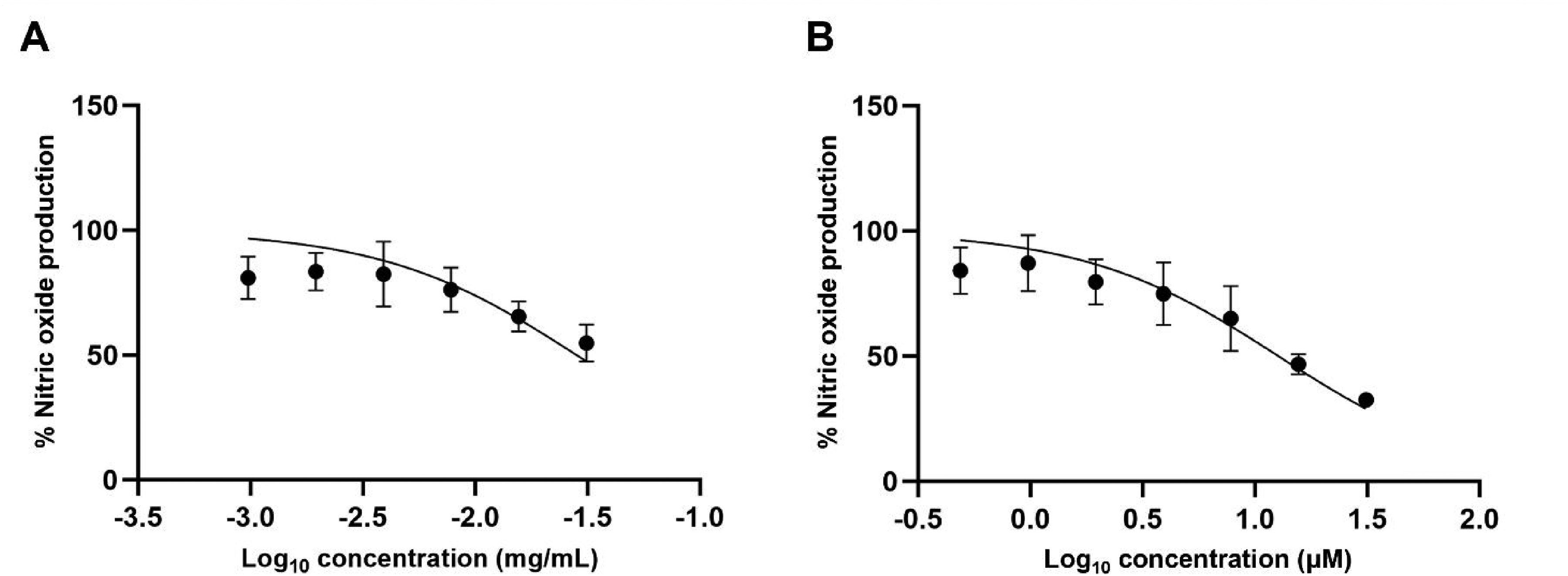
Anti-inflammatory effects of essential oil and compound
Virucidal and Antiviral Activities of W. schmidtii Essential Oil
1H NMR spectrum (Figure 2B) of the essential oil from W. schmidtii revealed that trans-p-(l-butenyl)-anisole (
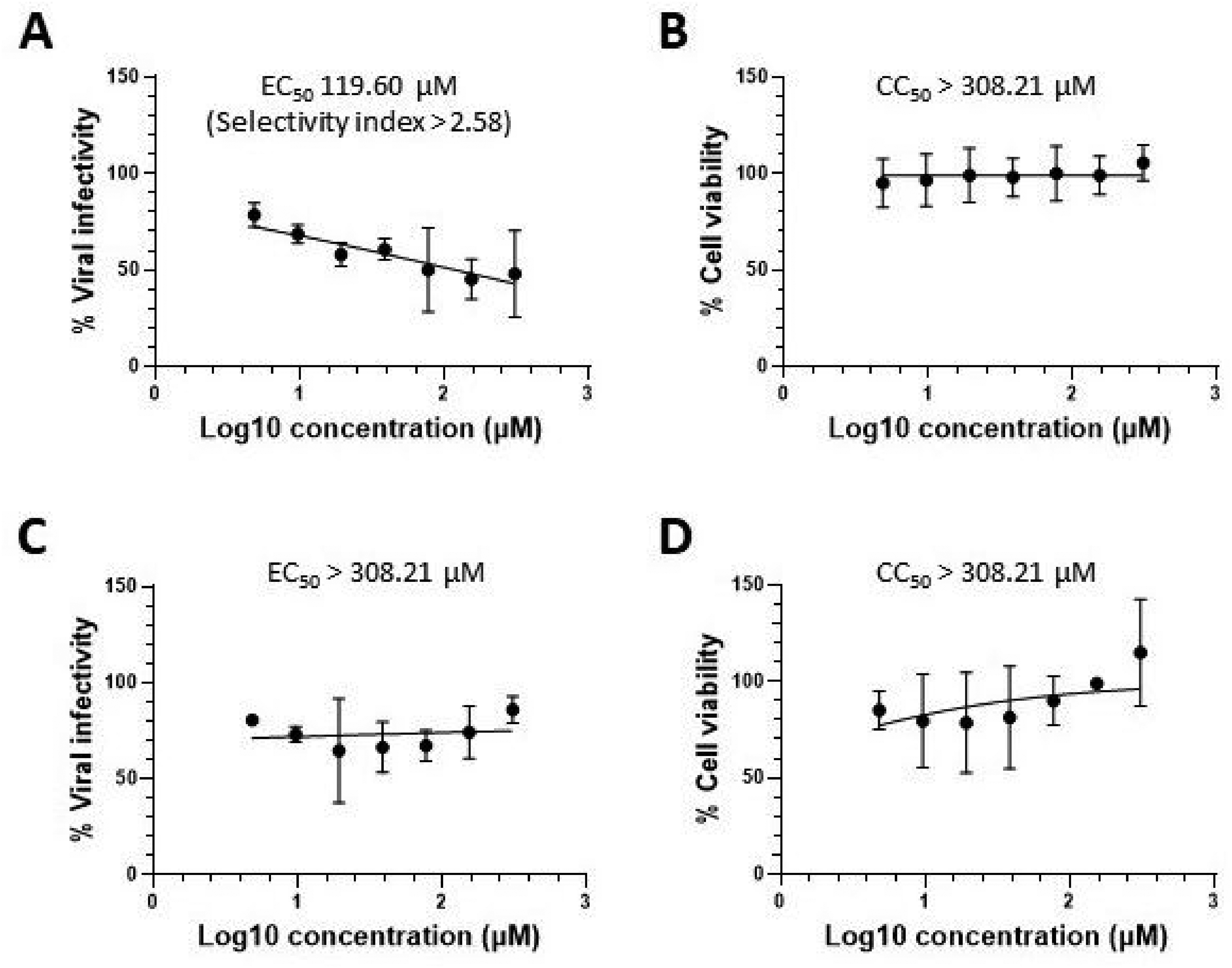
Virucidal and antiviral activities of trans-p-(1-butenyl)-anisole (
Although this work shows anti-inflammatory activity of W. schmidtii essential oil and the major compound, trans-p-(1-butenyl)-anisole (
Conclusions
The leaves of W. schmidtii were chemically explored, and trans-p-(1-butenyl)-anisole (
Supplemental Material
sj-docx-1-npx-10.1177_1934578X251323479 - Supplemental material for An Anisole Derivative in the Essential oil of Wurfbainia schmidtii with Virucidal Activity Against SARS-CoV-2 and Anti-Inflammatory Properties
Supplemental material, sj-docx-1-npx-10.1177_1934578X251323479 for An Anisole Derivative in the Essential oil of Wurfbainia schmidtii with Virucidal Activity Against SARS-CoV-2 and Anti-Inflammatory Properties by Charmaine Sagayap, Piyachat Chuysinuan, Nopporn Chutiwitoonchai, Patcharee Pripdeevech, Wittaya Kaewsri, Sanya Sureram, Narisara Chantratita, Kriengsak Lirdprapamongkol, Jisnuson Svasti, Supanna Techasakul, Chulabhorn Mahidol, Somsak Ruchirawat and Prasat Kittakoop in Natural Product Communications
Footnotes
Acknowledgements
C. Sagayap thanks Chulabhorn Graduate Scholarship supported by Thailand International Cooperation Agency (TICA) and Chulabhorn Graduate Scholarship Commemorating the 84th Birthday Anniversary of His Majesty King Bhumibol Adulyadej the Great. We acknowledge the financial support and facilities of the Chulabhorn Research Institute (CRI) and Chulabhorn Graduate Institute (CGI), as well as the grant from the National Research Council of Thailand (NRCT) and Thailand Science Research and Innovation (TSRI). We are thankful to Dr Anan Jongkaewwattana for providing SARS-CoV-2 for our virucidal and antiviral assays.
Author Contributions
Declaration of Conflicting Interests
The authors declared no potential conflicts of interest with respect to the research, authorship, and/or publication of this article.
Ethical Approval
Ethical Approval is not applicable for this article.
Funding
The authors disclosed receipt of the following financial support for the research, authorship, and/or publication of this article: This research project is supported by Chulabhorn Graduate Institute (Fundamental Fund by National Science Research and Innovation Fund (NSRF): fiscal year 2025) (FRB680079/0518 Project code 209039). This work is partially supported by Thailand Science Research and Innovation (TSRI, Chulabhorn Research Institute, Grant No. 36827/4274406).

Statement of Human and Animal Rights
This article does not contain any studies with human or animal subjects.
Statement of Informed Consent
There are no human subjects in this article and informed consent is not applicable.
Supporting Material
1H, 13C NMR and 2D NMR spectra and mass spectrum of trans-p-(1-butenyl)-anisole (
Supplemental Material
Supplemental material for this article is available online.
Trial Registration
Not applicable, because this article does not contain any clinical trials.
References
Supplementary Material
Please find the following supplemental material available below.
For Open Access articles published under a Creative Commons License, all supplemental material carries the same license as the article it is associated with.
For non-Open Access articles published, all supplemental material carries a non-exclusive license, and permission requests for re-use of supplemental material or any part of supplemental material shall be sent directly to the copyright owner as specified in the copyright notice associated with the article.
