



Abstract
Diabetes mellitus is a long-term metabolic condition marked by chronically high levels of glucose in the blood due to insufficient synthesis of insulin or impaired insulin function. Throughout history, several civilizations have used traditional medicinal plants to treat and control diabetes. This paper offers a thorough review, to date, of the antidiabetic natural compounds of medicinal plants origin, specifically highlighting their reported modes or mechanisms of action and therapeutic possibilities, with a view to fast-tracking the possibility of their transition to pharmaceutical products for human use. Phytochemicals such as flavonoids, alkaloids, terpenoids, and glycosides have notable antidiabetic effects. They have been shown to control blood glucose levels via many processes, including boosting insulin secretion, improving insulin sensitivity, blocking glucose absorption in the \gastrointestinal-tract, and regulating carbohydrate metabolism. Unlike earlier reviews, this current one, in addition to the chemistry and proposed mechanisms of action, also x-rays the effectiveness and safety of these natural chemicals by combining evidences from laboratory research, animal experiments, and clinical trials. Several substances, such as Demethoxycurcumin, Trigonelline, and Ginsenosides, have progressed to clinical trials, while others like Allicin and Polypeptide-p have been used at the bedside. Several substances, including Bisdemethoxycurcumin, Vicine, and Gymnemosides, are now in the preclinical trial phase, suggesting that research is still ongoing and there is promise for their future medicinal application. The review highlights the evolution of chemicals in diabetes management, highlighting their potential to improve treatment. It suggests incorporating plant-derived compounds into traditional treatments, reducing dependence on drugs and reducing adverse effects.
This is a visual representation of the abstract.
Keywords
Introduction
Diabetes Mellitus (DM) is a persistent metabolic condition marked by elevated levels of glucose in the bloodstream caused by inadequate production of insulin, decreased insulin function, or both.1–3 Insulin, a pancreatic hormone, controls blood glucose levels by promoting the absorption of glucose into cells for either energy generation or storage. 4 Chronic elevated blood glucose levels occur when there is a dysfunction in insulin activity, resulting in a range of health issues. Diabetes mellitus may be classified into several forms, including Type 1 Diabetes Mellitus (T1DM), Type 2 Diabetes Mellitus (T2DM), Gestational Diabetes Mellitus (GDM), and other particular variants. Type 1 diabetes mellitus (T1DM) is a medical illness caused by a combination of genetic susceptibility and environmental influences. It usually develops during childhood or adolescence. Type 2 diabetes mellitus (T2DM) is a metabolic illness that occurs when the body becomes resistant to insulin and does not produce enough insulin to compensate. This condition is caused by a combination of hereditary factors, obesity, lack of physical exercise, and an unhealthy diet. GDM, or gestational diabetes mellitus, refers to high blood sugar levels that are initially identified during pregnancy. This condition is triggered by hormonal fluctuations that lead to heightened resistance to insulin.5–7
Additional distinct categories are Monogenic Diabetes, Secondary Diabetes, and Prediabetes. Monogenic Diabetes is caused by mutations in a single gene, whereas Secondary Diabetes occurs as a consequence of other medical illnesses or therapies. 8 Prediabetes is a condition characterized by elevated blood glucose levels that have not yet reached the threshold for a diabetes diagnosis. Management include making lifestyle improvements to avoid the advancement to type 2 diabetes mellitus (T2DM).9,10
According to Anta et al, 1 and Ruze, 11 in 2021 and 2023, there were over 537 million individuals globally who had diabetes. It is estimated that this figure would increase to 643 million by 2030 and further to 783 million by 2045. Around 90–95% of diabetes cases worldwide are attributed to Type 2 diabetes, with Type 1 diabetes accounting for around 5–10%.1,11 The Western Pacific, Southeast Asia, and Eastern Mediterranean areas have the greatest occurrence of diabetes, with China, India, and the United States having the largest populations of people affected by the disease. The prevalence of diabetes rises with age, reaching its maximum levels in those aged 65–79 years.12–14 There is a little difference in gender, with males often having a greater occurrence of diabetes in comparison to women. Diabetes has substantial health consequences, such as cardiovascular disorders, renal dysfunction, peripheral neuropathy, retinaopathy, heightened vulnerability to infections, delayed wound healing, and early death.15,16
The economic impact of diabetes is significant, including both direct expenditures such as prescription prices, hospital stays, and outpatient treatment, as well as indirect costs such as reduced productivity, absenteeism, and premature retirement resulting from complications. The yearly economic burden of diabetes in 2021 was predicted to exceed $1 trillion worldwide.17,18 Management and prevention strategies encompass primary prevention via lifestyle modifications, secondary prevention through early detection via screening and management of prediabetes, medical management using insulin and oral hypoglycemic agents, lifestyle interventions, and integrated care through multidisciplinary approaches. Global efforts, such as the WHO Global Diabetes Compact, International Diabetes Federation, and national programs, play a vital role in tackling the diabetes pandemic and enhancing the well-being of those afflicted by the disease.19–21
Inadequately controlled diabetes may result in severe consequences, including cardiovascular disease, neuropathy, renal failure, visual impairment, and limb loss.22,23 Efficient therapies have the capability to hinder or postpone these consequences, so enhancing the lifespan and overall well-being of patients, save expenses by avoiding hospitalizations, intricate medical interventions, and long-term care needs. Enhancing the quality of life is accomplished by efficiently managing diabetes, allowing patients to sustain regular daily activities and alleviate the impact of illness symptoms. This also contributes to psychological well-being, since patients encounter reduced levels of stress and worry associated with the treatment of their illness. More effective therapies also lead to a decrease in death rates. Prompt and efficient therapies are essential in reducing the hazards linked to diabetes. Progress in medical research propels the development of novel pharmaceuticals, technologies, and methodologies such as gene therapy. Providing patients with access to efficient therapies enables them to assert authority over their well-being, enabling them to make well-informed choices and embrace healthy habits.24,25
Phytochemicals have gained increasing attention in recent years for their potential involvement in managing diabetes. Phytochemicals, such as flavonoids, phenolic acids, terpenoids, alkaloids, and glycosides, have shown promise in the management of diabetes via several processes.26–29 These substances possess potent antioxidant qualities that aid in the reduction of oxidative stress, a crucial element in the onset and advancement of diabetes. Additionally, they demonstrate anti-inflammatory properties by suppressing the synthesis of pro-inflammatory cytokines and enhancing insulin sensitivity.30–32 Phytochemicals have the ability to impact carbohydrate metabolism by limiting the activity of enzymes that are responsible for breaking down complex carbohydrates into simple sugars. For example, polyphenols may inhibit the enzymes α-amylase and α-glucosidase, which are involved in the digestion of carbohydrates.33–35 This leads to a decelerated release of glucose into the circulatory system, so averting abrupt increases in blood sugar levels. Phytochemicals such as curcumin, resveratrol, quercetin, berberine, and EGCG have the ability to improve insulin sensitivity by activating AMP-activated protein kinase (AMPK), an important controller of glucose and lipid metabolism.36–39 These substances have the ability to control lipid metabolism, which leads to a decrease in the production of cholesterol and triglycerides. This results in improved metabolic health and a lower likelihood of cardiovascular issues related to diabetes. Phytochemicals provide a potential supplementary strategy to conventional diabetes therapy, offering several advantages such as antioxidant, anti-inflammatory, and glucose-lowering actions.32,40,41
The review focuses on the identification and classification of antidiabetic phytochemicals found in medicinal plants, their mechanisms of action, their therapeutic potential, nature of research and current state of their development (approved clinical drugs, clinical trial, and preclinical studies). It aims to understand the biochemical and physiological mechanisms through which these phytochemicals exert their antidiabetic effects, including actions on insulin secretion, insulin sensitivity, and glucose metabolism. The review also evaluates the therapeutic potential of these phytochemicals, considering factors like efficacy, safety, bioavailability, and potential side effects. It highlights research gaps and suggests future directions to better understand and utilize these phytochemicals in clinical settings. The review supports the broader acceptance and use of medicinal plants as complementary therapies in diabetes care by showcasing their benefits and mechanisms.
Methodology
The study conducted a comprehensive literature search using electronic databases like PubMed, Scopus, Web of Science, and Google Scholar to gather papers on antidiabetic phytochemicals found in medicinal plants. The search included terms like “antidiabetic phytochemicals,” “medicinal plants,” “diabetes,” “mechanisms of action,” and “therapeutic potential.”. The studies had to focus on phytochemicals with antidiabetic characteristics, investigate mechanisms of action, and evaluate the therapeutic potential of medicinal plants in diabetes care. The exclusion criteria included non-peer-reviewed publications, articles not focusing on antidiabetic qualities, and research lacking specific mechanisms of action or therapeutic assessment. The chemical structures were drawn with a freely available software ACD/ChemSketch free ware (https://www.acdlabs.com/resources/free-chemistry-software-apps/chemsketch-freeware/ /). The
Background on Medicinal Plants and Phytochemicals
Phytochemicals, or phytonutrients, are naturally-occurring molecules present in plants that play a role in several biological functions and contribute to the plants’ colour, taste, and ability to fight diseases. Phytochemicals, unlike essential elements such as vitamins and minerals, are not necessary for human existence. However, they do have a substantial impact on improving health and avoiding diseases.42,43
Phytochemicals are categorized into many primary classes according to their chemical composition and biological effects. The main classifications include alkaloids, flavonoids, terpenoids, phenolic acids, glycosides, glucosinolates, ligans, and steroids. Alkaloids are nitrogenous substances that have significant physiological effects on people and animals examples Morphine, quinine, nicotine, caffeineOpium poppy plants, cinchona trees, Nicotiana tabacum plants, Coffea arabica beans. While flavonoids are antioxidants that are present in fruits and vegetables. Examples; Quercetin, kaempferol, catechins. Their sources include; berries, apples, onions, tea, and red wine are the primary sources Terpenoids are the most extensive category of phytochemicals, including substances with diverse activities such as aromatic characteristics and involvement in plant development. Examples Carotenoids (such as beta-carotene), saponins, and essential oils. Sources are carrots, tomatoes, citrus fruits, and herbs such as rosemary and mint43–46
Phenolic acids possess well-documented anti-inflammatory and antioxidant properties examples Caffeic acid, ferulic acid. Sources coffee, blueberries, cherries, and whole grains, while glycosides are chemical compounds in which a sugar molecule is attached to a non-carbohydrate component. Digoxin and salicin are two examples of compounds.47–49 Foxglove plants and willow bark are the sources of these compounds. Glucosinolates are sulfur-containing chemicals present in cruciferous vegetables. These molecules may undergo hydrolysis to generate physiologically active substances such as isothiocyanates. Examples Sulforaphane, indole-3-carbinol from Broccoli, Brussels sprouts, and cabbage 48 Lignans are polyphenolic compounds that originate from the phenylpropanoid pathway. They are recognized for their antioxidant and estrogenic properties. Example; Secoisolariciresinol diglucoside (SDG) from Flaxseeds, sesame seeds, and whole grains Steroids are lipophilic chemicals that include plant sterols and steroidal saponins, which play crucial functions in the structure and regulation of plants. Phytosterols and iosgenin are examples of these compounds. Soybeans, yams, and other legumes are sources of these compounds50–52
Historical use of Medicinal Plants in Diabetes Management
The use of medicinal plants for the management of diabetes has a lengthy historical background that may be traced back to ancient cultures around the globe.53,54 Ancient Egyptian literature, such as the Ebers Papyrus, document a range of plants that were used to address different health conditions, including symptoms like those of diabetes. Some examples of these are fenugreek, Ginseng, bitter melon, and strategalus.55,56 Bitter gourd, Gymnema Sylvestre, and turmeric are used in Ayurvedic treatment due to their hypoglycemic effects.57,58 Native American customs include the use of blueberry and cranberry, Devil's Club, olive leaf extract, fenugreek, and garlic. Some Middle Eastern and Mediterranean customs include the use of olive leaf extract, fenugreek, and garlic. Nauclea latifolia and Moringa oleifera are used in African traditional medicine due to their antidiabetic effects. Blueberries and goat's rue are used in European herbal medicine due to their capacity to reduce blood glucose levels. Stevia and yacon are used in South American traditional medicine for their inherent sweetening qualities and ability to reduce blood sugar levels.53,59,60
The current research and revival efforts have resulted in a renewed interest in natural and integrative medicine. Many traditional herbs are being scientifically examined to confirm their effectiveness and safety in controlling diabetes. Plant-based therapies are gaining popularity in modern medicine, acting as supplements or substitutes for pharmaceutical medications. The significance of medicinal plants in managing diabetes is emphasized by these historical practices, demonstrating the possibility of traditional knowledge in contributing to contemporary treatment methods.
Modern Research on Antidiabetic Phytochemicals
Contemporary scientific investigation on phytochemicals that may treat diabetes has identified several substances that show potential, along with their specific ways of functioning in controlling the disease. These chemicals are present in different plants and display a wide range of biological actions that may assist in the control of glucose, sensitivity to insulin, and protection against oxidative stress.
Important Phytochemicals with Antidiabetic Properties
Mechanisms of Action of Antidiabetic Phytochemicals
Insulin Secretion and Sensitivity
Phytochemicals with antidiabetic properties, obtained from different plants, may stimulate the release of insulin via many routes (Table 1), and a schematic representation of selected phytochemicals involved in diabetes management is presented in Figure 1, while the emphasis on β-cells regeneration by phytochemicals is presented in Figure 2. These chemicals specifically target pancreatic β-cells, which are responsible for the production and secretion of insulin. Important methods comprise promoting the activity and growth of β-cells, regulating the detection of glucose and the expression of insulin genes, activating crucial pathways that contribute to insulin production, and improving the antioxidant and anti-inflammatory effects.

Summarized mechanisms of Action of selected phytochemicals in diabetes management. SCFA-Short chain fatty acids, EGCG- Epigallocatechin gallate.
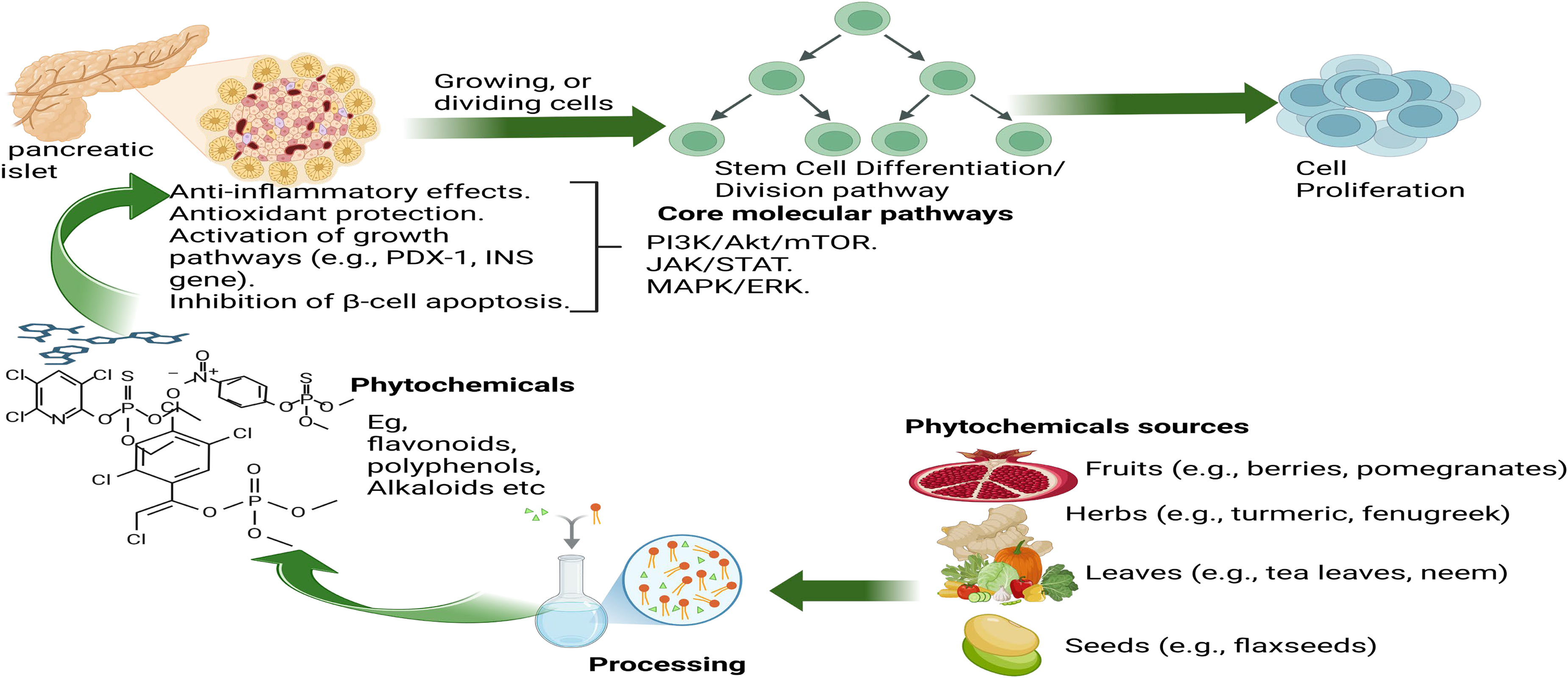
Phytochemicals and β-Cell Regeneration: Pathways to Diabetes Management (Created in BioRender.com). PI3K/Akt/mTOR.- PI3K (Phosphoinositide 3-Kinase), Akt (Protein Kinase B), mTOR (Mammalian Target of Rapamycin), JAK/STAT (Janus Kinase/Signal Transducer and Activator of Transcription) pathway, The MAPK/ERK pathway (Mitogen-Activated Protein Kinase/Extracellular Signal-Regulated Kinase).
Overview of Phytochemicals, Their Classes, Structures, Mechanisms of Action, and Plant Sources.

Phytochemicals such as flavonoids and polyphenols stimulate the growth of β-cells and decrease cell death, leading to an increase in the size and effectiveness of insulin-producing cells.69,70 Berberine, an alkaloid present in several plants, has shown the ability to enhance glucose detection and increase the production of insulin genes in β-cells.63,71–74 Quercetin, a kind of flavonoid, has been shown to improve the release of insulin via stimulating the PI3K/Akt signaling pathway. 75 Furthermore, the presence of antioxidant and anti-inflammatory properties may safeguard β-cells from harm and enhance their ability to secrete insulin, thanks to the presence of antioxidant and anti-inflammatory phytochemicals. 76 Curcumin, the bioactive compound found in turmeric, has potent antioxidant and anti-inflammatory characteristics that aid in the preservation of β-cell function and the improvement of insulin production.77,78 Phytochemicals engage with ion channels found on β-cells, namely potassium channels, causing a change in the cell membrane's electrical charge and resulting in the entry of calcium ions. 79 This process is essential for the release of insulin granules. Genistein, an isoflavone included in soybeans, hinders ATP-sensitive potassium channels, resulting in heightened calcium influx and improved insulin secretion. 80
Modification of gut microbiota is an additional route by which phytochemicals may function. These phytochemicals can alter the makeup of gut microbiota, resulting in the formation of short-chain fatty acids (SCFAs) that can increase the release of insulin. 81 In summary, these diverse activities together enhance insulin secretion and glycemic management in persons with diabetes.
Glucose Absorption and Metabolism
The mechanism by which antidiabetic phytochemicals work are complex and have a critical function in controlling blood glucose levels.
Suppression of Carbohydrate Digestion and Uptake
Regulation of Glucose Metabolism
Antioxidant and Anti-Inflammatory Effects
Phytochemicals with antioxidant and anti-inflammatory characteristics may greatly assist in the management of diabetes and its associated problems.26,40,193 Curcumin, obtained from turmeric, is a significant phytochemical that might decrease oxidative stress and inflammation associated with problems of diabetes. Resveratrol, present in grapes, red wine, peanuts, and berries, has the ability to enhance insulin sensitivity and diminish inflammation linked to diabetes. 194 Quercetin, a powerful antioxidant with anti-inflammatory characteristics, has the ability to reduce blood glucose levels and enhance insulin sensitivity. 93 Berberine, present in barberry and goldenseal, has shown the ability to control glucose and lipid metabolism, therefore offering advantages for the treatment of diabetes. 184 Silymarin, derived from milk thistle, has the potential to enhance insulin sensitivity and alleviate oxidative stress in individuals with diabetes. 195 Epidiollocatechin Gallate (EGCG) derived from green tea is renowned for its potent antioxidant and anti-inflammatory characteristics, which enhance glucose metabolism and diminish inflammation.92,196 Gingerol, derived from ginger, has antioxidant and anti-inflammatory properties, which contribute to the regulation of blood glucose levels and the mitigation of inflammation. 197 Fennel seed extract, which contains antioxidants and has anti-inflammatory properties, has the potential to enhance glycemic management. 198 Cinnamon polyphenols, included in cinnamon, have the potential to enhance insulin sensitivity and lower blood glucose levels. Pterostilbene, which is present in blueberries and grapes, has antioxidant and anti-inflammatory characteristics that aid in the management of diabetes and its associated problems. 199 Nevertheless, it is advisable to include these phytochemicals in one's diet under the supervision of a healthcare practitioner.
β-Cell Protection and Regeneration
Recent research emphasizes the capacity of natural chemicals to safeguard and rejuvenate pancreatic β-cells for the purpose of treating diabetes. Curcumin, resveratrol, and berberine, which are antidiabetic phytochemicals, have demonstrated protective and regeneration properties on β-cells, as evidenced by studies conducted by Semwal et al 200 and Kimani et al. 201 These chemicals have the ability to increase the production of insulin, stimulate the growth of β-cells, and prevent cell death. Resveratrol and curcumin have been discovered to enhance the levels of intracellular cAMP and hinder the action of phosphodiesterase, therefore leading to an improvement in β-cell function. 202 The therapeutic efficacy of these natural substances is ascribed to their antioxidant and anti-inflammatory characteristics, which play a vital role in safeguarding β-cells from oxidative stress. 203 β-cells have a poor level of antioxidative defense, which makes them more sensitive to damage from reactive oxygen species. This vulnerability is observed in both type 1 and type 2 diabetes. 203 These findings indicate that plant-derived chemicals have potential for being developed into regenerative treatments for diabetes.
Modulation of Adipokines and Lipid Metabolism
Phytochemicals, have been examined for their possible ability to regulate adipokines and lipid metabolism, specifically in relation to diabetes. Phytochemicals such as curcumin have the ability to decrease inflammation and oxidative stress. 204 They achieve this by blocking the activity of nuclear factor-kappa B (NF-kB) and activator protein-1 (AP-1). Additionally, curcumin enhances insulin sensitivity and lipid metabolism by activating AMP-activated protein kinase (AMPK) and reducing the production of lipogenic enzymes. 205 Resveratrol, obtained from grapes and berries, stimulates the activation of SIRT1 (sirtuin 1), which enhances the sensitivity of insulin and the absorption of glucose by cells.36,206 Additionally, it decreases oxidative stress and inflammation by facilitating the breakdown of fatty acids and preventing the production of new fats via the regulation of PPARα and AMPK pathways.36,207 Quercetin, obtained from onions, apples, and berries, has antioxidant and anti-inflammatory characteristics. It regulates the release of adipokines and lipid metabolism by affecting the pathways involved in the production and breakdown of fats, and enhances insulin sensitivity. 184
Epigallocatechin Gallate (EGCG) derived from green tea improves the body's response to insulin, lowers blood sugar levels, diminishes inflammation and oxidative stress, and stimulates AMPK, resulting in enhanced lipid metabolism and decreased fat buildup. Genistein, a kind of isoflavone found in soy, has the ability to enhance the body's response to insulin and decrease inflammation. 208 It does this by affecting the levels of adipokines, which are hormones produced by fat cells, via its interactions with estrogen receptors and activation of AMPK, a protein involved in regulating energy metabolism. Berberine, obtained from goldenseal and barberry, enhances the body's response to insulin, decreases blood glucose levels, and influences the breakdown of fats by activating AMPK. This results in a decrease in the production of fats and an increase in the burning of fatty acids. 85 Gingerol, obtained from ginger, has anti-inflammatory and antioxidant characteristics, which improve insulin sensitivity and decrease oxidative stress. 137 Cinnamaldehyde, obtained from cinnamon, stimulates the body's response to insulin, promotes the absorption of glucose, and affects the breakdown of fats by lowering the production of fats and enhancing the oxidation of fatty acids. 104
Case Studies of Medicinal Plants
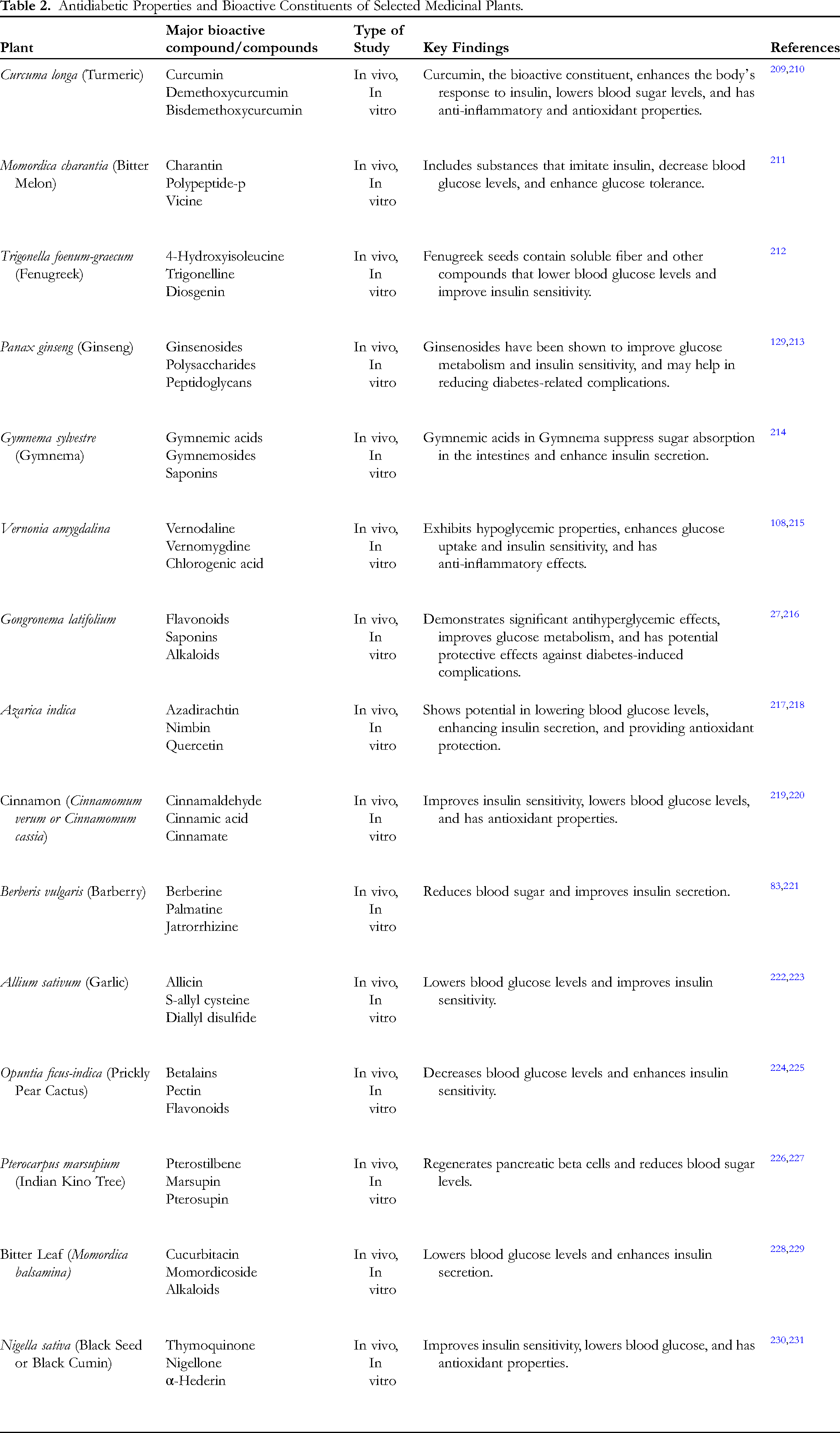
This study provides case studies of plants used in the treatment of diabetes, with a specific emphasis on their primary bioactive constituents, the sorts of research that have been undertaken, and the significant outcomes or key findings (Table 2). While Table 3, illustrates the antidiabetic investigations conducted using the mentioned phytochemicals, from each plant specifying whether they were clinical or preclinical trials in the given study, and the current state of its development.
Antidiabetic Properties and Bioactive Constituents of Selected Medicinal Plants.
Current Evidence on the Effects of Plant-Derived Bioactive Compounds on Glycemic Control and Insulin Sensitivity.

Therapeutic Potential of Antidiabetic Phytochemicals
Clinical trials have investigated the potential of phytochemicals derived from plants that are historically utilized in different cultures for the treatment of diabetes. Notable plants mentioned include Curcuma longa (Turmeric), which has shown the ability to enhance glycemic control and insulin sensitivity, and Morordica charantia (Bitter Melon), which has been proven to reduce blood glucose levels in individuals with diabetes.236,257 Clinical investigations have shown evidence for the efficacy of Trigonella foenum-graecum (Fenugreek) in reducing fasting blood glucose levels and enhancing overall glycemic management. 258 Ginseng, scientifically known as Panax ginseng, has been linked to enhanced glycemic control and insulin sensitivity. However, the outcomes of clinical investigations have been inconclusive. Gymnema sylvestre, often known as Gymnema, has shown efficacy in reducing blood glucose levels and enhancing insulin sensitivity in many clinical trials. 259 Similarly, Vernonia amygdalina, commonly referred to as Bitter Leaf, has been found to effectively decrease blood glucose levels. 260 Gongronema latifolium, which contains flavonoids and saponins, has shown promise in the management of diabetes by reducing blood glucose levels.261,262
Azadirachta indica, often known as Neem, and its many constituents have shown potential in lowering blood glucose levels in animal trials. 218 However, the clinical data supporting this effect in people remains limited. Multiple studies have shown that cinnamon may enhance the regulation of blood sugar levels, 236 while Berberis vulgaris (Barberry) has exhibited promise in reducing blood glucose levels and enhancing insulin sensitivity. 263 Clinical research have shown that Allium sativum, often known as Garlic, has positive benefits on blood glucose levels and insulin sensitivity. 264 Opuntia ficus-indica, also known as Prickly Pear Cactus, has been linked to enhanced glycemic control. 265 Similarly, Pterocarpus marsupium, often referred to as Indian Kino Tree, has shown the capacity to reduce blood glucose levels and enhance insulin sensitivity. 266 The efficacy and safety profiles of different phytochemicals differ, with some ones being widely regarded as safe at suggested dosages, although higher dosages may result in gastrointestinal complications. These phytochemicals consist of Curcuma longa (Turmeric), Momordica charantia (Bitter Melon), Trigonella foenum-graecum (Fenugreek), Panax ginseng (Ginseng), Gymnema sylvestre (Gymnema), Vernonia amygdalina (Vernodaline), Gongronema latifolium (Prickly Pear Cactus), Pterocarpus marsupium (Indian Kino Tree), and Mordica balsamina (Bitter Leaf).
The combination of antidiabetic phytochemicals may improve treatment results by capitalizing on their synergistic effects. Curcumin and bitter melon may provide increased blood glucose-lowering benefits as a result of their complimentary modes of action. 240 The synergistic impact of combining fenugreek's 4-hydroxyisoleucine with Gymnema's gymnemic acids may enhance insulin sensitivity. 267 The combination of cinnamon and Berberis vulgaris may have a synergistic effect in reducing blood glucose levels and enhancing insulin sensitivity. Nevertheless, the use of these phytochemicals in combination therapy should be undertaken with caution and preferably under the guidance of a medical professional to prevent any interactions and adverse consequences.
The effectiveness of phytochemicals may be influenced by their bioavailability and pharmacokinetics. Curcumin has limited bioavailability as a result of inadequate absorption and fast metabolism. However, formulations that boost bioavailability, such as curcumin-phospholipid complexes, have higher effectiveness. Moordica charantia, often known as Bitter Melon, has varying rates of absorption and metabolism.268,269 Research indicates that taking bitter melon with other meal components may potentially increase its bioavailability. 270 Trigonelline and diosgenin are absorbed efficiently, however they may undergo fast metabolism.271,272 Including fenugreek with other substances that promote its bioavailability may enhance its effectiveness. 267 Ginseng, scientifically known as Panax ginseng, is a plant that contains ginsenosides. 213 These ginsenosides are easily absorbed by the body but undergo substantial metabolism. However, it has been shown that standardized extracts of ginseng may enhance the bioavailability of these compounds.273,274 Research is now being conducted to improve the bioavailability of Vernonia amygdalina components, such as vernodaline, due to their inconsistent absorption. 275 Cinnamon has a modest level of bioavailability, and its bioavailability may be enhanced by better formulations. Barberry (Berberis vulgaris) has limited absorption but demonstrates efficacy at higher dosage levels. Garlic, scientifically known as Allium sativum, is quickly absorbed and metabolized by the body. However, the effectiveness of garlic may be improved by using formulations that prevent the breakdown of allicin, a key compound in garlic. Opuntia ficus-indica, often known as Prickly Pear Cactus, contains betalains and pectin that have a moderate level of bioavailability. Enhancing the formulations of these compounds to slow down their metabolism might potentially enhance their effectiveness. Pterocarpus marsupium, often known as the Indian Kino Tree, contains Pterostilbene, which has a high level of bioavailability. However, it is rapidly metabolized. Developing formulations that might slow down its metabolism may enhance its effectiveness.276,277
Compounds in Diabetes Management: A Stage Overview of Bench to Bed Side
This overview (Table 4) consolidates the data from different research publications on natural substances used in the therapy of diabetes, their current state of development, from bench to bed side.
Compounds in Diabetes Management: A Stage Overview of Bench to Bed Side.

Key.
A = Preclinical trial stage refers to the phase in which compounds are still being tested in laboratory or animal settings.
B = Clinical Trial Stage: Compounds now being evaluation in human clinical studies.
C = currently accessible at the patient's bedside are compounds that are approved for usage in clinical settings.
Challenges and Future Directions
The field of medicinal plants encounters several obstacles, such as the inconsistency in plant origins and phytochemical composition, the establishment of uniform doses and formulations, and the incorporation into mainstream medicine. The inconsistency and unreliability of medical goods may be affected by the variability in plant sources and phytochemical composition. This might result in challenges when trying to replicate research findings and ensuring quality control in commercial products. Ensuring consistency in doses and formulations is a significant obstacle, as it may result in variations in the effectiveness of treatments and the possibility of adverse reactions.
Future research should focus on exploring the molecular mechanisms and pathways underlying the therapeutic potential of medicinal plants. This includes identifying the specific phytochemicals responsible for their therapeutic actions. Additionally, conducting long-term efficacy and safety studies is necessary to ensure that these plants are safe and effective for prolonged use. Incorporating medicinal plants into traditional medicine necessitates negotiating intricate regulatory frameworks, defining criteria for safety, effectiveness, and quality, and formulating precise recommendations for their use. It is essential to advocate for the implementation of updated regulatory frameworks and policies that acknowledge and support the use of medicinal plants. This should include the establishment of rigorous testing and quality control methods.
Education and knowledge for healthcare professionals on the use of medicinal plants are important as well. Creating educational initiatives and materials aimed at enhancing the knowledge of healthcare professionals may enhance the incorporation of medicinal plants into patient treatment and guarantee well-informed decision-making. Tackling these obstacles and following these upcoming paths will greatly propel the field of medicinal plants, resulting in safer, more potent treatments and successful incorporation into mainstream healthcare procedures.
Conclusion
To summarize, the review has discussed a wide variety of antidiabetic phytochemicals obtained from medicinal plants, explaining how they work and their potential for therapy. The key results indicate that various natural chemicals, such as flavonoids, alkaloids, and saponins, have diverse antidiabetic actions. These factors include improving the body's response to insulin, promoting the release of insulin, and decreasing the uptake of glucose. The research highlights that these phytochemicals have the ability to regulate several metabolic pathways related to glucose balance, which makes them promising candidates for supplementary and alternative approaches to managing diabetes.
The ramifications for diabetic therapy are substantial. Incorporating antidiabetic phytochemicals into therapy regimens may provide new opportunities for controlling diabetes, especially in cases when standard therapies are not effective. The capacity of these phytochemicals to diminish the impact of diabetes and its consequences emphasizes their significance in formulating more comprehensive and individualized treatment strategies. Moreover, the comparatively higher safety and lower occurrence of adverse effects in natural medications provide a strong case for their integration into diabetes treatment. Overall, the therapeutic capacity of antidiabetic phytochemicals derived from medicinal plants shows great promise. Continued research and clinical studies are necessary to completely understand the effectiveness and safety of these treatments. Further investigation of these organic substances may result in novel, efficient, and less harmful therapeutic alternatives for diabetes, eventually leading to better patient results and improved quality of life for those impacted by this persistent condition.
Footnotes
Acknowledgements
The authors wish to acknowledge Humphrey Chukwudi Omeoga, of Thomas Begley Laboratory, Department of Biological Sciences, University of Albany, New York USA for using his licensed accessed Biorender for the diagram sketching.
Declaration of Conflicting Interests
The authors declared no potential conflicts of interest with respect to the research, authorship, and/or publication of this article.
Funding
The authors received no financial support for the research, authorship, and/or publication of this article.
Author's Contribution
Equally contributing authors.
Data Availability
All used data are within the manuscript.
Ethical Approval
Not applicable.
Consent to Participate
Not applicable.
Consent to Publish
Not applicable.
