



Abstract
Dendrobium nobile (D. nobile), an orchid species deeply rooted in traditional medicine, has garnered considerable attention for its potential pharmacological and therapeutic properties. This critical review provides a comprehensive analysis of the bioactive compounds present in D. nobile and explores their diverse pharmacological effects. The phytochemistry of D. nobile has been discussed, highlighting its major constituents and bioactive compounds with specific properties. The pharmacological profile of D. nobile has been investigated in various domains. Notably, its strong antioxidant activity and ability to scavenge free radicals have been shown to support its immune-modulating, anti-inflammatory, and neuroprotective effects. Intriguingly, these orchids display promising anticancer, antidiabetic, cardiovascular, renoprotective, hepatoprotective, and wound-healing properties. The mechanisms underlying these effects were explored, including molecular pathways and signalling cascades. However, factors influencing its chemical composition, such as environmental conditions, cultivation techniques, and postharvest processing, must be considered for consistent therapeutic outcomes. The safety and toxicity profiles derived from acute and chronic toxicity studies were examined. In future studies, exploring the untapped therapeutic potential and elucidating the intricate mechanisms of action are promising. This review underscores the pharmacological richness of D. nobile, revealing its potential to contribute to modern medicine while emphasising the need for further investigation to harness its full therapeutic benefits.
Keywords
Introduction
Dendrobium nobile (D. nobile) is an epiphytic orchid belonging to the Orchidaceae family. It is native to Southeast Asia, including the regions of India, China, and the Himalayas. Plants typically grow in warm, humid environments and are found at elevations ranging from 200 m to 2000 m. 1 Morphologically, Dendrobium nobile features elongated, cylindrical stems known as pseudobulbs, which can reach lengths of 30-60 cm. 2 The stems are green, often grooved, and store water and nutrients. Its lanceolate leaves are arranged alternately along the stem and are leathery, dark green, and 6-10 cm long. Dendrobium nobile produces clusters of fragrant flowers,3,4 typically 4-6 cm in diameter, that bloom along the stems. 5 Extensively utilised in traditional Chinese medicine, D. nobile has garnered increasing attention in recent years, owing to its pharmacological potential and diverse bioactive constituents. The plant is known to contain various bioactive compounds such as alkaloids, phenols, polysaccharides, flavonoids, and glycosides, which are believed to have therapeutic effects. 6 Extensive research has been conducted on these compounds, which has been attributed to their medicinal properties. Dendrobium nobile has been reported to exhibit antioxidant, antitumour, and anti-inflammatory activities.7–9
Dendrobium nobile is involved in various pharmacological processes and has been shown to exhibit significant antioxidant activity, protect cells from oxidative stress, and reduce the risk of chronic diseases. Its anti-inflammatory properties are well-documented, suggesting its potential application in the treatment of inflammatory conditions. 10 Moreover, the anticancer potential of D. nobile has been explored, with studies indicating its ability to inhibit cancer cell growth and proliferation, thus positioning it as a promising natural therapeutic agent for cancer treatment. 11 In addition to its antioxidant, anti-inflammatory, and anticancer activities, D. nobile exhibits immunomodulatory effects that may enhance immune function and overall health. 12 It has also been shown to regulate blood glucose levels and improve insulin sensitivity, making it beneficial for diabetes management. 9 In traditional Chinese medicine, D. nobile is thought to have yin-tonifying properties and is often used to alleviate symptoms, such as dryness and thirst, by promoting fluid production. Historically, it has also been used to support respiratory and gastrointestinal health and enhance overall vitality. Furthermore, research has identified its neuroprotective properties, which are of interest in the context of neurodegenerative diseases, as they may protect neurones from damage and promote neuronal survival. 13 Further research is required to fully elucidate the mechanisms of action and to assess its efficacy and safety in clinical settings. Nonetheless, current evidence highlights D. nobile as a valuable natural resource for the development of novel therapeutic agents. 14
Dendrobium nobile is highly valued in Traditional Chinese Medicine (TCM) for treating a variety of conditions and symptoms. 15 Its traditional use is documented in classical texts such as the Shennong Ben Cao Jing and the Compendium of Materia Medica. 16 Additionally, D. nobile has a long-standing history of gastrointestinal treatment, believed to aid digestion and alleviate conditions such as loss of appetite, gastrointestinal discomfort, and indigestion. 17 In addition to its effects on respiratory and digestive health, D. nobile has traditionally been used to nourish the body, improve vision, increase energy consumption, and support overall vitality. 18 It has also been incorporated into various tonic formulations and health supplements, owing to its wide-ranging therapeutic potential. 19 The objective of this review is to provide a comprehensive analysis of the pharmacological and therapeutic properties of D. nobile, focusing on its bioactive compounds and their diverse health benefits. This review critically examines the phytochemistry, pharmacological effects, and underlying molecular mechanisms of this plant, highlighting its potential in treating various conditions, such as inflammation, oxidative stress, cancer, diabetes, and neurodegenerative diseases. Additionally, this review addresses the factors influencing the chemical composition of D. nobile, such as environmental conditions, cultivation methods, and post-harvest processing, to ensure consistent therapeutic outcomes. Future research should focus on identifying new bioactive compounds, further elucidating their mechanisms of action, conducting well-designed clinical trials, and establishing standardised cultivation and processing protocols to fully harness the potential of D. nobile in modern medicine.
Phytochemistry of Dendrobium nobile
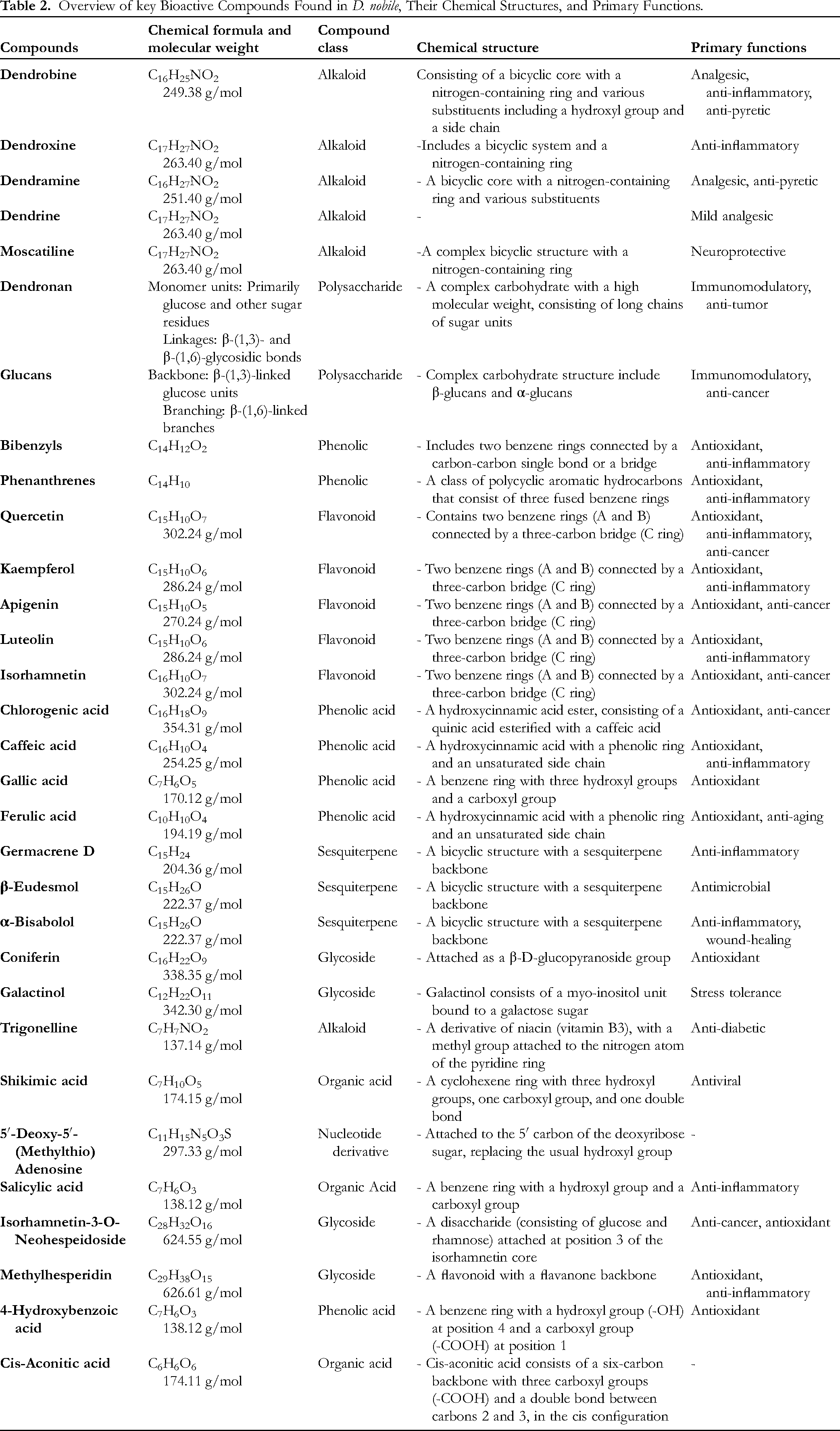
The roots of D. nobile contain a diverse array of bioactive compounds, including alkaloids, phenols, polysaccharides, gibberellin, and flavonoids.7,20,21 These phytochemicals have been shown to contribute to traditional medicinal applications of plants. Studies have indicated that the roots of D. nobile contain a high concentration of alkaloids, particularly dendrobine, which exhibits analgesic, anti-inflammatory, and antipyretic properties. Additionally, phenolic compounds, such as bibenzyls and phenanthrenes, have been isolated from the roots and demonstrated antioxidant, anti-inflammatory, and immunomodulatory properties.22,23 Polysaccharides extracted from roots have been shown to possess immunomodulatory effects, potentially enhancing immune responses and reducing inflammation. 24 The stem is the primary component of D. nobile, is used in traditional medicine, and contains the highest concentration of bioactive compounds. The main constituents found in the stem are alkaloids, including dendrobine, dendroxine, dendramine, dendrine, dendrobine N-oxide, nobilonine, dendrochrysine, and moscatiline.20,25 These alkaloids are primarily responsible for the analgesic, anti-inflammatory, and antipyretic effects. 4 The stems also contain polysaccharides, such as dendronan and glucans, which exhibit immunomodulatory and antitumour activities. Additionally, sesquiterpenes, such as germacrene D, β-eudesmol, and α-bisabolol, have anti-inflammatory and antimicrobial effects. Phenolic compounds found in the stem, such as bibenzyls and phenanthrenes, have been shown to exhibit potent antioxidant and cytoprotective activities. Flavonoids, such as quercetin, kaempferol, apigenin, luteolin, rutin, and isorhamnetin, along with phenolic acids, such as chlorogenic acid, gallic acid, ferulic acid, and caffeic acid, contribute to the plant's antioxidant and anti-cancer potential. 26 Polysaccharides from the stem exhibit immunomodulatory properties, and research suggests their potential use in cancer therapy because of their ability to stimulate immune cells and inhibit tumor growth. 27
The leaves of D. nobile are rich in flavonoids, particularly quercetin, kaempferol, luteolin, isorhamnetin, and apigenin, along with phenolic acids, such as chlorogenic acid and caffeic acid, which are known for their strong antioxidant properties. These compounds help scavenge free radicals, reduce oxidative stress, and protect cells from damage. 28 Alkaloids, nucleotides, their derivatives, and organic acids accumulate strongly in leaves. 29 Additionally, phenolic compounds, such as bibenzyls and phenanthrenes, present in the leaves contribute to the anti-inflammatory and immunomodulatory potential of the plant. Research has also indicated the presence of glycosides, which have been linked to the plant's anti-cancer and antioxidant effects. 22 Studies have shown that flavonoids in the leaves can be beneficial in treating oxidative stress-related diseases such as cardiovascular conditions. 7 Dendrobium nobile flowers contain a unique blend of alkaloids, phenolic compounds, and polysaccharides. Alkaloids, including dendrobine, found in flowers, exhibit notable anti-inflammatory and analgesic effects, similar to the alkaloid profile of the stems. 3 Amino acids and their derivatives, flavonoids, saccharides, phenols, alkaloids, nucleotides and their derivatives, and organic acids accumulate strongly in flowers. 29 Phenolic compounds, particularly phenanthrenes and bibenzyls, contribute to the antioxidant and anti-inflammatory activities of flowers. 30 Polysaccharides from flowers have been studied for their immunomodulatory properties, which potentially offer protection against inflammation and oxidative stress. 24 In traditional medicine, D. nobile flowers are valued for their rejuvenating properties, and ongoing research is exploring their potential in preventing degenerative diseases. Thirteen compounds were newly identified in the root, stem, and leaf extracts, including coniferin, galactinol, trehalose, beta-D-lactose, trigonelline, nicotinamide-N-oxide, shikimic acid, 5′-deoxy-5′-(methylthio) adenosine, salicylic acid, isorhamnetin-3-O-neohespeidoside, methylhesperidin, 4-hydroxybenzoic acid, and cis-aconitic acid 31 (Tables 1 and 2 and Figure 1).

Bioefficacy of various natural compounds from different parts of D. nobile.
Chemical Composition and Potential Bioefficacy of Each D. nobile Extract.

Overview of key Bioactive Compounds Found in D. nobile, Their Chemical Structures, and Primary Functions.
Pharmacological Properties and Mechanisms of Action of D. nobile
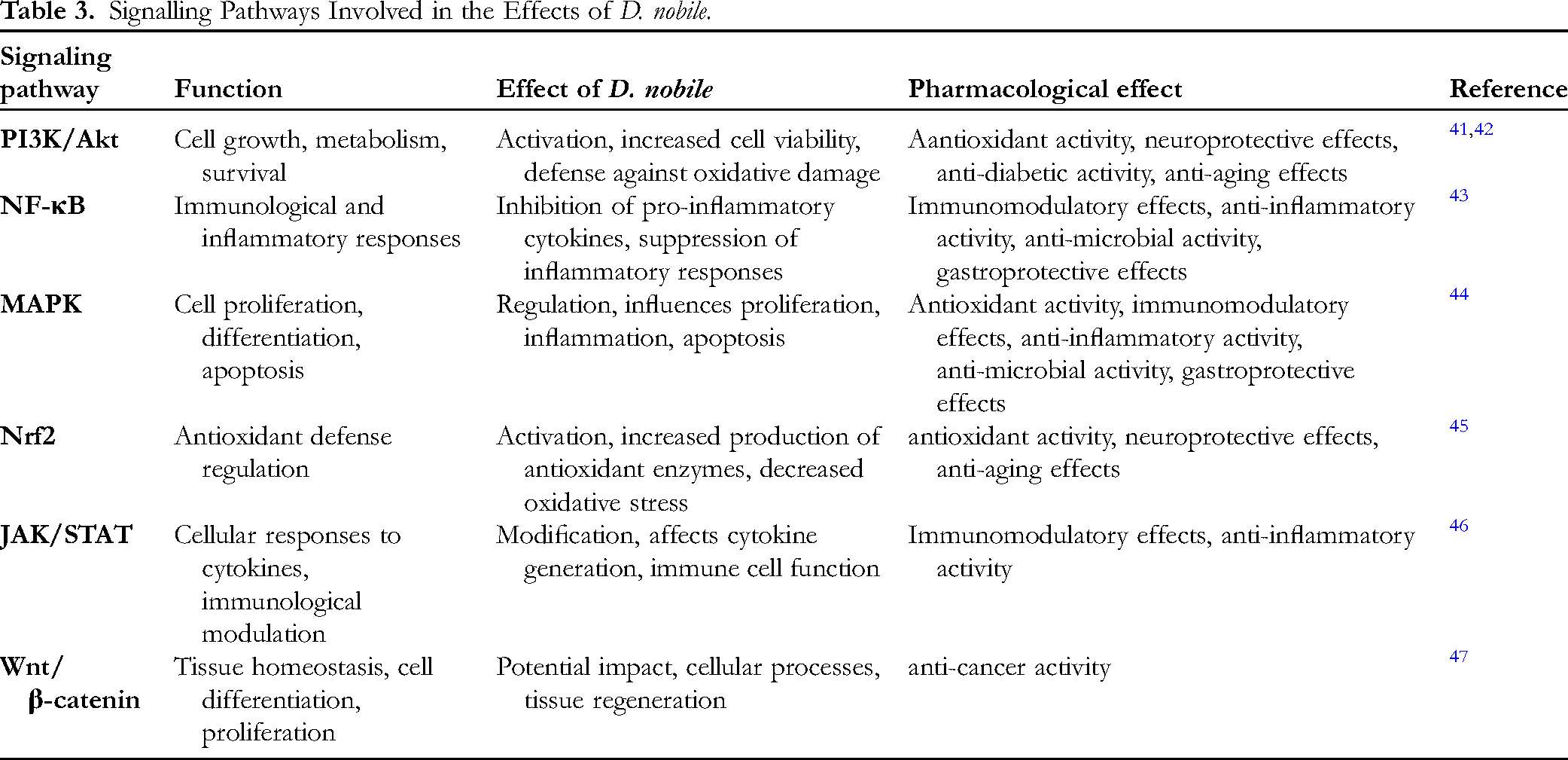
Dendrobium nobile exhibits a range of pharmacological effects, including anti-inflammatory, antioxidant, immunomodulatory, neuroprotective, anticancer, antiviral, and antidiabetic properties (Table 2). Its anti-inflammatory effects are mediated by the inhibition of pro-inflammatory cytokines such as interleukin-1 beta (IL-1) and tumour necrosis factor beta (TNF) as well as by the suppression of inflammatory signalling pathways such as the nuclear factor-kappa B (NF-κB) pathway. These effects suggest potential applications in the management of conditions such as arthritis, asthma, and dermatitis, although safety profiling is warranted. 33 The antioxidant properties of D. nobile stem from its ability to neutralise free radicals and reduce oxidative stress, primarily owing to the presence of bioactive compounds, such as phenolic compounds and flavonoids. 34 Dendrobium nobile has shown efficacy in targeting free radicals, supporting cardiovascular and neurodegenerative health with a favourable safety profile. 35 Additionally, D. nobile modulates immune responses by regulating immune cell activity and cytokine production, thereby enhancing the overall immune function and promoting a balanced immunological response. 36 Their immunomodulatory properties are facilitated by polysaccharides and polypeptides. 37 Neuroprotective effects have been observed, including protection of neurones from oxidative stress and neuroinflammation, which position D. nobile as a potential therapeutic agent for neurodegenerative diseases. 13 Furthermore, its anticancer properties involve mechanisms such as apoptosis activation, tumour growth suppression, modification of signalling pathways, and anti-angiogenic effects, and are promising as adjunctive therapies for various cancers, including breast, lung, liver, and colon cancers.38,39 Dendrobium nobile also exhibits antiviral properties, potentially obstructing viral replication via the action of alkaloids and flavonoids. In terms of diabetes management, it regulates blood glucose levels, enhances insulin sensitivity, and protects pancreatic beta cells, primarily through polysaccharides and phenolic compounds.24,40 This multifaceted influence extends to anxiety management, in which reduction in neurotransmitter levels may offer therapeutic potential for alleviating anxiety and stress (Table 3 and Figure 2).

Dendrobium nobile demonstrates potent molecular mechanisms by regulating key mediators and pathways.
Signalling Pathways Involved in the Effects of D. nobile.
Anti-inflammatory Activity and Mechanisms
The extracts of D. nobile and its bioactive constituents have demonstrated significant anti-inflammatory effects in various experimental models. These extracts can downregulate pro-inflammatory cytokines, enzymes, and mediators, thereby mitigating inflammatory responses. 48 The anti-inflammatory potential of D. nobile is particularly promising for the treatment of inflammatory conditions, such as arthritis, asthma, and dermatitis. Despite their potential therapeutic applications, the safety and long-term efficacy of these extracts require further rigorous investigation. The principal bioactive compounds contributing to these effects include alkaloids, flavonoids, and polyphenols. 49 Dendrobium nobile demonstrates potent anti-inflammatory properties by regulating key inflammatory mediators and pathways, particularly the NF-κB and MAPK pathways, which are involved in inflammation. Dendrobium nobile has demonstrated significant potential for the inhibition of pro-inflammatory mediators and plays a key role in reducing inflammation. One of its main mechanisms is the downregulation of inflammatory cytokines such as IL-1 and TNF-β, which are critical in initiating and sustaining inflammation. These cytokines not only promote inflammatory responses, but also recruit immune cells to the sites of injury or infection, exacerbating the inflammatory process. By reducing the production of these cytokines, D. nobile helps mitigate the overall inflammatory response and provides relief in conditions in which inflammation is a core issue. Furthermore, D. nobile exerts anti-inflammatory effects by inhibiting key enzymes involved in inflammation, including cyclooxygenase-2 (COX-2) and inducible nitric oxide synthase (iNOS). COX-2 is responsible for the production of pro-inflammatory prostaglandins, which amplify inflammatory responses. Meanwhile, iNOS generates nitric oxide, a molecule that can lead to oxidative stress and further inflammation. By inhibiting the expression of both COX-2 and iNOS, D. nobile significantly reduces the inflammatory cascade, limiting tissue damage and oxidative stress associated with chronic inflammation.48,50
In addition to targeting cytokines and enzymes, D. nobile interferes with the nuclear factor kappa-light-chain-enhancer of activated B cell (NF-κB) pathway, which is a crucial driver of inflammation. NF-κB regulates the transcription of genes encoding pro-inflammatory cytokines, chemokines, and adhesion molecules. 43 Under normal circumstances, NF-κB is kept inactive by IκBα (inhibitor of NF-κB); however, in response to stress or inflammatory signals, IκBα is phosphorylated and degraded, allowing NF-κB to activate inflammatory gene transcription. Dendrobium nobile prevents this activation by inhibiting IκBα phosphorylation and degradation, thereby blocking NF-κB from initiating the production of inflammatory mediators. Moreover, D. nobile modulates the mitogen-activated protein kinase (MAPK) pathway, which plays a central role in the regulation of inflammatory responses. The MAPK pathway includes a cascade of kinase activations, specifically involving ERK (extracellular signal-regulated kinase), JNK (c-Jun N-terminal Kinase), and p38 MAPK, all of which contribute to the production of cytokines like IL-6 and TNF-α. By inhibiting the phosphorylation of these kinases, particularly p38, JNK, and ERK, D. nobile significantly diminished the production of pro-inflammatory cytokines, providing a broad-spectrum anti-inflammatory effect. This modulation of the MAPK pathway further complements its ability to suppress inflammation at the molecular level.
Antioxidant Activity and Mechanisms
Dendrobium nobile is rich in antioxidants, which effectively neutralise harmful free radicals and protect cells from oxidative stress and damage. These antioxidant properties are linked to its anti-aging, neuroprotective, and cardioprotective activities, with phenolic compounds and flavonoids being the key contributors.31,51 The ability of plants to mitigate oxidative stress suggests their therapeutic potential in preventing and managing neurodegenerative and cardiovascular disorders, with no significant adverse effects reported. In addition, D. nobile has demonstrated neuroprotective properties, showing promise for the treatment and prevention of neurological disorders. Studies have indicated that bioactive compounds can protect neurones, enhance cognitive function, and improve memory. In Chinese research, its antioxidant and anti-inflammatory effects have positioned it as a potential therapeutic agent for neurodegenerative diseases; however, caution is advised at higher dosages. Alkaloids, phenolic compounds, and polysaccharides are central to these neuroprotective actions.24,52 Dendrobium nobile exhibits remarkable antioxidant potential, which is largely attributed to its ability to regulate endogenous antioxidant systems and directly neutralise harmful free radicals. A key mechanism underlying this antioxidant effect is activation of the Nrf2 (nuclear factor erythroid 2-related factor 2) pathway, which plays a central role in maintaining cellular redox balance. Under normal conditions, Nrf2 is bound and sequestered in the cytoplasm by Keap1 (kelch-like ECH-associated protein 1). However, in the presence of oxidative stress or electrophilic compounds, Nrf2 is released from Keap1, allowing it to translocate into the nucleus. Once in the nucleus, Nrf2 binds to antioxidant response elements (ARE) located in the promoter regions of target genes, subsequently triggering the expression of various antioxidant enzymes. These enzymes, such as superoxide dismutase (SOD), catalase, glutathione peroxidase (GPx), and haeme oxygenase-1 (HO-1), play crucial roles in protecting cells from oxidative stress by neutralising reactive oxygen species (ROS). The ability of D. nobile to activate the Nrf2 pathway strengthens the body's natural antioxidant defences, enhancing its resilience against oxidative damage. 11
Beyond its role in boosting endogenous antioxidant defences, D. nobile also scavenges harmful free radicals directly. Reactive oxygen species, such as superoxide anions, hydroxyl radicals, and hydrogen peroxide, are highly reactive and can cause extensive damage to cellular components, including lipids, proteins, and DNA. Oxidative damage contributes to the aging process and development of various diseases, such as cancer and cardiovascular disorders. Dendrobium nobile directly neutralises free radicals and prevents them from initiating oxidative damage. By enhancing the body's own antioxidant systems and directly quenching free radicals, D. nobile provides comprehensive protection against oxidative stress, helping to preserve cellular integrity and support overall health. 45
Anti-proliferative and Pro-Apoptotic Activity and Mechanisms
Dendrobium nobile contains various bioactive compounds with anticancer, cardiovascular, renoprotective, and hepatoprotective properties. These compounds, particularly bibenzyl derivatives, polysaccharides, phenolic compounds, and alkaloids, have been studied for potential therapeutic applications. In cancer treatment, D. nobile has shown promise in inhibiting tumour growth, inducing apoptosis in cancer cells, and preventing metastasis, making it a candidate for multitargeted cancer therapies.53,54 However, further research is required to assess their long-term safety and efficacy. Its cardioprotective effects are attributed to its ability to reduce oxidative stress, enhance lipid metabolism, and improve cardiac function, which are crucial for protecting against heart-related disorders. Dendrobium nobile has been recognised for its vasodilatory and heart health benefits, with alkaloids and polyphenols playing key roles.10,46 Additionally, D. nobile exhibits renoprotective properties, offering protection against kidney damage caused by oxidative stress, inflammation, and nephrotoxic agents, and hepatoprotective effects by mitigating inflammation and fibrosis in the liver.31,45,55 Collectively, these pharmacological activities highlight D. nobile as a valuable source of bioactive compounds with significant therapeutic potential across multiple organ systems.
Dendrobium nobile has shown significant anticancer potential by targeting critical molecular pathways that regulate cell proliferation, survival, and apoptosis, particularly through its effects on the PI3K/Akt and MAPK pathways. One of the main mechanisms by which D. nobile exerts its anti-cancer effects is through inhibition of the PI3K/Akt (phosphoinositide 3-kinase/protein kinase B) pathway. This pathway is essential for the promotion of cell growth, survival, and proliferation. In many cancer cells, it is hyperactivated, leading to uncontrolled growth and resistance to programmed cell death or apoptosis. 56 By inhibiting PI3K/Akt signalling, D. nobile reduces the proliferation of cancer cells, promotes apoptosis, and enhances the sensitivity of cancer cells to chemotherapy, thereby improving the therapeutic outcomes. In addition to targeting the PI3K/Akt pathway, D. nobile also regulates the MAPK (mitogen-activated protein kinase) pathway, which is involved in both inflammatory processes and cell proliferation. In particular, the MAPK/ERK pathway plays a crucial role in promoting cell growth and survival, particularly in cancerous cells. Dendrobium nobile suppresses the phosphorylation of extracellular signal-regulated kinase (ERK), leading to a reduction in cell proliferation and an increase in apoptosis. This inhibition disrupts the survival signals that cancer cells rely on, making them more susceptible to programmed cell death and limiting tumour growth. 44 Dendrobium nobile also actively induces apoptosis by modulating the balance between pro- and anti-apoptotic proteins, which are often disrupted in cancer cells. Cancer cells frequently exhibit elevated levels of anti-apoptotic proteins, such as Bcl-2 and Bcl-xL, while suppressing pro-apoptotic proteins, such as Bax and Bak, allowing them to evade cell death and continue proliferating. Dendrobium nobile reverses this imbalance by downregulating the expression of Bcl-2 and upregulating Bax. This shift promotes permeabilisation of the mitochondrial membrane, leading to the release of cytochrome c, which activates caspases—proteases that play a key role in the execution of apoptosis. Through these mechanisms, D. nobile induces programmed cell death in cancer cells, offering a promising therapeutic approach for the treatment of various cancers. 41
Immunomodulatory Effects and Mechanisms
Dendrobium nobile modulates the immune system, enhances immunological function, and contributes to overall health. It exerts its effects by activating the immune cells, regulating immune responses, and alleviating immune-related disorders. 55 Polysaccharides derived from D. nobile play pivotal roles in immune modulation, stimulating immune cell activity, and strengthening immune responses. Considered safe, these findings offer a promising potential for the management of immune-mediated conditions. Polysaccharides and polypeptides are key bioactive compounds responsible for this immunomodulatory activity. 37 Dendrobium nobile plays a significant role in modulating the immune system by influencing both cytokine production and immune cell activity, particularly through regulation of the JAK/STAT pathway. The Janus kinase/signal transducer and activator of transcription (JAK/STAT) pathway is a key signalling mechanism that governs immune cell development, proliferation, and cytokine responses. When cytokines bind to their receptors on immune cells, they activate Janus kinases (JAKs), which in turn phosphorylate the signal transducer and activator of transcription (STAT) proteins. Once phosphorylated, STAT proteins translocate to the nucleus, where they regulate the expression of genes involved in the immune response. Dendrobium nobile exerts its immunomodulatory effects by modulating this pathway, particularly by influencing the activity of signal transducer and activator of transcription 3 (STAT3). STAT3 is known to play a crucial role not only in immune regulation but also in inflammation and cancer progression. By inhibiting the activation of STAT3, D. nobile reduced the production of pro-inflammatory cytokines, thereby dampening excessive inflammatory responses. Additionally, this inhibition affects immune cell differentiation and function, helping to restore balance within the immune system, which is vital for both immune defense and the preventing of chronic inflammation.11,57
In addition to its impact on the JAK/STAT pathway, D. nobile also regulates broader immune responses by influencing the production of key cytokines, such as IL-2, IL-4, and IFN-γ. These cytokines play a central role in modulating the activity of various immune cells, including T cells, B cells, and macrophages. For example, IL-2 is crucial for T cell proliferation, IL-4 is involved in the differentiation of B cells, and IFN-γ activates macrophages, thereby enhancing their ability to fight infections. By modulating the levels of these cytokines, D. nobile helps maintain immune homeostasis, ensuring that the immune system remains balanced and efficient in responding to infections. 46 This regulation not only enhances the body's ability to combat pathogens but also helps prevent overactive immune responses, which can lead to chronic inflammation or autoimmune conditions. Through these mechanisms, D. nobile supports the ability of the immune system to function optimally, contributing to both immune health and overall well-being.
Tissue Regeneration and Homeostasis Activity and Mechanisms
Dendrobium nobile extracts have demonstrated significant potential in promoting wound healing by accelerating the repair process, enhancing collagen synthesis, and stimulating skin cell proliferation. These wound healing properties are largely attributed to the bioactive components of the plant, particularly polysaccharides and phenolic compounds. 58 Dendrobium nobile has demonstrated significant potential in promoting tissue regeneration and maintaining cellular homeostasis, primarily through its influence on the Wnt/β-catenin signalling pathway. The Wnt/β-catenin pathway is a critical regulator of various cellular processes including cell proliferation, differentiation, and tissue homeostasis. When activated, this pathway stabilises β-catenin, a key protein that translocates to the nucleus and activates several genes responsible for cell growth, tissue repair, and regeneration. The proper functioning of this pathway is essential for maintaining the integrity of tissues and promoting their recovery following injury. Dendrobium nobile plays a vital role in modulating the Wnt/β-catenin pathway by promoting β-catenin activation, which in turn supports the cellular mechanisms required for tissue regeneration. This modulation ensures that β-catenin remains stable and active, facilitating the transcription of genes that drive the proliferation and differentiation of the cells necessary for healing. In contrast, inhibition or dysfunction of the Wnt signalling pathway can lead to tissue damage and impaired healing, as the absence of β-catenin activation disrupts the natural processes of tissue repair. By supporting the activation of this pathway, D. nobile enhances the body's ability to regenerate damaged tissues, contributing to improved healing outcomes and maintenance of cellular homeostasis. Through its regulation of the Wnt/β-catenin pathway, D. nobile not only promotes tissue repair, but also helps maintain overall tissue health, making it a promising therapeutic agent in regenerative medicine. Its ability to influence this pathway has broad applications ranging from wound healing to the recovery of damaged organs, highlighting its potential to contribute to both tissue regeneration and long-term maintenance of healthy cellular function.
Factors Affecting the Chemical Composition of D. nobile
The chemical composition of D. nobile is influenced by various factors, which can be broadly categorised into environmental conditions, postharvest handling, processing, and cultivation techniques (Figure 3). Understanding these factors is crucial for optimising the production and quality of bioactive compounds in D. nobile (Table 3 and Figure 3). Several key environmental factors influence the synthesis and accumulation of bioactive compounds, and D. nobile growth is optimal within the moderate temperature range of 18 °C-35 °C. Temperatures outside this range can cause physiological stress, altering plant metabolic pathways. Dendrobium has some resistance to adverse temperatures, and the survival of Dendrobium is expected to be affected by changing climatic conditions. Therefore, it is important to analyse and evaluate the likely migration and change of Dendrobium growing areas under climate change. 59 Such stress may either inhibit or stimulate the production of secondary metabolites including alkaloids, flavonoids, and phenolics. 7 High temperatures can accelerate metabolic processes, potentially leading to the degradation of heat-sensitive compounds, whereas low temperatures may slow down metabolic activities, resulting in reduced growth and metabolite synthesis. 42 High humidity levels, ideally between 70%-80%, are beneficial for D. nobile. Adequate humidity supports various physiological functions, promoting healthy growth and the production of bioactive compounds. Low humidity can lead to water stress, negatively affecting plant metabolic balance. 60 Sunlight is essential for photosynthesis, which supports the synthesis of bioactive compounds in D. nobile. Both light intensity and duration are crucial because they influence the production of specific metabolites. Adequate light exposure, typically around 60%-70% of full sunlight, ensures that the plant can perform photosynthesis efficiently, leading to optimal levels of secondary metabolites. 61

Factors affecting chemical composition and countermeasures for optimising D. nobile composition.
The presence of essential macronutrients, such as nitrogen, phosphorus, and potassium, is critical for the growth and chemical composition of D. nobile. 62 Nitrogen is vital for amino acid and protein synthesis, phosphorus is involved in energy transfer and cellular functions, and potassium aids in enzyme activation and water regulation. 63 Nutrient deficiencies or imbalances can lead to poor growth and altered metabolite profiles. 60 Soil pH affects nutrient availability and uptake. Dendrobium nobile prefers slightly acidic to neutral soil conditions (pH 5.5-7.0). Soils outside this pH range can hinder nutrient absorption, adversely affecting plant growth and chemical composition. 64 The mineral content and pH of irrigation water can significantly affect the chemical composition of D. nobile. 62 Water with high levels of contaminants or inappropriate mineral balances can disrupt plant metabolic processes, leading to changes in the synthesis of secondary metabolites. 65 Infestations by pests or diseases trigger defense mechanisms in D. nobile, leading to the production of secondary metabolites such as alkaloids, flavonoids, and phenolics. These compounds serve as defence chemicals, altering the chemical profile. 66 Seasonal changes influence the chemical composition of D. nobile. Variations in temperature, light, and humidity throughout the year can lead to fluctuations in the levels of bioactive compounds, reflecting the adaptive metabolic responses of plants to changing environmental conditions. 67
Countermeasures for Optimizing the D. nobile Composition
Countermeasures for optimising the chemical composition of D. nobile focus on carefully managing environmental factors such as temperature, humidity, light, soil, and nutrient levels. Maintaining a moderate temperature range of 18-35 °C is critical, and temperature-controlled greenhouses or shading techniques can prevent heat stress or frost damage with automated climate systems ensuring year-round stability. High humidity levels (70-80%) are essential for growth, and misting systems, mulching, and real-time monitoring via hygrometers can help regulate moisture. Light intensity and duration significantly affect metabolite synthesis, and the use of shade cloths, greenhouses, or LED lights ensures optimal photosynthesis for secondary metabolite production. Proper soil and nutrient management, including regular testing and balanced fertilisation, supports growth and chemical stability while maintaining soil pH between 5.5 and 7.0, and optimises nutrient uptake. Sustainable irrigation practices are vital to avoid nutrient disruption. Pest and disease management through integrated strategies, such as using natural predators and organic pesticides, helps prevent infestations without affecting the chemical profile of the plant. Seasonal adjustments, including greenhouse cultivation or scheduling harvests, to coincide with favourable conditions further enhance bioactive compound production. Together, these countermeasures ensure that the environmental factors are controlled by optimising the chemical composition of D. nobile for medicinal and therapeutic applications.
Post-Harvest Handling and Processing
Post-harvest handling and processing techniques play a vital role in preserving the chemical integrity and bioactive properties of D. nobile. The steps taken from harvesting to storage can greatly influence the plant's chemical profile, ensuring that its medicinal compounds remain potent and effective. Appropriate handling methods are essential to maintain the quality and therapeutic potential of plants (Figure 4).

Post-harvest cultivation techniques, harvesting times, and drying methods.
Cultivation Techniques
Cultivation practices are critical in determining the growth, development, and chemical composition of D. nobile. Effective cultivation techniques can enhance the quality and consistency of the bioactive compounds. Propagation from seeds introduces genetic variability, which can lead to differences in chemical composition. This method can produce diverse plant populations with varying bioactive profiles in D. nobile. 68 Tissue culture and vegetative propagation methods ensure uniformity in the chemical profile of plants, producing consistent and reliable bioactive compounds. 69 The use of organic versus inorganic fertilisers, along with the frequency of their application, affects plant health and metabolite production. Balanced fertilisation supports optimal growth and chemical composition. 70 Supplementation with micronutrients, such as zinc, iron, and magnesium, can enhance the synthesis of specific compounds, contributing to the overall bioactivity of the plant. 71
The use of biological agents for pest and disease control minimises the use of chemical pesticides, which can affect the chemical composition of plants. Biological control supports sustainable organic cultivation practices. 72 Combining various pest management strategies ensures healthy plant growth and optimal chemical profiles by reducing reliance on synthetic chemicals. The application of growth regulators, such as gibberellins, cytokinins, and auxins, can influence growth and secondary metabolite production in D. nobile. These hormones modulate physiological processes and enhance the chemical composition. 73 Different varieties or cultivars of D. nobile may exhibit varying chemical compositions, owing to genetic differences. The selection of high-yielding cultivars with desirable chemical profiles is essential for medicinal applications. 74 Cultural practices, such as pruning, fertilisation, and propagation methods, can affect the growth and development of D. nobile, potentially influencing its chemical composition. Optimising these practices ensures the production of high-quality plant material. 75 The chemical composition of D. nobile is intricately influenced by a combination of environmental factors, postharvest handling, processing, and cultivation techniques. Optimal conditions and careful management across these areas are essential for maximising the medicinal and bioactive properties of this valuable orchid.
Harvesting Time, Techniques and Drying Methods
The optimal time for harvesting D. nobile depends on its growth cycle and intended use. Generally, mature stems are harvested when the plant is 2-3 years old, which is when the stems contain the highest concentration of bioactive compounds, including alkaloids and polysaccharides. The ideal season for harvesting is late autumn to early winter, typically from November to December, because this period corresponds to the peak medicinal content of the plant. 76 Harvesting too early may result in lower concentrations of active compounds, whereas delaying the harvest may lead to the degradation of these bioactive substances. Proper harvesting techniques for D. nobile involve selecting only mature stems and leaving younger or damaged stems behind to allow the plant to regenerate. Sharp, sterilised scissors, or knives were used to cut the stems to avoid pulling or tearing, which can harm the plant. Stems should be cut approximately 10-15 cm above the base to ensure that a portion of the plant remains, promoting new growth. 77 The early morning is the ideal time for harvesting, as the lower moisture content at this time reduces the risk of mould development during the drying process. Drying is a crucial step for preserving the medicinal properties of D. nobile. After harvesting, the stems were thoroughly cleaned with clean water to remove dirt, debris, and pests, taking care not to damage the surface. For sun drying, the stems were spread in a single layer on a clean, raised surface in a shaded area with good air circulation, avoiding direct sunlight to prevent the degradation of medicinal compounds. Semi-shade drying can be used if conditions allow regular turning to ensure even drying. If natural drying is not feasible, oven drying at low temperatures (40 °C-60 °C) is an option to ensure proper airflow by slightly opening the oven door or using a fan-assisted dryer. Drying can take several days depending on the method and environmental conditions, and the stems are ready when they are completely dry, hard, and brittle. Once dried, the stems are stored in airtight containers in a cool, dry place, away from direct sunlight and moisture, to maintain their potency. 62
Safety and Toxicity of D. nobile
The safety and toxicity profile of D. nobile are crucial for ensuring its safe use in a variety of applications. Animal models have demonstrated low acute and subacute toxicities of D. nobile extract. There were no notable adverse effects on the clinical signs, organ function, or histopathology. Dendrobium nobile extracts were subjected to genotoxicity testing to determine the likelihood of DNA damage. Available research indicates that there are no genotoxic effects, implying a low risk of DNA injury with its use. Limited information is available regarding the allergenic potential of D. nobile. Additional research is required to evaluate the allergenicity and potential adverse effects of this substance on individuals with known allergies. As with any herbal medicine, it is essential to consider the possible drug interactions when using D. nobile. However, specific investigations of D. nobile drug interactions are currently insufficient. It should be used with caution, particularly when combined with other medications. Long-term safety studies and comprehensive clinical trials on D. nobile are insufficient. Further research is required to evaluate the potential adverse effects of long-term use and ascertain the safety profile of the drug in different populations.
Acute and Chronic Toxicity Studies
It is essential to evaluate the toxicity profile of herbal remedies such as D. nobile to ensure their safe use. Acute oral toxicity studies of D. nobile extracts have demonstrated low toxicity and no significant adverse effects in animal models. These studies indicate a favourable safety profile when administered orally. 57 Few studies have investigated the dermal toxicity of D. nobile. Further studies are required to evaluate potential adverse effects of dermal exposure. Studies that looked at how irritating D. nobile extracts might be to the eyes found little to no irritation, which means that they are probably safe to use topically. Dendrobium nobile extracts have been repeatedly administered for a long time as part of subchronic studies on oral toxicity. In animal models, these studies revealed no significant adverse effects on organ function, histopathology, or clinical parameters. 78 Dendrobium nobile extracts were subjected to genotoxicity testing to determine the likelihood of DNA damage. Existing research indicates that there are no genotoxic effects, indicating a low risk of DNA injury from its use. 44 Carcinogenicity studies investigating the potential of D. nobile in inducing cancer are limited. Currently, there is no evidence to suggest a carcinogenic effect of D. nobile. 79 It is essential to note that animal toxicity studies may not correlate directly with human safety. More research, such as clinical studies and post-marketing surveillance, is needed to determine the long-term safety of D. nobile in humans and the side effects that might occur.
Adverse Effects and Drug Interactions
In general, D. nobile is harmless to humans. However, as with any herbal medicine, there is the possibility of adverse effects and drug interactions. Although there have been a few exhaustive studies on adverse effects and drug interactions, it is essential to be aware of various factors. 65 Rare and moderate adverse effects associated with the use of D. nobile have been reported. If excessive amounts are consumed, some individuals may experience gastrointestinal distress, such as gastric disturbance or diarrhoea. There is limited information regarding specific drug interactions with D. nobile. 80 Therefore, D. nobile should be used with caution in conjunction with other medications, especially those metabolised by liver enzymes or those that affect blood glucose levels. It is advisable to consult healthcare professionals, including pharmacists and herbal medicine practitioners, before using D. nobile, especially if patients have any pre-existing medical conditions or are taking other medications. 79
Future Directions for Research
Although significant progress has been made in understanding the pharmacological and therapeutic properties of D. nobile, there are several areas that warrant further investigation. Future research should focus on these aspects to broaden our understanding and maximise the potential applications of this plant. Despite the identification of various bioactive compounds in D. nobile, there are still undiscovered constituents with unique properties. Exploring the chemical composition of plants using advanced analytical techniques such as metabolomics and proteomics can lead to the discovery of novel bioactive compounds and their potential therapeutic applications. Further elucidation of the mechanisms underlying the pharmacological effects of D. nobile is essential. To learn more about how it works and how to develop more targeted therapies, scientists can examine the molecular pathways, signalling cascades, and target proteins involved in its therapeutic activities. To establish the safety and efficacy of D. nobile for specific therapeutic applications, it is crucial to conduct well-designed clinical trials and rigorous evidence-based studies. These studies provide robust scientific evidence to support its use in clinical practice and to aid healthcare professionals in recommending the most suitable doses and treatment regimens.
Establishing standardised protocols for the cultivation, processing, and extraction of D. nobile can ensure the consistent quality and potency of the plant material. Developing quality control measures, such as the identification and quantification of key bioactive compounds, can ensure the reliability and reproducibility of research findings and commercial products. To get the most out of D. nobile as a medicine, it is important to know how its bioactive compounds are absorbed, distributed, broken down, and flushed out of the body (pharmacokinetics), and how they affect the body (pharmacodynamics). These studies provide valuable information on the optimal dosage, frequency, and route of administration for various therapeutic applications. Investigating the possible synergistic effects between D. nobile and other herbal remedies or conventional therapies can improve its therapeutic efficacy. Combination therapies and drug-herb interactions should be investigated to maximise synergistic potential and enhance treatment efficacy. To assess the safety profile of D. nobile, it is essential to conduct comprehensive safety assessments including acute and chronic toxicity studies. Longitudinal studies on the potential adverse effects, drug interactions, and impact on organ systems can provide a deeper understanding of their safety profiles. By pursuing these research avenues, we can uncover the therapeutic potential of D. nobile and pave the way for its incorporation in modern medicine.
Conclusions
Dendrobium nobile possesses a diverse range of pharmacological and therapeutic properties, making it a valuable resource for developing natural therapies. Extensive research has identified numerous bioactive compounds, including alkaloids, phenolic compounds, flavonoids, polysaccharides, and glycosides, that contribute to their therapeutic potential. The plant exhibits anti-inflammatory properties that can alleviate inflammation and related conditions as well as powerful antioxidant effects that protect cells from oxidative damage. Their immunomodulatory properties enhance immune function and promote a balanced immune response. Furthermore, D. nobile demonstrated neuroprotective effects that may aid in the prevention and treatment of neurodegenerative diseases. The anticancer properties of certain compounds within the plant inhibit tumour growth and metastasis, whereas their antidiabetic properties enhance insulin sensitivity and regulate glucose metabolism. Additionally, D. nobile shows cardioprotective, renoprotective, and hepatoprotective effects, promoting overall heart and kidney health, and enhancing liver function. Its wound healing capabilities further support tissue recovery. Despite these promising properties, further research is required to fully elucidate the mechanisms underlying its diverse pharmacological activities. Understanding these molecular mechanisms will facilitate the development of targeted treatments and inform their clinical applications. Rigorous clinical trials are essential to evaluate the efficacy and safety of D. nobile in humans and to provide evidence-based information regarding optimal dosages and potential adverse effects. Future studies should explore the synergistic effects of D. nobile in combination with other natural compounds or conventional treatments, which could lead to improved clinical outcomes. Additionally, it is crucial to standardise cultivation techniques, processing methods, and quality control measures to ensure consistency and safety of botanical formulations. Integrating the traditional knowledge of D. nobile with contemporary evidence-based research can bridge the gap between traditional and modern medicine and foster the development of holistic healthcare approaches. Overall, the pharmacological and therapeutic properties of D. nobile present promising avenues for future research and clinical applications, with continued investigation to enhance its potential integration into healthcare systems and improve patient outcomes.
Footnotes
Acknowledgments
The authors express their gratitude for the financial support received through the Distinguished High-Level Talents Research Grant from the Guizhou Science and Technology Corporation Platform Talents Fund (Grant No.: [2017]5733-001 and CK-1130-002), the National Natural Science Foundation of China (U1812403, 82373981 and 82060750), 2011 Collaborative Innovation Centre of Traditional Chinese Medicine in Guizhou Province (No. [2022]026) and the support provided by the Zunyi Medical University, China. Special appreciation is extended to all laboratory colleagues and research staff members for their valuable insights, constructive guidance, and assistance throughout this study.
Author Contributions
Conceptualisation: SS, AJ, and JS; data analysis: SS and AJ; original draft preparation: SS and AJ; editing: QH and QW; visualisation: SS and AJ; supervision: JS. All the authors have read and agreed to the published version of the manuscript.
Declaration of Conflicting Interests
The authors declared no potential conflicts of interest with respect to the research, authorship, and/or publication of this article.
Ethical Approval
Ethical Approval is not applicable for this article.
Funding
The authors disclosed receipt of the following financial support for the research, authorship, and/or publication of this article: Guizhou Science and Technology Corporation Platform Talents Fund (Grant No.: [2017]5733-001 and CK-1130-002), the National Natural Science Foundation of China (U1812403, 82373981 and 82060750), 2011 Collaborative Innovation Centre of Traditional Chinese Medicine in Guizhou Province (No. [2022]026).
