



Abstract
Golden camellia is a group of valuable and precious medicinal herbs belonging to the Camellia genus, Theaceae family, which exhibited many biological activities such as antioxidant, antibacterial, anti-inflammatory, antitumor, hypoglycemic, and hypolipidemic properties. All studies on the chemical composition of all parts of the golden camellia species published in three reputable databases (PubMed, Google Scholar, and CNKI) up to October 1, 2023 were included in this review. Nearly 380 phytochemical compounds have been reported in many species of golden camellia, including flavonoids, saponins, volatile components, megastigmanes, α-pyrone derivatives, vitamins, amino acids, and so on. Our review provided a comprehensive overview of the chemical composition of several species of golden camellia reported in reputable databases, thereby contributing scientific evidence for this valuable group of medicinal herbs.
Introduction
Camellia is a well-known genus of plants belonging to the family Theaceae, with many species used in the food (as beverages) and pharmaceutical (supplement products) industries. Not only is it a familiar medicinal material widely researched in modern medicine, tea is also used in the traditional medicine of many Asian countries such as China, Japan, and Vietnam, with many outstanding benefits. Some species in the Camellia genus include Camellia sinensis, Camellia oleifera, Camellia japonica, and others. 1 The species within the Camellia genus can be classified into three subgroups based on flower color: white-flowered tea (white camellia), yellow-flowered tea (golden camellia), and red-flowered tea (red camellia).
Golden camellia is a group of valuable and precious medicinal herbs belonging to the Camellia genus, Theaceae family, naturally distributed in many Asian countries, with China and Vietnam having the climate and soil conditions most suitable for their growth, encompassing 52 recorded species. 2 Golden camellia is known as the “queen of teas” not only due to the bright yellow color of its flowers but also because of its medicinal and nutritional values. Many species of golden camellia have been studied and reported to exhibited various pharmacological effects such as antioxidant, antibacterial, anti-inflammatory, antitumor, hypoglycemic, and hypolipidemic properties. 3 Furthermore, the chemical composition of golden camellia species has been extensively studied using both classical (column chromatography) and modern techniques (liquid chromatography, gas chromatography), focusing on groups of compounds such as flavonoids, saponins, essential oils, and phenolic acids. In our previous research, we conducted a systematic review of the pharmacological effects of several species of golden camellia. 4 However, no comprehensive review has statistically summarized the chemical composition of golden camellia species reported in the literature. Therefore, we conducted this review to provide a comprehensive overview of the chemical composition of several golden camellia species reported in reputable databases, thereby contributing scientific evidence for this valuable group of medicinal herbs.
Methodology
All studies on the chemical composition of all parts of the golden camellia species (isolation, analysis using modern techniques such as gas chromatography, high-performance liquid chromatography, quantification) published in three reputable databases (PubMed, Google Scholar, and CNKI) up to October 1, 2023 were included in this review. Reviews or reports that lack high reliability (conference papers, theses, posters) were excluded during the search process.
Results
After the search process, a total of 45 articles met the selection criteria and were used for this review (15 articles in English and 30 articles in Chinese). Regarding chemical composition, 378 phytochemical compounds have been reported belonging to the groups of flavonoids (66 compounds), saponins (30 compounds), volatile oils (218 compounds), and other compounds (64 compounds) (Figure 1A).

Research report statistics; (A) By compound groups; (B) By species; (C) By study design; (D) By research method.
Classified by golden camellia species, Camellia nitidissima was the most studied (18 articles), alongside other species such as Camellia chrysantha, Camellia euphlebia, Camellia hakodae, Camellia impressinervis, Camellia murauchii, Camellia buigiamapensis, and Camellia chuangtsoensis (Figure 1B).
Among the 45 reports on the chemical composition of golden camellia, there were 9 publications on the isolation of natural compounds, 23 reports on chemical composition using modern analytical techniques (10 reports using liquid chromatography methods and 13 reports using gas chromatography methods), and 13 articles on qualitative and quantitative methods for analyzing phytochemical compounds in golden camellia (Figure 1C and 1D).
Flavonoid Compounds
Sixty six flavonoid compounds (

Statistics of flavonoid compounds; (A) By subgroup; (B) By species; (C) By used parts; (D) By detection method.

Chemical formula of flavonoids in golden camellia species (
Flavonoid Compounds in Golden Camellia Species.

(GC: Gas chromatography, LC: Liquid chromatography, I: Isolation)
The search results indicated that most flavonoid compounds in golden camellia species belong to the flavone and flavonol derivatives groups (58%, Figure 2A). Similarly, the highest number of flavonoid compounds were discovered and reported in Camellia nitidissima (51 compounds, Figure 2B). Liquid chromatography methods detected the most flavonoid compounds, with 13 compounds successfully isolated using liquid chromatography. Interestingly, 7 flavonoid compounds were detected using all three techniques (liquid chromatography, gas chromatography, and isolation).
Flavonoid is a group of secondary metabolites derived from shikimic acid, commonly found in medicinal herbs, responsible for many major biological effects such as anticancer, antioxidant, antibacterial, anti-inflammatory, antihypertensive, antidepressant, and hypoglycemic activities.29,30 Alongside the isolation and/or analysis results, several biological effects of flavonoid compounds in golden camellia have also been reported. Compound
Interestingly, 4 compounds
Saponin Compounds
Another group of compounds reported in golden camellia species were triterpenoid and steroidal saponins. So far, 30 compounds (

Statistics of saponin compounds; (A) By subgroup; (B) By species; (C) By used parts; (D) By detection method.
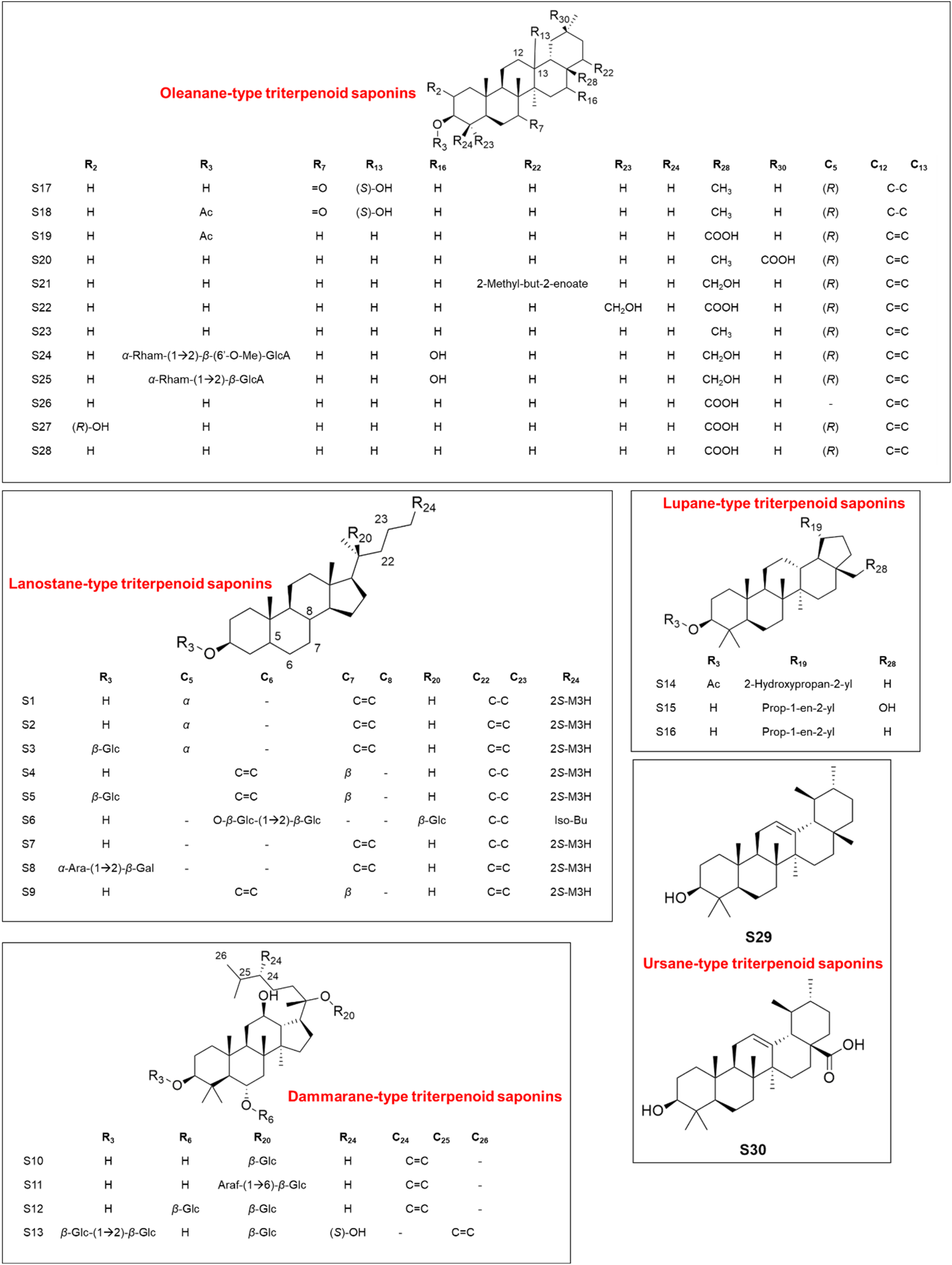
Chemical formula of saponins in golden camellia species (
Saponin Compounds in Golden Camellia Species.

(GC: Gas chromatography, LC: Liquid chromatography, I: Isolation)
Among the 30 saponin compounds reported in golden camellia species, compound
Volatile Oils
The volatile oil components in various golden camellia species have been detected and reported using modern analytical techniques such as GC-MS (Figure 6D), revealing a total of 218 compounds (

Statistics of volatile oil compounds; (A) By subgroup; (B) By species; (C) By used parts; (D) By detection method.
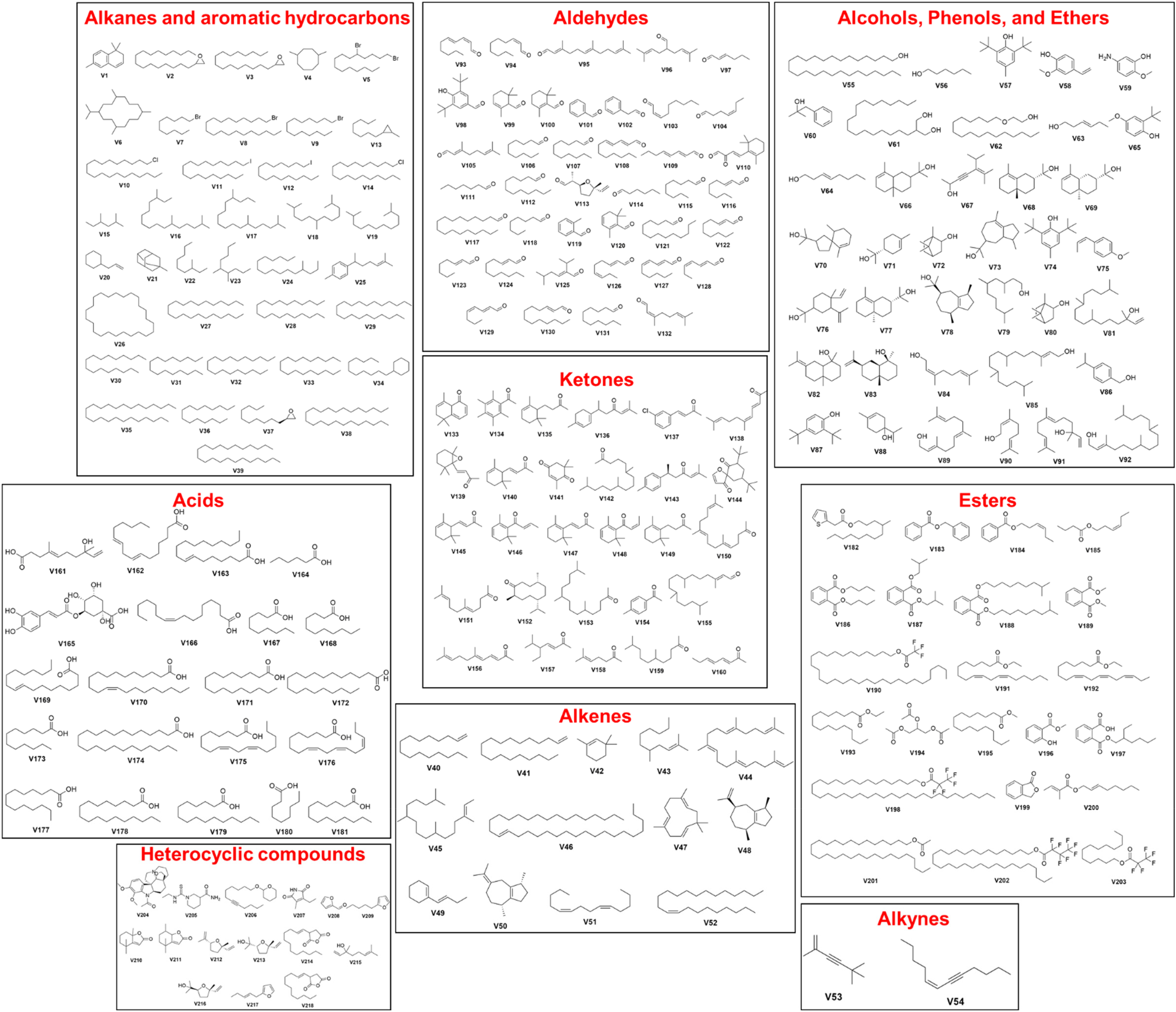
Chemical formula of volatile compounds in golden camellia species (
Volatile Compounds in Golden Camellia Species.

(GC: Gas chromatography)
Other Compounds
Several other compounds in various golden camellia species have been detected or isolated, belonging to derivative groups such as ellagic acid, megastigmane, phenolic compounds, amino acids, and vitamins, with totaling 64 compounds (

Statistics of other compounds; (A) By subgroup; (B) By species; (C) By used parts; (D) By detection method.
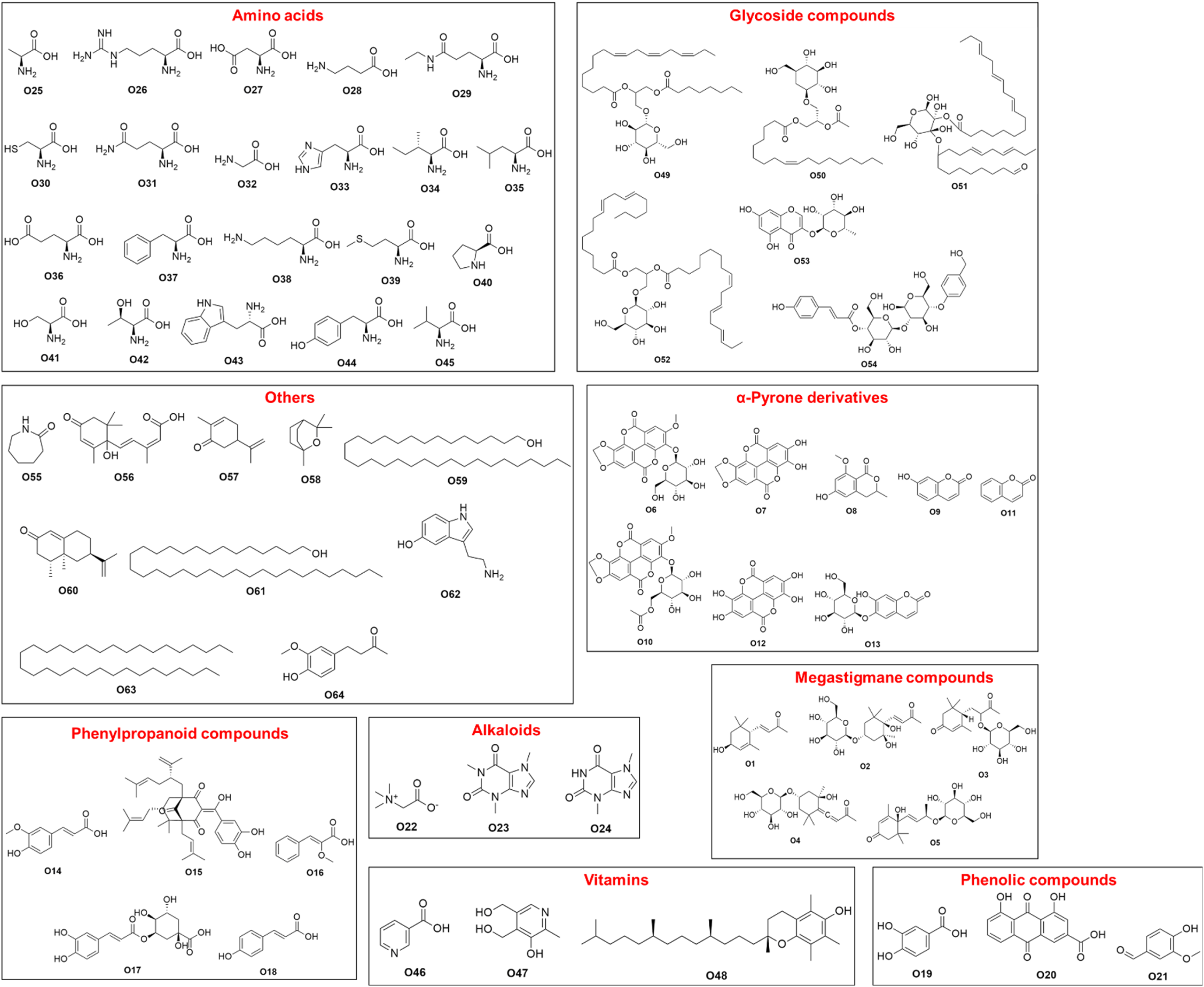
Chemical formula of other compounds in golden camellia species (
Other Compounds in Golden Camellia Species.

(GC: Gas chromatography, LC: Liquid chromatography, I: Isolation)
Compound
Qualitative and Quantitative Researches
In addition to studies on extraction, isolation, or chemical composition analysis, research on developing quantification methods for phytocompounds in golden camellia species was also conducted (Table 5).
Studies on Qualitative and Quantitative Analysis of Selected Compounds/Groups of Compounds in Golden Camellia Species.

Conclusion
Nearly 380 phytochemical compounds have been reported from the leaves, flowers, fruits, and roots of several golden camellia species including Camellia chrysantha, Camellia euphlebia, Camellia hakodae, Camellia impressinervis, Camellia murauchii, Camellia buigiamapensis, and Camellia chuangtsoensis. Additionally, studies aimed at developing analytical methods for quantifying these compounds in golden camellia species have also been conducted. Our overview provides a comprehensive look at the chemical constituents of these golden camellia species as reported in reputable databases, thereby contributing scientific evidence to support the valuable medicinal properties of this group of plants.
Footnotes
Declaration of Conflicting Interests
The authors declared no potential conflicts of interest with respect to the research, authorship, and/or publication of this article.
Funding
The authors received no financial support for the research, authorship, and/or publication of this article.
