



Abstract
Fruits of Ligustrum lucidum W.T.Aiton (FLL) is a well-known traditional Chinese medicine, which has the functions of protecting liver, anticancer, antiosteoporosis, and antioxidant, etc. Various chemical constituents including triterpenes, secoiridoids, phenylethanoid glycosides, and flavonoids have been isolated and identified from FLL. In this article, the advances in research on the chemical constituents and their pharmacological effects were summarized by reviewing the recent literatures. In addition, the relationship between the chemical constituents and pharmacological activity of FLL was also discussed.
Fruits of Ligustrum lucidum W.T.Aiton (FLL) is known as Nvzhenzi in traditional Chinese medicine and is the dried mature fruit of Ligustrum lucidum W.T.Aiton. FLL belongs to the Oleaceae family, 1 which is widely distributed in eastern Asia and India. 2 FLL has been used as a common herbal medicine in clinical practice in China for nearly 2000 years, which is usually used for suppling kidney, nourishing Yin and strengthening the liver, and clearing vision. 1 Modern researches show that water or ethanol extracts of FLL are useful for regulating the immune system, protecting the liver, lowering serum glucose, and exerting antioxidation, anti-inflammatory, anticancer, and antiaging functions in humans. 3,4 In the clinical practice of traditional Chinese medicine, FLL is a component of many kidney-tonifying Chinese herbal formulae for the treatment of osteoporosis. In our previous studies, the antiaging effect of FLL was also investigated using rat model. 5 -7 In recent decades, great progress about FLL has been achieved by scholars in the world. Various chemical constituents have been isolated and identified from FLL, including triterpenes, secoiridoids, phenylethanoid glycosides, and flavonoids. Additionally, some chemical constituents isolated from FLL have been applied for the pharmacological effects on protecting liver, anticancer, antiosteoporosis, and antioxidant, etc.
In this review, we summarize the updated researches on the chemical constituents of FLL. In addition, we also discuss several pharmacological effects of these constituents.
Chemical Constituents From FLL
Triterpenes
At present, more than 20 triterpenes have been extracted and identified from FLL. Oleanolic acid is the highest content among the triterpenes.
As shown in Figure 1, Li et al isolated 9 new triterpenoids from FLL, including tormentic acid (

Structures of triterpenoids isolated from the fruits of Ligustrum lucidum W.T.Aiton.
Two triterpenes, tormentic acid (
Twenty compounds were isolated and purified from FLL by using silica gel, Sephadex LH-20, ODS column chromatographic methods.
10
Their structures were identified on the basis of spectroscopic data and physicochemical properties. Among them, 15 triterpenes were successfully identified as 2α-hydroxyoleanolic acid (

Structures of triterpenoids isolated from the fruits of Ligustrum lucidum W.T.Aiton.
Flavonoids
Li et al isolated 7 flavonoids that belonged to quercetin-3-O-rutinoside (
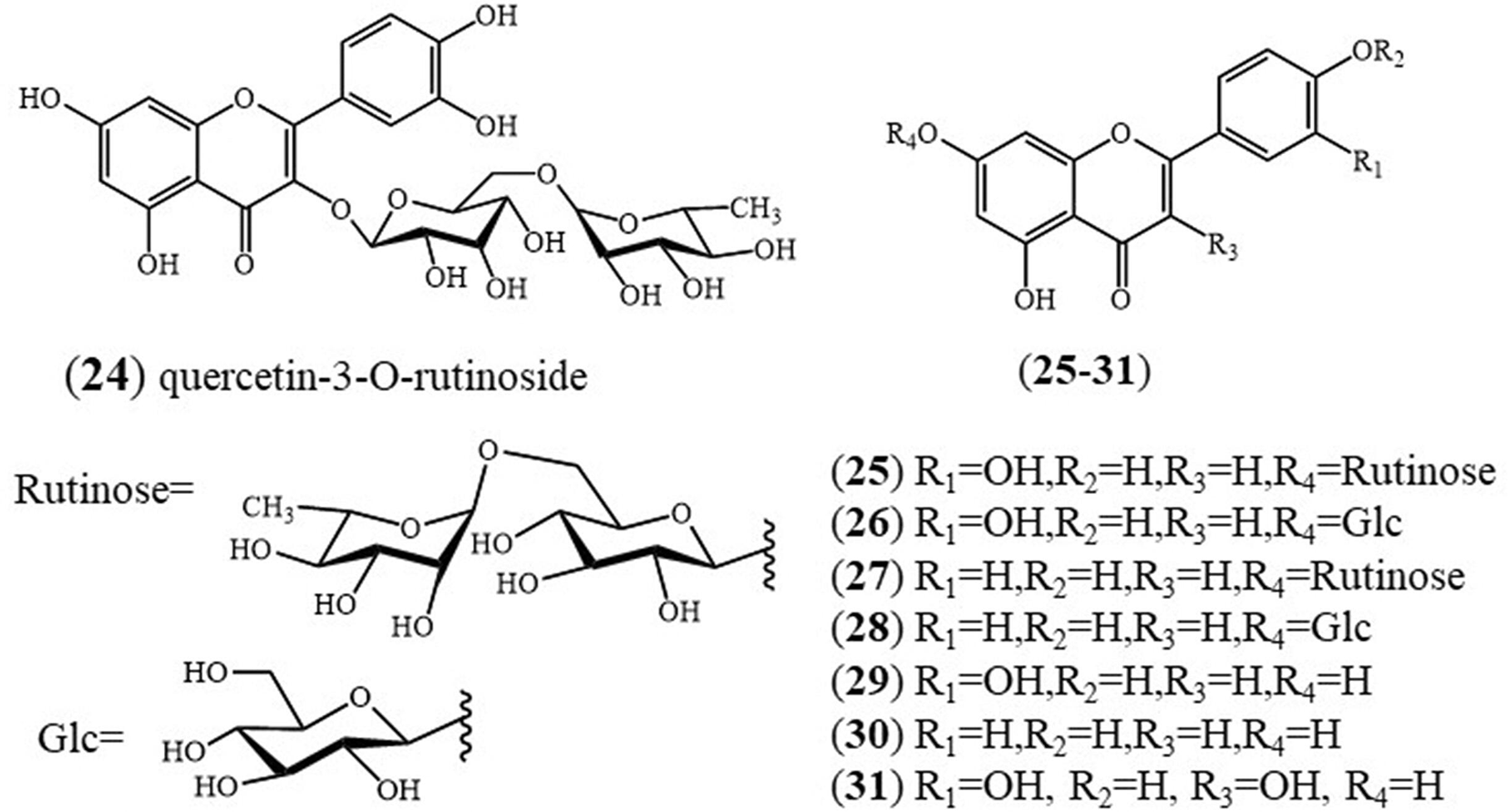
Structures of flavonoids isolated from the fruits of Ligustrum lucidum W.T.Aiton.
Secoiridoids
Among all obtained chemical constituents from FLL, secoiridoids are often used as the characteristic compound for the identification of the FLL genus 13 ; moreover, they are considered as the main active ingredients in the pharmacological effects. Recently, the chemical ingredients of secoiridoids have been the focus of the study of FLL.
He et al reported that 10 secoiridoid glucosides were isolated through bioassay-guided analysis from the ethanol extraction of FLL.
14
Their structures were elucidated by spectroscopic methods and depicted in Figure 4. The results showed that lucidumoside C (
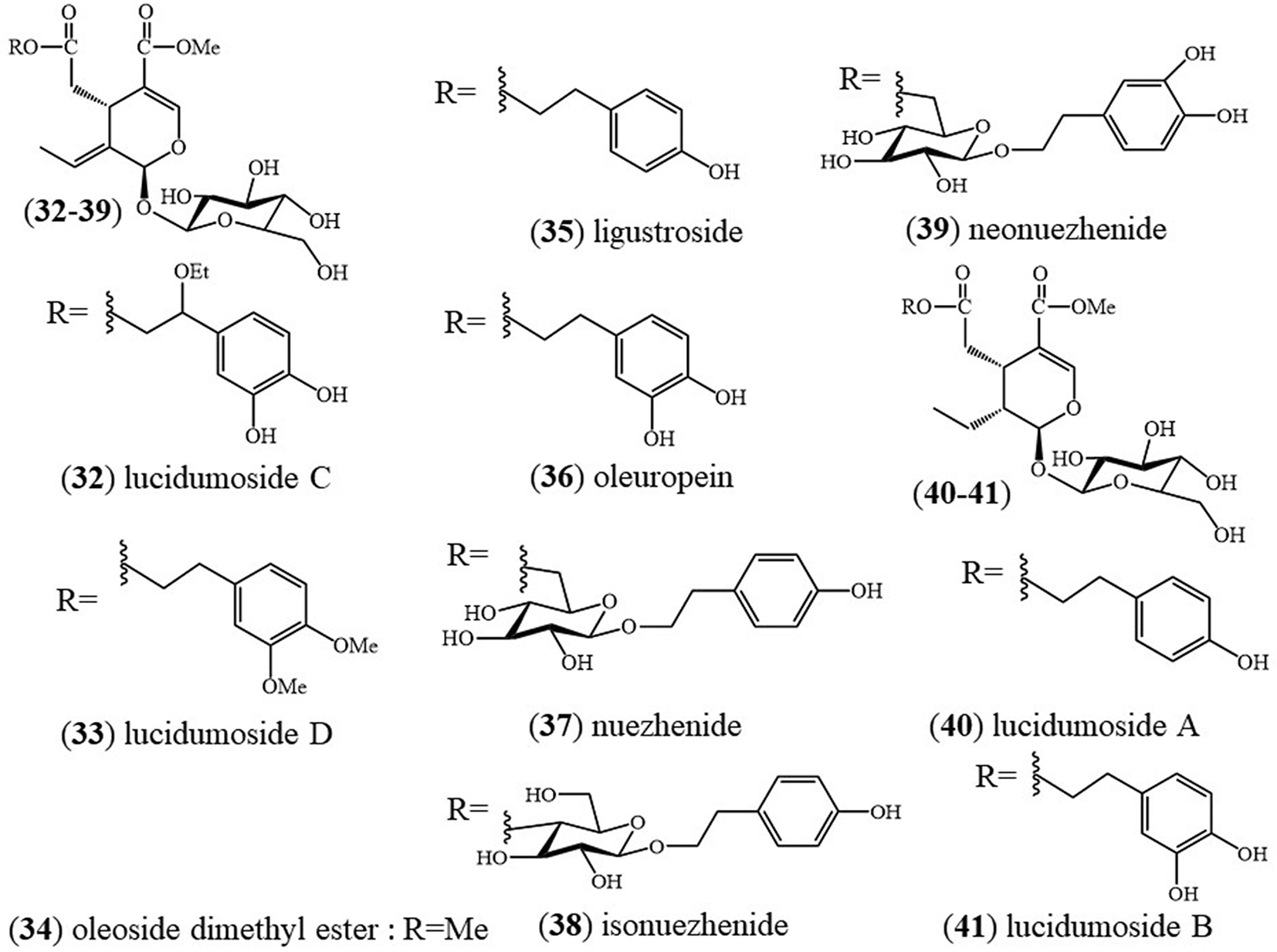
Structures of secoiridoid glucosides isolated from the fruits of Ligustrum lucidum W.T.Aiton.
As displayed in Figure 5, 4 new secoiridiod glucosides, such as p-hydroxyphenethyl 7-β-
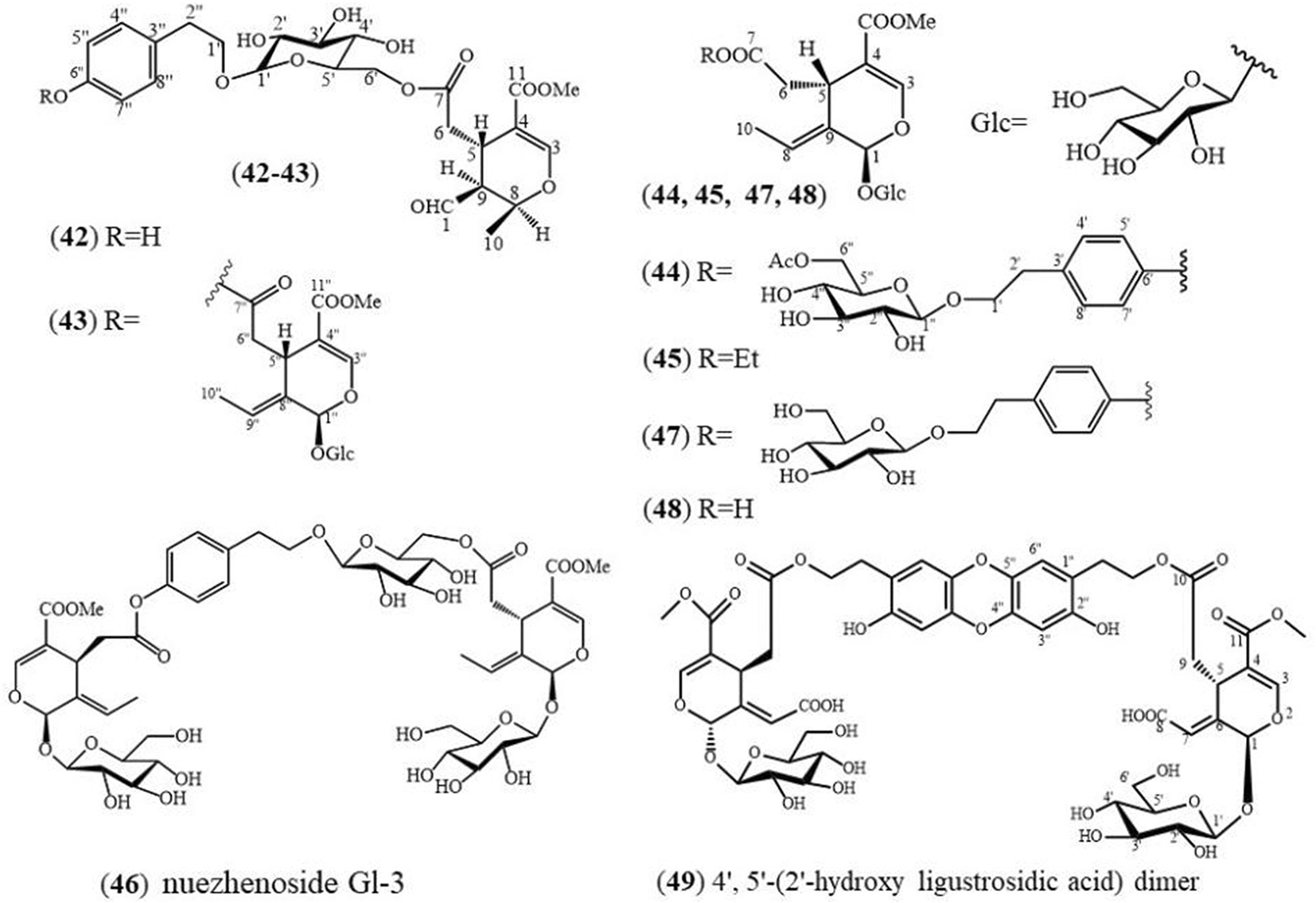
Structures of secoiridoid glucosides isolated from the fruits of Ligustrum lucidum W.T.Aiton.
In 2015, Gao et al reported that 1 new antioxidant secoiridoid glucoside dimer derivative, 4′,5′-(2′-hydroxy ligustrosidic acid) dimer (
Zhang et al isolated 5 new secoiridoids from the FLL, namely, nuzhenal C (

Structures of secoiridoids isolated from the fruits of Ligustrum lucidum W.T.Aiton.

Structures of secoiridoid glycosides isolated from the fruits of Ligustrum lucidum W.T.Aiton.
Recently, Qiu et al reported 3 new secoiridoid glucosides isolated from FLL. The structure was elucidated as nuezhenelenoliciside (
He et al extracted and separated 3 secoiridoid glycosides from FLL by using the combined methods of ultrahigh-pressure extraction and high-speed counter-current chromatography, including isonuezhenide (
As presented in Figure 8, Aoki et al isolated 6 new secoiridoid constituents from the FLL, namely, isoligustrosidic acid (

Structures of secoiridoids isolated from the fruits of Ligustrum lucidum W.T.Aiton.
Pang et al isolated 9 secoiridoid glycosides (

Structures of secoiridoids isolated from the fruits of Ligustrum lucidum W.T.Aiton.
In addition, oleoside 11-methyl ester (
Phenylethanoid Glycosides
Phenylethanoid glycosides are an important class of compounds in FLL. Li et al detected 1 phenylethanoid and 7 phenylethanoid glycosides in the 80% methanol extract of FLL using a UHPLC-ESI-Q-TOF-MS method. They are hydroxytyrosol (

Structures of 1 phenylethanoid and 8 phenylethanoid glycosides isolated from the fruits of Ligustrum lucidum W.T.Aiton.
Other Chemical Constituents
Modern chemical studies showed that there were other chemical constituents isolated from FLL. For example, Liu et al isolated (3-ethylidene-2-oxotetrahydropyran-4-yl)-acetic acid methyl ester (

Structures of other chemical constituents isolated from the fruits of Ligustrum lucidum W.T.Aiton.
It was found that FLL also contained polysaccharides that were mainly composed of sucrose, rhamnose, arabinose, glucose, and fucose.
24
In addition, β-sitosterol-3-O-β-
Pharmacological Effects of the Isolated Chemical Constituents
Modern pharmacological studies indicate clearly that the extracted chemical constituents from FLL show their respective pharmacological activities, such as immunomodulatory, hypolipemic, antiinflammatory, hepatoprotective, antitumor, and antiaging effects.
Pharmacological Effects of Secoiridoids
The secoiridoids isolated from FLL have been reported to show antioxidation, antiosteoporosis, hypolipidemic, and antiviral activities, and they may be the major bioactive components of FLL.
Antioxidation activity
Gao et al isolated nuezhenide (
He et al reported that 5 compounds, oleoside dimethyl ester (
Antiosteoporosis activity
In addition, Qiu et al found that nuezhenelenoliciside (
Hypolipidemic activity
Furthermore, the triglyceride (TG) accumulation inhibitory effects of secoiridoids were evaluated. Compared with normal HepG2 cells group, intracellular TG accumulation significantly increased after free fatty acid incubation for 48 hours, which could be downregulated by 0.1 µM orlistat, a lipase inhibitor. The results demonstrated that secoiridoids (
Antiviral activity
Secoiridoid glycosides were reported to exhibit significant antiviral activity against the respiratory syncytial virus (RSV) and parainfluenza type 3 virus (Para 3).
15
Results suggested that none of the glucosides had any significant activity against herpes simplex type 1 virus (HSV-1) and Flu A. Compared with the positive control group, oleuropein (
Pang et al isolated 9 secoiridoid glycosides (
Pharmacological Effects of Polysaccharides
Polysaccharides from FLL can promote the B- and T-lymphocyte proliferation and increase natural killer cell activity and the phagocytosis of macrophage, inhibiting the growth of tumor cells in vivo by enhancing the immunology. 28,29 Moreover, the polysaccharides can hinder the adhesion of melanoma B16BL6 cells in vitro and dampen the system of B16BL6 cells, thus exerting its antitumor effect. 30 Furthermore, the polysaccharides possessed a protective effect on the liver damaged by chemical agent carbon tetrachloride (CCl4). Compared with the results of the bifendate control group, the protective effect on liver damage by treatment with FLL was better at 200 mg/kg/day. 31
Pharmacological Effects of Oleanolic Acid and Ursolic Acid
In recent years, there were many studies on pharmacological activities of oleanolic acid (OA) (
Antiosteoporosis action
Lots of studies were with respect to the antiosteoporosis effects of OA and UA. Up to now, the study on the mechanism of antiosteoporosis has not attracted enough attention. 32 In order to prove the osteogenic effects of the water extract of FLL on MC3T3-E1 cells, Li et al used cell counting kit-8, real-time fluorescence quantitative polymerase chain reaction, enzyme-linked immunosorbent assay, and western blot assays. The experimental results demonstrated that UA was proved to have osteogenic effects. FLL can promote the protein levels of extracellular signal-regulated kinase (ERK), phosphorylated (p)-ERK, p-c-Jun N-terminal kinase (JNK), p38, pp38, protein kinase B (AKT), and p-AKT and inhibit the protein levels of JNK. The water extract of FLL can enhance cell proliferation and differentiation, messenger ribonucleic acid (mRNA), and protein expression of receptor activator of nuclear factor kappa-Β ligand (RANKL) and osteoprotegerin (OPG) on MC3T3-E1 cells. The effects of cell proliferation and leakage of OPG were related to mitogen-activated protein kinase (MAPK) and AKT signaling pathways in different ways. 32
In addition, Xu et al examined the action of ethanol extract of FLL on osteoclast differentiation and bone resorption. The results showed that it can inhibit osteoclastogenesis in RAW264.7 cells via RANKL signaling pathways and its active compounds may be OA and UA. 33
Furthermore, Cao et al designed to determine whether OA or OA + UA mimicked the effects of FLL on bone and calcium homeostasis using ovariectomized (OVX) rats. Serum was obtained for measurement of 1, 25-dihydroxycholecalciferol (1, 25(OH)2D3) and bones were collected for micro-CT analysis. In addition, calcium balance and calcium kinetic were also measured. The experimental results confirmed that both OA and OA + UA can increase the bone properties, the concentration of serum 1, 25(OH)2D3, and the calcium use in OVX rats suggesting their potential effect on antiosteoporosis. 34
Hepatoprotective action
Yim et al evaluated the antioxidation activities of OA and other various fractions of FLL by examining the effect on hepatotoxicity induced by CCl4 in mice. The results demonstrated that the hepatoprotective action may be mainly mediated by enhancing the regeneration capacity of hepatic glutathione, especially under the condition of oxidative stress induced by CCl4. OA was considered as the principal active compound in the hepatoprotective action of FLL. 35
Pharmacological Effects of Total Glycosides
The chemical compounds of total glycosides have been proved to have the effects of liver preservation and antidiabetic.
Lv et al have verified that the FLL extract can increase glucose tolerance and decrease insulin tolerance. These antidiabetic effects of the FLL extract can be related to its regulation of lipid metabolism since the total glycosides extracted from FLL can decrease the serum and hepatic lipids, reduce lipid peroxidation, and regulate lipid metabolism. 36
Yang et al evaluated the preventive effect of total glycosides from FLL against nonalcoholic fatty liver in mice. The results showed that simvastatin or total glycoside administration also individually reversed the alterations of the liver index and lipid levels compared with the model group (P < 0.05 to P < 0.01). The total glycosides significantly decreased the activities of alanine aminotransferase and aspartate aminotransferase, as well as the contents of TG and cholesterol in the serum. Total glycosides can significantly reduce the levels of the liver X receptor-α (LXR-α) protein and sterol regulatory element-binding protein-1c (SREBP-1c) and downregulated the expression of LXR-α, SREBP-1c, and interleukin-6 mRNA in the liver. 37
Other Pharmacological Effects of FLL
Many studies do not specify which chemical components play an important role in pharmacological effects. Generally, various pharmacological effects of water extracts and ethanol extracts of FLL have been reported.
Ethanol extract of FLL shows the notable function in treating osteoporosis. Many research groups evaluated the protective actions of the ethanol extract of FLL on the bone. Their results suggested that the ethanol extract of FLL enhanced renal 25-dihydroxyvitamin D3-1α-hydroxylase (1-OHase) mRNA expressions, improving significantly the bone mechanical properties. 38 -40 These effects are related to the treatment of osteoporosis. Zhang et al and Li et al tested the pharmacological effect of FLL extract on promoting the osteogenesis of mesenchymal stem cells. They found that the ethanol extract of FLL can improve the bone properties in rats, which was possibly related to its direct action on osteoblastic cells by enhancing the mineralization process and upregulating the expression of several osteoblast differentiation regulators. 41,42 Additionally, the ethanol extract of FLL can greatly decrease the level of lipid peroxides and increase the levels of catalase, glutathione peroxidase, and superoxide dismutase in liver and lung, thus exhibiting the antioxidation action. 43
Many studies were designed to elucidate the pharmacological action of the water extract of FLL. A variety of pharmacological effects have been reported, such as antiosteoporosis, 44,45 antiviral activity, 46 antioxidation activity, hypoglycemic activity, 47 antitumor activity, 48 apoptosis-inducing activity, 49 and anti-inflammatory activity. 50 It was reported in the literature that the water extract of FLL played a beneficial role in the treatment of lumbar disc herniation. 51 In addition, the FLL extract can increase Na+, K+, and Ca2+-ATPase activity, improve the activity of the total nitric oxide synthase in the different tissues of rats, and regulate the activity of antioxidant enzymes in rat heart, thus extending the exercise time to avoid fatigue. 52 -55
Effects of Signaling Pathways
The extract of FLL can play a pharmacological role through a variety of signaling pathway changes, such as NOX4-reactive oxygen species-nuclear factor kappa-light-chain-enhancer of activated B cells (NF-κB), RANKL signaling pathway.
Wang et al evaluated the antioxidant effect of aqueous extracts of FLL in OVX rats. 56 The results showed that treatment of the OVX rats with FLL aqueous extract improved redox homeostasis by increasing the levels of total antioxidant capacity and NO as well as decreasing the levels of malondialdehyde (MDA) and 8-hydroxy-desoxyguanosine in serum, tibias, and uteri. Furthermore, the aqueous extracts of FLL can also downregulate the expression of nicotinamide adenine dinucleotide phosphate oxidase 4, NF-κB-p65, phosphorylation of NF-κB-p65, and phosphorylation of IκBα in the uteri and tibias. 56 Estradiol valerate (EV) was administered in a positive control group. FLL seemed to be more potent in reducing the MDA level in OVX rats than EV. Interestingly, the improvement of FLL on bone microstructures was more evident in FLL group rats than in EV group rats. In summary, the FLL aqueous extract comprehensively exhibited an antioxidant effect in the tibias and uteri in the OVX rats.
Ji et al examined the effect of FLL extracts on glioma cell growth. 57 Western blot analysis exhibited that treatment with FLL extracts caused downregulation of the phosphatidylinositol-3 kinase/Akt pathway, thereby overexpression of Akt prevented the cell death induced by the FLL extracts. These results suggested that the FLL extracts resulted in glioma cell death through regulation of the Akt/mammalian target of rapamycin/survivin pathway in vitro and inhibited glioma tumor growth in vivo. 57 In addition, the researches by Xu et al indicated that FLL can inhibit osteoclastogenesis in RAW264.7 cells via RANKL signaling pathways. 38 The FLL water extract also displayed osteogenic effects on MC3T3-E1 cells. Besides, the effect of the FLL water extract can be related to MAPK and AKT signaling pathways. 58
Conclusion
FLL has been used in traditional Chinese medicine for over 2000 years. In recent years, FLL has received special attention to its chemical constituents and pharmacological effects. Several chemical constituents, including triterpenes, secoiridoids, phenylethanoid glycosides, and flavonoids have been isolated and identified by various modern analysis methods, showing good pharmacological activity. The link between its chemical constituent and pharmacological effect has been explored. The FLL extracts have been reported to show liver protection, antiosteoporosis, antiviral, and antioxidation activities. Especially, antiosteoporosis activity has more thoroughly researched. Further research is needed to regulate the signaling pathways to exert pharmacological effects. Thus, with the development of science and technology, more chemical constituents will be isolated from FLL, and their pharmacological activities will become better understood.
Footnotes
Acknowledgments
This work is supported by Youth Science and technology project of traditional Chinese medicine department of Heilongjiang Province (ZQG-034).
Declaration of Conflicting Interests
The author(s) declared no potential conflicts of interest with respect to the research, authorship, and/or publication of this article.
Funding
The author(s) received no financial support for the research, authorship, and/or publication of this article.
