



Abstract
Chronic obstructive pulmonary disease (COPD) is characterized by persistent airflow obstruction and manifested by symptoms such as chronic cough, sputum, and dyspnea. Traditional Chinese medicine (TCM) has long been used to treat COPD. This article summarizes potential Chinese herbal medicines (CHM) for COPD treatment through a literature review and collation. The findings highlight 14 kinds of effective CHM for COPD, including Scutellaria radix, Salvia miltiorrhiza radix et rhizoma, Hippophae fructus, Ginseng radix et rhizoma, and Astragali radix. Flavonoids, terpenoids, alkaloids, and volatile oil constituents are the main bioactive components for the treatment of COPD. They mainly inhibit the tumor necrosis factor alpha/nuclear factor kappa B (TNF-α/NF-κB) signaling pathway by reducing the production and release of inflammatory factors such as interleukin 1 beta (IL-1β), interleukin 6 (IL-6), interleukin 8 (IL-8), TNF-α, and NF-κB, thereby reducing inflammation in lungs of rats with COPD and protect the lung tissues. Some active ingredients can inhibit toll-like receptor 4 (TLR4), mitogen-activated protein kinase (MAPK), phosphoinositide 3-kinase-protein kinase B (PI3K-Akt), Janus kinase-signal transducer and activator of transcription (JAK-STAT), and transforming growth factor beta (TGF-β) signaling pathways to express anti-inflammatory activity. This work establishes a foundation for using CHM in COPD treatment and offers new insights and approaches for developing novel anti-COPD drugs.
Keywords
Introduction
Chronic obstructive pulmonary disease (COPD), including chronic bronchitis and emphysema, manifests as persistent airflow limitation. Symptoms include chronic cough, sputum production, and dyspnea, which intensify with disease progression.1,2 As of 2023, the global prevalence of COPD is approximately 10.3%, 3 making it the third leading cause of death worldwide. 4 Long-term smoking is the most important cause of COPD, in addition to other factors such as airborne dust, fumes, and chemicals. 5 Upon inhalation of harmful substances, the airways produce a chronic inflammatory response, which leads to the release of inflammatory cells (eg, neutrophils, lymphocytes) and inflammatory mediators (eg, ILs, TNF, etc), which stimulate heightened mucus secretion in the airways and contribute to structural damages to the airway walls. 6 Prolonged exposure to CS also activates ROS, which triggers oxidative stress and lead to apoptosis and enlarged alveolar spaces, thereby promoting the development of emphysema. 7 In the clinical treatment of COPD, symptomatic therapies such as cough and phlegm relief, bronchial dilatation, smooth muscle relaxation, and anti-allergy are mainly adopted, which can effectively alleviate patients’ symptoms in the short term. However, prolonged use of the drugs may lead to drug resistance and significant side effects, which potentially compromise treatment efficacy. 8 Therefore, the search for cheap, effective and safe anti-COPD drugs has gained great interest.
TCM has a long history and rich experience in treating COPD. In recent years, TCM has made significant progress in the treatment of COPD. According to TCM theory, the occurrence and development of COPD is related to factors such as “phlegm-dampness obstructing the lungs” and “lung and kidney yin deficiency.” TCM can effectively improve clinical symptoms and reduce the risk of acute exacerbation by tonifying the lungs, strengthening the spleen, benefiting the kidneys, and resolving phlegm. 9 This study collated relevant studies over the past 10 years on the use of CHM for treating COPD in Chinese herbal texts such as the Chinese Materia Medica and the Dictionary of Traditional Chinese Medicines and conducted a comprehensive analysis of existing literature. Different types of CHM with therapeutic effects for treating COPD were summarized on the basis of traditional experience and modern pharmacological research. Active ingredients, mechanisms of action and therapeutic effects of CHM for COPD were also elucidated. This work aims to explore the future development direction and research of drugs for COPD to provide a scientific basis and practical guidance for a comprehensive treatment strategy of COPD.
TCM Perspectives on COPD
In TCM theory, COPD is classified as “asthma” and “cough,” and its main features are phlegm, asthma and cough. 10 According to TCM, the main cause of these symptoms are that the human body is invaded by six climatic exopathogens, resulting in damages to and dysfunction of the spleen, lungs and kidneys. The lungs, spleen and kidneys are closely related to one another. The lungs are responsible for respiration, while the kidneys govern the inhalation of qi. When the lungs and kidneys are damaged, the kidneys cannot collect qi, which in turn causes the qi to flow upwards, resulting in coughing and wheezing. 11 The kidneys also influence the transport of the spleen yang. Kidney deficiency can lead to spleen deficiency, which results in disruption of the body's harmonization and transformation processes. The spleen can produce phlegm, so spleen deficiency leads to the insufficient source of transformation, which ultimately leads to internal accumulation. 10 TCM emphasizes the holistic concept and follows the principle of “treat acute symptoms promptly and address underlying causes gradually.” In the acute exacerbation period, the treatment focuses on expelling exopathogens, and the main methods include clearing heat, resolving phlegm, activating blood, lowering qi, and opening up the orifices, as well as tonifying qi and nourishing yin. In the stable phase of the disease, the focus shifts to tonifying the body's essential vitality primarily through qi tonification and yin nourishment, complemented by therapies to expel phlegm and promote blood circulation. 12
Information and Methods
This study retrieved information from specialized Chinese medicine monographs and standards such as the Dictionary of Traditional Chinese Medicines and the Chinese Materia Medica, to obtain herbal medicine information relevant to the treatment of COPD. Detailed listings of medicinal names, botanical families, medicinal parts, and traditional applications were compiled. Searches were also conducted on Chinese online databases (eg, CNKI, Baidu Scholar, Wanfang) and English online databases (eg, PubMed, Science Direct) by using keywords such as “chronic obstructive pulmonary disease”, “COPD,” “traditional Chinese medicine,” “herbal medicine” and “plant” to obtain information on the active constituents and biological or pharmacological effects of traditional Chinese herbs in COPD treatment.
CHM with Therapeutic Effects on COPD
This study summarizes and outlines CHM that exhibit therapeutic effects on COPD. Fourteen species with relevant medicinal properties are identified. Table 1 lists the Chinese and English names, botanical families, medicinal parts, traditional uses, and modern pharmacological research mechanisms of the 14 herbs. These herbs are from 11 different families, and the most common medicinal parts are the roots (and rhizomes), fruits and whole herbs. In addition, flavonoids, terpenoids, alkaloids and volatile oils are identified as the primary active components in these herbal treatments for COPD. Table 2 outlines modern pharmacological models and mechanisms for some of these components.
CHM with Therapeutic Effects on COPD.

Akt, protein kinase B, PKB; COX2, cyclooxygenase 2; CS, cigarette smoke; CSE, cigarette smoke extract; CXCL1, chemokine (C-X-C motif) ligand 1; CYP2E1, cytochrome P450 2E1; ERK, extracellular signal-regulated kinase; IL-1β, interleukin 1 beta; IL-6, interleukin 6; IL-8, interleukin 8; IL-10, interleukin 10; IL-17, interleukin 17; IL-18, interleukin 18; iNOS, inducible nitric oxide synthase; IRAK1, interleukin 1 receptor associated kinase 1; LPS, lipopolysaccharide; LTB4, leukotriene B4; MAPK, mitogen-activated protein kinase; MDA, malondialdehyde; MIP2, chemokine (C-X-C motif) ligand 2, CXCL 2; MMP-2, matrix metalloproteinase 2; MMP-9, matrix metalloproteinase 9; mTOR; mammalian target of rapamycin; MUC5AC, recombinant mucin 5 subtype AC; NF-κB, nuclear factor kappa B; NO, nitric oxide; Nrf2, nuclear factor erythroid 2-related factor 2; p-Akt, phosphorylated protein kinase B; PGE2, prostaglandin E2; PI3K, phosphoinositide 3 kinase; p-JNK, phosphorylated c-Jun N-terminal kinase; PKCα, protein kinase C alpha; p-Smad2, phosphorylated mothers against decapentaplegic homolog 2; p-Smad3, phosphorylated mothers against decapentaplegic homolog 3; Smad7, mothers against decapentaplegic homolog 7; SOD, superoxide dismutase; TGF-β, transforming growth factor beta; TIMP-1, tissue inhibitor of metalloproteinases 1; TLR4, toll-like receptor 4; TNF-a, tumor necrosis factor alpha; TRPV1, transient receptor potential vanilloid 1.
Pharmacological Effects of Phytochemical Components on COPD.

Akt, protein kinase B, PKB; AP-1, activator protein 1; Bax, Bcl-2 associated X protein; Bcl-2, B-cell lymphoma 2; Caspase-3, cysteinyl aspartate specific proteinase 3; Caspase-9, cysteinyl aspartate specific proteinase 9; CAT, catalase; CS, cigarette smoke; CSE, cigarette smoke extract; cytoC, cytochrome C; E-cad, epithelial cadherin; Ednrb, endothelin receptor type B; ERK, extracellular signal-regulated kinase; ERK1/2, extracellular signal-regulated kinase 1/2; GSH, L-glutathione; GSH-Px, glutathione peroxidase; GSSG, oxidized glutathione; HO-1, heme oxygenase 1; IL-13, interleukin 13; IL-1β, interleukin 1 beta; IL-6, interleukin 6; IL-8, interleukin 8; Kng1, kininogen 1; LPS, lipopolysaccharide; MCP-1, monocyte chemoattractant protein 1; MDA, malondialdehyde; MMP-12, matrix metalloproteinase 12; MMP-2, matrix metalloproteinase 2; MMP-9, matrix metalloproteinase 9; MPO, myeloperoxidase; mTOR, mammalian target of rapamycin; MUC5AC, recombinant mucin 5 subtype AC; MyD88, myeloid differentiation factor 88; NF-κB, nuclear factor kappa B; Nrf2, nuclear factor erythroid 2-related factor 2; p65, protein 65; PAI-1, plasminogen activator inhibitor 1; p-ERK, phosphorylated extracellular signal-regulated kinase; PI3K, phosphoinositide 3 kinase; p-p38, phosphorylated p38 mitogen activated protein kinase; p-p65, phosphorylated protein 65; p-Smad2, phosphorylated mothers against decapentaplegic homolog 2; p-Smad3, phosphorylated mothers against decapentaplegic homolog 3; p-STAT6, phosphorylated signal transducer and activator of transcription 6; ROS, reactive oxygen species; SIRT1, sirtuin 1/silent mating type information regulation 2 homolog 1; Smad, mothers against decapentaplegic homolog; SOD1, superoxide dismutase 1; SOD2, superoxide dismutase 2; STAT6, signal transducer and activator of transcription 6; TGF-β, transforming growth factor beta; TGF-βR1, transforming growth factor beta receptor I; TIMP-1, tissue inhibitor of metalloproteinases 1; TLR4, toll-like receptor 4; TNF-α, tumor necrosis factor alpha; α-SMA, alpha-smooth muscle actin.
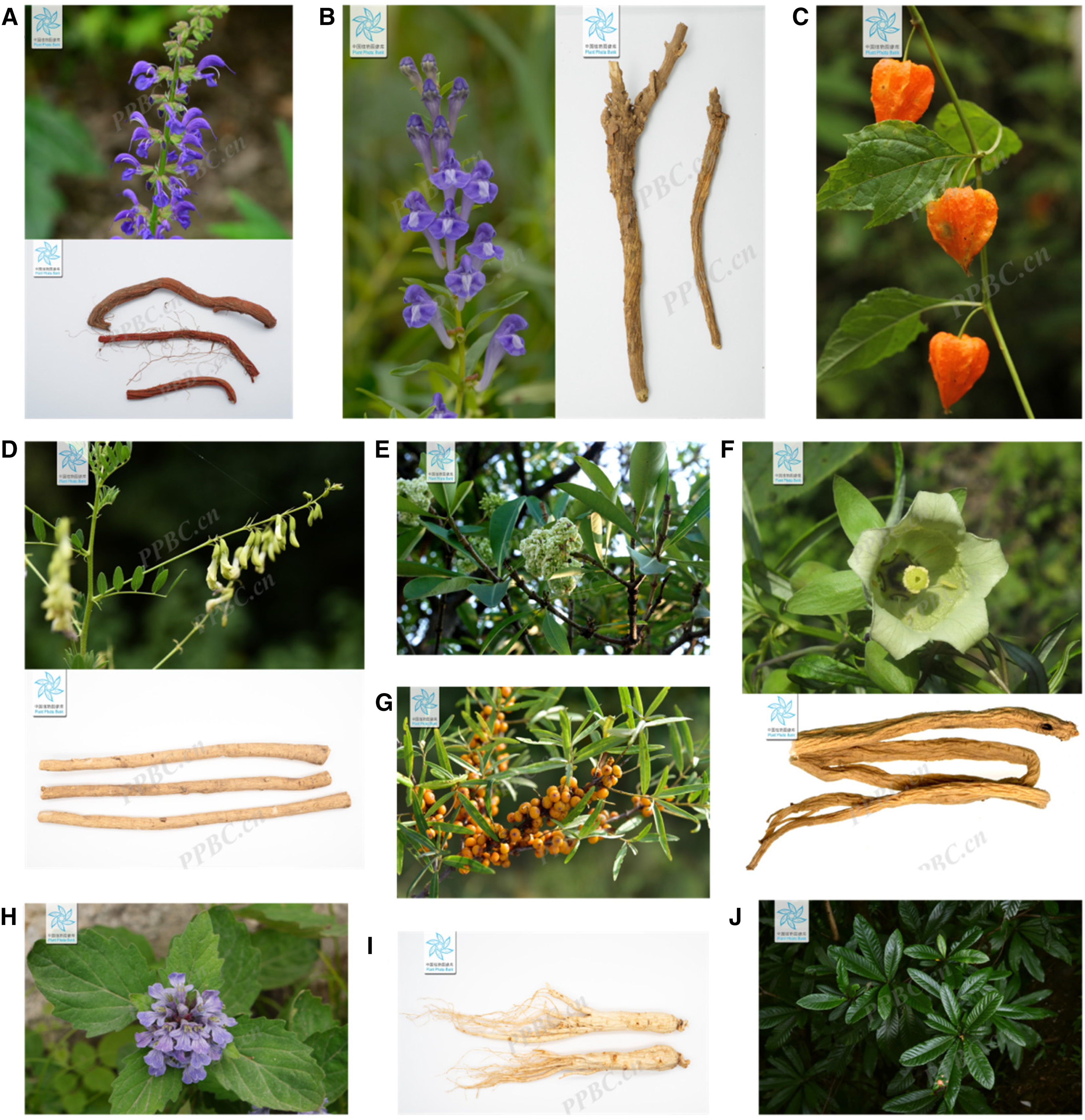
Chinese herbs are commonly used to treat COPD (all the images are collected from the Flora of China, http://ppbc.iplant.cn) (A). Salvia miltiorrhiza Bge. (B). Scutellaria baicalensis Georgi (C). Physalis alkekengi L. (D). Astragalus membranaceus (Fisch.) Bge. (E). Alstonia scholaris (L.) R. Br. (F). Codonopsis pilosula (Franch.) Nannf. (G). Hippophae rhamnoides L. (H). Ajuga decumbens Thunb. (I). Panax ginseng C. A. Mey. (J). Eriobotrya japonica (Thunb.) Lindl.
Main Components for Treating COPD
Flavonoids
Flavonoids constitute a category of secondary metabolites that are extensively present in plants. 51 They are characterized by a 15-carbon skeleton featuring two aromatic benzene rings (A and B) linked by a heterocyclic pyran ring (C). This class encompasses multiple subclasses, such as flavonoids, flavonols, isoflavonoids, flavanones, flavanols, anthocyanins, and chalcones.52,53 Flavonoids are widely known for their powerful biological activities, which include anti-inflammatory, antioxidant, antibacterial, anticancer and other functions. 54
Scutellaria baicalensis contains flavonoid constituents, such as baicalein, baicalin, wogonin, and wogonoside, which have significant anti-inflammatory and immunomodulatory properties. 55 These bioactive compounds are pivotal in the therapeutic of respiratory tract infections, pneumonia, and related ailments. They act directly on various immune cells, including lymphocytes, macrophages, monocytes, and neutrophils, by suppressing the release of inflammatory cytokines, such as IL-1β, IL-6, and TNF-α. Additionally, they reduce the production of other inflammatory mediators, such as NO, prostaglandins, leukotrienes, and ROS. 56 In addition, baicalein ameliorates LPS-induced acute lung injury in mice primarily by attenuating macrophage and neutrophil infiltration within lung tissue. 57 Zhang et al found that baicalein effectively mitigates airway inflammatory infiltration, reduces PAI-1 expression, and inhibits TNF-α and IL-1β release in CS-induced COPD rats. 28 These effects are attributed partly to the modulation of the HDAC2/NF-κB/PAI-1 signaling pathway. Zeng et al found that baicalin exhibits potent anti-inflammatory effects in CS-induced COPD rats and CSE-induced cellular models by suppressing the NF-κB pathway. This anti-inflammatory efficacy shows dose-dependent enhancement. 58
Flavonoids found in sea buckthorn mainly include isorhamnetin, quercetin, and kaempferol,59,60 which are principal bioactive components known for their diverse pharmacological activities such as anti-inflammatory, antioxidant, immune function-enhancing, and anti-tumor activities. 61 Recent pharmacological studies indicate that sea buckthorn paste confers protection against LPS-induced acute lung injury in mice by attenuating oxidative stress. 62 Isorhamnetin suppresses LPS-induced inflammatory responses in BV2 microglia through NF-κB inhibition, TLR4 pathway blockade, and reduction of ROS production. 63 Xu et al found that isorhamnetin alleviates airway inflammation and improves systemic symptoms and lung function in a COPD mouse model by modulating the Nrf2/Keap1 pathway. 34 Yang et al found that quercetin potentially inhibits oxidative stress and inflammation by regulating NF-κB activation and EGFR phosphorylation, thereby reducing CS-induced mucin synthesis in rat lung tissue. 64 Quercetin exhibits potential in COPD treatment by upregulating Nrf2 expression by activating the AMPK pathway in vitro. 65
Triterpenoids
Triterpenoids constitute a crucial category of chemical compounds in CHM and are widely distributed in the plant kingdom. Their basic parent nucleus consists of 30 carbon atoms; according to the isoprene rule, their structure can be regarded as an aggregation of six isoprene units. 66 Triterpenoid components are classified according to the number of carbon rings, and most of the compounds in this class are tetracyclic triterpenoids or pentacyclic triterpenoids. 67 In plants, triterpenoids may exist either in their free form or conjugated with sugars to form glycosides or esters. They have multifaceted biochemical activities, including immunomodulatory, antibacterial, and antitumor effects. 68
The main active component in Astragalus membranaceus is Astragalus saponin, known for its multifaceted roles including anti-tumor, anti-aging, anti-virus, and immunomodulation. 69 Wu et al reported that astragaloside IV effectively mitigates inflammation and oxidative stress, thereby attenuating PM2.5-induced lung injury through modulation of the TLR4/MyD88/NF-κB signaling pathway. 70 Another study demonstrated that astragaloside IV reduces levels of inflammatory cytokines (IL-6, TNF-α, IL-1β), improves oxidative stress, restores the level of GSH in lung tissues, reduces iron accumulation, and regulates the iron-mediated apoptosis pathway via the Nrf2/SLC7A11/GPX4 axis to protect against PM2.5-induced lung injury. 71 Chen et al reported that astragaloside IV inhibits NF-κB activation and decreases the levels of total glutathione and NO, thereby suppressing CS-induced airway inflammation. 72
Ginsenosides, classified as pentacyclic triterpenoids, are the predominant active constituents in ginseng. 73 Ginsenosides are known for their diverse physiological effects including immunomodulation, anti-inflammatory properties, anti-tumor activity, and anti-aging benefits. 74 A noteworthy finding is the protective effect of ginsenoside Rb1, followed by Rg3 and Rg1, in pneumonia and acute lung injury models. The molecular mechanisms are mainly related to targeting NF-κB, Nrf2, MAPK and PI3 K/Akt pathways to attenuate inflammation, oxidative stress and apoptosis. 75 Moreover, ginsenosides show promise in alleviating conditions such as COPD and asthma. Xu et al found that ginsenosides can increase the level of Treg cell expression while significantly decreasing the expression of Th17 cells, thereby exerting anti-inflammatory effects on COPD treatment. 76 Tang et al found that ginsenoside Rg1 can prevent hypoxia-induced vascular remodeling, suppress TNF-α and IL-1β expression, and inhibit endothelial–mesenchymal transition by regulating CCN1 to ameliorate hypoxia-induced pulmonary arterial hypertension. 77 Li et al discovered that ginsenoside Rb3 attenuates the upregulation of TROP2 induced by CSE in basal cells via the p38 MAPK and NF-κB pathways, thereby maintaining epithelial cell homeostasis in patients with COPD. 78
Pharmacological Mechanisms of Herbal Drugs for COPD Treatment
The pharmacological mechanisms of herbal medicine for COPD mainly involve multiple pathways, including TNF-α/NF-κB, TLR4, MAPK, PI3K-Akt, JAK-STAT, and TGF-β, which do not act individually but interact with one another. Inflammation-related cytokines and signaling pathways in COPD mainly influence inflammatory responses.
TNF-α/NF-κB Signaling Pathway
Several researchers have highlighted the critical role of the TNF-α/NF-κB signaling pathway in the pathogenesis of COPD.79,80 TNF-α is a key regulator of inflammation and is closely associated with chronic inflammation in COPD. This pathway regulated by TNF-α regulates the release of inflammatory cytokines as well as airway mucus secretion, which in turn affects COPD. 81 Therefore, targeting the TNF-α/NF-κB signaling pathway could be a novel therapeutic strategy for COPD.
TNFα is an important pro-inflammatory cytokine that is normally released by macrophages when the body is stimulated (eg, CS, air pollutants) and acts mainly by binding to its receptor TNFR1. 82 TNFR1 is widely expressed in all tissues of the human body and contains a death domain (DD); TNFα binding to TNFR1 triggers the recruitment and assembly of a series of molecules, forming different signaling complexes and activating multiple signaling pathways, including NF-κB, JNK, and p38 MAPK. 83 These pathways are integral to numerous biological processes including cell survival, differentiation, and inflammation.
NF-κB, which is ubiquitous in animal cells, serves as a central regulator of inflammatory responses and their dynamics. 84 In the resting state, NF-κB p50 and p65 form an inactive NF-κB-IκB heterodimer complex with the inhibitory protein IκB in the cytoplasm. 85 Upon activation by upstream signaling molecules, IκB undergoes phosphorylation, separation from NF-κB and subsequent degradation, leading to the activation of the NF-κB p65 subunit, which subsequently exposes nuclear localization sequences and facilitates translocation into the nucleus. Once in the nucleus, it binds to a specific DNA locus and initiates the transcriptional program of the target genes. This cascade promotes the activation of a range of inflammatory mediators, such as TNF-α, IL-1β, IL-6 and other key inflammatory factors, thereby enhancing systemic or local inflammatory responses.86,87
The traditional CHM component verproside exerts negative regulation on the TNFR1 signaling complex, which includes TRADD, TRAF2, RIP1, and TAK1, thereby inhibiting the earliest stage of NF-κB signal transduction. Verproside suppresses transcriptional activity of NF-κB and the phosphorylation of upstream effectors (eg, IKKβ, IκBα, and TAK1). It markedly reduces TNF-α-induced MUC5AC mRNA and protein expression levels induced by TNF-α, thereby effectively blocking the TNF-α/NF-κB signaling pathway and showing therapeutic promise for inflammatory airway diseases. 88 Ginsenoside R1 demonstrates significant reductions in IL-13 and TNF-α levels while inhibiting the IKK-α/NF-κB pathway, thereby decreasing airway mucus secretion, alleviating allergic inflammation, and relieving asthma symptoms in asthma model mice. 89
TLR4 Signaling Pathway
TLR4, a crucial transmembrane protein within the Toll-like receptor family, plays key roles in inflammatory responses and immune homeostasis and acts as an upstream regulator of NF-κB.87,90 Predominantly expressed in immune cells, such as monocytes, polymorphonuclear cells, T-cells, B-cells, and natural killer cells, 91 TLR4 initiates a pivotal immune signaling pathway when binds to its ligand and triggers a cascade reaction that activates a series of signaling molecules to transmit signals. 92 Upon activation of TLR4, MyD88 binds to it to form a complex, which subsequently activates downstream signaling molecules involving IRAK, thereby activating NF-κB and MAPK pathways and promoting the expression of inflammatory cytokines. 93 Given its critical role in inflammation and immune modulation, the TLR4 signaling pathway has emerged as a significant target for therapeutic development. Houttuynia sodium inhibits the MyD88-dependent TLR4/NF-κB signaling pathway in rats with COPD, thereby reducing mRNA and protein levels of TLR4, MyD88 and NF-κB p65 in lung tissues and alleviating lung inflammation and protecting lung tissue integrity. 49
MAPK Signaling Pathway
The MAPK signaling pathway is triggered by external stimuli (eg, growth factors, cytokines, etc) and plays a pivotal role in intracellular signaling pathways. 94 This pathway comprises a series of protein kinases and includes three main cascades, namely, MAPKKK, MAPKK, and MAPK, with MAPK as the main executor of the final response signal. The MAPK pathway consists of three main subfamilies, ERK, JNK, and p38 MAPK (MAPK14), and the ERK/MAPK pathway is central to regulating cell growth, development, and division.95,96 In the ERK pathway, Ras acts as the upstream activator and Raf functions as MAP3 K; when the extracellular signaling molecules bind to their receptors, they activate the downstream Ras protein kinase, which in turn initiates the MAPK cascade. 97 Siraitiae fructus inhibits inflammatory cytokine expression and production and attenuates the conduction of the MAPK/NF-κB signaling pathway, thereby attenuating airway inflammation in COPD model. 20 Tanshinone IIA can significantly alleviate lung function decline, airspace enlargement, mucus production, bronchial collagen deposition, inflammation and oxidative stress in COPD model mice by inhibiting ERK1/2 and NF-κB activation. 43
PI3K-Akt Signaling Pathway
The PI3 K/Akt signaling pathway participates in a broad spectrum of physiological processes and regulates cell survival, metabolism, angiogenesis, and recruitment of inflammatory factors. This pathway holds pivotal importance in the pathogenesis of numerous diseases, particularly cancers. 98 The activation of the PI3 K/Akt signaling pathway is initiated by various factors, including external stimuli such as growth factors, insulin, or tumor factors. These stimuli initially activate receptors, which then initiate a cascade of reactions that ultimately lead to PI3 K activation. 99 Upon activation of PI3 K, the phosphorylation of PIP2 generates PIP3, which recruits downstream serine/threonine kinases such as Akt. The activated Akt phosphorylates a number of substrates, with mTOR as a prominent downstream effector. 100 S. baicalensis attenuates inflammatory cytokine infiltration in the lungs of COPD rat, reduces the levels of TGF-β and MMPs and inhibits the PI3 K/Akt/NF-κB signaling pathway, thereby improving airway remodeling. 14 Zhisou powder exhibits anti-inflammatory effects on COPD model rats by inhibiting the PI3 K/Akt/HIF-1α/VEGFA signaling pathway associated with arachidonic acid metabolism. 101
JAK-STAT Signaling Pathway
The JAK-STAT pathway is triggered by diverse extracellular cytokines (eg interferon, IL, etc) and mainly used to regulate and transmit extracellular signals to the intracellular space, which causes changes in DNA transcription. 102 JAK-STAT signaling regulates a wide range of cellular functions, including physiological processes such as hematopoiesis, differentiation, metabolism and immune regulation. 103 The JAK-STAT signaling pathway consists of JAKs and STATs. Extracellular cytokines binding to their corresponding receptors activate JAKs on the receptors, which phosphorylate STATs. After phosphorylation of STATs, STAT proteins form dimers or multimers and enter the nucleus via nuclear transport proteins to regulate the transcription of target genes. 104 Diammonium glycyrrhizinate can reduce the expression of p-STAT6/STAT6, IL-13, and MUC5AC proteins in a rat model of COPD and inhibit the IL-13/STAT6 signaling pathway, thereby attenuating the hypersecretion of tracheal mucus and improving tracheal obstruction. 42
TGF-β Signaling Pathway
The TGF-β signaling pathway governs a wide array of biological processes and encompasses cell proliferation, differentiation, apoptosis, immune regulation and inflammatory responses. 105 The activation of the classical TGF-β pathway predominantly involves Smad family proteins. Upon binding to its Type II receptor, TGF-β recruits the Type I receptor to form a heterodimeric complex, which initiates phosphorylation events. 106 The Type I receptor phosphorylates and activates intracellular Smad proteins (R-Smads) which then form heteromeric complexes with co-mediator Smad (Smad4). These complexes translocate into the nucleus, where they regulate gene transcription. 107 Cordyceps sinensis can inhibit the production of inflammatory cytokines such as TNF-α, IL-8 and TGF-β1 in the lungs of COPD model rats. Additionally, it reduces the expression levels of p-Smad2, p-Smad3, TGF-β1 and their receptors while increasing the expression of Smad7, thereby inhibiting airway remodeling. 27
Discussion and Outlook
In this study, we reviewed the potential of herbal medicines in the treatment of COPD by reviewing and collating relevant literature in the last 10 years. COPD is a chronic inflammatory disease, and its main causative agent is smoking 108 ; as such, animal models are usually established by CS/CSE (or in combination with LPS) in pharmacodynamic studies. 109 Currently, the treatment of COPD is mainly focused on symptom control and acute exacerbation prevention, and drugs that can effectively relieve symptoms and reduce drug resistance and side effects are attracting widespread attention. TCM has been used for the treatment of COPD, and its therapeutic approach is characterized by holistic regulation and evidence-based treatment. In this paper, we have summarized Chinese herbs that can treat COPD (Table 1). These herbs can be broadly classified into two categories according to the different roles they play in the treatment or at different stages of the disease. One category focuses on expelling evils, including Scutellariae radix, Salviae miltiorrhizae radix et rhizoma, Ajugae herba, Taraxaci herba, Eriobotryae folium, Physalis calyx seu fructus, Siraitiae fructus, and Alstonia scholaris folium, which have the functions of clearing away heat, inducing diaphoresis, reducing phlegm, and anti-inflammation. The other category focuses on benefiting qi and nourishing yin and can replenish the deficiency of qi in the spleen and lungs; examples of such herbs are Ginseng radix et rhizoma, Astragali radix, Codonopsis radix, Stemonae radix, Hippophae fructus, and Cordyceps. The active ingredients of these herbs mainly include flavonoids, triterpenoids, diterpenoids, alkaloids, and volatile oils (Figure 2); of which, flavonoids and triterpenoids are the main material basis for the treatment of COPD.

Chemical structures of the active components for treating COPD.
According to modern pharmacological studies, the mechanism of action of these herbs and their main active ingredients is mainly the inhibition of inflammatory factors; examples of the main signaling pathways are schematically drawn in Figure 3. Most of the herbs, such as, Scutellariae radix, Ginseng radix et rhizoma, and Codonopsis radix, can inhibit the TNF-α/NF-κB signaling pathway and reduce the production and release of inflammatory factors, such as IL-1β, IL-6, IL-8, TNF-α, and NF-κB, thereby reducing the inflammation in the lungs of the rats in the COPD model and protecting the lung tissues. Some herbs can also act on other pathways. For example, Cordyceps inhibit the TGF-β signaling pathway; Hippophae fructus inhibits the PI3K-AKT signaling pathway; Siraitiae fructus inhibits the MAPK signaling pathway; and Astragali radix inhibits the TLR4 signaling pathway. The relevant studies in Table 2 indicate that different classes of active ingredients can inhibit TNF-α/NF-κB; in addition, flavonoids can inhibit PI3K-AKT and TLR4 signaling pathways; triterpenoids can inhibit TGF-β and JAK-STAT signaling pathways; diterpenoids can act on MAPK signaling pathways; alkaloids can inhibit TGF -β and TLR4 signaling pathways; and the volatile oil sodium fisetin can act on TNF-α/NF-κB and TLR4 signaling pathways. These modern pharmacological mechanism studies have proved that Chinese herbs can effectively improve the symptoms and delay the progression of COPD, providing a strong rationale for recognizing Chinese herbs as a new choice for the treatment of COPD.

The main molecular biological mechanisms of CHM on COPD. (↑
However, this study has some shortcomings. The mechanism of action of Chinese herbs and their active ingredients in the treatment of COPD include anti-oxidation and immunomodulation in addition to anti-inflammatory mechanisms, 110 but these were not studied due to limited time. As such, these functions need to be further explored in future studies. Overall, the application of herbal medicine for COPD is a good strategy with good clinical efficacy and safety. However, herbal therapy also has some limitations, and the current studies on COPD with Chinese herbs are not comprehensive; moreover, the active components of some herbs exerting anti-COPD effects have not been clarified yet. Table 1 shows that extracts of herbs, such as Ajugae herba as well as Siraitiae fructus, have therapeutic effects on COPD, but the specific active ingredients that play a role have not been identified. This phenomenon increases the difficulty of researching related pharmacological mechanisms and, to some extent, restricts the wide application of CHM. Although some studies have shown that CHM have good efficacy and safety in treating COPD, 111 most of them lack sufficient pharmacological and clinical trial verification. 112 This is one of the key factors that limit the development of herbal medicines. Further research on their potential pharmacological properties and safety should be conducted to better assess their potential for clinical application. At present, multilevel, multidisciplinary and multifield cross-collaboration provides new strategies and methods for exploring the efficacy and safety evaluation of CHM.113-115 Through the application of modern technologies such as genomics, transcriptomics, proteomics, metabolomics, molecular docking, and big data analysis, the depth and breadth of component analysis and mechanism of action studies of CHM are continually improving. 116 In conclusion, this study reveals the potential mechanism of CHM in the treatment of COPD and provides new ideas and methods for the development of novel drugs for this disease.
At present, multilevel, multidisciplinary and multifield cross-collaboration provides new strategies and methods for exploring the efficacy and safety evaluation of CHM.113-115 Through the application of modern technologies such as genomics, transcriptomics, proteomics, metabolomics, molecular docking, and big data analysis, the depth and breadth of component analysis and mechanism of action studies of CHM are continually improving. 116 For example, genomics can identify potential drug targets based on information about target genes; proteomics can determine the direct effects of drugs on proteins and reveal their biological effects. In addition, molecular docking technology can simulate the interaction between drugs and biological targets, providing an important structural basis for drug design. The combined application of these technologies not only accelerates the process of new drug development, but also identifies potential safety issues at an early stage. This model of multidisciplinary collaboration will promote more systematic and comprehensive drug development in the future.
Abbreviations
Akt, protein kinase B, PKB; AMPK, adenosine 5’-monophosphate (AMP)-activated protein kinase; CCN1, cysteinerich61, Cyr61; CHM, Chinese herbal medicines; CNKI, China national knowledge infrastructure; COPD, chronic obstructive pulmonary disease; CS, cigarette smoke; CSE, cigarette smoke extract; DNA, deoxyribonucleic acid; EGFR, epidermal growth factor receptor; ERK, extracellular signal-regulated kinase; GPX4, glutathione peroxidase 4; GSH, L-glutathione; HDAC2, histone deacetylase 2; HIF-1α, hypoxia inducible factor 1 alpha; IKK, inhibitor of nuclear factor-kappa B kinase; interleukin, IL; IL-1β, interleukin 1β; IL-6, interleukin 6; IL-8, interleukin 8; IL-13, interleukin 13; IRAK, interleukin 1 receptor associated kinase; IκB, inhibitor of nuclear factor kappa B; JAK, janus kinase; JNK, c-Jun N-terminal kinase; Keap1, Kelch-like epichlorohydrin-associated protein 1; LPS, lipopolysaccharide; MAPK, mitogen-activated protein kinase; MAPKK, mitogen-activated protein kinase kinase; MAPKKK, mitogen-activated protein kinase kinase kinase; MMPs, matrix metalloproteinases; mTOR, mammalian target of rapamycin; MUC5AC, recombinant mucin 5 subtype AC; MyD88, myeloid differentiation factor 88; NF-κB, nuclear factor kappa B; NO, nitric oxide; Nrf2, nuclear factor erythroid 2-related factor 2; p38 MAPK, p38 mitogen-activated protein kinase; p50, protein 50; p65, protein 65; PAI-1, plasminogen activator inhibitor 1; PI3 K, phosphoinositide 3-Kinase; PIP2, phosphatidylinositol-4,5-bisphosphate; PIP3, phosphatidylinositol-34,5-triphosphate; PM2.5, particulate matter; p-Smad2, phosphorylated mothers against decapentaplegic homolog 2; p-Smad3, phosphorylated mothers against decapentaplegic homolog 3; p-STAT6, phosphorylated signal transducer and activator of transcription 6; RIP1, receptor-interacting protein kinase 1; ROS, reactive oxygen species; SLC7A11, solute carrier family 7 member 11; Smad, mothers against decapentaplegic homolog; STAT, signal transducer and activator of transcription; STAT6, signal transducer and activator of transcription 6; TAK1, TGF-β-activated kinase 1; TCM, traditional Chinese medicine; TGF-β, transforming growth factor beta; Th17, T helper cell 17; TLR4, toll-like receptor 4; TNFR1, tumor necrosis factor receptor 1; TNF-α, tumor necrosis factor alpha; TRADD, TNFR1-associated death domain protein; TRAF2, TNFR-associated factor 2; Treg, regulatory T cells; TROP2, trophoblast antigen 2; VEGFA, vascular endothelial growth factor A.
Footnotes
Acknowledgements
We are grateful for financial support from the Sichuan Administration of Traditional Chinese Medicine (2024MS046) and the “Xinglin Scholars” Research Promotion Program of Chengdu University of Traditional Chinese Medicine (QJJJ2023017).
Compliance with Ethical Standards
This article does not contain any studies with human participants or animals performed by any of the authors.
CRediT Authorship Contribution Statement
Qian Shi and Xianrong Lai: conceived and designed the paper. Xinan Liu and Meniga Shengbu: collected the documentations. Qian Shi: wrote the paper. Suolang Jiaqiu: proposed amendments. Xianrong Lai: modified the paper.
Data Availability
No data was used for the research described in the article.
Data Availability Statement
Data sharing is not applicable to this article as no datasets were generated or analyzed during the current study.
Declaration of Conflicting Interests
The authors declared no potential conflicts of interest with respect to the research, authorship, and/or publication of this article.
Funding
The authors disclosed receipt of the following financial support for the research, authorship, and/or publication of this article: This work was supported by the The “Xinglin Scholars” Research Promotion Program of Chengdu University of Traditional Chinese Medicine, Sichuan Administration of Traditional Chinese Medicine, (grant number QJJJ2023017, 2024MS046).
