



Abstract
Objective
Coronavirus disease 2019 (COVID-19), a novel viral disease originating from severe acute respiratory syndrome coronavirus 2 (SARS-CoV-2), is a life-threatening disease with dramatic morbidity and mortality globally. In this review, we aim to discuss the current evidence showing that the Imam Kazem drug, a natural compound that comprises Foeniculum vulgare, Terminalia chebula, Pistacia lentiscus, and red sugar, may be a therapeutic candidate in the fight against COVID-19 infection.
Methods
This literature review was performed by searching related words, including “Imam Kazem drug,” “Foeniculum vulgare,” “Terminalia chebula,” “Pistacia lentiscus,” “Red sugar,” “Natural compounds,” “Traditional medicine,” “Coronaviruses,” “Antiviral,” “COVID-19,” “SARS-CoV-2,” in different databases like Google Scholar, Scopus, PubMed, Web of Science, and Scientific Information Databases until 2023.
Results
The current documents underscore that the Imam Kazem drug may be safe and effective against COVID-19. This natural compound, thanks to its constituents, may affect the pathogenic occurrence related to the disease, such as attenuating oxidative stress and inflammation-associated occurrences by different mechanisms, like scavenging free radicals, enhancing the function of antioxidant enzymes, and attenuating cytokine storm. Moreover, the Imam Kazem drug can exert its antiviral ability mainly by suppressing viral replication and blocking glycosaminoglycan binding sites. However, more preclinical and clinical evidence is required to support these results.
Conclusion
Imam Kazem drug may have a therapeutic capacity for patients with COVID-19 infection.
Introduction
The coronavirus disease 2019 (COVID-19), as a pandemic condition arising from severe acute respiratory syndrome coronavirus 2 (SARS-CoV-2), is one of the main reasons for a dramatic increase in hospitalizations due to pneumonia and the involvement of multiple organs in recent years.1–3 SARS-CoV-2 is considered a positive-sense and enveloped single-stranded RNA β—coronavirus (CoV), like Middle East respiratory syndrome and severe acute respiratory syndrome CoVs, and has a high morbidity and mortality rate. 4 It can also be spread through several ways, for instance, droplets, aerosols, feces, and mouth mucus membranes. 5 This viral condition can account for serious dangers such as acute respiratory distress syndrome and septic shock. 5 Risk factors related to COVID-19 severity include sex (male), age (subjects over 60 years old), diabetes, cardiovascular disorders, cancer, kidney failure, and smoking history. 6 Infection caused by SARS-CoV-2 can involve all groups regardless of gender and age. However, the poorest prognosis has been shown for old subjects and pregnant women with serious and chronic disorders comprising cardiopulmonary diseases, diabetes, and hypertension. 7 COVID-19 cases can suffer from common symptoms like muscle weakness, fever, chest pain, and dry cough. However, a number of abnormal symptoms may be experienced by patients, possibly heralding SARS-CoV-2 infection. 8 Presently, the most common therapies for the disease include antiviral drugs, neutralizing antibodies, immunomodulators, and cell therapy. 9 However, there is still a long way to discover the best treatments with high effectiveness and minimum side effects. 10 Recently, natural compound-based therapies have been in the spotlight of scientific communities for treating different life-threatening diseases, like cardiovascular diseases, 11 malignancies, 12 autoimmune disorders, 13 and metabolic impairments 14 due to low or no complications for using them in medicine in comparison with synthetic products. 15 One of the potential abilities of natural compounds is associated with their capacity to combat viral agents like CoVs.16,17 In this context, traditional medicine has introduced a natural product named Imam Kazem drug. This natural product was first introduced by a person whose name is Imam Kazem. The constituents of this natural product comprise Foeniculum vulgare, Terminalia chebula, Pistacia lentiscus, and red sugar.18,19 Recently, the safety and effectiveness of a herbal compound consisting of sugarcane, Pistacia lentiscus L., and Terminalia chebula have been inspected in these patients, and promising results have been reported. 20 According to recent reports, the components of the Imam Kazem drug have an attenuating role in oxidative and inflammatory conditions, which are among the key pathogenic players in COVID-19 infection.21–24 Alongside this point, it is stated that the Imam Kazem drug is effective on some viral agents, like influenza. 20 Hence, in this review, we will discuss and summarize evidence showing that the Imam Kazem drug may target SARS-CoV-2 indirectly (mainly by antioxidative and anti-inflammatory mechanisms) and directly by exerting antiviral processes.
COVID-19 and Pathogenic Mechanisms
CoVs are able to infect the hepatic, gastrointestinal, respiratory, and central nervous system in humans. 25 CoVs have 4 genera, including Alpha CoV, Beta CoV, Gamma CoV, and Delta CoV. HCoV-HKU1, HCoV-NL63, HCoV-OC43, and HCoV-229 E are the most common human CoVs. 26 Similar to other CoVs, the particles of SARS-CoV-2 have a spherical shape and also possess specific types of proteins named spikes as projections from their surface. 4 By binding the spike protein of SARS-CoV-2 to the host receptor angiotensin-converting enzyme 2 (ACE2), COVID-19 infection is occurred. ACE2 is remarkably expressed in vascular endothelial cells, cardiac myocytes, and pulmonary epithelial cells and accounts for symptoms of pulmonary. 27 Also, ACE2 can convert angiotensin II to angiotensin1–7 giving rise to the vasodilation. 28 Following spike protein binding to ACE-2, the cleaving of this protein at the dibasic arginine region leads to the generation of S1 and S2 subunits through host protease transmembrane protease, serine 2. The S1 subunit comprises a receptor-binding domain binding to the host receptor ACE2 (Figure 1), whereas the S2 subunit stimulates membrane fusion and viral endocytosis processes in the cell. Subsequent to the virus's entrance into the cell, the viral RNA can be released into the cytoplasm, a place for its replication, and be processed into virion-containing particles developing infectious conditions by their releasing after fusing with the cell membrane.29,30 One of the main features of COVID-19 infection is an aggressive inflammatory reaction by secreting a great amount of pro-inflammatory cytokines, known as cytokine storm. The analyses of plasma levels of cytokines in 41 COVID-19 patients in China manifested the increased levels of inflammatory mediators, such as interleukin (IL)-1β, IL-8, IL-9, granulocyte-macrophage colony-stimulating factor (GM-CSF), granulocyte-colony stimulating factor, and tumor necrosis factor-α (TNF-α), compared with the control group.31,32 Besides, the increased blood levels of other inflammatory landmarks, comprising ferritin, D-dimers, and C-reactive protein (CRP), and an elevated neutrophil-to-lymphocyte ratio have been linked with the severity and mortality of the disease. 33 Uncontrolled inflammatory events can result in multiorgan damage, particularly a failure in renal, hepatic, and cardiac systems (Figure 2). 34 In the time of the innate immune system reaction to a viral agent, pattern recognition receptors (PRRs) identify various formations typical for the invading virus. The binding of PRRs to these formations induces the inflammatory reaction that leads to the activation of multiple signaling pathways and transcription factors stimulating the expression of genes involved in the host immune response to the virus, for example, the genes of pro-inflammatory cytokines. 31 On the other hand, non-neutralizing antibodies formed by B cells can increase COVID-19 infection by antibody-dependent enhancement (ADE), resulting in the aggravation of organ damage (Figure 2). In COVID-19 patients, B-cell reactions arise simultaneously with T follicular helper cell reactions. In these patients, B cell reactions occur first to the nucleocapsid (N) protein and then to the spike protein.34–36 After the infection of SARS-CoV-2, CD4 + T lymphocytes are quickly induced for transformation to pathogenic T helper (Th) 1 cell and production of GM-CSF and other cytokines. This cytokine environment is engaged in the stimulation of inflammatory monocytes (CD14 + CD16+) by expressing IL-6. Having considered that remarked infiltrations of inflammatory agents have been addressed in the lungs of patients with severe COVID-19, these inflammatory monocytes and pathogenic T cells can arrive at the pulmonary circulation and have a detrimental effect on lung function.37,38 Another pathogenic process of SARS-CoV-2 is related to its capacity to stimulate cellular oxidative stress. 39 Preclinical studies have indicated that CoVs downregulate antioxidant genes, for instance, nuclear factor erythroid 2-related factor 2 (Nrf2), and upregulate oxidative stress genes, such as myeloperoxidase, participating in both inflammation and viral replication. 40 Also, CoVs can stimulate redox-related proinflammatory pathways, like NADPH oxidase (NOX), mitochondrial reactive oxygen species (ROS), and nuclear factor kappa-light-chain-enhancer of activated B cells (nuclear factor kappa B [NF-κB]) pathways. These viruses may further activate cell damage by triggering redox-sensitive apoptosis and pyroptosis. 40 Moreover, it is postulated that SARS-CoV-2 may be associated with the hemolysis of red blood cells (RBCs). Given the potential impact of this virus on triggering oxidative stress and the protective role of Glucose-6-Phosphate Dehydrogenase (G6PD) for RBCs against oxidative stress by forming nicotinamide adenine dinucleotide phosphate; thus, G6PD deficiency can be associated with the hemolytic crisis in viral infections. 41 Taken as a whole, redox-associated pathways inducing viral replication, apoptosis, and inflammation can take part in tissue and cell damage following COVID-19 infection.

Schematic representation of the mechanism of severe acute respiratory syndrome coronavirus 2 (SARS-CoV-2) entry to human host cells and subsequently its effects on different organs of the body.
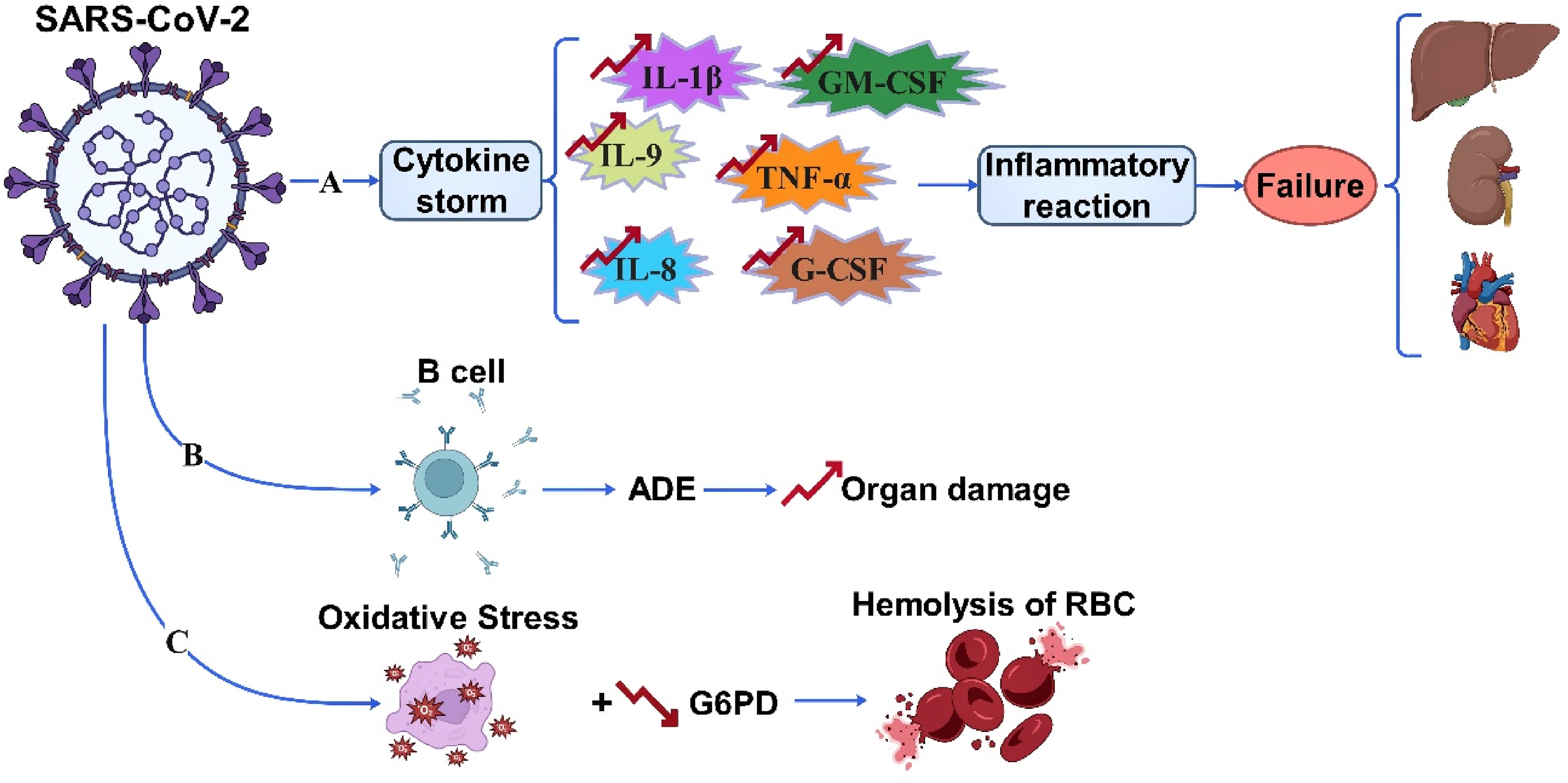
Schematic representation of the immune system and oxidative stress changes during COVID-19 infection, and their negative impacts on the human body. Abbreviations: ADE, antibody-dependent enhancement; G6PD, glucose-6-phosphate dehydrogenase; COVID-19, coronavirus disease 2019.
Fennel and Biological Capacities
Foeniculum vulgare (fennel) is an herbaceous and cross-pollinating herb pertaining to the Apiaceae family that has long been used for medical purposes since the ancient era. 42 This plant is widespread around the world and comprises some trace elements and minerals, such as magnesium, zinc, copper, iron, calcium, phosphorus, potassium, and sodium. Furthermore, fennel is rich in vitamins K, E, C, and A, pyridoxine, niacin, thiamine, and riboflavin. Mounting evidence indicated that this herbal spice has many advantageous features, for instance, anti-oxidative, anti-inflammatory, antiviral, immunomodulatory, antifungal, and antibacterial properties, and its chronic consumption has no adverse effects.43,44 Some of these features may be effective in the fight against COVID-19.
Fennel and its Possible Effectiveness on COVID-19 by Anti-Oxidative and Anti-Inflammatory Mechanisms
Oxidative stress and inflammation enhance each other mutually.45,46 This point has been demonstrated by an investigation of monocytes from subjects with COVID-19. Continuous oxidative stress, as evidenced by elevated lipid peroxidation and mitochondrial superoxide, is associated with inflammasome induction, and both of them participate in disease severity. 46 Fennel can elevate the antioxidant defense system in light of different processes, such as decreasing lipid peroxidation, scavenging free radicals and hydrogen peroxide, and elevating the functions of antioxidant enzymes, for example, superoxide dismutase (SOD) and catalase (CAT).47,48 It has been revealed that subsequent to ACE2 binding to the virus, increased levels of superoxide species and cell damage, which can embrace lipid peroxidation, are expected. Consistent with this issue, COVID-19 cases have shown higher lipid peroxidation levels compared with normal subjects in several studies. 49 Hydrogen peroxide, as an oxidizing element, induces IL-6 secretion, which is overexpressed in COVID-19 subjects. 50 SOD and CAT have an important role in counteracting free radicals comprising RNS and ROS; however, their increased levels have been shown in COVID-19 patients, which can be a protective mechanism to neutralize oxidative stress. 49 This ancient plant can also attenuate inflammatory occurrences through several mechanisms, like decreasing the formation of inflammatory cytokines (IL-6 and TNF- α) and pro-inflammatory cytokines (IL-1β and IL-8) and suppressing arachidonic acid, a polyunsaturated fatty acid inducing inflammation.47,51,52 In SARS-CoV-2 infection, the elevated levels of these inflammatory mediators, as well as some chemokines, for example, macrophage inflammatory proteins 1α (MIP1α, CCL3), monocyte chemoattractant protein-1 (MCP-1), and IFN-induced protein 10 (IP10), have been determined. 53 Furthermore, fennel is able to diminish other pro-inflammatory mediators, including nitric oxide (NO) and matrix metalloproteinase 9 (MMP-9), thus suppressing inflammatory reactions efficiently. 51 NO is also a type of ROS that spreads to the lungs and the bronchi and exerts vasodilatory and bronchodilatory influences; however, it can also be an indicator of macrophage activation in reaction to viral conditions.54,55 MMPs, the main enzymes for degrading extracellular matrix, have a positive role in reparative processes of the lung and can be stimulated by ROS and inflammatory cytokine. Among MMPs, MMP-9 has been known as a primary marker of respiratory failure in patients with novel viral disease. 56 These results show that fennel, thanks to its anti-oxidative and anti-inflammatory mechanisms, may attenuate SARS-CoV-2 binding to host cells, possibly by waning ACE-2 binding to this viral agent.
Fennel and its Possible Effectiveness on COVID-19 by Regulating Blood Pressure Homeostasis
It is revealed that fennel has an inhibitory role in ACE action.57,58 ACE is an important blood pressure modulator in the renin-angiotensin system, resulting in hypertension. It is demonstrated that hypertension is a prognostic factor for mortality and severity of COVID-19 infection.28,59 Harnessing an ACE inhibitor like fennel may increase the expression of ACE2; however, this event may not cause more viral entrance into the cell due to limited accessibility of serine protease TMPRSS, as a necessary agent for the entrance of SARS-CoV-2.32,60 Regarding the exact role of ACE2 on COVID-19, there are conflicting results yet. On the one hand, ACE2 functions as a receptor on cell surfaces that mediates SARS-CoV-2 entrance to the host cells and is expressed in the lungs, kidneys, and heart. 61 On the other hand, elevated expression of ACE2 on the cell membrane can lead to elevated soluble ACE-2 in the blood, which in turn binds to the S protein of SARS-CoV-2 and finally blocks it.62,63 Therefore, fennel may have a regulating role in blood pressure hemostasis; however, there is a substantial need to illuminate the exact role of this natural compound in ACE2.
Fennel and its Antiviral Effects on Viral Pathogens: Attention to COVID-19
The antiviral potential of fennel for some viral agents has been reflected in some documents. According to a retrospective study, it was highlighted that the administration of an ACE inhibitor, such as fennel, decreases the death rate and endotracheal intubation in patients with viral pneumonia, a serious challenge of the new CoV like COVID-19. 64 Some scientists employed the essential oil of fennel and consequently indicated its toxic effects on parainfluenza type-3 (PI-3) and herpes simplex type-1 (HSV-1), showing its cytotoxicity by mediation of the cytopathogenic impact. 65 Appealingly, the increased circulation of PI-3 in the COVID-19-caused pandemic, when nonpharmaceutical interventions are decreased, has been reported. 66 Also, it has been revealed that the reactivation of HSV-1 is linked with clinical progression in COVID-19 cases. 67 The syncytia formation inhibition assay of another work has pointed out that the methanol extract of fennel fruit (100 μg/mL) is capable of suppressing human immunodeficiency virus 1 fusion. 68 In addition, it has been addressed the inhibitive activity of acetone extract and volatile oils of fennel against papaya ring spot virus. 69 Some documents have also declared that fennel may have a key role in relieving pain and boosting immunity in COVID-19 infection. 70 These data showed that fennel can have a potential capacity for fighting against viral agents.
Pistacia lentiscus and Biological Capacities
Pistacia. lentiscus L., called mastic or Arabic gum, is a famous plant from the Anacardiaceae family and has many medicinal and biological characteristics. This species is widely used in herbal therapy and is rich in therapeutically active compounds. 71 Pistacia lentiscus consists of 2 main compounds; dammaradienone (compound 1) and dammaradienol (compound 2). Many diseases and complications, like throat infections, asthma, eczema, kidney stones, diarrhea, and stomachache, have been ameliorated using fruits, nuts, resin, and leaves of Pistacia lentiscus. Moreover, anti-inflammatory, anti-oxidative, and antiviral properties are among the renowned biological features of Pistacia lentiscus.71,72
Pistacia lentiscus and its Possible Effectiveness on COVID-19 by Anti-Oxidative and Anti-Inflammatory Mechanisms
Some studies have implicated that Pistacia lentiscus is rich in some fatty acids, including oleic acid and linoleic acid, which have antioxidant functions by scavenging free radicals and reducing lipid peroxidation.73,74 Besides, polyphenols, including tannins and flavonoids, α-tocopherol, sterols, and monoterpenes, are natural molecules of Pistacia lentiscus with antioxidant activities.75–77 It has been expressed that the administration of Pistacia lentiscus oil (3 g/kg) in rates can significantly improve the action of antioxidant enzymes, encompassing SOD and CAT, in lung fibrosis conditions, which can be occurred following COVID-19 infection.78,79 An in vitro investigation manifested that using methanolic extract of Pistacia lentiscus bark at concentrations of 10–100 µg/mL increases the inhibition percent of DPPH (a stable free radical) from 32% to 85%. 80 Furthermore, Pistacia lentiscus can be used in various inflammatory disorders mainly by reducing the levels of pro-inflammatory cytokines, for example, IL-6 and TNF-α. 81 Regarding this matter, an in vivo study on mice has demonstrated the anti-inflammatory potential of mastic gum (1-50 μg/ml) by decreasing NF-κB luciferase function and suppressing the mRNA expression of IL-8 induced by double-stranded RNA (dsRNA) in healthy bronchial epithelial cells. 82 NF-κB is a transcription factor whose upregulation can reflect cytokine storm, which is prominently observed in COVID-19 subjects. 83 Also, dsRNA is formed during viral replication and has a stimulatory role in innate immune reactions, such as epithelial production of inflammatory mediators and interferons. 84 These results represent that Pistacia lentiscus may affect COVID-19 by influencing cytokine storm and viral replication, probably by attenuating oxidative and inflammatory agents.
Pistacia lentiscus and its Antiviral Effects on Viral Pathogens: Attention to COVID-19
The antiviral effects of Chios mastic gum (CMG), known as a resin of the mastic tree, on influenza A virus have been studied in vivo. In this study, the pretreatment with CMG dissolved in phosphate buffer saline (0.005 mg/kg) led to the reduction of the formation of infectious particles, proteins, and RNAs of the influenza A virus. Moreover, CMG could significantly reduce the mortality and morbidity rate of mice infected with the mentioned virus by suppressing viral replication at the early stage. 85 Another project highlighted the virucidal impacts of methanol extract of Pistacia lentiscus on HSV-2, likely by the disintegration of the virus or interaction with specific receptors of the envelope. 86 Intriguingly, an in silico study (2022) using a molecular modeling approach unveiled that the extract of Pistacia lentiscus bark have a high binding potential to the 3CL-protease (3CLpro) protein. 80 3CLpro is the key protease related to the SARS-CoV-2, which has an indispensable role in viral replication. 87 Recently, Samandar et al 88 designed another in silico study to scrutinize the influences of 1,2,3,4,6-pentagalloyl glucose (PG), one of the components of Pistacia lentiscus, on the main proteins of SARS-CoV-2, consisting of PLpro, 3CLpro, helicase, NSP15, RNA-dependent RNA polymerase (RdRp), and E protein, because of their striking roles in the pathogenic events of virus cycle. The outcomes of molecular docking showed binding affinities and interaction of PG with 3CLpro, E protein, RdRp, and helicase, suggesting the antiviral capacity of PG against COVID-19. 88 PLpro and 3CLpro construct a replication-transcription complex placed in an endoplasmic reticulum-originated membrane, providing a microenvironment for maintaining viral RNA. 89 Helicase (nsp13) is vital for viral replication in light of its capability to unwind double-strand RNA or DNA. 90 Also, nsp15 is a uridine-specific endoribonuclease preserved in CoVs and protects the viral genome from the host defense system. 91 Moreover, RdRp (nsp12) and E protein are key players in viral RNA synthesis and viral propagation in the host body, respectively.92,93 Thus, Pistacia lentiscus may affect viral replication of SARS-CoV-2; however, more scientific data are warranted to validate this result.
Terminalia chebula and Biological Capacities
Terminalia chebula (Chebulic myrobalan), a traditional plant belonging to the Combretaceae family, is found in southeast Asia.94,95 Terminalia chebula comprises hydrolyzable tannins, such as gallic acid, punicalagin, chebulic acid, chebulanin, neochebulinic, corilagin, ellagic acid, chebulinic acid, chebulegic acid, terchebulin, 34,6-tri-O-galloyl-D- glucose, casuarinin, 1,6, -di-O-galloyl-D-glucose, and 1,2,3,4,6- Penta-Ogalloyl-ß-D-glucose. 96 It is expressed that the fruit of Terminalia chebula has a high amount of phytochemical agents, for example, tannins, flavonoids, amino acids, resin, and sterols. 94 Also, there is evidence that Terminalia chebula has different therapeutic features, including antioxidative, anti-inflammatory, antimicrobial, antiallergic, hypocholesterolemic, hepatoprotective, and immunoregulatory effects.95,97 Plus, antiaging, antidiabetic, and anticarcinogenic effects are other useful activities of Terminalia chebula. 98
Terminalia chebula and its Possible Effectiveness on COVID-19 by Antioxidative and Anti-Inflammatory Mechanisms
The antioxidant and anti-inflammatory effects of Terminalia chebula are because of the existence of gallic acid.96,99 Tanaka et al 100 showed that Terminalia chebula extract can dramatically decrease mRNA expression of TNF- α, IL-1, and ROS formation. Other researchers have explored the beneficial impacts of an aqueous extract of Terminalia chebula fruit on the tert-butyl hydroperoxide (t-BHP)-conferred oxidative damage in cultured primary hepatocytes and the liver of rats. The authors observed the reduction of oxidative stress indices, including lipid peroxidation and glutathione disulfide level, following the pretreatment with this herbal strategy (500 and 1000 mg/kg orally) prior to t-BHP administration (0.1 mmol/kg intraperitoneally). 101 Decreased levels of glutathione disulfide, the oxidation form of GSH, via GSH reductase leads to the production of 2 molecules of GSH, which is depleted in COVID-19 cases. 102 Terminalia chebula in inflammatory conditions have disclosed its ability to attenuate mast cell infiltration and the levels of inflammatory-related factors, such as histamine, immunoglobulin E (IgE), macrophage-derived chemokine, regulated upon activation, normal T cell expressed and presumably secreted, thymic stromal lymphopoietin, and thymus and activation regulated chemokine. 103 Mast cells are one of the important secretors of inflammatory cytokines of this novel virus because of the frequency of ACE2 receptors. The induction of mast cells leads to the secretion of pro-inflammatory cytokines, for instance, histamine, platelet-activating factor, and chemokines (eg, IL-1β and IL-6). 104 In these inflammatory situations, Terminalia chebula could also display its inhibitive effects on NF-κB nuclear translocation and phosphorylated signal transducer and activator of transcription (STAT)1/3 and the transcription of MCP-1, IL-6, interferon-gamma (IFNγ), IL-8 and the expression of inducible nitric oxide synthase (iNOS), and 5-Lipoxygenase (5-LOX).103,105 It is worth mentioning that iNOS and 5-LOX have a vital role in ROS production (by Protein Kinase Cζ dependent mechanism) and inflammation (by affecting the biosynthesis of lipid mediators like leukotrienes), respectively.106,107 These findings address that Terminalia chebula may inhibit one of the pathogen reasons of COVID-19 infection, ie, inflammatory and oxidative factors, by triggering different cellular and molecular mechanisms.
Terminalia chebula and its Antiviral Effects on Viral Pathogens: Attention to COVID-19
Terminalia chebula extract can have an antiviral function against HSV-2 by suppressing viral penetration and attachment to the host cells. 108 Regarding this issue, an in vitro study reported the antiviral ability of ethanolic extract of Terminalia chebula Retz fruits and its components, chebulinic and chebulagic acids, against the HSV-2 virus. 108 This traditional herb is able to protect epithelial cells versus the influenza A virus and can have a supportive role in alleviating respiratory infections. 109 Another work investigated the virucidal effects of chebulinic acid on chikungunya and dengue viruses in vitro and its action mechanisms in silico. Chebulinic acid treatment (8 µM) conferred 2 log reduction in the titer of the dengue virus (4.0 log10FFU/mL) after infection; however, it was not found the suppressive role of chebulinic acid in chikungunya virus infection. The action mechanisms of chebulinic acid were assessed using envelope glycoproteins of these 2 viral agents. The results pointed out the binding of this herbal agent at different areas of the dengue virus envelope protein, such as the glycosaminoglycan (GAG) binding site. These sites are functional tools for host fusion; therefore, the blockage of these sites can justify the antiviral mechanisms. However, chebulinic acid could not bind to the GAG binding site of the chikungunya virus. 110 It is meritorious to say that the inhibitive activities of tannins obtained from Terminalia chebula on the hepatitis C virus (via modulating the host immune system) and Chebulagic acid on human enterovirus 71 (via suppressing viral replication) have also been verified).111,112 Upadhyay et al 113 evaluated almost 51 medicinal herbs and inferred that Terminalia chebula and Camellia sinensis have considerably suppressive influences on the activity of one of the proteases of SARS-CoV-2, 3CL proenzyme. It seems that Terminalia chebula may exert its functional role against viral pathogens by attenuating viral penetration and attachment to the human body cells.
Red Sugar and Biological Capacities
Brown or red sugar is a type of sugar derived from sugarcane, which has a brown or red color due to the existence of sugar syrup (molasses). 114 Molasses contains metal ions, vitamins, amino acids, glucose, sucrose, and so on. 115 Brown sugar, as a natural sweetener, is found in different areas and countries, such as Africa, South Asia, and South America, and is obtained by the mechanical or traditional process of sugarcane.116–118 Generally, all kinds of cane brown sugar are sweeteners without toxic effects. 119 It is worth mentioning that brown sugar has a considerable amount of phenolics and has beneficial bioactivities, for instance, antiangiogenesis, cytoprotective, and antioxidant functions.119,120 On the other hand, natural antioxidants can reveal multiple biological activities, for example, antiviral, antibacterial, anti-inflammatory, vasodilatory, antithrombotic, and antiallergic effects. 121
Red Sugar and its Possible Effectiveness on COVID-19 by AntiOxidative and Anti-Inflammatory Mechanisms
The antioxidative effects of brown sugar can be attributed to flavonoids, polyphenols, and phenolic acids, which are notably present in brown sugar. 122 In the investigation of Azlan and co-workers, the antioxidative properties of minimally refined brown sugar (MRBS) and brown sugar have been scrutinized using ferric-reducing antioxidant power (FRAP) and DPPH assays. Eventually, MRBS and brown sugar reflected higher radical scavenging capacity and FRAP value than refined sugar. 119 Brown sugar is also able to reduce the expression of inflammatory factors, namely Toll-like receptors-4 (TLR-4), which has a pivotal role in triggering pro-inflammatory signaling pathways, and IL-1β. Plus, this sweeter can elevate the expression of anti-inflammatory factors, like IL-10 and secretory immunoglobulin A (sIgA), an immune obstacle to counteract SARS-CoV-2 prior to its binding to epithelial cells.123,124 SARS-CoV-2 spike glycoprotein can elevate ACE2 expression, leading to virus entrance by binding to TLR4 and subsequently activating related signaling. TLR4 can be activated by viral pathogens and causes the release of proinflammatory cytokines through the canonical pathway or the formation of anti-inflammatory cytokines. 125 It is shown that increased levels of IL-10, as an anti-inflammatory cytokine, during COVID-19-conferred infection occur. It is questionable why this mediator is elevated in the severe stage of this disease and aligns with a poor prognosis. In response to this question, some theories have been raised. IL-10 may be unable to inhibit the hyperinflammatory status, or its anti-inflammatory function may not be general. 126 IL-10, under specific circumstances, may serve as a pro-inflammatory factor. 127 It looks like red sugar may act on the entrance of SARS-CoV-2 to the host cells, likely by regulating ACE2 expression.
Sugarcane and its Antiviral Effects on Viral Pathogens: Attention to COVID-19
A scientific project has been carried out to appraise the antiviral activity of sugarcane bagasse by Kimura et al 128 They manifested that sugarcane bagasse reaction with sulfuric acid and aqueous glycerolysis can form a potent antiviral agent (FR200) against encephalomyocarditis virus, which is classified as an RNA virus similar to COVID-19. Also, LO et al 129 studied the effectiveness of sugar cane extract (SCE) on the regulation of immunity against pseudorabies virus, a DNA virus, in an animal model. They observed a dramatic increase in lymphocyte proliferation, natural killer cytotoxicity, phagocytosis of monocytes, and production of IFNγ in the SCE group compared to the healthy group. In addition, decreased sign severity and brain lesion by SCE was addressed in this study. They finally concluded that SCE has an immunostimulating role in this virus and may be useful for preventing infections (Figure 3). These evidences manifest that sugarcane can affect RNA and DNA viruses.
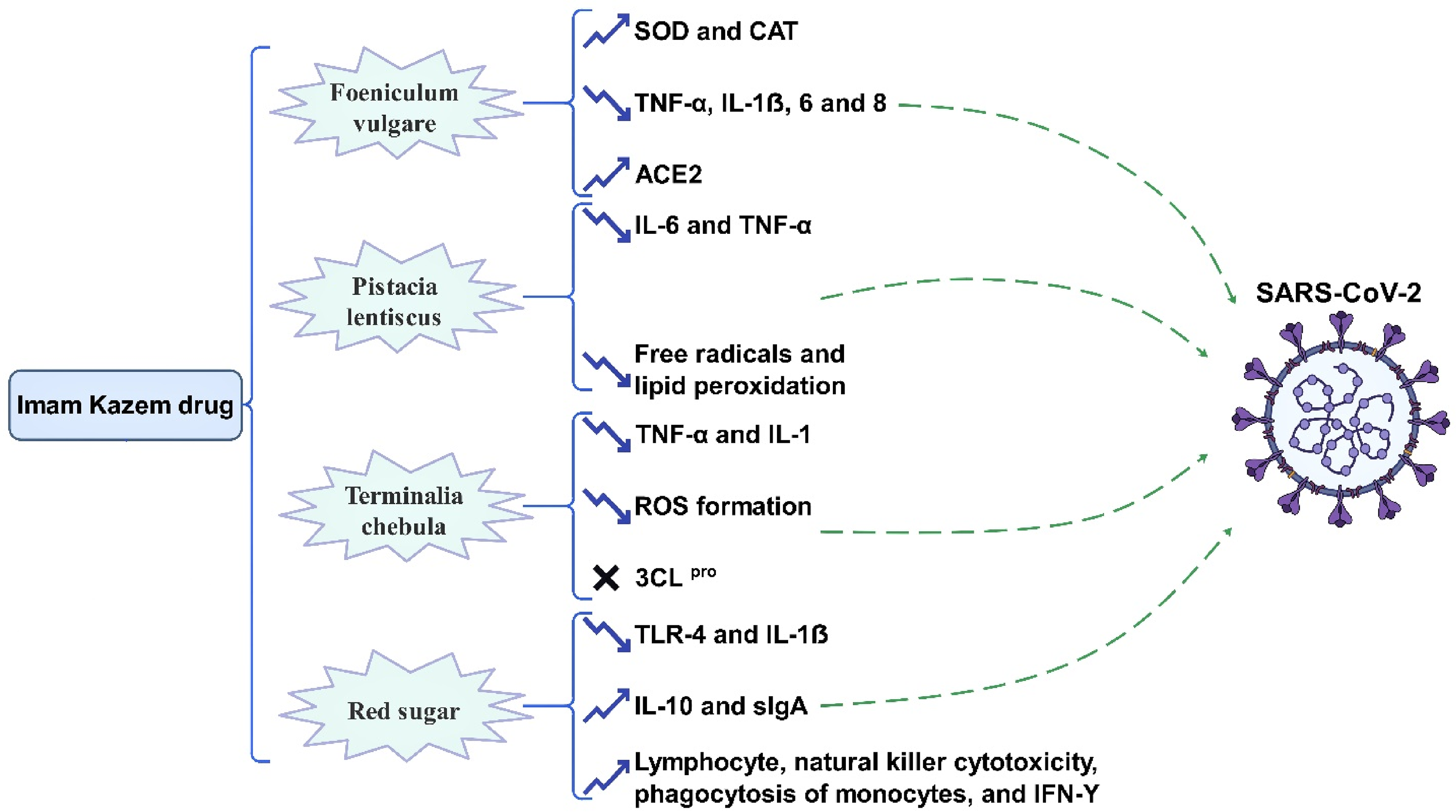
The possible ameliorating effects of Imam Kazem drug on SARS-CoV-2. Abbreviations: SOD, superoxide dismutase; CAT, catalase; ACE2, angiotensin converting enzyme 2; ROS, reactive oxygen species; 3CLpro, 3-chymotrypsin-like protease; sIgA, secretory immunoglobulin A; TLR-4, toll-like receptors; TNF-α, tumor necrosis factor alpha; IFN-γ, interferon gamma; IL-1, interleukin-1; IL-1β, interleukin-1β; IL-6, interleukin-6; IL-8, interleukin-8; IL-10, interleukin-10; SARS-CoV-2, severe acute respiratory syndrome coronavirus 2.
Herbal Products with the Ability to Fight COVID-19: Evidence from Clinical Trials
At present, the effectiveness of some herbal products on this pandemic problem has been examined (Table 1). A number of these herbal products have been utilized in individual form, combined form, or nano-based formulation. Andrographis paniculate, a labdane diterpenoid obtained from Andrographis paniculata, is an example of a popular plant whose application against this novel viral condition has been assessed. Recently, Siripongboonsitti et al 144 designed a double-blind, randomized, placebo-controlled study to evaluate the effects of Andrographis paniculate extract administration (180 mg per day) along with favipiravir, an antiviral drug suppressing the RNA polymerase enzyme, 147 in 73 COVID-19 cases at mild to moderate stages. The immunological results of this research team indicated that IL-1β levels are dramatically reduced in the mentioned group between days 0 and 5. Furthermore, the levels of IL-6 and IL-10 were considerably diminished between days 5 and 14 in the intervention group. Also, there were no reports addressing serious detrimental occurrences following this herbal treatment. 144 Heppy and co-workers inspected the impact of another herbal candidate, Psidium guajava extract (1000 mg/8 h for 7 days), on the inflammatory status of asymptomatic and mild COVID-19 patients. 136 Psidium guajava is one of the popular medicinal plants belonging to the Myrtaceae family and is mainly found in the American tropics.148,149 The findings of this single-blinded, randomized clinical trial implicated that the herbal extract notably lowers neutrophil levels and increases lymphocyte levels and recovery rate in the herbal drug group compared with the control group. 136 In another scientific effort, the effectiveness of a herbal capsule containing 200 mg cardamom extract, 200 mg rosemary extract, and 10 mg pepper extract on subjects with COVID-19 was scrutinized. 145 In this multicentric clinical trial, there were 2 allotted groups: (1) a group receiving routine treatment plus 500 mg herbal capsule orally (intervention group), (2) and a group receiving routine care and Prednisolone orally (control group). A large number of cases related to the intervention group reflected recovery from some symptoms, for example, breathlessness, sore throat, fever, and cough, in comparison with the control group till day 5. The levels of IL-10, a COVID-19 severity landmark, were found to be increased in the control group compared with the intervention group, revealing that the disease did not exacerbate following herbal capsule consumption. The normalization of lactate dehydrogenase (LDH) and CRP levels was also another ability of the herbal drug against the mentioned viral challenge. 145 According to recent evidence, LDH and CRP levels have direct relationships with lung injuries in COVID-19 at the early stage 150 ; Thus, this herbal product can attenuate disease severity. Interestingly, some researchers used nanocarriers to improve the pharmacological function of herbal agents, such as curcumin.130,151 Curcumin is a polyphenol extracted from the plant “Curcuma longa” that has the potential capability to treat or prevent diverse ailments and malignancies; however, some pharmacological obstacles, like low stability, water solubility, and bioavailability, limit its broad application in the clinic.152,153 Using biodegradable nanoparticles for loading curcumin (nanocurcumin) is one of the suggested ways to solve these problems and benefit from its curative effects, especially regarding COVID-19. 130 The performed clinical works demonstrated that nanocurcumin prescription in patients with this novel viral agent suppresses inflammatory factors (eg, IL-6, IL-1β, IL-8, and IL-17), shortens hospitalization duration, improves oxygen saturation, and reduces erythrocyte sedimentation rate (ESR) and CRP levels.130–133 In a double-blinded randomized clinical trial accomplished on COVID-19 patients at mild to moderate stages, the influences of a herbal supplement containing Sugarcane (1.5 g), Terminalia chebula (0.5 g), and Mastic (1 g) were explored. The treatment group (n = 37) receiving the herbal supplement had lower CRP levels and disease symptoms (fever, cough, dyspnea, and myalgia) than the control group. The hospitalization duration for treatment and control groups were 4.12 days and 8.37 days, respectively. ICU admission and death rates only occurred in 3 (8.6%) patients of the control group. 20 These reports show the antiviral capacities of plant-based products against COVID-19.
Some Popular Plants with the Ability to Combat COVID-19.
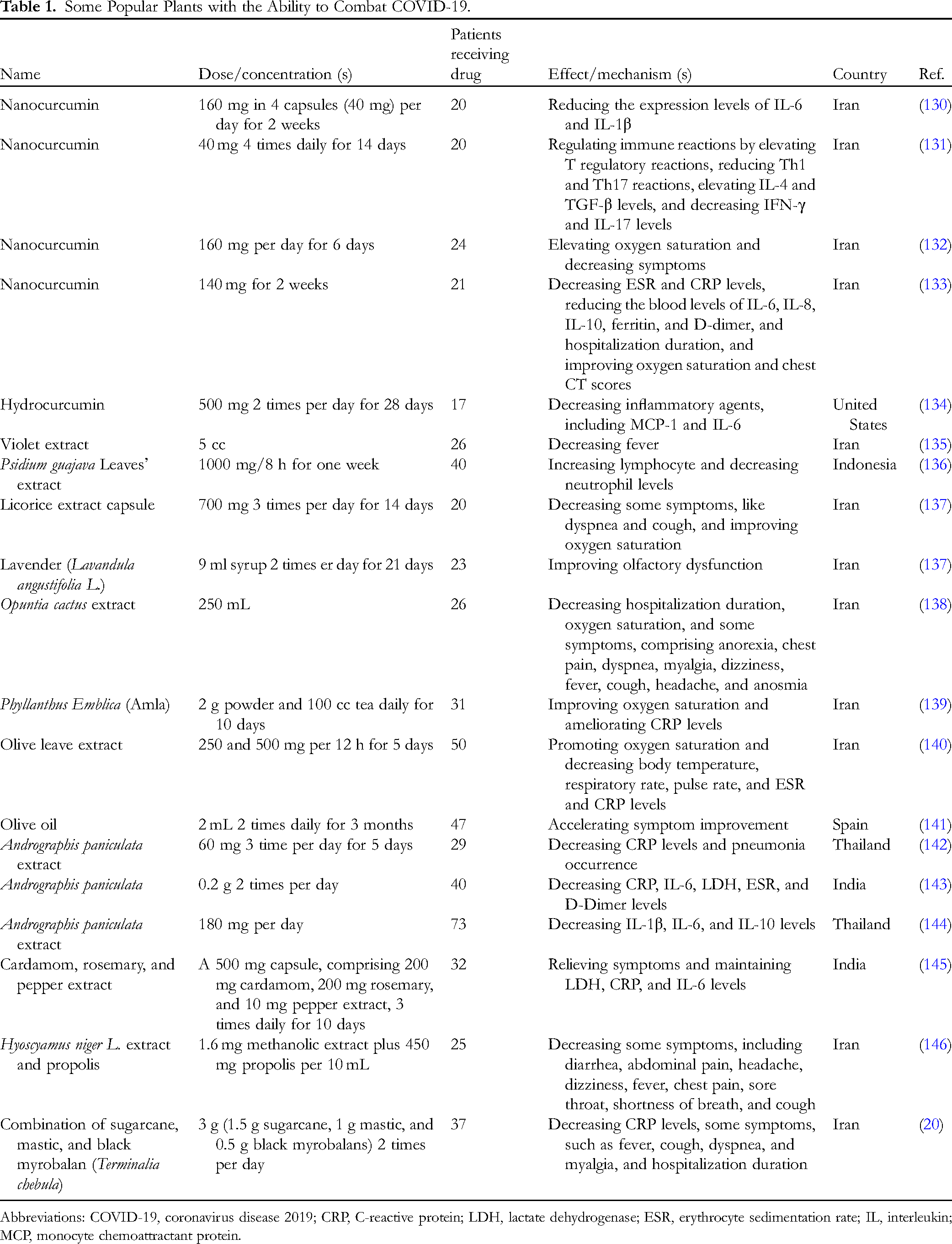
Abbreviations: COVID-19, coronavirus disease 2019; CRP, C-reactive protein; LDH, lactate dehydrogenase; ESR, erythrocyte sedimentation rate; IL, interleukin; MCP, monocyte chemoattractant protein.
Possible Challenges of Some Drugs and Vaccines for COVID-19
Some drugs have been utilized to ameliorate COVID-19 infection, such as lopinavir-ritonavir, ribavirin, hydroxychloroquine (HCQ), etc.154,155 However, it is stated that these drugs may be along with some side effects. In this respect, in a performed randomized clinical trial on COVID-19 patients by Cao et al, 156 it was shown that using the combination of lopinavir and ritonavir can be accompanied by distress, hepatotoxicity, nausea, and diarrhea. Moreover, in this study, half of the patients indicated side effects related to this combination. Also, the utilization of lopinavir/ritonavir can lead to elevated serum levels of triglycerides, cholesterol, hyperglycemia, as well as serum levels of amylase. 157 Although ribavirin can inhibit viral replication by affecting RdRp, it may give rise to adverse effects, for instance, blood diseases and hepatotoxicity. 158 Some other drugs, like HCQ, exert their therapeutic effects through ACE2 receptor suppression in order to prevent viral entrance by suppressing its interaction with spike protein. However, it is notable that ACE2 receptor blockers or suppressors can have harmful influences on cardiovascular diseases, hypertension, rheumatoid arthritis, diabetes mellitus, renal failure, and liver cirrhosis due to receptor localization. 30 Perrotta et al. declared that the deficiency of ACE2 is associated with changes in repairing tissue, vascular permeability, oxidative stress, and the accumulation of fluid in extra-alveolar spaces. 159 Sodhi et al 160 indicated that decreased ACE2 expression is linked with increased lung injury, elevated neutrophil infiltration, and weight loss in mice models. ACE2 has a central role in preventing neurogenic hypertension by transforming Ang-II into Ang-(1-7), reducing oxidative stress, and enhancing autonomic activity and cardiac baroreflex. In addition, present documents manifested an increase in the protein levels of ACE2 during lactation and pregnancy (Figure 4). Therefore, its decreased level can have a negative impact on these activities.161–163 Concerning the application of vaccines on the strains of CoVs, some challenges have been raised. Ideally, the main purpose of an efficient vaccine is to prevent vaccinated subjects from affliction to desired pathogens by inducing the protective mechanisms of cellular and humoral immunity for a long time. However, SARS-CoV-2 does not lead to continuous protective immunity. In this condition, the levels of antibodies decreased during a few years or months. On the other hand, short-term protective immunity may result in reinfection by the virus. 164 Pfizer (BioNTech), Moderna, and AstraZeneca are among the most renowned vaccines used for COVID-19 infection. 165 Based on reports, the rate of efficiency for Pfizer and Moderna vaccines has been more than 95% and 94.1%, respectively, for attenuating COVID-19 or preventing symptomatic infections in subjects who have never been inflicted. Moreover, AstraZeneca has reflected a 76% efficiency rate in decreasing related symptoms 15 days following the consumption of the 2 doses and 85% efficacy in COVID-19 prevention in cases more than 65 years old. However, some variants of SARS-CoV-2 may affect the efficiency of these vaccines. For example, it is stated that the delta variant lowers the effectiveness in individuals vaccinated with AstraZeneca or Pfizer. 166 Furthermore, allergenicity, cross-reactive antibodies, cytotoxicity, hemotoxicity, hepatitis, lung immunopathology, and stimulation of cytokine storm are some side effects of vaccines (Figure 4). 167 According to pieces of evidence, elevated immune pathology may happen through the stimulation of antibodies or the mediatory role of eosinophil exerted by the vaccine. For instance, when antibodies enhance viral uptake by Fc receptors, infection is potentiated. Plus, antibodies can trigger motifs within Fc receptors, which depend on immunoreceptor tyrosine, causing an elevated release of pro-inflammatory cytokines via dendritic cells and macrophages. 168

Probable adverse effects of some drugs and vaccines on the human body.
Limitations
In this narrative review, the quality of appraised studies was not fully monitored, and some associated documents may have been ignored. Also, this study does not illustrate all possible therapeutic mechanisms of this natural compound against COVID-19. Moreover, there were not enough studies evaluating the effectiveness of the combined form of all components of the Imam Kazem drug on this viral disease.
Conclusion
COVID-19 is characterized as a challenging infectious disease with a high death rate worldwide. Despite multiple attempts by researchers to find an effective treatment against COVID-19, there has not been recommended an ideal strategy for treating cases with this infection yet. These days, traditional medicine has provided a new hope for treating different diseases threatening human health. Regarding this matter, it seems that Imam Kazem drug, as a natural compound consisting of Foeniculum vulgare, Terminalia chebula, Pistacia lentiscus, and brown sugar, may have an antiviral potential against COVID-19 infection. The present documents emphasize that the constituents of this natural compound can have a suppressive role in oxidative stress and inflammation-related processes, which have a pathogenic role in this disease, by different mechanisms, such as reducing lipid peroxidation, scavenging free radicals, enhancing the function of antioxidant enzymes (ie, SOD and CAT), and attenuating cytokine storm and different inflammatory agents (eg, TLR-4, MMPs, and NF-κB). Furthermore, its antiviral potential has been exhibited mainly by its ability to inhibit viral replication and block GAG binding sites. There is also some clinical evidence indicating the safety and effectiveness of Imam Kazem drug against COVID-19. However, more experimental and clinical investigations are needed to approve these results.
Footnotes
Data Avalability Statement
The data used and analyzed during the current study are available from the corresponding author on reasonable request. Figures were created with the web-based software BioRender.com.
Declaration of Conflicting Interests
The authors declared no potential conflicts of interest with respect to the research, authorship, and/or publication of this article.
Ethics Statements
Ethical issues (including plagiarism, data fabrication, double publication) have been completely observed by the authors.
Funding
The authors received no financial support for the research, authorship, and/or publication of this article.
