



Abstract
Mexico is considered a mega-diverse country due to its terrestrial, marine, and biological richness. Throughout history, Mexican medicinal plants have been used to elaborate decoctions, pastes, and powders to treat neoplastic, gastrointestinal, metabolic, neurodegenerative, skin, and infectious disorders. Cancer constitutes a group of diseases that result from the uncontrolled growth and proliferation of cells. Current treatment regimens against it encompass the administration of chemotherapy, radiotherapy, targeted therapy, and immunotherapy. Despite their possible efficacy, their use is often related to the possibility of relapse, the development of serious adverse events, toxic effects, and many drug-resistance mechanisms. As an alternative, Mexican medicinal plants have been extensively studied using their capacity to elicit strong anticancer activities and possess novel bioactive and safe compounds. This review concentrates on the knowledge gained in recent years (2011–2022) about the anticancer properties of extracts and isolated compounds from Mexican medicinal plants. Generalities, antioxidant activities, features of cancer cells, and drug-resistance mechanisms are reviewed in this work. In addition, the possible anticancer mechanisms of isolated compounds and the status of FDA-approved cancer drugs derived from plants are covered. Finally, our perspective on the future of traditional medicine and Mexican medicinal plants in cancer treatment is presented.
Introduction
In the past, people used Mexican medicinal plants as healing, religious, and magical resources to fulfill distinct purposes. 1 Nevertheless, they are now exploited to discover modern therapeutic agents and as a cost-effective alternative to treat, mitigate, or prevent numerous diseases.
Cancer comprises a group of diseases that result from the uncontrolled growth and accelerated proliferation of cells. Current treatment modalities against cancer encompass chemotherapy, radiotherapy, immune therapy, and targeted therapy regimens. However, their poor bioavailability, low solubility, and limited specificity manifest in severe, long-lasting, and latent adverse events that can compromise patients’ prognosis and well-being. 2
Plants have a long history in cancer treatment, although they have often been viewed with some skepticism due to the disease's characteristics. Many people with cancer currently want to undergo alternative therapies with products mainly of traditional use. 3 Added to the above, the research results on the activity against cancer of various plants confirm the importance of expanding knowledge in this area.
However, the interest in medicinal plant research as a possible source for obtaining active principles has a history; institutions such as the Cancer Research Institute have been developing research in this field since 1955. 3
Therefore, the importance of concentrating the knowledge of recent years on this subject becomes evident. In this review, the anticancer activities of isolated compounds and extracts prepared from Mexican medicinal plants are considered, as are their antioxidant effects, as an essential fact in regulating the redox system. SciFinder, PubMed, Google Scholar, and Wiley Online Library databases were used to update the knowledge about the anticancer properties of Mexican medicinal plants, considering papers published from 2011 to 2022.
Medicinal Plants
Generalities
Mexico is one of the countries in America with one of the most significant ancestral traditions and the richest in medicinal plants, where just over 3000 species used in natural remedies are registered. However, there is little research on the use and management of medicinal plants; therefore, there is little ethnobotanical information on this topic. 4 The data that can be gathered in the various parts of the nation would be relevant from an ethnobotanical perspective. 5
The use of medicinal plants is based on traditional knowledge created, transmitted, and reinvented by indigenous groups and Mexican peasants.6,7 These same authors assert that this knowledge adapts to the shifting conditions of the natural and social environments to meet the social need for health care in the broadest range of environmental and social circumstances.
Many novel compounds with anti-inflammatory, antiviral, and several other biological activities have been discovered due to scientific research on how plants are used in specific cultural contexts. To protect against insect and microbial attacks and adapt to harsh environments, plants develop a wide range of bioactive substances and secondary metabolites (temperature, humidity, light intensity, drought, etc). 8 Bioactive substances can have beneficial or adverse effects on people or animals. 9
The compounds responsible for the reported beneficial effects are named natural products or secondary metabolites all plants produce; they are not involved in vital processes but have the purpose of defending them from adverse conditions such as insects, parasites, herbivores, drought, and ultraviolet light. 10 For example, plants produce specialized morphological structures, secondary metabolites, and proteins with toxic, repellent, and/or antinutritional effects on the herbivores to counter the herbivore attack. 11 Among the best-known secondary metabolites are alkaloids, terpenes, and phenolic compounds. 10
Secondary metabolites are substances formed from primary metabolism that are only found in a particular taxonomic group of plants and have a restricted distribution in the plant kingdom. 12 It was once believed that secondary compounds were created with somewhat ambiguous purposes. However, it has since been discovered that many of them have significant yields and serve many purposes in plants. 13
Further research has revealed that organisms have evolved to produce these complex and often toxic chemicals for defense, communication, and predation. 14
Many reports have demonstrated nature's continuing and valuable contributions as a source not only of potential chemotherapeutic agents but also of lead compounds that have provided the basis and inspiration for the semisynthesis or total synthesis of effective new drugs. 15 Additionally, promising substances have been identified for cancer therapy, including vincristine, paclitaxel, and etoposides, among others. 5
According to the WHO, a plant species is considered a medicinal plant if it has compounds that can either be used therapeutically or which can be used to synthesize new medications. 16 Furthermore, according to the efficacy principle, which states that what is observed to work is accepted and adopted while the rest is abandoned, popular knowledge of the biological activity of medicinal plants is based on efficacy. However, a challenge with popular phytotherapy is the difficulty in controlling the dosage and quality of the product, which can result in risks and harm to health. 16
Medicinal plants are a rich source of bioactive compounds with beneficial properties; furthermore, they have contributed much to modern Western medicine in different ways. For example, pure compounds obtained from them are used directly as medicines or as raw materials to produce new medicines.10,17
Traditional medicine in Mexico has always utilized medicinal plants. Depending on the situation or recipe at hand, several plant components are used. The leaves and flowers are used most frequently, with the stem or root rarely used. The consumption of medicinal plants might take the form of direct ingestion, infusions, or homeopathic presentations. 18 Most of the time, the active chemical principles underlying the positive effects ascribed to them are unknown. Numerous research teams have been working to pinpoint molecules having biological activity in recent years to advance the knowledge in this area. Many species used in traditional medicine have not all been thoroughly chemically characterized. 18 The whole or any part of a medicinal plant can be used either alone or in combination, and the most common way they are administered is through infusions. 10
However, over the last quarter century, environmental and cultural changes and the transition of economies from subsistence to market-based have seriously impacted all aspects of traditional medical systems affecting traditional medicine's resource base and environment. Overharvesting medicinal plants and animal species has resulted in resource degradation, the loss of biodiversity, and the loss of indigenous medical knowledge and traditions, leading to a breakdown of traditional medical systems. 19
On the other hand, ethnobotanical investigations have allowed the discovery of critical new compounds with biological activity, such as prostratin, which acts on the AIDS virus, and a series of compounds with anti-inflammatory properties. In addition, several authors have reported studies about endemic plants considered medicinal or aromatic; they show a promising future due to their compounds or biological activities. 20 These species are sold nationwide, but other compounds, like taxol, are already being semisynthesized to be used in cancer treatments worldwide. 20
Humans have used medicinal plants for centuries to treat their health problems. These resources contain helpful substances for therapeutic purposes or as precursors for new drug synthesis, 21 which contribute to recovering the population's health, considering that health is the state of complete physical, mental, spiritual, emotional, and social well-being. 17
Approximately 60% of drugs currently used for cancer treatment have been isolated from natural products. 22 In Mexico, more than 90% of the general population uses medicinal plants in common practice to empirically treat several diseases. 23 In urban areas, the populations refer to the local healers, called “chamanes,” for medicinal plant prescriptions to receive treatment. 24
Mexican Medicinal Plants
Mexico is one of America's countries with the most significant ancestral tradition and assiduous medicinal herb user, with just over 3000 registered species used in natural remedies. However, there are few investigations on medicinal plants’ use and management. Therefore, because of the little ethnobotanical information on this topic, more ethnobotanical studies are required.4,5
Biodiversity refers to the various forms of life that can develop in a country, such as plants, animals, and microorganisms, and the genetic material that forms between them. Mexico is a country of great biological wealth, diversity of ecosystems, and genetic variability due to its topography and climatic variations. 25 As a result, Mexico ranks 4th among the countries considered to have biological megadiversity and has about 10% of all known species, with many being endemic. 26
Mexico also has an ancient tradition of using medicinal plants. 27 It is considered, after China, the country with the most significant number of registered medicinal plants. Eighty percent of the Mexican population frequently uses herbalism; however, only 5% of approximately 4500 species have been pharmacologically analyzed. 25 Of the 250 species commercialized daily, more than 85% come from collections without sustainable management plans. 28
Different private and government institutions in Mexico have conducted significant efforts to gather information on medicinal plants. Nowadays, health institutions and the pharmaceutical industry have started paying attention to studies with scientific evidence that show that it is a valuable alternative to solve health problems. 20
The medicinal properties, knowledge, and applications of plants have been maintained for millennia among indigenous peoples. This knowledge is complemented by analyzing the active principles investigated in the plants. However, to maintain the benefits of indigenous and scientific knowledge, it is essential to carry out sustainable management of medicinal plants and the ecosystems where they develop. 29
According to compiled articles, several Mexican medicinal plants’ anticancer activities have been reported from 2011 to 2022. For instance, it has been demonstrated that methanol extracts from Justicia spicigera Schld can decrease the viability of hepatocellular carcinoma cells. The anticancer effect executed by these extracts was attributed to the presence of widely known flavonoids such as kaempferol. On the other hand, it has been unveiled in recent years that nonpolar solvents such as dichloromethane can be useful to prepare extracts from Aristolochia foetida Kunth capable of decreasing the cell viability of breast cancer cells by altering their mitochondrial membrane potential and inducing late apoptosis. Comparably, solvents such as hexane have been used to extract bioactive components from Distictis buccinatoria (DC.) A.H. Gentry that can reduce the number of viable colon and nasopharyngeal carcinoma cells. In addition, it is interesting to note that a combination of solvents such as dichloromethane with methanol has been used to prepare cytotoxic extracts from Linum scabrellum Planch., which can alter the cell cycle, disrupt tubulin polymerization, and execute apoptotic effects among a variety of cancer cells lines such as prostate, breast, colon, and cervical cell lines.
Given that carcinogenic events are related to redox reactions, the antioxidant capacity of extracts from Veronica americana Schwein. ex Benth. have been reported to perform a scavenging activity of DPPH and ABTS radicals and exert cytotoxic effects against prostate, larynx, and nasopharyngeal cancer cells. The anticancer activities of other Mexican plants that have been studied during 2011–2022 are summarized in Table 3.
Mechanism of Action of Drugs from Plants and Mechanism of Resistance of Cancer Cells
Natural products can possess simple or complex chemical structures derived from plants’ secondary metabolism. Natural products’ structural arrangement and steric properties are exploited in drug development and cancer treatment to prepare effective and selective antineoplastic medicines that interact with cancer cells and disrupt carcinogenic processes through multiple mechanisms.
Natural products can generally act as modulators of cancer cell signaling pathways, or as stimulators of adaptive and innate immune responses. 30 In addition, given their structural diversity, they can also disrupt critical molecular and cellular processes required for cancer cells’ survival, proliferation, progression, metabolism, and differentiation. 31
Cancer is classified into 3 stages: the first one is initiation, in which cellular DNA damage and mutation occur as a result of carcinogen exposure and the failure of DNA repair mechanisms; the second one is promotion, in which hyperproliferation, tissue remodeling, and inflammation occur as a result of the expansion of initiated cells; and the third one is progression, in which preneoplastic cells form tumors through clonal expansion, which is aided further by an increase in genomic instability and altered gene expression. 32
Current treatment modalities against cancer are prone to failure due to the capacity of cancer cells to develop drug-resistance mechanisms, so different carcinogenesis stages necessitate different chemotherapeutic approaches.
Drug-resistance mechanisms can be either disease-specific or evolutionarily conserved. However, they are regularly categorized into intrinsic and acquired. 33
Intrinsic drug-resistance mechanisms arise from genetic aberrations (eg, gene amplifications, deletions, or chromosomal rearrangements) among genes involved in cancer cells’ growth, proliferation, or death.34,35
Common mutated structures involved in this category are the human epidermal growth factor receptor 2 (HER2), microRNAs (eg, miRNA21), and drug transporters (eg, BCRP and MRP1).36,37 The existence of such mutations can limit the initial response to cancer therapy and promote cancer relapse. On the contrary, acquired drug-resistance mechanisms are developed during treatment through preexisting genetic aberrations, the secretion of growth factors, epigenetic modifications, and metabolic adaptations. 38 In Figure 1, the drug-resistance mechanisms of cancer cells are depicted.

Drug-resistance mechanisms of cancer cells. Adapted from “Antibiotic Resistance Mechanisms” by BioRender.com (2022). Retrieved from https://app.biorender.com/biorender-templates.
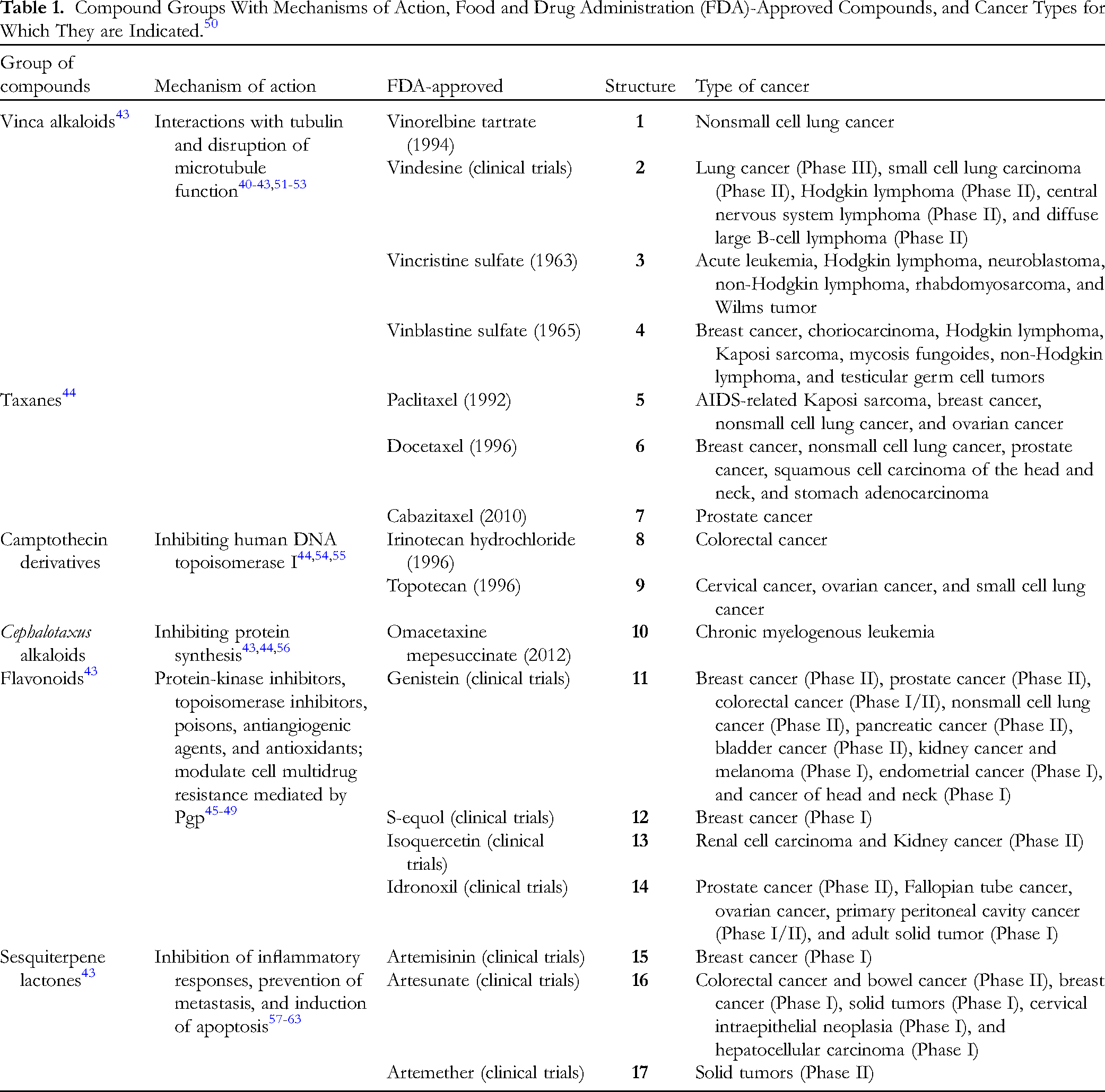
Nowadays, roughly half of the conventional chemotherapy agents are derived from plants, with roughly 25% being directly derived from plants and 25% being chemically modified versions of phytoproducts. 39 Table 1 describes the mechanisms of action against cancer of the major groups of compounds found in plants approved by the FDA. Table 2 shows alkaloids, flavonoids, and terpenes derived from Mexican medicinal plants with cytotoxic activity against various cancer cell lines. Compounds belonging to some groups are expected to act the same way as other group members. As a result, alkaloids are likely to act via binding with tubulin, affecting microtubule activity40-42 and reducing protein synthesis.43,44 Flavonoids act as protein-kinase inhibitors, topoisomerase inhibitors, poisons, antiangiogenic agents, and antioxidants; terpenes are predicted to suppress inflammatory reactions, limit metastasis, and induce apoptosis.45‐49
Compound Groups With Mechanisms of Action, Food and Drug Administration (FDA)-Approved Compounds, and Cancer Types for Which They are Indicated. 50
Compounds Isolated From Mexican Medicinal Plants With Anticancer Activity. 64
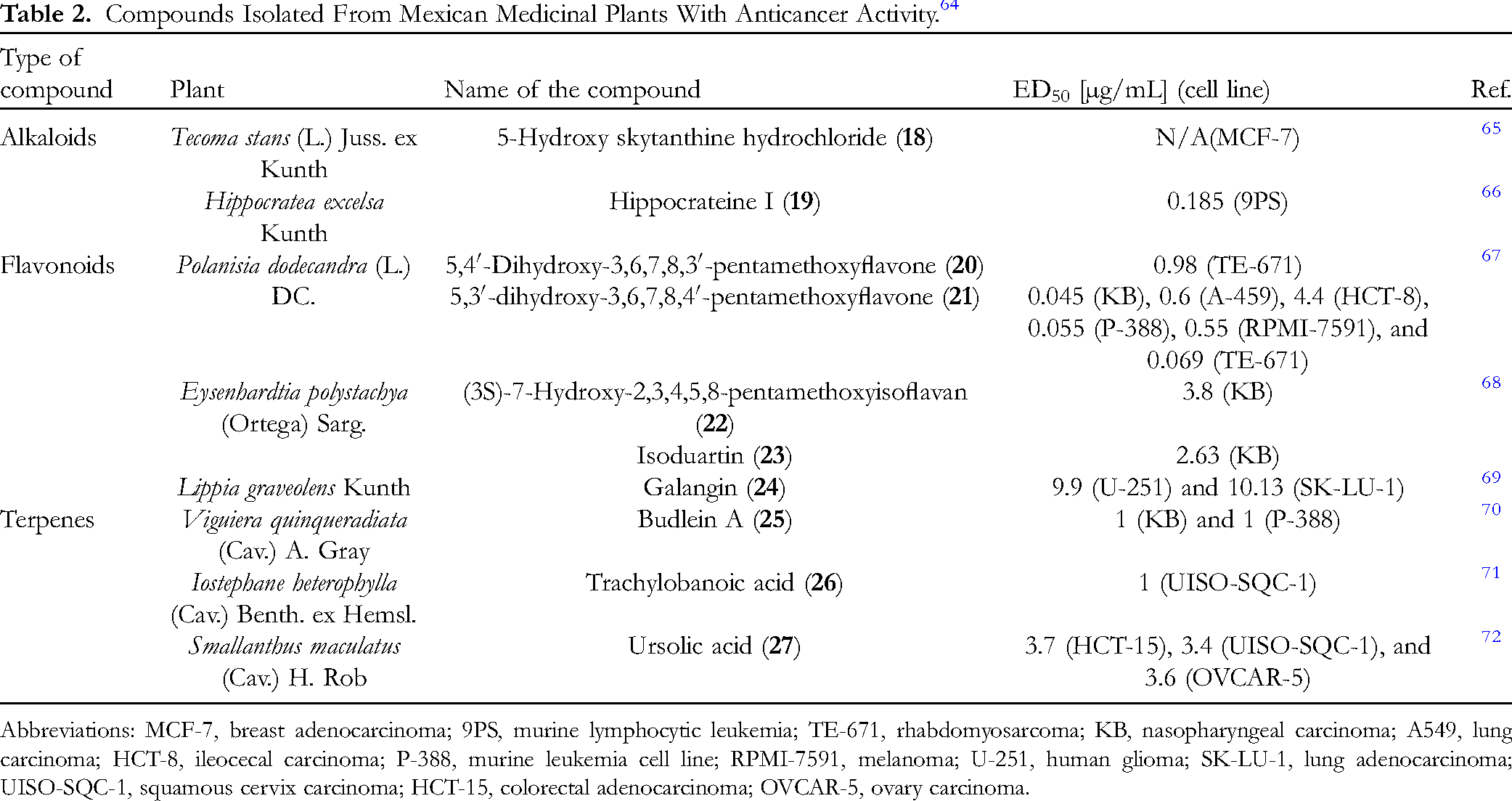
Abbreviations: MCF-7, breast adenocarcinoma; 9PS, murine lymphocytic leukemia; TE-671, rhabdomyosarcoma; KB, nasopharyngeal carcinoma; A549, lung carcinoma; HCT-8, ileocecal carcinoma; P-388, murine leukemia cell line; RPMI-7591, melanoma; U-251, human glioma; SK-LU-1, lung adenocarcinoma; UISO-SQC-1, squamous cervix carcinoma; HCT-15, colorectal adenocarcinoma; OVCAR-5, ovary carcinoma.
Discussion
During the last few decades, cancer has constituted a significant human health concern regarding its incidence and mortality. According to the World Health Organization (WHO), it has been estimated that cancer is the leading cause of death worldwide for men and women. 73 Even though, the incidence of cancer among both populations can vary according to factors associated with sociodemographic and geographic factors. 74 It has been recently reviewed that most cancer deaths are estimated to occur in Asian, European, and American countries. 75
In Mexico, cancer is the second leading cause of death, since it has been responsible for 12.8% (approximately) of deaths over the last decade. 76 Among men, various types of cancer have exhibited the highest mortality rates; some of these subtypes include lung, gastric, and prostate cancer. 77 In contrast, cervical and breast cancer are the most frequently diagnosed among women younger than 50 years old.76,78
Given the limitations of current treatment modalities against cancer, traditional medicine and its derivatives (eg, aromatherapy and acupuncture) are considered an alternative to disrupt key carcinogenic phenomena such as angiogenesis, metastasis, and proliferation. 79 However, various factors can dictate the effectiveness of this approach, for example, the stage of disease, type of cancer, disease duration, and bioactivity of medicinal plants. 80
It is estimated that more than 90% of Mexicans use preparations based on medicinal plants due to the ancestral knowledge developed through time. 81 As compiled in Table 3, Mexican medicinal plants can decrease the viability of breast, lung, colorectal, oropharyngeal, and hepatocellular cancer cell lines by fragmenting DNA, enhancing the generation of ROS, promoting apoptosis, upregulating or downregulating gene expression, interfering with cell cycle phases, and inducing morphological changes. Interestingly, we identified that in multiple reports, these events are predominantly promoted in vitro or in vivo with extracts prepared with mildly polar to polar solvents such as ethyl acetate and ethanol.
Anticancer Effects of Mexican Medicinal Plants.

Abbreviations: IC50, half maximal inhibitory concentration; CC50, half cytotoxic concentration; ED50, half effective dose; ABTS, (2,2′-azino-bis (3-ethylbenzothiazoline-6-sulfonic acid); DPPH, (2,2-diphenyl-1-picryl-hydrazyl-hydrate); ROS, reactive oxygen species.
Many plants show selective activity, such as Justicia spicigera, which is highly cytotoxic against the HEP-G2 (liver) and HeLa (cervix) cell lines with IC50 values of 2.92 and 17 µg/mL, respectively; however, for other cell lines, its IC50 is >23 µg/mL.82-84 Rhus trilobata has activity against the Caco-2 (colon) cell line (IC50 5 µg/mL). 85 On the other hand, Veronica americana methanol extract has an IC50 as low as 0.169 µg/mL against the HF-6 (colon) cell line. 86 In addition, some of the reported medicinal plants’ anticancer activity can be influenced by their origin and harvest month. For example, a study of the antitumor activity of Annona muricata evaluated the activity of its leaves collected from Acapulco and Tecpan in Guerrero state, Mexico in different months throughout a year. The results showed greater activity of the leaves collected in December from both locations; however, the sample collected in Acapulco showed an ED50 of 10.8 mg/kg, lower than that of doxorubicin (15.57 mg/kg), a drug used to treat different cancer types and used in this study as the positive control. 87 Unfortunately, comparisons between plants are difficult because results are given in different terms, such as IC50, ED50, CC50, and so on; Table 3 summarizes these values for different plants and cell lines.
In pathophysiological events, the exacerbated generation of ROS is commonly related to a series of diseases. As with other sources, Mexican medicinal plants also contain a variety of secondary metabolites that can act as antioxidants, which are necessary to prevent the generation of free radicals and retain or prevent the progression of cancer. As presented in Table 3, extracts from Veronica americana can exert antioxidant activity by reducing the formation of radicals such as ABTS and DPPH. This is important since it demonstrates that Mexican medicinal plants can display convenient biological activities for treating cancer.
As previously mentioned, bioactive secondary metabolites can be extracted with solvents from different polarities using distinct techniques. Polar solvents (eg, methanol, ethanol, or water) or their mixtures are convenient for studying the therapeutic properties of natural compounds as they can extract the highest number of bioactive compounds. For example, polar extracts are convenient for cancer treatment, as they contain numerous secondary metabolites that execute strong cytotoxic and antioxidant effects on cancer cells. 88 Some of these compounds are flavonoids, such as quercetin, kaempferol, and hesperidin, and polyphenols, such as coumaric acid and caffeic acid. 89
It is well-known that several factors, such as water availability, humidity, minerals supply, light intensity, and temperature, can influence medicinal plants’ secondary metabolites production. 8 Given Mexico's ecological and geographical richness, it is possible to find medicinal plants distributed in all states. Here, we review several studies where medicinal plants with anticancer properties have been reported mainly in humid areas such as Yucatán, Guerrero, Jalisco, and Veracruz (see Table 3). Also, following other reports, Mexican plants can treat infections caused by pathogenic microorganisms such as Mycobacterium tuberculosis, Staphylococcus aureus, and Escherichia coli. 90
As represented in Table 1, secondary metabolites’ structural diversity and superior bioactivity have enabled their translation into clinical trials to treat lung, breast, ovarian, and colorectal cancer in their distinct stages. Even though the evidence about the translation of isolated compounds from Mexican medicinal plants is limited, it has been recently reported that acacetin, a flavone isolated from Agastache mexicana subsp. Xolocotziana, is a promising analgesic and anti-inflammatory molecule tested in preclinical trials. 91 Comparably, aqueous extracts from Galphimia glauca have exhibited significant anxiolytic activities in clinical trials. 91
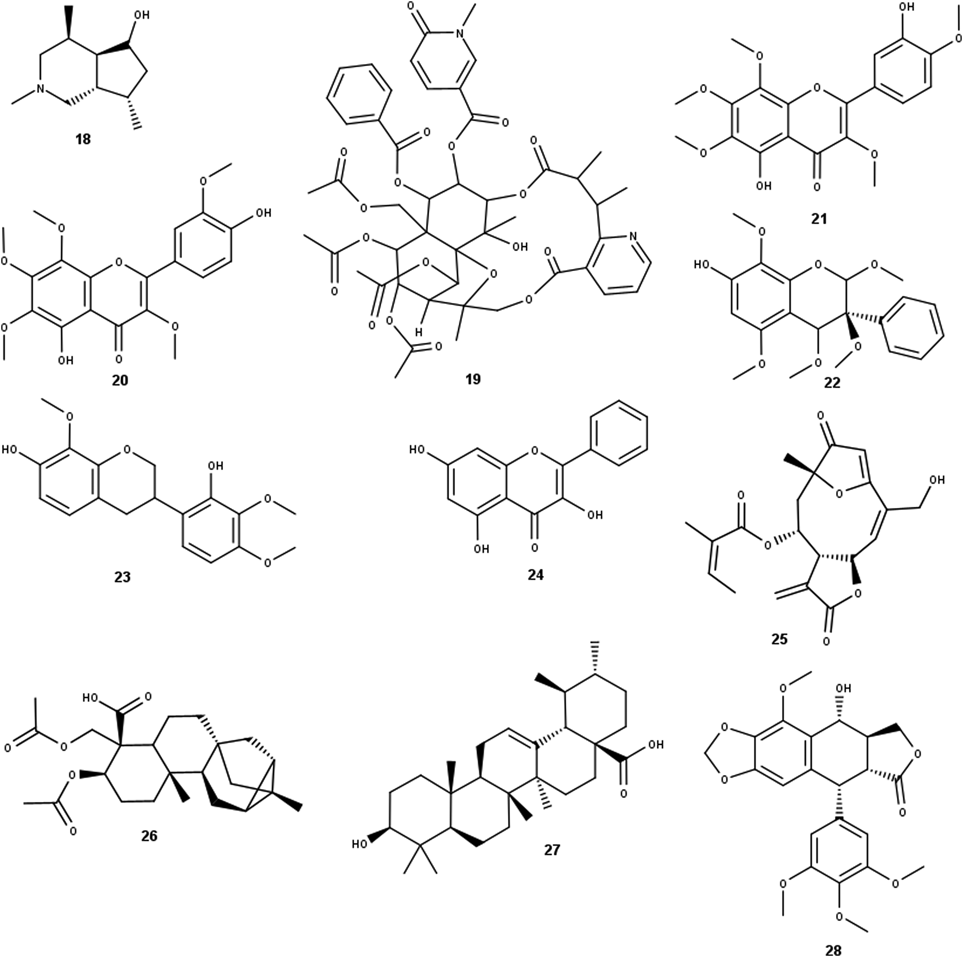
A few compounds isolated from Mexican plants were studied for their cytotoxic activity against cancer cell lines. Table 2 shows the ED50 of the different types of compounds found in Mexican medicinal plants against cancer cell lines; these values range between 0.04 and 10.13 µg/mL, where 5,3′-dihydroxy-3,6,7,8,4′-pentamethoxyflavone (
Conclusion
Mexican medicinal plants and their preparations are used to treat and prevent cancer. The anticancer activity of Mexican medicinal plants is attributed to their phytoconstituents and capacity to interfere with major carcinogenic processes. Against cancer in vitro or in vivo models, polar extracts from Mexican medicinal plants exert potent anticancer and antioxidant properties through the presence of recognized bioactive secondary metabolites. Several studies have focused on the activity of some of these plants against breast and prostate cancer, which can be attributed to their incidence in middle-income countries such as Mexico.
Several compounds isolated from medicinal plants are currently under clinical or preclinical trials. However, for Mexican medicinal plants, this evidence is limited. On the other hand, these medicinal plants exhibit significant antimicrobial properties against pathogenic bacteria, which is vital since cancer patients are prone to develop pneumonia, tuberculosis, or sepsis. Therefore, further studies are needed to assess the therapeutic potential of preparations or isolated compounds from Mexican medicinal plants in clinical studies. In addition, there is an urgent need to propose models to evaluate the toxicity of these sources.
The Mexican flora has been a source of medicinal products for millennia, and during the last century, many plants with activity against cancer have been investigated. Mexico's natural resources will continue to be an important source of new drugs.

Footnotes
Acknowledgements

Declaration of Conflicting Interests
The author(s) declared no potential conflicts of interest with respect to the research, authorship, and/or publication of this article.
Funding
The author(s) received no financial support for the research, authorship, and/or publication of this article.