



Abstract
Keywords
Introduction
Cervical spondylosis (CS), also known as cervical degenerative disease, is a group of diseases characterized by clinical symptoms such as neck pain, shoulder and back radiation, limb numbness, and other symptoms caused by long-term wear and tear at various parts of the cervical spine and bone hyperplasia. 1 With the advancement of society and the arrival of the Internet, CS has become a common and frequently occurring clinical disease, wreaking havoc on people's health. 2 The cause of CS is closely related to poor posture, ageing, and exercise maintenance.1,3 With up to 900 million patients worldwide, CS ranks second in the world's top 10 chronic intractable diseases published by World Health Organization. About 80% to 90% of people will have disc degeneration on magnetic resonance imaging at 50.4–6 Traditional Chinese medicine (TCM) has several advantages, including few side effects, a quick effect, a short period, and a significant curative effect. It is used to treat various diseases, including neck and low back pain, and its curative effect has been widely acknowledged by patients. 7 Currently, the most common CS treatment is expensive surgical therapy, which reduces the quality of life and places a heavy economic burden on the family and society. In the Orthopedic Department, Yourong Huang is a famous TCM expert. He has extensive clinical experience using TCM to treat CS. To further define the nature of Chinese medicine in the treatment of CS drug laws, active ingredients, and action mechanism, this study, through the retrospective mining of Yourong Huang's clinical use for the treatment of CS, discusses Professor Yourong Huang’s drugs for the treatment of CS, and pharmacological studies on drug core network.
Methods and Materials
Prescription Sources
From January 2017 to September 2022, 262 TCM prescriptions were collected in the TCM Master Hall and TCM Studio of Ruikang Hospital, Affiliated with Guangxi University of Chinese Medicine. The first diagnosis was CS, which was treated with TCM.
Inclusion and Exclusion Criteria
Inclusion Criteria
(1) According to the Diagnostic criteria of CS in: “Diagnostic and Curative Effect Standard of TCM Disease and Syndrome,” 8 cases with CS as the primary diagnosis; (2) treat yourself with a Chinese medicine decoction; (3) it has a curative effect on CS; (4) complete prescription information; and (5) prescription composition and dosage complete.
Exclusion Criteria
(1) The first diagnosis was non-CS; (2) there was only a prescription name and incomplete prescription drug records; (3) prescription of non-TCM decoction; (4) add other types of proprietary Chinese medicine; (5) including western drugs such as nonsteroidal anti-inflammatory drugs; (6) The prescription's composition and dosage are not stated; and (7) prescriptions that have nothing to do with the treatment of CS.
Data Normalization
(1) Before establishing Professor Yourong Huang's prescription drug database for CS treatment, the “Pharmacopoeia of the People's Republic of China” 9 and “Chinese pharmacy” 10 were referred to standardize the different names of the drugs; (2) Microsoft Office Excel software was used to assign the value of each drug information: no = 0, yes = 1 to establish Professor Yourong Huang's prescription drug database for CS treatment; and (3) data entry was completed by 2 researchers, and then double checked by a third party to ensure the accuracy of the data entry.
Analysis of Drug Frequency and Association Rules
(1) Descriptive analysis: Microsoft Office Excel software was used to summarize the types, taste, and frequency of Professor Yourong Huang's commonly used clinical drugs. (2) Cluster analysis: IBM SPSS Statistics 22.0 software was used to perform a systematic cluster analysis of drugs used for CS treatment, and summarize the most common combinations of drugs used for CS treatment. The metric and clustering method used was Euclidean square distance and systematic clustering. (3)Analysis of association rules: the Apriori algorithm in IBM SPSS Modeler18.0 software was used to analyze the association rules of high-frequency drugs, generate frequent item sets, and finally generate association rules. The importance and degree of association of the relationship between drugs were evaluated by support, confidence, and promotion. The support degree represents the probability of the former term and the latter term simultaneously, reflecting the rule's universality. The confidence degree represents the probability of the latter term when the former term appears and reflects the accuracy of the rule prediction. Promotion degree is the ratio of latter item's confidence degree and support degree, reflecting the latter item influence on the former item. When the degree of promotion > 1, the former item can be considered to have a positive influence on the latter item, and the greater the degree of promotion, the stronger the rule's correlation. The overall drug network map was created following the rules of the association, and the core prescription Shaoyao-Mugua Decoction (SYMGD). Radix paeoniae Alba (Baishao), Licorice (Gancao), Codonopsis Radix (Danshen), Chaenomeles speciosa (Mugua), Angelica Sinensis (Danggui), Chuanxiong Rhizoma (Chuanxiong), turmeric (Jianghuang), Achyranthes bidentata Blume (Niuxi) was obtained by Cytoscape visualization and upgrading.
Network Pharmacological Analysis
Collection and Screening of Active Ingredients
This study retrieved data on each herb in high-frequency SYMGD and the formulas of chemical composition from the TCMSP database (http://lsp.nwu.edu.cn/tcmsp.php). Furthermore, the eligible active ingredients (oral bioavailability [OB] ≥ 30% and drug-likeness [DL] ≥ 0.18) were selected from the relevant chemical components, which were supplemented by literature and previous studies of our research group, based on OB and DL, the key indicators of TCM's pharmacokinetic characteristics in the human body. Finally, the active ingredients of SYMGD were determined.
Prediction of Active Ingredient Target Proteins
Using the TCMSP database (http://lsp.nwu.edu.cn/tcmsp.php) to retrieve SYMGD screening of active ingredients, identify the corresponding target protein and conduct the analysis. The UniProt database (https://www.uniprot.org) was then queried to find the gene names associated with the target proteins. After removing the target proteins with no corresponding gene names and the repeats, the target gene names were corrected and the SYMGD active components’ targets were integrated.
Collection of Targets Related to the Treatment of CS
Construction of association networks based on “core targets of CS therapy—active constituents—drugs” with “Cervical spondylosis” and “Neck pain” as keywords. Screening the Gene Cards (https://www.genecards.org), OMIM (https://omim.org/), the PharmGKB (https://www.pharmgkb.org/), providing (http://db.idrblab.net/t td/), and DrugBank (https://go.drugbank.com/) databases yielded CS-related targets which were then pooled to yield clear CS targets.
Prediction of Potential Targets for SYMGD Treatment of CS
Using the Venny platform (http://bioinfogp.cnb.csic.es/tools/venny) to the core of drug targets and disease targets of CS mapping, the overlap between genes is SYMGD potential targets for CS treatment was discovered. Using Cytoscape (http://www.cytoscape.org/) SYMGD “active ingredients—targets” network diagram was created based on the value of screening SYMGD key active ingredients for treating CS.
Protein Interaction Network Construction
Intersection genes were imported into the STRING database to investigate further the mechanism of SYMGD's potential target for CS treatment (https://string-db.org/). To obtain the protein-protein interaction (PPI) relationship, the study species was defined as “Homo Sapiens,” and the connection score was set to > 0.9. The data was then imported into Cytoscape software. The results were visualized, and the PPI network was built using Network Analyzer. The degree values were used to select the key targets of SYMGD treatment of CS.
Enrichment Analysis
Using the cluster profile package in R language (https://www.r-project.org/), we searched the gene ontology (GO) and Kyoto Encyclopedia of Genes and genes of potential SYMGD therapeutic CS targets. The Genome (KEGG) pathway enrichment analysis was used to investigate the biological functions involved in developing CS and related signal pathways. The results were visually processed using the R language ggplot2 package.
Molecular Docking Verification
The key active ingredient of SYMGD was selected for molecular docking verification with the CS key target. Using the PubChem database (https://pubchem.ncbi.nlm.nih.gov/) to download the key active ingredient of the 2-dimensional (2D) structure, ChemOffice software was used to draw the 3-dimensional (3D) structure. The 3D structure of the key target was downloaded from the PDB database (http://www.rcsb.org), and the protein was optimized using PyMOL. Auto Dock was then used to convert the obtained files into pdbqt format and search for active pockets. Finally, AutoDock Vina was used to implement the docking protocol. According to literature reports, binding energy ≤ −5.0 kJ/mol was selected as the reference basis to evaluate the affinity between the “key active ingredient and key target” to validate this experiment's predicted results.
Results
Overall Chinese Medicinal Herb Statistics
Yourong Huang's CS drugs were statistically analyzed. A total of 262 Chinese medicine prescriptions were collected, 117 different types of Chinese medicine were used, and the total frequency of using Chinese medicine was 2882 times. The average number of times each Chinese medicine was used was 24.63, and approximately 11 different types of Chinese medicine were used in each prescription.
Efficacy Statistics of Traditional Chinese Medicine
Deficiency-tonifying drugs appeared 1064 times in statistics on the efficacy of TCM, with the highest frequency. It is the main TCM used in the treatment of CS. Deficiency-tonifying drugs and antirheumatic drugs, herbs that activate blood circulation to remove blood stasis, drugs that eliminate dampness, and internal warming drugs accounted for 84.94% of the prescriptions used. Deficiency-tonifying drugs and Interior-warming drugs treat the root cause of the deficiency. Antirheumatic drugs and herbs stimulate blood circulation to remove blood stasis and treat the tip. Table 1 shows heat-clearing, exterior-releasing, phlegm-resolving drugs, and other less commonly used TCM for syndrome differentiation treatment.
Drug Efficacy Classification in Prescription.

Attribute Statistics of Chinese Medicinal Herb
According to the TCM attribute statistics, the medium temperature TCM of Four Qi was the most common, accounting for 52.6%, with 1516 occurrences. Sweet flavor was the most frequently used, accounting for 57.1% (1646), followed by bitter and spicy flavors. The TCM meridians were linked to 12 meridians, with the drugs of the liver, spleen, and kidney meridians being the most commonly used, with the frequency of use being 1769, 1248, and 1173, respectively. As shown in Table 2, the proportions were 61.38%, 43.3%, and 40.7%, respectively.
Drug Property, Drug Taste, Drug Belongs to Meridian Statistics.

Statistics and Analysis of High-Frequency Drugs
High-Frequency Drug Frequency Analysis
There were 30 TCMs with more than 30 dosages arranged in descending order from high frequency to low frequency. The efficacy of the top 30 dosages was statistically analyzed, with the deficiency-tonifying drugs accounting for the highest frequency of use, accounting for 43% of the utilization rate of high-frequency drugs. As shown in Figure 1, antirheumatic drugs and herbs that activate blood circulation were used to remove blood stasis. Paeonia lactiflora was the most frequently used drug in the treatment of CS, accounting for 5.86% of all cases. Eighty-five different drugs were used more than 3 times, and 30 different types were used more than 30 times. Radix Paeoniae Alba (Baishao), Licorice (Gancao), Codonopsis Radix (Danshen), and Chaenomeles were among the top 5. Speciosa (Mugua) and Angelica Sinensis (Danggui) are core drugs for CS treatment, as shown in Table 3.

Statistical chart of efficacy of high-frequency drugs for cervical spondylosis treatment.
Related Information of Chinese Medicinal Herb Contained in Medical Records of Cervical Spondylosis (Frequency ≥30).

High-Frequency Drug Attribute Analysis
According to the standard of “Chinese pharmacy”, the first 30 high-frequency drugs included were classified and counted in Microsoft Office Excel. The different properties, tastes, and meridians of the same medicine were counted, respectively to analyze the drug rules of CS treatment. As shown in Figures 2 to 4, among the high-frequency CS drugs used by Yourong Huang, warm drugs were the most common, sweet, bitter, and pungent drugs had the highest occurrence, and the liver, kidney, and spleen were the main target organs.

Frequency statistics of drug properties.

Frequency statistics of flavor properties.

Frequency statistics of meridian tropism properties.
Cluster Analysis of High-Frequency Drug Use
Systematic cluster variable analysis for drugs with high frequency (frequency ≥30) was performed by IBM SPSS Statistics 22.0 software. The clustering method was an intergroup connection, and the measurement standard was Pearson's correlation interval. The findings were presented in ice and tree charts, and the analysis findings were combined with Yourong Huang's clinical experience, as shown in Figures 5 to 6. The cluster analysis of 30 Chinese medicinal herbs with frequency ≥30 times was carried out by using absolute distance and the longest distance method, as shown in Figure 6. The results showed that the above herbs could be divided into 5 categories according to the absolute distance of 20. The first category was Radix Paeoniae Alba (Baishao), Licorice (Gancao), Chaenomeles Speciosa (Mugua), turmeric (Jianghuang), Achyranthes bidentata Blume (Niuxi), Pubescent Angelica Root (Duhuo), Codonopsis Radix (Danshen), Angelica Sinensis (Danggui), Chuanxiong Rhizoma (Chuanxiong), Cornus Officinalis (Shanzhuyu), Cistanche (Roucongrong), Clematidis Radix Et Rhizoma (Weilingxian), Schefflera Arboricola (Qiyelian), Codonopsis Radix (Dangshen), Macrocephalae (Baizhu), and Radix Astragali (Huangqi). The second category was Radix Angelicae Dahuricae (Baizhi), Pueraria Lobata (Gegen), and Radix Flemingia Philippinensis (Qianjinba). The third category was Cortex Moutan (Mudanpi), Alisma (Zexie), Poria Cocos Wolf (Fuling). The fourth category was Polygalae Radix (YuanZhi), Albiziae Cortex (Hehuanpi), Pseudostellaria Heterophylla (Taizishen), and Ophiopogon Japonicus (Maidong). The fifth category was Rehmannia Glutinosa (Dihuang), Epimedium (Yinyanghuo), and Dipsaci Radix (Xuduan).

Yourong Huang treated cervical spondylosis high-frequency Chinese medicine ice chart.

Cluster analysis of cervical spondylosis high-frequency Chinese medicine treated by Huang.
Analysis of Association Rules for High-Frequency Drug Use
In this study, IBM SPSS Modeler18.0 software was used to create a data association flow model of “data source → type →” Apriori for 30 kinds of high-frequency TCM, and the association rules were analyzed. Efficacy was represented by 2 support and confidence indexes. When the support was >10%, the drug use situation was fully displayed; when the support was >20%, the prescription pattern was discovered; and when the support was >30%, the core drug combination was obtained. For association rule analysis, support degree ≥ 35%, confidence degree ≥ 95%, and improvement degree ≥ 1.5 were set, and 7 groups of the 2-drug effective combination, 15 groups of 3-drug effective combination, and 6 groups of the 4-drug effective combination were obtained, as shown in Tables 4 to 6. With the increased drug taste, Yourong Huang gradually analyzed CS core drugs.
Analysis of High-Frequency Drug Association Rules (2 Drug Combinations).

Note. Confidence ≥ 35% and support ≥ 95%.
Analysis of High-Frequency Drug Association Rules (3 Drug Combinations).

Note. Confidence ≥ 35% and support ≥ 95%.
Analysis of High-Frequency Drug Association Rules (4 Drug combinations).

Note. Confidence ≥ 35%,support ≥ 95%
Analysis of the Overall Network of High-Frequency Drug Use
The overall network diagram of Yourong Huang's CS treatment drugs was created using IBM SPSS Modeler18.0. As shown in Figure 7, the lines between drugs from thick to thin indicated the degree of correlation between drugs from strong to weak. Cytoscape software was used to visualize and upgrade the overall network diagram. Drug ICONS varied in color from dark to light and in size ranging from large to small, indicating drug frequency from high to low. Lines between drugs ranged from thick to thin, indicating drug correlation from strong to weak. As shown in Figure 8, the comprehensive analysis revealed that the prescription SYMGD with the highest correlation was the core drug for Yourong Huang's CS treatment.

Schematic diagram of the overall network of high-frequency drug use.

Diagram of visual upgrading of association rules for high-frequency drug use.
Results of Network Pharmacological Analysis
Screening of Active Ingredients and Prediction of Target Proteins
TCMSP database search yielded a total of 206 active ingredients. Among them, there were 13 Radix Paeoniae Alba (Baishao), 4 Chaenomeles Speciosa (Mugua), 2 Radix Angelica Sinensis (Danggui), and Chuanxiong, 7 Rhizoma (Chuanxiong), 65 Codonopsis Radix (Danshen), 3 turmeric (Jianghuang), and Achyranthes bidentata were found. After the deletion of 13 duplicates, 20 Blume (Niuxi), 92 Licorice (Gancao), and 193 remaining active ingredients left. Table 7 displays the basic information of active ingredients (due to excessive screening results, only the top 2 active ingredients and common active ingredients of each drug OB value are listed). The TCMSP and UniProt databases were queried for gene names corresponding to 193 active ingredient target proteins, yielding 246 active ingredient targets.
SYMGD Active Ingredient Information Table.

Abbreviations: DL, drug-likeness; OB, oral bioavailability; SYMGD, Shaoyao-Mugua Decoction.
Prediction of Potential Targets for SYMGD Treatment of CS
Searching the Gene Cards, OMIM, PharmGKB, TTD, and DrugBank databases, 472, 29, 3, 3, and 37 related targets of CS were obtained, respectively. The results obtained from 5 databases were uploaded to Venny platform for mapping and intersection. When merging all the results, the repeated targets were deleted, and a total of 71 CS-related targets were obtained. The SYMGD and related CS targets were uploaded to the Venny platform for mapping and intersection, and 71 potential SYMGD targets for CS treatment were obtained, as shown in Figure 9.

Target Venn diagram of SYMGD for CS treatment. Abbreviations: CS, cervical spondylosis; SYMGD, Shaoyao-Mugua Decoction.
Construction of “Active Ingredient-Target” Network for the Treatment of CS by Shaoyao and Papaya Decoction
As shown in Figure 10, the regulatory network relationships between active ingredients and intersection genes were imported into Cytoscape software to construct the “active ingredient-target” network for SYMGD treatment of CS. The top 5 key activities in this network are quercetin, luteolin, tanshinone IIA, naringenin, and kaempferol, all of which are important for CS treatment. The basic information is shown in Table 8.

SYMGD “active ingredient-target” network in the treatment of CS. Abbreviations: CS, cervical spondylosis; SYMGD, Shaoyao-Mugua Decoction.
SYMGD Key Active Ingredient Information Table.

Abbreviation: SYMGD, Shaoyao-Mugua Decoction.
PPI Network
In order to further study the mechanism of SYMGD's potential targets for CS treatment, the intersection genes were imported into the STRING database. The species was defined as “Homo Sapiens”, and the linkage score was set to > 0.9 to obtain the PPI relationship. The results were imported into Cytoscape software and visualized using Network Analyzer to construct the PPI network. The specific degree value of a node in the PPI network represents the number of connections between the node and other nodes in the network, and is the most intuitive index to judge its “force.” The more connections and degrees a node has, the more influence it has, and it is often called the central node. Therefore, CytoHubba of Cytoscape software will be utilized to select key targets for SYMGD treatment CS based on degree values, as shown in Figure 11. The figure contains 65 nodes and 266 edges where nodes represent protein genes and edges represent interactions among them. The greater the degree value, the larger the nodes and the darker the color. The closer the protein genes are related, the thicker the edge. STAT3, JUN, AKT1, MAPK3, and MAPK1 were the top 5 protein genes regarding degree value. These protein genes with high degree values play a key role in the overall network and in the SYMGD treatment of CS, which may be the primary target of SYMGD treatment of CS. The basic information is shown in Table 9.
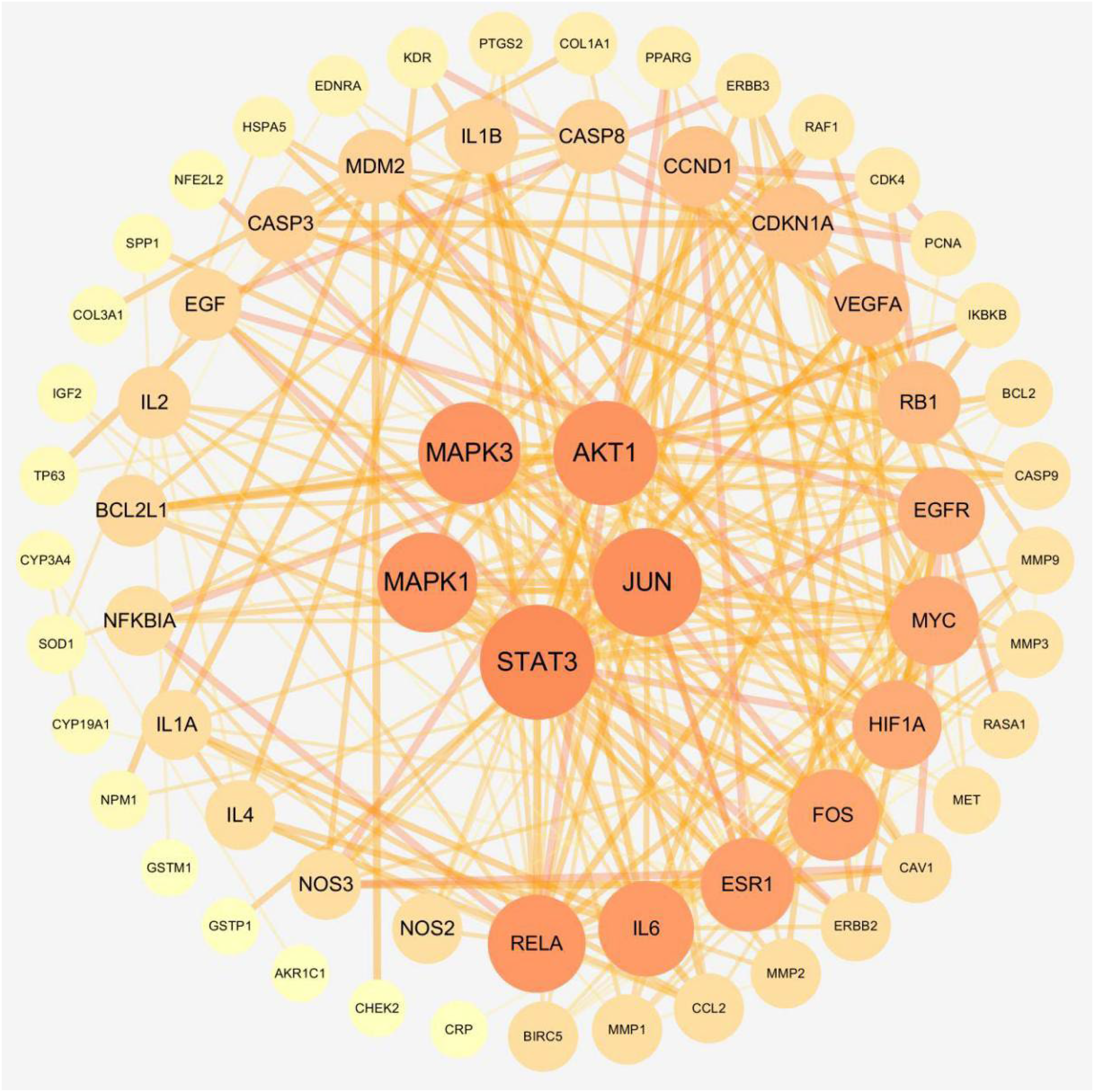
Protein interaction network.
Information Table of Key Targets of SYMGD Formula in the Treatment of CS.
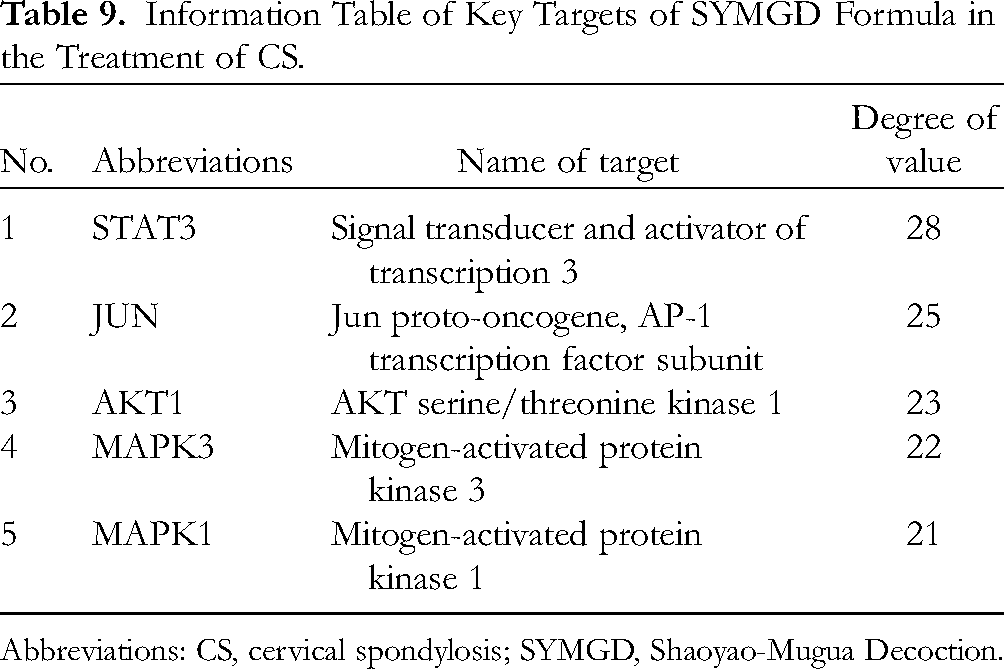
Abbreviations: CS, cervical spondylosis; SYMGD, Shaoyao-Mugua Decoction.
GO and KEGG Enrichment Analysis
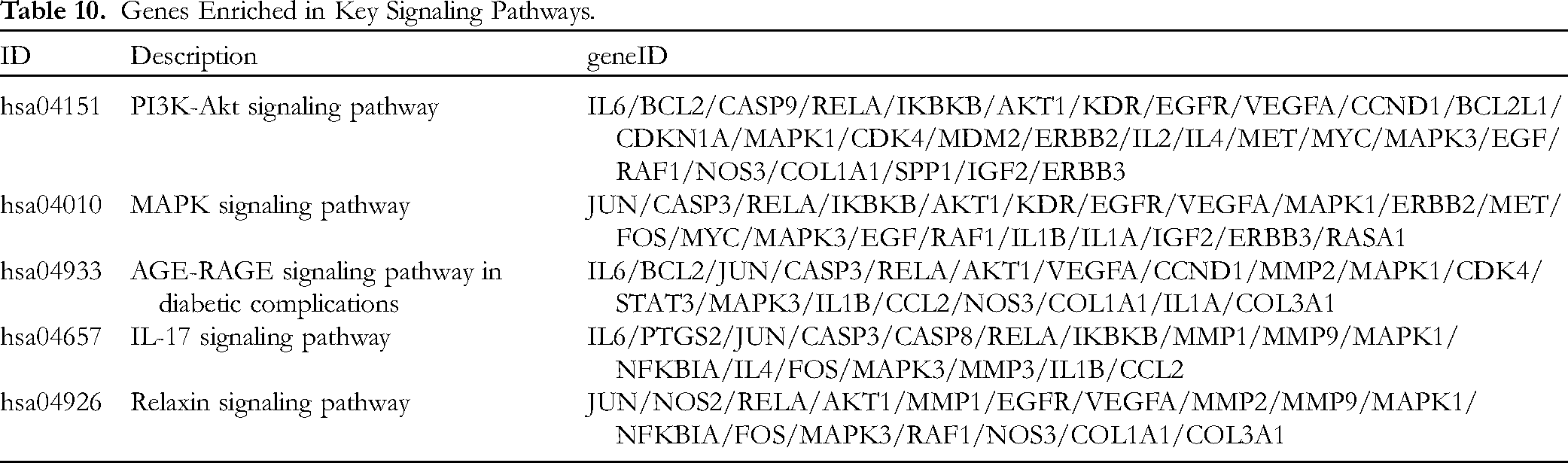
GO enrichment analysis identified 2281 items, with 2116 representing biological process (BP). It primarily involves radiation response, gland development, oxidative stress response, response to xenobiotic stimulus, and reproductive structure development; 45 represents the cellular component (CC) which consists of a membrane raft, a membrane microdomain, a transcription regulator complex, and an RNA polymerase II transcription regulator complex, and an endoplasmic reticulum lumen; 120 for molecular function (MF), which includes ubiquitin protein ligase binding, ubiquitin-like protein ligase binding, and DNA-binding transcription factor binding, protein serine/threonine/tyrosine kinase activity, kinase regulator activity. GO analysis results show that BPs, CCs, and MFs are all closely related to the occurrence and development of CS, as shown in Figure 12. A total of 158 items were identified by KEGG enrichment analysis. Figure 13 illustrates it mainly involves the PI3K-Akt signaling pathway, the MAPK signaling pathway, the AGE-RAGE signaling pathway in diabetic complications, the IL-17 signaling pathway, and the Relaxin signaling pathway. For more information see Table 10.

Gene ontology functional enrichment analysis.
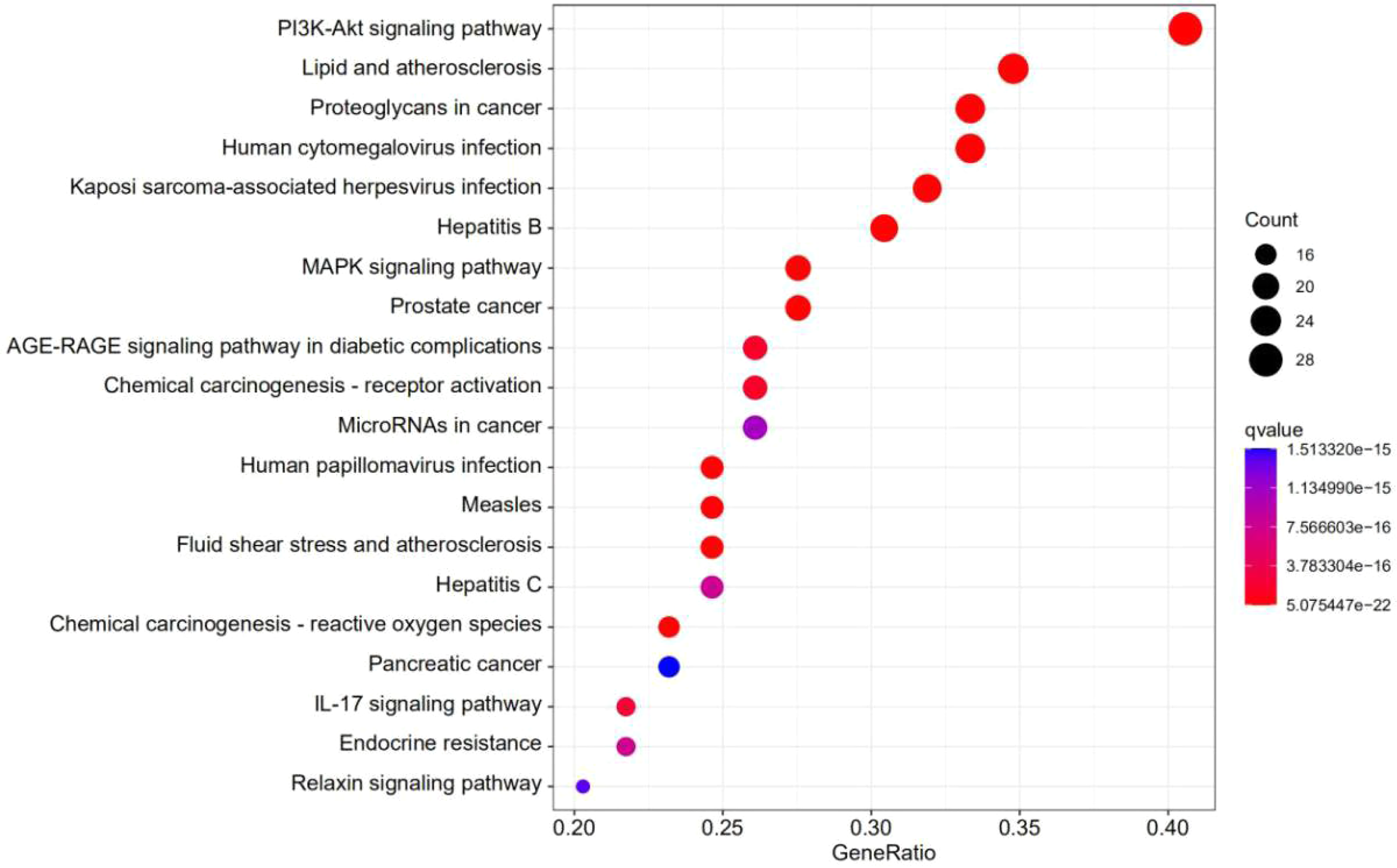
Enrichment analysis of KEGG signaling pathway.
Genes Enriched in Key Signaling Pathways.
Molecular Docking
As shown in Table 11, software such as Auto Dock was used to calculate the minimum binding energy between 5 key active ingredients and 5 key targets. The results show that the affinity between the 2 is <−5.0 kJ/mol, indicating that SYMGD had good binding activity to its therapeutic target, proving that the prediction of this study was reliable. As shown in Figures 14 to 18, the lowest of each group affinity Quercetin and JUN, luteolin and MAPK3, tanshinone IIA and MAPK1,naringenin and MAPK1,kaempferol, and JUN were selected for molecular docking display.

The molecular docking mode of quercetin and JUN.

The molecular docking mode of luteolin and MAPK3.

The molecular docking mode of tanshinone IIA and MAPK1.

The molecular docking mode of naringenin and MAPK1.
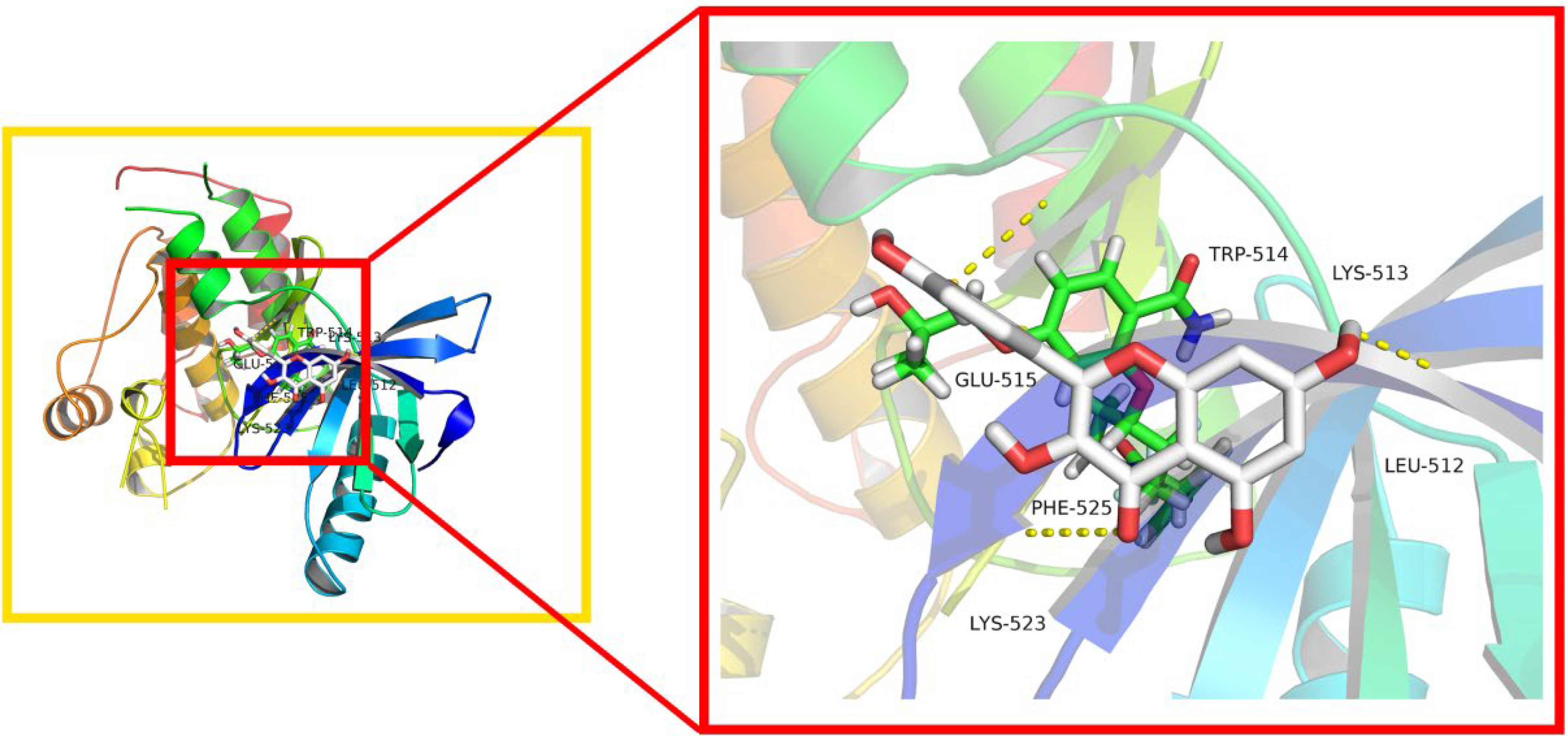
The molecular docking mode of kaempferol and JUN.
Minimum Binding Energy Between Key Active Ingredients and Key Targets.

Discussion
In medicine, CS, also known as cervical vertebrae syndrome, encompasses cervical osteoarthritis, proliferative cervical spondylitis, cervical nerve root syndrome, and cervical disc herniation. According to TCM theory, CS belongs to the category of “bi syndrome,” a disease characterized by symptoms and signs such as pain, swelling, stiffness, and deformation of joint and skeletal muscle activity restriction. Patients with asthenia in origin and asthenia in superficiality coexist, 11 and treatment should address the disease's manifestation and root cause. According to a section of “The Yellow Emperor's Canon of Internal Medicine in Su Wen”, wind, cold, and dampness are the main causes of arthralgia. Tendons are related to the liver, while bones are related to the kidney. As can be seen that Chinese medicine has been aware of CS for a long time. Internal causes were classified as liver and kidney deficiency, and the external causes were identified as an invasion of wind, cold, and dampness. 12 Based on this, it was proposed that the core treatment of CS is reinforcing the liver and kidney. Later, doctors discovered that the spleen plays an important role in bone growth and development and proposed the spleen and stomach theory of treatment. Yourong Huang inherited TCM classics and combined them with years of clinical diagnosis and treatment experience to summarize the main pathogenesis of this disease as “a deficiency of liver, spleen, and kidney as the root, Syndrome of Static Blood Blocking Collaterals and invasion of external evil as the manifestation.” And suggested that the disease treatment should focus on the source, using the therapeutic concept of “reinforcing liver and kidney, warmly invigorating spleen and stomach.” It was also discovered that CS treatment includes surgery and conservative treatment methods such as drug therapy, physical therapy, acupuncture, and moxibustion. 13 Oral Chinese medicine is still one of the conservative treatment methods with significant curative effects.
On the other hand, TCM prescriptions are complicated, and the analysis is subject to subjective influence, resulting in low credibility of the data, which is not conducive to the transmission and promotion of clinical diagnosis. With the development of artificial intelligence and database technology, big data technology plays an important role in medical care. 14 The compatibility relationship of TCM can be effectively discovered using multidimensional complex network methodology analysis, 15 data mining being particularly important. A large number of TCM data can be mined for key information. From this core, TCM pairs can be identified, the effectiveness and attributes of TCM prescriptions can be summarized, and the relationship between TCM prescriptions, TCM materials, and syndromes can be revealed. 16 However, the formula obtained from data mining ingredient and the treatment mechanism is still unclear; pharmacology and molecular docking understanding of TCM and disease through the network, the relationship between the Chinese native medicine ingredient through the analysis of the modern methods, compatibility, more clearly explain the material produce effectiveness and efficacy of Chinese medicine, 17 formation of core drug compatibility and its mechanism in the precise analysis model. In this study, data mining, network pharmacology, and other technologies were used to analyze Yourong Huang's drug use in the treatment of CS, as well as its possible active ingredients and mechanism of action, to give more treatment basis for clinical treatment of CS.
Data mining research revealed that Yourong Huang's CS drugs mostly supplement deficit, followed by expelling wind and dehumidification, boosting blood circulation, and eradicating blood stasis. The medicinal properties are more warm, sweet, bitter, and pungent. The meridian corresponds to the liver, spleen, and kidney. The meridian of sex and taste, as well as the classification of high-frequency drug use, are essentially consistent with the overall trend of drug use. The frequency of Radix Paeoniae Alba (Baishao), Licorice (Gancao), Codonopsis Radix (Danshen), Chaenomeles Speciosa (Mugua), and others was the highest. Cluster analysis of high-frequency medicines was also performed to facilitate a more intuitive data presentation. 18 Through observation, it was found that there was a strong correlation between high-frequency drugs. Association rules were used to analyze the relationship between high-frequency drug compatibility, and the confidence and support of drug combinations were adjusted. The greater the confidence, the better the clinical efficacy and reliability. Chaenomeles Speciosa (Mugua), and Radix Paeoniae Alba (Baishao), were the 2 most closely associated drug pairs. Three Radix pairs are Angelica Sinensis (Danggui), Chaenomeles Speciosa (Mugua), and Radix Paeoniae Alba (Baishao). Four Radix pairs are Codonopsis Radix (Danshen), Chaenomeles Speciosa (Mugua), Licorice (Gancao), and Radix Paeoniae Alba (Baishao). The association rules for core drug compatibility eventually evolved as drug pairs increased. When combined with the overall drug network diagram analysis, Yourong Huang's core prescription for CS treatment is SYMGD. It was composed of the core drugs with the highest frequency and the strongest correlation. This formula is based on Shaoyao-Gancao Decoction (SGD) in Zhang Zhongjing's “Typhoid Theory”. 19 In the prescription, Licorice (Gancao) can replenish the spleen, replenish qi, and ease the pain. At the same time, Paeoniae Alba (Baishao) can soften the liver, reduce pain, nourish blood and regulate menstrual flow, and the 2 are combined with acid to cleanse Yin. It relives meridian and collateralizes collaterals while reducing pain. It is a good pain reliever recommended by doctors of all ages; the combination Achyranthes bidentata Blume (Niuxi) strengthens the function of nourishing the liver, spleen, and kidney and treats the underlying reasons. Modern pharmacological studies have confirmed that20,21 SGD has good anti-inflammatory, analgesic, and spasm-relieving effects. Achyranthes bidentata Blume (Niuxi) plays an anti-inflammatory and antioxidant role by inhibiting matrix metalloproteinase-3 and matrix metalloproteinase-13, both of which are mediated by IL-6. 22 Chuanxiong Rhizoma (Chuanxiong) stimulates blood circulation. It dispels blood stasis. It is a Qi blood drug compatible with Angelica Sinensis (Danggui) and can produce synergistic and complementary hematopoietic effects and relieve patients’ pain. 23 A whole Fang moves qi, removes food stagnation, activates blood circulation, and removes blood stasis. A combination of Codonopsis radix (Danshen) and turmeric (Jianghuang) boosts the impact of increasing blood circulation and reducing blood stasis.
In contrast, the combination of Chaenomeles speciosa (Mugua) reduces wind and moisture while treating the tip simultaneously. Studies have shown that,24–28 Chaenomeles Speciosa (Mugua), Codonopsis Radix (Danshen), and turmeric (Jianghuang) all serve major anti-inflammatory roles. Chaenomeles speciosa (Mugua) has been widely employed in the clinical treatment of inflammatory illnesses. 28 Curcumin, a natural polyphenol derived from turmeric (Jianghuang), has been shown to alleviate nerve root lesions by lowering neuroinflammation and oxidative stress.24,26 Codonopsis Radix (Danshen) is a common hemorheological medicine containing tanshinone, which has antioxidant and anti-inflammatory effects and excellent efficacy in removing blood stasis, relieving pain, and improving microcirculation and blood flow to injured spinal cord tissues.25,27 All the TCM in the prescription can be used in tandem to address both symptoms and root problems. To stimulate blood circulation, remove blood stasis, and dispel wind and dehumidify, the liver, spleen, and kidney can be replanted concurrently. The therapeutic effect of Chinese medicine on CS is very good; it has anti-inflammatory, antioxidant, analgesic, relieving spasms, and other effects. The treatment concept is consistent with modern doctors’ understanding of the etiology and pathogenesis of this disease. As a result, the mechanism and target of the treatment of CS by the core drug combination SYMGD need further investigation.
According to the network pharmacology study, the essential ingredients in Yourong Huang's high-frequency CS prescription drugs included quercetin, luteolin, tanshinone IIA, naringenin, and kaempferol. Flavonoids include quercetin, luteolin, naringenin, and kaempferol. Mitogen-activated protein kinase (MAPK), nuclear factor kappa β (NF-kβ), Wnt/β-catenin and bone morphogenetic protein 2/SMAD (BMP2/SMAD) signaling pathways, and apoptosis pathways influence bone remodeling, regulate angiogenesis, and reduce the level of inflammatory cytokines. And because they play an important role in scavenging reactive oxygen species they are considered the most promising drugs to treat bone-related diseases in the future. 29 Quercetin, a polyhydroxy flavonoid found in Licorice (Gancao), Chaenomeles speciosa (Mugua), and Achyranthes bidentata Blume (Niuxi) has been shown to reduce the important inflammatory factors Interleukin-1β(IL-1β) and tumor necrosis factor-α (TNF-α) that are involved in the process of inducing pain and intervertebral disc degeneration. Quercetin also inhibits RANKL-mediated osteoclast generation, osteoblast apoptosis, oxidative stress, and inflammatory response to accomplish anti-inflammatory, labor pain, and antioxidant benefits, as well as the effect of bone health maintenance.30–33 Kaempferol is found in Radix paeoniae Alba (Baishao), Licorice (Gancao), and Achyranthes bidentata Blume (Niuxi). It has been shown to prevent inflammation, oxidative stress, osteoblast apoptosis, osteoclast autophagy, and other ways to protect the bones.34,35 Naringenin and luteolin found in Licorice (Gancao) and tanshinone IIA contained in Salvia Miltiorrhiza (Danshen) has anti-inflammatory and antioxidant properties. It can reduce oxidative stress, inflammation, and other major pathogenic factors that endanger bone health.36–38 Studies have shown that compounds such as quercetin, luteolin, kaempferol, and naringenin, the key active ingredients in SYMGD, can effectively regulate osteoblasts and induce CS expression through key targets such as STAT3 and MAPK3. In addition, quercetin and kaempferol were found to significantly increase COX-2 gene expression, while the former also showed significant upregulation of IL-1β gene expression in osteoblasts.39,40 In addition, luteolin and quercetin can restrict the messenger RNA (mRNA) expression of MMP-9 and MMP-13 in osteoblasts, safeguarding their inhibitory effects. 41 Mechanistically, tanshinone IIA, the key active ingredient in SYMGD, inhibited the RANKL-mediated activation of NF-κB, MAPK, and Akt signaling pathways during osteoclastogenesis. Tanshinone IIA has been shown to inhibit bone loss by blocking osteoclast formation. 42 In conclusion, the key active ingredients in SYMGD exhibit an effective combination of key targets, ultimately leading to the therapeutic effects of CS, including anti-inflammatory, analgesic, and antioxidant.
The key targets of high-frequency drug therapy for CS, according to the PPI network diagram analysis in this study, are signal transducer and activator of transcription 3 (STAT3), Jun proto-oncogene, transcription factor subunit of AP-1 (JUN), AKT serine/threonine kinase 1 (AKT1), mitogen-activated protein kinase 3 (MAPK3), mitogen-activated protein kinase 1 (MAPK1), etc. STAT3 is essential in maintaining osteoblast formation, osteoclast differentiation, and bone homeostasis. When the activity of STAT3 in bone cells is lost or mutated, bone formation slows down and regulation of oxidative stress in mitochondria is impaired, which is a potential pharmaceutical target for treating bone metabolic diseases.43,44 Studies have shown45,46 that spinal cord astrocytes N-myc downstream-regulated gene 2 (NDRG2) can modulate GLT-1 expression via the JAK/STAT3 signaling pathway and cell activation and inflammation to relieve neuropathic pain. The analgesic and anti-inflammatory effects of Jingshu Keli are likewise obtained by suppressing STAT3 activity. JUN protein can bind to the leucine zipper transcription factor BATF to form a heterodimer complex that can promote the mRNA and protein expression of matrix metallopeptidase and depolymerized metalloproteinase containing type I platelet-binding protein motif ADAMTs; thereby, degrading the extracellular matrix type II collagen and proteoglycan of chondrocytes, and eventually destroying articular cartilage. 47 AKT1, an AKT kinase member, can regulate vascular permeability, generate acute inflammatory responses such as edema and leukocyte exosmosis, 48 and play an essential role in microRNAs’ influence on mesenchymal stem cells osteogenic differentiation. 49 MAPK1 and MAPK3 are key components of the MAPK signaling pathway, which can regulate the production of pro-inflammatory cytokines and, as a result, contribute to inflammation and bone loss. Mechanical stress, however, can cause apoptosis in rat cervical endplate chondrocytes via MAPK-mediated mitochondrial apoptosis. Chondrocyte apoptosis can be reversed when the MAPK pathway is inhibited.50,51 Among them, MAPK1 can interfere with miR-320c to reduce Human Chondrocyte articular (HC—a) cell growth and then diminish miR-320c stimulating influence on cell apoptosis to achieve the goal of interfering with articular cartilage proliferation and apoptosis. 52 When WNK1 protein kinase is downregulated, ERK/MAPK3 signaling pathway may decrease neural progenitor cell proliferation. Downregulation of ESR1 and MAPK3 in B cells, on the other hand, will lead to an increase in osteoclast generation or a decrease in osteoblast generation,53,54 which are key molecules that can help regulate bone formation. Molecular docking results showed that quercetin, luteolin, tanshinone IIA, naringenin, and kaempferol interacted with the 5 core target genes (STAT3, JUN, AKT1, MAPK3, and MAPK1). The 5 core target genes also participated in the conduction of the 5 signaling pathways. Therefore, this may indicate the overall effectiveness and diversity of constituents of SYMGD in intervening with CS and offer insights into the occurrence and development of other orthopedic disease-related inflammatory diseases.
Enrichment analysis of GO function and KEGG pathway showed that high-frequency drugs mainly regulate the PI3K-Akt signaling pathway, MAPK signaling pathway, AGE-RAGE signaling pathway in diabetic complications, IL-17 signaling pathway, Relaxin signaling pathway, and other signaling pathways work. PI3 K/Akt is linked to osteoclast proliferation, differentiation, and apoptosis. 55 Experiments have demonstrated that Panlongqi Tablets can reduce inflammation in vertebral artery type of cervical spondylosis (CSA) rats by inhibiting the PI3 K/AKT signaling pathway. Evodiamine activates the PI3 K/Akt pathway, which increases SirT1 expression and inhibits lipopolysaccharide, which causes apoptosis, extracellular matrix degradation, and inflammation of nucleus pulposus cells.56,57 MAPK signaling pathway is critical for managing the overexpression of inflammatory proteins and matrix metalloproteinases and inhibiting cell apoptosis. Experiments have demonstrated that Rhizoma drynariae total flavonoids can inhibit the MAPK signaling pathway, regulate the expression of inflammatory factors and catabolic enzymes, protect interdisc degeneration, 58 and regulate the osteogenic differentiation potential of mesenchymal stem cells. Several studies have found that miR-920 can target HOXA7 through the MAPK pathway, promoting the osteogenic differentiation potential of human bone marrow mesenchymal stem cells. 59 As a pro-inflammatory factor, IL-17 can increase the synthesis and release of numerous inflammatory factors, resulting in an imbalance of catabolic and anabolic reactions and intervertebral disc tissue degradation, herniation, and nerve root pain. 60 Age-rage signaling pathway helps to increase osteogenic function in bone. 61 When AGE and RAGE are linked, pro-inflammatory transcription factors and NF-κB are continually activated, which is an important factor in inducing inflammation. 62 On the other hand, the Relaxin signaling pathway can synergically promote BMP-2-induced osteoblast differentiation and bone formation by upregulating Runx 2 expression and activity to achieve the therapeutic effect. 63
In conclusion, the primary elements of SYMGD from complicated close links with inflammatory factors, mesenchymal stem cells, osteoblasts, and osteoclasts through multitarget and multipathway interactions, resulting in the therapeutic impact on CS.
Conclusion
In this study, data mining technology and network pharmacology methods were used to analyze and discuss TCM Yourong Huang's drug use rules in the treatment of CS from multiple perspectives, preliminarily clarifying Yurong Huang's understanding of the pathogenesis of CS and related drug compatibility rules, and obtaining the core drug combination SYMGD for the treatment of CS by TCM. Furthermore, network pharmacology, molecular docking, and other methods demonstrated that the treatment of CS by TCM was achieved through the regulation of multicomponents, multitargets, and multipathways, providing data support for further clinical and basic research to explore further the exact efficacy and mechanism of action of CS treated by TCM.
Footnotes
Acknowledgments
We are grateful to Dr Xiaoyun Zhang and Professor Yourong Huang from the Affiliated Hospital of Guangxi University of Chinese Medicine for their help in all stages of this study.
Author Contributions
YC, XZ, and YH contributed to the study design, data collection and processing, and paper writing and modification. JH and FC were mainly responsible for the data analysis. JZ, HZ, and WL joined the discussion. All the authors read the final manuscript and agreed to publish it.
Declaration of Conflicting Interests
The author(s) declared no potential conflicts of interest with respect to the research, authorship, and/or publication of this article.
Funding
The author(s) disclosed receipt of the following financial support for the research, authorship, and/or publication of this article: This work was supported by the 2021 Graduate Education Innovation Program of Guangxi University of Traditional Chinese Medicine, Guangxi Natural Science Foundation, Huang Yourong GUI School of Traditional Chinese Medicine Master Training Project, Guangxi University of Traditional Chinese Medicine of Traditional Chinese Medicine Inheritance and Innovation Team (grant number No.YCXJ2021099, No.2023GXNSFAA026075, No.6 [2022], 2022A004).
