



Abstract
The liver is essential for animals and humans. Because of their low side effects and high safety, natural products have recently become a research hotspot for human health-related issues that can damage the liver. In this study, we investigated the protective effects in rats of Lycium barbarum betaine (LBB) and Lycium barbarum betaine Effervescent Tablet (LBBET) against liver injury caused by carbon tetrachloride (CCl4). The results showed that LBB and LBBET pretreatment significantly reduced the serum levels of alanine aminotransferase, aspartate transaminase (AST), and alkaline phosphatase, as well as the liver tissue levels of malondialdehyde. Meanwhile, glutathione peroxidase, and superoxide dismutase levels were significantly increased in liver tissues. In addition, LBB and LBBET may effectively alleviate CCl4-induced liver injury by a mechanism related to the activation of the Nrf2 signaling pathway. In conclusion, LBB and LBBET may serve as potential mitigators of CCl4-induced liver injury. Effervescent Tablet can be used as either a new formulation or practical product for patients who have difficulty swallowing regular tablets or capsules. This study provides a basis and new ideas for the development of functional foods or drugs related to the field of liver protection.
Introduction
The liver is an essential organ for immunity and nutrition in animals and humans. 1 However, various external chemicals can damage this organ and cause chronic and acute liver disease. 2 Acute liver damage from drugs, alcohol, and other substances is frequent, and severe liver damage often leads to liver failure and even death. 3 The main features of acute liver injury are necrosis, inflammatory cell infiltration, and apoptosis.4–7 Carbon tetrachloride (CCl4) is a common industrial solvent, cleaning agent, and a potent hepatotoxin, widely used in the laboratory to induce liver injury and fibrosis. 8 CCl4 generates highly reactive CCl3 through the mediation of cytochrome p450, which leads to lipid peroxidation by stress, which eventually leads to hepatocellular damage. It is thus commonly used to establish an acute liver injury mice model of acute liver injury. 9 Several studies have demonstrated that CCl4 can induce hepatocyte necrosis, apoptosis, and inflammatory responses.10,12 Because of their low side effects and high safety, natural products have recently become a research hotspot for human health-related issues. 13 Lycium barbarum, a traditional Chinese edible and medicinal plant, 14 is also known as Goji berry and Chinese wolfberry. 15 According to related studies, the main active components of the plant are polyphenols, pigments, polysaccharides, flavonoids, amino acids, alkaloids, vitamins, and trace minerals. 16 One of the major alkaloids found in the leaves and stem of L barbarum is betaine, an N-trimethyl derivative of glycine. 17 Its bipolar amphoteric shape helps maintain osmotic balance in cells. 18 Betaine possesses hepatoprotective, anti-inflammatory, and antioxidant properties and is commonly present in plants, animals, and microorganisms. 19 In addition to its strong antioxidant properties, betaine also has significant pharmacological effects. It may prevent hyperhomocysteinemia, 20 protect the liver, 21 have a positive effect on cardiometabolic health, 22 inhibit tumors, have anticancer effects, lower blood pressure, cause sedation, and relieve pain and fever. 23
Betaine has been found to have a positive effect on fatty liver disease by methionine choline deficiency by regulating oxidative stress, inflammation, and cell death. 24 Similarly, it has also been found that betaine can enhance the antioxidant activity of hepatocytes, promote the proliferation and regeneration of hepatocytes, and either maintain or protect mitochondrial and Golgi apparatus function in a CCl4-induced liver injury model.25–27 Experimental results suggest that betaine can effectively reduce CCl4-induced liver injury 25 and its mechanism may be related to the reduction of inflammatory mediators and increased antioxidant activity.
The formulation is important in how well a drug works. As society develops and living standards improve, people want things that are simple to carry and transport, especially for drug formulations. A new type of pharmaceutical formulation called effervescent tablets has a quick onset of action and poses little risk to the stomach, making it ideal for people who have difficulty swallowing tablets or capsules.28,29 Therefore, the effervescent tablet can be used as a functional food.
The above studies showed that betaine has various functions, especially in hepatoprotection and as an antioxidant. However, the creation of similar functional foods for hepatoprotection has received relatively little attention in previous studies, particularly with respect to effervescent tablets with hepatoprotective properties. Therefore, in this study, betaine was first extracted from L barbarum to prepare Lycium barbarum betaine effervescent tablets (LBBET) and then the protective effect and mechanism of both the betaine and its effervescent tablets against CCl4-induced liver damage were investigated in rats. In addition, Lycium barbarum betaine (LBB) pretreatment was used in this study. Pretreatment experiments are a common method to study the protective effects of substances. 30
Materials and Methods
Chemicals and Reagents
Sodium bicarbonate, sodium citrate, microcrystalline PEG 6000 and microcrystalline cellulose were purchased from Henan Wanbang Chemical Technology Co, CCl4 (batch number: 56-23-5) and Bifendate (batch number: D25O10G100857) from Qinghai, China, Rhine Biotechnology Co, alanine aminotransferase (ALT), aspartate transaminase (AST), alkaline phosphatase (ALP), malondialdehyde (MDA), superoxide dismutase (SOD), glutathione peroxidase (GSH-PX), and BCA protein assay kit from Nanjing Jiancheng Bioengineering Institute (Nanjing, China), Trizol, SYBR GREEN SuperReal Color Fluorescence Quantitative from Tiangen Biochemical Technology Co, and nitrocellulose membrane, anti-Nrf2, anti-HO-1, anti-NQO1, and anti-β-actin from Wuhan Aipotec Biotechnology Co.
Extraction and Purification of L barbarum Betaine
To crushed L barbarum (10 kg) at −40 °C, double distilled water was added in a ratio of 1:5, heated in a water bath for 2 h, then filtered 3–5 times with a circulating water vacuum pump, and concentrated under reduced pressure. The polysaccharide was removed by the addition of 5 times the volume of anhydrous ethanol, followed by centrifugation. The supernatant was then concentrated in vacuo under reduced pressure and lyophilized to obtain a crude LBB extract. This was dissolved in 1 L of double-distilled water, and purified by passage through cation exchange resin and anion exchange resin columns, and lyophilized . The crude extract of LBB was washed with 5 times its volume of ethanol and centrifuged; the supernatant was concentrated under reduced pressure to obtain about 120 g LBB.
Preparation of LBBETs
LBBET is formulated with 35% LBB, 25% sodium bicarbonate, 25% sodium citrate, 2% PEG 6000, 13% microcrystalline cellulose, and moderate amounts of anhydrous ethanol. LBB, sodium bicarbonate, sodium citrate, and microcrystalline cellulose are first uniformly mixed, then dried and pulverized into powder form, and finally PEG 6000 is added, uniformly mixed, and compressed to make LBBET.
Animals and Experimental Design
Sixty-four healthy male Sprague-Dawley rats (SD rats), SPF grade, (license number SCXK 2019-0008), body weight 180 ± 10 g, were provided by Beijing Huafukang Biotechnology Co. All animal care and use procedures were approved by the Medical Ethics Committee of Qinghai University School of Medicine (2019-1), and were performed in accordance with the Guide for Care and Use of Laboratory Animals (National Institutes of Health Publication NO 85-23, raised 1996). Rats were randomized into 8 groups, including control group (CON), CCl4 group, bifendate control (BC) group, 2 LBB intervention groups at low and high dosages (LBB-L, LBB-H), and 3 LBBET intervention groups at low, medium, and high dosages (LBBET-L, LBBET-M, LBBET-H); each group contained 8 animals. Table 1 depicts these groups. After 1 week of acclimated feeding, rats in the BC, LBB, and LBBET administration groups were gavaged with the corresponding doses of either LBB or LBBET for 7 days, and rats in the CON and CCl4 groups were gavaged with normal saline. On day 7, 2 h after the last oral administration, 50% CCl4 dissolved in olive oil (2 mL/kg) was orally administered to all animal groups except the CON group, and the same amount of oral saline was administered to the CON group. CCl4 dose settings were obtained from the related literature. 31
Grouping and Design of Animal Experiments.
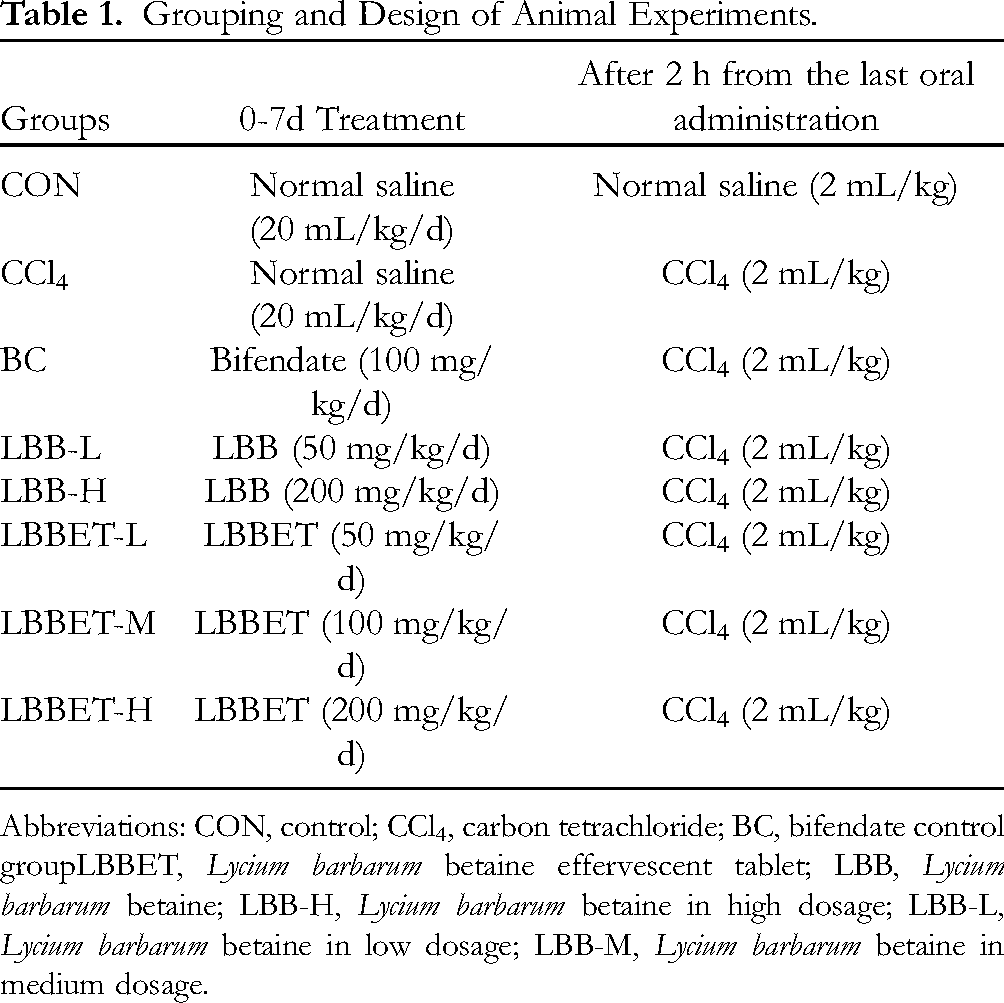
Abbreviations: CON, control; CCl4, carbon tetrachloride; BC, bifendate control groupLBBET, Lycium barbarum betaine effervescent tablet; LBB, Lycium barbarum betaine; LBB-H, Lycium barbarum betaine in high dosage; LBB-L, Lycium barbarum betaine in low dosage; LBB-M, Lycium barbarum betaine in medium dosage.
Sample Collection
At the end of the experiment, the rats were anesthetized until the rolled-over reflex was not seen, fixed in a supine position on the operating table, and the rat's abdominal aorta was separated. Blood was quickly transferred to an ice box for temporary storage in nonanticoagulation tubes. The supernatant serum was obtained using a benchtop high-speed centrifuge, put into EP tubes, and stored at −80 °C.
Histopathological Studies
Samples were fixed in 10% neutral formaldehyde for dehydration, trimming, embedding, sectioning, staining, and sealing; histopathological changes in rat liver were observed under a light microscope.
Transmission Electron Microscopy
Three rats were randomly selected from each group, anesthetized, and the left lobe of the liver was collected after laparotomy and placed in 3% glutaraldehyde for electron microscopy. After staining with uranyl acetate, with lead citrate staining, the sections were observed under a transmission electron microscope.
Measurement of the AST, ALT, and ALP Indexes in Serum
The activity of ALT, AST, and ALP in serum was determined according to the manufacturer's instructions. 32
Assessment of Oxidative Stress in the Liver
The liver tissue was mixed with saline at a ratio of 1:9 and then homogenized to prepare a liver tissue homogenate. The supernatant was removed, and then the levels of SOD, GSH-PX, MDA, and total protein in the liver tissue homogenate were measured according to the instructions given with the kit.
Real-Time Polymerase Chain Reaction
After tissue RNA had been extracted using the Trizol method, the RNA concentration was determined, and the extracted total RNA was reverse transcribed into cDNA according to the instructions of the reverse transcription kit. Real-time fluorescence quantitative polymerase chain reaction (PCR) analysis was performed according to the operation of the SYBR GREEN SuperReal Color Fluorescence Quantitative Premix Kit. Relative gene expression was normalized to β-actin and calculated using the 2−ΔΔCt method. Table 2 shows the primer sequences that were used in the study.
Real-Time Fluorescent Quantitative Polymerase Chain Reaction (PCR) Primer Sequences.

Western Blot Analysis
Liver tissues were harvested to determine the total protein concentration. Each sample was denatured by boiling, and then electrophoresed on SDS-PAGE gels, after which they were transferred to nitrocellulose membranes using a transfer blotting device. They were then incubated overnight at 4 °C with rabbit primary antibodies Nrf2, Keap-1, HO-1, NQO1, and β-actin. After washing with PBST, they were incubated for 1 h at room temperature with either rabbit or mouse horseradish peroxidase conjugated anti-IgG-conjugated. Finally, Alliance Image J software was used to perform protein density analysis after development exposure of the protein bands. All protein bands were normalized to β-actin.
Statistical Analysis
Results were expressed as mean ± SD. All statistical comparisons were performed with a one-way analysis of variance test, followed by a least significant difference test. SPSS (version 17, IBM Corporation) was used for data analysis and GraphPad Prism 8.0 was used for drawing. P < .05 was considered significant.
Results
Effects of LBB and LBBET on the Serum Levels of ALT, AST, and ALP in Rats With CCl4-Induced Liver Injury
Compared to the CON group, the serum levels of ALT, AST, and ALP were significantly increased in the CCl4 group (P < .05). Supplementation with BC, LBB, and LBBET at different doses in the CCl4-intoxication group significantly reduced (P < .05) the serum levels of ALT, AST, and ALP compared to the CCl4 group (P < .05) (Figure 1).
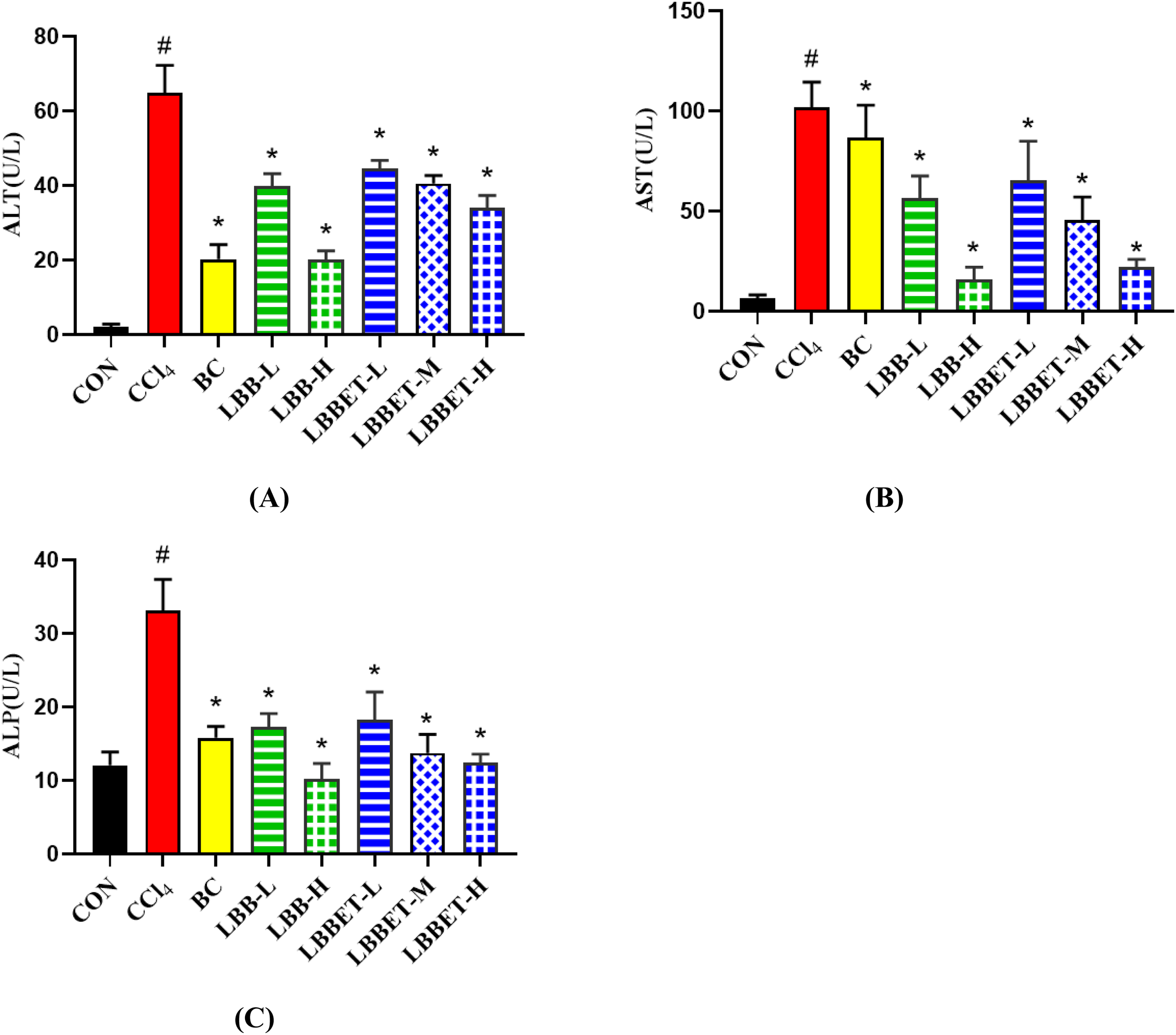
Effects of LBB and LBBET on the serum levels of ALT (A), AST (B) and ALP (C) in rats with CCl4-induced liver injury. Data are expressed as mean ± SD (n = 8). #P < .05 in comparison to the CON group; *P < .05 in comparison to the CCl4 group. Abbreviations: CON, control; CCl4, carbon tetrachloride; BC, bifendate control group; LBB-L, Lycium barbarum betaine in low dosage; LBB-H, Lycium barbarum betaine in high dosage; LBBET-L, Lycium barbarum betaine effervescent tablets in low dosage; LBBET-M, Lycium barbarum betaine effervescent tablets in medium dosage; LBBET-H, Lycium barbarum betaine effervescent tablets in high dosage.
Effects of LBB and LBBET on MDA, SOD, and GSH-PX in Liver Tissues
As shown in Figure 2, compared to the CON group, the MDA level in the liver tissue was significantly increased (P < .05) after injection of CCl4 (2 mL/kg), and the SOD and GSH-PX levels significantly decreased. In contrast, different doses of LBB and LBBET inhibited oxidative damage in liver tissues. MDA levels in liver tissues were significantly lower in the BC, LBB (50, 200 mg/kg), and LBBET (50, 100, 200 mg/kg) groups compared to the CCl4 group (P < .05). SOD levels in liver tissues were significantly higher in the LBB (100, 200 mg/kg) and LBBET (50, 100, 200 mg/kg) dose groups than in the CCl4 group (P < .05). Similarly, the level of GSH-PX in liver tissues was significantly higher in the high-dose LBB group, medium-dose LBBET group and high-dose LBBET group (P < .05).

Effect of LBB and LBBET on liver tissues levels of MDA (A), SOD (B) and GSH-px (C) in rats with CCl4-induced liver injury. Data are expressed as mean ± SD (n = 6). #P < .05 in comparison to the CON group; *P < .05 in comparison to the CCl4 group. Abbreviations: CON, control; CCl4, carbon tetrachloride; BC, bifendate control group; LBB-L, Lycium barbarum betaine in low dosage; LBB-H, Lycium barbarum betaine in high dosage; LBBET-L, Lycium barbarum betaine effervescent tablets in low dosage; LBBET-M, Lycium barbarum betaine effervescent tablets in medium dosage; LBBET-H, Lycium barbarum betaine effervescent tablets in high dosage.
Light Microscopic Observations of Liver Tissue
Hepatocytes of the CON group were structurally normal. Compared to the CON group, some of the hepatocytes were damaged after CCl4 administration. There was local inflammatory cell infiltration, a portion of the hepatocytes were damaged and ballooning degeneration occurred. After pretreatment with BC, LBB-L, LBB-M, LBB-H, and LBBET-L, LBBET-M, and LBBET-H, the CCl4-induced histopathological morphology was mildly improved. BC group, LBB-L group, and LBB-H group had good results, and the effect of the BC group was better than that of the LBB-L group (Figure 3).

Effects of LBB and LBBET on histopathological changes induced by CCl4 (H&E, 200×, n = 3). CON, CCl4, BC, LBB-L, LBB-H, LBBET-L, LBBET-M, and LBBET-H groups are expressed as A-H. Abbreviations: CON, control; CCl4, carbon tetrachloride; BC, bifendate control group; LBB-L, Lycium barbarum betaine in low dosage; LBB-H, Lycium barbarum betaine in high dosage; LBBET-L, Lycium barbarum betaine effervescent tablets in low dosage; LBBET-M, Lycium barbarum betaine effervescent tablets in medium dosage; LBBET-H, Lycium barbarum betaine effervescent tablets in high dosage; H&E, hematoxylin and eosin. Ballooning degeneration is shown by red arrows,and inflammatory cell infiltration by black arrows.
Electron Microscopic Observations of Liver Tissue
Transmission electron microscopy showed that the hepatocytes of the CON group were structurally intact, had round nuclei, and an essentially uniform distribution of chromatin in the nuclei. Compared with the CON group, hepatocytes of the CCl4 group exhibited organelle destruction, poorer hepatocyte structure, obvious cell swelling, sparse chromatin in the nucleus, and smaller nucleoli. After pretreatment with BC, LBB-L, LBB-M, LBB-H, LBBET-L, LBBET-M, and LBBET-H, both cellular structure and chromatin were improved, with the BC, LBB-H, and LBBET-H groups almost restored to a state close to that of the CON group (Figure 4).
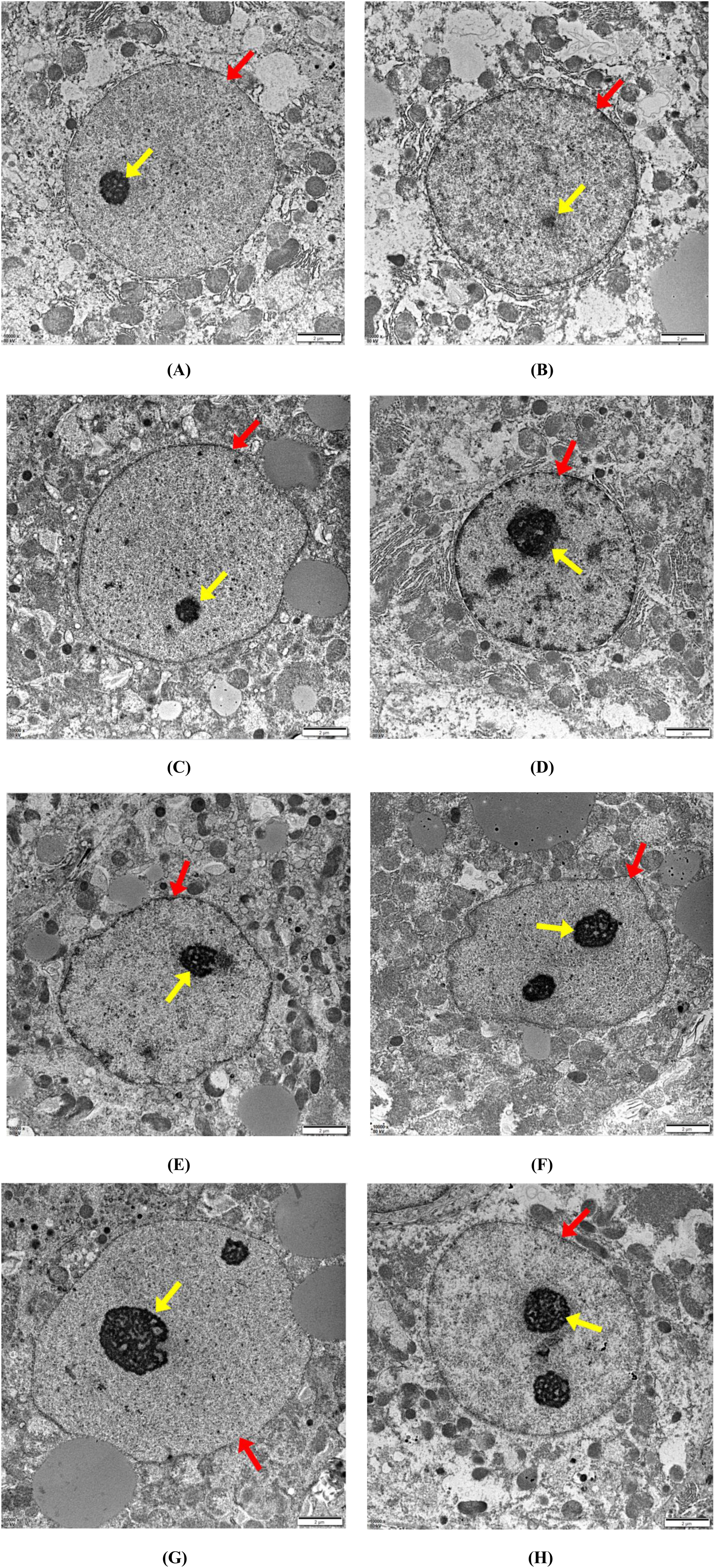
Effects of LLBB and LBBET on ultrastructure of CCl4-induced hepatic tissue in SD rats (10000×). (n = 3). CON, CCl4, BC, LBB-L, LBB-H, LBBET-L, LBBET-M, and LBBET-H groups are expressed as A-H. Abbreviations: CON, control; CCl4, carbon tetrachloride; BC, bifendate control group; LBB-L, Lycium barbarum betaine in low dosage; LBB-H, Lycium barbarum betaine in high dosage; LBBET-L, Lycium barbarum betaine effervescent tablets in low dosage; LBBET-M, Lycium barbarum betaine effervescent tablets in medium dosage; LBBET-H, Lycium barbarum betaine effervescent tablets in high dosage; SD rats, Sprague-Dawley rats. Cell nucleus is shown by red arrows, and chromatin by yellow arrows.
Effects of LBB and LBBET on Nrf2 Signaling Pathway-Related mRNA Expression in Liver Tissues
Real-time PCR was used to detect the mRNA expression of related transcripts of the Nrf2 signaling pathway. As shown in Figure 5, compared with the CON group, the transcript levels of Nrf2, HO-1 and NQO1 mRNA in the CCl4 group were significantly reduced (P < .05). In contrast, Nrf2 mRNA expression was significantly increased in the LBB-H group compared to the CCl4 group (P < .05), but the differences were not statistically significant in the BC group and the other different dose groups of LBB and LBBET. HO-1 mRNA expression was significantly elevated in the LBB-H and the LBBET-H groups compared to the CCl4 group (P < .05), but the differences were not statistically significant in the BC group and the other different dose groups of LBB and LBBET. NQO1 mRNA expression was significantly increased in the LBB-H group compared to the CCl4 group (P < .05); the differences were not statistically significant in the BC group and the other different dose groups of LBB and LBBET.

Effects of LBB and LBBET on the expression of Nrf2 (A), HO-1 (B) and NQO1 (C) mRNA in the liver. Data are expressed as mean ± SD (n = 3). #P < .05 in comparison to the CON group; *P < .05 in comparison to the CCl4 group. Abbreviations: CON, control; CCl4, carbon tetrachloride; BC, bifendate control group; LBB-H, Lycium barbarum betaine in high dosage; LBBET-H, Lycium barbarum betaine effervescent tablets in high dosage.
Effects of LBB and LBBET on Nrf2 Signaling Pathway Related Protein Expression in CCl4-Induced Liver Tissues
We investigated the expression of Nrf2 signaling pathway-related proteins (Figure 6). As a result, the expression of Nrf2, NQO1, and HO-1 protein was significantly lower in the CCl4 group than in the CON group (P < .05). Also, Keap1 protein expression was significantly increased (P < .05). In contrast, the expression levels of antioxidant proteins such as Nrf2, NQO1, and HO-1 in the Nrf2 pathway were increased, and the expression levels of Keap1 protein were significantly decreased after pretreatment with BC and high doses of LBB and high doses of LBBET compared with the CCl4 group (P < .05). These results suggest that CCl4 can disrupt the antioxidant system by depleting Nrf2 in vivo, whereas LBB and LBBET can exert their antioxidant effects by regulating the expression of Nrf2 pathway antioxidant proteins.
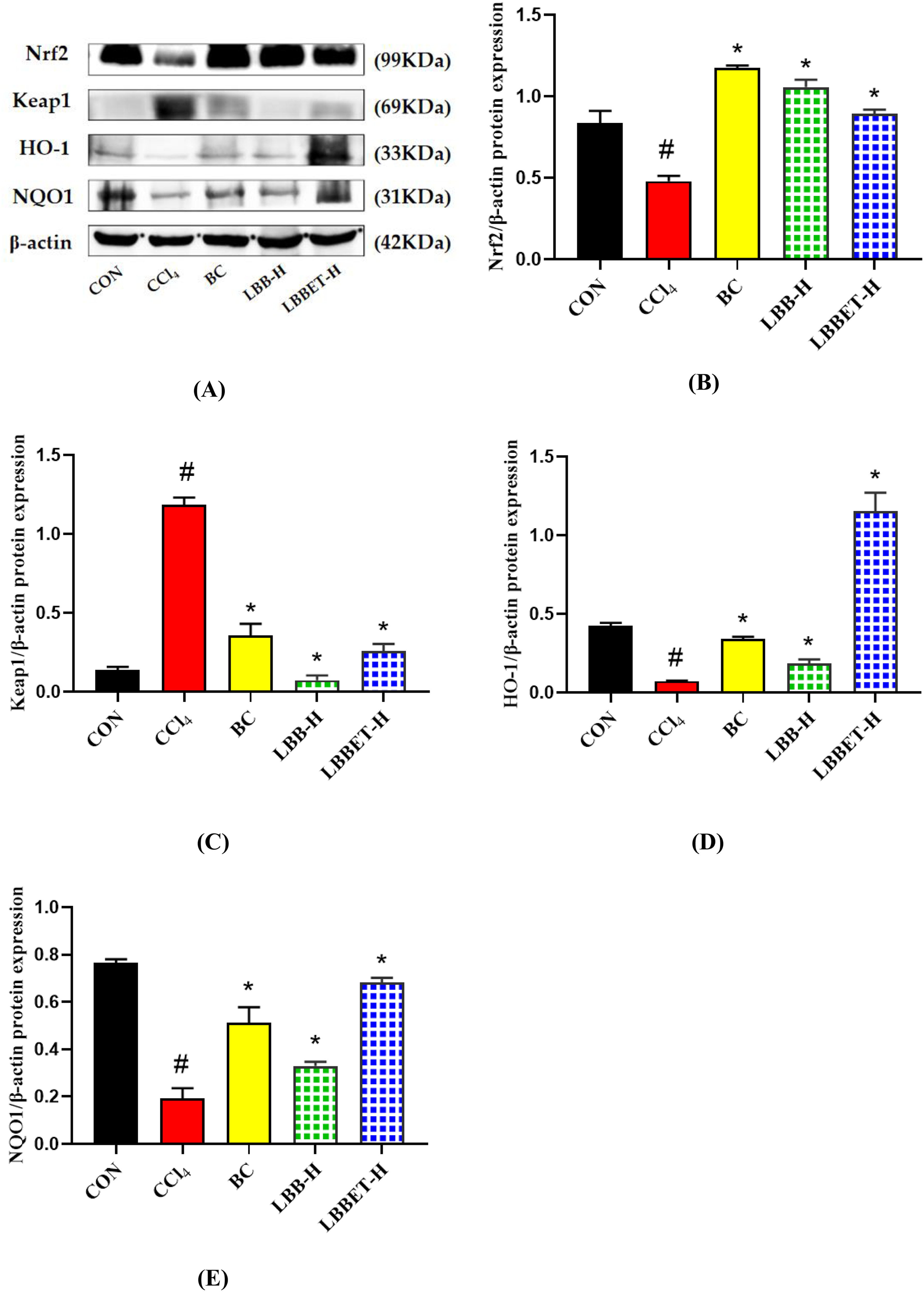
Effects of LBB and LBBET on the expression of Nrf2 (B), Keap1 (C), Keap1 (D) and NQO1 (E) in the liver. Data are expressed as mean ± SD (n = 3). #P < .05 in comparison to the CON group; *P < .05 in comparison to the CCl4 group. Abbreviations: CON, control; CCl4, carbon tetrachloride; BC, bifendate control group; LBB-H, Lycium barbarum betaine in high dosage; LBBET-H, Lycium barbarum betaine effervescent tablets in high dosage.
Discussion
CCl4 is a well-known toxic substance and a commonly used compound in the dry cleaning industry. CCl4 contamination in the environment can be absorbed by the body. 33 The purpose of this study was to investigate the protective effect of LBB and LBBET against CCl4-induced liver injury. In this study, it was confirmed that liver damage caused by CCl4 can be remarkably alleviated by using LBB and LBBET as raw materials. CCl4 causes hepatocyte damage and alters membrane integrity, resulting in enzyme leakage from hepatocytes. 34 The cytochrome P450 system metabolizes CCl4 to trichloromethyl radical (CCl3−) and trichloromethyl peroxyl radical (CCl3OO−), accumulating lipid-derived oxidation products and thiobarbituric acid reactive substances, which damage cell membranes, and eventually lead to liver disease. 35 Concomitantly, the levels of SOD, MDA, and other relevant lipid peroxidation indices were altered in liver tissue, 36 promoting the release of various enzymes from hepatocytes into the bloodstream, including ALT, AST, ALP. 37 One study showed that the serum levels of ALT, AST, ALP were significantly higher in the CCl4 group of rats compared to the CON group, indicating that the injection of CCl4 could cause acute liver function damage, while after the treatment with gooseberry and black mulberry extracts, the levels of ALT, AST, and ALP in liver were significantly reduced. 38 Our results are consistent with the above. The levels of SOD and GSH-PX were significantly decreased and the levels of MDA were significantly increased in the liver tissue of rats with acute liver injury by CCl4. After LBB and LBBET pretreatment, the levels of SOD and GSH-PX were significantly increased and the levels of MDA were significantly decreased, which is consistent with previous reports, 39 after pretreatment with LBB and LBBET. The levels of SOD and GSH-PX were much higher, whereas the levels of MDA were significantly lower.
CCl4 administration in rats has been shown to induce severe hepatic portal fibrosis, inflammatory cell infiltration, ballooning degeneration, and local hepatocellular necrosis.38,39 In this study, localized inflammatory cell infiltration, balloon-like degeneration, and a significant degree of damage were observed in the liver of the CCl4 group. To further observe some of the changes occurring in the liver, we also used transmission electron microscopy to investigate the liver ultrastructure. The results showed that the nuclear structure of rat hepatocytes injected with CCl4 was damaged, resulting in visible cell swelling and sparse chromatin in the nucleus. The above changes in hepatic ultrastructure indicated that the injection of CCl4 caused liver injury in rats. 40 It is known from this study that LBB and LBBET can help restore hepatocyte nuclear structure, after CCl4-induced liver injury in rats.
The Nrf2 signaling pathway plays a key role in combating oxidative stress, inflammation, and cell death. 41 Exposure to CCl4 is known to weaken the Nrf2 antioxidant defense system and exacerbate oxidative damage in the liver.12,42 However, when cells are attacked by ROS, Nrf2 is dissociated from Keap1 and rapidly translocated to the nucleus, where it binds to the nucleus ***antioxidant response element (ARE), forms heterodimers with small maf proteins, and then binds to the ARE to activate transcriptionally the expression of antioxidant factor genes regulated by Nrf2, such as NQO1 and HO-1. 41 Under normal circumstances, Keap1 anchors Nrf2 in the cytoplasm and prevents Nrf2 from transferring allosterically to the nucleus. 43 One study showed that L barbarum polysaccharide had a protective effect against lead-induced kidney injury in rats by activating the Nrf2 pathway, 44 and another study showed that baicalin activated the Nrf2 pathway to have a protective effect against CCl4-induced acute liver damage in mice. 45 Our results showed that compared with the CON group, CCl4 induced a decrease in the expression of Nrf2 mRNA, HO-1 mRNA, NQO1 mRNA, Nrf2 protein, HO-1 protein, and NQO1 protein and increased expression of Keap1 protein in rat liver. LBB and LBBET treatment significantly increased the expression of Nrf2 mRNA, HO-1 mRNA, and NQO1 mRNA, but significantly down-regulated the expression of Keap1 protein, suggesting that LBB can also rescue rats from CCl4-induced acute liver damage by stimulating the Nrf2 signaling pathway.
Betaine has been demonstrated to have a protective effect against several types of liver injury in numerous previous investigations. A recent study showed that betaine reduces the disruption of hepatic lipid and iron homeostasis caused by a high-fat diet in mice. 46 Another study showed that betaine could alleviate liver damage caused by ionizing radiation. 47 As a functional food or pharmaceutical formulation, effervescent tablets can be used as a new formulation for patients who have difficulty swallowing ordinary tablets or capsules, and can also be improved by adding sweeteners to improve the taste. Previous research showed that effervescent red algal sulfated polysaccharide tablets reduced ovalbumin-induced anaphylaxis by increasing regulatory T cells. 48 In addition, Solenostemma argel effervescent tablets have been shown to inhibit CCl4-induced hepatic lipid peroxidation in mice. 49 Our study also demonstrated the protective effect of LBB effervescent tablets against CCl4-induced acute liver injury in rats. This study has several limitations in that it did not explore the effect of the effervescent tablets excipients on rats and did not investigate the effect of these excipients on the hepatoprotective effect of LBBET in animal experiments. Yet, this study provides a new perspective on the improvement of liver damage caused by CCl4 intake by LBB, and provides a basis and new ideas for the development of functional foods or drugs related to the field of liver protection.
Conclusion
In conclusion, this study demonstrates that CCl4 can cause liver damage through oxidative stress. LBB and LBBET ameliorated CCl4-induced acute liver injury in rats by up-regulating antioxidant defenses (SOD, GSH-PX) and down-regulating oxidative stress (MDA) through a mechanism that may be related to activation of the Nrf2 pathway (Figure 7). This implies that LBB and LBBET may be promising hepatoprotective agents against CCl4 and can be candidates for the development of functional foods or medicine.

Potential mechanism of LBB and LBBET-mediated alleviation of CCl4-induced liver injury. Abbreviations: LBBET, Lycium barbarum betaine effervescent tablet; LBB, Lycium barbarum betaine.
Footnotes
Acknowledgments
This research is supported by the Qinghai Provincial Science and Technology Innovation and Entrepreneurship Talent Project (Qingke Fazheng [2019] No. 191).
Declaration of Conflicting Interests
The author(s) declared no potential conflicts of interest with respect to the research, authorship, and/or publication of this article.
Funding
The author(s) disclosed receipt of the following financial support for the research, authorship, and/or publication of this article: This work was supported by the Qinghai Provincial Science and Technology Innovation and Entrepreneurship Talent Project (grant number: Qingke Fazheng [2019] No. 191).
Ethical Approval
All animal care and use procedures were approved by the Medical Ethics Committee of Qinghai University School of Medicine (2019-1), and were performed in accordance with the Guide for Care and Use of Laboratory Animals (National Institutes of Health Publication NO 85-23, raised 1996).
