



Abstract
The use of natural extracts in the treatment of diabetes mellitus has grown recently. In the current study, the immune-protecting effects and the hypoglycemic and antioxidant activities of Combretum molle (C. molle) extract on oxidative injury, DNA damage, insulin resistance, and hyperglycemia were assessed. Forty male albino rats were divided into four groups: control, streptozotocin (STZ), C. molle, and STZ plus C. molle. Test subjects’ blood glucose levels, insulin hormone, HbA1C, C-peptide, antioxidant enzymes (superoxide dismutase, catalase, glutathione peroxidase, myeloperoxidase, and xanthine oxidase), markers of lipid peroxidation (malondialdehyde [MDA]), histological sections of pancreatic tissues, and comet assay were evaluated. Histological sections in pancreatic tissues were treated as indicators of C. molle efficacy for the alleviation of STZ toxicity. The genotoxicity of diabetes mellitus was assessed, and the possible therapeutic roles of C. molle on antioxidant enzymes were studied. These findings showed that the administration of C. molle reduced oxidative stress to normal levels, lowered blood glucose levels, and elevated insulin hormone. Additionally, C. molle significantly decreased pancreatic and dermal genotoxicity. The data clearly show that C. molle inhibited pancreatic, dermal, and DNA injury and improved the oxidative state in male rats, suggesting that the use of C.molle is a promising synergistic potential ameliorative agent in the diabetic animal model. The recovery of the alterations in the pancreatic tissues led to great improvements, which proved C. molle's promising capacity in the treatment of diabetes mellitus with wounds. This treatment can be considered as one of the promising opportunities for diabetic patients and may open the door for this plant's multimedical capabilities.
Introduction
Diabetes mellitus is a metabolic disease characterized by β-cell dysfunction and insulin resistance. 1 Diabetes is characterized by dysfunction in insulin secretion and the triggering of severe oxidative stress. 2 A vital marker of type II diabetes disease is β-cells' dysfunction. Diabetic patients depend mainly on insulin sensitizers to keep their levels of blood glucose within the normal range. However, these sensitizers may cause side effects and cannot completely prevent the complications related to this disease. 3 Many therapies are needed to improve insulin sensitivity and promote the regeneration of pancreatic β-cells to improve the health of diabetic patients, without side effects.
Diabetes is increasing among obese individuals. About 1/3 of elderly diabetic patients contract foot ulcers because of chronic neuropathy, which arises from the two types of diabetes mellitus. 4
Potent antioxidants have been used excessively in the diabetic experimental models to enhance the scavenging of free radicals. Diabetes is mainly characterized by the lack of insulin 5 and several vascular pathologies that lead to various complications.
Combretum molle is a herbal plant from the family of Combretaceae, which includes approximately 600 species and 20 genera. 1 This plant is usually used for the treatment of abdominal disorders and dysentery. 2 Additionally, the roots of this plant have different uses; mainly against snake bites. 3
The bark of C. molle has antibacterial activity against different bacterial strains. 5 In addition, seeds of the plant have antifungal activity, 6 and the leaves have antihelmintic activity. 7
People with diabetes disease often have hyperglycemia, which essentially leads to different complications. Diabetic foot wounds that are difficult to heal are one of these complications. 8
Delayed wound healing is the major complication of diabetes, 9 which is mainly present in uncontrolled diabetics. Diabetic ulcers have shown an increasing trend recently. It is estimated that a high percent of diabetic patients suffer from foot ulcers. 10
Additionally, tannin, the leaf extract of the C. molle plant, was revealed to have in vitro activity against malaria disease. 11
Every part of C. molle has been used in the treatment of various diseases, 12 specifically, in the fight against gangrene and any infections. Additionally, diabetic ulcers are responsible for physical distress which may affect the productivity of the community. 13
Several researchers have carried out experiments on various dressing materials. Hyperbaric oxygen therapy is one of the adjunct therapies in the treatment of diabetic foot ulcers. 14 The dressings have been reviewed recently. The contribution of natural and synthetic materials and composite forms was previously reported by Pazyar et al. 15
Vertebrate models are essential for burn research because new therapeutic modalities must first be investigated at the experimental level before clinical use. Many animals have been used in experimental burn models: dogs, sheep, rabbits, guinea pigs, hamsters, pigs, and primates. By far, rats and mice have been the most frequently used species in burn models. 16
The novelty of this study is to investigate the antidiabetic effect of C. molle leaf extracts in diabetics. Therefore, the aim of the present study was to assess the antioxidant and antidiabetic effects of C. molle extract.
Materials and Methods
C. molle Extract Preparation
Leaves of the plant were collected from the Makah region in July 2020 and were dried, powdered, and kept in a closed bottle until extraction. The powdered leaves (50 g) were extracted by maceration in 150 mL of 80% methanol consecutively for 72 h, as previously described. 17 The extract was analyzed by high-performance liquid chromatography-Ultraviolet detector (HPLC)-UV analysis that was performed at the College of Science, Taif University, Taif, Saudi Arabia. The mixture was filtered by using No. 1 Whatman filter paper. The filtrate was then dried using a rotary evaporator at a temperature of 40 °C and a speed of 45 rpm. After drying in a water bath, the dried extract was kept at −20 °C in a deep freezer until it was used.
Ultra HPLC of the Plant Extract C. Molle
Ultra-high-performance liquid chromatography (UHPLC) (Ultimate 3000) (Thermo Fisher) qualitative analyses for the C. molle extract were performed according to Fyhrquist et al. 3 Elution was performed by using (A) 0.1% formic acid and (B) 100% acetonitrile. The flow rate was 1 mL/min. A UV chromatogram was constructed between 246.22 and 301.07 nm and compared to reference compounds in the system library.
Experimental Animals
Forty adult male rats (two months old) with weights of 180 to 190 g were kept in sensitized metal cages with free access to food and water in a room maintained at a temperature of 25 °C ± 2 °C in a 12-h light/dark cycle. The rats were obtained from King Fahd Center for Medical Research (King Abdulaziz University, Jeddah, Saudi Arabia). Rats were sacrificed under ketamine/xylazine anesthesia and efforts were made to reduce stress and pain by following the health guidelines for animal use at the US institutes.
Animals and Experimental Design
After a period of acclimation with healthy diets and water ad libitum, the male rats were randomly divided into four main diabetic groups (10 rats/group) as shown in Figure1: I—Control group: nondiabetic and nonwound group; II—Diabetic group (STZ) with deep wound: positive control group; III—Group treated with C. molle extract group; and IV—Diabetic group with deep wounds treated with C. molle extract.
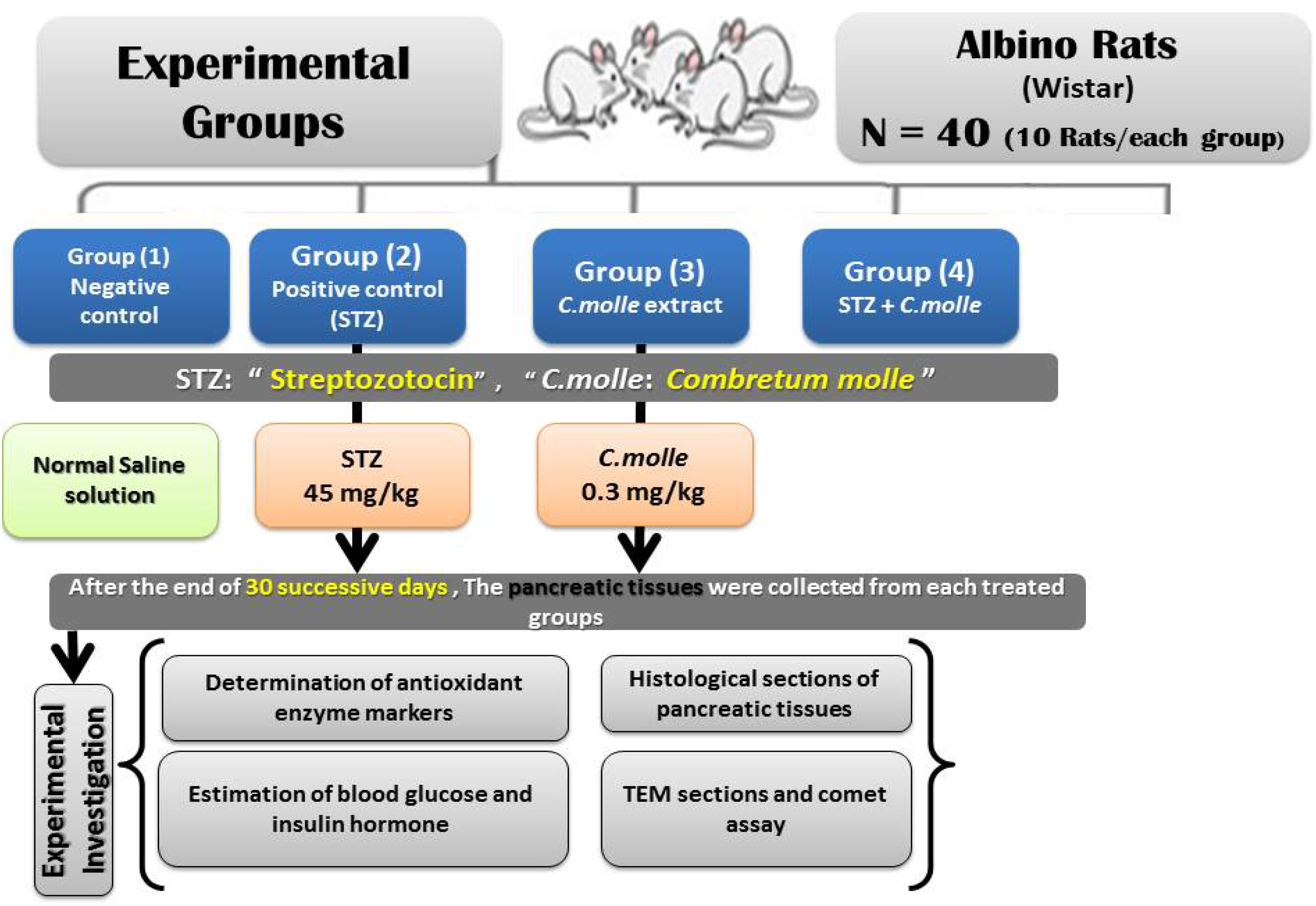
Experimental protocol.
Experimental Induction of Diabetes Mellitus
Freshly prepared STZ dissolved in phosphate-buffered saline (PBS) (pH = 4.5) was used; 50 mg/kg of STZ was given to animals that had fasted for 6 h, by intraperitoneal (IP) injection 18 with a high-fat feed to induce type II diabetes mellitus. 15 After 72 h of STZ injection, blood glucose levels were measured to evaluate the diabetic status of the test animals. Subjects with blood glucose levels higher than 280 mg/dL were considered to be diabetic.
Blood Collection
Using capillary tubes, blood samples were collected from the eye plexus with light anesthesia for biochemical and physiological analyses. The rats were ethically decapitated. Pancreatic tissue samples were kept at −25 °C.
Determination of the Blood Glucose Level
Blood glucose levels were evaluated using commercial kits (Bio-diagnostic co.).
Measurements of Serum Insulin, C-Peptide, and HbA1c
Serum insulin was evaluated using a rat ELISA kit (ALPCO Diagnostics). Here, the C-peptide enzyme commercial immune assay (Sigma-Aldrich) and hemoglobin A1C (HbA1c) kits were used in accordance with the manufacturers’ protocols.
Preparation of Pancreatic Tissue Homogenates
A small pancreatic tissue sample was used to estimate the antioxidant biomarkers. Pancreatic tissue was homogenized in 5 ml cold buffer/g at 4 °C and centrifuged at 5000 rpm for 30 min and the resulting supernatant was kept at −20 °C.
Determination of Oxidative Stress Markers
Supernatant fluids centrifuged from the pancreatic tissue were used to evaluate myeloperoxidase (MPO) and xanthine oxidase (XO). 19 Superoxide dismutase (SOD) was determined using the method by Litwack et al, 20 whereas pancreas malondialdehyde (MDA) levels were determined using the method by Ohkawa et al, 21 and catalase (CAT) according to the method by Beers and Sizer. 22
Single-Cell Gel Electrophoresis (Comet Assay)
Pancreatic tissues were placed in a petri dish with ice solution (Ca2+ and Mg2+ free with ethylenediaminetetraacetic acid (EDTA)) and the cell viability was determined.
Histological Analysis of the Pancreas Tissues
The pancreatic tissues were fixed in 10% neutral-buffered formalin and were embedded in paraffin; then thin sections were cut and stained with hematoxylin and eosin (H&E) and examined using a light microscope.
Transmission Electron Microscopic Study
A portion of the pancreas skin tissue was fixed and kept in 2.5% glutaraldehyde. The specimens were then carried on copper grids for further examination. 20
Statistical Analysis
Data were analyzed as (mean ± SEM) using the SPSS program. 21
Results
Main Chemical Composition
The present results showed that the used extract of C. molle showed the presence of many active compounds. The leaf extract contained the following compounds: alkaloids, flavonoids, saponin, anthraquinone, phenols (tannins), and lignin. All these compounds contributed to the antioxidant and antidiabetic effects of C. molle because of the presence of many important compounds that act as antioxidants, such as gallic acid and ellagic acid derivatives (Table 1).
Polyphenolic Profile of C. molle Extract for Dried Leaves of the Plant.
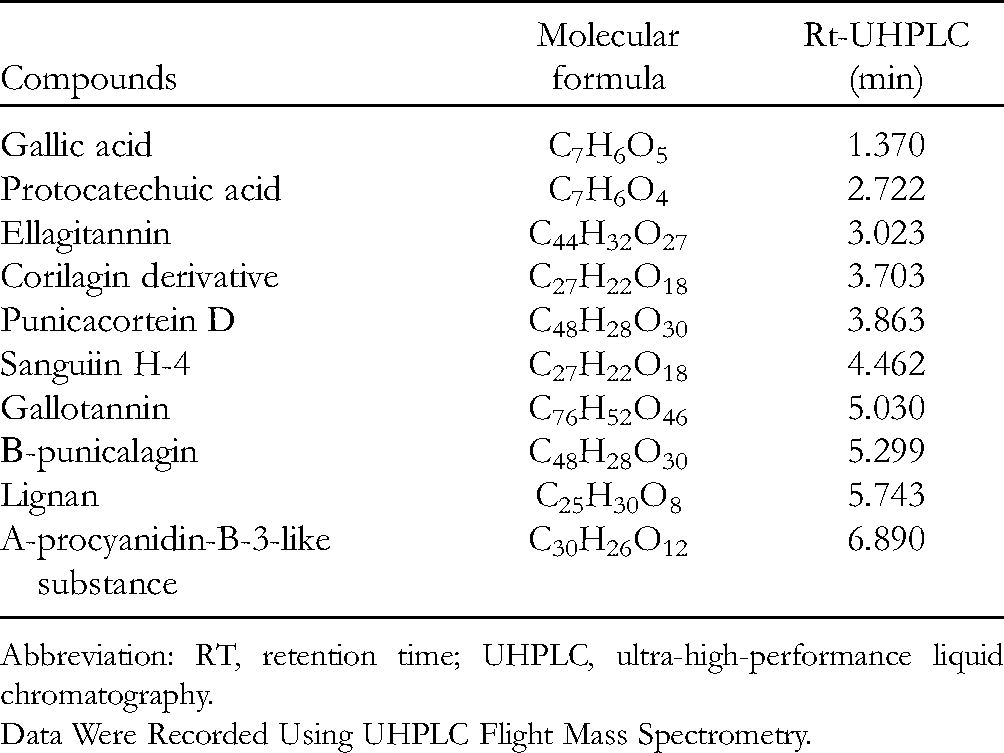
Abbreviation: RT, retention time; UHPLC, ultra-high-performance liquid chromatography.
Data Were Recorded Using UHPLC Flight Mass Spectrometry.
Biological Results
Morphological Aspects of Diabetic Rats With Wounds and Abilities of the Extract to Act as Antioxidant, Antidiabetic, and in Wound Healing
It is clear from Figure 2 that the diabetic groups that were treated with the extract of C. molle showed a great improvement in the blood glucose level because of its antioxidant and healing capacities, characterized by the disappearance of redness and edema and the appearance of a normal foot.
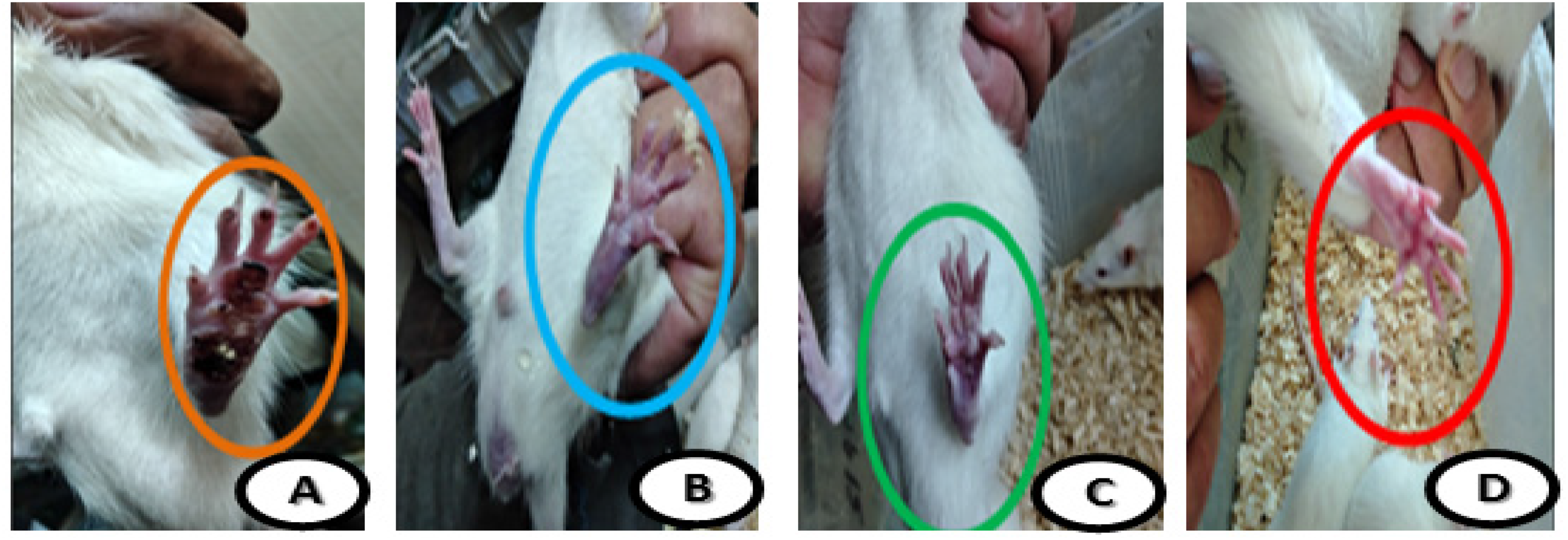
Morphological variation in diabetic rats treated with C. molle extract: (A) diabetic group with a deep wound, (B) diabetic group after 1 week of treatment with C. molle, (C) diabetic group after 2 weeks of treatment with C. molle, and (D) diabetic group after 3 weeks of treatment with C. molle.
Blood Glucose Level, Insulin Hormone, and Fasting C-Peptide Serum
STZ induced a significant increment in blood glucose levels accompanied by a significant reduction in insulin levels and serum fasting C-peptides in the diabetic untreated group as compared to the control group. As shown in Table 1 Table 2,diabetic rats treated with C. molle elicited a nonsignificant increase in blood glucose levels as compared with the control group. They also demonstrated a significant decrease in blood glucose levels with elevated insulin hormones and serum fasting C-peptides as compared with the STZ group.
Oxidative Stress Enzyme Biomarkers
Tables 2 and 3 (Table 3 and 4) showthat STZ-induced a significant decrease in CAT, SOD, and glutathione peroxidase (GPx) enzymes, while eliciting a highly significant increase in MDA, MPO, and XO levels. Compared with the control group, diabetic rats treated with C. molle showed a marked increment in CAT, SOD, and GPx levels, and elicited a decline in MPO, XO, and MDA levels. The group treated with C. molle had the best results recorded.
Blood Glucose Level, Insulin Hormone, HBA1C, and Fasting Serum C-Peptide of Male Rats Treated With C. molle Extract.

Abbreviations: HBA1C: A hemoglobin A1c; STZ, streptozotocin.
Means within the same column (mean ± SE) carrying different letters are significant at P ≤ .05, letters (a,b,c and d) alphabetically assigned according to significance level.
Oxidative/Antioxidant Parameters of Antioxidant Enzymes in Pancreatic Tissues of Male Rats Treated With C. molle Extract.

Abbreviations: SOD, superoxide dismutase; MDA, malondialdehyde; GPx, glutathione peroxidase; STZ, streptozotocin.
Means within the same column (mean ± SE) carrying different letters are significant at P ≤ .05.
MPO and XO Levels in the Pancreatic Tissues of Male Rats Treated with C. molle Extract.

Abbreviations: MPO, myeloperoxidase; XO, xanthine oxidase.
Means within the same column (mean ± SE) carrying different letters are significant at P ≤ .05.
Histological Examination
Figure 3 shows a photomicrograph of pancreas.
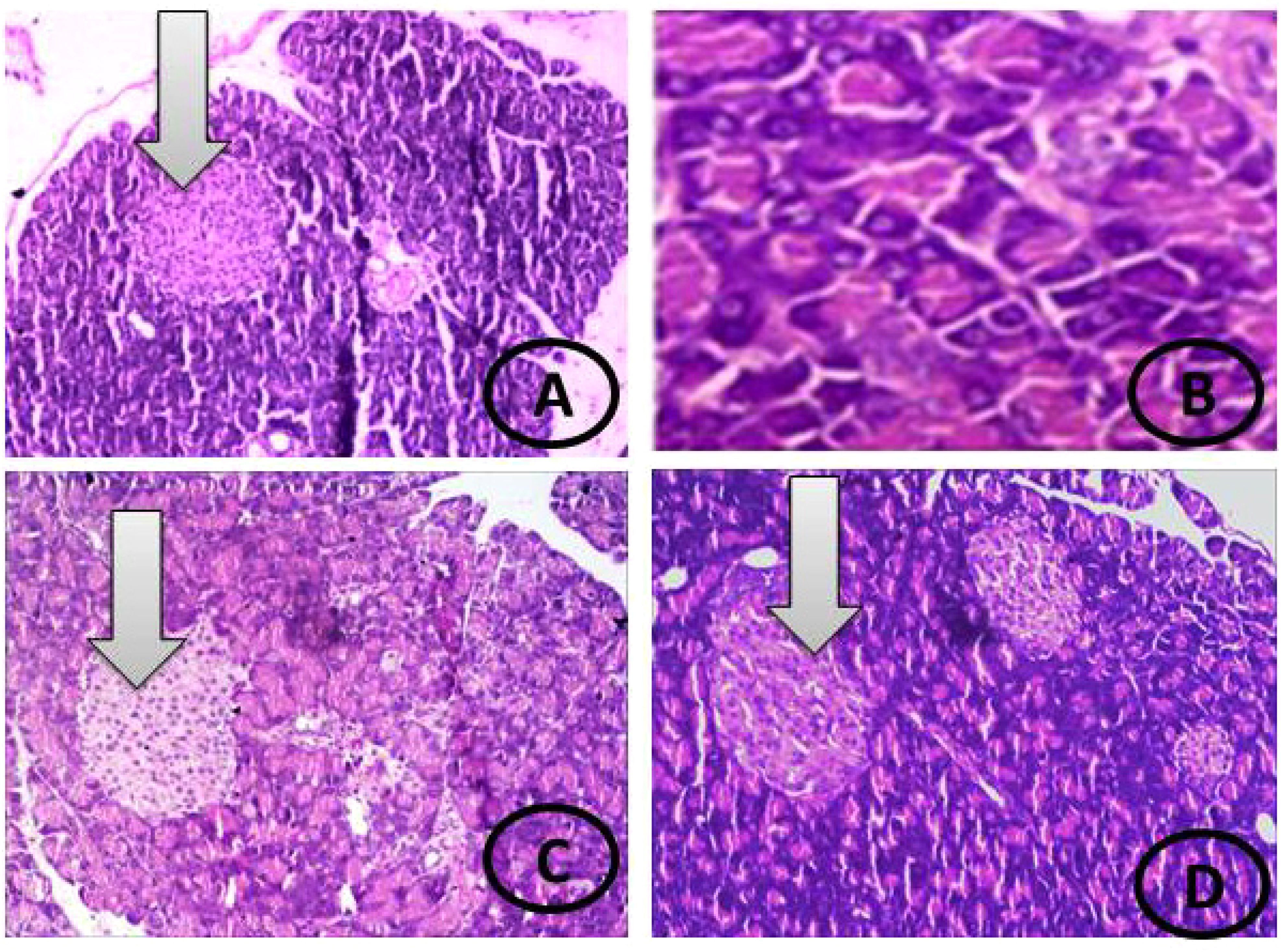
Photomicrograph of pancreas showing (A) normal pancreatic parenchyma and normal appearance of islets of Langerhans (arrow) (H &E ×400), (B) STZ treated group showing detached parenchyma with reduction of islets of Langerhans (aArrow) (H &E ×400), (C) C. molle group showing normal pancreatic parenchyma with large-sized islet of Langerhans (aArrow) (H &E ×400), and (D) STZ plus C. molle group showing normal pancreatic parenchyma with little appearance of the islet of Langerhans (aArrow) with a larger size than diabetic untreated group (H &E X400).
Comet Assay
Figure 4 shows comet images of cells derived from the pancreatic tissues.

Comet images of cells derived from the pancreatic tissues (A) control group showing intact nuclei with normal round cells. (B) STZ group shows the appearance of many apoptotic cells (whitehead arrow) with large tail shadows in the form of a comet-like shape. (C) C. molle treated group shows restoration of more intact nuclei (white star). (D) STZ+ C. molle treated group which show less damaged DNA strands and less damaged nuclei, and more intact nuclei (white arrow).
Transmission Electron Microscopic Examination
Figure 5 shows electron micrographs of pancreatic tissues and ruptured pancreatic acini (red arrow) of untreated diabetic deep wound group, with the appearance of red blood corpuscles, along with the restoration of almost all pancreatic components in the diabetic deep wound group treated with the novel extract (scale bar = 5 µm).

Ultrastructure sections of (A) control group show normal pancreatic acini and normal parenchyma. Scale bar = 5 µm. (B) diabetic untreated group shows absence of pancreatic β-cells. Scale bar = 5 µm. (C) group treated with C. molle shows normal pancreatic Langerhans and β-cells. Scale bar = 5 µm. (D) diabetic group treated with C. molle shows high amelioration than STZ group with enlarged pancreatic β-cells. Scale bar = 5 µm.
Discussion
The use of natural plants in the treatment of diabetes mellitus has been developed since ancient times, which is because treatments with plant extracts are easily accessible, mostly safe, and there is global interest in using natural products against skin pathology. 22
The wounds of diabetic patients or even burned patients are very difficult to heal, which could lead to serious consequences, such as limb amputation or even death. These experiments aimed to assess the effect of an extract of C. molle, which could accelerate the process of wound healing, especially in diabetics.
It is a major clinical issue to manage, control, and treat the pathophysiology of the foot ulcers that emerge in diabetic foot. The extract of C. molle could be an ideal dressing material, as all the chemicals present in the extract could provide regeneration of the detached skin, adequate moisture, stimulation of the growth factors, regulation of the endogenous protease, antimicrobial activity, permeability for gaseous exchange, and an antioxidant effect. As such, this promotes the infiltration and regeneration of the epithelial tissues and offers great antioxidant activities against free radicals because of the presence of potent antioxidants, such as flavonoids and phenolic compounds.
One of the important chemicals found in this plant is lignin, which is one of the most abundant plant-based biopolymers in the world after cellulose and is, therefore, a sustainable raw material. Because of its physical strength and durability, lignin is often found as a structural component of the cell walls of plants, allowing them to grow tall and protecting them from microorganisms. Additionally, lignin also comprises one of the main structural components of the vascular system of many plants, where its hydrophobic nature aids in the transport of water. Chemically, lignin demonstrates a random dendritic network that is composed of phenylpropane groups that create a complex three-dimensional structure with many functionalities and covalent linkages. 23 These findings are in agreement with the current findings, which reveal the great healing effect of the C. molle extract. It helps to heal deep wounds and mitigate the effects on the skin because of the healing properties of lignin, which is a component of the C. molle extract.
In this study, we established a rat model of diabetic foot with deep wounds and deep burn wounds, which recreated and mimicked the characteristics of foot ulcers in humans and revealed the therapeutic efficacy of this treatment.
Additionally, we investigated the effects of the C. molle extract. As mentioned, the differences between the ulcer healing process in rodents’ thighs and feet were reconfirmed in the present study. To resolve the problem, we compared the processes in the skin of the foot. As expected, wound contraction contributed to the healing in the foot after using the C. molle extract, and our results confirmed quick healing of the wounds in the foot thanks to the action of Combretum molle extract.
One of the important compounds of C. molle, as indicated in UHPLC analysis, was the presence of gallic acid, as confirmed previously by Maresca et al. 24 who stated that gallic acid plays an important role in wound healing and presents as a potent antioxidant, because it directly upregulates the expression of the antioxidant genes and stimulates skin regeneration and more keratinocytes and fibroblasts. This finding strongly confirmed the obtained results in the present study and the great ability of C. molle in wound healing, especially in diabetics, as the used extract can overcome the problem of poor circulation in diabetics.
Technological achievements of the chemical, physical, and morphological nature of the dressings and wound healing materials allow them to be effective in treating chronic hard-to-heal diabetic foot ulcers. However, there are some side effects, such as no assurance of restoration of a healthy appearance of the normal architecture of the skin; this is what drove us to investigate the healing activity of C. molle extract to both enhance the healing of wounds with the promotion of regeneration and restore the healthy appearance of the skin, which is an important aspect of healing.
A specific approach to wound filling can be considered mainly after an extensive study on the severity and cellular responses to strategically manage the challenging etiology of the foot ulcers from either diabetes or burning. The inclusion of the C. molle treatment strategy with the dressing material for the accuracy of the healing of the wound and quick delivery of the drug is a real challenge to be addressed. However, the C. molle extract provides great promise regarding the healing of deep wounds and ulcers, as shown clearly in the histological and ultrastructural sections.
In this study, we established a rat model with a diabetic foot with deep wounds, which recreated and mimicked the characteristics of foot ulcers in humans and revealed the therapeutic efficacy of the C. molle extract.
We revealed an acceleration of healing in diabetic rats that were given the C. molle extract. As revealed in the previous histological findings, regeneration of the epithelium layer appeared to be involved in the healing process of this foot ulcer model, as previously reported by Fyhrquist et al. 25
According to the chemical analysis, C. molle is rich in gallic acid, which has an important role in wound healing, as reported by Hamza et al. 17 Skin, which is the outermost layer of the human body and is constantly exposed to environmental stressors, is susceptible to severe wound and injury, and diabetic patients often suffer from chronic, impaired wound healing, which facilitates bacterial infections and necessitates high levels of care. Gallic acid has a great effect on wound healing in normal and hyperglucidic conditions that mimic diabetes. Therefore, these findings are in agreement with the chemical characterization and excellent abilities of C. molle with regard to wound healing.
The detection of CAT levels in the treated diabetic group and the burn wound group treated with C. molle extract was because of the correlation between CAT levels and skin damage, as CAT is the main enzyme responsible for degrading H2O2, and low basal levels of CAT activity are associated with the light phototype in in vitro models. Previous studies investigated the possible correlation between its activity and melanogenesis in primary cultures of human melanocytes and CAT. They revealed that CAT-specific mRNA, proteins, and enzymatic activity were all directly correlated with the total cellular melanin content and tissue damage, which is in agreement with the lower expression of CAT levels in the untreated diabetic groups 26 -31 and the high expression of CAT in the diabetic and burned groups that were treated with the C. molle extract.
The current findings are consistent with those of John et al, 27 who demonstrated that C. molle has additional antifungal synergism effects; these results confirm our findings. Based on its historical ethnomedicinal use and the strength of this experimental evidence, C. molle may be regarded not only as a suitable botanical phytochemical with which to initiate and sustain healthy diabetic blood levels and wound healing but also to elucidate some of the primary molecular events that occur mechanistically during healthy wound healing, which is a point of major significance for diabetics.
Conclusions
The present results show that using C. molle extract has great potential effect for wound healing and ulcer repair in diabetic foot models and deep wound ulcers. This is exemplified in the extract's promising capacity for skin regeneration and the restoration of the healthy appearance of the skin within a suitable period by fighting against damaging effects and promoting antioxidant enzyme regeneration in pancreatic tissues, as shown in the live images of the wounds at all stages of the treatment period and the great healing abilities of the C. molle extract.
Footnotes
Acknowledgments
Taif University Researcher supporting number (TURSP-2020/21), Taif University, Taif, Saudi Arabia.
Author Contributions
Conceptualization, R.Z.H.,E.K., F.A.A.,S.E.A. and S.M.E.; Data curation, R.Z.H., N.M.A., A.A.M.M.; Formal analysis, R.Z.H., N.M.A., A.A.M.M., E.K., and S.M.E; Funding acquisition, F.A.A. and S.M.E.; Investigation, R.Z.H., S.E.A. and S.M.E.; Methodology, R.Z.H., F.A.A., S.E.A. and S.M.E; Resources, R.Z.H., E.K. and S.M.E.; Visualization, R.Z.H. and S.M.E. All authors have read and agreed to the published version of the article.
Declaration of Conflicting Interests
The author(s) declared no potential conflicts of interest with respect to the research, authorship, and/or publication of this article.
Funding
The author(s) received no financial support for the research, authorship, and/or publication of this article.
Ethical Approval
This study's experimental protocol was approved by the Deanship of Scientific Research's “Animal Ethical Committee” of Taif University under approval number 42-0044 following the guidelines of animal use and care.
Informed Consent
Not applicable, because this article does not contain any studies with human or animal subjects.
Trial Registration
Not applicable, because this article does not contain any clinical trials.
Data Availability Statement
The data presented in this study are available upon request from the corresponding author.
Statement of Human and Animal Rights
This study's experimental protocol was approved by the Deanship of Scientific Research's “Animal Ethical Committee” of Taif University under approval number 42-0044 following the guidelines of animal use and care.
