



Abstract
The lichen host, Amandinea medusulina, collected from mangrove habitats in Sri Lanka, and its associated endolichenic fungi were isolated and identified by rDNA-ITS sequence analysis and morphological features. One of the fungal strains frequently isolated from the lichen thalli was identified as Xylaria psidii. This study aimed at the isolation and identification of the cytotoxic compounds present in this fungus. Secondary metabolites of X. psidii were first extracted into ethyl acetate and subsequently subjected to bioassay-guided fractionation to isolate the bioactive compounds. Sulforhodamine B assay against a lung cancer (NCI-H292) cell line was used to determine the differential cytotoxic activity. Bioassay-guided fractionation led to the isolation of an active compound, SS/02/29/08, showing moderate cytotoxicity (IC50 = 27.2 µg/mL). Its structure was elucidated by IR, 1D- and 2D-NMR, and 13C-NMR spectrophotometry and MS, in combination with HRMS, 13C NMR, HSQC, HMBC, and DQF-COSY. The structure of SS/02/29/08 was determined as (Z)-3-{(3-acetyl-2-hydroxyphenyl)diazenyl}-2,4-dihydroxybenzaldehyde and identified as a new compound. This novel compound has promising differential cytotoxic activity against human lung cancer cell line (NCI-H292).

Cancer is one of the leading causes of death worldwide. Chemotherapy has been the choice for cancer treatment for many years, but this can also affect normal cells and create many undesirable side effects and has the potential to develop resistance. Therefore, alternative medicines of natural origin are gaining attention in cancer research. Among them, fungal metabolites have gained much attention in the scientific community as a source of novel bioactive compounds. Endolichenic fungi are a diverse group predominantly inhabiting asymptomatically in the interior of lichen thalli. These fungi produce a broad spectrum of secondary metabolites for their survival in order to overcome their local challenges. Since the first report of metabolites of an endolichenic fungus, 1 176 compounds have been isolated, of which 104 were identified as new compounds 2 ; several of these with antioxidant and antibacterial properties have been reported. 3 Kannangara et al 4 isolated several endolichenic fungal strains with antifungal properties from lichens found in Hakgala montane forest in Sri Lanka. Five novel bioactive polyketides with antioxidant properties have been isolated and characterized from the endolichenic fungi, Curvularia trifolii and Penicillium citrinum 5 -7 from Sri Lanka. Most of these secondary metabolites from endolichenic fungi have shown remarkable cytotoxic activities against cancer cell lines. Gao et al 2 presented a comprehensive review on cytotoxic compounds discovered from endolichenic fungi, but no such studies are reported in Sri Lanka. As such, this is the first report of a novel cytotoxic compound from an endolichenic fungus isolated from a lichen grown in Sri Lanka. In this study, the cytotoxic activity of secondary metabolites isolated from Xylaria psidii inhabiting the lichen, Amandinea medusulina collected from the mangrove ecosystem of Puttalam lagoon in Sri Lanka was screened against the lung cancer cell line, NCI-H292.
Results and Discussion
Isolation and Identification of Fungal Strains
The endolichenic fungus isolated from the lichen host, A. medusulina, produced white fluffy mycelia on malt extract agar (MEA) and produced a reddish pink color. Five hundred and thirty-nine base pairs of the ITS sequence matched with 5 X. psidii sequences of the GenBank (KJ767111, KF192828, MK784811, FJ037730, and MG757919) with a sequence similarity of 99%. The maximum likelihood tree generated with available sequences at the GenBank is shown in Figure 1. Based on the tree, it is clear that the isolate used in the current study (MF773655) was clustered together with other authenticated X. psidii samples of the GenBank with 98% bootstrap support.
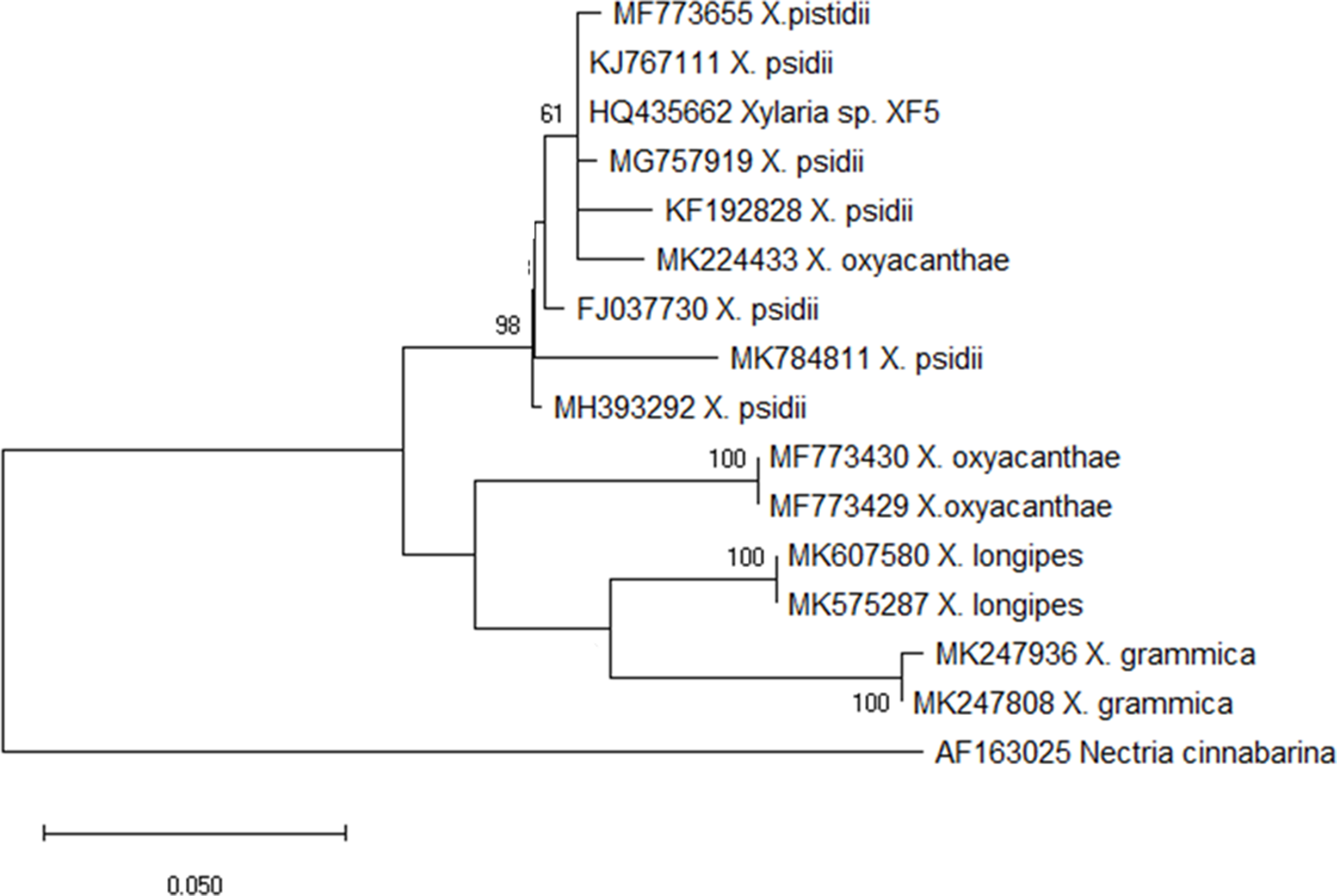
Maximum likelihood tree with the highest log likelihood (−2045.87) is shown. The percentage of trees in which the associated taxa clustered together is shown next to the branches in bootstrap values. The tree is drawn to scale, with branch lengths measured in the number of substitutions per site. The sample used in the current study is shown in GenBank accession number MF773655.
Bioassay-Guided Isolation of the Bioactive Compounds of Xylaria psidii and Their Cytotoxicity
The cytotoxic activity of the crude extract of X. psidii and its subsequent fractions against a lung cancer (NCI-H292) cell line was tested at 12.5, 25, 50, 100, and 200 µg/mL concentrations (Figure 2(A)). As the crude extract showed good cytotoxic activity, it was subjected to further fractionation. The n-hexane fraction had very low cytotoxicity, whereas the chloroform and methanol fractions showed significant activity. Hence, this study focused on the isolation of bioactive pure compounds from the methanol fraction. The cytotoxic activity of the pure compounds was tested at 3.125, 6.25, 12.5, 25, and 50 µg/mL against the NCI-H292 cell line. Compound

Cytotoxicity of (A) EtOAc extract and fractions obtained from the EtOAc extract of Xylaria psidii and (B) compound 1 obtained from the methanol fraction against lung cancer line, NCI-H292 (n = 3).
Percentage Cell Survival of Lung Cancer Cells (NCI-H292) and IC50 Values.

IC50 values obtained for the crude/subsequent fractions isolated from the endolichenic fungus, X. psidi. IC50 values are taken as means ± standard deviation from 3 independent experiments, n = 3.
Structure Elucidation of Compound 1
Bioassay-guided fractionation of the anticancer active EtOAc extract of X. psidii involving solvent-solvent partitioning, silica gel column chromatography, and preparative TLC furnished compound
The presence of 2 six-membered aromatic rings in compound
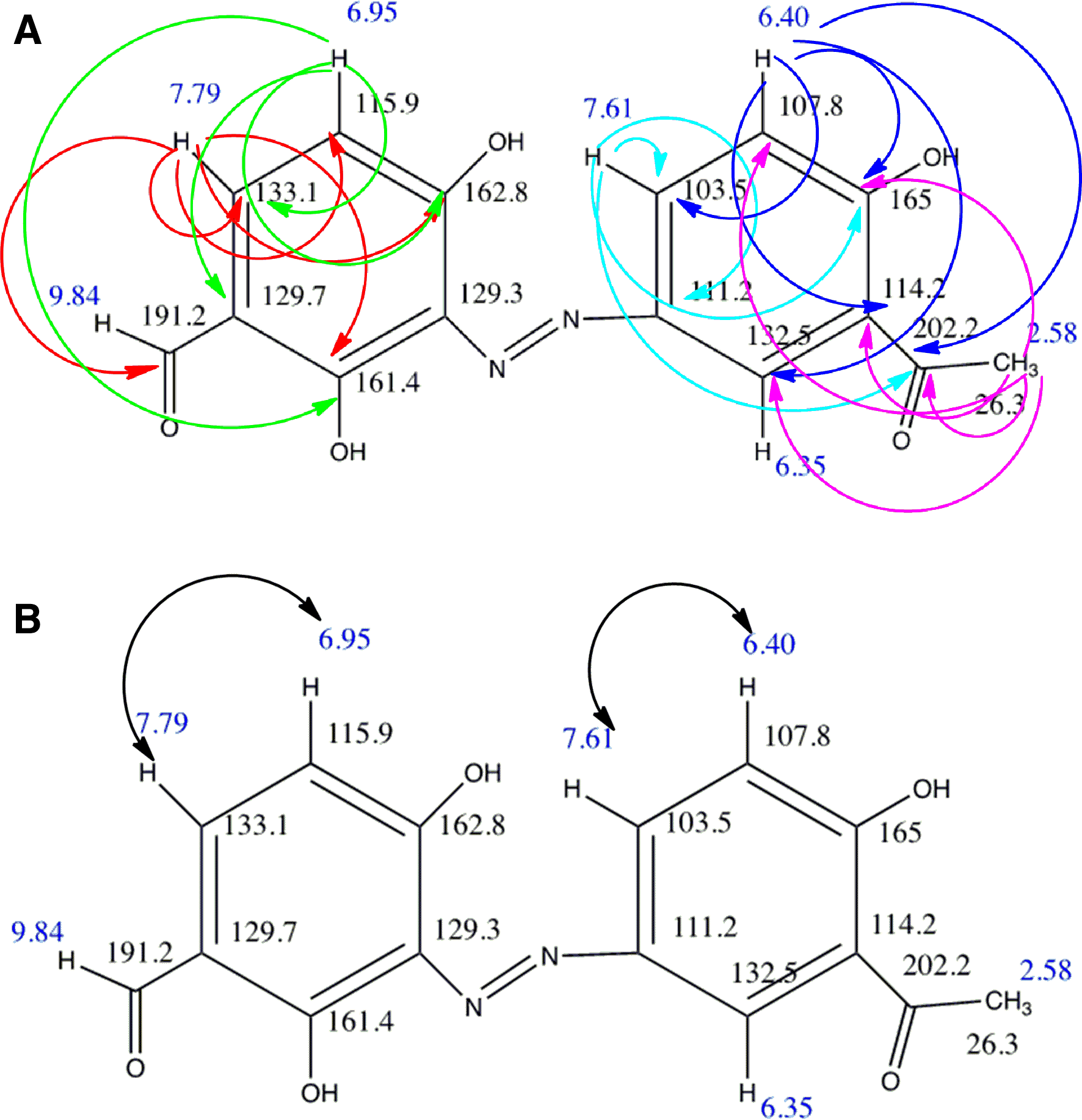
(A) Key HMBC and (B) DQF-COSY correlations for compound 1.
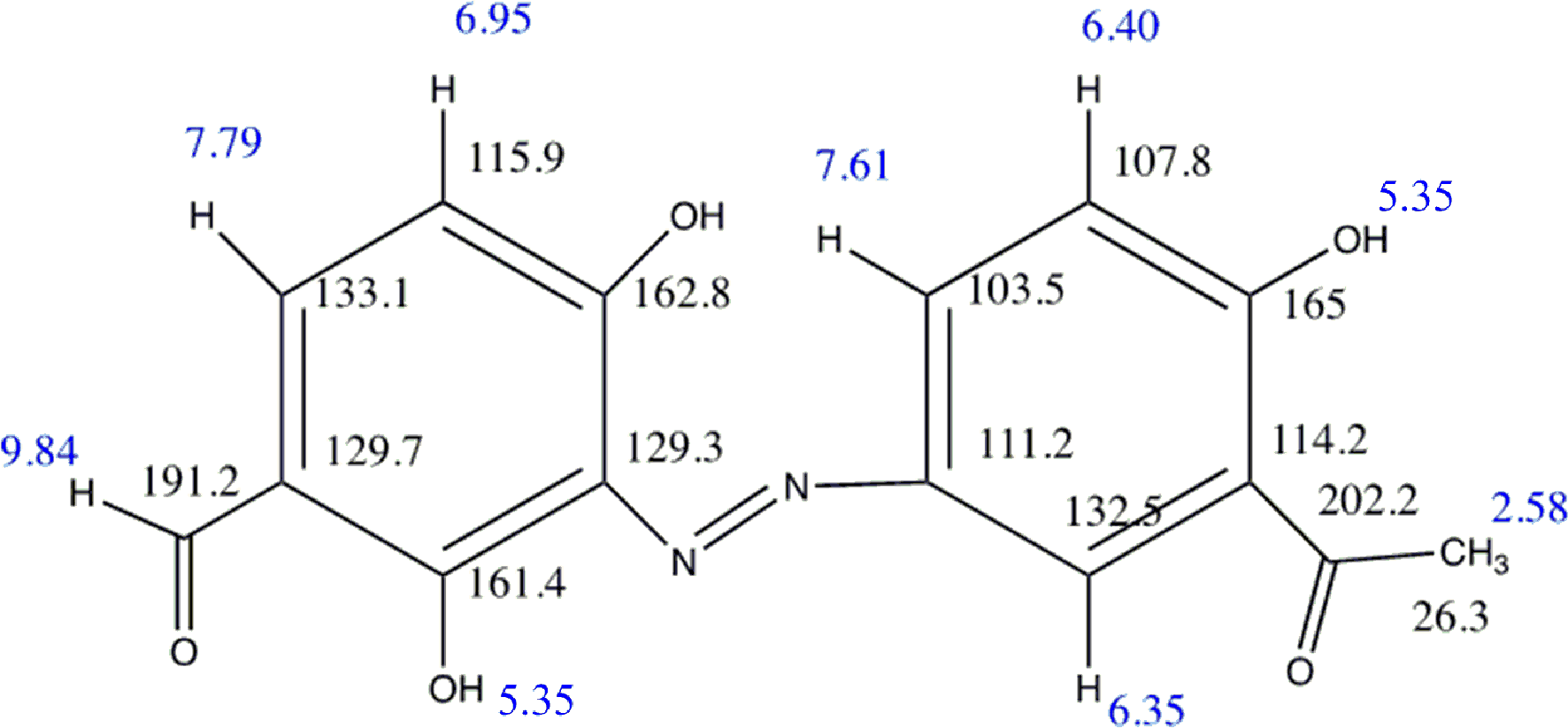
Structure of compound 1.
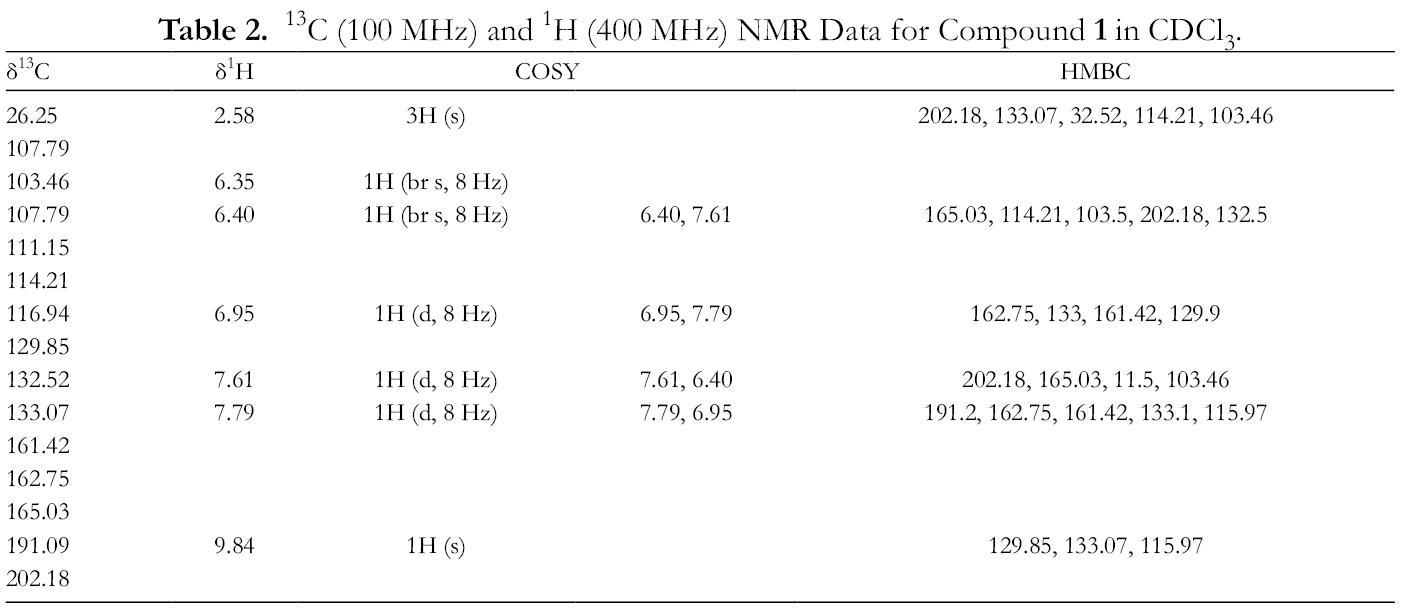
13C (100 MHz) and 1H (400 MHz) NMR Data for Compound 1 in CDCl3.
The genus Xylaria is rich in biologically active secondary metabolites and the isolation of potent anticancer compounds from X. psidii has been reported previously. Two compounds, cyclo(N-methyl-
Conclusion
Compound
Methodology
Isolation and Identification of Fungal Strain and Molecular Phylogeny
The lichen host, A. medusulina, was collected from mangrove habitats located in Kala Oya area (8°17′48.3″N and 79°57′25.4″E) of Puttalam district in Sri Lanka situated at an elevation of about 1 m above mean sea level. The lichen host was surface sterilized as described in Samanthi et al. 5 Fungal colonies generated from the lichen tissue were subcultured on MEA medium; pure cultures were obtained and stored in sterilized distilled water at room temperature until further use.
Molecular identification of the isolated pure cultures of the endolichenic fungi were carried out as described in Maduranga et al. 9 Total genomic DNA was isolated from selected pure cultures, and the nuclear robosomal interanl transcribed spacer region (rDNA-ITS) region was amplified using polymerase chain reaction (PCR); the PCR products were subjected to Sanger dideoxy sequencing at the Genetech Institute, Colombo, Sri Lanka. Sequences were manually edited using BioEdit sequence Alignment Editor (Version 7.2.5). Using Basic Local Alignment Search Tool (BLAST), the sequences were compared with the sequences at the National Center for Biotechnology Information (NCBI) database. Based on the morphology and molecular characteristics, X. psidii was selected for further analysis. A pure culture of the isolate was vouchered under the number AT/L/13/E2 at the Department of Chemistry, University of Kelaniya, Sri Lanka. The sequence was deposited in the GenBank and an accession number was obtained. Molecular phylogenetic analysis was conducted using a Maximum Likelihood method using the bioinformatics software MEGA X 10 with 1000 bootstrap replications to test the statistical support for each branch. Nectria cinnabarina (AF163025) was selected as the outgroup for the analysis.
Preparation of EtOAc Extract of Xylaria Psidii and Determination of Anticancer Activity
A seed culture of X. psidii grown on potato dextrose agar (PDA) plates for 1 week was used for large scale culturing of the fungus. Fifty large plates (150 mm diam.) were inoculated from the above colony and incubated at room temperature for 1 week. After the incubation period, the mycelia were cut into small pieces along with the PDA medium and transferred into 1 L Erlenmeyer flasks and extracted with EtOAc (800 mL × 5) for 24 hours at room temperature. Solvent was evaporated under reduced pressure using a rotary evaporator (IKA RV 10, India) at 30 °C, and the resulting solid was purged with N2 gas and stored in the refrigerator until further use.
The NCI-H292 cell line, obtained from a 32-year-old female patient with mucoepidermoid pulmonary carcinoma, was used for the cytotoxicity assay. It is an adherent epithelial lung tissue of Homo sapiens. It was stored in a liquid nitrogen vapor phase condition.
The cytotoxic activity of the crude extract was determined in a flat bottom 96-well microtiter plate using the sulforhodamine B (SRB) assay against the NCI-H292 lung cancer cell line according to the method described by Samarakoon et al. 11 The percentage of cells surviving was determined after 24 hours by measuring the optical density at 540 nm, using a microplate reader (Synergy, Micro Plate Reader, United Kingdom). Three replicates were carried out for each experiment. IC50 values of the crude extracts were calculated using GraphPadPrism (version 6.0) software package.
Isolation of Cytotoxic Compounds in the EtOAc Extract
A portion (1.32 g) of the crude extract was partitioned with n-hexane, CHCl3, and 80% methanol in water, as described by Paranagama et al. 1 The cytotoxic activity of each fraction was evaluated using the SRB assay described above. Both CHCl3 and MeOH fractions were active against the lung cancer cell line. This study reports the isolation of cytotoxic compounds in the MeOH fraction only.
Bioassay-Guided Isolation of the Cytotoxic Compounds in the MeOH Fraction
A portion (48.5 mg) of the MeOH fraction was subjected to silica gel column chromatography. The column was eluted with CH2Cl2 followed by increasing amounts of MeOH in CH2Cl2 and finally 100% MeOH. The resulting fractions were pooled on the basis of their TLC profiles to obtain 5 fractions. These were further purified either by silica column chromatography as described above or preparative TLC (9 × 20 cm, stationary phase: 60 F-254, Fluka, Germany) depending on the yield of each fraction, with the solvent system, 3% MeOH in CH2Cl2. Chromatographic separation was repeated on subsequent fractions until the isolation of pure compounds (Supplemental Figure S1) and their cytotoxic activity was determined. Only 1 of them (compound
Determination of the Structure of Compound 1
The structure of the compound was determined by 1H-NMR and 13C-NMR spectrophotometry in combination with DQF-COSY, HMBC, and HSQC correlations. HRMS was used to obtain the molecular mass of the compound.
Supplemental Material
Supplementary Material 1 - Supplemental material for A Novel Cytotoxic Compound From the Endolichenic Fungus, Xylaria psidii Inhabiting the Lichen, Amandinea medusulina
Supplemental material, Supplementary Material 1, for A Novel Cytotoxic Compound From the Endolichenic Fungus, Xylaria psidii Inhabiting the Lichen, Amandinea medusulina by Sinthujah Santhirasegaram, Suranga R. Wickramarachchi, Renuka N. Attanayake, Gothamie Weerakoon, Sameera Samarakoon, Kithsiri Wijeratne and Priyani A. Paranagama in Natural Product Communications
Footnotes
Acknowledgment
We wish to thank Prof. Kiran Kalia, Director (NIPER-A) and Dr Abhijeet S. Kate, Assistant Professor, National Institute of Pharmaceutical Education & Research, Ahmedabad for providing HRMS data of the pure compound.
Declaration of Conflicting Interests
The author(s) declared no potential conflicts of interest with respect to the research, authorship, and/or publication of this article.
Funding
The author(s) disclosed receipt of the following financial support for the research, authorship, and/or publication of this article: This work was supported by the National Research Council (Grant no. NRC/15-08) and the Ministry of Science Technology and Research (MSTR/TRD/AGR/03/02/07).

References
Supplementary Material
Please find the following supplemental material available below.
For Open Access articles published under a Creative Commons License, all supplemental material carries the same license as the article it is associated with.
For non-Open Access articles published, all supplemental material carries a non-exclusive license, and permission requests for re-use of supplemental material or any part of supplemental material shall be sent directly to the copyright owner as specified in the copyright notice associated with the article.
