



Abstract
Diabetes mellitus (DM) and hypertension are 2 of the most prevalent diseases with poor impact on health status worldwide. In most cases, they coexist with other metabolic disorders as well as cardiac, micro- and macrovascular complications. Many plants are known for their hypotensive, cardioprotective, and/or antidiabetic activities. Their active ingredients either identified and isolated or still utilized as herbal preparations of certain plant parts. The use of medicinal plants comprises the main basis for most of the traditional medicine (TM) systems and procedures. As conventional medicines seem insufficient to control such progressive diseases, herbal agents from TM could be used as adjuvant with good impact on disease control and progression as well as other concomitant health conditions. The aim of this study is to compare the efficacy of 10 different herbal medicines of botanical origin or herbal preparations in the management of hypertension and its cardiovascular complications and type 2 DM along with various coexisting health disorders. These herbal medicines are garlic, berberine, resveratrol, Hibiscus sabdariffa, Zizyphus (oxyphylla, mucronate, jujube, rugosa), hesperidin, red beetroot, Catha edulis, mulberry leaves, and Portulaca oleracea.
Keywords
Diabetes mellitus (DM) and hypertension constitute a great threat for human health as two of the most prevalent degenerative diseases all over the world. Over the years, many studies have been conducted on available and new treatments for both diseases and many of these were inspired from traditional medicine (TM); more than 400 traditional plant treatments for DM have been recognized, but little number out of these have received scientific and medical evaluation. 1 According to World Health Organization (WHO) 2003 and 2014 definitions, TM is all the natural remedies and techniques developed by indigenous cultures. 2 Traditional medicine is quite popular especially in cases when conventional medicine is insufficient for proper management. Herbal products are fundamental in most of the TM systems. Investigations carried out on herbal agents’ efficacy and safety lead to the adoption of many agents in conventional medicine systems as replacement or complementary agents. Furthermore, plant preparations and their isolated bioactive compounds play a very important role in the development of semisynthetic and synthetic medications. 3
Hypertension is termed a silent killer. About 1 billion people around the world had been diagnosed with hypertension but scarcely the diagnosis is early enough. It is highly accepted that hypertension is one of the main factors leading to cardiovascular diseases as it contributes to more than 20% of heart attacks and 50% of all strokes. 4 In spite of the large number of medications being available for hypertension, it is not completely controlled in a large proportion of victims. 5 Some argue that adverse effects and complexity of regimens are the reasons for poor compliance, 6 and the fact is that hypertension is a lifelong disorder that is never actually cured.
The limit for high blood pressure (BP), which requires therapeutic intervention, is now set to be any level higher than 140/90 mmHg. Blood pressure is the outcome of systemic vascular resistance multiplication with cardiac output. So, hypertension mostly occurs as a result of the inability of the heart to adjust the cardiac output according to venous return and preload or a factor that enhanced the vasoconstrictive tone. Various classes of medications are available for hypertension, which act directly on vascular smooth muscles on Ca or K channels or alter the sympathetic tone or act centrally. Cerebrovascular and renal complications are very common among hypertensive patients though the elevation in BP increases morbidity and mortality. 7 -9
On the other hand, type 2 diabetes mellitus (T2DM) is a group of metabolic disorders due to endocrine defect in insulin production with various degrees of insulin resistance. This defect in carbohydrates metabolism is commonly accompanied with lipid metabolism disorders and oxidative stress with multiple micro- and macrovascular complications that can affect several body organs. Type 2 diabetes mellitus has steadily increasing prevalence and deleterious consequences on human health. About 422 million adults suffered from diabetes in 2014 and the number is growing. As this type is more common in elderly patients, late diagnosis is expected and medications’ side effects lead to further complications. 10,11
In terms of etiology, the elevation of blood glucose level is the main factor in all diabetic complications. It exerts additional load on the kidney, which attempts to normalize the glucose levels. The prolonged pressure particularly in late diagnosed T2DM leads to pathological alterations in glomerular structure and function, hence leading to diabetic nephropathy which commonly develops to end-stage renal disease. 12 Furthermore, the state of insulin resistance due to accumulated fatty acids leads to micro- and macrovascular complications including diabetic retinopathy and neuropathy, which remain unrecognized until symptoms appear and become a serious threat of organ failure. Diabetes mellitus also leads to changes in plasma osmolarity and acid base balance which leads to diabetic ketoacidosis (DKA) or diabetic hyperosmolar coma. 13
The aim of this review is to discuss and compare the efficacy and safety profiles of 10 plant preparations and bioactive compounds from TM in the management of T2DM, hyperlipidemia, hypertension, and cardiovascular disorders (CVDs) as sole medicines and adjuvant for uncontrolled patients on first-line medications and their effect on the progression of these disorders and other coexisting diseases.
Garlic
Allium sativum (Figure 1) is widely used as a flavoring agent and a culinary spice. Its medical use began in ancient Egypt then in Greece, China, India, and many other countries. 14 It is known as an antihypertensive and anti-atherosclerotic, and it is used to improve lipid profile. Most members of Allium species contain organosulfur compounds responsible for their flavor, odor as well as the biological activity. In many previous studies, allicin was believed to be the main active substance responsible for the antihypertensive effect of garlic but it is still unsettled with the fact whether it is responsible for hypolipidemic effect. 15 Gardner et al’s clinical trial concluded that garlicin which can release allicin readily in the gastro-intestinal tract (GIT) did not have any hypolipidemic effect. Therefore, allicin is considered a transient compound that decomposes to smaller organosulfur compounds, which may be responsible for the effect. 16

Different garlic preparations’ mechanisms of action. ACE, angiotensin converting enzymes; Ang II, angiotensin II; COX, cyclooxygenase; ERK, extracellular signal regulated kinases; LOX, lipoxygenase; MTP, microsomal triacyl glycerol transfer protein; NF-κB, nuclear factor kappa beta; NO, nitric oxide; PGE2, prostaglandin E2; SOD, sodium oxide dismutase; TC, total cholesterol; TG, triglyceride; TXB2, thromboxane B2; VSM, vascular smooth muscles.
Many forms of garlic are available for use such as powder, oil (capsules), raw or cooked garlic, and aged garlic extract (AGEx), each of these have different bioavailability due to different composition; for example, Rosenson et al 17 reported that the powder formula is more effective than AGEx and oil in the reduction of triglycerides (TGs) and total cholesterol (TC). Furthermore, in a recent trial, AGEx was found to be safer than raw garlic when used for hypertension. Out of the most important sulfur-containing amino acids, S-1-propenylcysteine (S1PC) hypotensive activity was found to be superior to S-allyl cysteine (SAC). 18
The antihypertensive mechanism of garlic is due to its angiotensin-converting enzyme inhibition (ACEinh). 19,20 It enhances hydrogen sulfide and NO production and acts as a vasodilator agent. 21,22 Although Ashraf et al 23 argue that the hypotensive effect of garlic has nothing to do with NO, in addition, garlic inhibits thromboxane-B2 and prostaglandin-E2 synthesis, which have vasoconstrictive effect. Garlic is also useful in improving lipid profile as it affects the synthesis of TC and fatty acids. 24 Garlic also inhibits microsomal triacylglycerol transfer protein expression, attenuating chylomicrons formation and release from the small intestines after a meal. 25
Garlic activity as a hypotensive and hypolipidemic agent is very important in the prevention of CVD, atherosclerosis, and all of their associated mortalities. Another independent mechanism in the prevention of CVD progression and particularly cardiac modulation and hypertrophy is the maintenance of cell-cycle inhibitor p27Kip1 levels and the prevention of ERK/1 phosphorylation. 26 Additionally, garlic represses the inflammatory process through the modulation of cytokines profile and the stimulation of immune cells along with the suppression of induced NO synthase and cyclooxygenase 2 (COX2) activity 27,28 and retains the inactive form of nuclear factor kappa B i(NF-κB) by suppressing excessive lipoxygenase (LOX and COX synthesis. 29
The organosulfur active constituents in different garlic formulations have antioxidant properties via direct scavenging capacity. 30 Garlic also stimulates catalase (CAT) enzyme and increases the levels of endogenous antioxidants such as glutathione and other endogenous thiols, and these effects make garlic useful in the prevention of diabetes nephropathy and other complications of T2DM and CVD. 29
Many studies that were conducted on the effect of AGEx on diabetic rats showed positive results as it is concluded that AGEx reduced blood glucose level (BGL) and glycated hemoglobin significantly, and increased serum insulin level along with its antioxidant effect. 31 Garlic may have a beneficial effect in T2DM patients acting as insulin secretagogue and alleviating insulin resistance, 25 and time-release garlic powder tablets decreased fasting blood glucose level (FBGL) and had some beneficial effect on hyperlipidemia as well. 32 However, the results were not always consistent as a trial conducted on diabetic patients found that AGEx did not affect BGL, glycated hemoglobin, or lipid profile except for TG after 3 months of treatment and only reduced oxidative stress. 33 Similarly, AGEx had no significant effect on hyperglycemia biomarkers, lipid profile, and even on oxidative stress and inflammatory process. 34
Many trials concluded that garlic might be an efficient adjuvant for hypertensive, hyperlipidemic patients and for those with high-risk CVD. A dose 480 mg of AGE may be as potent as conventional antihypertensive medications. 35 Various garlic preparations can potentiate anticoagulants efficacy which was proved in the study of Macan et al 36 as garlic did not show any additional adverse effects when it was added to warfarin treatment and Ried et al 37 proved that garlic on its own can normalize platelet functions.
Pharmacokinetic investigations documented that garlic does not alter CYP1A2, CYP2D6, or CYP3A4 activity and did not interact with drugs metabolized via these enzymes when it has been used up to 28 days. More prolonged administration leads to nonclinically significant reduction in CYP2E1 activity. 38 The most common reported drug interaction with garlic is with HIV medication Saquinavir. 39
Unpleasant body odor and halitosis are the most common and the only statistically significant adverse effects which might be alleviated by odor-free garlic preparations, and mild self-limited gastrointestinal side effects are frequently reported. 40 Other adverse effects such as lung damage were reported in a study on rats 41 as well as unexplained bowel obstruction, hematemesis, hematochezia, esophagitis, risk for deleterious side effects such as allergic reactions that could reach contact dermatitis or even anaphylaxis, generalized urticaria, pemphigus, skin burns when applied topically, angioedema, rhinitis, and asthma. Garlic affected infant behavior when administered in breastfeeding mothers, and chromosomal breakage, anemia, heart and kidney toxicity were reported as well . 29,39,42,43
Genus Zizyphus
Genus Zizyphus (Figure 2) of family Rhamnaceae includes more than 100 species. Most members are small trees or shrubs found in many countries that have had a vital role in TM for a long time, as antipyretic, antimicrobial, antioxidant, and natural treatment for tumors.

Species of genus Zizyphus mechanisms of action. AGE, advanced glycation end products; CVS, cardiovascular system; LOX, lipoxygenase; TXA2, thromboxane A2.
We are going to discuss the biological activity of 4 different species of genus Zizyphus on T2DM, namely, Ziziphus oxyphylla, Zizyphus rugosa, Ziziphus mucronate, and Zizyphus jujube. Most members of genus Zizyphus are potential antioxidant agents such as lotus and spina cristi species. 44,45
Zizyphus oxypylla is widely used in TM commonly in Pakistan. The main active constituent is cyclopeptide alkaloids, flavonoids, and some phenolic compounds. Recently, Ahmad et al 46 reported the identification of neutral cyclopeptide alkaloids which had never been reported in any plant before besides the 17-cyclopeptide alkaloids previously identified. 47
Zizyphus oxyphylla is known as natural antidiabetic agent and its most important mechanism of action is its activity as α-glucosidase inhibitor. 48 Furthermore, phenolic compounds, flavonoids, and quercetin glycosides are responsible for direct free radical scavenging ability due to the aromatic ring hydroxyl groups in their organic structure which would decrease the formation of advanced glycation end product. 49 Zizyphus oxyphylla also has anti-inflammatory effect through LOX enzyme inhibition. 46 Its acetylcholine esterase inhibition ability may have an important activity in patients with myasthenia gravis in addition to T2DM. 50
Studies conducted on Z. oxyphylla toxicity are insufficient, however, in vivo trials did not report serious side effects except for cytotoxicity upon using root crude extract. 51
Ziziphus rugosa potential activity as antidiabetic agent is very recently discovered. Its root contains triterpenoid compounds that can act as a potent α-glucosidase inhibitor in a noncompetitive manner through H-bond formation between the carboxyl group of C-28 and Arg312 and Gln350 of the enzyme rather than in a competitive manner in which the antidiabetic effect includes antioxidant activity owing to horridin flavonoid glycoside. 52
Ziziphus mucronata, commonly known as buffalo thorn, is well known in many countries and mostly in Nigeria. It has a unique antidiabetic mechanism that differs from other species due to its insulinotropic properties 53 along with their common mechanisms as antioxidants, α-glucosidase and α-amylase inhibitors. 54,55
Long-term administration of Z. mucronata did not cause side effects. However, it might be regarded mutagenic and cause aneuploidy. 56 Ziziphus mucronata was involved in disease outbreak in South Africa related to Coniodictyum chevalieri fungus. 57 The most important limitation for its use is in patients with high risk of CVD and abnormal high lipid profiles, and it could be very hazardous due to hyperlipidemic constituents. 53
Ziziphus jujuba is the last member we aim to mention in our review. Acting as an antioxidant, it prevents diabetic complications and reduces glycation end-product, which is mediated by its peptide content that have strong reducing capacity. 58
Jujuboside B saponin constituents in Z. jujube reduce thromboxane A2 (TXA2) level mediating its anti-inflammatory effect. Furthermore, it attenuates bleeding and decreases the risk of thromboembolism which might have a useful effect in CVD. 59 Ziziphus jujuba is generally considered safe but dosing adjustment is still required. 60
Mulberry Leaf
White mulberry (Figure 3) or Morus alba is grown in many countries all over the world. Its leaves are widely used in Asian countries specially China, Japan, and Korea for its antidiabetic, antimicrobial, anti-inflammatory, and cardioprotective properties. 61
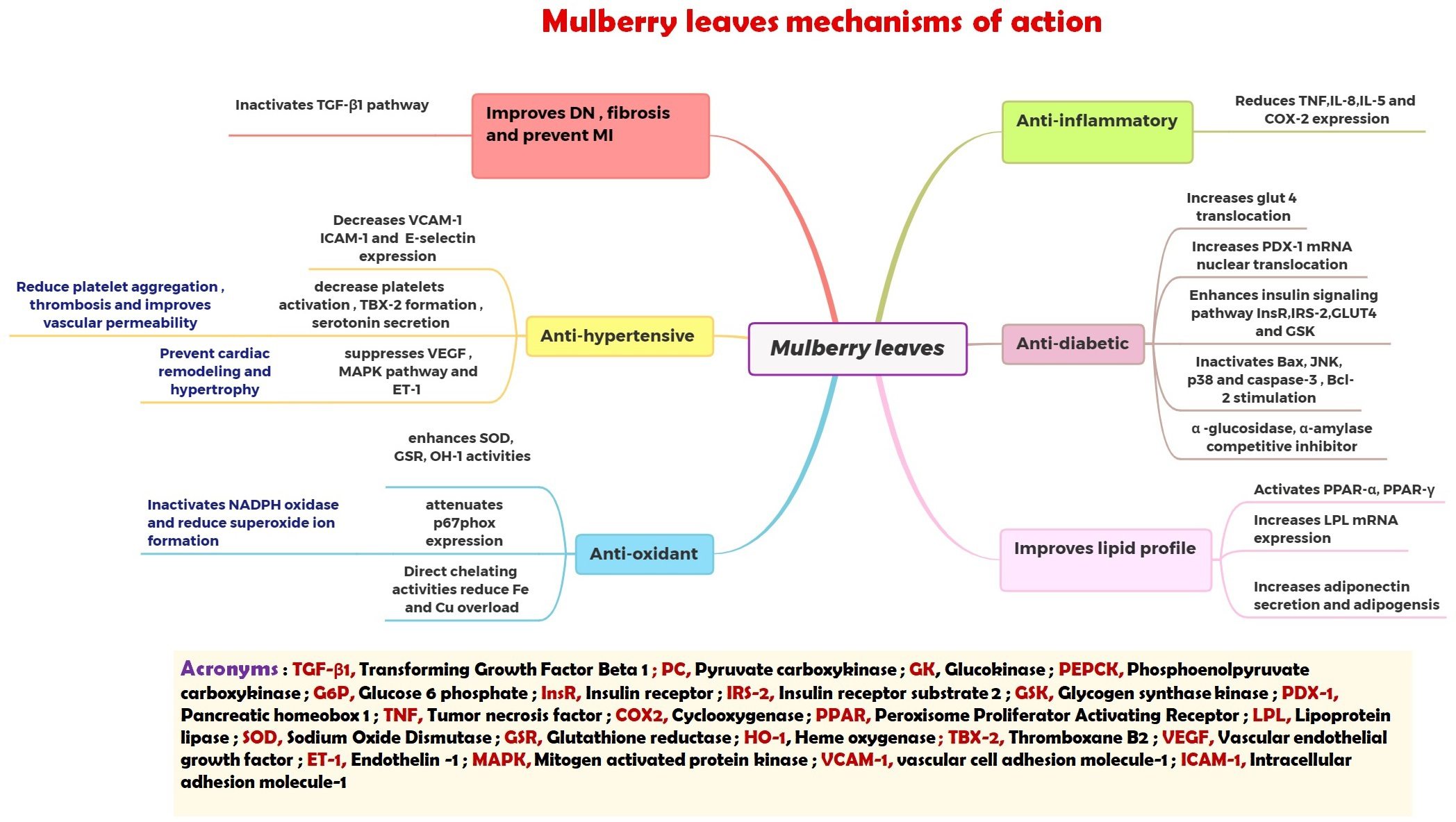
Mulberry leaves mechanisms of action. COX2, cyclooxygenase 2; ET-1, endothelin-1; GK, glucokinase; G6P, glucose 6-phosphate; GSK, glycogen synthase kinase; GSR, glutothione reductase; HO-1, heme oxygenase; ICAM-1, intracellular adhesion molecule-1; InsR, insulin receptor; IRS-2, insulin receptor substrate 2; LPL, lipoprotein lipase; MAPK, mitogen activated protein kinase; PC, pyruvate carboxykinase; PDX-1, pancreatic homeobox 1; PEPCK, phosphoenolpyruvate carboxykinase; PPAR, peroxisome proliferator activating receptor; SOD, sodium oxide dismutase; TBX2, thromboxane B2; TGF-β1, transforming growth factor beta 1; TNF, tumor necrosis factor; VCAM, vascular cell adhesion molecule-1; VEGF, vascular endothelial growth factor.
The main therapeutic application of M. alba is antidiabetic due to its properties attributed to the presence of 1-deoxynojirimycin (DNJ), the most abundant iminosugar in its constituents, along with dideoxy-1,4-imino-
In addition, it elicits an effect on diabetes nephropathy, which is mediated through the inactivation of transforming growth factor beta 1 that has a predominant role in the incidence of kidney and myocardial fibrosis. Furthermore, mulberry leaves have anti-apoptotic properties through the inactivation of apoptosis pathway components Bax, JNK, p38, and caspase-3 and the stimulation of Bcl-2, which suggests a valuable impact on kidney and neurodegenerative diseases. 62,70 Potentiation of the activity of antioxidant enzymes such as sodium oxide dismutase (SOD), heme oxygenase-1 (HO-1), and glutathione reductase along with direct chelation properties due to phenolic contents quercetin, rutin, kaempferol, flavanol, and catechin all contribute to relieving oxidative stress and metal overload such as Fe and Cu. 29,64
Mulberry leaves improve the lipid profile and reduce the cholesterol levels through the enhancement of lipoprotein lipase mRNA expression, secretion of adiponectin, activation of peroxisome proliferator-activated receptors such as peroxisome proliferator activating receptor (PPAR)-α and PPAR-γ, and preservation of liver functions. 71 Cardioprotective properties of ML can prevent pathological cardiac remodeling and hypertrophy through suppression of endothelin-1 (ET-1), and reduction of vascular cell adhesion molecule-1 (VCAM-1), intracellular adhesion molecule-1 (ICAM-1), and E-selectin expression in the coronaries specially aorta 72 making mulberry a potential therapeutic or adjuvant agent for either diagnosed CVD patients or high risk population.
Mulberry has anti-inflammatory effects and prevents thrombosis through the reduction of TBX2, COX2, tumor necrosis factor-α (TNF-α), interleukin-8 (IL-8), and interleukin-6 (IL-6) expression and synthesis 73,74 affecting inflammation acute phase. 67
The main limitation for mulberry leaves medical utilization is its short half-life due to the rapid metabolism of DNJ by CYP450 enzymes although other active constituents might be a subject for enterohepatic recirculation. 75,76 1-Deoxynojirimycin bioavailability in mulberry leaf extract could be less than that in the purified form as its peak level is 15 µg/mL. This could be solved by co-administration of carboxymethyl cellulose which improves its pharmacokinetic profile and its antidiabetic activity. 73,77 Additionally, DNJ represents a small percentage of mulberry active constituents which requires the administration of high doses consequently increasing the risk of side effects incidence. 78,79 Several animal studies showed that mulberry extract caused reduction in leukocytes numbers, which required proper dosing without genotoxicity. 61,80 The maximum safe dose of mulberry extract was higher than 5 g/kg in mice which proves its good safety and therapeutic index. 81
Red Beetroot
The root of beet plant or Beta vulgaris is well known in North America, and it eliminates the unpleasant odor of garlic intake. It has promising antihypertensive properties owing to dietary nitrates and betalains contents. 82,83 So, it is a dietary source for vasodilator NO.
Betalains, especially betanin and isobetanin, have electron donating capacity acting as reducing antioxidant agents that prevent radical oxidative stress (ROSt) and its associated health hazards. 84 Anti-inflammatory properties of red beetroot which might be attributed to betalains are mediated through the suppression of COX2 and NF-κB. 82 Beetroot has prolonged antihypertensive effect because its metabolic processing might cause further release of NO. 85 Betalains absorption rate is unknown yet but Frank et al 86 reported that very small fraction of betalains was eliminated in urine which suggests another route of elimination.
The most common limitation for red beetroot clinical utilization is the unmetabolized red colored betalains that lead to reddish discoloration of urine and stool, worrying the patient as it is usually confused with melena or hematochezia. Chronic administration of red beetroot also suppresses CP450, CYP1A1/1A2, and CYP2E enzymes activity and affects all drugs metabolized through their pathways. 85
Hibiscus sabdariffa
Hibiscus sabdariffa (Figure 4) is used worldwide as a drink prepared from dried flower calyx and epicalyx. It is known to have a good impact on hypertension, hyperlipidemia, tumors, and many other health problems. 87,88

Hibiscus sabdariffa mechanisms of action. AGE, advanced glycation end products; ACE, angiotensin converting enzyme; CAT, catalase; CTGF, connective tissue growth factor; GSH, glutothione; NO, nitric oxide; SOD, sodium oxide dismutase.
The hypotensive effect of H. sabdariffa is mediated through vascular smooth muscle relaxation activity via inhibition of potassium channel activation and calcium influx, 89,90 along with cGMP pathway and phosphatidylinositol-3-kinase/protein kinase B pathway activation which stimulates NO synthase enzyme. 91 Vasodilatation may also be mediated by cholinergic or histaminic pathway, 92 and the constituent anthocyanins causes ACE inhibition. 93 Hibiscus sabdariffa has multiple cardioprotective mechanisms including augmentation of myocardial vascularization maintaining its nutritional supply and relieving high work load which diminishes the risk for hypertrophy. 94 Furthermore, it reduces atherosclerosis progression by induction of myocardial cells apoptosis via p35 and 38 pathways. 95 In addition to its hypolipidemic activity through reduction of cholesterol synthesis by HMG-CoA reductase inhibition, 96 stimulation of hepatic lipase and inhibition of adipocytes differentiation were through inhibition of phosphorylation and activation of protein kinase B pathway (PI3-K/Akt). 88,97 Its antioxidant activity is associated with anti-atherosclerotic properties including reduction of low density lipoprotein (LDL) oxidation, formation of foam cell, and other steps of formation of atherosclerotic plaque. 97,98 Free radical scavenging properties had also been reported along with xanthine oxidase inhibition properties that make it useful in cases of hyperuricemia and gout. 89
Polyphenolic extract can have a beneficial effect in prevention of diabetic complications as it attenuates advanced glycation end product (AGE) receptors and connective tissue growth factor expression. 99
The limitations for H. sabdariffa utilization are the following: There is no reported effect for H. sabdariffa on metabolizing enzymes; however, possible interaction between H. sabdariffa and hydrochlorothiazide in hypertensive patients is documented. 91,100 Anthocyanins are rapidly absorbed but have poor bioavailability because only small amounts are absorbed as intact glycosides and not hydrolyzed to the bioactive aglycones. 101 Topical administration of H. sabdariffa is limited due to skin irritation and poor dermal absorption which could be solved by liposome formulations that improves its permeation and enhances its antioxidant capacity. 102 Hibiscus sabdariffa doses higher than 150 to 180 mg/kg/day elevated the levels of some plasma enzymes such as alanine amino transferase (ALT) and aspartate amino transferase (AST); however, others such as lactate dehydrogenase (LDH) and alkaline phosphatase (ALP) were not affected. 103 Hibiscus sabdariffa doses as high as 300 mg/kg could lead to hepatic side effects when administered for 1 month. 91 Hibiscus sabdariffa extract could lead to reduction in epididymal sperm count and distortion in sperm cells and testicular tubules. 89,104
Berberine
Berberine (Figure 5) is a quaternary ammonium salt of the benzylisoquinoline from protoberberine alkaloids, which is mostly found in rhizomes, parks, and stems of many plants around the world like Berberis. 105,106 The therapeutic activity of berberine as an antimicrobial, antitumor, antidiabetic, antihypertensive, immunomodulatory, and hypolipidemic agent makes it one of the most important bioactive compounds that plays a vital role in TM. 107

Berberine mechanisms of action. ACh, acetylcholine; COX 2, cyclooxygenase 2; DPPIV, dipeptidyl peptidase-4; GBM, glomerular basement membrane; GLP-1, glucagon-like peptide-1; GSH, glutothione; GSH-px, glutothione peroxidase, HO-1, heme oxygenase-1; iNOS, induced nitric oxide synthase; InsR, insulin receptor; NO, nitric oxide; PCSK9, proprotein convertase subtilisin/kexin type 9; SOD, sodium oxide dismutase; SI complex, sucrase-isomaltase complex; SIRT1, sirtuin 1; TC, total cholesterol; TG, triglyceride.
Berberine’s most prominent effect is the activation of AMP-activated protein kinase (AMPK) catabolic pathway that mediates most of its antidiabetic activities through increasing GLUT1 and GLUT4 transporters levels as well as increasing InsR mRNA and protein expression; therefore, berberine improves glucose uptake and glycolysis and alleviates insulin resistance. 108 -110 It inhibits retinol binding protein, which is involved in insulin resistance development. 111 Berberine also acts as α-glucosidase and intestinal disaccharidases inhibitor along with the prohibition of sucrase-isomaltase complex (SI complex) mRNA expression, 112,113 and through the stimulation of Akt pathway, it inactivates glycogen synthase kinase thus enhancing glycogen synthesis. 114,115
In addition, berberine increases incretin levels through competitive inhibition of dipeptidyl peptidase-4, fitting optimally in the enzyme-binding pocket. Consequently, it stimulates insulin release following carbohydrates intake and improves the body’s glycemic response. 116 Berberine has a more pronounced effect on GLP-1 as it increases GLP-1 secretion via stimulation of gut-expressed bitter taste receptors (TAS2R38, a subtype of bitter taste receptors) and enhances its biosynthesis by the activation of proglucagon gene and prohormone convertase 3 gene. 117,118 Alteration of gut commensal bacteria Bifidobacterium species is another suggested mechanism. 119 Furthermore, berberine can relieve diabetes nephropathy through the stimulation of Nrf2 and its target genes reducing apoptosis-induced renal damage 120 and has the ability to act as an acetylcholinesterase (ACHE) enzyme competitive inhibitor which could be of use in myasthenia gravis and glaucoma. 121
Berberine improves lipid profile as it stabilizes LDL receptor mRNA and increases its expression, reduces TG and cholesterol synthesis, and increases high density lipoprotein (HDL) cholesterol levels. Improving endothelial function and the antioxidant capacity of berberine through enhancing SOD and GSH-px activity and inhibition of lipoprotein oxidation 121,122 as well as the anti-inflammatory properties via inhibition of pro-inflammatory cytokines protein expression and release prevent complications of DM and CVD. 109 Co-administration of berberine with statins has a beneficial additive effect because statins cholesterol lowering activity is associated with the upregulation of proprotein convertase subtilisin/kexin type 9 (PCSK9) that leads to low density lipoprotein receptor (LDLR) breakdown suppressing their own hypolipidemic effects, therefore, berberine retains their cholesterol lowering ability and inhibits (PCSK9) mRNA expression. 123
Berberine utilization with immunosuppressant cyclosporine can increase blood levels of cyclosporine and reduce the required doses to reach a therapeutic level with no additional side effects. 124 On the other hand, its concomitant administration with metformin leads to drug-drug interaction due to its ability to act as a substrate for organic cation transporters, which is responsible for metformin transport leading to increased AUC of metformin and slowing down its clearance. It could be used as an antimicrobial agent like other common folk medicines such as Shilajit plant. 125
The most important limitations for its use are its poor pharmacokinetic profile due to its highly hydrophobic nature, poor penetration and absorption. However, this can be solved by preparations such as solid lipid nanoparticles or phytosomes loaded with berberine-phospholipid complex (P-BER), which has much higher bioavailability. 126,127
Liver is considered its main accumulation organ, while first-pass metabolism occurs mostly in small intestines. Berberine binds to ATP-binding cassette (ABC) transporters especially P-glycoprotein (P-gp) and multidrug resistance associated protein-1 (MRP1), which transport their substrates extracellularly decreasing its own absorption and the absorption of other substrates of these transporters. It also alters the activity of a number of CYP isoenzymes that may lead to several drug interactions. Berberine side effects are dose related, 200 to 1000 mg twice or thrice daily are regarded safe with no toxicity. However, animal studies showed that doses higher than 45 mg/kg resulted in more serious side effects such as gastrointestinal disturbance, dyspnea, heart damage, and hypotension. 38,128 -130
In a clinical trial, the gastrointestinal side effects of berberine start from doses of 500 mg three times daily in 34.5% of patients. 129 Animal studies reported no adverse effect of berberine on pregnant mothers. 131 However, another study noted that it could lead to jaundice, kernicterus, and mental disorders in newborns as berberine dislocates bilirubin from serum proteins. 56 A research group concluded that berberine does not have cytotoxic or genotoxic properties. 128 However, in the results of a more recent study, berberine could cause cytotoxicity, DNA damage, increase oxidative stress, and induce apoptosis. 129
Resveratrol
Resveratrol (Figure 6) is a polyphenolic compound, which is found in many plants and beverages around the world. It is known to be responsible for the French paradox phenomenon that is explained by the high amounts of red wine consumed by the French. 132 It has various medical applications in Alzheimer’s disease, cancer, CVDs, diabetes, and other medical conditions.

Resveratrol’s mechanisms of action. eNOs, endogenous nitric oxide synthase; ET-1, endothelin-1; HNE, 4-hydroxy-2-nonenal; MLC, myosin light chain; MYPT1, myosin phosphatase-targeting subunit-1; SOD, sodium oxide dismutase; SIRT1, sirtuin 1.
As a hypotensive, cardioprotective agent, resveratrol has multiple mechanisms of actions. It improves vascular function and muscle contractility through the inhibition of myosin phosphatase-targeting subunit 1 (MYPT1) and myosin light chain (MLC) phosphorylation by angiotensin II via activation of 5′ AMP-activated protein kinase (AMPK) pathway and inhibition of rho-associated, coiled-coil-containing protein kinase 1 (ROCK) enzyme. 133 Resveratrol also acts as a vasodilator through the inhibition of Ca+2 transportation extracellularly by the suppression of L-type Ca+2 channels activity and intracellularly by the inhibition of IP3-gated Ca2 + channels 134 along with the activation of K channels particularly Kv1.1 subtypes KV1.1 and/or KV1.6 channels. 135 Inhibition of Ca+2 activities plays a role in inhibition of platelet aggregation. In addition, TXA2 and its stable metabolite TXB2 are essential regulators to amplify platelet activation, secretion, and aggregation 136 ; resveratrol reduces TXB2 levels. 137 It enhances acetylcholine vasorelaxant effect and attenuates angiotensin II and phenylephrine although many studies showed that it had no effect on normotensive patients. 138,139
Furthermore, resveratrol has antioxidant capacity as it enhances glutathione peroxidase and SOD activity and increases their mRNA expression. 132,140 It also reduces the levels of reactive oxygen species specially 4-hydroxy-2-nonenal and its induced inactivation of LKB-1-AMPK pathway thus activating endothelial NO synthase 141 or through prevention of endogenous nitric oxide synthase (eNOs) uncoupling as reported by Bhatt et al. 142 Others mentioned additional mechanisms, as resveratrol increases tetrahydrobiopterin BH4 levels, which acts as a cofactor for eNOs and activates sirtuin 1 (SIRT1), which increases eNOs activation and expression. 132,140 On the contrary, some studies such as Han et al 143 reported no effect of resveratrol on NO levels or stimulation.
Resveratrol activity as a cardioprotective agent includes its hypolipidemic effect mediated through its ability to suppress HMG CoA reductase enzyme expression along with reducing of TG levels. 144,145 Additionally, it controls cytochrome P450 27-hydroxylase enzyme, which is responsible for cholesterol metabolism and elimination, 146 and perpetuates mitochondrial functions as it protects mitochondrial fatty acids from oxidation. 147 It has the ability to prevent cardiac remodeling and hypertension-induced hypertrophy through the inhibition of ET-1 expression and acting as ET-1 antagonist. 148 However, Lekli et al 149 argue that resveratrol does not have an inhibitory effect on ET-1 receptors. Resveratrol also inhibits pro-hypertrophic signals (p70S6K) via activation of LKB-1-AMPK pathway. 141 All the previous pathways are linked to pulmonary hypertension and ocular hypertension especially steroid-induced elevation of intraocular pressure (IOP). 132,150 Resveratrol is an important hepatoprotective agent and prevents neurodegeneration, which makes it useful in alcoholic and nonalcoholic liver steatosis and Alzheimer. 151,152
The antidiabetic effect of resveratrol was investigated for many years. Lekli et al 149 reported that it can upregulate GLUT4 expression and prevent apoptosis which in addition to the hypolipidemic activity of resveratrol would have a great impact on DM and its complications. Furthermore, it appears to have a synergetic effect with metformin. 153
Medical application of resveratrol is limited by its poor bioavailability (0.5% only) due to extensive first pass metabolism in liver. Some researchers argue that resveratrol bioavailability in wine is much better than when orally administered. 154 Lungs also play an important role in resveratrol metabolism. 155 Another limitation is the wide variations in blood levels of resveratrol after absorption. 156 However, its highly lipophilic nature provides high tissue concentration and high volume of distribution even for tiny amounts in different supplements. 157
The poor bioavailability problem is currently solved by preparations such as Nano formulation that has much higher bioavailability and allows its topical and buccal application. 158,159 Resveratrol is generally considered safe and has no toxic effects; nonetheless, one study reported that it leads to renal failure in 5 patients out of 24 enrolled subjects who received 5 g/day. 157
Hesperidin
Hesperidin (Figure 7), a flavanone glycoside found in citrus fruit peels, and its deglycated product hesperetin aglycone have an important role in TM in many countries as antioxidant, anti-inflammatory, and anti-allergic cardioprotective and they are used to reduce capillary fragility. 160 Hesperidin reduces the BP through the stimulation of eNOs and NO production and the attenuation of sympathetic activity. 161,162 Hesperitin acts as a direct vasodilator through the stimulation of voltage gated K+ channels and the inhibition of L-type Ca+2 channels. 163,164 Hesperidin has anti-arrhythmic property due to its ability to prolong Q-wave/T-wave (QT) interval, 165 and it also acts as a potent antioxidant through direct free radical scavenging mechanism and activation of erythroid 2-related factor 2, SOD, glutathione reductase, and CAT enzymes along with vitamin C and E and enhancing the production and activity of plasma protein thiols. 166 Furthermore, hesperidin has a statin-like action as it decreases the expression HMG-CoA reductase enzyme and acyl CoA: cholesterol acyltransferase (ACAT) which leads to the reduction of serum and liver cholesterol along with the potentiation of LDL receptor activity. 167

Hesperidin and hesperitin aglycone mechanisms of action. ACAT, acyl-CoA: cholesterol acyltransferase; COX2, cyclooxygenase 2; eNOS, endogenous nitric oxide synthase; GK, glucokinase; GSH, glutathione; G6PD, glucose 6-phosphate dehydrogenase; MDA, malondialdehyde; NF-κB, nuclear factor kappa beta; NP-SH, nonprotein sulfydryl; PPAR, peroxisome proliferator activating receptor; SOD, sodium oxide dismutase; VEGF, vascular endothelial growth factor.
Hesperidin acts as an anti-inflammatory agent through the inhibition of COX2 and NF-κB and the prevention of platelet aggregation. 168 -170
Multiple studies were conducted to determine and evaluate the impact of hesperidin on T2DM and its complications. According to Wilcox et al 171 results that were proven by Akiyama et al 167 in vivo, hesperidin increased gene expression of adiponectin, PPAR-α and -γ. It also stimulates GK and inhibits G6PD and phosphoenolpyruvate carboxykinase activity enhancing glycolysis and attenuating gluconeogenesis, along with its ability to enhance GLUT4 gene expression. 172,173 Hesperidin has the ability to act as α-glucosidase inhibitor as well. 174 All of these mechanisms lower blood glucose levels, decrease glycated hemoglobin percentage, and improve glycemic control in T2DM patients.
Antioxidant properties of hesperidin seem to contribute in its hypoglycemic effect by protecting the sulfhydryl groups of glycolytic enzymes 175 and in its ability to prevent or reverse brain damage and diabetic neuropathy through maintaining normal levels of GSH and NP-SH enzymes, reducing malondialdehyde (MDA) levels, increasing nicotinic and muscarinic tones thus preventing cellular metabolic degradation. 176,177
Hespeeitin has a good impact on microvascular complications as retinal vasculature damage through its anti-angiogenic properties as it reduces vascular endothelial growth factor and protein kinase C (PKC-β) genes expression. Vascular endothelial growth factor also known as vascular permeability factor which is a cytokine that plays a vital role in angiogenesis and mitosis which upon stimulation activates PKC-β and participates in diabetic retinopathy. 178
In addition, hesperidin is known for its antitumor properties. In vivo study on animal models indicated that hesperidin increased body weight and reduced incidence of lung, intestinal, breast tumor, and various types of carcinoma cell lines which is thought to be due to its anti-angiogenic, anti-inflammatory, apoptotic, and antioxidant properties. 160,169,179,180 While, Fernández-Bedmar et al 181 suggested a dose-dependent cytotoxic behavior and inhibition of DNA 5′ cytosine methylation affecting the epigenetics for tumor formation. It may be a beneficial add-on for chemotherapy regimens to decrease cisplatin-induced hepatotoxicity without altering its cytotoxicity. However, co-administration of hesperidin with cyclophosphamide ameliorated the cytotoxic effect of cyclophosphamide, 182 and in vitro studies suggested the possible interaction between hesperidin and doxorubicin reducing the latter efficacy.
In vivo animal studies supported the claim that hesperidin has good impact on bone state and would be effective in osteoporosis, bone resorption, and remodeling disorders related to hormonal imbalance. As an example, hesperitin aglycone was found to prevent bone degradation associated with aromatase inhibitors and preserved bone mass density. 183 Trzeciakiewicz et al 184 concluded that hesperidin enhanced osteoblast differentiation through bone morphogenetic protein (BMP) pathway. Another study showed that hesperidin efficacy in preventing bone resorption related to estrogen deficiency may be related to estrogenic action on estrogen receptors which reduces osteoclast count. 185 This was supported by another study that investigated its efficacy on androgen deficiency induced bone loss. 186 However, a clinical trial conducted by Martin et al 187 found no effect for hesperidin on bone Ca retention, but the risk for interaction between hesperidin and Ca could not be excluded and they did not investigate hesperidin activity on the other parameters as osteoblast and osteoclast number and activity.
Hesperidin administration elevates monoamine levels in the brain which explains its antidepressant properties. 188 However, administration of K channel openers abolished its antidepressant effect as it is thought to be mediated through K channel inhibition as reported by Donato et al. 189 Therefore, further investigation of the possible interactions between hesperidin and direct acting vasodilators as minoxidil and diazoxide is still required.
Another suspected interaction for hesperidin is with selective MAO-B inhibitor rasegeline used in the treatment of Parkinsonism possibly due to the inhibition of CYP1A2 enzyme. 190
A recent study concluded that hesperitin inhibits UDP-glucuronosyltransferase enzyme, a key enzyme in phase II metabolic pathway, that might lead to several drug-drug interactions with any drug metabolized by this enzyme. 191
One useful pharmacodynamic interaction of hesperidin is its synergistic interaction with diazepam and gabapentin on GABAA and benzodiazepine receptors; this mechanism is also related to its antioxidant and enhancement of neuronal survival and growth. 192,193
Catha edulis
Catha edulis (Figure 8), commonly known as “khat,” is tree or large shrub that is endogenously found in Arab peninsula specially in Yemen, some African countries such as Ethiopia and Kenya, and in western Asia. 194 For centuries, khat had been used traditionally, mainly for its psychostimulant, euphoric, and analgesic activity. The leaves are chewed to release the active constituents slowly to be ingested with saliva. Chewing sessions can last from 3 to 7 hours. It is estimated that 10 million people worldwide chew khat leaves daily. 195

Catha edulis mechanisms of action. ACTH, adrenocorticotropic hormone; AGE, advanced glycation end products; BGL, blood glucose levels; HR, heart rate; MI, myocardial infarction; PVR, peripheral vascular resistance; ROS, reactive oxygen species; TG, triglyceride.
Catha edulis contains various pharmacologically active compounds and more than 20 compounds were identified and isolated, but almost all of its pharmacological properties are attributed to cathinone. Cathinone is an alkaloid that decomposes rapidly in vivo by metabolism into norpseudoephedrine and norephedrine giving amphetamine-like action. 196
There is a claim that agrees with a traditional belief that khat may have a beneficial effect on DM. Many studies have been conducted on this subject and the outcome showed nonconsistent results. Taleb and Bechynċ 197 indicated that chewing khat leads to mild reduction in BGL in nondiabetic patients.
Heymann et al 198 reported that khat delayed gastric emptying time, which supports and may explain the earlier finding. This study did not investigate the hypoglycemic effect of C. edulis. Murray et al 199 found that it acted as an appetite depressant and Saif-Ali et al 200 showed no statistically significant difference in BGL between khat chewer and nonchewer nondiabetic patients. In contrast, Ibrahem and Kotb 201 reported that there is a strong correlation between chronic khat administration and T2DM developing.
A recent meta-analysis that included both animal and human studies concluded that C. edulis is associated with insignificant reduction in BGL in nondiabetic humans and animals While it leads to a significant increase in BGL in human diabetic patients. 195 Based on the preceding results, C. edulis has no beneficial effect in T2DM but chewing it is considered as a predisposing factor as well as a contributing factor for bad prognosis.
According to Ibrahem and Kotb, 201 C. edulis chewing resulted in an increase in serum cortisol and resistin levels while it decreased serum insulin level. The main active ingredient cathinone has structure and action similarity with amphetamine; thus, it stimulates catecholamines release and activates β-adrenergic receptors increasing adrenocorticotropic hormone release and serum cortisol level which takes part in the inhibition of insulin release. 202 Additionally, the rise in catecholamines level stimulates glycogenolysis in skeletal muscles. 203 The rise in norepinephrine level along with elevated calcium and copper levels is the main mechanism for C. edulis associated rise in serum resistin concentration, which mediates insulin resistance and leads to glucose metabolism disorders. 204,205
Catha edulis also reduces zinc levels which can affect DM in several ways as it is involved in insulin hexamer synthesis and in the protection of sulfhydryl groups of proteins and enzymes. 206 As reported by Nascimento Marreiro et al, 207 it worsens hyperglycemic symptoms leading to glucose urea and increased osmotic diuresis which increases Zn excretion leading to increased insulin resistance due to impaired insulin synthesis and increased oxidative stress and AGE formation. Excessive metal ions such as copper may bind to AGE and participate in peripheral neuropathy. 208
Chewing khat is also associated with the elevation of BP, a trial reported a rise in BP by 15 mmHg after khat chewing. 209 Blood pressure peaks were simultaneous with cathinone peaks 1.5 to 3.5 hours from the start of administration 203 ; another trial reported that chronic khat chewing elevated diastolic BP among Ethiopian adults with no significant effect on systolic BP. 210 Similarly, Fikru et al 211 reported the same result, however, there was a confounding factor of smoking and alcohol consumption, which could increase diastolic blood pressure (DBP) on their own. This hypertensive effect is thought to be related to the maintained cathinone levels and its peripheral vasoconstrictive effect, which is mediated either by the elevated catecholamines level or by direct action of cathinone on trace amine-associated receptors. 212
Hypertension is not the only CVD related to khat consumption. Al-Motarreb et al 203,213 concluded that khat increases predisposition for acute myocardial infarction between chewers as a result of its indirect sympathomimetic activity increasing both heart rate and peripheral vascular resistance impairing coronary artery perfusion, which increases oxygen consumption and work load on the heart along with catecholamine potentiation of platelet aggregation. Alkadi et al 214 linked khat consumption to a rise in the levels of cardiac enzymes LDH and creatine kinase-iso enzyme (CK-MB). These vasoconstrictive, hypertensive properties of cathinone could also lead to cerebrovascular damage such as stroke or multiple types of cardiomyopathy and edema. 212
Another complication is hemorrhoids, which is related to hypertension incidence as well as sympathetic relaxation of GIT peristalsis and increase in platelet activity as C. edulis alleviated the antiplatelet activity of aspirin. 215
Tannins content in khat is related to the incidence of gastritis, esophagitis, and stomatitis and increased risk for duodenal ulcers due to astringent properties. Tannins also contribute to pseudoephedrine and the delayed gastric emptying in the incidence of constipation, the most common medical complaint from khat chewers. 216
Catha edulis has a beneficial effect on body weight which is mainly related to its appetite suppressant activity explained by centrally mediated elevation of plasma leptin level which suppresses hunger feeling and decreases weight and lipids. 217 This was proven by Al-Dubai et al 218 that khat chewing leads to significant reduction in plasma TG level and increase in nonesterified fatty acids with no effect on cholesterol level. Triglyceride level reduction could also be mediated through lipolysis stimulation via beta 2 adrenergic receptors. 219 On the other hand, Al-Zubairi et al 220 conducted a trial found that C. edulis caused nonsignificant reduction in TG level. They reported rise in lipid peroxidation biomarkers and significant reduction in the body ability to handle ROS. ROS is one of the main causes for khat-related kidney and liver cell damage due to vasoconstriction and impaired organ blood flow explaining the elevation of liver enzymes ALT, ALP, and indirect bilirubin. It leads to high incidence of liver fibrosis, cirrhosis, and the presence of fat droplets in cortical tubules and acute tubular nephrosis. 218,221,222
Impaired antioxidant capacity in khat chewers was explained by multiple theories as rise in thyroid hormone level which increases metabolic rates and ROS generation and reduction in glutathione levels accompanied with some contributing factors like smoking and alcohol consumption. 223
There was a belief that khat consumption decreases weight gain during pregnancy. However, studies performed on pregnant women showed that C. edulis regular consumption decreases utero-placental blood flow due to vasoconstriction and thus impairs fetal growth leading to premature delivery, low birth weight, and increasing the risk for perinatal and young infant death. 224 Khat appetite suppression decreases maternal calories and protein intake and contributes to the preceding risks. Islam et al 225 conducted a trial on pregnant rats, and as a result, they reported risk for the prevention of fetal DNA and proteins synthesis, incidence of fetal malformations, as well as mutagenic activity which may be related to flavonoids and alkaloid constituents.
Low and moderate doses of khat increase sexual desire and testosterone levels with inconsistent effect on performance, while higher doses decrease both desire and performance. 226 Long-term consumption can lead to sexual impotence with decreasing spermatogenesis and testosterone concentration. 224 This biphasic behavior can be explained by alteration in dopamine levels in central nervous system (CNS). 227
Portulaca oleracea
Portulaca oleracea L. (Figure 9) is listed by WHO among the most commonly used plants for medicinal purposes such as cancer, ulcers, infections, hepatorenal diseases, CVDs, and DM. It is commonly known as purslane, pigweed, or rigla and is cultivated worldwide. Purslane has been used traditionally since the era of ancient Egyptians and is known to be of nutritive value as a rich source of amino acids. 228
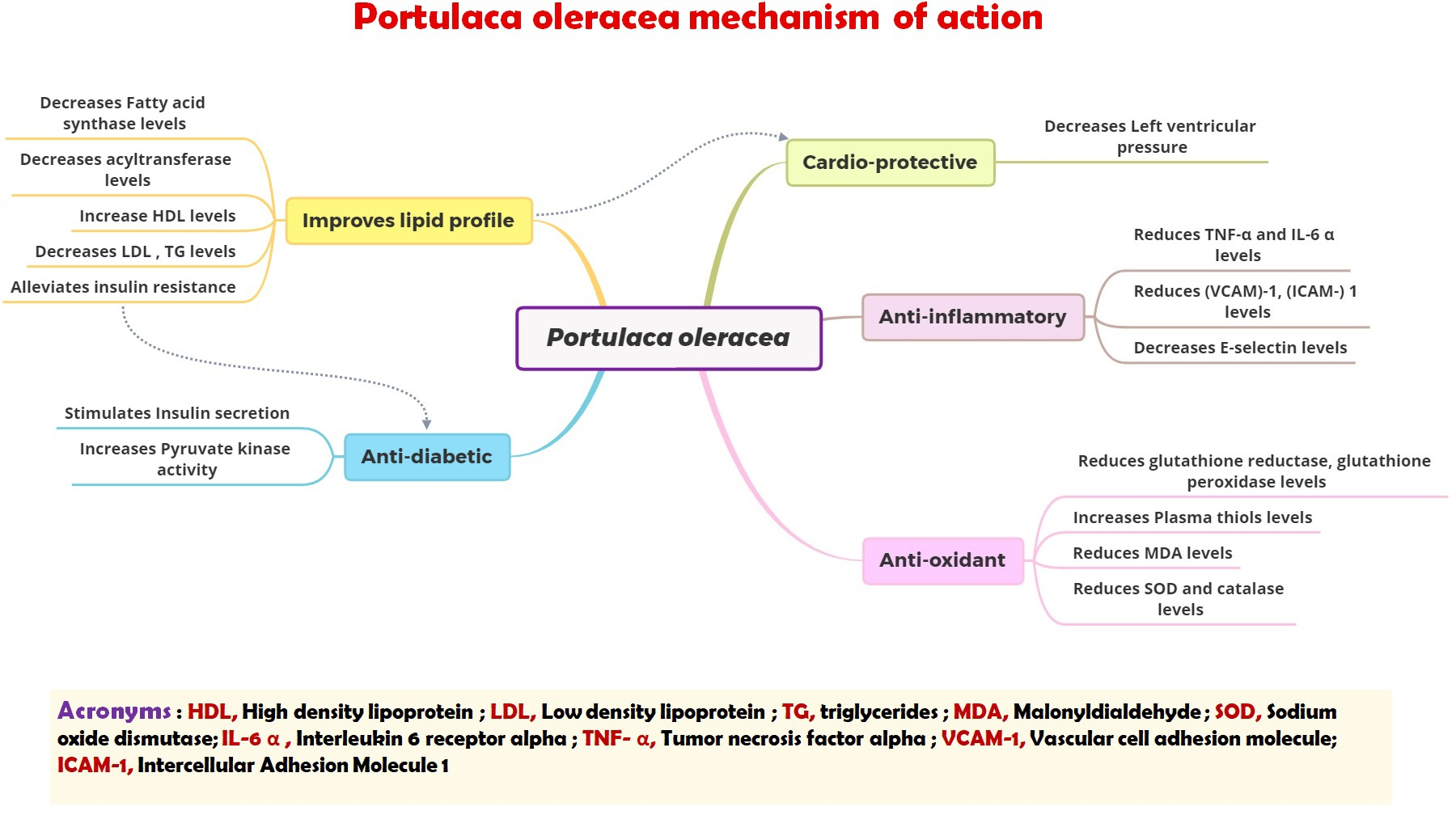
Portulaca oleracea mechanisms of actions. HDL, high density lipoprotein; ICAM-1, intracellular adhesion molecule-1; IL-6α, interleukin 6 receptor alpha; LDL, low density lipoprotein; MDA, malondialdehyde; SOD, sodium oxide dismutase; TG, triglyceride; TNF-α, tumor necrosis factor alpha; VCAM-1, vascular cell adhesion molecule 1.
Being a natural source for omega 3 fatty acids and polysaccharides, the leaves of P. oleracea are known to have hypolipidemic properties. Purslane has the ability to increase HDL and decrease TG, LDL, and cholesterol significantly. 229 The mechanism is related to the inhibition of acyltransferase and fatty acid synthase enzymes. This effect is also helpful in alleviating insulin resistance, which justifies purslane popular use for T2DM all over the world and as an adjuvant with close efficacy to metformin for better glycemic control. Many studies reported insulinotropic properties for purslane as it enhances insulin production and has synergistic impact on conventional secretagogue’s activity, eg, tolbutamide. 230 Purslane also enhances glycolysis and stimulates LDH, phosphofructokinase, and pyruvate kinase. It was found that a dose of 400 g/(kg·day) exerts ideal antidiabetic effect. 231 Its hypolipidemic properties are of value in treatment and prophylaxis of hypertension, coronary artery diseases, and further possible complications. Khodadadi et al 232 reported that purslane also reduces left ventricular pressure in a study conducted on animal models.
Additionally, purslane has a distinguished antioxidant capacity, which is attributed to high vitamin A content along with ascorbic acid and various flavonoids and polyphenolics. These provide direct free radical scavenging activity and enhance the activity of many enzymes such as glutathione reductase, glutathione peroxidase, SOD, and catalase. 233 It was found that purslane can effectively reduce MDA levels and increase plasma thiols overall. This is valuable in preventing and managing DM complications, and the oxidative stress exerted by advanced glycation end products. The antioxidant activity of P. oleracea takes part in its neuroprotective activity along with its dopamine and norepinephrine alkaloid contents, which restore normal neurotransmitter levels and have a beneficial impact on Parkinson’s disease. It also protects the brain from tissue hypoxia and has ACHE inhibitory effect, which supports its use in prevention and treatment of Alzheimer’s disease. 234,235
The anti-inflammatory effect of purslane is mediated through the inhibition of tumor necrosis factor-α (TNF-α) and IL-6α production and subsequent production of VCAM-1, ICAM-1, and E-selectin. 228,236
Furthermore, P. oleracea has the ability to reduce ALT, AST, gamma glutamyl transferase (GGT), and liver MDA and decrease both direct and indirect bilirubin acting as a hepatoprotective agent along with its wound healing and renal protective rules. 237 Purslane has immunomodulatory effects as it stimulates phagocytosis and is helpful against many resistant bacterial species such as Methicillin-resistant Staphylococcus aureus (MRSA). A recent study confirmed its synergistic effect with antibiotics such as macrolides. 238,239 Purslane was proven to be generally safe and free from any cytotoxicity and its pharmacokinetics depends on the type of preparation and part used. 240
Conclusion
After reviewing the activity and mechanisms of actions of 10 common medicinal plants in the form of purified herbal compounds and/or herbal preparation of plant part, we concluded that Berberine, genus Ziziphus species, mulberry leaves, and P. oleracea are effective in T2DM, while garlic, Hibiscus sabdariffa, red beetroot, and resveratrol are potential competent antihypertensive agents. All of these 9 herbal medicine members are useful in ameliorating oxidative stress, complications of both inflammatory diseases and CVD. Hesperidin is proven as a possible treatment for both diseases. However, its utilization in CVD is the most wide spread application. On the other hand, C. edulis is to be avoided in both hypertension and T2DM patients and to be used only in healthy overweight people as an appetite depressant.
Tables 1 and 2 present our recommendations for suggested utilization of herbal medicine in the treatment of DM and hypertension along with various concomitant diseases.
Most Recommended and the Contraindicated Herbal Medicine for Each Disease Subcategorized by the Concomitant Diseases.

CVD, cardiovascular disorder; IOP, intraocular pressure.
Herbal Medicine Interaction With Commonly Used Drugs for Diabetes and Hyperlipidemia and Their Complications.

Recommendations
Further investigations are required for standardization of the doses and the active constituents of these herbal agents to identify the minimum effective doses and their therapeutic windows. Hence, it avoids toxicity and possible drug interactions in conventional treatment regimens. In addition, the bioavailability of agents such as resveratrol and berberine has a potential for improvement through nanoparticles formulations. This requires investigations using more safe types with natural constitutes such as the lipid-based types specially lipoprotein nanoparticles.
Footnotes
Declaration of Conflicting Interests
The author(s) declared no potential conflicts of interest with respect to the research, authorship, and/or publication of this article.
Funding
The author(s) received no financial support for the research, authorship, and/or publication of this article.
