



Abstract
The recently CE-marked continuous real-time glucose monitoring (rtCGM) solution Accu-Chek® (AC) SmartGuide Solution was developed to enable people with diabetes mellitus (DM) to proactively control their glucose levels using predictive technologies. The comprehensive solution consists of three components that harmonize well with each other. The CGM device is composed of a sensor applicator and a glucose sensor patch whose data are transferred to the connected smartphone by Bluetooth® Low Energy. The user interface of the CGM solution is powered by the AC SmartGuide app delivering current and past glucose metrics, and the AC SmartGuide Predict app providing a glucose prediction suite enabled by artificial intelligence (AI). This article describes the innovative CGM solution.
Keywords
In the last few years, continuous real-time glucose monitoring (rtCGM) has become a widespread option for self-management in people with diabetes mellitus (DM). 1 Recently, the components of the Accu-Chek® (AC) SmartGuide Solution (Roche Diabetes Care GmbH, Mannheim, Germany) have received CE mark as medical devices and the entire solution is planned to be marketed in European markets. This novel rtCGM solution was developed to address existing unmet needs of people with DM relying on glucose monitoring, as described by Barnard-Kelly et al 2 and Kulzer et al 3 in the special issue of this journal. Its technical properties and functions, including the underlying rationale, are described below.
Designed to Fulfill Unmet rtCGM Needs
For many people with DM, rtCGM can improve self-management and glycemic control while reducing diabetes distress.1,2 However, not all users benefit from rtCGM and some of them find aspects of CGM use burdensome. 2 The challenges and shortcomings of today’s rtCGM systems range from stigma—due to the visibility of the disease or intrusive audible alarms—to being overwhelmed by the large amounts of data.2,4-8 Moreover, some rtCGM users report alarm fatigue and alarm-related sleep disturbances as Kulzer et al 3 explain in the same special issue of this journal. As only some of today’s rtCGM devices offer limited glucose prediction, for example, short-term predictive alerts, a latent fear of hypoglycemia may persist. 2 This in turn is associated with poor glycemic control and dissatisfactory diabetes-related outcomes.2,9 Instead, people with DM ask for greater personalization of CGM use and improved usability. 2 In addition, features for prolonged glucose prediction could be appreciated to reduce their fear of hypoglycemia and diabetes distress, as shown by Ehrmann et al 10 in the same special issue of this journal.
Therefore, our aim was to develop a comprehensive CGM solution, which enables users to be a step ahead in glucose control by better understanding possible future glucose changes before they happen. It consists of the AC SmartGuide device (applicator and sensor, hereafter referred to as CGM device) and a digital diabetes management ecosystem powered by the AC SmartGuide app (Figure 1, hereafter referred to as CGM app) and the AC SmartGuide Predict app (Figure 2, hereafter referred to as Predict app). The latter is an additional tool for people with DM on a flexible insulin regimen such as multiple daily injection (MDI) or continuous subcutaneous infusion (CSII) therapy. These user-facing components are complemented by the health care professionals (HCPs)-facing AC Care software (Figure 3). This cloud-based diabetes management platform collects and processes the app’s data. By accessing the software, HCPs can monitor, organize, and visualize at a glance all information on their patients and their diabetes technology–related data. By this, a well-informed and targeted diabetes management is supported benefiting people with DM. All components have been validated for accuracy and technical performance in both insulin-treated people with type 1 diabetes (T1D) and type 2 diabetes (T2D).11,12
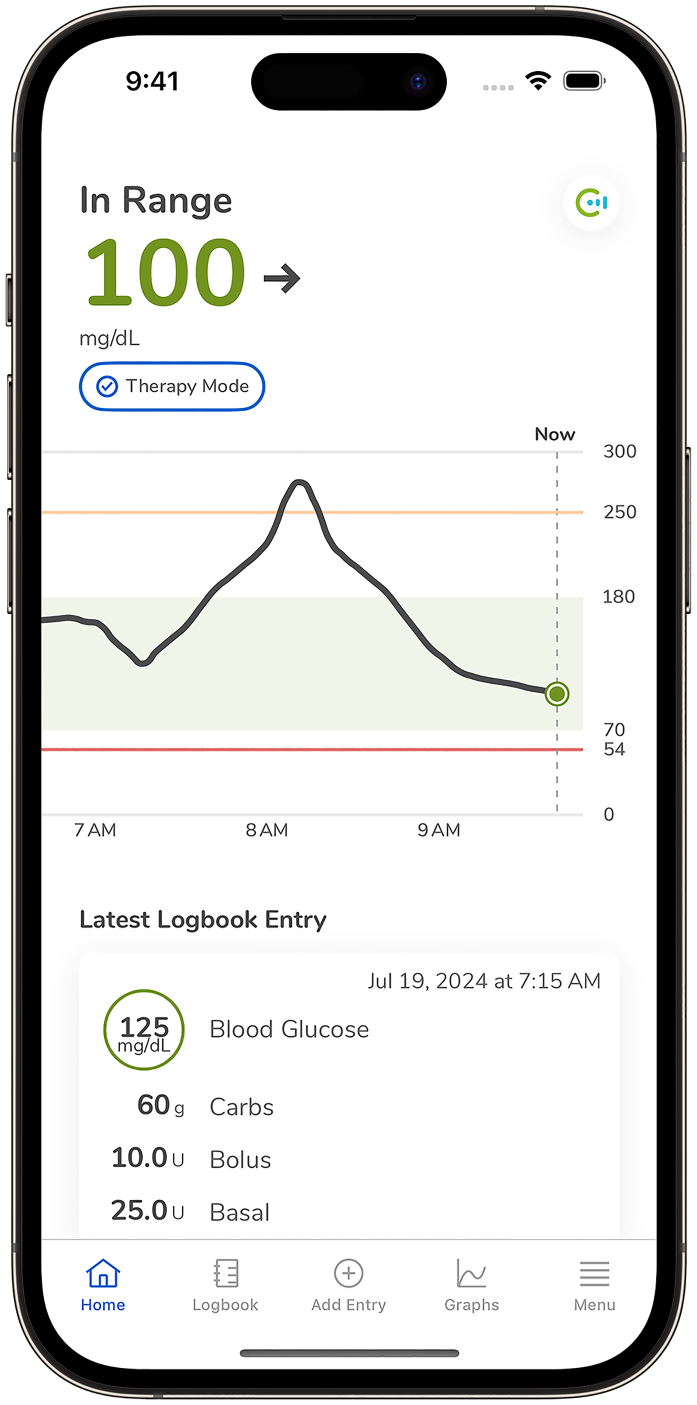
Home screen of the AC SmartGuide app (CGM app).
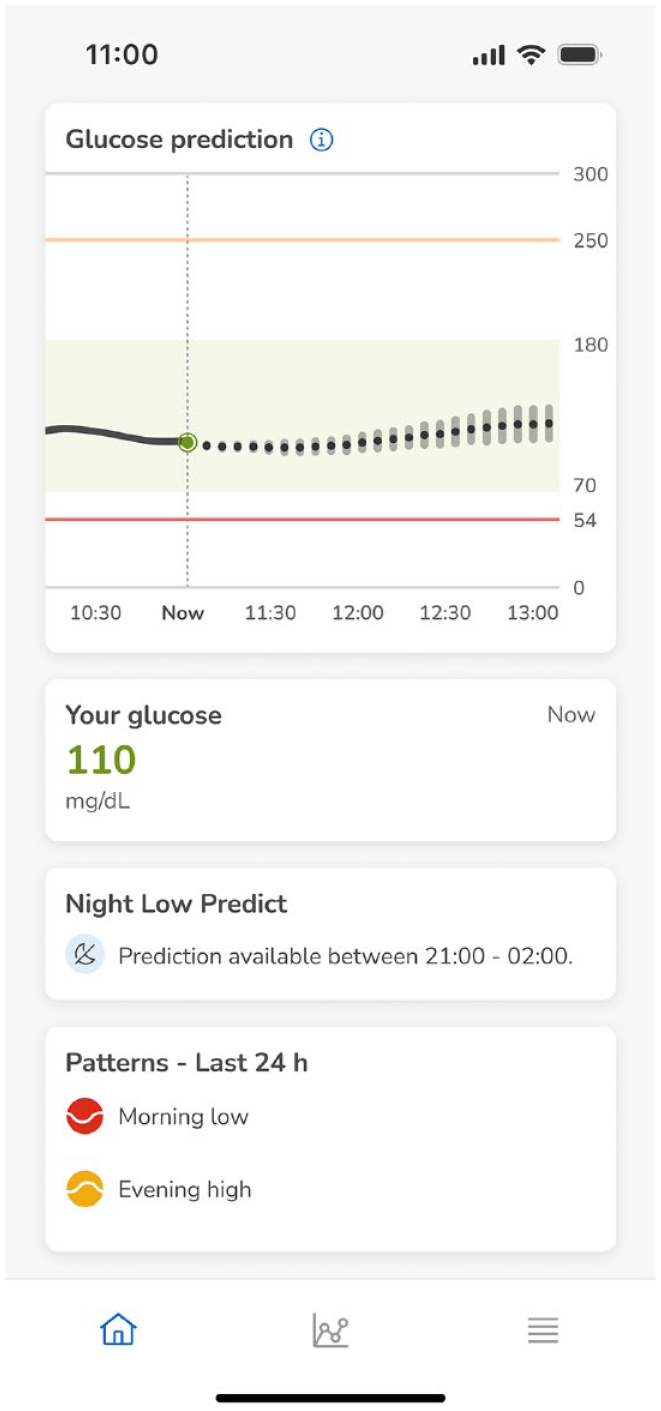
Home screen of the AC SmartGuide Predict app (Predict app).
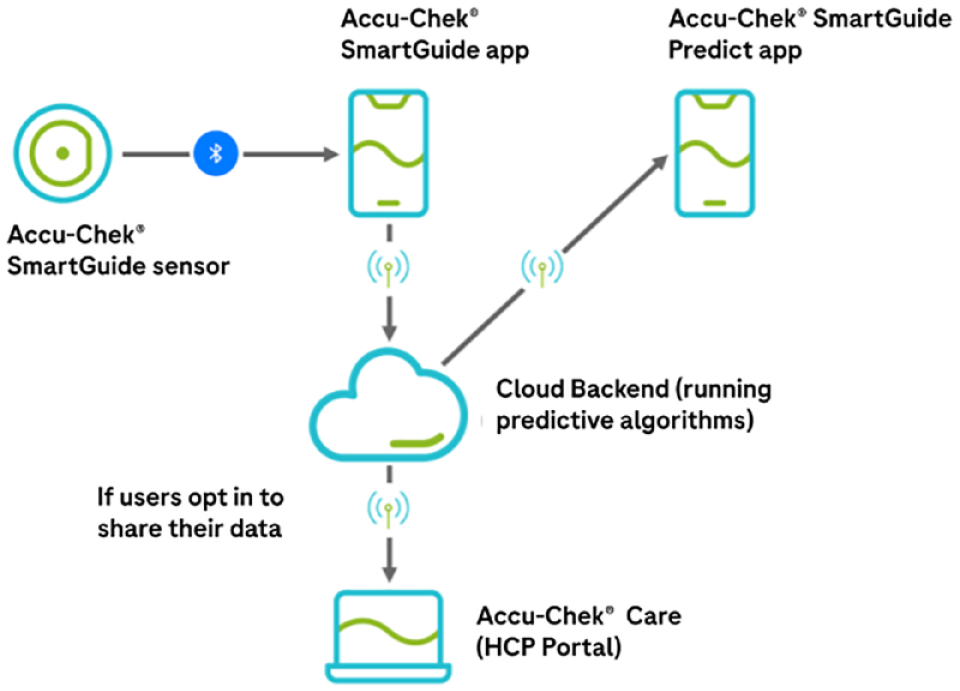
Architecture of the AC SmartGuide CGM solution.
Design of the rtCGM Device
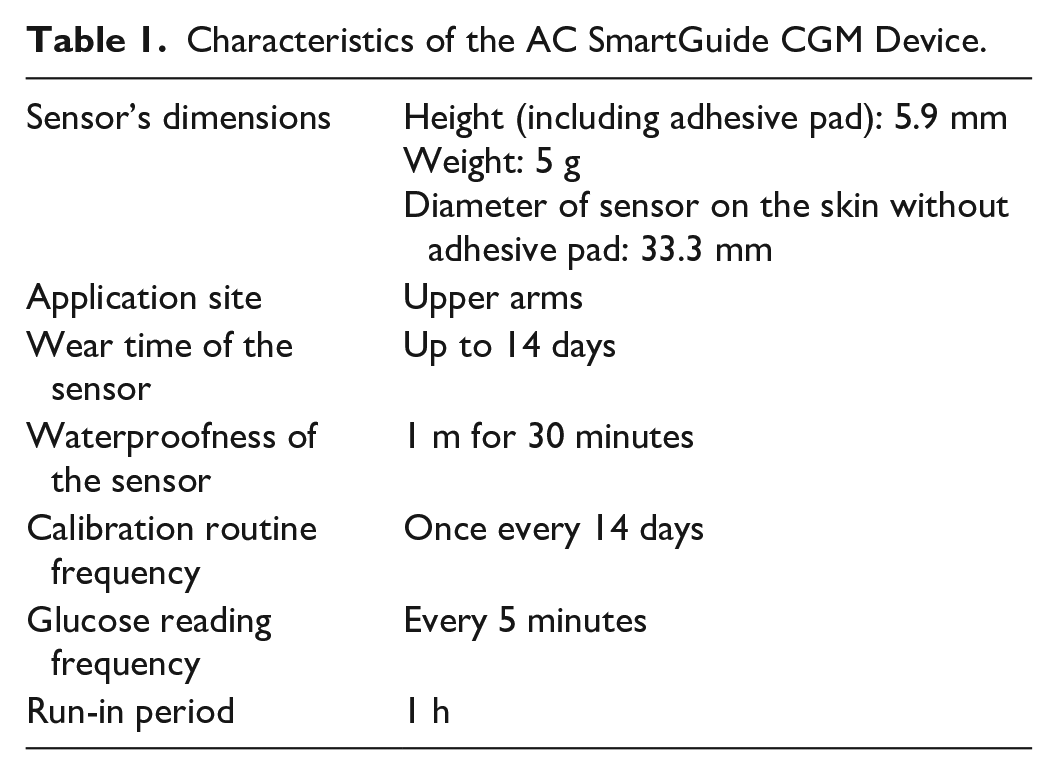
The two-part CGM device consists of a sensor applicator, which includes the pre-assembled single-use sensor patch to measure and transmit glucose data. The applicator stores the disposable sensor patch prior to its use and allows its one-step insertion. The sensor’s housing pieces cover all electronic components and remain on the user’s skin held by an adhesive plaster (for technical details, see Table 1). The measurement engine, also responsible for data processing and data storage, wirelessly transmits glucose trends and concentrations in five-minute intervals to the connected app. The app processes the historical and recent data generating current values, graphs, trend arrows, and, if necessary, alarms, and acts as primary CGM display. The data thus generated and previously stored data are converted into glucose and trend values by algorithms. Sensor patches undergo an initial calibration routine after 12 hours of sensor activation by receiving blood glucose values entered manually into and transmitted by the app. The waterproof sensor is designed for up to 14 days wear time.
Characteristics of the AC SmartGuide CGM Device.
The CGM device is intended for continuous measurement of real-time glucose levels in the subcutaneous interstitial fluid in a home health care environment. Its intended users are adults with DM as well as their caregivers, including HCPs and nurses. The system is not intended for use in hospital care.
Design of the Diabetes Management Ecosystem
The CGM device communicates with the interface of one comprehensive digital diabetes management ecosystem including the user-facing CGM app (Figure 1) and Predict app (Figure 2). These apps run on smartphones with either iOS or Android and can be downloaded from common app stores. The CGM app is the primary user interface. It receives the CGM device’s data wirelessly via a Bluetooth® Low Energy connection to serve several functions. It displays the received glucose values numerically and graphically as the glucose profile of the last three hours and as time in range curve. In addition, the app provides the following features: trend arrow, current glucose value in color code depending on values in or out of range, CGM graphical display of values over the last 14 days, glucose management indicator (GMI), coefficient of variation, average glucose, manual entry of information such as bolus insulin, basal insulin, carbohydrates, blood glucose value, and notes as well as a diary to review the entries. Furthermore, alarm settings can be individualized. Upon app initialization, three different alarm thresholds are preset:
Very High Glucose is set to 250 mg/dL by default and can be customized from 180 to 400 mg/dL (10.0-22.2 mmol/L).
Low Glucose is set to 70 mg/dL by default and can be customized from 60 to 140 mg/dL (3.3-7.8 mmol/L).
Very Low Glucose is set to 54 mg/dL (3 mmol/L) and cannot be changed.
The users can select different alarm thresholds for the day and for the nighttime. All alarm notifications can be turned off, but they are on by default.
The CGM app uploads all relevant CGM data in user-specific accounts within the AC Care software. The Predict app is an additional option for people with DM on MDI or CSII regimen: It addresses the aforementioned wish of prolonged glucose forecasts by providing three prediction features, which have been developed using AI techniques. For that, CGM data are processed on the cloud-based platform by algorithms. Each prediction feature is driven by a tailor-made individual algorithm. The cloud-based predictive features require Internet connectivity while the basic functions of the accompanying CGM solution work offline and independently of the Predict app. A detailed description and performance evaluation of the Predict app can be found in the publication by Herrero et al, 11 and suggestions for their clinical use are summarized in the article of Glatzer et al 13 —both in the same special issue of this journal.
The Predict app’s key features are (1) a customizable 30-minute low glucose prediction, (2) a continuous two-hour glucose forecast displayed as a curve, and (3) an adjustable seven-hour prediction of the risk of nocturnal hypoglycemia. The predictive features (1) and (3) can be customized and deactivated upon user preference.
The first feature, Low Glucose Predict, alerts users if there is a high risk for low glucose within the next 30 minutes using CGM sensor data at different time windows. Users can set the glucose threshold values for low glucose individually in the range of 60 to 100 mg/dL (3.3-5.6 mmol/L), which is a wider range than what is available in predictive alerts in existing CGM solutions.14,15 In case of a high probability of low glucose, a push notification is sent on the screen of the users’ smartphone. The Predict app provides more information on how to prevent hypoglycemia.
The second prediction feature, Glucose Predict, provides and visualizes a robust continuous two-hour glucose estimate based on recent CGM measurements, bolus insulin on board estimates, unabsorbed carbohydrate estimates, historical CGM averages, and the time of day. 11 The prediction updates every five minutes with each new glucose reading. The predicted glucose course is visualized graphically on the home screen of the Predict app (Figure 2).
Finally, the Night Low Predict feature estimates the individual risk of low glucose levels (<70 mg/dL; <3.9 mmol/L) during the night, or in the first (0-3.5 hours after prediction) or second half of the night (3.5-7 hours after prediction), respectively. This function works if CGM data of at least one day are available. By setting their personal bedtime, users can define the time frame for the prediction of nocturnal hypoglycemia risk and notifications if the risk is elevated. The prediction is automatically called once per day and covers a horizon of seven hours. The prediction can also be called manually in the evening time. Besides these notifications, the feature provides a color-coded gauge display of the risk for a nocturnal hypoglycemia and detailed information about the expected timing. Moreover, it supports users with information about what can be done to reduce the chance of such an event or prepare for it.
In addition to these predictive features, the Predict app offers Glucose Pattern, a pattern detection function to record events based on the user’s glycemic profile, carbohydrate logs, and the time of day. Subsequently, it identifies patterns based on the recurrence of events to inform and remind the user of the individual glucose patterns. The Predict app displays four types of glucose patterns: Low Patterns, High Patterns, Variability Patterns and In Target Patterns. This feature is intended to support the users’ behavioral changes and discussions with their HCPs.
Summary
With AC SmartGuide, a comprehensive CGM solution is available that gives continuous information about individual past, current, and future glucose values. The ecosystem consists of a disposable one-step inserter, a sensor for up to 14-day wear time at the upper arm, and a user interface powered by two apps, which provide CGM data as well as extended glucose predictions and a glucose pattern recognition. Data extraction is done via AC Care, allowing the visualization and analysis of CGM data including contextual information such as insulin and carbohydrates.
Footnotes
Acknowledgements
The authors are grateful to Dr Guido Freckmann, Prof Lutz Heinemann, Prof Bernhard Kulzer, Dr Nuria Orive Milla, Prof Oliver Schnell, Dr Paul Young Tie Yang, and Dr Ralph Ziegler for giving advice and input in the course of writing the manuscript.
Abbreviations
AI, artificial intelligence; CGM, continuous glucose monitoring; CSII, continuous subcutaneous insulin infusion; DM, diabetes mellitus; GMI, glucose management indicator; HCP, health care professional; MDI, multiple daily injections; rtCGM, real-time continuous glucose monitoring; T1D, type 1 diabetes; T2D, type 2 diabetes
Declaration of Conflicting Interests
The author(s) declared the following potential conflicts of interest with respect to the research, authorship, and/or publication of this article: T.G., C.R., D.M., and W.M.-H. are employees and stockholders of Roche Diabetes Care GmbH.
Funding
The author(s) disclosed receipt of the following financial support for the research, authorship, and/or publication of this article: This publication has been sponsored by Roche Diabetes Care GmbH.
