



Abstract
Background:
The FreeStyle Libre is a flash glucose monitoring (FGM) system, and glucose levels are measured when the reader is brought to the sensor. Additional readers allow for the conversion into a continuous glucose monitoring (CGM) system. These transmitters read data from the sensor and send them to a bluetooth-enabled device thanks to which the user acquires glucose measurements automatically. This modification allows the patient to receive alerts when blood glucose values are abnormal.
Methods:
The study relied on the results of an anonymous online survey conducted among patients with diabetes or their caregivers who use Facebook groups. A total of 132 respondents who met certain criteria (diabetic who use FGM system longer than 3 months, at least 14 days per month) were enrolled in the study.
Results:
A significant decrease in self-reported glycated hemoglobin levels was found in adults and children using readers (variable: age P = .008; time P < .001), regardless of the age. The use of additional readers was associated with a significant decrease in the number of self-reported episodes of hypoglycemia (P < .001) and an improvement in the quality of life (based on self-reported limitations in everyday activities, social contacts, work/school, or doing sports).
Conclusion:
The use of additional readers for FGM system improves the metabolic control of diabetes and the quality of life, and has a positive effect on the safety of treatment. Flash glucose monitoring used together with additional readers operates as a CGM system and seems to be helpful for patients for the monitoring of interstitial levels of glucose; however, they should be careful when they use do it yourself solution.
Introduction
Systems for continuous glucose monitoring (CGM) in interstitial fluid are an increasingly popular alternative to traditional glucose meters. The latest studies have indicated a significant increase in the percentage of patients with diabetes using systems for CGM. For example, in the American population, this rate increased from 7% in 2010-2012 to 30% in 2016-2018. 1
Currently, there are two systems available for glucose monitoring in interstitial fluid. The first is the CGM system, which allows for the measurement of interstitial glucose levels every five minutes, and also has an option for alerting the user in the case of hyper- or hypoglycemia. There are several types available in the market (such as Enlite, Eversense, and Dexcom).2-4
The second solution is the FreeStyle Libre flash glucose monitoring (FGM) system. 5 The Libre includes a 5 g, 35 mm × 5 mm sensor, and a reader with a display screen for data acquisition from the sensor in near field communication (NFC) technology. It does not have an alert system and the user receives the results of measurement after bringing the reader to the sensor. In addition to the current interstitial levels of glucose, the device also displays a retrospective graph for the last eight hours and the trend in changes in glucose levels. The sensor takes measurements for 14 days. Most studies in this area have been done on the use of CGM. They revealed a positive effect of CGM on levels of glycated hemoglobin (HbA1C), a decrease in the number of episodes of hypoglycemia and their duration, and an increase in the duration of normoglycemia.6-9 The FGM was also evaluated in a study. Results have indicated that despite the lack of an alert function, the duration of hypoglycemia in patients using FGM has significantly shortened, although less significantly than in patients using the CGM.10-12
The lack of an alert function and the need to bring the reader to the sensor in order to acquire data were probably the reasons for the development of a device that receives data from the FGM sensor and transmits it to a smart phone or a similar device. The first “transmitters” of this type were do it yourself (DIY) solutions developed by the enthusiasts of this concept. Commercially available readers have also been manufactured: Blucon (Ambrosia Systems, United States) and MiaoMiao (China).13,14 These transmitters read data from the sensor using NFC and send raw signal to a bluetooth-enabled device. As the manufacturers declare, the transmitters are not medical devices but only data transmitters; however, these applications use algorithm to exhibit a definite glucose value which is not approved by Food and Drug Administration (FDA). 15 These readers differ slightly from each other only in some technical aspects. The Blucon is attached on top of the sensor, is powered by a replaceable battery, and is also available in a waterproof version. The MiaoMiao is attached to the side of the sensor, has a rechargeable built-in battery, and is waterproof. The use of these readers allows for the modification of the standard FGM to a DIY CGM system. However, the suitability of these readers in a clinical setting has not been evaluated to date.
Aim
The aim of the study was to investigate the effect of using additional readers for FGM system on metabolic control, safety, and complications in patients with diabetes mellitus compared to patients using a standard FGM.
Methods
The study relied on a questionnaire-based survey. Information about the study was posted on Polish-language Facebook groups for patients with diabetes. Group users received information about the survey and a link to a questionnaire. Respondents had the opportunity to ask questions. The questionnaire included information that the caregivers of patients with diabetes using FGM should provide answers with reference to the patients. It was also indicated that persons under 18 years should ask an adult for help in completing the questionnaire. The respondents agreed to complete the questionnaire and to use the anonymous answers for research purposes. Participation in the study was voluntary.
The survey contained 35 questions, which concerned issues of a general nature (about sex, year of birth, country of residence, type of diabetes, and its duration) as well as questions about the duration and frequency of using FGM and the duration of using additional readers (the survey is shown in supplemental material 1). Respondents were also asked to specify for how long they used an additional reader per day. Study participants were asked to provide information on the degree of metabolic control of diabetes defined by HbA1C levels, the type of insulin therapy, and its modification, if any, the presence of early and late complications and the incidence of hypoglycemic episodes. The respondents were also asked if they had to refrain from everyday activities, social contacts, work/school, or doing sports before and during the use of additional readers. Answers were scored from 0 to 4, where a higher score meant more frequent limitations caused by the disease.
The survey also included questions about measuring blood glucose levels and recording these measurements in an application. Respondents were asked to list advantages and disadvantages of additional readers and to specify if the survey was completed by the user themselves or their caregiver. The questionnaire was available for four weeks.
The study protocol was approved by the Bioethics Committee of the Medical University in Łódź. Basic descriptive statistics were processed in TIBCO Statistica 13.3 and R 3.5.3 software using the Shapiro-Wilk test, the McNemar test for frequency, Fisher’s exact test, the χ2 test, a mixed-design analysis of variance, multivariate analysis of variance in an intergroup model, and nonparametric analysis of variance using ANOVA-type statistics. The significance level was adopted at a standard value of α = 0.05.
Results
The questionnaire was completed by 167 respondents and 132 of them were qualified for the study. The criterion for inclusion in the study was diabetic who use FGM. We excluded respondents who do not use FGM at all (n = 1) or those who stopped using it and switched to other glucose monitoring systems (n = 1) due to refunding of other CGM (n = 1) or because of the skin lesion after using the sensor (n = 1), those who used the FGM for less than three months (n = 12), used less than one sensor per month, or did not specify how many sensors they used per month (n = 16), and those who used DIY transmitters (n = 2). We also excluded one subject who alternately used the FGM and Dexcom. Finally, the study group comprised adults and children using additional readers (n = 84; 22 adults and 62 children) (Table 1). The control group comprised 48 patients using a standard Libre. Most questionnaires were completed by the caregiver of a patient (a parent in 87 cases and a partner in one case), and 44 patients with diabetes completed the questionnaire themselves. The questionnaire was completed by 83 women and 49 men. The majority of respondents were from Poland (n = 126), some of them lived in Germany (n = 3), and single subjects lived in the Ukraine, England, and Ireland. Most patients had type 1 diabetes mellitus (n = 130), one patient had secondary diabetes associated with cystic fibrosis, and one patient had type latent autoimmune diabetes in adults (LADA). Only 15 respondents had suffered from diabetes for less than one year. The longest duration of diabetes was 43 years and the mean duration was 7.5 years.
Clinical Characteristics of Analyzed Groups.
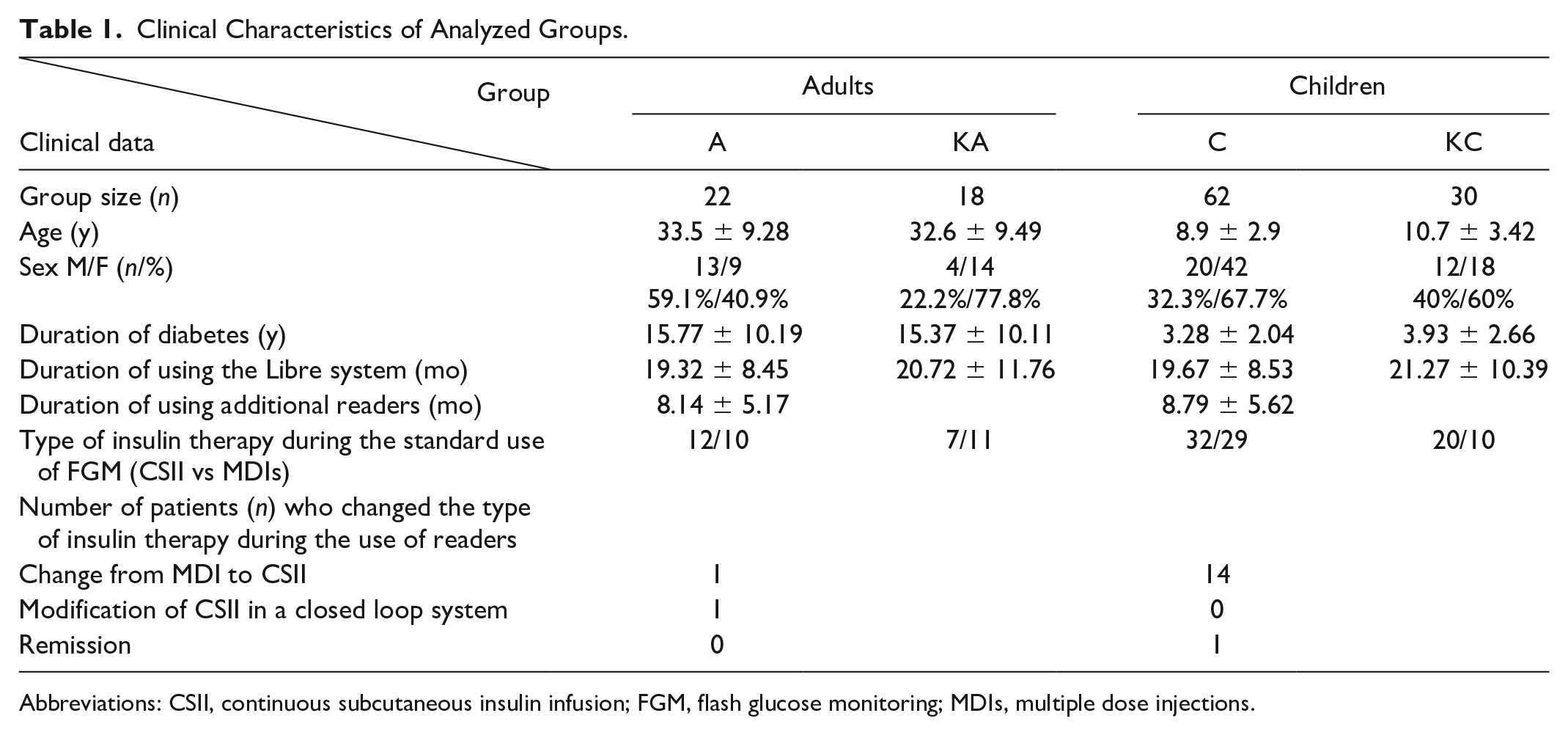
Abbreviations: CSII, continuous subcutaneous insulin infusion; FGM, flash glucose monitoring; MDIs, multiple dose injections.
The mean duration of using FGM was 20.1 months and was longer in the group sensors in a standard way (21 months) compared to subjects using additional readers (19.6 months). The majority of respondents (n = 118) used sensors continuously, four respondents declared activating another sensor the next day, five respondents took a few days’ break before using another sensor, and five respondents used the Libre for about half of the time. Most respondents from the study group used the Blucon (n = 62), significantly fewer patients used the MiaoMiao (n = 24), and only two patients declared using both. Additional readers were used on average for 8.2 months and longer in the group of patients using the Blucon (9.5 months) compared to those using the MiaoMiao (6.4 months). The majority of respondents (n = 75) used an additional reader for 23 to 24 hours/day, a small group (n = 7) used an additional reader at night only, for about eight hours, and two subjects used these readers when at work or school (about eight hours/day).
The mean age of respondents in group A (n = 22) using additional readers was 33.5 ± 9.28 years (Table 1). This group comprised 9 women and 13 men. The mean level of HbA1C was significantly higher (P < .001) during the standard use of FGM (7.42%) compared to the level during the use of additional readers (6.72%) (Table 2). The number of hypoglycemic episodes per week during the use of the Libre in a standard way significantly reduced (P < .001) from 6.48 to 3 in the group of patients using additional readers (Table 3). Episodes of severe hypoglycemia with loss of consciousness and the need for medical intervention during the standard use of FGM occurred in three subjects (two subjects had one episode and one subject had nine episodes) (Table 3). These episodes did not occur during the use of additional readers. Episodes of asymptomatic hypoglycemia occurred in nine respondents during the standard use of FGM, but not during the use of readers. In four other subjects, these episodes still happened during the use of readers.
Assessment of Metabolic Control in Patients with Diabetes Before and After Using the Readers.
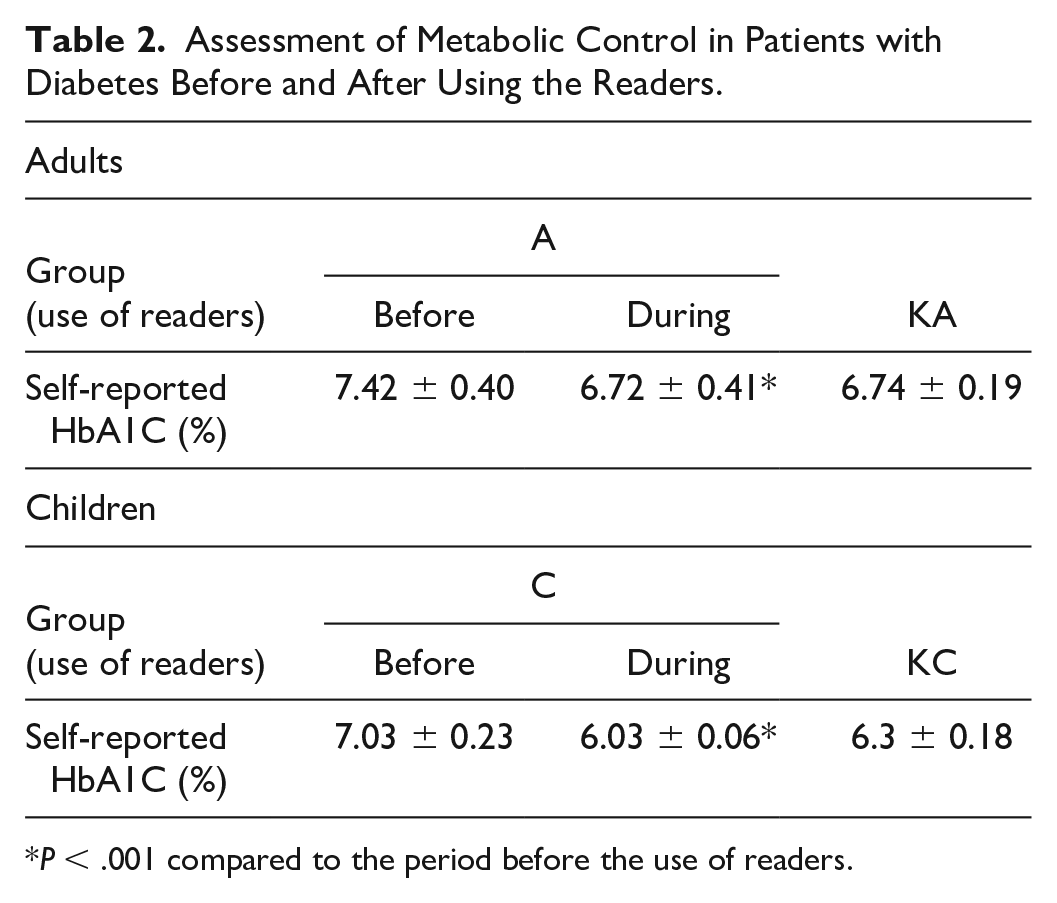
P < .001 compared to the period before the use of readers.
Safety of Patients Before and During the Use of Additional Readers.
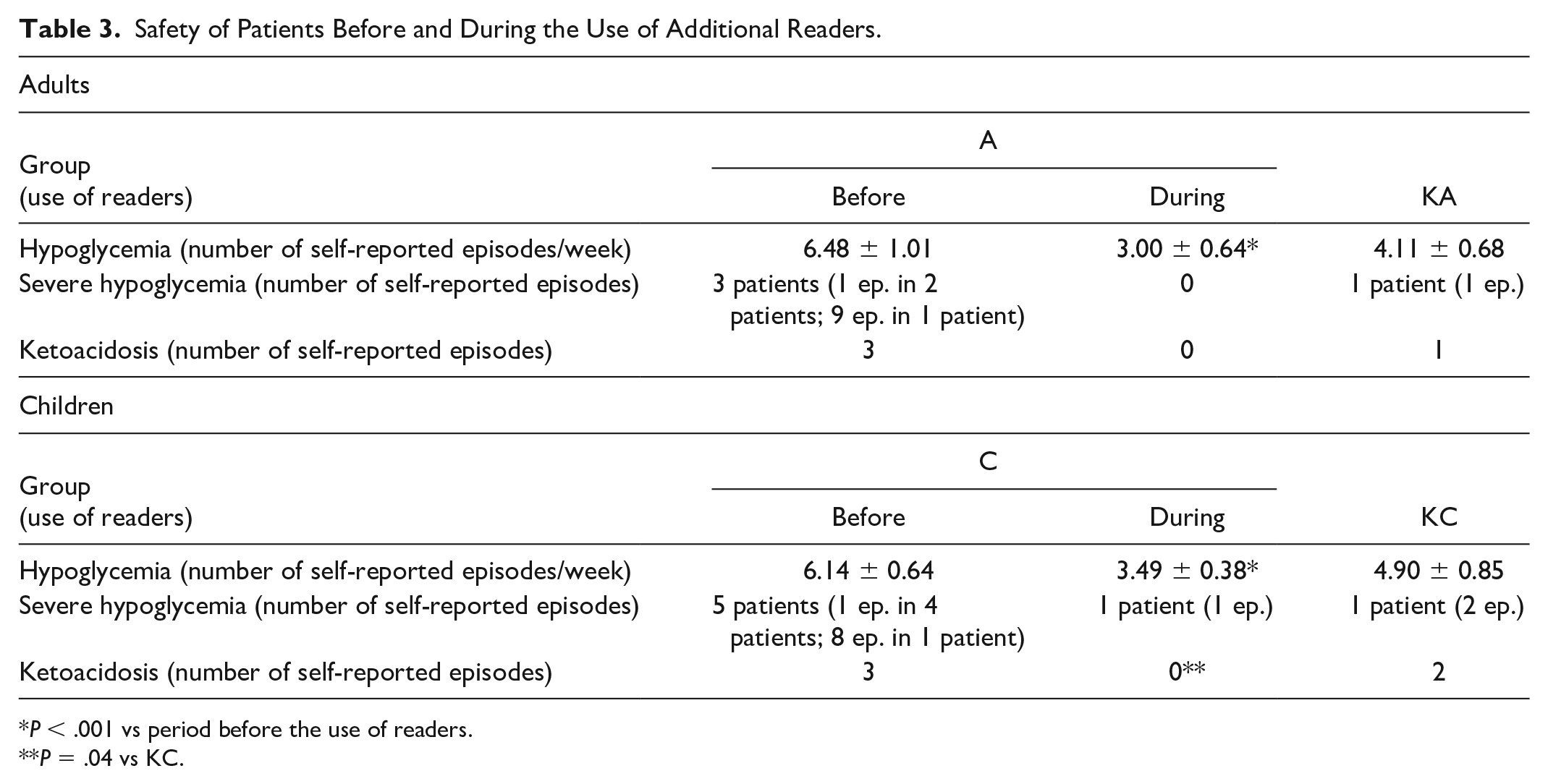
P < .001 vs period before the use of readers.
P = .04 vs KC.
A total of 13 adult respondents were free from complications associated with diabetes. Other adult respondents had episodes of ketoacidosis in past (n = 3), neuropathy (n = 2), retinopathy (n = 4), and other ophthalmic disorders (n = 1) (Table 3). Two patients had diabetes-related kidney disease and diabetic foot syndrome. During the use of readers, none of the patients from this group had episodes of ketoacidosis.
The mean score for answers to the question assessing the limitations in activity caused by diabetes was 4.0 points before using additional readers vs 1.91 points during the use of readers (P < .001; Figure 1). A continuous subcutaneous insulin infusion (CSII) in pump was used by 12 respondents, and in 10 respondents, the therapy relied on multiple dose injections (MDIs). During the use of additional readers, one patient switched from MDI to CSII and one patient activated a closed loop (AndroidAPS).
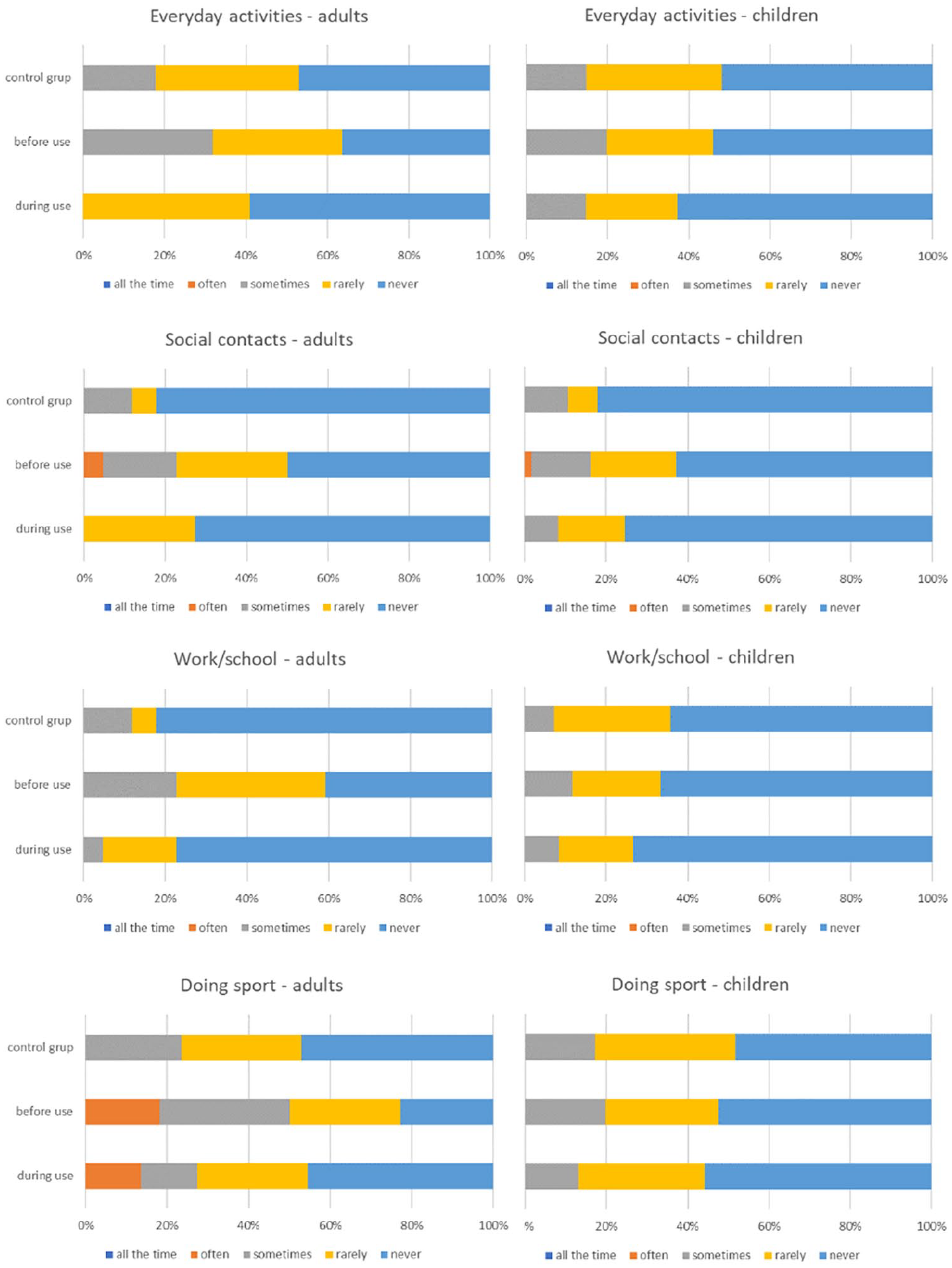
Self-reported limitations in activities.
The control group of adults (KA), who used a standard Libre (n = 18), included 4 men and 14 women, of mean age 32.6 ± 9.49 years (Table 1). The mean level of HbA1C was 6.74% (Table 2). The mean number of hypoglycemic episodes per week was 4.1 (Table 3). One subject had a single episode of severe hypoglycemia (Table 3). Episodes of asymptomatic hypoglycemia were reported by five subjects (one subject had them in the past), and 11 subjects from group KA had never experienced them. Episodes of ketoacidosis occurred in one subject (Table 3). Other diagnosed complications included diabetic retinopathy (n = 2), neuropathy (n = 2), and diabetes-related kidney disease (n = 1). The mean score for the question regarding limitations in daily activity of respondents was 1.94 points (Figure 1). Most patients from this group (n = 11) were treated with MDI, and seven patients used a CSII.
Group C (n = 62), using additional readers, comprised 20 boys and 42 girls of mean age 8.9 ± 2.9 years (Table 1). The mean level of HbA1C was significantly higher (P < .001) before the use of additional readers (7.03%) compared to the level during the use of readers (6.03%) (Table 2). The mean number of hypoglycemic episodes per week during the standard use of FGM was 6.14, and it significantly decreased (P < .001) to 3.49 during the use of readers (Table 3). Episodes of severe hypoglycemia requiring medication during the standard use of FGM occurred in five subjects (single episodes in four subjects and eight episodes in one subject) (Table 3). During the use of additional readers, only one subject had a single episode of severe hypoglycemia. Episodes of asymptomatic hypoglycemia occurred in 22 subjects during the standard use of FGM, but were not reported when using additional readers. When using readers, 22 children still had these episodes and 17 subjects never had these episodes. One subject experienced these episodes in the past, but no precise information was given as to the change. Two children experienced an episode of ketoacidosis during the standard use of FGM, but not a single episode during the use of readers was reported in this group (Table 3). Compared to the control group (KC), a significant reduction in the incidence of these episodes was found (P = .04). The mean score for the question related to limitations of physical activity in children with diabetes before the use of additional readers was 2.29 points and dropped to 1.74 during the use of additional readers, but the difference was not significant (Figure 1). In this group, 32 children were treated using a CSII, 29 used MDI, and one child used both these types of insulin therapy. During the use of readers, 14 children switched from MDI to CSII and one child had a diabetes remission.
The control group of children (KC) using the standard FGM (n = 30) comprised 12 boys and 18 girls of mean age 10.7 ± 3.42 years (Table 1). The mean level of HbA1C was 6.3% (Table 2). The mean number of hypoglycemic episodes per week in this group was 4.9 (Table 3). Episodes of severe hypoglycemia requiring medical intervention occurred twice in one subject (Table 3). Episodes of asymptomatic hypoglycemia occurred in 14 children, including one who had them in the past, and 15 children never experienced such episodes. Two children had an episode of ketoacidosis (Table 3). The mean score for the question about limited activity due to diabetes was 1.9 points (Figure 1). Most children were treated using a CSII (n = 20), and another ten received insulin using MDI.
Discussion
To the best of authors’ knowledge, this is the first study carried out in a population of patients using additional readers for FGM system. Moreover, this is the first study aimed at comparing the DIY conversion of the FGM system to the CGM system.
The analysis of data gathered during the survey demonstrated positive effects of using additional readers. Benefits included improved metabolic control of diabetes by reducing HbA1C levels, and improved safety by reducing the mean number of hypoglycemic episodes and the number of severe hypoglycemic episodes requiring medical intervention. We also found a significant reduction in the number of ketoacidosis episodes in the pediatric group compared to the control group. The study revealed a positive effect of using readers on the quality of life of patients with diabetes by reducing limitations in physical activity caused by the disease—the results are shown in the graph (Figure 1).
The analyzed groups of adults and children differed in terms of metabolic control, weekly number of episodes of hypoglycemia, and number of episodes of severe hypoglycemia or ketoacidosis. For this reason, the subjects benefited less or more from the use of additional readers. For example, a greater reduction in HbA1C levels was found in children, while adults had a greater reduction in the mean number of hypoglycemic episodes per week and a greater improvement of daily activity after the use of additional readers. It should be also borne in mind that patients using additional readers had worse results at beginning than the control group. During use of the readers, they achieve better outcome than nonusers.
Until now, the only study comparing the FGM after conversion to CGM was conducted by researchers from London. 11 They demonstrated a greater reduction in the duration of hypoglycemia in patients using the CGM compared to the FGM. The fear associated with the risk of hypoglycemia was also lower in the CGM group. However, these researchers compared FGM with the standard CGM.
Noteworthy is the fact emphasized in the recommendations of Polish diabetes experts on the use of FGM that this system allows for measurements of glucose levels in interstitial fluid every minute, which is not possible when using standard CGM, but may be useful in special situations. 16 The conversion of FGM to the DIY CGM system is also beneficial in economic terms. After the one-off purchase of an additional reader, the patient obtains a CGM system that is 50% cheaper in monthly maintenance compared to the CGM system. Systems developed in this way are often used in DIY projects such as Nightscout or AndroidAPS.17-19
One respondent participating in our survey reported that he had modified insulin therapy during the use of an additional reader and activated the AndroidAPS in his personal insulin pump. Increased interest in the use of closed loop systems was also pointed out in a position statement of the Pump School Education Initiative by Diabetes Poland on DIY artificial pancreas systems. 20 The statement reads that the doctor must not only monitor therapeutic outcome achieved when using DIY systems but also ensure that the treatment is safe for the patient.
Otherwise, more resolute are FDA. After episodes of severe hypoglycemia, a patient used unauthorized device for diabetes management (unauthorized transmitter, algorithm, and automated insulin dosing system). It warns people with diabetes that DIY solutions have not been rated by FDA and can be potentially unsafe, and using unauthorized device may cause unknown risk. 15
Our study had a number of limitations. One of them was the lack of direct contact with respondents. The study relied on an anonymous online survey conducted in a relatively small population, and some of the questions were retrospective. In addition, these questions referred to the time before using additional readers, which could affect the accuracy of the values reported by the respondents. This bias particularly applies to parameters such as HbA1C levels and mean number of hypoglycemic episodes per week. Despite the fact that users of social networking services willingly participated in the study, the online survey is not a very common research method. Therefore, the study group was relatively small, which could affect statistical significance for a larger number of variables. Nevertheless, considering the innovative nature of these solutions and their growing popularity among patients with diabetes, our results suggest the need for further research in this area on larger populations of patients.
Conclusion
The use of additional readers for FGM system improves the metabolic control of diabetes and the quality of life, and has a positive effect on the safety of treatment.
The FreeStyle Libre system used together with additional readers operates as a CGM system and seems to be helpful for patients for the monitoring of interstitial levels of glucose; however, they should be careful when they use DIY solution.
Supplemental Material
survey_-_brand – Supplemental material for Effect of Using Additional Readers for Flash Glucose Monitoring System on Metabolic Control, Safety, and the Incidence of Complications in Patients With Diabetes Mellitus
Supplemental material, survey_-_brand for Effect of Using Additional Readers for Flash Glucose Monitoring System on Metabolic Control, Safety, and the Incidence of Complications in Patients With Diabetes Mellitus by Oskar Kublin and Mariusz Stępień in Journal of Diabetes Science and Technology
Supplemental Material
survey_-_no_brand – Supplemental material for Effect of Using Additional Readers for Flash Glucose Monitoring System on Metabolic Control, Safety, and the Incidence of Complications in Patients With Diabetes Mellitus
Supplemental material, survey_-_no_brand for Effect of Using Additional Readers for Flash Glucose Monitoring System on Metabolic Control, Safety, and the Incidence of Complications in Patients With Diabetes Mellitus by Oskar Kublin and Mariusz Stępień in Journal of Diabetes Science and Technology
Footnotes
Declaration of Conflicting Interests
The author(s) declared no potential conflicts of interest with respect to the research, authorship, and/or publication of this article.
Funding
The author(s) received no financial support for the research, authorship, and/or publication of this article.

Supplemental Material
Supplemental material for this article is available online.
References
Supplementary Material
Please find the following supplemental material available below.
For Open Access articles published under a Creative Commons License, all supplemental material carries the same license as the article it is associated with.
For non-Open Access articles published, all supplemental material carries a non-exclusive license, and permission requests for re-use of supplemental material or any part of supplemental material shall be sent directly to the copyright owner as specified in the copyright notice associated with the article.
