




Abstract
Objective:
The prevalent and long-neglected diabetic foot ulcer (DFU) and its related complications rank among the most debilitating and costly sequelae of diabetes. With the rise of the Internet of medical things (IoMT), along with smart devices, the med-tech industry is on the cusp of a home-care revolution, which could also create opportunity for developing effective solutions with significant potential to reduce DFU-associated costs and saving limbs. This article discusses potential applications of IoMT to the DFU patient population and beyond.
Methods:
To better understand potential opportunities and challenges associated with implementing IoMT for management of DFU, the authors reviewed recent relevant literatures and included their own expert opinions from a multidisciplinary point of view including podiatry, engineering, and data security.
Results:
The IoMT has opened digital transformation of home-based diabetic foot care, as it enables promoting patient engagement, personalized care and smart management of chronic and noncommunicable diseases through individual data-driven treatment regimens, telecommunication, data mining, and comprehensive feedback tailored to individual requirements. In particular, with recent advances in voice-activated commands technology and its integration as a part of IoMT, new opportunities have emerged to improve the patient’s central role and responsibility in enabling an optimized health care ecosystem.
Conclusions:
The IoMT has opened new opportunities in health care from remote monitoring to smart sensors and medical device integration. While it is at its early stage of development, ultimately we envisage a connected home that, using voice-controlled technology and Bluetooth-radio-connected add-ons, may augment much of what home health does today.
Keywords
Diabetic foot ulcers (DFUs) are common and costly conditions both to people with diabetes and to health systems.1-3 Subsequent complications such as infection, gangrene, amputation, and early mortality further add to the seriousness of this sinister syndrome.4-6 Today, diabetes is the most common cause of nontraumatic limb amputation. 4
Up to one-third of people with diabetes will develop a DFU in their lifetime.4,6 Diabetic foot complications constitute up to one-third of the direct costs of diabetes. Up to three quarters of these costs are borne by inpatient care. 2 A study on the economic burden of DFUs and amputations showed that patients with a DFU were seen in outpatient facilities 14 times per year and hospitalized about 1.5 times per year, for a total of about $33 000 in Medicare reimbursements per year. 7
There is evidence that DFU rates can be reduced using screening and appropriate intervention.6,8 In light of the impending diabetes epidemic the need for enhanced prevention of DFUs is clear.6,8-10 Thanks to the new “smart” information and communications technology available today, new opportunities have opened to smartly manage DFUs with personalized screening and timely intervention.9-15 With the help of automation, patients can even be prompted to check their feet, glucose level or weight, and enter results into mobile patient portals. Even better: They can transmit the results to their doctors in real time. These fast-growing, low-cost, and widely available resources can help predict one’s risk for foot ulcers, infections, peripheral arterial disease, frailty, and other diabetes associated complications, ultimately saving limbs and lives.
One of the fast developing infrastructures promising to revolutionize the diabetic foot care industry is the Internet of things (IoT). 16 It is expected that 50% of health care over the next few years will be delivered through virtual platforms. This has accelerated development of a new market named “digital wellness,” which combines digital technology and health care. 16 Digital-technology-based health care is regarded as a natural and ultimate choice for remote, home-based, and long-term care of patients with chronic conditions due to its low cost, high accuracy, and continuous monitoring and tracking capabilities.
To better understand potential opportunities and challenges associated with implementing IoT for management of DFUs, authors reviewed recent relevant literatures and included their own expert opinions from a multidisciplinary point of view including podiatry, engineering, and data security. More specifically, this article discusses the latest advancements in the Internet of medical things (IoMT), smart home devices, digital wellness, and health sensors and their potential uses for the purpose of DFU prevention.
What Is the IoMT?
The IoT covers many areas ranging from enabling technologies and components to several mechanisms that effectively integrate these low-level components. However, its definition still remains vague and too broad. In an effort to give a sound definition for IoT that addresses all the IoT’s features and facilitates, “IEEE Internet Initiative” has published a report titled “Towards a Definition of the Internet of Things (IoT).” 17 This report provided a short definition for IoT as “an application domain that integrates different technological and social fields.” However, this report acknowledged that the definition of IoT is often biased toward the assets and particular vision of the proponent entity with respect to the assets of IoT that are deemed more relevant to the proponent entity. Regardless of which definition is used, an IoT system always involves a system of devices, machines, or anything with the ability to transfer data without the need for a human to implement the communication. 18 Furthermore, the complexity of the IoT system could be changed depending on specific application. For example, for small environment scenarios, an IoT system is a uniquely identifiable “thing” connected to the Internet, perhaps with static data stored in a wearable device, so that these data can be accessed from anywhere, at any time, by anything. 17 In the large environment scenario, the IoT system could include a large amount of “things” that can be interconnected to deliver a complex service and support an execution of a complex process. With this scenario, the definition of an IoT device can grow to a self-configuring, adaptive, complex network that interconnects “things” to the Internet and provide services through intelligent interfaces, with or without human intervention, through the exploitation of unique identification, data capture, data mining, communication, and actuation capability. 17
The major features of an IoT system include (1) interconnection of “things” (eg, wearables or any other physical objects relevant to a targeted application); (2) connection of “things” to the Internet (intranet or extranet); (3) uniquely identifiable “things” (eg, RIFD tag, physical object with unique virtual and readable serial number, etc); (4) ubiquity (a network that is available anywhere and anytime); (5) sensing/actuation capability (eg, wearables, glucose monitoring system, etc); (6) embedded intelligence (eg, artificial intelligence, machine learning, or other data modeling); (7) interoperable communication capability; (8) self-configurability (eg, service discovery, network organization, and resource provisioning); and (9) programmability (eg, adjustable threshold for triggering an alert).17,19
Fueled by the recent adaptation of a variety of enabling wireless technologies such as RFID tags and wearable sensors and actuator nodes, the IoT has stepped out of its infancy and is the next revolutionary stage, transforming the Internet into a fully integrated “Future Internet.” 18 As we move from www (static pages web) to web2 (social networking web) to web3 (ubiquitous computing web), the need for data on demand using sophisticated intuitive queries increases significantly.
What has made IoT the “next big thing” is not just its machine-to-machine component, but the potential of sensor-to-machine interaction. With the increasing development of health sensors, there is a growing opportunity to utilize IoT for medical data collection and analysis. It is expected that integration of these tools into the health care model has the potential of lowering annual costs of chronic disease management by close to one-third. 20
The cross-sectionality of smart home devices and portable diagnostic sensors has paved way for an IoT byproduct called the Internet of medical things. IoMT may be defined as medical device connectivity to a health care system through an online network, such as a cloud, often involving machine to machine communication (Figure 1). 15
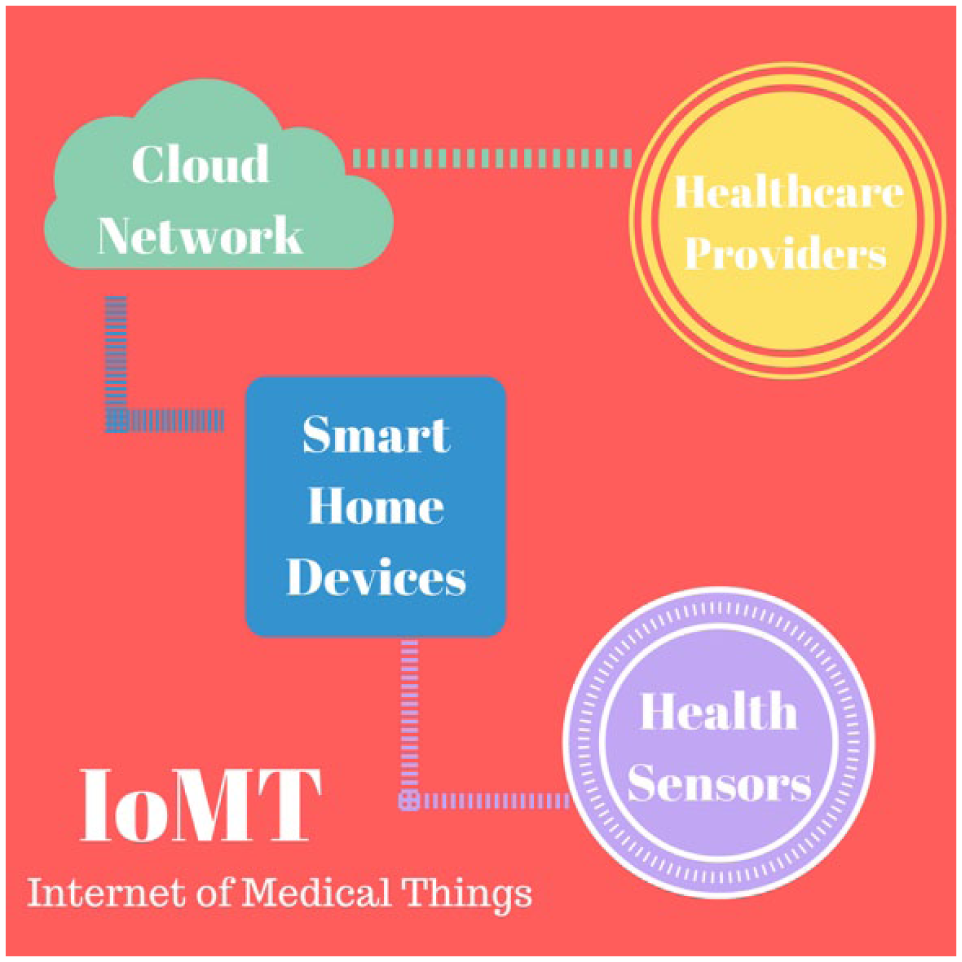
The Internet of medical things lies at the intersection of sensors, cloud computing, and medical monitoring.
The use of IoT for medical applications and in particular for wound and diabetic foot care is however still in infancy. Currently, IoMT is frequently used for activities such as remote patient monitoring for chronic illnesses, tracking medication orders, and wearable mobile health devices.11,21 However, our systematic search did not identify any study related to application of IoT for management of DFUs. However, significant business decisions have been taken recently by major information and communication technology (ICT) players like Google, Apple, Cisco, and Amazon to position themselves in the IoT landscape. For example, in 2014 Novartis began working with Google on sensor-technologies, such as the smart lens, and a wearable device to measure blood glucose levels. 22 In 2017, Amazon teamed up with Merck and Luminary Labs on an effort called the Alexa Diabetes Challenge, with the goal of finding the ultimate way to monitor diabetes using voice-enabled solutions. 23 As the IoT continues to develop, there is increased potential to facilitate management of chronic conditions at home including effective and timely management of diabetic foot at risk as well as facilitating the delivery of care for speed up wound healing. In addition, most medical devices that connect to analytics dashboards can be developed into IoMT technology. 24 As sensors that can measure DFU predictive markers are being developed, there is a need to explore how these new devices can be integrated into an IoMT model for the DFU patient.
Smart Home Devices and New Opportunities From Voice-Driven Technologies for Better Health Care Delivery and Outcomes
IoT is a concept reflecting a connected set of anyone, anything, anytime, anyplace, any service, and any network.17,25 This enables making the environment around us smart, potentially giving rise to many medical applications such as remote health monitoring to engage in intervention/prevention programs and improvement of adherence with treatment and medication at home and by health care providers.
Thanks to recent advances in voice-driven technologies, voice-activated commands are evolving into an integral component of the IoT. Voice-controlled IoT is already ubiquitous and is getting more ranging from intelligent personal assistance such as Apple’s Siri, Amazon Alexa, Google’s Google Now, and Microsoft’s Cortana to the devices that learn each individual person’s unique voice and create an interface where that voice can reliably interact with a variety of applications, such as a physician speaking directly to the electronic medical record and hearing it back or voice enabled medical transcription allowing doctors and nurses to record what they say as text, rather than having to type or handwrite forms.26,27 It is estimated that 40%-60% of American adults already use voice search in their everyday lives, and that 50% of all queries will be voice searches by 2020.28,29 This figure will only grow as voice-enabled assistant devices like the Amazon Echo and Google Home become more commonplace and interactions more normal.
Recent improvements in voice-enabled assistant devices not only reduce their cost (at time of writing of this review, popular devices such as Amazon Echo are available for under $50) but also include many interactive features allowing users to connect to the world and facilitate self-care. For instance, these voice-enabled devices can help users order pizza, call an on-demand transportation service (eg, Uber, Lyft, etc), control home appliances (eg, lights), tell the TV what show to put on, request media playback, ask what the weather will be like next week, order groceries for tomorrow’s dinner, and much more.30-32 As described in the following, these features could also provide opportunities to create self-care solutions as it pertains to the goals of seeking timely health care information, ordering medications, encouraging adherence to care management plan, easing communication between doctors and patients, and many more.
There are several efforts taking place to utilize these smart speaker systems for better health care delivery and outcomes ranging from drug delivery to voice-activated technology for home-based exercise systems and caregiver engagement.29,33 Much recently, some efforts have been initiated to translate the application of voice-enabled technologies for diabetes care. But these efforts are still in infancy and we couldn’t identify any clinical trial demonstrating the feasibility, acceptability, and/or effectiveness of such technologies for the purpose of diabetic foot management. Recently, few industrially supported initiatives have encouraged researchers to explore solutions for the use of voice-enabled technologies for managing diabetes. For example, in 2017 Amazon paired with Merck and Luminary Labs to launch the “Alexa Diabetes Challenge”, calling on innovators to create Alexa voice-enabled solutions to improve lives of those with type 2 diabetes. On its first call on April 2017, the challenge received 96 submissions from a variety of innovators, including research institutions, software companies, start-ups, and health care providers. On October 2017, Sugarpod application by Wellpepper 34 was announced as the winner. The winner of the challenge suggested to build a voice-enabled IOT scale and diabetic foot scanner, and also a voice-powered interactive care plan. Sugarpod is a comprehensive diabetes care plan solution that provides tailored tasks based on patient preferences. It delivers patient experiences via SMS, email, web, and a mobile application—and one day, through voice interfaces thanks to the grant awarded by the “Alexa Diabetes Challenge”. The major focus of this platform is to improve patient engagement with treatment plans.
Could Voice-Enabled Home Assistants Change the Management of DFU?
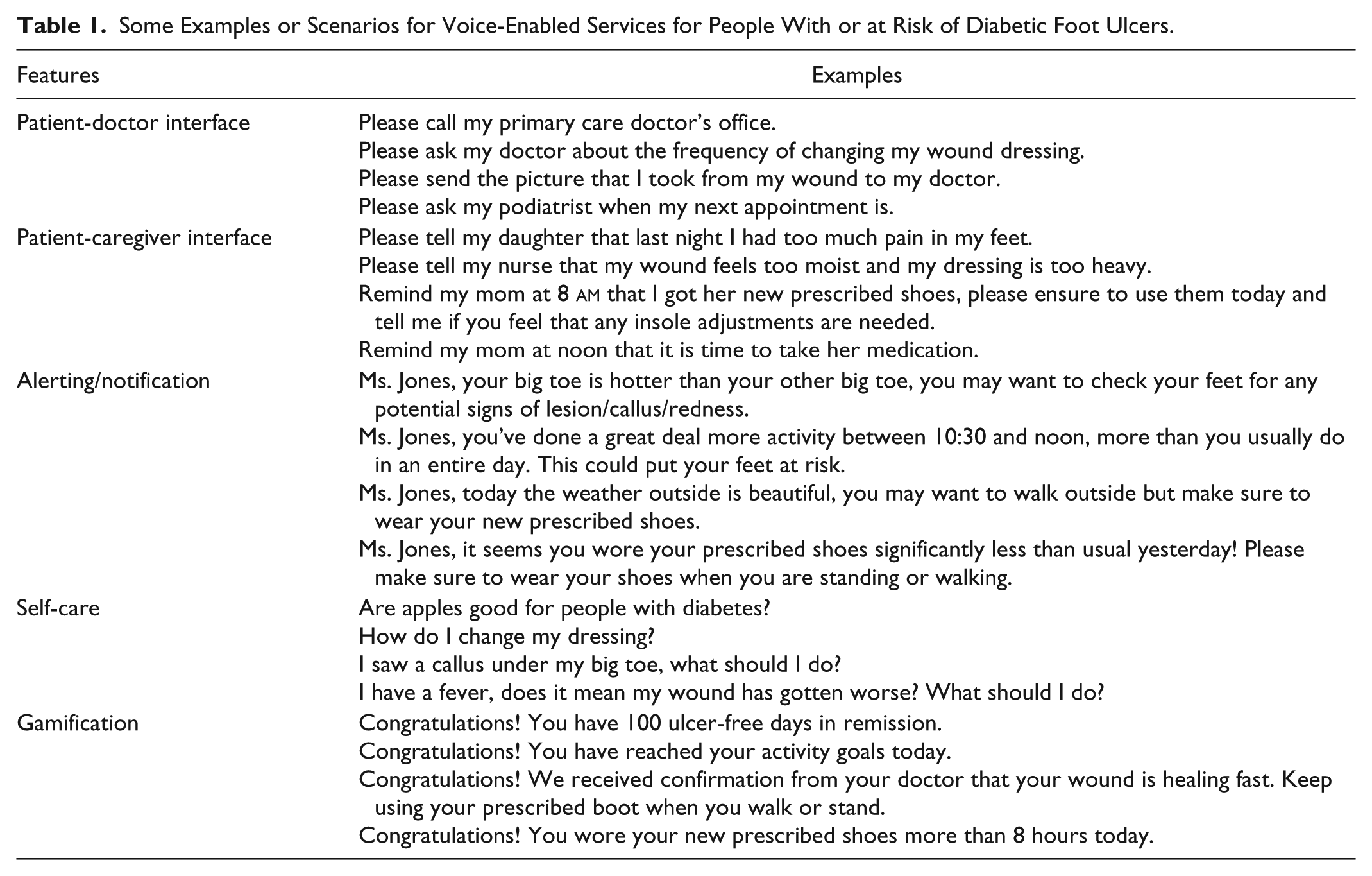
The management of DFUs largely entails a home approach. When patients visit a podiatrist or any other specialist, they are counseled on any number of important self-inspection or self-measurement-based tips. For example, in 2017, a company named Orbita (Boston, MA, USA) designed the Orbita Voice platform (Orbita Voice™), 35 which enables health care organizations and service providers to create and maintain interactive apps for voice-assistants and conversational artificial intelligent platforms like Amazon Alexa and Google Assistant. According to the company webpage, 35 Orbita Voice is currently used to engage patients in clinical trials and remain compliant with their treatment. For example, the clinical trial study coordinators can create and manage care plans by setting care goals, tasks, and rules over a specified timeline, including completion of daily pain assessment surveys, wellness tasks, or vitals measurements. Patients and family members can review and manage care tasks via voice as well as in mobile phone and web environments. Based on the indicated features in the company websites, authors believe a similar concept could be used for managing DFUs at home. For instance, the technology could be programed to instruct the patient or his/her caregivers on how to change their dressings daily, valuate their foot temperatures for a preulcerative lesion, control their blood sugar by adhering to certain dietary restrictions and taking their diabetic medications, and perform daily foot checks to prevent any further ulcerations. Some of these potential features have been illustrated in Figure 2. In addition, based on our expert opinions, several potential examples and features for a voice-enabled device for managing the diabetic foot have been summarized in Table 1. In summary, we believe that such technology could have 5 different feature categories. First is the patient-doctor interface—to facilitate scheduling appointments, refiling medications, informing the care provider about any signs of health deterioration (eg, wound smelling, painful wound, too much drainage, etc), and obtaining additional clarification about care management plan (eg, frequency of wound dressing change). Second is the patient-caregiver interface—this interface can support the communication between patients and their formal and informal caregivers including families, friends, and others affected by the illness. For instance, it could be instructed to deliver a message from the caregiver to the patient at a specific time (eg, “Remind my mom at noon to take her medication”). Similarly, it could record a message from the patient and send it to the caregiver via a text message or voicemail (eg, “Please tell my nurse that I feel too much wetness in my wound and my wound dressing looks heavy”). The third feature is alerting/notification. This features could give timely alert or notification to improve patient lifestyle and/or engage the patient in the prescribed care management plan (eg, “Ms. Jones, today the weather outside is beautiful, you may want to walk outside but make sure to wear your new prescribed shoes”). It could also provide time-effective alerting for the purpose of preventive care (eg, “Ms. Jones, your big toe is hotter than your other big toe, you may want to check your feet for any potential signs of lesion/callus/redness and if you see anything concerning, notify your caregiver or consult with your podiatrist”). This features could also guide patients about optimum dosage of daily activities without risk. According to the statement of the American Diabetes Association, 36 maintenance of physical activity is a critical focus for blood glucose management and overall health in individuals with diabetes and prediabetes. This statement recommended that “people with diabetes (particularly those with type 2 diabetes) should decrease the amount of time spent in daily sedentary behavior. In addition, prolonged sitting should be interrupted with bouts of light activity every 30 min for blood glucose benefits, at least in adults with type 2 diabetes. These two recommendations are additional to, and not a replacement for, increased structured exercise and incidental movement.” However, dosage of weight bearing activities (standing and walking) in people with a DFU or at risk of a DFU needs to be done carefully as to not delay wound healing or increasing risk of foot ulcers. For example, Najafi et al 12 demonstrated that increasing number of daily steps beyond 6000 steps per day could significantly delay wound healing irrespective of type of offloading. The same study has concluded that prolonged standing per day (eg, longer than 5 minutes) is a significant negative predictor of wound healing success at 12 weeks and thus should be avoided in particular when patient is using removable offloading. Using a voice-enabled device and IoMT platform, the patient could be advised when he or she is exceeding acceptable threshold of activity. Similarly, it could notify the patient (or caregivers) if he or she missed the daily target of physical activities. The fourth feature is self-care—this feature could empower the patient to improve his or her self-care via asking questions anytime and anywhere (eg, “I saw a callus under my big toe, what should I do?”). The fifth and final feature is gamification, used to engage the patient in regular self-care to improve his or her lifestyle (“Congratulations! You have 100 ulcer free days in remission”).
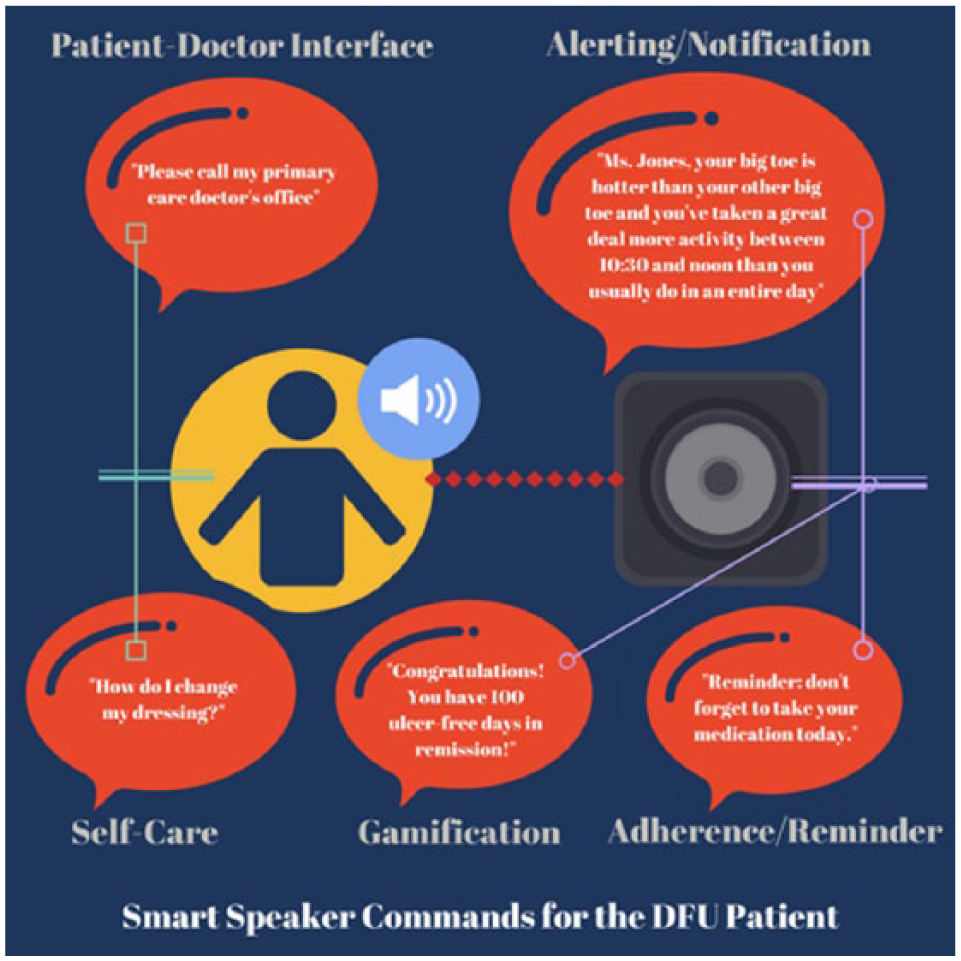
Schema of potential application of smart speaker commands for management of DFU.
Some Examples or Scenarios for Voice-Enabled Services for People With or at Risk of Diabetic Foot Ulcers.
This large quantity of instructions can be overwhelming for a patient, but with the assistance of a voice-enabled smart speaker, the entire DFU patient home care experience could change drastically. Imagine if the home assistant gave the patient step-by-step instructions on changing wound dressings and issued reminders to check blood sugar levels, take medications, or perform daily foot checks. In addition, consider the ease of having a voice-enabled dietary assistant that helped with DFU patient-specific meal planning and weight loss.
Such a reality will require care providers to relay detailed instructions to a patient’s home health device. This may seem time-consuming, but with recent promising collaborations between big industries (eg, Google) and physicians/researchers have expedited the development of voice recognition models that better understand medical lingo and extract clinically significant information, it may be as easy as talking directly to the patient.37,38 Some of these ideas were the basis of Merck’s challenge-winning IoMT project, Wellpepper’s “Sugarpod,” which took home the $125 000 grand prize for its multimodal care plan for diabetes management as described in the previous section. 34 With the introduction of the new value-based reimbursement model by health care leaders,39,40 the use of health sensors for prevention and monitoring will likely grow in popularity.
As it pertains to the DFU patient, there are several predictive markers that make it possible to detect when the prognosis of diabetes is spiraling out of control, and with recent advancements in technology, it is even possible to predict foot ulcerations using IoMT platforms. For example, in 2017, Frykberg et al 41 proposed a smart mat based on the IoMT concept using daily plantar temperature monitoring utilizing a technology with a similar form factor to a bathmat. Specifically, they studied a novel in-home connected foot mat (Podimetrics Mat™, Somerville, MA, USA) to predict risk of a DFU and better stratify those who need an urgent foot care. This simple-to-use system was designed to require no configuration or setup by the users who simply had to step on the mat with both feet for ∼20 s. The system then compared the temperature profile of the two feet. Using a threshold of ≥2.22°C difference between corresponding sites on opposite feet, the mat correctly predicted 97% of DFUs with an average lead time of 37 days. Adherence to the mat was high, with 86% of participants using the mat at least 3 times per week, and an average usage of 5 times per week. This accuracy and 37-day lead time could be sufficient to better target those who need urgent care. Perhaps combining this technology with a voice-enabled technology encompassing the features described above could facilitate timely intervention (eg, scheduling a timely appointment with the patient’s podiatrist, advising the patient and/or the caregiver for an effective preventive strategy, etc), which could ultimately assist with reducing the risk of a DFU and its devastating consequences and costs.
An IoMT model for the DFU patient should incorporate health sensors (eg, foot mat to monitor risk of foot ulcers or activity monitor to dose optimum daily activities, shoe sensors to monitor adherence to prescribed footwear, etc) that can transmit valuable information to the patients, their caregivers, and/or their health care providers wirelessly through a cloud network, as illustrated in Figure 3. Voice-enabled smart devices such as Google Home or the Amazon Echo may be used as a central hub to collect data from these health sensors and relay that information to the cloud network.
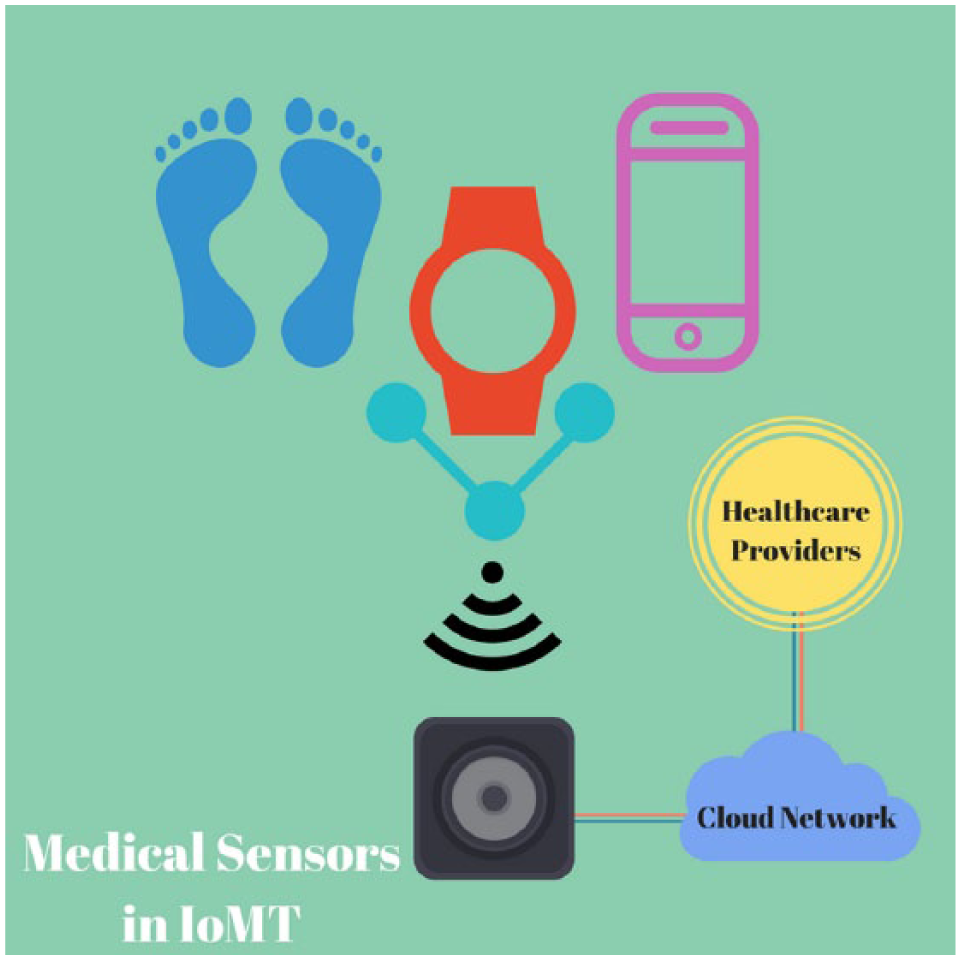
Future direction for IoMT in the care of the diabetic foot.
The following is a sample list of several currently available network-connected medical devices that may serve this purpose. But indeed further developments are needed to personalize the IoMT platform to assist with management of DFUs or feet at risk of a DFU:
Privacy and Security Concerns
As new opportunities for leveraging consumer-grade electronics and artificial intelligence (AI) grow, concerns for patient privacy and the security of life-critical connected devices (eg, wirelessly connected insulin pumps and pens) grows in tandem. Several groups have called for increased transparency of security and privacy capabilities for IoMT devices,62-64 a kind of security “nutrition” label that will allow manufacturers to document the security capabilities of their devices to raise the confidence of patients, regulators, and other stakeholders. In 2016, the Diabetes Technology Society established such a program, called DTSec, 65 which provides a cyber security standard whose goal is to raise confidence in the security of network-connected medical devices through independent expert security evaluation. This consulting service enables electronic developers to put their connected health care devices through an expert security evaluation that would then be listed in the public record. This program focuses on assuring safe clinical use against malicious attacks. This program is also currently being adopted as a joint IEEE/UL standard and program, with hopes to expand it beyond its current scope of diabetes devices to other forms of connected health care systems.
Beyond safe operation, patient privacy is exposed to a new set of challenges in the IoMT. While patient privacy is arguably well understood and certainly regulated within traditional medical systems, the advent of personal consumer electronics (such as home assistants) used in health care contexts creates novel challenges. In general, consumer electronics purchased by patients for personal use (rather than being prescribed and delivered as a health care solution) fall outside the bounds of HIPAA and other regulatory umbrellas. Therefore, it is incumbent upon solutions providers and the rest of the health care stakeholder community to adopt a program that is conceptually similar to the DTSec approach but adds privacy-specific requirements—such as the right to be asked for consent prior to using recording devices and the right to be forgotten. The security and privacy nutrition label would inform patients which rights are protected by the solution and what level of independent evaluation has been applied to these claims. Because the IoMT is made up of devices that are not manufactured by traditional health care manufacturers, this assurance program must be broad and general enough to allow the specification of security and privacy requirements on any form of IoMT system, including home assistants, wearables, network access points, and more.
Conclusion
The IoMT has opened new avenues and opportunities in health care from remote monitoring to smart sensors and medical device integration. It has the potential to empower patients to take care of their own health and thus promoting patients’ central role and responsibility in enabling an optimized health care ecosystem. This rapidly developing infrastructure has the potential to not only keep patients safe and healthy but also improve how physicians deliver personalized and timely care. Recent market research indicates the “sensor market in consumer healthcare” will be worth $47.40 billion by 2020. 66 With DFU care nearly doubling the costs of diabetes in the United States, 4 there is hope that a new era in development of medical sensors and their integration with IoMT can help alleviate the economic burden of this disease.
The benefits of IoMT will likely extend beyond the realm of consumer health care, benefitting researchers with its ability to continuously and remotely monitor patients. While IoMT is being celebrated as the future of medicine, there are still some concerns that need to be addressed on patient compliance, battery life issues, and security and privacy. Nonetheless, we find ourselves in the early stages of a dramatic change in health care: where the merger of consumer electronics and medical devices has made the home the clinic of the future.
Footnotes
Abbreviations
AI, artificial intelligence; DFU, diabetic foot ulcer; ICT, information and communication technology; IoMT, Internet of Medical Things; IOT, Internet of things; PAD, peripheral arterial disease.
Declaration of Conflicting Interests
The author(s) declared no potential conflicts of interest with respect to the research, authorship, and/or publication of this article.
Funding
The author(s) received no financial support for the research, authorship, and/or publication of this article.
