




Abstract
Multilingualism in post-Soviet countries where as a result of the Soviet time migration and Russification, Russian speakers still constitute a significant part of population, presents an interesting case for analysis. Estonia, being officially a monolingual country with quite strict language policy, is extremely linguistically diverse in terms of actual everyday communication, with both Russian and English playing a significant role. Moreover, as Estonia attracts many foreign visitors, expats, and refugees, other languages, including Ukrainian, also become more and more noticeable in both visual and acoustic form in public spaces. However, spatial distribution of different languages in urban landscapes varies significantly, and by analyzing it one can reveal not only the patterns of language use but also power relations between different linguistic, ethnic, and social groups. The paper reports on preliminary results of a study conducted in Tallinn in 2022–2023 and focused on collecting and comparing data on both linguistic landscapes and soundscapes in several locations in the city. The study shows a mismatch between visual linguistic representation and actual linguistic diversity and tries to contemplate it in a broader historical context of multilingualism and language contacts in the Baltic region.
Introduction
In the vibrant tapestry of urban life, the city of Tallinn emerges as a rich sociolinguistic landscape, where the interplay of people and languages weaves a narrative of cultural diversity. As a city shaped by historical influences, globalization, and shifting demographics, Tallinn serves as an intriguing case study for understanding the complexities of multilingualism in contemporary urban environments but also against the background of its history.
The linguistic environment of a city can be perceived and experienced in many ways but primarily through sight and hearing. Going along the streets, we can see words and phrases written in various scripts and accompanied by different images and symbols; they fragment and transform the space, index it as belonging to certain social orders while at the same time “interact with one another, with the spaces of their emplacement, and with the social actors inhabiting these spaces in creating complex networks of meaning” (Jaworski & Thurlow, 2010, p. 8). Simultaneously, we can hear sounds of many words pronounced with different voices and intertwined into the complexity of the city’s soundscape, with its traffic and industrial noise, music, dog barking, shrieks of seagulls, laughter of children playing, and many other sounds. But how do what we see and what we hear relate to each other and how different is the image the city projects to those who look at it and those who listen to it? And, going deeper into the history of multilingualism in a certain place, how reliable are the material evidences of it left from the previous epochs, so called “ghost signs” (Pavlenko, 2023), for reconstructing the composition of languages that used to sound there in the past?
The article presents an attempt to approach the multilingualism of Tallinn from different angles and using different research methods (ethnographic linguistic landscape analysis; digital mapping; rapid language observation survey; ethnographic walks; and interviews). It is based on the results of ongoing research and does not claim to be a complete description of multilingual practices that can be witnessed in the capital of Estonia. Rather it seeks to outline the basic contours for a further study model and to reveal how different spatial and temporal contexts and diverse actors interact in the city space. The text is structured as follows: first, we introduce in brief the socio-historical background of the contemporary sociolinguistic landscape of Estonia and Tallinn; then we describe the previous studies on Tallinn linguistic landscape and outline the methodology of our research; in two following sections, we present the results of the studies on visual and aural aspects of multilingual practices that can be witnessed in Tallinn public space; and in concluding section, we are trying to compare these results to address, or rather start to address the questions posed in the previous paragraph.
Socio-historical background
Multilingualism in Estonia: A historical overview
The contemporary territory of Estonia has been historically subject to various foreign powers and also a part of important trade routes, which resulted in many different languages spoken alongside each other for centuries.
According to historical records (Kaljusaar, 2022; Kasekamp, 2017), preceding the early 1200s, Estonians enjoyed autonomy, adhering to a patriarchal political system organized around clans governed by elders, and were primarily engaged in agrarian pursuits. During this period, the Vikings initiated invasions in the 9th century, while attempts at Christianization by Danes and Swedes in the 11th to 12th centuries proved unsuccessful. The late 12th century witnessed the arrival of Crusaders who established monasteries and churches, leading to the conversion of some Estonians to Christianity. However, a considerable segment of the local populace retained their pagan practices.
The German conquest commenced in Livonia (modern southern Estonia and Latvia) and expanded northward through collaboration with the Order of the Sword’s crusaders at the onset of the 13th century (Kala, 2004). These knights triumphed over the Estonians led by elder Lembitu and subsequently formed an alliance with the Danes, who assumed control of the northern coast, including the site of Tallinn (Taagepera, 2018). Concurrently, Russian princes sporadically raided eastern parts of Estonia (Raun, 2002). By the mid-13th century, the Teutonic Order in Livonia absorbed the Order of Brothers, while Danish rule persisted in the northern region until the Danish territories were sold to the Teutons in 1346 following severe revolts in 1343–1345 (Kaljundi, 2016). The Germans then became the masters, and the Estonians, Livs, and Latvians became serfs.
Toward the end of the 15th century, Poland–Lithuania expanded its influence over Livonia following the dissolution of the Teutonic Order in 1561 (Bues, 2001). There is also evidence that Jews from the Grand Duchy of Lithuania began to settle in Livonia (for more details, refer to Verschik, 2022, p. 187). Northern Estonia subsequently became a part of the Swedish Kingdom, briefly interrupted by Russian invasions under Ivan the Terrible’s rule (1558–1581). After the Polish–Swedish War in 1629, the majority of Livonia, including all Estonian lands, came under Swedish control. The German nobility, while given the opportunity to extend their estates, became tenants of the Swedish crown, and their rights were considerably limited (O’Connor, 2015).
The aftermath of the Second Northern War saw Russian Tsar Peter I conquering the Baltic Provinces. Following the Nystad Treaty in 1721, German barons became tenants of the Russian Empire, exacerbating the plight of peasants, including Estonians, Livs, and Latvians, until the eventual abolition of serfdom in 1816 and 1819. Subsequent agrarian laws in 1866 and 1868 significantly benefited Estonian peasants, who acquired ownership of 2/5 of private lands. During this period, the Baltic Provinces maintained their autonomy, with German serving as the official language of communication within the province. The coronation of Alexander III marked a shift to the Russian municipal constitution, leading to the replacement of Baltic criminal and civil codes with Russification introduced in all official spheres (Haltzel, 2014), including administration, courts, and secondary schools (Pavlenko, 2011).
Simultaneously, this era witnessed the Estonian national awakening, playing a pivotal role in subsequent revolutionary events during the early 20th century and culminating in Estonia’s first independence from 1918 to 1940. According to Verschik (2014), in the early 20th century, a prevailing idea revolved around proficiency in three local languages (Estonian, German, and Russian), implying a functional command of these languages, particularly for individuals engaged in client-oriented occupations. Despite Estonia being one of the most ethnically homogeneous European states during its initial period of independence, where ethnic Estonians constituted 88.8% of the population, the educational system mandated the learning of two additional languages alongside the mother tongue, regardless of whether the schools were majority or minority oriented (Verschik, 2014, p. 345).
This extensive history of varied policies attests to the significance of multilingualism as a defining characteristic of the linguistic scene in Estonia. Beyond Estonian and Livonian in various territorial iterations, Russian of border regions and old-believers, the languages of conquerors and masters, such as Low German (and later Standard German), Danish, Polish, Swedish, and Standard Russian, as well as the language of the church, Latin, manifested in diverse forms, both written and oral. Yiddish varieties were also present within the Livonian contact area. Considering the Hanseatic Route, one must also contemplate the languages of merchants such as English or Dutch but also merchants from Asian countries who could have traversed Estonia (see, e.g., Tooman 2021 on the temple of Persian merchants in Narva, or Matthee, 1999). Finnish, the closest relative of Estonian, also contributed to the multilingual scene of the region. In other words, both group and individual multilingualism used to define everyday urban life in Estonia for centuries.
Modern situation: Ethnic groups and languages
The modern linguistic situation in Estonia is mostly influenced by the consequences of the historical events that took place in the 20th century as “World War II and the years of Soviet and German occupation prompted a drastic change in the ethnic composition of Estonia” (Tammaru & Kulu, 2003, p. 106). In 1934, the last pre-war census indicated a non-Estonian population of 134,000, constituting approximately 12% of the country’s total. Comprising Russians (the largest group), Germans, Swedes, Jews, and Latvians, the non-Estonian minority faced significant shifts during World War II. The German minority mostly left for Germany or German-occupied territories after the Molotov–Ribbentrop Pact in 1939, while many Estonian Jews fled in 1941, with those remaining falling victim to the Nazis. Most Estonian Swedes escaped to Sweden after the return of the Soviet troops in 1944, and Estonia’s Russians from the areas near Lake Peipus were transferred to Soviet jurisdiction in 1945 due to a border change. The Latvian minority also experienced displacement; all these led to a drastic reduction in Estonia’s non-Estonian population to 23,000 post-World War II. Only a small Russian community persisted, primarily located along the western shore of Lake Peipus and its major towns (Tammaru & Kulu, 2003, p. 106).
During the Soviet era, particularly post-1945, Estonia experienced an influx of individuals from diverse ethnic backgrounds and linguistic origins, arriving from various regions of the Soviet Union. Russian served as both an official language and a means of interethnic communication (for a detailed analysis of contemporary Russian speakers, see Fedorova & Tšuikina, forthcoming). Throughout various immigration waves to Estonia, Russians consistently constituted a substantial majority, comprising 80% of the non-Estonian population, with Ukrainians and Belarusians following in subsequent periods.
The population of Estonia, 1934–2000. Source: Tammaru & Kulu (2003), p. 108.
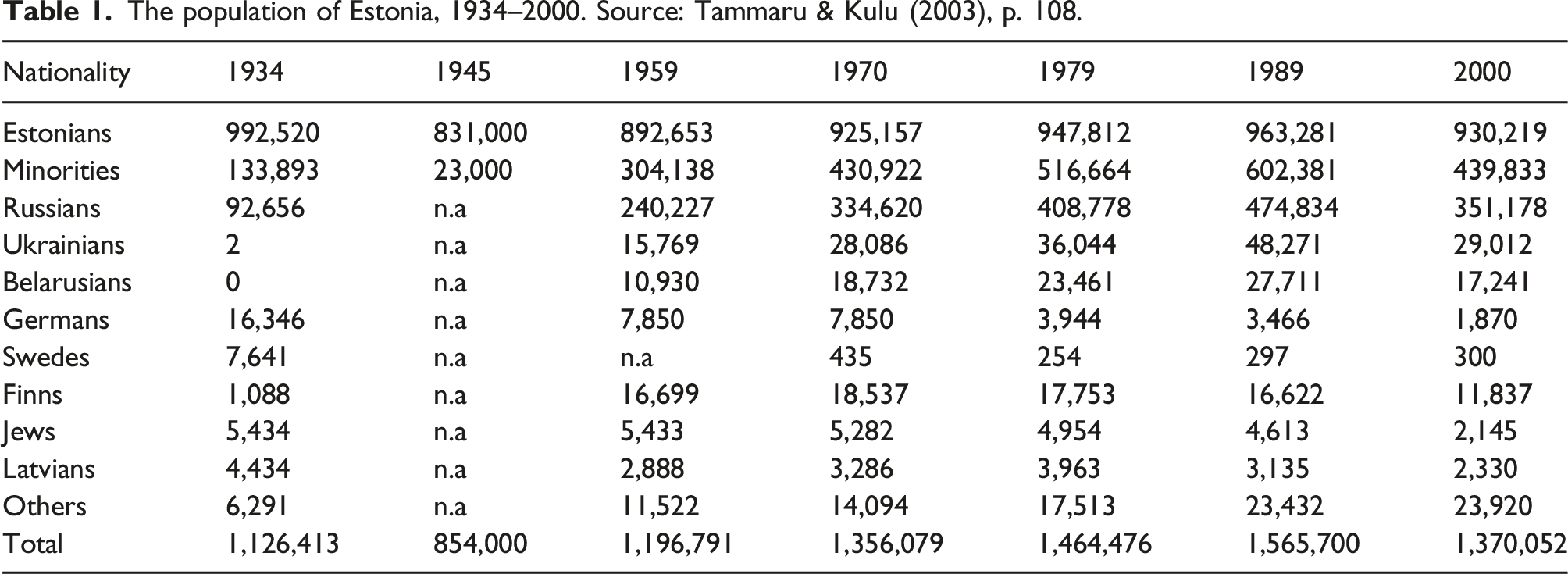
According to the 2021 census (“Demographic and Ethno-Cultural Characteristics”), Estonia is home to people of 211 ethnicities (on the basis of self-identification). The largest segment of the population is Estonians, comprising 69.1% (919,711 people) of all residents. Russians constitute the second-largest group, accounting for 23.7% (315,252 people). Notably, the most substantial increase is observed in the third-largest group—the number of Ukrainians has risen by 5,255 compared to 2011, reaching 27,828 and making up 2.1% of the population. Supposedly, now this number is 50,000 higher due to arrival of refugees after Russia’s full-scale invasion of Ukraine (“Ajutise ja rahvusvahelise kaitse”).
As per the most recent census, a notable diversity of 243 mother tongues is reported in Estonia (see Figure 1). This represents a substantial increase compared to 109 languages in 2000 and 157 languages in 2011 (“Demographic and Ethno-Cultural Characteristics”). However, it is essential to consider changes in data collection methodology; notably, in 2021, respondents were allowed to indicate two mother tongues, contrasting with the previous practice of selecting only one in 2000 and 2011. Mother tongues spoken in Estonia, 2021. Source: “Demographic and Ethno-Cultural Characteristics.”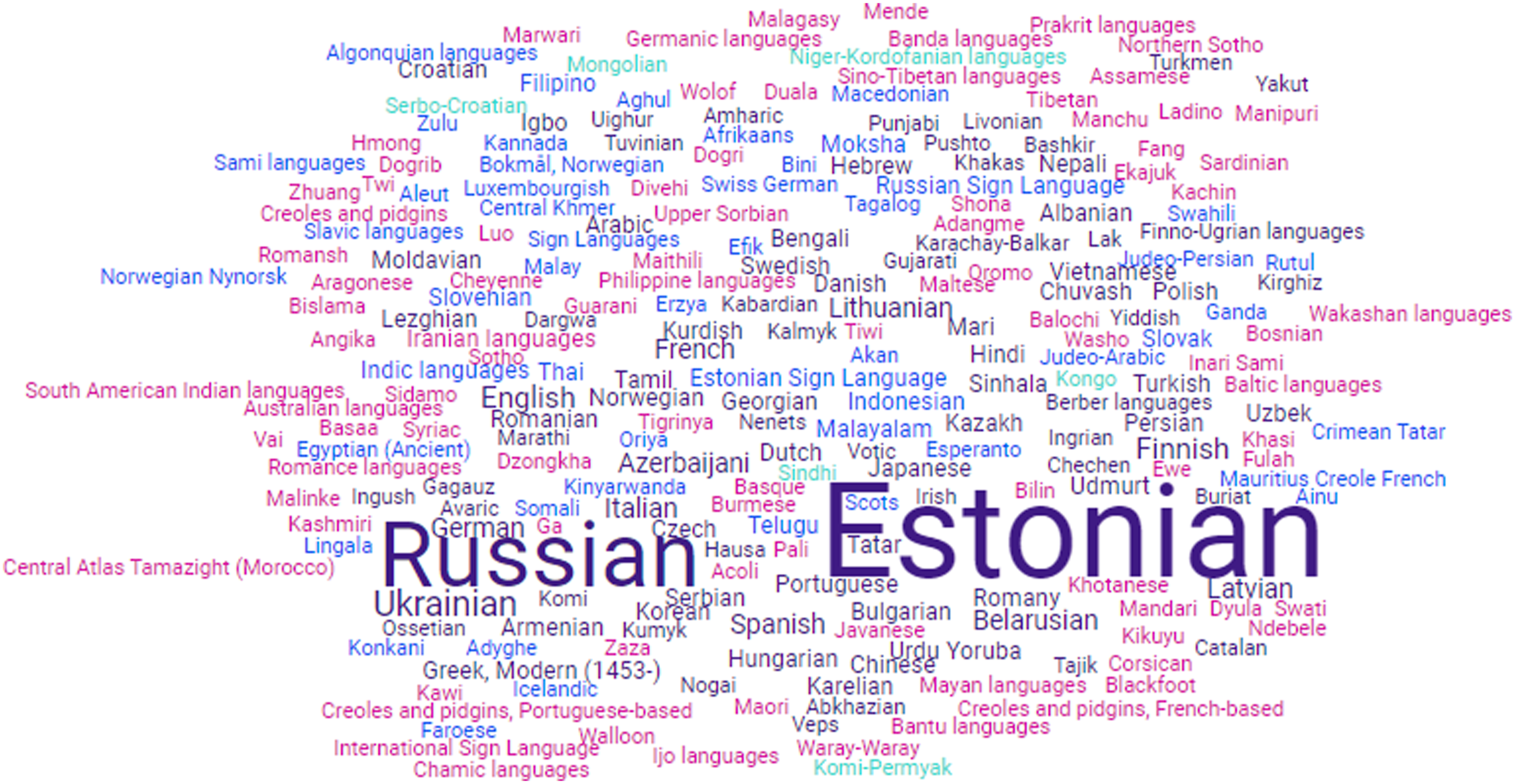
The predominant mother tongues in Estonia are Estonian and Russian. Estonian is the primary language for 895,493 individuals, while Russian is spoken by 379,210 people, securing the second position. The third spot is held by Ukrainian with 12,431 speakers (see details in the database “Statistika Andmebaas”). Notably, the correlation between the number of language speakers and the corresponding nationalities is not always consistent. Approximately 35,000 Estonians speak languages other than Estonian as their mother tongue, while among other nationalities, 64,000 people identify Russian as their mother tongue, and less than half of Ukrainians speak Ukrainian as their mother tongue. The distribution remains relatively unchanged even with the influx of Ukrainian refugees, as a significant part of them originate from the eastern part of Ukraine and predominantly speak Russian (see Fedorova & Tšuikina, forthcoming).
According to the report (“243 Mother tongues,” 2023), the prevalent languages spoken in the world are represented by the following numbers in Estonia: 3,879 English speakers, 419 Chinese speakers, 630 Hindi speakers, 1,378 Spanish speakers, and 1,424 French speakers.
Furthermore, 30,710 individuals, constituting approximately 2% of the population, reported having two native languages. Among them, the most prevalent bilingualism was Estonian-Russian, with 18,160 individuals. The second most common combination was Estonian and English, as indicated by 1,220 people. In the current census, where respondents could manually specify their language, 230 individuals in Estonia indicated dialects/regional languages as their mother tongues.
Simultaneously, the census reveals that 76% of Estonia’s population is proficient in foreign languages, showcasing a steady increase from 69% in 2011 and 64% in 2000. According to the latest census, English has emerged as the most widely spoken foreign language, with 48% of the population being proficient, marking a shift from 2011 when Russian (as a second language) held the leading position at 44% (currently at 39% in 2021). Estonian ranks as the third most spoken second language, with 17% of the population being proficient (see Figure 2). Command in foreign languages in population censuses 2000, 2011, and 2021. Source: “Demographic and Ethno-Cultural Characteristics,” 2022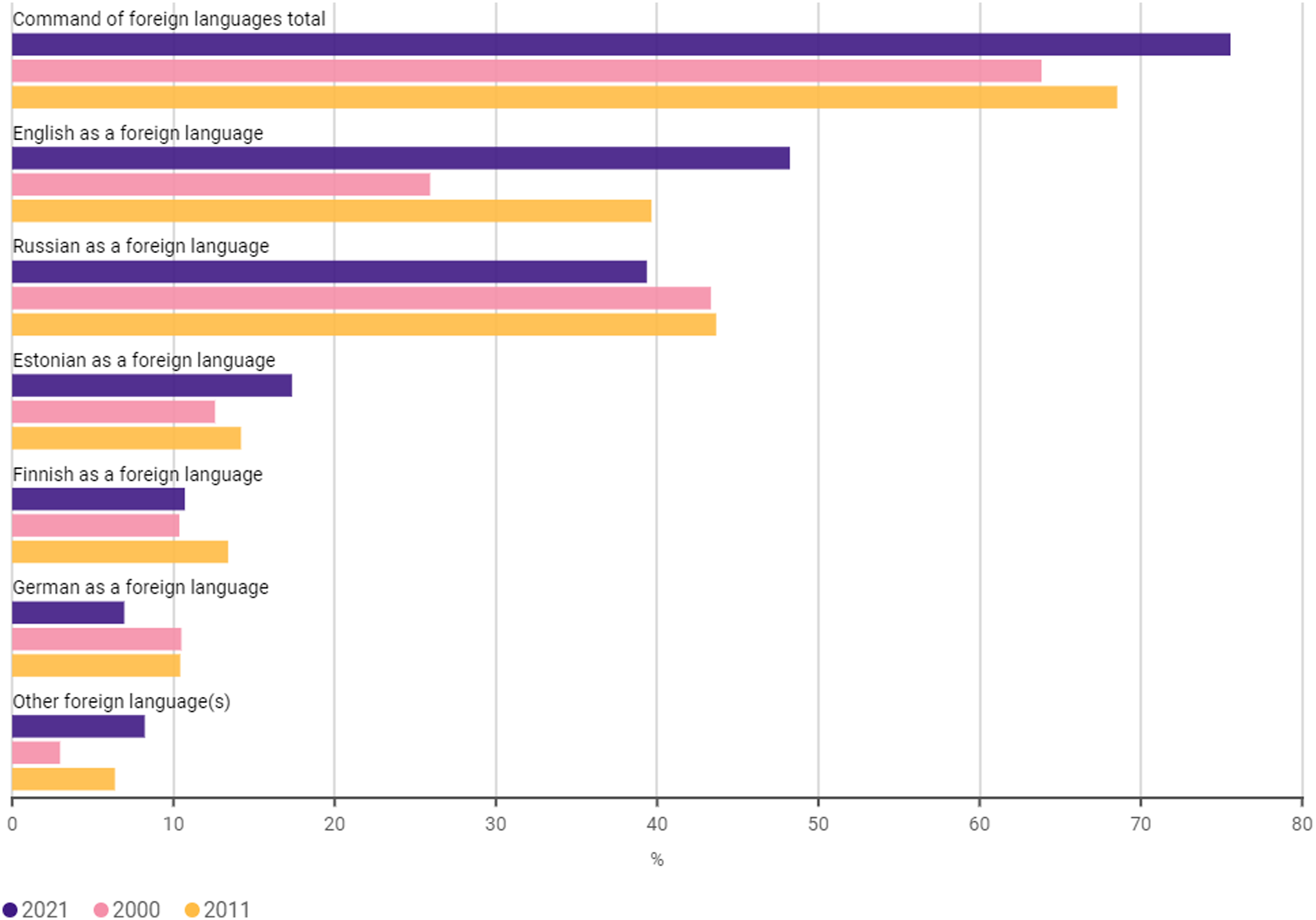
Figure 3 illustrates the distribution of the languages as spoken by both native and non-native speakers in Estonia across age groups, highlighting a trend where the older population is proficient in Russian, while the younger generation leans toward Estonian and English. Two other languages, although significantly less spoken, are Finnish and German. Their distribution across generations does not follow a linear trend; moreover, higher figures for one language correspond to lower figures for another in the same age group (“76% of Estonia’s population,” 2022). Share of language speakers in age groups, 2021. Source: “76% of Estonia’s population,” 2022.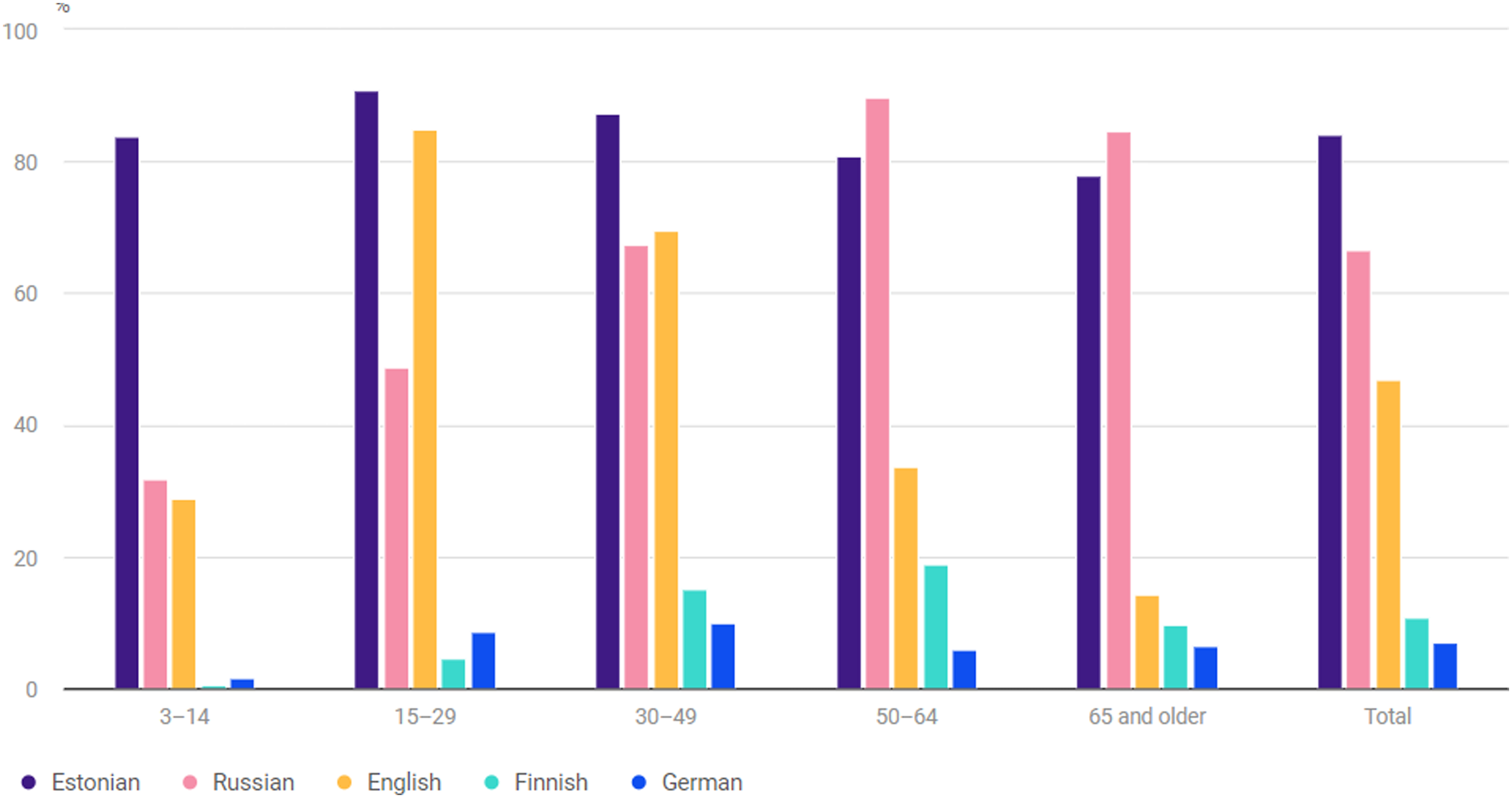
If we compare all data represented on Figures 1–3, it is evident that languages spoken by non-native speakers contribute significantly to the complexity of language usage in Estonia, with English being the most popular language and becoming even more important with every decade. However, self-reported ability to use certain languages does not necessarily mean actual use of those languages in real life communication which can only be attested through the study of language practices.
Research background and methodology
Spatial approach to urban multilingualism
Current multilingualism of Estonia, in general, and its capital city of Tallinn, in particular, was mostly formed, therefore, by the socio-political processes of the two post-war periods, the Soviet occupation and Estonian independence. What is important, though, is that migrations, urban development, and economical segregation have determined not only the composition of the languages used in Tallinn but also their distribution in the city’s space. Studying urban multilingualism in a spatial dimension enables researchers to address such issues as the intersection of language, culture, societal socio-economic composition, and urban planning. By examining how languages are used and interact within specific urban spaces, scholars gain valuable insights into the dynamics of linguistic diversity and its implications for community life.
One key aspect of this research involves mapping linguistic landscapes, that is, the visible presence of different languages in public spaces (Backhaus, 2006; Blommaert, 2013; Shohamy et al., 2010). Signs, advertisements, and other written texts contribute to the visual representation of linguistic diversity, providing a tangible expression of the languages spoken in a given area. This mapping not only helps researchers understand the distribution of languages but also sheds light on the relationships between language, society, and space, exploring how linguistic landscapes reflect and influence social, cultural, and political dynamics: power relations, identity, migration, globalization, heritage, and the negotiation of space through language. Semiotic analysis of signs considers how linguistic choices (e.g., language selection, font, color, and size) convey specific messages and influence their perceptions.
While linguistic landscape studies aim to capture the visual component of multilingualism, linguistic soundscape studies (Brooks et al., 2014) focus on the auditory aspects of language(s) use within a certain environment or space. In particular, they reveal how speech, ambient noise, music, and other auditory elements interact within a given space and also analyze the various languages, dialects, accents, and speech patterns that are audible within a given setting. This includes examining how different languages or language varieties coexist and interact in the auditory realm and how linguistic sounds reflect cultural practices, social hierarchies, and community identities.
However, the ways languages are manifested in two realms of physical environment, visual and audial, are not necessarily the same. First of all, visual signs tend to be more stable, anchored in the material objects and, therefore, may keep traces of previous time periods and reflect patterns in the use of languages that are no longer relevant, thus creating the phenomenon of “layering,” or coexistence of different multilingual signs (Backhaus, 2006, p. 106). Meanwhile, sounds of speech, if not audio recorded, can only exist in the present moment and reflect the momentary situation existing at a given point in time and space. At the same time, being easily spotted and registered, visual signs are more amenable to control and regulation by others, including state representatives and elites. According to Blommaert and Maly (2016, p. 192), “public space is also an instrument of power, discipline, and regulation: it organizes the social dynamics deployed in that space.” However, this semiotic importance of linguistic landscape makes it also an instrument of counter movements from below—individuals, activist groups, communities, small businesses, etc. may contribute to it challenging official policies.
Obviously, both features, stability and controllability, are dynamic and relative, and should be represented as scales rather than binary oppositions. Different domains of language use tend to provide more or less stable linguistic output: thus, for example, private messages such as graffiti and handwritten or home printed advertisements are much more likely to disappear within a short period of time than official road signs or memorials carved in stone. On the contrary, it is less likely that short lived private messages draw any attention from the officials and become banned or promoted. Similarly, recorded public announcements at transport hubs or shopping centers may be repeated for years, unlike private conversations in the same places, but also can be changed abruptly if the official language policy changes. That happened, for example, in the case of announcements at the Baltic railway station in Tallinn which had used to be in Estonian and Russian, but in 2023, Russian was substituted with English (Fedorova & Tšuikina, forthcoming).
However, when studying linguistic landscapes and soundscapes, we should bear in mind that they are shaped not just by official language policy but, first of all, by everyday practices which are very often based on spontaneous practical decisions; and also by speakers’ linguistic stereotypes and attitudes, or, on a broader scale, by a general ideological context: people can resort to, or refrain from, speaking or writing in public in certain languages not because it is explicitly promoted or forbidden but because they feel them to be (in)appropriate or (un)welcome. Multilinguality provides speakers with an opportunity (and also necessity) to make language choices; socio-cultural conventions shape and determine their choices to a various extent, depending on the levels of agency and publicity, and spatio-temporal context of communication.
Linguistic landscape data
Previous studies on Tallinn’s linguistic landscape conducted in the first half of the 2010s focused on particular areas and/or sites. Mole (2013) studied three districts: Kesklinn (central district, including the Old Town area), Nõmme (prosperous residential area of the city, mainly with private houses), and Lasnamäe (the biggest district with predominantly Soviet style apartment buildings). By using the continuous sampling method and quantitative analysis, the author compared the number of monolingual and multilingual signs, distribution of languages (Estonian, English, Russian, and others) in them and the difference between top-down, that is, created by institutional agencies, and bottom-up signs, that is, produced by non-institutional actors such as business owners and employees, representatives of the third sector, and individuals (see Ben-Rafael et al., 2006, p. 10). Mole showed differences between the studied districts: Nõmme tended to look almost monolingual in Estonian; Kesklinn turned out to be the most multilingual scene, both in terms of the number of different languages and in the number of multilingual signs; and Lasnamäe hosted more signs containing Russian, however less than could be expected considering the percentage of Russian speakers residing there. The author defined Russian in Tallinn as a language that is “heard and not seen” (Mole, 2013, p. 32) and marked the tendency to place signs in Russian behind closed doors rather than outside (cf. similar patterns of use regarding languages of labor migrants in the linguistic landscape of St. Petersburg in Baranova & Fedorova (2019).
The study by Zabrodskaja (2014) was based on the data on linguistic landscape collected in the Old Town, in the harbor area, and in Lasnamäe district; however, rather than stating the difference between those areas, the author focused on the mismatch between the official monolingual language policy in Estonia and Tallinn actual multilingualism. Zabrodskaja analyzed the data from the perspective of the interplay between commercial signage and official language regulation, supplementing this analysis with data on language attitudes obtained from the interviews with Russian-speaking and Estonian-speaking students. The author concluded that multilingual signs reflect creative manifestations of complex linguistic identities that are perceived favorably by multilingual speakers but are disapproved by monolingual ones, thus signaling some serious contradictions on language issues within Estonian society.
Soler-Carbonell’s (2016) research used Tallinn linguistic landscape data as a case study for conceptualizing the notion of scalar analysis in application to urban multilingualism. It showed that the language heterogeneity of Tallinn studied at several locations (airport, ferry terminal, bus station, train station, and Viru street in the Old Town) can be explained by the diverse types of mobility in those settings, where different scalar frameworks are constructed via mobilization of various semiotic resources. Hierarchies of languages, such as the prevalence of English at the airport or in Viru street, the increase in use of Russian at the bus and railway stations, and of Finnish at the ferry terminal, correspond to trans-national, trans-regional, or trans-local scales.
The most recent study (Kedars, 2018) conducted in 2013–2017 focused on the functions (informative or symbolic) of the multilingual signs found in the Old Town and considered them from the point of view of their compliance to the Language Act and its demands to provide full information regarding goods and services in Estonian. It also discovered a rather fast growth in the number of languages used in the linguistic landscape of the Old Town during the period of the study—from 10 in 2013 to 25 in 2017 (Kedars, 2018, p. 138). Other studies to be mentioned are those focused on particular languages and/or application of linguistic landscape studies in language teaching (see, e.g., Saagpakk, 2017; Saagpakk & Meristo, 2021).
Linguistic landscape of Tallinn, therefore, has been investigated rather well and provided interesting results. However, not all areas of the city were studied, and different methodologies were used. Moreover, as Kedars (2018) showed, changes in the linguistic landscape can happen really fast, and considering the abrupt changes in mobility patterns, first after the start of the COVID-19 pandemic and later after Russia’s full-scale invasion of Ukraine, there is a need to reexamine the scene in search for new trends. Another important gap is evaluating the visual data and distribution of languages within it against the background of oral language use (linguistic soundscape) in a systematic way, which is the focus of this article.
For the purpose of this study, we used new data on linguistic landscape collected in 2022–2023 with the use of a digital research tool LinguaSnapp Eesti (https://linguasnapp.ee), an Estonian localized version of LinguaSnapp tool created by Yaron Matras and the Multilingual Manchester team for collecting and digitally representing linguistic landscape data (https://www.linguasnapp.manchester.ac.uk). The tool relies on crowdsourcing as it makes it possible for any interested person to make geotagged photos of signs with the help of a mobile application; these photos, after moderation and adding metadata, are posted to a digital map. By using filters, it is possible to visualize distribution of signs using particular languages, or combinations of languages, as well as certain types of signs, in the city space. Considering the fact that the project is still in its initial state (currently it contains 489 photos, and different areas are not represented equally), we do not aim at describing the linguistic landscape of Tallinn in its entirety but rather try, building on the previous studies and combining different approaches, to outline the main trends in multilingual practices of Tallinn’s residents and also pose some questions regarding history of language and cultural contacts in the capital of Estonia, while providing the background for the soundscape study.
Soundscape data
Until recently, there were no attempts to study the linguistic soundscape of Tallinn in a systematic way. Verschik (2008) collected recordings of communication in the public spaces such as shops and markets for her study of contact-induced linguistic changes and code alternations but her focus was on profound micro-level analysis of multilingual communication and not on the spatial distribution of languages in the soundscape. On the other hand, studies of urban anthropologists, specialists on sound technologies, and acoustic research artists mostly ignored the issues of spoken languages being more interested in the level of acoustic pollution (Khan, 2023), the relationship between the sounds of nature and the sounds produced by people, and acoustic images and sonic perception of different city locations in general (see, e.g., the project by John Grzinich, Derek Holzer, and Patrick McGinley “Sonic surveys of Tallinn” which placed 134 audio records on the map of Tallinn, https://maaheli.ee/main/sonic-surveys-of-tallinn/).
Soundscape data collection.
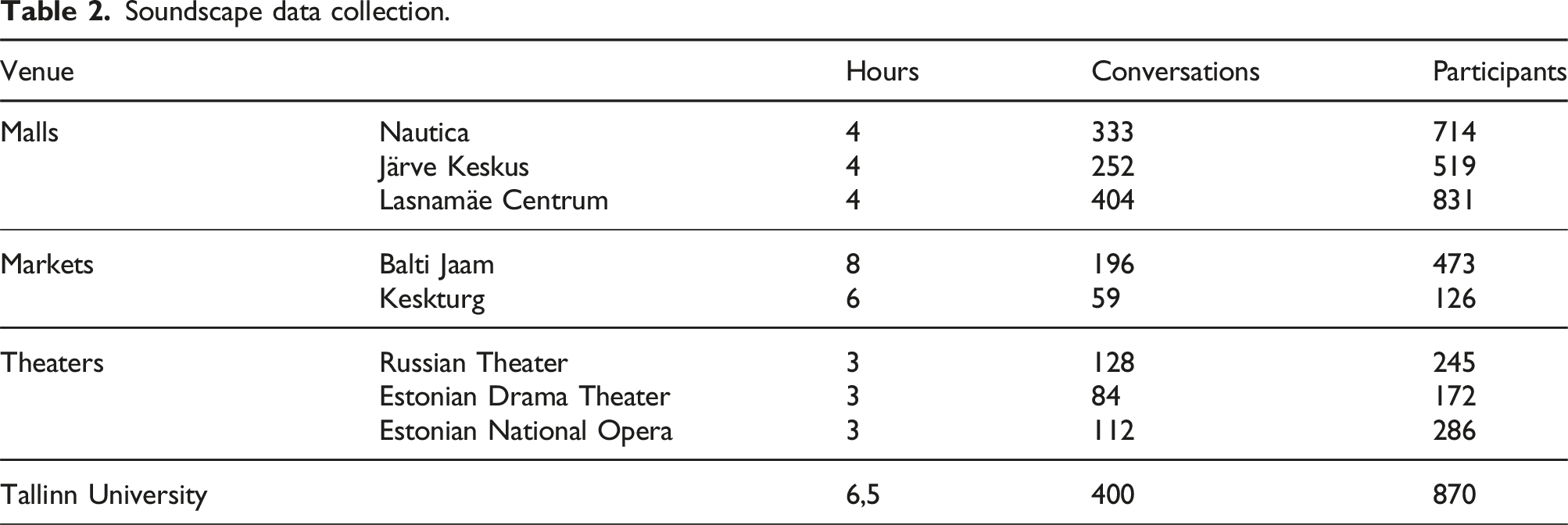
In addition to this quantitative study, an ethnographic night walk around the city and a series of interviews with people working throughout the night was implemented in January 2023 by one of the authors together with Ger Duijzings, an anthropologist at the University of Regensburg. We observed communication between customers, salespersons, and security personnel at 24/7 shops and pharmacies and interviewed 7 persons asking them, among other questions, about languages they used and communicative patterns they observed.
Linguistic landscape study results
As our brief review of previous studies on Tallinn linguistic landscape shows, there are three main languages used for written communication in public spaces, namely, Estonian, English, and Russian, while other languages are used only sporadically and, quite often, for purely symbolic reasons, as is the case with “exotic” or “foreign” names of ethnic food restaurants (e.g., “Namaste” or “La Tabla”). The data from LinguaSnapp Eesti confirms these findings. For example, visualization on the Figure 4 shows distribution of signs in six foreign languages (not including Russian or English) that can be found in the center of Tallinn: Signs in central Tallinn containing any of the following languages: French, Italian, Spanish, Chinese, Japanese, and Hebrew, on LinguaSnapp Eesti.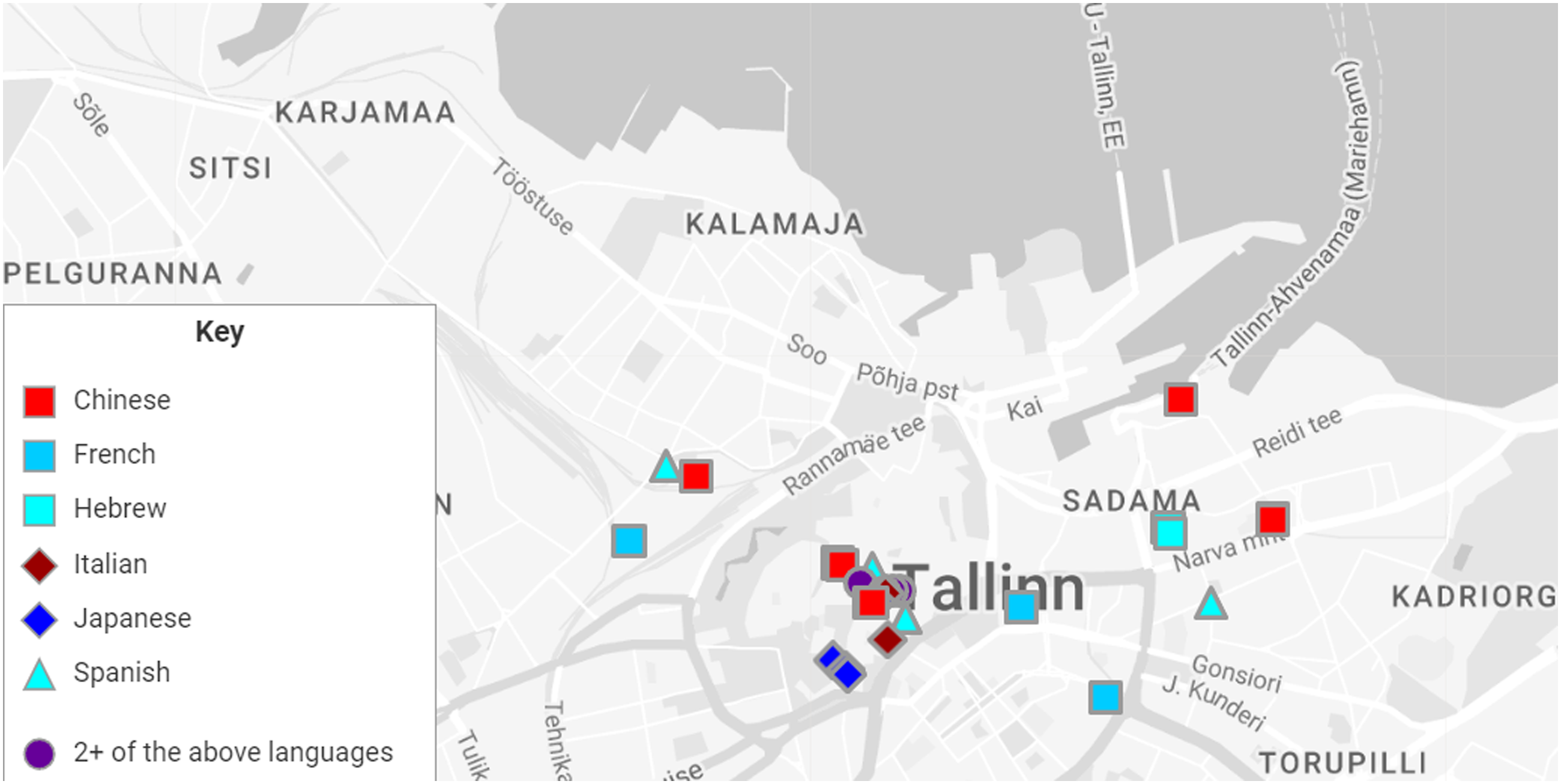
All these signs can be classified into one of three categories: belonging to places providing specific food/products (restaurants and shops); belonging to specific political/cultural/religious institutions or events (embassies, memorial sites, language courses, and churches); and belonging to commercial organizations targeting diverse international customers (souvenir shops, tourists oriented restaurants, etc.), where those languages are used alongside many others. Unsurprisingly, the latter category (marked with purple dots) is concentrated in the very heart of the Old Town. Other languages (apart from Finnish, German and Ukrainian that will be discussed separately below) are used in a similar way, but even less frequently.
In contrast to that, the image on Figure 5 provides a visualization of the distribution of the “big three” languages in the same space: Signs containing any of the “big three” languages (Estonian, English, and Russian) in central Tallinn on LinguaSnapp Eesti.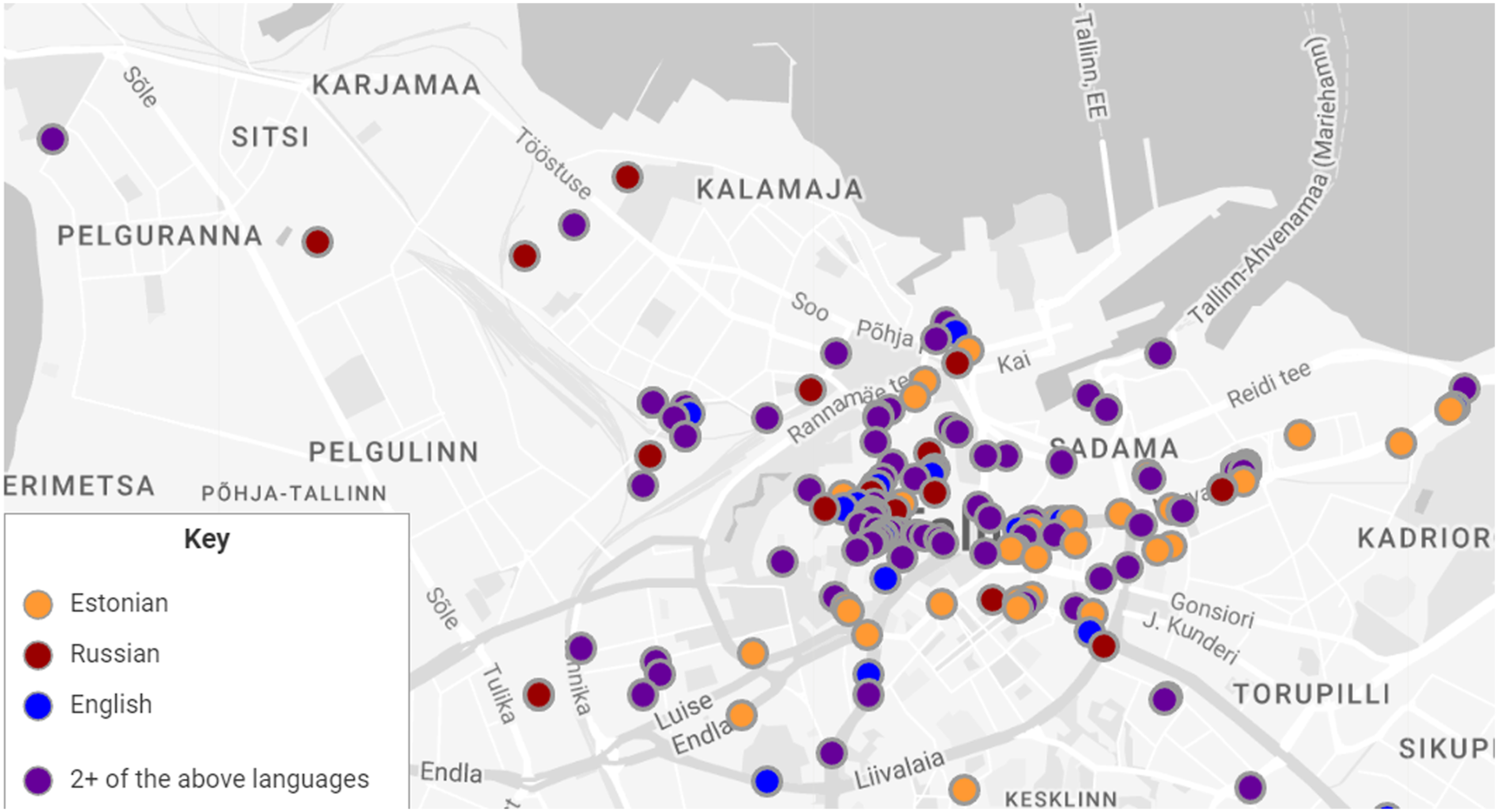
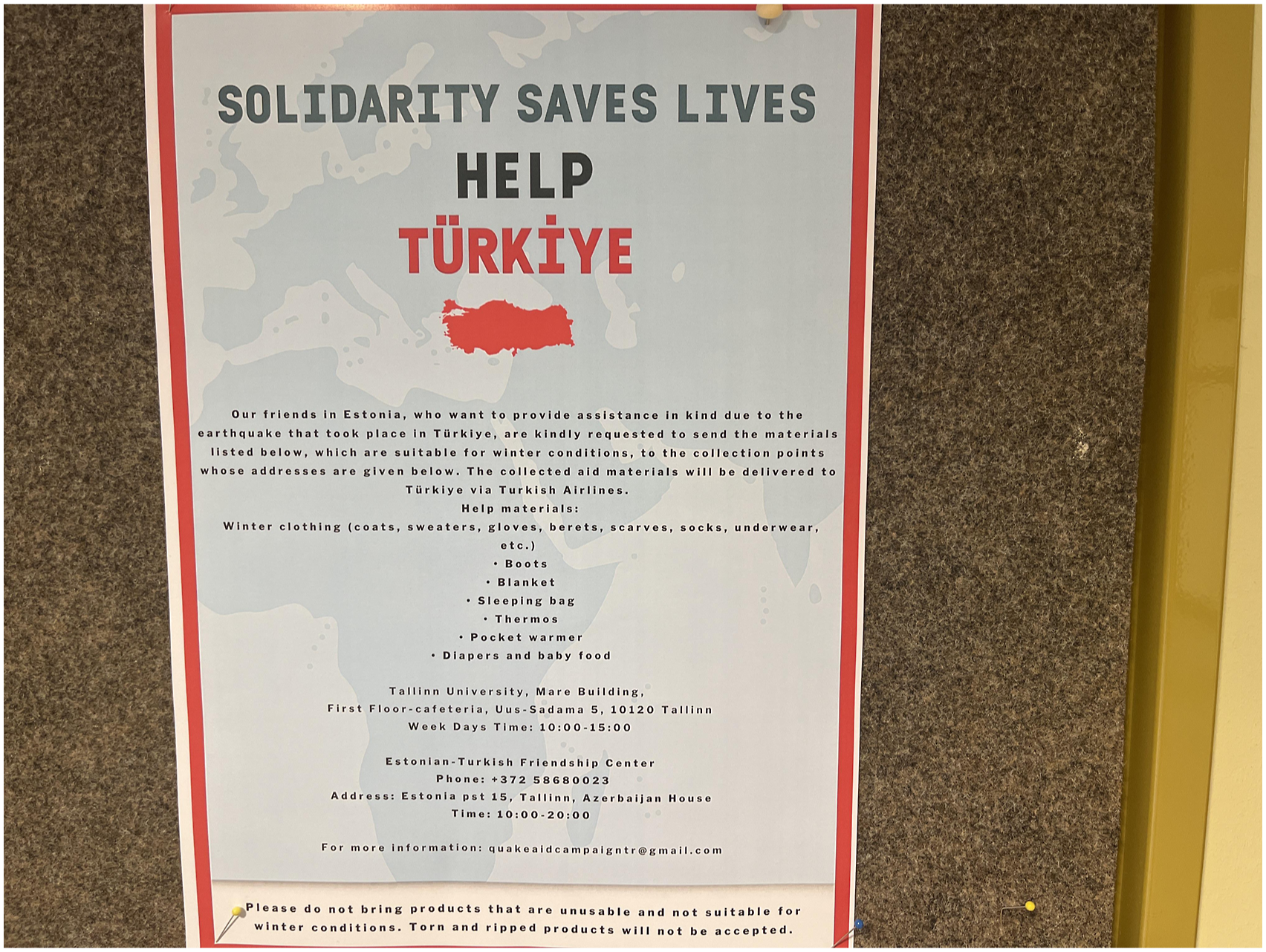
As we can see, the majority of signs (purple dots) are bilingual or multilingual. There are also a significant number of signs that are either monolingual in Estonian or multilingual but use other languages than English and Russian in addition to Estonian (yellow dots). In fact, the proportion of monolingual Estonian signs in Tallinn’s linguistic landscape is much higher than the data on the map suggests since the users of LinguaSnapp application participating in crowdsourcing the data tend to be more interested in documenting multilingual signs. At the same time, if the prescriptions of the Language Act would be strictly followed one could expect to see no English or Russian signs without any Estonian in them. However, as the map shows, there are such signs (red and blue dots). Being separated and evaluated one by one, most of them turn out to be typical bottom-up signs created by private actors: graffiti (Figure 6), personal notes and announcements (Figure 7), non-professional advertisements, and sometimes commercial signs designed to look as such (Figure 8). Graffiti in Russian (meaning “no problem”) and English in Tallinn Old Town, LinguaSnapp Eesti. Home printed leaflet inviting to help Turkish people suffering after the earthquake placed on the announcement board at Tallinn University premises, LinguaSnapp Eesti. Bilingual sticker placed on the entrance door to the theater studio, LinguaSnapp Eesti.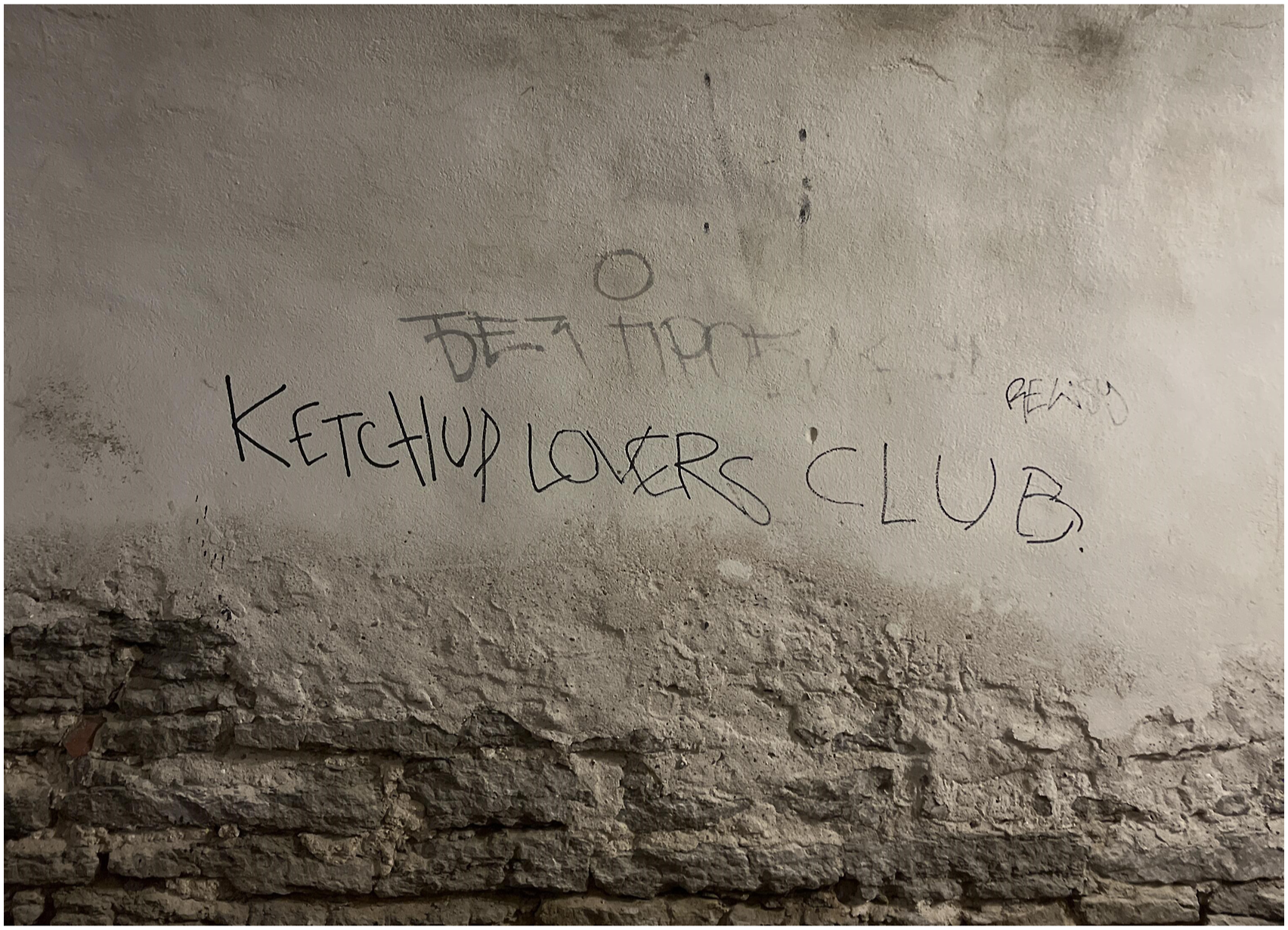
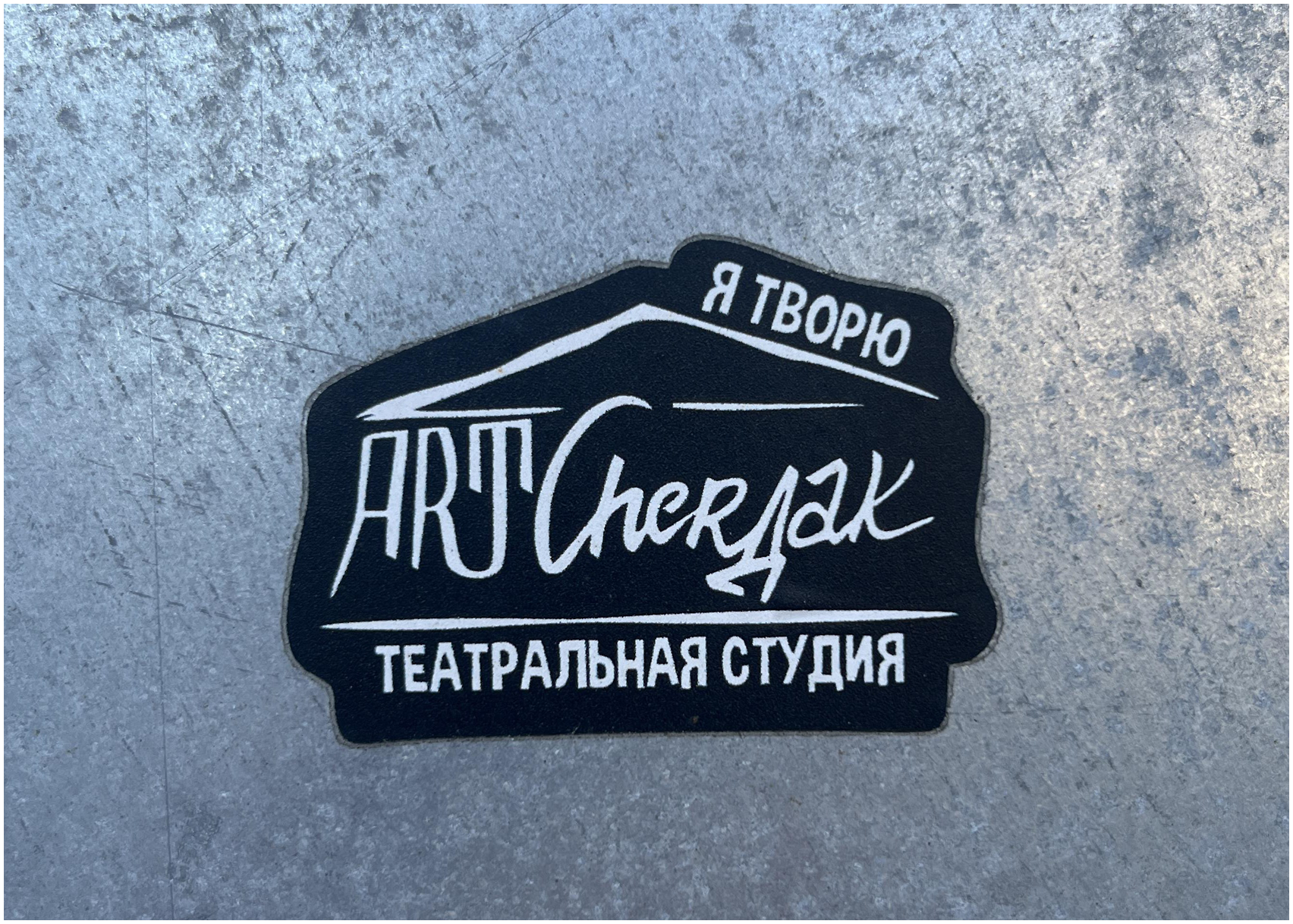
The last example is especially interesting as it not only combines Russian and English in absence of any Estonian but also does it creatively producing a hybrid, bilingual, and bi-graphic name of the place. The words “theater studio” (below) and “I create” (above) are written in Russian, “art” is in English, and the Russian word cherdak (“attic”) is written in Latin script (as is prescribed by the Language Act for non-Estonian brand names) but with a substitution of one letter, “d,” with its Cyrillic equivalent. The studio, run by Russian speakers and targeting Russian speakers, does not announce it directly but uses more subtle way to send a message.
In addition to such non-official private and commercial signs, in the case of Russian, there are also monolingual relics from the official signage of the Soviet time such as the words “Fire station” painted on the wall of the abandoned building (Figure 9). Entrance to the former fire station in Kalamaja district with an old Soviet time sign in Russian reading “Fire station,” LinguaSnapp Eesti.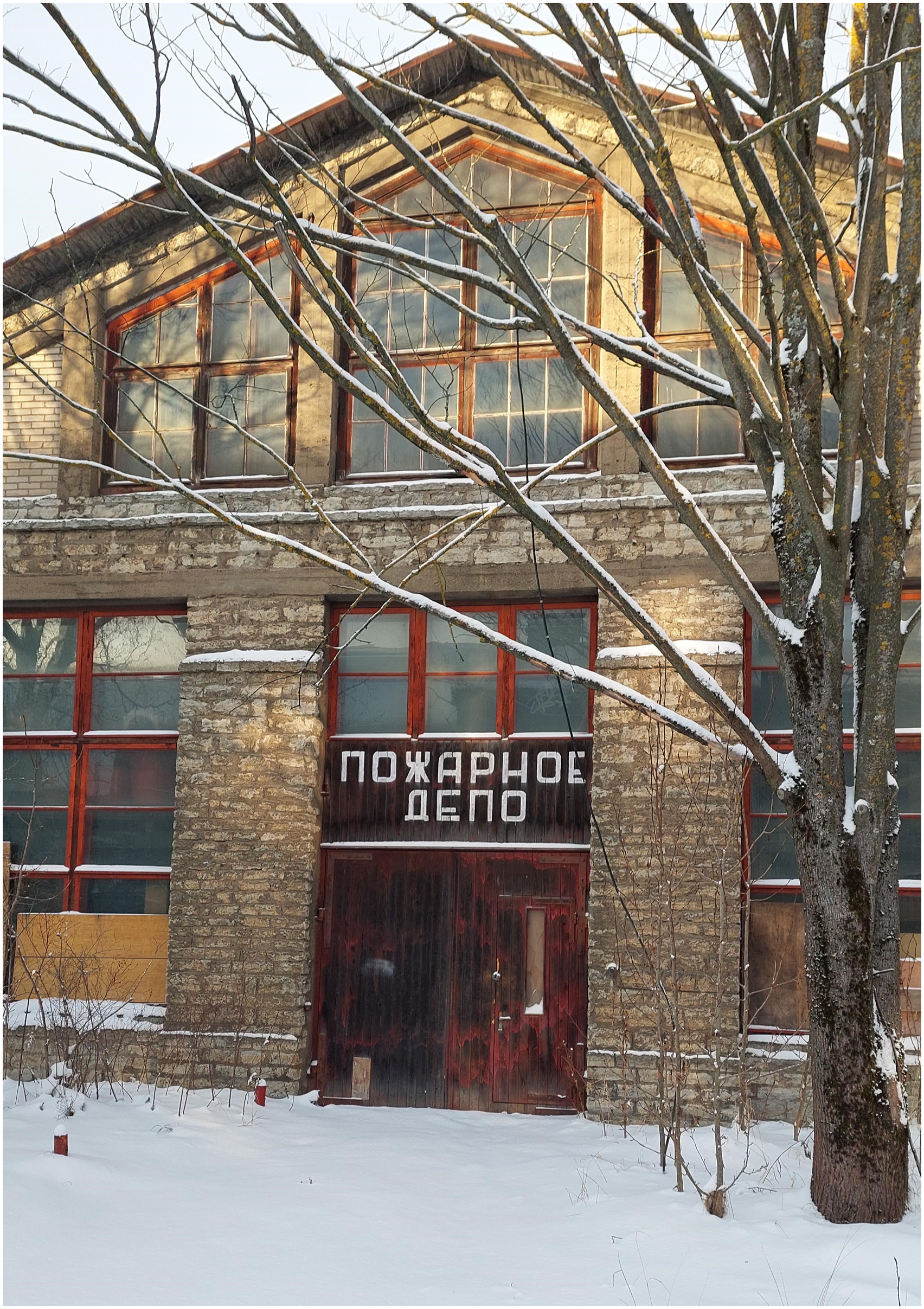
Besides signs in Russian, English, or both languages totally excluding Estonian, there is a significant number of multilingual signs where information is not represented equally in different languages, and English or Russian can dominate over the state language as happens, for example, in the advertisement of Russian Youth Theater on Figure 10 where duplicated information is written in Russian in bigger letters than in Estonian, and the informal message as if pronounced by a depicted woman is given only in Russian. It reads “Hey, chief, they are secretly showing the best performances for children here!” The content, therefore, corresponds to the form: secret messages from someone “spying” on Russian Theater is delivered in a “secret” language, and it is not aimed for the ears of Estonian speakers. Advertisement for Russian Youth Theater placed near its entrance, Lasnamäe district of Tallinn, LinguaSnapp Eesti.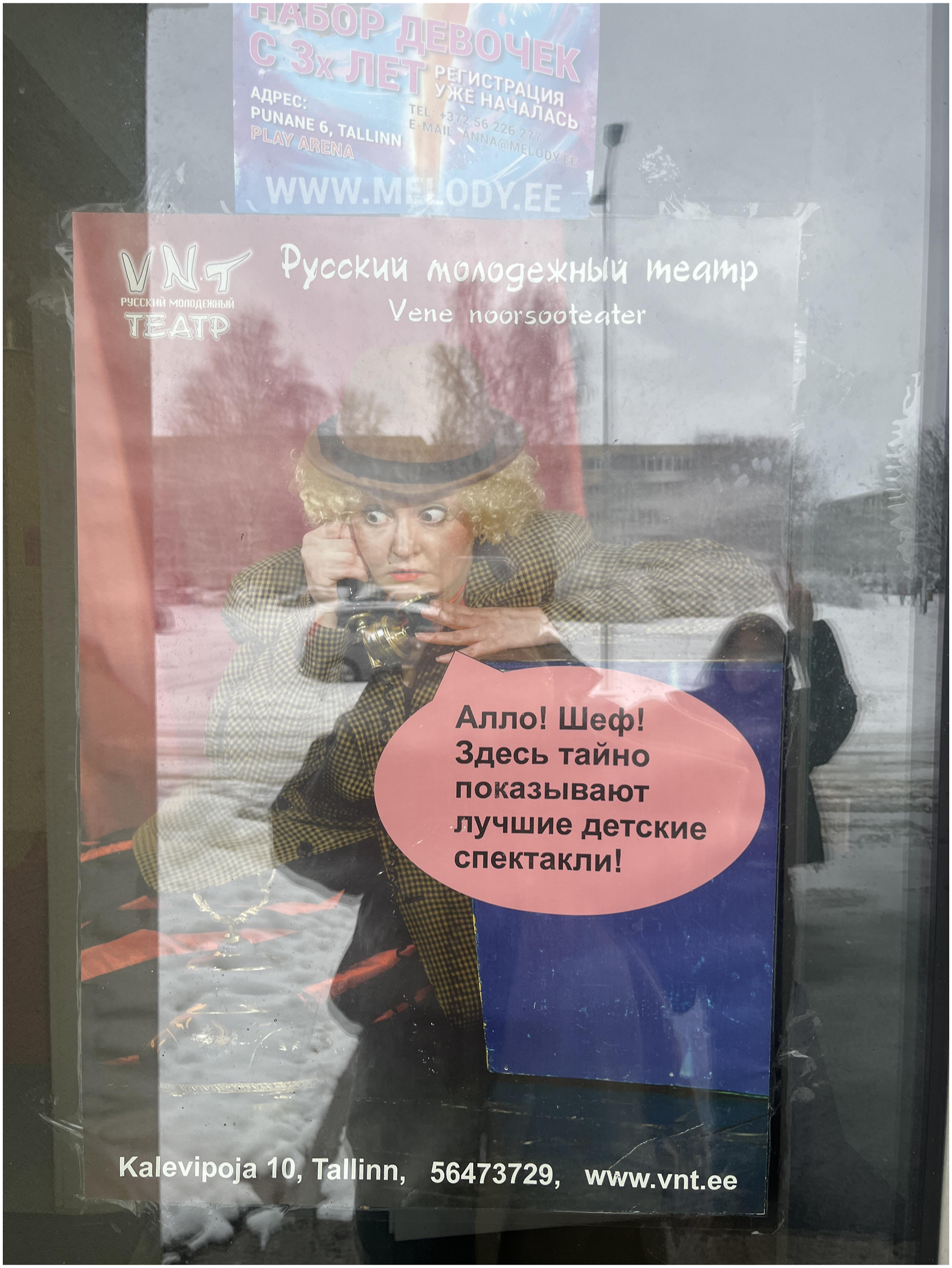
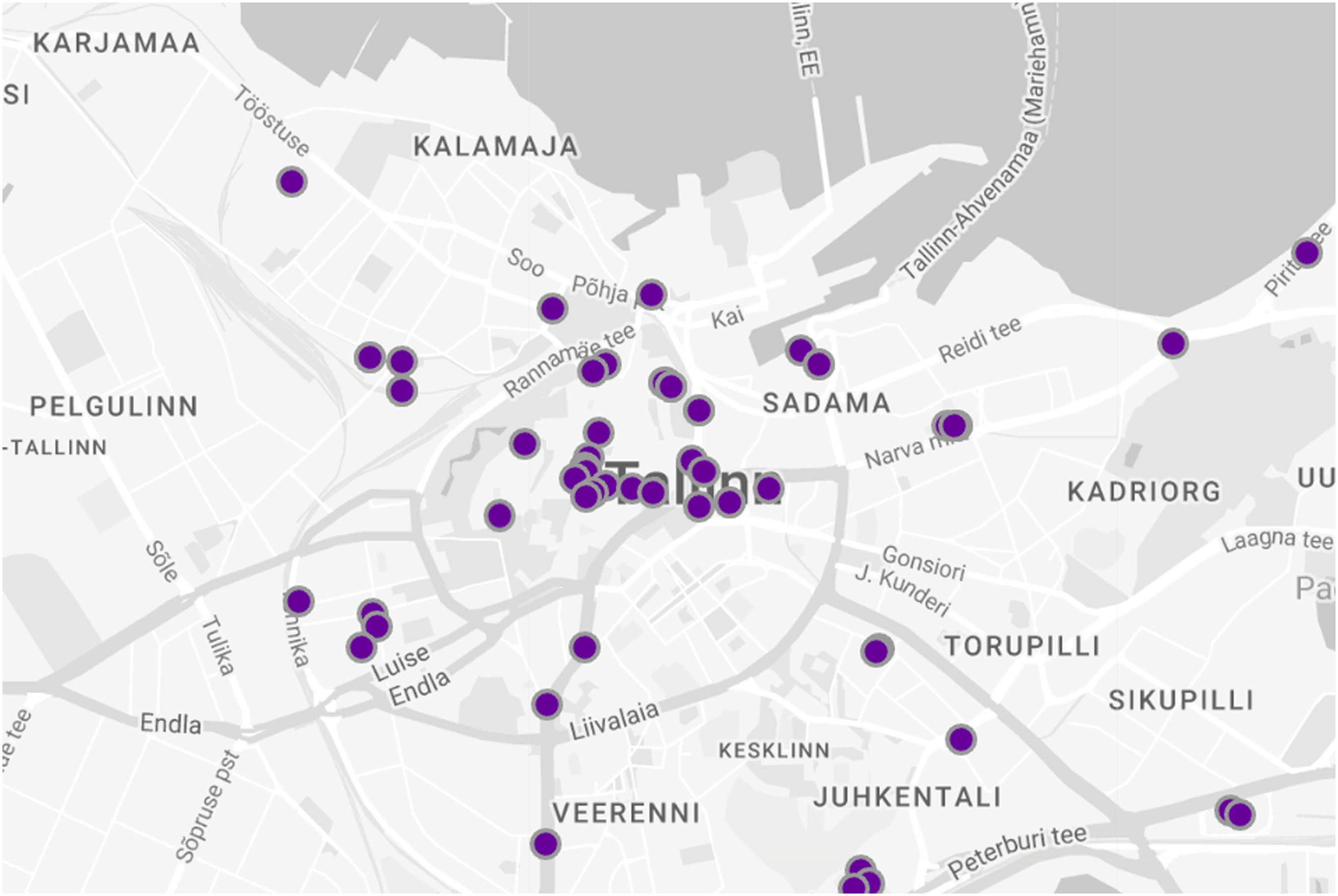
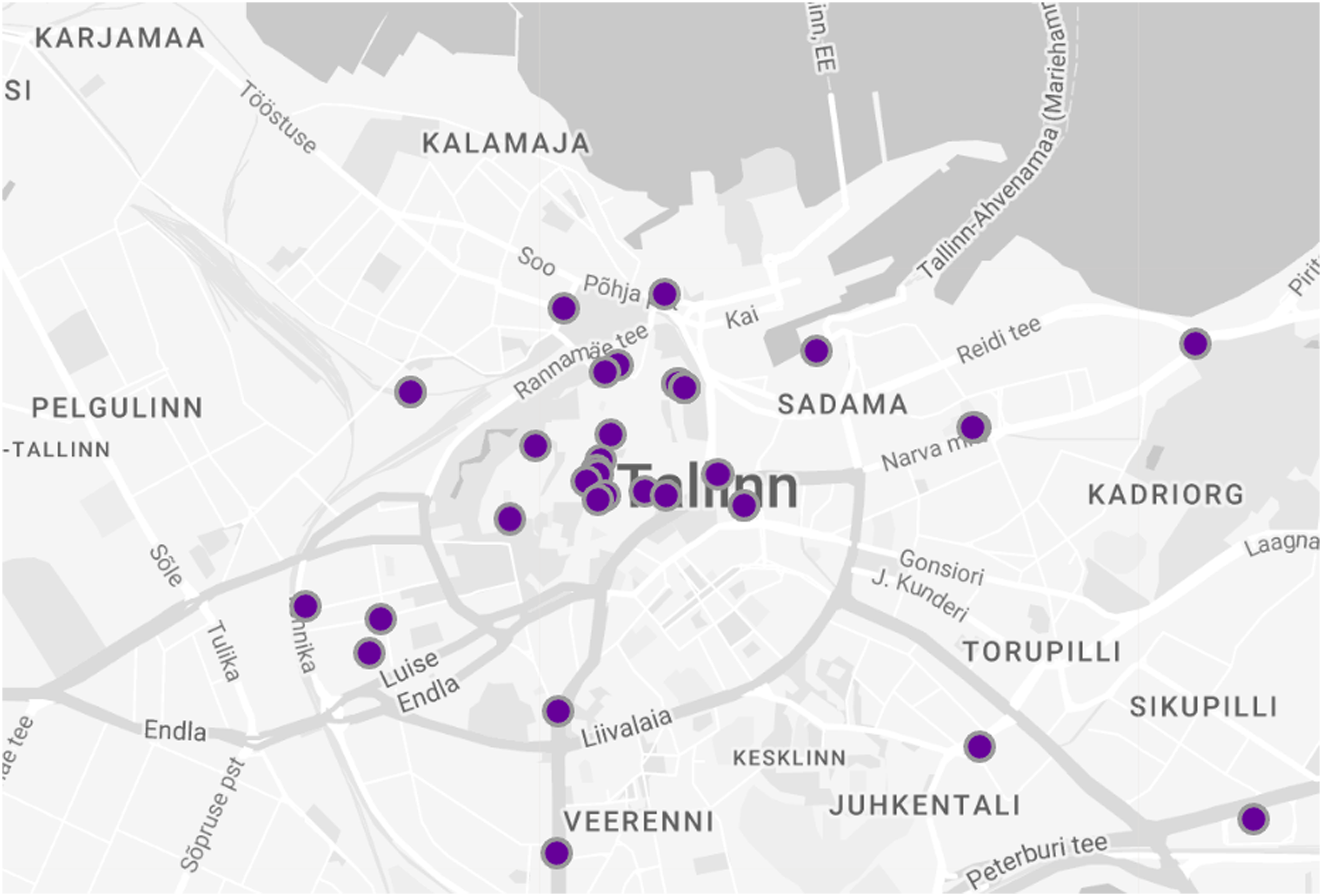
In general, modern data from LinguaSnapp Eesti reveals the same patterns as the previous studies regarding the three main languages of Tallinn linguistic landscape: Estonian dominates, especially in the official signage; English plays the second role but tends to be used much more in the central areas rather than in remote ones; and Russian is used less than English but may take over in certain residential areas populated mostly by Russian speakers. At the same time, the level of multilingualism in signage is rather high, especially if we take into account bottom-up signs. To illustrate these tendencies, we can compare the following visualizations of three sets of data on the map, reflecting, respectively, signs containing both Estonian and English (Figure 11); signs containing both Estonian and Russian (Figure 12); and signs containing all three languages simultaneously (Figure 13). Signs in central Tallinn containing both Estonian and English, on LinguaSnapp Eesti. Signs in central Tallinn containing both Estonian and Russian, on LinguaSnapp Eesti. Signs in central Tallinn containing all three languages, Estonian, English, and Russian, on LinguaSnapp Eesti.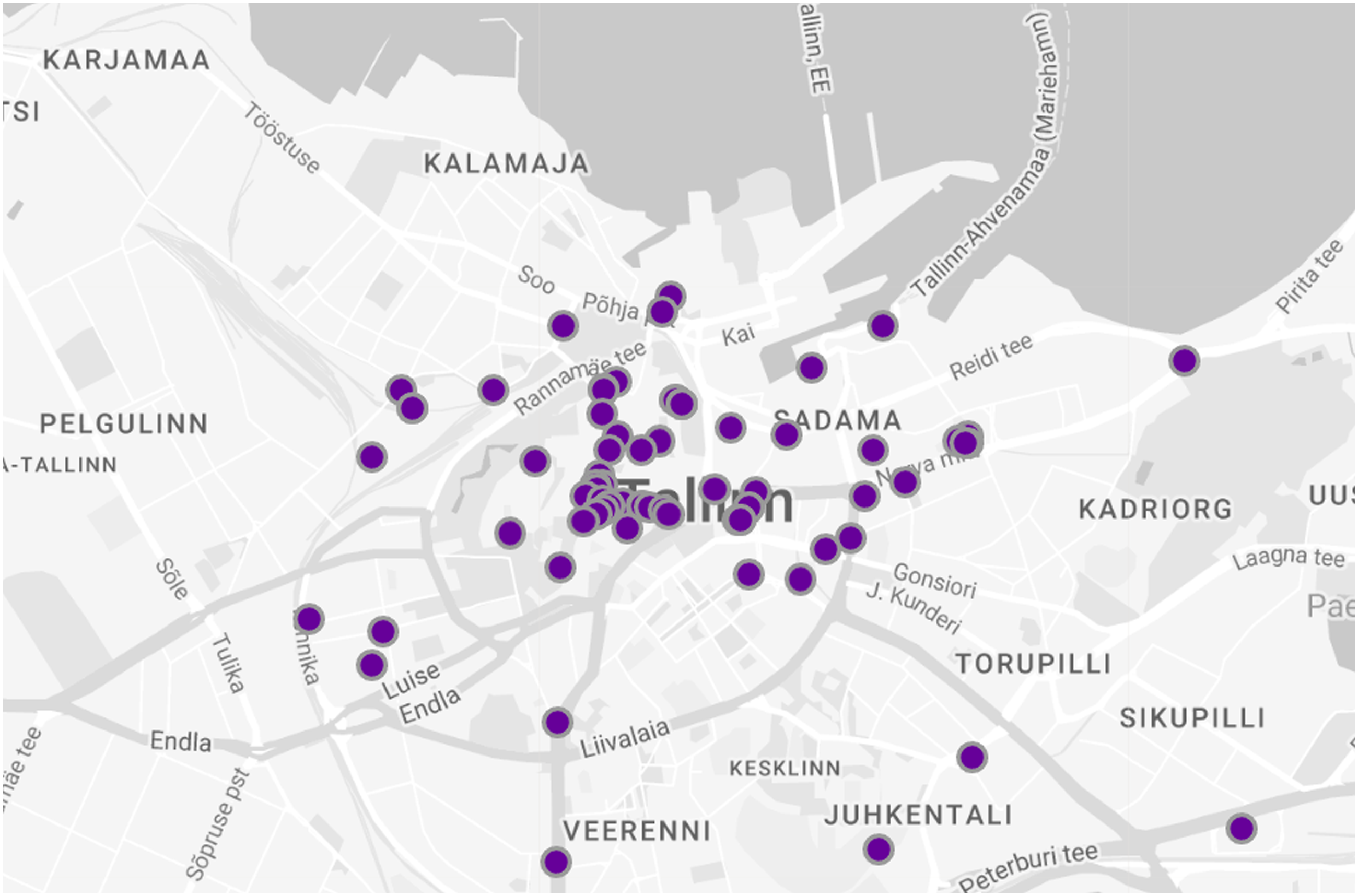
One can also assume that the use of Russian in the most central areas and in top-down signage will continue declining, considering the absence of tourists from Russia. The Russian language in official and commercial signs in Tallinn used to be targeting two separate audiences, local Russian speakers, more or less proficient in Estonian, and foreign tourists (from Russia and other post-Soviet countries) lacking any knowledge of Estonia’s state language. Further study will show how this change in tourist flows affects Tallinn’s visual multilingualism.
However, the description of Tallinn linguistic landscape would be incomplete without discussing three more languages contributing to its complexity, each in its own role, namely, Finnish, German, and Ukrainian. In simplified terms, their roles can be defined as economically important, historically important, and politically important.
The use of Finnish in Tallinn linguistic landscape, undoubtedly, is amplified by the city’s trans-regional ties with Finland (cf. Soler-Carbonell, 2016). Tallinn is a popular destination for Finnish tourists, and some shops and restaurants in the Old Town and harbor area, as well as some museums, target them and provide information in Finnish for their convenience (e.g., Figure 14). Instructions for making a lucky penny by a press machine inside Viru shopping center, LinguaSnapp Eesti.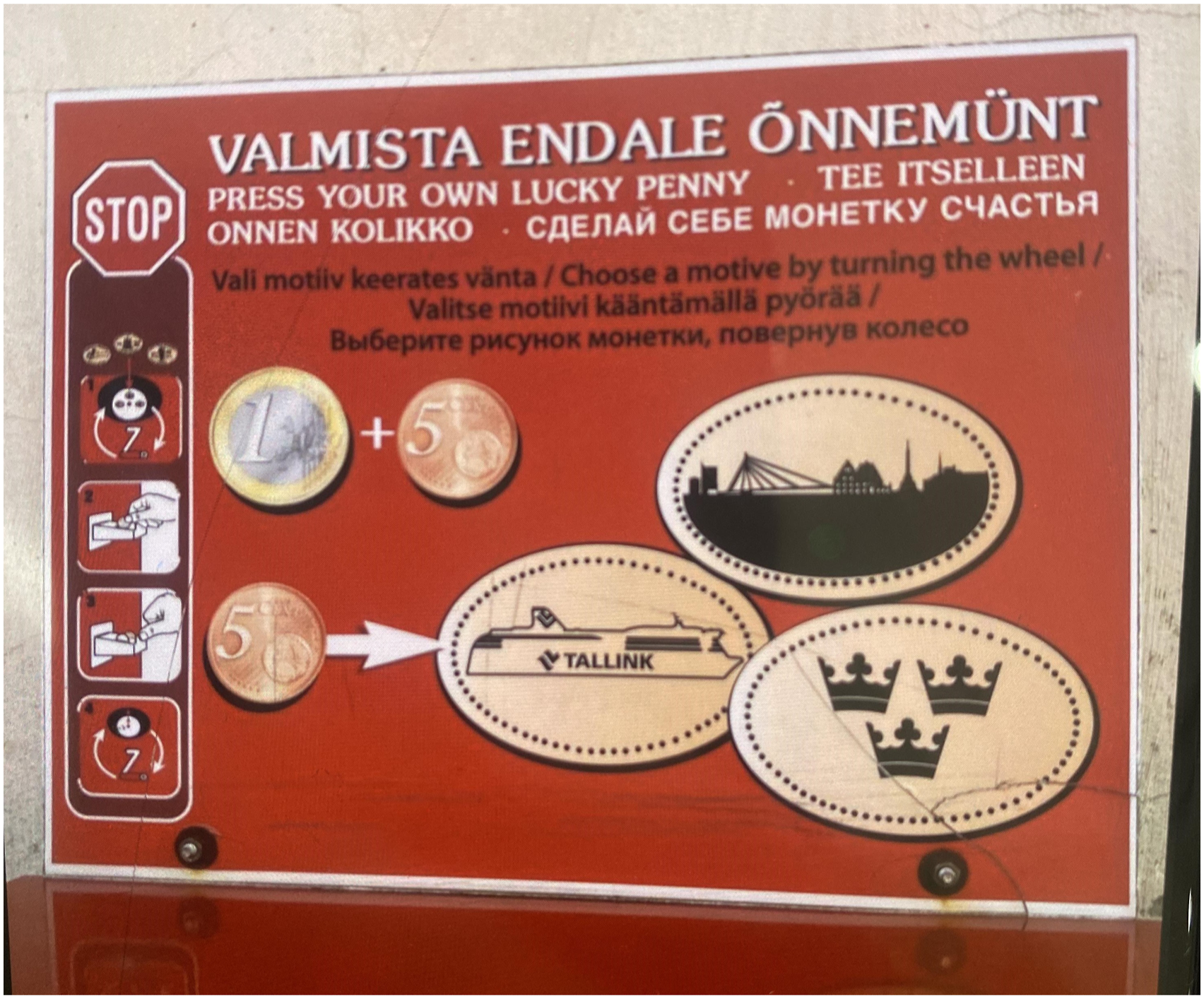
However, in all such signs, Finnish always accompanies other languages and is not used on its own. It is an additional language, which can optionally compliment the “big three” ones.
The difference between the roles of Finnish and German in Tallinn linguistic landscape becomes evident on the following screenshot from LinguaSnapp Eesti (Figure 15): Signs containing any of the following languages: Estonian, Finnish, and German in central Tallinn on LinguaSnapp Eesti.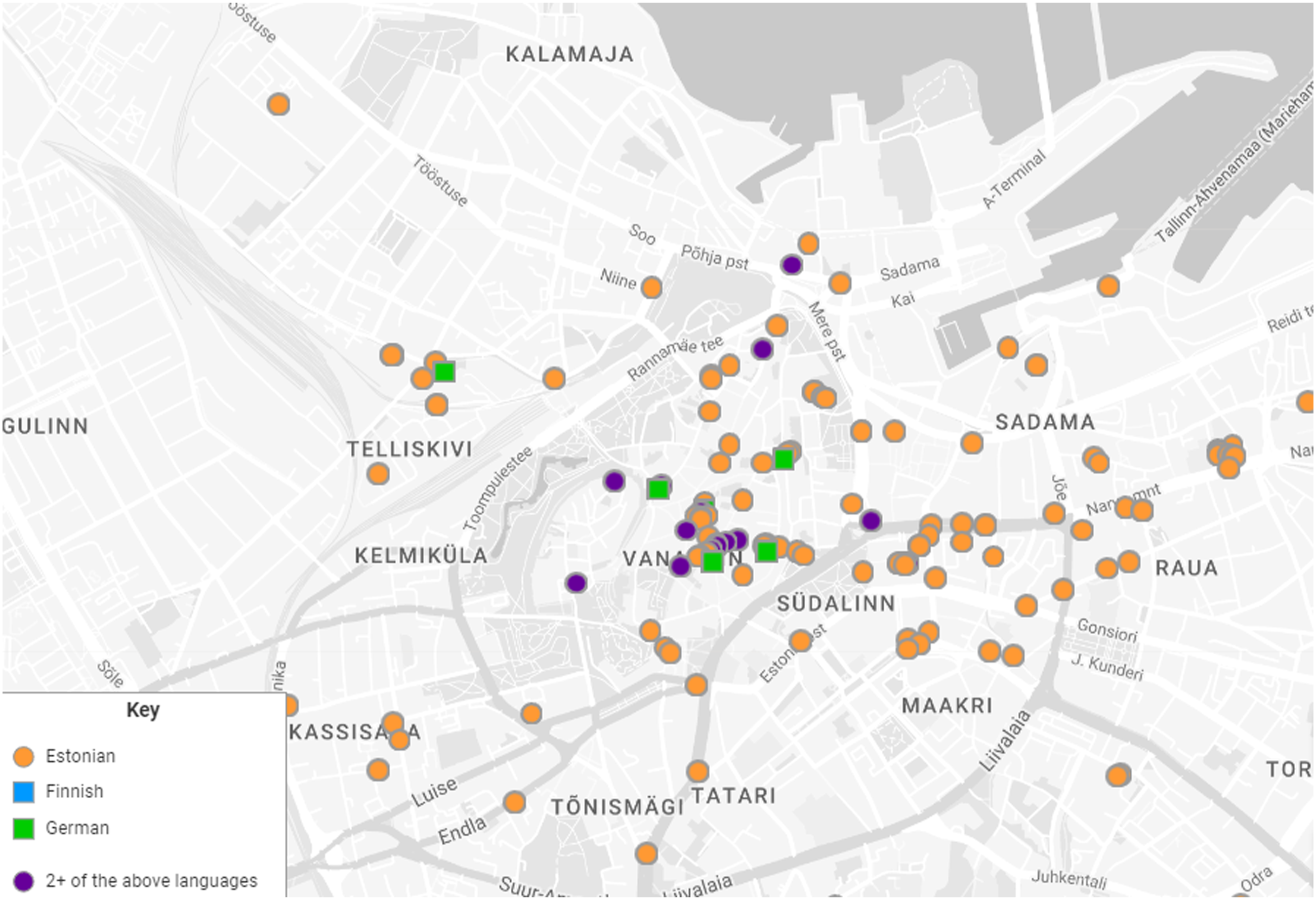
As we can see, separate Finnish signs (blue squares) are not to be found on the map, and Finnish is used only alongside Estonian (purple dots), while independent German signs (green squares), although not numerous, are still visible. Such signs, unlike others where German is used in addition to other languages, are all relics of a very long past, mostly carvings in stone on old buildings facades (Figure 16), attesting to the important role German used to play in Estonia and in the Baltic countries in general (Marten, 2023). Carvings in German (retelling of chapter 26 of the Solomon’s parable 21) on the facade in the Old Town, LinguaSnapp Eesti.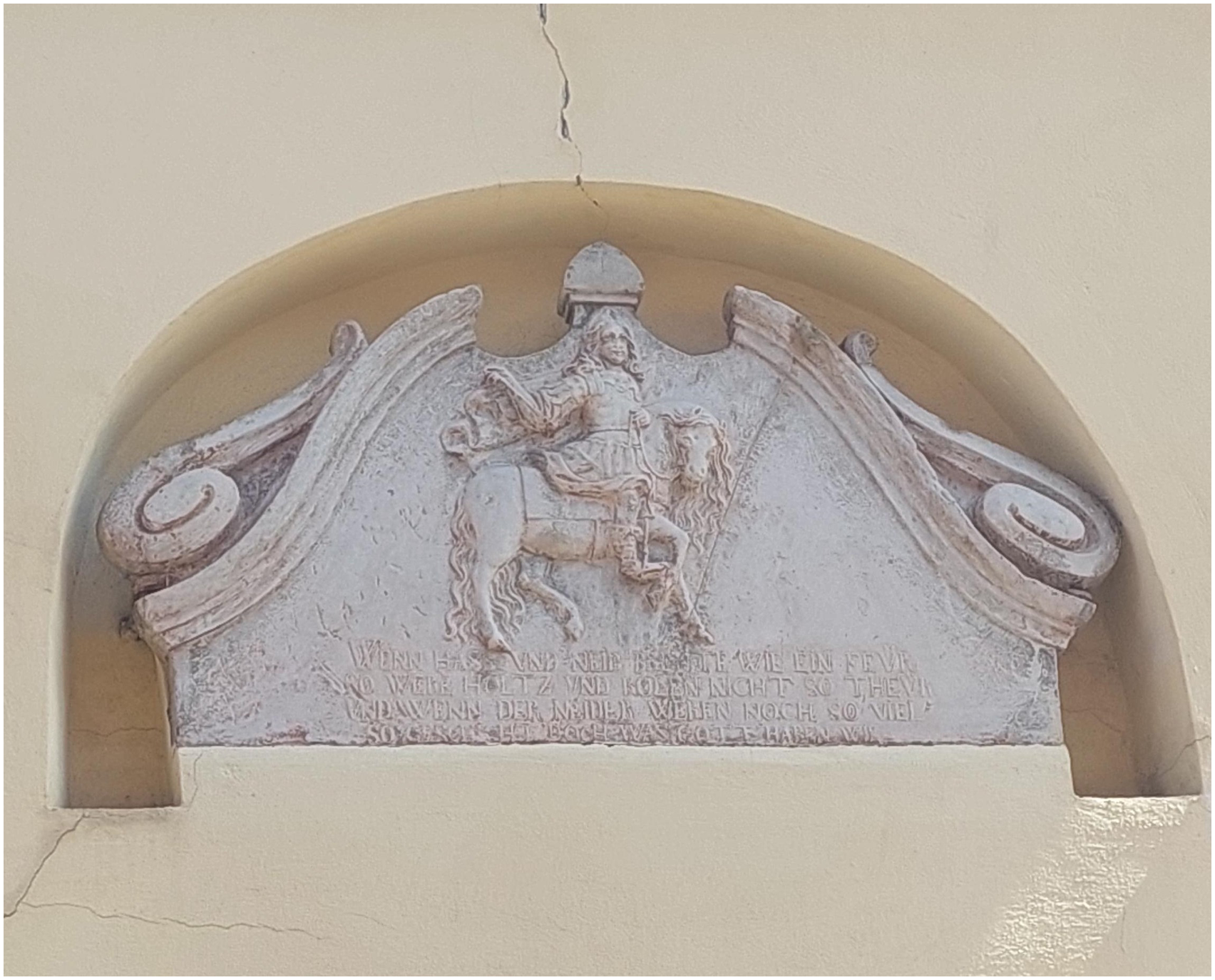
Interestingly enough, the only “pure German” sign found in the Old Town but not set in stone belongs to another period of German dominance in the history of Estonia—German occupation (1940–1944). In the window of an antique shop (Figure 17), there is a German military sign placed in front of other relics of the past including Soviet period car license plates: German military sign (reading “Danger! Mines!”) in the window of an antique shop in the Old Town, LinguaSnapp Eesti.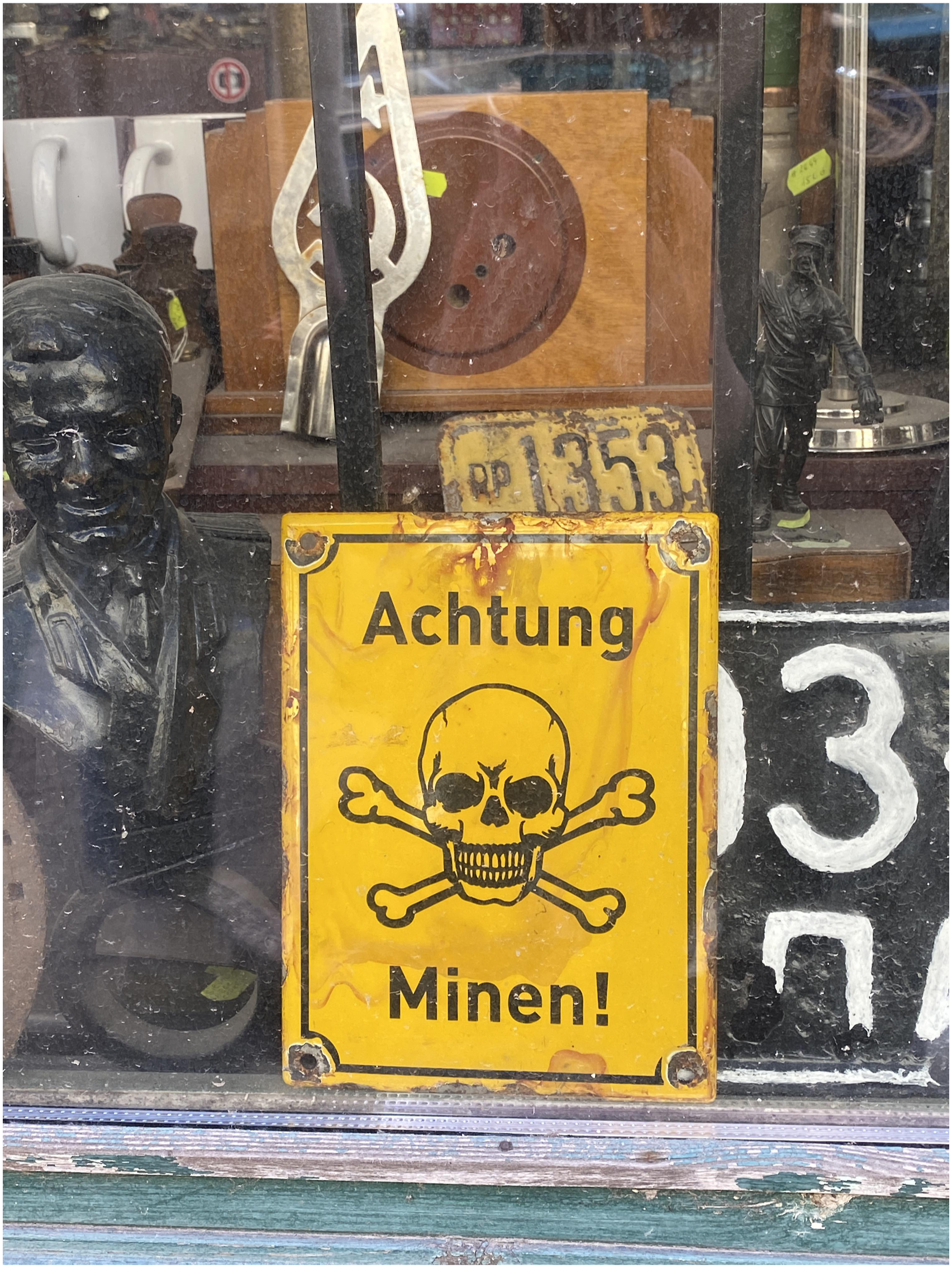
Ukrainian, not attested in the previous studies on Tallinn linguistic landscape, started to appear in 2022, after Russia’s full-scale invasion of Ukraine. Still, it is not used as much as one would expect: only 8 signs were documented via LinguaSnapp in central Tallinn so far. One is placed in front of the refugee center, two mark entrances to the Ukrainian embassy and to the headquarters of the Association of Ukrainian organizations in Estonia, one provides information about the church services (alongside Estonian, Russian, and English), and all others are “Glory to Ukraine!” signs placed by protesters in front of the Russian Embassy (Figure 18). Protesting signs in Ukrainian (Slava Ukraini - “Glory to Ukraine”), Russian (Ostanovite vojnu!! - “Stop the war!!”), and English in front of the Russian embassy in the Old Town, LinguaSnapp Eesti.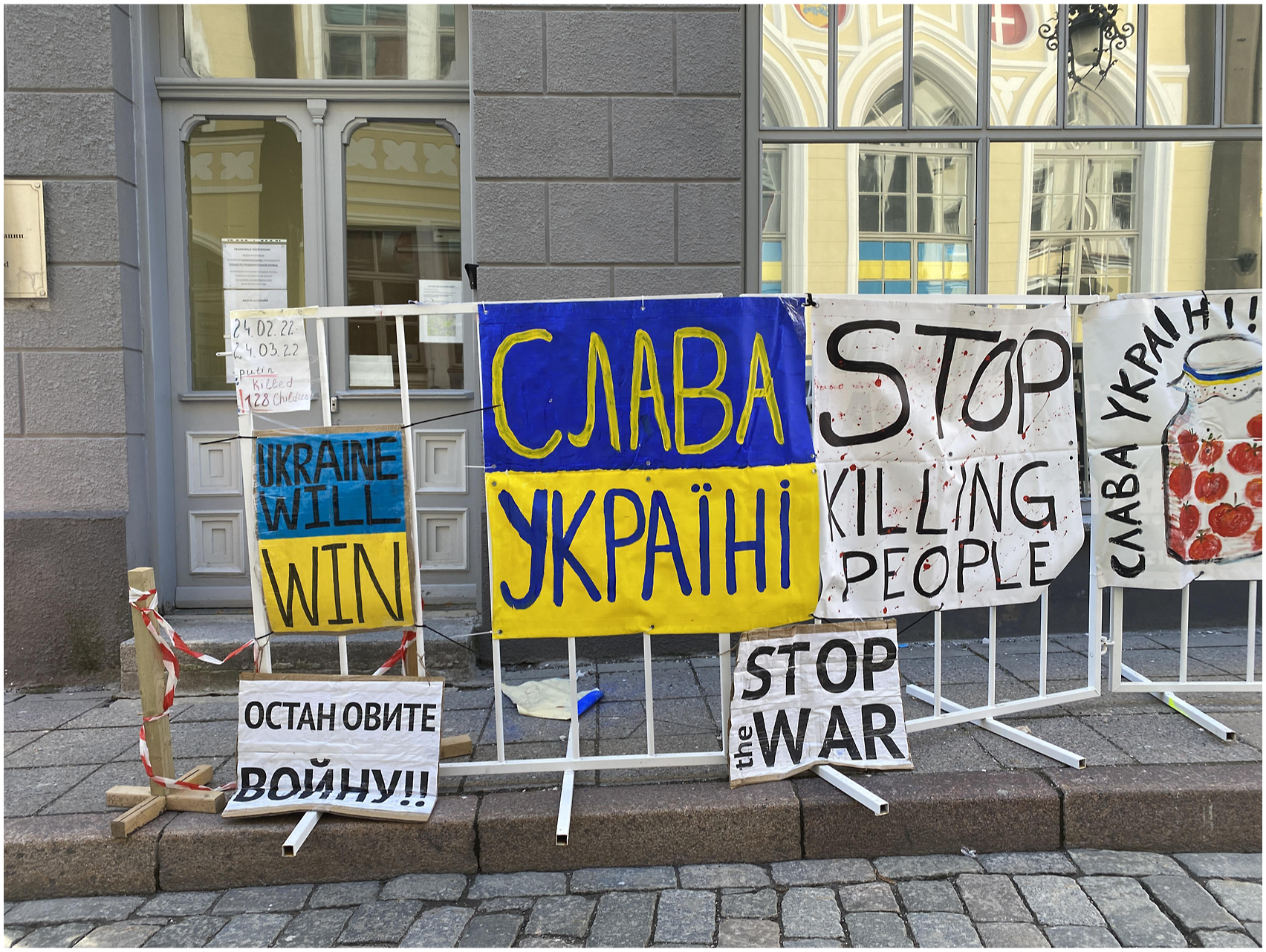
Ukrainians, therefore, are not, at least now, targeted as clients and customers, and the language itself, the same way as the blue and yellow colors of Ukrainian flag, becomes a political message occupying a very specific position in the composition of the languages visually represented in Tallinn’s urban space. Let’s now see which of those languages, and to what extent, are actually spoken in the streets of the city.
Soundscape study results
The soundscape study encompassed four distinct domains represented by different locations within the municipal boundaries of Tallinn. Observations were conducted at shopping centers/malls (three of them in different areas of the city); marketplaces (two of them, both in the central area and most popular among Tallinn’s residents and tourists); theaters (three of them, all in the central area); and Tallinn University premises.
The selection of malls as the first domain for research was guided by the presumption that these locations primarily cater to the potential market, reflecting the authentic linguistic landscape of specific residential areas. Accordingly, Lasnamäe Centrum is situated in the predominantly Russian-speaking district of Tallinn. In contrast, Järve Keskus is positioned on the periphery of Nõmme and Mustamäe, areas characterized by a predominantly Estonian-speaking population. Nautica Mall, located close to the city center and adjacent to the sea port, serves as a hub for tourists arriving from Finland and Sweden, as well as those on cruise liners. Notably, during the research period, Ukrainian refugees temporarily resided on a ship in the sea port, and we were very sure that this fact would add a unique dynamic to the linguistic composition of Nautica Mall.
Visually, all three malls exemplify their adherence to the Language Act, prominently displaying signs and advertisements primarily in Estonian, occasionally supplemented with an English version. The online presence of these malls, however, reflects more commitment to linguistic diversity, with all three websites being at least trilingual (Estonian–English–Russian), and Nautica additionally providing information in Finnish.
Each of the three venues underwent a 4-h observation, accumulating to a total of 12 hours, and 989 conversations among 2,064 individuals were observed (see Table 2 for the exact figures at each location). Notably, more than half of the observed participants were middle-aged (51.5%), while almost a quarter were young individuals (24.8%). Children, teenagers, and elderly individuals constituted another quarter of the observed population, with proportions of 9.3%, 8.3%, and 6.2%, respectively.
Remarkably, telephone conversations were witnessed and noted at all three malls, providing additional linguistic insights. In Nautica, there were 9 conversations in Estonian, 10 in Russian, 1 in Finnish, and 1 in an undefined language. At Järve, 12 telephone conversations were in Estonian and 5 in Russian. In Lasnamäe, there were 7 telephone conversations in Estonian and 47 in Russian. Figure 19 shows the distribution of languages spoken in all 3 shopping centers; the height of the bars on the histogram shows the number of people who were observed speaking in the respective languages. Languages spoken in the shopping centers.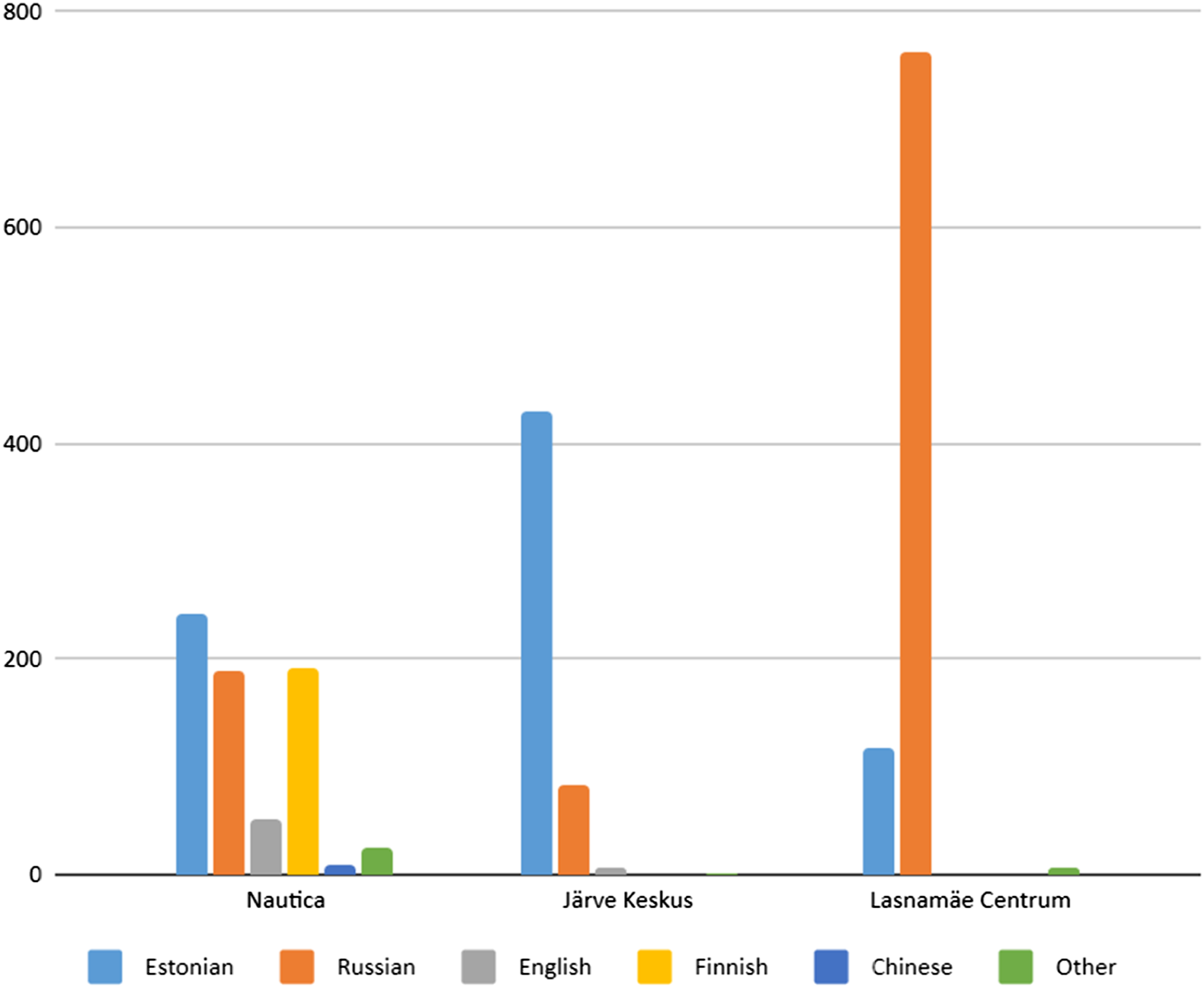
Conversations among people in Nautica exhibited the highest linguistic diversity, with 33% speaking Estonian, 29.4% speaking Russian, 26.7% speaking Finnish, 6.3% speaking English, 1% speaking Chinese, and 3.6% other languages that the observers could not define. The observation of two instances of multilingual communication is noteworthy, where clients conversed in Finnish or Russian with each other, while turning to English when interacting with the shop assistant.
At Järve Keskus, 80% of visitors spoke Estonian, while 15.8% communicated in Russian. Additionally, 4.5% spoke English, and one conversation was conducted in an undefined language. On the contrary, in Lasnamäe Centrum a significant majority of clients, 85.4%, were Russian speakers, while conversations in Estonian accounted for 14.1% of the data collected during the research. A minimal 0.5% involved an undefined language. These two shopping centers, therefore, have almost completely reversed proportions of Estonian and Russian in their soundscape.
Another noteworthy observation pertains to the use of sound advertisements in the malls. In Nautica, during a one-hour period, approximately 20 announcements were made in Estonian, 8 in Russian, 6 in English, and 3 in Finnish. In Järve, exclusively Estonian is used for sound announcements. Meanwhile, in Lasnamäe, the soundscape features a shared presence of both Estonian and Russian announcements. We can see, therefore, a certain correlation between distribution of languages spoken by visitors and personnel, on the one hand, and official pre-recorded public announcements, on the other hand. However, Estonian and, in the case of Nautica, English are overrepresented while Russian and Finnish are underrepresented in the official language use.
This detailed breakdown underscores the distinctive linguistic characteristics within each mall, shedding light on the language preferences and demographics of their respective visitors. It should be noted also that, contrary to expectations, no instances of Ukrainian were observed at Nautica, the nearest mall with grocery stores to the ship where the Ukrainian refugees temporarily resided. We can assume that Russian may be the predominant language among the Ukrainian refugees, especially considering that most of them are from the eastern part of Ukraine.
The second domain studied comprises two distinct marketplaces, each characterized by unique management concepts and the range of services offered to the public. The first, Balti Turg (“Baltic Market”), stands as a meticulously renovated venue in close proximity to the Old Town and the sea port of Tallinn. While serving its primary function as a market, it also provides customers, both local and tourists, with a diverse array of products and services typical of markets. Moreover, it has evolved into a special place for leisure, featuring numerous cafes and restaurants offering a wide selection of cuisines. Periodically, the marketplace hosts food festivals, adding to its multifaceted appeal. On the other hand, Keskturg (“Central Market”), though situated not far from the city center and adjacent to the bus station, has not undergone thorough renovation. It predominantly serves as a provider of affordable and budget-friendly products to the local population. The amalgamation of both marketplaces under one webpage, managed by the same company, facilitates access to information in Estonian, English, Russian, and Finnish languages. This multilingual approach caters to a diverse audience, accommodating locals and international visitors alike. In terms of visual signage, Balti Turg predominantly features Estonian signs, with occasional signage in Russian, particularly in the antiquarian department. On the other hand, Keskturg adopts a more bilingual approach, with most signs displayed in both Estonian and Russian, albeit with some exceptions.
During an 8-h observation at Balti Turg, 196 conversations involving 473 individuals were tracked. Middle-aged individuals accounted for the majority of conversations, with 293 participants. These conversations unfolded in four languages: 233 in Estonian, 123 in English, 109 in Russian, and 5 in Ukrainian. Notably, the Ukrainian language was spoken by the younger generation: young men, teenage boys, and a girl.
During the 6-h observation at Keskturg, a total of 59 conversations involving 126 individuals were documented. The predominant language of communication among visitors was Russian, with 106 people engaging in conversations in this language. In contrast, a smaller number of individuals, 14 in total, communicated in Estonian, and only 2 individuals spoke English. This linguistic breakdown emphasizes the prevalent use of Russian in the communicative interactions within Keskturg, underscoring its significance as the primary language for engagement among the market’s visitors. The summary of the data can be seen in Figure 20. It is evident also that Balti Turg is a place where much more communication happens: there were almost three times more conversations observed in the same amount of time than at Keskturg, which can be explained by the popularity of the former. People tend to visit it in groups to spend time there while Keskturg serves more utilitarian functions, and most communication occurs between sellers and buyers. Languages spoken in the marketplaces.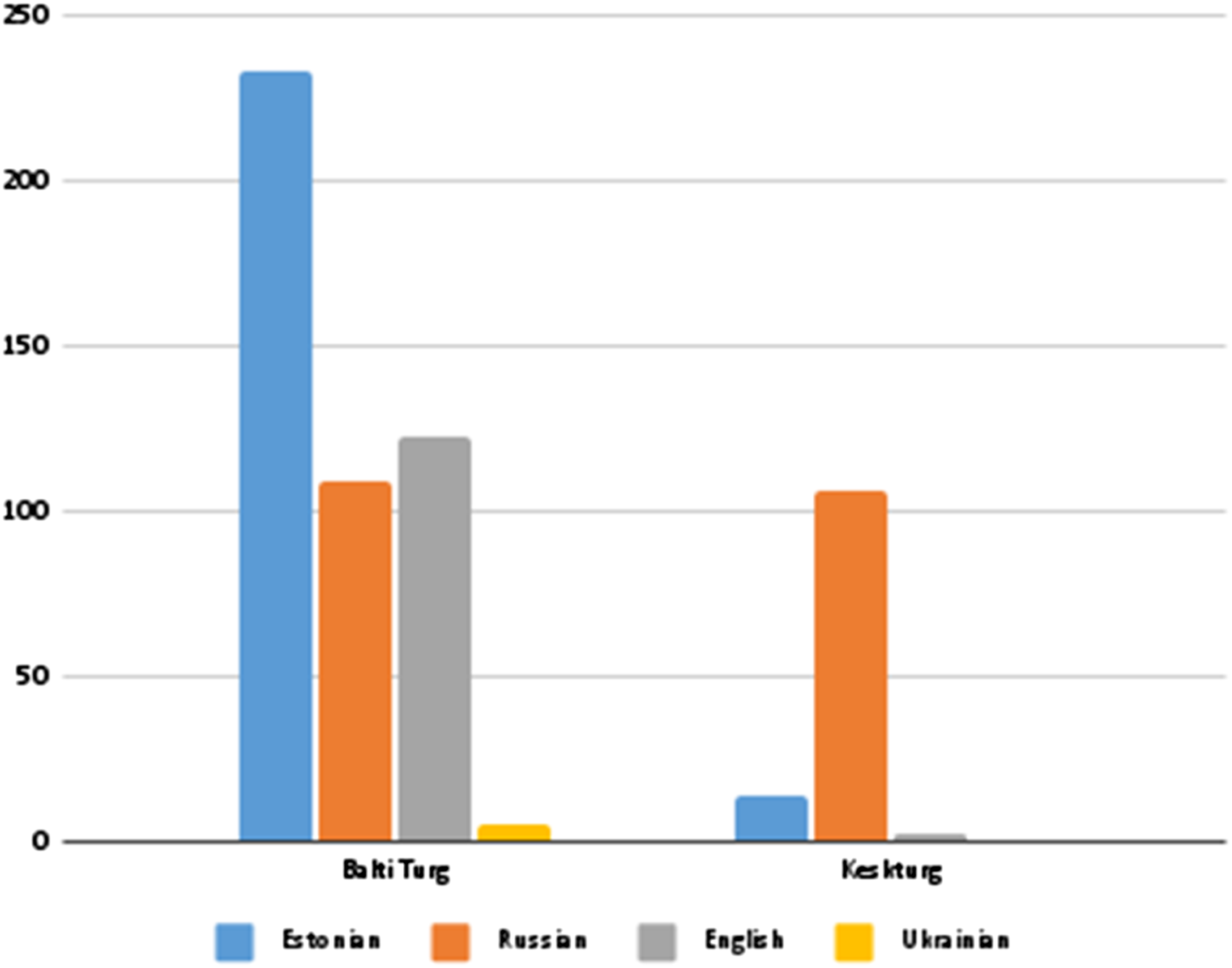
The third domain under investigation included venues hosting cultural events, namely, Russian Theater, Estonian Drama Theater, and Estonian National Opera. The deliberate selection of these locations was based on their distinct orientations toward language-specific audiences. Russian Theater primarily caters to Russian-speaking visitors, while Estonian Drama Theater targets Estonian speakers. Estonian National Opera, in theory, does not align with any specific language group, as it performs operas and ballets. All observations were made immediately before the start of the performances in the foyers.
It is noteworthy that the Russian Theater maintains a commitment to linguistic accessibility by consistently providing Estonian synchronic interpreting during performances. Additionally, the programs and website are bilingual, as is the visual landscape within the theater, although Estonian serves as the dominant language. Conversely, the Estonian Drama Theater does not offer translation services into either Russian or English. While the website has an English version, the names of the performances remain exclusively in Estonian. The visual landscape within the building is exclusively Estonian.
At the Estonian National Opera, operas are presented in their original languages, complemented by Estonian and English subtitles. Programs for both operas and ballets are in Estonian, with synopsis available in English and Russian. The website also has an English version. Inside the theater, Estonian predominates in the scripts. Photos on the walls include both Estonian and English captions. However, in the spacious cloakroom in the vestibule, all information is in Estonian, except for the word “today.”
Each location underwent a thorough 3-h investigation, totaling 9 hours across all three venues. The observational data revealed a total of 324 conversations among 703 participants (see Table 2 for the respective numbers at each venue).
Within the observed conversations, middle-aged women emerged as the predominant demographic group, constituting 182 participants. Other demographic cohorts included 87 middle-aged men, 40 young men, 106 young women, 79 boys, 60 girls, 19 elderly men, 69 elderly women, 20 teenage boys, and 39 teenage girls, which means that in all but one age group women significantly outnumbered men.
Figure 21 depicts the soundscape insights from all three theaters. Consistent with expectations, the majority of conversations at the Russian Theater occurred in Russian, with 198 individuals using this language. Additionally, 4 individuals engaged in conversations that combined Russian with Estonian, while 45 people spoke exclusively in Estonian. Furthermore, 2 individuals communicated in Polish during the observed period. Languages spoken in the theaters.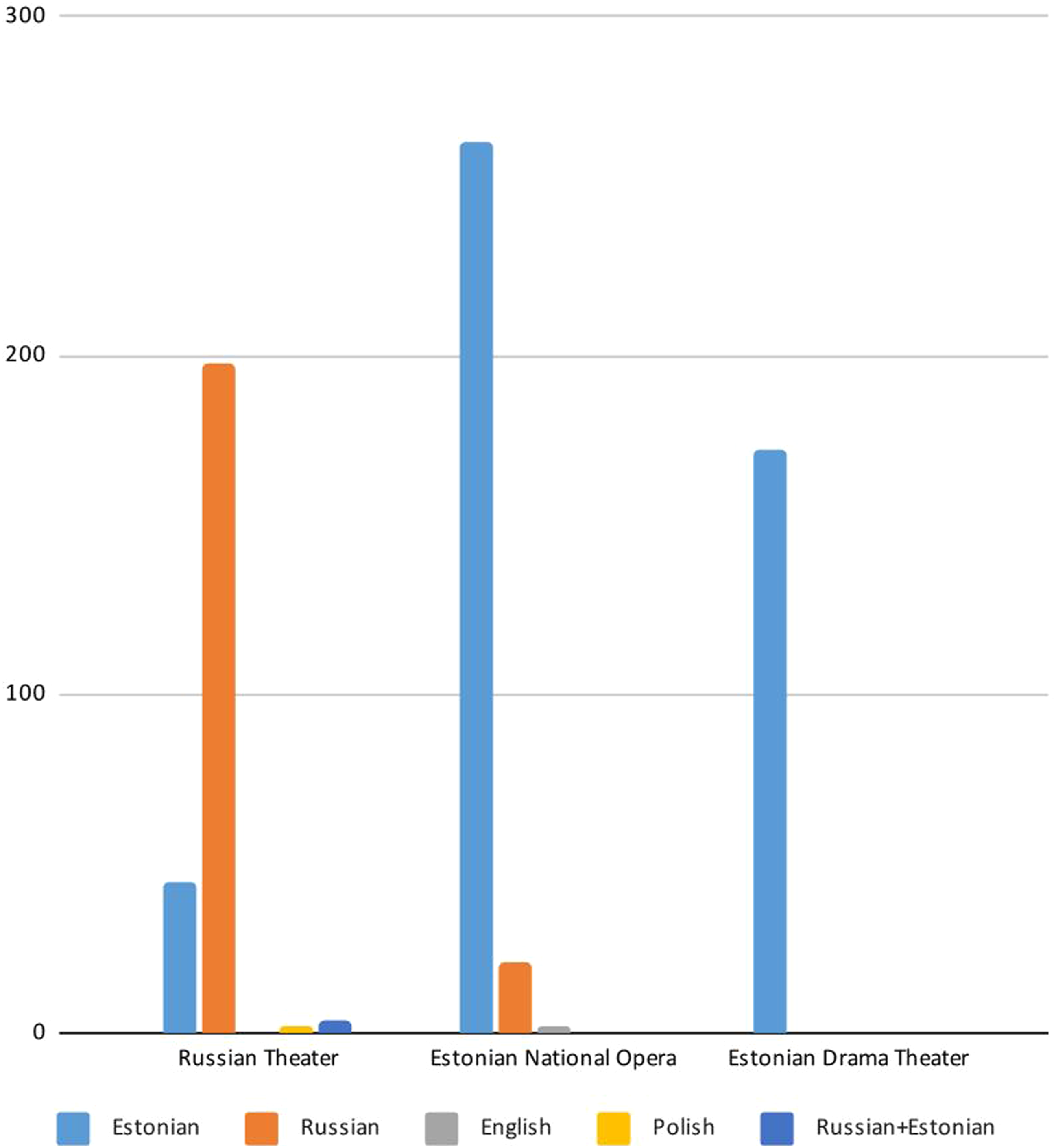
At the Estonian National Opera, the predominant language of conversations was Estonian, with 263 people using it. Additionally, 21 individuals engaged in conversations in Russian, and 2 individuals were observed speaking English.
In contrast, at the Estonian Drama Theater, all observed conversations were exclusively in Estonian throughout the duration of the study making it a unique monolingual space, the only one in the whole study.
The last location chosen for the study was the Tallinn University (TLU) campus, consisting of six interconnected buildings linked by passages and featuring a central patio. Functioning as an academic hub, TLU accommodates a diverse community comprising over 7,000 students and 400 academics hailing from Estonia and various other nations. While the predominant language of instruction at TLU is Estonian, 34 study programs are conducted in English, catering not only to the local population but also to a significant international student cohort. Furthermore, philological cycles offer instruction in languages such as German, Russian, French, Italian, and Spanish. In addition to these languages, students have the opportunity to study less common languages, including Polish, Ukrainian, Arabic, Turkish, Chinese, Korean, and Japanese.
Observation at the TLU campus took 6.5 hours, with approximately 1.5 hours dedicated to each of the four selected buildings. The observations were conducted at various times throughout the day within standard working hours, yielding insights from 400 conversations involving a total of 870 individuals. The predominant demographic group engaged in the observed conversations was young women, comprising 527 participants. Other demographic cohorts included 203 young men, 75 middle-aged women, and 41 middle-aged men.
The collected data was most diverse, with 243 instances in Estonian, 112 in English, 78 in Russian, 20 in Chinese, 8 in German, and 4 in Finnish. Additionally, one conversation featured Spanish, emanating from the Duolingo application. Estonian, English, and Russian were prevalent across all buildings, while Chinese, German, and Finnish were primarily observed in the building dedicated to philology studies. Figure 22 demonstrates the distribution of languages within the conversations at the university premises. Languages of the conversations at Tallinn University.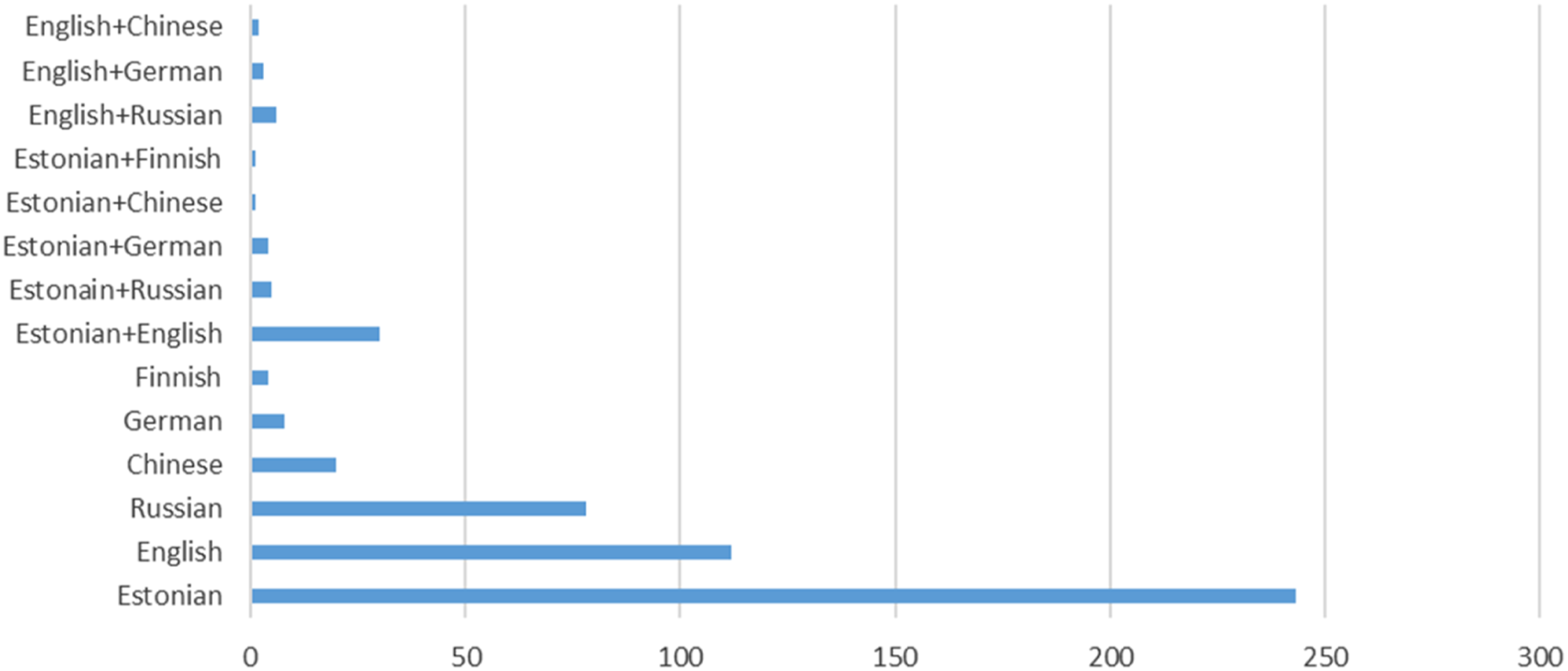
Notably, a substantial number of conversations were multilingual, demonstrating the use of combinations of two languages. The highest frequency of such interactions (30) occurred in Estonian and English, with other language pairs observed less frequently: 6 in Russian and English, 5 in Russian and Estonian, 4 in Estonian and German, 2 in English and Chinese, 1 in Estonian and Finnish, and 1 in Estonian and Chinese. This rich linguistic diversity underscores the dynamic nature of communication within the university environment.
The conducted study, therefore, provided information about language choices made by Tallinn residents and visitors in certain places. This information can be complimented by the data collected in the course of ethnographic observations and interviews. In most observed exchanges between customers and personnel of shops, restaurants, pharmacies, etc., there were no negations about the language of communication. If the interaction was initiated by the customer, usually it started directly from greetings and requests in the chosen language; personnel could try to anticipate the customer’s preferred language choice, address them with bilingual greeting (e.g., Tere, Zdravstvujte! [“Hello” in Estonian and Russian, respectively]), or wait to be addressed. Interviewed members of staff confirmed this observation, and also commented that being proficient in three languages is especially important for working during night shifts when the patterns of language use may change significantly. Most drastic changes were attested in predominantly Russian-speaking district of Lasnamäe where, according to the local pharmacist, all communication during daytime was in Russian but nighttime brought almost equal proportions of Russian, Estonian and English speaking clients, as there are only two 24/7 pharmacies in Tallinn, and people come from other areas of the city as well as from the suburbs. In other words, temporality is another dimension that should be considered when describing urban multilingualism. Besides changes in the soundscape, visual linguistic landscape could be affected too in the nighttime since some signs are brightly lit while others become invisible in the darkness.
Sounds, silence, and language bubbles: Concluding remarks
What conclusions then can we draw from comparing the data on the linguistic landscape and soundscape of Tallinn? And is there any way they can help us to understand how urban life brings together multilingual individuals and shape their communicative practices?
First of all, one cannot fail to see the evident mismatch between languages seen and languages heard in Tallinn. English, in particular, is a clear case of visually overrepresented language: while it is used for actual communication predominantly in places popular among foreign visitors, even with other mother tongues (cf. active use of Finnish at Nautica shopping center), its share in the linguistic landscape is significantly higher. Estonian, in this sense, can also be described as visually dominant in the areas where its oral use is rare (Lasnamäe shopping center, Keskturg, and Russian Theater). Its presence there is justified by official language policy regulations, and commercial considerations, as well as its global popularity, we can assume, determine the high proportion of English in visual signs.
Russian, on the contrary, is much more present in the soundscape than in the visual data, and, we assume, this trend can only intensify in the future, both for economic reasons (lack of tourists from Russia) and for ideological ones (negative attitudes to the language still strongly associated with the aggressive Russian state). At the same time, active use of Russian in bottom-up signs and internal communication attest to its importance as a “language of our own” for Russian-speaking residents of Tallinn.
Finnish, in a way, can also be seen as visually underrepresented in the areas where it is spoken most (e.g., at Nautica shopping center). And German, on the contrary, although actively used for communication only at the university, retains its status of an “additional language” (Marten, 2023) explained by its historical legacy in the Baltic states.
We can see, therefore, that not all words pronounced are equally reflected in written signs, and not all sounds are saved in scripts. Prestigious, powerful languages tend to dominate the visual scene and, consequently, have higher chances to be preserved for future generations in the form of historical traces. At the same time, languages lacking this prestige and power may be erased and silenced. The very fact that from the whole universe of diverse languages that used to sound in the streets of Tallinn for centuries only German (and also some Latin) and Russian ghost signs can be found now confirms this conclusion.
Another important consideration concerns the way in which multilingualism is perceived and performed on an individual level. As we could see from the soundscape data, communication within conversations occurs in most cases in one language, and only at the university premises using more than one language in the same dialogue is more common. Multilingual signs are everywhere, but while visual multilingualism puts languages alongside each other and makes them available to anyone all at once, in oral interaction individuals tend to stick to monolingual communication and expect to be served in their language, staying within their own “language bubble.” Moreover, spatial distribution of languages in the city creates such bubbles on a higher, group level: there are totally and almost totally monolingual places, such as Estonian Drama Theater, or a pharmacy in Lasnamäe district where only nighttime can bring people speaking other languages than Russian.
At the same time, that demands flexibility and adaptability from the service providers: they have to navigate linguistic diversity in all their interactions, considering the language proficiency and preferences of those involved. In the streets of Tallinn, contacts are made all the time. What is very important, though, is that those contacts are not only between people with different mother tongues but also between people and different places where all previous contacts, including those from decades and centuries ago, have left their traces, however, subtle and not fully representative of the diversity of languages that were once spoken here.
Finally, when discussing everyday multilingualism of a modern city, we cannot ignore the fact that a huge amount of communication nowadays occurs online. We can experience the city not only while going around its streets and buildings but also by navigating with the help of online maps, finding information about working hours or prices from the websites, looking at the photos and reading reviews shared by some strangers, and engaging in heated discussions in social media. And here again languages of communication matter, creating yet another language bubble distinguishing experiences of those who speak different languages. However, as the studies on language-based online communities in Estonia show (Fedorova & Tšuikina, 2024; forthcoming), multilingual practices occur even inside predominantly monolingual communication if its participants are regularly exposed to multilingualism in their everyday lives. Studying the digital dimension of Tallinn’s linguistic landscape will be an important step in understanding this city as a meeting point of different people, languages, and places.
Footnotes
Acknowledgments
The research tool LinguaSnapp Eesti was created using the concept created by Prof. Yaron Matras and the software designed by Multilingual Manchester project team, and with the financial support of Tallinn University School of Humanities Research Fund. Data collection was funded by the project EKKD 115 “Database of multilingual environment in Estonia” (grant of Estonian Ministry for Education and Research, program “Eesti keel ja kultuur digiajastul/Estonian language and culture in the digital age,” 2019–2027). We also would like to thank our BA students, Marina Bolohhova, Olga Bõndina, Seda Dungurova, and Alexandra Lapa, who collected the soundscape data and contributed significantly to this study.
Declaration of conflicting interests
The author(s) declared no potential conflicts of interest with respect to the research, authorship, and/or publication of this article.
Funding
The author(s) disclosed receipt of the following financial support for the research, authorship, and/or publication of this article: This work was supported by the Estonian Ministry for Education and Research (EKKD 115).
