




Abstract
This article analyses strategies for revitalisation of Tallinn’s industrial heritage and reflects on the reuses of history from the late Russian Empire to the Soviet period, referring to the case of the Noblessner district, one of the country's most vibrant and rapidly developing seafront quarters. Contemporary Noblessner advertising promises a European dream city with hipster cafes, galleries, and loft-style art studios located in former shipyards; a promenade along the Baltic Sea coast, trendy business spaces, and residential blocks offered for those who appreciate nature, art, and style (Noblessner.ee, 2024).The Noblessner quarter gives an example of successful transformation of a neglected industrial site into a modern public space with high potential for further development. By referring exclusively to the most attractive moments of its history and by recycling them into attractions, Noblessner creates new narratives of its own urban biography that can be safely projected into the future, and which leave no room for ambiguous interpretations. Therefore, the revitalisation project of the Noblessner district avoids citing controversial episodes from its history, developing a space, in which the past is presented selectively. Noblessner's biography is not introduced as a continuous historical narrative, it is fragmentated and recycled into an appealing wrapping that can attract investors, visitors, and residents. In recent years, Noblessner has become the site of numerous contacts: commercial, artistic, public, and private, which create a space that is representative of the whole Estonia. However, Noblessner's history is still unknown to most of its visitors and residents. It was muted during the Soviet regime, and has not yet been visibly integrated into the revived space.
Keywords
Introduction: Questions on history and questionable histories
Over the past decades, Tallinn has become one of the leading centres for the rehabilitation of industrial heritage in the Baltic Sea region, with several flagship projects launched since the 2000s, when the revitalisation of urban industrial sites in Central and Eastern Europe “have gained momentum” (Pastak & Kährik, 2016, p. 967).
This article explores Noblessner’s history and reflects on its role in the construction of its modern urban identity, looking at the historical traces that have survived on the one hand, and those that have been ‘forgotten’ on the other, as the construction of a new post-Soviet urban identity of Tallinn involves what Francisco Martínez calls “active forgetting as a consequence of a novel articulation of collective memory” (Martínez, 2018, p. 1).
Noblessner’s fate is typical of a decaying industrial site that remained an abandoned wasteland for decades. Once it was plucked from oblivion, it attempted to develop a new identity that could help it flourish in the present and future, proving Martínez’s argument that “wasted legacies coexist with us in a state of potentiality and resonance thus showing a tendency to return claiming for recognition of their significance” (Martínez, 2018, p. 2). The historical background of contemporary post-Soviet urban spaces raises questions about their legitimacy in cities that have rejected the Soviet past. Hence, the role of the history of a place for its sustainable existence and development in a modern city is increasing.
The material and symbolic capital of the city also affects the legitimacy of the new political regime that rejected the Soviet one. This legitimacy, in turn, relies on the non-Soviet past, while the Soviet past, as in the case of Estonia, is seen as unnatural experience and waste, according to Martínez’s “concept of waste and repair” (Martínez, 2018). Consequently, the Soviet legacy is still seen as “non-heritage” (Martínez, 2018, p. 6), and this practice extends to many industrial complexes built in Estonia before the establishment of the Soviet regime in the country. Most of the industrial enterprises of the imperial period were appropriated by the Bolsheviks and presented as achievements of Soviet industrialisation, while their imperialist origins were consigned to oblivion through various means, such as renaming and repurposing (Seits, 2021). After the Soviet historical layer was removed from these objects, revealing their origins, the newly exposed history turned out to be not unproblematic and unambiguous, providing no clear answers to the question of which of its artifacts should be hidden and which deserve repair.
Successful heritagisation of a previously abandoned urban space requires the restoration of its material artifacts, which reveal a history that can be celebrated or at least valued in some way (Lowenthal, 1996). This raises questions about how a complex and contradictory history, once rediscovered, should be visualised, practiced, and narrated in renovated industrial zones, and whether these spaces should represent some kind of “sanitised versions” of themselves to deserve rehabilitation (Martínez, 2018, p. xiii) and therefore be filled with entertainment, free from the burden of history and reflection on their inconvenient pasts.
A restored urban space reveals aspects that have been selected and approved to constitute a new identity for that space that will convey the ideologies and symbolic meanings offered for appreciation and consumption. In other words, any restored urban space is ideological because it represents the results of healing and consolidation with the past through selective restoration and in accordance with the current political agenda. As Francisco Martínez argues, “acts of repair simultaneously go beyond the material reuse of objects and devices and also restore social attachments and meanings” (Martínez, 2018, p. 16).
This article examines Noblessner’s renovation project and its relationship with its own history, which is not unambiguous and uncomplicated, and which can still help to understand not only the local fabric of Tallinn’s industrial legacy, but also to foresee the ways of development and existence of this type of architectural heritage.
A forgotten story of Noblessner
Port Noblessner is considered one of the most successful examples of the revitalisation of abandoned industrial spaces in Europe. In 2020, it won the Baltic Real Estate Awards in Vilnius for the best urban regeneration project (Noblessner.ee, 2024). Since then, Noblessner’s popularity has grown. Today, a modern, fashionable district designed on the territory of an old shipyard is a favourite place for leisure for local residents and visitors to the city, equally attractive to young professionals in the creative and IT industries, as well as to tourists and families with children (Figures 1 and 2). Noblessner district. View to the promenade and the KAI art gallery. Photo by the author, November 2023. Noblessner new residential buildings. Photo by the author, November 2023.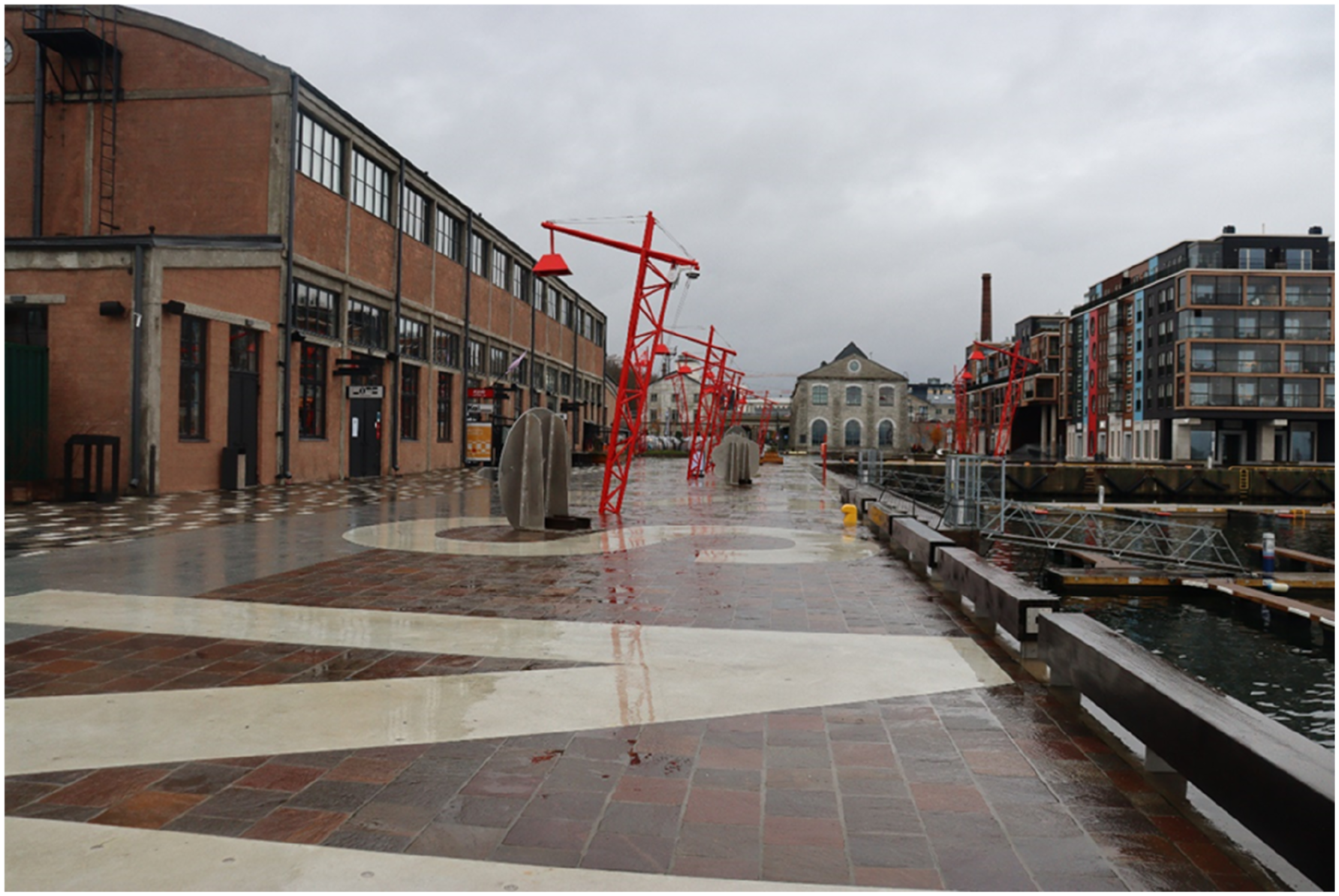
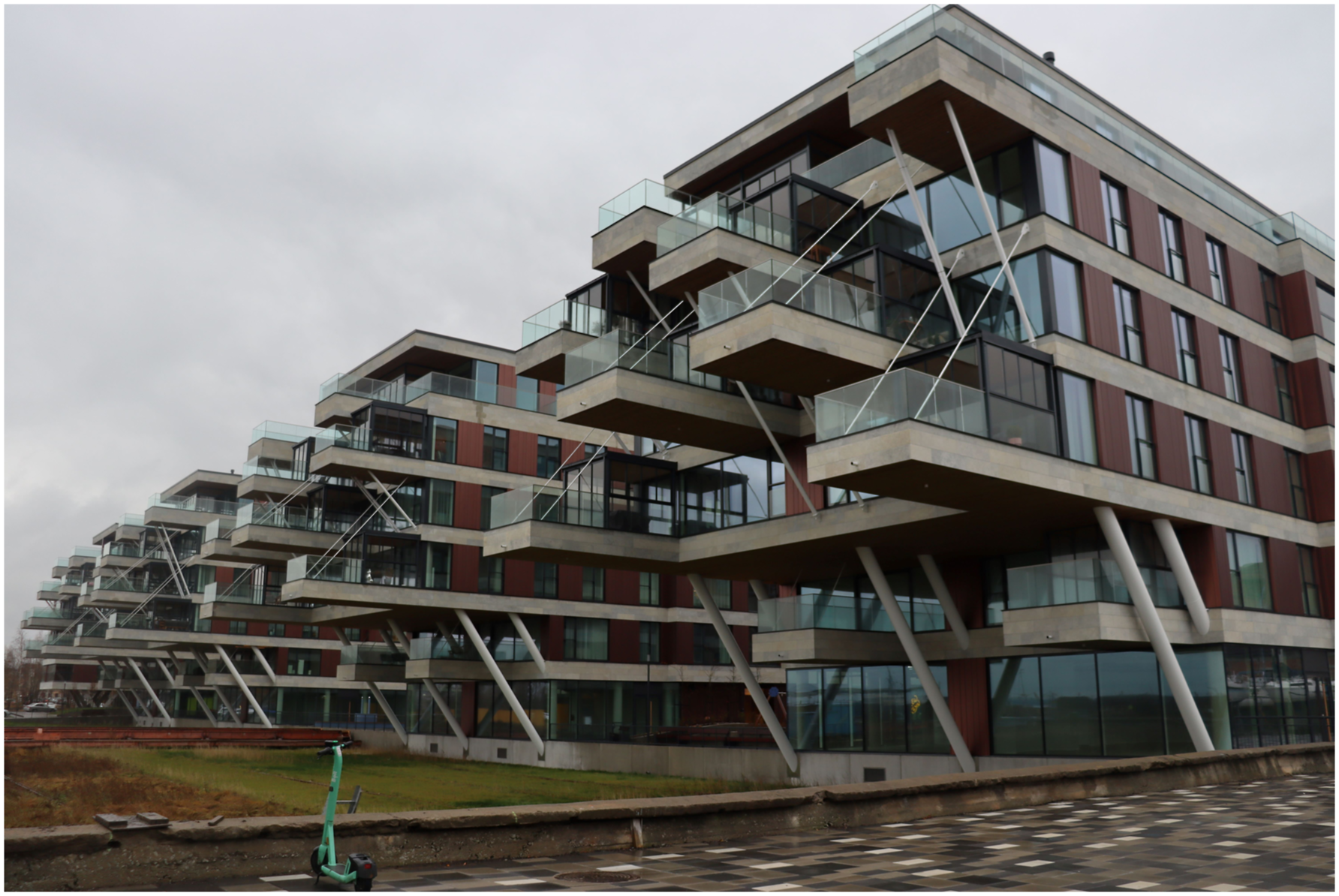
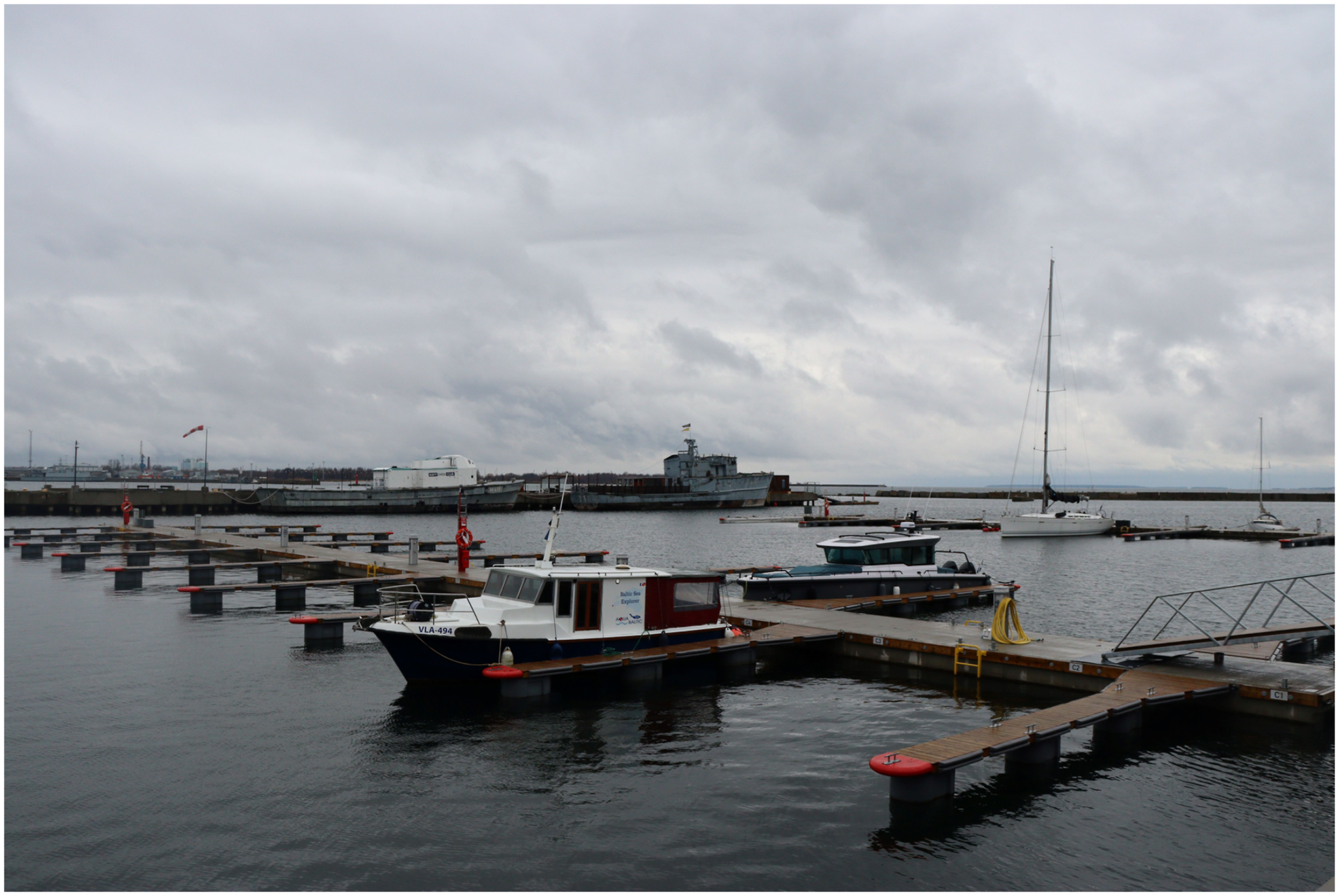
The beautiful marina is busy with yachts and boats in the warm season (Figures 3 and 4); hipster coffee shops, breweries and even a Michelin-starred restaurant offer a variety of gastronomic experiences (Noblessner.ee, 2024). Summer and the holiday season are filled with festivals; the PROTO Invention Factory offers interactive and intel-lectual entertainment for the whole family, while art lovers enjoy exhibitions at the KAI Art Center and small galleries (Figure 17). Design studios and ateliers promise sophisticated shopping; the spa complex and beauty salons have become an organic part of the local dolce vita. In addition, Noblessner is a prestigious residential area where residents can enjoy the luxury of facing the sea through the large windows of newly built apartments (Figure 2). Noblessner Marina in summer. Courtesy of Mark Jefimov. July 2023. Noblessner, view to the sea. Photo by the author. November 2023.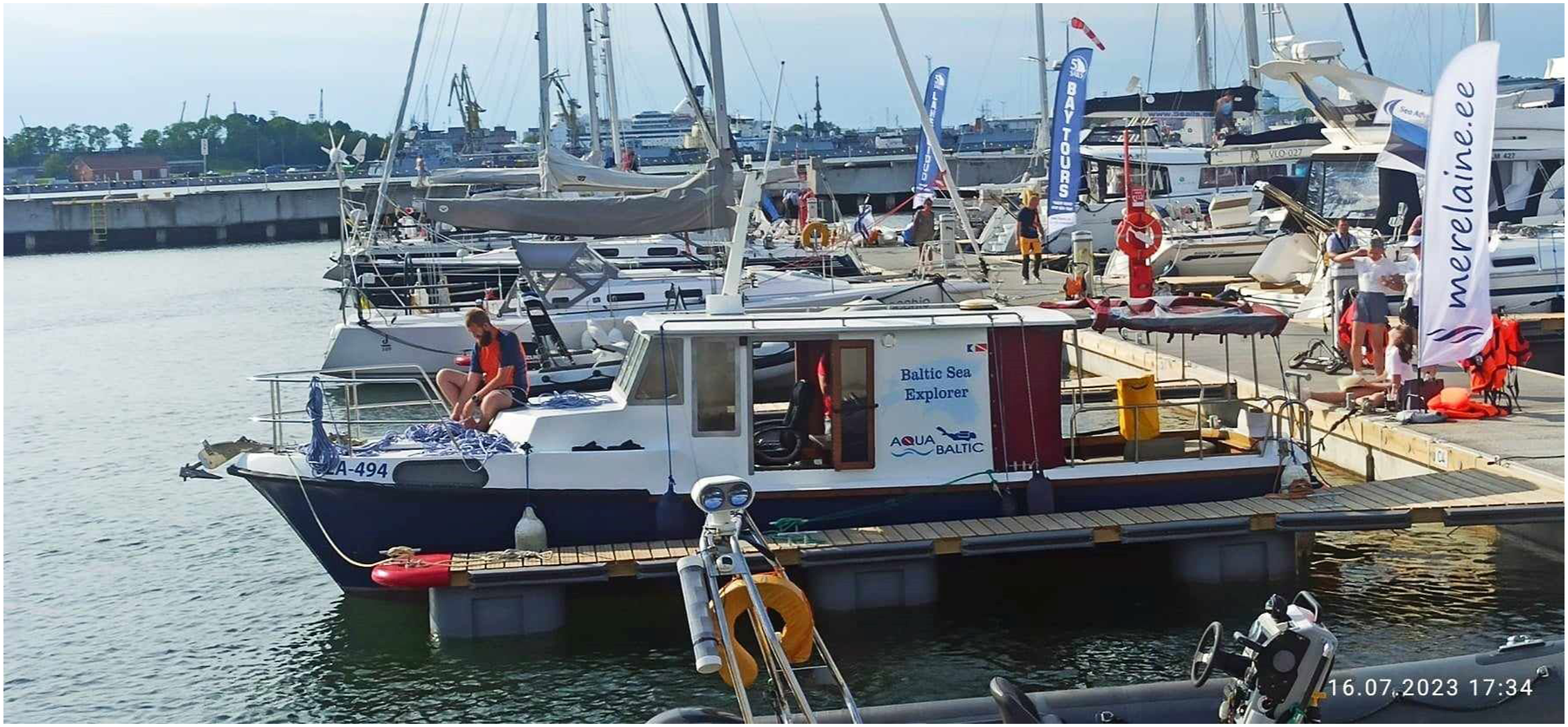
The area has been reborn from the oblivion and desolation of the first post-Soviet decades, when it was a wasteland left over from a gloomy shipbuilding plant that gradually went bankrupt after the collapse of the USSR. The territory of the secret shipyard was closed and inaccessible until recently, when it was reopened and turned into a fabulous “seaside quarter open to people and the sea,” as promised on the project website (Noblessner.ee, 2024). And yet Noblessner’s history still remains a terra incognita for both its residents and visitors.
The new port of Revel
Noblessner was not the first industrial area of Tallinn to be redeveloped and turned into public and residential space. A series of projects in Tallinn’s northern district between the Old Town and the Baltic Sea, once a shabby remnant of the post-Soviet period, have helped rebrand Tallinn into a creative post-industrial city and make it attractive to local and international investors.
The old harbour area began to develop from 1870, when the Baltic Railway linked Revel (the German name of the city until 1918) with St Petersburg, and consisted of several ports, shipyards, and factories. At the turn of the century, the harbour was a boiling cauldron in which new technologies were developed and introduced both for the benefit of the local population and to strengthen the Russian Imperial Navy. Not only local but also international talent from France, Great Britain, Germany, Sweden, and the whole world contributed to the development and growth of the Revel port (Baryshnikov, 2013). Unlike the ports of St Petersburg and Kronstadt, which were closed for almost five cold months of the year, the port in Revel stopped navigation for less than two months a year, which was important for maintaining logistics.
Revel Harbour literally became a place of contacts and interaction between the western and eastern parts of the Russian Empire and, in a broader sense, between Eastern and Western Europe. Thus, the industrial heritage of the Port of Tallinn is very dense and diverse. In addition to Noblessner, there are several industrial districts along the Baltic Sea waterfront that have recently been revitalised and turned into cultural centres, including the former Põhjala rubber factory on the Kopli Peninsula; Seaplane Harbour, which since 2012 has housed the Estonian Maritime Museum; and the Creative Hub (Kultuuri Katel) that occupies the city’s former central Power Station, built in 1913. Other nearby industrial sites that have been transformed into popular business and arts spaces include the chic Rottermani district and the more hipster arts town of Telliskivi, located next to Tallinn Central Station on the site of the former Baltic Railway Works (Figure 5). Telliskivi Creative City. Photo by the author. November 2023.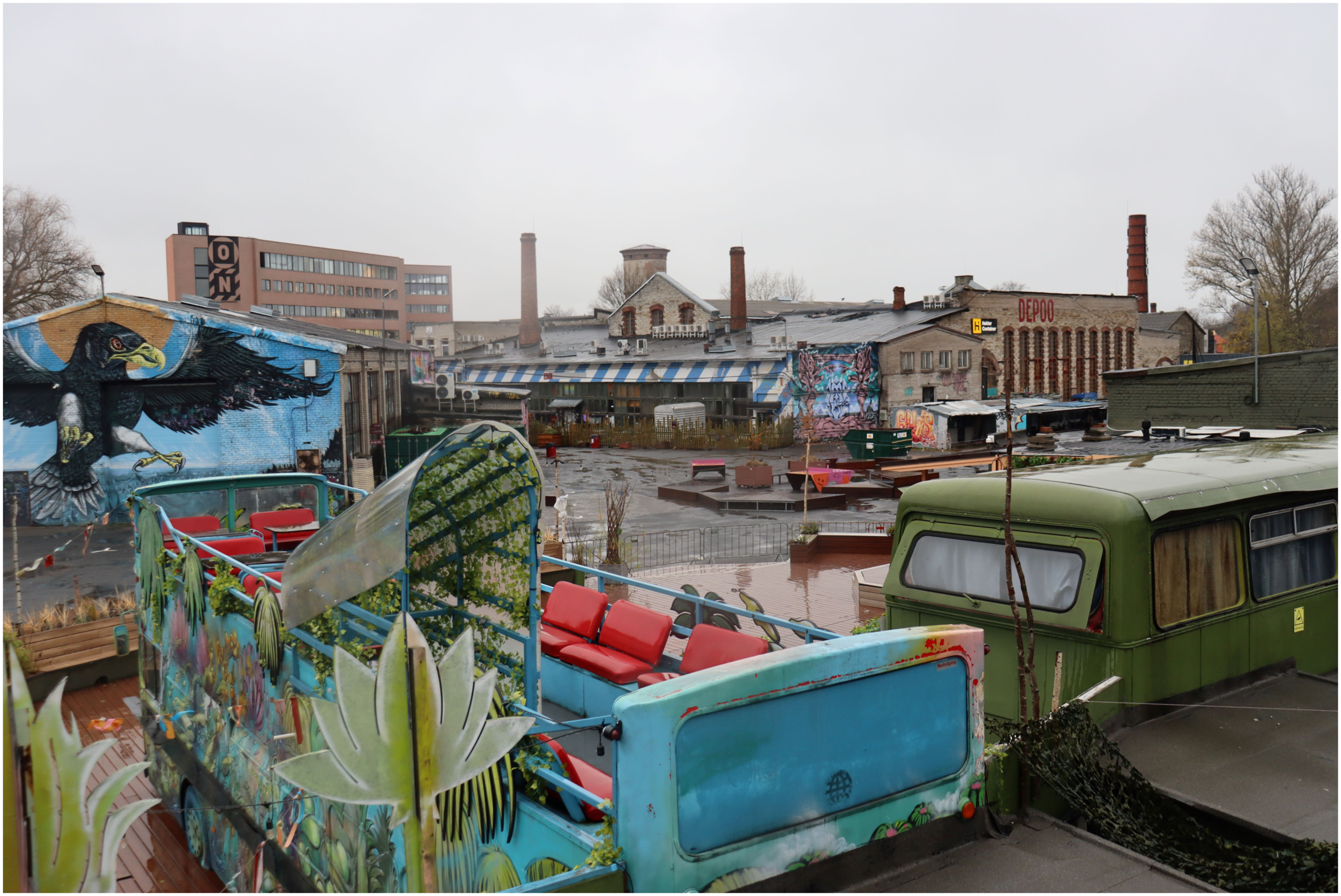
Another resonant space on the Tallinn’s waterfront is Patarei Prison, built in the 1830s as a Russian fortress and later converted into a prison, and which dark background as Estonia’s NKVD Prison No. 1 (1940–41) has earned the site its grim reputation. Following the closure of Patarei Prison in 2005, it remained what Paul Belford calls a “problematic built heritage” that “reflects the long and complex relationship between Estonia and Russia at different stages of their histories” (Bedford, 2013, p. 49). In 2019, the Paterei Prison Museum opened on its territory, and the creation of a larger International Museum of the Victims of Communism and a research centre is planned for 2026. However, a heated debate continues on how to integrate the space of the former fortress and prison with a “dark past” into the modern urban environment of central Tallinn, given the historical and ethical complexity of the legacy of the place.
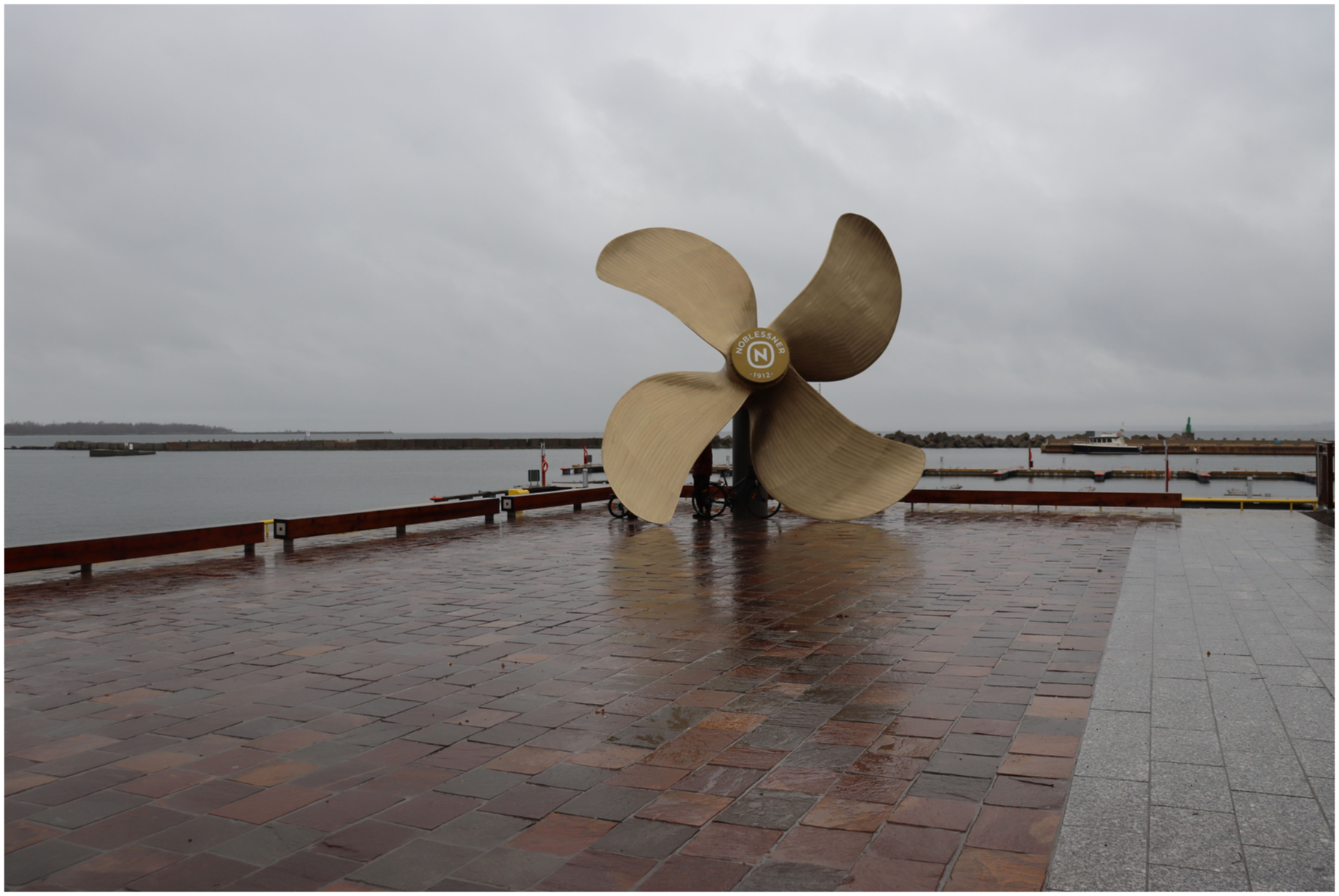
Other recent projects in progress include the Volta area, located next to the port of Noblessner, where quite a few industrial ruins await renovation next to newly built residential and office buildings (Figure 6). Volta district. Photo by the author. November 2023. Noblessner. Ship propeller with the contemporary Noblessner district logo. Photo by the author. November 2023.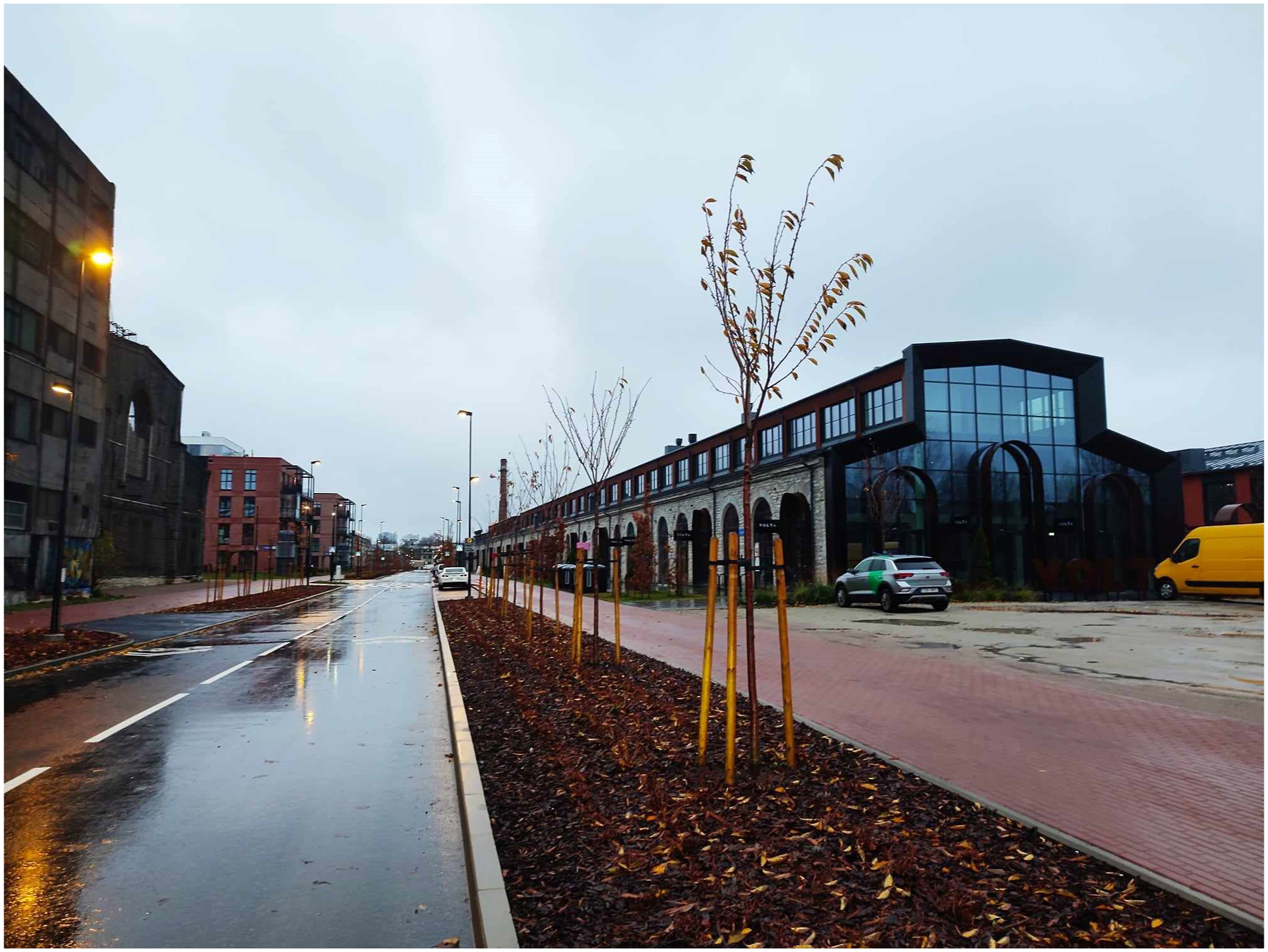
These industrial projects create a whole new image of modern Tallinn, providing a “true waterfront experience” (Pastak & Kährik, 2016, p. 975) and offering an alternative to the Old Town, which miraculously survived the upheavals of past centuries. Tallinn’s original local concept of “one city - two towns” refers to a completely different urban space that has grown beyond the historical walls of its magnificent centre. Thanks to regeneration projects, the city of Tallinn outside the walls of the Old Town has acquired a modern, vibrant tone, demonstrating that “the city center is gravitating towards the sea” (Martínez, 2017, p. 14).
The rapid growth of the Revel seaport began after the end of the Russo-Japanese War of 1904–1905, when the Russian Imperial Navy suffered heavy losses. To recover the fleet, the government ordered immediate construction of new factories and shipyards. In 1907 and 1912, Emperor Nicholas II issued shipbuilding plans and signed a program for the urgent strengthening of the Baltic Fleet, which was supported by significant government funding that stimulated naval construction (Maltsev & Yazev, 2010, pp. 284–285).
Revel was chosen as the new central location for the implementation of this plan, and large private Russian and foreign capitals were invited to invest in the construction of the new port, as a result of which several joint-stock companies were created, including ‘Society of the Russian-Baltic Shipbuilding and Mechanical Plant’ and the French company ‘Schneider-Creusot’ (Maltsev & Yazev, 2010, pp. 284–285).
The architectural plan of the Russian-Baltic Shipyard was developed by the Russian Architect Alexander Dmitriev, and construction of a new port began in 1912. The port infrastructure, which employed up to 10,000 workers and 1,000 engineers, was independent and self-sufficient. The port had its own power plant and autonomous water supply, a workers’ village, a hospital, a fire station, church, and a police station. Communication with the city was provided by a special railroad connected to the Baltic Railway, as well as by water through the factory harbour (Maltsev & Yazev, 2010, p. 285).
The boundary between the industrial and residential zones of the Russian-Baltic Plant was marked by a grandiose four-story administrative and technical building made of cut flagstone in the late Art Nouveau style with elements of proto-functionalism. After the end of the First World War, when Estonia gained independence, the building was transferred to the Technical Institute; today it belongs to the Estonian Maritime Academy of the Tallinn University of Technology (Figure 8). The workers’ settlement on the Kopli Peninsula, as well as industrial infrastructure facilities, continued to serve the needs of shipbuilding and other industries until the collapse of the USSR. The Põhjala factory, where rubber clothing, shoes, and toys were produced in Soviet times, is one of the sites that is now being transformed into a culture centre. Main building of the Russian-Baltic Plant (Maritime Academy), 1912–1916. Public domain, via Wikimedia Commons.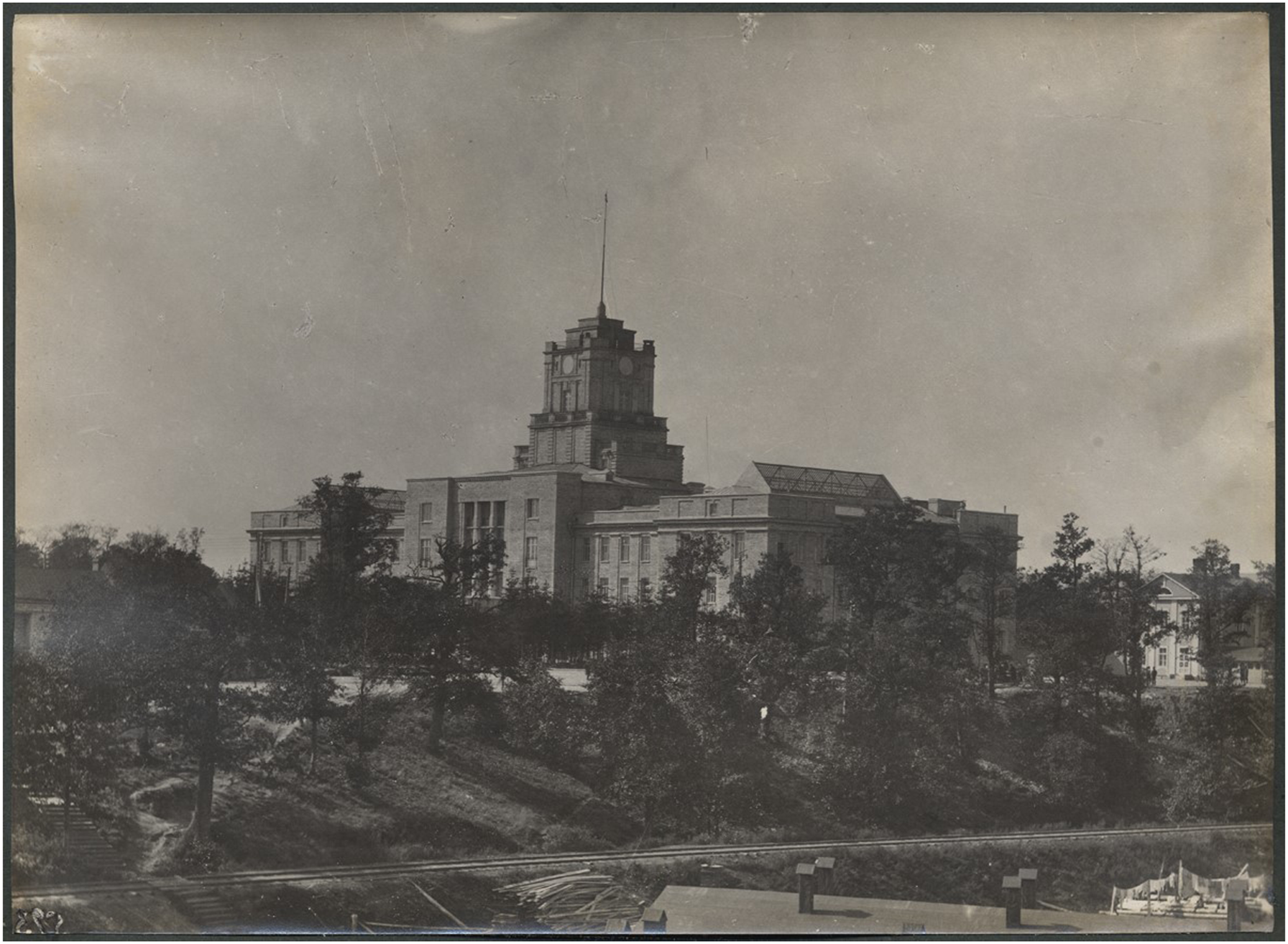
New era and records of Noblessner’s legacy
With many reservations, it can be said that the Russian-Baltic Plant has survived to this day, albeit in a very modified state. Its descendant and “closest relative” is the BLRT Group, an international shipbuilding company headquartered in Tallinn, which employs about 4,000 people and owns shipyards in Lithuania, Finland, and Norway. The head and co-owner of BLRT, Fedor Berman, is a Ukrainian who graduated from the Kaliningrad Technical Institute of the Fishing Industry. In 1974, he was sent to the Baltic Ship Repair Plant (BSRZ), as the former Russian-Baltic Shipyard was called during the Soviet period. Fifteen years later Berman was appointed director of BSRZ, and after the collapse of the USSR and the subsequent closed privatisation, he managed to obtain a controlling stake of the plant (Forbes.ua, 2024).
Today BLRT owns and operates several regeneration projects in the Tallinn harbour, including the Noblessner shipyard, which was opened next to the Russian-Baltic plant in 1913 (Figure 8). The website of the modern district of Noblessner briefly tells its history, noting that the shipyard “was named Noblessner after the family names of the two men: Emanuel Nobel (nephew of Alfred Nobel) and Arthur Lessner” (Noblessner.ee, 2024). The website's historical reference states that the plant was focused on the production of submarines and briefly but clearly tells the story of the plant after the Bolshevik Revolution of 1917, during the Soviet occupation, and at present (Noblessner.ee, 2024)
1
: In 1916 the shipyard received an order for 20 large ocean-going submarines, but because of the 1917 October Revolution, these were never built. The shipyard was declared bankrupt in 1925 due to a lack of orders and the buildings were divided between various enterprises, which also built smaller ships here. At the beginning of the Soviet occupation, the fragmented enterprises were once again merged. In 1944–1951 the shipyard was called Tallinna Meretehas (Tallinn Marine Factory) and it repaired the Baltic Fleet’s minesweepers. Over the following decades, the shipyard operated under the names Marine Factory No. 7 and Shipyard No. 7, building vessels for the Soviet Navy and repairing whaling vessels and fishing trawlers. After Estonia became independent again in 1991, the shipyard was named Tallinna Meretehas (Tallinn Marine Factory). This is where the submarine Lembit was repaired before it was handed over to the Estonian Maritime Museum. From the bankruptcy of the Tallinn Marine Factory in 2001, the shipyard belongs to BLRT Grupp AS, which develops the Noblessner Marina area.
The note also states that Emanuel Nobel, one of the two main founders of the Noblessner company, accepted Russian citizenship offered by Emperor Alexander III in 1888, and is described as “a colourful person and as talented as his world famous uncle Alfred” (Noblessner.ee, 2024). The website continues that Emanuel was “the owner of an outstanding collection of Fabergé jewelry and a lover of art and sumptuous dinners” (Noblessner.ee, 2024), and the narration admits that “besides managing Branobel, the family oil company, Emanuel established the world’s first diesel engine factory, which also produced engines for Noblessner submarines” (Noblessner.ee, 2024). Unlike many Western sources about the Russian period of the Nobel family, Emanuel Nobel is credited here with contributing to the implementation of his uncle’s will to establish the famous Nobel Prize (Noblessner.ee, 2024): Much thanks to him the world knows about the Nobel prizes. After Alfred Nobel died, his heirs contested the will, whereby most of his estate was provided for the establishment of the Nobel Foundation and the prizes. After two years of disputes and negotiations, Emanuel eventually succeeded in achieving an agreement for the execution of his uncle Alfred’s will.
While the personality and talents of Emanuel Nobel are vividly remembered, nothing is said about Arthur Lessner, except that his name makes a part of the company title. Indeed, the name of the Lessner family is much less known than that of the Nobels, despite Lessners' creativity and ingenuity.
On the other hand, the Prize immortalised and glorified only the name of Alfred Nobel, while there were three brothers: Robert, Ludwig, and Alfred, who built an entire industrial empire on the territory of the Russian Empire. The Nobels’ empire included oil mines and refineries; mechanical workshops that produced diesel engines; military factories that supplied the Russian state with a wide range of weapons from underwater mines to Berdan rifles; shipyards; workers’ settlements; and even the world’s largest private fleet – all these enterprises were scattered throughout the Russian Empire from Baku to Tallinn.
The Lessners, indeed, operated on a much more modest scale, yet they owned large plants and factories in St Petersburg and other Russian cities. Immanuel Nobel, the great inventor and father of Alfred, Robert and Ludwig, settled in the Russian Empire (first in Turku, then in St Petersburg) in 1837, while Gustav Lessner, the Prussian citizen, founded his factory on the Vyborg side of St Petersburg in 1853. After Ludwig Nobel moved to the same area of the city in 1862, the Nobels and the Lessners became not only neighbours, but also good friends, and their sons, Arthur Lessner and Emmanuel Nobel, grew to lifelong partners. At the beginning of the 20th century, Arthur Lessner was the technical director of the Nobel oil corporation Branobel in Baku until he returned to St Petersburg in 1912 and became director of the board of the Ludwig Nobel Mechanical Plant (Baryshnikov, 2013, p. 121).
Simultaneously, Lessner’s factories continued to flourish in St Petersburg, Crimea, and other parts of the Russian Empire. Lessner’s plants produced a wide range of products from printing presses and presses for prismatic gunpowder to mines, kerosene, gasoline, and spirit engines. The Lessners were the first to produce Whitehead torpedoes in Russia, and they were the pioneers of automobile production in the Russian Empire, placing the country on the exclusive shortlist of the world’s few car-producing states at the time (Baryshnikov, 2013, pp. 118–119).
The “New Lessner” plant produced thirteen different types of vehicles between 1904–1909, including agricultural and fire trucks (Figure 9), postal service automoniles, ordinary cars, omnibuses, and even prisoner transport vehicles, which, while still in use in the 1930s, became infamously known as ‘voronki' (the ‘blacks wallows')– the NKVD transport used in many political arrests in the times of Stalin’s repressions (Kirilets, 2007). Lessner fire truck of 1904. Soviet stamp of 1984. Public domain, via Wikimedia commons.
In 1908, Lessner’s enterprise received a gold medal at the international automobile exhibition “for establishing automobile production in Russia,” but in 1909, for various reasons, the production of Lessner cars ceased, and their automobile enterprise became part of the Russian-Baltic Carriage Works in Riga, where the production of the legendary “Russo-Balts” began (Kuzmina, 2919, p. 241).
Establishment of the Noblessner
Thus, both young founders of the Noblessner company – Emanuel Nobel and Arthur Lessner – were heads of families with a long and rich records of success in the Russian and international industrial markets. The organisation of their joint company in 1912 was much more complex than their own enterprises. Nobel and Lessner decided to unite efforts to fulfil a government order to produce submarines for the Russian Navy in preparation for the First World War.
The Lessners had already experimented with building submarines together with the Russian naval engineer Ivan Bubnov, who had designed the first Russian submarine with an internal combustion engine, the ‘Dolphin type’, which was successfully tested in St Petersburg in 1903. Lessner invited Bubnov to work as a consultant to Noblessner in Revel, and a new ‘Bars’ – type submarine was soon developed. The Revel shipyard was launched in 1913, and 12 of the 20 submarines ordered by the Russian government were built before the 1917 Revolution. The choice of Revel harbour was not accidental since the waters of the ports of St Petersburg and Kronstadt were too shallow for experiments with submarines. Nevertheless, the St Petersburg Admiralty continued to supply Noblessner’s shipyards in Revel with partially manufactured submarines and their various parts.
The creation of Noblessner would have been impossible without the financial support of the St Petersburg Accounting and Loan Bank, as well as private Russian and international companies. 2 It was a truly international enterprise with egalitarian terms and provisions unprecedented not only in Russia but also in Europe.
Researcher of Russian industrial history Mikhail Baryshnikov notes that Noblessner represented a qualitatively new form of organisation of partnership between several groups of owners, which provided the financial and technological basis for the formation of a powerful association in military shipbuilding (Baryshnikov, 2013, p. 125). The secret of success lay in the willingness and ability of all members to harmonise interests that were not related to value preferences: neither family or social, nor ethno-confessional or religious, since the corporation included both Russian and foreign citizens of the Orthodox, Jewish, and Protestant faiths. Since the Russian state banned foreign citizens and Jews from many legal activities and corporate leadership positions, Noblessner’s board had to find ways to circumvent the sociocultural restrictions and biases that existed in the Russian Empire, and thereby enter a qualitatively new era of business interaction space (Baryshnikov, 2013, p. 125).
Baryshnikov admits that the solution to these problems was carried out, first of all, thanks to the relatively high level of resource provision, professional training, and management skills of Nobel and Lessner, as well as their extensive connections in public and government circles (Baryshnikov, 2013, p. 125). As a result, the port of Noblessner in Revel was created by an association consisting of members from very different social, professional, and ethno-confessional backgrounds. Emanuel Nobel’s talent for activating and optimising human, financial, and technological resources allowed Noblessner to create a unique entrepreneurial environment in Revel.
As a result, Noblessner’s financial support for the construction of the shipyard in Revel was provided by the St Petersburg Accounting and Loan Bank; fuel was supplied by the Branobel oil corporation; and diesel engines arrived from Ludwig Nobel’s mechanical plant in St Petersburg. The supply of mine weapons was carried out by the Lessner and Winner factories; electrical engineering – by ‘Duflon, Konstantinovich and Co.’, and the international company ‘Phoenix’, purchased by Lessner in St Petersburg, provided Noblessner with hydraulic equipment (Baryshnikov, 2013, p. 128). The crucial supply of electricity was ensured by the decision to appoint the brother of the German nobleman Gustav Schaub to the position of independent director of Noblessner, which, given that Schaub was also the managing director of the Volta electric plant located next to Noblessner, strengthened business and personal ties in the neighbourhood (Baryshnikov, 2013, p. 128).
Thus, the entire area of Revel Harbour became a vibrant international community of businessmen, engineers, financiers, and inventors of diverse backgrounds. In 1913, they arrived in the westernmost port of the Russian Empire to build a future that, at the outbreak of World War I, seemed even brighter to them due to Russia’s increased spending on military production. In 1916, Noblessner was renamed “Peter I Shipyard” since the joint names of only two founders of the corporation no longer reflected its composition. However, the prospect of a bright future dissipated with the smoke of the Bolshevik Revolution, leaving both the Russian Empire and the industrial wonderland of ambitious inventors in ruins.
After Estonia declared independence, submarine production at the former Noblessner ceased, and the company soon closed, while its members and employees were scattered around the world. The shipyard went bankrupt and was partially revived under Soviet rule. Because Noblessner’s international and capitalist background did not fit the new reality, the shipyard was renamed to erase any reference to its Swedish and German inventors, while the plant itself was promoted as an achievement of Soviet industrialisation.
The abandoned shipyard sank even deeper into oblivion after the collapse of the USSR and the restoration of independence of the Republic of Estonia. The rediscovered past and revived memories have turned out to be even more inappropriate and outdated for the new reality and new visions of the future. The surviving workshops remained in a semi-ruined state until a new ambitious corporation, inheriting the legacy of a wasted past, re-appropriated the oddments of the plant to begin the reconstruction of its future.
Invisibile history and intangible heritage
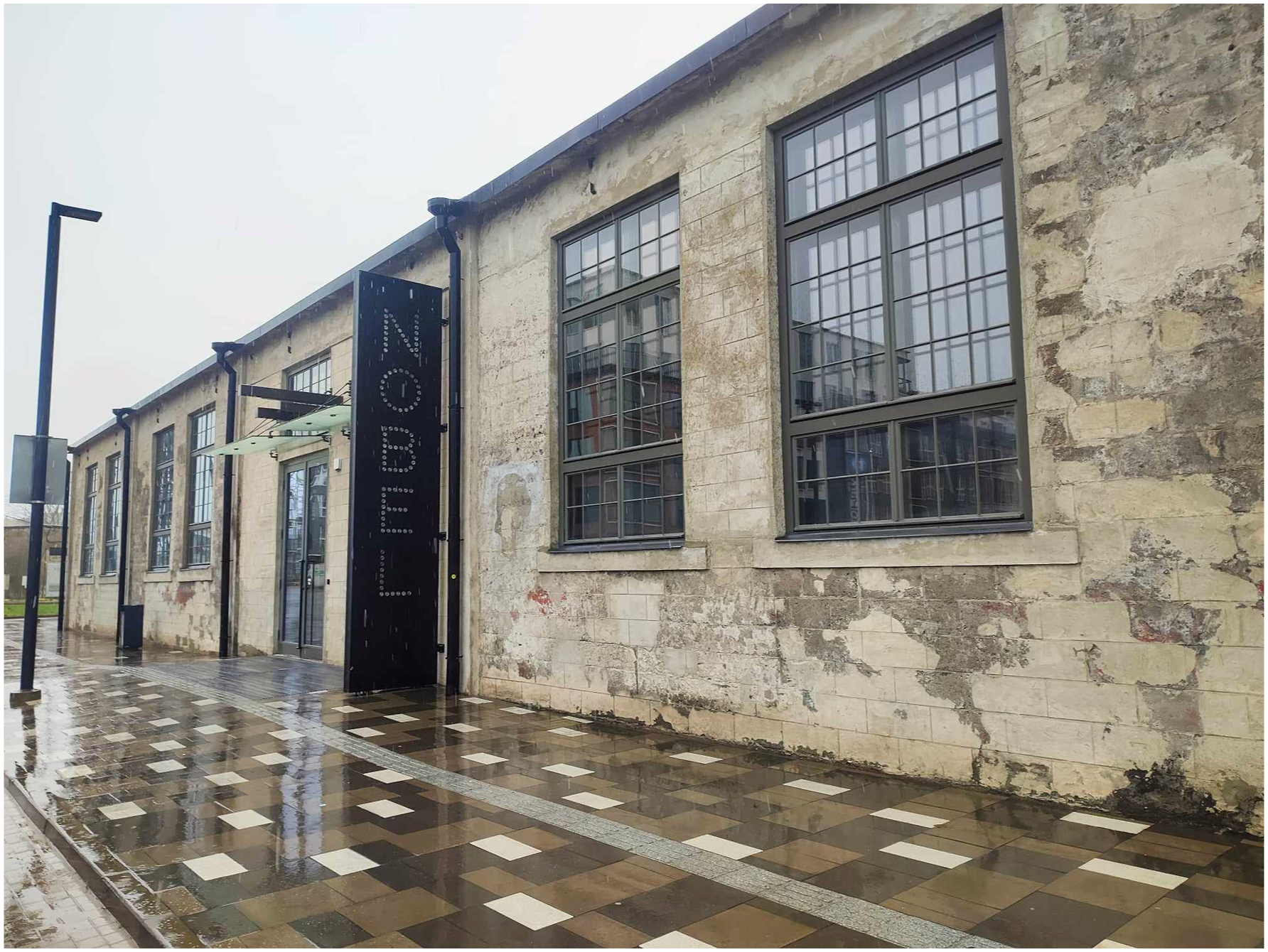
The history of the Noblessner district in Tallinn is rather invisible in its modern space. It is mainly represented by the restored name of the area and two halls of the former foundry that bear names of Nobel and Lessner and that are used for various events (Figures 11-14). However, in my experience with locals and visitors, very few people associate Noblessner with Nobels, let alone lesser-known Lessners.
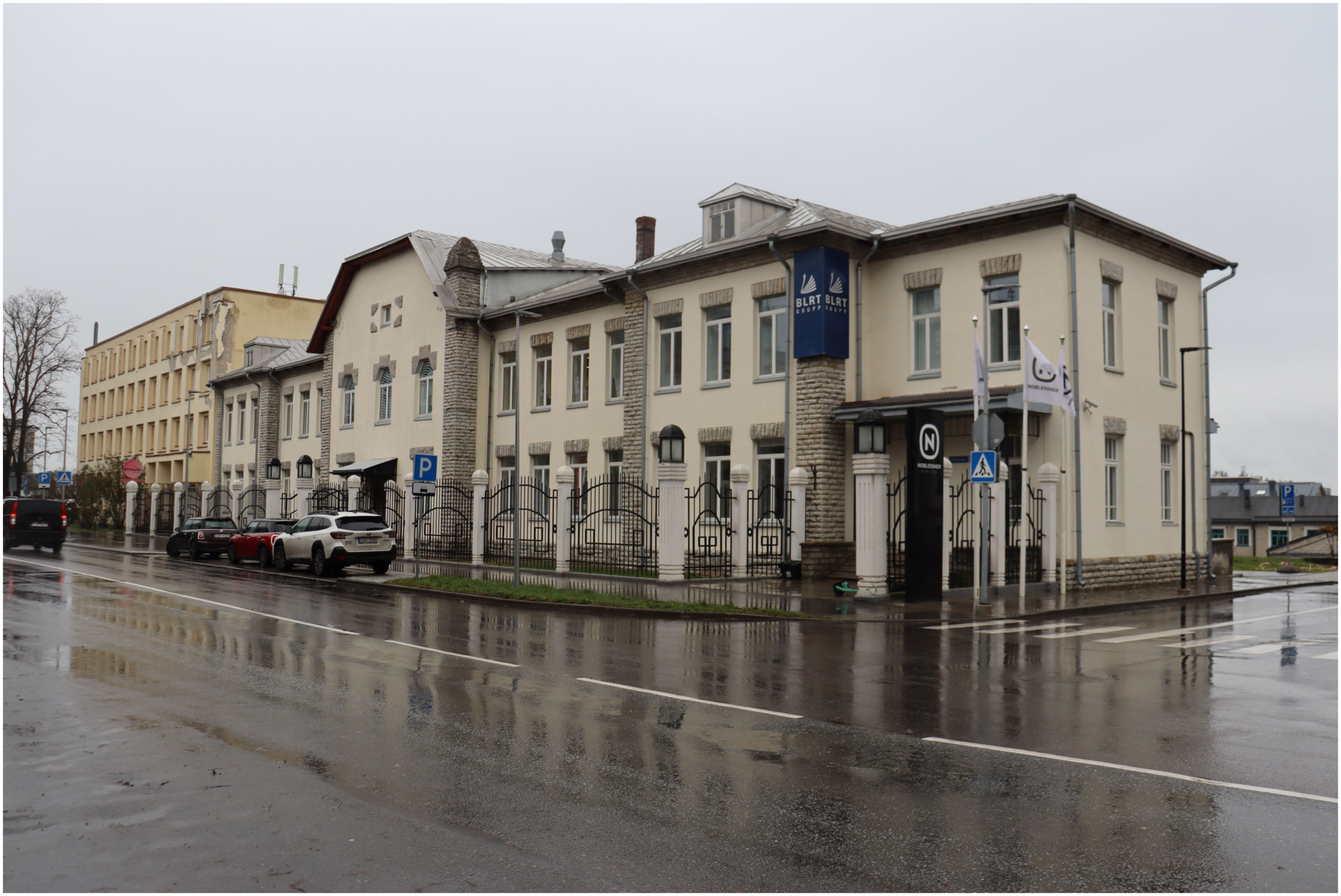
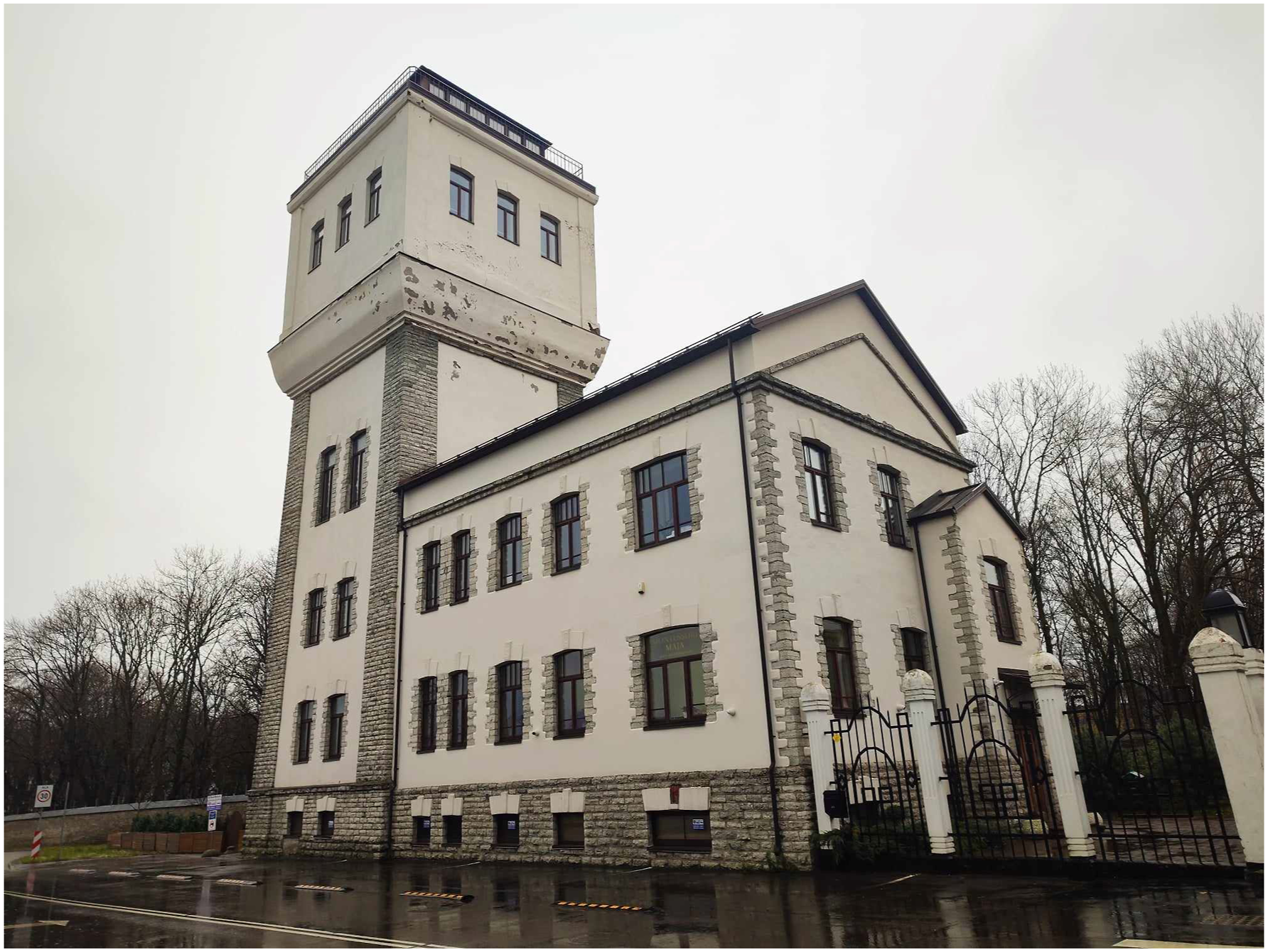
Quite a few of Noblessner’s original buildings have been preserved and repurposed for the needs of a modern culture project (Figures 10-14). The Noblessner Administration building designed in 1914 now houses the BLRT Group office (Figure 12). Noblessner, the warehouse (circa 1915). Photo by the author. November 2023. Noblessner, former foundry shop. Photo by the author. November 2023. Noblessner, former administrative building, currently the office of BLRT Group. Photo by the author. November 2023. Noblessner, former Water Tower (circa 1915). Photo by the author. November 2023.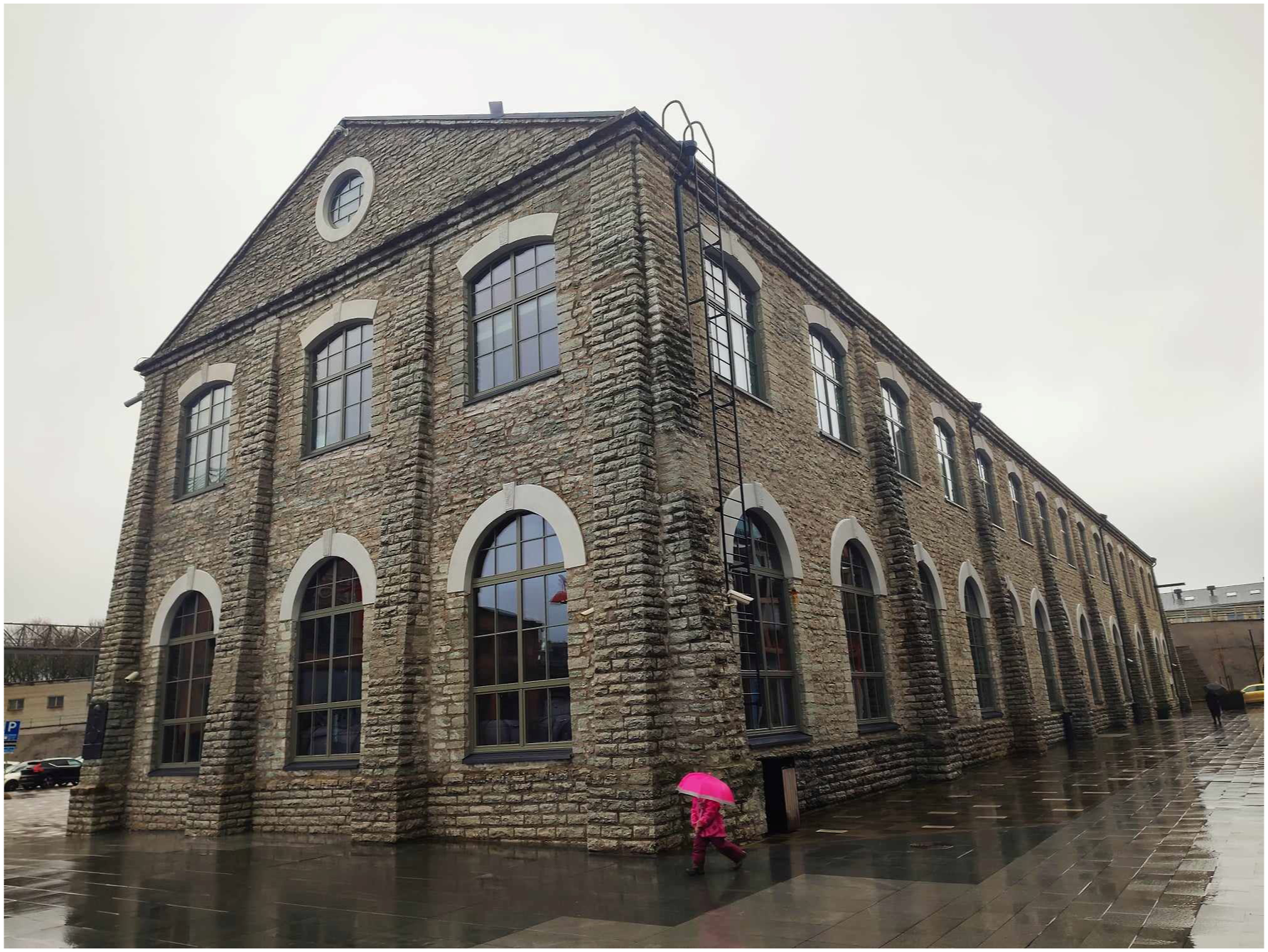
One of the reasons for the absence of Noblessner history in the area is due to the policy of neglect and oblivion that the Soviet government pursued through the practice of renaming everything from the name of the country to streets, factories, and anything that referenced the imperialist past. Renaming became a tool for the destruction of any past, a weapon against history and memory that consigned ideologically hostile objects to oblivion (Seits, 2021, p. 52). Most of the factories founded in the Russian Empire received new names, refuting their relationship with their capitalist owners. During the Soviet occupation, the Noblessner plant was called the Marine Factory and Shipyard No. 7, so the memory of the Swedish and German entrepreneurs was erased, and the factory was presented as if it was a brand-new plant founded by the Bolshevik regime.
The decades of independence following the collapse of the USSR cared the least about the revival of interest in the historical origins of the ineffective remnants of Soviet regime. Thus, in the popular consciousness, the material ruins of industrial sites such as Noblessner remained the waste of the Soviet history, and the “Soviet world” itself was perceived “as something wasteful” (Martínez, 2017, p. 15). Industrial areas associated with the Soviet period do not welcome interest in their origins, since remembering and researching their history inevitably revives memories of traumatic experiences.
Following the concept of the ‘potential and trash’ developed by Francisco Martínez in relation to the regeneration of industrial legacy (Martínez, 2017), the potentiality of Estonia’s industrial heritage lies not in its historical origins, but rather in the universality and apolitical nature of its architectural language and spatial layout, which can be imbued with any beneficial meaning and function, and which can contribute to the attractiveness of a place as a “playground for cultural activities,” increasing its commercial value (Martínez, 2017, p. 4).
The nature of industrial architecture
The transnational nature of industrial architecture and its necessity to support the new political regime allowed it to escape physical destruction during the Soviet period, since factories and shipyards did not embody any specific political or cultural ideology, unlike, for example, churches or royal palaces. In other words, industrial architecture does not stand in the way of building a new ideological state apparatus, to speak in Althusserian terms (Althusser, 2008).
Industrial architecture is required first of all to fulfil its function rather than to resemble the ideology of its possessors. As Harris and Lipman note, “in the 19th century, engineers and architects were called on to accommodate new social relationships in the new building types they designed: factories, railway stations, and public libraries.” (Harris & Lipman, 1998, p. 160). These social relations are still in place, while the developed types of industrial architecture have proven to be easy to transform, repurpose, and adapt to modified social relations and new calls of the day. The period in the beginning of the 20th century, when most of industrial objects were built in Revel, was a period of late Art Nouveau and early modernism in architecture, and which were often characterised as antihistorical (Harris & Lipman, 1998, p. 160).
Therefore, non-historical and non-ideological industrial architecture appears placeless and rootless. All over the world things are quite the same as industrial architecture testifies not to the local history of its land, but to a global history of industrialisation that resembles globalisation rather than local authenticity. Industrial architecture looks to the future, since industrial production is organically linked to technological progress, which, in turn, races up to the future. Perhaps this is one reason why industrial architecture from different periods, be it a nineteenth-century red brick factory, or an elegant Art Nouveau water tower, or a proto-functionalist foundry, looks harmoniously when combined with postmodernist additions, inserts, and refurbishing (Figures 14-17). Noblessner, former foundry shop (circa 1915), currently the PROTO factory of inventions. Photo by the author. November 2023. Telliskivi creative city. Photo by the author. November 2023. Telliskivi creative city. Photo by the author. November 2023. Noblessner. Entrance to the KAI art centre. Photo by the author. November 2023.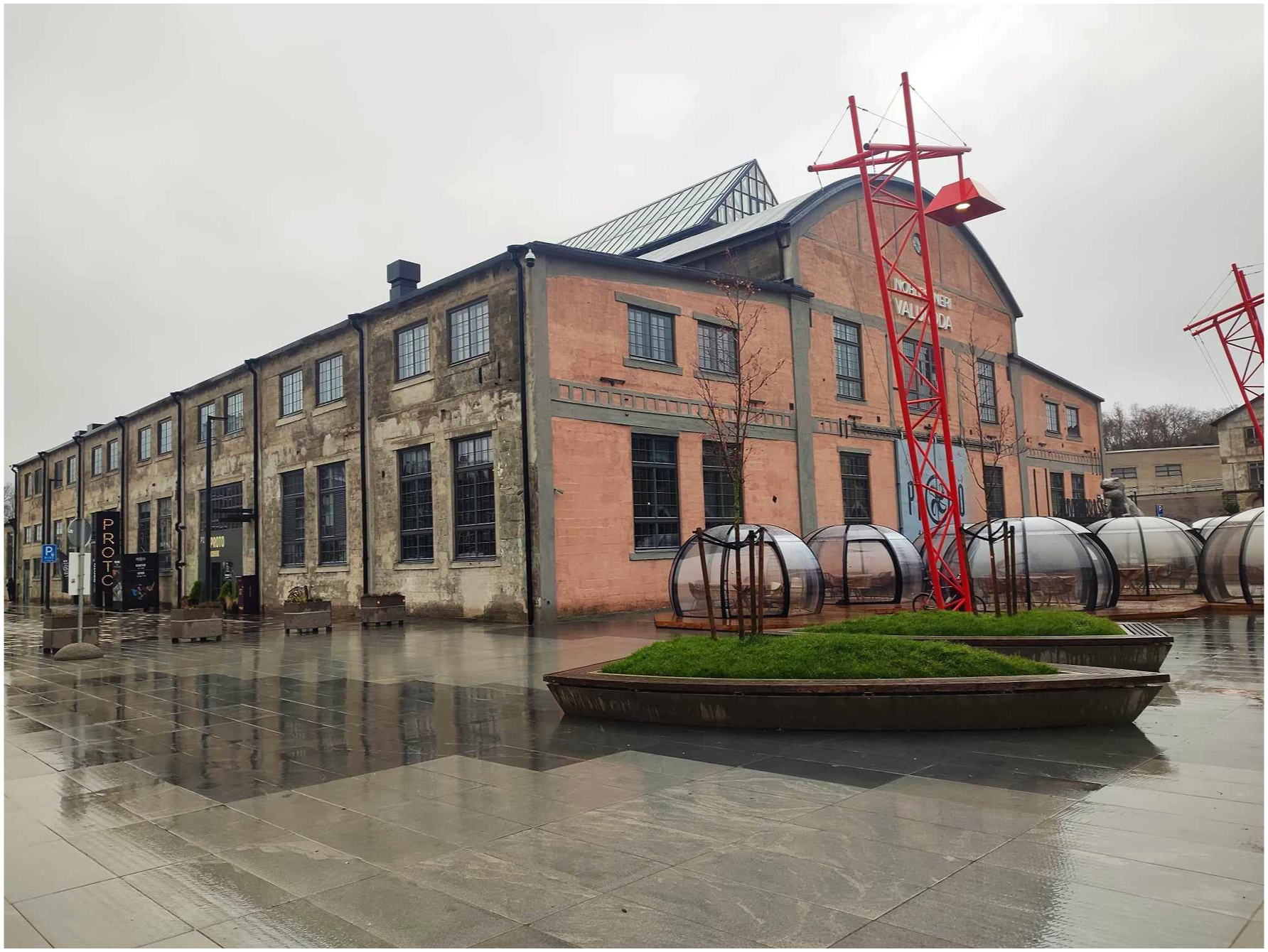
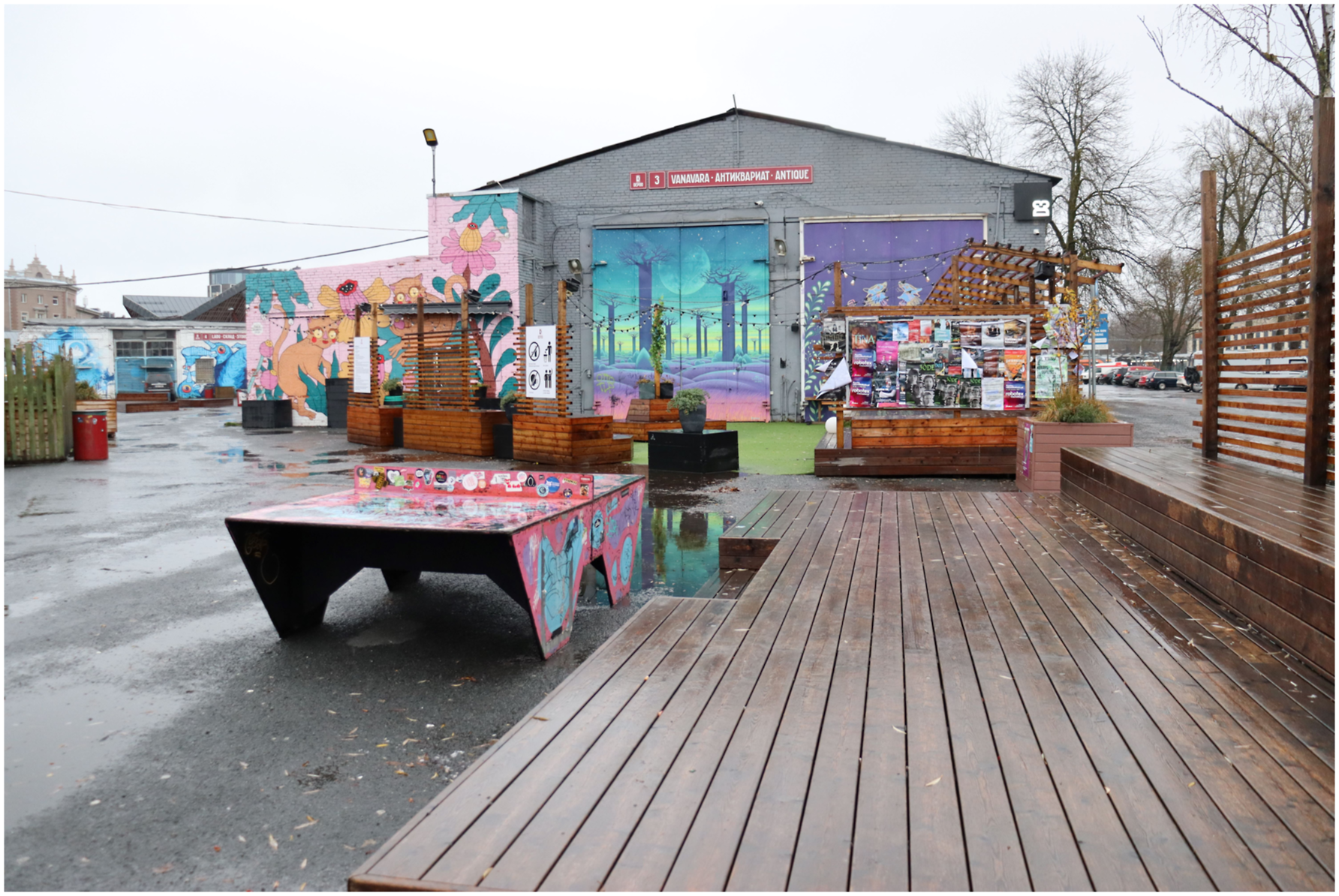
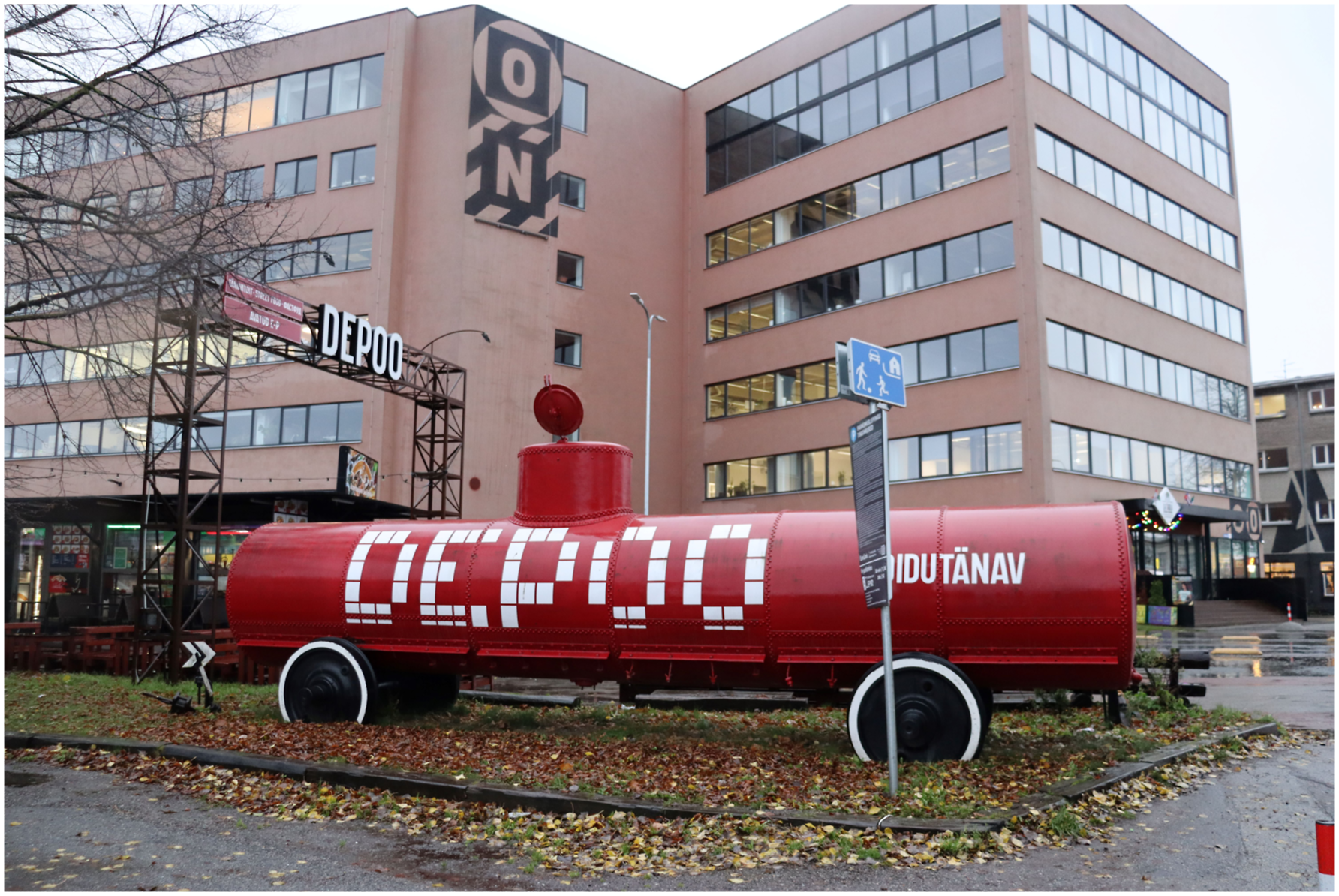
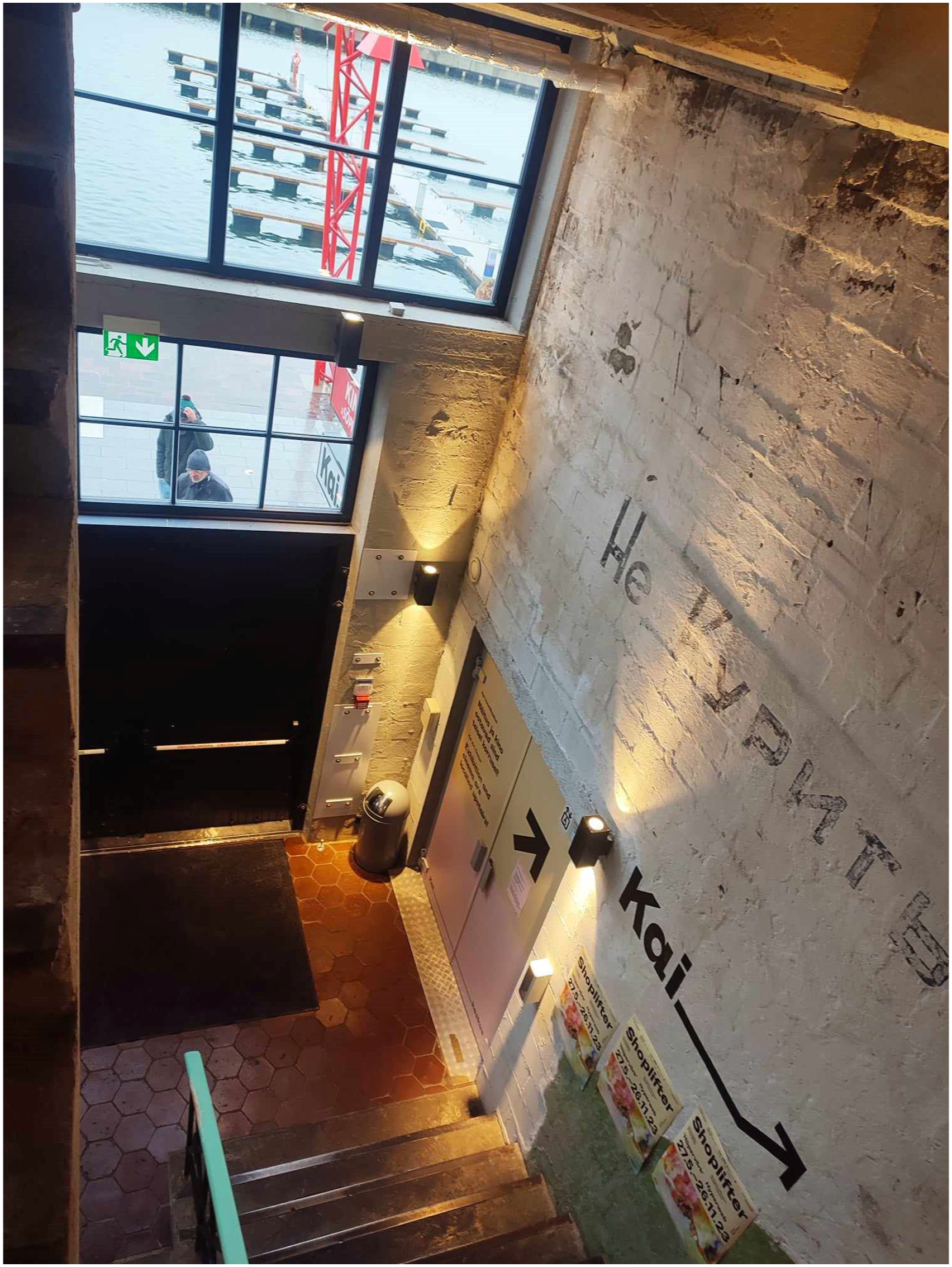
As Harris and Lipman note, postmodernism satisfies “people’s need for rootedness, for a sense of belonging” (Harris & Lipman, 1998, p. 159), but it treats this need as a game, historicising the past in a playful manner, visualising, and materialising historical fantasies in regenerated industrial spaces. Consequently, the ‘postmodernist response’ to the revival of the modernist industrial heritage results in that “architecture is about making architecture popular” (Harris & Lipman, 1998, p. 160).
To be profitable and generate income in the current conditions, a renovation project must be entertaining and possess a high level of appeal to both target groups of visitors and residents, as well as potential investors (Legnér, 2008). This inevitably leads to land being viewed by investors primarily as a commodity rather than as a ground for the production of public spaces, while the users of these spaces turn into consumers (Kurg, 2009, p. 40).
City image and drawbacks of success
Local history and the authenticity of the place hence play a secondary role here. Port Noblessner is not a grassroot project. It was a brownfield wasteland until its potential was evaluated by a powerful investor who turned the neglected shipyard into a beautiful theme park, attractive to the clearly defined target groups of young professionals from the creative industries, curious families, international tourists, art lovers, and upper-middle class residents.
Not only does the investor benefit from the popularity of the location, but the location also contributes to the overall image of Tallinn as a creative, vibrant, and culturally oriented city. Developing and maintaining such an image is important for former industrial cities such as Tallinn that are aiming to transit to a post-industrial economy and that understand the growing importance of the presence of culture and creative activity for the economic attractiveness of a place (Legnér, 2008). Therefore, as Tarmo Pikner notes, “post-industrial areas are often labelled as experimental fields of the creative city aimimg to attract cultural economy factors” (Pikner, 2014, p. 86).
The neighbouring Telliskivi project lives up to this statement with its full name: ‘Telliskivi Creative City’ (Figures 15 and 16). Although this space creates a different atmosphere of a more egalitarian and artistry space and grassroots initiative, it is a highly regulated project by a private developer, which in 2008 became the first project in Tallinn to introduce a “creative campus concept and culture-led brownfield regeneration idea in the Northern Tallinn district,” located on the site of the former Baltic Railway Plant (Pastak & Kährik, 2016, p. 971).
All industrial rehabilitation projects demonstrate that Tallinn has accepted the idea that culture and creative industries should be used as a driving force for the city’s economic growth (Pastak & Kährik, 2016, p. 964). A general criticism of most of the regeneration projects implemented in Tallinn emphasises that “whether public or private initiatives,” they are “regarded as standard business models” (Pastak & Kährik, 2016, p. 963), although these models have proven to be sustainable and cost-effective: they attract visitors, investors, and wealthy residents; stimulate the service sector, and promote the creative industry. On the other hand, each project becomes just another staged public space with stereotypical entertainment and an established set of expected services: museums, galleries, cafes and restaurants, design studios, beauty salons, and entertainment events.
Reflecting on the Rottermani district of Tallinn, Andres Kurg argues that “the private owners looked for means to stage public life on the streets and thus attract new customers” (Kurg, 2009, p. 40). Tallinn’s deregulated real estate market, on the one hand, attracted private investors with a variety of projects, but at the same time contributed to the reinforcement of the already existing fragmentation of the city, following what Kurg calls the ‘island logic’ of segmented neighbourhoods and urban fragments that historically existed in the city and that prevented connections between various old and new public spaces both in infrastructural and logistical as well as in sociocultural senses (Kurg, 2009, p. 38).
Ingmar Pastak further notes that in Tallinn “projects are primarily driven by private sector (neo-liberal paradigm)” and admits “marginalised role of the local governments,” while “local communities have little say in the planning process” (Pastak & Kährik, 2016, pp. 967–68). Rehabilitation projects, including the Port of Noblessner, neither address nor involve local communities, hence they remain “staged” public spaces, since they do not allow for the grassroots practices, and ‘reuse and misuse’ that are necessary characteristics of public space (Kurg, 2009, p. 40). Most researchers confirm that increasing the value of successful projects stimulates gentrification in the area (Legnér, 2008; Martínez, 2017; Pastak & Kährik, 2016; Pickner, 2014).
Representatives of the creative industries working in these spaces provide the presence of culture, which, in turn, increases the attractiveness of the territory and, as a result, its economic value, while at the same time artists find themselves in a vulnerable position and a constant threat of eviction. Many researchers note that after artists increase the cost of space, they can no longer afford rent and move to less prestigious places, where this process begins again (Legnér, 2008; Martínez, 2017; Pastak & Kährik, 2016).
This situation is not exclusive to Estonia, but is a globally recognised phenomenon, and an inevitable consequence of the key principles of adaptive reuse and recycling of urban spaces: mobility, cheapness, and temporality, as formulated by Florian Heilmeyer for the case of similar projects in the Netherlands (Heilmeyer, 2021). Heilmeyer admits that once the value of a space increases so much that artists can no longer afford it, they will inevitably have to “leave the place without any trace...except for they will leave the land more valuable and biodiverse than before” (Heilmeyer, 2021).
Thus, renovation projects transform the city into a temporary setting for creative agents who imbue it with new meanings and added value (Martínez, 2017, p. 17). However, the artists themselves become victims of their own talent and contribution to the development of the area. In this situation, the rootless nature of industrial architecture in its typical modern interpretation, which abandons its own historical connections, plays against local communities and artists who inhabit it.
Conclusion: Narratives of the past for the identity of the future
The emphasised and clearly articulated locality of a space, with visualised narratives of its origins can strengthen and stabilise the ties between the space, its history, and the local community. The lack of identity of a place plays against it, while, in addition to all the cultural, symbolic, and educational value, the revelation and reconstruction of intangible heritage adds value that can offset the expenses caused by reduced evictions and slowed gentrification.
Not only can the past be sold as an attractive commodity on the neoliberal market of the cultural heritage industry, but the identity of a place can be also sold, since its uniqueness can only be experienced on site. Unique experiences are what attract people because “all are preoccupied with matters of identity; with heritages, with histories – including architectural identities” (Harris & Lipman, 1998, p. 159). Renovation projects in pursuit of quick profits fail to develop their own identities, which, in the absence of ties to their historical origins, “reveal their boring nature of ready-made business projects” (Martínez, 2017, p. 19).
Restoration and recycling (even on commercial terms) of the historical identity of a place through creative practices, grassroots initiatives, and even spontaneous misuses help a space become local and capable of bonding and connecting with a variety of internal and external agents. This could be a way to develop strategies for the adaptive use and rehabilitation of abandoned industrial sites.
Noblessner lacks the visualisation of its personal historical identity, although its space is filled with artifacts of tangible and notions of intangible heritage (Figure 7). The current regeneration project engages general and abstract industrial themes solely for entertainment and commercial purposes. For example, the original Noblessner foundry building houses the PROTO Museum: ‘the magical world of invention’, offering educational and entertaining experiences for all ages from virtual reality to interactive experiments with the wonders of technology (Figure 18). Noblessner, the PROTO factory of inventions. Photo by the author. November 2023.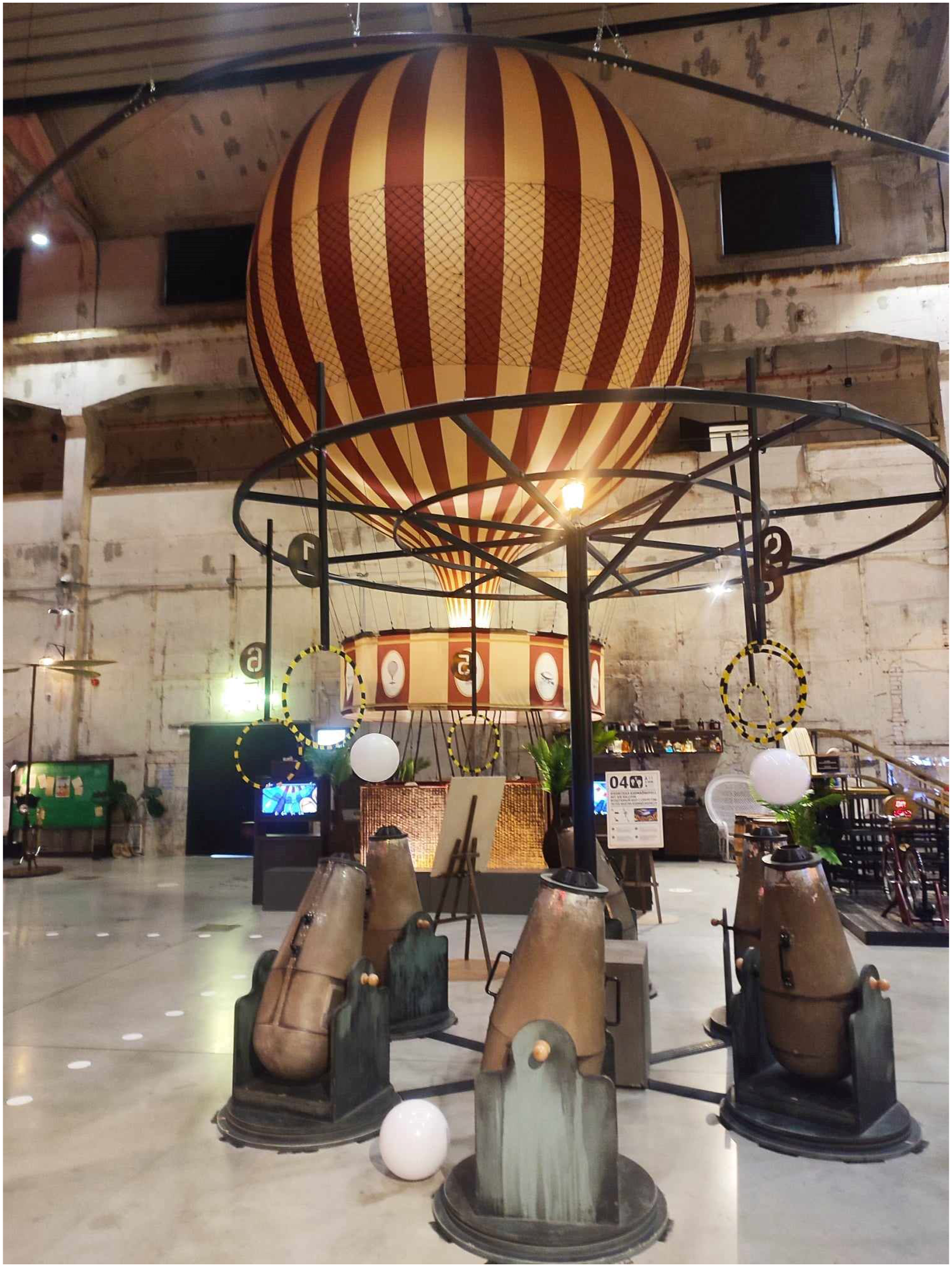
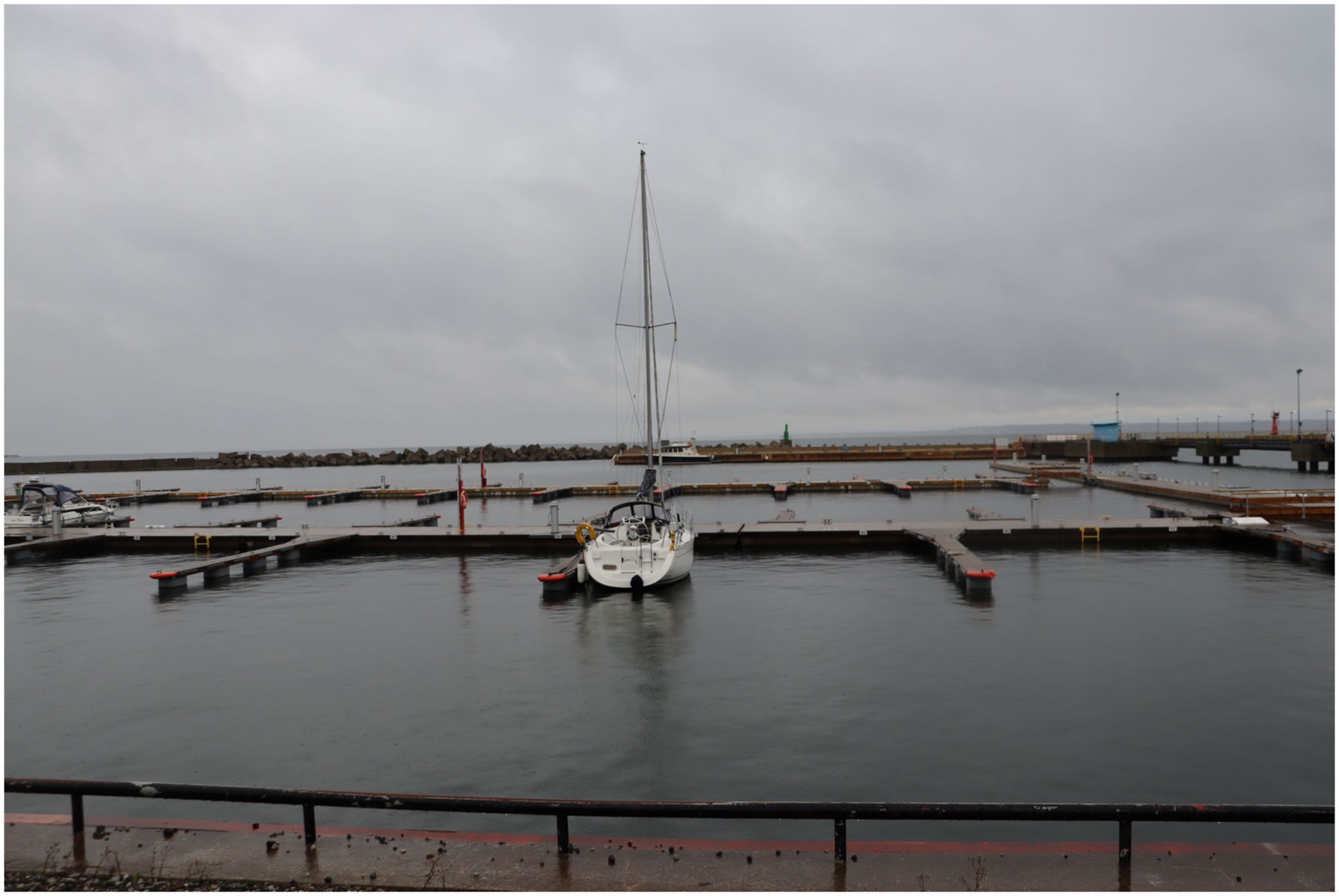
Although the museum brochures leave a few sentences about the history of the site, they do not refer to the inventions of the Nobels and Lessners, neither they menti on their contributions to this area, since the PROTO's chosen theme - ‘Jules Verne era with its fabulous inventions’ is dedicated to a different historical period (Noblessner.ee, 2024). References to the original technological marvels produced at Noblessner, including the most advanced submarines in the world at the time, are absent or subtle. Today, the uniqueness of this place is emphasised only by its natural waterfront location and the beauty of the Baltic Sea (Figure 20). Noblessner, residential area. Photo by the author. November 2023. Noblessner, view to the Marina. Photo by the author, November 2023.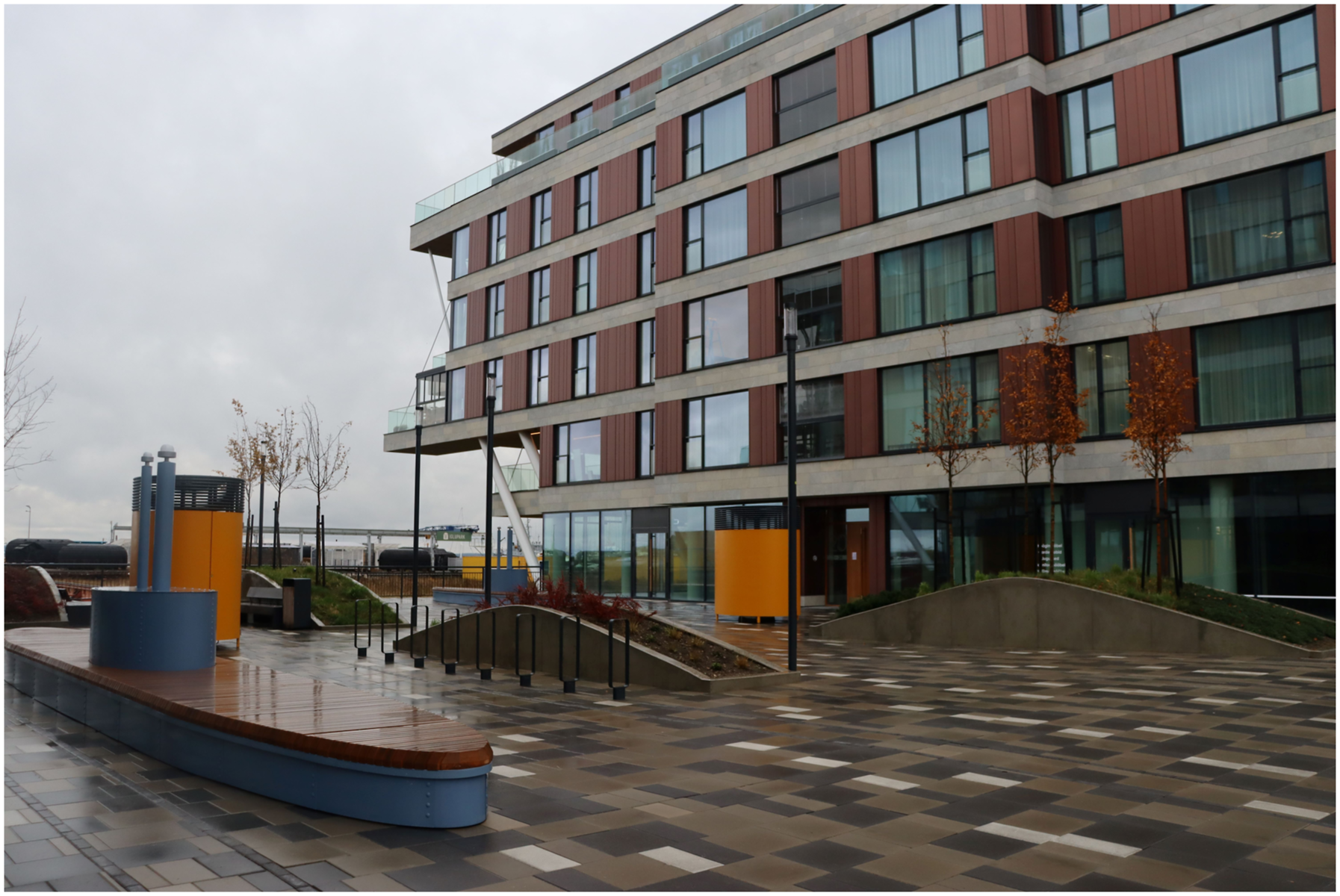
The original function of the Noblessner shipyard is recalled by the benches shaped as submarines and lanterns, reminiscent of harbour cranes (Figures. 1, 14, 19). If Noblessner turns to its own history, which should not be necessarily glorified but rather processed – creatively and analytically – it will find a rich source for constructing a unique identity, which will increase its potential, since, as Francisco Martínez notes, it will allow “for discovery of the unexpected.” After all, the online marketing slogan for the nearby Põhjala Factory, which also undergoing rehabilitation while searching for its identity, quite rightly notes that “the future is in progress, history is being written” (Pohjalatehas.ee, 2024).
Footnotes
Declaration of conflicting interests
The author(s) declared no potential conflicts of interest with respect to the research, authorship, and/or publication of this article.
Funding
The author(s) disclosed receipt of the following financial support for the research, authorship, and/or publication of this article: This work was supported by the Foundation for Baltic and Eastern European Studies and the Swedish Institute as part of the project HSUD - Heritage and Sustainable Urban Development. The research was also funded by the Helge Ax:son Johnsons Foundation.