




Abstract
The main objective of the paper is analyzing bilateral and multilateral relations in the economy, policy, migration, security, technology, transport communication, and cultural exchange between Central Asia and Uzbekistan with Republic of Korea. Based interdisciplinary approach and comparative study it was elaborated status, challenges, and perspectives of South Korean–Uzbekistan relations. The Central Asian partnership with the Republic of Korea has been strengthened and the countries of the region consider South Korea as a highly developed state, occupying one of the leading places in the Asia-Pacific region. Central Asia for Korea, in turn, is an important region with huge natural and energy resources, potential for mutually beneficial investment projects and a large export market. Over years, the directions of partnership between the Republic of Korea and Uzbekistan have significantly expanded both within the framework of bilateral and multilateral formats, and today they cover almost all major areas. However, there are also many problems including the lack of land transport links between them, which affects the cost and timing of delivery of transported goods. South Korea has a strongly positive image in Central Asia. Like other countries of region, Uzbekistan strongly support South Korean aim at preserving and strengthening peace and stability on the Korean peninsula. Implementation of joint projects aimed at the formation of common transport and communication, energy and production networks on the Eurasian continent, can contribute to the revival of the Great Silk Road in modern realities with the restoration of direct railway and road connections of the Korean peninsula with the countries of Central Asia and other states of the continent. Also, it is necessary to develop optimal models for connecting the Korea-Central Asia with other projects and mechanisms of multilateral cooperation operating in the region, such as TRACECA and the EU Strategy, Belt and Road, Central Asia + Japan, India-Central Asia etc.
Keywords
Introduction
After the collapse of the Soviet Union, five new independent countries were formed in the Central Asia–Kazakhstan, Kyrgyzstan, Tajikistan, Turkmenistan, and Uzbekistan. Central Asian republics in order to form constructive cooperation with the most important foreign partners and leading countries of the world began to actively establish and carry out their foreign policy activities.
South Korea is a large economic power with growing potential for political influence in international relations as one of the leading countries in the Asia-Pacific region (APR), as well as having achieved high technology, science, education, and other fields. In turn, for South Korea, the geopolitics of Central Asia, its natural resources, as well as the possibility of entering new markets are an important component for the development of strategic partnership with the countries of the region.
South Korea policy toward Eurasia and South Korean-Central Asian relation have been discussed in a number of publications (Askarov, 2019; Dadabaev & Soipov, 2020; Do, 2020; Fedorovskiy, 2019; Fumagalli, 2016; Ho & Rusecskaya, 2010; Karavaev & Tisheh`yar, 2019; Khan, 2021; Li, 2019; Muratalieva, 2019; Rakhimov, 2020, pp. 327–407; Shin, 2018). Yet, further exploration of the SK-CA relations from an interstate and a wider international perspective is necessary. With the year 2022 marks the 30th year of diplomatic relations between South Korea and the Central Asian countries, the current paper attempt to conduct a comparative study of the South Korean–Uzbek bilateral and multilateral diplomatic relations within the context of trans-regional and global factors. It is evident that over the past years the directions of the partnership between the Republic of Korea and the countries of Central Asia, including Uzbekistan, have significantly expanded both within the framework of bilateral and multilateral formats. Today, their partnerships cover almost all major areas of life. However, there are also many problems and among the main problems is the lack of direct land transport links between them, which affects the cost and timing of delivery of transported goods. South Korea has a strongly positive image in Central Asia. Uzbekistan and other regional countries support the new course of South Korea, aimed at preserving and strengthening peace and stability on the Korean peninsula in the name of universal well-being and development of all Eurasia. There are potential and possibilities for extending cooperation between Central Asia and South Korea in general and between Uzbekistan and South Korea in particular. Promising areas of cooperation, in both bilateral and multilateral formats are joint technology projects for further implementation of e-government, digital economy, development of innovative potential in energy, industry, infrastructure, centers of logistics, textile and food industry, mechanical engineering, electrical engineering, agriculture, and the development of transit corridors between Asia and Europe through the region. For South Korea, the partnership could support continuous economic growth and energy and resource security. The implementation of various programs and projects is crucial for further development of relations between Uzbekistan, and Central Asia as a whole, and with the Republic of Korea.
Bilateral relations of South Korea and Uzbekistan
It should be noted that the history of relations between the peoples of Uzbekistan and Central Asia with Korea begins from ancient times, as evidenced by the depicted Korean envoys on frescoes in the Afrasiab Museum in Samarkand. Over a long period of exchange and interaction, much has developed in culture and traditions. In the 20th century, Central Asian republics were part of the Soviet Union and South Korea was part the Western bloc and archived considerable economic and intellectual progress. In the post-Soviet time, Central Asian republics have established diplomatic relations with South Korea, opened its embassies in Seoul and the Korean embassy in their capitals, and consistently developed bilateral cooperation to strengthen interstate relations in various areas of activity.
Post-Soviet Central Asia republics sought active political dialogue with Seoul was a modern symbol of Asian dynamism and technological breakthrough. On December 30, 1991, the Republic of Korea was one of the first Asia Pacific Region countries who recognized the independence of Uzbekistan, and diplomatic relations was established in January 1992. An active political dialogue has been conducted between the two republics. Thus, sixteen meetings of the leaders of Uzbekistan and Korea have been held in 1992, 1994, 1995, 1999, 2005, and 2006, twice in 2008, 2009, 2010, 2011, 2012, 2014, 2015, 2017, and 2019 (Rakhimov, 2020). Inter parliamentary relations, meetings at the level of governments, ministries, departments, as well as political consultations between foreign ministries, are regularly carried out.
Uzbek–Korean relations have been established and are actively developing in trade, economic, political, cultural, humanitarian, transport, communication, and other spheres. The legal framework for bilateral cooperation consists of more than 200 documents regulating cooperation between republics in various areas, the most important of which were the Joint Declaration on Strategic Partnership between the Republic of Uzbekistan and the Republic of Korea (2006) and the Joint Statement on the Comprehensive Deepening of Strategic Partnership Relations (2017).
In 2006, South Korea and Uzbekistan signed the Declaration on strategic partnership, which they agreed to develop and deepen further in a new Joint Declaration signed during President Park Geun-hye’s visit to Tashkent in 2014. Park stressed that Uzbekistan has long been the center of the Great Silk Road, and is today South Korea’s largest trade partner in Central Asia. When President Karimov visited Seoul in May 2015, 60 documents relating to trade, investment, economic and technical cooperation and other spheres were signed, at a total worth of US$ 7.7 billion. Seoul is taking a leading place among Uzbekistan’s trade partners in Asia.
In November 2017, President of Uzbekistan Shavkat Mirziyoyev paid his first state visit to Korea and he met with the President Moon Jae In and other officials, as well as former UN Secretary General Ban Ki Moon. Shavkat Mirziyoyev took part in the South Korean–Uzbek business forum with the participation of heads of economic and financial structures, leading entrepreneurs of the two countries. During visit over 60 documents in trade, economic, investment, financial, technical, and other spheres worth more than $10 billion were signed. And the Joint statement on the comprehensive deepening of strategic partnership relations signed between countries testifies to the transition of relations between Uzbekistan and South Korea to a completely new level.
In April 2019, President of Korea Moon Jae In paid state visit to Uzbekistan and during the meetings and negotiations, the prospects of Uzbek–Korean cooperation were discussed. The parties agreed to create free economic and small industrial zones in Uzbekistan, joint ventures in leading sectors of the economy, training personnel for innovative and social spheres. Following negotiations, a number of bilateral documents were signed regarding the promotion and mutual protection of investments, the conclusion of a free trade agreement, space exploration for peaceful purposes, cooperation in the field of science, technology, and innovation, the creation of the Uzbek-Korean Center for Cooperation in the field of health care, etc. In total, 64 documents worth more than US$10 billion were signed during the visit (http://uza.uz, 2019).
Top investor countries in Uzbekistan in 2021.
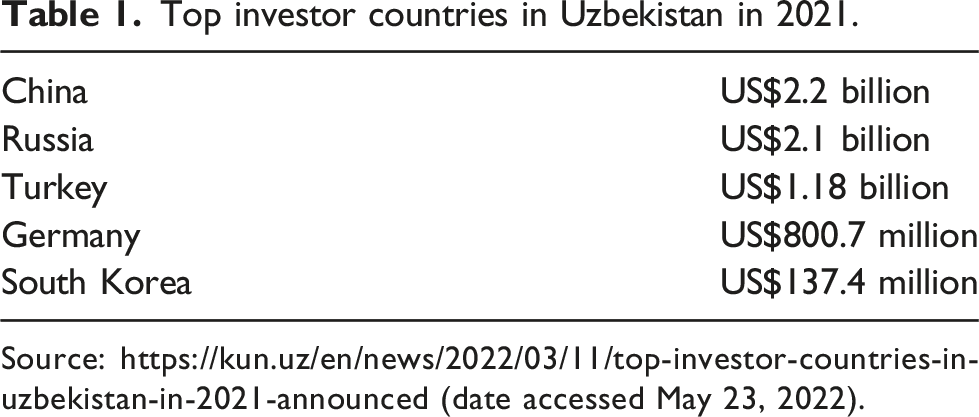
Source: https://kun.uz/en/news/2022/03/11/top-investor-countries-in-uzbekistan-in-2021-announced (date accessed May 23, 2022).
The volume of trade with Uzbekistan is the largest in the structure of mutual trade between the Republic of Korea and the countries of Central Asia. Since 1, 05 billion dollars in 2016 it is exceeding US$ 2.7 billion in 2019 (State Committee of the Republic of Uzbekistan on Statistics, 2020). In Uzbekistan, more than 75 representative offices of Korean companies are registered, and the total number of enterprises with the participation of South Korean investors is 800. (State Committee of the Republic of Uzbekistan on Statistics, 2020).
South Korea began to actively support the process of reforms, as well as provide financial and technical assistance in the implementation of a number of socio-economic projects of Uzbekistan. With the assistance of Korea, Uzbekistan established the production of cars, high-tech products in the textile and electrical industries, in the field of silk processing, etc.
Founded with Korean partnership, the automotive industry is one of the leading sectors in the Uzbekistan`s economy and it occupies the first place in the production of motor vehicles in Central Asia. At present automotive enterprises together with General Motors operate in the Andijan and Khorezm regions, as well as in Tashkent.
Of particular importance is South Korea’s support for the development of the Navoi free industrial and economic zone. Since 2008, Korean Air has conducted cargo flights through Navoi airport, and has introduced advanced technology and efficient systems control at the airport. The Navoi center currently carries out more than 20 flights per week to Seoul, Milan, Brussels, Frankfurt, Vienna, New Delhi, Mumbai, Hanoi, and other cities.
Among the largest joint investment projects can also be called the creation of the only in Central Asia innovative scientific and production pharmaceutical cluster “Tashkent Farma Park” the construction of which began in April 2020 in the Tashkent region. The implementation of this project provides for the organization of a Pharmaceutical Technical University with a research center in order to train highly qualified personnel in the field of pharmaceuticals, medical equipment, cosmetology, and other areas.
The Uzbek-Korean trading house opened in 2018 in Incheon and it plays an important role in the supply of Uzbekistan`s world-standard products to Korea. Most of Uzbekistan's exports to South Korea are food, chemical products, mineral fertilizers, transport, communication, and tourism services. From South Korea to Uzbekistan, vehicles, mechanical and electronic equipment, plastics, and products from them are mainly imported.
Another example of the development of mutually practical cooperation in the field of energy is the joint Uzbek–Korean project for the construction of the Ustyurt gas chemical complex, which was postpone several times. Today, the manufactured polymer products are sold for export to the countries of Central and East Asia, the CIS and Europe.
In last two decades in terms of capital accumulation, development assistance from South Korea expanded some ten times between 2006 and 2019, with social infrastructure and public services taking up the bulk of funding (Oxus Society, 2021).
Like Japan, South Korea implementing active Official Development Assistance to Central Asian countries and Uzbekistan has been receiving the largest share of Korean ODA. (Figure 1) Korean ODA to Central Asia (2010–2018) in USD. Sources: KOICA, ‘KOICA Statistics’, Type of Aid, 2018, http://stat.koica.go.kr/ipm/os/acms/smrizeBtypList.do?lang=en; Oxus Society (2021).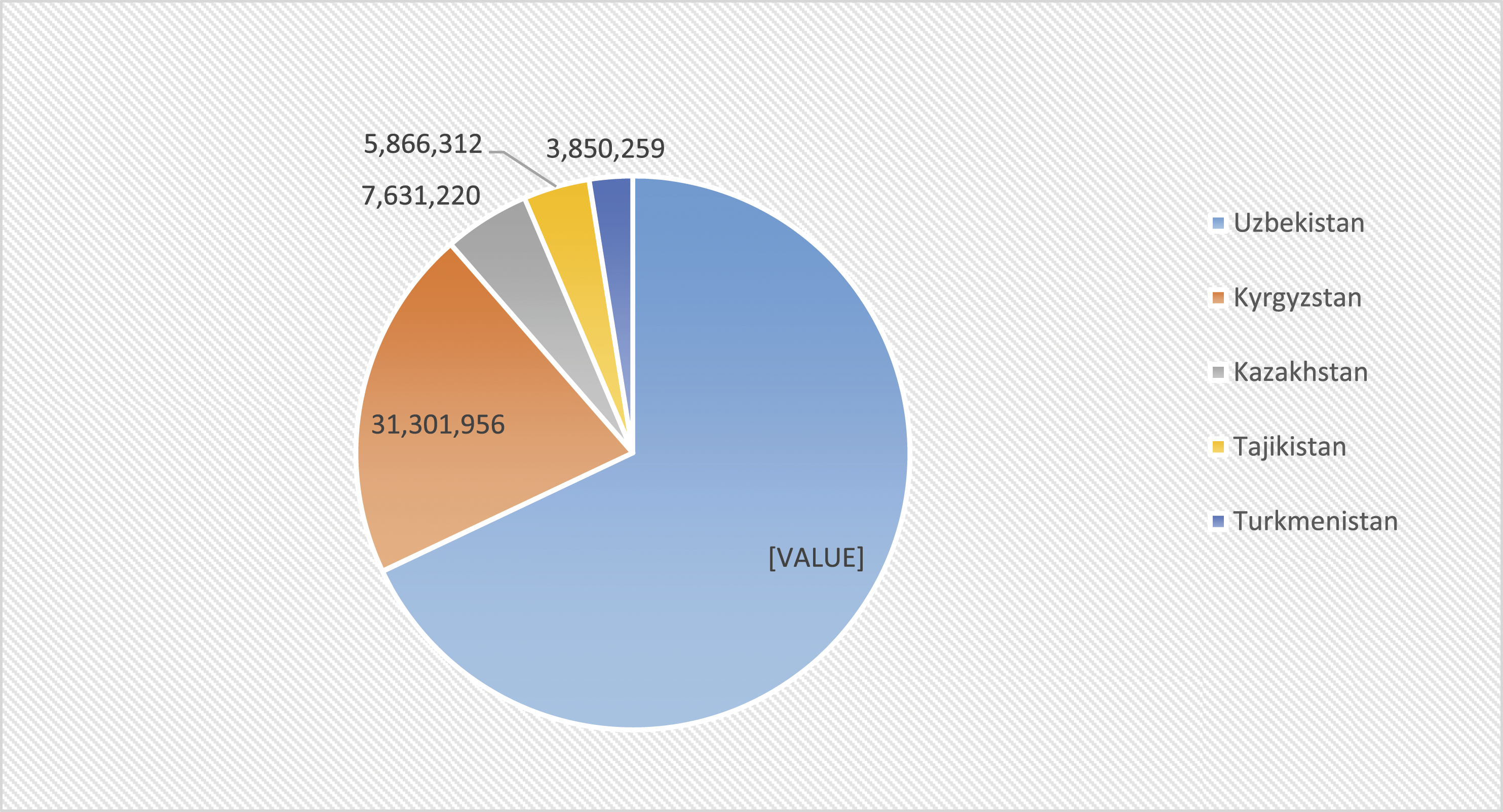
It should be note that in 2011, Korea’s GDP was US$1.25 trillion and reached US$1.72 trillion by 2018 (World Bank, 2019). As a result of such a rapid development of the country’s economy, the influx of immigrants from different countries began to increase sharply. In particular, the growth of the number of small and medium-sized businesses in the country has significantly contributed to the development of external migration. In particular, in 2015 their number reached 5,889,611, and this figure increased by 12.7% to 6,638,694 in 2018 (Ministry of SMEs and Startups, 2018). During this period, the number of Uzbek labor migrants willing to work in Korea has also increased (Dadabaev & Soipov, 2020; Rakhimov & Yakubov, 2022). According to the State Statistics of Uzbekistan, 4506 Uzbek labor migrants worked in Korea in 2010. Furthermore, their number increased almost 5 times from the period of 2010 and 2018 years. For decades over 100,000 Uzbek citizens trained and worked in different sectors of the Korean economy.
Over the past three years, the volume of cross-border remittances from Korea to Uzbekistan has grown steadily. In particular, in 2018 it amounted to US$106.7 million. By 2019, the total volume of cross-border remittances increased by almost 13% to US$120.5 million. In 2020, the rapid spread of the COVID-19 virus to the world led to the closure of the borders of many countries. As a result, migrants sent their savings to their families using international money transfer systems. And this year, the transfers increased by 2.2 times compared to 2019 and amounted to US$258.2 million (Figure 2). The volume of cross-border remittances of individuals from the Republic of Korea to Uzbekistan (MillionUSD). Source: data compiled by authors (Rakhimov & Yakubov, 2022) on basis of statistics provided by the Central Bank of the Republic of Uzbekistan (https://cbu.uz/en/), 2021.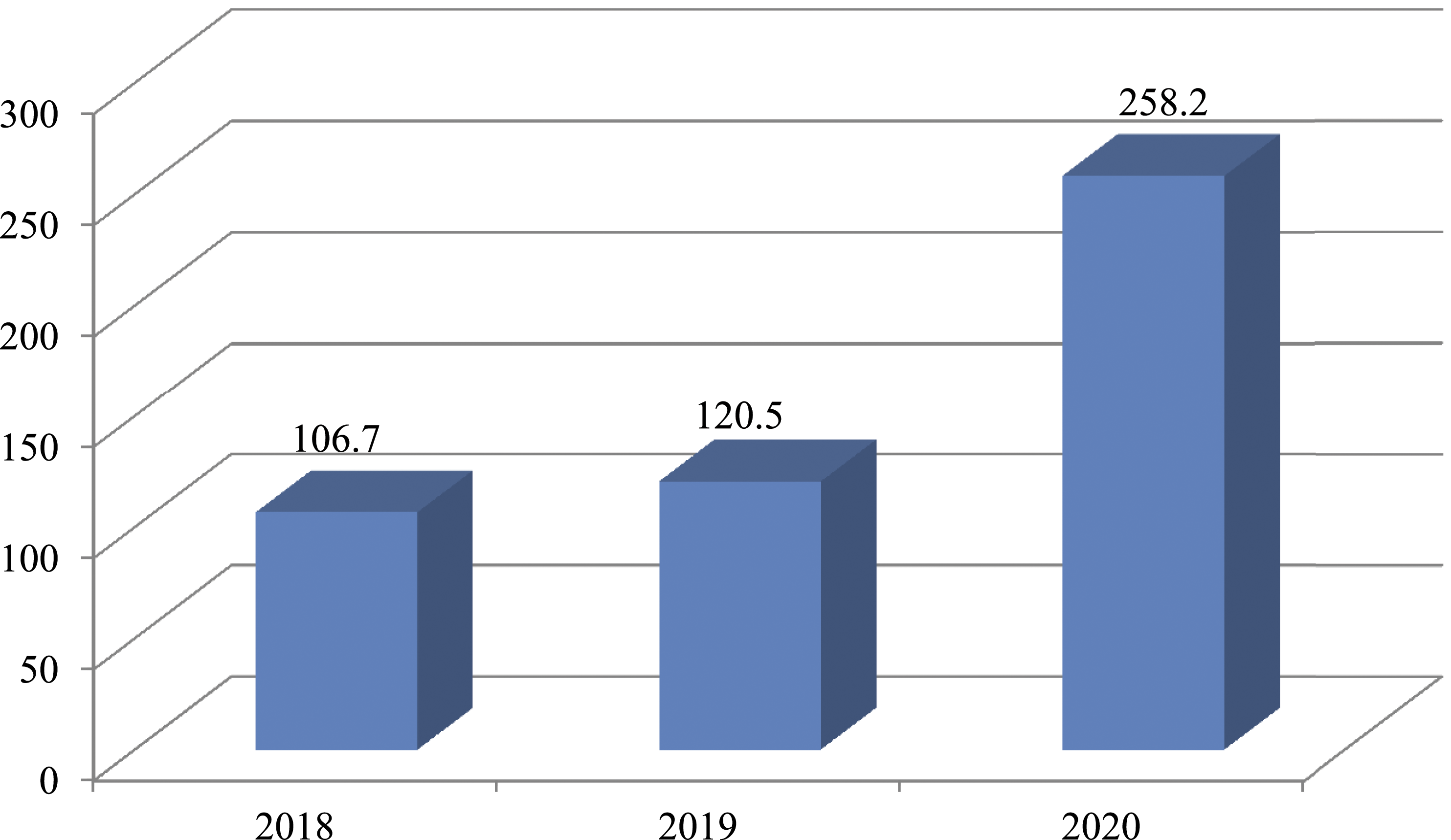
In addition, remittances from Korea to Uzbekistan are made not only through banks, remittance systems, but also migrants pay a certain amount of money to individuals engaged in the informal money transfer activity in the country where they are (Rakhimov & Yakubov, 2022). Therefore, it is not possible to calculate the exact amount of remittances from Korea to Uzbekistan. Over the past three years, the volume of cross-border remittances from Korea to Uzbekistan has grown steadily, but the rapid spread of the COVID-19 virus to the world led to influence to this process.
In order to promote mutual respect for the culture, traditions and customs of nations, creative festivals and exhibitions, tours of art groups, days of culture are organized Central Asia and South Korea.
It is well known that Koreans were forced relocate from the Russian Far East to Central Asia in the first part of the 20th century (In, 2012, p. 420). Currently, there are around 200 thousand Koreans in Uzbekistan. This population is the fourth largest in the world, after the Korean diaspora population in China, Japan and the USA. Korean diaspora also important factor of Uzbekistan and Kazakhstan relations with South Korea (Rakhimov, 2020, pp. 327–407). Koreans have integrated into the Uzbek society and are playing key government roles such as Agrepina Shin as Minister Preschool education, Vitaly Fen as Uzbekistan Ambassador in South Korea and others.
Tourism from Korea to Uzbekistan is growing, in addition, cultural links and public diplomacy activities have also expanded. From February 10, 2018, a visa-free regime is introduced for 30 days for the citizens of the Republic of Korea.
Uzbekistan and South Korea today have gained extensive experience in promoting cooperation in the cultural and humanitarian realms. Since 1999, the Uzbekistan–Republic of Korea Friendship Society has been operating. In order to preserve and develop the spiritual and cultural heritage of the Korean people, the Government of Korea commissioned the House of Korean Culture and Art in Tashkent. Close relations at the municipal level established between Tashkent and Seoul, Fergana and Yongin, Namangan and Songnam, Samarkand and Geongju, Tashkent region and Geongsang-pukto province.
At present, Korean universities in the list of the best universities in the world. For example, according to a list compiled by QS World University Rankings in 2022, Seoul National University has ranked 36th out of more than 1000 universities in the world (World University Ranking, 2022). Therefore, many Uzbek students try to enter such kind of prestigious universities in Korea in order to increase academic mobility through external migration. In particular, it is shown steady growth of Uzbek students in Korean universities between 2010 and 2019 (Figure 3). Dynamics of visits of citizens of the Republic of Uzbekistan to the Republic of Korea for study and work. Source: data compiled by authors on basis of statistics provided by Statistics, (https://stat.uz/en/), 2020.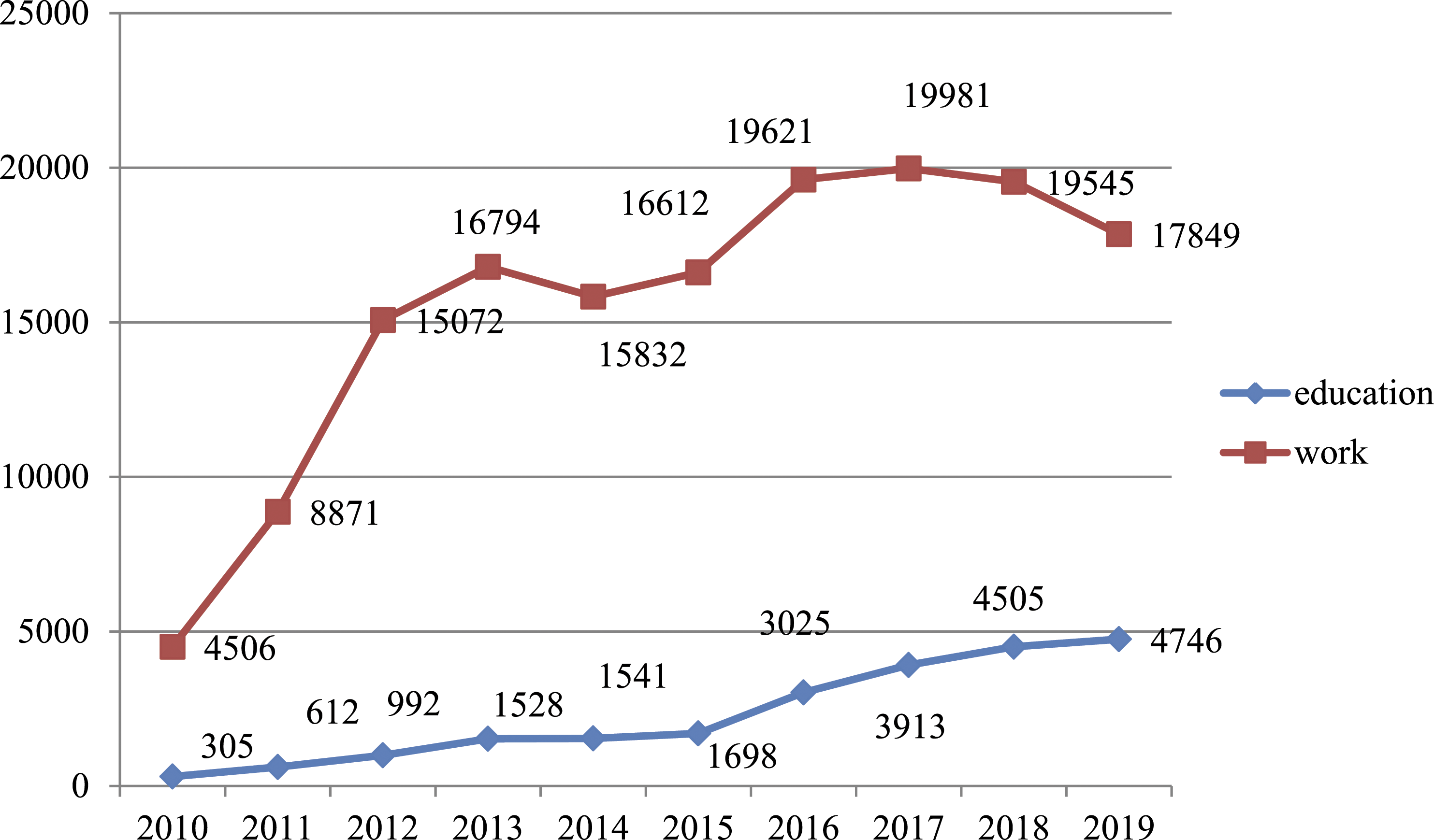
Branches of such Korean international universities as Inha, Bucheon, Ajou, and Sejong are operating in Tashkent. Uzbek–Korean International University is operating in Fergana. In addition to the Korean higher education system which is being exported to Uzbekistan more rapidly today, South Korean experience in primary education is being widely introduced into the system of preschool education in Uzbekistan.
To sum up, the relation between South Korea and Uzbekistan has been developing in various spheres of activity, much attention is paid to the implementation of projects in the oil, gas, and chemical industries, the construction of power plants, information and communication technologies, the automotive and textile industry, medicine and the bio-industry, the construction of infrastructure and transport communications, the development of new knowledge-intensive sectors of the economy, as well as the training for personnel in these areas. At present Uzbekistan as well as Kazakhstan and Turkmenistan account for the largest share of Korean investments in Central Asia. However, despite some positive developments, the level of economic cooperation between Korea and Central Asia does not correspond to the existing potential and capabilities of partners. As a result, it is necessary to implement a long-term strategy for the development of inter-state relations as well as for Central Asia.
Multilateral partnership of South Korea and Central Asia
An effective platform for the development of a multilateral format of cooperation between Kazakhstan, Kyrgyzstan, Tajikistan, Turkmenistan, Uzbekistan, and South Korea was established in 2007. Republic of Korea-Central Asia Forum`s main objective is to strengthen and expand economic partnerships, information and telecommunication technologies, transport, construction, culture, education and science, tourism and other areas of joint activity.
In 2013, South Korean President Park Geun Hye proposed a well-structured plan entitled “Eurasia Initiative,” which outlined South Korean policy in Asia and Eurasia. The new Initiative aimed at promoting concepts of “One Continent,” “Creative Continent” and “Peaceful Continent” (Republic of Korea, MOFA, 2013). In other words, it sought to achieve social security and further economic growth for the Asian continent. The main idea of the initiative was to connect South Korea with the countries of Eurasia through building a single and unified system of transport, energy, trade networks, along with the implementation of economic cooperation and scientific-technological and cultural exchanges and improve inter-Korean relations.
The “Eurasia Initiative” effected also the South Korea policy in Central Asia. In particular, in July 2017, the Republic of Korea–Central Asia Forum`s Secretariat was established in Seoul. Within the framework of the Forum, representatives of participating countries periodically conduct exchanges and meetings between delegations of governments, state-owned companies, cultural figures, representatives of academia and business in order to promote joint projects.
In October 2019, the 12th meeting of the forum was held in Kazakhstan`s capital Nur-Sultan, delegations of South Korea and all five countries of the region took part. The Forum held separate sessions on standardization, water and energy, green economy and IT technologies. Stressing the importance of the issues under discussion, participants expressed their intention to implement specific projects that reflect the common interests of all Forum member countries. The event resulted in the adoption of the Joint Statement and Work Plan of the Forum Secretariat.
In November 2021, during the 14th meeting of the Foreign Ministers of the Central Asia and the Republic of Korea Cooperation Forum the first Business Forum in the 5 + 1 format was held in Dushanbe on 29 November 2021 It was adopted Action Plan for 2022 in support of projects in six promising areas of cooperation for the medium- and long-term period. They cover such areas of cooperation as transport and logistics, energy, industrial modernization, and diversification, climate change and the environment, health and medicine, education, culture and tourism (MFA Tajikistan, 2021).
Central Asian countries are interested in further expanding bilateral cooperation with South Korea in the trade, economic, investment, transport and communication, scientific, technical, and cultural spheres. For example, Kazakhstan attaches great importance to further joint efforts to develop mutually beneficial economic cooperation within the framework of the joint program “Fresh Wind,” which reflects specific directions for the development of cooperation in such areas as infrastructure construction, agriculture, health care, and culture (https://vlast.kz, 2019). In order to expand trade and economic cooperation, Kazakhstan and South Korea also intend to constantly expand joint projects in the field of high technology. In particular, the Korean side expressed interest in participating in the Digital Kazakhstan 2018–2022 program and is ready to share its experience in digitalizing all areas of the economy. Kazakhstan, in turn, supports Korean initiatives to create a joint international IT center in Nur-Sultan.
The priority areas of further mutual partnership between Turkmenistan and South Korea are the implementation of joint projects in the energy, infrastructure, and logistics spheres.
For Uzbekistan, promising areas of economic cooperation are the expansion of cooperation in the energy, oil, and gas, chemical, mining, transport and logistics sectors, the implementation of new projects in the field of mechanical engineering, electrical engineering, textile and food industry, and infrastructure development (http://uza.uz, 2019). Uzbekistan is also interested in the development of free economic zones on the basis of their successful experience in Korea, the creation of joint ventures in leading sectors of the economy, as well as the implementation of innovative projects. For this purpose, in 2019, Uzbekistan and Korea signed agreements on the transfer of the Angren economic zone to the Incheon free economic zone trust and on the implementation of a joint project to establish the production of much sought-after medicines in Bustonlik-farm industrial zone in the Tashkent region. The priority direction of the Uzbek–Korean partnership is also agreements on intensifying bilateral cooperation within the process of Uzbekistan’s entrance to the World Trade Organization, through expert consultation offered by Korean Institute for International Economic Policy, and a large-scale innovative project to create a national e-commerce platform.
For whole Central Asia, promising areas for the development of cooperation with South Korea are the implementation of joint technological projects for the implementation of the e-government system, the digital economy, the development of innovative potential in energy, the chemical industry and infrastructure. The development of cooperation in the framework of joint research programs, the exchange of faculty and students, as well as the training of personnel for the innovative economy and the social sphere will contribute to the development of national economies and the modernization of society.
In Korea–Central Asia relations, public diplomacy also plays an important role. Public diplomacy has emerged as active a practice of foreign policy and refers to “soft power” (Nye, 2004, pp. 5–11). Korean culture, including cinema, cartoons, and music are becoming very popular among different generations of Central Asia societies. Cultural and humanitarian cooperation as an important factor for sustainable development, but it is necessary to continue to take effective steps to expand mutual ties, both bilaterally and multilaterally to contribute to the further development of partnerships between Central Asia and South Korea. The partnership includes people-to-people, educational, cultural, and smart diplomacy, as well as academic relationship.
For years South Korea attempted to reach out to North Korea and provide assistance in transforming the country into an economy-first model and cooperate with the U.S, China, and the UN on establishing a complex peace system for the Korean Peninsula. In addition, it provided systemic assistance and humanitarian aids to support a structural reform in North Korea and thus sought to reconfigure the inter-Korean relationship. (Republics of Korea, EAI NSP Report, 2012).
The New Northern Policy was proposed in 2017 by South Korean President Moon Jae In It is based primarily on the medium to long-term projects whose aim is to create an integrated transport, energy, and production network in the Eurasian continent. In proposing such a macro-level strategy, South Korea’s administration was motivated by its pursuit of a creative foreign policy strategy for a “middle-power” country. (Shin, 2018, pp. 61–62). According to Korean experts Russia has an important place in this initiative (Li, 2019), but Central Asia is also listed in Korean priorities, where Uzbekistan and Kazakhstan have sufficient potential to lead the implementation of this strategy (Muratalieva, 2019). The project itself will contribute to the intensification of partnership between Central Asia and South Korea.
In April 2019 the South Korean President visited to Turkmenistan, Uzbekistan, and Kazakhstan, to demonstrate its growing interest in the region. In particular, the key issues of negotiations in these countries were the implementation of infrastructure facilities, projects in industry, agriculture, logistics and technology. South Korea has demonstrated its interest in the extraction of uranium, oil, gas, as well as in expanding the South Korean cultural presence in the region. In total, the visit initiated the participation of South Korean companies in 24 major projects of three countries, involving investments in the amount of US$13 billion.
South Korea’s determination to maintain a close cooperation relation with the Central Asian countries was expressed by the president in an interview with an Uzbek news agency in April 18, 2019. He noted that “going beyond the framework of mutually beneficial cooperation between the two countries, this policy will lead to the common prosperity of Central Asia and the Eurasian continent and we hope to strengthen Eurasia’s ties with Uzbekistan, which is a key partner in the implementation of the ‘New Northern Policy,’ and open the era of the new Silk Road.” (Moon Jae-in`s interview to News agency of Uzbekistan, 2019).
To reciprocate, President Shavkat Mirziyoyev noted that Uzbekistan, as the initiator of the creation of a nuclear-weapon-free zone in Central Asia, fully supports the denuclearization process on the Korean peninsula, which will undoubtedly serve to further develop inter-Korean relations and promote integration in the region. Also the message also emphasized that the initiative of the President of the Republic of Korea Moon Jae-in to restore railway and road links between the two Korean countries will open up new prospects for expanding cooperation between the Korean peninsula and the countries of the vast region of Eurasia, including Central Asia, its transformation into a continent with a single logistical system and intensive trade and economic ties (https://president.uz, 2019).
Central Asian countries consider the partnership within the framework of the “New North Policy” an important platform that contributes to the expansion of bilateral and multilateral cooperation in joint investment projects especially those that make use of high Korean technologies, and to the creation of large as well as large natural resources and transit opportunities.
At the same time, it should be emphasized that the territory of Central Asia also covers a number of other international-level project in collaboration with the participation of Russia, China, the USA, the EU, Japan, India, and other states, which focus on strengthening regional stability and promoting economic cooperation. Among them, the most significant for the region are the transport corridors North-South and West-East, TRACECA, the implementation of joint initiatives within the framework of the CIS, SCO, “Belt and Road,” EAEU, Central Asia + USA (С5 + 1), the EU Strategy on Central Asia, “Central Asia + Japan” etc.
Korea–Uzbekistan in context of regional and global connectivity
Current trends in world development indicates that globalization is becoming more inclusive with its influence shaping almost all nations and as countries and regions becoming more interdependent. In such a situation, the development of bilateral and multilateral relations of a mutually beneficial and equitable nature with the leading countries of the world is an important factor in ensuring the stability and sustainable development of Central Asia.
At the same time, strengthening of cooperation between nations through the dissemination and exchange of modern technologies, natural resources, and capital contributes to the creation of the necessary conditions for the socio-economic development, as well as the joint search for effective ways of their integration into the international economic system. And the high degree of economic interdependence of countries, in turn, leads to a mutual interest in maintaining and strengthening stability in partner countries.
The countries of Central Asia, adhering to multi-vector foreign policy, in order to create favorable conditions for the stable development of the region, are actively developing a mutually beneficial partnership with South Korea. Central Asia and Korea currently are actively developing partnership in the political and economic spheres, in the political, economic, investment, transport and communication, scientific, technological, and cultural and other fields.
Historically, the territory of Central Asia was located in the center of the Great Silk Road and was the place where caravan routes converged from different parts of the Eurasian continent—East and South Asia, the Middle East, and Europe, which contributed to the development of trade and mutual cultural exchange between different nations and regions. At present countries of Central Asia attach great importance to the development of joint measures aimed at developing the transit potential of the region, improving the efficiency of the use of international transport corridors, the regulatory framework, and tariff policy.
In international trade, the national transport systems of Central Asian republics are almost interconnected. In this regard, along with increasing mutual competition, the countries of the region also pursue a policy of rapprochement of transport and communication systems and the development of regional transport corridors. It is important to note that Uzbekistan and South Korea currently have a number of joint strategically important large projects that contribute to the creation of a single economic space and the development of transport and logistics infrastructure in the Eurasian space.
Central Asian nations show their interest in participating in international transport corridors of East–West and North–South, part of the route of which passes through the territory of the region (Alix et al., 2022). The key centers of cargo formation within the East–West corridor are China and the EU, which simultaneously form the largest segment of international and continental trade. The project attaches great importance to the regular transport of goods from Turkey and Europe to Central Asia and China, as well as to Iran. As part of the North-South corridor, India, Iran, Russia, and Europe should become the main cargo-forming centers. The implementation of this project will significantly reduce the distance and time (up to 10 days) (Karavaev & Tisheh`yar, 2019, p. 10) of cargo transportation compared to existing sea routes through the Suez Canal, and will make cargo transportation less expensive. It is important that the transport corridor will simplify cargo transportation from Central Asia passing through Iran to the countries of the Persian Gulf. The corridor will be able to transit 3–5 million tons of cargo annually.
For Central Asian countries, strategic interest in East–West and North–South corridors increases regional and transregional interconnectivity in Eurasia and beyond its borders. Moreover, the prospects for the sustainable development of transit corridors through the territory of Central Asia will contribute to the development of national transport infrastructure and logistics centers along international transport routes, the creation of regional economic zones, and an increase in the commodity and export potential of the countries of the region.
Central Asian regional and international transport-communication networks include, but not limited to: ⁃ Transits through Central Asia and Russia to the ports of the Baltic states—Tallinn (Estonia), Klaipeda (Lithuania), Riga, Liepaja, and Ventspils (Latvia); ⁃ Transits through Central Asia, Russia, Ukraine, or Belarus to the countries of the European Union through the border crossings Brest (Belarus) and Chop (Ukraine); ⁃ Transit through Central Asia, Russia, and Ukraine to the Black Sea port of Ilyichevsk (Ukraine); ⁃ TRACECA—transits through Turkmenistan, Kazakhstan, and Azerbaijan to the ports of the Black Sea; ⁃ Transits through Central Asia and Iran to the port of Bandar Abbas, located on the Persian Gulf coast; ⁃ Transits through Afghanistan to the Iranian ports of Bandar Abbas, Chahbahar, and the Pakistani ports of Gwadar and Karachi; ⁃ Transits through Central Asia, China, Russia, using the Kazakh-Chinese border crossing (Dostyk/Alashankou) to the Chinese eastern ports and the Russian Far Eastern ports of Nakhodka, Vladivostok, and others; ⁃ Transits through Central Asia and China to the Chinese ports of the Yellow, East China, and South China Seas.
The participation of Central Asian countries in the integration projects will contribute to the development of the industrial potential, transport and energy infrastructure of the region, the creation of a network of international logistics centers and regional economic zones, the integration of the region into the system of international transport corridors, as well as increasing the export potential of national economies to world markets.
At the same time, in order to actively and effectively use the transit capabilities of the region, and to improve the interconnectedness in the implementation of international transport on the Eurasian continent, it is necessary to combine the Korean “New Northern Policy” with other projects of multilateral cooperation and implemented within the framework of the policy of China, Russia, the USA, the EU, Japan, and other countries. In turn, the Korean side considers Central Asia as one of the promising economic areas that can effectively accumulate external investment. The Korean side shows big interest as promising partners in the region to Uzbekistan, Kazakhstan and Turkmenistan, which occupy an important place in the “New Northern Policy” of South Korea, aimed at developing transport and transit infrastructure, as well as intensifying trade and investment ties. Korean interest in these countries is directed to the production of gas, oil, uranium, joint implementation of projects in the oil and gas and chemical industries, agriculture, the development of infrastructure, logistics and technologies (Fedorovskiy, 2019).
It is also important to emphasize that in order to improve the efficiency of the use of international transport corridors, the participating countries need to solve a number of existing problematic issues related to the inconsistency of the regulatory framework of different countries, technical standards, the lack of unified gauge throughout the route, etc. (Rakhimova, 2022).
Conclusion
The Central Asian partnership with the Republic of Korea has been strong and mutually beneficial. The countries of the region consider South Korea as a highly developed state, occupying one of the leading places in the APR, having considerable economic, scientific, technical, innovative, and investment potential. The South Korean experience of economic development is particularly valuable for the countries of Central Asia, which can be used in carrying out the necessary reforms to accelerate the socio-economic development.
Central Asia for Korea, in turn, is an important region with abundant natural and energy resources, potential for mutually beneficial investment projects and a large export market. And geographical location and transit transport communications of the region contribute to the diversification of foreign economic relations and the entry of South Korea into new markets in Asia and Europe, which will lead to an increase in the volume and geography of export supplies of South Korean products, respectively.
South Korean “Eurasia Initiative” an ambitious plan to shape the fundamentals of the global economy, diplomacy and the geography of national security. This initiative contributes to local and international governance through “middle power diplomacy.”
Over the past three decades the directions of partnership between the Republic of Korea and the countries of Central Asia have significantly expanded both within the framework of bilateral and multilateral formats. Yet one can note that the lack of direct land transport links between them, which affects the cost and timing of delivery of transported goods has presented a challenge to their collaboration.
Central Asians share a generally positive sentiment towards South Korea. Overall Central Asian countries support the new course of South Korea, aimed at preserving and strengthening peace and stability on the Korean peninsula in the name of universal well-being and development of all Eurasia. Implementation of joint projects within the framework of the South Korean “New Northern Policy,” aimed at the formation of common transport and communication, energy and production networks on the Eurasian continent, can contribute to the revival of the Great Silk Road in modern realities with the restoration of direct railway and road connections of the Korean peninsula with the countries of Central Asia and other states of the continent, which in the end will not only reduce the distance and time of delivery of goods but also reduce the financial costs of logistics. Furthermore, there are strong negative impact of War in Ukraine to international as well as regional, including Central Asian trade and communication.
However, it should be emphasized that not all Central Asian countries are active in developing partnerships with South Korea. The main share of Korean investment in the countries of Central Asia falls on Uzbekistan, Kazakhstan, and Turkmenistan, while the dynamics of economic cooperation and investment policy of South Korea with Kyrgyzstan and Tajikistan remain less than significant, and therefore, further efforts are required to find common ground between the new Korean policy and national projects of these countries of the region.
There are number multilateral projects are also being implemented in Central Asia to ensure stability and develop economic cooperation with the participation of Russia, China, the USA, the EU, Japan, India and several other states. In order to improve the interconnectedness in the implementation of international transport through the territories of Central Asia, it is necessary to develop optimal models for connecting the Korean “New Northern Policy” with other projects and mechanisms of multilateral cooperation operating in the region, such as TRACECA and the EU Strategy, CIS, SCO, Belt and Road, EAEU, Central Asia + Japan, India-Central Asia etc.
There are potential and possibilities for extending cooperation between Central Asia and South Korea. In particular, Central Asian republics are promising areas of cooperation, in both bilateral and multilateral formats are joint technology projects for further implementation of e-government, digital economy, development of innovative potential in energy, chemical industry, infrastructure, centers of logistics, textile and food industry, mechanical engineering, electrical engineering, agriculture, and the development of transit corridors between Asia and Europe through the region. Moreover, in order to provide high-tech sectors of the economy with qualified specialists, republics are interested in developing the system of higher and postgraduate education, implementing, together with South Korea, targeted programs for conducting joint scientific research, exchanging faculty, doctoral students, and training personnel for innovative economics and the social sphere.
For a new administration of President Shavkat Mirziyoyev, promising areas of partnership with South Korea are the expansion of cooperation in the energy, transport and logistics sectors, the implementation of new projects in the field of mechanical engineering, electrical engineering, textile, and infrastructure development. Also, Korea’s experience of democratic transformation, economic diversification, human capital, education, and academia can be helpful for Uzbekistan. The priority direction of the Uzbek–Korean partnership is also agreements on intensifying bilateral cooperation for Uzbekistan’s WTO accession.
The implementation of various intercultural and international tourism programmers and projects is crucial to the further development of relations between Central Asia and the Republic of Korea.
For future extending intra- and extra-cooperation of South Korea and Central Asia as well as Korea–Uzbekistan the following are need:
Firstly, it is necessary to enlarge strong educational partnerships, academic cooperation, and joint projects, which include joint lecture courses, textbooks, seminars, and publications between Korea and Central Asia. It is very important to extend public diplomacy, cultural links, people to people, and NGOs as well as virtual partnerships in the region;
Secondly, strong political and economic dialogue, the gradual development of institutional framework of cooperation, is necessary, including inter-parliamentary dialogue. Central Asia republics, especially Uzbekistan could be platform for inter-Korean perspectives meetings and dialogue;
Thirdly, development of regional and international transport communications in South Korea and Central Asia should be interlinked with the growth of the economy and international tourism in the region. For progress in this field, it is necessary to establish new routes with attendant infrastructure and services.
Relation of Republic of Korea and Central Asia affected patterns of regional and transregional cooperation. There are global and regional challenges and, in addition, to a very large extent interests of external states in Eurasia are driven by their contradictory interests. However, strong international partnerships with Central Asian states are needed for democratic and economic reforms, new technology, innovation, and attracting foreign investment.
Footnotes
Acknowledgments
The author would like thank the anonymous reviews and editors of the special issue for their comments.
Funding
The author(s) disclosed receipt of the following financial support for the research, authorship, and/or publication of this article: Research was done in the framework of the fundamental project №ФЗ202009302 “New Uzbekistan: system liberalization and foreign policy in strengthening partnership and stability in Central Asia” from Ministry of Innovative Development of Uzbekistan.
