




Abstract
This paper explores Uzbekistan’s strategic alignment with China’s Belt and Road Initiative (BRI) under President Mirziyoyev’s economic reforms, providing an in-depth analysis of policy documents and project assessments. The study highlights how BRI projects are transforming Uzbekistan’s landscape by significantly enhancing its connectivity and economic integration within Central Asia and beyond. A primary focus is placed on the substantial improvements in transportation infrastructure, such as the modernization of rail and road networks, which are critical for boosting trade and facilitating smoother logistics. Additionally, the study examines advancements in digital connectivity, which are positioning Uzbekistan as a burgeoning technology hub in the region. The analysis also uncovers a set of challenges inherent in this rapid transformation. Financial dependency on external sources and geopolitical risks emerge as significant concerns that could potentially undermine long-term sustainability. The paper discusses the delicate balance between leveraging BRI-driven growth and maintaining national economic autonomy. While the BRI presents substantial opportunities for economic expansion and integration, the study underscores the necessity of careful management and strategic planning to mitigate associated risks. By addressing these challenges through comprehensive policy frameworks and risk assessment mechanisms, Uzbekistan can ensure that the benefits of the BRI lead to sustainable development and solidify its role as a vital economic hub in Central Asia.
Keywords
Introduction
The Belt and Road Initiative (BRI), announced in 2013, stands as one of the 21st century’s most ambitious projects, encompassing six economic corridors aimed at enhancing global connectivity: China-Mongolia-Russia, China-Central Asia-West Asia, China-Indochina Peninsula, the New Eurasian Land Bridge, the China-Pakistan Economic Corridor, and the Bangladesh-China-India-Myanmar Economic Corridor (Ministry of Foreign Affairs of the People’s Republic of China, 2015). With cumulative investments surpassing $1 trillion (Nedopil, 2024), the BRI presents a transformative opportunity for participating nations.
Uzbekistan’s engagement with the BRI reflects a strategic pivot under President Shavkat Mirziyoyev, who aims to dismantle the isolationist policies of his predecessor, Islam Karimov. As a double-landlocked nation, Uzbekistan faces unique challenges in accessing global markets, making regional connectivity crucial for its economic development. By aligning with the BRI, Uzbekistan seeks to transition from a landlocked to a land-linked country, thereby revitalizing its historical role as a key hub on the ancient Silk Road.
This paper addresses the following research question: “How does Uzbekistan’s strategic engagement with the Belt and Road Initiative influence its economic development, connectivity, and geopolitical positioning in the context of President Mirziyoyev’s economic reforms?” Through qualitative analysis of government policy documents, official statements, and infrastructure project assessments, this study explores several themes: the contribution of BRI projects to Uzbekistan’s economic growth and global market integration; the impact of key infrastructure projects like the China-Kyrgyzstan-Uzbekistan railway on enhancing connectivity; the geopolitical implications of Uzbekistan’s alignment with the BRI within Central Asia; and the alignment of Mirziyoyev’s economic reforms with BRI objectives.
This paper argues that Uzbekistan’s strategic engagement with the BRI is a catalyst for transforming its economic landscape, enhancing connectivity, and positioning the country as a pivotal player in regional geopolitics. However, this alignment also brings significant challenges and risks that must be carefully managed to ensure sustainable development and national sovereignty. While the BRI offers substantial opportunities for Uzbekistan’s economic growth and global competitiveness, careful management and strategic planning are essential to mitigate the associated risks and maximize the benefits of this ambitious initiative. This paper addresses how Uzbekistan’s strategic engagement with the BRI influences its economic development, connectivity, and geopolitical positioning under President Mirziyoyev’s economic reforms.
Connectivity
A key factor in understanding Uzbekistan’s strategic pivot under the BRI is its geographical context. As a double-landlocked country, Uzbekistan’s connectivity and infrastructure development are critical to its economic success. The challenges posed by its geography make it particularly vulnerable to the limitations of regional connectivity. Landlocked nations like Uzbekistan face significant economic disadvantages, including higher transportation costs and reduced access to global markets. These constraints are compounded by the need for extensive cross-border infrastructure, as these countries rely on neighboring states for trade routes and logistics. As a result, landlocked countries often struggle with slower economic development, especially when they lack the robust infrastructure necessary for effective regional integration (Gallup et al., 1999).
Uzbekistan, a double-landlocked country, exemplifies this issue. Its geographical constraints have historically impeded its trade connections (Gulyamova, 2022). This lack of access has been a substantial barrier to Uzbekistan’s economic integration and global trade engagement over the centuries. For instance, its dependence on neighboring countries’ infrastructure significantly increases transportation costs and reduces its competitiveness in international markets.
In light of connectivity theories, infrastructure is a critical determinant of economic success. Enhanced connectivity through the development of robust transport infrastructure and reliable trade routes has emerged as a crucial focus for Uzbekistan’s economy. By prioritizing connectivity, landlocked countries like Uzbekistan can overcome geographical limitations, fostering regional integration and improving their competitiveness in the global marketplace.
Recent advancements in global transportation, communication, and digital infrastructure have transformed the concept of ‘geography as destiny ' Nowadays, connectivity plays a pivotal role, shaping how countries engage with one another, trade, and project their geopolitical power. This evolution highlights a strategic necessity: infrastructure must not only fulfill economic needs but also act as a foundation for enhancing regional integration and global competitiveness (Khanna, 2016a). This concept encompasses both hard connectivity, which refers to infrastructure projects, and soft connectivity, which includes interpersonal and digital connections. It spans various forms of links, such as land, sea, air, cyber, and educational ties, as well as cooperation on customs and trade facilitation (Gaens et al., 2023).
An era of “infrastructure alliances,” where economic and diplomatic interests are intertwined characterizes this current competition. In this context, the strength of relationships between countries is gauged not by their affiliations with organizations like NATO but by their connectivity and the volume of exchanges between them. These infrastructure alliances are not merely shady agreements among autocratic governments; rather, they are initiatives aimed at job creation that enable poor and landlocked nations to engage more effectively in the global economy. Unlike traditional Western aid projects, which often impose impractical conditions that hinder progress, these alliances focus on realistic, impactful development. By sharing infrastructure, wealth is also shared, facilitating broader economic participation and growth (Khanna, 2016b). As China’s grand connectivity project, the BRI aims to transform local economies and global geopolitics map. China’s vision for a “harmonious Asia” underscores the geopolitical ambitions of the BRI, emphasizing connectivity and cooperation to establish a political order based on Chinese principles, deference on security issues, PRC-led regional economic integration, and a stronger Asian cultural identity. These goals align with China’s traditional objectives, adapted to the context of perceived US decline and a potential multipolar world. Economic integration is central to this vision, with the BRI serving as a geopolitical tool to enhance infrastructure and cross-border transportation, promote foreign direct investment, and develop China’s western regions like Xinjiang and Yunnan for better national and global economic integration. These infrastructure projects, including highways, airports, pipelines, and railways, act as essential “spatial fixes,” linking local activities to global production chains and supporting China’s broader geopolitical vision of a “great revival” reminiscent of the ancient Silk Road (Flint & Zhu, 2019).
Enhanced connectivity through robust infrastructure projects not only addresses geographical challenges but also sets the stage for broader economic reforms. This strategic focus on connectivity aligns closely with President Mirziyoyev’s vision for a ‘New Uzbekistan.’
Mirziyoyev’s ‘New Uzbekistan’
After gaining independence from the Soviet Union, Uzbekistan, under Islam Karimov pursued gradual economic reforms instead of shock therapy (Lord, 2005; Speechler, 2008). Under this economic regime, the state exerted significant control over various sectors, including currency access as well as enterprise decisions in agriculture and industry (Kotz, 2004). However, Karimov’s passing ushered in a new era for Uzbekistan, often termed ‘New Uzbekistan,’ characterized by economic liberalization and reform (Rafikov, 2022). This shift in paradigm from state control to liberalization, led to the enactment of a series of laws aimed at opening up the economy. Mirziyoyev interpreted the calls for change selectively, emphasizing reforms aimed at globalizing the Uzbek economy. In this context, the regime identified two primary paths for opening Uzbekistan’s economy. First, it aimed to restore regional connections that had been disrupted during Karimov’s rule. Second, it sought to position Uzbekistan as an appealing destination for capital investment from both Europe and Asia (Anceschi, 2019). Building on the foundation of improved connectivity, President Mirziyoyev has embarked on a comprehensive reform agenda since taking office.
In October 2016, while acting as Interim President, Mirziyoyev enacted the presidential decree ‘On Additional Measures to Ensure the Accelerated Development of Entrepreneurship, the Full Protection of Private Property, and the Qualitative Improvement of the Business Environment.’ This decree listed the protection of private businesses as a top priority (Embassy of Uzbekistan in New Delhi, 2016) In February 2017, Mirziyoyev’s decree “On Uzbekistan’s Development Strategy” prioritized five reform areas: government administration, rule of law, economic development, social progress, and a constructive foreign policy. Economic goals include strengthening macroeconomic stability, enhancing competitiveness through structural reforms, modernizing agriculture, reducing government involvement in the economy, protecting private property rights, and optimizing regional economic growth (The Tashkent Times, 2017). In September 2017, the Central Bank of Uzbekistan unified exchange rates and started to implement a free-floating exchange rate regime (The Government Portal of the Republic of Uzbekistan, 2017). All these new regulations indicate Uzbekistan’s desire to integrate itself into global economy. Although Mirziyoyev does not promise democratization of political process, his attempts focused on liberalizing the economy.
Since becoming acting president, Mirziyoyev has prioritized fostering open, pragmatic, and friendly relations with Central Asian neighbors. Breaking from past isolationist and suspicious policies, he focuses on resolving regional issues, improving infrastructure and energy cooperation, and simplifying visa regimes to support Uzbekistan’s economic development. In September 2016, Mirziyoyev announced to the Oliy Majlis that improving relations with Central Asian neighbors was a key priority. In 2017, he signed a decree outlining five development priorities for 2017-2021, including the creation of a “security, stability, and good neighborliness belt around Uzbekistan (Toktogulov, 2022). Mirziyoyev’s Development Strategy is prepared according to these parameters. It aims at improving transportation and infrastructure, calling for technological upgrades to transport projects, the establishment of free economic zones, small industrial zones, technoparks, and enhancements to road transport infrastructure (The Tashkent Times, 2017). These goals align with the official objectives of the BRI, whose goals are stated in the Vision and Actions paper as building roads and railways, eliminating transport bottlenecks, constructing ports and dry ports, and enhancing customs connectivity (Ministry of Foreign Affairs of the People’s Republic of China, 2015). These reforms, coupled with targeted infrastructure projects, reflect Uzbekistan’s strategic realignment under President Mirziyoyev. A critical component of this realignment is the nation’s active participation in the BRI, which aims to further enhance regional connectivity and economic development.
Uzbekistan’s Participation in the BRI
Uzbekistan’s geographical position along the China-Central Asia-West Asia Corridor underscores its strategic importance within the BRI framework. Uzbekistan is situated on the southern leg of the China-Central Asia-West Asia Corridor. Originally proposed by Türkiye in the early 2000s, the Middle Corridor ran from China to Kazakhstan, Azerbaijan, Georgia, and Türkiye. The operationalization of the Baku-Tbilisi-Kars (BTK) railway in 2017 was a milestone for the Middle Corridor as it established a direct transport route between Türkiye and the Caucasus (Eldem, 2022).
Uzbekistan’s Logistics Performance Ranks
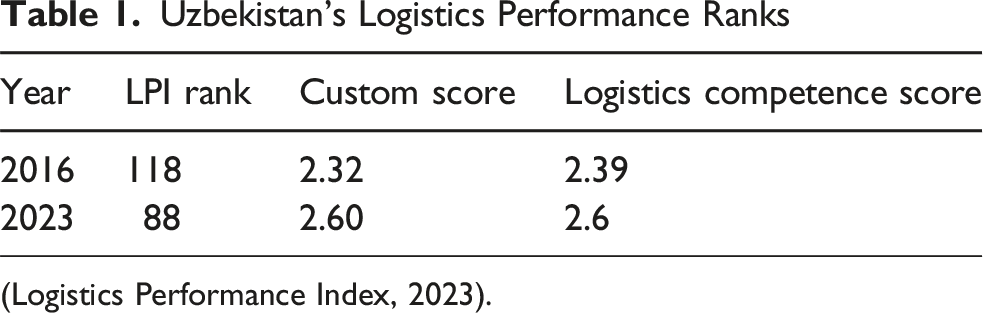
Since Uzbekistan joined the Belt and Road Initiative (BRI) in 2016, the country has made notable strides in its logistics performance index, rising from 118th to 88th place. Additionally, significant progress has been made in customs procedures, as reflected in its customs score. However, despite these advancements, Uzbekistan remains ranked 89th in infrastructure, underscoring the ongoing challenges it faces.
The BRI extended the scope and geographical dimension of the Middle Corridor. China plans to extend the southern leg of the corridor through Kyrgyzstan and Uzbekistan with the proposed China-Kyrgyzstan-Uzbekistan (CKU) railway line. This southern land-based route would start from China’s Lanzhou city in Gansu province, pass through Irkeshtam Port in Xinjiang, cross to the southern city of Osh in Kyrgyzstan, and continue on to Tashkent. This can be extended to the Middle Corridor, the Middle East, and South Asia (Burna-Asefi, 2022). The CKU is expected to reduce travel time by 900 km and eight days (Donnelon-May, 2023).
The CKU railway is expected to significantly contribute to Uzbekistan’s transport services exports, which increased from $1.276 billion in 2021 to $1.490 billion in 2022. With annual cargo transit revenues projected to reach $150-200 million, the railway will not only reduce transportation time but also ease the financial burden on Uzbek entrepreneurs. Currently, shipping goods from China through Kazakhstan takes between 45 to 70 days. Moreover, the CKU railway will play a crucial role in enhancing Uzbekistan’s position as a key transit hub (Khitakhunov, 2024).
Uzbekistan faces significant challenges on the BRI route. The construction of the CKU, which aims to construct a railway connecting China, Kyrgyzstan, and Uzbekistan, requires collaboration from Kyrgyzstan, which has been grappling with financial difficulties. Despite Kyrgyz officials denying any postponement, progress on the CKU project is facing delays. China, which can unilaterally finance the project, no longer considers its advancement as a top priority (Torogeldi & Baktygul Chynybaeva, 2023).
Moreover, there are also geo-economic impediments. Kyrgyzstan has insisted on the northern route, which would connect its north and south to boost its economy. China and Uzbekistan prefer the southern route, which is the shortest route to Europe and the Middle East. Moreover, geopolitical factors influence the situation; despite the CKU’s potential as an alternative to the New Eurasian Land Bridge, China is wary of advancing it, fearing it could upset Russia and hinder its access to Europe (Fazl-e-Haider, 2024).
Despite these existing factors, on June 6, China, Kyrgyzstan, and Uzbekistan signed a trilateral agreement to begin construction of the CKU railway in October. The agreed route, outlined in a May 2023 memorandum, will traverse Kashgar and the Torugart Pass in China, Makmal and Jalal-Abad in Kyrgyzstan, and terminate in Andijan, Uzbekistan. A joint holding company will be formed, with China holding 51% of shares and Uzbekistan and Kyrgyzstan 24% each. Beijing pledged a $2.35 billion low-interest loan covering half the project’s cost, while Uzbekistan and Kyrgyzstan each provide $573 million. China’s financing reflects regional shifts influenced by Russia’s war in Ukraine and disruptions along traditional routes, altering dynamics (Sharifli, 2023). However, the increase in Chinese lending might be worrisome for Central Asian countries.
Developing countries face potential sovereignty infringements when they fail to repay loans from China under the BRI framework. The term “debt-trap diplomacy,” coined by Brahma Chellaney, describes China’s use of debt to gain political and economic leverage over these countries (Chellaney, 2017). Over the past decade, as China’s economic influence in Central Asia has grown, so has the foreign debt owed to China, particularly by Kyrgyzstan and Tajikistan. In 2021, Kyrgyzstan sought and received a 6-year extension to repay its debt to China, with a 2% interest rate, adding an extra $3.8 million burden on its budget. To offset this, the government revised the tax code and introduced new measures to support entrepreneurs, which led to protests and social unrest (Center for Progressive Reforms, 2024). The Kyrgyz section of the CKU railway forces more Chinese borrowing, significantly increasing Kyrgyzstan’s debt above 50% of its GDP (Cartwright, 2024). Kyrgyz President Sadyr Japarov indicated that certain key facilities in the country could fall under Chinese control if the government in Bishkek fails to meet its foreign debt obligations to China (Kun. Uz, 2022).
On the other hand, Uzbekistan’s debt remains at a manageable level. According to the Public Debt Law, the maximum allowable public debt relative to GDP is set at 60%. As of July 1, 2023, Uzbekistan’s public debt stood at over $31.5 billion, which accounts for 36.8% of its GDP. This comprises $25.9 billion in external debt and $5.6 billion in internal debt. Contrastingly, as of January 1, 2023, the total debt was $29.2 billion, with a public debt-to-GDP ratio of 36.4%. Notably, the primary external creditors include China ($3.8 billion), Japan ($2.1 billion), and South Korea ($0.9 billion). Regarding international financial institutions, the Asian Development Bank has extended the most significant amount of debt ($6.2 billion), followed by the World Bank ($5.6 billion), and the Islamic Development Bank ($0.9 billion) (The Tashkent Times, 2023). By the end of 2023, Uzbekistan’s debt to China reached approximately US$ 3.775 billion, accounting for just under 13% of its total foreign debt. Significantly, by 2022, the China Development Bank (CDB) held US$ 2.2 billion of this debt, positioning it as Uzbekistan’s third-largest creditor. Meanwhile, Kyrgyzstan owes around US$ 4 billion to China, a sum that represents close to 40% of its total GDP. This debt translates to about US$ 700 per Kyrgyz citizen owed to China. Tajikistan, on the other hand, owes an estimated US$ 3.3 billion to foreign investors, with half of this amount owed to China, representing 27% of its total GDP (Kaleji, 2024). These figures indicate that Uzbekistan faces fewer challenges comparing to Kyrgyzstan and Tajikistan. Uzbekistan has a strong opportunity to boost infrastructure investments without jeopardizing its medium-term debt sustainability. Its manageable debt levels offer fiscal flexibility for further BRI projects. However, to avoid a debt trap like Kyrgyzstan’s, Uzbekistan must remain cautious and ensure its creditors are equitable and proportional.
Besides financial concerns, the CKU railway faces significant environmental and technical challenges, particularly as it will pass through Central Asia’s mountainous and seismically active regions. Kyrgyzstan, for instance, experiences thousands of earthquakes annually, including over 10 with magnitudes exceeding 7.0 in the past 150 years. This high seismic risk threatens the railway’s infrastructure, with potential damage leading to costly delays and repairs. Additionally, the construction will be complex and expensive, requiring 41 tunnels, 81 bridges, and 18 stations (Cartwright, 2024). Furthermore, another challenge arises in Uzbekistan’s railway connectivity to the Middle Corridor due to the difference in railway gauges. Some of 60 % of the world’s railway’s use 1.43 m railway gauge Uzbekistan uses 1,520 m. railway gauge (IndexMundi, n.d). As a result, trains must undergo gauge conversion at transportation junctions to enable seamless cargo transportation along the Middle Corridor from Uzbekistan.
Geopolitically, in the short term, the project could boost Kyrgyzstan and Uzbekistan’s economies through higher transit fees, new jobs, and stronger links to markets in the Middle East and Europe. In the long term, it offers China the opportunity to diversify its trade routes to Europe, reducing dependence on Russian and Kazakh routes. This would enhance China’s flexibility in response to crises, weaken Russia’s influence over regional connectivity, and strengthen Beijing’s negotiating power with Moscow and Central Asian countries (Sharifli, 2023). Another geopolitical implication will be its potential to link China’s access to the Indian Ocean through the Trans-Afghan corridor and Pakistan. This connection, connecting China’s overland routes to the Arabian Sea, supports Beijing’s strategic goals under the China-Pakistan Economic Corridor (CPEC), a key part of the BRI. The railway’s eventual link to Pakistan’s Gwadar port, a Chinese-developed deepsea port, would provide China with a critical overland route to the Indian Ocean, bypassing the sensitive Strait of Malacca. For India, this development is concerning, as China’s growing infrastructure presence in Pakistan challenges its dominance in the Indian Ocean region (Cartwright, 2024).
From geoeconomic perspective, Russia’s invasion of Ukraine in 2022 has had significant consequences for the world, particularly for the BRI. While sanctions haven’t directly impacted cargo traffic on the New Eurasian Land Bridge, the war’s uncertainty has caused major disruptions. Risks like confiscation, artillery damage, and voluntary sanctions compliance have led many logistics companies to halt operations and switch to the Middle Corridor, boosting its cargo traffic by 120% since the conflict began (Tekir, 2023). The current infrastructure of the Middle Corridor is unable to accommodate the increasing traffic. Its infrastructure can only accommodate 5% of the traffic on the New Eurasian Land Bridge (Carafano & Nate, 2022). As a result, the surge in cargo traffic caused congestion on the Middle Corridor. The logistics firms expressed concern over congestion reports and attempted to propose solutions, but their endeavors were hampered by capacity constraints. Cankat Yıldız, Managing Partner at Middle Corridor Logistics, commented that the corridor cannot handle the increased demand from the northern route (Van Leijen, 2022b). Linking the CKU to the Middle Corridor could exacerbate congestion, as the current port and railroad infrastructure is already struggling with diverted traffic from the New Eurasian Land Bridge.
Although these problems exist, Development Strategy Center is optimistic about economic growth and employment opportunities that the economic connectivity will bring (Development Strategy Center, 2019). Uzbekistan is considered advantageous comparing other Central Asian countries in terms of growth. According to a World Bank report, although economists anticipate reduced growth in Central Asian countries due to the impacts of the Russia-Ukraine war, Uzbekistan is expected to sustain its economic growth rate. Currently, Uzbekistan ranks second after Tajikistan with a growth rate of 5.1% in Central Asia. However, it is projected that in 2024, Uzbekistan will outpace Tajikistan, achieving a growth rate of 5% (The World Bank, 2023).
The Effects on Uzbek Economy
Uzbekistan’s participation in the Belt and Road Initiative (BRI) has significantly increased China’s influence over the Uzbek economy. China has overtaken Russia as Uzbekistan’s main trading partner (Statistics Agency under the President of the Republic of Uzbekistan, 2024). Data from the United Nations COMTRADE shows that China’s exports to Uzbekistan have surged from $2.6 billion in 2013, when the BRI began, to $12.3 billion in 2023 (The United Nations COMTRADE, 2024a). In contrast, Uzbek exports to China have seen only modest growth, rising from $1.3 billion in 2017 to $1.7 billion in 2023 (The United Nations COMTRADE, 2024b). This imbalance highlights the disproportionate impact of China’s economic presence, posing a risk of overwhelming influence over Uzbekistan’s trade dynamics. Uzbekistan’s increasing reliance on Chinese imports raises concerns about the vulnerability of its economy to external shocks and shifts in Chinese trade policies.
China is also leading source of foreign direct investment in Uzbek economy (Daryo, 2023). Chinese investments in Uzbekistan are in accordance with China’s strategy to boost its economic presence in Central Asia. In 2023, Chinese investments totaled $342 million, making it the top investor. Russia ranked second, with investments amounting to $192 million (Statistics Agency under the President of the Republic, 2024) Taking advantage of Russia’s misadventure in Ukraine, President Xi unveiled ‘grandiose plan’ backed by Chinese foreign direct investment (Daly, 2023). President Mirziyoyev also pointed out growing trade, investment, and economic ties between China and Uzbekistan (Mirziyoyev, 2024). Chinese companies have particularly invested in infrastructure, automobile, and green energy sectors in Uzbekistan (Sharifli, 2023). During his visit to China, President Mirziyoyev of Uzbekistan and Chinese officials agreed to cooperate on infrastructure, industrial development, technology transfer in agriculture, and green energy. They also emphasized the importance of the China-Kyrgyzstan-Uzbekistan railway and discussed the privatization of Uzbekistan’s state-owned enterprises. A joint investment forum resulted in agreements for around 500 projects worth $56.7 billion. Notably, President Mirziyoyev attended the launch of a BYD electric vehicle assembly plant in Jizzakh, set to produce 50,000 cars annually, with plans to increase production to 500,000. The project also involves R&D and job creation, with 10,000 jobs expected once completed. In addition, a deal was signed to build 50,000 EV charging stations by 2033, and 26 projects worth $1.7 billion are underway in Andijan. Furthermore, two wind power plants worth $250 million will be built in Samarkand and Jizzakh, generating 500 MW of power (Khitakhunov, 2024). The focus on electric vehicles and renewable energy aligns with global trends towards sustainability, which could benefit both countries in the long term. Additionally, the scale of Chinese investment in Uzbekistan presents both opportunities and challenges. While these investments are vital for Uzbekistan’s economic growth and industrial development, the increasing reliance on Chinese capital and technology could lead to concerns over economic sovereignty and the balance of influence in the region. The extensive involvement of Chinese companies in key sectors, such as infrastructure and energy, also indicates a deepening economic interdependence that may shape Uzbekistan’s future policies and regional alliances.
China and Uzbekistan also extended their cooperation into agriculture. In 2018, Mirziyoyev enacted a decree which called for the establishment of a special committee to bring Chinese cotton planting technology. Since 2018, researchers from the Chinese Academy of Agricultural Sciences have conducted piloted China’s cutting edge-technologies in four cotton fields in Uzbekistan (The State Council Information Office The People’s Republic of China, 2022). In 2021, the Chinese company, Yangling Modern Agriculture International Cooperation started the construction of a Chinese-Uzbek modern agricultural science and technology park located in Syrdarya region of Uzbekistan. In this park, China introduces advanced agricultural technologies and high-quality agricultural machinery (Belt and Road Portal, 2023). Uzbekistan imported 54 cotton harvesters from the Chinese company Boshiran, signifying the largest single transaction for the importation of cotton harvesters (Agroworld, 2023). Most Uzbek agricultural exports currently go to Russia, but China presents another opportunity. As Uzbekistan plans to increase agricultural production, it must be mindful of the environmental consequences, particularly concerning water resources. Shifting from cotton to food production, which generally requires less water, along with the adoption of water-saving technologies, could provide environmental benefits, although climate change and drought risks must also be considered
Moreover, in Uzbekistan, not all Chinese investment projects meet high environmental standards or undergo thorough environmental assessments. For instance, the Uzbek-Chinese joint venture Peng Sheng in the Syrdarya region has faced numerous complaints about discharging dirty waste from its tannery into the Shuruzyak canal, affecting local biota. Despite orders from the State Committee on Ecology to rectify the situation and a temporary halt of operations in 2020, issues persist. Similarly, the Chinese company CSCEC is constructing the High Town residential complex in Tashkent without an environmental impact assessment on a former industrial and household waste landfill, resulting in waste being dumped onto adjacent areas. This negligence has created significant problems for future residents (ШУЛЕПИНА, 2020). These examples highlight the need for stricter environmental oversight and compliance in foreign investment projects.
Uzbekistan, known for its authoritarian rule and media control, has not seen significant anti-Chinese sentiment. Frank Maracchione, a PhD candidate at the University of Sheffield researching China’s Belt and Road Initiative, noted that rights activists have criticized poor working conditions at Chinese-owned enterprises in Bukhara and Margilan, citing low pay, long hours, and chemical exposure (Imamova, 2023). It is difficult for Uzbek people to raise their negative views against the BRI. After analyzing the Uzbek press, Long and Yurkov concluded that 85% of news about the Belt and Road Initiative was positive, while 15% was neutral (2018). Economic considerations surpass environmental concerns.
Despite the China-Central Asia-West Asia corridor being incomplete, the BRI has already significantly boosted trade between Uzbekistan and other countries along this route. Kazakhstan and Kyrgyzstan are among Uzbekistan’s five largest export partners. Kazakhstan is among Uzbekistan’s five largest import partners (Vokhidova & Abdullaeva, 2024). The trade turnover between Georgia and Uzbekistan rose 40% in 2022 (Agenda.ge, 2023); it rose 23% in 2023 (NH Logistics, 2024). The trade turnover between Azerbaijan and Uzbekistan also increased six times between 2017 and 2022 (Bright Uzbekistan, 2023). Türkiye, the last destination of the China-Central Asia-West Asia Corridor, is the fourth-largest trade partner of Uzbekistan (Türkiye Cumhuriyeti Dışişleri Bakanlığı, 2024). These robust trade ties underscore the corridor’s economic significance for Uzbekistan and the region despite its risks.
As Uzbekistan’s transport connectivity upgrades, the role of special economic zones in the development of Uzbek economy increases. Special economic zones are defined as demarcated geographic areas within a country’s borders that have distinct business rules differing from national regulations. These rules primarily cover investment conditions, international trade, customs, taxation, and the regulatory environment, creating a more liberal and administratively effective business climate compared to the national territory (Farole & Akıcı, 2011). There are over 4,000 special economic zones globally, known by various names like industrial free zones, free trade zones, or export processing zones. They play a key role in economic development across more than 130 countries (Asian Development Bank, 2018). SEZs represent the embodiment of the process of ‘embodying sovereignty,’ wherein sovereign rights are commercialized to attract foreign capital (Laungaramsri, 2015).
In a quest for linking its economy with the global economy, Uzbekistan set up free trade zones. The first law for special economic zones in Uzbekistan was enacted in 1996 (Safarov et al., 2021). However, the main development regarding special economic zones occurred during the late Kerimov era and the Mirziyoyev era. Since 2017, Mirziyoyev has enacted many decrees regulating special economic zones. In 2017, Presidential decrees were issued, including ‘Measures to further promote the production of import-substituting and export-oriented products in the free economic zones of the Republic of Uzbekistan’, ‘Strengthening the coordination and increasing the responsibility of ministries, departments, and local government bodies for the effective operation of Free Economic Zones’, and ‘Additional measures to increase the productivity of Free Economic Zones and Small Industrial Zones’. In 2018, decrees were issued regarding “measures to create a Free Economic Zone in Sirdaryo”, “additional measures for the accelerated development of the fishing industry”, and “measures to further improve the coordination and management system of the activities of Free Economic Zones”. In 2020, Presidential decrees were published, including ‘On Special Economic Zones. After granting tax and customs privileges to investors in special economic zones, Uzbekistan has also established free trade zones to facilitate trade and investment partnerships with other countries. For instance, in 2024, President Mirziyoyev signed a decree creating the ‘Uzbekistan-Turkmenistan’ free trade zone, aiming to promote trade between the two countries. Notably, the Angren Free Trade Zone, established in 2012, has emerged as a significant hub for regional trade and investment, particularly due to its strategic location along the China-Central Asia-West Asia Corridor (Azizov & Partners, 2021).
Currently, Uzbekistan has 22 free trade zones (Pavia e Ansaldao, 2024). In 2024, Mirziyoyev signed a decree creating a free trade zone called “Uzbekistan-Turkmenistan” in the Shavat district of the Khorezm region. The products manufactured in Uzbekistan and Turkmenistan are planned to be sold in this zone (Government of Turkmenistan, 2024). One of the most developed free trade zones in Uzbekistan is Angren Free Trade Zone, established in 2012. This FEZ is connected to China through Qamchiq Tunnel, constructed as a part of West China-West Europe transportation network (Tolipov, 2017). More than 100 international companies have invested in the Angren Free Trade Zone. Companies investing in this region are exempt from land tax, water usage tax, and property tax. Additionally, these companies do not pay customs duties (Free Economic Zone, 2019). Providing the necessary infrastructure for SEZs is crucial for their effectiveness and for attracting investors. In 2023, 847 billion UZS will be allocated to connect existing SEZs to engineering and communication networks. This investment aligns with a positive forecast for SEZs, where 86 new projects worth $983.6 million are expected to generate 128 new industrial products and create 13,000 jobs (Ministry of Investment, Industry and Trade of the Republic of Uzbekistan, 2023).
The improved trade relations with its neighbors combined with liberalization attempts have had positive effect on economic growth in Uzbekistan. Since 2017, Uzbekistan has achieved an average GDP growth rate of 5.3%, making it one of the leading reformers globally, surpassing many lower-middle-income nations. However, job creation has not kept pace, with an average growth rate of only 1.1% over the past 5 years. Given that the population has grown at an average rate of 2% during the same period, the country needs to accelerate job growth, as the working-age population is projected to increase by 250,000 annually (The World Bank, 2024).
Additionally, the uneven distribution of benefits within Uzbekistan presents another challenge. Urban centers located near border crossings are likely to receive the most advantages. Urban centers located near border crossings tend to gain disproportionately, while those situated farther away may experience relative losses. However, transport improvements alone cannot compensate for the drawbacks of less attractive locations. Cities and regions with superior amenities and a strong manufacturing sector are likely to benefit significantly more due to the potential for increasing returns and agglomeration economies. Regions such as Tashkent and the Fergana Valley are expected to benefit significantly (The World Bank, 2020). This disparity could contribute to rising political and economic tensions within the country, as some areas thrive while others lag behind. This scenario not only threatens domestic stability but also presents an opportunity for external actors to influence Uzbekistan’s development trajectory.
Digital Collaboration
Announced in 2015 as part of the BRI, the Digital Silk Road aims to develop the digital infrastructure in recipient countries (Council on Foreign Relations, 2020). The Digital Silk Road is a collaborative project between the Chinese state and Chinese tech companies. It aims to develop digital infrastructure by laying out fiber optic cables and data centers alongside the BRI routes, as well as introducing new technologies such as artificial intelligence and smart city infrastructure (Castillo, 2021).
China’s advocacy for cyber-sovereignty, championed by President Xi Jinping, plays a central role in shaping its approach to digital diplomacy (Permanent Mission of the People’s Republic of China to the United Nations and other International Organizations in Vienna, 2012). The Digital Silk Road serves as a diplomatic tool for China to disseminate its understanding of cyber sovereignty and strengthen its ties with developing countries like Uzbekistan. As digital competition between China and the USA intensifies, China’s expansion into digital spheres of developing countries through the Digital Silk Road is a significant initiative that enables Chinese tech products and technical expertise to become prevalent.
The Digital Silk Road complements Uzbekistan’s digital development agenda. In 2020, President Mirziyoyev unveiled the ‘On Approval of the Digital Uzbekistan 2030' strategy, which includes increasing the number of ports for broadband Internet access, laying out fiber cable networks, increasing mobile coverage for the population, digitalizing public services, and training personnel (Ucell, 2020). As a part of the BRI, China is implementing an action plan of cooperation in technology and scientific innovation. This plan includes technical exchange program, the creation of joint laboratories, promotion of cooperation, and setting up technology parks. This plan is aligned with Uzbekistan’s plan to build technological progress and establish joint technology parks (Development Strategy Center, 2019). Chinese tech companies involved in many projects such as Olympic city construction in Tashkent and Qamchiq Tunnel, introducing Chinese models and technology standards (Xiaoyi et al., 2023). In 2023, Tianjin University of Science and Technology began construction of a technology park specializing in the production of biotechnical products in the Yangier Free Economic Zone in Syrdarya (Report News Agency, 2023). These examples demonstrate that the infrastructure collaboration between China and Uzbekistan is coordinated with cooperation in digital and technological spheres.
Digital collaboration between China and Uzbekistan also benefits Chinese tech companies. Especially, Uzbekistan offers an alternative market to Huawei, increasingly being pressured by the USA, due to its connection with Chinese state. Huawei operates in Uzbekistan for 14 years. In 2012, it made Tashkent as center of operations in Central Asia and Caucasus (Ministry of Investment, Industry and Trade of the Republic of Uzbekistan, 2024). Huawei’s involvement in Uzbekistan has deepened since 2017 when Mirziyoyev announced digital transformation of Uzbekistan. In 2019, Uzbekistan’s Ministry of Information Technology and Communication Development partnered with CITIC Group and Henan Kstar Group to launch the “Safe City” project, aimed at enhancing the country’s surveillance system. Huawei is also significantly involved, providing advanced technologies. CITIC Group will invest $300 million as part of a broader $1 billion agreement established by President Shavkat Mirziyoyev during his April visit to China for the Belt and Road Forum. Henan Kstar specializes in optical and electromechanical products, including urban surveillance systems (Hashimova, 2019). China’s significant investment indicates the growing Chinese presence in Uzbekistan’s digital transformation.
The construction of smart cities in Uzbekistan is a crucial component of this digital transformation. Huawei is a key player in Uzbekistan’s digitalization efforts. In 2018, it partnered with the State Committee of Uzbekistan to launch the “Safe Tourism” pilot project, part of the “Safe City” initiative. This project includes an integrated command hub, a cohesive LTE communication network, a central data facility, high-resolution facial recognition cameras, and software for analyzing large datasets to improve urban management in Bukhara (АН Podrobno.Uz, 2019). Besides the Safe City project, Huawei has partnered with Tashkent University to train Uzbek students in technology, offering opportunities for them to attend the BRI International Forum and visit Huawei’s headquarters in China. The company also provided thermographic cameras for Tashkent Airport and offered free video-calling services to improve information exchange in Uzbekistan (Sukhankin, 2021). Huawei also signed a Memorandum of Understanding (MoU) with Uzbekistan aimed at enhancing and expanding existing ICT academies within the country. The collaboration seeks to provide training to young talents in areas such as artificial intelligence, 5G, cloud computing, and related IT fields. Moreover, the initiative aims to enhance the skills of ICT professors and teachers through specialized training programs (Huawei, 2024). Other Chinese tech companies have also moved their production systems to Uzbekistan. The regional administration of the Kashkadarya region jointly prepared a project with major computer technology companies Shenzhen T.D.S Electronic Technology, and Intel, both based in Shenzhen, China, to produce monoblocks, laptops, motherboards, video cards, and other computer devices in the Karshi free economic zone. The project aims to hire 120 individuals, with the majority slated to undergo training in both China and Uzbekistan under the guidance of Chinese experts (Daryo, 2024).
Huawei’s opaque relations with China could compromise Uzbekistan’s digital security. Its founder Ren Zhengfei was a former engineer in the PLA. There is also strong evidence that key Huawei employees are closely tied to Chinese military and intelligence activities, raising significant concerns about the potential for espionage and intelligence gathering. This relationship contradicts Huawei’s public claims and poses serious implications for countries considering the integration of Huawei technology into their critical infrastructure (Balding, 2019). Moreover, the infamous cybersecurity law enacted in 2017 specifies that data gathered by Chinese tech companies may be subject to scrutiny by security agencies (New America, 2018). Thus, Huawei and other Chinese tech companies are also legally obligated to operate on behalf of the Chinese state. Due to these concerns, the Western countries are increasingly excluding Huawei from developing 5G networks. As other countries evaluate their collaborations with Huawei, Uzbekistan also must carefully weigh the benefits of partnering with Huawei against the potential threats to its national security.
In addition to these overarching security concerns, the extensive training of Uzbek tech personnel by Huawei and other Chinese tech companies raises several specific issues. First, there is a risk of technological dependence on Chinese expertise, potentially hindering the development of independent local capabilities and limiting Uzbekistan’s ability to innovate independently and maintain control over its technology infrastructure. Second, training programs often include the implicit transfer of operational philosophies and methodologies, potentially aligning Uzbekistan’s digital infrastructure management with Chinese standards, which may not always align with international best practices or Uzbekistan’s long-term strategic interests. Third, the nature of the training and the content provided can raise cybersecurity issues, as proprietary technologies and systems designed to be compatible with broader Chinese digital ecosystems may be more susceptible to influence or control by Chinese entities, facilitating unauthorized data access and surveillance, and compromising Uzbekistan’s digital sovereignty. Moreover, the close collaboration in training can create pathways for intelligence gathering, as personnel trained by Huawei might unknowingly facilitate backdoor access or other security vulnerabilities in critical infrastructure, given Huawei’s alleged connections with Chinese intelligence services, posing significant concerns in sensitive sectors like telecommunications and national security. There’s a risk of security breaches in developing countries where Chinese tech firms establish digital infrastructure. A report from Le Monde revealed that from 2012 to 2017, data from the African Union’s building in Ethiopia, built by China, was sent to Shanghai (Fidler, 2018). This instance illustrates China’s willingness to leverage the positions of its tech companies within networks to further the state’s cyber espionage efforts in developing countries.
Despite these potential security challenges, Uzbekistan continues to pursue digital cooperation with China. China and Uzbekistan have strengthened their digital cooperation with a memorandum signed on October 16, 2023 in Beijing between Uzbekistan’s Ministry of Digital Technologies and China’s Ministry of Industry and Information Technology. This agreement, part of the 3rd Belt and Road Forum for International Cooperation, focuses on infrastructure interconnection, communication network development, 5G technology, network security, and information and communication technologies (O’zbekistan Respublikası Hukumat Portalı, 2023). Furthermore, the Computer Network Information Center (CNIC) and the Central Asia Drug Discovery and Development Center, affiliated with the Chinese Academy of Sciences, have signed an agreement with Uzbekistan’s Science and Technology Information Center. They will collaborate to establish the Silk-road scientific data community on ScienceDB and the Central Asia node of the Common Science and Technology Resource Identification (CSTR). ScienceDB is a global platform for sharing scientific data, while CSTR provides unique identifiers for technology resources, fostering open science worldwide (Chinese Academy of Sciences, 2023).
In addition to security problems of China-led digital infrastructure upgrade, there is a danger of following Chinese-style digital authoritarianism. In 2016, Sebastian Heilmann introduced the term “digital Leninism” to illustrate China’s utilization of technological advancements in modernizing its authoritarian governance, transitioning it into the digital era as a mechanism for controlling its populace. Heilmann cautioned that digital Leninism represents a form of authoritarianism empowered by big data and IT infrastructure, potentially steering China toward an entirely new, potentially totalitarian future. His analysis primarily focused on the prospective domestic implications arising from the Chinese government’s adoption of new technologies for security and censorship purposes (Heilmann, 2016). This domestic repression serves as a precursor to China’s endeavors to propagate authoritarian technology practices globally through initiatives like the Digital Silk Road.
The confluence of China’s rigorous domestic surveillance practices and its widespread exportation of such systems has prompted numerous analysts to assert that China is actively disseminating authoritarianism beyond its borders. Chinese enterprises possess competitive capabilities in various aspects of this process, including camera manufacturing, AI training, and analytics deployment. These companies exhibit unwavering support for the government’s utilization of these technologies, facilitated by government subsidies that fuel their global reach (Hillman, 2021).
This trend is evident in countries like Uzbekistan, which maintains extensive surveillance and restrictions on Internet usage. The government’s “Center for the Monitoring of the Mass Communications Sphere” identifies online content it views as negative. In 2020, Uzbekistan mandated that companies like Facebook, Google, and Yandex store user data locally, aiming for greater control. While the country has broad Internet access and mobile communication, it occasionally restricts access to suppress antigovernment narratives. The availability of platforms like Skype and WhatsApp since 2018 suggests some liberalization, but the ongoing surveillance keeps Uzbekistan classified as illiberal (Stryker, 2021).
The government of Uzbekistan’s tight grip on digital communication is complemented by the country’s engagement with Chinese technology for its smart city initiatives. Huawei’s extensive engagement in Uzbekistan’s telecommunications networks had been firmly established. This effort gained traction in 2017 with the launch of the Safe City initiative by President Shavkat Mirziyoyev, aimed at digitizing security, public surveillance, and key economic sectors. The program unfolds in three phases: the first (2017-2019) focused on enhancing Tashkent’s surveillance and data collection systems; the second (2019-2021) aimed to expand these technologies to other regions; and the final stage (2021-2023) seeks nationwide implementation. While these technologies may improve accountability and public safety, they also raise privacy concerns and highlight China’s growing influence in Uzbekistan’s tech landscape (Sukhankin, 2021).
Traffic cameras started appearing in Tashkent in 2015, but Uzbekistan’s Safe City project officially launched in 2018, initially limited to the capital. The surveillance system in Tashkent, installed by Huawei, began operating in 2019 and has since attracted investments from CITIC and COSTAR, although Huawei still supplies the hardware. China International Trust Investment Corporation (CITIC) and COSTAR became involved after President Mirziyoyev signed a $1 billion agreement in Beijing. is a state-owned investment firm focused on introducing advanced technologies, while COSTAR Group specializes in researching, manufacturing, and marketing optical elements, including monitoring systems. ZTE, another major Chinese ICT company, has faced criticism for its close ties to the Chinese government. The relationships between these companies and Beijing imply that the Chinese government may have access to Uzbek personal data (Stryker, 2021). The threat of data collection is a significant possibility. In 2019, agreements were signed by Uzbekistan’s Ministry of Education with ZTE and Huawei to implement surveillance technologies into the country’s education system. Facial recognition technology is set to be deployed to track student attendance and evaluate teachers’ effectiveness. This data aids in the advancement of new technologies and enables heightened monitoring of cross-border movement, a security concern Beijing views as significant in Xinjiang (Jardine, 2019).
Uzbekistan adopted the Law on Personal Data to regulate field of personal data in Uzbekistan. Yet, Article 15 states that data can be transferred if necessary to protect Uzbekistan’s constitutional order, public safety, or the rights and well-being of its citizens (Lex.Uz, 2019). This means that in certain situations, like national security or public health crises, data transfer may be justified at the government’s discretion. Section 27/1 was added to the existing law, which allows for the collection, storage, and organization of personal data gathered within the territory of the Republic of Uzbekistan. In other words, services like Facebook, Google, and Telegram are required to store the personal data of Uzbekistan’s citizens within the country’s borders. Data localization aids in the storage of personal information and the protection of privacy. However, it also suggests a partial limitation on freedom of speech and thought. As data increasingly moves to cloud-based systems and new technologies result in more connected devices, data localization could hinder the transition of the Internet from a unified global system to several restricted regional systems (Mamasoliyeva, 2021). Although the primary focus of this amendment is on Western digital companies, questions remain about how the Uzbek government will approach Chinese tech firms.
While these advancements in Uzbek digital sphere may enhance public safety and accountability, they simultaneously exacerbate privacy concerns and reflect the increasing influence of Chinese technology in Uzbekistan. As Uzbekistan increasingly adopts Chinese technology for its smart city projects, there is a risk of embracing a model of digital authoritarianism similar to China’s. This trend threatens Uzbekistan’s ambitions for global economic and political integration, while also highlighting concerns about privacy and China’s expanding influence in the country’s telecommunications and tech sectors.
Conclusion
In conclusion, Uzbekistan’s strategic engagement with China’s Belt and Road Initiative (BRI) under President Mirziyoyev represents a significant shift towards greater economic integration and development. The BRI offers substantial opportunities for enhancing Uzbekistan’s connectivity, infrastructure, and digital landscape, potentially transforming the country from a double-landlocked state to a central hub in Central Asia. However, this alignment also presents considerable challenges and risks, including financial dependency, geopolitical complexities, and cybersecurity concerns.
To maximize the benefits of the BRI while mitigating its risks, Uzbekistan should enhance its quantitative analysis and transparency in project assessments. Incorporating rigorous statistical data and ensuring transparent reporting will provide a clearer picture of the economic impacts, aiding in informed decision-making. Engaging local communities in the planning and implementation phases will ensure the benefits are widely distributed and local concerns are addressed, thereby gaining public support and reducing potential social unrest. Additionally, while leveraging BRI opportunities, Uzbekistan must diversify its economic partnerships to reduce dependency on any single country, enhancing its economic resilience.
Strengthening regulatory frameworks is crucial to protect national interests, particularly in financial management and digital security. Developing clear guidelines for foreign investments and ensuring the enforcement of local laws and standards will safeguard Uzbekistan’s sovereignty. Investing in local education and training programs will build indigenous technological capabilities, reducing reliance on foreign expertise and promoting innovation. Furthermore, Uzbekistan must carefully navigate the geopolitical landscape by maintaining a balanced foreign policy, engaging in regional cooperation, and prioritizing sustainable development practices in all BRI projects to ensure long-term ecological balance and resource efficiency. Through these measures, Uzbekistan can harness the full potential of the BRI while ensuring sustainable and inclusive progress.
Footnotes

Funding
The author received no financial support for the research, authorship, and/or publication of this article.
Declaration of Conflicting Interests
The authors declared no potential conflicts of interest with respect to the research, authorship, and/or publication of this article.