



Abstract
This article embarks on unravelling the intricate narrative dynamics and ideological shifts that characterised Thailand's pivotal 2023 general election. Drawing inspiration from the extensive literature on political communication, we tracked the online activities of the ten most prominent political parties from one month prior to the election to two days afterward. Leveraging an original dataset comprising over 2500 posts disseminated by major parties on social media within that timeframe, the findings show that while parties have different posting strategies and predetermined platforms of choice, their campaign narratives can generally be categorised into five distinct groups. We only found partial support to the conventional assumption that voters tend to prioritise their own financial wellbeing. Although economic and populist policies are the most prevalent campaigning narratives for most political parties, the victory of the Move Forward party suggested that promises to address deep-rooted societal issues became more appealing to the Thai voters.
Introduction
After almost a decade of a semi-authoritarian rule and series of tumultuous political incidents, Thailand was ready for a reboot. The elections in May 2023 served as the light at the end of the tunnel for Thai voters. This paper seeks to explore the pathways of persuasion employed by political parties in Thailand's pivotal 2023 general election. While it is clear that parties employ both online and on-ground tactics to reach voters, we are particularly interested in the use of social media for campaigning. Since its advent almost two decades ago, social media platforms have gradually become an indispensable tool in campaign repertoires for politicians and parties around the world, largely due to their cost-effectiveness.
The conventional wisdom for effective political campaigns is that people are generally “retrospective” and are “pocketbook voters.” This means that they tend to evaluate candidates based on economic promises relevant to their immediate financial well-being and will use past performances as a heuristic cue to evaluate the incumbent candidate (Elinder et al., 2008; Fiorina, 1978, 1981; Tufte, 1978). Following this logic, economic-based policy proposals should be the most used and the most effective approach to garnering votes. This paper seeks to investigate the accuracy of this hypothesis during a critical juncture in Thailand's political landscape – a pivotal moment when a profound ideological shift, cutting across social cleavages, transcended the economy in terms of issue salience. Also more broadly, we are also interested in categorising the narratives and analysing “frames” employed by each party on social media in order to develop a systematic understanding of their implications on electoral success.
This paper is divided into four sections. The first section is the literature review on narratives in political campaigns, which includes the emerging context of social media, and observations of its influence on voting behaviours. The second section addresses the research design of this paper. The third section reports the findings, while the fourth and final section is a discussion of findings.
Literature Review
The Power of Storytelling in Political Communication
A well-known concept in social sciences, definitions of narratives have evolved over time. Here, we rely on a conventional definition of the term as “a representation of reality from a particular perspective (Steele et al., 1989: 2)” due to its neutral undertone – it does not imply that narratives are aimed to be manipulative, but rather, are just alternative world views. In this manner, narratives or stories can be seen as consequential discourses that aim to interact meaningfully with audiences about their perception of the world and people's experiences (Atkinson, 1999). To understand how narratives work in public opinion, Shanahan et al. (2011) study the role of narrative in public policy using the narrative policy framework. The findings suggest that narratives have a dual impact on public opinion. Initially, they reinforce existing opinions significantly among the like-minded audiences. Subsequently, when exposed to audiences with differing opinions, these narratives have a “conversion” effect, leading to a notable strengthening of opinions in the opposite direction of their original views. For example, the presence of implicit and explicit racial messaging in news coverage of crime can impact viewers’ perceptions of African Americans and criminality. Similarly, Xu and Zhao (2023) find that victimisation narratives have shaped the Chinese national identity and public opinion. They find that historical storytelling that centres on China's historical humiliations during the late Qing period notably strengthens respondents’ identification with the Chinese national identity and motivate the government to apply more assertive foreign policies and bolstering supports for China's present political system.
The use of narrative and storytelling is ubiquitous in politics, especially in the regimes in which the political system functions through elections. In the context of US Congress, Mayhew (1974) suggests that a self-interested Congressman would spend time and resources in building their image and reputation through advertising, credit claiming, and position taking. To understand the interplay between public perceptions and narratives in the electoral process and voters’ attitudes, Hammer (2010) explores the characteristics of Obama's narratives in his political campaign and finds that “stories of peoplehood” were pivotal in persuading the people to feel the part of the American nation's image. Studies also find that a candidate's image can be constructed through media and campaign advertising. While a more positive portrayal of the candidate and the overall optimistic campaign “vibes” correspond with the better poll performance as they resonate positively with voters (Peterson, 2018), harsh campaign rhetoric and negative news-framing embedded with anger, fear, and uncertainty are what determined the undecided voters’ choices in the 2016 United States election, serving as a pathway to victory for populist candidate Donald Trump (Schill and Kirk, 2017). Although parties and candidates can craft narratives or stories to fit their target audience and the overall campaign strategies, we find that they generally default to the following three types of narratives as suggested by the extant literature.
Personal Narrative
Personal narrative recounts an individual's experiences, interactions, events, and actions throughout their life. This type of narrative is usually used for self-advertisement or credit claiming. Additionally, people share these narratives not only about themselves but also about specific, unique others (Daniels, 2009; Gaydos, 2005; Loseke, 2007). The personal narrative can be a powerful communication tool in political campaigns, and former US president Barack Obama was known to frequently use it in his speeches and public addresses. For instance, in his speech at the Democratic National Convention, Obama tried to persuade the audience with his family stories, showing their struggle and the reward of their efforts, linking the story with an image of a civic version of American Nationalism – the land of freedom and opportunity (Hammer, 2010).
Issue-Based Narrative
The issue-based narrative reflects the need for responsibility and information from candidates to point out the current major issues (Ansolabehere and Iyengar, 1994). Political parties and candidates tend to use issue-based strategies for an electoral advantage over the opponent parties, persuading voters through some policy promises (Budge and Farlie, 1983; Marvick and Downs, 1960). Crafting a powerful issue-based narrative for campaigning requires candidates to consider several points, including their competitive standing, partisan affiliation, the overall tone of their campaign messages, and most importantly, the issue's significance to the electorate (Damore, 2004). This phenomenon is similar to the works of Mayhew (1974) who studied the action of the incumbents through “credit-claiming and position-taking strategies” for seeking reelection. In many places, scholars have also found that economic-based policy promises can be one of the most impactful campaign narratives because economic gains are tangible and are of great concern to the general public (Downs, 1957; Elinder et al., 2008; Tufte, 1978; Feldman, 1982; Fiorina, 1978).
Attack/Discrediting Narrative
Generally, the attack narrative manifests in so-called “negative campaigning.” While the definition of negative campaigning tends to vary across cases and contexts, it usually refers to a statement about the opponent's programs, achievements, attributes, or relevance, that intentionally mentions those defects (Lau et al., 2007; Lau and Pomper, 2002; Sheckels, 2002; Triantafillidou and Lappas, 2023). In the context of media communication, attack narratives are symbiotic to dis/misinformation since negative campaigns employ multiple rhetorics and forms of knowledge; to exploit and magnify controversies they use not only false information, but also truths, partial truths, and value-laden judgments. Discrediting narrative usually comes in a form of a partisan attacks or gender-stereotyped narratives (Cassese and Holman, 2018; Ruiz and Nilsson, 2023). Ansolabehere and Iyengar (1994) illustrates the impact of attacking narratives in political advertisements in the 1992 US elections where they find that over 6 million people, especially independent voters, were misled by negative campaign messages. The attack narratives in the form of a negative campaign can be an effective strategy to win elections due to memorability and emotional stimulation. However, the empirical evidence supporting this hypothesis remains mixed since a discrediting narrative can reduce one's feelings of political efficacy, trust in government, and possibly overall public mood (Lau et al., 2007).
Political Campaigning in the Social Media Era
Digitalisation makes the network of humankind more expansive and communication more effective across space and time. With its multiple capacities in different types of channels such as social networking (Facebook), microblogging (Twitter or “X”), and Video sharing (YouTube), social media communities inevitably become a part of the modern day's politics. These platforms have drastically changed the political campaign process from the traditional form, paving the way for people to access public and shared political information, being a space for learning, creating comments and attitudes, and promoting engagement or disengagement from political process (Dimitrova and Matthes, 2018; Gibson et al., 2005; Williams, 2022). The growth of social media also tremendously changes the nature of political participation. Haenschen (2016) and other studies have suggested that digital society might negatively affect democracy. For instance, it disengages people from the political process mostly due to the multifaceted digital divide (Bean, 2012; Noam, 2010; Norris, 2003; Rice, 2018). Social media's focus on entertainment contents and the segmentation of audiences can also stimulate the ‘echo chamber’ effect, resulting in selective exposure to information more than seeking for information and engagement (Dahlberg and Siapera, 2007; Macnamara et al., 2012).
The emergence of social media has also changed political campaign strategy. As the condition of political victories depends on the quality and quantity of accessibility to both voters’ and opponents’ information, the use of online databases and internet technologies for fundraising, and recruitment of volunteers consequently becomes a critical part of campaign strategy (Howard, 2005). Social media has numerous functions in election campaigns such as promoting stances on issues, showcasing positive personality traits, and enhancing name recognition as well as mobilising voters and organising campaigns (Kobayashi and Ichifuji, 2015; Lilleker et al., 2011; Nielsen et al., 2013; Stier et al., 2018). The existence of social media and digital features also shape the way parties, candidates, voters, and political institutions communicate. For instance, political parties tend to use real-time methods to communicate with their voters because it can create a place for interaction among users (Papacharissi, 2009). Strategies such as interactive voice response, short message services, internet banners, online advertising, blogs, mobile phones, etc. ensure that they can reach voters to propagate their advertisement at any time. This encourages voters to understand, compare parties and policies, and even recall the message and slogan (Arulchelvan, 2020).
Another key factor that effectively shapes online political campaigns is the ability to segment and microtarget audiences. Social media, such as Facebook, can offer targeted advertising from collected user data. Campaigners can use filters like keywords, categories, and geographical data to reach Facebook users with specific interests and demographics for customised advertisements (Borgesius et al., 2018; Dommett and Power, 2019). In this manner, microtargeting can identify voter preferences for a specific party and use mobilising messages to target them, allowing political parties to offer assortments of policy stances or ideologies that match with preferences of the targeted voters. Relatedly, the use of data analytics is imperative for evaluating expected results from campaign performance. In US politics, political parties hold large amounts of voters information through services offered by several US-based companies such as CampaignGrid and Cambridge Analytica (Bennett, 2016; Borgesius et al., 2018). The data collection and analytics for political campaigns significantly affect parties and candidates in both marketing actions and decision-making framework (Howard, 2005; McNair, 2009; Varna, 2020). Taking advantage of these features; namely, real-timeness, microtargeting, and big data prediction, candidates can use social media, such as Facebook or X, to convey a personalised message to specific or smaller audiences for more engagement as well as simultaneously monitoring the responses and making predictions. Therefore, social media outlets become cost-effective to create and deploy (Fowler et al., 2021).
The Interplay Between Social Media, Narratives, and Electoral Success: Cases of Successful Online Political Campaigns
Many early works have demonstrated the interplay between social media and the use of narratives in campaign strategy as the main components of modern political competition. The campaign of the former US president, Barack Obama, illustrates a paradigm shift that explains how the use of effective narratives with the power of social media can create an image that impress the voters. Obama's online presence went beyond the traditional use for fundraising as he also used it to engage and communicate with his volunteers, reemphasising their importance for making a difference – reflecting his campaign slogan of “Change.” His online accounts on Facebook, Twitter (X), and YouTube have abundant followers and the strategies included sending a lot of in-house emails, amounting to 8000 to 10,000 unique messages, tailored to specific segments of their 13-million-member email list as well as creating and testing email content through segmentation and various experiments (Asker et al., 2009). Through storytelling, Obama constructed a personal narrative starting from his family's life to the establishment of his cosmopolitan identity to overcome racism bias and raise the shared values and practices for the community, which became the core of his governance policy implementation (Hammack, 2010). Similarly, Alexander Van Der Bellen, President of Austria, used his Instagram account as the main tool for online campaigns and drew numerous narratives in his online content; namely, his personal stories and issue-based pitches that persuaded voters through the image of a legitimate officeholder seeking reelection (Liebhart and Bernhardt, 2017).
The use of attack narratives was prevalent in Donald Trump's electoral campaign and his online political movement. This contained plenty of misinformation, conspiracies, and fake news aimed to discredit his political rivals (Chatfield et al., 2017; Polletta and Callahan, 2017). Some research illuminates Trump's metaphoric claims that terrified voters about the loss of the country (Koth, 2020). Trump's use of Twitter widely influenced public thought and one of his most notable, consistent characteristics on Twitter are attempts to discredit the media and instead make himself the most dependable source (Ross and Rivers, 2018). Spreading of misinformation and fake news in elections is a worldwide phenomenon, especially in the context of social media. In South Korea, the 2017 presidential election saw candidates spreading false information to rally their supporters. The distribution of fake news stimulated polarisation, widening the position of ideology, allowing president Moon Jae-In to grab a landslide victory (Seon-Gyu and Mi-Ran, 2020). Later in the Portuguese 2019 election, fake news propagation was reflected in the right-wing extremism movement to discredit left-wing supporters and the incumbent socialist government (Baptista and Gradim, 2022).
Social Media and Political Campaigns in the Context of Thailand
The majority of works that studied the role of social media use in the context of Thai politics are about the effect of internet and social media on political activities. Internet use in Thailand has significantly changed the political interactions among political agents. On one hand, it allows for a closer engagement between the public and government officials, but on the other hand, social media can become a field for ideological conflicts, hate speech and false accusations (Meesuwan, 2016; Schaffar, 2016). Regarding social movements, various online platforms, notably, Facebook, X, and Telegram, have had a prominent role in the emergence and sustainability of the youth protestors in the anti-government demonstrations in 2020. The use of hashtag #FreeYouth (FYM; #เยาวชนปลดแอก) in one of the large pro-democracy movements in Thailand created the collective narratives through social media such as Twitter (Sinpeng, 2021).
In the context of elections, scholars were at first skeptical about the role of social media despite an observable uptick in its adoption among politicians and candidates since 2013 (Chongkolrattanaporn and Combs, 2014). However, the 2019 general election overcame such skepticism since the use of social media became a crucial part of political campaigns, contributing to the surge in popularity of the Future Forward Party (FFP) through use of the popular Twitter hashtag: #Futurista (Chattharakul, 2019). Despite losing the election to the Phalang Pracharat Party, FFP used social media to promote its political brand of equity, which created political attention and awareness among the younger generation of Thai voters (Mad-A-Dam and Ismail, 2021; McCargo, 2019). The impact of social media also changed urban-rural relations, reducing the influence of money politics, local patronage networks, and political dynasties as well as changing the strategies of many political parties for political campaigns to adopt social media as the main tool for information distribution. These changes were also observable in the 2023 election (Hicken et al., 2023; Sarapugdi and Namkhun, 2023).
Extant studies of social media in Thailand tend to focus on its capacity to mobilise Thai politics with relatively less attention paid to the use of narratives in the context of political campaigns. The Thai-language literature examining narratives in Thailand's political campaigns is more extensive. Jaruma (2007), for instance, studied political persuasiveness in speeches and statements from political actors before the Thailand 2006 general election while Kringram (2012) analysed the general campaign speeches between Miss Yingluck Shinawatra and Mr Abhisit Vejjajiva in the Thailand 2011 general election. Their work shows that factors determining the effectiveness of persuasive strategies depend on genders, political experiences, social status, the places where the speeches were made, and the length of the speeches. Another work also mentioned the style of language of candidates, such as the language style of Mr Thanathorn Juangroongruangkit while campaigning for the 2019 general election (Thongsodsang and Chanthao, 2019). However, none of the works have previously studied the use of narrative systematically, especially in the scope of political campaigns. While studies tend to focus on some dimension of speeches, the style of language use, and the detail of persuasive strategies which depend on the circumstances and political context, there have yet to be any studies that systematically categorised the various forms of narratives that were used in the campaigns, situating the Thai elections in the larger corpus of the literature.
Research Design
This study aims to explore the dynamics of online campaigning of political parties in the 2023 election in Thailand, with an emphasis on categorising campaign messages into different “frames” of narratives. To get to answers, we tracked the online activities of the ten prominent political parties with a social listening tool, spanning from one month prior to the election to two days afterward. Since the focus of this research is to look at parties’ online campaign strategy, we excluded posts that are retweets (RTs), quote tweets (QTs), and replies to other accounts. As a result, we ended up with an original dataset comprising over 2500 unique posts disseminated by major parties on Facebook and X (formerly known as Twitter) within that timeframe for the analysis. Figure 1 presents the visualisation of the coding scheme used in categorisation of social media posts.
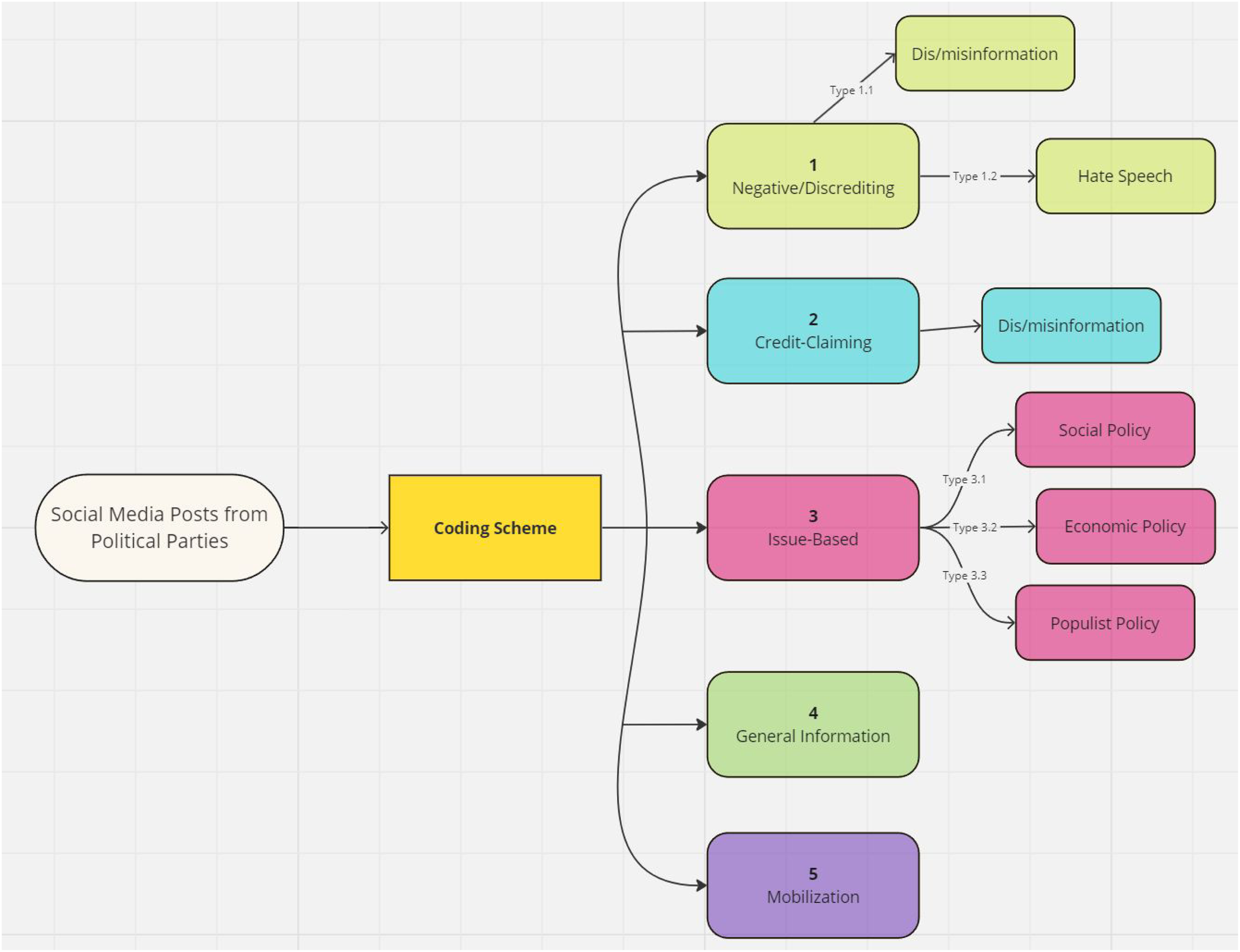
Coding Scheme for Categorisation.
Inspired by the seminal work of Mayhew (1974) and other scholars in the field of political communication and electoral behaviour, we designed the coding scheme to categorise posts into five distinct groups:
Group 1: Negative/Discrediting Posts – This category is further sub-divided into dis/misinformation and hate speech. Posts within this group are characterised by the intention to distort information with the purpose of fostering animosity or portraying rival political parties in a negative light. Group 2: Credit-Claiming – Encompasses contents that highlight the accomplishments or ongoing efforts of the political party. A post about how much the incumbents have done for the people or how dedicated the prospective candidates are to addressing people's concerns. Posts about candidates going door-to-door to meet their constituents or joining local events would fall into this category. Group 3: Issue-Based – Comprises of posts that are aimed at disseminating information about the party's policies. They are then further categorised into social policies, economic policies, and populist policies. To note, there can be a potential overlap between economic policies and populist policies. Here we chose to only code as populist policies that deliberately promises handouts to certain groups. Group 4: General Information – refers to posts that the parties use to communicate practical information to voters, such as election dates, times, and steps for exercising voting rights. Group 5: Mobilisation – comprises of posts concentrating on conveying specific information about candidates and their respective candidate numbers to mobilise voters, emphasising on key details, such as “vote for candidate X and number Y in district Z.” Posts like this tend to be easy-to-understand and create a positive image for voters. These posts are designed to be easily comprehensible and memorable among voters.
Following the classification of the contents based on the designated coding scheme, we conducted a descriptive analysis of the data, considering various independent variables including posting time, engagement, reposts, and number of comments. Our analytical approach involved the utilisation of frequency and percentage tables, histograms, measures of central tendency, and measures of dispersion to elucidate the characteristics of the data. This comprehensive information facilitated the exploration of relationships between diverse post types and voter engagement.
To elucidate the temporal dynamics of political communication strategies, particularly in terms of storytelling and emphasis in posts, we employed a time-series analysis. This method allowed us to examine how different political parties strategically presented their narratives or highlighted specific posts during distinct temporal intervals.
Results
How did Political Parties Campaign Online?
Overall, political parties seemed to have strategically chosen social media platforms in accordance with the demographics of their target audience. Figure 2 compares party usage of the two prominent social media platforms, X and Facebook. The data revealed that X was the preferred medium for political parties to disseminate information, surpassing the frequency of posts on Facebook. This was particularly the case for parties with relatively younger fanbase, such as Move Forward Party and Pheu Thai Party, which predominantly used X as a means of communication with voters. Furthermore, an indication that parties’ presence on platforms was a predetermined choice became evident since parties that were not active on X, such as Palang Pracharath, Bhumjaithai, and Thai Liberal, appeared to be active on Facebook. Despite these social network platforms being almost free to use, it is plausible that parties selectively spent their time and resources on the platform in which they believe to be the most efficient way to tap at their targeted audience. For instance, X can be more suitable for younger fan bases whereas Facebook can reach broader audience, with an emphasis on older generation of voters.
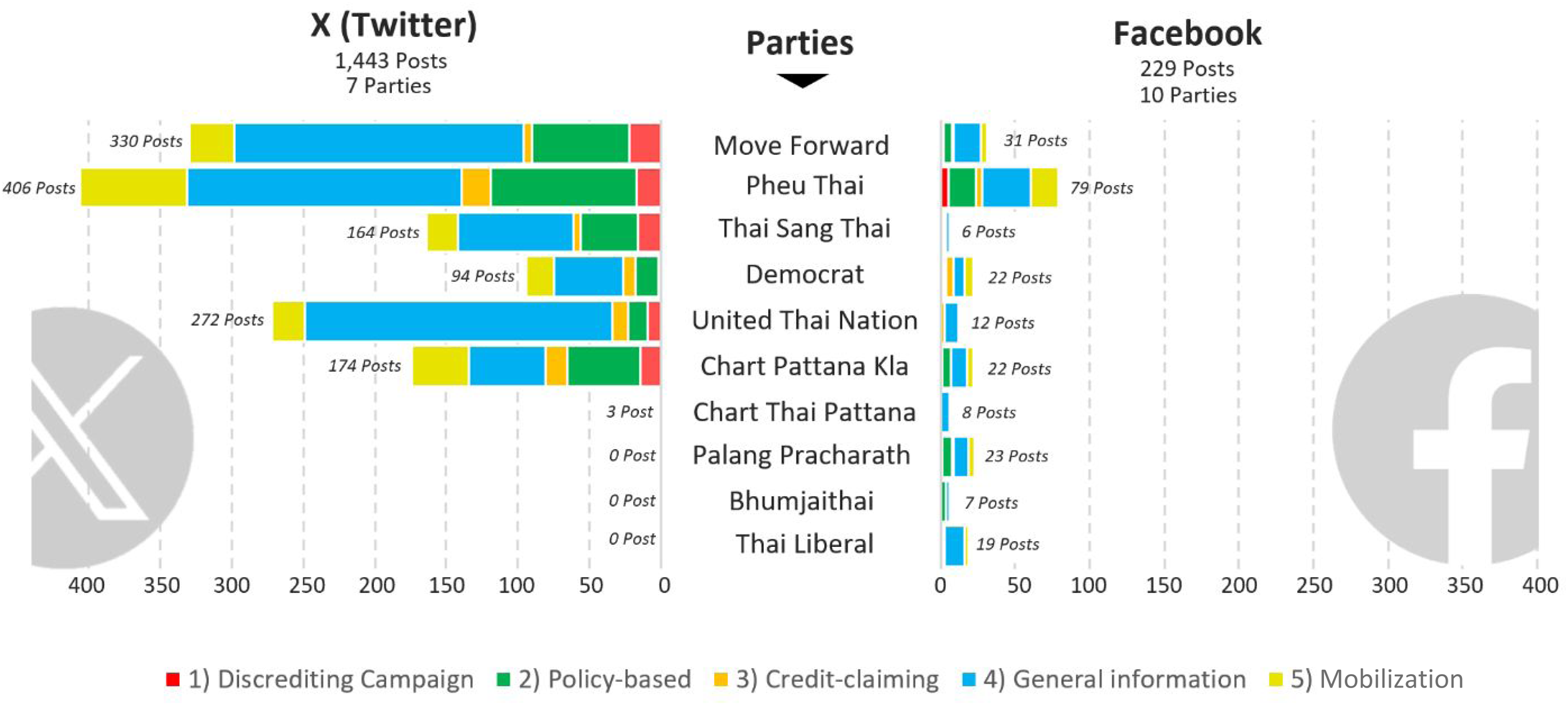
Number of Posts by Political Parties between 16 April and 14 May 2023, Classified by Coding Scheme and Social Network Platforms.
Examination of the data highlighted the Pheu Thai Party as the most active user of X, with approximately 400 posts in the month leading up to the election. The Move Forward Party also demonstrated a substantial engagement, with around 330 posts during the same period. Interestingly, three political parties – Palang Pracharath Party, Bhumjaithai Party, and Thai Liberal Party – did not actively use X in despite having an official political party account on the platform. However, these parties were active on Facebook. This suggested that certain political parties did not rely extensively on online platforms for their campaigns. Conversely, parties like the Move Forward Party and the Pheu Thai Party, which seemed to enjoy a significant support from first-time voters and young adults, opted for social networking platforms as a key channel for communication with their potential voters.
Upon a closer look, it became evident that each political party had a distinctive way to post. Beyond the similar tactic of disseminating general information to keep the audience updated with generic information (average of 47.2 per cent of posts for all party, all platform), certain parties further emphasised policy matters, allocating a substantial portion of their posts to this domain, while others concentrated on mobilisation efforts. The distribution of various post types for each political party is presented in Table 1, delineating the party's intended communication to both citizens and voters.
Row Percentage of Posts by Political Parties, Classified by Coding Scheme and Social Network Platform.
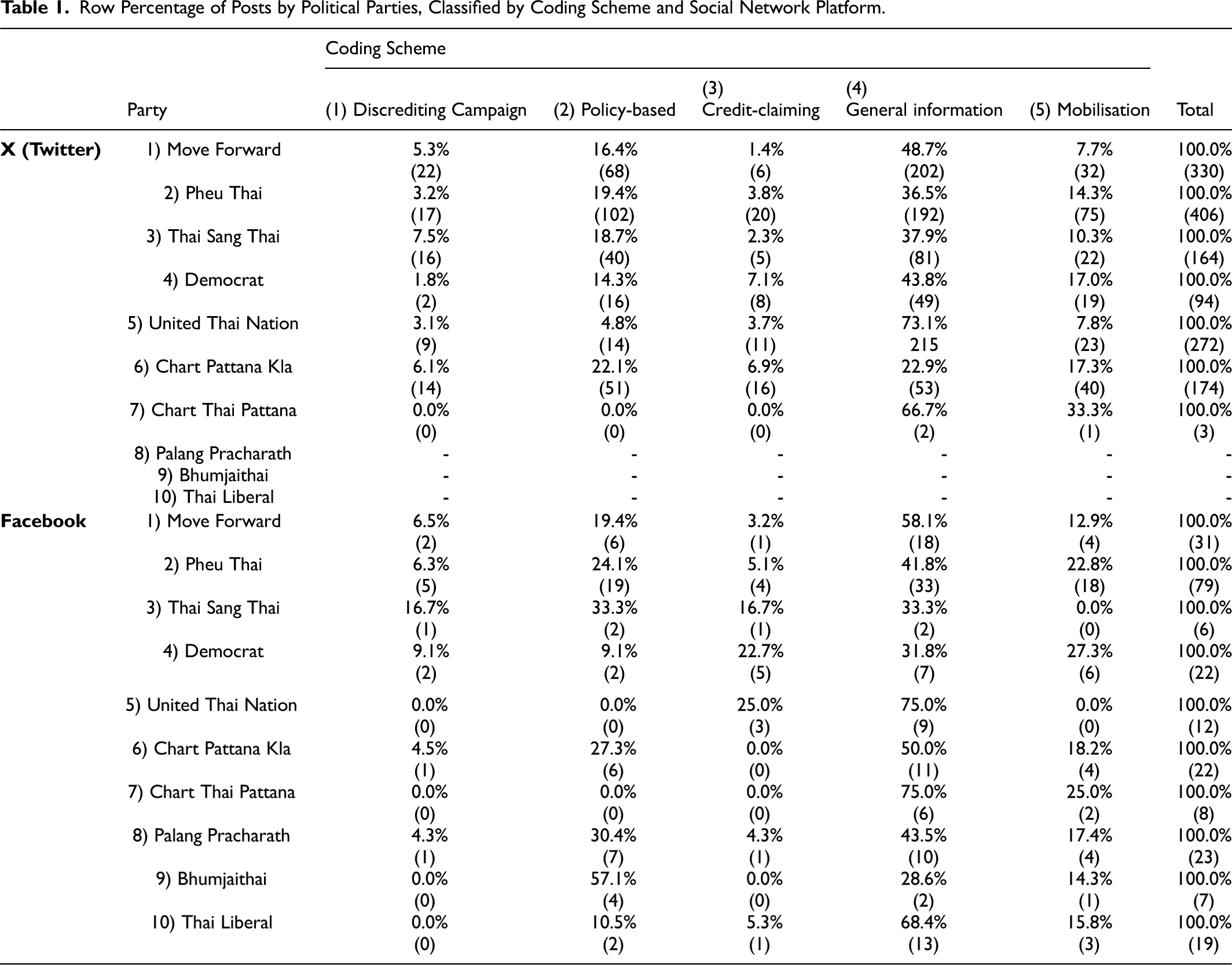
This data allowed us to categorise political parties into two discernible groups: those prioritising the communication of party policies and those emphasising public relations for candidates. The former group, comprising of the Move Forward Party, Pheu Thai Party, Thai Sang Thai Party, and Chart Pattana Kla Party, gave a pronounced focus on policy-related posts on X and Facebook. On average, these four parties posted about their policy stances about 20 per cent of their total posts on X and 26 per cent on Facebook, respectively. The pattern of more policy-centric posts being more prevalent on Facebook pages was consistent across almost all parties, which can be due to the fact that Facebook allows for more elaborated captions whereas X limits the characters count for each tweet to 280.
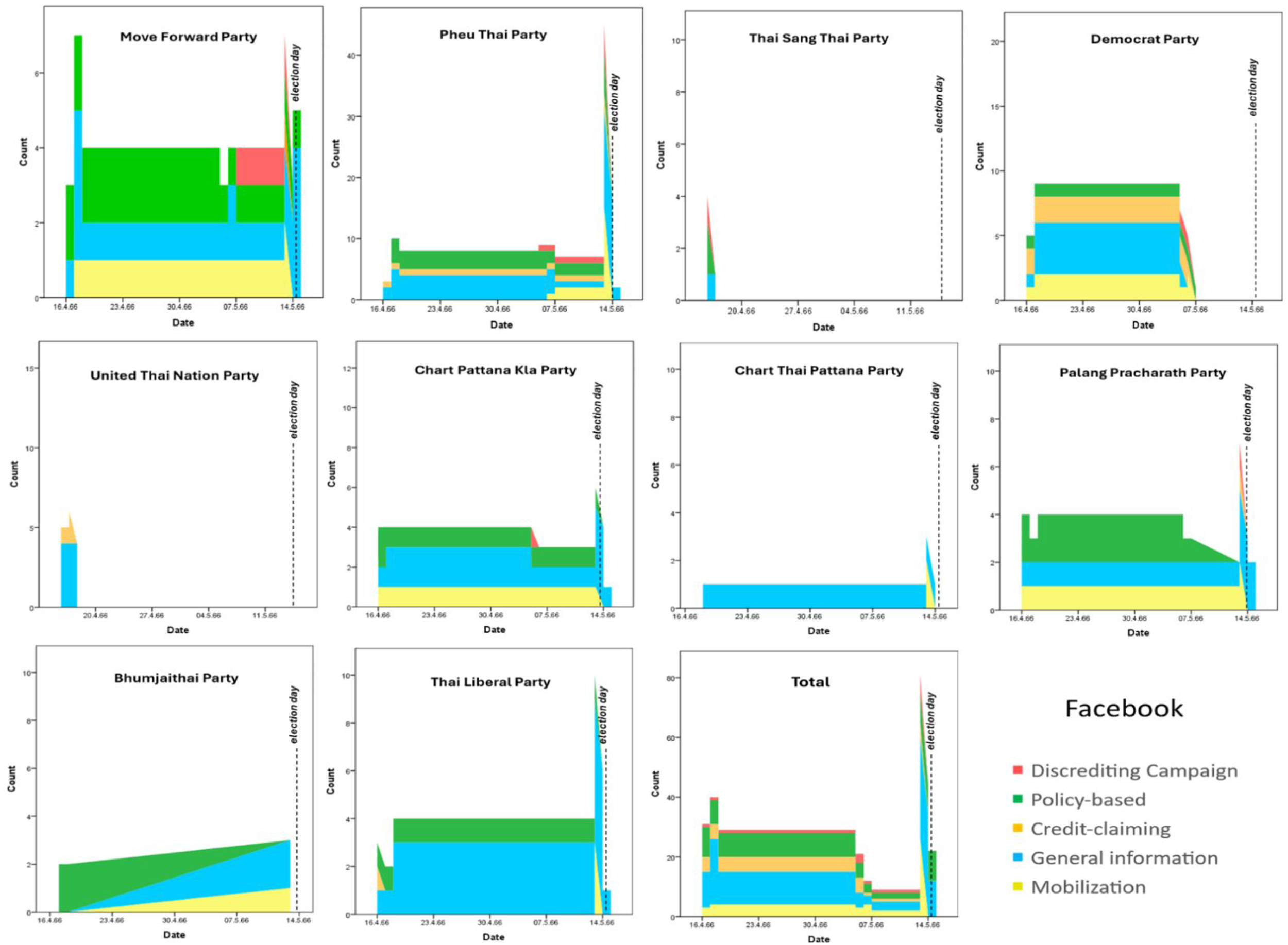
The analysis of time series diagrams in Figures 3 and 4 enhanced our comprehension of the temporal dynamics exhibited by each political party. On X, three political parties, the Move Forward Party, Thai Sang Thai Party, and the Democrat Party, consistently demonstrated a regular posting pattern in both number and frequency, distinguishing them from other parties that tended to intensify their posting activities closer to the election day to increase engagement and followers. That being said, a prevalent pattern seemed to emerge as the election day approached. We found that nearly every political party prioritised general information in their posts in the proximity of election day; and mobilising messages also surged observably. During this period, the proportion of posts dedicated to general information and mobilisation increased by a factor of approximately 1.1 when compared to the antecedent period.
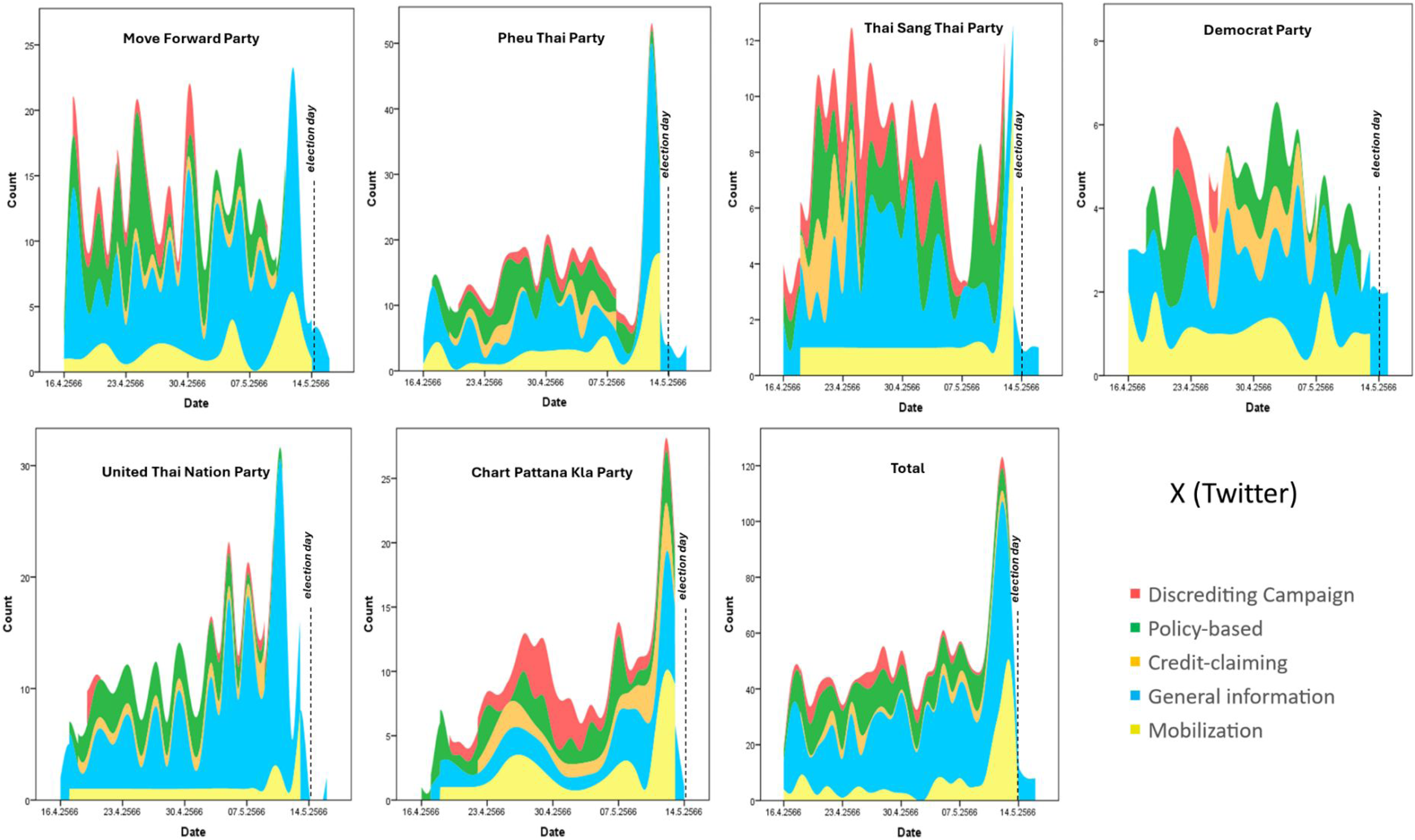
Time Series Diagram Showing the Proportion of Posts on X(Twitter) of Each Political Party Classified by the Coding Scheme.
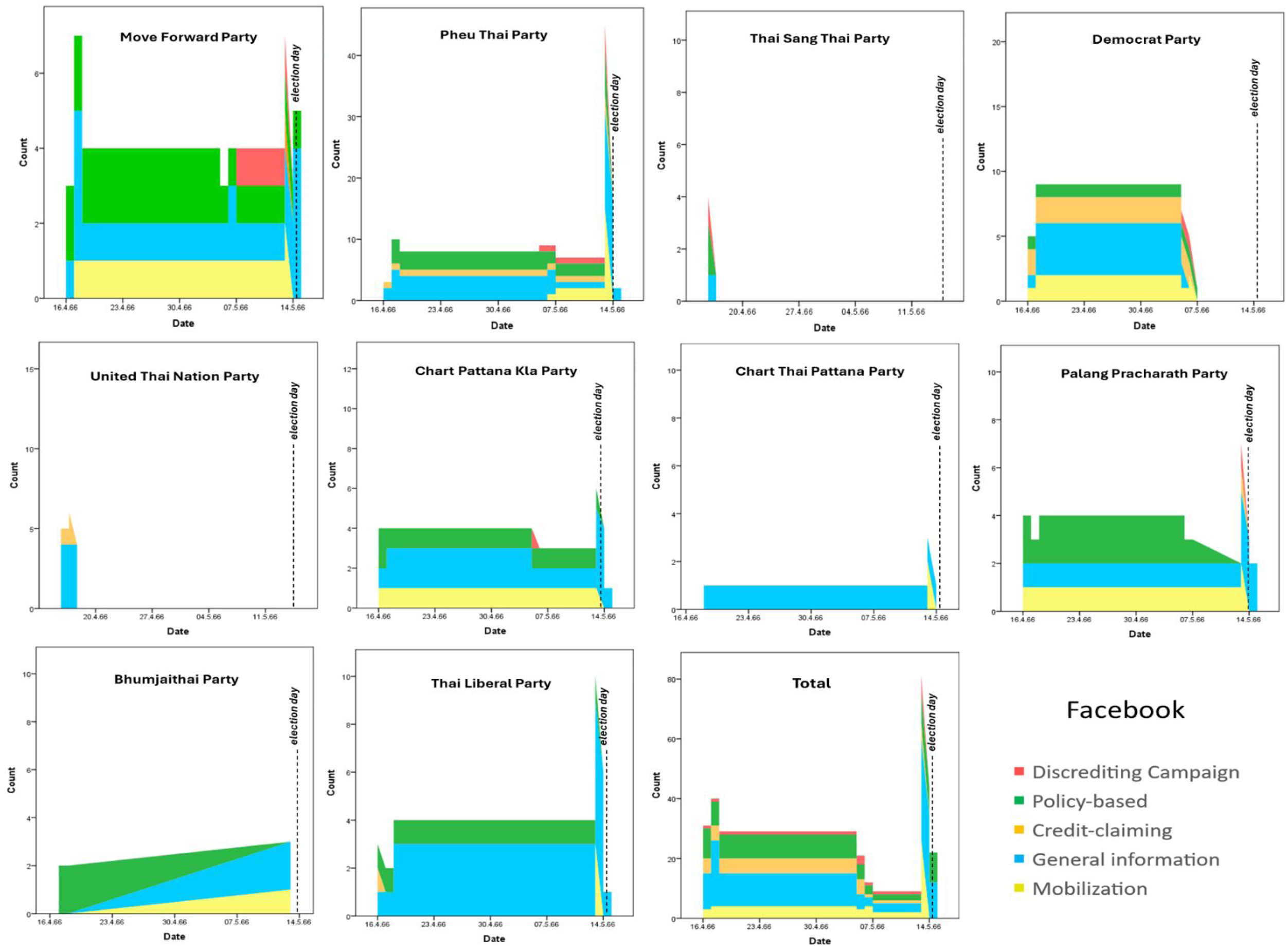
Time Series Diagram Showing the Proportion of Posts on Facebook of each Political Party Classified by the Coding Scheme.
In terms of discrediting posts, distinct posting patterns were observable among different parties. For instance, the Move Forward Party deployed discrediting narratives only during the period from April 16 to May 30. The Democrats primarily posted discrediting contents for just under a week in mid-April, while Chart Pattana Kla concentrated its use of discrediting narratives mostly in late April and early May. Other parties seemed to sporadically post discrediting contents, albeit with lower frequency. An exception was the Thai Sang Thai Party, which maintained a relatively larger proportion of discrediting posts compared to its counterparts (7 per cent and 17 per cent on X and Facebook, respectively). While this study did not delve into the use of dis/misinformation at this stage, it was possible that political parties may have self-censored and refrained from heavy discrediting of their opponents, opting for occasional attacks. This may have been due to the stringent electoral laws laid out by the Electoral Commission of Thailand (ECT), given that a smear campaign tends to walk on the fine line of being dis/misinformation.
On the Facebook front, a noticeable disparity in post volumes compared to X was evident. Some political parties ceased posting after April while others sporadically engaging with voters on Facebook, averaging 1–2 posts per week. Parties that maintained regular communication on Facebook are the Move Forward Party, Pheu Thai Party, and Chart Pattana Kla Party. Surprisingly, the presence of discrediting campaign posts was minimal or nearly absent on Facebook. That being said, attacking narratives based on dis/misinformation may emerge elsewhere outside of the official political party outlets.
What Policy Issues did Political Parties Talk About Online?
Figure 5 provided further insights into the types of content disseminated by each political party, notably segmenting policy-related posts into social policy (“Sc”), economic policy (“Econ”), and populist policy (“Pop”) to enhance visibility of each party's standout policies. While the Move Forward Party prioritised social policy, the Pheu Thai Party, Thai Sang Thai Party, and Chart Pattana Kla Party addressed social and economic policies in equal measure. Markedly, the Bhumjaithai Party extensively utilised Facebook to communicate about populist policies, constituting nearly one-third of all posts on the platform (admittedly the Bhumjaithai Party's online presence was limited, evidenced by a mere seven posts in the period leading up to the election).
The Hierarchical Chart Showing the Proportion of Posts of Each Political Party Classified by the Coding Scheme.
Conversely, another cluster of political parties focused on advertising for their candidates, including the dissemination of candidate's identification numbers. The primary goal is to foster visibility and recognition among voters, with less emphasis on articulating party policies. This group included the Democrat Party and the Chart Thai Pattana Party, both actively sharing posts related to mobilisation and general information on both X and Facebook. Notably, the Chart Thai Pattana Party did not post anything policy-related, while the Democrats maintained only minimal engagement in policy discussions, particularly on Facebook.
A comprehensive examination of policy-related posts was conducted to ascertain the prioritisation of “social policy” versus “economic policy and populism” by various political parties. The underlying assumption posits that a preponderance of political parties should accord greater emphasis to economic considerations over social issues, given the tangible and easily comprehensible nature of fiscal matters, which holds greater relevance to the sentiments of the populace.
As delineated in Figure 6, the empirical findings substantiated the validity of the aforementioned hypothesis. Predominantly, political parties employed X and Facebook as primary platforms for disseminating their economic policies. It was noteworthy, however, that the Move Forward party distinguished itself as a sole party that allocated a larger proportion of its content to social policy rather than economic policy on both platforms, focusing on decentralisation, the welfare state, and political reform. Similarly, the Thai Party Liberals exclusively concentrated on social policy endeavours such as suppressing corruption, combating drug-related issues, and reforming the police and army.
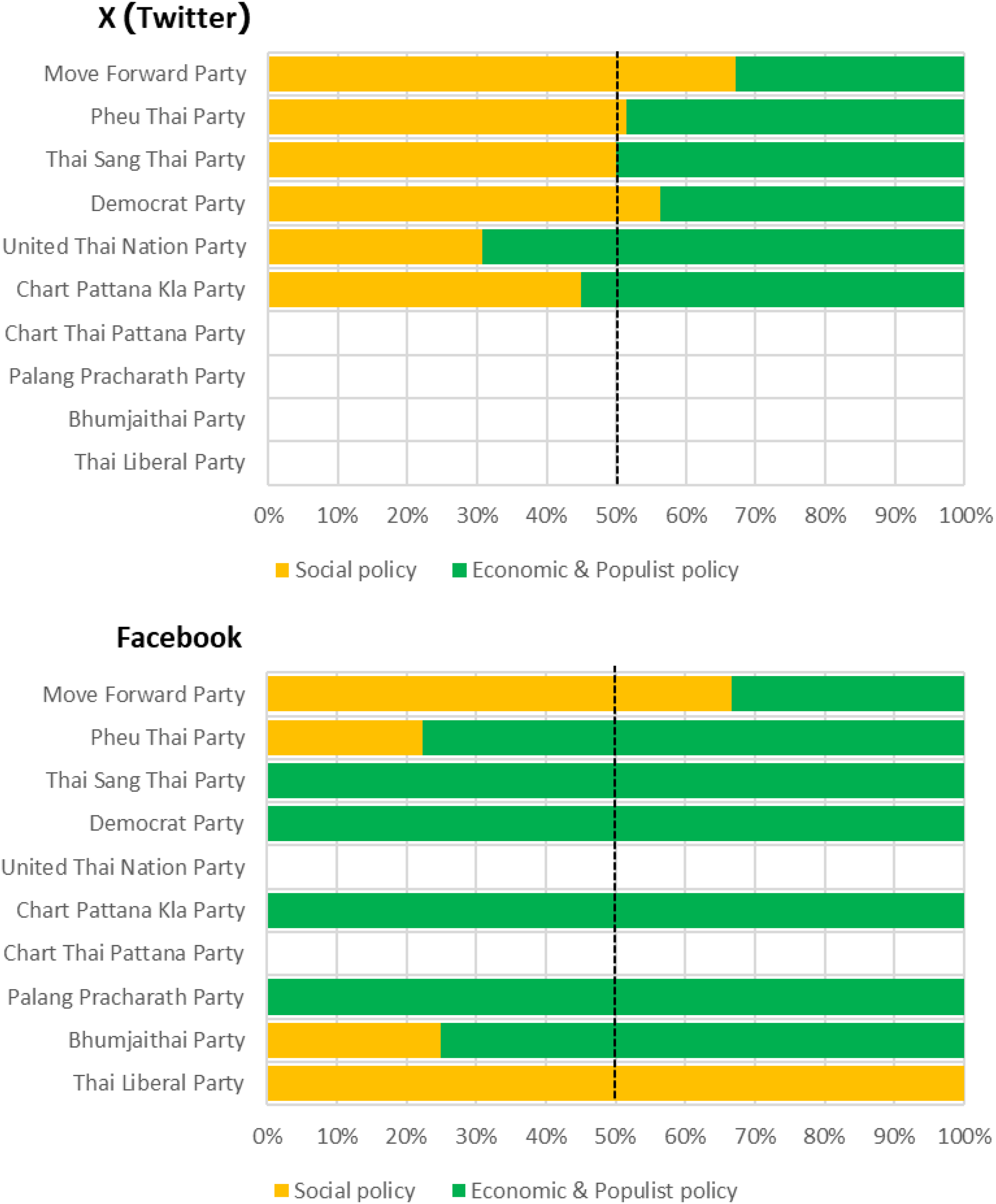
Proportion of Posts with Social Policy Content and Economic/Populist Policies Across Various Political Parties, Classified by Platforms X and Facebook.
Emphasising the platform-specific nuances in policy presentation, Facebook appeared to be a more popular medium for advocating economic and populist policies in comparison to X. Four political parties, Thai Sang Thai, Democrat, Chart Pattana Kla, and Palang Pracharath exclusively used Facebook to promote 100 per cent of their economic policies without any mention of social policies. Thai Sang Thai accentuated pension policies, promising to provide 36,000 baht annually per elderly individual while the Democrat underscored policies guaranteeing income for farmers and workers. On the other hand, Chart Pattana Kla emphasised policies involving the abolishment of credit bureaus and reduction of personal taxes; and Palang Pracharath emphasised on policies related to the 700 baht Pracharath card and allowances for the elderly. In the case of the Pheu Thai Party, approximately 80 per cent of their policy emphasis on Facebook pertains to economic policies, particularly the Digital Wallet policy.
An intriguing facet emerged as political parties such as the Move Forward party, singularly dedicated to conveying social policies, become the foremost political force with the highest number of voters. Move Forward Party's emphasis on structural reforms is starkly different from that of Pheu Thai Party, the party that came second in the election. For Pheu Thai Party, it had stuck with its “party's DNA” of being an economic-driven party; thus, campaigning heavily based on policies that aim to improve the economy at both micro and macro level. This phenomenon suggested a potential shift in the focus of contemporary voters from a previously paramount emphasis on economic concerns towards a broader consideration of social structural issues.
Discussion
Inspired by pertinent works in political communication and electoral behaviour, this study aimed to systematically categorise campaign narratives deployed by political parties on social network platforms in order to develop a better understanding of their strategies of persuasion. Thus far, we have explored the dynamics of online political campaigning of major parties in the 2023 general election of Thailand as we tracked the online activities of the ten prominent political parties with a social listening tool, spanning from one month prior to the election to two days afterward. As a result, we ended up with an original dataset comprising over 2500 unique posts disseminated by major parties on Facebook and X (formerly known as Twitter) within that timeframe for the analysis. First and foremost, we set out to investigate the hypothesis about economic and populist policies being the most prevalent strategy for political parties due to their appeals to voters. We found only partial support for that. Specifically, we found that while majority of the parties indeed dedicated a considerable portion of their campaign frames on economic policy, policy promises that sought to address social, structural issues seemed to be more effective in this election if we use the victory of the Move Forward Party as a benchmark. Notably, the party dedicated over 65 per cent of its campaign to social policies. This reiterated a critical juncture in Thailand's political landscape – a pivotal moment when voters’ concerns with deep social issues transcended their interests in the economy, encompassing a profound ideological shift that cuts across social cleavages.
The results from our analysis yielded several more takeaway points that contribute to the knowledge about elections in Thailand, situating our work within the larger corpus of communication and political behaviour literature. First, we found that despite their unique features such as affordability, expansive reach, and real-timeness, social network platforms were just one of the tools in the campaigning repertoires and parties did make a predetermined choice to be present on them. For instance, parties that enjoyed significant support from youngsters, such as the Move Forward and Pheu Thai Party, tended to opt for online platforms as a key channel to communicate with their potential voters, parties with older fanbase may not be as active online, instead emphasising on offline activities to cultivate personal ties. Second, each political party also had distinctive ways to post beyond the similar tactic of keeping the audience updated with general information. Third, in terms of temporality, parties tended to intensify their posting activities closer to the election day to increase engagement with followers. We found that nearly every political party prioritised general information in their posts in the proximity of election day; and mobilising messages also surged observably. Fourth, while parties also used credit-claiming and discrediting narratives, it was not as prevalent as expected. Relatedly, while this study did not delve into the use of dis/misinformation, it is possible that political parties may refrain from walking the fine line in their posts due to the stringent electoral laws laid out by the ECT (Arugay and Sriyai, 2023). A party can be disqualified from the race if it were to be reported and found guilty of using dis/misinformation in its campaign – or even sponsoring someone to do so. Therefore, fewer smear campaigns were observed. Nonetheless, it was possible that attacking narratives based on dis/misinformation might have emerged elsewhere outside of the official political party outlets. One possible outlet for such information operations was end-to-end encrypted (E2EE) messaging applications, such as Line (Sriyai, 2023). Due to their encryption technology, the E2EE applications remain an opaque realm where interventions from third-parties, researchers, or even the platforms themselves are, allegedly, impossible.
However, it is also important to note that impactful narratives only go so far and electoral campaigns do not happen in isolation. In fact, there are multiple undercurrent forces that may make or break parties’ electoral prospects. For instance, the surrounding political climate and emerging issues that become salient during the campaigning season. In months leading up to the election day, many polls pointed at Pheu Thai as the winner even though its top leaders had never participated in a single live debate with other parties. However, as the voting day approached, the party leaders’ stance on joining hands with the pro-military parties became more dubious compared to that of the Move Forward Party, who had been staunchly consistent with their “Mee-Loong-Mai-Mee-Rao (trans. ‘With uncles, there won’t be us.’)” slogan since the very beginning. To many voters who were still on the fence between the two parties on the basis of policy promises, a strong commitment to not align with the former coup-makers was enough for them to cast the ballot for the Move Forward Party instead of the Pheu Thai Party.
Footnotes
Acknowledgment
We thank School of Public Policy, Chiang Mai University for their funding support through the Targeted Research Grant.
Declaration of Conflicting Interests
The authors declared no potential conflicts of interest with respect to the research, authorship, and/or publication of this article.
Funding
The authors disclosed receipt of the following financial support for the research, authorship, and/or publication of this article: This work was supported by the Chiang Mai University.
