




Abstract
This paper explores the violence stemming from food riots in Latin American countries that have been triggered by recurring food crises in the twenty-first century, particularly impacting impoverished rural populations. The marginalized sectors of emerging countries, whose demands for basic rights such as the right to food go unaddressed by the State, may resort to protests that can escalate into confrontations. The recurrent food crises exacerbate the struggle to meet the basic needs of those who are unable to subsist regularly. This research focuses on a region that has received less scholarly attention compared to Africa and Asia, and examines indicators such as land grabbing, climate change, demographic pressures, political polarization, as independent variables to elucidate the association with food riot occurrences. The collected data and statistical analysis confirm the hypotheses, although further studies are required to enhance the performance of certain indicators.
Introduction
This paper examines the link between food insecurity and rural violence in Latin America, during the period 2000–2020, considering the growing number of individuals lacking sufficient access to healthy and adequate food. One of the outcomes, whether spontaneous or organized, is the demand for improved living conditions among the poorest segments of society. When such peaceful demonstrations are met with repression by the State, there is a likelihood of collective violence emerging in the form of riots. Our concern lies in exploring the potential association between factors that contribute to violence against the Establishment, specifically the insufficiency of food during times of economic crises, particularly for the most vulnerable individuals in societies where basic well-being for the poor cannot be guaranteed. Latin American countries, known for their high levels of inequality (Darvas, 2019), 1 possess the potential to witness political riots.
The three most critical periods in the last two decades regarding food insecurity, which we would be referring in this paper, in the analyses presented here are (1) 2007–2008 with the global financial crisis, resulting in a severe economic recession, when millions of people became unemployed and the economy collapsed; (2) 2011–2012 coincided with the end of the commodity supercycle, with the shrinking of the world economy, even impacting the capacity of States to invest in public policies to reduce inequalities, and finally (3) 2020-onwards was accompanied by the coronavirus disease 2019 (COVID-19) health pandemic, during which there was an abrupt decline in economic activities, also triggering a crisis of food insecurity. Therefore, in these recent decades, the economic situation, especially in emerging countries, has been compromised, leading masses to the streets to demand decent living conditions, mainly for the most deprived ones.
The definition of violence is quite comprehensive and can be interpreted in many ways. To leave no room for doubt, in this paper we will only work with direct violence, defined as “an event in time and space, which is brutal and visible, whose perpetrators are human beings” (Navas et al., 2018: 3). We will not deal with other categories of violence, being it structural or cultural.
Within Latin America, hunger has increased considerably, with around 30 per cent more people (or 56.5 million) going without food between 2019 and 2021 (United Nations, 2023). These people, therefore, do not have food security. “Food security [is achieved] when all people, at all times, have physical and economic access to sufficient, safe and nutritious food to meet their dietary needs and food preferences for an active and healthy life” (FAO, 1996). Despite researchers employing differing definitions, which can hinder the attainment of a consensus on this topic, the fundamental aspect of concern remains the nutritional well-being of individuals (Rudolfsen, 2018: 923).
On the contrary, food insecurity holds an opposing meaning and significantly impacts the most impoverished individuals in countries characterized by poverty and inequality worldwide. However, its effects are more pronounced in underdeveloped or developing nations, where an efficient support and welfare system for the most vulnerable population is lacking (Levin-Waldman, 2022). Food security encompasses not only the availability of food but also the ability to access or produce it for personal consumption. Generally, poverty is closely linked to food insecurity (Borras and Mohamed, 2020).
The impact of hunger is particularly severe among the vulnerable rural population, and having access to even a small plot of fertile land for food production (such as family farms) would alleviate part of the problem. 2 It is worth noting that in less developed regions like Latin American countries, the actual population living in rural areas and relying on agriculture for their livelihood is often higher than officially reported figures (Chomitz et al., 2005; da Veiga, 2004; The Economist, 2005).
Lately, the concept of food sovereignty has emerged as a response to the notion of food security, introducing the idea that is inherent in this term, based on the premise “[it's t]he right of each nation to maintain and develop its own capacity to produce its basic foods respecting cultural and productive diversity” (Borras and Mohamed, 2020: 306), despite the variations in soil fertility, climate, irrigation, and other factors among nations, these characteristics can result in countries lacking the conditions necessary to sustain domestic agricultural production and ensure food security for their population. Consequently, they may seek external solutions to mitigate this problem. This phenomenon is commonly referred to as “land grabbing” in the literature (Costantino, 2014). It involves the search for fertile and inexpensive land in foreign countries to produce food and energy inputs intended for the investing country or companies, often at the expense of vulnerable populations in the target countries.
As a result of unmet basic human needs, individuals affected by food insecurity, along with their supporters, voice their grievances to society. However, these claims can often be met with severe responses from security forces or private security, leading to a spiral of violence (Nassauer, 2018). The objective of this study is to investigate the violence stemming from food insecurity, specifically in the form of food riots, within Latin American countries. While food deprivation is prevalent in developing countries, research on this topic is predominantly focused on the African continent (Buhaug et al., 2015; Garcia-Arias et al., 2021: 10; Raleigh et al., 2015). Latin America is almost not comparatively treated as a region in studies focusing on collective violence via food riots, despite the fact that there are studies on certain countries or even some subregions of these countries. In the current paper, we will try to give a systematic treatment to the Latin American region as a whole with regard to the occurrence of food riots, looking for their determinants. Climate change stands as a significant explanatory factor influencing and exacerbating violence in rural areas due to food insecurity(Zimerman et al., 2022). Latin American countries, heavily reliant on agriculture and livestock production for both domestic consumption and food exports, are particularly vulnerable to the impacts of climate change. These impacts can range from floods to droughts. However, scientific research in this field remains limited (Su and Gagné, 2019: 21). Presently, the question is no longer whether climate change poses a risk for the emergence of conflicts, but rather under what circumstances it becomes a contributing factor to violent conflicts (ECDPM, 2019).
The global population has continued to increase significantly, rising from 5.3 billion in 1990 to 6.9 billion in 2010 [and reaching nearly eight billion in 2022, with projected figures of 9.7 billion in 2050 and 10.9 billion in 2100, as per UN projections (UN, 2019)]. As population density grows at the local level, the demand for food also intensifies, leading to soaring prices. Consequently, marginalized groups in underdeveloped or developing countries face challenges in accessing food. In these countries, the poorest segments of the population are growing fast and the respective governments struggle to redistribute benefits to them. Therefore, the situation becomes even more arduous for those in dire need.
The production of biofuels by large producers, driven by national incentives, contributes to the escalation of food prices and also impacts the increased value of land (Borras et al., 2010; Bush and Martiniello, 2017; Newman, 2020: 302; Patel and Mcmichael, 2009: 22). This situation poses challenges for small farmers and rural workers who struggle to acquire land or are pressured to sell their land to agribusiness. Unfortunately, these practices do not align with the intended environmental preservation goals (Ahmad, 2017; The Times of India, 2009).
In times of economic, social, and/or political crises, which are unfortunately experienced for prolonged periods in many Latin American countries, such situations can be exploited by politicians and/or political parties seeking to enhance their electoral base and gain an advantage over their rivals through negative polarization. This exacerbates animosity between different groups within society and leads to political instability (Lupu, 2015). These toxic environments, created by manipulating public opinion with hidden political interests and fostering extreme polarization among society and elites, can result in increased violence and more victims.
We would like to examine the mechanism through which food insecurity among economically disadvantaged and politically marginalized sectors in the rural areas of underdeveloped and developing Latin American countries can contribute to the occurrence of violent food riots. To achieve this, we will begin by exploring the phenomenon of food riots, followed by a comprehensive analysis of key indicators, namely land grabbing, climate change, demographic pressures, and political polarization. These indicators have been identified and discussed in previous research (Zimerman, 2023), 3 illustrated by data, with tables, figures and maps. In this present research, by addressing these factors, our aim is to provide an explanation for the occurrence of food riots that have been observed in numerous countries across Latin America, even with these countries being very heterogeneous, be it their territorial size, population dispersion/numbers, agricultural and livestock production, land concentration, irrigation, and countless other factors. However, somehow, we will need to standardize them to carry out a regional investigation on the proposed association.
The results achieved for Latin American countries show many variables with statistically significant associations with the occurrence of food riots, such as (1) larger area occupied by land grabbing; (2) lower tenure security for the next five years; (3) more urbanization; (4) lower employability; (5) greater political polarization, (6) more inequality; and (7) higher incidence of hybrid regimes. Some variables were not statistically significant (food prices, rural population, ageing of the population) and others had a significance contrary to expectations, basically due to intrinsic data issues or high bivariate correlation.
However, it was important to insert data from other countries in other regions of the world to compare with those from Latin America, and we found a significant association between the occurrence of food riots and (1) higher food prices; (2) with prevalence of malnutrition; and (3) with less ageing of the population.
Factors Analyzed in This Paper
Dependent Variable: Food Riots
Throughout history, food riots have been a recurring phenomenon, particularly during the late modern period characterized by increasing urbanization, which brought together large numbers of people in densely populated areas. This facilitated collective demands by organized groups with leadership, directed towards local, regional, or national authorities. The scarcity of food or difficulties in accessing it due to high prices and limited supply have often served as mobilizing factors for such groups in food riots. While additional demands may be intertwined with the issue of food, it appears to be a primary driver for collective mobilizations (Heslin, 2021: 203; Koren and Bagozzi, 2016).
However, having grievances alone, such as hunger, is insufficient for collective action to occur. Other factors, including political opportunities, available resources, and various contextual elements, must accompany these grievances to effectively trigger and sustain collective mobilization (Simmons, 2014). It is essential to recognize that food riots have a political dimension and are intricately tied to power struggles and exploitative social relations of production between food producers and consumers (Patel and Mcmichael, 2009: 11–21). As such, food riots may not solely revolve around food price increases but can also reveal broader societal grievances stemming from political instabilities (Newman, 2020: 306).
There is no universal consensus on the definition of food riots. Different definitions range from restrictive conditions that involve casualties to more inclusive definitions that encompass peaceful demonstrations as well. Among the various definitions, the definition provided by the World Bank appears to be the most suitable. It encompasses violence as a consequence, without specifying deaths, and links the concept to popular and collective dissatisfaction stemming from rising food prices and the challenges faced in accessing essential food products. Therefore, for the purpose of this paper, we will adopt the World Bank's definition of food riots: “a violent, collective unrest leading to a loss of control, bodily harm or damage to property, essentially motivated by a lack of food availability, accessibility or affordability, as reported by the international and local media, and which may include other underlying causes of discontent” (Cuesta, 2014: 6).
The association between food riots and violence as comparative regional analysis has been more extensively studied in regions such as Africa and parts of Asia, while research specifically focused on Latin America for that matter is relatively limited. Certainly, there are scientific publications dealing with Latin America for the mentioned independent variables that we will develop in this paper, however, not many are directly associated with food riots and these explanatory variables. However, several studies have investigated certain countries in the region, such as Brazil (Oliveira, 2016), Colombia (Arbeláez-Ruiz, 2022), and Mexico (Katz, 2016), among the most studied, without being comparative and systematically within Latin American. Rudolfsen (2018) conducted a literature review on the link between food insecurity and domestic instability, and the majority of the nineteen recent analyses covered mostly African countries alone. This highlights the need for further investigation into the specific context of Latin America, even though food prices have significantly increased in this region. It is indeed essential to explore whether the variation in food prices can lead to food riots and political instability in Latin American countries.
There are indications from studies, such as Natalini et al. (2015), that fluctuations in food prices can contribute to the occurrence of food riots. Africa and Latin America have seen an average increase in prices of food items of six and five times over the past two decades (FAO, 2023; Zimerman, 2023: 7), which in theory could facilitate instabilities and trigger collective violence.
To investigate the factors associated with food riots in Latin America, we can consider indicators such Land Grabbing, Climate Change, Demographic Pressures, Political Polarization, Inequality and Regime Type, as shown in the following subsections.
Independent Variables
Land Grabbing
Land deals, commonly referred to as land grabbing in academic literature, involve the acquisition of inexpensive land in the Global South by companies or countries. These land acquisitions are typically aimed at cultivating flexible crops such as soy, palm oil, maize, cassava, and sugarcane, which can be utilized for human or animal food, biofuel production, or industrial inputs. The choice of crops may vary seasonally based on profitability, and the investment can involve financing both the farmland itself and the commodities produced (Garcia-Arias et al., 2021: 3).
Indeed, land grabbing in Latin America has historical roots dating back to colonial times and has seen a significant increase since the beginning of the twenty-first century. It had a notable impact during the global food crises of 2007–2008 and 2011–2012, as well as during the ongoing COVID-19 pandemic (Costantino, 2014).
One distinguishing factor in Latin America is the relatively lax restrictions imposed on foreign investors, particularly agribusinesses and large corporations, regarding land acquisition and resource exploitation. Many Latin American countries have facilitated the entry of foreign investors, creating favorable conditions for them to acquire land and profit from agricultural investments (Scoppola and Prontera, 2020; Søndergaard, 2020).
Large-scale land acquisition in countries with cheap land often includes the production of biofuels as an intended purpose. The concept of using biofuels as a more environmentally friendly alternative to fossil fuels initially seemed promising, as it aimed to reduce greenhouse gas emissions and create employment opportunities for rural workers, thus improving local economies. However, the production of biofuels is not without its environmental challenges. While biofuels themselves may have lower emissions when used as an energy source, the production process can be highly polluting. It often involves the use of diesel-powered machinery, excessive use of fertilizers, and other practices that contribute to pollution and environmental degradation (Ahmad, 2017; Cudlínová et al., 2020; The Times of India, 2009). Additionally, the competition between biofuel production and food crops can pose a threat to food security, as agricultural land and resources are diverted from food production to biofuel production.
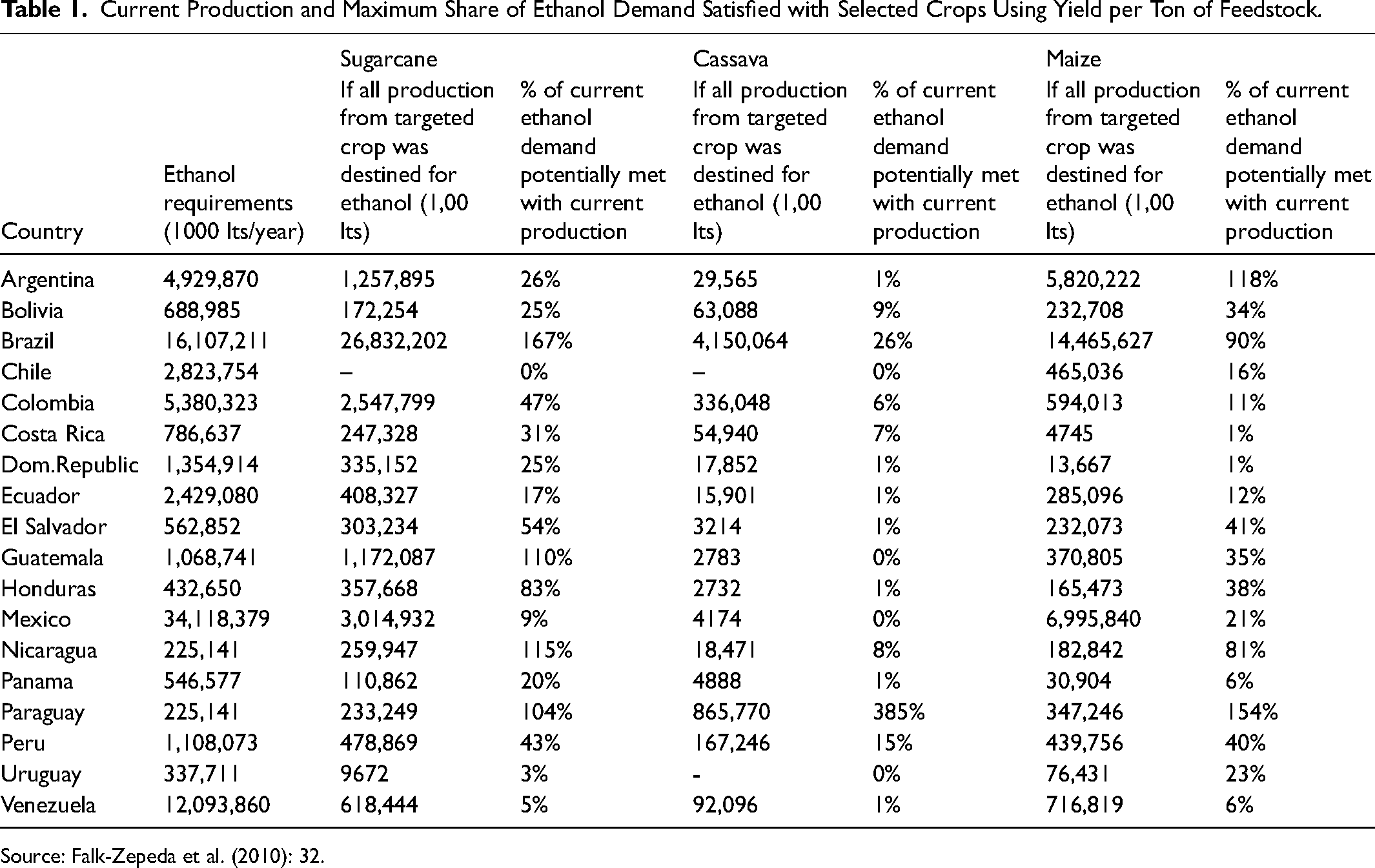
The production of energy by biofuels in Latin American countries, whether through sugar cane, corn, soy, cassava, or palm oil is widely spread, leading to a reduction in food supply and affecting its value, which is particularly pronounced in the limited incomes of the most vulnerable populations in these countries according to Table 1. The initial idea was to lower the price of fossil fuel, create jobs, and improve the quality of the air/environment. However, large agribusiness conglomerates, often capitalize on the stock exchange, embrace mechanization, and advanced technology, requiring minimal labor force. Their profits are channeled to foreign headquarters. The aim to curtail pollution falls short due to the employment of pollutants throughout the crop production process. Ultimately, the depreciation of ethanol in comparison to fossil fuels hinges on the dynamics of supply and demand within the global market.
Current Production and Maximum Share of Ethanol Demand Satisfied with Selected Crops Using Yield per Ton of Feedstock.
Source: Falk-Zepeda et al. (2010): 32.
There have been advancements in the development of second, third, and fourth-generation biofuels, which aim to address some of the environmental concerns associated with first-generation biofuels. These advanced biofuels use non-food feedstocks and employ more sustainable production processes. However, these newer generations of biofuels are still not widely developed or economically viable on a large scale (Abbasi et al., 2021; Mahapatra et al., 2021).
It is important to consider the potential environmental and social impacts of biofuel production, as well as the trade-offs with food security when assessing the implications of large-scale land acquisitions for biofuel production in Latin America.
The inclusion of first-generation ethanol, derived from crops such as sugarcane or corn, in gasoline blends in several countries, is a relevant issue to consider. While the intention behind this policy is to promote renewable energy and reduce greenhouse gas emissions, the production and use of these biofuels have had mixed environmental and social consequences.
In countries like Brazil, where sugarcane ethanol production has been a significant industry for several decades, the expansion of biofuel production has contributed to the profitability of land acquisitions by foreign conglomerates. This, in turn, can drive up land prices and make it more difficult for small farmers and marginalized communities to access land for food production (Tomei and Helliwell, 2016).
There is an impact of biofuel production on biodiversity. The expansion of biofuel crops often involves converting diverse ecosystems or agricultural lands into large-scale monocultures, where a single crop dominates the landscape. This transformation can lead to the loss of natural habitats, reduced biodiversity, and disruption of ecological processes (Tudge et al., 2021).
Regarding the anticipated benefits of increased employment in biofuel plantations, the reality has been more complex. While there may be some job creation in the biofuel industry, the level of employment has not always met expectations. Instead, the focus has shifted towards mechanization and the use of machinery, which reduces the demand for manual labor. “[R]ising food prices caused food riots in Mexico in December 2007, which later spread to other impoverished communities in developing countries” (Ahmad, 2017: 284).
This can have implications for rural communities that were expecting increased job opportunities and improved working conditions.
The real estate values in Latin American countries can be influenced not only by legal market dynamics but also by illegal activities such as drug production and trade. The presence of illicit drug economies, particularly in countries like Bolivia, Peru, and Colombia, can significantly impact land values in the region (Dell’angelo et al., 2021). In some of the Central American countries, narcotrafficking organizations also contribute to deforestation, clearing land for drug production, and establishing transportation routes for delivering illicit products (Tellman et al., 2020). Criminal organizations involved in drug trafficking may use land as a means to launder money and invest their illicit proceeds, which can drive up land prices and make it more difficult for small landowners or rural workers to access and purchase land for their livelihoods.
Furthermore, the process of land grabbing in Latin America is often associated with violence and coercion (Dell’angelo et al., 2017). Powerful actors, including large corporations or criminal networks, may use force or intimidation to acquire land, displacing local communities and undermining the rights of small landowners and rural workers. This not only perpetuates social inequalities but also hampers the ability of marginalized groups to secure land for agricultural production and livelihoods, even though it has developed agribusiness and transformed agricultural production with cutting-edge technology in countries such Brazil (Da Silva and Bambi, 2019).
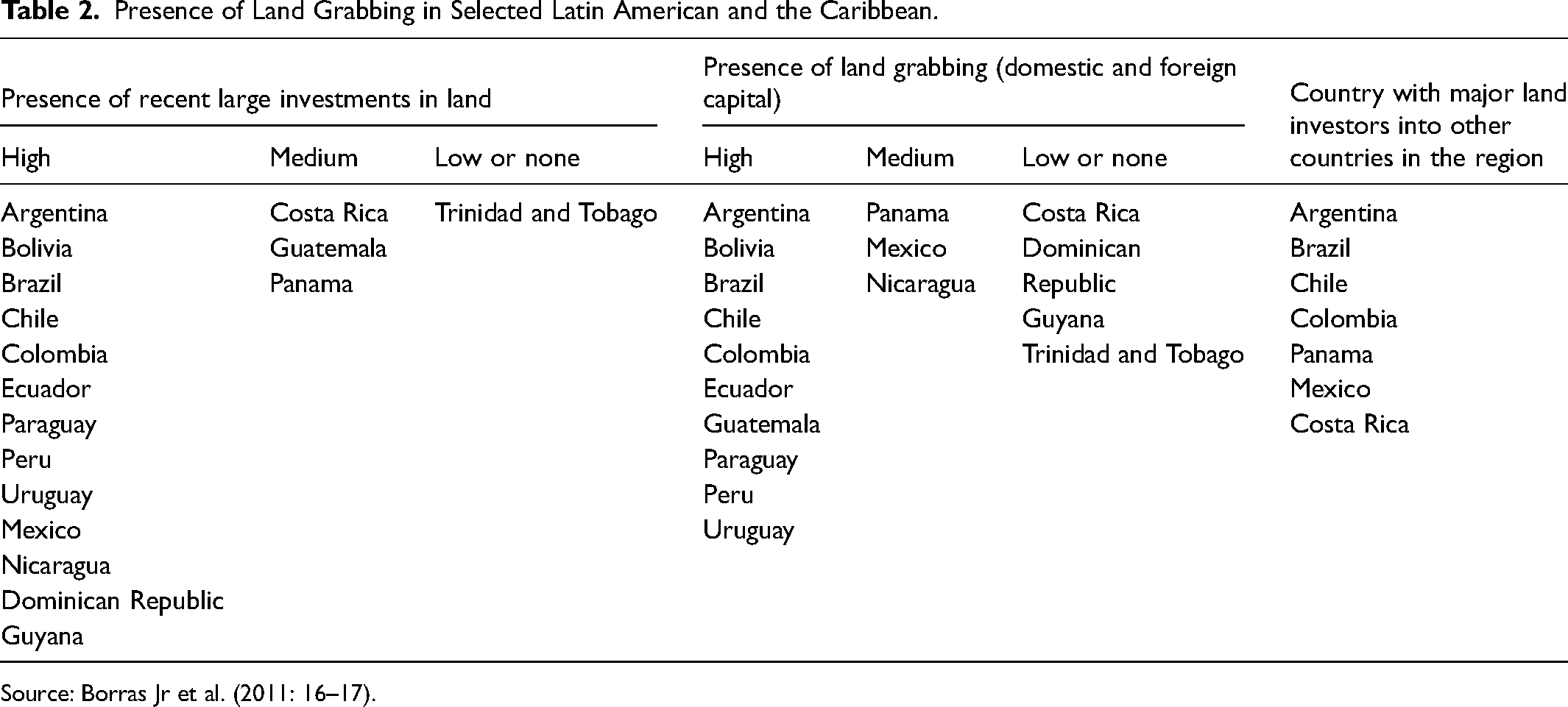
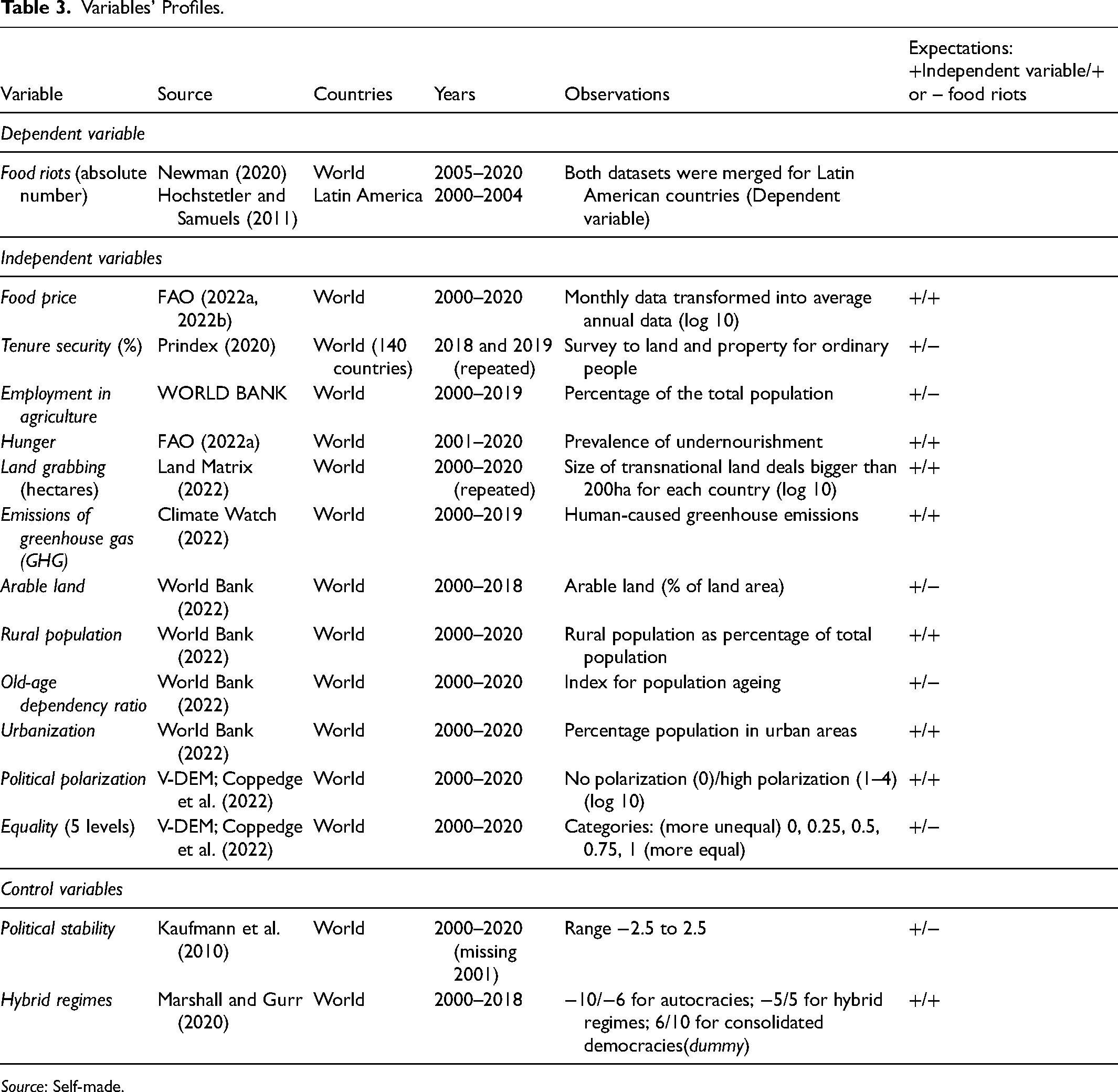
Land grabbing is a practice that leads to the consolidation of the already existing concentration of land in Latin America, which has persisted over a long period and shows no signs of diminishing (Frankema, 2009). To illustrate this, in Uruguay in 2015, approximately forty agribusiness companies had control over 12 per cent of the productive land area. It is important to note that this estimate may actually be lower than the actual figure due to limited data availability (Oyantçabal and Narbondo, 2018) (Tables 2 and 3).
Presence of Land Grabbing in Selected Latin American and the Caribbean.
Source: Borras Jr et al. (2011: 16–17).
Variables’ Profiles.
Source: Self-made.
Even when there are laws prohibiting or restricting the acquisition of land by foreigners or by large companies in the agricultural sector, the influence of the agribusiness lobby in several Latin American countries is significant. Consequently, they often succeed in pressuring for changes in legislation that facilitate land grabbing (Brito et al., 2019: 7). In today's increasingly globalized world, where economies of scale prevail, mega-companies join forces to compete in markets that concentrate resources and exclude small producers from participating in this process.
H1. The greater the land grabbing, more food riots violence.
Climate Change
Climate change can indeed be considered one of the most significant challenges humanity faces in the twenty-first century (Spikin and Hernández, 2016). It poses a threat to the very existence of life on Earth. The recent pandemic, despite the humanitarian catastrophe it has caused, had an unintended positive consequence: the reduction of greenhouse gas emissions resulting from the halt in industrial and economic activities for an extended period. This unprecedented pause allowed scientists to scientifically assess the detrimental impact of these pollutants on the planet during normal times (Rodríguez-Fernández et al., 2020; Sthel et al., 2021).
Until the industrial revolution, the Earth's temperature remained relatively stable for thousands of years, with minor variations. However, the rapid and extensive use of oil, widespread deforestation, loss of biodiversity, monoculture farming practices, inadequate recycling efforts in many regions of the southern hemisphere in the face of increasing consumption, and the disposal of non-decomposable waste from industrialized countries to developing nations have disrupted the natural balance. These factors have contributed to a range of impacts, including rising temperatures, melting glaciers, ocean warming, decreased rainfall leading to droughts in certain regions, increased flooding in others, and more frequent occurrences of extreme natural phenomena.
Climate change has broad implications beyond environmental and developmental aspects. It has already entered the sphere of national security for countries, and can only be mitigated or managed through international cooperation (Cockburn et al., 2018; ECDPM, 2019: 5).
The condition of global warming alone is having a profound impact on every human being. With the current rate of environmental degradation, there is a growing likelihood of increased intensity and frequency of droughts and floods, leading to more violent conflicts arising from climate change (Guzman, 2014: 8). However, it is the poorest in developing countries who will suffer the most from the direct consequences of this phenomenon (Homer-Dixon, 1994; Theisen et al., 2013), particularly those living in rural areas. They will face challenges such as the inability to afford food, which becomes substantially more expensive due to reduced supply resulting from climate conditions and decisions to prioritize biofuel production over food production. Additionally, they will struggle to produce food themselves due to the same issues. Furthermore, these vulnerable populations often lack sufficient state support to mitigate the impact of such natural disasters. In developing countries, particularly in regions like Latin America, poor families typically allocate around 70–80 per cent of their income towards food expenses. As a result, a sudden and significant increase in food prices due to climate change could lead to hunger and malnutrition, further exacerbating poverty (Otto et al., 2017: 1654). According to FAO (2019), the combination of conflict, climate change and economic marginalization is the great threat of our time. On the other hand, families in developed countries spend a much smaller portion of their income on food, approximately 10–15 per cent, making them less vulnerable to such price shocks.
Numerous scholars have extensively researched the environmental degradations that impact low-income populations in developing countries, including regions beyond Latin America. However, for our current investigation, we are focusing on Latin American countries, particularly the impoverished segments that heavily rely on agriculture and feedstock production.
One notable case that directly illustrates the impact of climate change in Latin America is the severe drought experienced by Bolivia in 2016. It was the country's worst drought in twenty-five years and triggered violent protests in urban areas (Schmidt, 2016). This event highlights the vulnerability of communities and the potential for social unrest when natural resources, such as water, become scarce due to climate-related factors. It is important to note that such occurrences are not isolated to Bolivia but are recurrent throughout various countries in the region. These incidents underscore the need for further comparative investigations within these states to better understand the complex dynamics between climate change, environmental degradation, and social unrest.
Over a span of sixteen years, from 2000 to 2015, Brazil witnessed a significant increase in its demand for beef, driven by global demand, particularly from countries like China (Han and Xiawei, 2020). This surge in demand led to the expansion of cattle ranching, which in turn resulted in large-scale deforestation of the Amazon region. Tropical forests were cleared to make way for pasture lands, often facilitated by land-grabbing practices and fueled by financial speculation (Bowman et al., 2012: 233; Caviglia-Harris, 2018). “From 2001 to 2013, cropland increased by 17 per cent and twenty-two pasture increased by 57 per cent converted from forest in Latin America and the Caribbean” (Jia et al., 2019: 187) The deforestation of the Amazon rainforest not only poses a threat to biodiversity and indigenous communities but also contributes to the release of greenhouse gases. These environmental changes, in turn, have adverse effects on food production and can contribute to the occurrence of food riots.
Guatemala has long experienced food insecurity, with approximately half of its children under the age of five suffering from malnutrition and around 15 per cent of adults facing malnourishment. The primary cause of this situation is the reduction in available water due to climate change, which is inadequate for agricultural activities and food production. Consequently, the country heavily relies on grain imports, leaving the population vulnerable to fluctuations in international market prices (Vargas et al., 2018).
The extensive list of countries impacted by climate change is accompanied by popular reactions in the form of food riots, particularly affecting the poorest and most vulnerable segments of society. As a result, the majority of the population in Latin American countries is well aware of the existence of climate change, the role of human activities in causing this issue, and the urgent need to address it as a top priority (Azócar et al., 2020: 29).
When discussing climate change in the Latin American context, the Amazon rainforest immediately comes to mind. The Amazon spans across nine different countries in the region. Preserving the integrity of this vast forest is crucial as it has the potential to mitigate the effects of climate change through the removal of carbon from the atmosphere (Silva et al., 2019: 510). By acting as a carbon sink, the Amazon rainforest plays a vital role in regulating global climate patterns and maintaining ecological balance. Protecting and conserving this unique ecosystem is essential not only for the region but for the entire planet.
Latin American countries such as Argentina, Bolivia, Brazil, Chile, and Peru have been affected by climate change, experiencing phenomena like droughts, floods, reduced rainfall, and temperature spikes. These environmental changes have social implications, particularly for the vulnerable and impoverished populations within these nations. According to Spikin and Hernández (2016: 6), the social issues linked to inequality and the vulnerability of the impoverished population in these countries may be associated with social unrest manifested in the form of food riots.
H2. The more extreme the climatic changes, the greater the risk of violent food riots.
Demographic Pressures
Demographic pressures have a significant impact on the nature of violence in rural areas of underdeveloped or developing countries (Goldstone, 2001). The United Nations projects a substantial increase in global population, with nearly 20 per cent growth expected within the next thirty years and around 30 per cent growth by 2100. The majority of this population growth is predicted to occur in developing regions such as Africa, Asia, and Latin America. This rapid population growth exacerbates poverty and worsens living conditions for vulnerable populations. These growing populations have increasing food needs, but the rising prices of food make it challenging for them to afford an adequate diet. Additionally, only a few individuals receive social benefits that could assist them in meeting their nutritional requirements.
Land concentration in Latin American and Caribbean countries is already substantial, as highlighted by studies conducted by Dell’angelo et al. (2021) and Edelman and León (2013). This concentration of land is expected to further increase, particularly in countries that play a significant role as food suppliers through agribusiness. These countries rely on large-scale land establishments to export agricultural products to various regions worldwide, particularly in the northern hemisphere, which heavily depend on imports as they face inappropriate climatic conditions for cultivating a wide range of food products, a situation exacerbated by the challenges posed by climate change.
The increasing utilization of advanced agricultural machinery in rural areas has resulted in reduced employment opportunities, particularly for young people. As a consequence, poverty rates are expected to rise, disproportionately affecting this demographic group. Small-scale producers often find themselves compelled to sell their land to agribusiness companies or relinquish ownership in exchange for debt relief. This process, driven by neocapitalist pressures and supported by export-oriented policies implemented by numerous governments in developing countries, has led to the displacement of families who have resided in these locations for generations. Various Latin American countries, including Nicaragua and Guatemala, have witnessed such examples of land dispossession and displacement (Carte et al., 2019).
In the Malthusian Theory (Weir, 1991), population growth is depicted as exponential, which implies that it would eventually surpass the capacity to produce enough food for everyone, leading to widespread starvation. This Malthusian rationale has proved to be erroneous, as the present reality indicates that hunger is not the result of insufficient food availability, but rather stems from inadequate economic means to acquire food (Sen, 1983), since there is enough food in the world for there to be no hungry people. True eradication of hunger can only be achieved by ensuring that every worker has stable employment and a sufficient income to purchase the food they need” (Esteves and Teixeira, 2023).
The major issue is the inequality that, on one side, generates wealth for a few and poverty for many, rendering the latter unable to purchase (enough or sufficient) food. The combination of hunger and inequality can have severe consequences, including political instability manifested through food riots. These riots may have different underlying political motivations, but the demand for food remains a central issue. It is important to recognize that rapid population growth is not the sole factor contributing to political unrest and violence in today's world. However, its potential contribution should not be disregarded. In situations where economic prospects are grim, population pressures are mounting, suffering remains unaddressed, and governments fail to fulfill their promises, long-standing divisions based on ethnicity, religion, or other factors can be reignited. Under such circumstances, demographic trends can play a crucial role in global security, as highlighted by Walker (2016: 1000).
Contrary to the previous descriptions, there is a noticeable global trend towards the natural ageing of populations, characterized by low birth rates (Cotlear, 2011). This demographic shift is expected to continue in the long run. Projections by the United Nations for Latin America indicate that by 2050, the region's population will reach approximately 734 million people, representing a 17 per cent increase compared to the population level in 2015 (620 million). However, the age structure of the population will undergo significant changes, with a higher proportion of elderly individuals and a decline in the number of children. The progressive ageing of the population is accompanied by reductions in both mortality and fertility rates, although the specific demographic performance varies across countries (Amarante et al., 2021: 845–846).
Social movements often draw participation from a younger demographic, as noted by researchers such as Loaden et al. (2014) and Norris (2003). However, the ongoing trend of population ageing may impact the mobilizing power of these movements, leading to a decline in the number of participants and potentially weakening their efforts for greater equality in rural areas. Young people, who are more likely to face exclusion and marginalization, particularly in times of economic crisis, may have limited job opportunities and less incentive to engage in activism that could shape their future (Olawale and Olonisakin, 2021). Consequently, the ageing population may result in fewer young individuals actively involved in food riots or participating in violent protests, which could have adverse effects on the effectiveness and impact of these movements.
Urbanization plays a significant role in facilitating mass mobilization and riots, as highlighted by Vicino and Fahlberg (2017). While studies have primarily focused on Asia (Choi and Kim, 2019), these dynamics can also apply to other regions, particularly in developing countries where rapid urbanization has led to the exclusion and marginalization of millions of people who live in slums, lacking stable employment, and struggling to access regular food (Buhaug and Urdal, 2013; Glaeser, 2020). Furthermore, there is a media bias that tends to over-report food riots occurring in urban areas, overshadowing numerous incidents that take place in rural areas and remote corners of large cities (Hussain et al., 2017). This skewed portrayal creates an imbalanced perception, as the phenomenon of food riots should not be solely associated with urban contexts but should be examined from a broader perspective.
H3. The greater the rural population, more risk of food riots.
H4. The greater the ageing of the inhabitants of rural areas, less risk of food riots.
H5. The greater the urbanization, higher the risk of food riots.
Political Polarization/Party Sorting
Political polarization refers to a shift away from the political center towards extreme ideological positions (Fiorina and Abrams, 2008; Fiorina and Levendusky, 2006; Fiorina et al., 2008). This can manifest as a widening gap between political actors who hold contrasting ideological preferences (Abramowitz and Saunders, 2008). It may be driven by either the masses of voters or by elites within the political sphere. The former is referred to as polarization, while the latter is known as party sorting, which involves the ideological fragmentation of politicians and parties (Mccarty et al., 2008). Political polarization and party sorting pose risks to social cohesion and political stability, causing concern among political scientists. They are often associated with legislative gridlock and economic disruption (Lupu, 2015; Zimerman and Pinheiro, 2020). This phenomenon can potentially fuel violent riots, particularly when inflamed and antagonistic rhetoric exacerbates existing societal divisions, like when populations are struggling to afford basic food for subsistence.
While political polarization can have positive effects such as increased voter turnout, a more programmatic party system, and stronger party-voter connections (Béjar et al., 2020; Bornschier, 2019; Moraes and Béjar, 2022: 10), it also poses a threat to young democracies, particularly in Latin American countries that transitioned to democracy in the mid-1980s. It opens up space for institutional ruptures and the resolution of ideological conflicts through violence (Handlin, 2017; McCoy et al., 2018). Political polarization can lead to animosity and violence, especially when combined with economic and food crises in politically fragile countries. This can result in clashes between the marginalized segments of society and the political and economic elites.
In many Latin American countries, particularly since the beginning of the twenty-first century, the political landscape has been marked by a notable contrast and polarization of ideological positions among politicians and political parties. This phenomenon of “party sorting” entails a shift between progressive and conservative profiles, sometimes intertwined with elements of populism, whether on the left or right side of the ideological spectrum. While the alternation between these positions can be beneficial for democracy, it is important that the contrasts are not excessively extreme, so as to maintain a peaceful rivalry in the pursuit of power rather than a contentious political war (Bonansinga, 2022; de la Torre, 2017; Fernandez, 2021; Yörük and Comin, 2020).
Polarization can be utilized to create a divisive narrative that portrays society as being divided into two opposing camps, fueling conflict and undermining both democracy and national unity. This form of polarization, often referred to as pernicious polarization, distinguishes itself from other types by its detrimental impact on democracy and the process of democratization (Somer et al., 2021). It perceives the victory of the opposing side as a catastrophe rather than a normal outcome of the political and democratic process. In its efforts to undermine the legitimacy of the opposing political rival, it may resort to disqualification, challenging the victory through claims of electoral fraud and other justifications.
H6. Political (pernicious) polarization can facilitate the occurrence of food riots.
Inequality and Regime Type
Land grabbing, climate change, demographic pressures, and political polarization can be highly detrimental and contribute to the occurrence of food riots in developing countries. These variables are necessary but not sufficient. However, other factors must also be present to trigger food riots. Inequality within populations (Ranaldi and Milanović, 2022) and the type of political regime can serve as triggers for food riots.
Inequality can have a significant impact on the participation of marginalized individuals in food riots, particularly in impoverished and developing nations where the state lacks the capacity or willingness to provide adequate support for the most vulnerable populations, unlike in more developed countries (Levin-Waldman, 2022). It is crucial to consider the high levels of inequality in Latin America, the region under investigation, which is known to be the most unequal (Frankema, 2009). Given the prevalence of hunger and the need for additional assistance for basic subsistence in this region, the study of inequality should be closely examined in conjunction with other variables.
The quantitative literature on civil wars identifies a particular type of political regime known as anocracy (Vreeland, 2008; Regan and Bell, 2010; Walter, 2022) as being most susceptible to experiencing internal violence when additional variables are present. Anocracy, also referred to as intermediate or hybrid regimes, combines elements of both democracy and autocracy. In contrast, autocratic regimes and well-established democracies are considered less likely to experience escalated civil violence. In autocratic regimes, the level of repression is typically high enough to deter rebel groups from challenging state forces, while consolidated democracies value and allow peaceful demonstrations without risking state insurgency or a coup. We can draw parallels and similarities between the triggering mechanisms of civil wars and food riots, particularly regarding the type of regime that either facilitates or hinders the occurrence of collective violence (Brück and D’errico, 2019; Shemyakina, 2022).
Control hypotheses:
H7: Less unequal countries are at lower risk of having food riots.
H8: Countries with a hybrid political regime facilitate the occurrence of food riots.
Data and Methods
This research focuses on countries in Latin America that had more than one million inhabitants between the years 1985–2021, so that some states (specifically in the Caribbean) with very low populations are not present in this study. There are twenty Latin American countries included in the analysis: Argentina, Bolivia, Brazil, Chile, Colombia, Costa Rica, Cuba, Dominican Republic, Ecuador, El Salvador, Guatemala, Haiti, Honduras, Mexico, Nicaragua, Panama, Paraguay, Peru, Uruguay and Venezuela. Therefore, nearly all countries in the region are included in this analysis, contributing significantly to the population sample. The investigation period is 2000–2020, where we managed to go through three major contemporary food crises (2007–2008; 2011–2012; 2020-onwards) representing the most significant food crises of the twenty-first century, where the less privileged segments of the population in both developing and underdeveloped countries were the most adversely affected by this phenomenon.
In order not to be caught into selection bias, in addition to the twenty Latin American countries analyzed, we carried out a parallel explicative analysis with 147 countries in the world with a population greater than one million, to have a comparative basis.
The operational measurement of agrarian violence resulting from food crises in Latin American countries was conducted through the observation of food riots, as our dependent variable. We have gathered data from two distinct sources for our analysis to supplement the historical data series for the current century. Firstly, we collected data from the Hochstetler and Samuels (2011) dataset, for the years 2000–2004, 4 specifically focusing on Latin American countries. Secondly, we obtained data for years 2005–2020 from the Newman (2020) database, 5 which encompasses food riots worldwide. It is worth noting that while there is a proliferation of data on general riots in recent times, finding specific data on food riots for the twenty-first century remains relatively scarce. Therefore, these two datasets on food riots were the most reliable sources available for countries in (1) Latin America and (2) the world.
Our secondary data that we have built our dataset consist of unrest incidents that encompass a range of events, including riots, demonstrations, and protests, in which conflicts related to food price increases serve as a motivating factor, even if not the sole cause. These events can exhibit varying degrees of violence, ranging from high-intensity incidents involving deaths, injuries, and property damage, to low-intensity instances involving clashes between protesters and law enforcement in the context of peaceful demonstrations and protests (Newman, 2020: 308–309). The definition of the dependent variable used in the data created by Newman (2020) and Hochstetler and Samuels (2011) is quite similar with the one chosen in the food riots’ theoretical section (Cuesta, 2014), and thus, suitable for the subsequent analysis.
Three independent variables, which were used to build a standardized dataset got specific transformation from the original format: (1) Monthly food prices were converted into annual averages, in addition to being log transformed; (2) land grabbing area, for agricultural establishments, larger than 200 hectares was also log-transformed; (3) similarly, political polarization was converted into a log 10 scale. All these transformations followed the standard procedures required for data processing in the analyses.
The table presents data for the variables we will try to explain the incidence of food riots, with their source, how many countries or regions they cover, the years, and additional observations.
We have used Poisson distribution for modeling the dependent variable, which is well-suited for rare events occurring independently in a large population (Cai et al., 2010). In the specific case of food riots, similar to wars and coups d’état, they are infrequent occurrences, particularly when considering the observation unit as country-year. In the dataset for Latin American countries, there are 420 country-year observations, and out of these, only thirty-seven cases of food riots are recorded (8.8%) across sixteen countries out of a total of twenty. Similarly, for the global dataset, there are 5301 country-year observations, and only 217 cases of food riots (4.1%) are documented across eighty-one countries out of a total of 147. It is important to note that there can be multiple instances of food riots within a single country-year, and cases may be repeated in subsequent years for the same country.
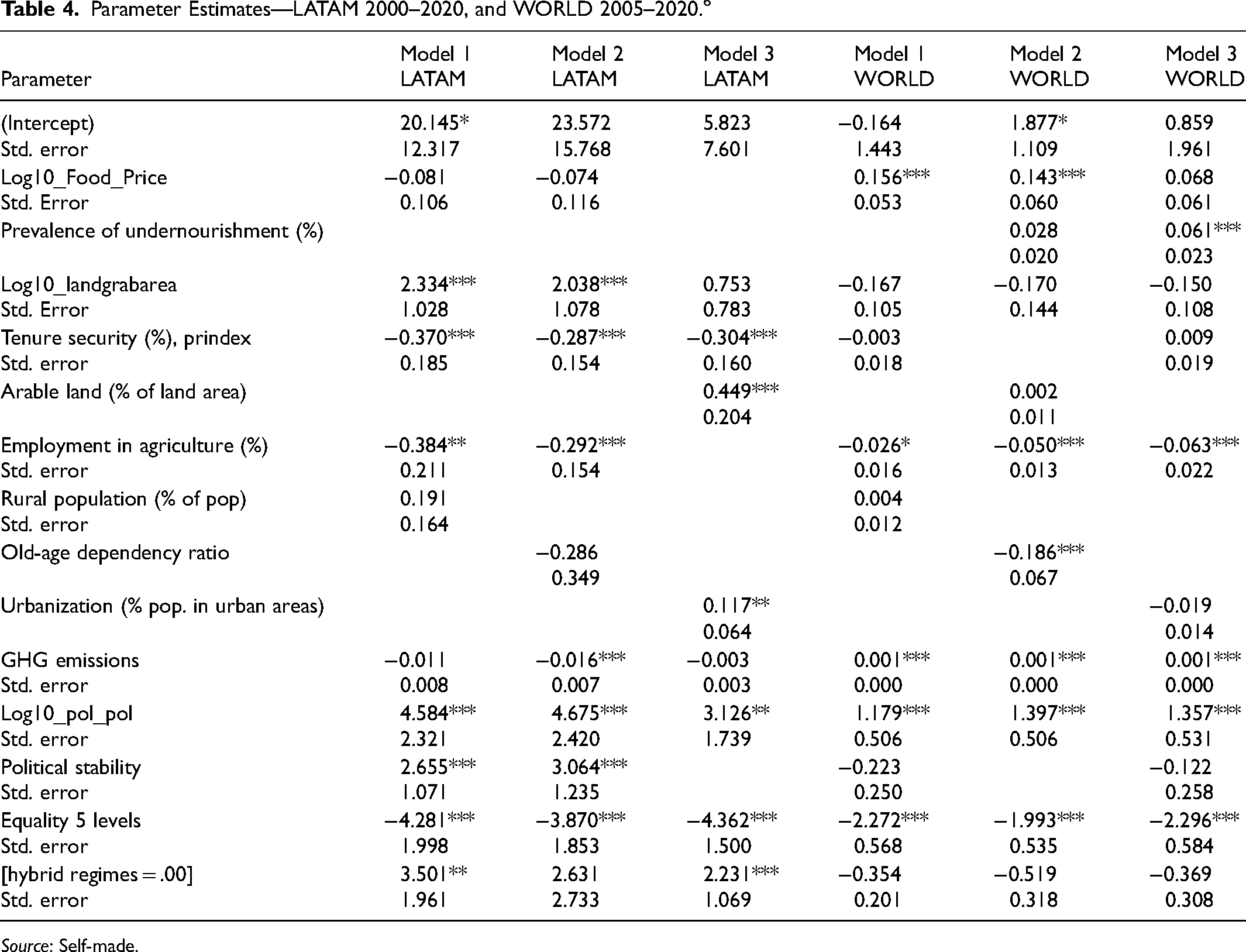
In the next table, there are the results obtained from the Poisson regression analysis conducted using IBM-SPSS software. The way we have structured the results for these linear regression models with Poisson distribution is by using odds ratio (OR). In statistics, an OR is a measure of association between an exposure and an outcome. It quantifies the likelihood of an outcome occurring when a specific exposure is present, as compared to the likelihood of the outcome occurring in the absence of that exposure (Szumilas, 2010).
For instance, OR greater than zero (0), for an independent variable, would imply an increase in the risk of the dependent variable (in this case, food riots), occurring by that magnitude. If the OR is less than zero (0), it would reduce the risk of food riots occurring by the same proportion as the result. Taking the independent variable (control variable) Equality (Equality five levels) from Table 4 as an example, we can see that the results for all six (6) models (three for Latin America and three for the world) are statistically significant and negative, ranging from −4.362 to −1.993. This indicates that, on average, both Latin American and global countries during those specific years (2000–2021 for Latin America and 2005–2020 for the world), the more equal a country is, the lower the risk of food riots occurring within its territory. Moreover, in Latin American countries, the effect of equality is almost twice as intense as in the countries of the world, on average. In this way, we can presume that the reverse also holds true: The more unequal a country, the greater the risk of food riots occurring, and Latin America double the risk of experiencing food riots. As we have already discussed this topic in a previous section, we are aware that countries in this region are among the most unequal; hence, the risk of food riots increases significantly.
Parameter Estimates—LATAM 2000–2020, and WORLD 2005–2020. 6
Source: Self-made.
Another example, this time with positive association between variables, is Political Polarization (Log10_pol_pol), which ranges from 1.179 to 4.675, with all six models being statistically significant. This demonstrates a positive association between political polarization and the occurrence of food riots. In Latin American countries, on average, the effect of this association is nearly four times greater than in the world, on average.
Therefore, to recap, in relation to the control variables, all models indicate that greater equality in a country is associated with a reduced risk of food riots and the higher inequality with a increased risk of occurrence of food riots. However, regarding the hybrid regime variable, two out of three models for Latin America suggest an increased probability of food riots (2.231 to 3.501 times increasing the risk of food riots). It is important to note that in the models for the world, this variable did not show significant results. Nearly all countries in the Latin American region had military and authoritarian regimes until the mid-1980s. Consequently, many of these countries either had recently undergone or were in the process of democratization (between 15 and 35 years), which was an insufficient amount of time to fully consolidate democratic regimes.
The two variables that we would expect to have a direct impact on food riots are an increase in food prices and the prevalence of hungry people. For the world, two out of three models for food prices (Log10_Food_Price) and one out of three models for hunger (undernourishment) showed a positive association with food riots. However, it is important to note that the models for Latin America did not find significant results.
The four variables pertaining to the agrarian nature of the study provide intriguing insights into their association with food riots. Firstly, the total area of land grabbing (Log10_landgrabarea) demonstrates a significant positive correlation with food riots, particularly in Latin America (two out of three models), ranging from 2.038 to 2.334, indicating that in Latin American countries, in average, the risk of food riots more than double for each additional kilometer of land as part of the land grabbing area. Secondly, tenure security, which gauges people's confidence in not being evicted from their homes or land for the next five years, exhibits a significant negative association with food riots in all three models for Latin America (−0.370 to −0.287), showing that the more confidence Latin American citizens have in not being evicted from their houses and land, the lower the risk of food riots occurring. Even though the numbers may be low, it indicates a behavioral pattern for Latin American models. The same does not apply to other countries worldwide, as the data is no statistically significant. Thirdly, the number of people employed in agriculture in Latin America displays a significant negative correlation with food riots in two out of three models (−0.292 to −0.384), meaning that the more work there is in the fields, a decreased risk of food riots, as a portion of these earnings from agricultural and livestock labor is used to buy food, or even in the production of food (in the case of small-scale farmers and family farms) If rural inhabitants are employed, their income reduce the risk of food riots. For the world as a whole numbers are still statistically significant, even if lower than Latin America (−0.026 to −0.063).
However, the variable of arable land yields unexpected results in one of the Latin American models (the only statistically significant model found), showing a positive association with food riots (0.449). This suggests that the abundance of arable land may lead to fierce competition for land resources, resulting in increased land values and limited access for the less privileged, particularly in regions targeted for land grabbing, such as Latin America.
Overall, these findings shed light on the intricate relationship between agrarian factors and food riots, emphasizing the significance of land tenure security, employment in agriculture, and the impact of land grabbing on the risk of food riots. Furthermore, they challenge the assumption that greater availability of arable land necessarily mitigates the risk of food riots.
The demographic variables showed mixed results. Rural population was not significant in none of the two presented models, while urbanization had a positive association with food riots in one Latin American model (0.117). Ageing population, on the other hand, reduced the likelihood of mobilization in one global model (−0.186). In other words, generally the rural population is quite sparse, in contrast to the urban population, which does not affect the occurrence of food riots. Urbanization has an impact as it concentrates a larger number of people in the same space, with the organization of social movements, directed masses toward such mobilizations, as food riots. Conversely, the ageing of the population reduces the mobilization, which is more characteristic among youngsters. Furthermore, as part of a general trend, there is an ageing population in Latin America. This explanatory variable has the capacity to reduce the risk of food riots in this region, overall. The association between greenhouse gas emissions and food riots is likely very weak in nearly all models, almost non-existent (very close to zero) possibly due to the challenges in interpreting this association. While we are convinced that environmental degradation contributes to food production issues, it seems that this connection is not clearly reflected in the analyzed results. However, we still lack effectively adequate and high-quality data for statistical verification of these detrimental effects on food quantity reduction and, consequently, on the impact it generates on the occurrence of food riots. This association is likely quite indirect. The scientific community needs to improve data collection to capture what we already know through other means. In conclusion, our analysis confirms that political polarization is strongly associated with food riots, with consistent results across all six models, and particularly very strong in the context of Latin America, as mentioned previously. However, the relationship between political stability and food riots is not as straightforward. Contrary to our initial expectations, this finding is inconsistent with the theoretical framework presented so far and requires further investigation.
Certainly, there are limitations with the data used for each variable, which was added to create an appropriate dataset to address the proposed hypotheses. The data was included after discussions grounded on the respective literature. The results of the analyses were not perfect and sometimes, even demonstrate conceptual or data collection issues. For example, Land Grab Area, obtained from Land Matrix, presents incomplete and often confidential data that is very hard to obtain. There was no way to fill this gap other than using the data with the applied treatment.
Another example would be the data presented on Political Stability variable, with statistical significance for two out of three Latin American models. However, it seems to be the opposite result to what was expected, meaning that higher political instability increases the risk of food riots. The actual result was that greater political stability increases the risk of food riots, which seems inadequate or at the very least counterintuitive when compared to theoretical expectations. For this reason, we observed a high correlation (−0.552) between this variable and Political Polarization in the two statistically significant models, which in itself justifies this problematic result.
Therefore, we attempted not to undermine the analyses and, in line with the context, interpret the results accordingly. Thus, despite these specific challenges, the overall results of the conducted analyses are satisfactory and aligned with the eight hypotheses put forth in this paper, particularly in the case of Latin American countries, which was the focus of our investigation. These findings provide support for the ideas and arguments presented in this study and contribute to a better understanding of the factors influencing the incidence of food riots within Latin American countries for the twenty-first century, as addressed so far.
Concluding Remarks
Food crises are a recurring issue that impacts a significant number of impoverished families in developing countries and they often lack access to sufficient public assistance. This study focused on Latin America, a region that presented waves of food riots during and after such crises. Our primary concern was with the well-being of the rural poor, who face additional obstacles due to their geographical distance from centers of political power and comparatively limited support systems within their respective countries.
The empirical analyses conducted for Latin America largely supported our initial hypotheses. Furthermore, some of the results regarding the explanation of statistical models based on the data for the Latin American region were confirmed in models for countries worldwide. For instance, the association of food riots with (1) employment in agriculture; (2) political polarization; and (3) inequality were consistent. On the other hand, another set of variables including (1) land grab area; (2) tenure security; (3) arable land; (4) urbanization; and (5) hybrid regimes demonstrated statistical significance exclusively for the Latin American region, with its unique characteristics. This, in itself, validates the focus of this research on Latin American countries.
However, further research is necessary to gather additional data and delve deeper into this investigation. Preliminarily, we can conclude that factors such as inequality, hybrid political regimes, rising food prices that hinder proper nutrition, widespread land grabbing, tenure insecurity, high agricultural unemployment, and political polarization contribute to increased participation in food riots, and when confronted by repressive state forces, they often escalate into violence within Latin America and the world, in general.
Indeed, the occurrence of food riots is a multifaceted issue that necessitates comprehensive policies across various sectors. Addressing climate change and its impact on agricultural productivity, along with promoting sustainable agricultural practices, is crucial in mitigating rising food prices. Furthermore, efforts to reduce inequality, enhance societal democratization, reduce deforestation, curtail land grabbing, and ensure secure land tenure are essential in preventing the conditions that lead to food riots. Additionally, creating more economic opportunities within the low-income agricultural sector can help alleviate the underlying grievances that contribute to social unrest. While progress has been made in understanding this phenomenon, further research and analysis are needed to fully comprehend and explain the occurrence of food riots during recent food crises in Latin America.
Footnotes
Acknowledgments
The author would also like to thank Professor Dr Kathryn Hochstetler and the Land Seminar group coordinated by Professor Dr Catherine Boone and all the members, as well as several professors and researchers from the International Development Department at LSE, while I was as Visiting Senior Scholar at this institution in 2022.
Declaration of Conflicting Interests
The author declared no potential conflicts of interest with respect to the research, authorship, and/or publication of this article.
Funding
The author disclosed receipt of the following financial support for the research, authorship, and/or publication of this article: This work was supported by the Fundação de Amparo à Pesquisa do Estado de São Paulo (grant number 2020/12847-1).