



Abstract
In 2019, student protests over an increase in subway fare in Chile escalated into violence and a leaderless nationwide social upheaval. This research note takes a descriptive approach that goes beyond the protester/non-protesters dichotomy, because we believe we need a richer understanding of the “what, who, and how” of citizens around this outbreak. Based on a survey fielded amidst the upheaval, we distinguish protesters by intensity, and non-protesters by their position towards the upheaval. As expected, protesters tend to be young and educated. Strong protesters are more left-wing, interested in politics, and more participative, including electorally. They endorse democracy but are critical of its functioning, and more likely to justify illegal/violent actions as a means for social change. Inequality appears as a cross-cutting concern, even among opponents, but strong protesters are more distrustful of its sources and of the rich themselves. We conclude by discussing the implications of these findings.
On 18 October 2019, a student protest against an increase in the subway fare in Santiago de Chile sparked massive demonstrations and violence. Peaceful rallies and clashes between citizens, army and police unfolded across the country, triggering a political and social crisis. These events caught many by surprise, as then-president Sebastián Piñera had higher approval ratings than his predecessor, Michelle Bachelet (CADEM 1 , 2 ). A survey conducted two days earlier revealed that only 12 per cent of respondents considered the subway station occupations as the most important news of the week (CADEM 2019). Continued violence and demonstrations prompted a political agreement to replace the constitution. Despite massive initial support, the draft proposed by the Constitutional Assembly faced rejection, and a new process is ongoing.
Several studies have highlighted inequality, social exclusion, and failures of political representation as key drivers contributing to the crisis (Araujo, 2019; Navarrete and Tricot, 2021; Rhodes-Purdy and Rosenblatt, 2021). Scholars have also analyzed the role of government strategy and police repression during the upheaval (Somma et al. 2021).
However, a more comprehensive understanding of the 2019 Chilean social upheaval remains necessary, surpassing the protester/non-protester dichotomy to explore the intricacies of the “what, who and how” (Gerring, 2012) of citizens involved. Hence, following Gerring (2012), we elaborate “a mere description” based on a typology. We characterize individuals according to their protest stance and participation frequency. Inspired by Beissinger (2013), we distinguish strong and weak protesters, and classify non-protesters by their support, opposition, or undecided stance towards the upheaval. Leveraging a rich, nationally representative survey conducted during the unfolding social crisis, we study each group's protest involvement, demographics, and attitudes. We explore their perceptions regarding the economic system and inequality, democracy, and the use of force for social control and change. Finally, we briefly discuss the implications of our findings.
Context
From 1990 to 2019, Chile achieved remarkable economic progress, outpacing other medium-sized Latin American countries in GDP per capita. Together with effective social policies, this progress led to decreased poverty rates and improved health and education indicators (Gonzalez, 2017). As a result, Chile tops Latin American countries in the UNDP's Human Development Index and ranked as the happiest country in South America in the UN's World Happiness Report. However, income inequality, although gradually declining, remains high by OECD standards.
This progress coexisted with a stable party system, albeit with political parties increasingly seen as unrepresentative of new social demands (Altman and Luna 2011; Siavelis 2016; Valenzuela and Dammert 2006) and lacking bonds to social movements (Disi 2018; Somma and Bargsted, 2015). Party identification plummeted from 80 to 19 per cent among the urban population between 1990 and 2019 (CEP surveys). Additionally, electoral turnout showed a steadily declined, expedited by the shift from compulsory to voluntary voting in 2012 (Cox and Gonzalez 2022).
Trust in political institutions declined significantly. Between 2009 and 2017, trust in political parties dropped from 13 to 6 per cent, while trust in Congress dwindled from 26 to 6 per cent (CEP surveys). This downward trend may have been exacerbated by corruption scandals concerning political financing during the mid-2010s (Gonzalez, 2017). Similar corruption charges also affected the army and police force, while trust in major private companies decreased after cases of price fixing. These salient scandals potentially fostered the perception of unfair advantages for the rich.
Demonstrations in Chile doubled in frequency during the 2000s (Donoso and von Bülow 2017), reflecting a growing discontent with elite-driven and out-of-touch political parties (Tarrow 2011). Education became the focal point of demonstrations, starting with high school student protests in 2006, during the first, center-left presidency of Michelle Bachelet (Donoso 2013). Protests escalated with university student protests in 2011, during the first, center-right presidency of Sebastián Piñera. From then until 2019, Chile experienced a repolitization of social and economic inequalities (Roberts 2016) and weakened ties between political parties and social movements (Somma and Bargsted 2015). Demonstrations became persistent, encompassing diverse demands and methods, mainly backed by social organizations (Joignant et al. 2020).
Historically, formal social movement organizations mobilized citizens, fostering shared identities, and voicing explicit demands (Schussman and Soule, 2005). Recent protests, however, often lack visible leadership, such as the Arab Spring movement, Spain's Indignados, and Occupy Wall Street in the U.S. (Cheng and Chan, 2017).
The 2019 Social Upheaval
In 2019, there was a remarkable surge in social mobilization, both in developing and developed countries (Brannen et al. 2020). In Santiago, Chile's capital, protests erupted on 18 October 2019, initially sparked by students protesting a subway fare increase. The fare evasion movement began eleven days before with student participation steadily increasing (Gonzalez and Le Foulon 2020). That evening, twenty-seven subway stations were occupied and vandalized, with twelve damaged by fires and seven completely burned. Two million people had to walk home, while others banged pots and pans, a traditional form of protest in Chile. Violence spread to forty cities nationwide, prompting President Piñera to declare a State of Emergency in Santiago, sending the army onto the streets, banning public gatherings, and imposing nightly curfews.
Protests quickly escalated nationwide. News accounts relate the demonstrations to a deep feeling of abuse by major corporations and public institutions, a sense of unfairness stemming from income inequality, low pensions, and inadequate healthcare and education. 3 President Piñera reversed the transit fare increase and announced a social agenda, featuring higher pensions for low-income households and a raised minimum wage. Nevertheless, demonstrations persisted, culminating in a historic gathering of 1.2 million people in Plaza Baquedano, Santiago's main square, on 25 October.
Massive demonstrations continued, often culminating in clashes between citizens and the police, marked by instances of human rights violations. The movement never featured clear leaders, and politicians who showed up at demonstrations were booed. Aiming to quell violence, on 15 November 2019, nearly all political parties backed an agreement, calling for a constitutional referendum in April 2020. Protests decreased post-agreement. The movement's momentum waned during the holiday season and was then halted by the COVID-19 pandemic.
The constitutional referendum—postponed to October 2020 due to the pandemic—resulted in a 78 per cent support for a new constitution. Despite its auspicious beginning, 62 per cent rejected the constitutional draft in September 2022. Presently, a new drafting process is underway, with a scheduled referendum in December 2023.
Who Are the Protesters and Non-Protesters of the Upheaval? Data and our Typology
Our analysis of the Chilean social upheaval uses an original survey conducted by CEP, encompassing 1496 respondents representative of continental Chile's adult population. 4 Participants were selected through a multi-stage random probability sampling, with no allowance of substitution and weights also accounting for non-response. Interviews were face-to-face, conducted from 28 November 2019 to 6 January 2020, during the ongoing social crisis.
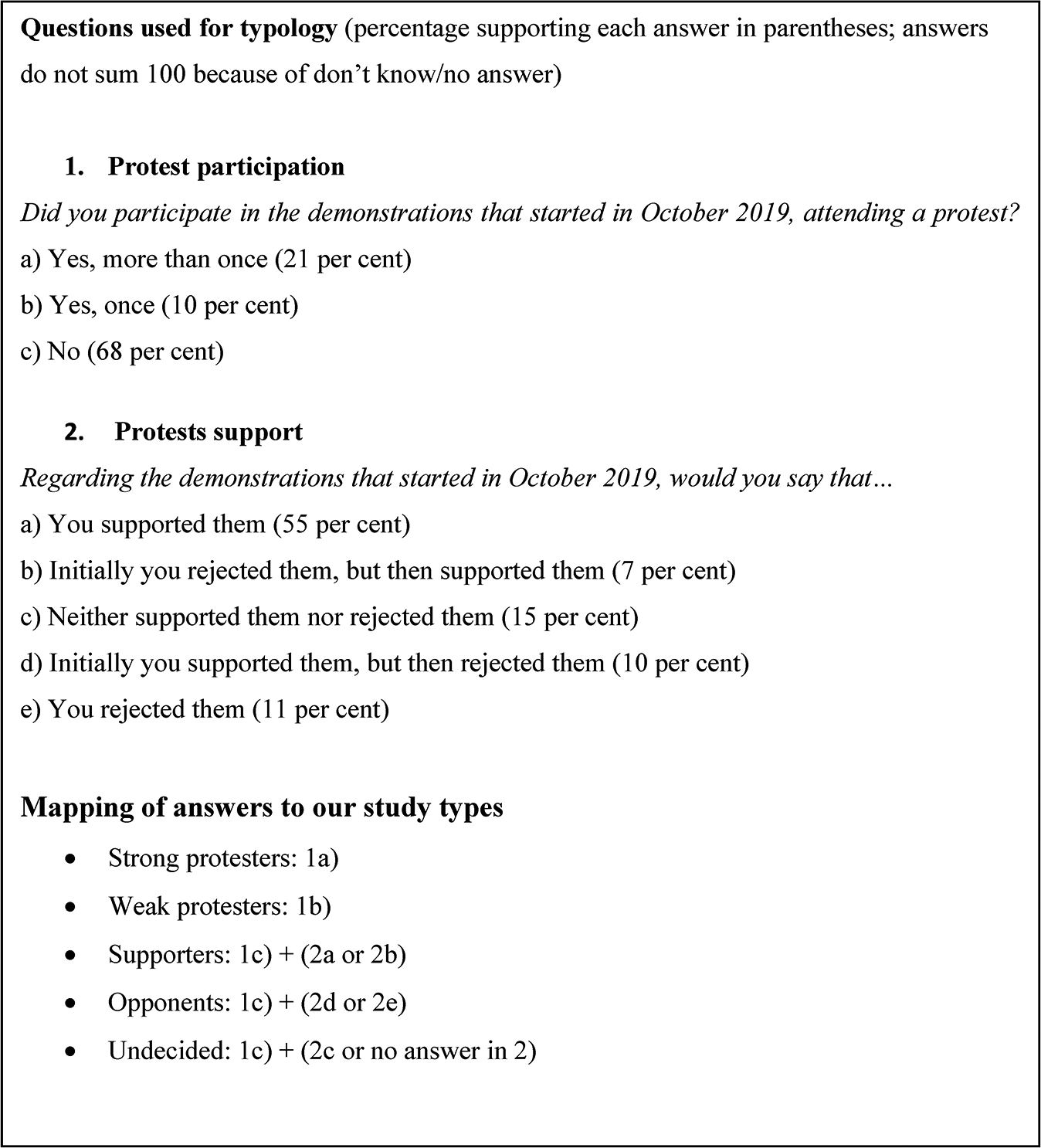
We identify five groups based on respondents’ protest involvement and support, as detailed in Box 1. We classify non-protesters as “supporters,” “undecided,” 5 or “opponents.” We depart from Beissinger (2013) by distinguishing protesters by their participation intensity. 6 “Strong” protesters are those who demonstrated more than once (17 per cent), whereas “weak” protesters demonstrated just once (9 per cent), probably in the massive demonstration on 25 October 2019. Among non-protesters, “supporters” encompass those who did not report having demonstrated but backed the protests, including those who initially did not support them but later changed their minds. As shown in Figure 1, supporters constitute the largest group at 36 per cent. “Opponents” are those who did not support the demonstrations, including those who initially did but changed their view (20 per cent). Finally, the “undecided” are those who did not know whether they supported the protests or not (18 per cent).
Construction of the Typology.
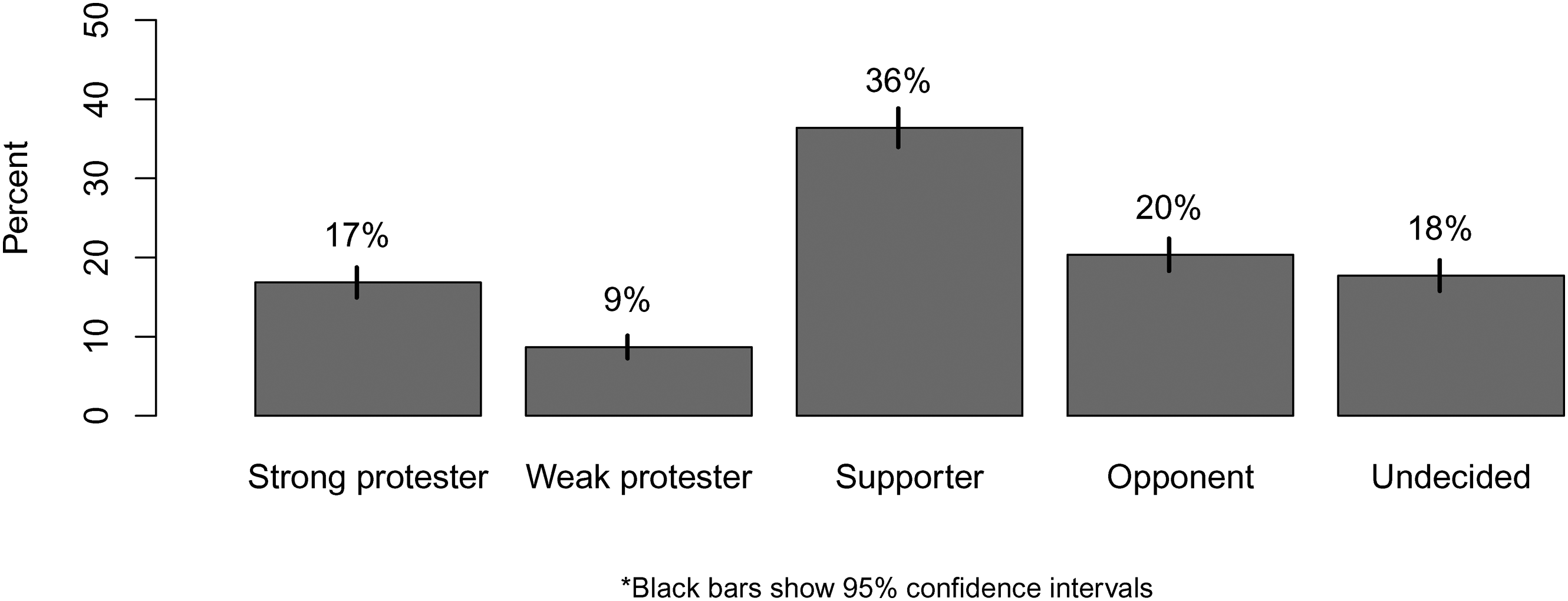
Distribution of Groups (per cent).
Socioeconomic Characteristics
Neither protesters nor supporters of the social upheaval come disproportionately from the less well-off. Groups comparisons show no significant differences in socioeconomic background—upper, middle, or lower classes—except for the greater presence of lower-class individuals among the undecided group compared to strong protesters. Similarly, no significant differences are observed among groups concerning employment, reporting adequate resources for comfortably living; or economic insecurity regarding illness, job loss, or debt repayment.
Protesters notably contrast with non-protesters in age and education levels. Figure 2 depicts that 62 per cent of strong protesters are less than thirty-five years old (“young”) while only 7 per cent are over 55 (“old”). Weak protesters are slightly older: 52 per cent young and 13 per cent old. Supporters and the undecided fall in between: 32 per cent of each group was young, whereas 30 per cent of supporters and 37 of the undecideds are old. Opponents are clearly older: just 19 per cent are young, whereas 47 are old. These figures suggest a pronounced generational divide regarding the social upheaval, with younger cohorts displaying heightened involvement and support. These patterns align with previous work on social protest in Chile (Castillo et al., 2015; Roberts 2016) and elsewhere (Justino and Martorano 2019), reflecting younger individuals’ greater engagement, partly due to resource availability.
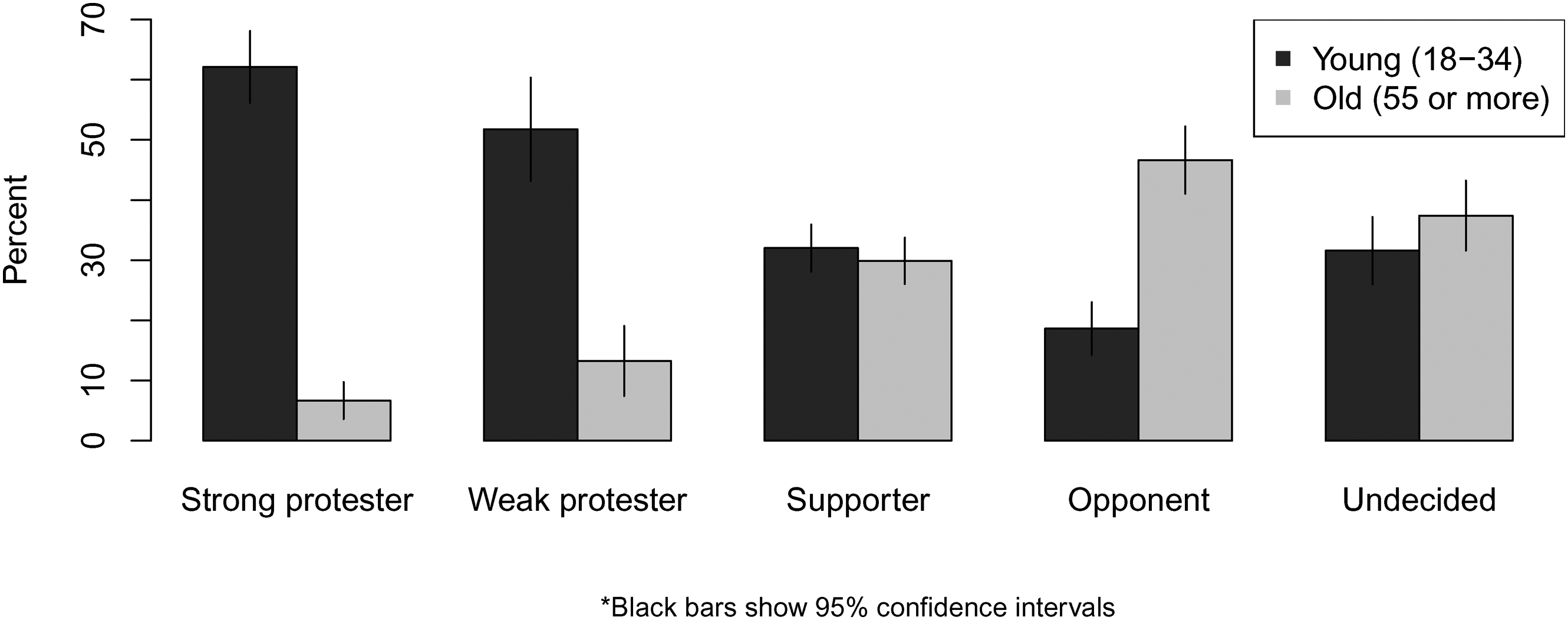
Age Distribution by Group (per cent).
Consistent with the resource theory of protests (Verba et al. 1995), Figure 3 shows that strong protesters stand out in education: 40 per cent of them have at least one year of higher education, followed by weak protesters, with 33 per cent. Only 10 per cent of strong and 15 per cent of weak protesters have not completed high school. Conversely, other groups exhibit a higher fraction of people without high school completion than those with higher education. Among supporters, 30 per cent have not completed high school, while 24 per cent have some higher education. Among opponents and the undecided, over twice as many lack high school completion compared to those with higher education (45 per cent versus 19 per cent, and 42 per cent versus 20 per cent, respectively).
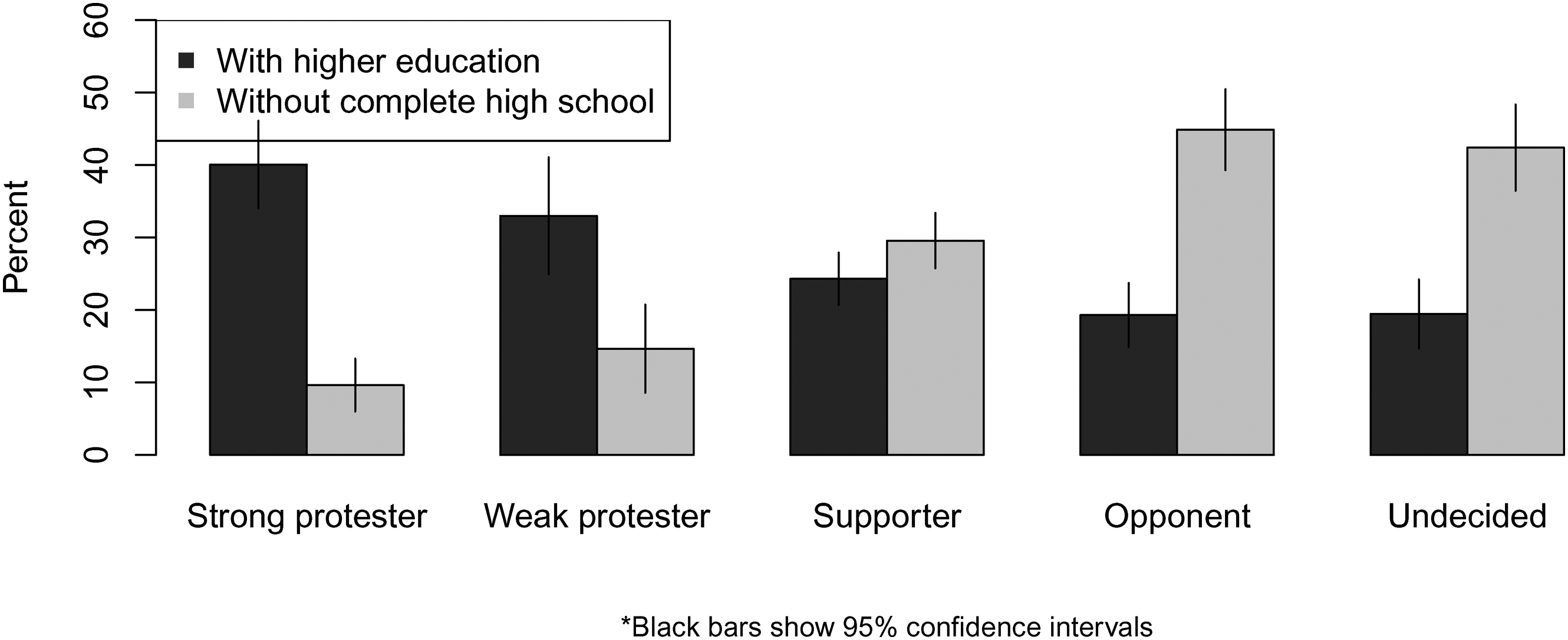
Education Level by Group (per cent).
Previous comparative findings showed that men are more likely to protest (e.g., Justino and Martorano 2019), but in Chile, the evidence is mixed (Castillo et al., 2015; Somma et al. 2021). Our analysis shows no gender differences.
These analyses reveal important age and education disparities across groups, characteristics likely associated with some of the attitudes and political behaviors we study. To account for potential demographic influence on our findings, we conduct multivariate analyses. Dependent variables are the attitudinal or political behaviors, and our explanatory variables are education, age, and gender (hereafter, “our controls”), plus our group category. The models are shown in the Appendix. We only refer to them here when differences between groups do not hold using the controls.
Political Characterization
Our five groups exhibit clear political identity differences. Only strong protesters feature a majority identifying with any political position (left, center, or right). Strong protesters self-identify more, particularly with the left, as shown in Figure 4. Identification with the right is negligible among strong protesters, and highest (15 per cent) among opponents.
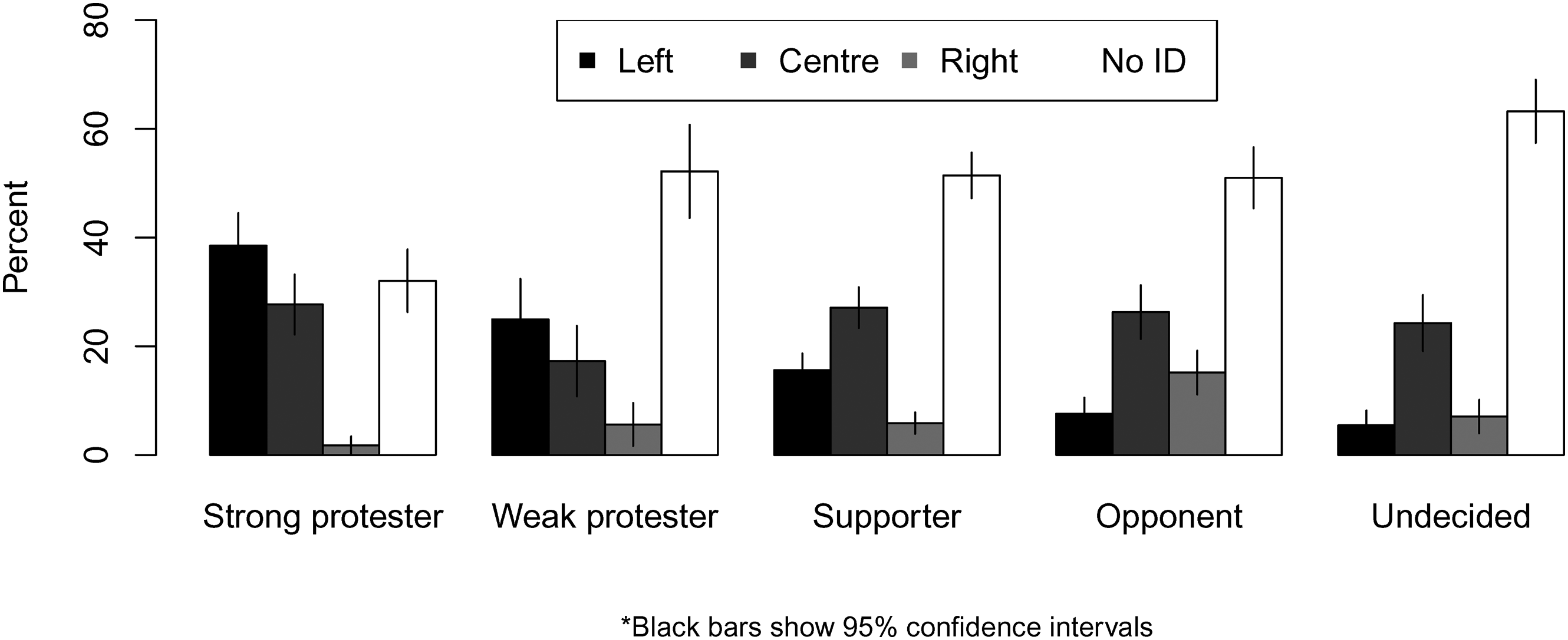
Political Position by Group (per cent).
Support for the center-right incumbent government led by Sebastián Piñera is low across the board—with an approval rate of just 6 per cent when the survey was fielded. Strong protesters are less likely to approve of the government; although the difference between strong supporters and the other groups are not statistically significant with our controls. Meanwhile, opponents approve of the government much more, reaching 16 per cent. Differences in support for the government also appear in their reported candidate for the 2017 presidential election’ runoff. Among respondents reporting vote choice, 16 per cent of strong protesters report having voted for Piñera, compared to 38 among weak protesters, 54 among supporters, among opponents, and 75 per cent among the undecided. Thus, protesters form a kind of negative coalition against the incumbent.
Strong protesters are more interested in politics: 39 per cent of them are very/quite interested in politics, compared to 15 per cent of weak protesters, 10 of supporters and opponents, and 5 of the undecided.
Protesters are also more likely to have participated in demonstrations or strikes before the upheaval. In fact, 73 per cent of strong protesters and 44 per cent of weak protesters report having attended a demonstration before, compared to 13 per cent among supporters, 11 per cent among opponents, and 9 per cent among the undecided. As for electoral participation, when controlling for gender, age, and education, strong protesters exhibit greater differences. Indeed, they are 19 percentage points more likely than supporters to have voted in the last election and 23 points more likely than opponents. Thus, contentious participation in politics is not here a substitute for electoral participation.
In sum, politically speaking, strong protesters are very different from other groups: they are much more left-wing and anti-incumbent; more interested in politics; and more participative, both in demonstrations and at the polls.
Attitudes and Perceptions Concerning Inequality
Inequality played a prominent role in public debate surrounding the upheaval, and previous studies show that inequality perceptions may drive protests (Castillo et al., 2015; Roberts, 2016). Indeed, inequality was the number one reason survey respondents reported behind the upheaval: 55 per cent mentioned inequality as one of the two main motives for protest, followed by low pensions, high cost of living, and the poor quality of public health and education. Nevertheless, supporters of the upheaval are somewhat more likely to view their participation in the demonstrations as a response to inequality: almost 58 per cent of weak and strong protesters, and 60 per cent of supporters consider inequality one of the two main reasons behind the upheaval, compared to 50 per cent of the undecided and 49 per cent of opponents. Both strong and weak protesters are also more likely than the rest to report inequality as one of the three most important problems the government should address, although difference between protesters and supports are not statistically significant with our controls.
Does this stronger focus on inequality among participants and supporters of the upheaval imply that they have radically different views about the level of inequality that is desirable and the role of government overall? We start by analyzing the value of equality relative to that of rewarding individual effort on a ten-point scale ranging from “income should be more equitable even if individual effort is not rewarded” (one) to “individual effort should be rewarded even if there are large income differences” (ten). Average scores are moderate for all groups, ranging from 5.2 among strong protesters to 6.4 among opponents. Only differences between these two, most opposite, groups are statistically significant. When we include our controls, the differences between strong protesters and both the undecided and the opponents become significant, but they reach at most 1.20 points, in the opponents’ case. A second question on who should be primarily responsible for people's financial support, using a 10-point scale ranging from “the government” (one) to “people themselves” (ten), depicts a similar pattern.
Thus, strong protesters despite their predominantly left-wing orientation, do not exhibit major differences compared to opponents regarding their views on income equality and the role of the government. Moreover, neither weak protesters nor supporters are significantly different from opponents or the undecided on these dimensions. Figure 5 illustrates that there is considerable overlap in responses across all five groups, indicating that their ideological positions are not drastically different. The sole exception is between strong supporters and opponents, but even here, there is much overlap.
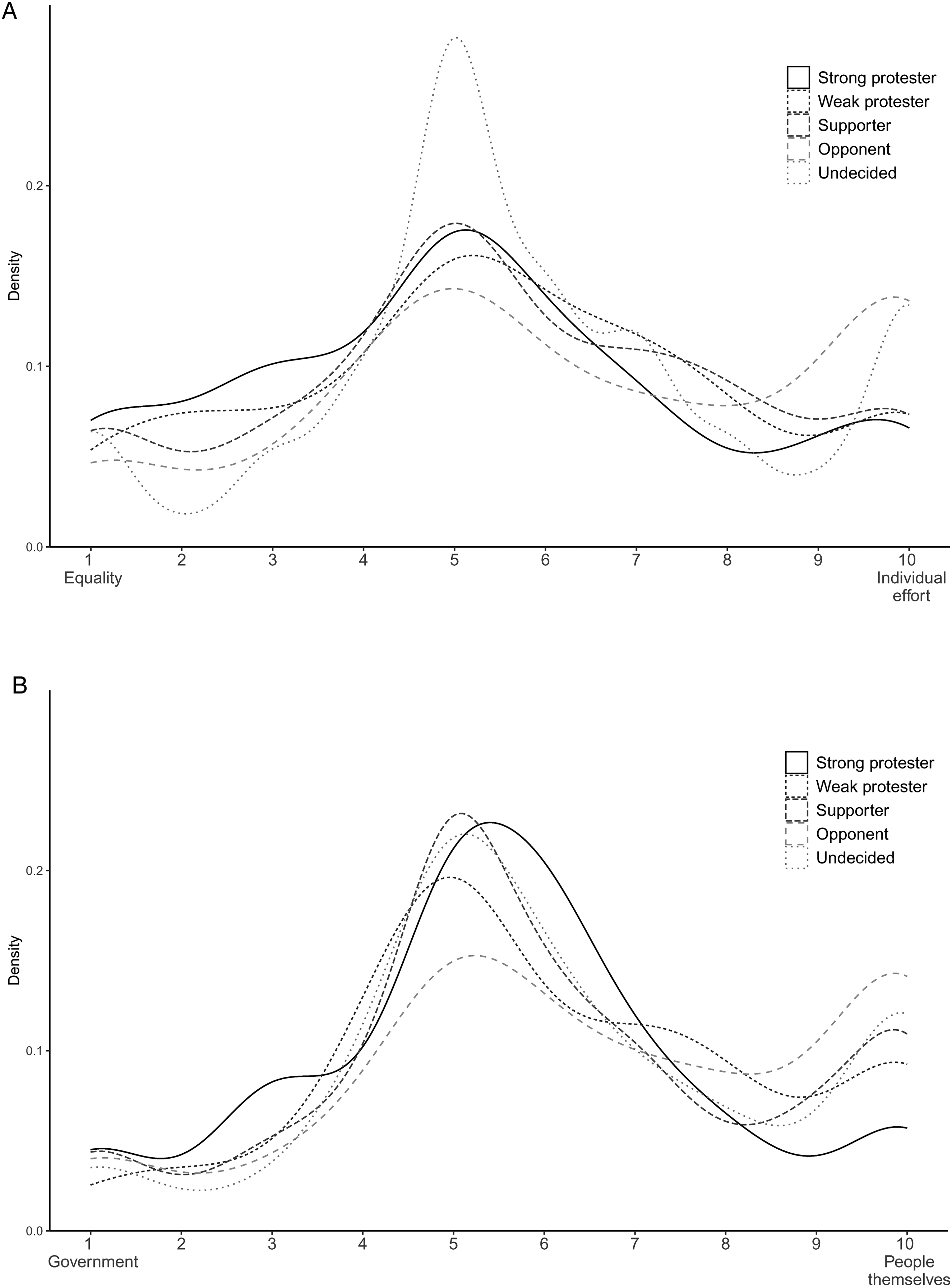
A: Distribution of Responses on Equality vs. Individual Effort by Group (Density). Figure 5B: Distribution of Responses on Responsibility for Supporting People by Group (Density).
Another perspective on inequality comes from analyzing respondents’ views on how much they think people in some jobs usually earn and should earn. The survey considered three occupations: unskilled worker, medical doctor, and the CEO of a large national company. Figure 6 shows average results by groups. Notably, there are minimal differences across groups regarding respondents’ perceptions of what individuals in these occupations “should earn.” All groups agree that the salary for an unskilled worker should be about 10 per cent that of the CEO. As for medical doctors, the perceived appropriate salary, on average, is 44 per cent of the CEO's.
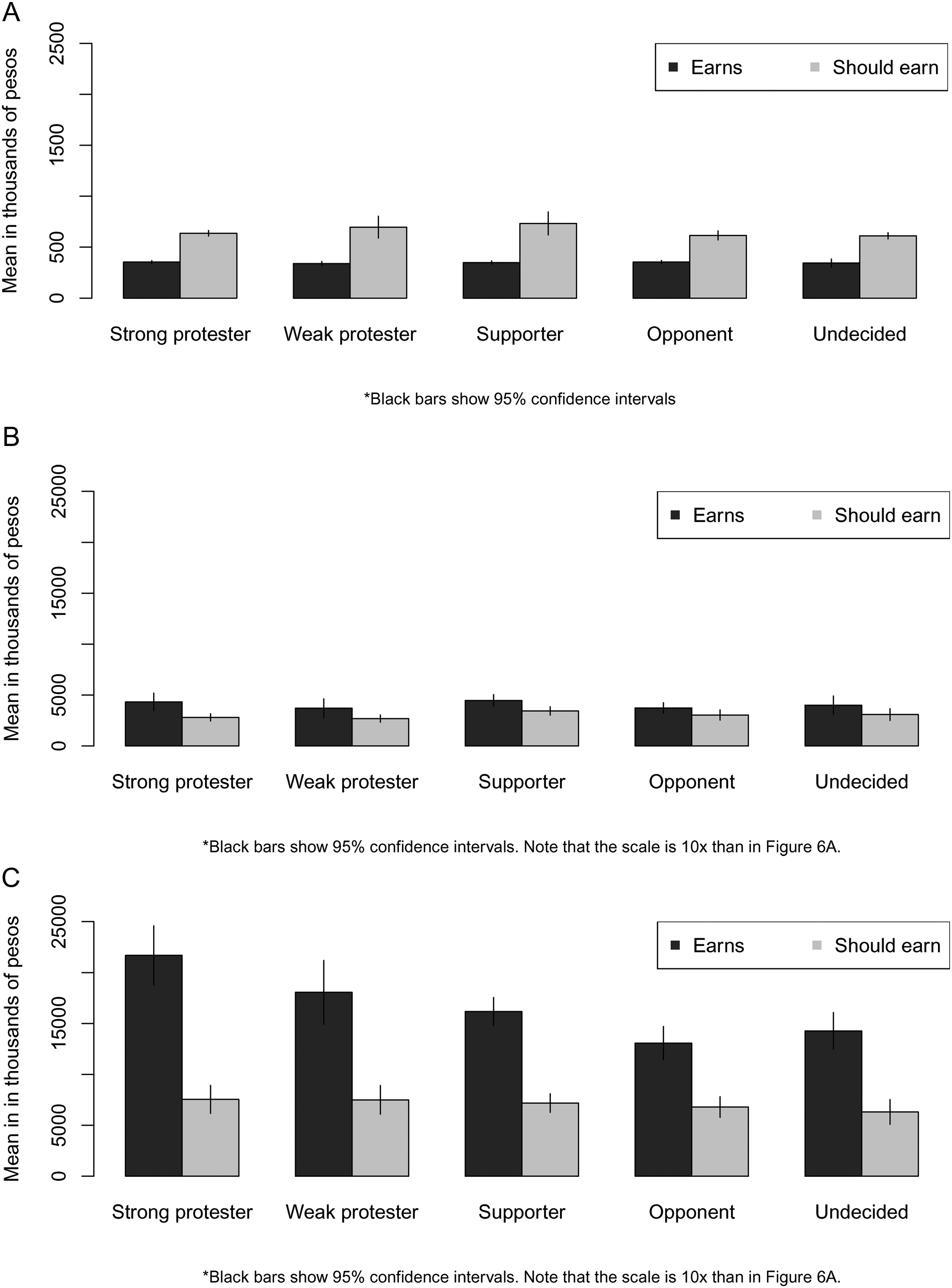
Salary Considered Appropriate vs. Perceived Real Salary for Different Occupations by Group. A) Construction Worker (CL$ Thousands). B) Doctor (CL$ Thousands). C) CEO (CL$ Thousands).
However, significant differences emerge when considering respondents’ perceptions of how much people in some jobs usually earn, particularly for CEOs. On average, strong protesters believe that CEOs earn 66 per cent more than opponents believe they do. On average, the perceptions of strong and weak protesters and supporters are not statistically different with our controls, and distinct from opponents. This produces a remarkable disparity between the perceived appropriate salary vs. reality, with strong supporters perceiving CEOs’ compensation to be significantly higher than what they believe is deserved.
Additionally, there are differences in groups’ perceptions of meritocracy. Controlling for socio-economic characteristics, strong protesters are 13 points less likely to believe that people are rewarded for their intelligence and abilities than opponents, but as likely as weak protesters and the undecided. Moreover, when asked about the major causes of economic success, strong protesters are less likely to attribute it to personal initiative and more likely to believe in the role of networks (Figure 7). 7 Thus, strong protesters are more skeptical about meritocracy.
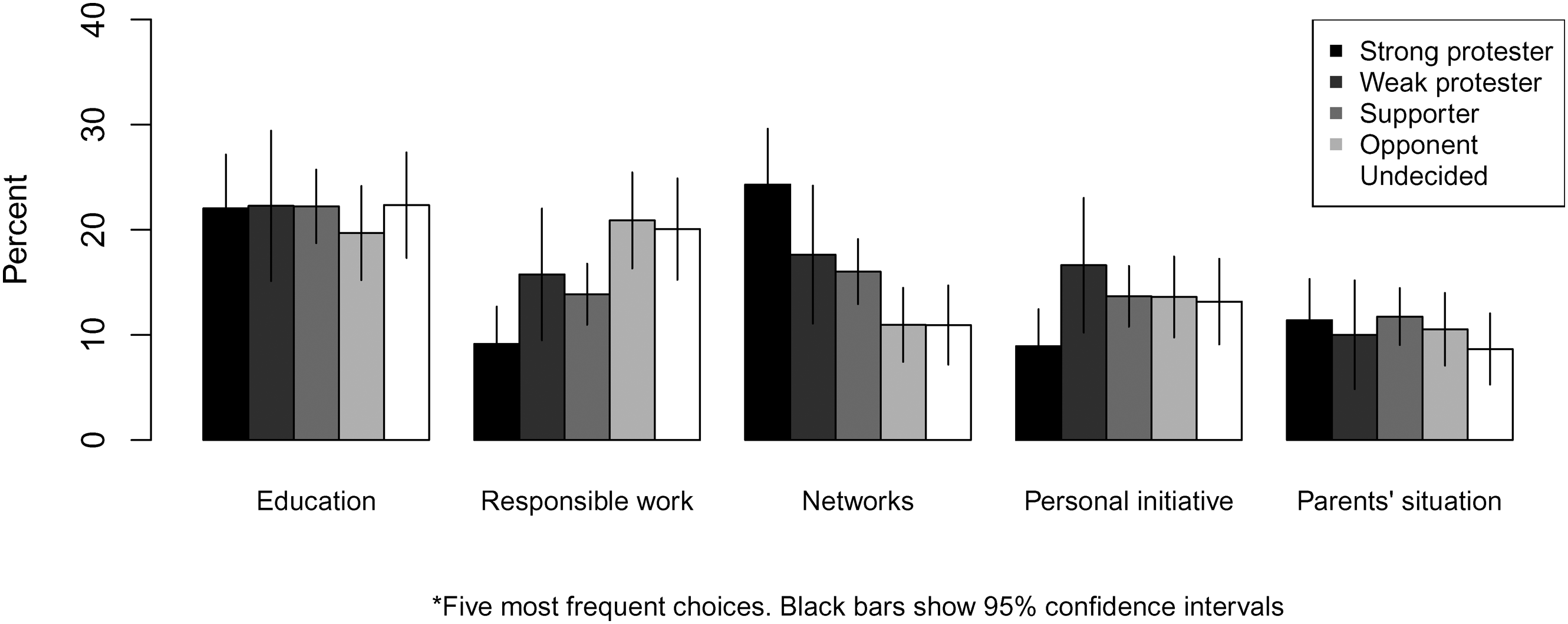
Two Main Causes of Economic Success by Group (per cent).
Furthermore, strong protesters are more likely to believe that inequality persists because it favors the rich and powerful. With our controls, they are eight points more likely than weak protesters to agree with this statement, and eleven, twenty and twenty-four points more likely to agree with it than supporters, opponents, and the undecided, respectively. Strong protesters are also less likely to agree that public policies are close to their own preferences, although once controlling for socioeconomic characteristics, differences between strong and weak protesters are no longer statistically significant. Enquired whether they reflect majority's preferences, with our controls, only opponents are statistically more likely to agree than protesters, both weak and strong, and supporters. A similar pattern is observed regarding agreement that “the richest citizens have more influence on public policies,” although the undecided are, in this case, even more likely to agree than opponents. Not surprisingly, they are also less trusting of private businesses than opponents and the undecided.
However, despite these differences, strong supporters do not hold fundamentally different views regarding desired levels of equality, or the government's role in providing people with financial support. Another survey conducted by the CEP in May 2019 sheds light on these patterns. The survey measured respondent's anger towards individuals earning significantly more than the average Chilean citizen, attributing such high earnings to various sources. Survey respondents express less anger when high earnings are associated with inventions highly valued by people, being a doctor (possibly reflecting meritocracy), or being a talented football player (possibly reflecting talent). In contrast, respondents were most angered by high earnings of a Chilean state secretary and CEOs (see Figure 8). This suggests that the concern regarding income inequality for Chileans is more related to its sources, rather than on inequality per se.
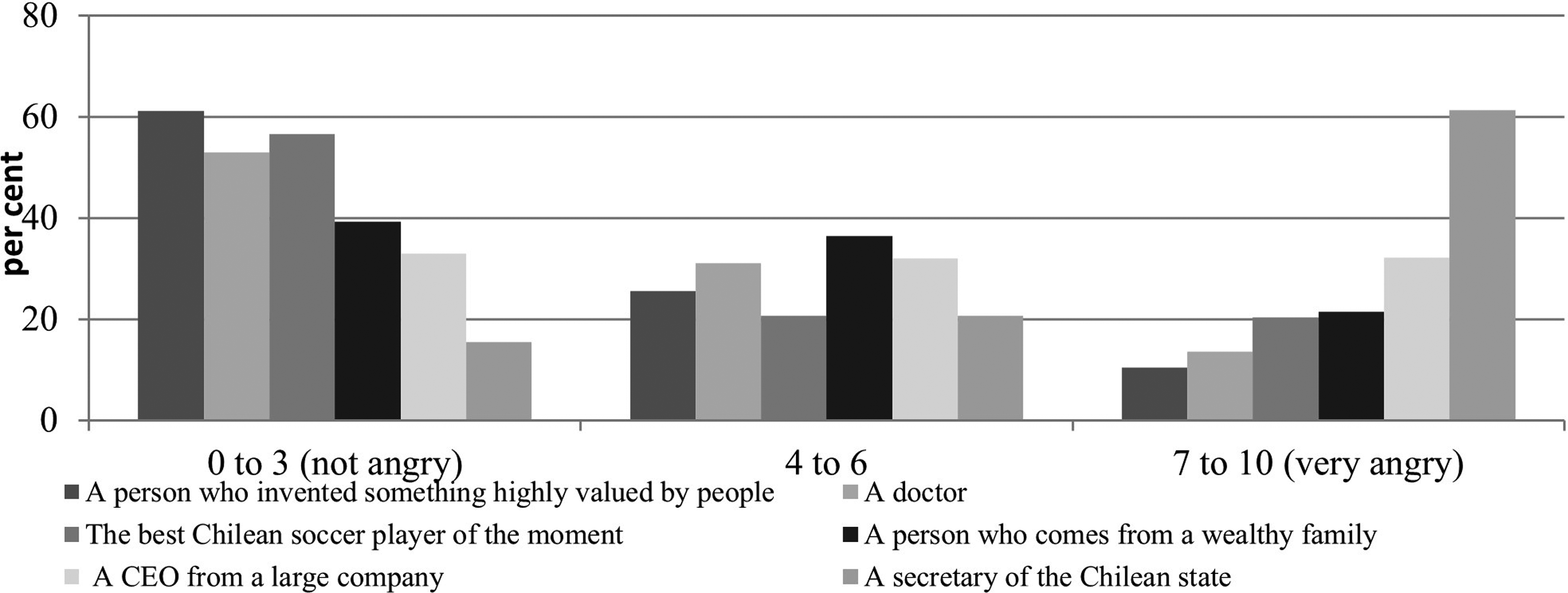
Anger Towards Differences Between the Rich and the Poor According to Source of Wealth (per Cent). Source: CEP Survey, May 2019.
Likewise, strong supporters’ anger toward inequality appears to stem from their perceptions of the sources of wealth and inequality. They are more likely to attribute economic success to non-meritocratic causes and to believe that the rich enjoy undue political influence, which may extend their “malaise” to the functioning of democracy.
Attitudes and Perceptions Concerning Democracy
There are large differences among groups on authoritarian attitudes and preferences for public order and democracy. Protesters and supporters display lower levels of authoritarianism on a 5-point scale. 8 Strong protesters have the lowest average score (2.4), followed by weak protesters (2.8) and supporters (3.0). Opponents are far more authoritarian (3.6), closely followed by the undecided (3.4).
Strong protesters prioritize public and private liberties over public order to a greater degree with 41 per cent placing their views between 1 and 4 on a 10-point scale where one indicates preference for “public and private liberties” and ten for “public order” (see Figure 9). Substantively higher compared to 31, 23, 13, and 11 per cent of weak protesters, supporters, undecided, and opponents, respectively. The differences between strong and weak protesters are no longer statistically significant with our controls. Conversely, 62 per cent of opponents strongly favor public order (scoring seven to ten), as do 44 per cent of the undecided, 40 per cent of supporters and weak protesters and 20 per cent of strong protesters.
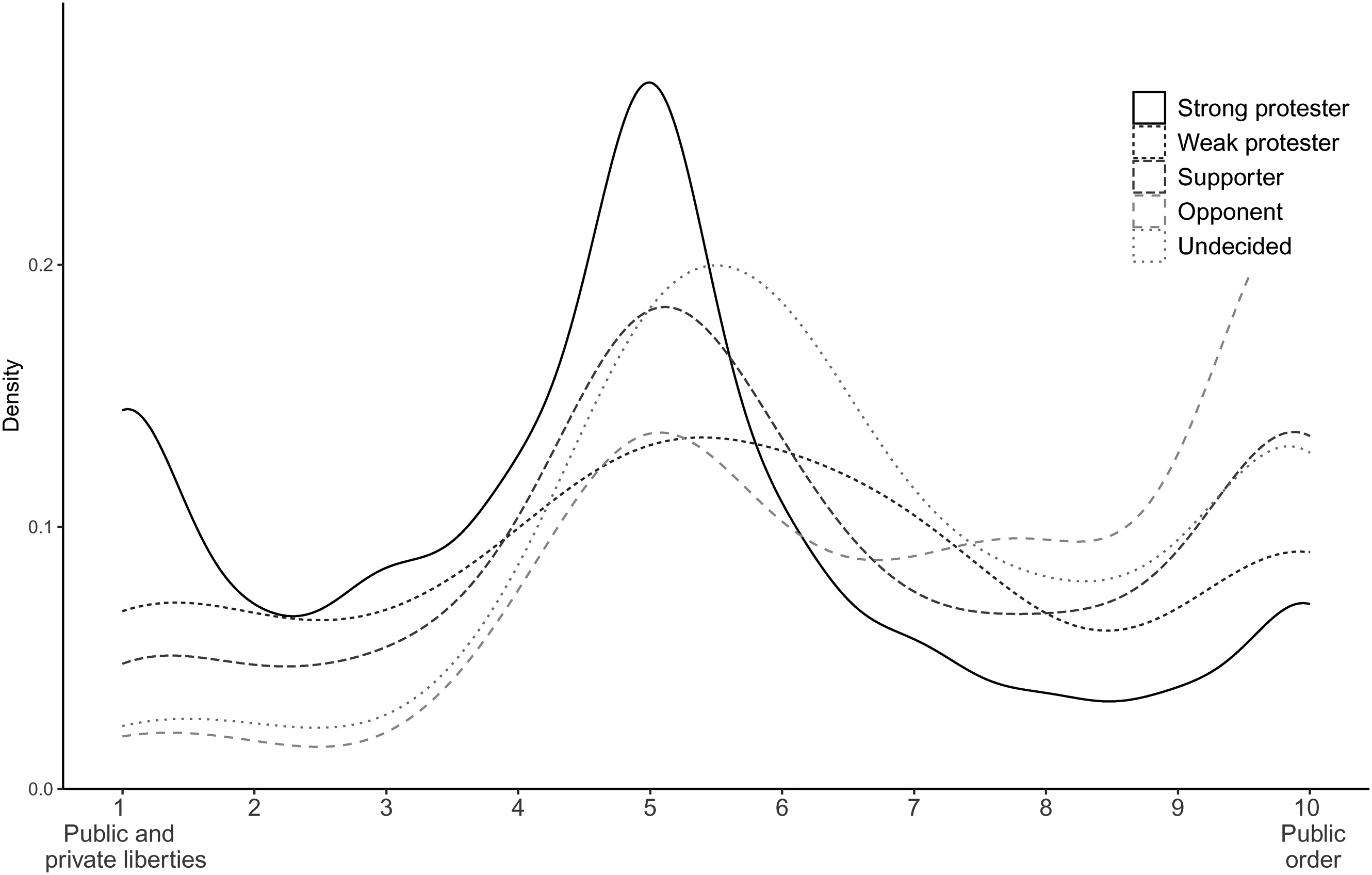
Distribution of Attitudes Regarding the Value of Public and Private Liberties vs. Public Order by Group (Density).
In terms of support for democracy, strong protesters exhibit the highest levels, with 88 per cent preferring democracy over any other form of government. Weak protesters and supporters follow, with 67 and 69 per cent respectively (see Figure 10). On the other end, 46 per cent of opponents and 51 per cent of the undecided prefer democracy. However, strong protesters are the most critical of how democracy is working in Chile, with 63 per cent of them considering that it is performing poorly or very poorly. Weak protesters and supporters exhibit similar levels of criticism at 47 per cent and 51 per cent respectively, although the difference between strong and weak are not statistically significant with our controls. Conversely, the undecided and opponents are less critical of how Chilean democracy works in practice.
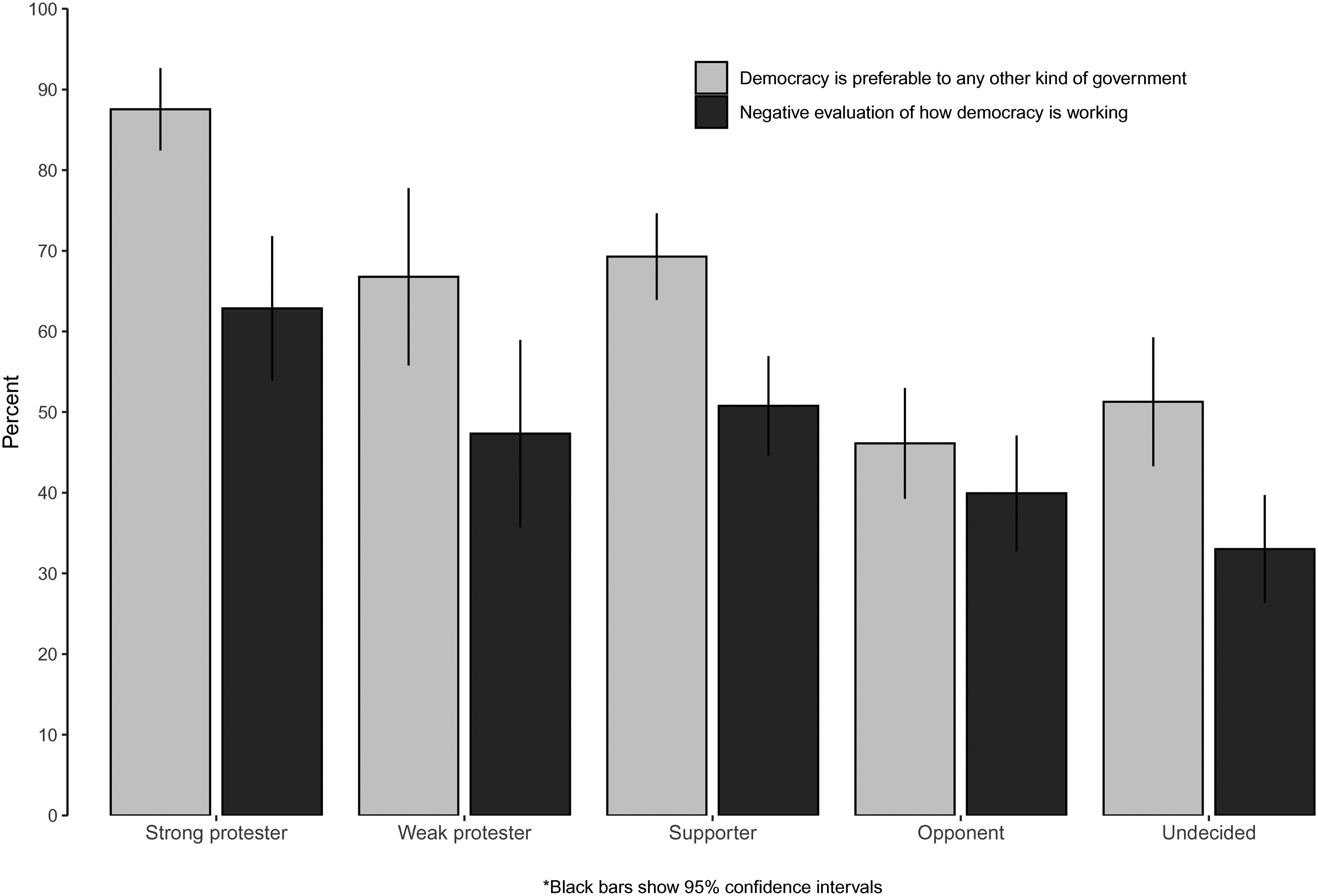
Perceptions of Democracy by Group (per cent).
Regarding trust in institutions, both strong and weak protesters display the highest levels of distrust in the government (see Figure 11). Supporters report slightly higher levels of trust in institutions compared to strong protesters, and no statistical difference with weak protesters with our controls. Opponents are the most likely to report some level of trust in the government, although trust is very low even among them (11 per cent). There are no statistically significant differences between groups in trust in Congress or political parties, as trust levels remain abysmally low across the board.
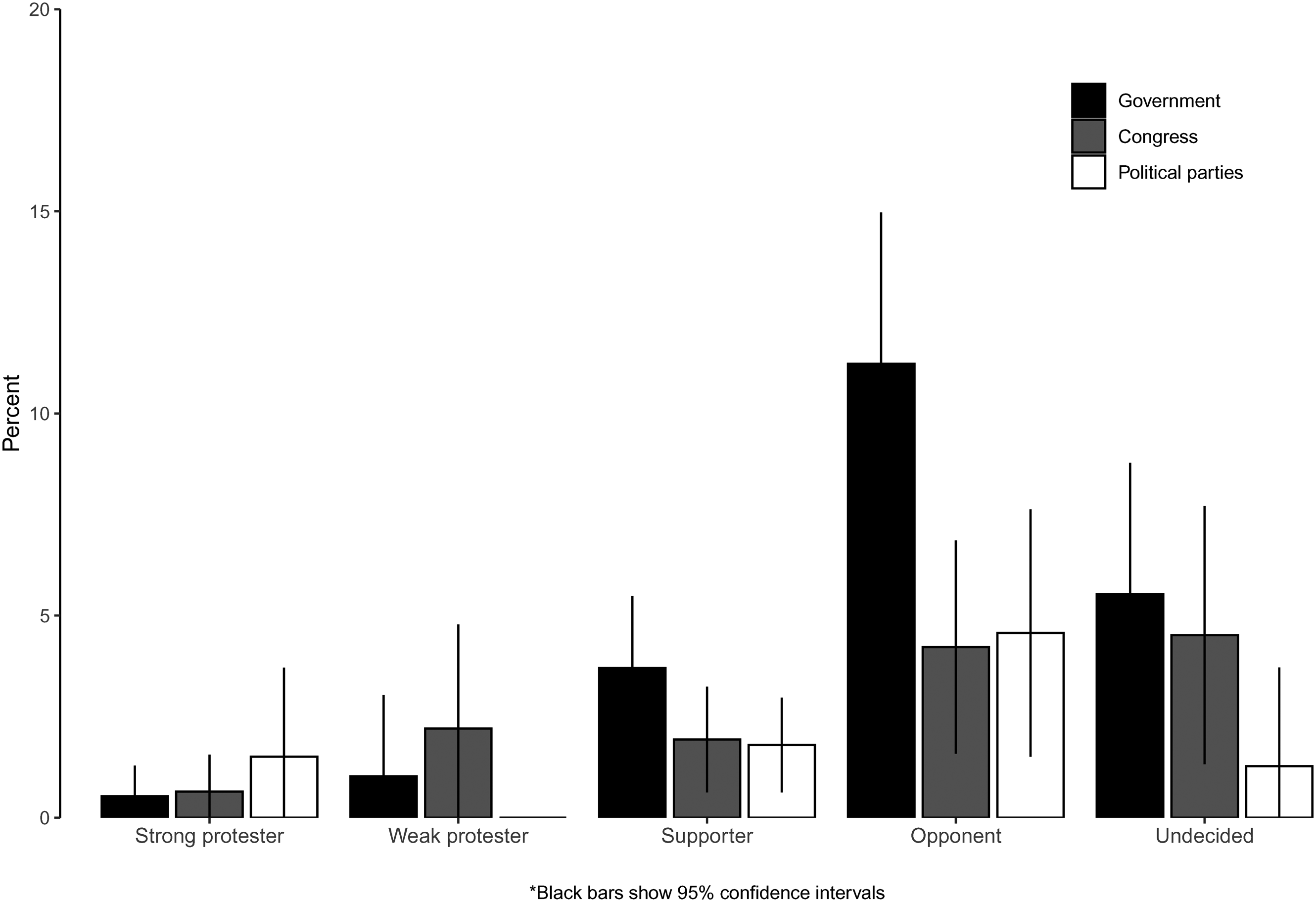
Trust in Institutions (per cent of Respondents Reporting Some or a Lot of Trust).
Attitudes and Perceptions Concerning the Use of Force
During the upheaval, peaceful demonstrations were widespread, but a very salient minority engaged in violent actions, such as occupying subway stations, damaging public infrastructure, and even setting fire to buildings in the name of social change. In turn, the police responded with force, leading to frequent clashes between citizens and often leading to human rights violations (INDH, 2020). While protesters tend to value democracy and oppose authoritarianism, strong protesters, followed by weak protesters and supporters, are more likely to justify illegal or violent tactics for social change. For instance, 58 per cent of strong protesters justify the evasion of transport fees, compared to 36 per cent of weak protesters, 26 per cent of supporters, and only 7 per cent of opponents and 5 per cent of the undecided do so (see Figure 12). Similar patterns emerge when comparing the proportion of each group that justifies building barricades, albeit at lower levels: 26 and 15 per cent among strong and weak protesters, respectively – differences that are not significant with our controls, 7 per cent among supporters and less than 1 per cent among opponents or the undecided. However, justifications for more violent actions like looting and arson are less common, with no statistical differences across groups, suggesting a shared limit on the use of violence for social change.
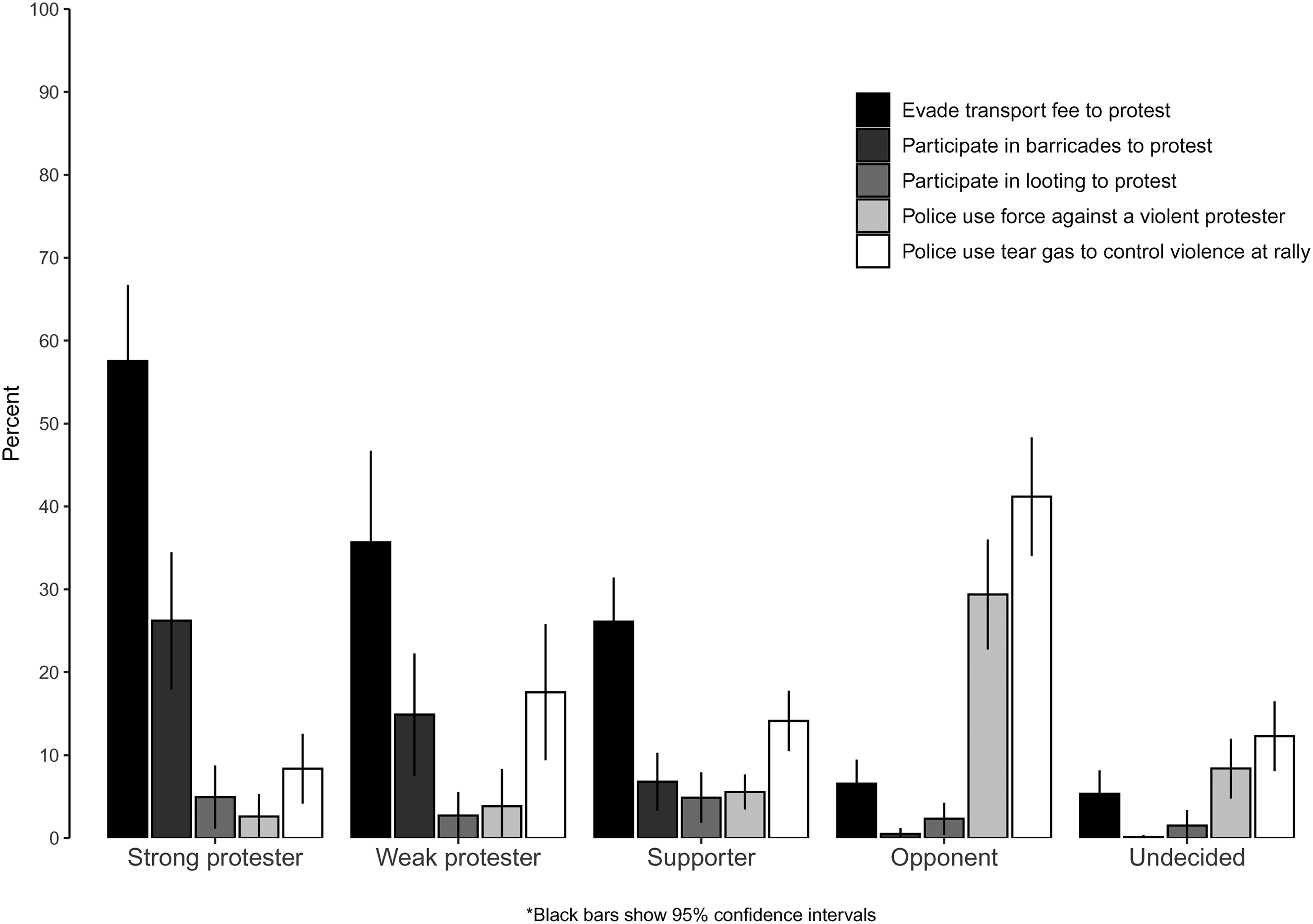
Justification of Different Actions During Protests by Group (per cent).
Contrarily, opponents are more likely to justify the use of force by the police against violent protesters, with 29 per cent justifying it always or almost always, compared to 5 per cent, 4 per cent and 3 per cent among supporters, weak and strong protesters, respectively. The undecided are also more supportive of police force, although significantly lower than opponents, and no longer statistically different for protesters and supporters with our controls.
These differences in justifications for the use of force by citizens and the police can be partially explained by the vicious cycle of violence and repression. When protesters perceive a lack of respect for their rights by the police, they are more likely to engage in violence (Gerber et al., 2018; Tyler and Huo 2002). Our results echo these findings: more than 93 per cent of strong protesters believe that the police or military frequently or very frequently abused human rights during the upheaval. Similar perceptions are shared by a large proportion of weak protesters and supporters (78 per cent and 73 per cent respectively), while fewer of the undecided (47 per cent) and opponents (39 per cent) hold such views. Both strong and weak protesters have the lowest levels of trust in the police (3 and 5 per cent, respectively), compared to 11 per cent among supporters and 35 per cent among opponents (see Figure 13).
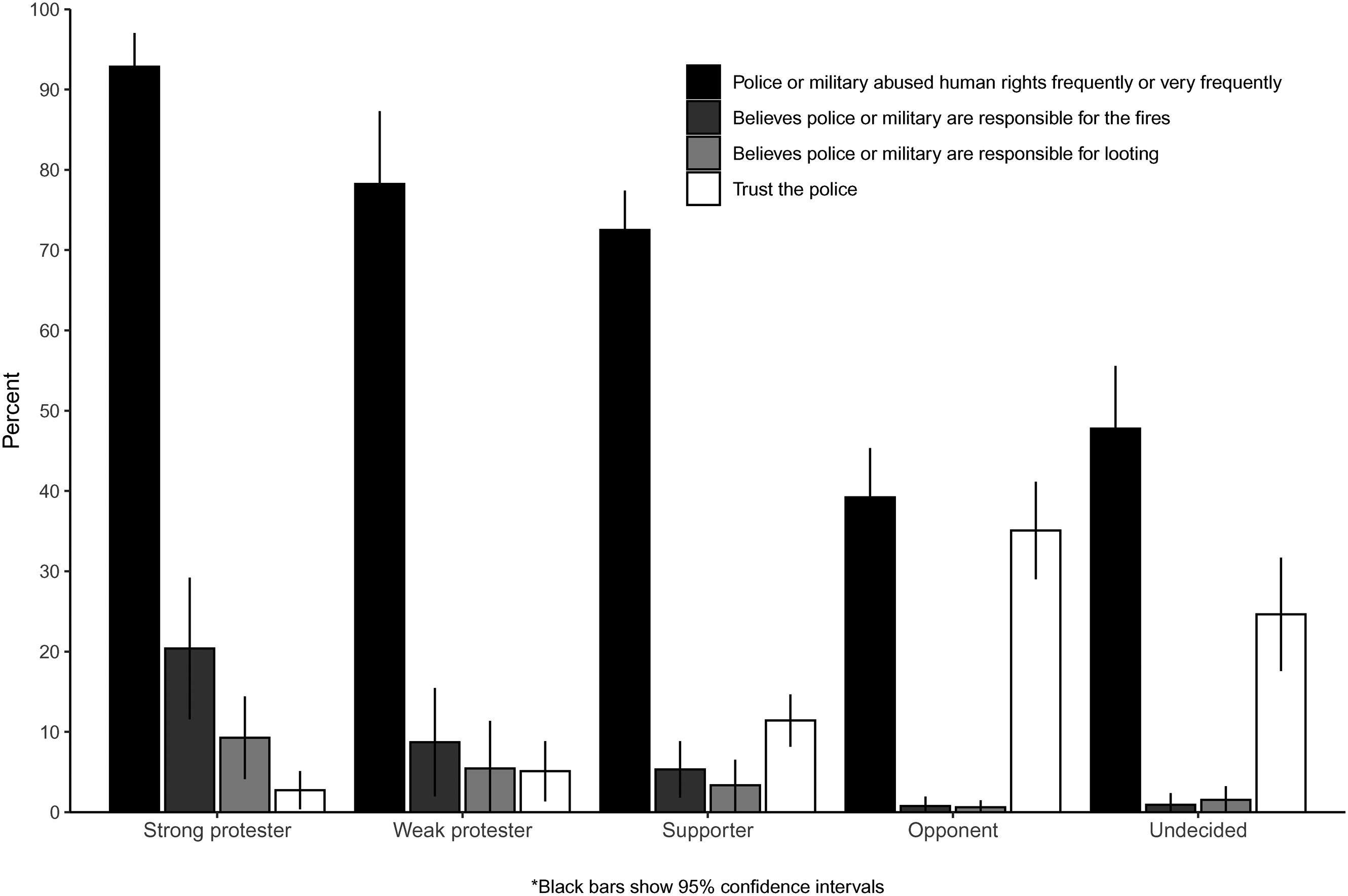
Legitimacy of the Military and the Police (per cent Holding Belief).
Interestingly, some protesters even think that the police was responsible for the fires in subway stations, despite no evidence supporting this claim. Responses to a question on the responsibility of setting the subway stations on fire, including six response categories and an open-ended category, show that 20 per cent of strong protesters, 9 per cent of weak protesters and 5 per cent of supporters spontaneously blamed the police, while fewer mentioned the government. Opponents and the undecided had negligible percentages suggesting these attributions.
The disparity between protesters’ and non-protesters’ in justifying the use of force by citizens and the police is substantial, and surpasses differences in other ideological dimensions. This difference stands as an important distinction surrounding the 2019 Chilean social upheaval.
Discussion
To shed light on what drove Chileans to the streets after 18 October 2019, we analyze a survey conducted during its unfolding. These were not the first massive demonstrations in recent Chilean history. Previous protests in 2006 and 2011, led by high school and university students, respectively, likely influenced the predominantly young participation in 2019. Our data shows 74 per cent of strong protesters and 45 per cent of weak protesters have previously attended a demonstration. Based on their age and education, we infer that many strong protesters participated in past protest cycles. New protesters (i.e., those who had not participated in previous protests) probably align with weak protesters. Strong protesters differ from weak protesters: they lean more left, exhibit anti-incumbent sentiment, hold political interest, engage more actively in politics— including electorally— and are more likely to justify violent protest tactics.
The 2019 Chilean social upheaval lacked an official narrative, recognized organizations, or leaders. This kind of unrest has been observed in developed nations where parties are viewed as elite-driven and disconnected from citizen concerns (Tarrow 2011; Welzel et al.2005). Notably, in Chile, this trend is accentuated, possibly due to the country's remarkably low political party identification, among the lowest in the world, according to the Pew Research Center's 2017 Global Attitudes Survey. 9
Income inequality, as in Occupy movement protests globally, held a prominent role in the upheaval's public discourse. However, inequality appears as a cross-cutting concern among Chileans, with strong protesters displaying greater distrust towards the sources of inequality and the wealthy.
Strong protesters also strongly endorse democracy yet hold severe criticism toward public authorities and political institutions, aligning with “dissatisfied democrats” (Klingemann 1999) or “critical citizens” (Norris 1999). Furthermore, they exhibit higher electoral participation than opponents and supporters, suggesting that protest involvement does not replace electoral engagement. This is consistent with previous work suggesting that when political parties fail to address citizens’ demands, self-organized political participation emerges (Welzel et al. 2005), potentially fueling societal unrest (Rhodes-Purdy and Rosenblatt 2021).
Scholars hold contrasting views regarding citizens like Chile's strong protesters. While some perceive them as a democratic threat (Crozier et al. 1975; Huntington 1968), others see demonstrations as inherent to democracy, linked to modernization and political progress (Inglehart 1979; Kaase and Barnes 1979). More recently, Dalton et al. (2010) suggest that demonstrations are growing “not because of increasing dissatisfaction with government, but because economic and political development provide the resources for those who have political demands,” an argument consistent with our results.
Nevertheless, a concern arises over strong protesters’ support for illegal or violent tactics to achieve political goals despite endorsing democracy. This pattern has also been observed among Hong Kong protesters in 2014 (Lo et al. 2019), yet contrasts with UK protesters showing a negative association between embracing democracy and justifying violence for political ends (Jackson et al. 2013). The justification of such actions in Chile could stem from a cycle of violence between the police and protesters (Alenda 2020; Gerber et al. 2018; Tyler 2006), perceptions of the rich exerting undue influence on public policy and widespread corruption among public authorities. Further research is needed to comprehend why individuals who cherish democracy opt against conflict resolution within legal bounds.
Supplemental Material
sj-docx-1-pla-10.1177_1866802X231203747 - Supplemental material for The 2019 Chilean Social Upheaval: A Descriptive Approach
Supplemental material, sj-docx-1-pla-10.1177_1866802X231203747 for The 2019 Chilean Social Upheaval: A Descriptive Approach by Loreto Cox, Ricardo González, and Carmen Le Foulon in Journal of Politics in Latin America
Footnotes
Acknowledgements
We thank Roberto Méndez, Peter Morse, Vicky Murillo, Ben Schneider, Nicolás Somma, Elaine Thomas and seminar participants at MIT for helpful comments.
Competing Interests
Le Foulon was former head of Public Opinion at Centro de Estudios Públicos and Cox is part of its editorial board. At the time of the survey used in this study, the three authors were employed at Centro de Estudios Públicos.
Declaration of Conflicting Interests
The authors declared no potential conflicts of interest with respect to the research, authorship, and/or publication of this article.
Funding
The authors received no financial support for the research, authorship, and/or publication of this article.

Supplemental Material
Supplemental material for this article is available online. 10
Notes
Author Biographies
References
Supplementary Material
Please find the following supplemental material available below.
For Open Access articles published under a Creative Commons License, all supplemental material carries the same license as the article it is associated with.
For non-Open Access articles published, all supplemental material carries a non-exclusive license, and permission requests for re-use of supplemental material or any part of supplemental material shall be sent directly to the copyright owner as specified in the copyright notice associated with the article.
